
7 Best Tool Rucksacks for 2026
This post contains affiliate links. As an Amazon Associate, we earn from qualifying purchases.
The DEWALT Tool Backpack stands out as the overall best tool rucksack for pros who need rugged organization and reliable protection, while the XINHESDEN Heavy Duty Backpack is a solid budget pick that still handles daily abuse. For those hauling a lot of gear over long distances, the WELKINLAND Rolling Tool Backpack offers unmatched portability with its wheels and telescoping handle.
Most people buy a tool rucksack thinking it’s just another bag, only to find themselves fighting with disorganized pockets, sore shoulders, or a zipper that fails mid-job. A poorly chosen pack turns your tools into a jumbled mess and makes every trip to the site a hassle.
This guide cuts through the noise by focusing on what actually matters: real durability, smart layout, and all-day comfort. I compared top models based on specs, verified owner feedback, and key features that separate the workhorses from the weekenders.
Top 7 Tool Rucksacks in the Market
The Best Tool Rucksacks, Reviewed
DEWALT Tool Backpack
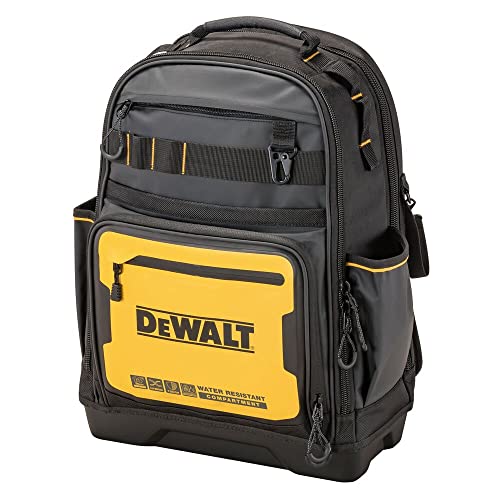
Strengths
- IP54 water-resistant
- Hi-vis interior
- 43 pockets
- Laptop compartment
- Fold-down pocket
Trade-offs
- No USB charging port
- Slightly heavier
- Camo fans may dislike color
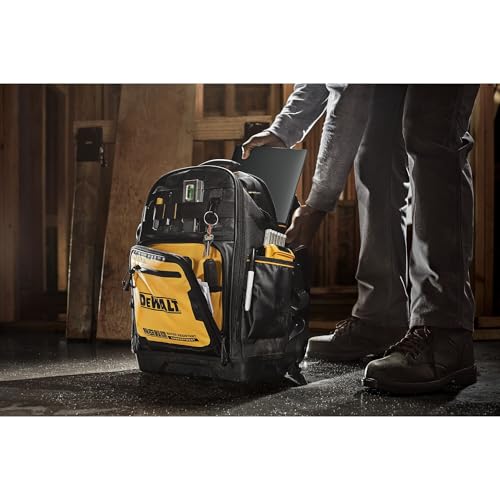
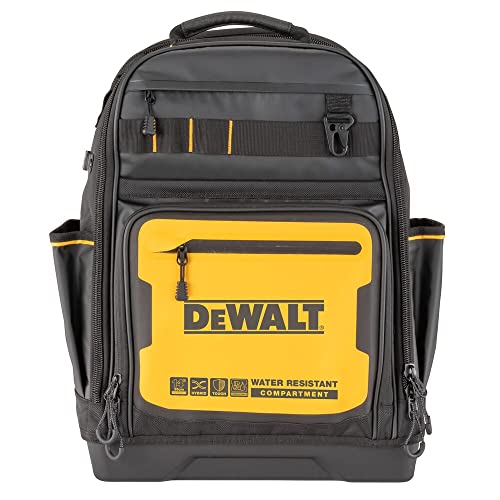
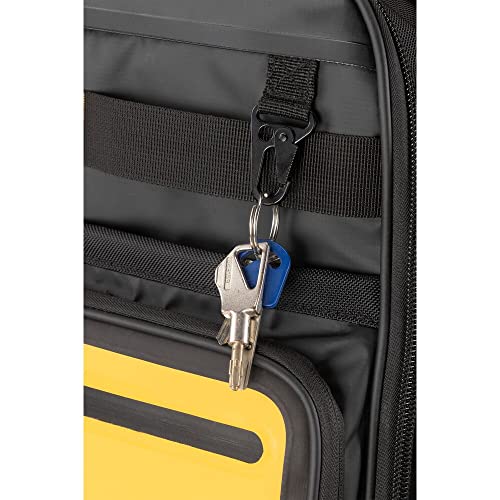
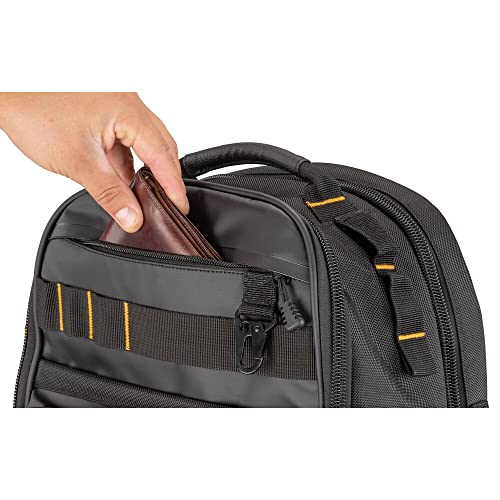
DEWALT’s DWST560102 doesn’t just compete, it leads. This is the model I’d recommend to most pros if they could only own one bag. The IP54 water-resistant compartment is a standout for rainy days, and the hi-vis yellow interior makes finding tools effortless. With 43 pockets, including dedicated zones for drills, batteries, and long tools, it’s organized without being overwhelming. Owners love the fold-down main pocket, which turns the front into a mini workbench, and the u-shaped zipper pull works flawlessly with gloves.
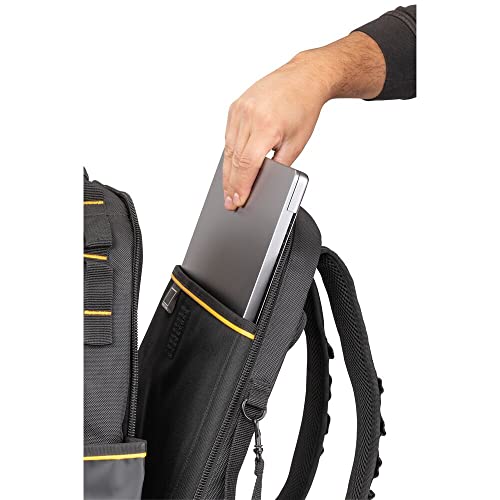
It also has thoughtful touches like a laptop compartment and a backstrap for hanging on rolling carts, small wins that add up over time. Compared to the Klein 62800BPCAMO, it offers better organization and slightly better comfort. This is the full-package deal.
Product photos
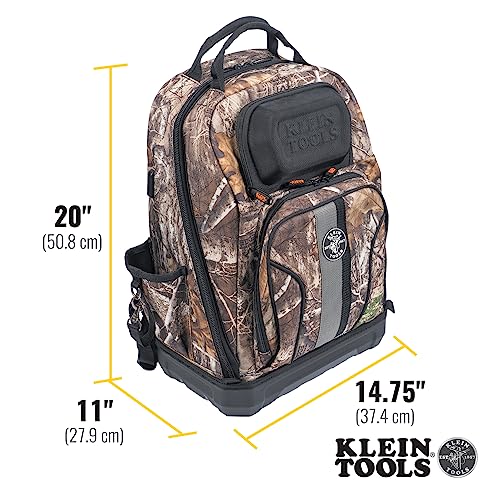
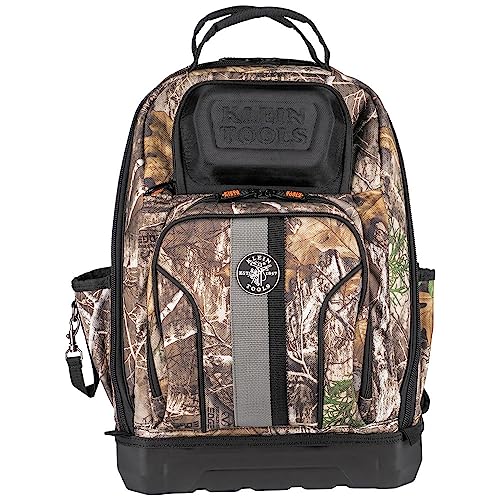
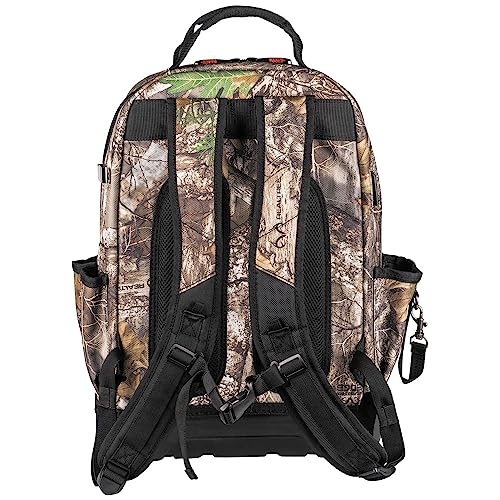
Klein Tools Camo Backpack

Strengths
- Durable 1680D fabric
- USB-C charging port
- Curved molded base
- Hi-vis interior
- Hard front pocket
Trade-offs
- No external power bank pocket
- Internal charging only
- Fewer pockets than rivals
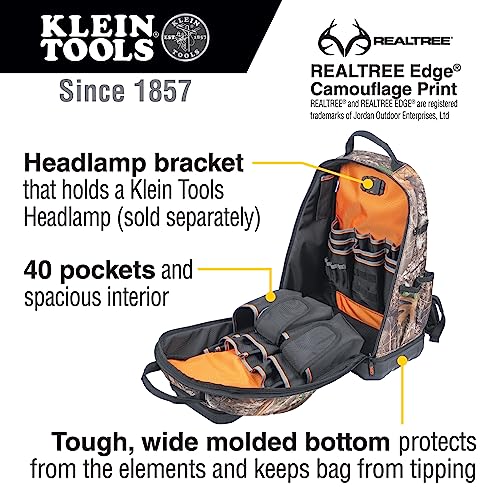
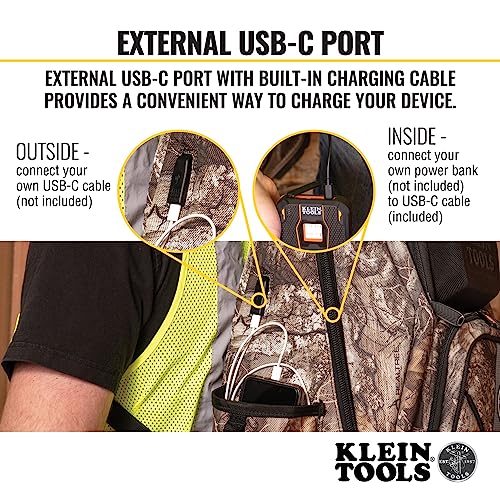
Klein’s camo backpack screams jobsite toughness, and the specs back it up. The curved molded bottom, 1680D ballistic weave, and 40 pockets make it a natural fit for heavy gear, and the USB-C charging port is a practical touch for staying powered up. Owners love the hi-vis interior and the hard front pocket for phones and glasses, small details that add up when you’re working fast. The REALTREE camo isn’t just style; it actually helps the bag blend in on outdoor sites, which some utility and field techs appreciate.
But it’s not the most pocket-heavy option, and the charging cord is internal-only, so you’ll need your own power bank. Compared to the DEWALT DWST560102, it trades some organization features for ruggedness and brand trust. If you’re already using Klein tools, this bag feels like a natural extension of your kit.
Product photos
WELKINLAND Rolling Tool Backpack

Strengths
- Hard-moulded base
- Telescoping handle
- 72 pockets
- Heavy-duty fabric
- Fully opens upright
Trade-offs
- Bulky when full
- Less comfortable carrying
- Not agile on stairs
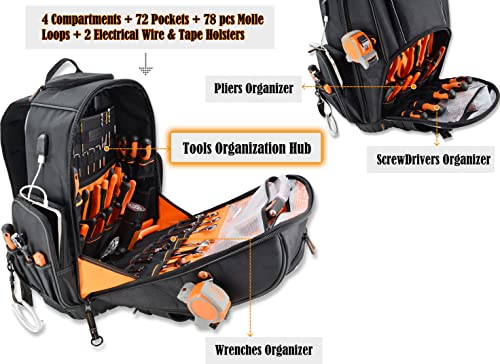
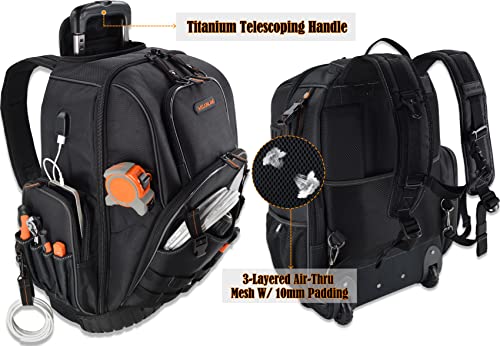
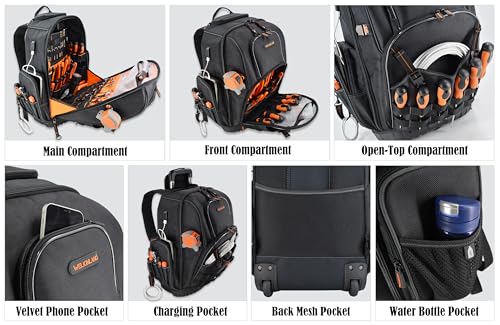
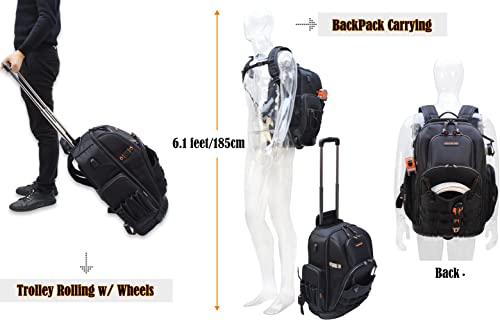
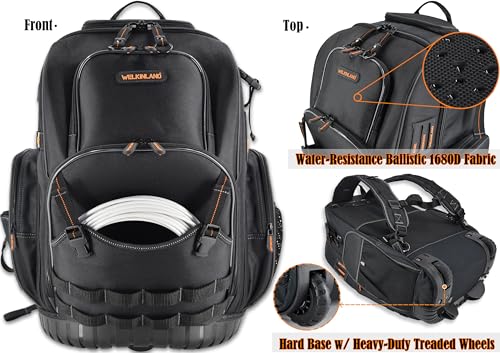
If you’re constantly hauling gear across uneven terrain or job sites with mud and debris, this rolling WELKINLAND backpack makes a strong case for itself. The hard-moulded base and telescoping handle are built like a jobsite suitcase, and owners consistently report it handles rough treatment well, especially for electricians or HVAC techs who move between locations daily. On paper, 72 pockets sounds excessive, but in practice, that kind of organization helps avoid the ‘black hole’ effect most tool bags suffer from.
Still, all that structure and volume comes at the cost of portability when wheels aren’t an option. It’s not a pack you want to hike up a ladder with, and the weight distribution suffers once fully loaded. Compared to non-rolling models, it trades agility for stability. But if you’re driving from site to site and just need a rolling command center, this one delivers.
Product photos
LOKASS 56-Pocket Tool Backpack
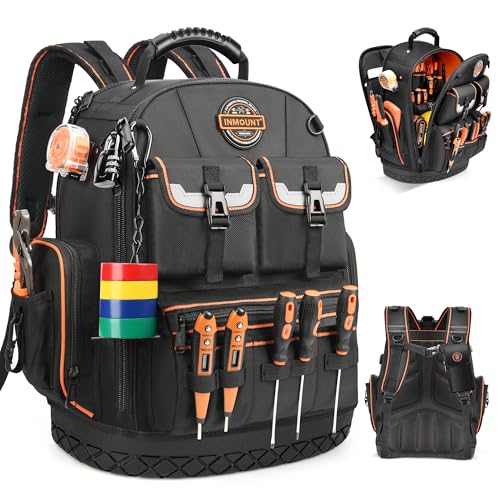
Strengths
- Combination lock
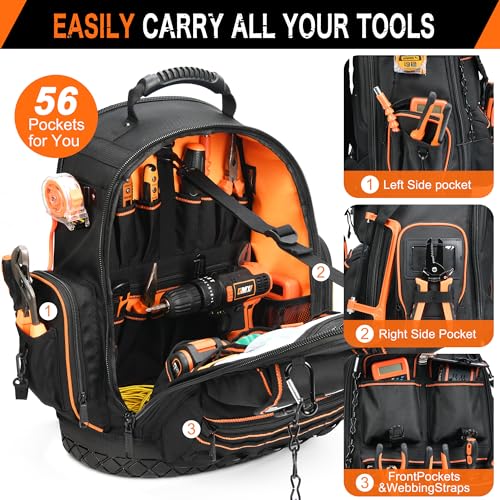
- 56 pockets
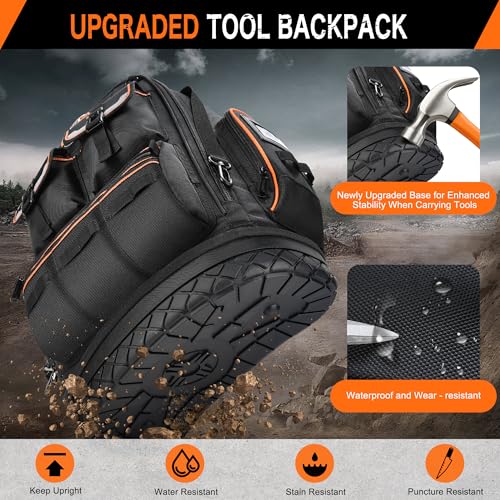
- Molded base
- Comfortable straps
- Water-resistant
Trade-offs
- No USB port
- Slightly narrow opening
- Less brand durability
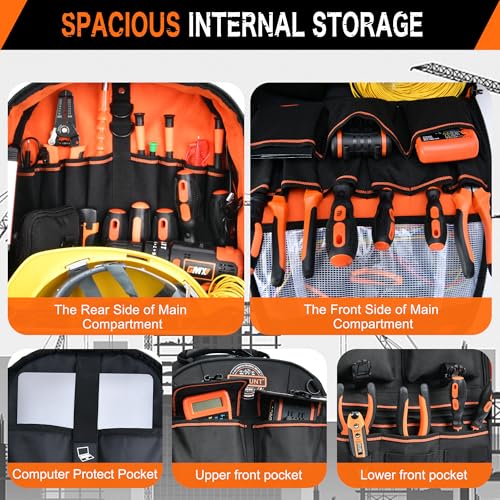
This LOKASS backpack strikes a smart balance between organization, security, and everyday usability. With 56 pockets and a 180° opening, it gives you workstation-level access without the bulk of rolling models. I appreciate the combination lock, a rare feature in this category, which adds real peace of mind when stepping away from the bag on shared sites. The molded base keeps it upright and dry, and owners report the 1680D fabric holds up well under daily abuse.
It doesn’t have a charging port like some Klein models, but what it gains is simplicity and lower cost. Compared to the DEWALT DWST560102, it’s slightly less rugged in branding but nearly matches it in layout and comfort. For electricians or HVAC techs who want secure, organized carry without paying premium branding, this is a quiet standout.
Product photos
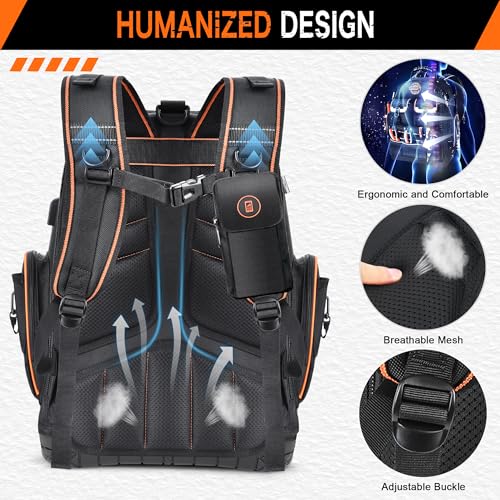
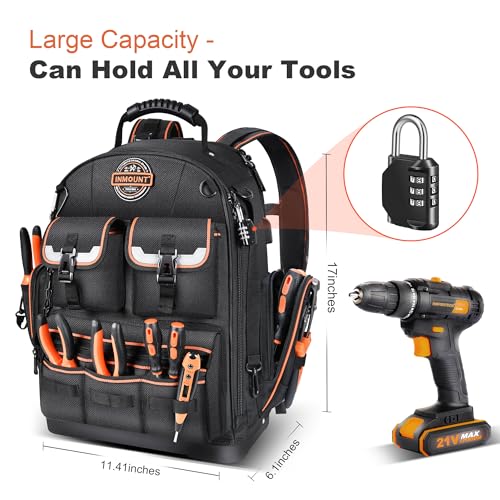
Klein Tools Tech Laptop Backpack

Strengths
- Laptop protection
- Neoprene tech pockets
- USB-C charging
- Headlamp bracket
- Molded bottom
Trade-offs
- Fewer tool pockets
- Not for large tools
- Higher price point
This Klein model is clearly designed with tech pros in mind, and it shows. The 17.3-inch laptop sleeve and soft neoprene pockets for meters and testers are spot-on for data techs, network installers, or low-voltage specialists. The 28 pockets are well-placed, not excessive, and the USB-C port with 1.5-foot cord is genuinely useful. The headlamp bracket is a subtle but brilliant touch, I’ve seen few bags integrate that kind of hands-free lighting support so cleanly.
It’s less ideal for general contractors with bulky tools, but for someone carrying multimeters, cables, and tablets, it’s nearly perfect. Compared to the SwissGear, it’s more rugged and trade-focused. This isn’t a crossover bag, it’s built for a specific user, and it nails it.
Product photos


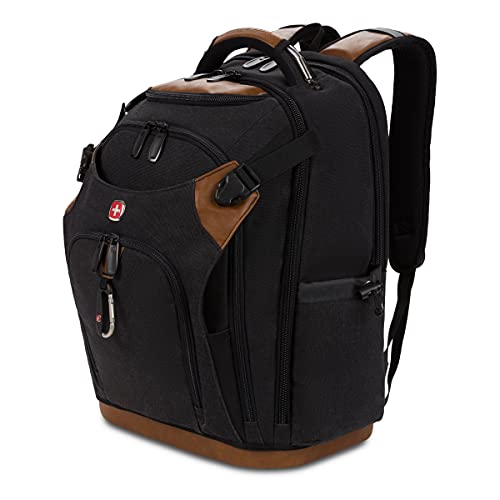
SwissGear Work Pack PRO
Strengths
- Ergonomic carry
- Airflow back padding
- Trolley sleeve
- Crush-resistant pocket
- Stylish design
Trade-offs
- Less jobsite durable
- Fewer tool-specific pockets
- No charging port
SwissGear leans into comfort and lifestyle design, and it shows in the airflow back padding, mesh straps, and EVA molded bottom. This bag feels more like a premium travel pack than a pure jobsite tool bag, which is both its strength and limitation. The 60 storage solutions are clever, but more geared toward cords, chargers, and business accessories than hammers and drills. Owners praise how light it feels on the back, even when full, and the add-a-bag trolley sleeve is great for travel days.
But it lacks the ruggedness of DEWALT or Klein, and there’s no hi-vis interior or tool-specific zones. If you’re a field service tech who spends more time in vans than crawl spaces, this is a strong contender. Otherwise, it’s more style than substance.
Product photos


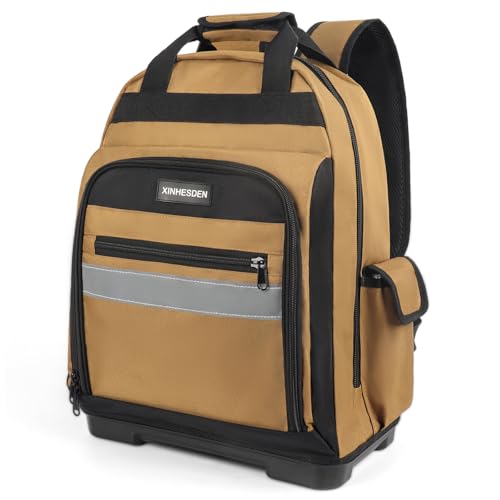
XINHESDEN Heavy Duty Backpack
Strengths
- Affordable
- Waterproof base
- Reflective strips
- Double-slider zippers
- Lightweight
Trade-offs
- Only 12 pockets
- Less durable long-term
- Limited organization
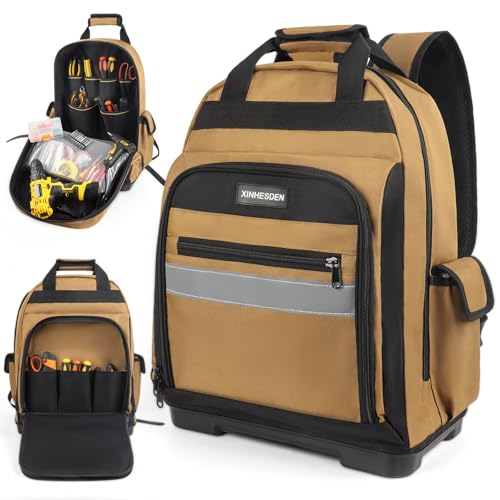
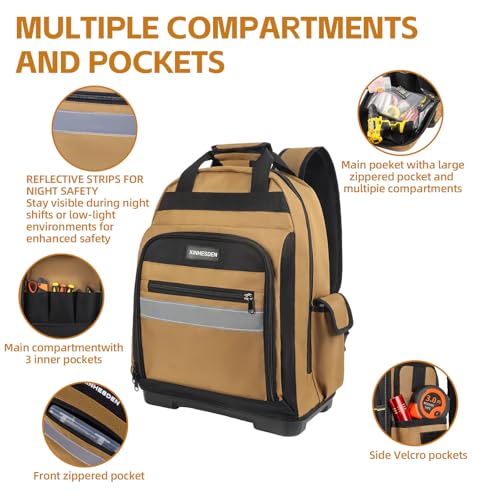
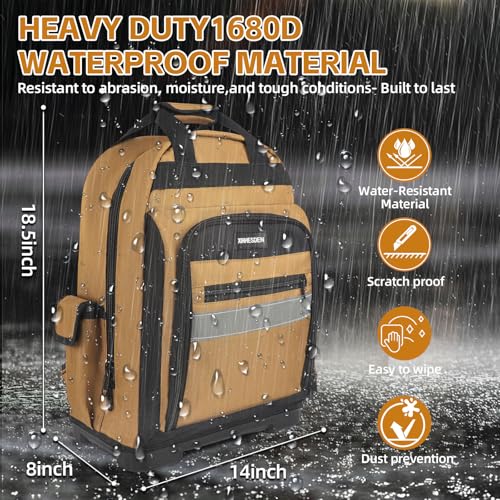
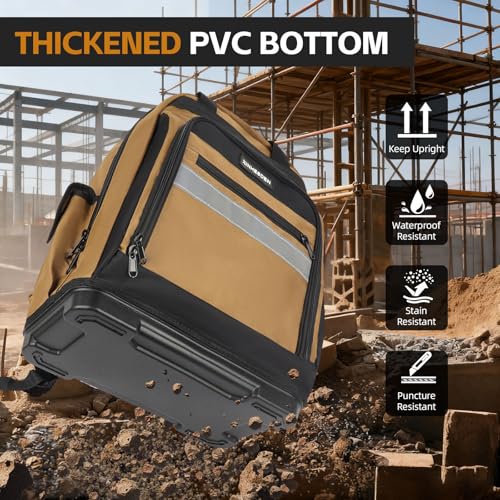
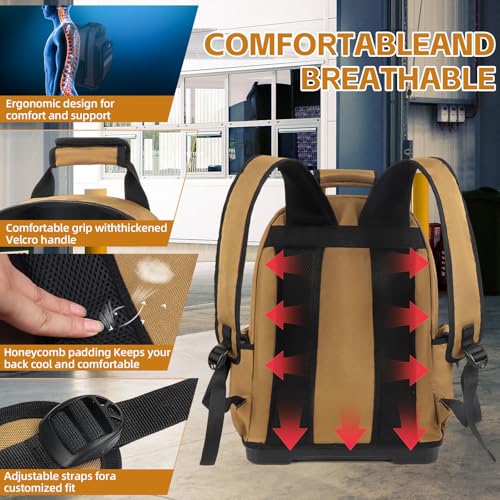
This is the kind of bag that surprises you, it looks budget, but the details suggest someone actually used it in the field before releasing it. The thickened molded base is legitimately effective at keeping tools dry, even on wet ground, and owners consistently praise the reflective strips for early-morning visibility. At 12 pockets, it’s far less organized than others here, but the main compartment is spacious enough for hand tools and small power tools, and the double-slider zippers operate smoothly under load.
It’s not built for heavy daily use like a DEWALT or Klein, but for DIYers, part-timers, or those just starting out, it offers core durability at a fraction of the cost. Compared to the LOKASS or WELKINLAND, it’s less refined, but for the price, it’s hard to fault.
Product photos
How We Chose These tool rucksacks
Rather than a hands-on lab test, my research for these tool rucksacks was a comparison of published specifications and features, combined with a careful weighing of owner reviews and assessments from reputable trade publications. I focused on identifying key differentiators and ranking these backpacks against criteria important to professionals and serious DIYers. This involved sifting through manufacturer claims and, more importantly, understanding what users are actually saying about long-term durability and usability.
For tool rucksacks, the most important factors boil down to durability and organization. A flimsy bag won’t protect a significant investment in tools, and a poorly organized one wastes valuable time on the jobsite. I weighted materials (denier of fabric, quality of zippers) and construction techniques heavily, as these directly impact longevity. Pocket count and layout were also crucial, as was the inclusion of features like molded bases for stability and dedicated compartments for specific tools or electronics.
Specifications reliably indicate build quality – a higher denier fabric generally means greater tear resistance. However, real-world performance details, like how well a zipper holds up to repeated use or the comfort of the shoulder straps, come from owner feedback. I paid close attention to recurring themes in reviews, noting both praise and complaints. For those needing something even more portable, consider exploring options in our guide to portable tool totes.
How To Pick The Right tool rucksacks
Picking the right tool rucksack can make or break your workday. It’s not just about hauling gear; it’s about efficiency, comfort, and protecting your investment.
A quality tool rucksack balances durable materials (like 1680D ballistic polyester) with thoughtful organization. Look for features like a molded base for stability, dedicated compartments for power tools and accessories, and comfortable carrying systems with padded straps and back support. Water resistance is also crucial for jobsites exposed to the elements.
Capacity And Organization
Don’t just assume “more pockets” equals better organization. Consider what you carry. Someone focused on electrical work will need different storage than a plumber. I’ve seen too many folks buy a rucksack with 50 pockets, only to find they constantly rummage through it because the pockets aren’t designed for their specific tools. Think about dedicated slots for drill drivers, battery packs, multi-meters, and smaller items like bits and fasteners. The LOKASS 56-Pocket Tool Backpack, for example, emphasizes a wide-open design and lots of small compartments, which suits certain workflows well.
Durability And Weather Resistance
Tool rucksacks live a rough life. They get tossed in and out of trucks, dragged across job sites, and exposed to all sorts of weather. A lightweight nylon bag might save you a few bucks upfront, but it won’t hold up long-term. Look for heavy-duty fabrics like 1680D ballistic polyester, reinforced stitching, and waterproof or water-resistant coatings. The DEWALT Tool Backpack and Klein Tools models consistently receive high marks for build quality and ability to withstand tough conditions.
- A molded base isn’t just for preventing tipping. It protects tools from impact and keeps the bag from getting beat up when set down on abrasive surfaces.
- Water resistance is crucial, but don’t mistake “water-resistant” for fully waterproof. A heavy-duty tarp base adds a significant layer of protection.
- Pay attention to the zippers. Heavy-duty, self-repairing zippers are a sign of a well-made rucksack. Cheap zippers are often the first point of failure.
Comfort And Portability
You’ll be carrying a potentially heavy load, so comfort is paramount. Padded shoulder straps, a breathable back panel, and an adjustable chest strap are essential. Consider if you’ll be walking long distances or navigating tight spaces. Some rucksacks, like the WELKINLAND Rolling Tool Backpack, include wheels and a telescoping handle, which can be a lifesaver for large tool sets. If you often travel with tools, a trolley sleeve that slides over luggage handles is a convenient feature. You may also want to check out some essential hand tool sets to fill out your kit.
A properly fitted tool rucksack distributes weight evenly, minimizing strain on your back and shoulders. Don’t underestimate the importance of comfortable straps and a supportive back panel.
Ultimately, the best tool rucksack is the one that best fits your needs. If you need something for occasional use, a budget-friendly option like the XINHESDEN Heavy Duty Backpack might suffice. But if you’re a professional relying on your tools every day, investing in a durable tool carrying packs is well worth the cost.
Tool Rucksacks Compared
This table provides a side-by-side comparison of the specifications for several tool rucksacks to aid in your purchasing decision.
| Product Title | Capacity (L) | Number of Pockets | Material | Water Resistance | Rolling Design | Lockable |
|---|---|---|---|---|---|---|
| DEWALT Tool Backpack | N/A | 43 | 1680 Denier | IP54 | No | No |
| Klein Tools Camo Backpack | N/A | 40 | 1680D Ballistic | Yes | No | No |
| WELKINLAND Rolling Tool Backpack | N/A | 72 | 1680D Ballistic | Yes | Yes | No |
| LOKASS 56-Pocket Tool Backpack | N/A | 56 | 1680D Polyester | Yes | No | Yes |
| Klein Tools Tech Laptop Backpack | N/A | 28 | 1680D Ballistic | Yes | No | No |
| SwissGear Work Pack PRO | N/A | N/A | N/A | N/A | No | No |
| XINHESDEN Heavy Duty Backpack | N/A | 12 | 1680D Oxford Cloth | Yes | No | No |
Frequently Asked Questions
What material offers the best durability for a tool rucksack?
1680D ballistic polyester is generally considered the most durable material for tool rucksacks. It’s significantly more tear-resistant than lighter-weight nylon or canvas, and stands up well to abrasion from jobsite conditions.
Are rolling tool rucksacks practical for most users?
Rolling tool rucksacks are best for those who regularly transport very heavy loads over long distances. While adding weight, the wheels and telescoping handle can save considerable strain compared to carrying everything on your back.
How important are lockable zippers on a tool rucksack?
Lockable zippers are a valuable theft deterrent, especially when leaving a tool rucksack unattended in a vehicle or on a jobsite. While not foolproof, they add a layer of security and may discourage opportunistic thieves.
What capacity tool rucksack should I choose?
The ideal capacity depends on the size of your tool collection and typical job requirements. A 30-40 liter bag suits most DIYers, while professionals often need 50 liters or more, especially if carrying power tools and accessories.
What should I look for if I also need to carry diagnostic equipment or a laptop?
Consider a tool rucksack with a dedicated, padded laptop compartment and potentially separate pockets for sensitive electronic tools. Some models, like those catering to electricians, also offer specialized pouches for multimeters and other testing devices, or even a place for complete mechanic tool sets.
The Bottom Line
Choosing a tool rucksack often comes down to balancing how much you want to spend against how much abuse the bag will take. While a basic option can get the job done for light use, the DEWALT Tool Backpack consistently rises to the top as the strongest all-around performer – its durable construction and well-considered layout make it a solid investment for anyone who carries tools regularly.
For those with very specific needs, there are excellent alternatives. If you prioritize maximum organization and security, the LOKASS 56-Pocket Tool Backpack is a standout. And if portability is key, especially with heavier loads, the WELKINLAND Rolling Tool Backpack offers a welcome alternative to carrying everything on your back. Don’t forget to explore some top tool tote bags if you need something even more compact.
Ultimately, the specs and features matter less than how well the rucksack fits your workflow and how reliably it protects your tools. A heavier-duty fabric and quality zippers will always be more valuable in the long run than an extra pocket or a flashy design. Prioritize build quality and a layout that supports your specific tools, and you’ll have a tool rucksack that serves you well for years to come.
