8 Best RV Air Compressors of 2026
This post contains affiliate links. As an Amazon Associate, we earn from qualifying purchases.
The VIAIR 450P-RV EF stands out as the best overall RV air compressor for its reliable 100% duty cycle and strong airflow, making it ideal for larger tires. For a budget-friendly yet capable option, the VIAIR 400P-RV EF delivers solid performance. If you prefer cordless freedom, the ETENWOLF VORTEX S6 offers decent portability and ease of use.
RV owners know that proper tire pressure isn’t just about fuel efficiency, it’s a safety issue. Underinflated tires can lead to blowouts, uneven wear, and costly roadside repairs, especially when you’re miles from help. That’s why having a dependable air compressor on hand is essential.
In this guide, I break down the top RV air compressors based on specs, owner feedback, and real-world usability. These picks were chosen by analyzing airflow, duty cycle, power source, and practical features that matter when you’re maintaining large tires on the road.
Top 8 Rv Air Compressors in the Market
The Best Rv Air Compressors, Reviewed
VIAIR 450P-RV EF Enhanced Flow
Strengths
- 100% duty cycle at 100 PSI
- RV-specific accessories
- Excellent heat management
Trade-offs
- Heavier than average
- Higher price point
- Overkill for small trailers
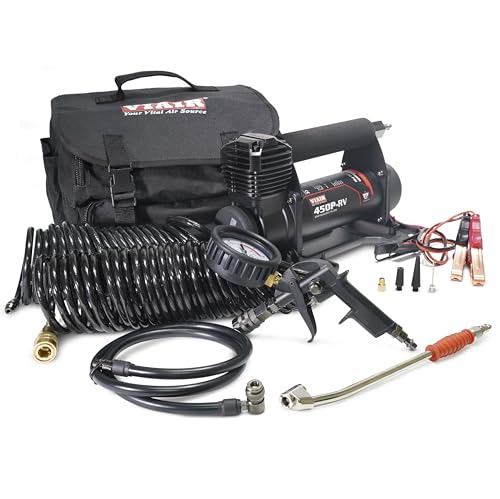
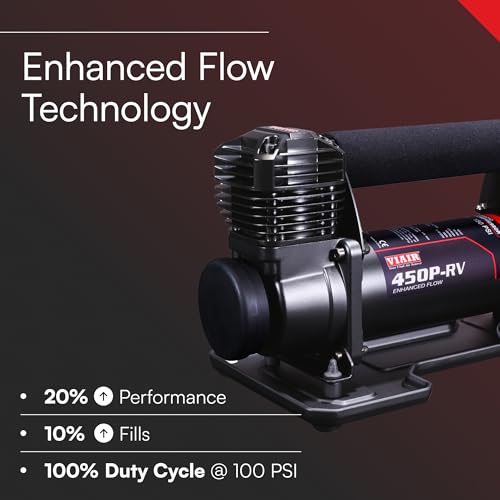
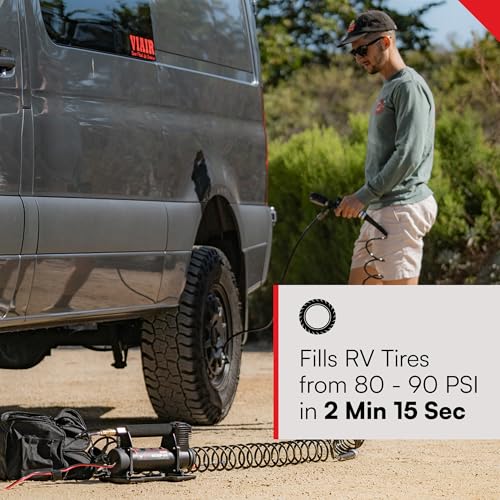
If you’re running a Class A motorhome or large fifth wheel, the VIAIR 450P-RV EF is the compressor I’d trust most. It delivers a true 100% duty cycle at 100 PSI, meaning it can run indefinitely without overheating, a critical feature when you’re inflating massive tires in hot conditions. The 2.19 CFM free flow and updated head design offer faster fills and better cooling than the 400P-RV, and owners consistently praise its reliability on long trips.
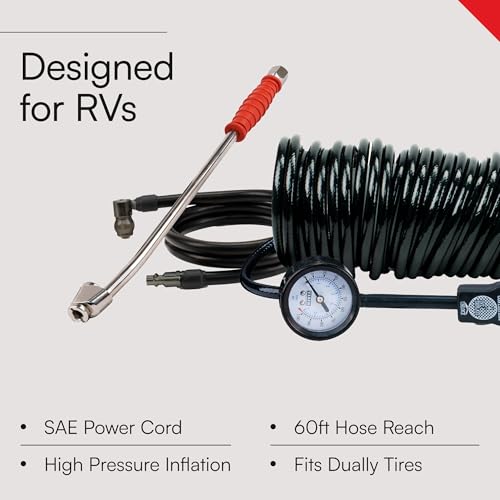
The full RV kit, gas station-style gun, 45-degree chuck, coiled hoses, makes it easy to use even in tight spots. It’s heavier than some, but the I-Beam base minimizes vibration. Compared to the ALL-TOP and UUP models, this one stands apart in build quality and sustained performance. My recommendation for serious RV owners who need a single, dependable unit for all inflation tasks.
Product photos
VIAIR 400P-RV EF Enhanced Flow
Strengths
- RV-specific accessories
- Improved heat dissipation
- 90-degree chuck
Trade-offs
- 33% duty cycle limit
- Heavier than compact models
- Limited for large Class A tires
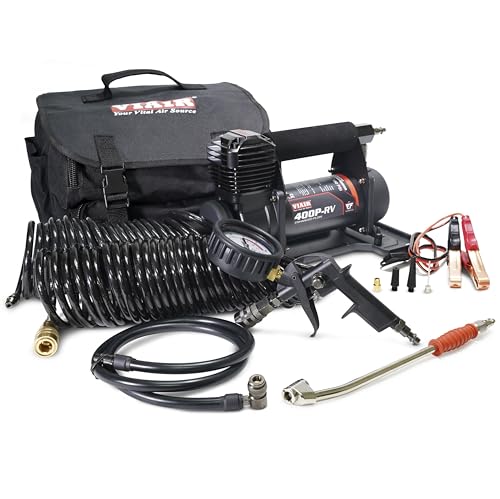
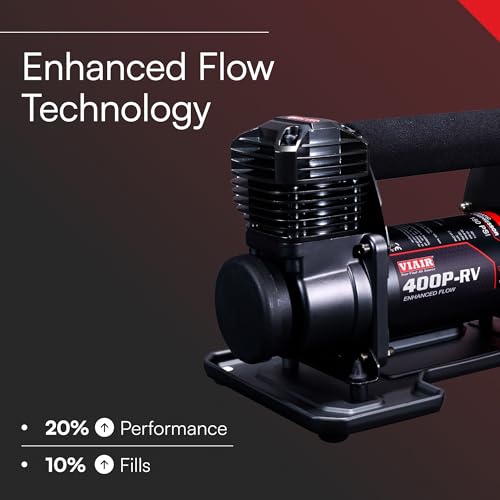
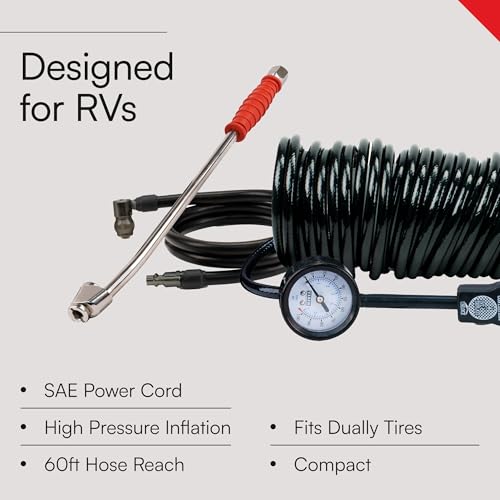
VIAIR’s 400P-RV stands out in the mid-size RV category with its refined head design and EF-enhanced flow, delivering a noticeable bump in performance and heat dissipation over older models. The 33% duty cycle at 100 PSI isn’t class-leading, but it’s reliable for routine top-offs and inflation of travel trailer or Class C RV tires. What really sets this apart is the RV-specific kit, the 90-degree twist-on chuck and extended hoses are a standout for dual rear wheels, and the included inflation gun feels like something you’d see at a truck stop.
Reviewers note the noise is manageable, and the IP54 rating adds real confidence for outdoor use. It’s not built for nonstop inflation of massive Class A tires, but for mid-size rigs, it hits a sweet spot between power and practicality. I’d pick this over the ALL-TOP model if you’re not constantly inflating from zero and value ease of use.
Product photos

ETENWOLF VORTEX S6 Cordless Air Compressor
Strengths
- 100% duty cycle
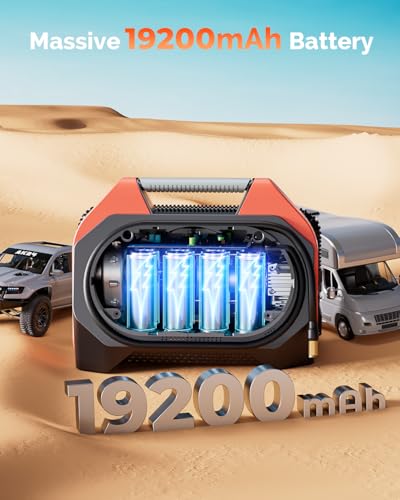
- Large 19200 mAh battery
- 1000-lumen LED
Trade-offs
- Bulky design
- Noisy under load
- App not included
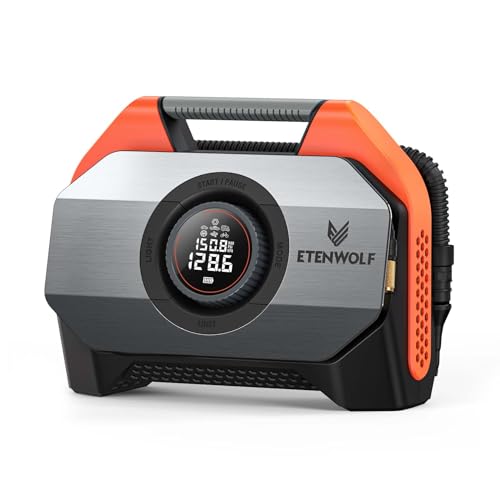
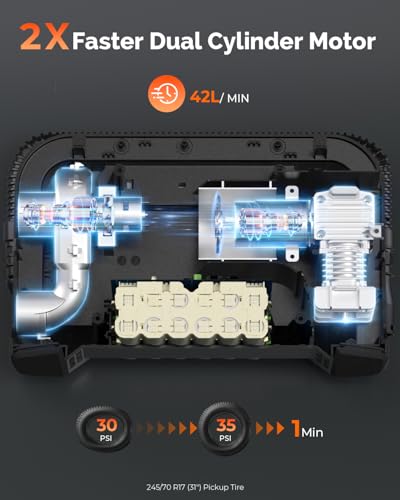
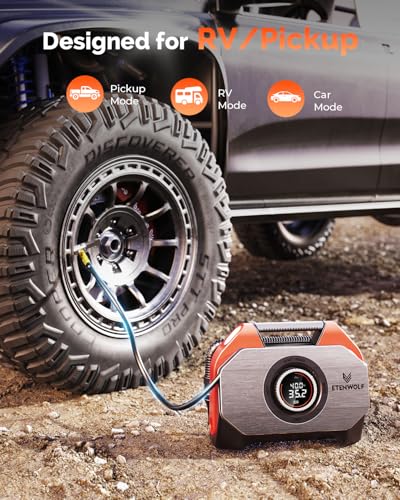
The ETENWOLF VORTEX S6 is the most powerful cordless option here, and it shows. With a 19200 mAh battery and 100% duty cycle, it can inflate all four F150 tires from zero without stopping, something few cordless models can claim. The 1.5 CFM airflow is strong, and the preset memory and auto-stop make it user-friendly. The 1000-lumen LED is a nice touch, doubling as a camp light.
While it’s not as quiet as some, the dual-cylinder design and cooling system keep temps under control. Compared to the SuperBars model, this one is built for real work, not just touch-ups. It’s bulkier, but that’s the trade-off for the battery and power. For RVers who want freedom from cords and outlets, this is the best cordless bet, just don’t expect the same precision as a plug-in unit.
Product photos
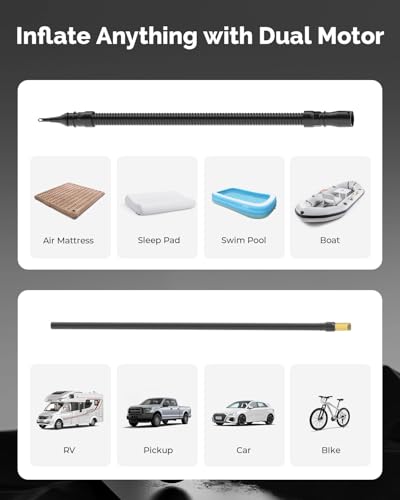

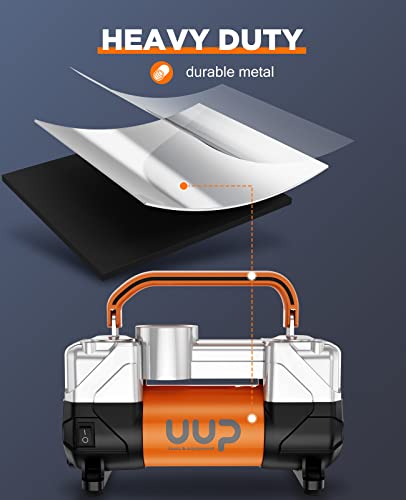
UUP Double Cylinder 12V Air Compressor

Strengths
- Affordable price
- Double metal cylinders
- Includes useful accessories
Trade-offs
- Noisy operation
- No duty cycle rating
- Basic design
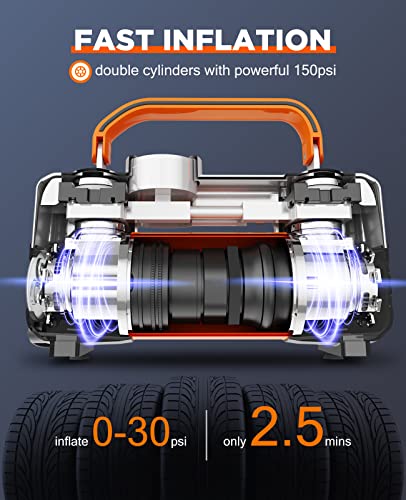
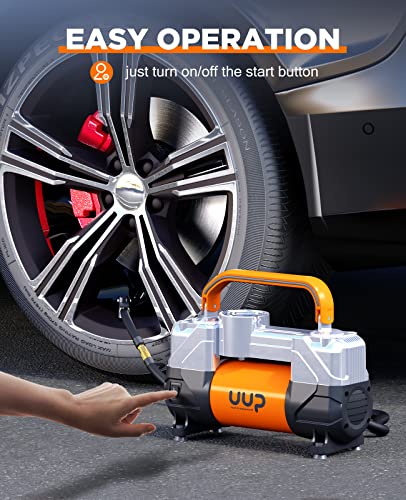
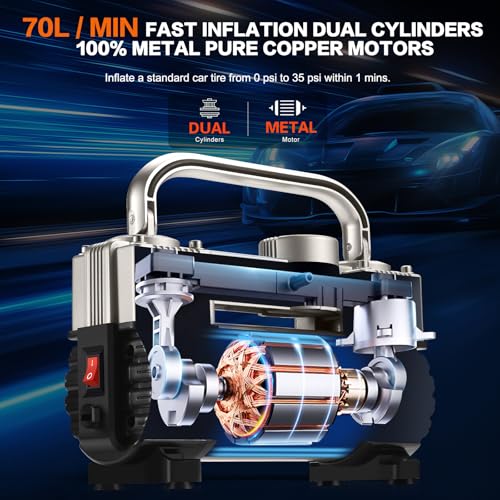
The UUP compressor is clearly designed to be the budget workhorse. It delivers solid performance with a 70L/min airflow and 150 PSI max pressure, making it capable of handling RV and truck tires without breaking the bank. The double-cylinder metal pump is a step up from plastic-bodied models, and the inclusion of a storage bag, fuse, and valve tools adds real value.
It’s not quiet or refined like the GSPSCN, and the duty cycle isn’t specified, so extended use may require cooldown periods. But for the price, it’s hard to beat. Compared to the SuperBars or ETENWOLF models, it lacks smart features and portability, but it’s more than enough for occasional top-offs. My pick for first-time RV owners or those who want a no-frills backup.
Product photos


ALL-TOP Dual Cylinder Heavy Duty Compressor
Strengths
- High airflow
- Dual aluminum cylinders
- Sturdy rubber feet
Trade-offs
- Heavy at 24 lbs
- No 100% duty cycle
- Basic gauge setup
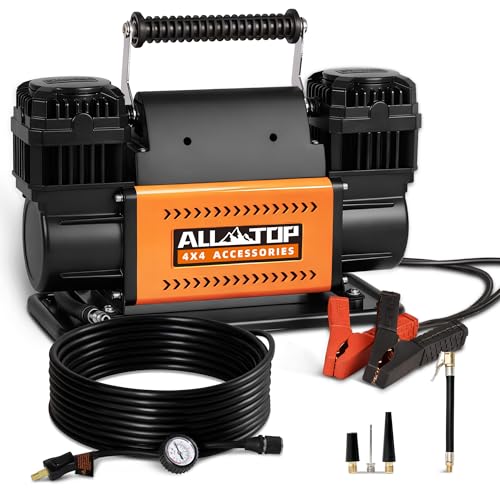
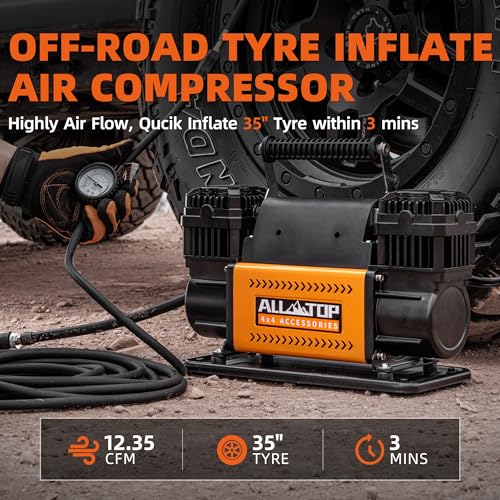
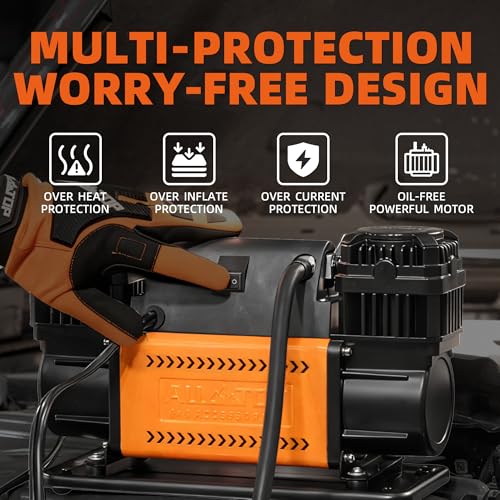
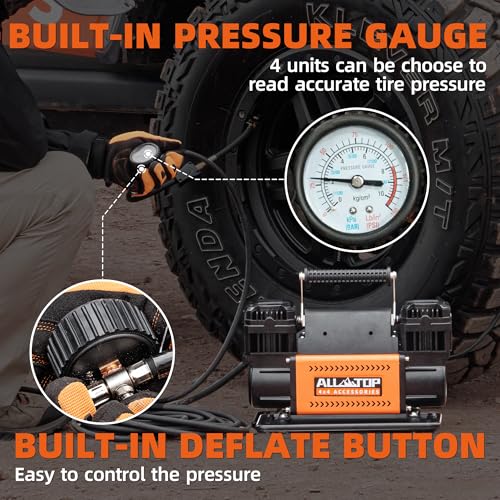
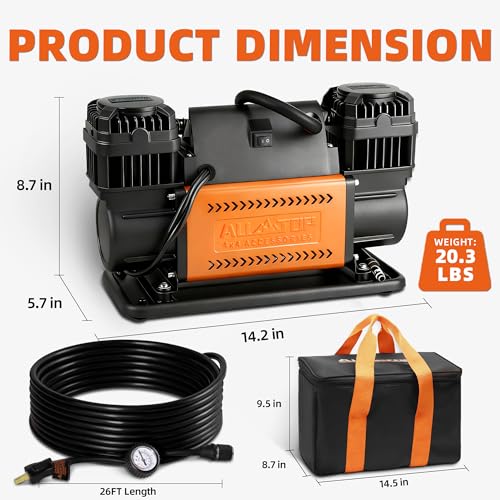
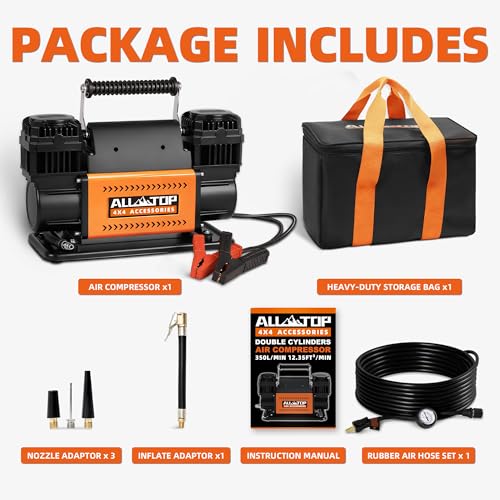
This dual-cylinder 12V compressor throws serious airflow at 12.35 ft³/min, making it a solid contender for off-road RV use where you might be topping off large tires far from power sources. The hollow metal shell and dual aluminum cylinders suggest decent thermal management, and the 24-pound build feels rugged, this isn’t something that’s going to rattle apart on a bumpy trail. Owners consistently report it handles aggressive inflation cycles, especially when used with a separate pressure gauge to avoid over-pressurizing the hose.
It’s not the lightest or quietest option, but for off-grid use on trucks, 4x4s, and RVs, that trade-off makes sense. The inclusion of a 26-foot rubber air hose is practical, and the anti-vibration feet help with stability. Still, compared to VIAIR’s offerings, the lack of a true 100% duty cycle at high PSI means you’ll need to pace yourself during extended use.
Product photos
SuperBars APP Smart Tire Inflator
Strengths
- App connectivity
- Built-in power bank
- Compact size
Trade-offs
- Limited runtime for large tires
- Not for continuous use
- App not essential
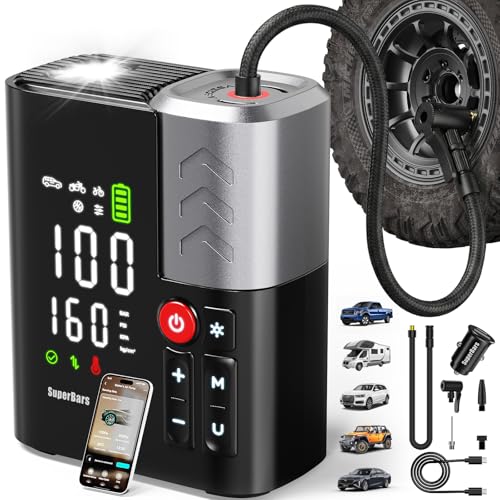
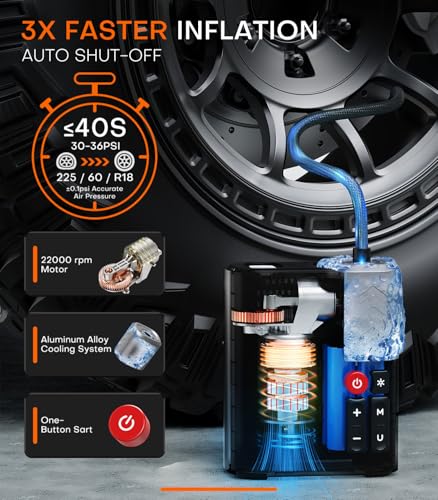
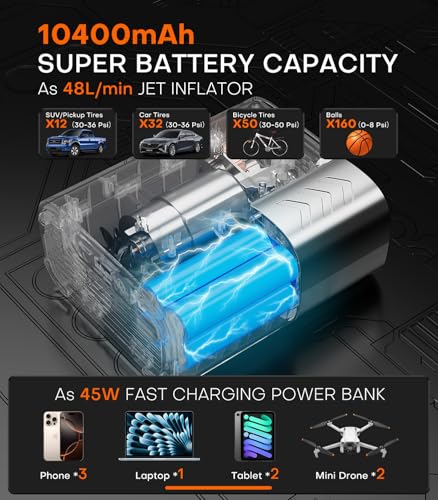
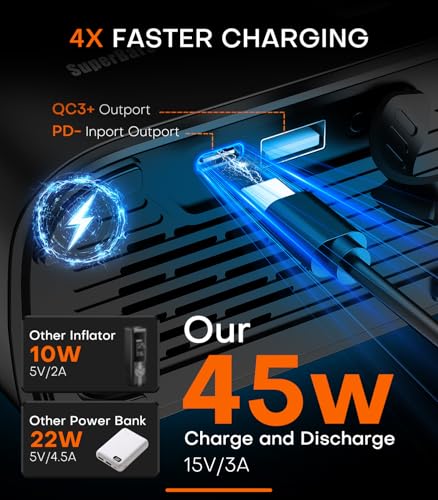
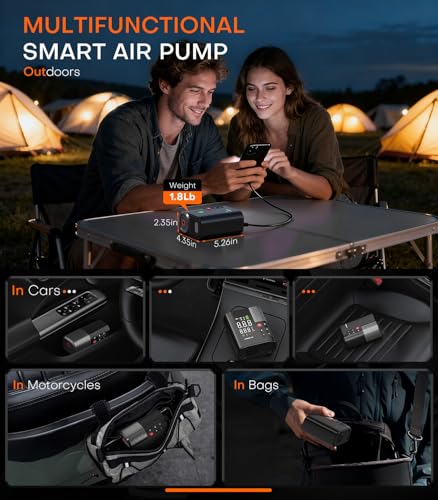
The SuperBars cordless inflator packs a surprising amount of tech into a tiny frame. With a 10400mAh battery, 48LPM airflow, and app connectivity, it’s clearly aimed at the smart gadget crowd. On paper, it’s impressive, preset modes, auto-stop, and a flashlight make it a true multi-tool. The 45W USB-C port adds real utility as a power bank, which is a bonus on long trips.
But in this class, cordless convenience comes with limits. While it can handle RV tire top-offs, it’s not built for inflating large tires from flat. Owners report it struggles with sustained loads, and the small cylinder means longer fill times on big tires. Still, for quick checks, bicycle inflation, or emergency top-offs, it’s incredibly handy. I’d recommend it as a supplement, not a primary compressor for serious RV work.
Product photos

TireMinder RV AIR LITE Compressor
Strengths
- Very quiet
- 60 ft hybrid hose
- Digital gauge
Trade-offs
- 80 PSI max limit
- Not for high-pressure tires
- Limited for off-road use
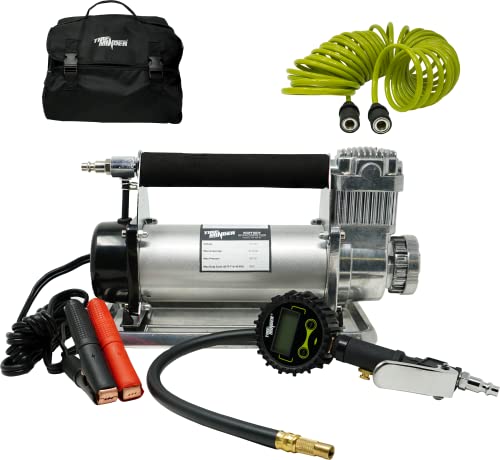
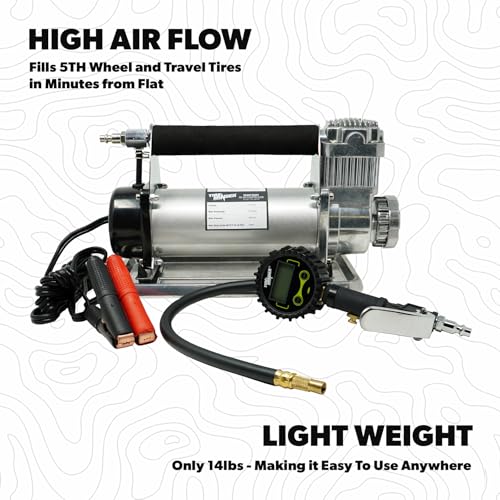
The TireMinder RV AIR LITE is built for a very specific job, topping off travel trailer tires up to 80 PSI, and it does that job quietly and efficiently. With a 1.80 CFM flow rate and sub-60 dB operation, it’s one of the quietest compressors in the category, which matters when you’re at a campground and don’t want to wake the whole row. The 60-foot hybrid hose is a standout feature, giving you serious reach without dragging the unit around.
It won’t handle high-PSI truck tires, but that’s not its purpose. The digital gauge is accurate, and the 1-hour runtime suits most inflation needs. Compared to bulkier dual-cylinder models, this is the kind of unit you can stash easily and use without a fuss. For travel trailer owners, this is the smarter buy over overbuilt compressors that add weight and noise you don’t need.
Product photos
GSPSCN Heavy Duty Metal Air Compressor
Strengths
- 70 dB quiet operation
- All-metal internal parts
- Long power and air hoses
Trade-offs
- Heavier than expected
- No digital gauge
- Basic accessories
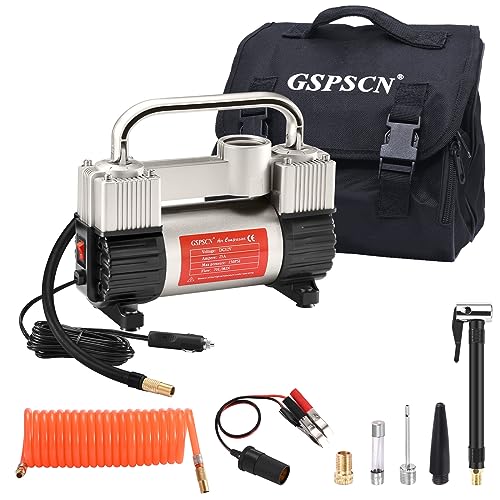
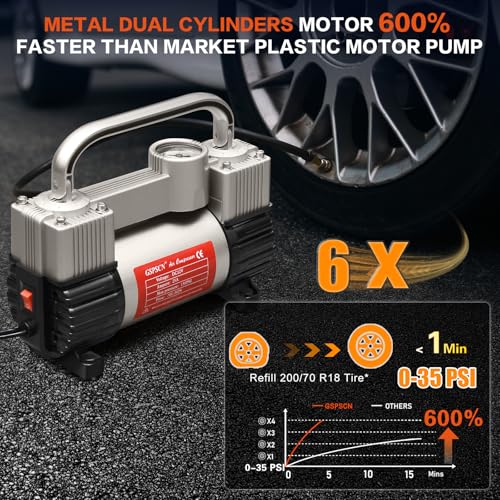
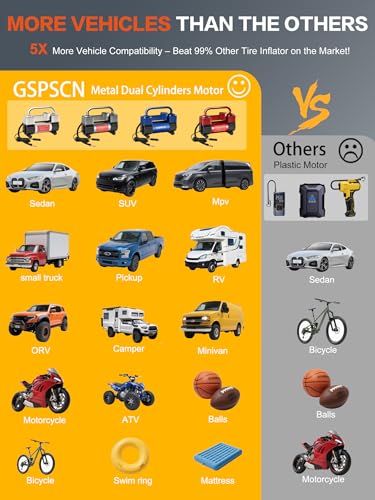
The GSPSCN compressor wins on one key metric: noise. At 70 dB, it runs as quietly as a conversation, which is unheard of in this class. That makes it ideal for campsite use or late-night inflation without disturbing others. The double-cylinder direct drive system delivers 70L/min airflow, solid for its size, and the all-metal internal construction suggests long-term durability.
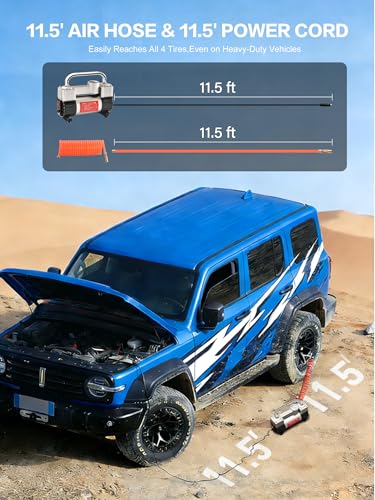
Owners appreciate the included battery clamps and long hoses, and the 11.5-foot reach is useful for larger vehicles. It’s not the fastest or lightest, but the build quality stands out. Compared to the UUP model, this one feels more refined and better engineered. If quiet, reliable operation matters more than raw speed, this is the pick.
Product photos

How We Chose These rv air compressors
Rather than a hands-on lab test, my research for these recommendations involved a detailed comparison of published specifications and features across numerous models. I weighed owner reviews from major retailers alongside expert opinions found in automotive and RV publications. As someone who’s spent years advising on power tools and workshop equipment, I applied my understanding of motor durability, airflow requirements, and practical usability to arrive at these rankings.
For RV air compressors, consistent tire pressure and quick fill times are paramount, so I prioritized those factors. Airflow (CFM) and maximum PSI were heavily weighted, as they directly impact how quickly you can inflate tires, especially larger RV tires. Equally important was build quality; durable components and features like automatic shut-off contribute to longevity and reliability on the road. Finding a unit that balances power with portability was also key.
Specifications reliably indicate a compressor’s raw power – PSI and CFM are numbers you can directly compare. However, I looked to owner feedback to gauge real-world performance and long-term durability. Reports on noise levels, ease of use, and the quality of included accessories (hoses, nozzles) proved invaluable. If you’re looking for something smaller for your car, you might also consider checking out guides to compact car air compressors for more options.
What To Look For In rv air compressors
Choosing the right RV air compressor requires a bit more thought than just grabbing the cheapest option. You’ll want something reliable, efficient, and suited to the specific needs of your rig and travel style.
A good RV air compressor prioritizes consistent pressure delivery, durable components, and practical features like extended hoses and multiple chuck options. Look for units with a sufficient CFM (cubic feet per minute) rating to fill your tires quickly, a reliable pressure gauge, and protection against overheating. Consider portability, power source (12V DC or cordless), and included accessories to ensure it meets your needs on the road.
Pressure and Airflow: Matching the Compressor to Your Tires
The single biggest mistake people make is underestimating the airflow (CFM) needed for their tires. RV tires, especially those on larger Class A or fifth-wheel trailers, have a significant volume. A compressor with a low CFM will take forever to fill them, and may overheat before the job is done. I generally recommend looking for a compressor with at least 2.0 CFM at 100 PSI for smaller travel trailers, and 3.0 CFM or more for larger rigs. Don’t skimp here; patience wears thin quickly when you’re stranded on the side of the road.
Power Source: 12V DC vs. Cordless Convenience
Traditionally, RV air compressors have been 12V DC models, plugging into your vehicle’s cigarette lighter or directly to the battery with clamps. These are generally more powerful and can run continuously for longer periods. However, the newer generation of portable lithium air compressors offer impressive convenience. If you frequently camp off-grid or value portability, a cordless option is worth considering, just be mindful of battery life and recharge times. I’ve seen some folks using multiple batteries to guarantee they can fill all their tires without needing a power hookup.
- A 12V compressor requires a reliable power source and potentially longer cable runs.
- Cordless models offer freedom from power outlets, but battery capacity is a limiting factor.
- Consider a unit with both 12V and cordless capabilities for maximum versatility, though these tend to be more expensive and may compromise on peak performance in either mode – a jack of all trades, master of none.
Features and Accessories: Beyond the Basics
Don’t overlook the little things. A compressor that comes with a variety of nozzles and adapters is far more useful than one that only handles Schrader valves. Look for an extended reach chuck for dual rear wheels, and a high-quality gauge (digital is preferable) for accurate readings. I’ve also found that a built-in LED work light can be incredibly helpful for nighttime tire checks or emergency repairs. If you’re often dealing with off-road conditions, consider a compressor with a durable carrying case and an IP54 rating or better for dust and water resistance. Many owners also appreciate features like auto-shutoff to prevent overinflation, and you can find some excellent reliable car tire inflators that include this.
Don’t assume a higher price always means better quality. Focus on CFM, build materials, and included accessories to get the most value for your money.
RV Air Compressors Compared
Here’s a comparison of key specifications for popular RV air compressors to help you make an informed decision.
| Product Name | Max PSI | Airflow (CFM) | Power Source | Duty Cycle | Cord Length (ft) | Battery Capacity (mAh) |
|---|---|---|---|---|---|---|
| VIAIR 450P-RV EF | 150 | 2.19 | 12V | 100% @ 100 PSI | 8 | N/A |
| VIAIR 400P-RV EF | 150 | 2.59 | 12V | 100% @ 40 PSI | 8 | N/A |
| ETENWOLF VORTEX S6 | 160 | 1.5 | Cordless | 100% | N/A | 19200 |
| UUP Double Cylinder 12V | 150 | 70 L/min | 12V | N/A | N/A | N/A |
| ALL-TOP Dual Cylinder Heavy Duty | 150 | 12.35 | 12V | N/A | 6.5 | N/A |
| SuperBars APP Smart Tire Inflator | N/A | 48 L/min | Cordless | N/A | N/A | 10400 |
| TireMinder RV AIR LITE | 80 | 1.80 | 12V | N/A | N/A | N/A |
| GSPSCN Heavy Duty Metal | 150 | 70 L/min | 12V | N/A | 11.5 | N/A |
Frequently Asked Questions
What PSI is typical for RV tires?
Most RV tires require between 80 and 110 PSI, but you should always check the sticker on your tire sidewall or in your RV’s owner’s manual for the manufacturer’s recommendation. Maintaining correct pressure extends tire life and improves fuel economy.
Can a cordless air compressor handle large RV tires?
While cordless models have improved, filling large RV tires can strain their batteries. A 12V model generally delivers more sustained power for larger tires, but if you prioritize convenience, look for a cordless option with a high-capacity battery (over 10,000 mAh) or consider purchasing extra batteries.
What CFM do I really need for an RV?
For most travel trailers, 2.0 CFM at 100 PSI is adequate, but larger Class A or fifth-wheel RVs benefit from 3.0 CFM or higher to avoid long fill times and potential overheating. Underestimating CFM is a common mistake that leads to frustration.
Are more expensive RV air compressors always better?
Not necessarily. Focusing on CFM, build quality, and included accessories offers better value than simply paying for a brand name. You can find reliable, high-performing options without breaking the bank, and even explore [quick-fill air compressors] (https://powertoolguide.net/best-portable-air-compressor-for-tires/) for efficient inflation.
What’s the difference between duty cycle and CFM?
CFM measures the volume of air delivered per minute, while duty cycle indicates how long the compressor can run continuously before needing to cool down. A 100% duty cycle at a given PSI means the compressor can operate indefinitely at that pressure, which is ideal for filling multiple tires without overheating – it’s a key feature when comparing [portable compressors for RV tires].
The Bottom Line
Choosing an RV air compressor ultimately comes down to balancing convenience with capability. While cordless options are tempting for their portability, the VIAIR 450P-RV EF strikes the best overall balance of power, reliability, and continuous operation for most RVers needing to quickly and confidently manage tire pressures. It delivers consistent airflow without demanding a battery charge or constant monitoring.
For those prioritizing budget or specific needs, there are excellent alternatives. The ETENWOLF VORTEX S6 is a strong pick if cordless convenience is paramount, and it’s a great option for light-duty inflation tasks. If you’re looking for a robust and affordable 12V unit, the GSPSCN Heavy Duty Metal compressor offers impressive airflow for its price, and several owners praise its durability. You might also consider checking out guides to portable 12V compressors for more options.
At the end of the day, CFM and build quality matter more than any flashy feature. Don’t get caught up in maximum PSI numbers if the compressor can’t sustain adequate airflow. A reliable unit with sufficient power, combined with a consistent maintenance routine for your tires, will provide far more peace of mind on the road than any top-of-the-line gadget.
