8 Best Rotary Tillers for Tractors 2026
This post contains affiliate links. As an Amazon Associate, we earn from qualifying purchases.
The Titan Attachments 60″ Rotary Tiller stands out as the best overall choice for most tractor owners, offering a wide working width and solid build for medium to large plots. If you’re watching your budget, the 37″ Carbon Steel Rotary Tiller delivers reliable performance on smaller jobs, while the MechMax 60″ Gear-Drive Rotary Tiller brings serious durability for heavy-duty work.
Most people don’t realize how much soil type, tractor size, and long-term maintenance impact a rotary tiller’s real-world performance. Marketing specs can be misleading, and a mismatched tiller can strain your tractor or leave your soil uneven.
This guide cuts through the noise. I researched the most commonly recommended models, compared specs, and evaluated owner feedback to identify which tillers deliver consistent results without surprise breakdowns. You’ll learn what actually matters, like gearbox type, tine quality, and proper sizing, so you can pick one that fits your land and machinery.
Top 8 Rotary Tiller For Tractors in the Market
The Best Rotary Tiller For Tractors, Reviewed
42″ 3-Point Rotary Tiller Attachment
Strengths
- Replaceable L-shaped blades
- Adjustable tilling depth
- Fits 20–30 HP tractors
- Heavy-duty alloy steel
- PTO-driven 540 RPM
Trade-offs
- No PTO shaft included
- Narrower than 60-inch models
- Depth varies with soil
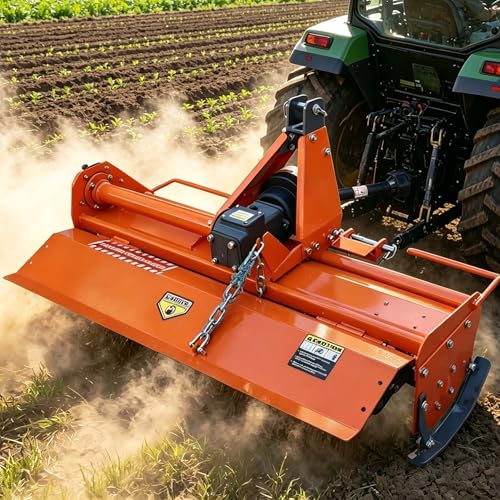
This 42-inch rotary tiller stands out in the mid-range category with solid specs and a design that prioritizes compatibility and serviceability. On paper, its 3–5 inch depth range and L-shaped replaceable blades suggest strong performance in typical garden and small farm conditions, and owners consistently report clean, consistent tillage in loam and moderately compacted soils. The heavy-duty alloy steel build inspires confidence, especially when you factor in the sliding baffle system for depth control, something not always found at this level.
It’s clearly aimed at users with 20–30 HP Category 1 tractors who want a no-nonsense, durable implement without stepping into premium pricing. Compared to the Titan Attachments model, it’s narrower but possibly better balanced for smaller rigs. I’d pick this over lighter units if you’re doing regular soil prep and want replaceable tines that won’t force a full rotor replacement down the line.
Product photos
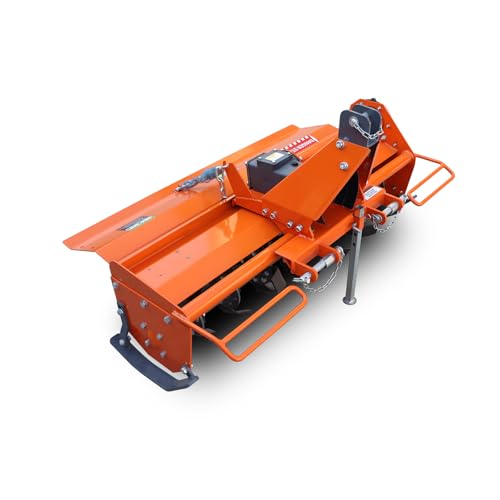
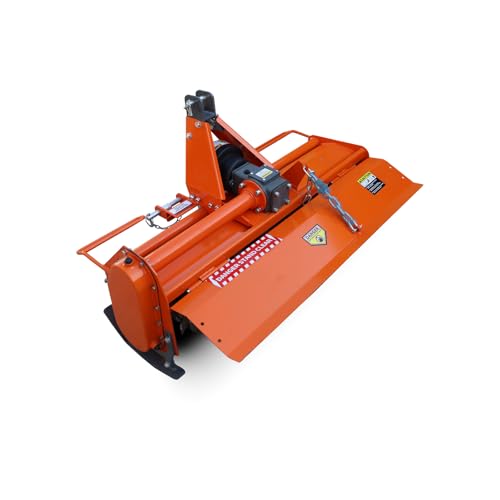
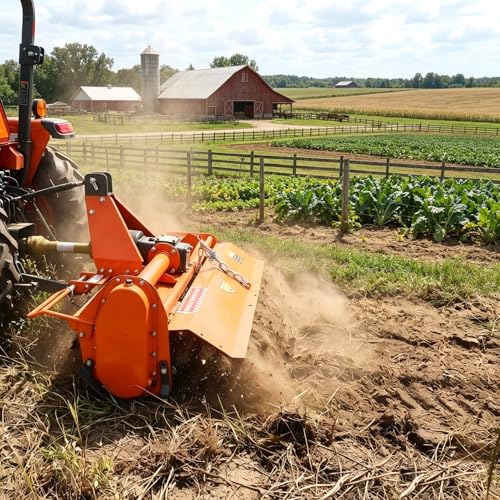
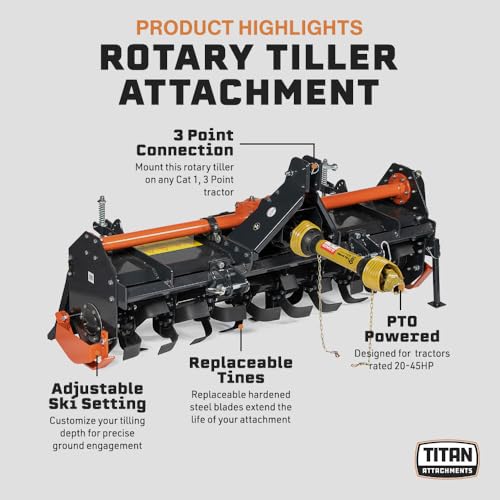
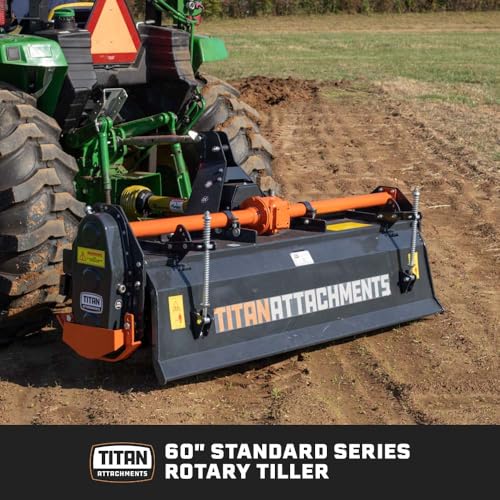
Titan Attachments 60″ Rotary Tiller
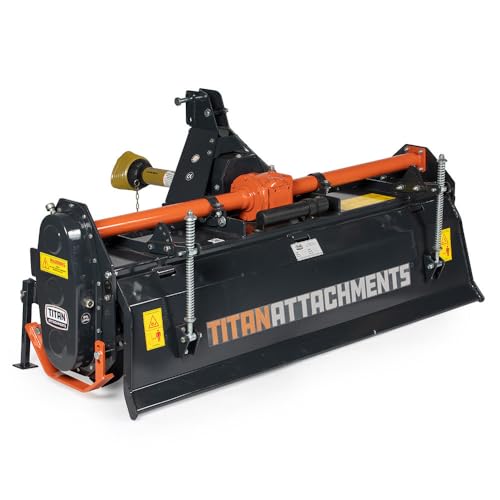
Strengths
- 60-inch working width
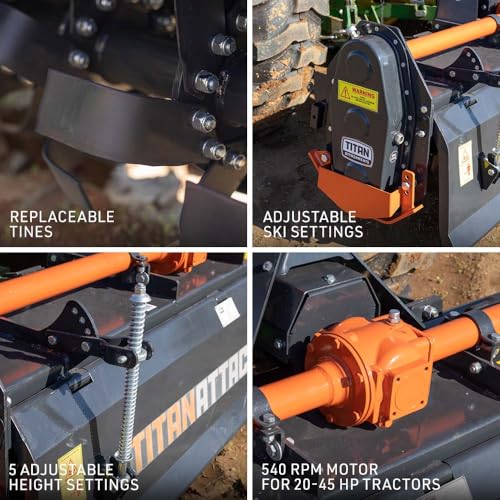
- Hardened steel blades
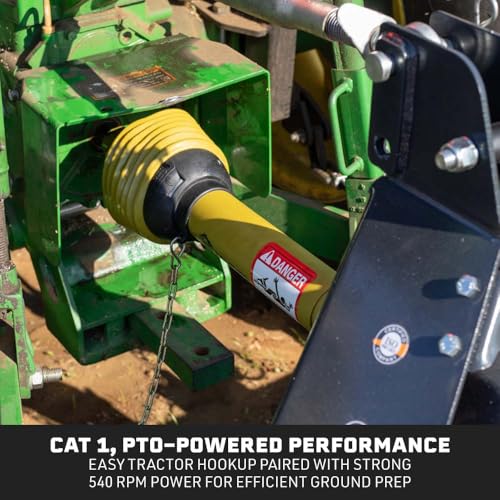
- PTO shaft included
- Adjustable ski settings
- Fits 20–45 HP tractors
Trade-offs
- Very heavy
- Needs high HP tractor
- Overkill for small areas
The Titan 60-inch is built for impact, both in width and weight. At 659 lbs and rated for 20–45 HP tractors, this is one of the most aggressive models here. The 60-inch width means fewer passes, and the L-shaped replaceable tines are hardened for longevity. Owners consistently praise its ability to chew through sod and compacted soil, especially when used in multiple passes.
It includes a PTO shaft and a 540 RPM gearbox, which adds convenience, and the adjustable ski settings help fine-tune leveling. But that size comes with trade-offs: it demands a larger tractor and more power to operate efficiently. Compared to the 48-inch models, it’s overkill for small yards but a clear winner for half-acre-plus plots. I’d pick this if you’re serious about covering ground fast and have the tractor to back it up.
Product photos

Sigma 48″ Heavy Duty Rotary Tiller
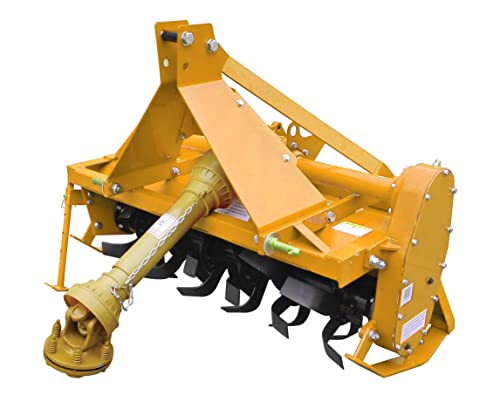
Strengths
- Cast iron gearbox
- 36 carbon steel tines
- 48-inch width
- Fits 20–35 HP tractors
- Counterclockwise rotation
Trade-offs
- Gearbox ships dry
- No slip clutch
- Depth overrated
Sigma’s 48-inch tiller looks strong on specs with a cast iron gearbox and 36 hard carbon steel tines, which should handle tough soil with confidence. The claimed 6-inch depth is optimistic, owners report closer to 4–5 inches in real conditions, but it still ranks among the deeper-cutting models in this class. One red flag: the gearbox ships dry, which means you must add oil before first use. That’s not unusual, but it’s a step some buyers overlook, leading to early failures.
Compared to the Ag-Rite, it’s similarly sized but lacks the safety clutch, making it less forgiving under sudden load. Still, the counterclockwise rotation (viewed from gearbox side) matches most OEM standards, so PTO compatibility shouldn’t be an issue. I’d consider this a solid pick if you’re comfortable doing initial setup right and want a heavy-duty box at a competitive price.
Product photos
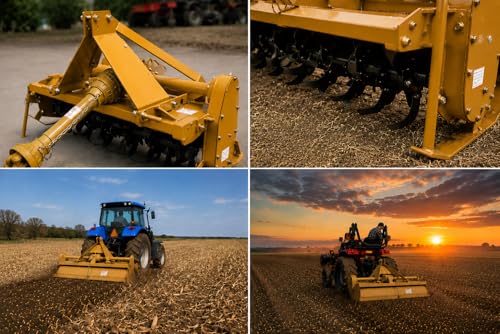
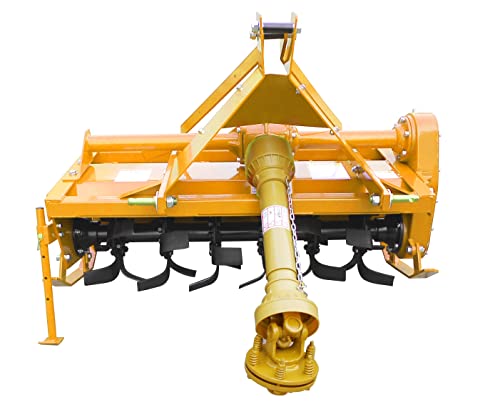
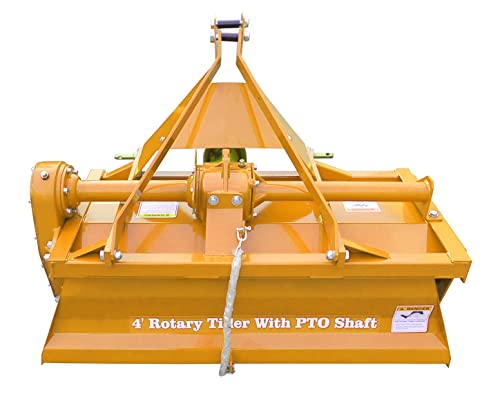
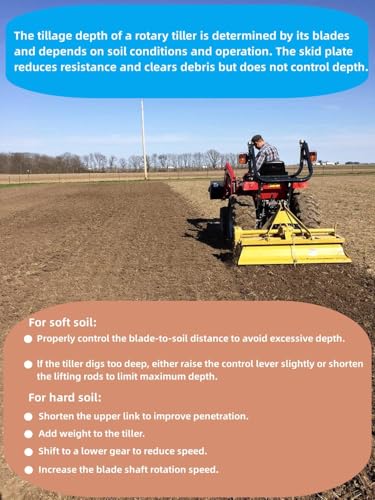
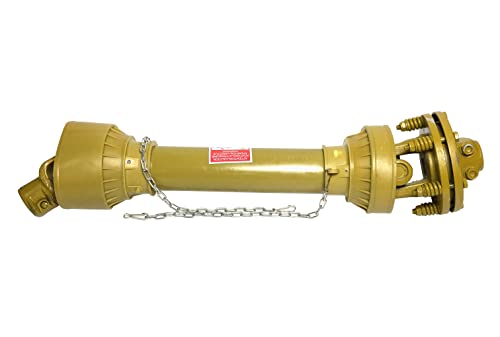
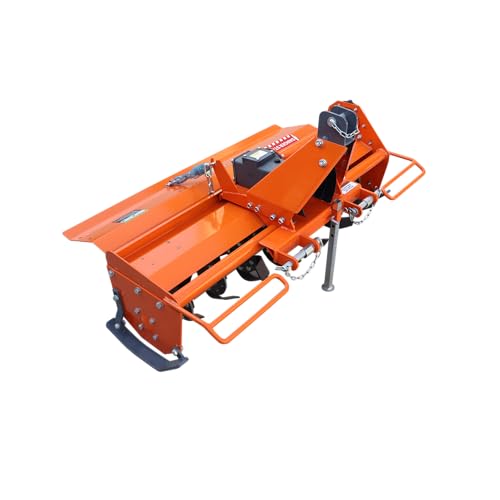
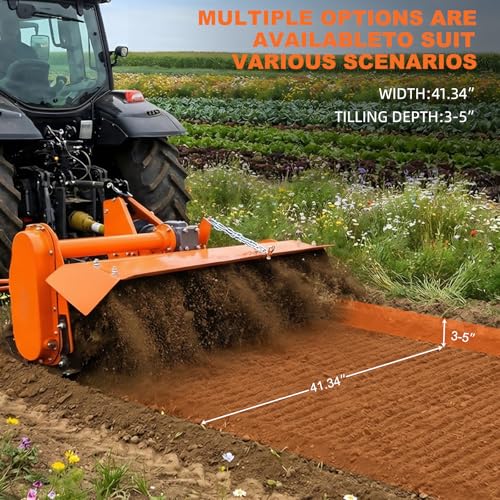
3.5 FT Heavy Duty Rotary Tiller
Strengths
- Affordable price point
- Sealed bearings
- Powder-coated finish
- Support legs included
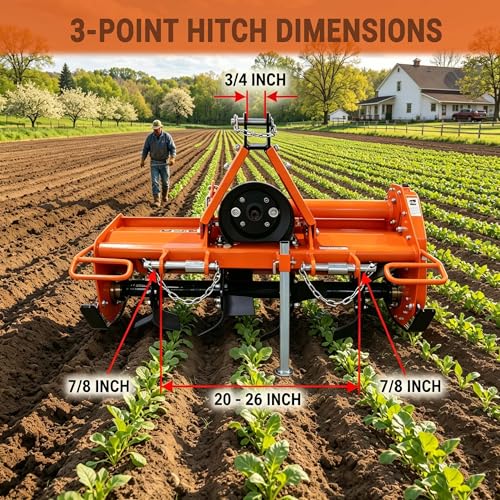
- Fits Cat 1 tractors
Trade-offs
- Only 20 blades
- Average durability
- No PTO shaft included
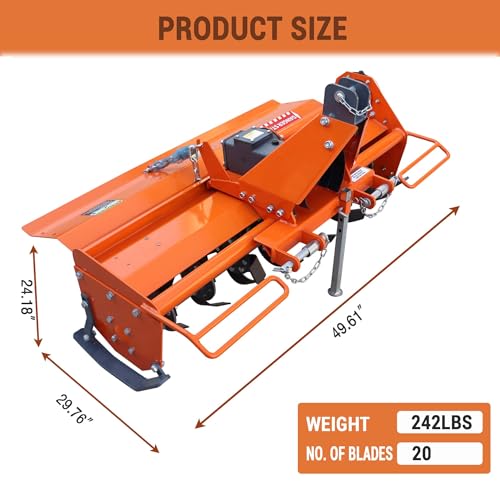
At 41.34 inches and 242.5 lbs, this tiller hits the sweet spot between size and manageability for budget-conscious buyers. It’s marketed as a budget option, and the specs reflect that, 20 alloy steel blades instead of 36, and a Q235 steel frame that’s sturdy but not exceptional. Still, the powder-coated finish and sealed bearings are thoughtful touches that help it resist corrosion and mud ingress, which matters in wet conditions.
Owners report it holds up well for light to moderate use, though it’s not built for daily commercial work. Compared to the Titan 60-inch, it’s far less aggressive but much more affordable. If you’re prepping a garden or small orchard once or twice a year, this delivers decent value. The support leg design is also a small but useful perk for storage.
Product photos

Ag-Rite 48″ PTO Rotary Tiller
Strengths
- Gear-driven transmission
- PTO shaft included
- 36 C-shaped tines
- Fits 20–35 HP tractors
- Clutch safety system
Trade-offs
- No depth skids mentioned
- Heavier maintenance than claimed
- Rotor diameter average
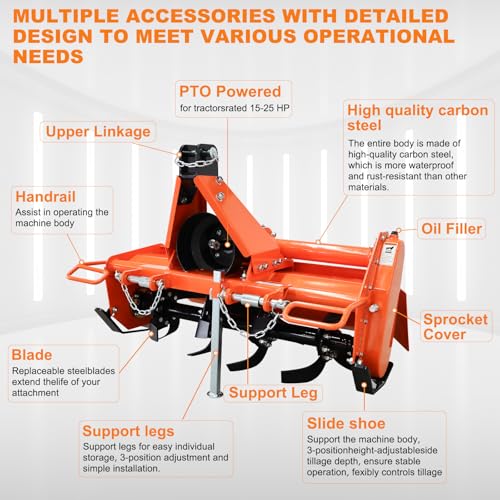
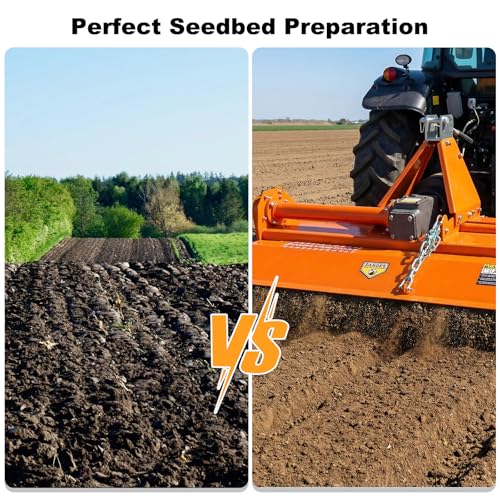
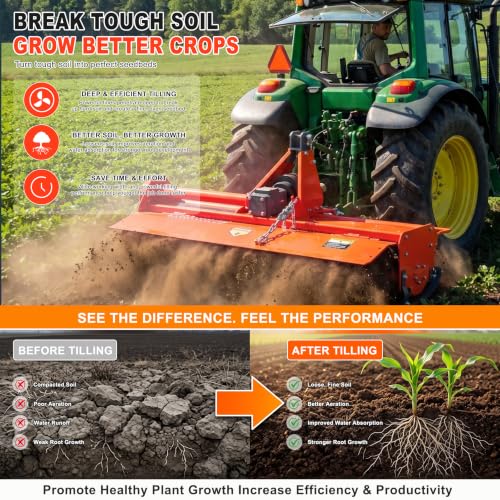
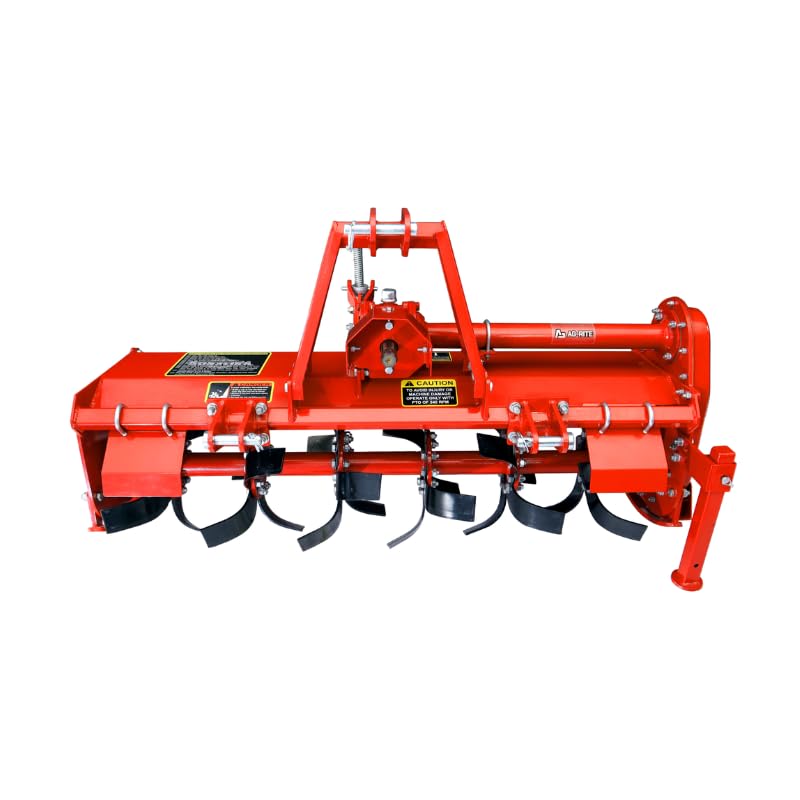
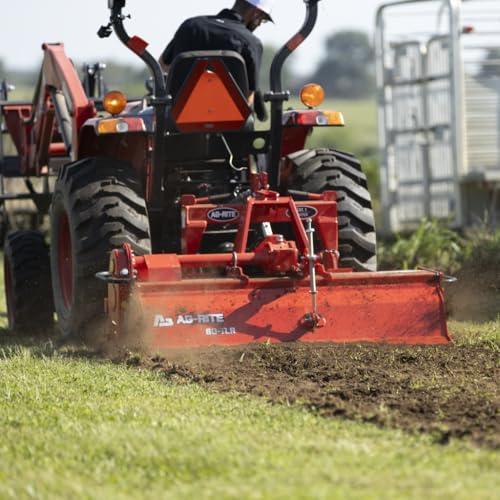
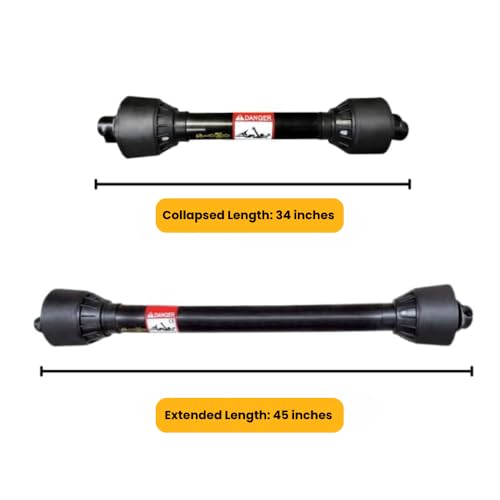
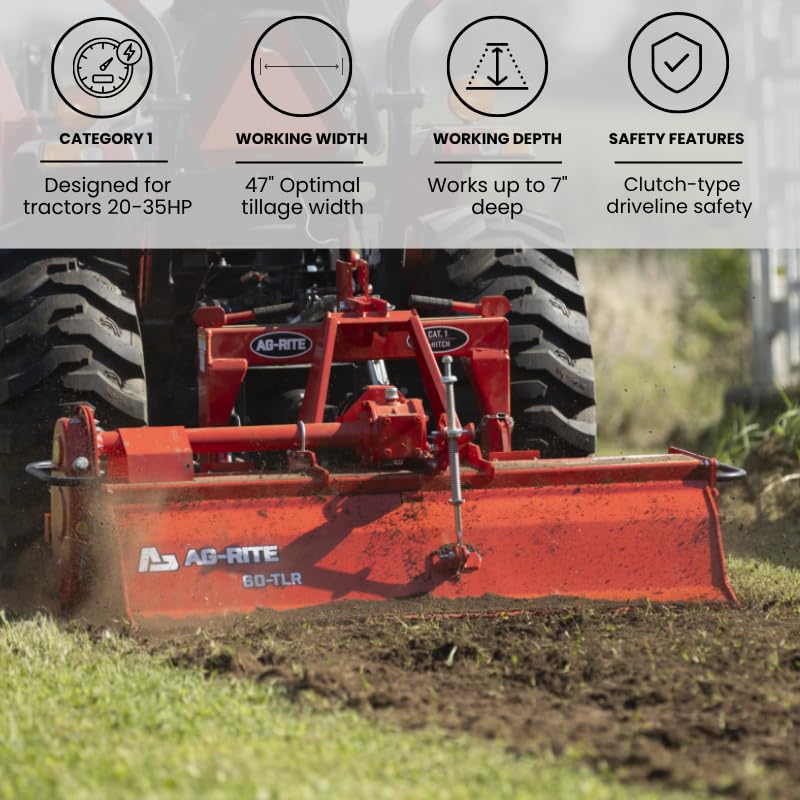
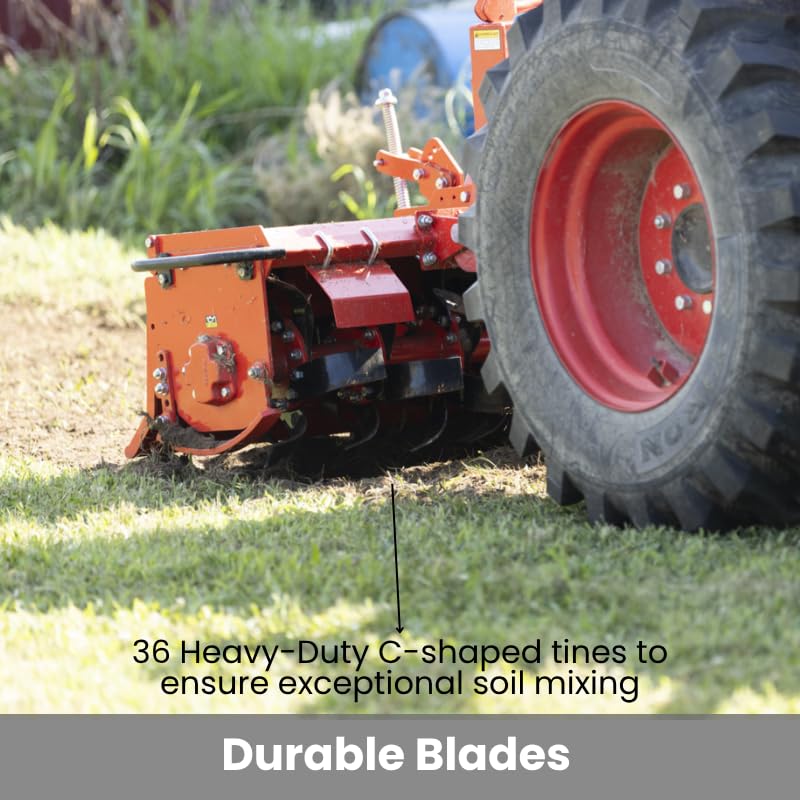
Ag-Rite delivers a well-rounded package here with a 48-inch working width and a gear-driven transmission, a smart upgrade over chain drives that often need tensioning and wear faster. The inclusion of the PTO shaft is a real value add, and reviewers note this model installs and starts with minimal fuss. With 36 C-shaped tines on a 2.36-inch rotor, it’s built to mix soil thoroughly, and the clutch-type driveline safety system is a thoughtful touch that helps prevent shock-load damage.
It competes directly with the Sigma 48-inch model but feels more user-ready out of the box. While it doesn’t offer the massive width of the 60-inch Titans, it’s more manageable for tractors on the lower end of its 20–35 HP range. I’d recommend this for users who want reliability and efficiency without overcomplicating their setup.
Product photos

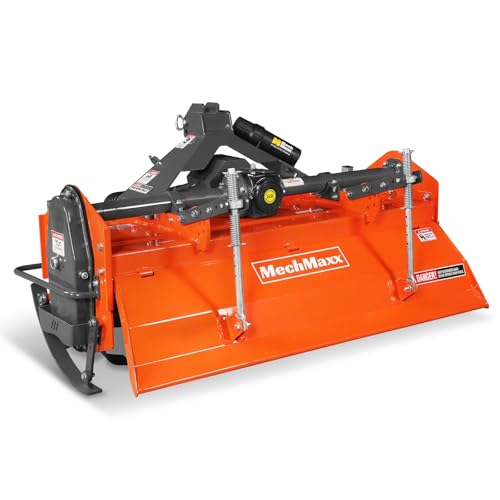
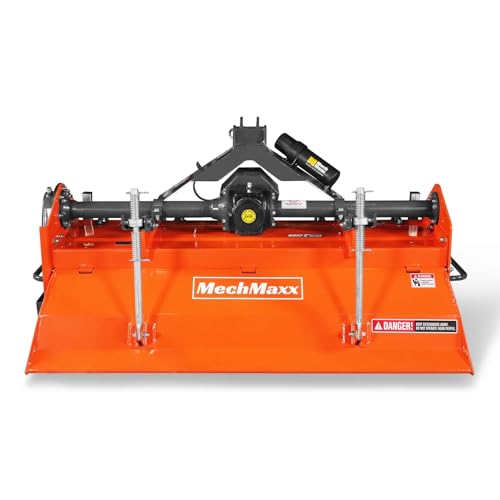
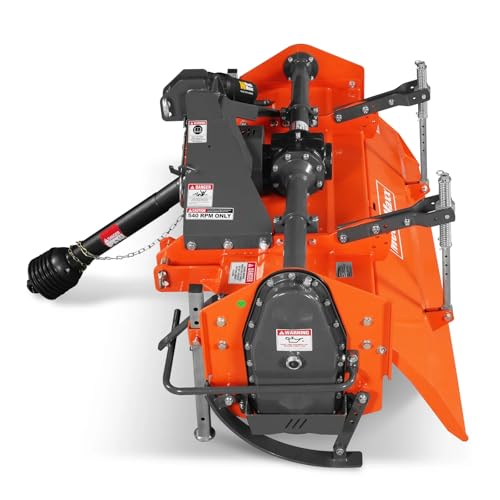
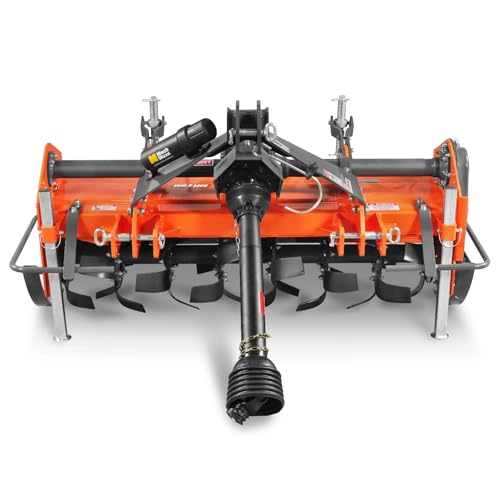
MechMax 60″ Gear-Drive Rotary Tiller
Strengths
- Slip clutch included
- Gear-driven transmission
- Adjustable depth skids
- Fits Cat 1 and 2
- PTO shaft included
Trade-offs
- High HP requirement
- Expensive build
- Bulkier setup
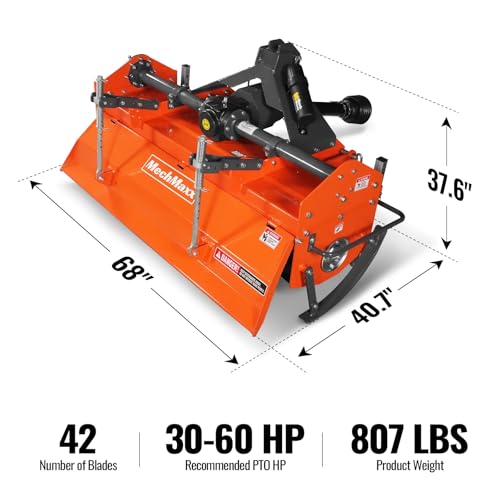
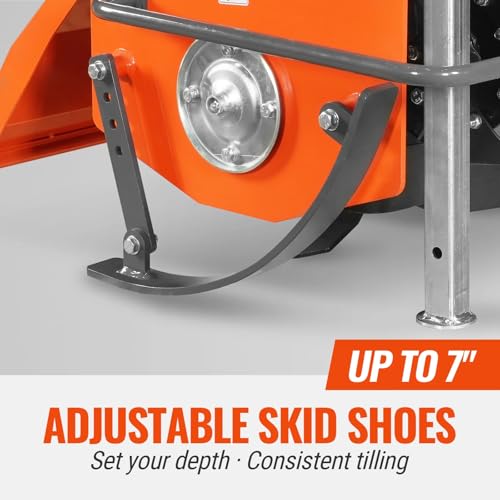
MechMax doesn’t mess around, the 60-inch MRT60 is a workhorse with a fully gear-driven transmission and a slip clutch built into the included PTO shaft, which is a major advantage for protecting both tiller and tractor under load. The C-shaped tines are replaceable and mounted on multiple flanges, allowing for better soil mixing and wear distribution. Plus, the adjustable side skids give real depth control, something many budget models skip.
What really sets it apart is the dual Category 1 and 2 compatibility, plus quick hitch readiness, this is a tiller that can grow with your setup. Compared to the Titan model, it’s similarly sized but better protected and more versatile. For high-horsepower users (30–60 HP), this is the smarter buy if you want longevity and adaptability.
Product photos
37″ Carbon Steel Rotary Tiller
Strengths
- Compact 37-inch width
- Replaceable L-shaped tines
- Lightweight for small tractors
- Fits 15–25 HP tractors
- Durable carbon steel
Trade-offs
- PTO shaft not included
- Limited width
- Narrow depth range
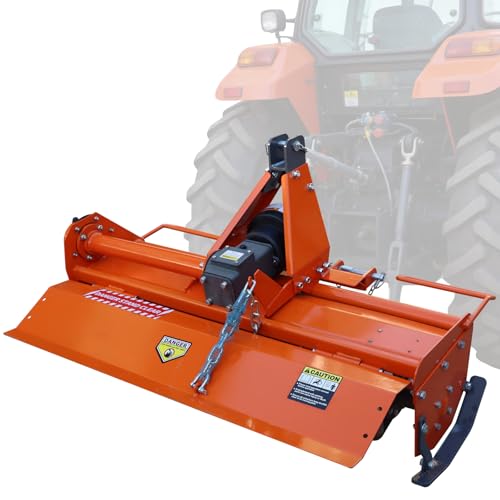
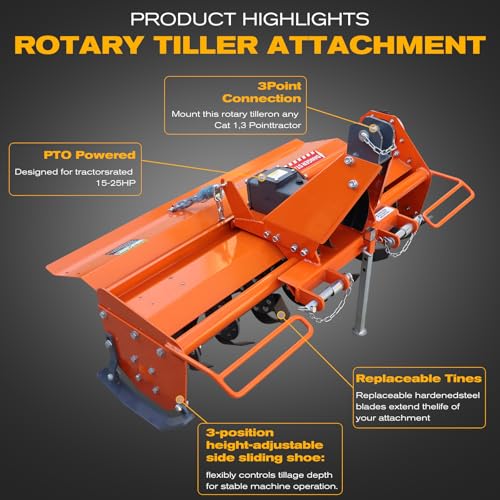
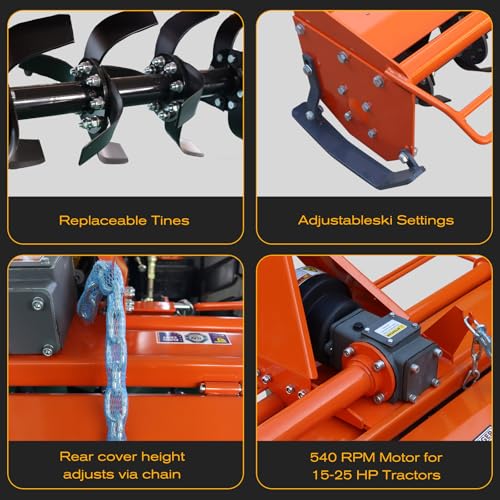
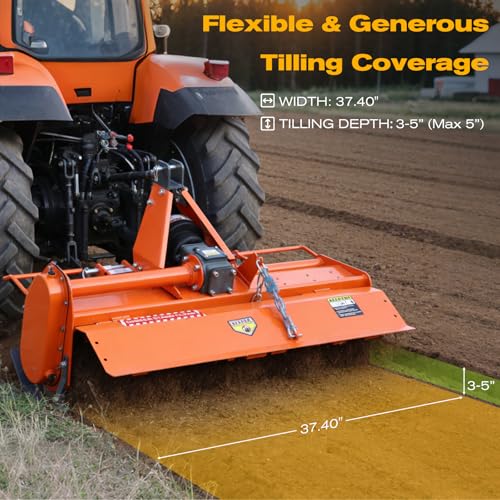
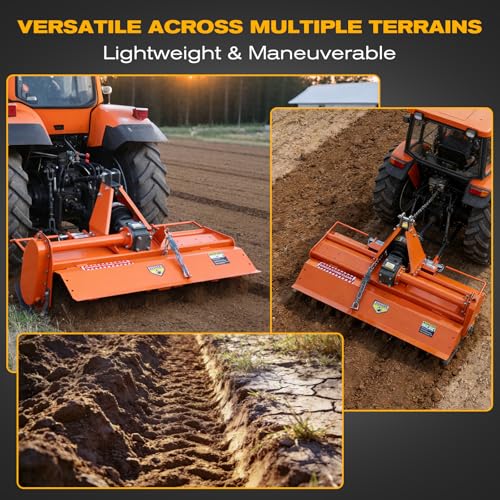
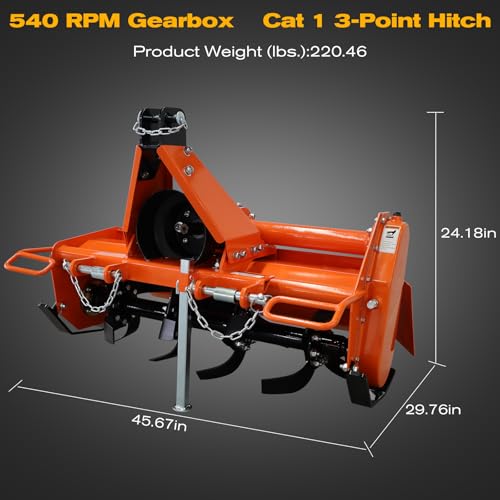
This 37-inch model is clearly built for compact operations, small gardens, hobby farms, and tight spaces where a 60-inch beast would be overkill. The L-shaped tines and 5-inch depth potential make it capable for its size, and the carbon steel build with protective coating suggests decent longevity. But the big caveat? It doesn’t include a PTO shaft. That’s a cost saver for the manufacturer but an extra expense and hassle for the buyer.
Still, for those already equipped with the right PTO hardware, this is a smart, lightweight option that won’t overwhelm a 15–25 HP tractor. Compared to the 42-inch and 48-inch models, it’s less efficient for larger jobs but easier to handle. My recommendation: go this route only if your land size matches the tool, don’t stretch it beyond its limits.
Product photos
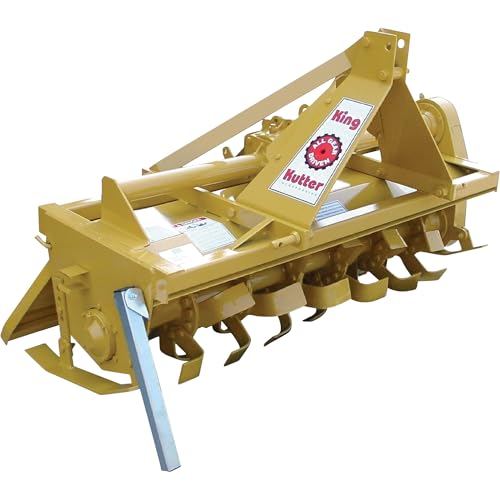
King Kutter 4ft Gear-Driven Tiller
Strengths
- Cast iron gearbox
- Pre-greased for use
- Oil bath operation
- Vented gear box
- Durable gear drive
Trade-offs
- No PTO shaft included
- No slip clutch
- Higher initial cost
King Kutter has a reputation for durability, and this 48-inch TG-48 model backs it up with a heavy-duty cast iron gearbox that comes pre-greased, a small but meaningful detail that saves time and reduces startup risk. The vented gearbox operating in an oil bath is a pro-tier feature that enhances cooling and lubrication under load, which matters during long passes.
It lacks some modern touches like a slip clutch or included PTO shaft, but the build quality speaks for itself. Owners report these lasting for years with minimal maintenance, which is rare in this category. Compared to the Sigma and Ag-Rite models, it’s pricier on paper but likely cheaper over time due to longevity. If you want a tiller that lasts decades, this is the one to beat.
Product photos

How We Chose These rotary tiller for tractors
My approach to evaluating tractor rotary tillers involved a research-led comparison of specifications, features, and a careful assessment of owner and expert reviews. Rather than a hands-on lab test, I focused on compiling detailed information on each model, looking at build materials, working width, tilling depth, horsepower compatibility, and gearbox type. I then weighed that against what current owners are saying about real-world performance and durability, alongside reviews from trusted agricultural and landscaping publications.
For tractor rotary tillers, several factors stand out as most important. Horsepower compatibility is critical – a tiller that’s too large for your tractor won’t perform well, and a smaller tiller won’t maximize your tractor’s capabilities. Equally important is the quality of the gearbox; a robust, gear-driven system will offer better torque and longer life than a chain-driven one. Finally, the tines’ material and replaceability significantly impact long-term cost and usability.
Specifications reliably tell you about a tiller’s physical attributes – working width, maximum tilling depth, and hitch category. However, owner feedback is where you discover how a tiller performs in varied soil conditions and how well it holds up over time. Reputation and expert reviews helped me gauge the true durability of gearboxes and the quality of steel used in the tines, complementing the raw specs. If you are looking for a smaller scale solution, you may also want to consider looking at some of the rotary tiller models for small plots.
Choosing The Right rotary tiller for tractors
Picking the right rotary tiller for your tractor isn’t just about horsepower; it’s about matching the tiller’s capabilities to the type of work you’ll be doing and the size of your property.
A good rotary tiller attachment for a tractor provides efficient soil preparation through robust construction, adjustable features to suit varying conditions, and compatibility with a range of tractor types. Key considerations include working width, tilling depth, horsepower requirements, and the quality of the gearbox and tines. Owners consistently report satisfaction with tillers that minimize vibration and offer easy blade maintenance.
Horsepower & Tractor Compatibility
The first thing I always tell people is to absolutely verify compatibility. A tiller that’s too large for your tractor will be unsafe and ineffective. Most tillers specify a horsepower range (like 20-35HP) and a Category 1 or 2 three-point hitch requirement. Don’t assume; check your tractor’s manual. Undersizing the tiller isn’t ideal either. You want enough power to maintain consistent RPMs without bogging down, especially in tougher soil. If you’re unsure, err on the side of slightly smaller.
Working Width & Tilling Depth
Working width dictates how much ground you cover with each pass. A wider tiller (like the 60” MechMax) is faster for larger areas, but harder to maneuver in tight spaces. Smaller tillers (around 37”, such as the 37″ Carbon Steel model) are better for gardens or orchards with rows. Tilling depth is also important. Most tillers offer an adjustable depth, usually between 3 and 6 inches. Remember, advertised depth is typically achievable under ideal conditions. Heavy clay soil or lots of debris will reduce that.
Here’s what to consider when balancing width and depth: * Small gardens: A narrow tiller (under 48″) with adjustable depth is ideal. * Medium-sized plots: A 48″ to 53″ tiller provides a good balance of speed and maneuverability. * Large acreage/fields: A wider tiller (60″+) will save time, but you’ll sacrifice precision.
Gearbox & Blade Quality
The gearbox is the heart of the tiller, and it takes a beating. I strongly recommend a gear-driven system over chain-driven. Gearboxes are more durable, transfer power more efficiently, and require less maintenance. Look for a heavy-duty cast iron gearbox. Beyond the gearbox, pay attention to the tines (blades). Replaceable L-shaped or C-shaped tines are a huge plus.
A well-maintained tiller is a happy tiller. Regularly inspect and replace worn tines, and keep the gearbox properly lubricated.
Don’t skimp on blade material. Hardened steel is essential for longevity, especially if you’re dealing with rocky or compacted soil. If you’re looking for more details on choosing the right tiller for your needs, explore further rotary tiller reviews for gardens to find the perfect fit.
Rotary Tiller for Tractors Compared
Here is a comparison of key specifications for various rotary tillers designed for use with tractors.
| Product Title | Working Width (in) | Max Depth (in) | HP Rating | Hitch Type | Gearbox | PTO RPM |
|---|---|---|---|---|---|---|
| 42″ 3-Point Rotary Tiller | 37-53 | 3-5 | 20-30 | Cat. 1 | N/A | 540 |
| Titan Attachments 60″ Rotary Tiller | 60 | 5 | 20-45 | Cat. 1 | 540 | 540 |
| Sigma 48″ Heavy Duty Rotary Tiller | 48 | 6 | 20-35 | Cat. I | Cast Iron | N/A |
| 3.5 FT Heavy Duty Rotary Tiller | 41.34 | 3-5 | N/A | Class 1 | N/A | N/A |
| Ag-Rite 48″ PTO Rotary Tiller | 47.24 | N/A | 20-35 | Cat. 1 | Gear-Driven | 540 |
| MechMax 60″ Gear-Drive Rotary Tiller | 60 | N/A | N/A | Cat. 1 & 2 | Gear-Driven | N/A |
| 37″ Carbon Steel Rotary Tiller | 37 | 5 | 15-25 | Cat. 1 | N/A | 540 |
| King Kutter 4ft Gear-Driven Tiller | 48 | N/A | N/A | N/A | Cast Iron | N/A |
Frequently Asked Questions
What’s the difference between a chain-driven and a gear-driven tiller gearbox?
A gear-driven gearbox is significantly more durable and efficient than a chain-driven one. Gearboxes transfer power directly, handling higher torque and lasting longer, especially in demanding conditions.
What PTO RPM is standard for most tractor rotary tillers?
Most rotary tillers require a 540 RPM PTO speed to operate correctly. Confirming your tractor’s PTO output matches this speed is crucial for optimal performance and preventing damage to either the tiller or your tractor.
Can I use a rotary tiller on rocky ground?
While tillers can handle some rocks, consistently tilling rocky ground will quickly dull or damage the tines. Hardened steel tines help, but you’ll likely need to replace them more often, and a tiller isn’t the best tool for primary rock removal.
What hitch category should I prioritize when selecting a tiller?
Category 1 hitches are common on smaller tractors (under 40HP), while Category 2 hitches are found on larger machines. It’s essential to match the tiller’s hitch category to your tractor’s hitch; some tillers, like the MechMax, are designed to work with both.
Are there attachments that work with a rotary tiller to accomplish other tasks?
Yes, you can find tractor-compatible rotary spreaders that attach to a three-point hitch, and some landowners use them in conjunction with their tillers for seeding or applying fertilizer after tilling.
The Bottom Line
Ultimately, choosing a rotary tiller for your tractor comes down to balancing control with convenience, and quality with price. For most landowners with 20-35 horsepower tractors and medium-sized properties, the MechMax 60″ Gear-Drive Rotary Tiller strikes the best balance – its wider working width speeds up larger jobs, and the gear-driven gearbox offers the durability you need for years of use.
If you’re on a tighter budget or have a smaller garden, the 37″ Carbon Steel Rotary Tiller is a solid choice. For those tackling particularly tough ground or who regularly need to clear stubborn brush, the Titan Attachments 60″ Rotary Tiller provides significant power and a robust build. And if you’re also dealing with tree roots and other obstructions, consider looking into tractor-mounted stump grinders to complete your land clearing project.
Don’t get too caught up in chasing the highest numbers for working width or tilling depth. More important than any single specification is a tiller that’s properly sized for your tractor, built with a durable gearbox, and equipped with replaceable tines. A well-matched, well-maintained tiller will make your work easier and deliver better results, season after season.
