9 Best Room Air Cleaners for 2026
This post contains affiliate links. As an Amazon Associate, we earn from qualifying purchases.
The MOOKA PR1 stands out as the best overall room air cleaner for its strong performance and quiet operation, while the MOOKA KJ190 is a solid budget-friendly choice. For those who want smart features and app control, the Levoit Vital 100S-P offers the most versatility.
If you’re dealing with allergies, pet dander, or just want cleaner indoor air, picking the right room air cleaner shouldn’t be guesswork. Too many models overpromise and underdeliver, especially when it comes to real-world noise and filter longevity.
As Robert A. Bennett from PowerToolGuide.net, I’ve spent over 15 years cutting through marketing hype to find tools and gear that actually work. This guide is based on a close look at specs, owner feedback, and expert reviews to highlight the air cleaners that deliver real results. We focused on CADR, filtration quality, and usability so you can make a confident choice.
Top 9 Room Air Cleaners in the Market
The Best Room Air Cleaners, Reviewed
MOOKA PR1 Air Purifier
Strengths
- Pet Mode included
- 6 fan speeds
- Washable pre-filter
- Real-time AQI display
- Quiet sleep mode
Trade-offs
- No smart connectivity
- Display lights not fully off
- Filter cost over time
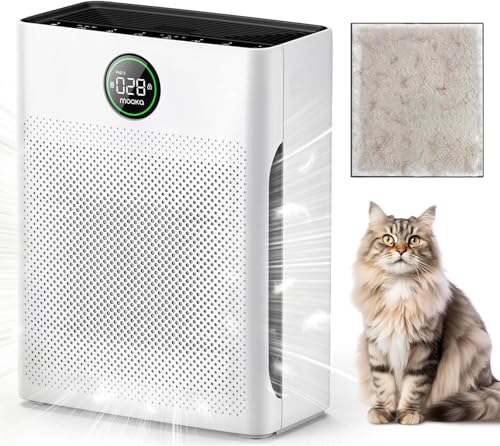
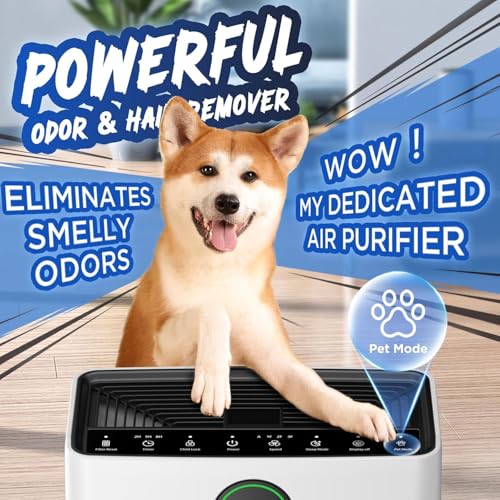
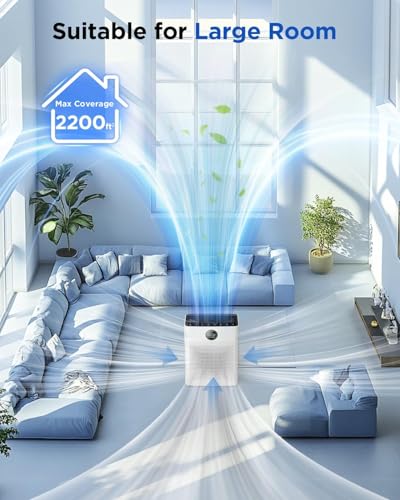
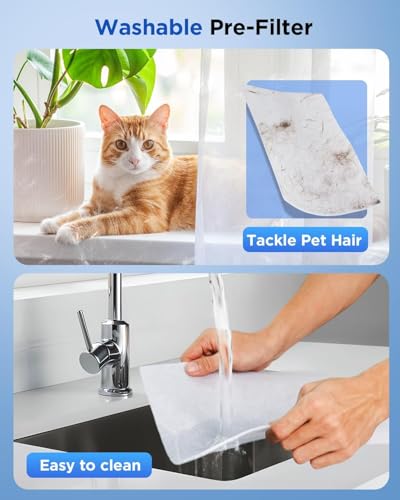
Labeled ‘Best Overall’, the MOOKA PR1 has the specs and features to back it up, wide air intake, 6 fan speeds, Pet Mode, washable pre-filter, and real-time PM2.5 display. It covers up to 2200 ft² in theory, but like all purifiers, that’s for one air change per hour. For consistent cleaning, stick to rooms under 1200 sq ft.
Owners praise the Pet Mode for reducing hair and odor, and the 26dB sleep mode is quiet enough for most bedrooms. The aroma function is a nice bonus, though not essential. Where it wins is balance: strong filtration, smart modes, solid build, and a filter reset function. While it lacks Wi-Fi, it’s one of the most complete non-smart purifiers available.
Product photos
MOOKA KJ190 Air Purifier
Strengths
- Large coverage claim
- Washable pre-filter
- 20dB sleep mode
- Auto mode with sensor
- Aromatherapy option
Trade-offs
- Sensor response lag
- Overstated room size
- Plastic pre-filter frame
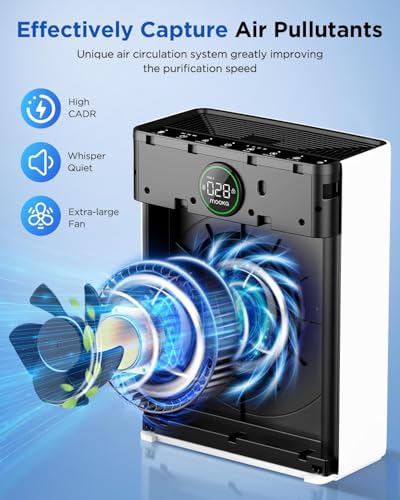
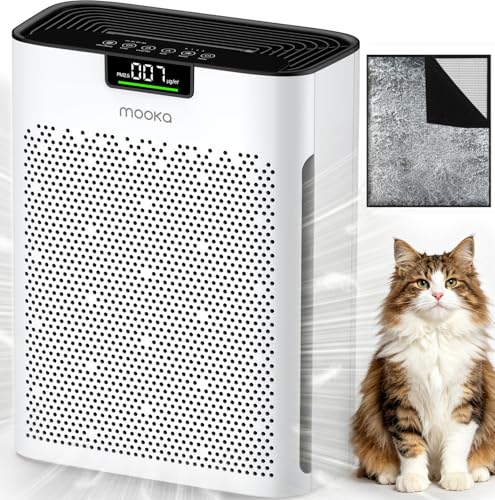
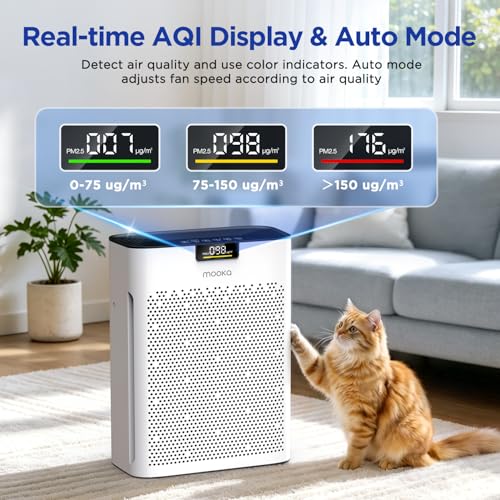
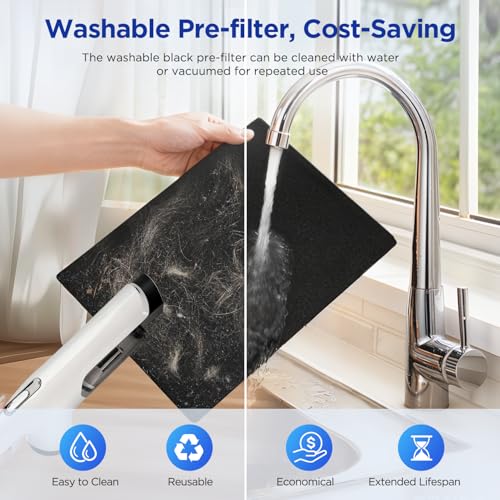
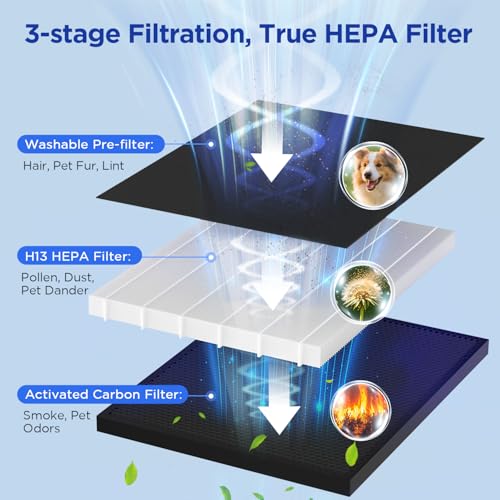
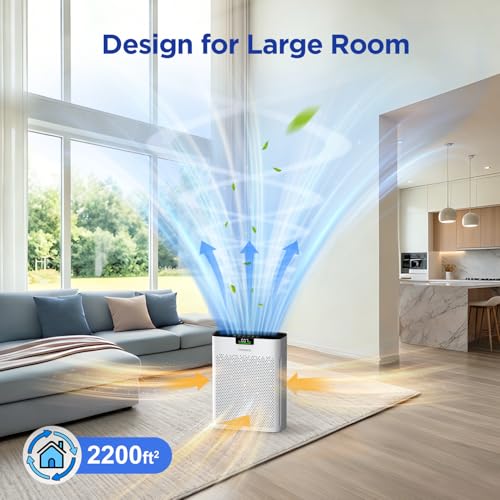
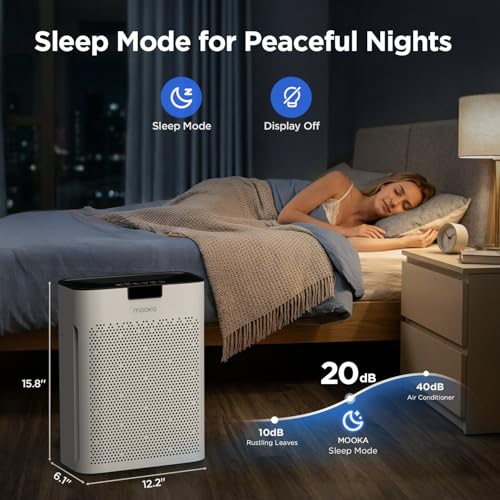
This MOOKA unit makes a bold claim with 2200 ft² coverage, and while that number is more aspirational than realistic for consistent air cleaning, the wide dual-side intake design does improve airflow over basic models. The H13 HEPA filter backed by a washable pre-filter and activated carbon layer gives solid protection against pet dander, dust, and odors, a combo that owners say noticeably cuts down on lingering pet smells. I appreciate the 20dB sleep mode; reviewers consistently report it’s truly silent, making it a strong pick for light sleepers or nurseries.
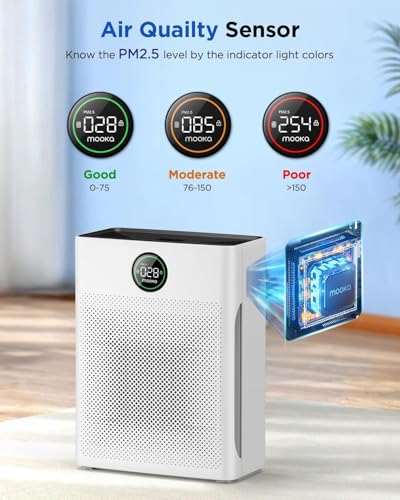
The real-time PM2.5 display and auto mode are functional, though some users note the sensor can be slow to react after sudden pollution spikes, like cooking or candle smoke. Still, the ability to set timed shut-offs and use aromatherapy is a thoughtful touch. The filter reminder is useful, but I’d stress using only official MOOKA replacements, off-brand filters tend to throw off sensor calibration and reduce efficiency.
Product photos
Levoit Vital 100S-P
Strengths
- Wi-Fi and app control
- AHAM VERIFIDE
- Pet mode
- Auto air adjustment
- Voice assistant compatible
Trade-offs
- App can be glitchy
- Higher price
- Filter costs add up
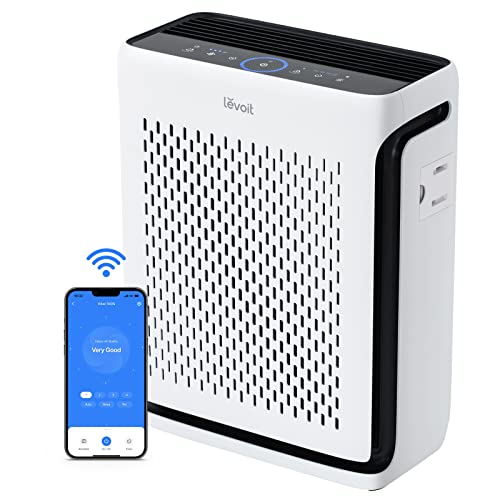
The Vital 100S-P is where Levoit steps into the smart era, and it does so confidently. With AHAM VERIFIDE performance and VeSync app integration, you can control fan speed, set schedules, monitor air quality, and get filter alerts from your phone. The auto mode responds well to pollution changes, and pet mode boosts airflow when dander spikes, a feature pet owners appreciate.
It matches the Core300-P in filtration (HEPA-grade in sleep mode) but adds Wi-Fi and a real-time AQI display. Owners report reliable app performance and smooth voice assistant pairing. The 1,073 ft² coverage is again for one air change per hour, so best in rooms up to 600 sq ft for constant cleaning. If you want a connected purifier that still delivers on core filtration, this is the smarter buy over non-smart models.
Product photos


KNKA APH4000 Air Purifier
Strengths
- AHAM VERIFIDE CADR
- Dual intake design
- Pet and ECO modes
- Real-time AQI display
- Washable pre-filter
Trade-offs
- Display not fully dimmable
- Filter availability limited
- Bulkier design
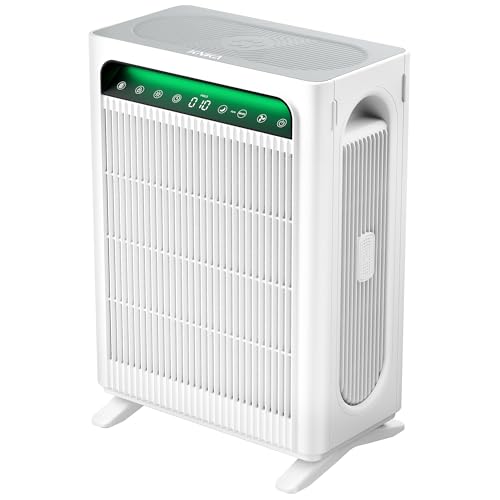
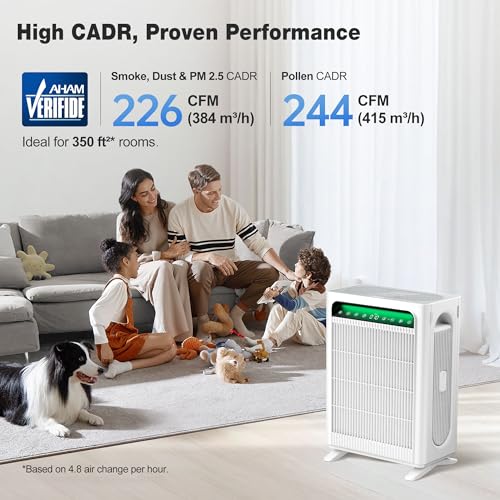
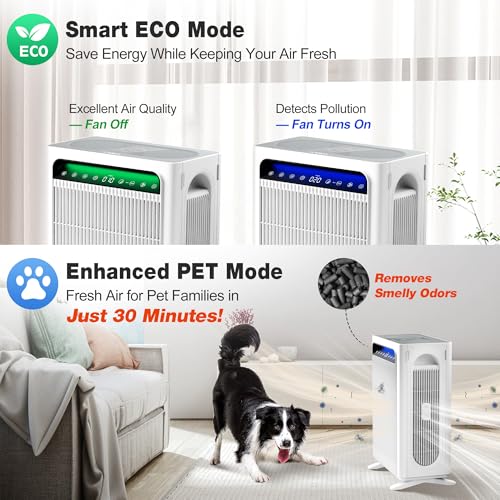
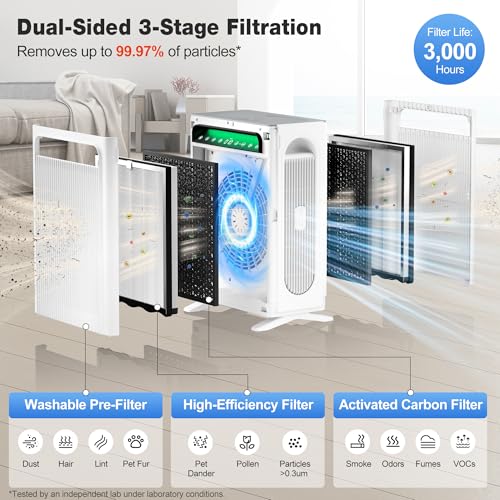
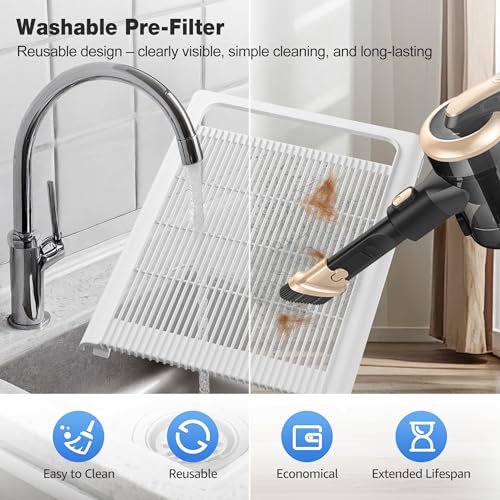
The APH4000 earns its ‘Best AHAM Verified’ label with solid, transparent specs, 226 CFM smoke/dust CADR and 244 CFM pollen CADR, numbers that reflect real-world performance. It’s rare to see a budget-friendly unit with full AHAM certification, and that alone gives it credibility over similarly priced models. The dual air intakes and three-stage dual filters improve airflow and particle capture, and owners report fast air clearing in rooms up to 800 sq ft.
Pet mode boosts suction for dander, and ECO mode saves energy when air is clean, a smart efficiency play. The real-time AQI display is clear, though the color ring isn’t as vibrant as ECOSELF’s. If you want a no-nonsense, performance-proven purifier with measurable results, this is my pick over flashier, uncertified units.
Product photos
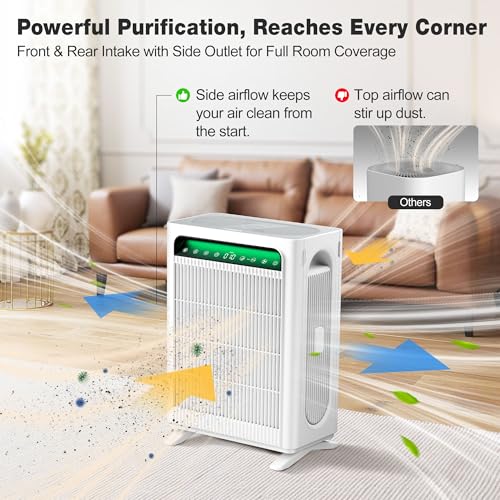
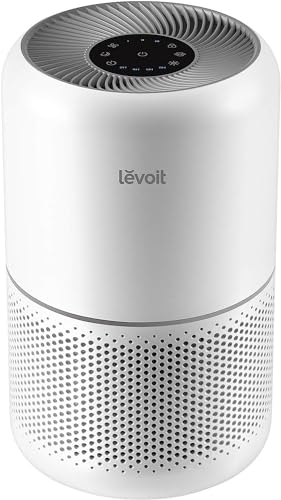
Levoit Core300-P
Strengths
- AHAM VERIFIDE performance
- 99.97% HEPA efficiency
- 24dB sleep mode
- Low light emission
- Trusted replacement filters
Trade-offs
- Filter replacement cost adds up
- Not for large open spaces
- Basic design
The Core300-P is a benchmark in the sub-$150 air purifier space, and for good reason. Its AHAM VERIFIDE ratings are real, 143–167 CFM CADR across smoke, dust, and pollen, and that means actual performance you can trust. For allergy sufferers, the 99.97% capture rate on particles as small as 0.1μm is backed by lab results, and owners consistently report fewer sneezing fits and clearer breathing, especially in bedrooms with pets.
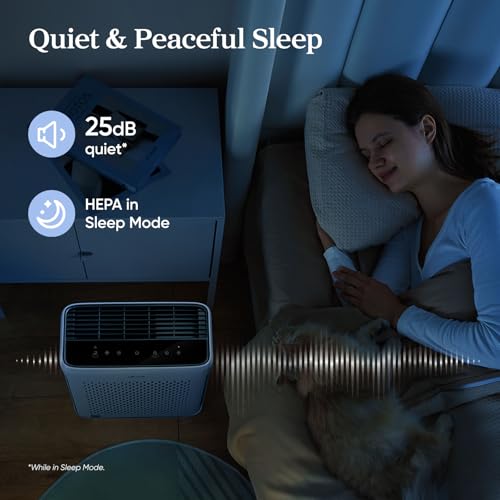
It’s also whisper-quiet at 24dB in sleep mode, and the ability to dim the display fully makes it bedroom-ready. While its 1,073 ft² claim is for one air change per hour, not continuous cleaning, it’s perfect for rooms up to 500 sq ft. I’d pick this over many pricier models because of its balance of proven performance, reliability, and brand support.
Product photos


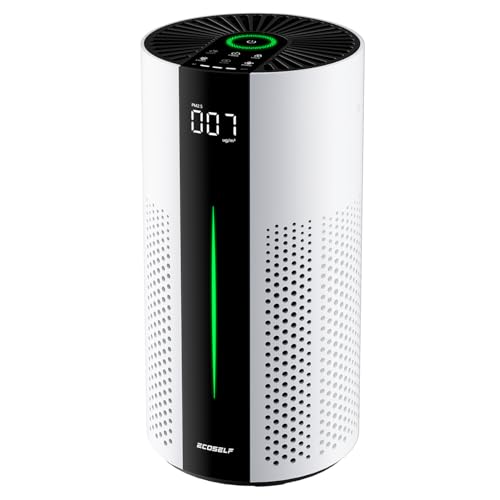
ECOSELF HAP609 Air Purifier
Strengths
- 360° air intake
- Responsive auto mode
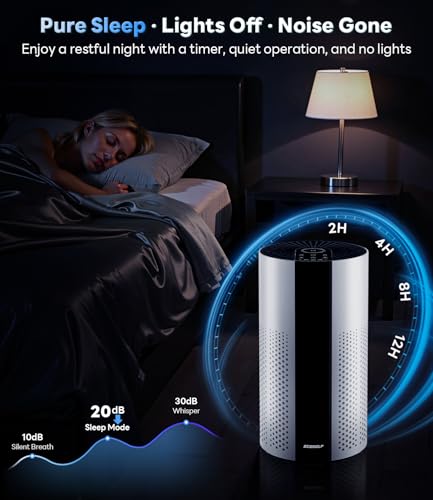
- 20dB sleep mode
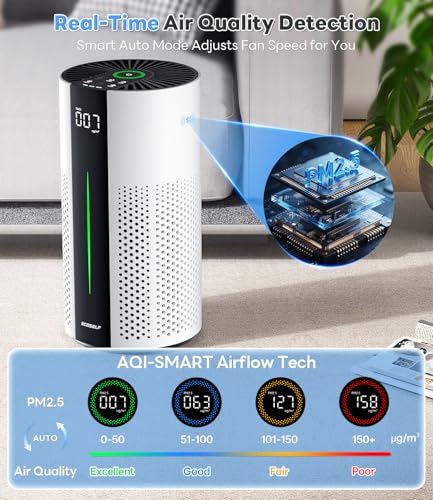
- Color AQI ring
- 1–24 hour timer
Trade-offs
- No AHAM certification
- Build quality average
- Sensor recalibration needed
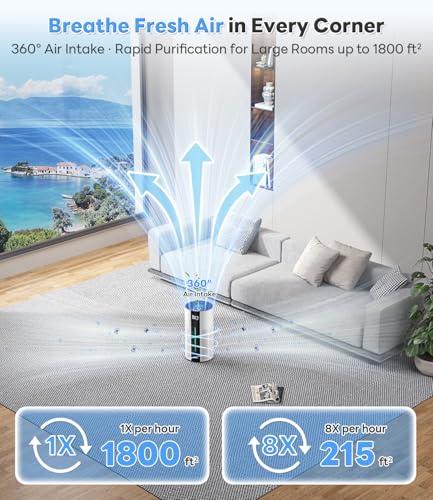
The HAP609’s 360° air intake is a standout design choice, it pulls in air from all sides, which helps it respond faster in auto mode than front-intake models. The PM2.5 sensor drives a responsive auto function that ramps up when pollutants spike and quiets down when air clears, and owners say it works well for cooking smoke or sudden pet activity.
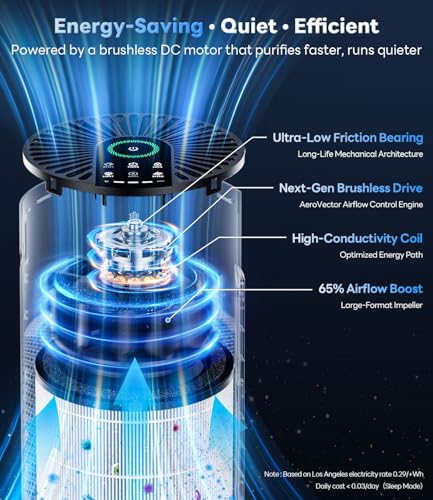
The 20dB sleep mode is genuinely silent, and the color-coded air quality ring is intuitive at a glance. But like many non-AHAM models, the 1800 ft² claim is optimistic. In practice, it’s better suited for rooms under 1000 sq ft. Still, for buyers who want a hands-off, auto-responsive purifier with excellent sleep features, this is one of the best values.
Product photos
Blueair Blue Pure 511

Strengths
- HEPASilent tech
- Extremely quiet
- Energy efficient
- Washable pre-filter
- Sleek design
Trade-offs
- No air quality sensor
- No auto mode
- Small coverage
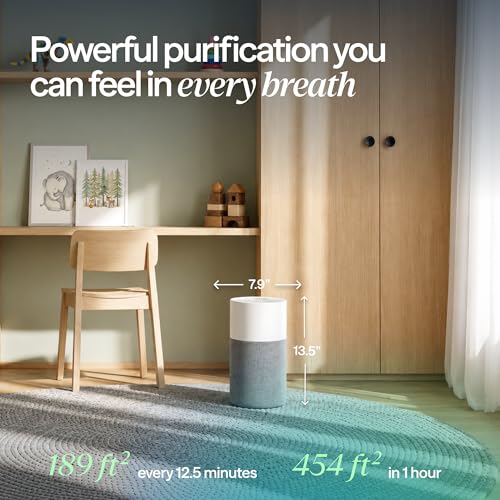
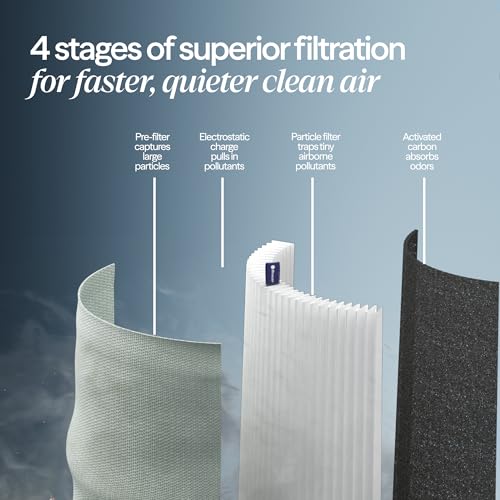
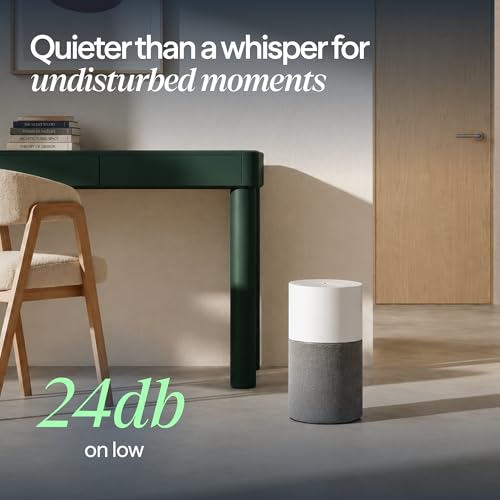
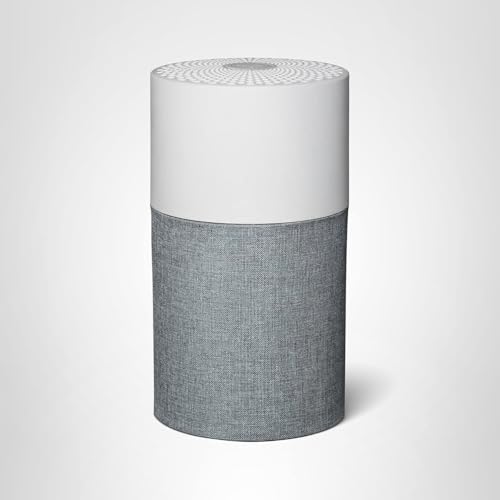
The Blue Pure 511 stands out in the compact category with its HEPASilent technology, a blend of mechanical and electrostatic filtration that delivers 99.97% capture down to 0.1 microns with remarkably low noise and energy use. At just 24dB on low, it’s one of the quietest purifiers you’ll find, and Energy Star’s ‘Most Efficient’ rating means it uses less power than a nightlight.
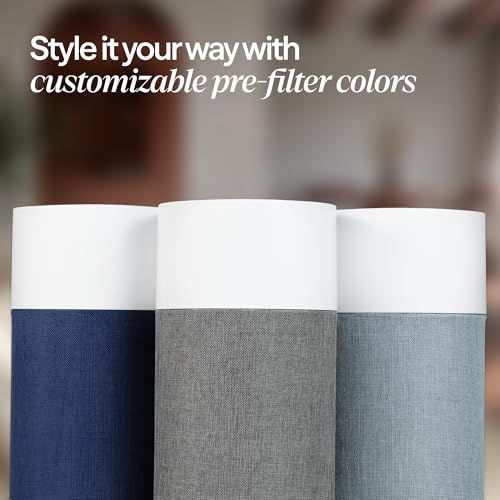
It’s perfect for nurseries, small bedrooms, or offices under 450 sq ft. The washable pre-filter in a choice of colors is a fun, practical touch. But the lack of auto mode or air quality display limits its appeal for tech-focused buyers. Still, if silence and efficiency are your top priorities, this is my top pick for small spaces.
Product photos
Levoit Core Mini-P

Strengths
- Ultra-compact size
- Very quiet
- Low cost
- Aromatherapy option
- Easy to move
Trade-offs
- No AHAM verification
- Low CADR
- Not for large rooms
The Core Mini-P is the compact workhorse of the Levoit lineup, and it’s ideal for tight spaces like dorms, small bedrooms, or offices. It’s not AHAM VERIFIDE, and the CADR isn’t listed, so you’re trading measurable performance for portability and price. Still, owners say it noticeably reduces dust and mild odors in rooms under 300 sq ft, and the aroma pad is a nice perk for masking stale air.
It’s quieter than a whisper, and the small footprint means it won’t crowd a nightstand. But don’t expect it to tackle heavy pet dander or smoke, this is a light-duty unit. If you’re on a budget and need something simple and reliable for a single room, it’s a smart buy. Just don’t expect the same punch as the Core300-P.
Product photos
YARIKI P280 Air Purifier

Strengths
- H13 HEPA filter
- 22dB quiet mode
- Washable pre-filter
- Good pet dander capture
- Energy efficient
Trade-offs
- No AHAM certification
- Unproven long-term reliability
- Limited smart features
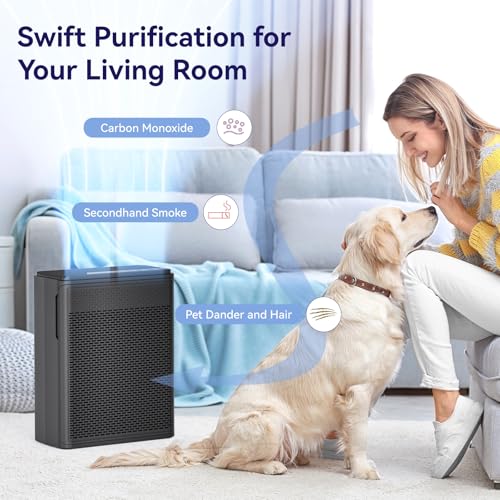
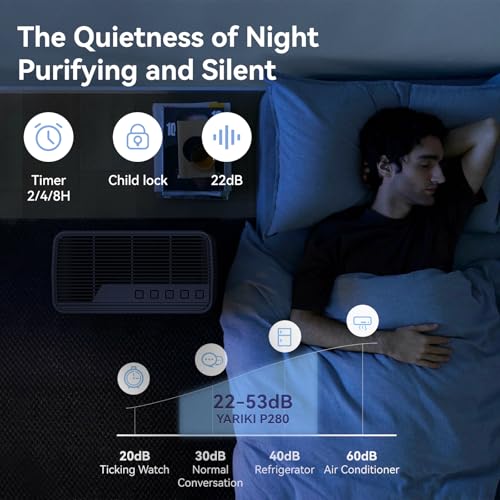
With a 1500 sq ft claim and a CADR of 280 m³/h, the YARIKI P280 lands in the upper tier of mid-sized purifiers aimed squarely at pet owners. The three-stage H13 HEPA system, including a washable pre-filter, is effective on dander and fine particles, and owners confirm it helps reduce allergy symptoms in homes with multiple pets. The 22dB noise level in sleep mode is legit; it’s nearly inaudible, which is a win for bedroom use.
Where it falls short is refinement. Unlike Levoit or Blueair, it lacks third-party AHAM verification, so the 1500 sq ft number is more marketing than measured. The motor is brushless and energy-efficient, but long-term durability is still unproven. Still, for the price, it delivers solid filtration and quiet performance, especially in spaces under 800 sq ft.
Product photos


How We Chose These room air cleaners
As someone who’s spent years around dust and debris from power tools – and written extensively about maintaining trimmer performance – I understand the importance of clean air. Rather than a hands-on lab test of each unit, this selection is research-led. We compared published specifications and features across numerous models, then weighed owner reviews and reputable expert opinions to build a ranking. Our goal was to identify the air cleaners that offer the best combination of performance, features, and value.
For room air cleaners, three factors stood out as most crucial: CADR (Clean Air Delivery Rate), filtration efficiency, and noise level. CADR directly indicates how quickly a unit can clean a given room size, which is essential. Filtration efficiency, particularly the presence of a true HEPA filter, determines how effectively it captures allergens and pollutants. Finally, noise level is critical, especially for bedroom use; a quiet unit won’t disrupt sleep.
Specifications reliably tell you about CADR, filter types, and room coverage areas. However, we heavily relied on owner feedback to gauge real-world performance, particularly regarding pet odor removal and filter life. Reputable expert reviews helped validate claims and highlighted potential drawbacks. We also looked for certifications like AHAM verification and CARB compliance as indicators of quality and adherence to standards.
What To Look For In room air cleaners
Choosing the right room air cleaner can feel overwhelming, but focusing on a few key features will help you breathe easier.
A good room air cleaner prioritizes a high CADR (Clean Air Delivery Rate) matched to your room size, uses a multi-stage filtration system including a HEPA filter for particulate matter, and offers features like adjustable fan speeds and filter replacement indicators. Look for models with independent certifications like AHAM verification to ensure performance claims are accurate and reliable.
Filter Types and Efficiency
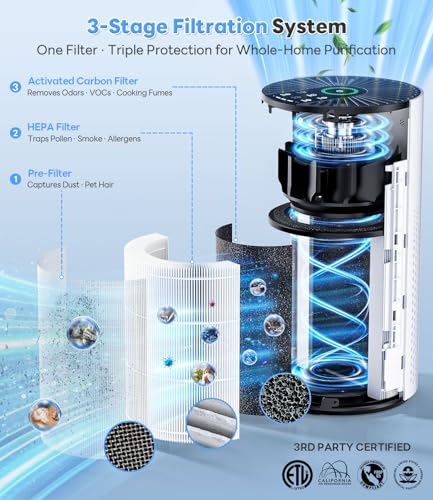
The heart of any air cleaner is its filter. Don’t assume all “HEPA-type” filters are created equal. True HEPA filters must capture 99.97% of particles 0.3 microns in size, and that’s the standard you should aim for. Many units also incorporate a pre-filter to catch larger particles like dust and pet hair, extending the life of the HEPA filter. Activated carbon filters are essential if you’re concerned about odors or volatile organic compounds (VOCs). I often see people overlook the importance of a good pre-filter – it’s the first line of defense and keeps the more expensive HEPA filter from clogging prematurely.
Room Size and CADR
CADR, or Clean Air Delivery Rate, is the most important specification. It tells you how quickly the unit can clean a given room size. Manufacturers will list CADR numbers for dust, pollen, and smoke. Match the CADR to your room’s square footage. A unit with a CADR too low for your space won’t be effective, while one that’s significantly oversized may be unnecessarily expensive and loud. As a general rule, you want at least 2/3 of the room’s square footage as the CADR number. If you’re considering an air purifier for allergy relief, you’ll want to pay close attention to the pollen CADR rating.
Smart Features and Usability
These days, many air cleaners offer “smart” features like Wi-Fi connectivity and app control. These aren’t essential, but they can be convenient. More important is ease of use. Consider features like a clear display, intuitive controls, and a filter replacement indicator. Some models, like the Levoit Vital 100S-P, even allow you to create schedules.
Here’s what I look for in terms of usability:
- Filter Reset: A simple, accessible filter reset button is crucial.
- Quiet Operation: Especially for bedrooms, lower decibel levels (under 30dB) are key.
- Auto Mode: This setting automatically adjusts fan speed based on air quality, saving energy and maximizing effectiveness. It’s a feature I recommend prioritizing.
A smart rule of thumb: if you have pets, prioritize an air purifier with a dedicated “Pet Mode” and a washable pre-filter.
Room Air Cleaners Compared
Here’s a comparison of specifications for several room air cleaners to help you make an informed decision.
| Product Name | Coverage Area (sq ft) | CADR (CFM) | Filter Type | Noise Level (dB) | Smart Features |
|---|---|---|---|---|---|
| MOOKA PR1 | 2200 | N/A | HEPA + Washable Pre-Filter | 26 | Auto Mode, Timer, Child Lock |
| MOOKA KJ190 | 2200 | N/A | HEPA + Washable Pre-Filter | 20 | Auto Mode, Timer, Aromatherapy |
| Levoit Vital 100S-P | 222 / 1073 | N/A | HEPA | 25 | WiFi, App Control, Timer |
| KNKA APH4000 | 350 / 1695 | 226 / 244 | HEPA + Activated Carbon | 22-24 | Auto Mode, Timer, Real-time AQI |
| Levoit Core300-P | 222 | 143 | HEPA | 24 | Timer, Sleep Mode |
| ECOSELF HAP609 | N/A | N/A | HEPA | 20 | Auto Mode, Timer |
| Blueair Blue Pure 511 | 432 / 180 | N/A | HEPASilent | 24 | Washable Pre-Filter |
| Levoit Core Mini-P | N/A | N/A | HEPA | N/A | Sleep Mode |
| YARIKI P280 | 1500 | N/A | HEPA + Activated Carbon | 22 | Child Lock |
Frequently Asked Questions
What CADR do I need for a 500 square foot room?
You’ll generally want a CADR of at least 333 for dust, 300 for pollen, and 300 for smoke in a 500 square foot room. These numbers ensure sufficient air changes per hour for effective cleaning; exceeding them isn’t harmful, but unnecessary.
Are expensive air cleaners always better?
Not necessarily. While price often correlates with features like smart controls or larger coverage areas, CADR and filter quality are more critical than cost. You can find effective HEPA filter air purifiers without the highest price tag.
How often should I replace the HEPA filter?
Most HEPA filters need replacing every 6-12 months, but this depends on usage and air quality. A pre-filter will extend the life of the HEPA filter, and some units have indicators to alert you when a change is needed.
Can an air cleaner completely eliminate pet odors?
An air cleaner with an activated carbon filter can significantly reduce pet odors, but complete elimination isn’t guaranteed. The size of the carbon filter and the severity of the odor play a role, and regular cleaning of pet areas is still essential.
What’s the difference between a HEPA filter and a true HEPA filter?
A “HEPA-type” filter may capture a large percentage of particles, but a true HEPA filter must capture 99.97% of particles 0.3 microns in size. If you’re looking for the best performance, especially for allergies, prioritize air cleaners with true HEPA filters.
The Bottom Line
Choosing a room air cleaner often comes down to balancing upfront cost with long-term performance and features. While there are many options available, the Levoit Vital 100S-P strikes an excellent balance, offering smart features, good filtration, and a reasonable price point for most rooms. It’s a solid all-around performer that won’t break the bank and gives you control through its app.
For those on a tighter budget, the MOOKA PR1 provides a surprisingly effective clean without sacrificing essential features like a HEPA filter and auto mode. If you’re particularly concerned about odors or VOCs, the KNKA APH4000 stands out with its activated carbon filter and real-time air quality indicator. Don’t forget, maintaining your outdoor tools is also important; following these hedge trimmer maintenance tips helps keep your property – and the air around it – cleaner.
Ultimately, the specs matter less than finding a unit that’s appropriately sized for your space and consistently delivers clean air. Prioritize a true HEPA filter, check the CADR to ensure it matches your room size, and don’t overlook the importance of regular filter replacements. A consistently functioning air cleaner is far more valuable than one with the highest specs that’s neglected or undersized.
