5 Best Roofing Hammers of 2026
This post contains affiliate links. As an Amazon Associate, we earn from qualifying purchases.
The Estwing Shingler’s Hammer 28 oz stands out as the best overall roofing hammer for pros who need power and durability, while the Big Horn 16 Oz Magnetic Hammer is a smart budget pick that delivers key features like one-handed nailing without the heft.
Roofing work demands tools that won’t quit mid-job, you need something that drives nails cleanly, cuts shingles accurately, and doesn’t wreck your hand after hours on the roof. Too many hammers sacrifice balance for weight or load up on gimmicks while skimping on build quality.
This guide cuts through the noise. I compared specs and owner feedback across top models, focusing on what actually matters: head weight, magnetic nail holders, blade quality, handle ergonomics, and long-term durability. These picks deliver where it counts.
Top 5 Roofing Hammers in the Market
The Best Roofing Hammers, Reviewed
Estwing Shingler’s Hammer 28 oz

Strengths
- One-piece forged steel
- Shock-reducing grip
- Built-in shingle gauge
- Milled striking face
- Made in USA
Trade-offs
- No magnetic nail hold
- Heavier than average
- Higher price point
If you’re looking for the most complete package in a roofing hammer, this 28 oz Estwing E3-CA is hard to beat. Forged from a single piece of solid steel, it’s built to last decades, not just seasons. The patented shock-reducing vinyl grip is a standout, owners repeatedly praise how it cuts down on hand and arm fatigue, even after long shifts. The milled face bites into shingles without slipping, and the retractable gauge blade works flawlessly for standard exposures.
Compared to the lighter MRWS model, this one delivers more driving force and better vibration control, making it the smarter buy for full-time roofers. It doesn’t have a magnet, so it won’t match the Big Horn for cap nail speed, but for traditional shingle work, it’s the most reliable, well-rounded option in the lineup.
Product photos


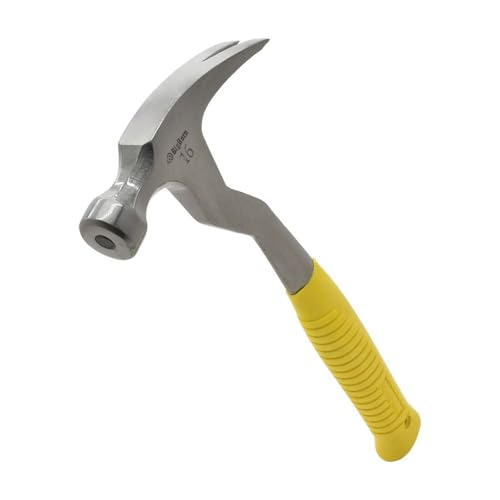
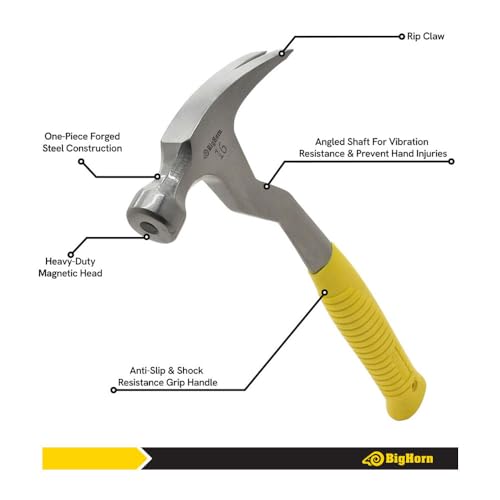
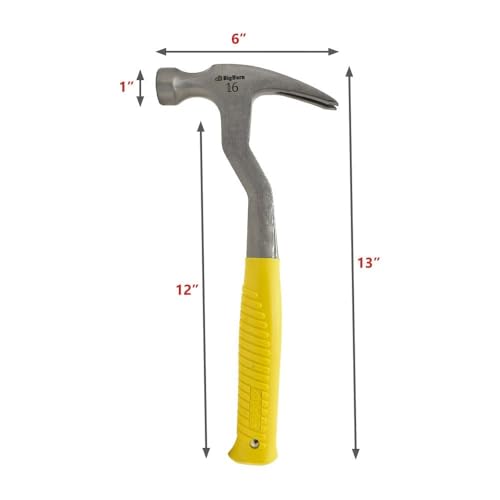
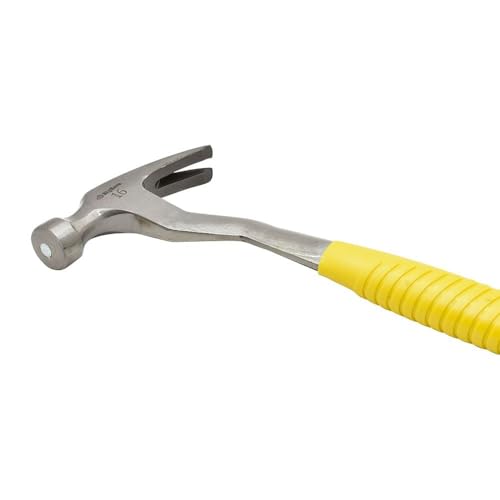
Big Horn 16 Oz Magnetic Hammer
Strengths
- Magnetic face
- One-piece forged steel
- Ergonomic grip
- Reduces hand fatigue
- Rip claw included
Trade-offs
- No shingle gauge
- Heavier than some prefer
- Not ideal for splitting shakes
This hammer stands out for its practical magnetic face, which owners consistently report cuts down on hand fatigue and speeds up cap nail placement. The single-piece forged steel build gives it solid durability, and the rubber grip does a decent job of dampening vibration, something that matters when you’re setting hundreds of nails in a day. The arched handle design is a small but meaningful touch, improving clearance over shingles and sheathing.
Compared to non-magnetic options, this one is clearly built for efficiency in dry-in and house wrap work. It’s not the heaviest hammer in the class, but the balanced weight helps maintain control during repetitive swings. While it lacks the built-in shingle gauge of the Estwing models, it makes up for it with simplicity and reliability in one-handed operation.
Product photos


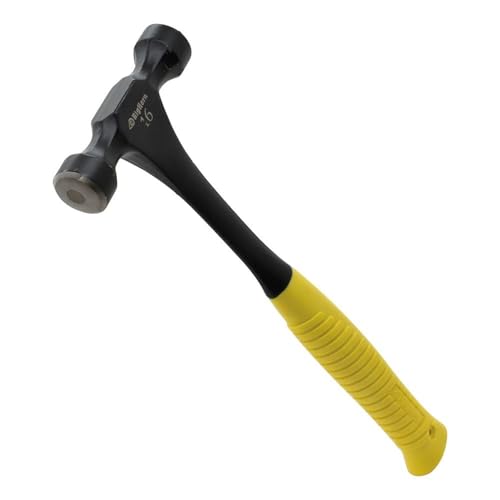
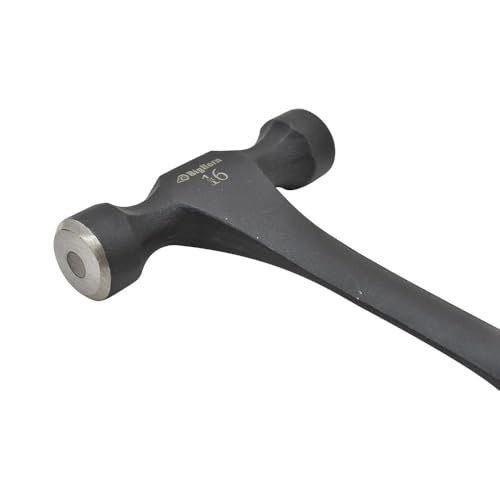
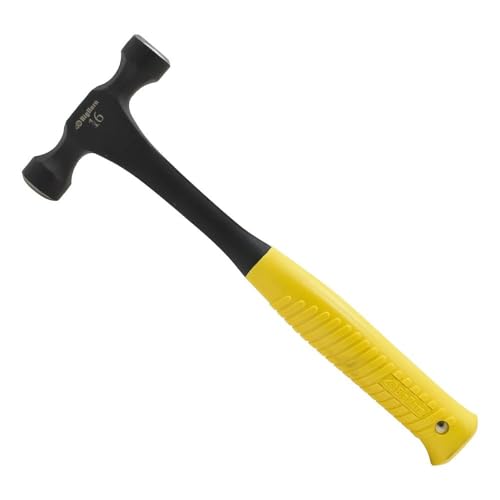
Big Horn 16 Oz Double Head Hammer
Strengths
- Dual magnetic faces
- Faster nail placement
- Forged steel durability
- Balanced lightweight design
- Non-slip grip
Trade-offs
- No shingle gauge
- Not for shingle work
- Limited versatility
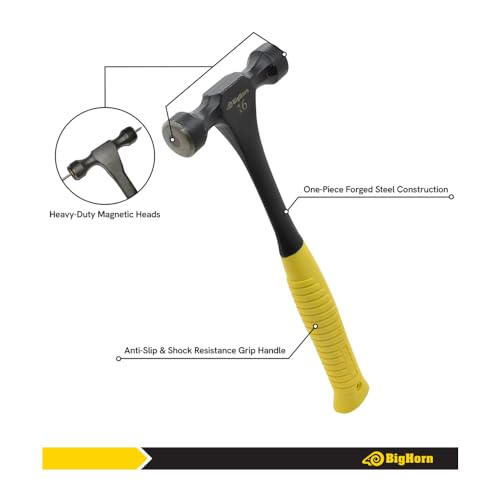
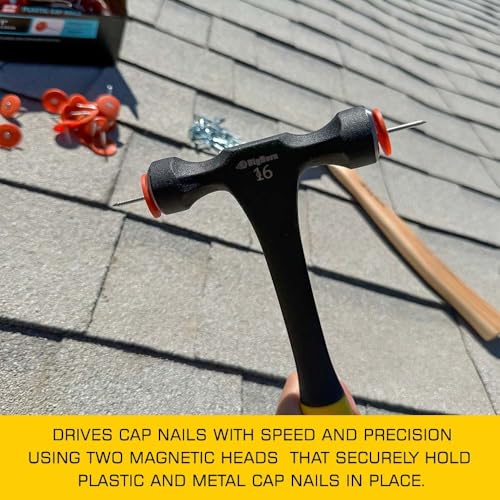
The dual magnetic faces on this Big Horn hammer are what push it ahead of the single-faced model when speed is the goal. You can set and drive cap nails rapidly without repositioning, and owners consistently report noticeable time savings on large dry-in or house wrap jobs. The one-piece forged steel build ensures it can handle hard use, and the non-slip grip holds up well even when hands get sweaty.
While it doesn’t have a shingle gauge or splitting capability, it’s clearly optimized for one thing: fast, one-handed cap nail work. Compared to the ESTWING models, it’s less versatile for traditional roofing but far more efficient in its niche. If your job involves hundreds of cap nails a day, this is the smarter buy.
Product photos

Estwing 20 oz Hickory Handle Hammer

Strengths
- Lightweight design
- Built-in shingle gauge
- Milled face for grip
- Hickory handle comfort
- Durable triple-wedge build
Trade-offs
- Less striking power
- No magnetic nail hold
- Not ideal for cap nails
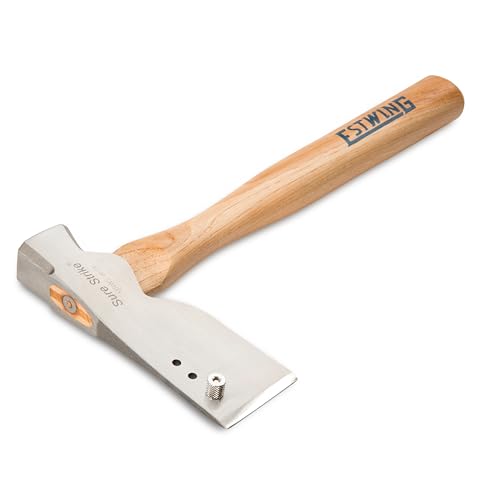
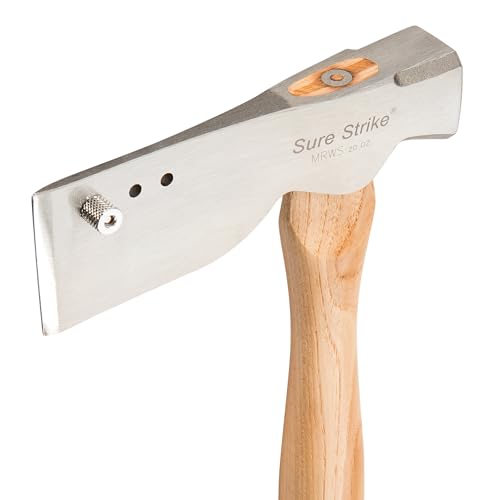
The 20 oz Estwing MRWS feels noticeably light in hand compared to full-size roofing hammers, but that’s the point, it’s designed for precision and maneuverability, not brute force. The milled face grips shingles well, and the retractable gauge blade is a standout feature, letting you quickly set 4, 5, or 5-5/8 inch exposures with confidence. The hickory handle delivers a classic feel and absorbs shock better than most steel handles, though it won’t match the vibration reduction of Estwing’s own vinyl-grip models.
I’d recommend this for lighter-duty shingling or repair work where you’re on your feet all day and need something you can swing all afternoon without wrecking your wrist. It’s not going to drive cap nails as efficiently as the Big Horn magnetic models, but it’s far more versatile for traditional asphalt shingle installation.
Product photos
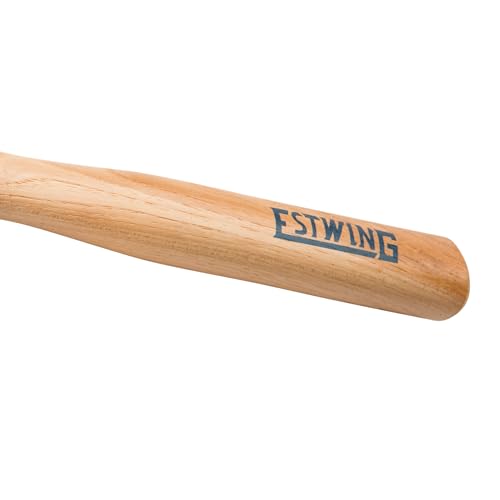
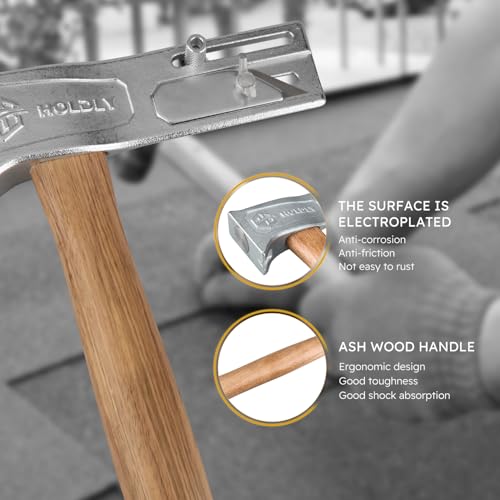
Magnetic Roofing Hatchet Multi-Function

Strengths
- Magnetic nail hold
- Multi-functional design
- Ash wood shock absorption
- Combines axe, knife, claw
- Affordable option
Trade-offs
- Bulky and unbalanced
- Lower durability
- Less striking power
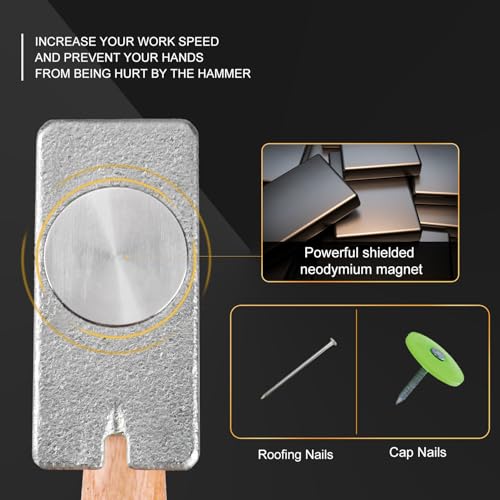
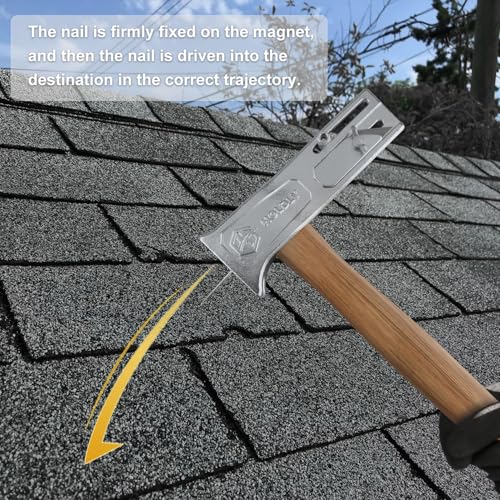
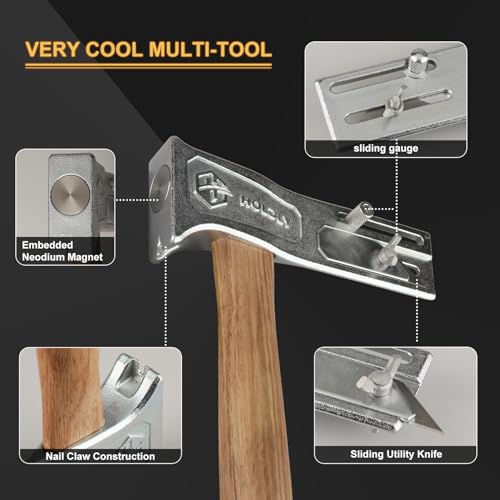
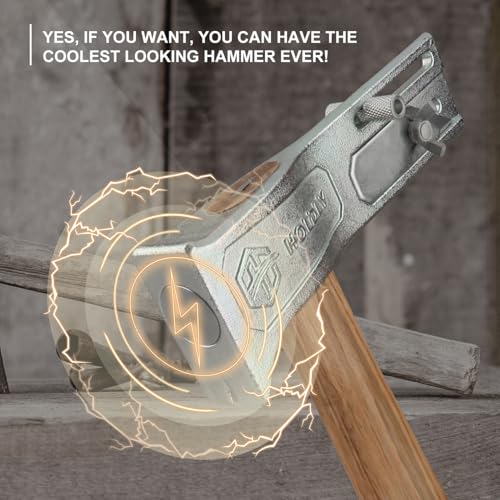
This hammer tries to do everything, and while that sounds great on paper, it risks being a jack of all trades, master of none. The magnetic face works as advertised, letting you set nails one-handed, and the multi-function design includes a cutting blade, claw, and even a hatchet edge. Some owners say it’s handy for quick repairs or occasional use, especially when climbing around on a roof and wanting fewer tools in hand.
But when compared to purpose-built options like the Estwing or Big Horn models, it falls short in balance, durability, and precision. The claims about ‘electroplated rust resistance’ sound good, but real-world feedback suggests the finish can degrade faster than expected in harsh conditions. It’s not bad for a DIYer doing light work, but pros will notice the lack of heft and refinement.
Product photos
How We Chose These roofing hammers
Rather than a hands-on lab test, this selection is a research-led comparison of published specifications and owner feedback. I looked at features like head weight, handle material, magnetic nail-holding capability, and integrated tools (blade, gauge, claw). We weighed these details against what current owners report about durability, ease of use, and performance in real-world roofing applications, factoring in both professional and DIY perspectives.
For roofing hammers, head weight and handle comfort are paramount. A heavier head (16-28oz) delivers more force with each swing, crucial for driving nails securely. Equally important is a well-balanced design and a grip that minimizes fatigue during extended use. Features like magnetic nail holders and integrated blades add convenience, but don’t compensate for a poorly weighted or uncomfortable hammer – you might also find value in exploring top-rated carpenter hammers for related tool insights.
Specifications reliably indicate head weight, steel type, and the presence of features like magnetic heads or adjustable blades. However, owner reviews provided critical insight into the longevity of those features, the effectiveness of shock-reduction grips, and how well the hammer holds up to repeated use on various roofing materials. Reputation and brand history also played a role; established manufacturers generally maintain higher quality control standards.
Choosing The Right roofing hammers
A good roofing hammer isn’t just about driving nails; it’s about efficiency, safety, and avoiding fatigue on the roof.
A quality roofing hammer balances weight, head design, and handle comfort. Key features include a magnetic nail holder (for one-handed work), a gauge for consistent shingle exposure, and a sharp blade for cutting roofing materials. Durability is paramount, with forged steel construction being preferable to cast components. Consider grip ergonomics to minimize strain during prolonged use.
Weight and Balance
The weight of a roofing hammer is a surprisingly personal choice. Heavier hammers (20oz+) deliver more force with less effort from you, which can be a lifesaver during an all-day roofing job. However, that extra weight can also lead to quicker fatigue. Lighter hammers (16oz or less) require more swing, but offer greater control and are easier to maneuver, particularly for those newer to roofing or working on steeper slopes. I’ve seen professionals who swear by the Estwing 28oz for its sheer power, while others prefer the nimble feel of the Big Horn 16oz models.
Head Design & Features
Beyond weight, the hammer head itself dictates a lot about its usefulness. Magnetic nail holders, like those found on the Big Horn hammers, are fantastic for one-handed nailing, freeing up your other hand to hold shingles or materials. A built-in shingle gauge is another huge time-saver, ensuring consistent exposure and a professional-looking finish. Don’t underestimate the value of a replaceable blade; a dull blade is a safety hazard and slows down trimming tasks. If you frequently split wood shakes, you’ll want to consider a half-hatchet head like that on the Estwing 20oz model.
- A magnetic head dramatically speeds up nailing, especially on steep roofs.
- A built-in gauge eliminates guesswork and ensures uniform shingle placement.
- A replaceable blade is essential for longevity; constantly sharpening a fixed blade is impractical and can weaken the steel over time.
Handle Material and Ergonomics
The handle is where you interface with the tool, so ergonomics are critical. Traditional hickory handles (as seen on some Estwing models) offer excellent shock absorption and a comfortable feel, but require more maintenance. Modern synthetic grips, like those on many Big Horn hammers, are more durable and often feature vibration-dampening technology. A slightly arched handle can improve reach when working over shingles, and a well-weighted design is crucial for reducing fatigue. If you’re considering a new hammer, it’s worth looking at some reviewed claw hammers to get a feel for different handle styles.
A properly sized and balanced roofing hammer feels like an extension of your arm. Don’t settle for a tool that causes blisters or strains your wrist.
Roofing Hammers Compared
Here’s a comparison of key specifications for several roofing hammers to help you make an informed decision.
| Product Title | Weight (oz) | Handle Material | Magnetic | Blade/Hatchet | Special Features |
|---|---|---|---|---|---|
| Estwing Shingler’s Hammer 28 oz | 28 | Steel | No | Yes | Shock Reduction Grip |
| Big Horn 16 Oz Magnetic Hammer | 16 | Steel | Yes | No | One-Handed Use |
| Big Horn 16 Oz Double Head Hammer | 16 | Steel | Yes | No | Double Head Design |
| Estwing 20 oz Hickory Handle Hammer | 20 | Hickory | No | Yes | Triple Wedge Construction |
| Magnetic Roofing Hatchet Multi-Function | N/A | Ash Wood | Yes | Yes | Multi-Function Design |
Frequently Asked Questions
What weight roofing hammer is best for beginners?
A 16-ounce hammer is generally best for beginners. It provides a good balance of power and control, allowing for accurate nail placement without excessive fatigue, and is easier to swing for those with less experience.
Are magnetic roofing hammers really that helpful?
Yes, magnetic roofing hammers significantly speed up work. The magnetic head holds nails in place, allowing for one-handed nailing which is especially valuable when working on a sloped roof or needing to hold materials simultaneously.
How often should I replace the blade on a roofing hammer?
Blade replacement frequency depends on usage, but generally, replace it when it becomes noticeably dull or chipped. A sharp blade is crucial for safety and efficient shingle cutting, so inspect it regularly – you’ll find many versatile hammer picks that offer easy blade swapping.
What’s the difference between a forged and a cast hammer head?
Forged steel is stronger and more durable than cast steel. Forging involves shaping the metal under high pressure, resulting in a denser grain structure that resists cracking and deformation, making it a better choice for demanding roofing work.
What handle material offers the best shock absorption?
Hickory handles are known for their excellent shock absorption. While synthetic handles are durable, hickory naturally dampens vibrations, reducing fatigue during prolonged use, and many consider it among the expert-recommended hammers.
The Bottom Line
Choosing a roofing hammer really comes down to how much you value raw power versus all-day comfort. If you consistently tackle large roofing projects and prioritize driving nails quickly, the Estwing Shingler’s Hammer 28 oz is a strong contender – its weight and solid construction are designed for efficiency. But remember, that power comes with a bit more fatigue potential.
For those who need a versatile tool that won’t leave your arm aching, or for DIYers handling smaller jobs, the Big Horn 16 Oz Magnetic Hammer delivers a great balance. If you’re looking for a specialized tool, the Big Horn 16 Oz Double Head Hammer is your best bet for unique applications, and for those who prefer the feel of a traditional tool, consider exploring some high-quality wood-handled hammers.
Ultimately, the best roofing hammer isn’t about fancy features or the highest price tag. It’s about finding a tool that feels balanced in your hand, minimizes strain, and allows you to work safely and efficiently. Prioritize head weight matched to your strength and experience, and a comfortable handle that will last through countless swings.
