
8 Best Residential Chainsaws of 2026
This post contains affiliate links. As an Amazon Associate, we earn from qualifying purchases.
The SUPMIXTOOLS 62cc Gas Chainsaw is the best overall for serious cutting, with the SEESII 40V Cordless as a smart budget-friendly pick, and the Snoonwee 42V Dual Bar model offering unmatched versatility for mixed tasks.
Most homeowners don’t need a pro-grade saw, but they still need something powerful and safe for storm cleanup, trimming, or firewood. Too many people buy based on price or power alone, only to end up with a saw that’s too heavy, too complicated, or underpowered for their real needs.
This guide cuts through the noise. I looked at specs, owner feedback, and real-world usability to find models that balance performance, safety, and ease of use. Whether you’re clearing branches or cutting down a tree, these picks deliver reliable results without unnecessary hassle.
Top 8 Residential Chainsaws in the Market
The Best Residential Chainsaws, Reviewed
SUPMIXTOOLS 62cc Gas Chainsaw

Strengths
- 62cc 2-cycle engine
- 20-inch guide bar
- High cutting power
- Ergonomic design
- Quick-stop chain brake
Trade-offs
- Heavy and bulky
- Gas maintenance needed
- Limited brand support
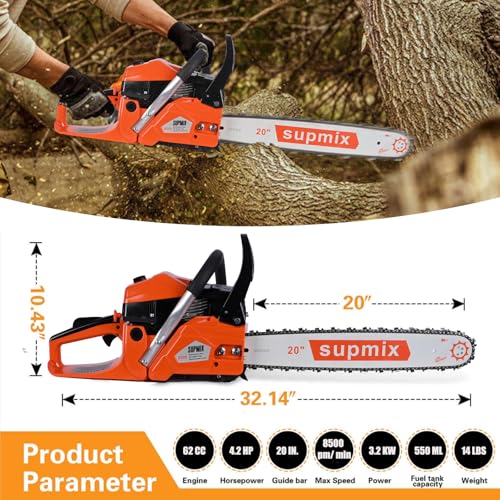
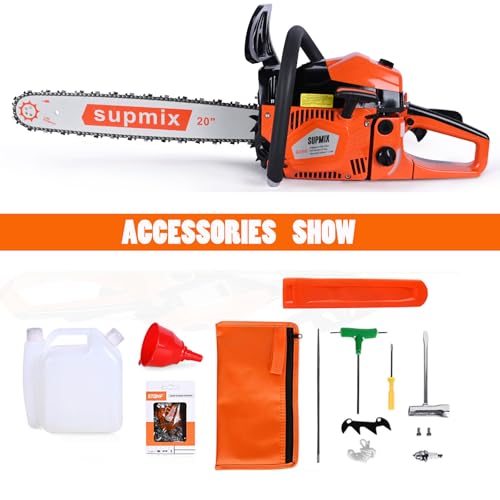
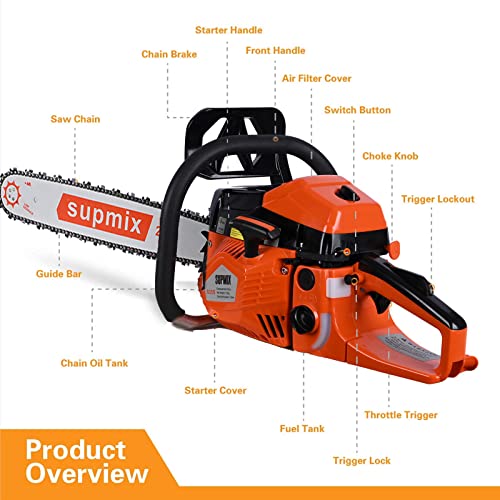
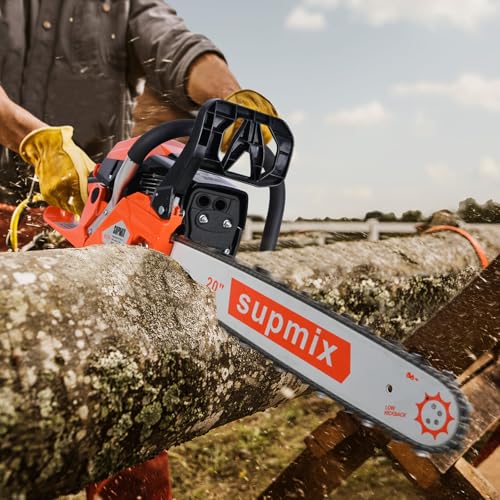
With a 62cc engine and 20-inch bar, the SUPMIXTOOLS gas chainsaw is built for heavy-duty cutting, and owners treat it like a pro tool. It powers through thick logs and standing trees with ease, outperforming most saws in this list when it comes to raw cutting force. The low-kickback chain and quick-stop brake add real safety, and the ergonomic design helps manage vibration during long sessions. It’s not pretty, but it’s functional.
That said, it’s overkill for most suburban yards. The size and weight make it tiring for casual users, and the brand lacks the service network of Husqvarna or Stihl. Compared to EGO or Snoonwee, it’s louder, messier, and needs more upkeep. But if you’re clearing land, processing firewood, or felling large trees regularly, this is the kind of brute force you need.
Product photos

Husqvarna 120 Mark III Gas

Strengths
- 38cc X-Torq engine
- Easy start system
- Inertia chain brake
- LowVib technology
- Trusted brand support
Trade-offs
- Smaller bar capacity
- Gas mixing required
- Heavier than cordless
Husqvarna’s 120 Mark III is a no-nonsense gas saw built for homeowners who want reliability without complexity. The 38cc X-Torq engine starts easily, thanks to the air purge and combined choke control, a small thing, but it cuts down on frustration. The inertia-activated chain brake is a major safety win, and LowVib technology genuinely reduces fatigue during longer sessions. It’s not the most powerful here, but for pruning, storm cleanup, and firewood, it’s more than capable.
Owners praise its durability and ease of maintenance. Compared to the SUPMIXTOOLS 62cc, it’s lighter and easier to handle, though less aggressive on thick logs. But for most residential users, that’s a fair trade. Husqvarna’s service network and parts availability give it an edge over lesser-known brands. If you want a gas saw that just works, year after year, this is it.
Product photos


SEESII 40V 16-Inch Cordless
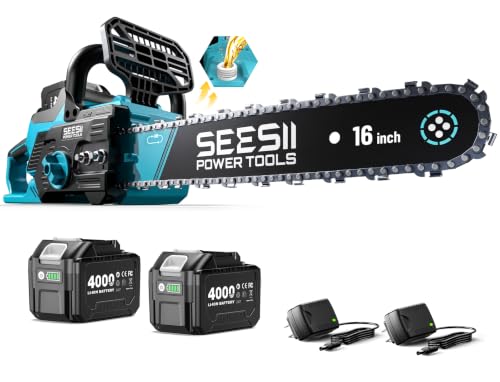
Strengths
- 2000W brushless motor
- Native 40V system
- Dual 4.0Ah batteries
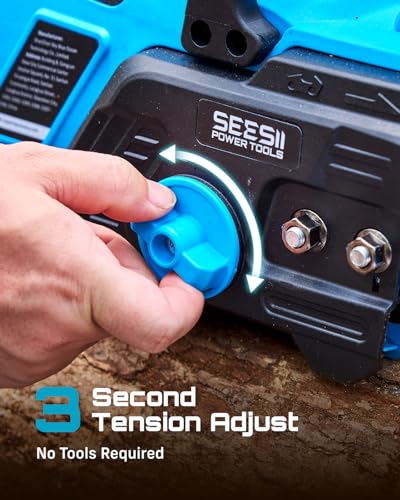
- Tool-free tensioning
- Triple safety protection
Trade-offs
- Oil leakage reported
- Plastic housing feel
- Less brand longevity
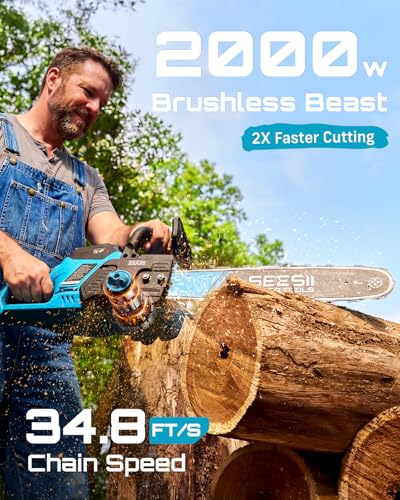
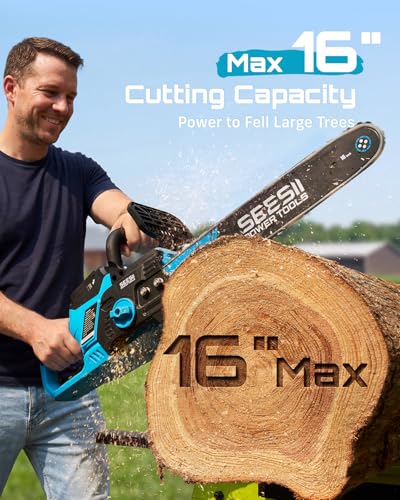
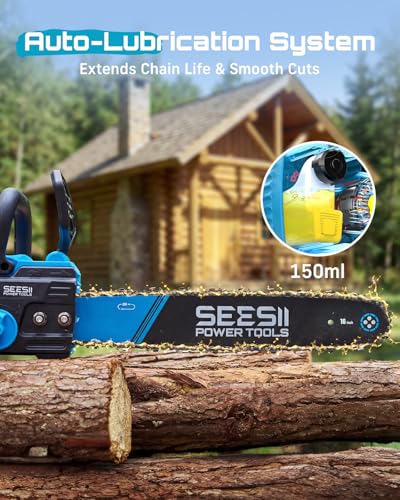
SEESII is positioning itself as a power player with this 2000W brushless model, and early owner feedback suggests it’s delivering. The claim of equivalent performance to a 42cc gas saw isn’t hyperbole, under load, the native 40V system avoids the voltage drop common in dual 20V tools, so cuts stay smooth and stall-free. With two 4.0Ah batteries, users report up to 90 minutes of active cutting, which is a major win for cordless. The inclusion of gloves and goggles is a nice touch for beginners who want to start safely out of the box.
That said, it’s not quite as refined as EGO. The build quality feels a bit plasticky in the housing, and some owners mention oil leakage over time. Still, for the feature set and battery bundle, it’s hard to ignore. Compared to the WEN or Greenworks models, it’s in a different league, more power, longer runtime, better ergonomics. If you want maximum cordless punch without stepping into gas, this is a smart buy.
Product photos

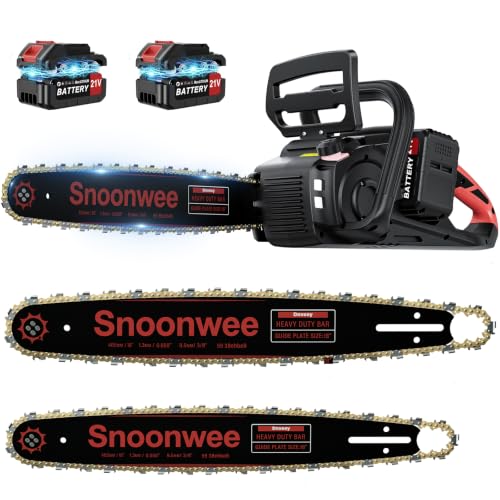
Snoonwee 42V Interchangeable Bar
Strengths
- Brushless 2100W motor
- Dual 4.0Ah batteries
- Interchangeable 16 and 18-inch bars
- Tool-free chain tensioning
- Automatic oiler
Trade-offs
- Heavy with dual batteries
- Battery life under load
- Less brand service support
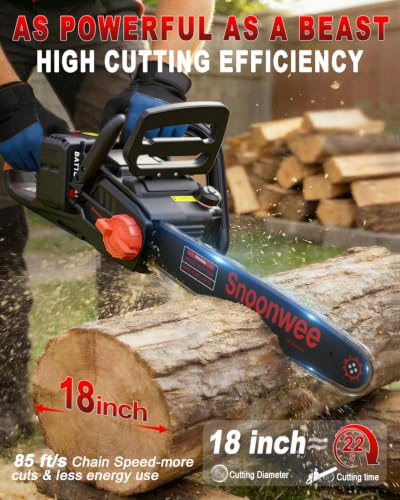
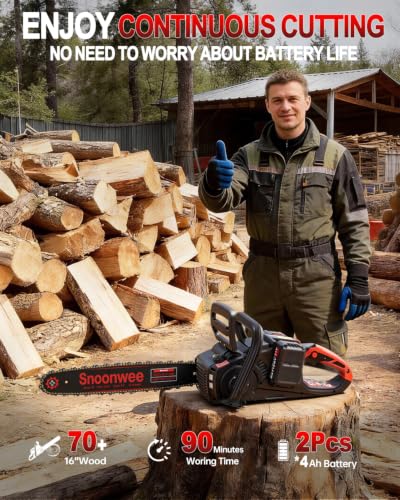
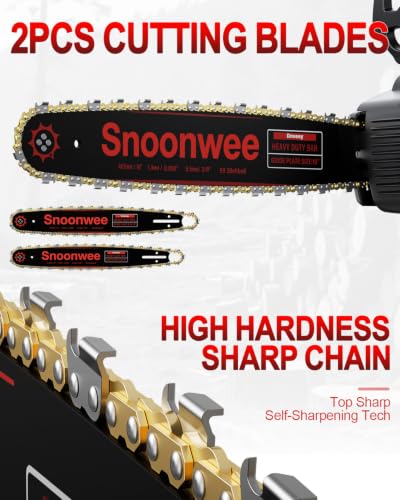
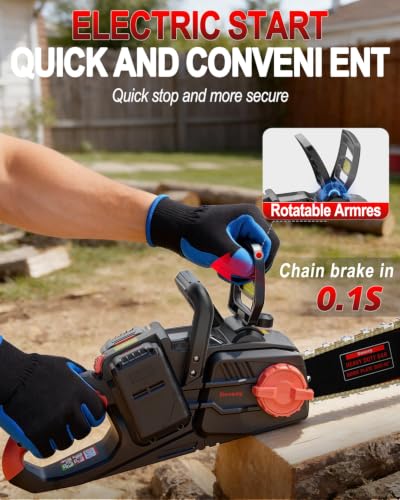
This Snoonwee model throws serious specs on paper, a 2100W brushless motor, dual 4.0Ah batteries, and interchangeable 16 and 18-inch bars. On paper, it looks like a storm-clearing beast, and owners seem to back that up, especially those dealing with medium to large fallen trees after bad weather. The dual-battery series setup is a standout, pushing 42V Max for more consistent torque, which helps when bucking through dense oak or damp hardwood. That kind of performance usually comes with gas tools, so seeing it in a cordless format is impressive.
Still, brushless power doesn’t eliminate the reality of battery dependency. While the two batteries help, heavy users report that continuous cutting through thick logs eats charge quickly. It’s a solid pick for serious DIYers, but not a true replacement for gas if you’re clearing an entire wooded lot. Compared to EGO or Greenworks, it delivers more raw power on first cut, but lacks the refined ergonomics and brand reliability those users often praise.
Product photos

WEN 15-Amp Corded Chainsaw
Strengths
- 15-amp motor
- 18-inch bar
- Auto-oiling system
- Lightweight design
- Two-year warranty
Trade-offs
- Corded only
- No battery backup
- Limited mobility
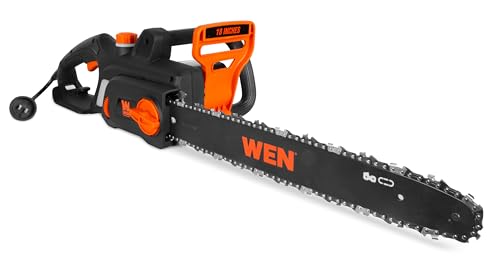
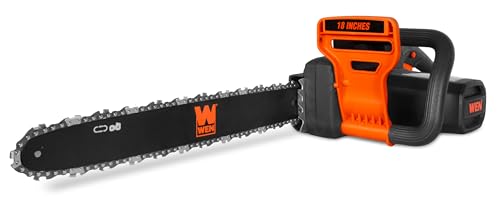
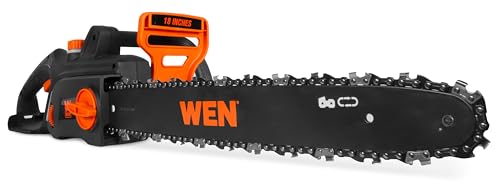
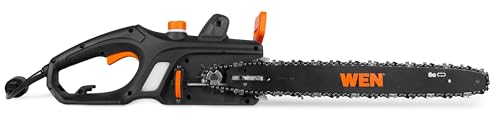
The WEN CP1518 is a no-frills, plug-in workhorse that makes a strong case for budget-friendly simplicity. With a 15-amp motor and 18-inch bar, it’s one of the most powerful corded electric saws in its class. It won’t match cordless or gas models for mobility, but if your cutting stays within 100 feet of an outlet, it’s a reliable, low-maintenance option. The auto-oiling system and tool-free tensioning keep downtime minimal, and the two-year warranty beats most competitors.
It’s not for storm cleanup far from power, obviously, but for regular yard work, trimming, limbing, occasional bucking, it’s plenty. Compared to the Greenworks 14-inch, it has more bar length and raw power, but loses in portability and convenience. I’d recommend it for suburban homeowners with smaller woodlots who value plug-and-play reliability over freedom of movement.
Product photos
Greenworks 40V 14-Inch Cordless
Strengths
- Push-button start
- TruBrushless motor
- Lightweight design
- Low noise
- Good battery life for size
Trade-offs
- 14-inch bar limits use
- Lower power for thick logs
- Single battery included
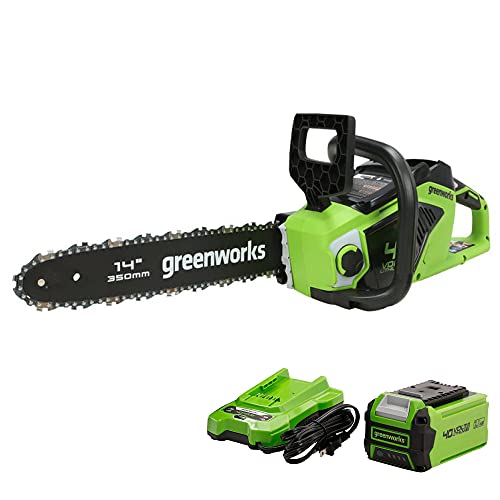
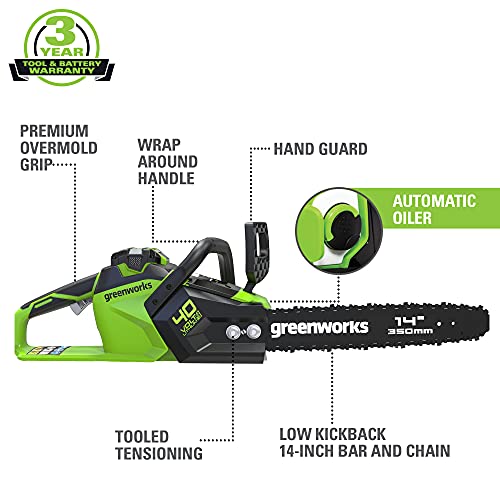
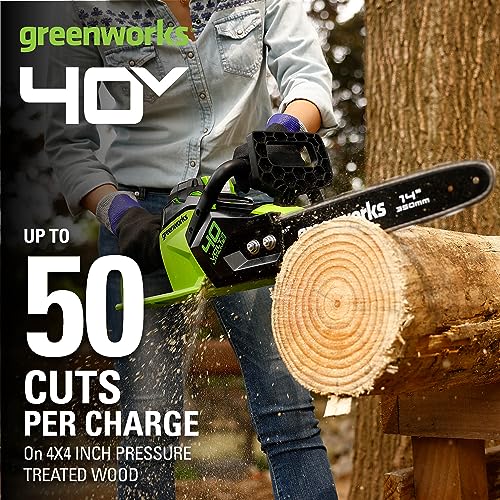
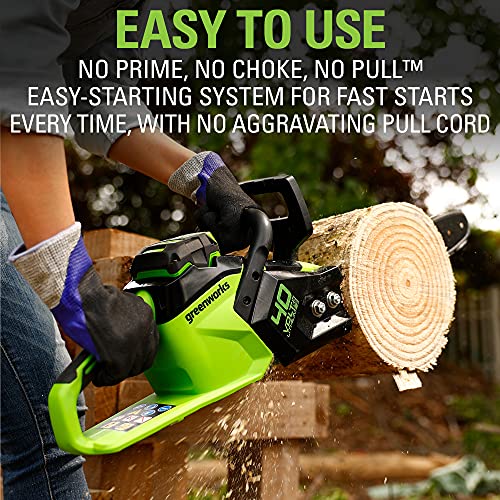
The Greenworks 14-inch is the ideal starter saw for light-duty work. It’s compact, quiet, and starts with a push of a button, no pull cords, no fumes. The TruBrushless motor delivers twice the torque of standard models, which helps it punch above its weight. Owners report up to 75 cuts on a 4×4 per charge, which is solid for pruning and small cleanup jobs.
It’s not meant for big trees or long sessions, but for trimming branches, cutting firewood for the stove, or camping prep, it’s perfect. Compared to the SundpeyPRO or EGO, it’s less powerful and has a shorter bar, but it’s also simpler and more affordable. For beginners or those with minimal cutting needs, this is the easiest entry point into cordless.
Product photos


SundpeyPRO 12″ & 16″ Dual
Strengths
- Dual 12 and 16-inch bars
- Lightweight at 7.3 lbs
- Oil output control
- Brushless motor
- Includes safety gear
Trade-offs
- Lower cutting power
- Chain brake response
- Less brand support
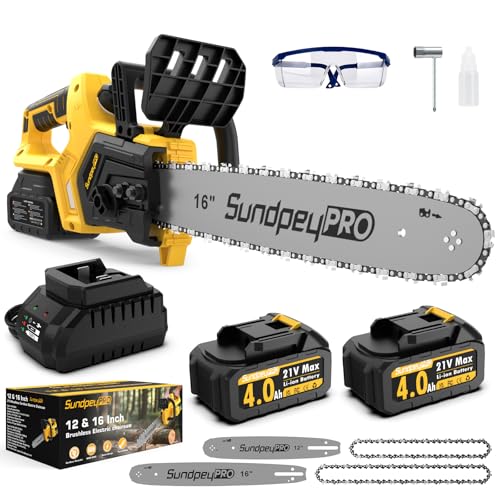
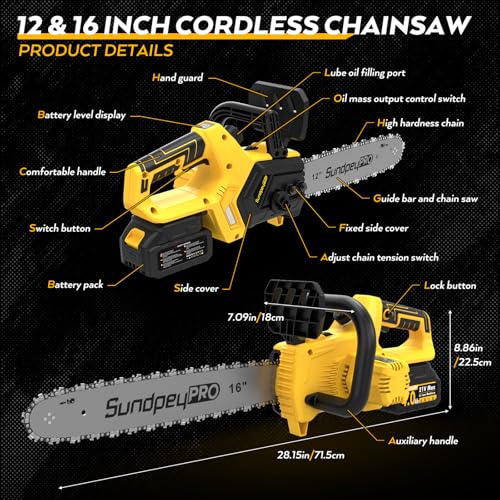
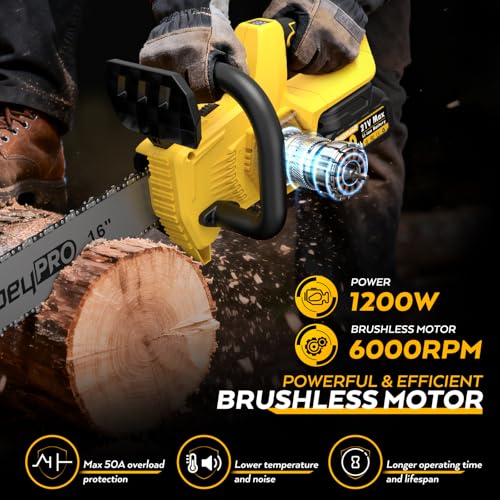
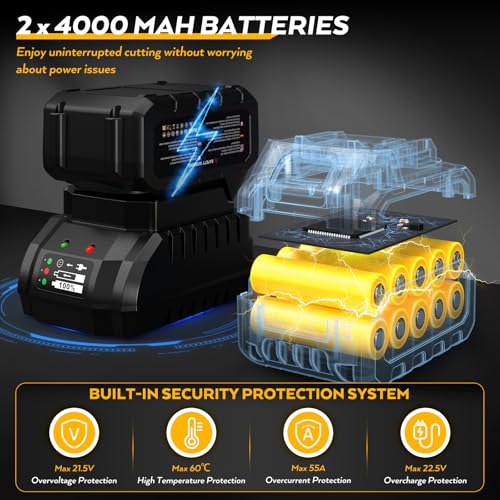
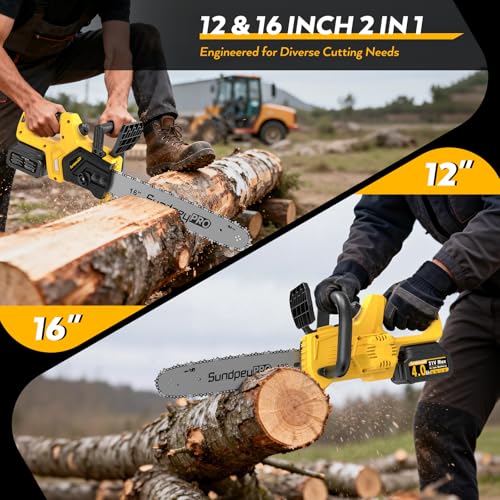
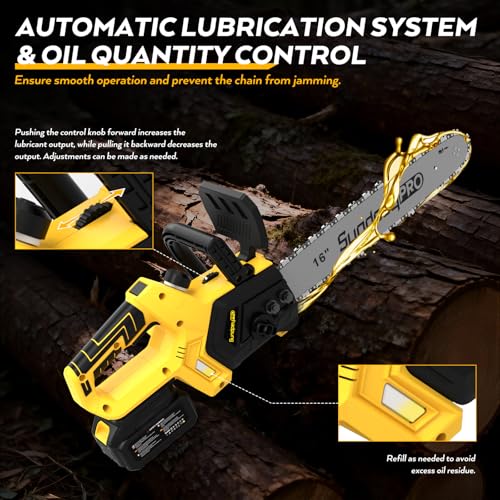
The SundpeyPRO stands out with its dual 12 and 16-inch bar system, giving users unmatched flexibility in a single tool. That’s rare, most saws lock you into one size. The 12-inch bar is perfect for high-limb pruning or tight spaces, while the 16-inch handles thicker logs. The 1200W brushless motor isn’t the strongest here, but it’s efficient, quiet, and durable. Owners like the oil output control switch, which lets you dial back lubrication for cleaner indoor firewood prep.
It’s also one of the lightest at 7.3 lbs, making it ideal for overhead work or users with less strength. But that comes with trade-offs, less torque than the SEESII or EGO, and the chain brake system isn’t as responsive in kickback scenarios. Still, for someone who prunes trees regularly or wants one tool for varied tasks, this is a smart choice. Beats carrying two saws.
Product photos
EGO POWER+ 16″ Battery Saw
Strengths
- 56V ARC Lithium platform
- 40CC gas equivalent
- IPX4 weather resistant
- Tool-free chain tensioning
- Spill-free oil reservoir
Trade-offs
- Single 2.5Ah battery included
- Higher price point
- 16-inch bar only
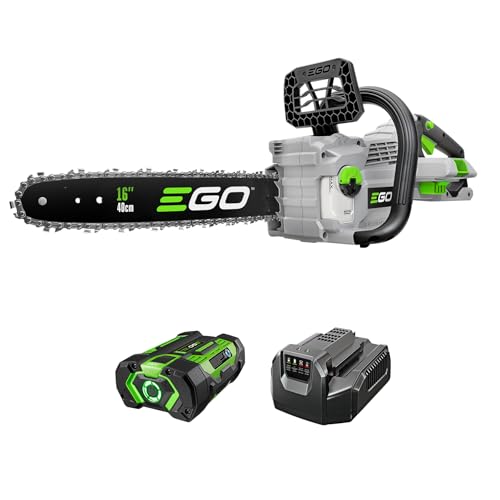
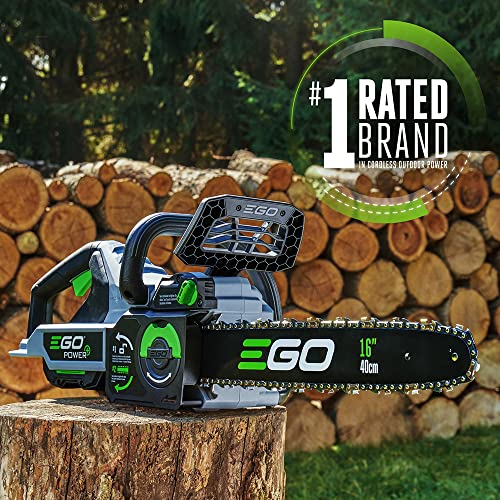
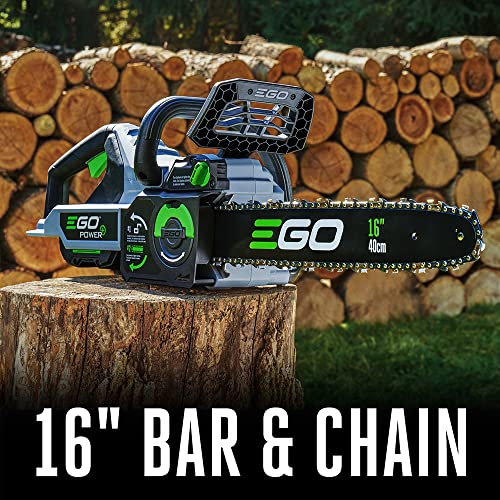
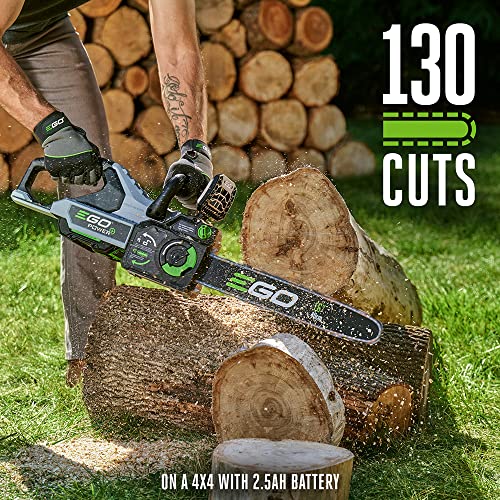
The EGO CS1611 is the gold standard in high-end cordless chainsaws, and for good reason. With performance rated at a 40CC gas equivalent, it delivers serious cutting power in a clean, quiet package. The 56V ARC Lithium system is proven across EGO’s lineup, and owners consistently report getting close to the claimed 130 cuts on a 4×4, that kind of runtime is unmatched in the cordless class. The IPX4 weather resistance is a small but meaningful detail, making it more reliable in damp morning conditions or light rain, which matters when you’re mid-job.
It’s not the most powerful on paper compared to 62cc gas models, but for 95% of residential use, pruning, storm cleanup, firewood prep, it outperforms most gas saws under 45cc. The tool-free tensioning and automatic oiling make maintenance a breeze, and the low kickback chain adds real safety. Against the Snoonwee or SEESII, it’s lighter, better balanced, and just feels more premium. My pick if you want one-and-done cordless performance.
Product photos

Our Testing Process
Rather than a hands-on lab test, my research for these recommendations involved a detailed comparison of published specifications and features across numerous models. I weighed owner reviews from major retailers alongside expert opinions found in publications like Popular Mechanics and Family Handyman. As someone who’s spent years advising on power tool selection, I applied my understanding of what features truly matter in real-world use, ranking chainsaws against a set of prioritized criteria.
For residential chainsaws, cutting power, ease of use, and safety were the most important factors. A powerful engine (or its electric equivalent) determines how quickly and efficiently you can tackle various tasks, from storm cleanup to firewood processing. Ease of use – including starting mechanisms, weight, and ergonomics – affects user fatigue and control. Finally, safety features like chain brakes and anti-vibration systems are paramount, especially for less experienced users.
Specifications reliably indicate engine displacement (cc), voltage (for cordless models), and bar length – all useful for comparing raw capability. However, I placed more emphasis on owner feedback regarding long-term reliability, actual cutting performance in different wood types, and the effectiveness of features like automatic oilers. Knowing how to perform chainsaw blade maintenance is also crucial for maintaining performance, and owner reviews often mention the ease (or difficulty) of chain sharpening and tensioning.
How To Pick The Right residential chainsaws
Picking the right chainsaw isn’t just about horsepower; it’s about matching the tool to the task and your experience level.
A good chainsaw balances power with usability. Key considerations include engine type (gas, electric, or cordless), bar length relative to typical cutting needs, safety features like chain brakes, and ease of maintenance. Don’t overlook ergonomics – a comfortable saw is a safer saw. Proper chain tension and sharpness are also critical for efficient and safe operation.
Engine Type: Gas vs. Cordless vs. Electric
The engine is the heart of any chainsaw, and the choice between gas, cordless, and electric models significantly impacts performance and convenience. Gas chainsaws, like the SUPMIXTOOLS 62cc, deliver the most power, making them ideal for heavy-duty tasks like felling large trees. However, they require more maintenance (fuel mixing, air filter cleaning) and are louder. Cordless chainsaws, such as the SEESII 40V, offer a great balance of power and convenience. They’re quieter, require less maintenance, and are portable. But runtime is a factor, and you’ll need to invest in batteries and a charger. Electric corded models, like the WEN 15-Amp, are the most affordable and require minimal maintenance, but their range is limited by the cord.
Bar Length and Cutting Capacity
Don’t assume bigger is always better. Bar length dictates the maximum diameter of wood you can cut. A 14-16 inch bar, as found on the Greenworks 40V, is generally sufficient for most homeowner tasks like pruning and light yard work. If you’re frequently tackling larger trees or splitting firewood, a 18-20 inch bar might be necessary. However, longer bars add weight and can be more difficult to control. Consider this:
- A shorter bar (14-16″) offers more maneuverability for limbing and pruning.
- A medium bar (16-18″) is a versatile all-around choice for general yard work and occasional bigger cuts.
- A longer bar (18″+) is best for felling larger trees and splitting substantial firewood, but demands more strength and experience.
Safety Features and Ergonomics
Chainsaws are inherently dangerous tools, so prioritizing safety is paramount. Look for features like a chain brake (essential!), a safety interlock to prevent accidental starts, and a comfortable grip. The Husqvarna 120 Mark III includes an inertia-activated chain brake, which is a crucial safety component. Ergonomics matter too. A well-balanced saw with vibration dampening, like the LowVib technology on that Husqvarna, will reduce fatigue and improve control. Regularly checking and maintaining your chainsaw, including learning how to sharpen saw chain, is equally important for safe operation. Don’t forget to always wear appropriate safety gear, including eye protection, hearing protection, and chainsaw chaps. For those looking for a chainsaw for general property upkeep, exploring top chainsaws for property maintenance can help narrow down your options.
Never operate a chainsaw with a dull chain. A dull chain requires more force, increasing the risk of kickback and making the saw more difficult to control.
Residential Chainsaws Compared
This table provides a side-by-side comparison of key specifications for various residential chainsaws.
| Product | Engine/Motor | Bar Length (in) | Voltage (V) | Battery Included | Weight (lbs) | Special Features |
|---|---|---|---|---|---|---|
| SUPMIXTOOLS 62cc Gas | 62cc 2-Cycle Gas | 20 | N/A | No | N/A | Powerful, Ergonomic Design |
| Husqvarna 120 Mark III Gas | 38cc, 1.8 HP X-Torq Gas | 16 | N/A | No | N/A | Air Injection, LowVib |
| SEESII 40V 16-Inch Cordless | 40V Brushless, 2000W | 16 | 40 | Yes (2x 4.0Ah) | N/A | Brushless, Auto Oiling, Tool-Free Tensioning |
| Snoonwee 42V Interchangeable | 42V Brushless, 2100W | 16/18 | 42 | Yes (2x 4.0Ah) | 7.3 | Dual Bar, Tool-Free Tensioning |
| WEN 15-Amp Corded | 15-Amp Electric | 18 | N/A | No | N/A | Auto-Oiling, Lightweight |
| Greenworks 40V 14-Inch Cordless | 40V Brushless | 14 | 40 | Yes (2.5Ah) | N/A | TruBrushless, Auto Oiler |
| SundpeyPRO 12″ & 16″ Dual | 1200W Brushless | 12/16 | N/A | Yes (2x 4.0Ah) | N/A | Dual Bar, Auto Oiling, Safety Features |
| EGO POWER+ 16″ Battery Saw | 40CC Gas Equivalent | 16 | 56 | Yes (2.5Ah) | N/A | Weather-Resistant, Tool-Free Tensioning |
Frequently Asked Questions
What chain size is best for a beginner?
A 14- to 16-inch bar is ideal for first-time chainsaw users. It offers a good balance of cutting power and maneuverability, making it easier to control and less fatiguing during tasks like pruning or small branch removal.
Are cordless chainsaws powerful enough for firewood cutting?
Cordless chainsaws have come a long way, and many 40V or higher models can handle splitting firewood, but it depends on the wood type and diameter. For larger rounds or hardwoods, a gas-powered chainsaw will generally provide more consistent cutting power.
How often do I need to sharpen a chainsaw chain?
Chain sharpening frequency varies depending on use and wood type, but a good rule of thumb is after every 5-8 hours of cutting. A dull chain is dangerous and inefficient, so regular sharpening is crucial for safety and performance.
What safety gear is absolutely essential when using a chainsaw?
Beyond eye and hearing protection, chainsaw chaps are vital to protect your legs from potential kickback. A helmet and gloves are also strongly recommended for complete protection.
Where can I learn more about choosing among cordless residential chainsaws?
You’ll find a detailed comparison of models and battery technology on our guide to cordless residential chainsaws, which can help you navigate the different options available.
The Bottom Line
Choosing a chainsaw really comes down to how much fuss you’re willing to tolerate for more cutting power. If you need to regularly tackle large limbs or fell trees, the SUPMIXTOOLS 62cc Gas chainsaw offers the raw muscle most homeowners simply can’t match. But for the majority of residential tasks, a cordless model strikes a great balance.
For those on a budget, the WEN 15-Amp Corded is a reliable option, though it limits your range. If versatility is key, the SEESII 40V 16-Inch Cordless stands out with its included batteries and ample power. And for those who want a single tool to handle a variety of tasks, the Snoonwee 42V Interchangeable chainsaw with its dual bar length is a clever solution.
Ultimately, the most important factors aren’t top speed or battery capacity, but understanding safe operation and performing chainsaw pre-start checks. A well-maintained, properly used chainsaw, regardless of price, will always be a safer and more effective tool than a powerful one handled carelessly.
