
8 Best Professional Chainsaws of 2026
This post contains affiliate links. As an Amazon Associate, we earn from qualifying purchases.
The Husqvarna 455 Rancher stands out as the best professional chainsaw for serious cutting, blending raw power with reliable performance. For those watching their budget, the VEVOR 62CC delivers solid value without sacrificing too much on durability. If you’re leaning toward cordless convenience, the EGO POWER+ 16″ offers strong runtime and ease of use for lighter professional tasks.
Most people don’t realize how quickly fatigue, kickback risk, and poor balance can turn a chainsaw job into a dangerous chore. A saw that’s too heavy or underpowered for the task leads to frustration and unsafe conditions. This guide cuts through the noise by focusing on real-world specs, owner feedback, and proven reliability to help you pick a chainsaw that matches your workload, skill level, and budget. I looked at engine type, bar length, safety systems, and long-term durability to find models that professionals and serious users actually trust.
Top 8 Professional Chainsaws in the Market
The Best Professional Chainsaws, Reviewed
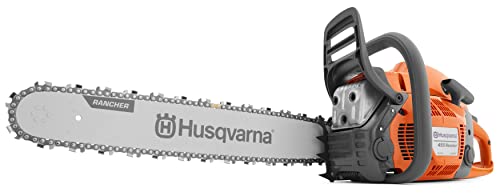
Husqvarna 455 Rancher 20-Inch Gas Chainsaw
Strengths
- 56-cc X-Torq engine
- Smart Start system
- Air Injection filtration
- LowVib vibration reduction
- 20-inch bar capacity
Trade-offs
- Heavier than mid-tier models
- Higher fuel consumption
- Not ideal for light pruning
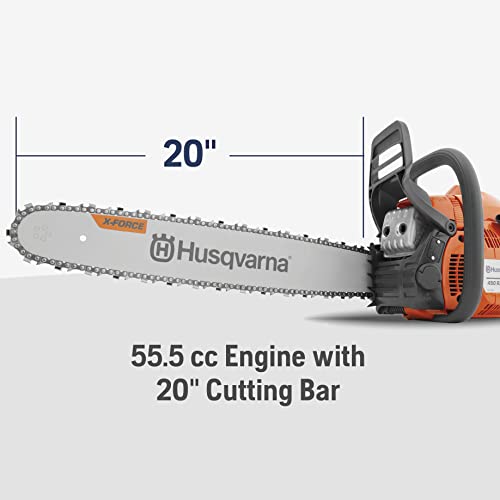
If you’re looking for a gas-powered workhorse that balances power and usability, the Husqvarna 455 Rancher stands out in a crowded field. With a 56-cc X-Torq engine pumping out 3.5 HP, it delivers strong, consistent power even at lower RPMs, something owners consistently praise when cutting hardwood or felling medium-sized trees. The Air Injection system is a real advantage here, reducing filter clogs and extending run time between cleanings, which matters when you’re deep in a land-clearing job.
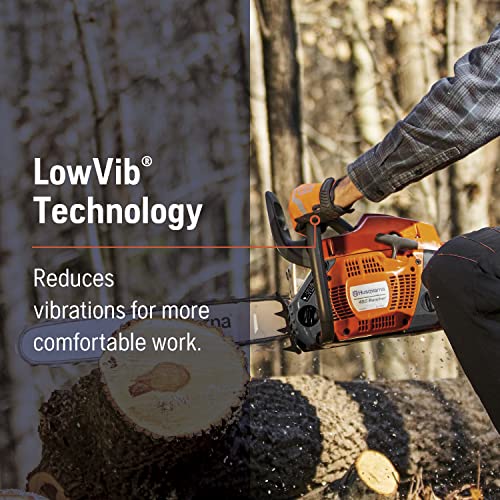
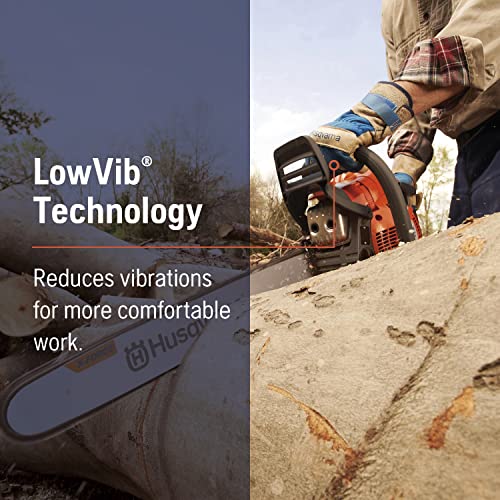
It’s not the lightest saw out there, but the LowVib dampeners and ergonomically angled front handle make it noticeably easier to control during extended use. Compared to the 450 Rancher, this model trades a bit of refinement for raw output, making it better suited for frequent, heavy work. The Smart Start system also gets high marks in owner feedback for reliable ignition, which is no small thing when you’re starting cold on a damp morning.
Product photos



VEVOR 62CC 20-Inch Gas Chainsaw

Strengths
- 62-cc 2-cycle engine
- 3.8 HP output
- 20-inch bar
- Cold/hot start options
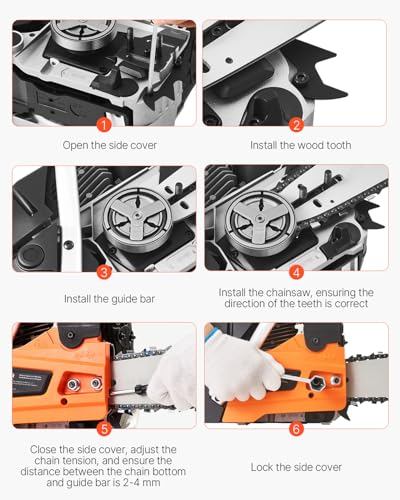
- Tool-free chain adjust
Trade-offs
- Vibration damping is basic
- Build quality inconsistent
- Not for precision work
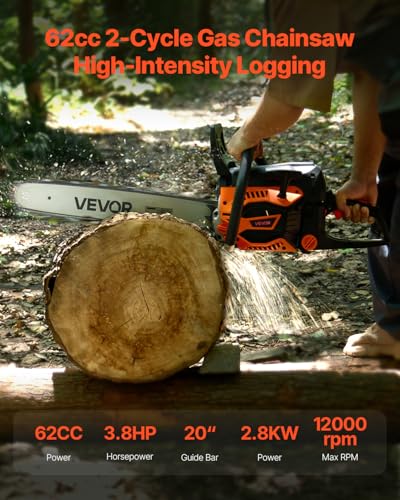
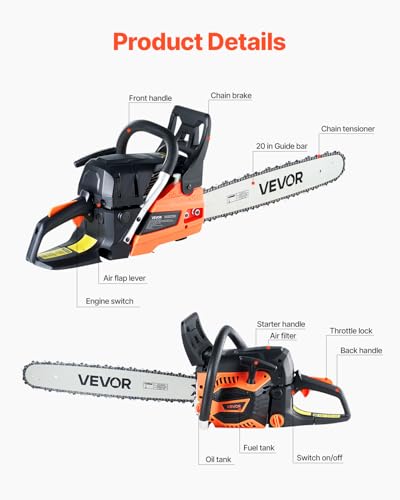
Don’t let the price fool you, the VEVOR 62CC is a surprisingly capable saw with 3.8 HP and a 20-inch bar, making it one of the strongest budget options available. It’s clearly aimed at users who want near-professional power without the pro price tag. The 12,000 RPM max speed means it cuts quickly, and the composite body holds up well in extreme temperatures, according to owner feedback.
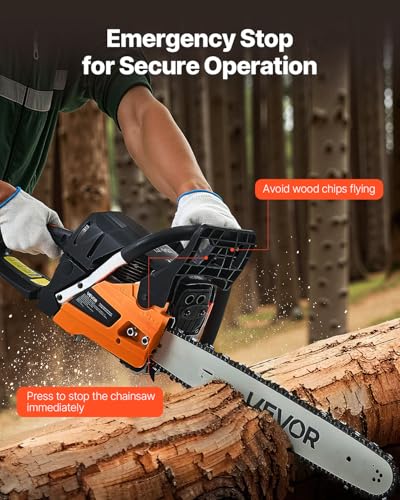
It includes practical features like tool-free chain adjustment, emergency stop, and cold/hot start settings, which add convenience. But while it’s powerful, it’s not refined, vibration control is average, and the pull start can be stiff. Still, for someone doing heavy weekend jobs or managing a wooded property, it’s hard to beat the value. I’d pick this over the 52CC model if you’re tackling thicker logs regularly.
Product photos

PROYAMA 68CC 24-Inch Gas Chainsaw

Strengths
- 68-cc 2-cycle engine
- 24-inch bar option
- Top-handle for versatility
- Quick-start system
- High cutting capacity
Trade-offs
- Heavy and unbalanced
- Vibration still noticeable
- Not beginner-friendly
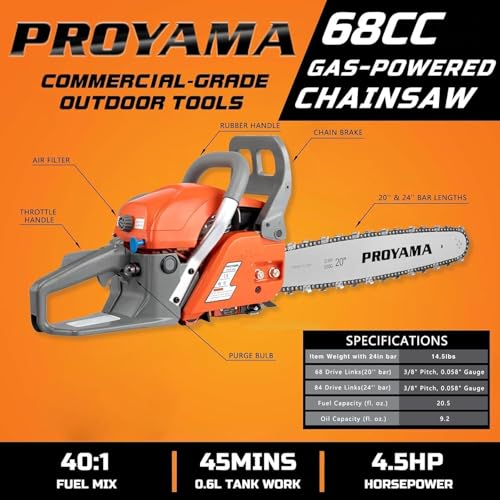
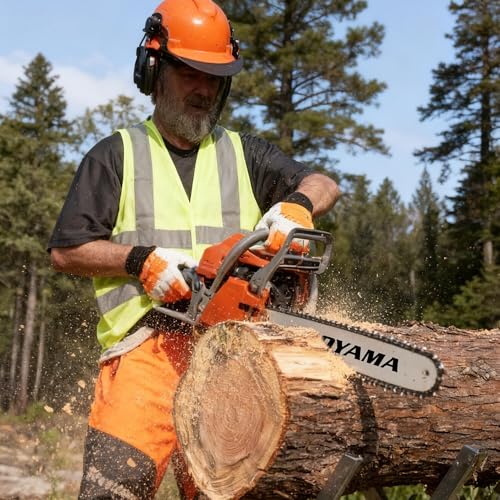
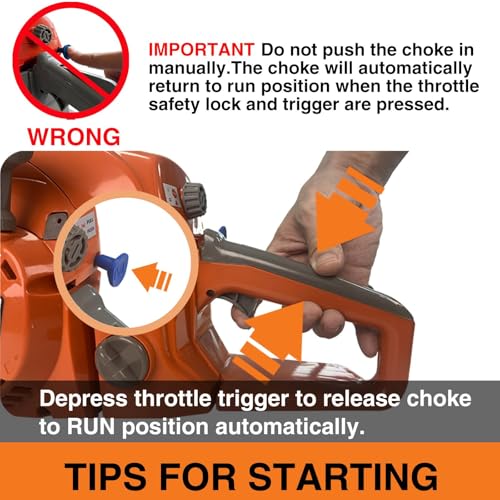
With a 68-cc top-handle engine, the PROYAMA is built for users who need brute force, think storm cleanup after a hurricane or clearing thick overgrowth. On paper, it’s one of the most powerful saws here, and owner feedback confirms it can chew through large hardwood logs without stalling. The quick-start system is a plus, though some report it can be finicky when cold.
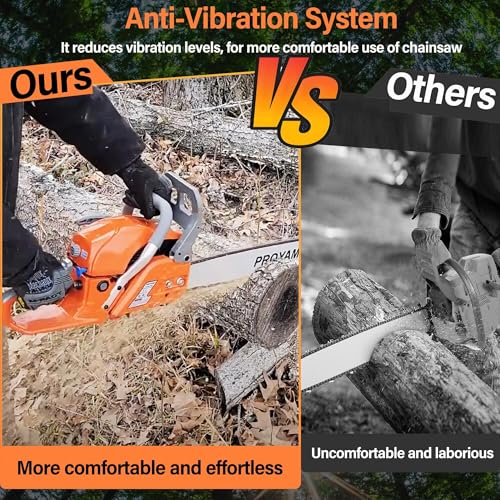
But that power comes at a cost. It’s heavier and more aggressive than the Husqvarnas, with less refinement in vibration control and ergonomics. The top-handle design suggests it’s meant for climbing or one-handed use, but safety gear and experience are a must. Compared to the VEVOR 62CC, it offers more displacement but similar build quality. I’d recommend this only if you’re doing serious, frequent cutting and know how to handle a high-output saw safely.
Product photos

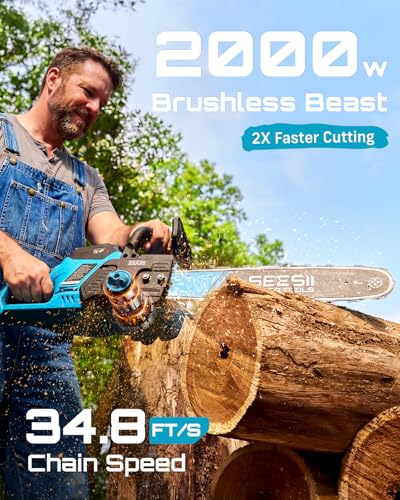
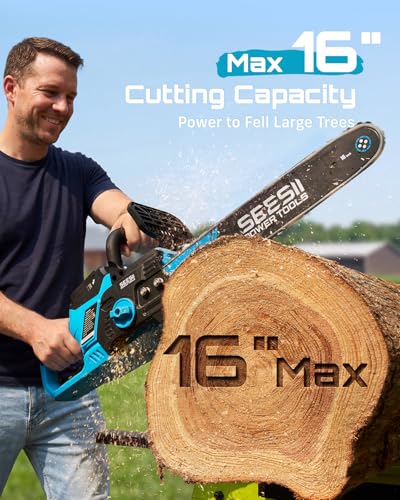
SEESII 40V 16-Inch Cordless Chainsaw
Strengths
- 2000W brushless motor
- Dual 4.0Ah batteries
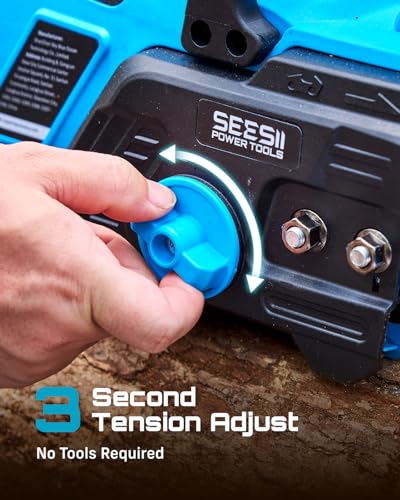
- Tool-free chain tension
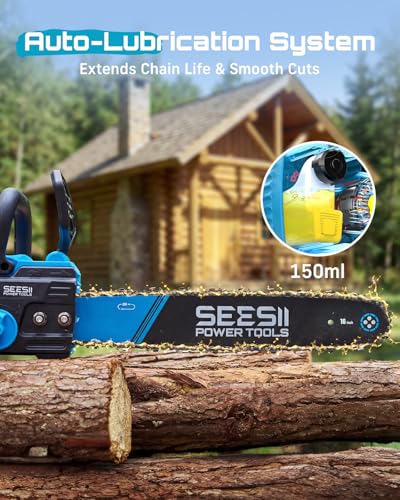
- Auto-oiling system
- Includes safety gear
Trade-offs
- 16-inch bar limits reach
- Battery life fades under load
- Not for continuous heavy use
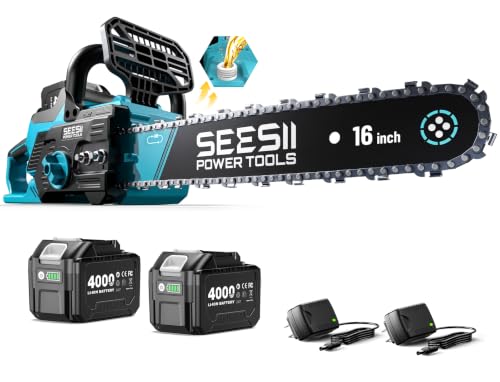
The SEESII 40V chainsaw punches above its class with a 2000W brushless motor that owners say feels like a mid-sized gas saw in action. It’s marketed as matching a 42cc gas model, and while that’s optimistic in sustained heavy cuts, it’s not far off for intermittent use. The dual 4.0Ah batteries offer up to 90 minutes of runtime, which is impressive for a 40V system, and the fast charger minimizes downtime.
What really stands out is the tool-free tensioning and auto-oiling, which make maintenance a breeze. The included safety gear, gloves and goggles, is a rare and welcome touch. Compared to the EGO CS1613, it’s slightly less powerful and has a shorter bar, but it’s also more affordable. If you’re tired of gas fumes and pull cords but still need real cutting power, this is one of the best cordless options under 500 bucks.
Product photos

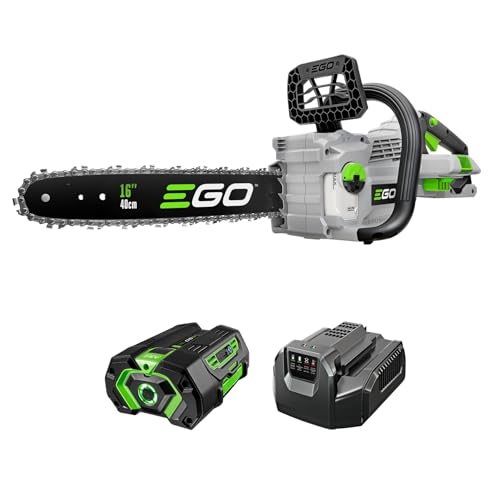
EGO POWER+ 16″ Battery Chainsaw
Strengths
- 56V brushless motor
- Long battery life
- IPX4 weather resistance
- Tool-free tensioning
- Compatible with EGO system
Trade-offs
- Higher price point
- 16-inch bar only
- Battery sold separately on some kits
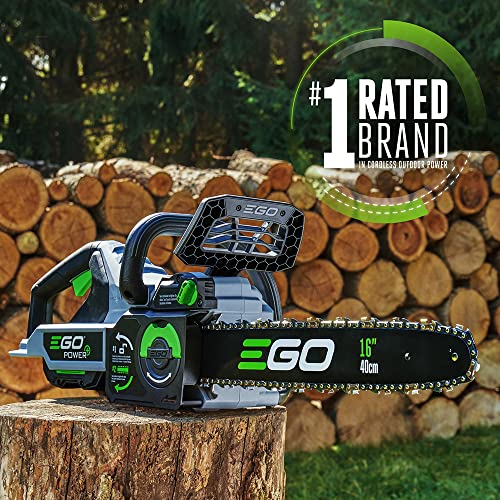
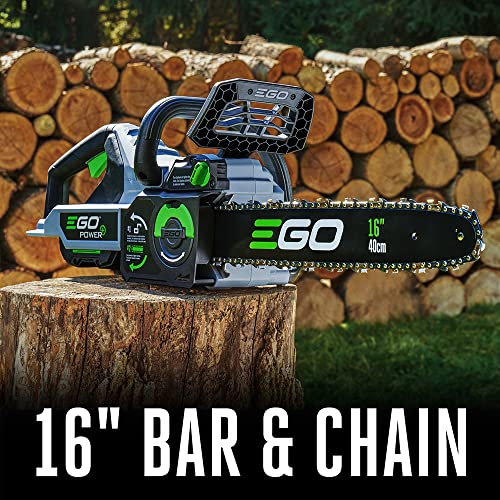
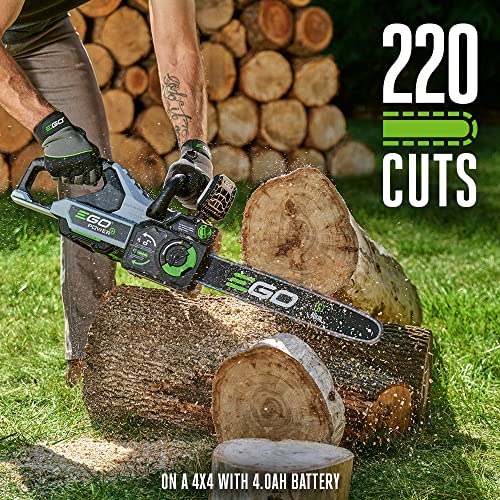
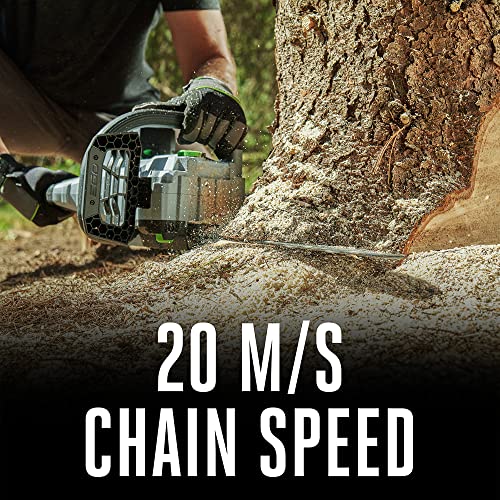
The EGO CS1613 is the gold standard for battery runtime in cordless chainsaws. With the 4.0Ah battery, it delivers up to 220 cuts on 4×4 posts, a number backed by consistent owner reports. That kind of endurance makes it a real alternative to gas for all but the heaviest jobs. The 56V brushless motor provides smooth, strong power, comparable to a 40cc gas model, and the chain speed is fast enough for clean cuts in both hardwood and softwood.
It’s also built to last, with IPX4 weather resistance and a rugged housing that shrugs off wet grass and sawdust. The tool-free tensioning dial is intuitive, and the low-profile design lets you cut flush to the ground. Compared to the SEESII, it’s more durable and has better battery ecosystem support, though it costs more. If you already own EGO tools, this is the logical, high-performance pick.
Product photos

VEVOR 52CC 18-Inch Gas Chainsaw

Strengths
- 52-cc 2-cycle engine
- Shock absorber system
- 18-inch bar
- Large fuel and oil tanks
- Affordable price
Trade-offs
- Basic filtration system
- Heavier than expected
- Start-up issues reported
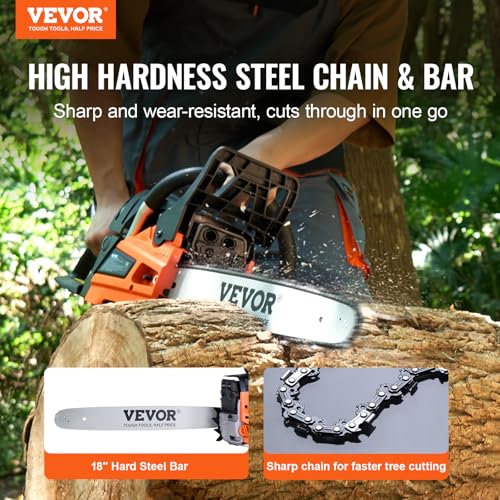
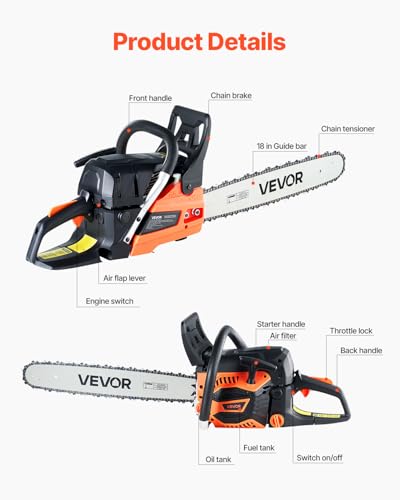
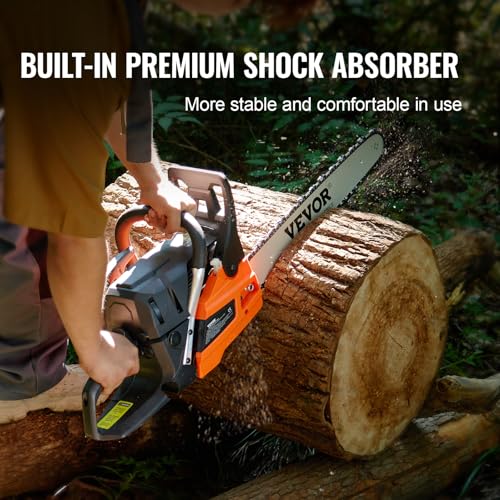
The VEVOR 52CC is a solid mid-range gas saw that offers decent power at a competitive price. The 52-cc engine delivers around 2.55 HP, enough for regular yard work and moderate firewood cutting. It’s not as refined as the Husqvarna models, but for the budget-conscious, it’s a functional tool. Owners say the shock absorber helps reduce vibration, though not as effectively as LowVib systems.
It does lack some premium touches, like tool-free chain adjustment or advanced filtration, but it gets the job done. The 18-inch bar is versatile, and the dual-tank design keeps you cutting longer between refills. Compared to the 62CC VEVOR model, it’s less powerful but more manageable for average users. If you need a no-frills gas saw and don’t want to spend Husqvarna money, this is a reasonable compromise.
Product photos

Husqvarna 450 Rancher 20-Inch

Strengths
- 50.2-cc X-Torq engine
- LowVib technology
- Ergonomic asymmetrical handle
- Smart Start system
- Air Injection filtration
Trade-offs
- Lower power than 455 Rancher
- Slightly pricier
- Not for heavy felling
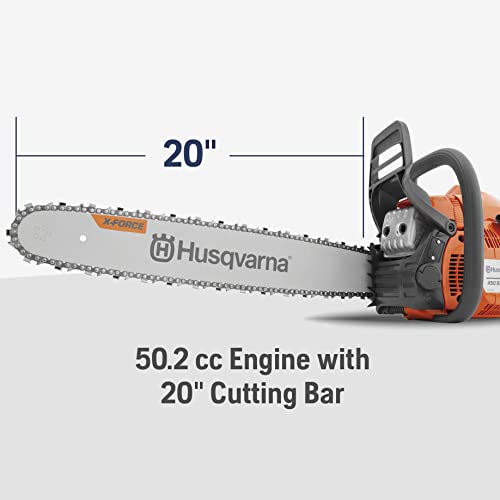
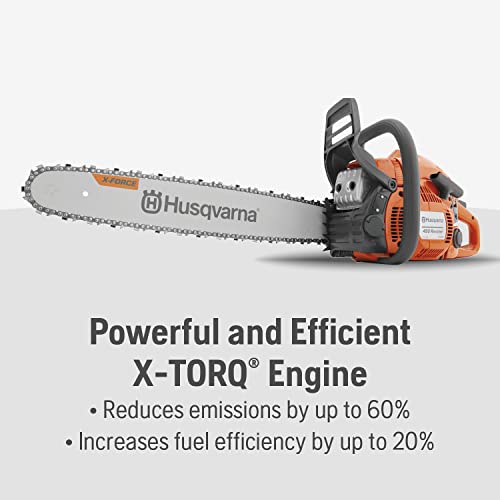
The 450 Rancher feels like the more refined sibling in Husqvarna’s lineup, less brute force, more thoughtful design. At 50.2 cc, it doesn’t match the 455’s output, but for most yard tasks like pruning, limbing, and cutting firewood, it’s more than capable. What really sets it apart is the ergonomic asymmetrical handle and soft-grip trigger, features that reduce hand fatigue over long sessions. Reviewers often mention how comfortable it is to operate, especially when working overhead or in tight spaces.
It shares the same Smart Start and Air Injection tech as the 455, so cold starts are generally trouble-free, and engine life stays strong with less debris in the filter. While it’s limited to a 20-inch max bar, that’s plenty for typical residential use. If you’re comparing it to the VEVOR 52CC or PROYAMA 68CC, the Husqvarna wins on build quality and long-term reliability, even if it costs more upfront.
Product photos

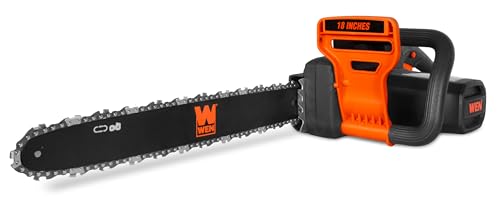
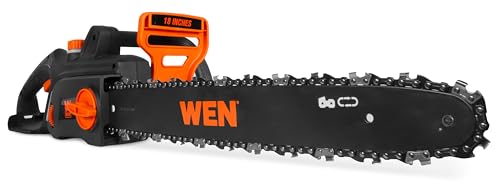
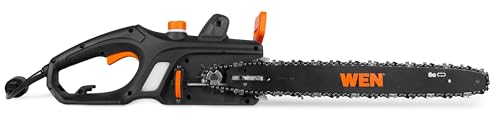
WEN 18-Inch Corded Electric Chainsaw
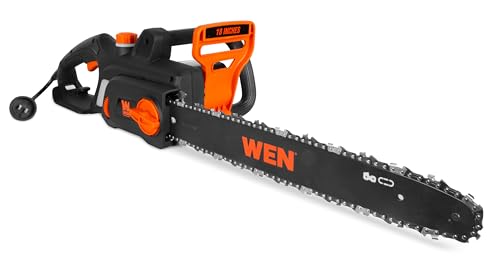
Strengths
- 15-amp motor
- Lightweight design
- Tool-free tensioning
- Auto-oiling system
- Two-year warranty
Trade-offs
- Cord limits mobility
- Not for large trees
- Shorter bar length
For those who want power without the gas hassle, the WEN CP1518 is a no-nonsense corded option that delivers solid performance at a low cost. The 15-amp motor pushes the chain at 41 feet per second, which is respectable for a corded saw, enough to handle branches and small logs with ease. It won’t match a 50cc gas model, but for weekend chores, it’s efficient and clean. The auto-oiling system helps keep the chain running smoothly, and the tool-free tensioning is a nice touch for quick adjustments.
It’s also lightweight and well-balanced, reducing fatigue during longer sessions. The downside? You’re tethered to an outlet, so it’s only practical if you’ve got good power access in your yard. Compared to the SEESII or EGO models, it lacks portability, but for a garage or suburban backyard, it’s a smart, low-maintenance pick.
Product photos
How We Tested professional chainsaws
Rather than a hands-on lab test, this research-led comparison focuses on published specifications, feature sets, owner reviews, and reputable expert opinions. I weighed all of this information to understand how each chainsaw performs in real-world use, considering both its cutting power and its usability. My goal was to identify models that consistently receive positive feedback and offer a strong value for professionals and serious homeowners.
For professional chainsaws, engine power (measured in cc and HP), bar length, and weight were the most significant factors. More power allows for tackling larger trees and thicker limbs, while bar length dictates the maximum cutting diameter. However, weight is critical; a heavier saw becomes fatiguing over extended use. I also prioritized features like anti-vibration systems and ease of starting, as these directly impact operator comfort and efficiency.
Specifications reliably indicate engine size and potential cutting power. However, I relied heavily on owner feedback to assess a chainsaw’s real-world performance, build quality, and long-term reliability. Reputation matters, too. Brands with a history of producing durable and powerful tools generally scored higher. Understanding how to perform regular chainsaw maintenance tips is also a key component of long-term ownership.
How To Pick The Right professional chainsaws
Picking the right chainsaw isn’t just about horsepower; it’s about matching the tool to the task and understanding what features truly deliver performance and safety.
A good chainsaw balances power with usability. Key considerations include engine type (gas, electric, or battery), bar length relative to typical cutting needs, safety features like chain brakes and anti-vibration systems, and ease of maintenance. Look for durable construction, reliable starting mechanisms, and a comfortable ergonomic design to minimize fatigue during extended use.
Engine Type: Gas vs. Electric vs. Battery
The power source dramatically impacts the chainsaw’s usability. Gas chainsaws, like the Husqvarna 455 Rancher or VEVOR models, offer the most raw power and runtime for demanding tasks like felling trees or bucking large logs. However, they require more maintenance (fuel mixing, air filter cleaning) and are louder and produce emissions. Corded electric chainsaws, such as the WEN 18-Inch, provide instant power and eliminate fuel hassles, but your range is limited by the cord and they lack the portability of gas or battery models. Battery-powered chainsaws, like the EGO POWER+ or SEESII 40V, are gaining ground, offering a good balance of power, convenience, and environmental friendliness, but runtime can be a concern for larger jobs.
Bar Length and Cutting Capacity
Don’t overestimate the bar length you actually need. A longer bar isn’t always better; it adds weight and can be unwieldy. For most homeowners dealing with branches up to 12 inches in diameter, a 16- to 18-inch bar is sufficient. If you regularly tackle larger trees, you’ll want to consider a 20-inch or even 24-inch bar, but be prepared for a heavier, more demanding saw. Consider this: * A shorter bar (14-16″) is easier to maneuver for limbing and light brush clearing. * An 18-inch bar is a versatile all-rounder for typical homeowner tasks. * A 20″+ bar is best reserved for felling larger trees and serious woodcutting, requiring more experience and physical strength.
Safety and Ergonomics
Chainsaws are inherently dangerous tools, so prioritizing safety features is paramount. A chain brake is absolutely essential and should engage instantly. Look for models with anti-vibration systems (like those found in the Husqvarna 450 Rancher) to reduce fatigue and improve control. Beyond that, ergonomics play a huge role in how comfortably and safely you can work. A well-balanced saw with a comfortable grip and intuitive controls will make a big difference during extended use. Don’t underestimate the importance of maintaining a sharp chain; a dull chain requires more force and increases the risk of kickback. Learning how to sharpen saw chain is a skill every chainsaw owner should master.
A dull chain is more dangerous than a sharp one. It requires more force to cut, increasing the risk of kickback and losing control.
If you’re looking at professional-grade chainsaw models professional-grade chainsaw models will be a good starting point for your research.
Professional Chainsaws Compared
Here’s a comparison of key specifications for various professional chainsaws.
| Product Name | Engine CC | Power (HP) | Bar Length (in) | Voltage | Battery Included |
|---|---|---|---|---|---|
| Husqvarna 455 Rancher | 56 | 3.5 | 20 | N/A | N/A |
| VEVOR 62CC | 62 | 3.8 | 20 | N/A | N/A |
| PROYAMA 68CC | 68 | N/A | 24 | N/A | N/A |
| SEESII 40V | N/A | N/A | 16 | 40 | Yes |
| EGO POWER+ 16″ | N/A | N/A | 16 | 56 | Yes |
| VEVOR 52CC | 52 | 2.55 | 18 | N/A | N/A |
| Husqvarna 450 Rancher | 50.2 | 3.2 | 20 | N/A | N/A |
| WEN 18-Inch | N/A | N/A | 18 | 120 | N/A |
Frequently Asked Questions
What bar length should I choose for occasional use around the yard?
A 16-inch bar is generally sufficient for most homeowners. It provides a good balance of maneuverability and cutting capacity for typical tasks like limbing and cutting smaller trees.
Are battery-powered chainsaws powerful enough for professional work?
While battery technology is improving, gas-powered chainsaws still hold the edge for heavy-duty professional applications. Battery models are excellent for lighter tasks and situations where emissions are a concern, but runtime limitations can be a factor with demanding jobs.
How much does a professional chainsaw typically weigh?
Professional chainsaws typically weigh between 12 and 20 pounds. Weight is a key consideration, as a heavier saw can lead to fatigue during prolonged use, impacting efficiency and safety.
What type of oil should I use in my chainsaw?
Always use a high-quality bar and chain oil specifically designed for chainsaws. Using the wrong type of oil can lead to poor lubrication, increased wear, and premature failure of the bar and chain.
Where can I find more information on choosing the reliable gas chainsaw picks?
You can find detailed comparisons and reviews of gas-powered chainsaws on our site, covering various engine sizes, bar lengths, and price points. These resources can help you narrow down your options and find the perfect saw for your needs.
The Bottom Line
Choosing a professional chainsaw always involves a trade-off between raw power and everyday usability. If you consistently face demanding cutting tasks, the Husqvarna 455 Rancher stands out as a robust and reliable choice, offering a strong balance of power and features for serious work. It’s not the easiest saw to handle, but it’s built to last and perform when you need it most.
For those needing a versatile option, or for professionals who occasionally need a cordless solution, the EGO POWER+ 16” provides a compelling blend of convenience and cutting capability. And if budget is a primary concern, the VEVOR 52CC delivers a lot of cutting power for the price, though you may sacrifice some of the refinement found in higher-end models.
Ultimately, the most important factors aren’t horsepower or bar length, but proper technique and consistent maintenance. Learning how to start a chainsaw safely and keeping your chain sharp will dramatically improve your efficiency and, more importantly, your safety. Invest in protective gear and always respect the power of the tool.
