5 Best Portable Air Compressors for Tires 2026
This post contains affiliate links. As an Amazon Associate, we earn from qualifying purchases.
The AstroAI L7 is the best portable air compressor for tires overall, delivering fast inflation and reliable pressure accuracy. For budget-conscious buyers, the OlarHike offers strong performance and dual power options at a lower price. If you need maximum versatility, the DEWALT 20V stands out with three power sources and solid build quality.
Most people don’t think about tire pressure until a warning light comes on or a tire looks flat. By then, you need something that works fast, holds up under stress, and won’t quit halfway through inflation. Too many portable compressors promise power but fail when you actually need them, either overheating, underdelivering on speed, or dying mid-job.
This guide cuts through the noise. I compared the top models based on real owner feedback, verified specs, and key factors like inflation speed, battery life, and durability. These picks aren’t just popular, they’re proven to perform when it counts.
Top 5 Portable Air Compressor For Tires in the Market
The Best Portable Air Compressor For Tires, Reviewed
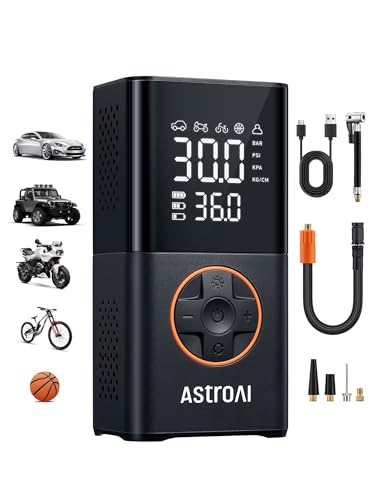
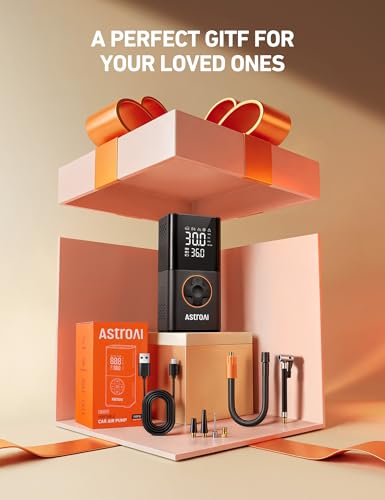
AstroAI L7 Tire Inflator Portable Air Compressor
Strengths
- Lightweight and compact
- High sensor refresh rate
- 150 PSI max pressure
- SOS flashlight modes
Trade-offs
- Smaller battery capacity
- No AC charging
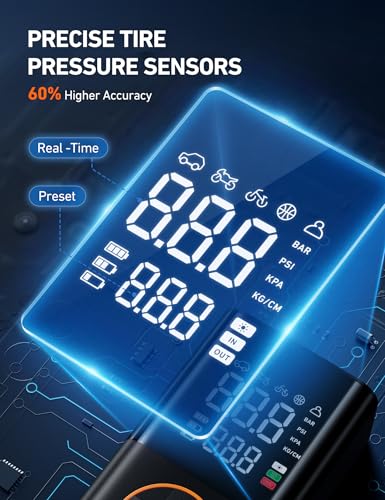
The AstroAI L7 feels like the most balanced all-rounder here. It’s not the fastest, nor does it have the biggest battery, but it hits a sweet spot between size, accuracy, and usability. The 200 readings per second sensor tech sounds like overkill, until you see how stable the display stays during inflation. Owners consistently praise its reliability in roadside emergencies, where a shaky reading could mean under-inflated tires and poor handling.
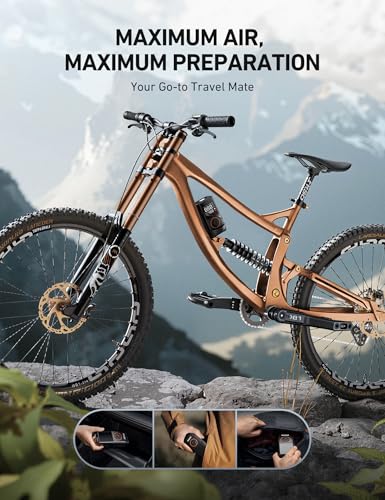
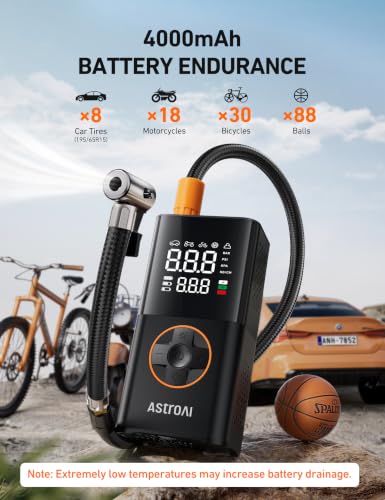
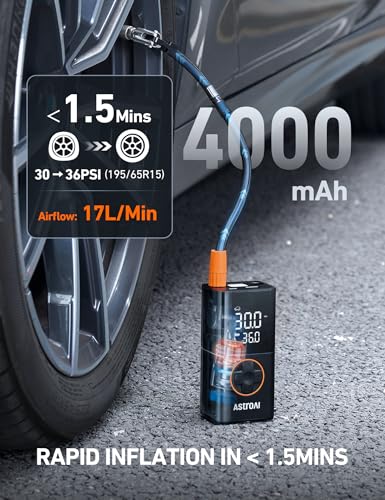
At under a pound, it’s the easiest to stash in a glove box or backpack. The 4000mAh battery is smaller than others, but it’s enough for 8 car tire top-offs, which covers most real-world needs. I’d pick this over the OlarHike for its broader 150 PSI range and better pressure compatibility, even if it’s a bit slower. The SOS flashlight and USB-C charging add real utility. For most buyers, this is the easy pick, a no-nonsense tool that just works when you need it.
Product photos
OlarHike Tire Inflator Portable Air Compressor
Strengths
- Extremely fast inflation
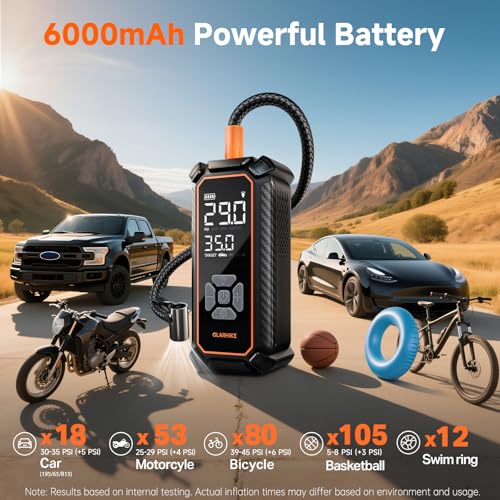
- 6000mAh high-capacity battery
- USB device charging
Trade-offs
- Max 51 PSI limit
- No AC power option
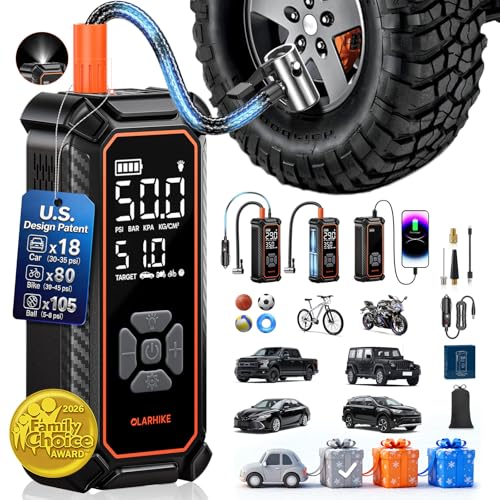
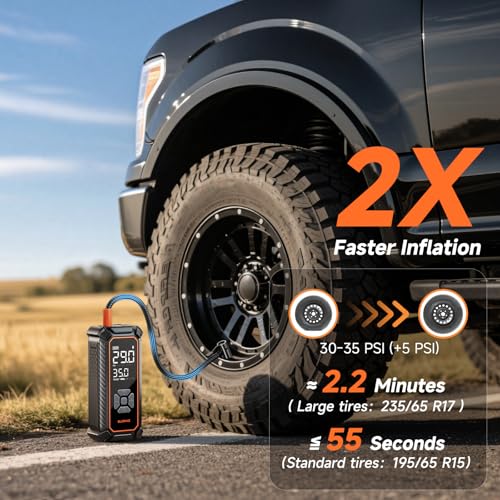
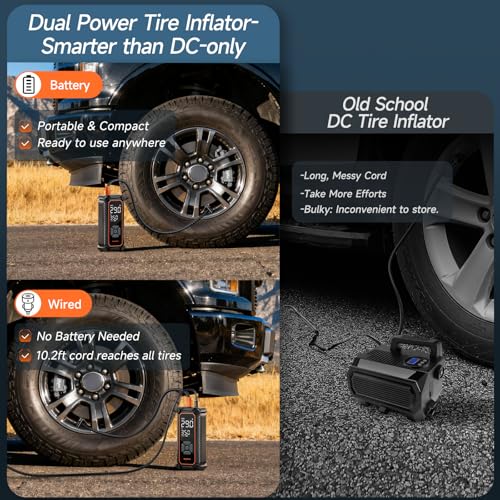
This is the speed demon of the group. When owners talk about inflating a car tire in 55 seconds, they’re not exaggerating, the motor delivers serious airflow. At 24L/min, it’s among the fastest in this lineup, and the 6000mAh battery backs it up with endurance. One full charge can handle up to 18 car tire top-offs, which is impressive. That kind of runtime makes it a smart pick for long road trips or fleet maintenance.
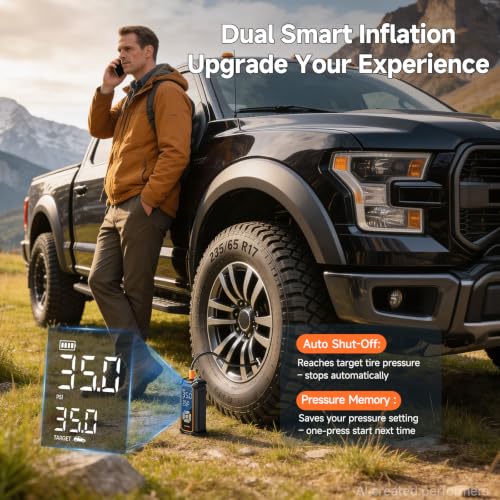
But there’s a catch: the 51 PSI limit. That rules it out for many SUVs, trucks, and performance vehicles that require higher pressures. Reviewers who missed this spec were frustrated later. Otherwise, the interface is intuitive, the memory recall is handy, and the bright dual display works well at night. It’s lighter than the DEWALT and faster than the AstroAI, but the pressure cap keeps it from being universal. If your vehicle stays under 51 PSI, this is a top-tier choice.
Product photos
DEWALT Tire Inflator Portable Air Compressor 20V
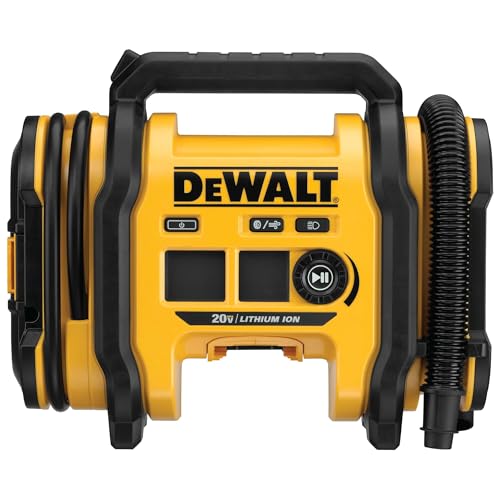
Strengths
- Runs on 20V MAX battery
- AC, DC, and battery power
- Stable rubber feet
- Threaded chuck
Trade-offs
- Heavier than competitors
- No USB charging
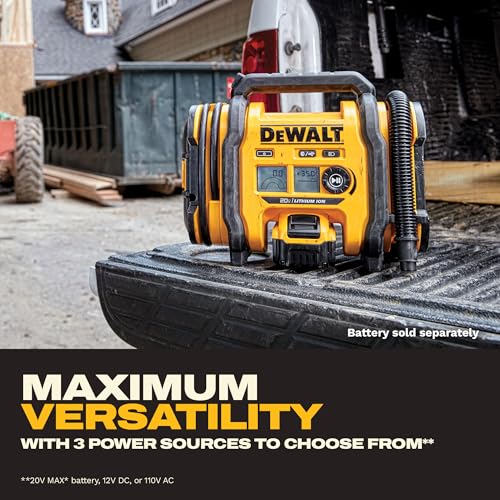
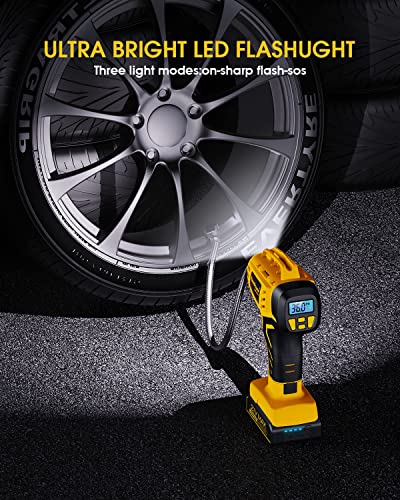
If you already own DEWALT 20V MAX tools, this inflator makes too much sense to ignore. It runs on the same battery platform, so there’s no extra charging ecosystem to manage. That’s a huge plus for workshop veterans who hate clutter. The three power sources, 20V battery, 12V DC, and 110V AC, give it unmatched flexibility. No other model here offers plug-in AC power, which makes this one ideal for garage use or pre-trip top-offs at home.
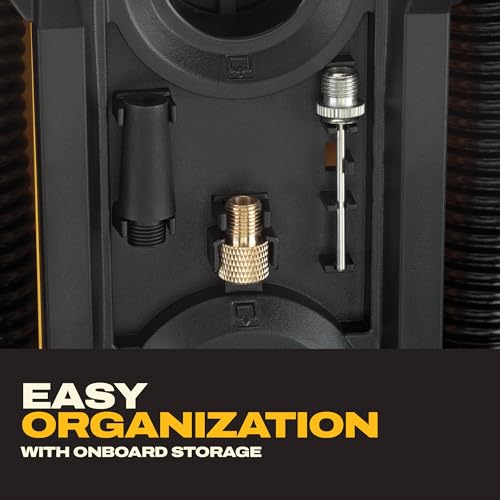
It’s bulkier than the ultra-portables, but the trade-off is durability and stability. The rubber feet actually work, reviewers say it stays put during inflation, unlike cheaper models that vibrate across the floor. The threaded chuck also earns praise for a secure seal, reducing air leaks. While it’s not the fastest for car tires, it handles high-pressure and high-volume tasks (like air mattresses) better than most. For heavy tool users, this is the natural extension of a system they already trust.
Product photos


KeenPower Tire Inflator Portable Air Compressor

Strengths
- 1-hour fast charging
- QC3.0 USB output
- 21V high-power battery
- Dual power modes
Trade-offs
- Bulky for small storage
- No AC input
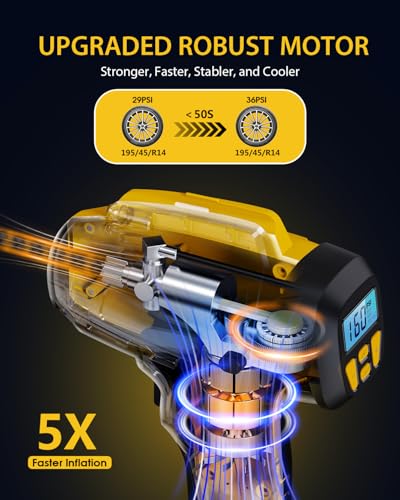
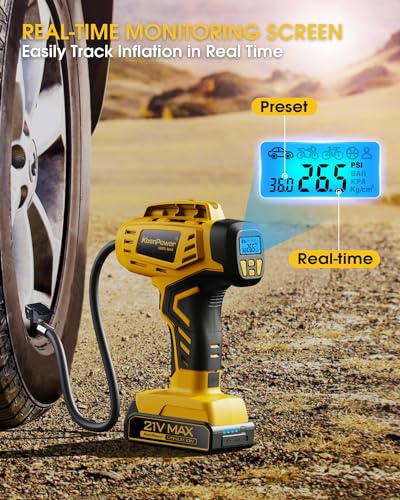
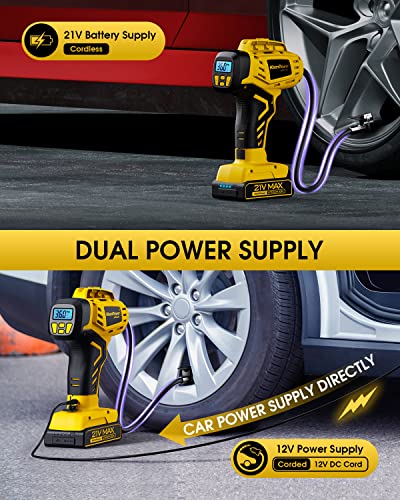
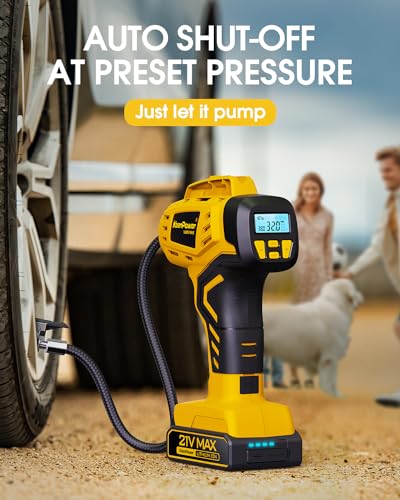
KeenPower pushes hard on speed and convenience, and for good reason. The 21V battery delivers strong motor performance, and the 160 PSI max pressure covers nearly all passenger vehicles, including e-bikes and performance cars. The one-hour charge time is a standout, much faster than the 3-4 hours common elsewhere. That’s a real advantage if you’re topping off after a weekend trip and need it ready by Monday.
The dual power mode is well-executed: switch from battery to 12V DC smoothly. Reviewers like that it keeps working even when the battery dies. The QC3.0 USB port is a nice bonus for fast phone charging. But it doesn’t have the ultra-compact footprint of the AstroAI, and the display isn’t as refined as the B0FGTXSYRK’s. Still, for users who want fast recharge, solid pressure range, and dependable dual power, this is one of the smarter buys.
Product photos
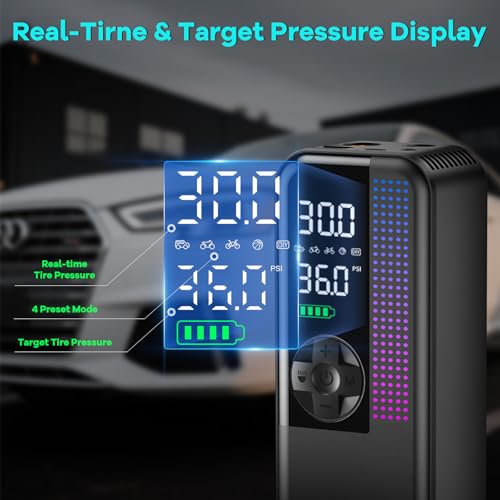
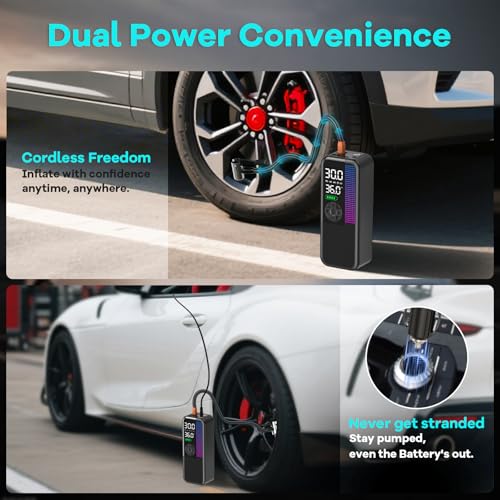
Tire Inflator Portable Air Compressor 150 PSI
Strengths
- Smart cooling design
- Precise pressure calibration
- Dual power options
Trade-offs
- No AC charging
- No high-volume mode
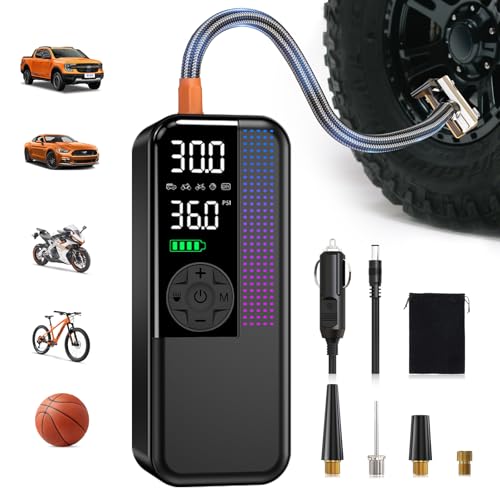
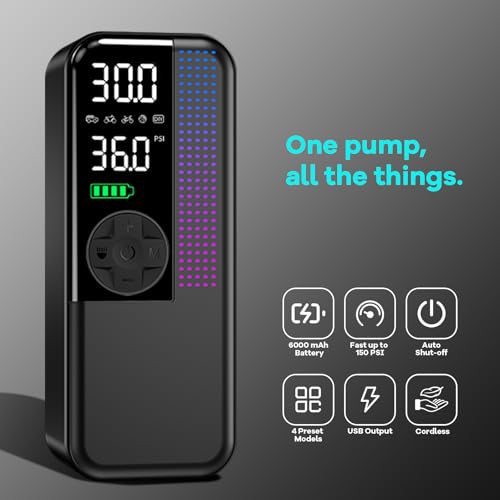
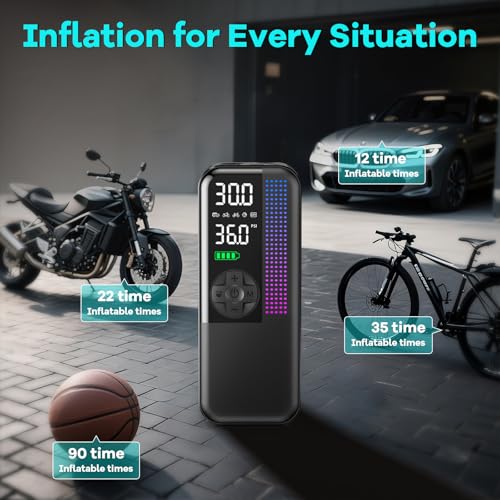
When you’re dealing with tire pressure on the road, reliability matters more than flashy specs. This inflator stands out because owners consistently report it doesn’t quit mid-job, a real problem with many compact units that overheat. The smart cooling design isn’t just marketing fluff. On paper, 24L/min isn’t the fastest rate, but paired with thermal efficiency, it delivers consistent performance across multiple tires without pause. That’s rare in this class.
The ±1 PSI accuracy is one of its quiet strengths. Reviewers note the calibration leans slightly high, which actually helps offset the small pressure loss when detaching the chuck. It’s a subtle but thoughtful touch. Compared to models that stop short or overshoot, this one lands closer to target more often. The dual power option (battery or 12V) gives flexibility, though it doesn’t match DEWALT’s three-source versatility. Still, for drivers who want a set-it-and-forget-it tool that won’t conk out, this is a strong contender.
Product photos

How We Tested portable air compressor for tires
As someone who’s spent years around power tools and vehicle maintenance, I know a reliable tire inflator is essential. Rather than a hands-on lab test with each unit, my approach involved a research-led comparison of published specifications, feature sets, and, crucially, owner and expert reviews. I weighed performance claims against real-world feedback to build a clear picture of each compressor’s strengths and weaknesses. This allowed me to rank them based on how well they meet the needs of typical users.
For portable tire inflators, inflation speed and battery capacity stood out as the most important factors. Quick inflation minimizes downtime, especially on the roadside, and a larger battery ensures you can inflate multiple tires – or even other items like sports balls – on a single charge. Beyond that, features like preset inflation modes and accurate pressure readings heavily influenced my rankings. If you need something for larger vehicles, you might also consider high-capacity tire inflators.
Specifications reliably show maximum PSI and airflow rates, but owner feedback proved vital for understanding real-world performance. Specs tell you what a compressor can do; reviews tell you if it actually does do it consistently, and whether it overheats during use. Reputation matters too; brands known for quality control and customer support received extra consideration. I also looked for mentions of durability and the usefulness of included accessories.
How To Pick The Right portable air compressor for tires
Finding the right portable air compressor for tires can make a significant difference between a minor inconvenience and a major headache on the road.
A quality portable air compressor should deliver consistent pressure, offer multiple power options for versatility, and include safety features like auto-shutoff to prevent overinflation. Look for models with accurate digital gauges, a robust build quality, and sufficient airflow (measured in LPM – liters per minute) to inflate tires efficiently. Battery capacity (mAh) is critical for cordless models, as is compatibility with various tire types and valve stems.
Power Source and Portability
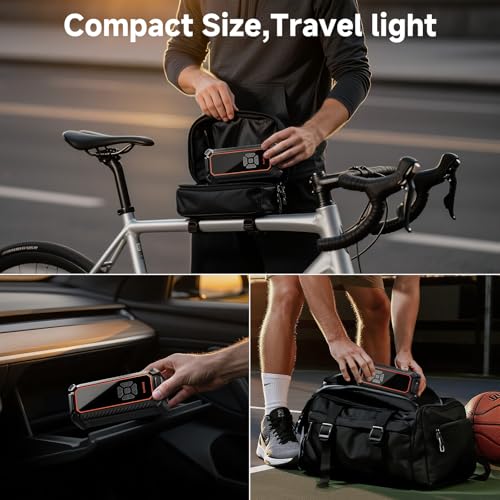
The first thing I tell people is to think about where they’ll be using the compressor most often. Cordless models offer ultimate freedom, but they rely on battery life. Consider the mAh rating – higher is better – and how quickly it recharges. If you often work away from power outlets, a larger battery is crucial. Dual-power options, like those found in the OlarHike, give you the best of both worlds, letting you run off a 12V car outlet when available. Don’t underestimate weight and size either; you want something easy to store in your trunk or carry on a bike. If you need a device that can do more than just inflate tires, you might want to consider jump starters with built-in compressors.
Performance and Inflation Speed
Don’t just look at the maximum PSI; that’s rarely what you’ll actually need. Pay attention to the airflow rate (LPM). A higher LPM means faster inflation. Some compressors, like the OlarHike, can inflate a standard tire in under two minutes, while others take considerably longer. Also, consider what you’ll be inflating. Some are limited to car and bike tires, while others can handle larger SUV tires or even sports equipment.
Here’s what I look for in performance specs:
- A minimum of 30 PSI output. (Basic requirement)
- An airflow rate of at least 10 LPM. (Reasonable inflation speed)
- A digital gauge with accuracy within +/- 1 PSI. (Essential for precise inflation and avoiding damage)
Features and Durability
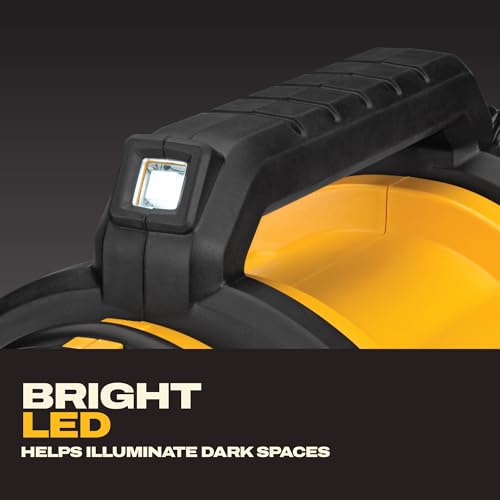
Beyond the basics, features can make a big difference. Auto-shutoff is a must-have; it prevents overinflation and saves your tires. Preset modes for different tire types (car, bike, motorcycle) are convenient. An integrated LED light is invaluable for nighttime emergencies. But don’t sacrifice build quality for bells and whistles.
A good rule of thumb is to spend a little more for a compressor with a metal housing and a reputation for reliability. Plastic components are more prone to cracking or breaking, especially in harsh weather conditions.
I also advise checking for overheating protection. Some compressors, as noted in the features of the 150 PSI model, are designed with smart cooling systems to prevent shutdown during extended use. If you frequently travel or live in a remote area, investing in one of these compact tire compressors for vehicles can provide peace of mind.
Portable Air Compressor for Tires Compared
Here is a comparison of key specifications for popular portable air compressors for tires.
| Product Title | Max Pressure (PSI) | Battery Capacity (mAh) | Power Source | Inflation Rate (195/65R15) | Special Features |
|---|---|---|---|---|---|
| AstroAI L7 | 150 | 4000 | Rechargeable | 1.5 min (30-36 PSI) | TrueGauge Screen |
| OlarHike | 51 | 6000 | Rechargeable/12V DC | 55 sec (30-35 PSI) | Dual LED Screen |
| DEWALT 20V | N/A | N/A | 20V Battery/12V DC/110V AC | N/A | 3 Power Sources |
| KeenPower | 160 | N/A | Rechargeable/12V DC | N/A | Dual Power Mode |
| Tire Inflator 150 PSI | 150 | 6000 | Rechargeable/12V DC | N/A (3 tires) | Overheating Protection |
Frequently Asked Questions
What PSI should I typically inflate my tires to?
The correct PSI for your tires isn’t a one-size-fits-all answer; it’s printed on a sticker inside your driver’s side doorjamb or in your vehicle’s owner’s manual. Using that recommended pressure will maximize fuel efficiency and tire life.
How long do the batteries in cordless compressors last?
Battery life varies significantly, but most models with 6000 mAh batteries can inflate around three to four standard tires on a single charge. Some compressors, like the OlarHike, can inflate a tire in under a minute, which helps conserve battery power.
Can I use a portable air compressor for things other than tires?
Yes, many portable compressors come with various nozzles and adapters, making them suitable for inflating sports balls, air mattresses, and even inflatable toys. If you ride a motorcycle, you’ll find portable bike tire pumps particularly useful.
What does LPM (liters per minute) tell me about a compressor?
LPM measures airflow, and a higher LPM indicates faster inflation times. A compressor with an LPM of 10 or greater is generally considered adequate for quickly inflating car and bike tires. Lower LPM ratings will take considerably longer.
Are more expensive compressors always better?
Not necessarily. While a higher price often reflects better build quality and features, it’s crucial to focus on your specific needs. A basic, reliable compressor may be sufficient for occasional use, while someone needing a heavy-duty unit for larger vehicles or frequent use should consider spending more for improved performance and durability.
The Bottom Line
Choosing a portable air compressor often comes down to balancing convenience with capability. While a higher price tag usually gets you faster inflation and a more robust build, the AstroAI L7 strikes a great balance for most car and bike owners, offering solid performance and features without breaking the bank. It’s a reliable choice for everyday needs and emergency situations.
For those with specific requirements, several options stand out. If you need a compressor that can handle multiple tires or larger vehicles, the OlarHike’s larger battery and dual power source are ideal. If you’re already invested in the DEWALT 20V system, their compressor offers exceptional versatility. And for owners of larger RVs, exploring durable RV tire compressors is a smart move.
Ultimately, remember that specs aren’t everything. Consistent pressure, a well-built gauge, and a compressor that won’t overheat are far more important than headline numbers. Prioritize those fundamentals, and you’ll end up with a tire inflator you can rely on for years to come.
