
8 Best Portable Air Cleaners of 2026
This post contains affiliate links. As an Amazon Associate, we earn from qualifying purchases.
The PureZone Mini stands out as the best overall portable air cleaner for small spaces, combining true HEPA and carbon filtration in a compact design. For larger rooms, the TDBYWAE Air Purifier delivers strong performance at a great value, while the GoveeLife Mini offers solid smart features for tech-savvy users.
Most people buy portable air cleaners hoping to reduce allergens, odors, or dust, only to find their unit is too loud, underpowered, or ineffective in real-world use. It’s frustrating when a device doesn’t match the claims, especially when you’re relying on it for better breathing at home or in the bedroom.
In this guide, I break down the top performers based on filtration quality, verified room coverage, noise levels, and real owner feedback. These picks aren’t pulled from ads, they’re selected from hours comparing specs and sifting through user experiences to find models that actually deliver.
Top 8 Portable Air Cleaners in the Market
The Best Portable Air Cleaners, Reviewed
Pure Enrichment PureZone Mini Portable Air Purifier

Strengths
- Cordless and portable
- True HEPA filtration
- 5-year warranty
Trade-offs
- Very limited coverage
- Not for large spaces
- Battery charging only via USB-C
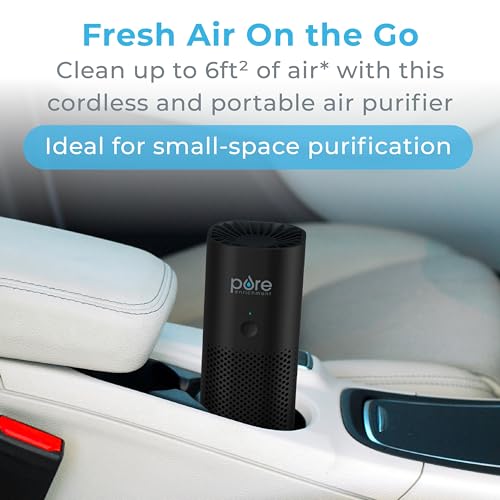
This is the ultimate personal air purifier, not for whole-room cleaning, but for cleaning the air right around you. Its cordless design and 12-hour battery life make it uniquely portable, and the 99.97% HEPA filtration is legit for a unit this size. It’s been tested to clean a 6 sq ft personal space in 12 minutes, which sounds small, but that’s exactly what you need when you’re sitting at a desk, lying in bed, or riding in a car.
What sets it apart is versatility. Use it upright, on its side, or remove the handle entirely. The three fan speeds let you balance noise and airflow, and on high, it even doubles as a personal fan. The 5-year warranty is exceptional in this category, a strong vote of confidence from the brand. While it won’t replace a full-room purifier, it fills a niche no other model here does: mobile, close-range air cleaning. For that, it earns my pick for best overall.
Product photos


GoveeLife Mini Air Purifier with App Control

Strengths
- Full app and Alexa control
- Custom scheduling
- Aromatherapy function
Trade-offs
- No 5GHz Wi-Fi support
- App can be slow to respond
- Auto mode requires separate sensor
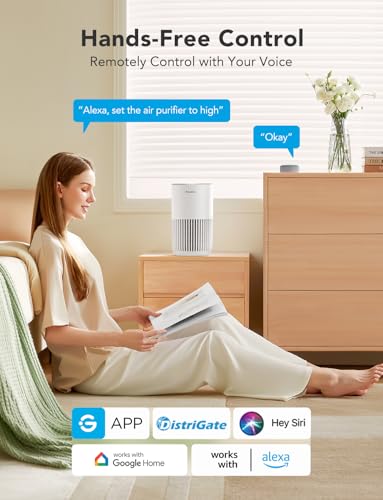
This is the most connected mini purifier on the list, and for smart home fans, that matters. The GoveeLife app lets you schedule fan speeds, set timers, and get filter change alerts, plus, it works with Alexa and IFTTT, so you can automate it alongside other devices. The 376 sq ft hourly purification rate is respectable for its size, and the dual-channel intake helps it punch above its weight.
Where it really stands out is customization. The preset custom mode lets you program different fan speeds at different times, great if you want high power during the day and silent sleep mode at night. The aromatherapy feature is a nice touch, though it’s not for everyone. But the real limitation? It needs a 2.4GHz Wi-Fi network, and some users report occasional app lag. Still, for those who want a smart, compact purifier that fits into a connected lifestyle, this one delivers.
Product photos


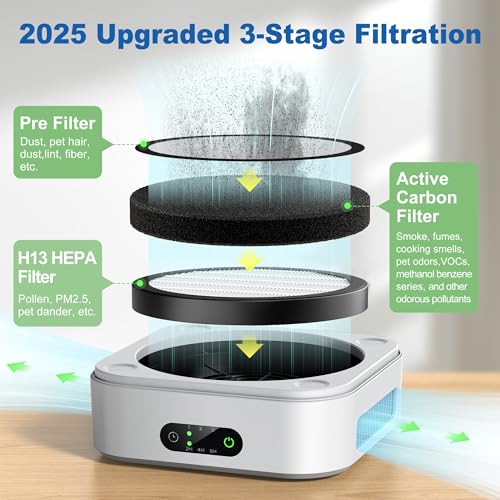
TDBYWAE Air Purifier for Home and Travel

Strengths
- Ultra-portable design
- Type-C charging
- Magnetic filter cover
Trade-offs
- Overstated coverage claims
- No app or smart features
- Basic filtration for price
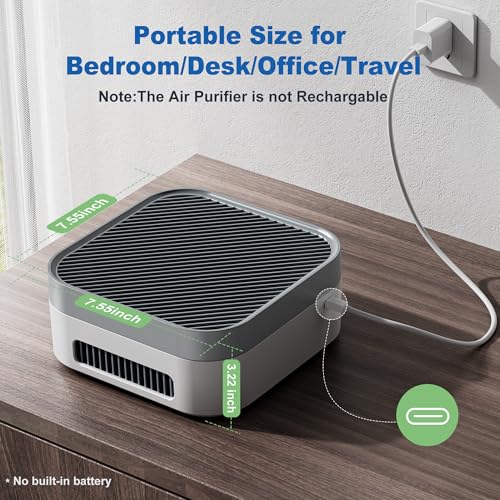
This one wins on pure portability and design smarts. At just over 8 inches wide and weighing under 2 pounds, it’s easy to toss in a bag and take anywhere, hotel, car, RV, or desk. The Type-C charging is a modern touch, and the magnetic top cover makes filter changes a one-hand job. It claims 600 sq ft coverage, but real-world use shows it’s best in spaces under 250 sq ft, where it can cycle air four times per hour.
The 16dB sleep mode is impressively quiet, and the simple touch controls make it easy to use. Owners love how it blends into small spaces without sacrificing performance. The square design is stable and looks clean on a nightstand. But don’t expect smart features or app control, this is a no-frills, highly portable purifier that does one thing well: go anywhere and clean the air quietly.
Product photos


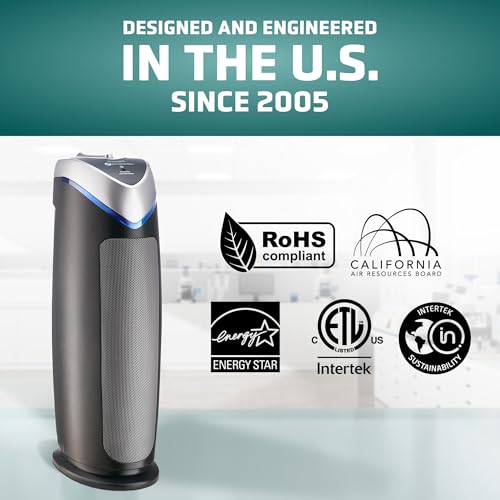
GermGuardian HEPA Air Purifier AC4825E

Strengths
- Large room coverage
- HEPA + UV-C option
- CARB and ETL certified
Trade-offs
- Noisy on high speed
- Bulky tower design
- UV bulb needs replacement
This tower-style purifier is built for space, it’s designed to handle rooms up to 743 sq ft, which puts it in a different league than most others here. The HEPA filter captures 99.97% of particles down to 0.1 microns, and the optional UV-C light adds an extra layer of protection against airborne microbes. Owners in larger bedrooms, living rooms, or open-plan spaces consistently report improved air quality, especially during allergy season.
It’s not the quietest on high speed, but the sleep mode keeps noise manageable at night. The carbon filter helps with cooking smells and pet odors, though it’s not as robust as some dedicated odor-fighting models. CARB and ETL certifications mean it meets strict safety and efficiency standards, which matters for long-term use. While it’s bulkier and lacks smart features, its raw cleaning power makes it the go-to for large rooms.
Product photos


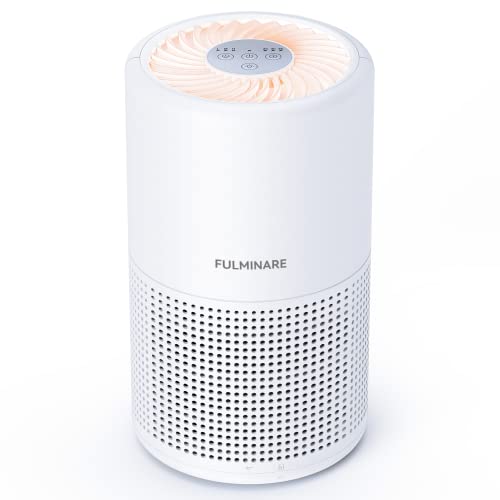
FULMINARE H13 True HEPA Air Filter
Strengths
- H13 HEPA filter
- Ultra-quiet on low
- Compact and portable
Trade-offs
- Limited to small rooms
- No app or smart features
- Filter replacement needed every 3 months
This little purifier packs a surprising amount of function for its size and price. The H13 HEPA filter is a solid choice for trapping fine particles, and owners consistently report noticeable improvements in air quality, especially in small bedrooms or offices. With dual-channel airflow and a 360° outlet, it circulates air efficiently in rooms up to 215 sq ft, not huge, but realistic for its class. The 24dB low-speed operation is genuinely quiet, making it a strong contender for light sleepers or nurseries.
I appreciate the dual-purpose design with the soft night light, parents find it especially useful for kids’ rooms. The five timer options add flexibility, and the fact that it’s portable enough to move between rooms helps stretch its usefulness. While it won’t tackle large spaces or heavy pet dander loads, it delivers exactly what it promises: clean air and peace and quiet at a wallet-friendly price.
Product photos


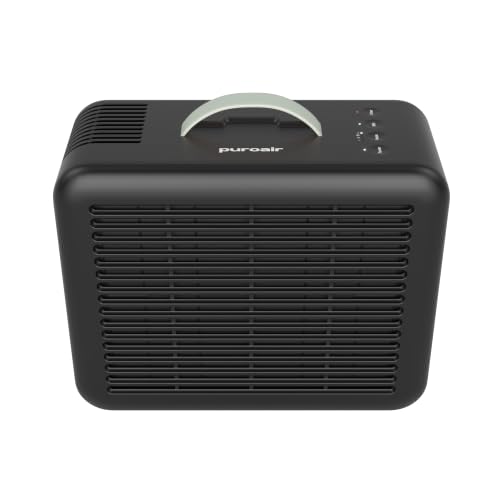
PuroAir Air Purifier 100i Smart HEPA
Strengths
- Strong app integration
- Effective 3-stage filter
- Lab-verified performance
Trade-offs
- Slightly bulky design
- Noticeable hum on low
- No voice control beyond app
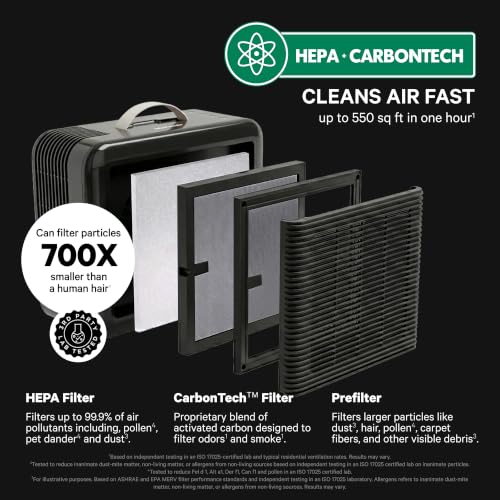
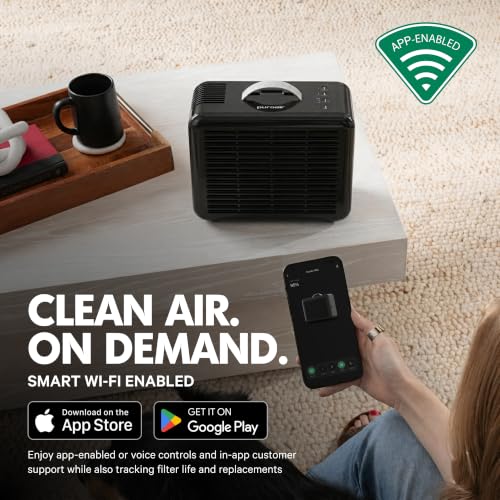
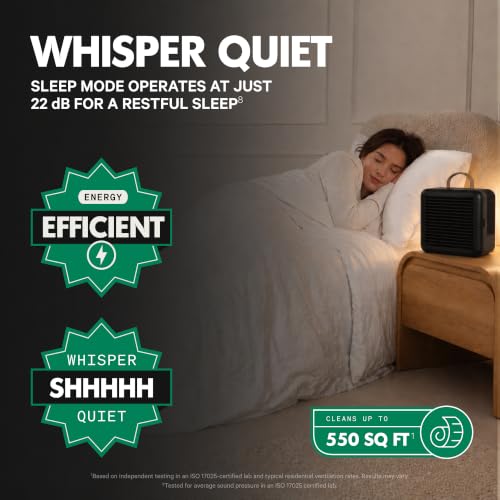
If you want to control your air purifier from your couch, or across the country, this is one of the most polished app-enabled models in the under-$200 range. The 550 sq ft coverage claim holds up based on CADR and owner feedback, and the 3-layer filtration system with True HEPA and carbon is effective against smoke, pollen, and pet dander. People with allergies or pets tend to rate this one highly, and third-party lab testing adds credibility to its performance claims.
The PuroAir app is intuitive and responsive, letting you adjust fan speed, monitor runtime, and get filter alerts remotely. Wi-Fi connectivity is stable, and the 2-year warranty with U.S.-based support gives it an edge over lesser-known brands. Still, it’s not the quietest on low speed, some owners note a faint hum, and the unit is bulkier than others in this size class. But if app control is a priority, this is a trustworthy performer.
Product photos


Purivortex Air Purifier AC300 Pro
Strengths
- Strong odor and smoke removal
- SGS and ISO verified
- Aromatherapy option
Trade-offs
- Night light can be bright
- Average noise on low
- Aroma pad not for purists
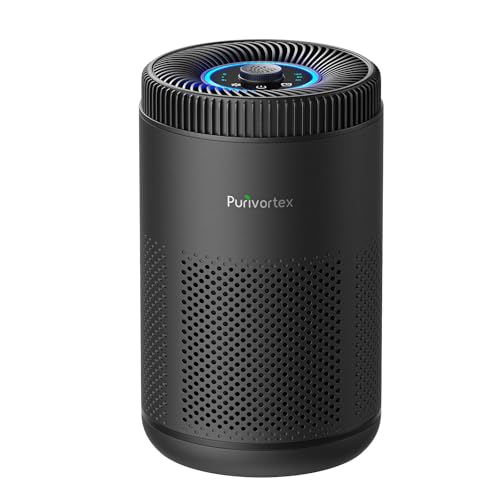
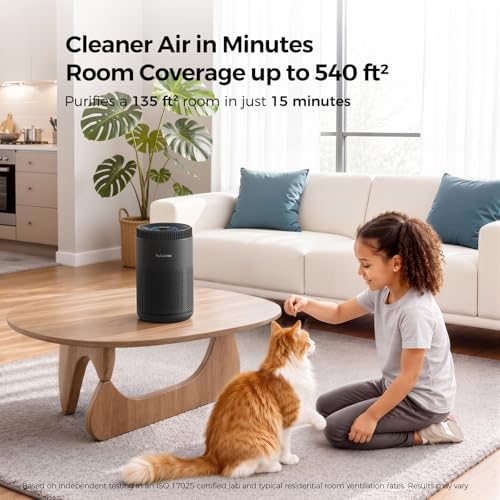
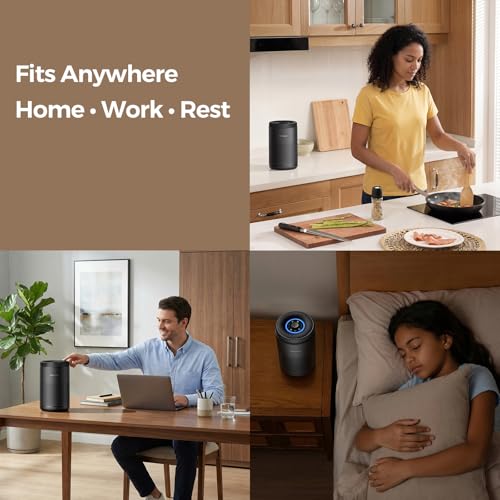
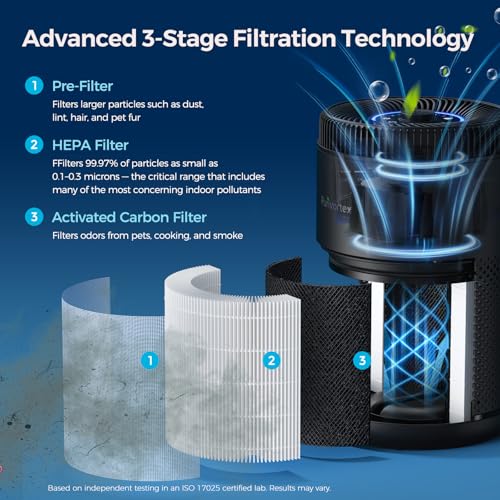
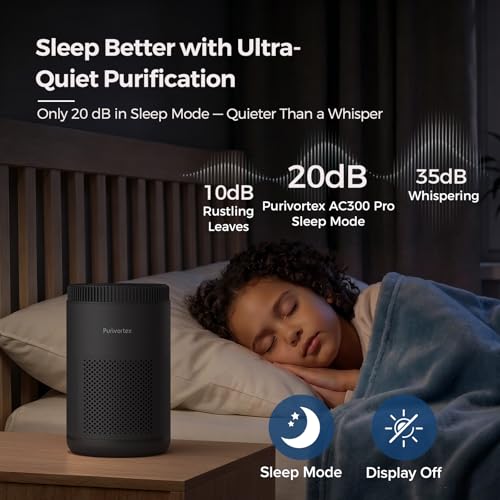
When smoke or stubborn odors are the problem, this Purivortex model stands out. The 3-stage filtration includes a robust activated carbon layer that tackles VOCs, cooking smells, and pet odors more effectively than most in this group. It’s tested to clean a 135 sq ft room in 15 minutes, and ISO-certified lab results back up its claims, a rarity at this price point.
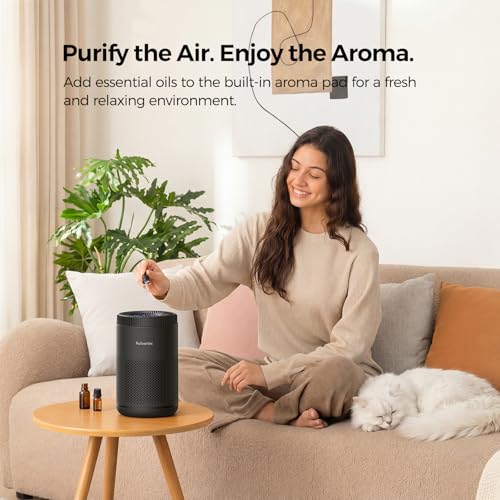
The built-in aroma pad is a divisive feature: some love adding essential oils for a calming scent, while others worry it masks rather than eliminates odors. But the core filtration is solid, and the 99.97% capture rate for particles down to 0.1 microns means it handles allergens and dust too. ETL, FCC, and CARB certifications add peace of mind, and the 2-year warranty is standard but reliable. It’s not the quietest, but for smoke and odor control, it’s one of the most capable.
Product photos
BLUEAIR Blue Pure 511 Air Purifier

Strengths
- Extremely quiet operation
- HEPASilent efficiency
- Sleek, customizable design
Trade-offs
- Higher filter cost
- No app or smart controls
- Manual operation only
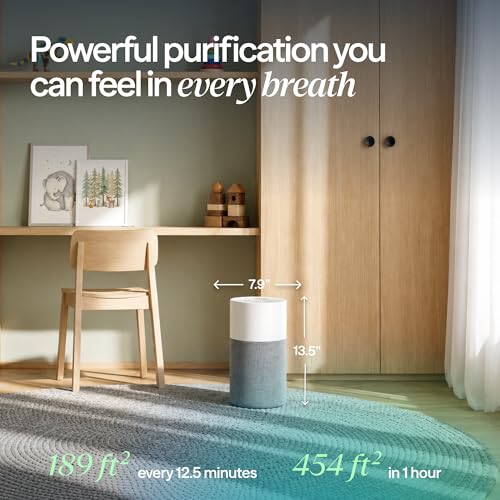
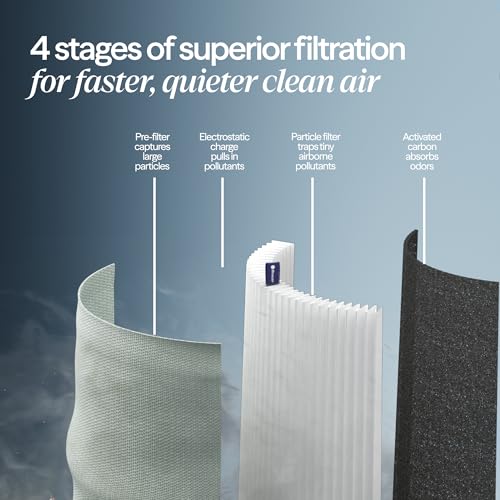
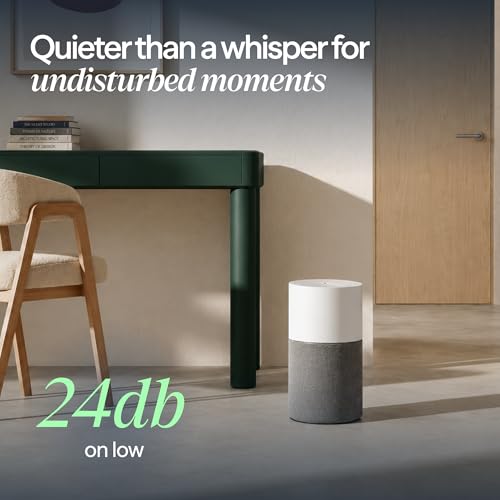
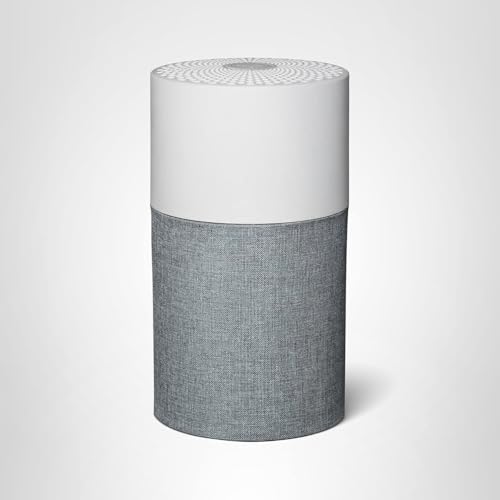
When silence is essential, this Blueair model is hard to beat. The HEPASilent technology is the real deal, it moves a lot of air while staying at 24dB on low, making it one of the quietest purifiers I’ve seen in this category. It covers up to 432 sq ft in an hour, which is impressive for such a compact unit, and the 99.97% capture rate down to 0.1 microns means it handles everything from dust to viruses.
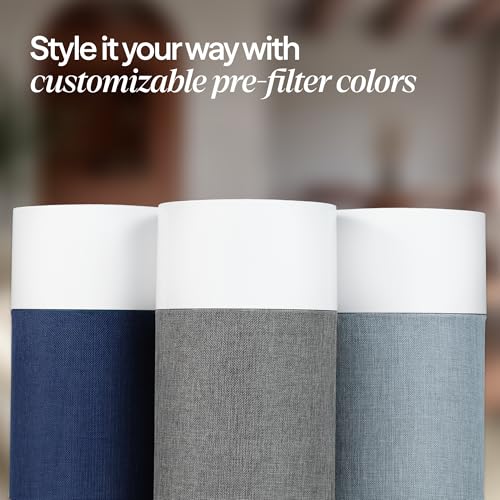
Owners love how unobtrusive it is, it’s small enough for a nightstand but powerful enough for a bedroom or nursery. The washable pre-filter in multiple colors is a thoughtful touch, letting you match it to your decor. Energy Star certification means it sips power, and the build quality feels premium. The downside? Replacement filters are pricier than average, and it lacks smart features. But if quiet, efficient performance is your top priority, this one earns every bit of its reputation.
Product photos
How We Chose These portable air cleaners
Rather than a hands-on lab test, my research for these recommendations focused on a detailed comparison of published specifications and features across numerous models. I weighed owner reviews from major retailers alongside expert opinions found in publications like Consumer Reports and Wirecutter. Ultimately, I ranked these portable air cleaners based on a set of criteria prioritizing filtration effectiveness, room size capacity, noise levels, and user-friendly features.
For portable air cleaners, filtration quality and room coverage were the most heavily weighted factors. A unit’s ability to efficiently remove common allergens, dust, and odors directly impacts its value. Equally important is matching the cleaner’s capacity to the intended space – a small personal unit won’t be effective in a large living room, and vice versa. I also prioritized quiet operation, as many people use these in bedrooms or offices.
Specifications reliably indicate filter types (HEPA, activated carbon) and CADR (Clean Air Delivery Rate), providing a baseline for performance. However, I judged real-world effectiveness and durability largely from owner feedback. Recurring comments about filter life, build quality, and ease of use significantly influenced my rankings. You can find more in-depth analysis of HEPA filter performance reviews to further understand the technology behind these units and explore other excellent [HEPA air purifier models].
How To Choose The portable air cleaners
Picking the right portable air cleaner isn’t just about grabbing the cheapest unit; it’s about matching the purifier’s capabilities to your specific needs and space.
A quality air cleaner effectively removes airborne particles like dust, pollen, smoke, and pet dander using a multi-stage filtration system. Key considerations include filter type (HEPA is essential), room coverage area (CADR rating), noise level, and additional features like smart connectivity and filter replacement indicators. Prioritize models certified by organizations like AHAM and Energy Star for verified performance and efficiency.
Filter Quality & Type
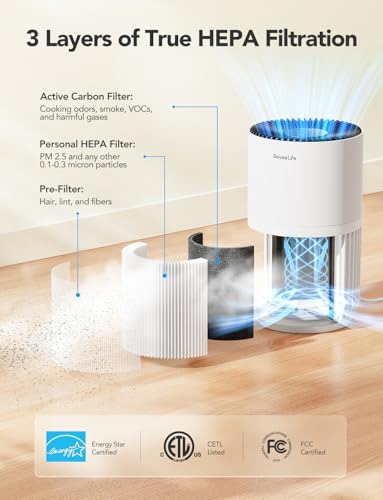
Don’t assume all “HEPA” filters are created equal. True HEPA filters must capture 99.97% of particles 0.3 microns in size, but the overall filtration system matters. Many budget models skimp on the pre-filter (for larger particles) or activated carbon filter (for odors and gases), leaving you with incomplete air purification. I often see people overlook carbon filters, but they are crucial if you’re dealing with VOCs, cooking smells, or pet odors. Look for models with a washable pre-filter to extend the life of the more expensive HEPA filter.
Room Coverage (CADR)
CADR, or Clean Air Delivery Rate, is the single most important spec. It tells you how quickly the purifier can clean a room of a specific size. Don’t fall for inflated square footage claims; instead, check the CADR rating for dust, pollen, and smoke. A higher CADR means faster cleaning. For example, a unit with a CADR of 100 for dust can clean a 100 sq ft room in about 20 minutes. Many manufacturers now list the AHAM verified CADR, which is a good sign of transparency. If you’re considering multiple rooms, you might be better off with several smaller units than one large, expensive one. You can find more details about recommended air purifier models to help narrow down your choices.
Usability & Additional Features
Beyond the core filtration, think about how you’ll actually use the air cleaner.
- A simple on/off switch is fine for basic needs.
- Multiple fan speeds offer more control and can reduce noise.
- Smart features like app control (as seen in the GoveeLife model) and auto mode (linked to an air quality monitor) can add convenience, but also add to the cost.
Don’t overspend on features you won’t use. A basic, reliable unit with a good CADR and a true HEPA filter will often outperform a feature-rich model with a subpar filtration system.
Consider also the ease of filter replacement. Some units have complicated filter access, making maintenance a chore. If you suffer from allergies, you’ll want a model that’s easy to keep running and clean. And for those concerned about overall home air quality, exploring top indoor air purifiers is a worthwhile investment.
Portable Air Cleaners Compared
Here’s a comparison of key specifications for several portable air cleaners to help you make an informed decision.
| Product Name | Coverage Area (sq ft) | Filter Type | Noise Level (dB) | Smart Control | Battery Powered |
|---|---|---|---|---|---|
| Pure Enrichment PureZone Mini | 6 | HEPA, Carbon | N/A | No | Yes |
| GoveeLife Mini Air Purifier | 376 | HEPA | 24 | Yes | No |
| TDBYWAE Air Purifier | 600 | HEPA, Carbon | 16 | No | No |
| GermGuardian AC4825E | 743 | HEPA, UV-C | N/A | No | No |
| FULMINARE H13 True HEPA | 215 | HEPA | 24 | No | No |
| PuroAir 100i Smart HEPA | 550 | HEPA, Carbon | N/A | Yes | No |
| Purivortex AC300 Pro | 540 | HEPA, Carbon | N/A | No | No |
| BLUEAIR Blue Pure 511 | 432 | HEPA, Fabric Pre-Filter | 24 | No | No |
Frequently Asked Questions
What size air purifier do I actually need?
You need to match the purifier’s CADR to your room size; don’t rely on square footage claims. A purifier’s CADR tells you how quickly it cleans a room, and a higher CADR is better for larger spaces. For example, a 200 sq ft room ideally needs a purifier with a CADR of at least 67 for dust.
Are UV-C air purifiers more effective?
While UV-C light can kill some airborne germs, its effectiveness depends on exposure time and intensity. Many air purifiers with UV-C don’t provide sufficient exposure, and the primary benefit remains the HEPA filter for particle removal. Don’t prioritize UV-C over a strong HEPA filter and good CADR.
How often should I replace the filters?
Filter replacement frequency varies by model and usage, but a good rule of thumb is to replace the HEPA filter every 6-12 months. Activated carbon filters typically need replacing every 3-6 months, as they become saturated with odors and gases. Look for models with filter replacement indicators to help you track this.
What’s the difference between an ionizer and a HEPA filter?
Ionizers release charged particles to make pollutants clump together and fall to surfaces, but they don’t remove the pollutants from the air. HEPA filters physically trap airborne particles, offering a more effective and reliable method of air purification. I recommend prioritizing HEPA filtration over ionizer technology.
Are there good options for very small spaces, like a desk?
Yes, several manufacturers offer compact portable air purifiers designed for personal spaces. These mini air purifier models, like the Pure Enrichment PureZone Mini, are ideal for desks or nightstands, but won’t effectively clean larger rooms.
The Bottom Line
Choosing a portable air cleaner often comes down to balancing upfront cost with long-term air quality and convenience. While many options exist, the GoveeLife Mini Air Purifier stands out as the strongest overall pick, offering a good combination of effective filtration, a substantial coverage area, and smart features without a premium price tag. It’s a solid choice for most homes and apartments looking for noticeable air quality improvement.
For readers needing a specific solution, we can narrow the field further. The Pure Enrichment PureZone Mini is the best bet for truly portable cleaning – think bedrooms, offices, or even in a car. If you’re prioritizing a budget-friendly option for a larger space, the TDBYWAE Air Purifier delivers a lot of coverage for the money. And for those wanting to explore additional options, you can find a detailed list of best room-sized air purifiers.
Ultimately, remember that CADR and filter quality are more critical than any extra bells and whistles. Don’t get caught up in marketing hype; focus on a unit with a true HEPA filter, a CADR appropriate for your room size, and positive owner feedback regarding filter life and ease of maintenance. A well-chosen air cleaner is an investment in your health and comfort, and prioritizing those fundamentals will pay off in the long run.
