7 Best Polishers for Car Detailing 2026
This post contains affiliate links. As an Amazon Associate, we earn from qualifying purchases.
The SPTA 5-Inch Dual Action Polisher stands out as the best overall pick for most users, combining reliable power with smooth operation. For budget-conscious detailers, the ZOTA 1600W 7-Inch Polisher delivers strong performance at a lower price, while the VERVEWAVE 6-Inch Cordless Polisher offers excellent versatility, especially if you already own DeWalt batteries.
If you’ve ever tried to polish a car by hand, you know how quickly it turns into a shoulder-cramping grind that still leaves streaks and uneven results. A good machine polisher makes the difference between a so-so shine and a glass-like finish, but not every tool handles paint safely or fits comfortably in your hand for long sessions.
This guide cuts through the noise, focusing on real-world usability, owner feedback, and key features like speed control and ergonomics. I looked at specs, user reviews, and brand reputation to find models that deliver consistent results without unnecessary complexity or cost.
Top 7 Polisher For Car Detailings in the Market
The Best Polisher For Car Detailings, Reviewed
SPTA Mini 12V Polisher
Strengths
- Lightweight
- Cordless mobility
- Excellent for tight areas
Trade-offs
- Shorter runtime
- Small battery capacity
- Limited for large surfaces
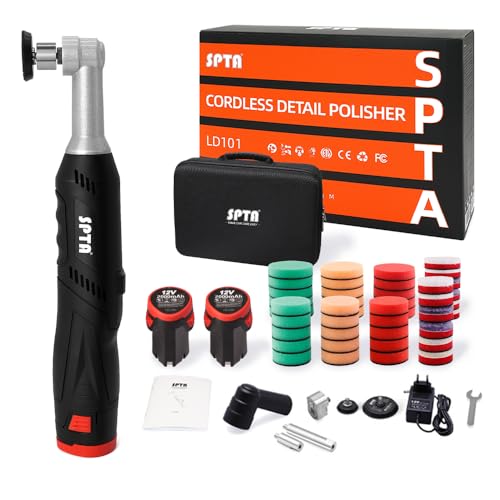
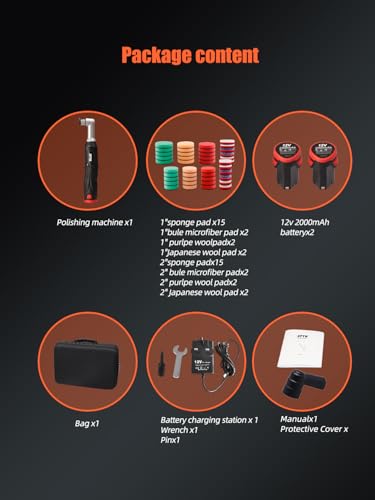
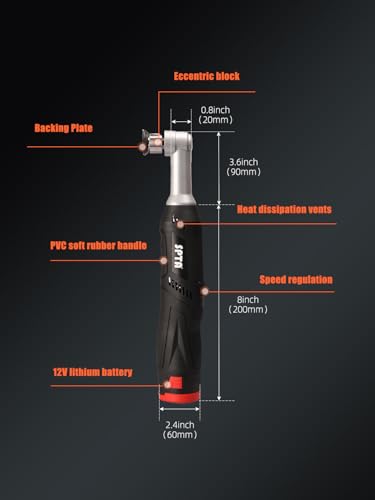
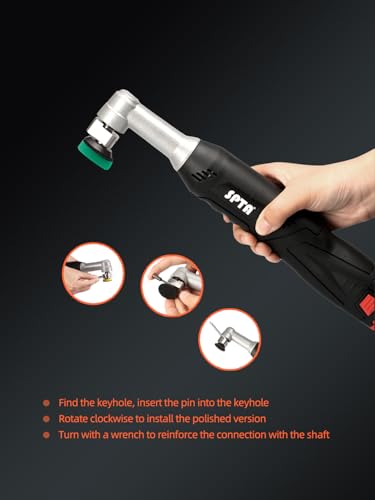
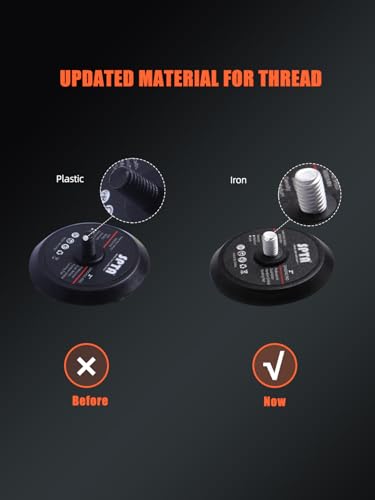
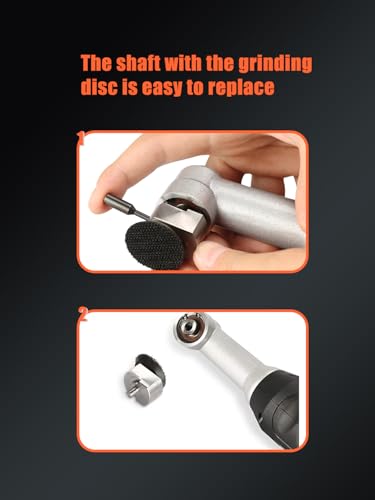
This little 12V polisher stands out in a sea of bulky machines by being built specifically for tight spots and detail work. With a 1-inch backing plate and a weight that’s over 50% less than full-sized models, it’s the only tool in this list that feels truly engineered for emblems, trim lines, and corners where larger polishers just can’t reach. Owners consistently report it excels at touch-up corrections and waxing without trailing a cord, which is a real win in driveways or garages with limited outlet access.
On paper, the 5000 RPM variable speed and dual-action motion look solid for a mini machine, though the 80W battery doesn’t match the runtime of some newer 20V platforms. Still, having a second battery ready to swap is a practical fix, and the ability to go cordless at this size makes a noticeable difference in usability. I’d pick this over a full-sized buffer when detail precision is the goal, even if it’s not meant for full-panel jobs.
Product photos
ZOTA 1600W 7-Inch Polisher
Strengths
- High wattage motor
- Long power cord
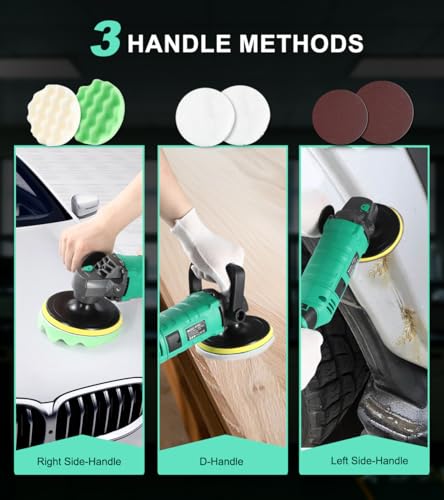
- Ergonomic handle options
Trade-offs
- Not cordless
- Bulky for detail work
- Cord limits mobility
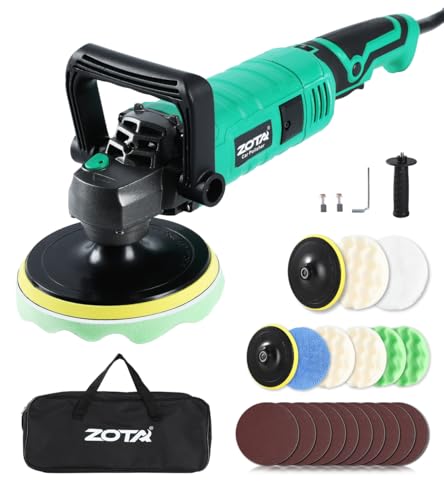
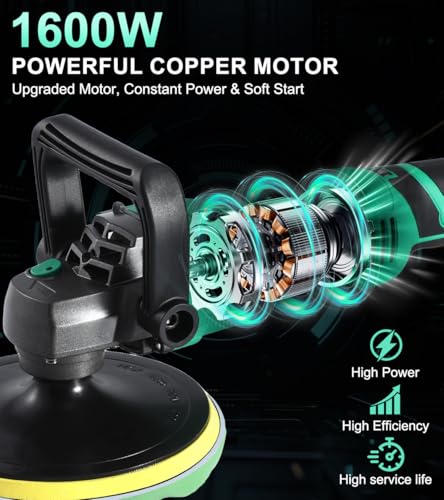
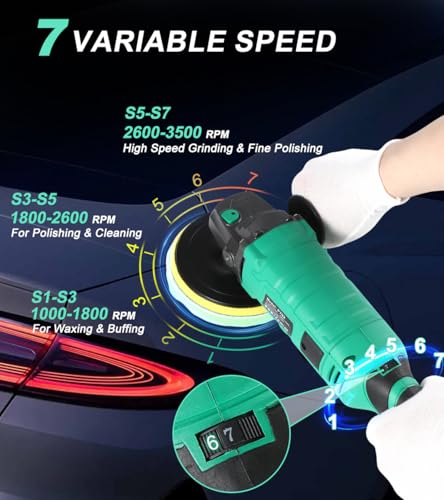
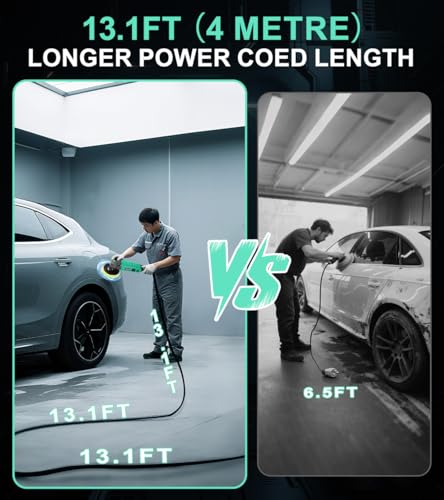
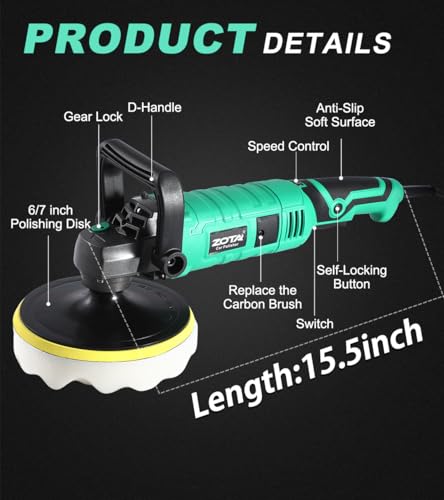
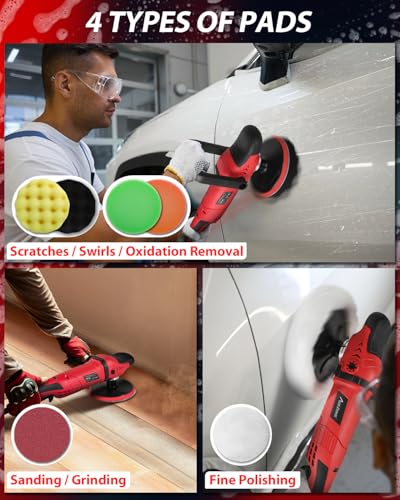
This 1600W beast is all about raw power and durability. With a full copper motor and 7 speed settings, it’s clearly aimed at users who need aggressive cutting for oxidation, deep scratches, and heavy paint prep. The 13.1-ft power cord is a thoughtful upgrade over shorter models, giving real freedom of movement without the limitations of battery life. Owners praise its ability to power through tough jobs without bogging down, making it a favorite for restoration work.
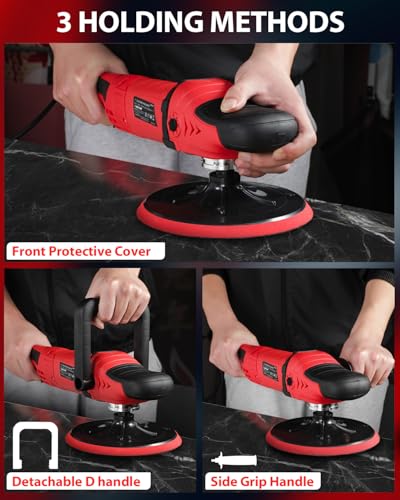
The three-handle options, D, side, and front, are a major comfort upgrade, especially during long sessions. While it’s not cordless, that’s part of why it can run continuously without overheating concerns (aside from its built-in protection). Compared to the AVID POWER rotary, it offers more wattage and a longer cord, but similar precision. If you’re working in a fixed garage setup and need consistent, high-output performance, this is a strong contender.
Product photos
cotaros Cordless 8-Speed Polisher
Strengths
- Long runtime
- 8-speed precision
- Complete accessory set
Trade-offs
- Heavier than mini tools
- Overheat protection pauses
- Not ultra-compact
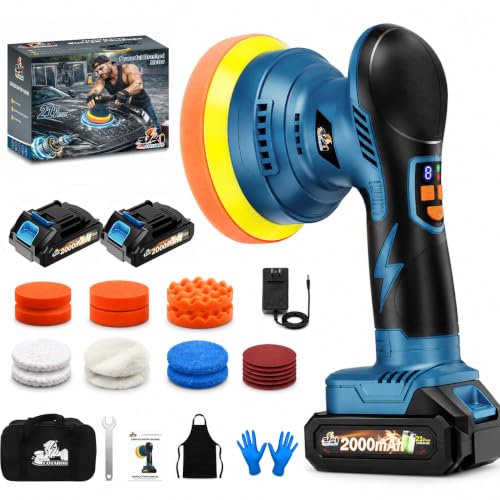
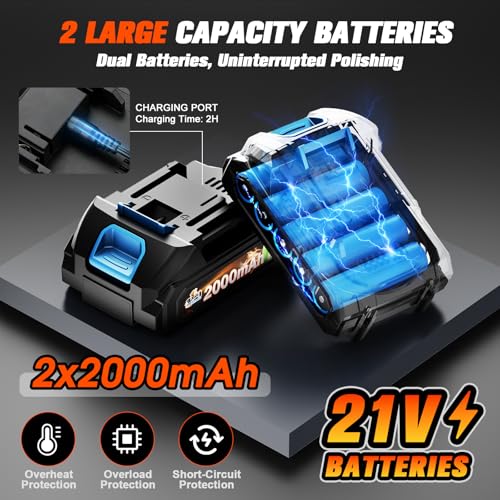
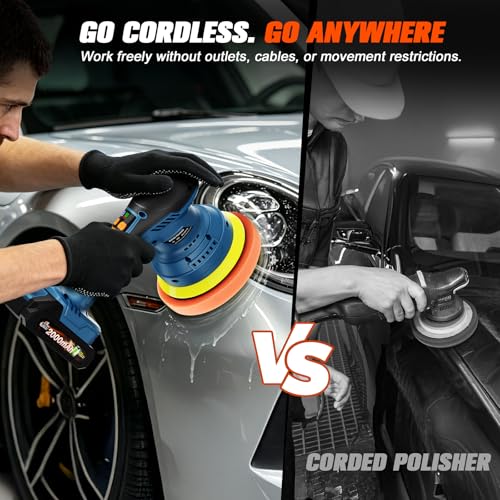
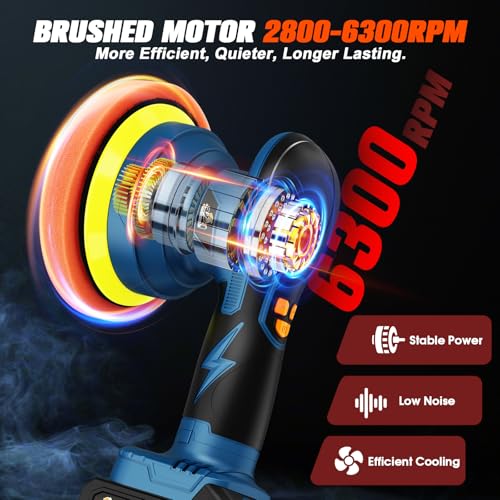
With 21V dual batteries and an 8-speed range up to 6300 RPM, the cotaros kit is built for longer sessions and versatility, a rare combo in the cordless polisher market. The pure copper motor and 8mm orbital action deliver consistent, low-vibration performance, and the LED display showing real-time speed and battery life is a standout feature that adds real usability. Reviewers note it handles full SUV detailing without needing mid-job recharges, thanks to the swappable batteries.
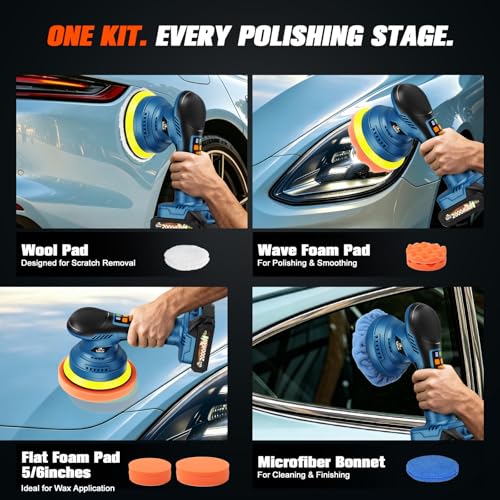
It’s also one of the few kits that includes both wave and wool pads, plus sanding discs, making it a solid all-in-one solution for users who work on more than just cars. At 3 lbs, it’s slightly heavier than mini models but still manageable, and the ergonomic grip reduces fatigue. While not as specialized as the SPTA or Fanttik for tiny areas, it’s the smarter buy if you want one cordless tool that can handle full vehicles and multi-surface jobs.
Product photos

SPTA 5-Inch Dual Action Polisher
Strengths
- Affordable
- Good speed range
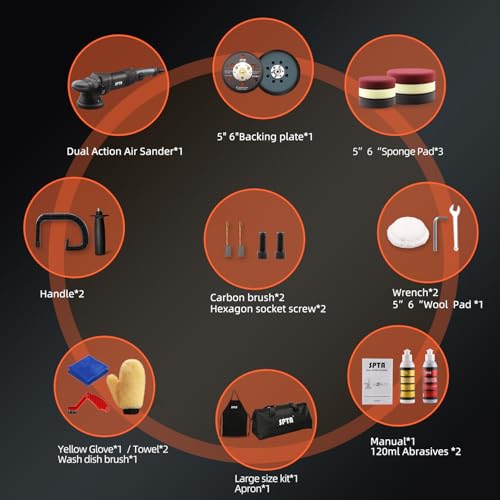
- Includes compounds and pads
Trade-offs
- Basic build quality
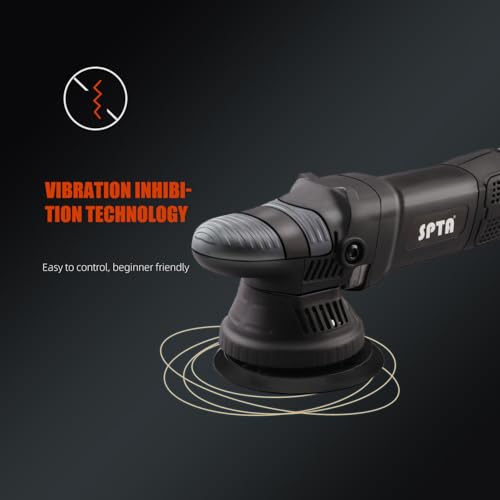
- Noticeable vibration
- No battery/portability
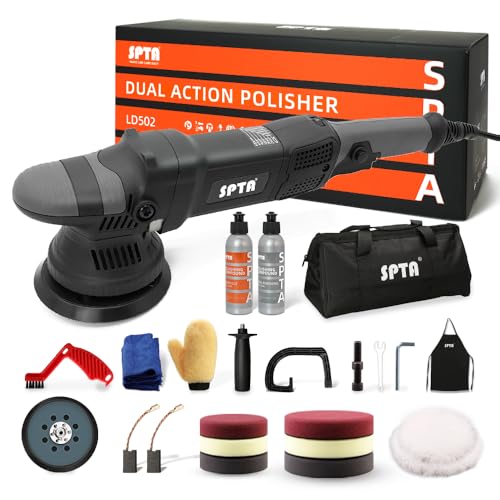
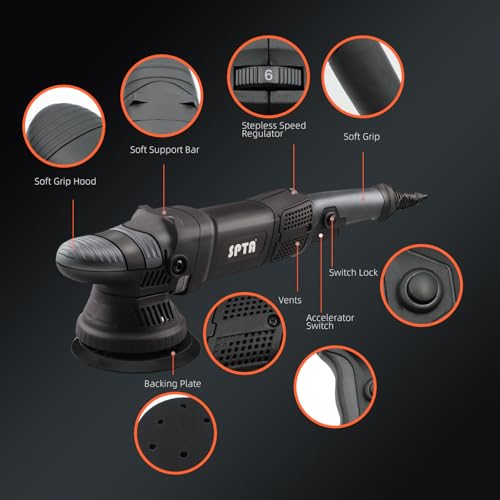
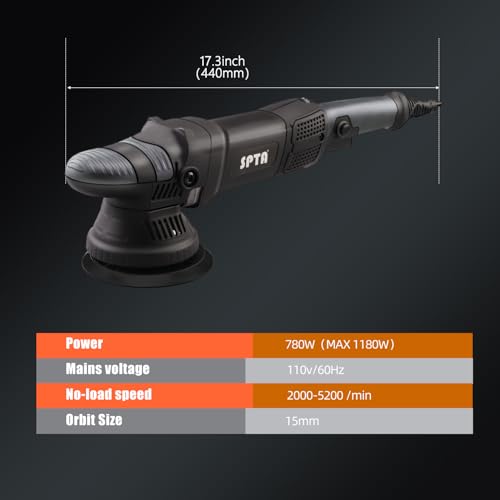
Priced as the budget dual-action option, this SPTA 750W polisher delivers solid core performance without extras. It covers the basics well: 6 speeds, a constant-speed circuit, and dual handles for control. The 2,000–5,200 RPM range gives enough flexibility for waxing, polishing, and light defect removal, and the included compounds and pads add real value right out of the box.
It’s not the most refined tool, some owners report minor vibration at high speeds, but for the price, it’s a reliable entry-level DA polisher. Compared to the cotaros or ZOTA, it lacks modern touches like LED displays or ultra-long cords, but it gets the job done on sedans and smaller vehicles. If you’re just starting out and don’t want to commit to a premium model, this one makes sense as a first polisher.
Product photos
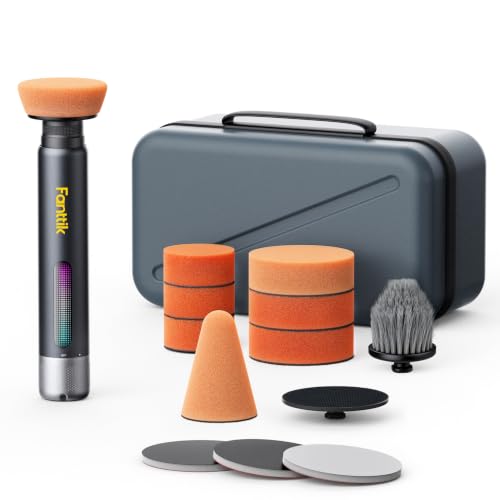
Fanttik P10 Pro Mini Polisher
Strengths
- Ultra-lightweight
- Quiet operation
- Type-C fast charging
Trade-offs
- Low cutting power
- Not for deep defects
- Slower for large areas
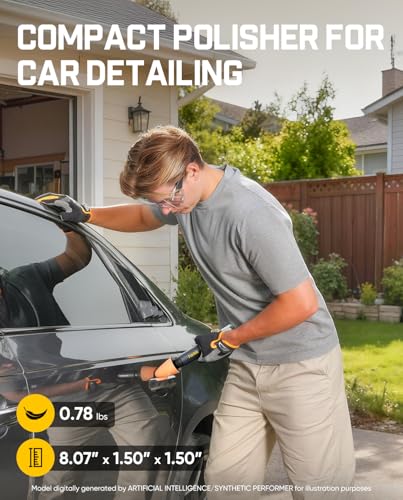
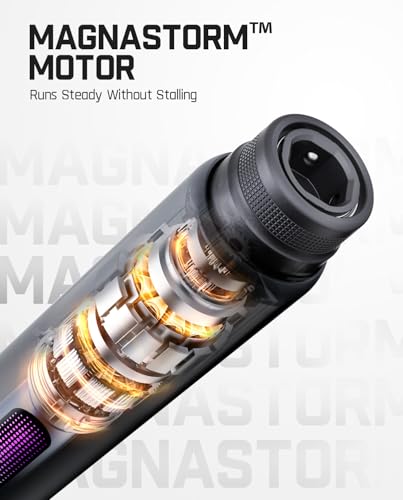
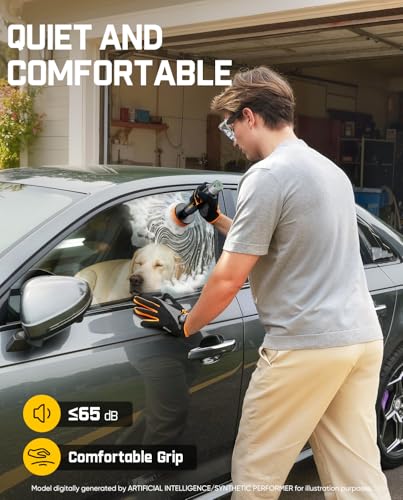
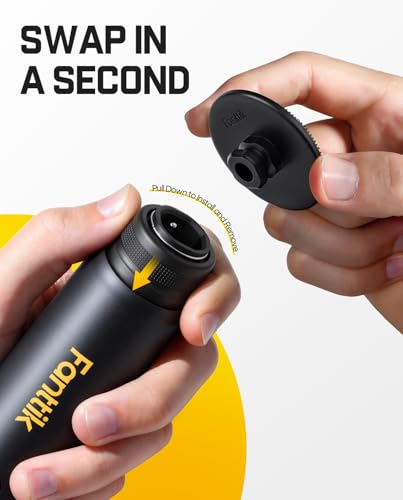
If you’re after quiet, precise control in a palm-sized polisher, the Fanttik P10 Pro makes a strong case. Weighing just 0.78 lbs and running at a whisper-quiet 65 dB, it’s clearly designed with comfort and finesse in mind, ideal for low-speed waxing and finishing on delicate surfaces. The planetary gear system helps maintain smooth, stable power without the jitters common in budget mini polishers, and the LED speed and battery indicators are a thoughtful touch that many owners appreciate.
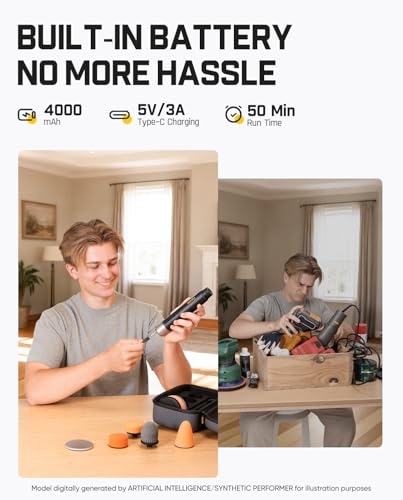
The 4000 mAh battery delivers up to 50 minutes, which is competitive for its class, and the Type-C charging is a modern convenience that eliminates the need for proprietary chargers. While it lacks the raw power for aggressive cutting, its low-RPM precision (300–950 RPM) makes it one of the safer choices for beginners working on clear coat. Compared to the SPTA mini, it trades top-end speed for smoother operation and better ergonomics.
Product photos
AVID POWER 1200W Rotary Polisher

Strengths
- High-torque motor
- Excellent heat management
- Complete kit included
Trade-offs
- Rotary risk on clear coat
- Heavier than DA tools
- Not for beginners
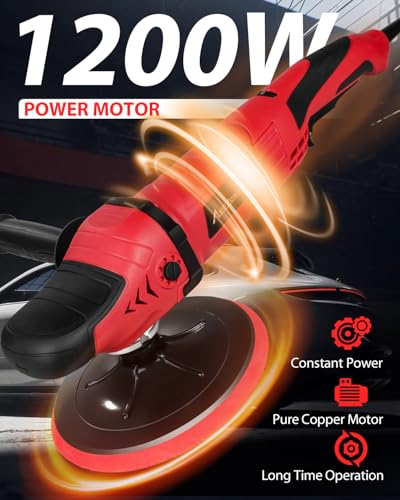
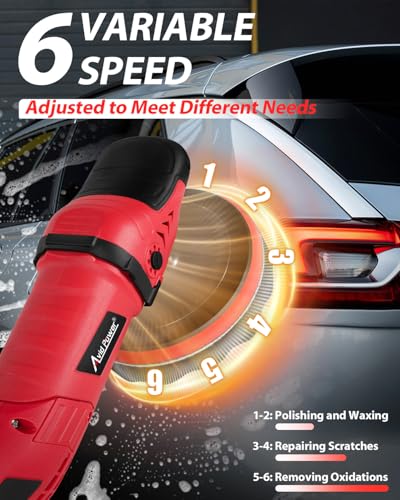
When deep paint correction is the mission, the AVID POWER rotary polisher steps up with a 1200W pure copper motor and precision-aligned shaft that minimizes vibration. The 1000–3500 RPM range is well-suited for controlled, aggressive cutting, and the advanced cooling system lets it run for over two hours without overheating, a big deal for full-panel jobs. Reviewers consistently note its balance and stability, which reduces user fatigue during long sessions.
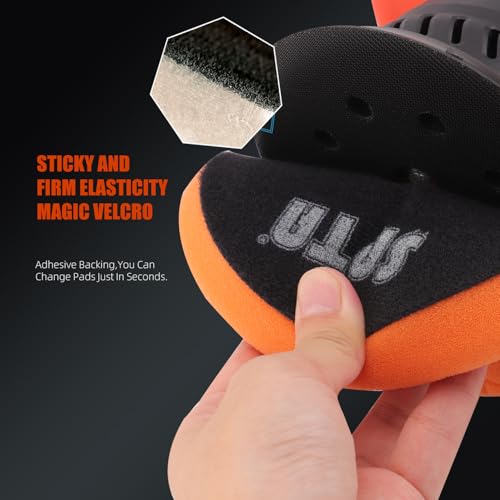
It comes with both 6-inch and 7-inch backing plates and a full set of pads and sandpapers, making it a complete starter kit for serious correction work. The three grip options enhance control, and the Velcro system speeds up pad changes. While it’s heavier than DA models, it’s one of the most capable rotary tools here for removing deep scratches and swirls. I’d recommend it over the ZOTA if you want slightly more refined control in a high-power rotary.
Product photos
VERVEWAVE 6-Inch Cordless Polisher
Strengths
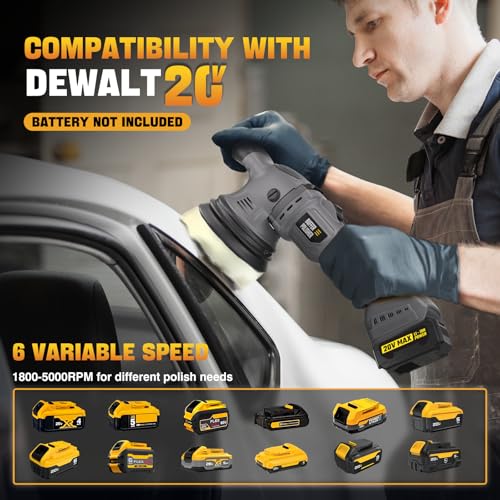
- DeWalt 20V compatible
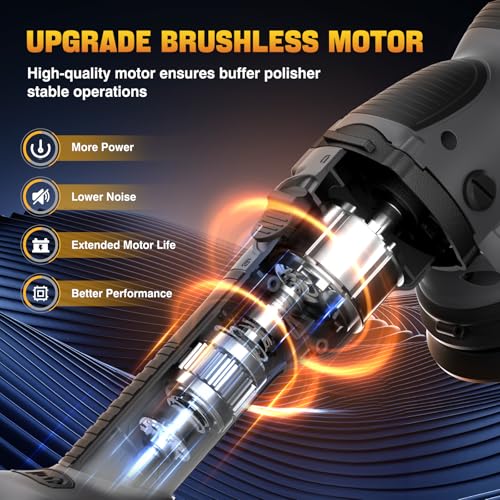
- Brushless motor
- Lock switch safety
Trade-offs
- Battery not included
- Limited appeal without DeWalt
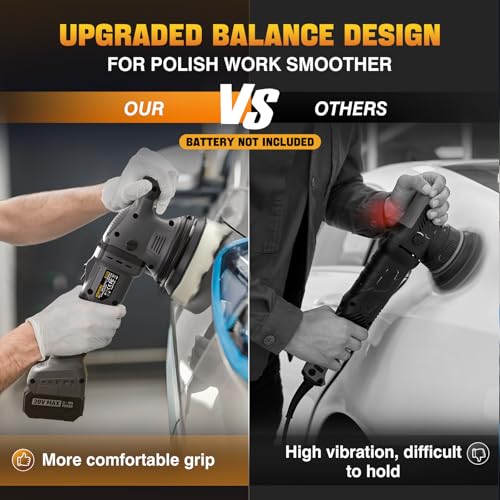
- Average ergonomics
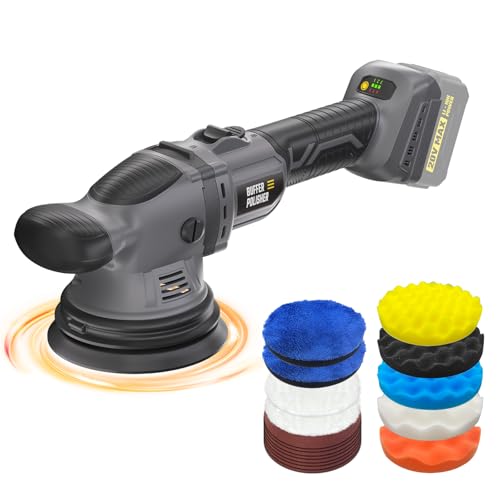
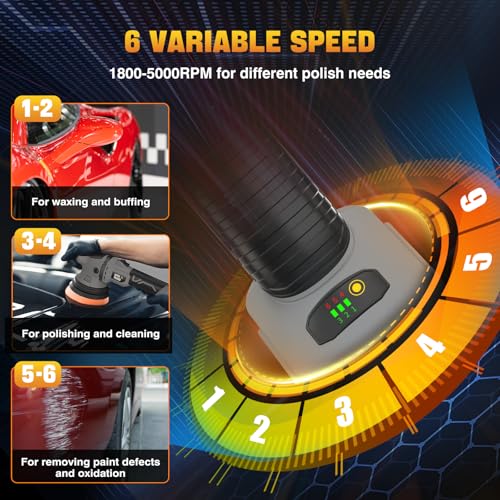
This tool makes the most sense if you’re already invested in the DeWalt 20V ecosystem. By leveraging existing batteries, it eliminates the cost and clutter of dedicated chargers and extra cells, a smart move for users with multiple DeWalt tools. The brushless motor delivers up to 5500 RPM with smooth power delivery, and the 6-speed dial gives good control across waxing, polishing, and cutting tasks.
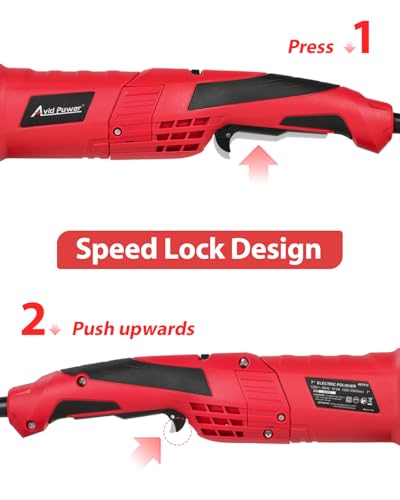
The eccentric orbital design helps prevent holograms, and the lock switch adds safety, a small but meaningful upgrade over momentary buttons. It’s not the most powerful cordless polisher, but it’s efficient and well-built for integration. Owners report solid runtime with 4.0Ah or higher DeWalt packs. If you don’t own DeWalt batteries, this tool loses much of its appeal. But if you do, it’s a high-value addition.
Product photos
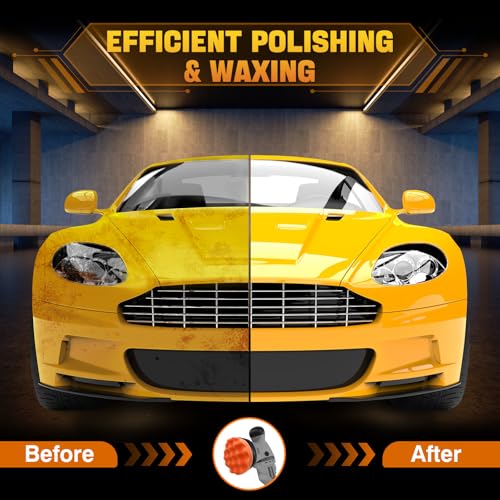
How We Chose These polisher for car detailings
Rather than a hands-on lab test, my research for these recommendations focused on a detailed comparison of published specifications and features across numerous models. I weighed owner reviews from multiple sources – including direct customer feedback on retailer sites and dedicated detailing forums – alongside assessments from reputable automotive publications. Ultimately, I ranked these polishers based on how well their features and reported performance aligned with the needs of both beginner and experienced detailers.
For car polishers, consistent speed control and ergonomic design were the most important factors. Reliable speed adjustment allows for safe and effective work on all paint types, from delicate clear coats to tougher finishes. A comfortable grip and balanced weight are crucial, as detailing often involves extended periods of use and maneuvering in awkward positions. These qualities directly impact the quality of the final result and user experience.
Specifications reliably indicate motor power, RPM ranges, and battery capacity (for cordless models). However, I placed more emphasis on owner feedback regarding real-world performance, particularly durability and ease of use. Reputation – factoring in brand history and consistent positive reviews – also played a significant role, as it often reflects long-term reliability. You can find more information on top automotive polishers on our site.
How To Choose The polisher for car detailings
Choosing the right polisher can dramatically improve your detailing results, but there’s a lot to consider beyond just wattage and price.
A good car polisher balances power with control. Look for variable speed settings, ergonomic design for extended use, and a backing plate size appropriate for the areas you’ll be working on. Pad selection is critical; different foam densities and materials are suited for various tasks, from heavy defect removal to final polishing. Consider whether cordless convenience or corded power best suits your needs and workspace.
Power and Action
The first thing to nail down is the type of polisher. Rotary polishers offer the most cutting power, ideal for serious paint correction, but require a practiced hand to avoid inflicting holograms (swirl marks). Dual-action (DA) polishers, on the other hand, are far more forgiving. They’re the go-to for beginners and those maintaining already-good paint. If you’re primarily focused on applying waxes and sealants, or light polishing, a DA polisher is your best bet. However, for deeper scratches and oxidation, you might need to explore polishers for paint correction. Don’t underestimate the convenience of cordless options; they offer freedom of movement, but battery life and sustained power are things to watch closely.
Speed Control and Ergonomics
Variable speed is absolutely essential. You won’t always need maximum RPMs; in fact, using too much speed can damage your paint. Lower speeds are ideal for applying waxes and sealants, while higher speeds are reserved for compounding and cutting. Beyond the speed dial, pay close attention to the ergonomics. Polishing a car takes time, so a comfortable grip and balanced weight distribution are crucial to prevent fatigue. Look for models with adjustable handles or multiple grip options.
- A side handle is great for controlled vertical polishing.
- A D-handle allows for a more relaxed grip during larger surface areas.
- A well-designed front cover that can be gripped provides additional control and stability, especially useful when applying more pressure.
Value and Accessories
The initial cost of the polisher is just one part of the equation. Consider what’s included in the kit. Many come with a selection of pads, backing plates, and sometimes even polishing compounds. Starting with a complete kit can save you money and ensure you have everything you need to get started. If you already use DeWalt tools, you might find a polisher compatible with your existing batteries, like the recommended car polishers from VERVEWAVE, a smart investment.
Don’t spend more on a polisher than you realistically need to tackle your projects. A simpler DA polisher is often the best choice for most detailing enthusiasts.
Polisher for Car Detailings Compared
Here’s a comparison of key specifications for various car detailing polishers.
| Product Name | Voltage (V) | Max RPM | Corded/Cordless | Battery Voltage (V) | Pad Size (in) | Key Features |
|---|---|---|---|---|---|---|
| SPTA Mini 12V Polisher | 12 | 5000 | Cordless | N/A | 1 | Compact, Lightweight, Variable Speed |
| ZOTA 1600W 7-Inch Polisher | 1600W | 3500 | Corded | N/A | 7 | Powerful Motor, Variable Speeds, Long Power Cord |
| cotaros Cordless 8-Speed Polisher | 21 | 6300 | Cordless | 21 | N/A | 8 Speeds, Dual Batteries, Lightweight |
| SPTA 5-Inch Dual Action Polisher | 110 | 5200 | Corded | N/A | 5/6 | Variable Speed, Constant Power, Detachable Handle |
| Fanttik P10 Pro Mini Polisher | N/A | N/A | Cordless | N/A | N/A | Compact, Quiet, 4000mAh Battery |
| AVID POWER 1200W Rotary Polisher | 1200W | 3500 | Corded | N/A | 6/7 | Powerful Motor, Variable Speed, Cooling Tech |
| VERVEWAVE 6-Inch Cordless Polisher | 20 | 5500 | Cordless | 20 | 6 | DeWalt Battery Compatible, 6 Speeds |
Frequently Asked Questions
What pad size should I get for most car detailing tasks?
A 5 or 6-inch pad is generally the most versatile choice. These sizes balance coverage area with maneuverability, allowing you to effectively work on most surfaces of a typical car without feeling restricted.
What’s the difference between a rotary and dual-action polisher, and which is better?
Dual-action polishers are safer and easier to use, making them ideal for beginners and maintenance work. Rotary polishers offer more cutting power for severe defects, but require skill to avoid damaging the paint.
Can I use a cordless polisher for a full car detail?
Yes, but battery life is a key consideration. Some models offer multiple batteries or high-capacity packs, which are essential for completing a full detail without interruption.
How important is variable speed control on a car polisher?
Variable speed is critical. It lets you adjust the polisher’s power for different tasks and paint types, preventing damage and ensuring optimal results. Lower speeds are best for waxes and sealants, while higher speeds are for compounding.
Are more expensive polishers always better?
Not necessarily. While higher price points often mean more features or power, a simpler, well-reviewed dual-action polisher can be the best choice for most enthusiasts. Consider the best beginner car polishers if you’re just starting out.
The Bottom Line
Ultimately, choosing a car polisher comes down to balancing how much control you want with how much effort you’re willing to put in. For most owners, the ZOTA 1600W 7-Inch Polisher strikes the best overall balance – it delivers plenty of power for effective correction, paired with the control needed to avoid damaging your finish. It’s a workhorse that will serve you well for years.
If you’re just starting out, or primarily maintain already well-cared-for paint, the SPTA 5-Inch Dual Action Polisher is an excellent choice. For those seeking cordless convenience and already invested in the DeWalt ecosystem, the VERVEWAVE 6-Inch Cordless Polisher offers a smart, adaptable solution. And for those needing a simple, portable option, consider beginner-friendly dual-action polishers.
Don’t get too caught up in chasing the highest wattage or the most advanced features. Consistent speed control, comfortable ergonomics, and a willingness to learn proper polishing techniques are far more important than any single specification. A quality pad and polish combination, combined with patience, will always yield better results than a powerful polisher used incorrectly.
