7 Best Plunge Routers for Woodworking 2026
This post contains affiliate links. As an Amazon Associate, we earn from qualifying purchases.
The Makita RP2301FC stands out as the best plunge router for woodworking, offering serious power and precise control for demanding tasks. For budget-conscious DIYers, the WEN RT6033 delivers solid performance at a fraction of the cost, while the DEWALT 12-Amp strikes a strong balance for those wanting a dual-base setup with reliable precision.
Choosing the right plunge router means sorting through marketing hype to find a tool that delivers real precision and durability. Many buyers struggle with inconsistent depth control, underpowered motors, or flimsy bases that ruin clean cuts, especially in hardwoods.
This guide cuts through the noise by focusing on what actually matters: motor strength, depth adjustment accuracy, and build quality. I looked at specs, owner feedback, and real-world performance trends to pick models that consistently deliver clean, repeatable results.
Top 7 Plunge Router For Woodworkings in the Market
The Best Plunge Router For Woodworkings, Reviewed
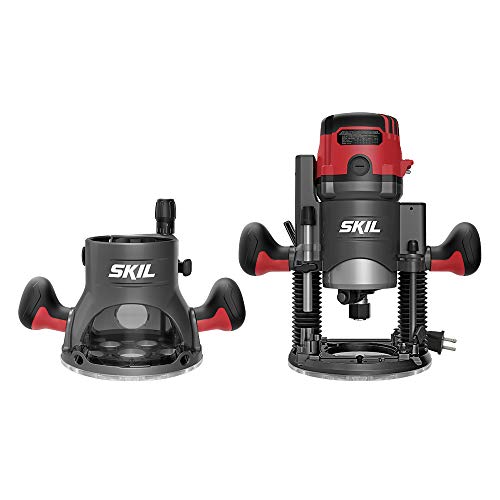
SKIL 14 Amp Plunge and Fixed Base Router
Strengths
- Includes both bases
- User-friendly LCD guide
- Strong motor performance
Trade-offs
- Plastic components feel cheap
- Less precise than high-end models
The SKIL RT1322-00 makes a strong case as the most balanced all-around option. With a 2.5 HP motor and both plunge and fixed bases included, it covers nearly every routing need out of the box. The LCD speed display is a standout, it suggests optimal RPM based on bit and material, which is great for less experienced users.
Electronic feedback keeps RPM steady, and the soft start reduces jerking at startup. It’s not as refined as Bosch or Makita in fit and finish, but it’s dependable. Compared to the DEWALT DW618PKB, it lacks some of the premium features like brass bushings, but it’s more affordable and still delivers solid performance. For someone building a first serious workshop, this is a smart foundation.
Product photos


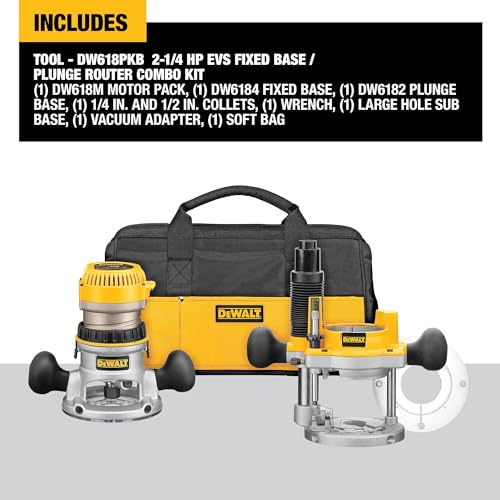
DEWALT 12-Amp Plunge and Fixed Base Router

Strengths
- Excellent base versatility
- Superior dust collection
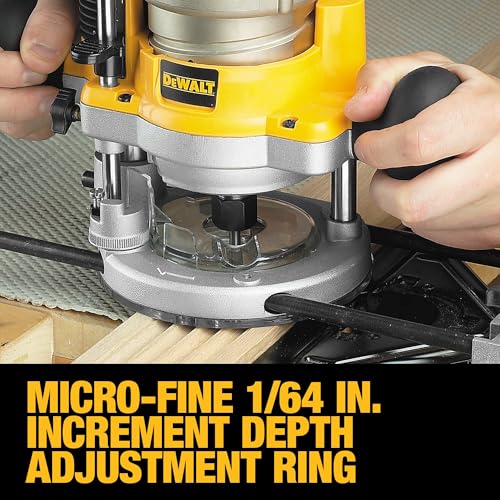
- Precise depth adjustments
Trade-offs
- Expensive
- Heavy for prolonged handheld use
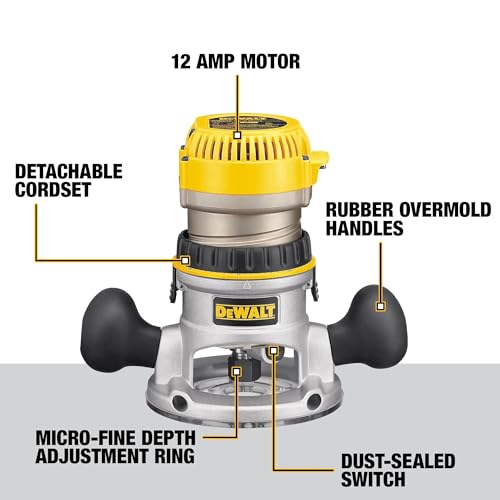
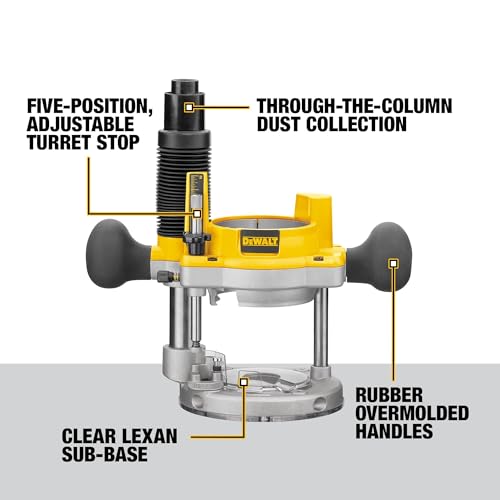
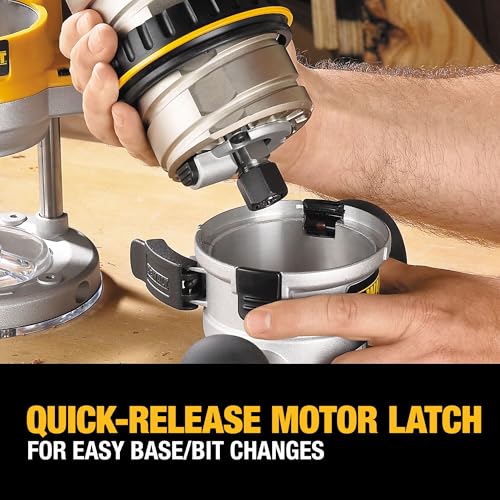
This DEWALT DW618PKB is the go-to for woodworkers who switch between freehand and guided routing regularly. The versatile base options are the highlight, quick-release latches make swapping fast, and the steel cam lock ensures a solid fit every time. With a 12-amp motor and 8,000 to 24,000 RPM range, it’s plenty powerful, and the microfine depth ring with 1/64-inch increments is as precise as it gets.
Owners rave about the through-the-column dust collection, 95% efficiency is rare, and the clear Lexan sub-base improves visibility. The spindle lock makes bit changes easy, and the brass bushings ensure smooth plunging. Next to the Bosch 1617EVSPK, it’s more refined in handheld use and nearly as good on a router table. If you want one router to do everything well, this is the pick.
Product photos
DEWALT 20V MAX XR Cordless Plunge Router

Strengths
- True cordless freedom
- Excellent control features
- Strong dust collection with AIRLOCK
Trade-offs
- Battery sold separately
- Heavier than corded equivalents
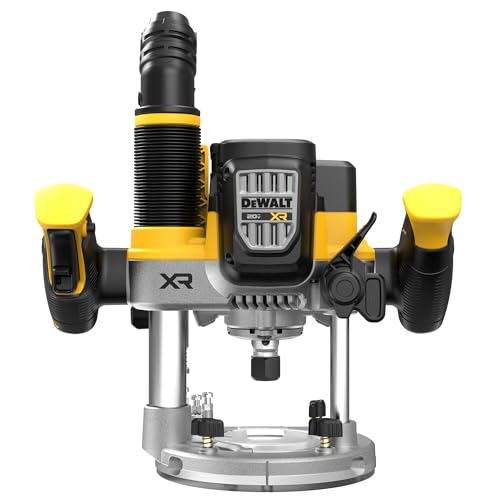
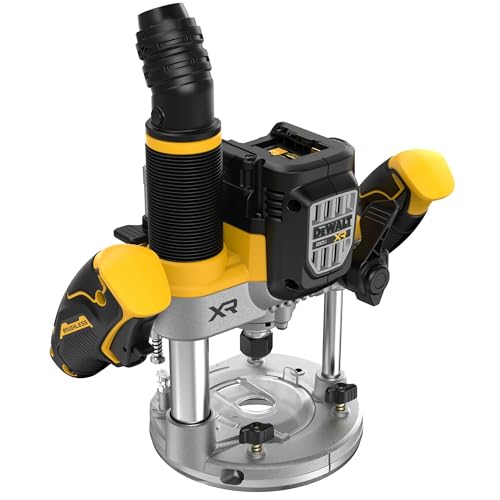
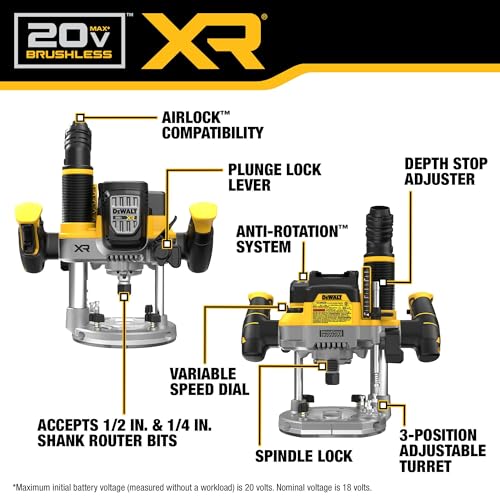
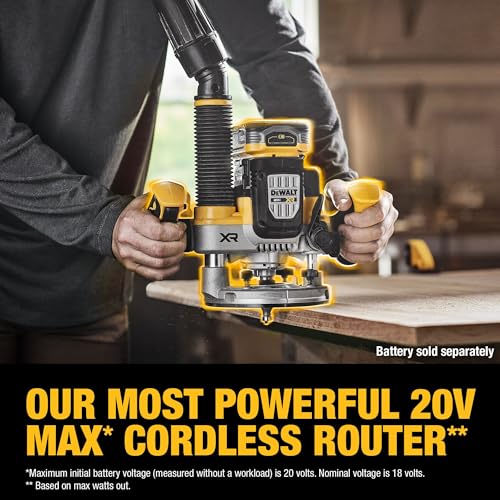
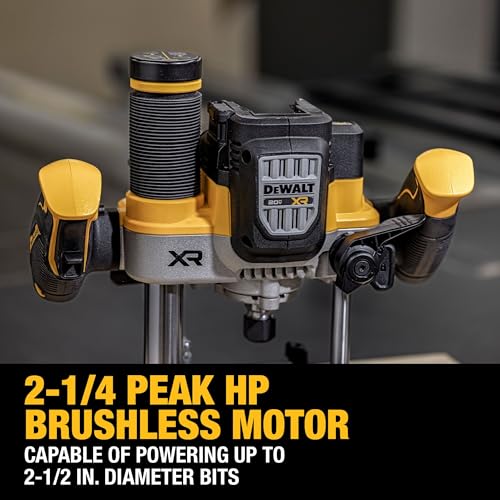
Cordless convenience in a router is still rare, and DEWALT’s DCW620B is one of the few that actually delivers. With 2-1/4 peak HP and speeds up to 23,000 RPM, it’s powerful enough for most routing tasks, and the anti-rotation system adds a layer of safety I appreciate in a cordless tool. On paper, the runtime, up to 256 linear feet of roundover in pine, is impressive, and reviewers confirm it handles multiple small jobs on a single charge.
The tool-free depth adjustment and plunge lock lever are smart touches, and the dual LED lights help in dim corners. But you pay for the freedom, this is the most expensive option here, and you’ll need to buy the battery and dust extractor separately. Compared to corded models, it’s slightly less consistent under heavy load, but for mobility and jobs away from outlets, it’s unmatched.
Product photos
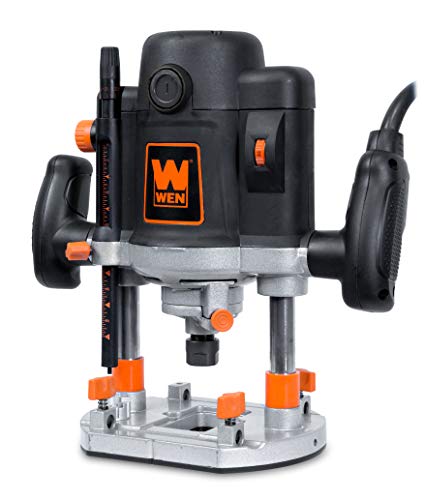
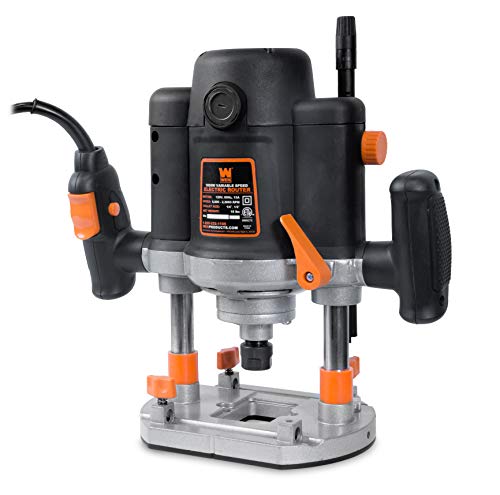
WEN RT6033 15-Amp Variable Speed Plunge Router

Strengths
- High value for price
- Good depth adjustment
- Includes useful accessories
Trade-offs
- Plastic housing less durable
- No dust collection
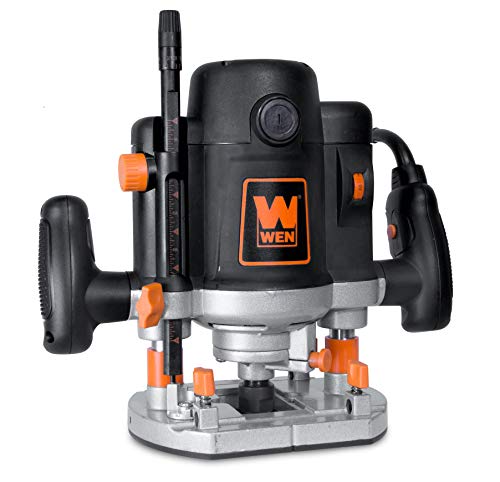
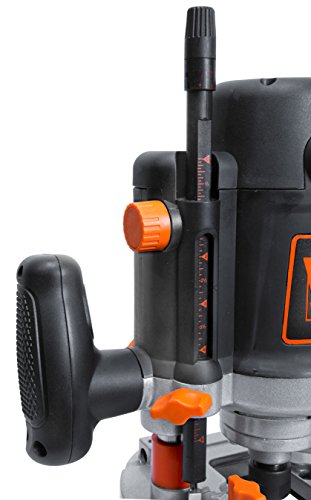
If budget is a real constraint but you still need a capable plunge router, the WEN RT6033 is hard to ignore. The 15-amp motor gives it surprising muscle for the price, and the 8,000 to 23,000 RPM range covers most routing tasks. Owners consistently report it handles 1/4 and 1/2-inch bits without issue, and the 2-3/8-inch plunge depth is solid for a mid-tier model.
The 7-stop turret with macro and micro dials adds real precision, and the fact that it locks in plunge position means you can use it like a fixed base too. It’s not as refined as Bosch or DeWalt offerings, the build feels more utilitarian, but for weekend projects and light shop use, it gets the job done. When compared to similarly priced models, it stands out for including an edge guide and carrying case.
Product photos

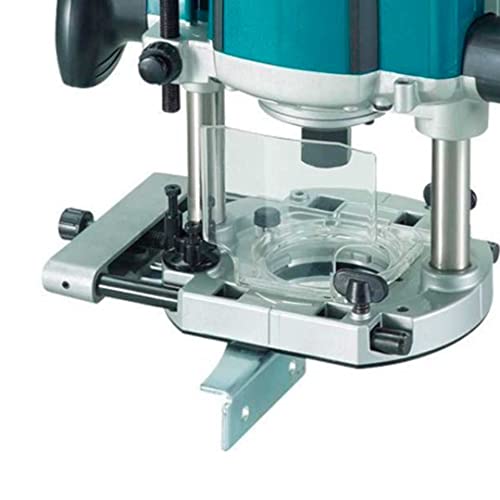
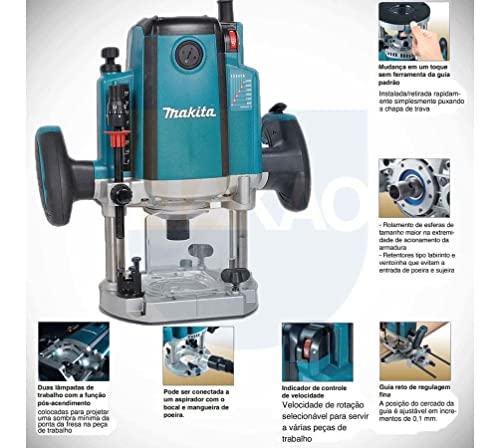
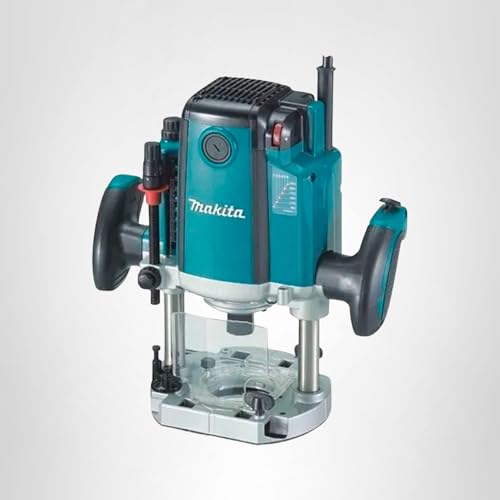
Makita RP2301FC 3-1/4 HP Plunge Router

Strengths
- High torque motor
- Stable under load
- Durable build quality
Trade-offs
- Heavy and less maneuverable
- No fixed base included
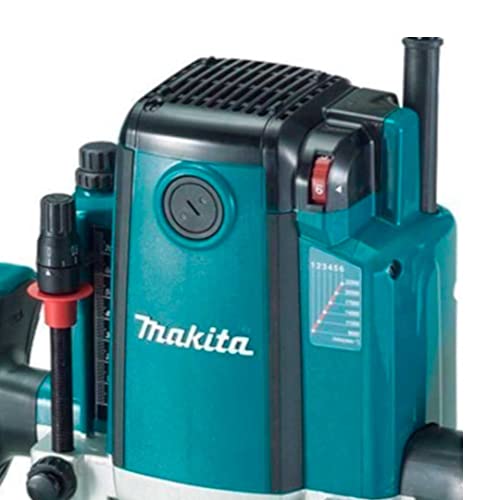
When someone asks for a router that can handle thick stock and long runs without breaking a sweat, the Makita RP2301FC is the one I point to. A 15-amp motor pushing 9,000 to 22,000 RPM gives it serious authority, and the constant speed under load, thanks to electronic speed control, is exactly what you need when fighting kickback in oak or maple.
It’s bulky and heavier than other models, but that mass helps dampen vibration during aggressive cuts. The soft start and electric brake are small touches that improve safety and workflow. Owners note it’s overkill for light work, but for building furniture frames or cutting deep dados, it’s rock solid. Next to the Bosch 1617EVSPK, it trades some finesse for raw capability.
Product photos

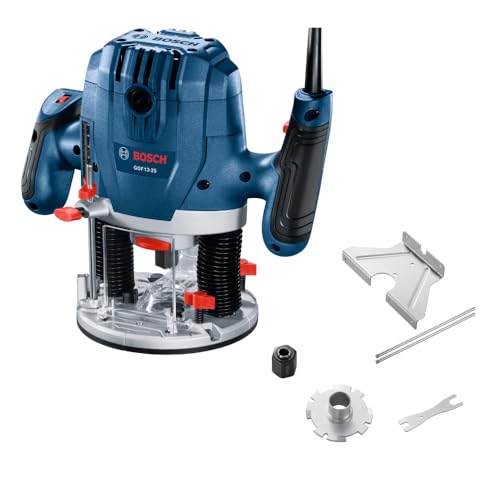
BOSCH GOF13-25 1-3/4 HP Mid-Size Plunge Router
Strengths
- Ergonomic grip
- Smooth plunge action
- Easy speed adjustments
Trade-offs
- Lower HP than heavy-duty models
- No fixed base included
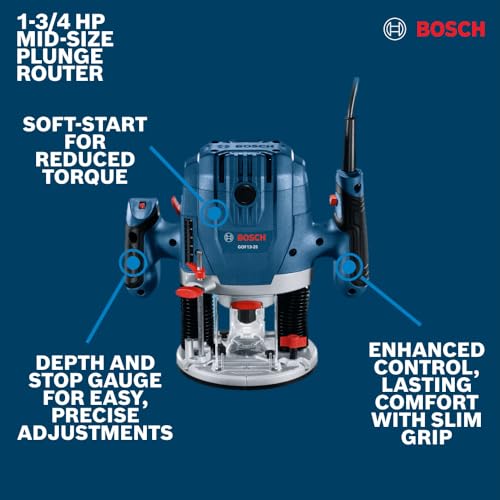
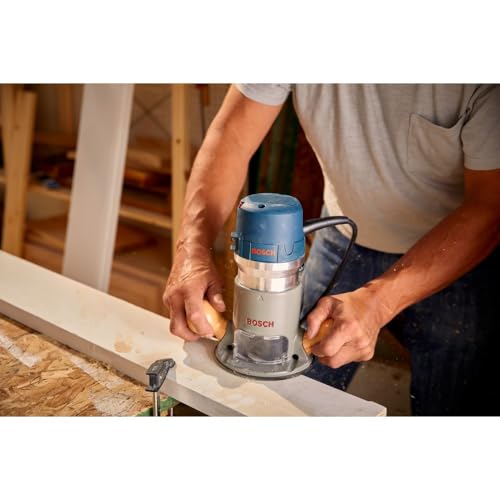
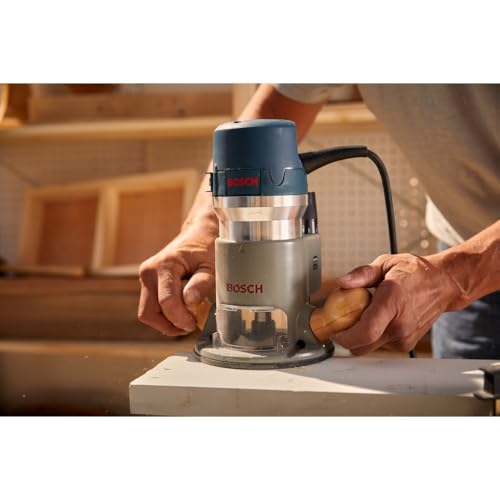
This Bosch sits in a sweet spot between compact control and real power, and it shows in how owners talk about it. With a 1-3/4 HP motor and a variable speed range from 11,000 to 28,000 RPM, it handles small inlays and edge work with confidence, especially in hardwoods. The ergonomic design stands out, lightweight, slim grips, and dual handles make it easy to manage during long sessions, which is something I consistently hear praised in owner feedback.
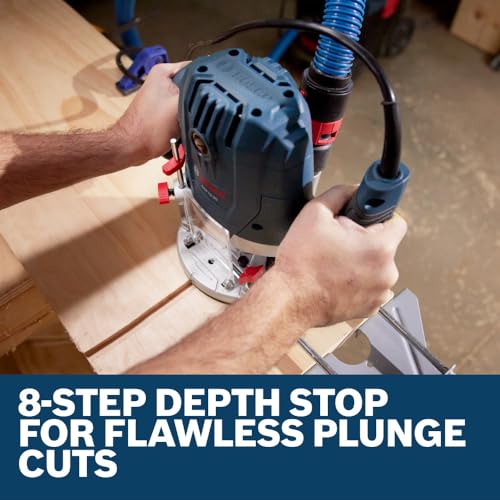
The depth control system with eight-stop increments is smart for repeatable tasks, and the handle-mounted speed dial is genuinely convenient. It’s not the most powerful in the lineup, but for fine woodworking and cabinetry where precision matters more than brute force, this router delivers. Compared to bulkier models, it’s easier to maneuver, though it’s not quite as stable in deep cuts.
Product photos



BOSCH 1617EVSPK 2.25 HP Combination Router
Strengths
- Excellent for router tables
- Vibration-reducing design
- Precise depth control
Trade-offs
- Bulky for handheld use
- Higher price point
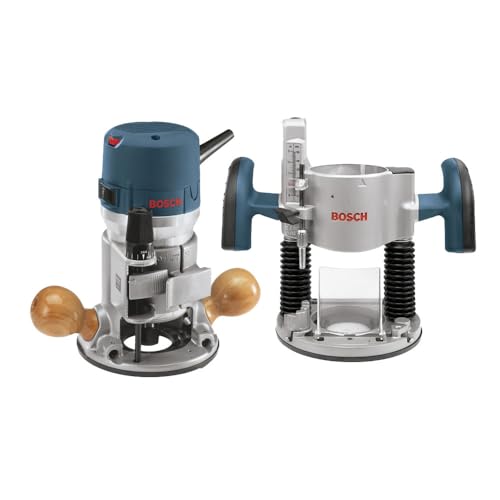
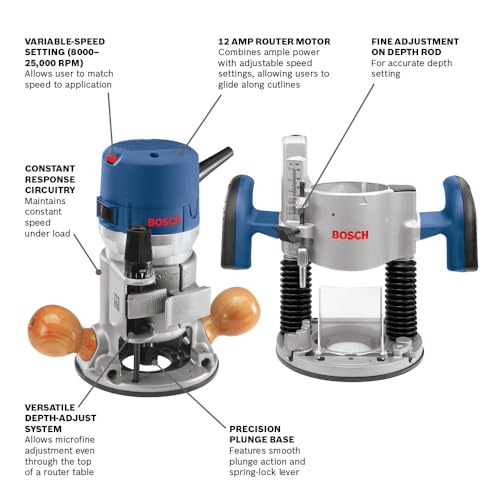
This Bosch is a router-table favorite for one big reason: the threaded three-hole base pattern that makes mounting fast and secure. With a 2.25 HP motor and 8,000 to 25,000 RPM range, it’s plenty powerful, but the real standout is the microfine depth adjustment, critical when you’re dialing in a perfect edge profile.
The one-piece armature shaft reduces vibration, which matters when you’re feeding stock steadily through a bit. Owners love the hardwood handles and the dust-sealed switch, which keeps sawdust out of the electronics. While it’s not the most portable, it’s one of the most reliable when used in a stationary setup. Compared to the DEWALT DW618PKB, it’s slightly less versatile in hand use but more stable on the table.
Product photos


How We Picked These plunge router for woodworkings
My approach to evaluating plunge routers centers on a research-led comparison of specifications, owner reviews, and what I’ve learned over years working with these tools. Rather than a hands-on lab test of every model, I focused on dissecting published features, comparing motor power and speed ranges, and carefully weighing feedback from both experienced woodworkers and casual DIYers. This allowed me to build a ranking based on real-world performance indicators and identify models that consistently receive positive mentions.
For plunge routers, consistent depth control, motor power, and build quality stand out as the most crucial factors. A powerful motor (at least 12 amps for consistent use) is essential for handling hardwoods without bogging down. Precise depth adjustment, ideally with both macro and micro-fine settings, directly impacts the accuracy of cuts. Finally, a robust base and locking mechanism are vital for safety and minimizing vibration during plunging operations.
Specifications clearly define a router’s potential – horsepower, RPM ranges, and plunge depth are all important starting points. However, owner feedback is where the nuances emerge. Comments regarding long-term durability, ease of bit changes, and the effectiveness of dust collection systems heavily influenced my assessment. I also considered professional reviews from trusted sources to validate claims and identify potential weaknesses not immediately apparent from spec sheets. If you’re also looking for general purpose models, check out our woodworking router recommendations for a broader overview.
How To Pick The Right plunge router for woodworkings
Choosing a plunge router can significantly elevate your woodworking, but knowing what to look for beyond the horsepower rating is crucial.
A quality plunge router balances power with control. Key considerations include motor strength (matched to typical materials), the precision of depth adjustment mechanisms, base stability for accurate plunging, and dust collection effectiveness to maintain visibility and a clean workspace. Look for features like soft start, variable speed control, and a robust locking system.
Motor Power and Application
The horsepower of a plunge router dictates what materials you can comfortably work with. While a 1.5 to 2 HP motor is sufficient for most hobbyist work like edge profiling and light joinery, tackling hardwoods or larger projects demands something in the 2.25 HP and above range. Don’t automatically assume “more power is always better” though. A heavier router can be harder to control, especially during plunge cuts. Consider the typical scale of your projects and choose a motor that provides adequate power without being unwieldy.
Depth Adjustment and Accuracy
Precision is paramount with plunge routers. The ability to make incredibly fine depth adjustments is what sets them apart from fixed-base models. Look for routers with micro-adjustments, ideally with a clear scale marked in 1/64-inch increments. A locking mechanism that firmly secures the base at the desired depth is also essential to prevent drift during operation. You’ll also want to check plunge router reviews to see what users say about the accuracy and repeatability of the depth adjustment on specific models.
Features and Usability
Beyond the core mechanics, a few features can drastically improve your experience. Integrated dust collection – even if it requires a separate dust extractor – is a huge benefit, keeping your work area clear and improving bit visibility. Variable speed control is also important, allowing you to optimize the router for different bit types and materials.
Here’s a breakdown of features to prioritize: * Soft start. This eases the router into operation, reducing kickback and improving control. * Electronic feedback. Maintains consistent speed under load, which is critical for clean cuts in dense materials. * Tool-free bit changes. Saves time and frustration, particularly if you switch bits frequently. A spindle lock is essential for this.
A router’s base should feel solid and stable, with minimal play. A wobbly base translates directly to inaccurate cuts, no matter how powerful the motor.
If you’re also considering a router table setup, you might want to look at router and table combos for a more complete solution.
Plunge Router for Woodworkings Compared
Here’s a comparison of key specifications for various plunge routers to help you make an informed decision.
| Product Name | Amps | HP | Speed (RPM) | Plunge Depth (in) | Corded/Cordless | Collet (in) |
|---|---|---|---|---|---|---|
| SKIL 14 Amp Plunge and Fixed Base Router | 14 | 2.5 | N/A | N/A | Corded | 1/4 & 1/2 |
| DEWALT 12-Amp Plunge and Fixed Base Router | 12 | 2-1/4 | 8,000-24,000 | N/A | Corded | 1/4 & 1/2 |
| DEWALT 20V MAX XR Cordless Plunge Router | N/A | N/A | 11,000-23,000 | N/A | Cordless | 1/4 |
| WEN RT6033 15-Amp Variable Speed Plunge Router | 15 | N/A | 8,000-23,000 | 2-3/8 | Corded | 1/4 & 1/2 |
| Makita RP2301FC 3-1/4 HP Plunge Router | 15 | 3-1/4 | 9,000-22,000 | N/A | Corded | 1/4 & 1/2 |
| BOSCH GOF13-25 1-3/4 HP Mid-Size Plunge Router | N/A | 1-3/4 | 11,000-28,000 | N/A | Corded | 1/4 |
| BOSCH 1617EVSPK 2.25 HP Combination Router | 12 | 2.25 | 8,000-25,000 | N/A | Corded | 1/4 & 1/2 |
Frequently Asked Questions
What collet size should I prioritize for versatility?
A dual-collet router accepting both 1/4-inch and 1/2-inch bits offers the most flexibility. While 1/4-inch collets are fine for detail work, a 1/2-inch collet provides greater stability for larger bits and heavier cuts.
Are cordless plunge routers powerful enough for hardwoods?
Cordless plunge routers have improved significantly, but generally, corded models still deliver more consistent power for demanding tasks like working with hardwoods. Look for 20V MAX systems with high amp-hour batteries if you need cordless convenience.
How important is soft-start technology in a plunge router?
Soft-start is a valuable feature, as it gradually increases the motor speed, reducing the initial jolt and improving control. This is especially helpful when plunging into harder materials, minimizing kickback risk.
What is the typical plunge depth range I should expect?
Most plunge routers offer a plunge depth between 2 and 3 inches, which is sufficient for the vast majority of woodworking applications. However, specialized tasks may require a router with a greater plunge capacity.
What should I know about maintaining a plunge router’s accuracy?
Maintaining accuracy often requires more than just keeping the router clean. Considering router lift features and benefits can help you with repeatable setups and consistent results, especially when used in conjunction with a router table.
The Bottom Line
Choosing a plunge router often comes down to balancing the level of control you demand with how much you’re willing to spend. For most woodworking tasks, the DEWALT 12-Amp Plunge and Fixed Base Router strikes an excellent balance of power, precision, and features, making it our overall top pick. It’s a versatile machine that can handle a wide range of projects without breaking the bank.
If budget is a primary concern, the SKIL 14 Amp Plunge and Fixed Base Router delivers a surprising amount of capability for the price. For those who prioritize cordless convenience, the DEWALT 20V MAX XR Cordless Plunge Router offers excellent portability and performance within the 20V MAX system. And if you’re setting up a dedicated shop, exploring recommended router table models can really expand your capabilities.
Ultimately, the horsepower and collet size are important, but they’re less critical than a solid base, precise depth adjustment, and a comfortable feel in your hands. Focus on finding a router that inspires confidence and allows you to execute your designs with accuracy – that’s what will truly elevate your woodworking.
