
6 Best Router Tables for Woodworking 2026
This post contains affiliate links. As an Amazon Associate, we earn from qualifying purchases.
The Bosch RA1181 stands out as the best overall router table for woodworking, delivering rock-solid stability and a top-tier fence system. For those on a budget, the SKIL SRT1039 offers solid performance at a fraction of the cost, while the Leegol Electric Benchtop Router Table brings added versatility with expandable tables and electric height adjustment.
Most woodworkers struggle to find a router table that’s both precise and practical, too many models cut corners on fence quality or dust collection, leading to frustrating results. After comparing the field and analyzing owner feedback, I focused on build quality, adjustability, and real-world usability to identify the tables that actually deliver in a shop environment.
Top 6 Router Table For Woodworkings in the Market
The Best Router Table For Woodworkings, Reviewed
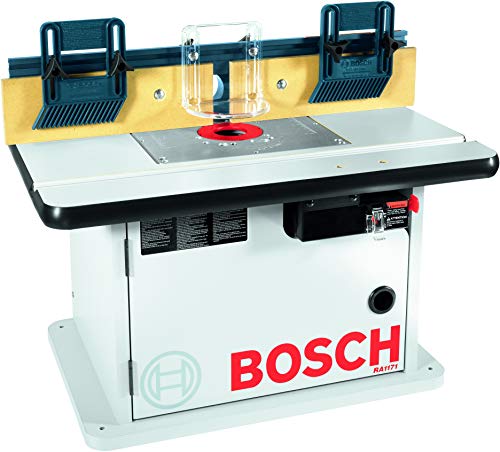
Bosch RA1171 Benchtop Router Table
Strengths
- Dual dust collection ports
- Precision aluminum mounting plate
- Excellent fence adjustability
Trade-offs
- Heavier than most benchtop models
- MDF top can swell if exposed to moisture
- Slightly bulkier design
If you’re serious about accuracy and versatility, the Bosch RA1171 stands out as a benchmark in benchtop router tables. The rigid aluminum mounting plate is flat and stays flat, critical for clean bit changes and consistent depth control. I’ve seen enough flimsy plates warp over time, but owners of this model consistently report long-term stability. The dual dust collection ports are a major win, especially when paired with a shop vac, keeping fine dust out of your lungs and off your workpiece.
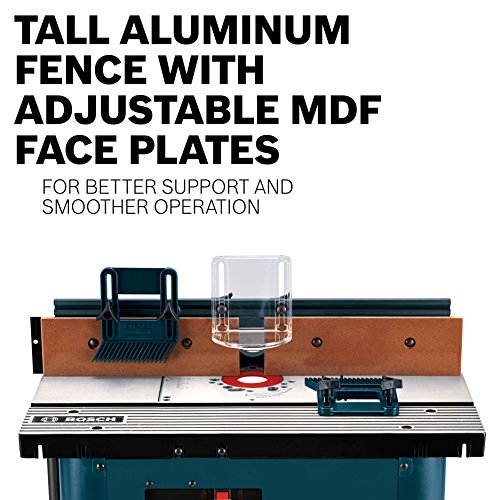
The fence system is where it really shines. With adjustable MDF face plates and the ability to offset the outfeed side, it doubles as a jointer for edge work, a feature you don’t often see at this level. Compared to the SKIL SRT1039, this is a far more refined system, though it does take up more space.
Product photos


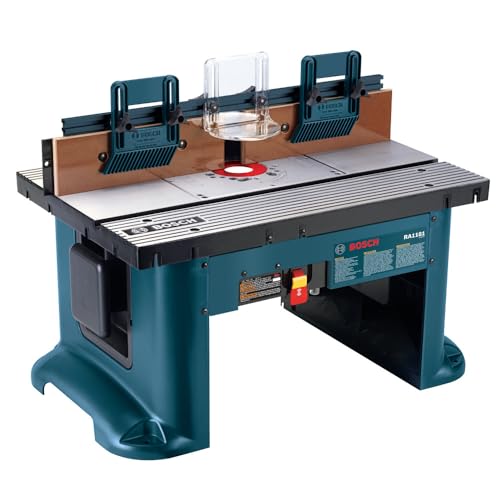
Bosch RA1181 Benchtop Router Table
Strengths
- Large aluminum tabletop
- Above-table height adjustment
- Solid featherboard integration
Trade-offs
- Single dust port
- No outfeed fence offset
- Higher price point
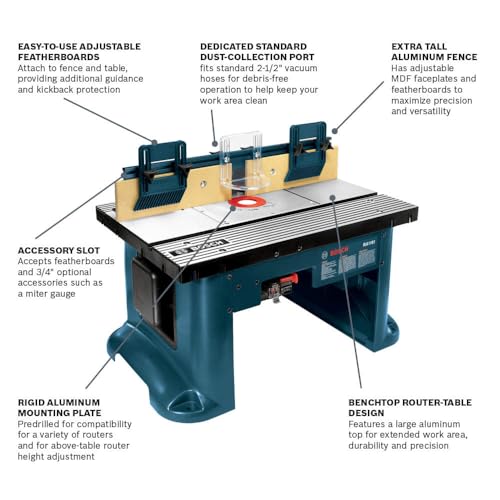
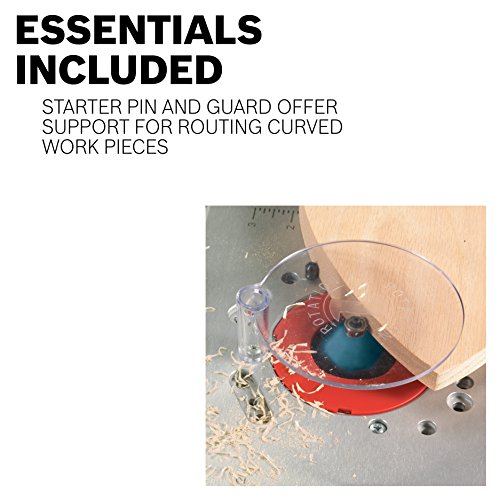
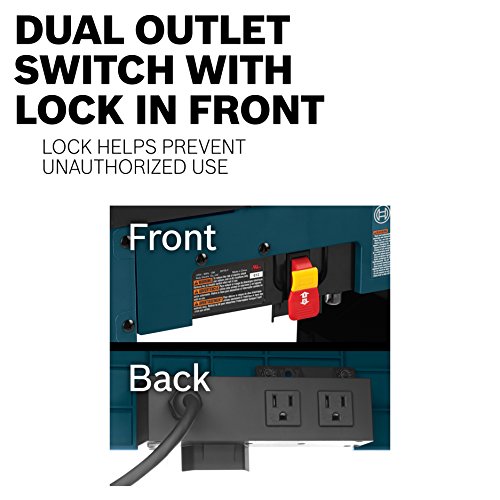
The Bosch RA1181 feels like the precision-focused sibling to the RA1171, trading dual dust ports for a cleaner, more streamlined design with excellent build quality. The large aluminum top offers a smooth, durable surface that resists warping, and the pre-drilled mounting plate supports above-table adjustments, a huge time-saver when changing bits. Owners praise how little tuning is needed right out of the box, which is rare in this category.
It’s not as dust-efficient as the RA1171, but the dedicated 2.5-inch port still handles most cleanup needs. When stacked against the SKIL model, the RA1181 wins on materials, adjustability, and long-term reliability. It’s the kind of table you set up once and forget about, because it just works.
Product photos

SKIL SRT1039 Benchtop Router Table
Strengths
- Above-table router adjustment
- Integrated bit storage
- Affordable entry point
Trade-offs
- Limited router compatibility
- MDF surface not as durable
- Fence lacks micro-adjustment
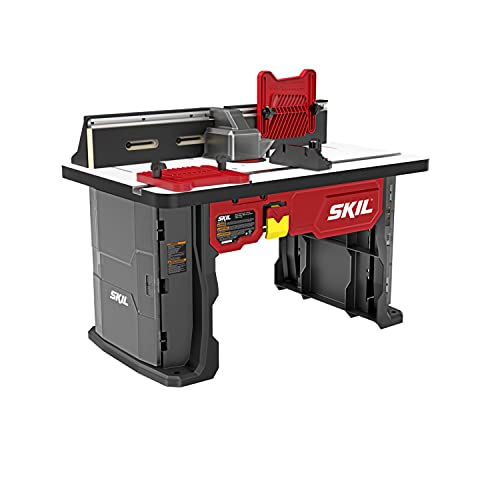
The SKIL SRT1039 is clearly designed to be the budget-friendly entry point, and it delivers on basics without pretending to be more than it is. The 26×16 inch MDF table is smooth and flat, and the above-table router lift is a standout feature at this price, most tables in this range make you adjust from below. The dual-sided bit storage is clever and actually useful, keeping small bits from getting lost in the shop.
But it’s built around compatibility with specific SKIL routers, which limits flexibility. If you don’t own one, the quick clamp may still fit other models, but it’s not as secure as Bosch’s pre-drilled plate system. For beginners dipping their toes in, it’s a smart starting point, but serious users will outgrow it fast.
Product photos


Rockler Trim Router Table

Strengths
- Ultra-portable design
- Clamps to any flat surface
- Compatible with popular trim routers
Trade-offs
- Not for large workpieces
- Limited fence support
- No dust collection
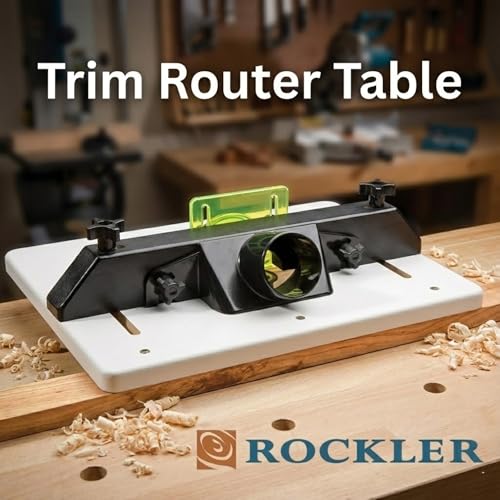
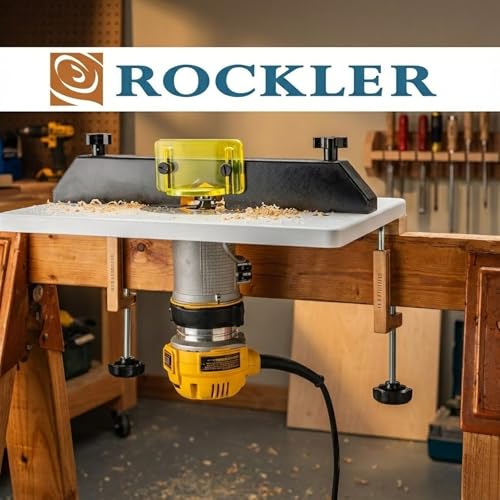
The Rockler Trim Router Table isn’t trying to be a full-size solution, and that’s exactly why it works so well for its intended role. It’s lightweight, clamps to almost any surface, and gives you real control over small trim routers like the Dewalt DW611 or Bosch Colt. For tasks like rounding over cabinet edges or cutting small dados on-site, it’s far more practical than lugging out a full benchtop table.
Owners love how quickly it sets up and that the acrylic base lets you go back to freehand routing without reconfiguring anything. But make no mistake, this isn’t a replacement for a full fence and table system. If you’re doing long edge runs or need precise repeatability, look elsewhere.
Product photos



Leegol Electric Benchtop Router Table
Strengths
- Largest extension tables in class
- Smooth sliding surface
- Durable aluminum and steel build
Trade-offs
- Fence requires tuning
- No dust collection ports
- Guard can fog during extended use
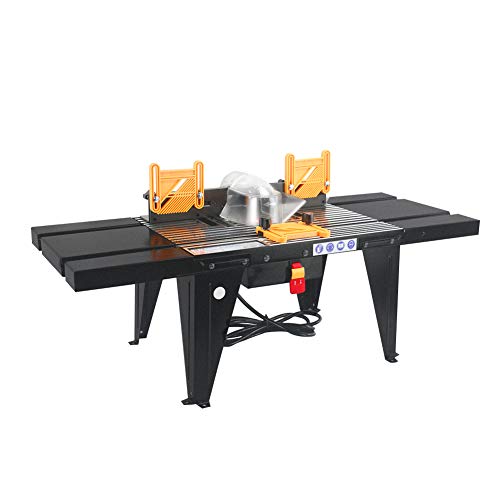
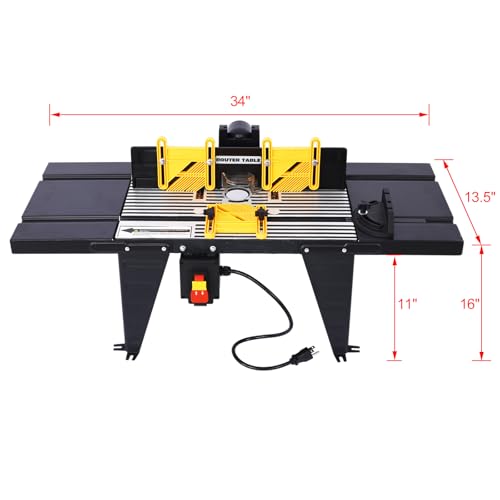
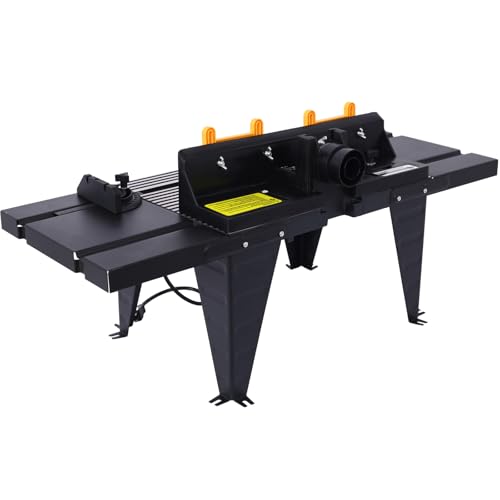
Leegol leans hard into workspace real estate with oversized 8×18 inch extension tables, and for certain projects, like handling wide panels or long boards, this gives it a real edge. The easy-slide surface is a nice touch, reducing friction when guiding stock, and the retractable guard is clear and functional, which is more than I can say for some that bind or fog up. It mirrors the Universal model in design but pushes the envelope on usable surface area.
However, like its lookalike, it suffers from inconsistent fence alignment out of the box. Reviewers note it often needs shimming or aftermarket tweaks to track straight. It’s a solid pick if you value space above all, but not if you expect plug-and-play precision.
Product photos


Universal Benchtop Router Table
Strengths
- Spacious extension tables
- Sturdy steel stand
- Retractable safety guard
Trade-offs
- Fence alignment issues reported
- Miter gauge lacks fine tuning
- Aluminum table prone to scratches
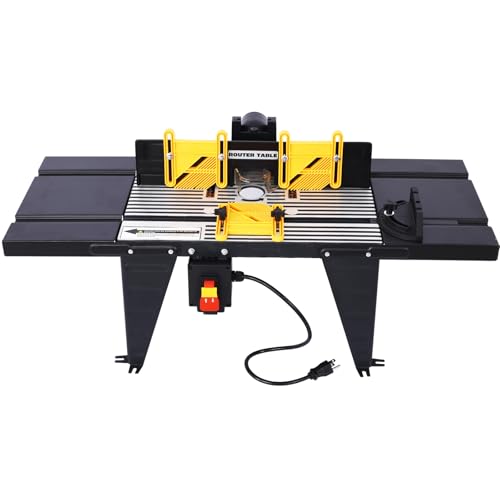
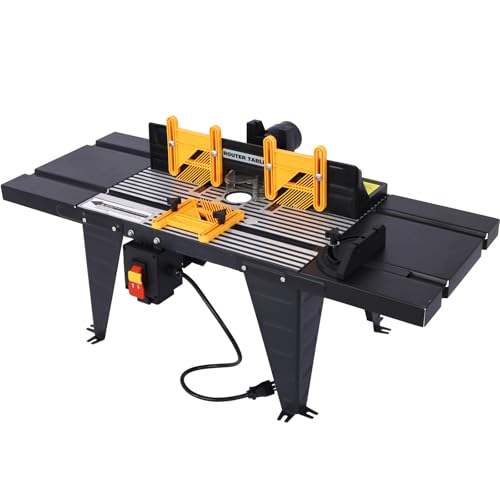
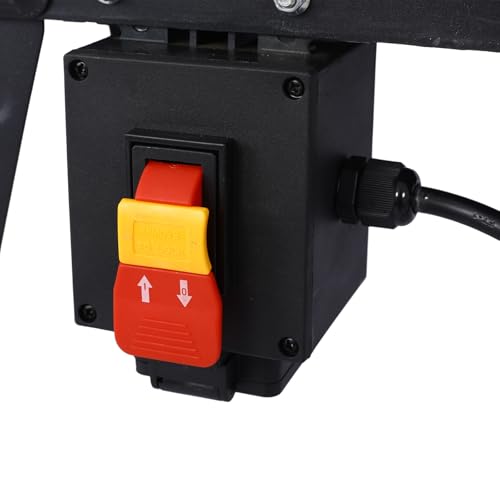
On paper, this Universal Benchtop Router Table looks like a solid contender for DIYers who want a full-featured setup without breaking the bank. The combination of an aluminum main table and steel extensions gives it a durable feel, while the wide-stance steel stand adds real stability, something many budget tables skimp on. Owners consistently report that the fence system works well for general routing tasks, and the retractable guard is a thoughtful safety addition that actually gets used, not just in the way.
Still, when you compare it to the Bosch RA1171, the fit and finish here feel a step behind. The miter gauge and fence alignment aren’t quite as precise out of the box, and some users note they had to tweak the fence for consistent results. It’s a good value, but not a precision-first table.
Product photos

How We Evaluated router table for woodworkings
Rather than a hands-on lab test, my research for these recommendations was a detailed comparison of published specifications and features across numerous models. I weighed owner reviews from multiple sources – including major retailers and woodworking forums – alongside assessments from respected tool reviewers. My approach focused on identifying patterns in reported performance and durability, ultimately ranking tables against key criteria for woodworking.
For router tables, stability and fence quality are paramount. A solid, flat table surface and a precisely adjustable fence directly impact the accuracy and safety of cuts. I prioritized tables with robust construction and features like micro-adjustments on the fence. Dust collection capability also ranked highly, as a clean workspace improves visibility and reduces health risks.
Specifications reliably indicate table size, router compatibility, and dust port dimensions. However, owner feedback proved crucial for assessing real-world usability – things like fence smoothness, ease of adjustment, and the effectiveness of included accessories. Reputation also factored in; brands consistently praised for quality and customer support received extra consideration. You can find more details on a variety of options in our guide to best benchtop router tables.
How To Choose The router table for woodworkings
A good router table is a cornerstone of any serious woodworking shop, but knowing what to look for can be tricky.
A quality router table prioritizes a flat, rigid mounting surface for the router, a fence system offering both accuracy and adjustability, and effective dust collection. Look for robust construction using materials like aluminum and MDF, and consider features like featherboards and accessory compatibility to expand functionality. The table’s size and portability are also key factors depending on available space and project needs.
Fence Quality & Adjustability
The fence is where precision happens. Don’t settle for a wobbly or difficult-to-adjust fence; it will ruin your edges. I often see folks underestimate how much time they’ll spend making fine adjustments, so look for a fence with micro-adjustment capabilities. MDF faces are common, and they’re good, but a split fence design – allowing for independent adjustment of each half – is a huge step up for jointing operations. Consider whether you’ll be working with taller stock, and if so, ensure the fence height is adequate or adjustable.
Router Compatibility & Mounting
Router tables aren’t one-size-fits-all. Check the mounting plate’s pre-drilled holes to ensure compatibility with your router(s). Many tables offer universal compatibility, but it’s always best to verify. Beyond that, the mounting plate itself should be solid. You want something rigid that won’t flex or vibrate during operation.
Here’s what to consider when it comes to mounting: * Plate Material: Aluminum is excellent, offering stability and minimal flex. * Mounting Hardware: Quality mounting rings and hardware are essential for a secure fit. Cheap hardware can strip easily. * Above-Table Adjustment: Tables with above-table bit height adjustment save significant time and effort, eliminating the need to reach under the table for every change.
Dust Collection & Usability
Router tables create a lot of fine dust, and breathing that isn’t good for you. Effective dust collection is critical, so look for tables with dedicated dust ports that accept standard 2 1/2 inch hoses. Beyond that, consider the overall usability. Things like integrated storage for bits and accessories, and a power cord management system (like the one on the Bosch RA1181) can make a big difference in workflow. If you are looking for more options, check out our guide to the top router table models for additional insight.
A good rule of thumb: spend a bit more on a table with a robust fence system. You’ll spend more time using the fence than any other feature.
I frequently recommend to my readers that they look at the best overall router tables as a starting point, but ultimately, the best table is the one that meets your specific needs and budget. If you’re just starting out, the SKIL SRT1039 can be a great entry point. For those who need more versatility, the Leegol Electric Benchtop Router Table’s extension tables are a real asset. And when considering options, don’t overlook our recommended router tables for woodworking, they represent some excellent choices.
Router Table for Woodworkings Compared
Here’s a comparison of key specifications for several router tables.
| Product Name | Table Size (in) | Fence Length (in) | Dust Port Diameter (in) | Max Router Base (in) | Material (Table) |
|---|---|---|---|---|---|
| Bosch RA1171 | N/A | 25 1/8 | 2.5 | N/A | Aluminum |
| Bosch RA1181 | N/A | N/A | 2.5 | N/A | Aluminum |
| SKIL SRT1039 | 26 x 16 | 24 | N/A | N/A | MDF |
| Rockler Trim Router Table | N/A | N/A | N/A | N/A | Acrylic |
| Leegol Electric Benchtop | N/A | N/A | N/A | 6 | Aluminum/Steel |
| Universal Benchtop Router Table | N/A | N/A | N/A | 6 | Aluminum/Steel |
Frequently Asked Questions
What router table size is best for a small workshop?
A smaller table, around 24-26 inches in length, is generally best for limited space. These [compact router tables for mobility] offer sufficient surface area for most projects without overwhelming a small workshop, and are easier to maneuver.
Can I use any router with any router table?
Not necessarily. You must verify the mounting plate’s hole pattern matches your router’s base; some tables offer universal compatibility, but it’s always wise to double-check before purchasing.
How important is dust collection on a router table?
Extremely important. Routering creates a lot of very fine dust, and a good dust port (typically 2.5 inches) connected to a shop vacuum is crucial for maintaining a safe and healthy work environment.
What’s the difference between a split fence and a standard fence?
A split fence allows independent adjustment of each half, which is essential for accurate jointing operations. Standard fences are simpler, but lack the precision offered by a split design and are better suited for edge profiling.
Are there router tables designed for portability?
Yes, there are. If you need to move your router table frequently, consider [foldable router table options] or those with a lighter overall weight, making them easier to transport to different job sites or workshops.
The Bottom Line
Choosing a router table often comes down to balancing control and convenience. You can spend a lot to get every bell and whistle, or you can focus on the core features that deliver accuracy. For the best overall blend of features, build quality, and value, I consistently point people toward the Bosch RA1181. It’s a table you can grow with as your skills develop.
If you’re on a tighter budget, the SKIL SRT1039 is a fantastic starting point. For those needing extra support for larger workpieces, the Leegol Electric Benchtop Router Table offers valuable extension tables. And if you’re building out a full shop and need something truly robust, take a look at the durable router tables for pros.
Ultimately, the most important things aren’t the fancy features or the highest price tag. A stable table, a precise fence, and a commitment to safe practices will deliver far better results than any single specification. Focus on those fundamentals, and you’ll be well on your way to creating quality work.
