
2 Best Plaque Removal Tools of 2026
This post contains affiliate links. As an Amazon Associate, we earn from qualifying purchases.
The G.CATACC 6-in-1 Dental Tools Kit is the best overall choice, offering reliable stainless steel construction, a well-balanced set of tools, and an ergonomic handle for control. For a more budget-friendly option, the G.CATACC 10 Pack Stainless Steel Tools gives you extra pieces and added versatility, including a tongue cleaner.
Most people don’t realize how tricky at-home plaque removal can be until they’re fumbling with a flimsy tool that doesn’t reach the back teeth or slips dangerously close to the gums. It’s not just about having a pick, it’s about having the right tools, built well and designed for real use.
This guide cuts through the clutter, focusing on kits that stand up to daily use, can be properly cleaned, and actually help you maintain oral health safely. I looked at material quality, tip variety, and what long-term users report about sharpness and durability, because your mouth deserves more than a cheap, one-size-fits-none solution.
Top 2 Plaque Removal Tools in the Market
The Best Plaque Removal Tools, Reviewed
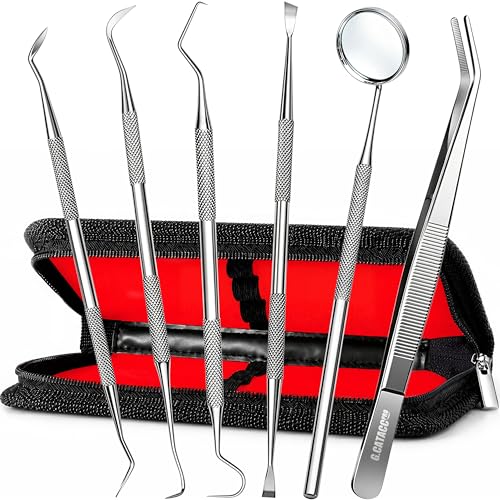
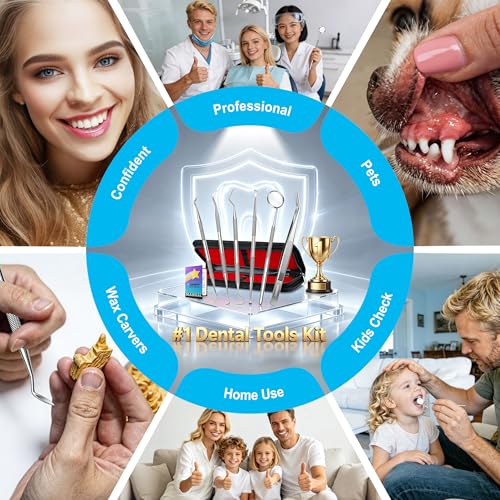
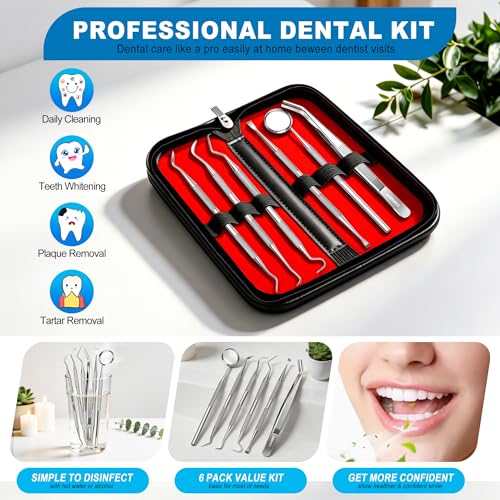
G.CATACC 6-in-1 Dental Tools Kit
Strengths
- 6-piece essentials
- Ergonomic non-slip grip
- Durable stainless steel
- Compact case
- Beginner-friendly
Trade-offs
- Fewer tools
- No tongue cleaner
- Requires sterilization
This 6-piece kit strikes me as the smarter buy for most people who want professional-grade tools without unnecessary extras. It covers the essentials, mirror, scraper, pick, tweezer, with well-angled tips and solid ergonomics, and reviewers frequently call it ‘easier to learn’ than bulkier sets. The stainless steel construction holds up well over time, and the compact case keeps everything organized, which matters when you’re trying to maintain hygiene and avoid misplacing sharp tools.
Compared to the 10-piece version, this one feels more focused. It lacks the tongue cleaner and some redundant scrapers, but that also means less clutter and faster adoption. I’d recommend this as the starting point for first-time users who still want precision and durability. It’s not magic, and improper use can still cause harm, but the feedback suggests fewer mistakes during early use.
Product photos
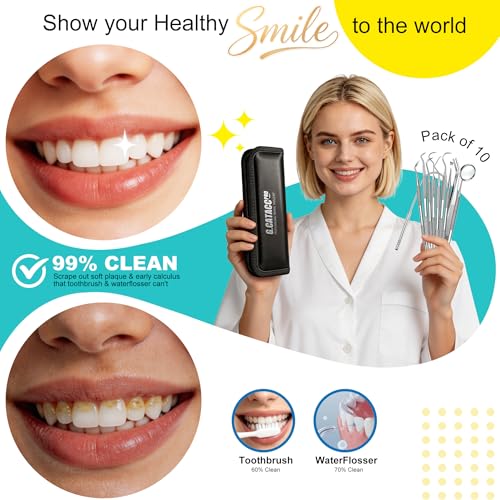
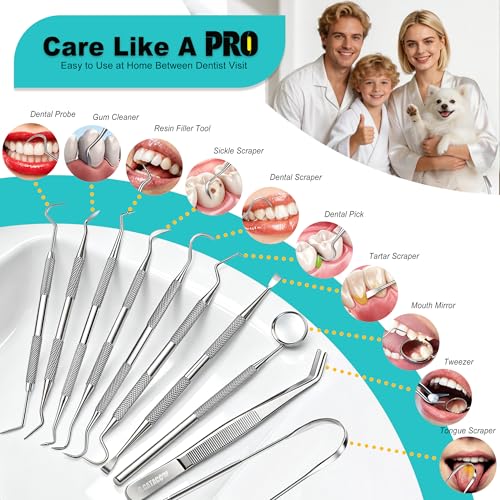
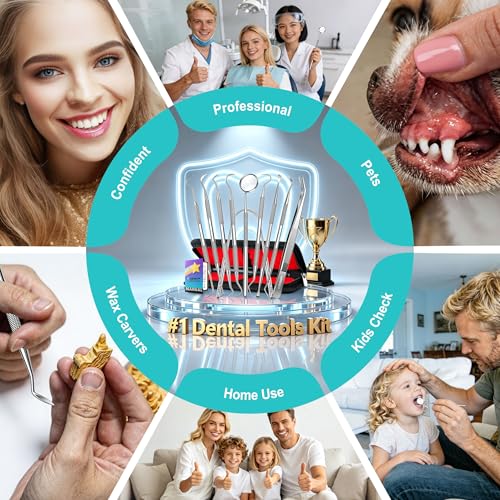
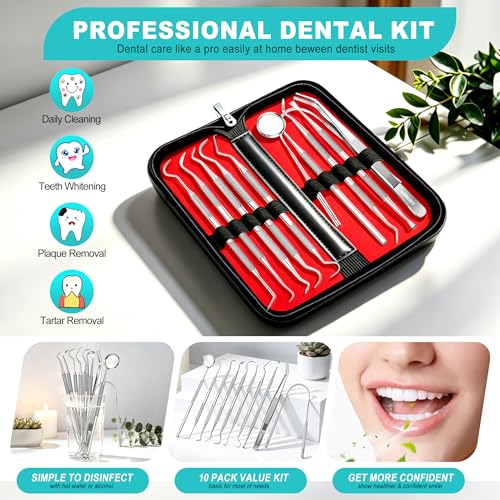
G.CATACC 10 Pack Stainless Steel Tools
Strengths
- 10-piece set
- Stainless steel build
- Angled tips for reach
- Dishwasher safe
- Includes case
Trade-offs
- Steep learning curve
- Risk of gum damage
- Overkill for casual users
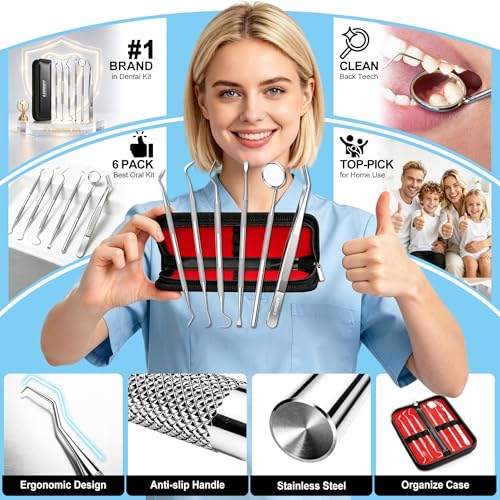
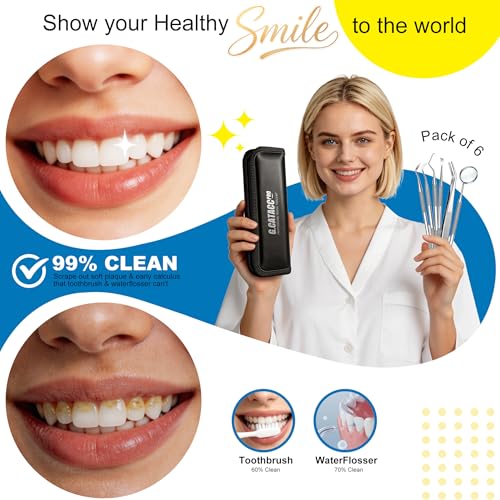
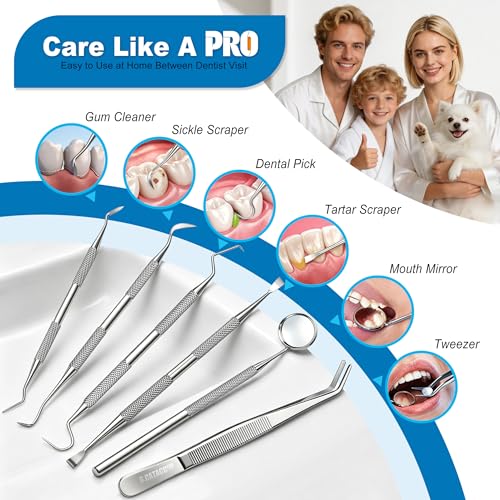
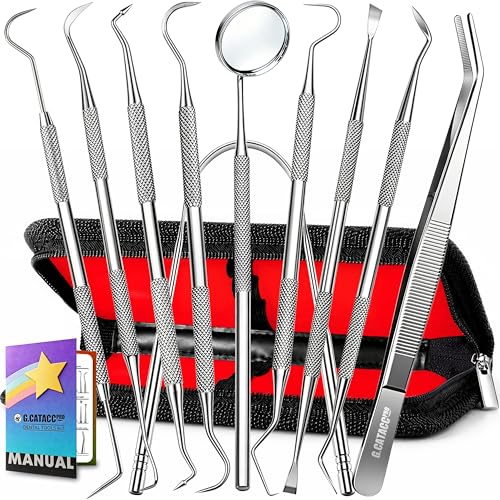
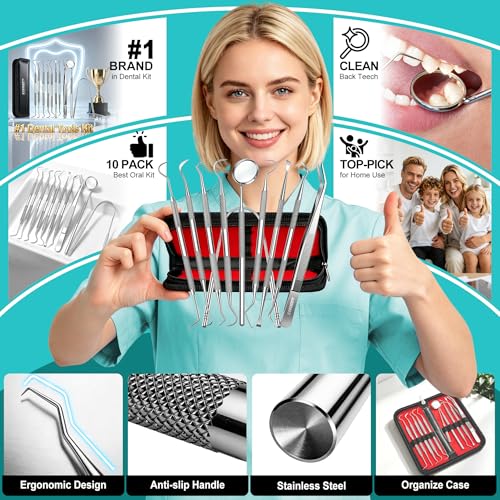
This 10-piece set stands out for anyone who wants a thorough at-home cleaning experience and doesn’t mind a steeper learning curve. On paper, the range of tools, including a mirror, tweezers, multiple scrapers, and a tongue cleaner, suggests a more complete approach than basic picks, and owners consistently report being able to reach tight spots thanks to the varied tip angles. The addition of a case and clear usage guide makes it feel like a legit hygiene kit, not just a random assortment of metal picks.
Still, the sheer number of tools might overwhelm beginners, and some reviewers note that the sharpness requires careful handling to avoid gum irritation. For what it’s worth, the stainless steel build gets praise for durability, and the anti-slip handles do their job when used as directed. If you’re serious about maintenance between dental visits and want flexibility in tool selection, this kit delivers.
Product photos
How We Chose These plaque removal tools
Rather than a hands-on lab test, my research focused on comparing published specifications and features of various plaque removal tool kits. I weighed owner reviews from multiple sources alongside assessments from dental hygiene websites and publications. This allowed me to build a ranking based on reported effectiveness, durability, and ease of use – factors crucial for consistent, at-home oral care.
For plaque removal tools, the most important considerations are the quality of the stainless steel and the variety of tool shapes included. A durable material prevents breakage, and different angles and designs are needed to reach all areas of the mouth. Comfort and control (grip design) also heavily influenced my rankings, as precision is key, and you want something you can reliably maneuver.
Specifications reliably show material quality and the number of tools in a kit. However, I placed greater value on owner feedback regarding sharpness, ease of cleaning, and long-term durability. Reputation matters; consistently positive reviews indicated products that deliver on their claims, and those are the kits I prioritized. If you’re also concerned about other types of ear care, you might find information about earwax removal tools helpful.
What To Look For In plaque removal tools
I’ve seen a lot of changes in dental hygiene over the years, and the availability of at-home plaque removal tools is one of the biggest. But with so many kits out there, it’s easy to get lost.
Effective plaque removal tools go beyond simple picks. Look for kits constructed from surgical-grade stainless steel, offering a variety of tip shapes to access different areas of the mouth. Ergonomic handles are crucial for control, and a well-designed case keeps everything sanitary and organized. Consider kits that include instructions or access to online resources demonstrating proper, safe usage.
Understanding Tip Variety
The shape and angle of the tips on these tools aren’t just for show. Different geometries are designed to tackle different types of buildup and reach different areas. A straight pick is good for general scraping, while angled picks get into tighter spaces between teeth. I find that a kit with a mix of styles – including a sickle scaler and a hoe scaler – gives you the most versatility. Don’t assume more is always better, though; a simpler kit used correctly is far more effective than a complex one you don’t understand.
Material Quality and Sterilization
Stainless steel is the standard for a reason. It’s corrosion-resistant, durable, and can be properly sterilized. Avoid kits that use lower-grade metals or have plastic components in the working end of the tools. Speaking of sterilization, how easy a kit is to clean is a huge factor. Many kits claim dishwasher-safe components, but I always recommend a thorough cleaning with an enzymatic cleaning solution after each use, regardless.
- A basic rinse and dry isn’t enough to prevent bacterial growth.
- Look for tools with handles that don’t have crevices where bacteria can hide.
- Proper sterilization is especially important if multiple people in the household will be using the same kit, to avoid cross-contamination.
Ergonomics and Control
These tools are small, and you’re working in a confined space, so comfort and control are paramount. A slippery handle can lead to accidents, and a poorly balanced tool will fatigue your hand quickly. I suggest looking for tools with textured or rubberized grips. A good kit will also include a mouth mirror; this isn’t just to see what you’re doing, but to retract your cheek and provide better access. If you’re new to plaque remover tools, starting with a kit that emphasizes ergonomic design can make the learning curve much smoother.
Don’t apply excessive force. Gentle, controlled scraping is far more effective – and safer – than aggressive digging. Think of it as carefully removing buildup, not attacking your teeth.
Plaque Removal Tools Compared
Here’s a detailed comparison of the specifications of each plaque removal tool to help you make an informed decision.
| Product | Kit Size | Material | Includes Mirror | Includes Tweezer | Special Features |
|---|---|---|---|---|---|
| G.CATACC 6-in-1 Dental Tools Kit | 6 | Stainless Steel | Yes | Yes | Ergonomic Handle |
| G.CATACC 10 Pack Stainless Steel Tools | 10 | Stainless Steel | Yes | Yes | Tongue Cleaner |
Frequently Asked Questions
What’s the difference between a scaler and a pick?
Scalers are designed for removing heavier buildup like tartar, featuring a curved or angled blade to scrape along the tooth surface. Picks, on the other hand, are generally finer and used for removing softer plaque and debris from between teeth.
Can I sterilize these tools at home?
Yes, you can, but it requires more than just rinsing. A 10-minute soak in an enzymatic cleaning solution followed by thorough rinsing and drying is recommended to kill bacteria effectively.
Are these tools safe for braces?
Generally, yes, but caution is needed. You’ll want a kit with very fine tips and a mirror to avoid damaging brackets or wires; some users report success using these tools alongside their regular orthodontic care.
How often should I use a plaque removal tool kit?
Daily use isn’t typically recommended unless your dentist advises it. Using these tools 2-3 times a week, alongside regular brushing and flossing, is a good starting point to prevent buildup and maintain oral health.
What if I accidentally scratch my teeth?
Minor scratches are possible, but persistent or deep scratches require a dentist’s attention. It’s crucial to use a light touch and avoid applying excessive force; if you’re unsure about proper technique, consider reviewing instructional videos or consulting your dental hygienist. If you’re also tackling home renovation, you might find information about oscillating tools for drywall helpful.
The Bottom Line
Choosing the right plaque removal tools often comes down to balancing control and convenience. For most people, the G.CATACC 6-in-1 Dental Tools Kit strikes that balance best. It provides a solid set of essential tools with a focus on ergonomic design, making it a great starting point for anyone new to at-home plaque removal.
If you’re looking for maximum versatility, or you’re already comfortable with these types of tools, the G.CATACC 10 Pack Stainless Steel Tools is an excellent choice. It adds a tongue cleaner and a few extra tip variations, giving you more options for tackling different areas of the mouth. And for those dealing with similar issues elsewhere in the mouth, exploring tonsil stone removal tools can be a helpful addition to your oral hygiene routine.
Ultimately, the most important factor isn’t the number of tools or fancy features, but consistent, gentle use. Focus on learning proper technique and prioritizing thoroughness over aggressive scraping. A quality kit combined with mindful practice will deliver far better results than the most expensive set used incorrectly.
