
8 Best PCP Air Compressors of 2026
This post contains affiliate links. As an Amazon Associate, we earn from qualifying purchases.
The GX PUMP GX-E-CS4-I stands out as the best overall PCP air compressor for its reliable 4500 PSI output, efficient water and air cooling, and dual power capability. For budget-minded buyers, the Spritech 4500Psi Portable offers solid performance in a lightweight package, while the 5800 PSI Water & Air Cooled Compressor delivers unmatched pressure for serious users with high-capacity needs.
Most people shopping for a PCP air compressor quickly realize it’s not just about hitting high pressure, it’s about doing so reliably, without frying the motor or waiting forever. Overheating, slow fill times, and poor build quality turn what should be a convenience into a frustration.
This guide cuts through the noise by focusing on real-world usability, based on specs, owner experiences, and what actually matters when filling airguns. I looked at cooling efficiency, power options, durability, and practical features to identify the models that deliver consistent performance without unnecessary gimmicks.
Top 8 Pcp Air Compressors in the Market
The Best Pcp Air Compressors, Reviewed
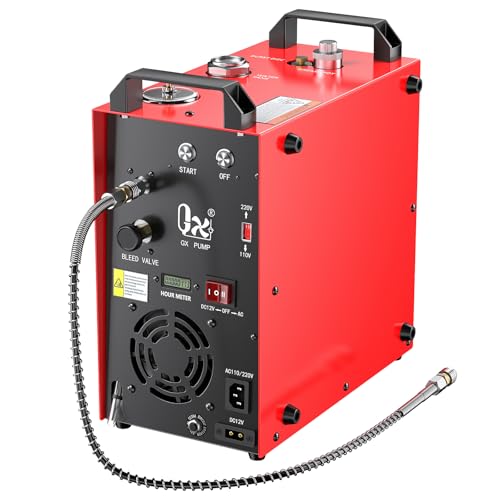
GX PUMP GX-E-CS4-I PCP Compressor
Strengths
- 5800 PSI max
- 5-hour runtime
- Water-cooled design
Trade-offs
- Heavy at 29 lbs
- Complex setup
- Higher price
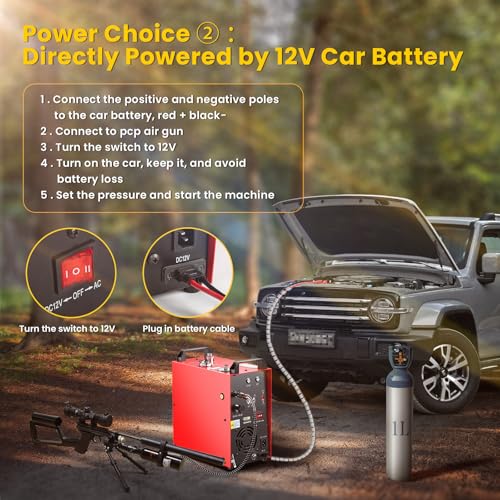
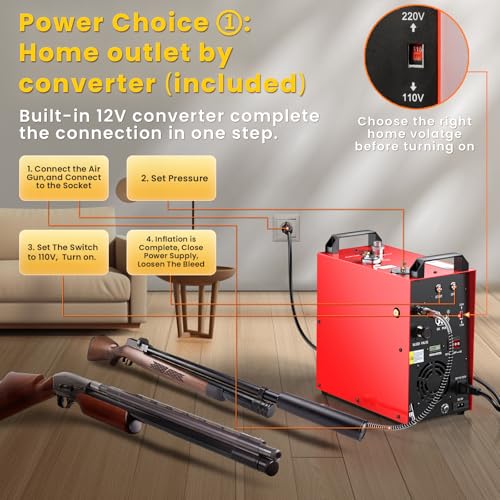
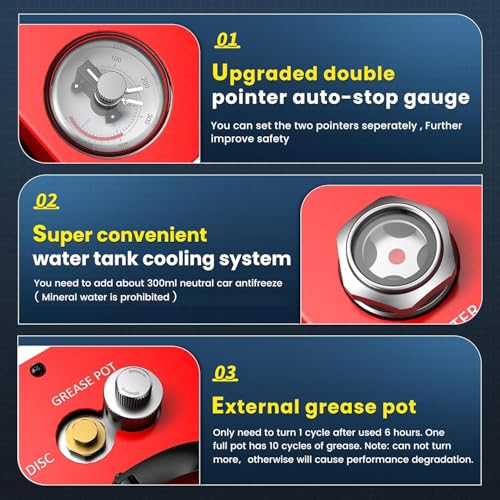
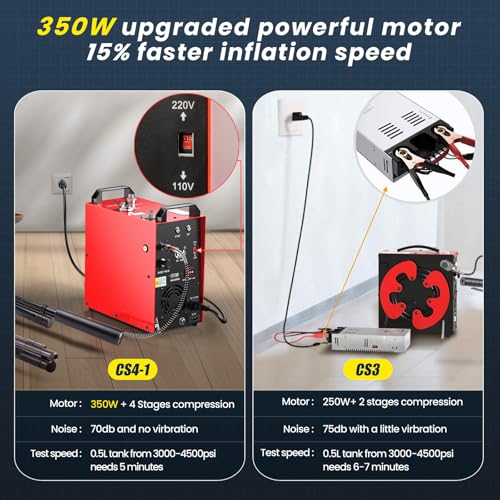
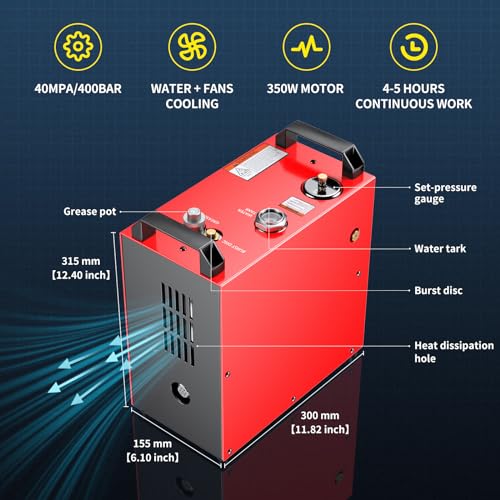
This is the most refined unit on the list, 5800 PSI, water-cooled, and capable of 5 hours of continuous operation. The patented four-stage compression and dual auto-stop gauges make it feel like a pro-grade tool. At 70dB, it’s also one of the quietest, which matters during long fills. Owners consistently report reliability, even under heavy use.
The built-in converter and oil-water separator add convenience, and the hour meter is a thoughtful touch for maintenance tracking. While it’s pricier and heavier, it outperforms nearly every other model in runtime and cooling. Compared to the 5800 PSI orange model, this one is better engineered and more durable.
Product photos
VEVOR 800W Dual-Cylinder PCP Compressor
Strengths
- 800W dual-cylinder
- Fastest fill speed
- Dual pressure display
Trade-offs
- Heavy and bulky
- Not truly portable
- No water cooling
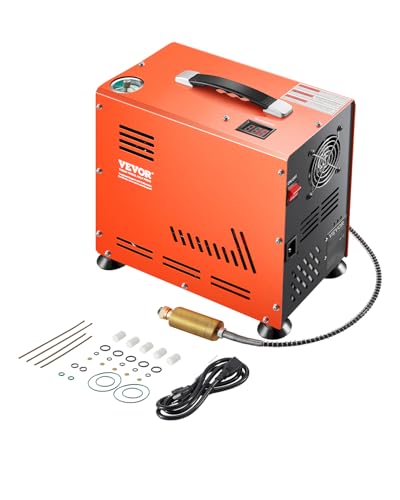
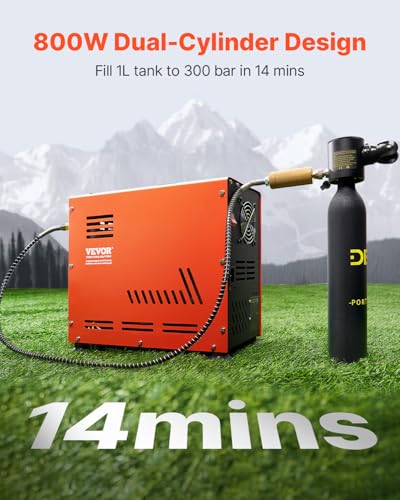
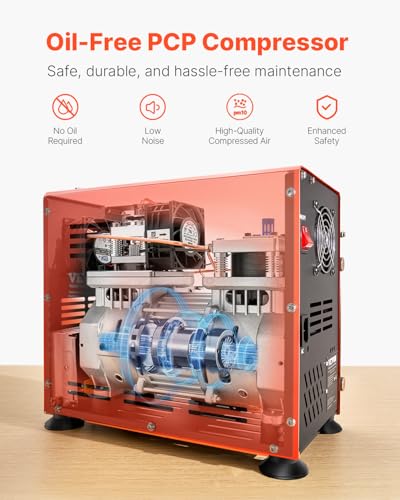
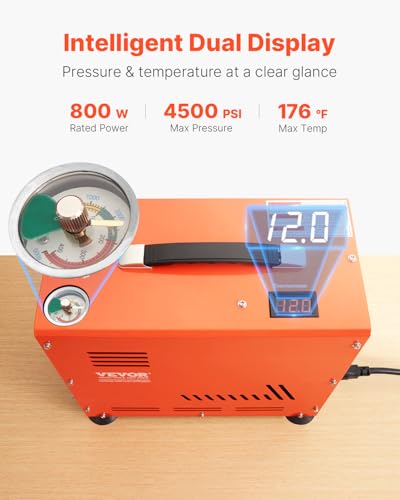
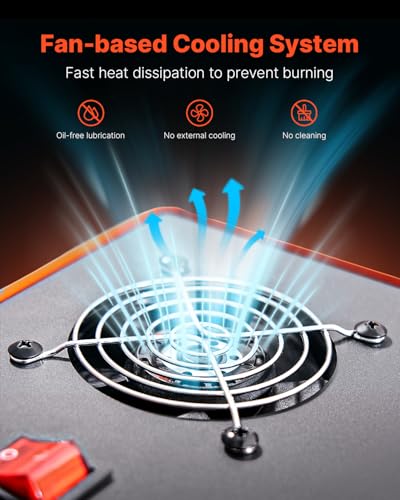
With an 800W dual-cylinder motor, the VEVOR is in a different league when it comes to fill speed and volume. It can push a 1L tank to 300 bar in just 14 minutes, faster than nearly every other model here. That makes it a strong pick for users managing multiple tanks or larger setups. The dual display for pressure and temp adds control, and the fan cooling is effective for its class.
It’s bulky and heavier than portable units, but that’s the trade-off for power. Owners using it in garages or fixed stations love the “set and forget” auto-stop and included accessories. Compared to the GX PUMP or TUXING, it’s less mobile but better for high-volume work.
Product photos
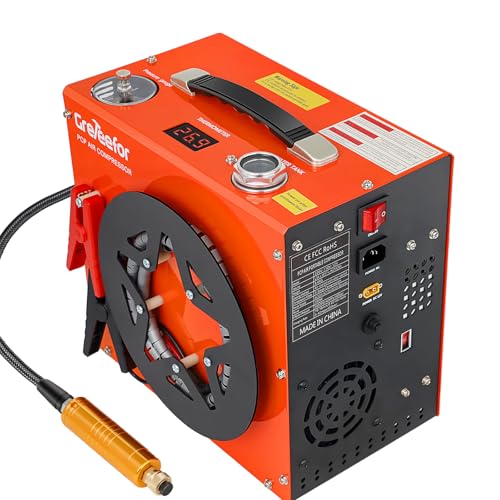
5800 PSI Water & Air Cooled Compressor
Strengths
- Higher 5800 PSI max
- Water + air cooling
- Dual auto-stop
Trade-offs
- Heavier build
- Pricier than 4500 PSI
- Setup takes time
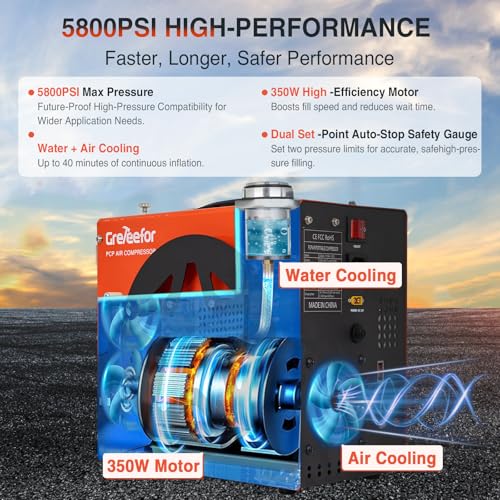
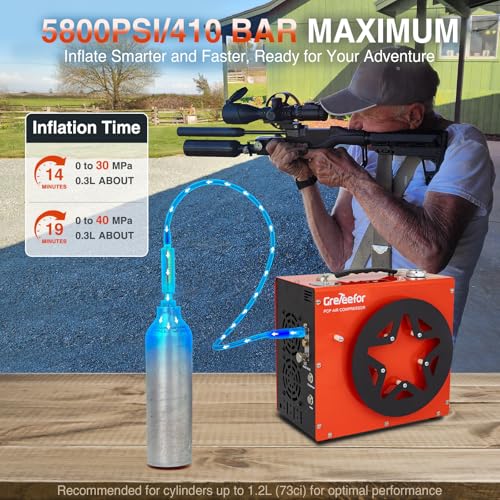
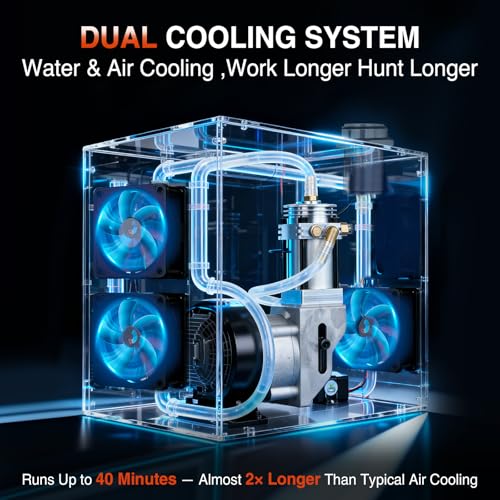
If you’re stepping up from 4500 PSI systems, this 5800 PSI model offers real headroom, especially for users with high-demand air rifles or HPA setups. The 350W motor pairs with a hybrid water and air cooling system, letting owners run it longer without overheating, a major upgrade over basic fan-cooled units. The dual auto-stop gauge is a smart touch, allowing preset top-offs at two stages, which reduces risk of over-pressurizing.
It’s not the lightest, but the retractable handle and cable reel help with transport. Reviewers using it at shooting ranges appreciate the stable fill speed and built-in moisture filtration. Compared to the GOYOJO or Spritech models, this one handles repeated use better, though it’s pricier.
Product photos
GOYOJO 4500 PSI PCP Air Compressor

Strengths
- Beginner-friendly
- Dual power options
- Auto shut-off
Trade-offs
- Limited cooling
- Not for heavy use
- No external filter
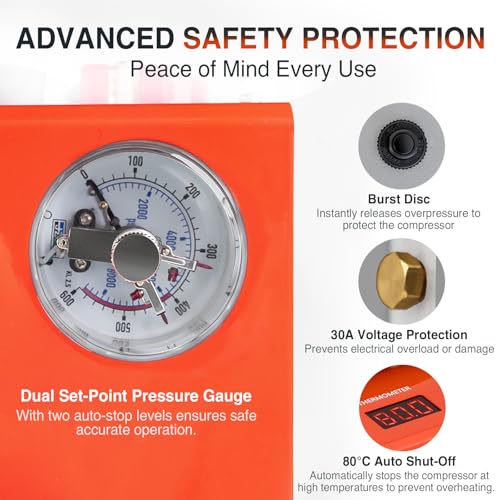
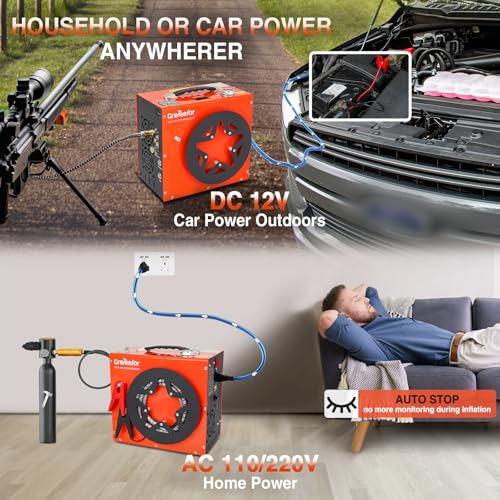
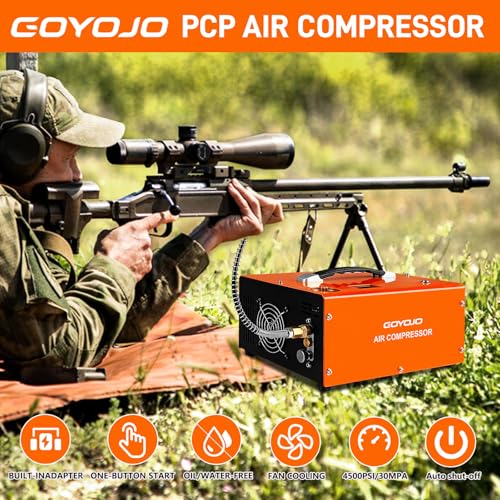
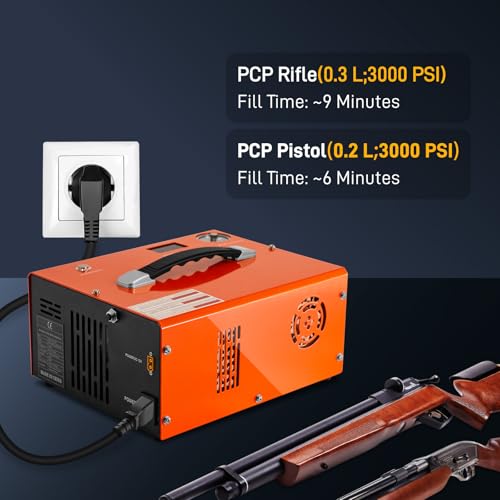
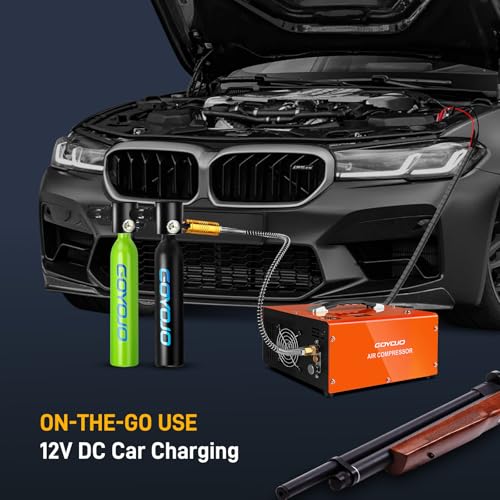
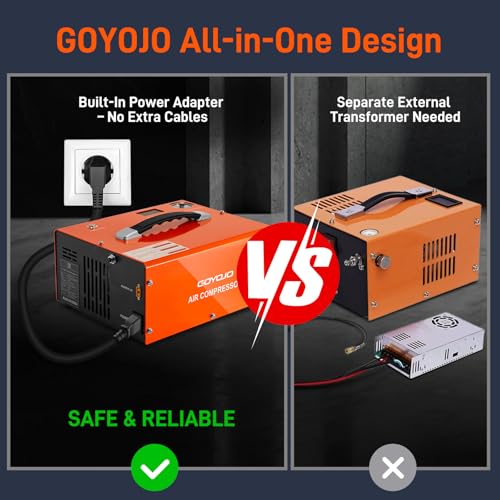
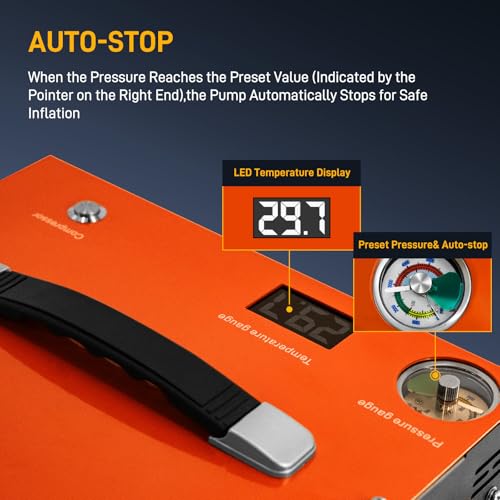
For newcomers dipping into PCP airguns or occasional paintball use, the GOYOJO 4500 PSI compressor makes a solid budget-first move. On paper, it delivers what most hobbyists need, auto shut-off, dual power options, and a clean fill for tanks up to 1L. Owners consistently report it’s straightforward to operate, with the LED pressure display adding a touch of simplicity for those who hate guessing.
Where it stumbles slightly is in cooling and sustained runtime. The built-in fan helps, but reviewers note it still needs cooldown breaks after 15–20 minutes of use. Compared to water-cooled models, this one runs hotter, which limits back-to-back fills. But for the price, it’s hard to fault for light to moderate use.
Product photos
Spritech 4500Psi Portable PCP Pump

Strengths
- Ultra-lightweight
- Compact size
- Built-in converter
Trade-offs
- Air cooling only
- Short duty cycle
- No auto-stop version
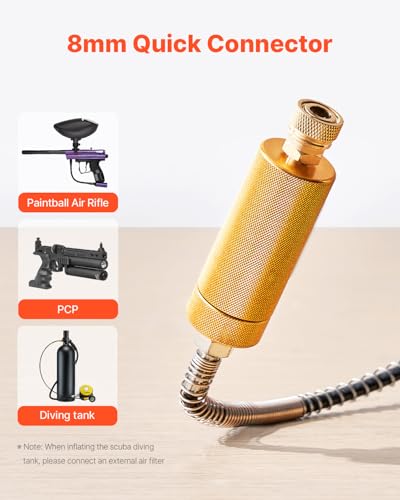
At just 5 kg (11 lbs), the Spritech is the lightest serious compressor here, ideal for hunters or competitors hauling gear to remote fields. The compact size doesn’t sacrifice power; the 350W motor delivers solid fill rates, and the side-mounted 13,500 RPM fan provides surprisingly effective air cooling. The oil-moisture filter helps protect sensitive equipment, and the 8mm fittings are standard and reliable.
It’s not built for marathon runs, duty cycle is 25 minutes on, 10 off, but for quick top-offs, it’s excellent. Compared to the TUXING or GOYOJO, it’s more portable and slightly faster. The built-in converter is a plus, though the lack of water cooling limits endurance.
Product photos


350W Dual-Power PCP Air Compressor
Strengths
- Built-in power converter
- Good for 1.5L tanks
- Auto stop + safety
Trade-offs
- Average cooling
- Orange color stands out
- Filter not top-tier
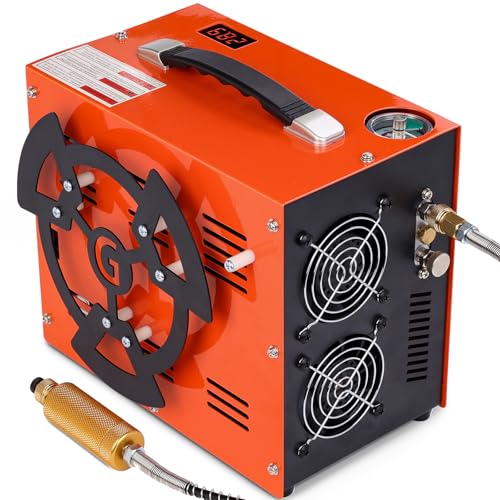
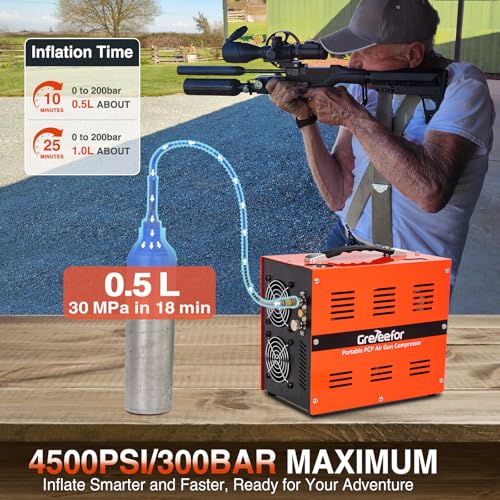
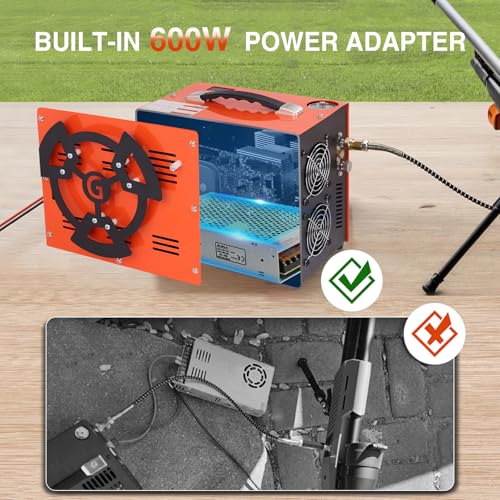
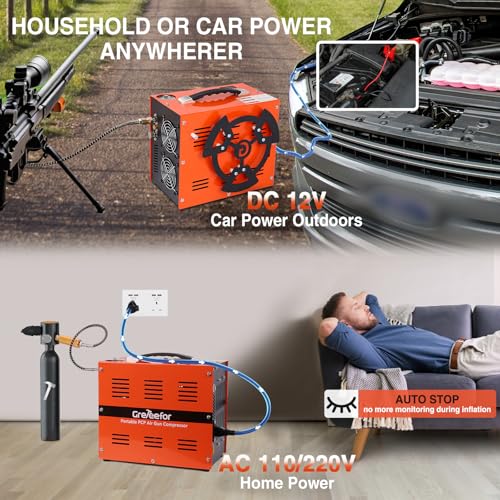
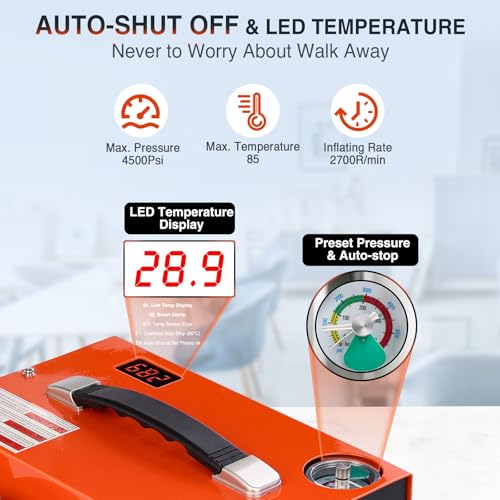
This orange unit is built for versatility, home garage or field use, with a built-in 600W power converter that eliminates the clunky external brick. That’s a small but meaningful upgrade over models requiring separate adapters. The 350W motor handles 1.5L tanks, which is above average, and the auto-stop with thermal protection adds safety during repeated fills.
Owners like the organized cable reel and sponge filter combo, though some note the filtration isn’t as robust as dedicated external systems. Compared to the VEVOR or GX PUMP, it’s not the fastest, but it’s more balanced for mixed use. If you shuttle between indoor and outdoor setups, this one simplifies logistics.
Product photos
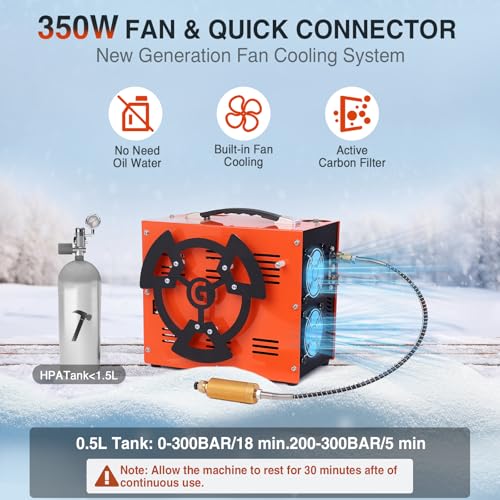
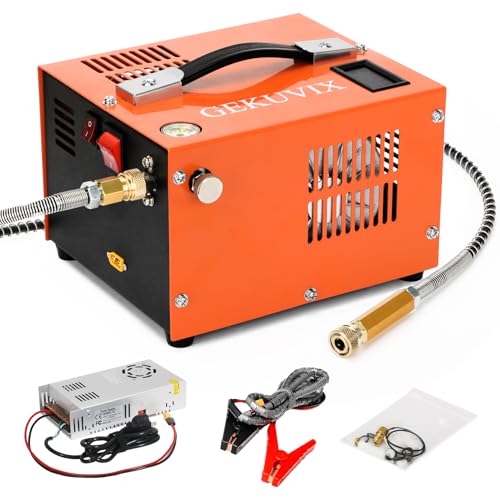
GEKUVIX 4500PSI Water & Oil-Free Pump
Strengths
- 3-year warranty
- Lightweight
- Oil-water separator
Trade-offs
- No auto-stop
- Manual monitoring
- Short duty cycle
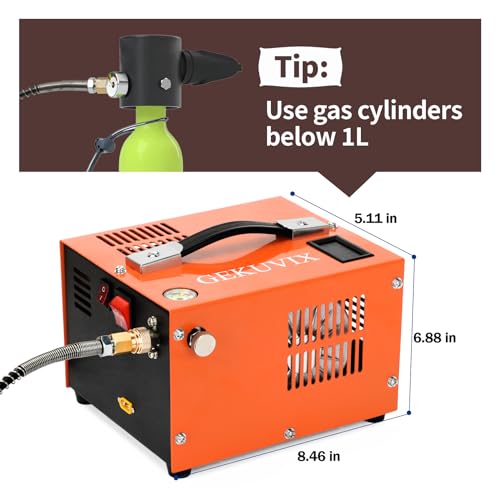
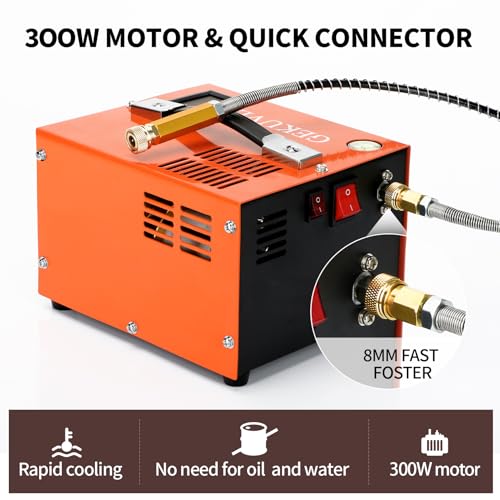
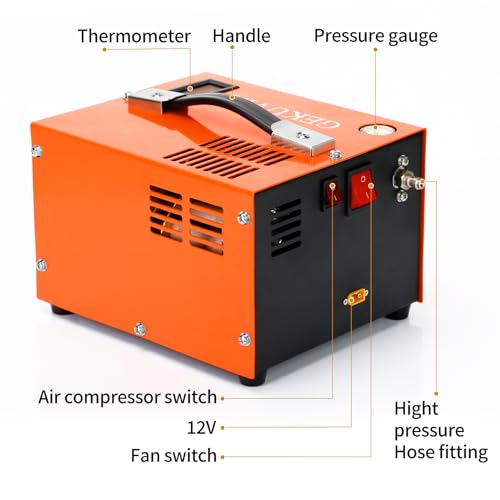
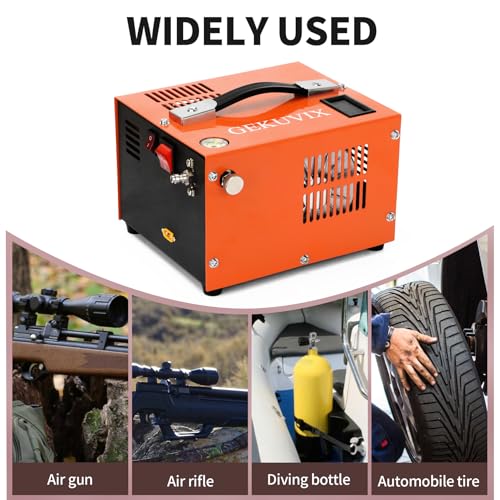
What this GEKUVIX model lacks in auto-stop, it makes up for with one of the best warranties in the class, 3 years is rare for PCP compressors. That alone gives it an edge for buyers who want long-term peace of mind. The 350W motor delivers solid performance for 0.5L tanks, and the oil-water separator does a good job keeping air clean.
But the missing auto-stop is a real drawback. You’ll need to monitor fills manually, which increases risk of over-pressurization. Owners who don’t mind babysitting the unit appreciate the lightweight 7 kg design and dual power options. Compared to the Spritech or TUXING, it’s less convenient to use but better supported long-term.
Product photos
TUXING 4500Psi Water-Cooled Compressor
Strengths
- Clear LCD display
- Lightweight design
- Oil-free operation
Trade-offs
- Air-only cooling
- No water cooling
- Average fill speed
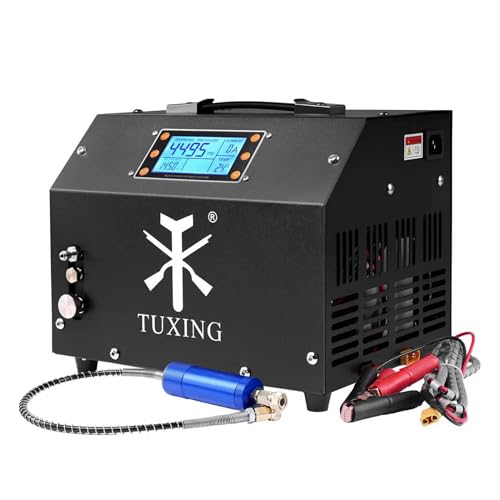
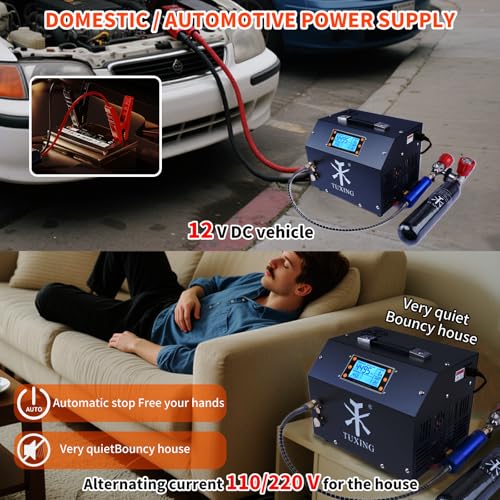
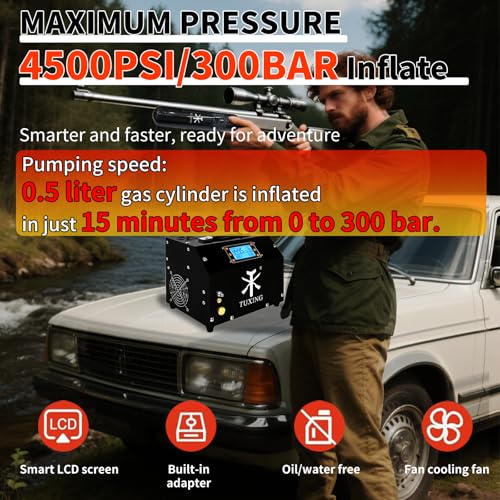
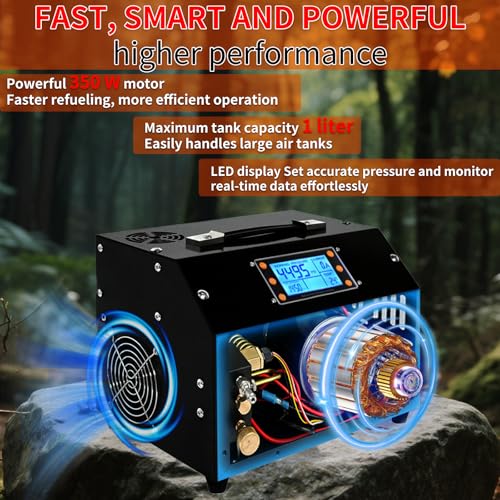
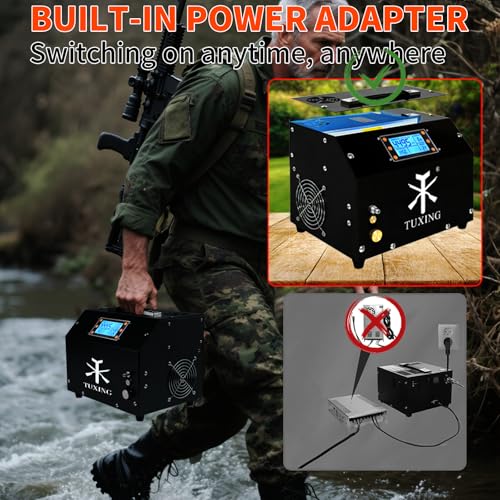
The TUXING TXET063 stands out for its user interface and portability. The LCD display is a real win, showing real-time pressure and temperature clearly beats analog dials for precision. At 22 lbs, it’s not ultra-light, but it’s manageable for field carry, and the oil-free design means zero maintenance between uses. Owners praise its reliability for hunting trips and weekend competitions.
Fill speed is solid, about 15 minutes to bring a 0.5L tank to 300 bar, but it doesn’t match the fastest dual-cylinder models. It lacks water cooling, so extended use requires cooldown pauses. Still, for those who value clean data and easy transport, this one hits a sweet spot.
Product photos

How We Chose These pcp air compressors
I approached evaluating PCP air compressors by focusing on a research-led comparison of published specifications and owner feedback. Rather than a hands-on lab test, I compiled data from manufacturer details – like PSI capacity, fill rates, and power consumption – and then weighed that against what current owners are saying about real-world performance and reliability. Reputable reviews from airgun-focused publications also played a key role, as did applying my understanding of compressor technology and typical airgun needs.
For PCP compressors, consistent pressure delivery and cooling efficiency are paramount. I prioritized units capable of reaching at least 4500 PSI, as that covers the vast majority of airgun requirements. Equally important was how well each compressor manages heat; sustained filling, especially of larger tanks, can quickly lead to overheating, so effective cooling – whether air or water-based – significantly impacts usability. Fill speed also mattered, but was balanced against the need for quiet operation and a reasonable price point.
Specifications reliably indicate maximum pressure and power output, giving a good baseline for comparison. However, owner feedback proved invaluable in assessing real-world fill times, noise levels, and long-term durability. I placed heavy weight on reports of overheating issues or component failures. Many users also comment on the convenience of features like built-in converters or quick-connect fittings, and these details heavily influenced my rankings. If you need something smaller for different tasks, you might also consider looking at compact air compressors for lighter duty jobs.
Choosing The Right pcp air compressors
Choosing the right PCP air compressor can dramatically improve your shooting experience, but there’s a lot to consider beyond just PSI.
A quality PCP compressor balances filling speed with portability and reliability. Key features to examine include maximum pressure, cooling efficiency (air or water-cooled), power source options (12V/110V/220V), and the inclusion of filtration systems to deliver clean, dry air. Consider the size of the cylinders you’ll be filling most often and look for models specifically designed for that capacity.
Pressure and Cylinder Capacity
The first thing to nail down is your pressure requirement. Most PCP rifles operate between 3000 and 4500 PSI, but some can go higher. Don’t overbuy; a compressor capable of 6000 PSI is overkill if your guns max out at 4500. More importantly, consider the size of the cylinders you plan to fill. Many of these compressors, particularly the more affordable models, struggle with larger tanks (over 6.8L/90ci). I’ve seen numerous owners complain about excessively long fill times or overheating when attempting to fill larger HPA bottles.
Cooling System Efficiency
Cooling is critical. Compressors generate heat, and sustained operation without adequate cooling will lead to reduced performance and potential damage. Air-cooled models are simpler and more portable, but water-cooled systems (like the 5800 PSI Water & Air Cooled Compressor) generally offer superior heat dissipation, allowing for longer, continuous use. If you anticipate extended filling sessions, water cooling is a significant advantage. That said, water cooling adds complexity and requires a water source and careful monitoring.
- Consider the environment you’ll be using the compressor in. Hot climates demand more robust cooling.
- Look for compressors with built-in temperature monitoring and automatic shut-off features to prevent overheating.
- A fan-cooled unit is sufficient for occasional use with smaller cylinders, but a water-cooled option is preferable for frequent filling of larger tanks or for use in warmer conditions.
A compressor that overheats quickly is a compressor you won’t want to use. Prioritize cooling, even if it means a slightly higher price tag.
Power and Portability
Do you need a compressor you can take into the field, or will it primarily reside in your garage? Portability is heavily influenced by weight and power source. DC-powered compressors (12V) are ideal for remote locations where access to AC power is limited. Many compressors offer dual power options, allowing you to run them from a car battery or a standard household outlet. If you’re looking for something truly lightweight, the Spritech 4500Psi Portable PCP Pump is a good starting point, but be aware that smaller, lighter units often sacrifice filling speed. Before you buy, also check out our guide to the top air compressors for a broader overview of options.
PCP Air Compressors Compared
Here’s a comparison of key specifications for several PCP air compressors.
| Product Title | Max Pressure (PSI) | Power (W) | Cooling System | Auto-Stop | Weight (lbs) | Dual Power |
|---|---|---|---|---|---|---|
| GX PUMP GX-E-CS4-I | 4500 | 350 | Water & Air | Yes | 29 | Yes |
| VEVOR 800W Dual-Cylinder | 4500 | 800 | Fan | Yes | N/A | No |
| 5800 PSI Water & Air Cooled | 5800 | 350 | Water & Air | Yes | N/A | Yes |
| GOYOJO 4500 PSI | 4500 | N/A | Fan | Yes | N/A | Yes |
| Spritech 4500Psi Portable | 4500 | 350 | Fan | No | 11.0 | Yes |
| 350W Dual-Power PCP Compressor | 4500 | 350 | N/A | Yes | 19 | Yes |
| GEKUVIX 4500PSI Water & Oil-Free Pump | 4500 | 350 | N/A | No | N/A | No |
| TUXING 4500Psi Water-Cooled | 4500 | N/A | Water | Yes | 22 | No |
Frequently Asked Questions
What PSI is sufficient for most PCP airguns?
Most PCP rifles operate effectively between 3000 and 4500 PSI, so a compressor capable of reaching at least 4500 PSI will cover the needs of the vast majority of shooters. Going beyond that isn’t usually necessary, and you’ll pay extra for capacity you won’t use.
Are water-cooled compressors really that much better than air-cooled?
Water-cooled compressors generally offer far superior heat dissipation, enabling longer, continuous use without performance drop-off. While air-cooled units are simpler, if you frequently fill larger cylinders or operate in hot environments, a water-cooled model is a worthwhile investment.
Can I run a PCP compressor off a car battery?
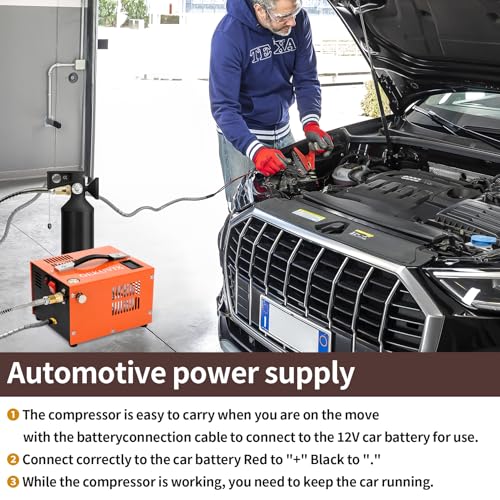
Many compressors are designed with dual power options, allowing operation from both standard AC power and a 12V DC source like a car battery. This is a key feature for those who want to fill their PCP guns in the field, but always check the compressor’s specifications to confirm compatibility.
What should I look for in a compressor’s filtration system?
A good filtration system is vital to deliver clean, dry air to your PCP rifle, preventing potential damage and ensuring consistent performance. Look for compressors with both a particulate filter to remove dust and debris, and a desiccant filter to eliminate moisture, some even include replaceable filter cartridges.
What’s the benefit of a compressor with auto-stop functionality?
Compressors with auto-stop features automatically shut off when the desired pressure is reached, preventing overfilling and potential damage to your equipment. This is a safety feature and also adds convenience, allowing you to walk away during the filling process without constantly monitoring the pressure. For those concerned about disturbing neighbors, consider exploring low-noise air compressors for a quieter workshop experience.
The Bottom Line
Ultimately, choosing a PCP compressor comes down to balancing how much you’re willing to spend against how much convenience and performance you require. For most shooters, the GX PUMP GX-E-CS4-I strikes the best overall balance – it’s got the power, water and air cooling, and dual voltage that will handle a wide range of airguns and tank sizes without breaking the bank or overheating. It’s a solid investment for anyone serious about PCP airgunning.
If you’re on a tighter budget, or only need to fill smaller cylinders occasionally, the Spritech 4500Psi Portable PCP Pump is a surprisingly capable option. For those prioritizing versatility and the ability to run off-grid, the 5800 PSI Water & Air Cooled Compressor offers excellent performance and the convenience of dual power, although you’ll need to factor in the added complexity of water cooling. And if space is at a premium, you might also consider checking out space-saving air compressors that can fit neatly in a workshop or garage.
Beyond specs like PSI and fill rate, remember that consistent pressure delivery and effective cooling are the hallmarks of a quality compressor. Don’t get caught up chasing the highest numbers; a compressor that delivers reliable performance and won’t overheat during use is far more valuable than one with flashy features and questionable durability.
