
8 Best Palm Sanders of 2026
This post contains affiliate links. As an Amazon Associate, we earn from qualifying purchases.
The DEWALT 5-Inch Variable Speed Sander stands out as the best overall palm sander for its powerful motor, solid dust collection, and adjustable speed control. For those watching their budget, the WEN 6301 Detailing Palm Sander delivers strong performance at a low price, while the BOSCH 5-Inch Random Orbital Sander offers excellent versatility with its dual dust collection system and variable speed.
Most people buying a palm sander want clean, smooth results without the hassle of excessive dust or hand fatigue. Too many models either lack power, vibrate too much, or fail to keep the workspace clean.
This guide cuts through the noise by focusing on what actually matters: motor performance, dust management, and real-world usability. I compared specs, analyzed owner feedback, and evaluated each model based on how well it performs in typical DIY and home workshop scenarios.
Top 8 Palm Sanders in the Market
The Best Palm Sanders, Reviewed
DEWALT 1/4 Sheet Palm Sander

Strengths
- Durable build
- High OPM
- Good dust sealing
Trade-offs
- No variable speed
- Loud at full load
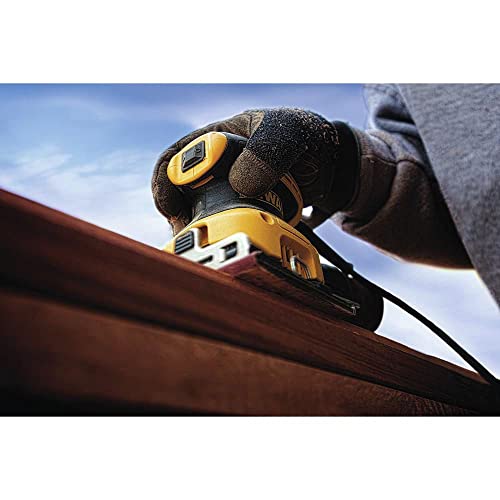
When people ask me for the best all-around 1/4-sheet sander, I point them to the DEWALT DWE6411. It’s not flashy, but it’s built like a tank, the 2.3 AMP motor, 14,000 OPM, and low-profile design make it effective on everything from drywall patch prep to deck refinishing. The rubber overmold gives excellent grip, and the improved paper clamp system means less paper slippage, a common complaint on older models.
The dust port locks securely to compatible DEWALT vacs, and the dust boot over the switch is a small but meaningful touch for longevity. While it lacks variable speed, the consistent high orbit count delivers fast results. Compared to the Makita BO4556K, it doesn’t have through-the-pad dust collection, but it’s more aggressive and better for mid-duty work.
Product photos


BOSCH 5-Inch Random Orbital Sander
Strengths
- Excellent dust control
- Variable speed
- Smooth finish
Trade-offs
- Heavier than some
- Slight learning curve
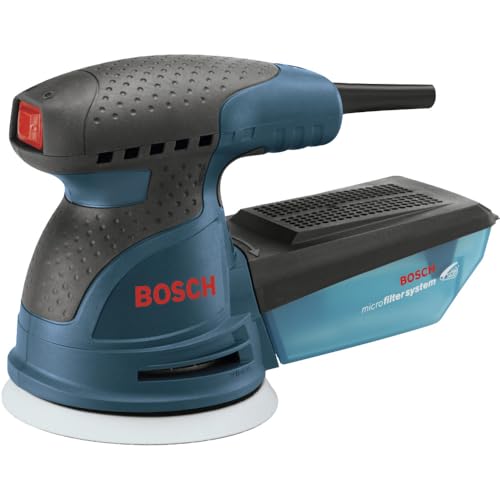
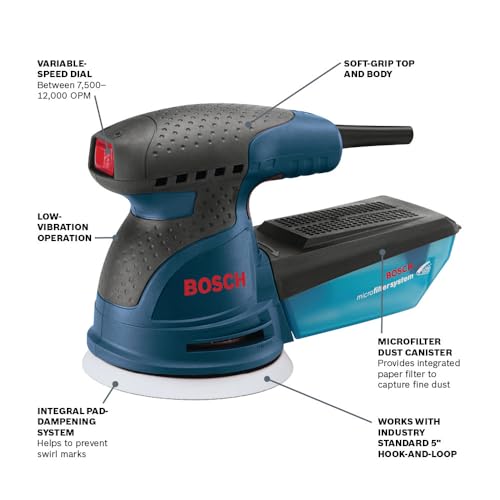
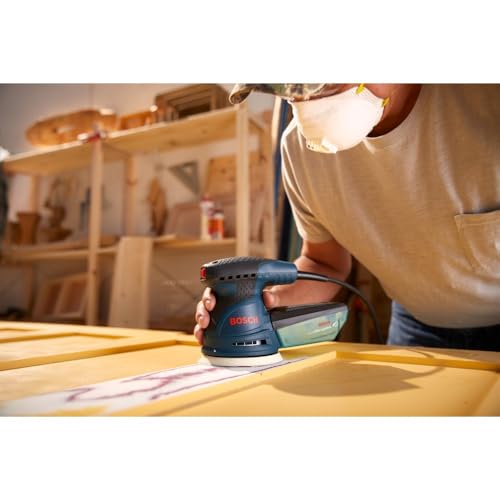
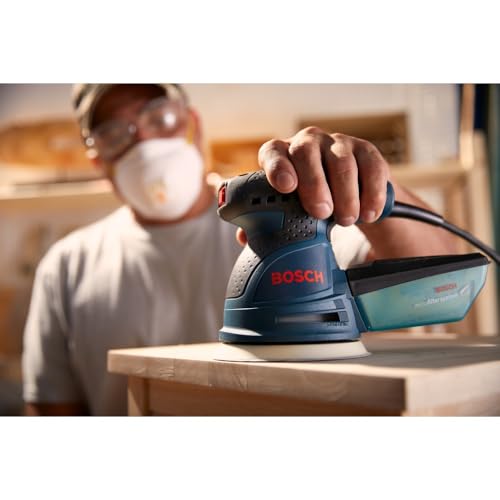
The BOSCH ROS20VSC is the kind of sander I’d recommend to someone who values precision and clean results over raw power. With a 2.5 Amp motor and variable speed (7,500–12,000 OPM), it gives you control to match the task, slower for delicate finishes, faster for paint stripping. The microfilter system is one of the best in class, capturing particles down to half a micron, and the twist-off canister makes emptying quick and clean. Reviewers often highlight how well it minimizes swirl marks, thanks to the pad dampening system.
The hook-and-loop disc attachment is robust, and the included soft carry bag adds real value. While it’s not the lightest sander here, the balance is good, and vibration is low. Compared to the DEWALT DWE6423, it trades a bit of power for superior filtration and a smoother finish.
Product photos


SKIL 5″ Random Orbital Sander
Strengths
- Cyclonic dust collection
- Variable speed
- Budget-friendly
Trade-offs
- Plastic housing feels cheap
- Speed control lag
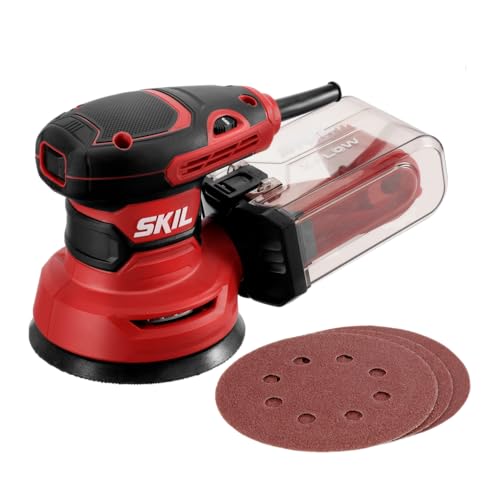
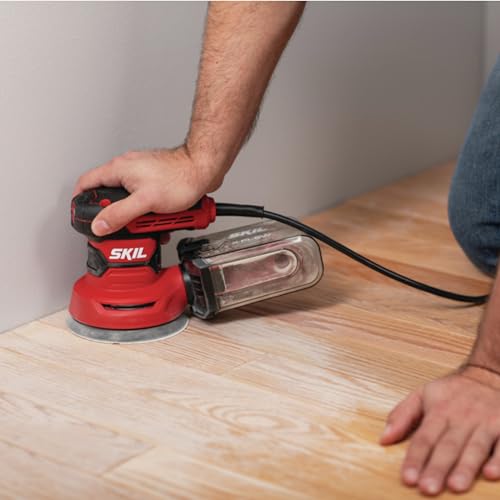
If budget is a real concern, the SKIL SR211601 is the most convincing entry-level 5-inch sander here. The 2.8 Amp motor and 13,000 OPM deliver solid performance for the price, and the cyclonic dust box does a surprisingly good job of separating fine dust, it’s transparent, so you can see when it’s full. The variable speed control is functional, though not as smooth as the DEWALT’s dial.
It’s compact enough to use in tighter areas, and the soft grip reduces fatigue during longer sessions. The hook-and-loop pad is standard, and the dust-sealed switch helps protect internals. While it can’t match the finish quality of the BOSCH or Makita models, it’s a capable workhorse for homeowners tackling decks, doors, or refinishing projects.
Product photos


BLACK+DECKER Detail Sander

Strengths
- Compact design
- Good dust collection
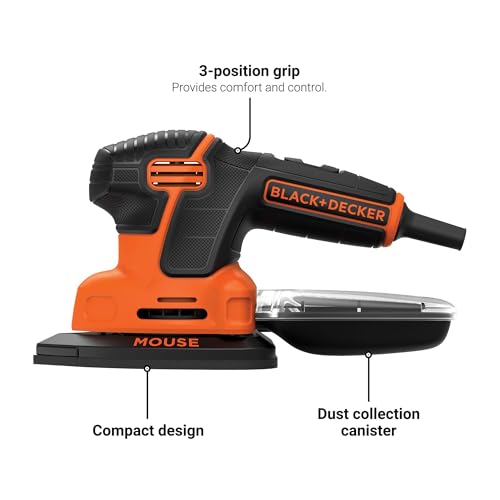
- 3-position grip
Trade-offs
- Light motor
- Not for large areas
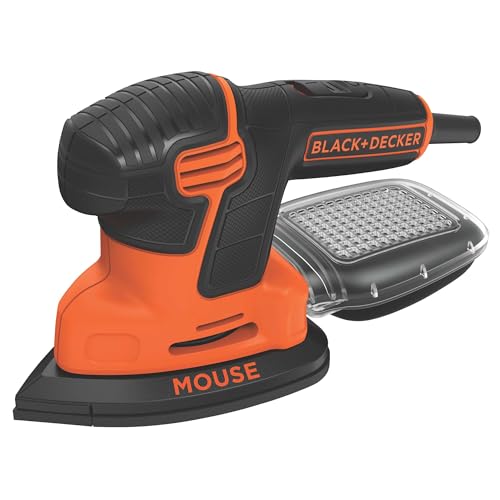
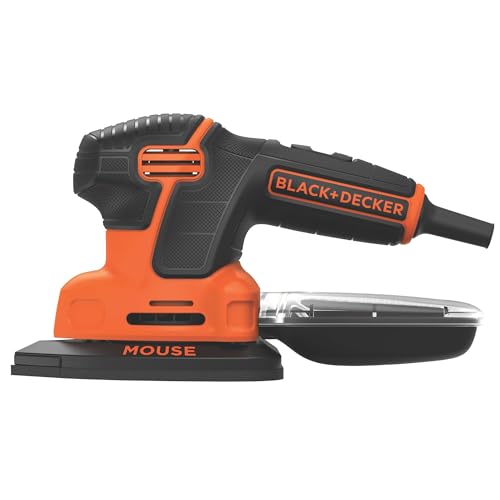
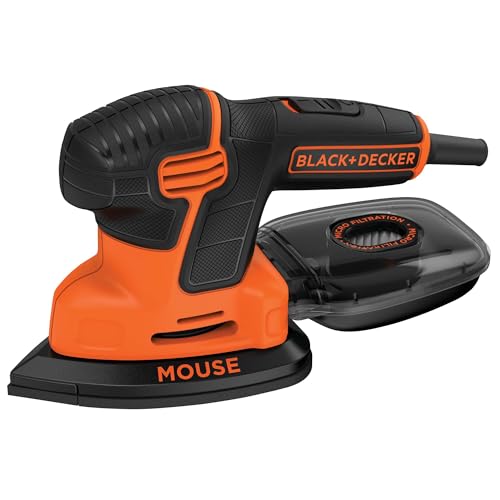
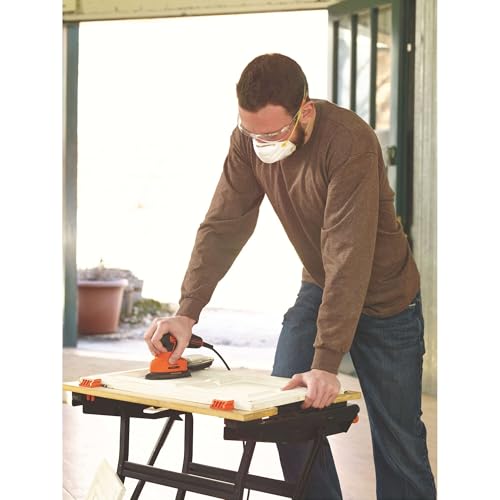
For anyone wrestling with tight corners or intricate trim work, the BLACK+DECKER BDEMS600 stands out as a nimble, no-nonsense tool built for detail. Its compact footprint and 3-position grip make it easy to maneuver in awkward angles, and owners consistently report it excels at tasks like window sash restoration or baseboard touch-ups. The 1.2 Amp motor delivers 16,000 OPM, which on paper suggests aggressive material removal, but in practice, it’s more about speed than torque, fine for light prep, not heavy stock reduction.
The dust collector is a real win here. While not as efficient as a vacuum hookup, it does a credible job of capturing debris, and the dust-sealed switch adds durability in gritty environments. It’s not going to replace a full-size sander, but for quick detail jobs where space is tight, it’s a solid performer.
Product photos
SKIL 4-in-1 Multi-Function Detail Sander
Strengths
- 4-in-1 functionality
- Tool-free attachments
- Good dust control
Trade-offs
- Attachments can feel flimsy
- Average finish quality
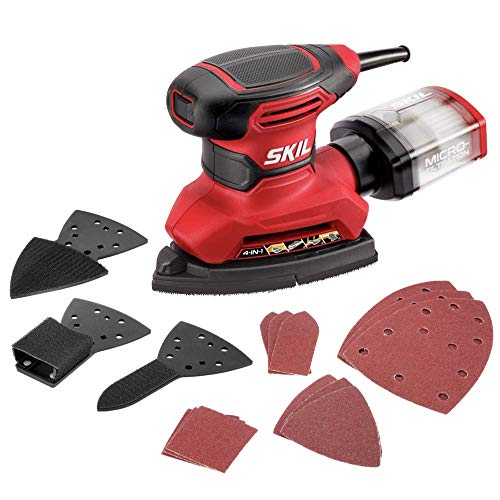
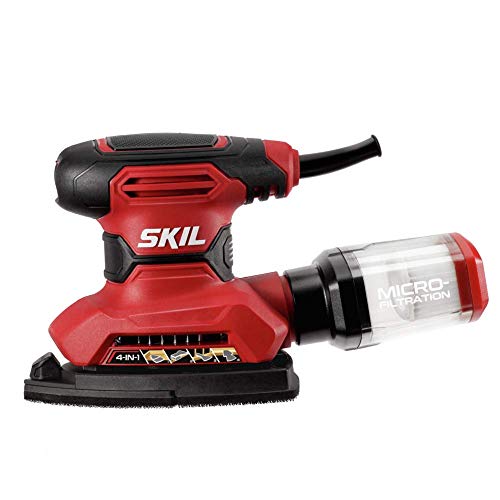
The SKIL SR232301 is built for versatility, it’s essentially four tools in one, with three attachments that let you tackle edges, corners, curves, and flat surfaces. The 1.2 Amp motor and 13,500 OPM are standard for this class, but the real advantage is the quick-change system that requires no tools. Owners appreciate how fast they can switch from a straight edge to a contoured tip, which speeds up complex jobs like stair balusters or cabinet interiors.
The micro-filter dust box works decently, and the 1-1/4″ port allows direct vacuum hookup. The soft grip and low-vibration design help reduce fatigue, though it’s not as refined as the DEWALT or Makita models. If you’re doing varied, detailed work, this is a smarter buy than the BLACK+DECKER, simply because of the flexibility.
Product photos


Makita 1/4 Sheet Finishing Sander

Strengths
- Ultra-smooth finish
- Low vibration
- Through-pad dust collection
Trade-offs
- No variable speed
- Higher price
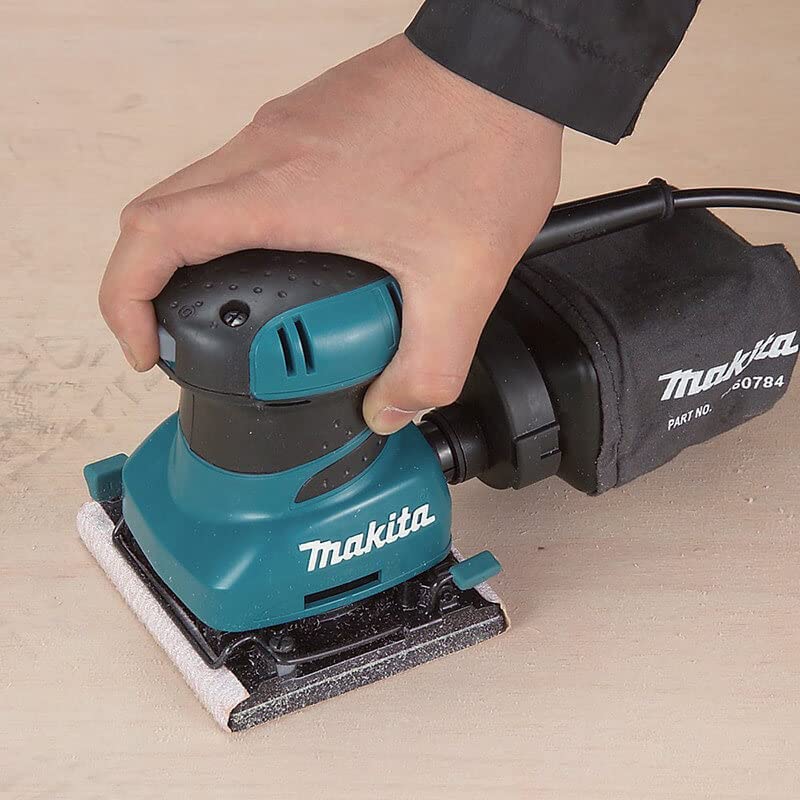
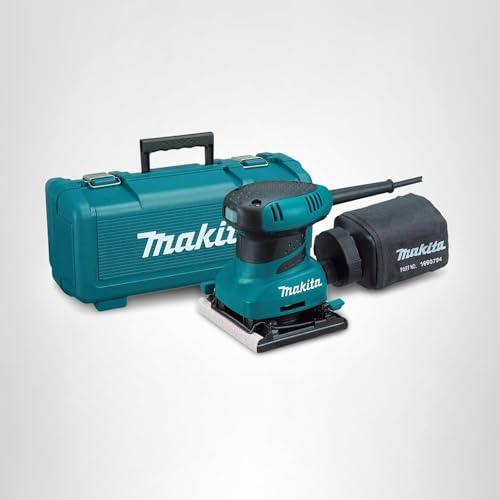
For the cleanest, smoothest finish you can get from a 1/4-sheet sander, the Makita BO4556K is the one to beat. Its 14,000 OPM and precision ball bearing construction deliver exceptionally low vibration, which translates to less user fatigue and fewer swirl marks. The contoured rubber grip feels natural in hand, and the large clamping lever makes paper changes fast, a small thing, but one that adds up over time.
The through-the-pad dust collection is superior to edge ports, pulling debris directly from the sanding surface. When paired with a shop vac, it keeps the work area remarkably clean. Compared to the DEWALT DWE6411, it’s less aggressive but far better for final passes on fine woodwork. It’s the sander I’d pick for a hardwood floor edge job or a guitar build.
Product photos

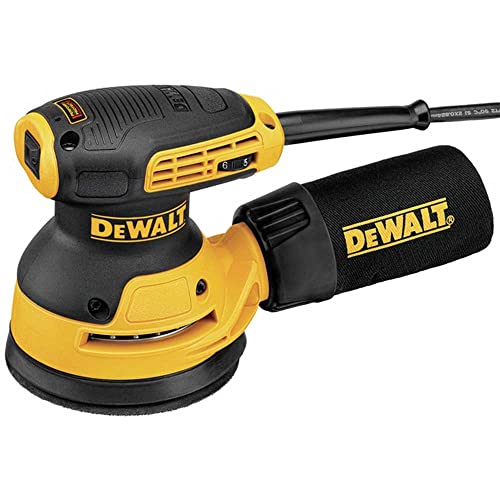
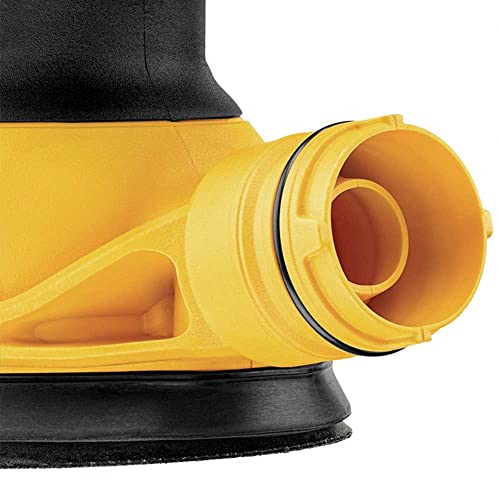
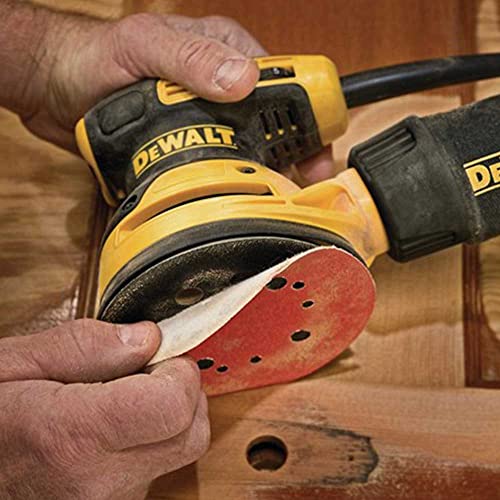
DEWALT 5-Inch Variable Speed Sander
Strengths
- Variable speed
- Low vibration
- Strong dust collection
Trade-offs
- Heavier than palm models
- Higher price point
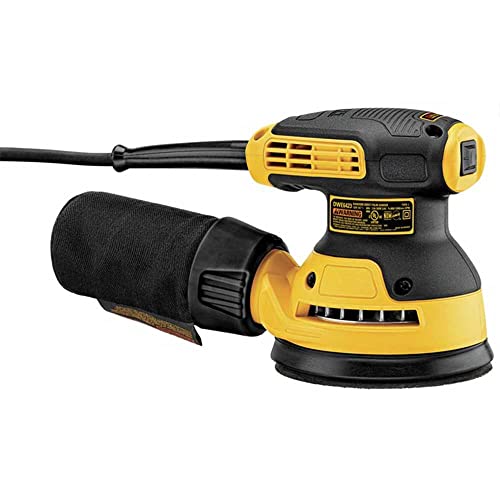
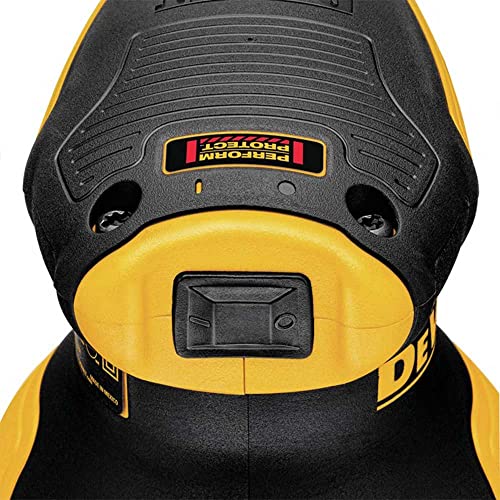
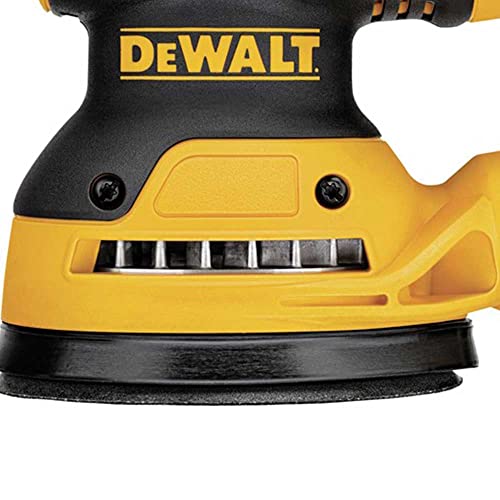
The DEWALT DWE6423 is the go-to when you need control across materials, wood, metal, or painted surfaces, and the 3-amp motor with 8,000–12,000 OPM variable speed gives you that flexibility. The speed dial is well-placed and easy to adjust mid-job, and the separate counterweight keeps vibration impressively low, even at max speed. It’s a full-size 5-inch sander, but the shorter height helps you stay in control on flat surfaces.
Owners consistently praise the dust collection bag, it’s one-handed and locks securely. The rubber overmold improves grip in sweaty or dusty conditions, and the switch protection is solid. While the SKIL SR211601 offers variable speed at a lower price, the DEWALT feels more refined, with better balance and durability.
Product photos
WEN 6301 Detailing Palm Sander
Strengths
- Extremely lightweight
- Affordable
- Easy paper change
Trade-offs
- No dust canister
- Weak motor
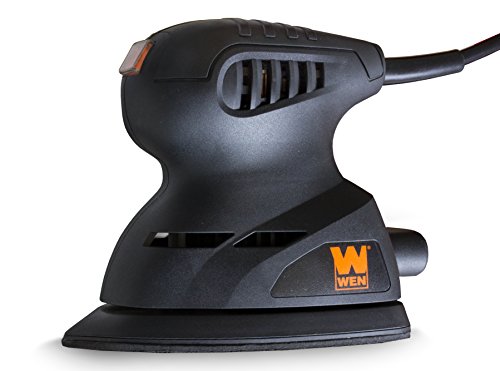
At just two pounds, the WEN 6301 is the lightest option here, and that’s its biggest selling point. It’s the kind of sander you can use one-handed for extended periods without fatigue, making it a favorite among hobbyists and weekend DIYers. The 13,500 OPM motor isn’t the strongest, but it’s adequate for light prep work, furniture touch-ups, or sanding inside cabinets. The angled pad helps with precision, and the Velcro base makes paper changes a breeze.
It lacks a full dust canister, relying only on a port for vacuum attachment, so if you’re not using a shop vac, expect more mess. Still, for the price and weight, it’s hard to beat for small jobs. It’s not a rival to the DEWALT or BOSCH models, but it’s a smart pick when you need something simple and light.
Product photos


How We Evaluated palm sanders
Rather than a hands-on lab test, my research for these recommendations focused on a detailed comparison of published specifications and features across numerous models. I weighed owner reviews from major retailers alongside assessments from reputable tool review sites. As someone who’s spent years around workshops and renovation projects, I applied my understanding of what truly matters in a palm sander to rank these options against clear performance criteria.
For palm sanders, the most important factors are motor power (measured in amps and OPM – orbits per minute) and dust collection. Higher amperage generally translates to more aggressive material removal, while OPM indicates sanding speed. Effective dust collection is critical for both visibility and a healthier work environment. Beyond those, ergonomic design and vibration reduction significantly impact user comfort during extended use.
Specifications reliably reveal a sander’s raw capabilities – motor size, pad dimensions, and dust port compatibility. However, I turned to owner feedback to gauge real-world performance, especially regarding vibration levels, long-term durability, and the effectiveness of dust collection systems. Reputation and brand consistency also played a role; some manufacturers consistently deliver quality tools, and that track record factored into my assessments. If you need something even smaller, check out our guide to the best compact sanders.
How To Choose The palm sanders
Picking the right palm sander can significantly improve your finishing work.
A good palm sander balances power with control. Look for a motor strong enough for your typical projects (2.0 Amps is a good starting point for general use), but prioritize features that minimize vibration and dust. Effective dust collection and comfortable ergonomics are key to longer, more enjoyable sanding sessions. Paper clamping should be secure and easy to use, and variable speed control offers versatility.
Motor Power and Speed
Don’t automatically assume more power is better. While a higher amperage motor will tackle tougher jobs faster, it can also make the sander more difficult to control, especially for detail work. For most homeowners tackling projects like furniture refinishing or prepping surfaces for paint, a motor in the 2.0 to 2.5 Amp range is sufficient. Speed (measured in OPM – orbits per minute) is also important. Variable speed control, as found on the DEWALT 5-Inch Variable Speed Sander, is a huge benefit; slower speeds are ideal for delicate surfaces, while higher speeds remove material quickly.
Dust Collection Systems
Dust is the enemy of a good finish, and more importantly, your lungs. Many sanders, like the BOSCH 5-Inch Random Orbital Sander, include a dust canister, but their effectiveness varies. Look for systems that clearly show the dust level and are easy to empty. More importantly, consider compatibility with a shop vac. A sealed connection is critical; a poorly fitted hose will defeat the purpose. You might also want to investigate top-rated detail sanders if dust control is a major concern.
Ergonomics and Features
Comfort matters, especially for larger projects. A well-designed palm sander will have a rubberized grip and a counterweight system to minimize vibration. The SKIL 5″ Random Orbital Sander, for example, emphasizes low vibration to reduce hand fatigue. Here’s what to consider:
- Weight: Lighter sanders (under 3 lbs) are easier to maneuver for extended periods.
- Shape: A contoured grip fits comfortably in your hand, reducing strain.
- Paper Changes: Hook-and-loop systems are far more convenient than clamp-based systems.
A sander is only as good as the sandpaper it uses. Invest in high-quality abrasive paper in a range of grits for optimal results.
Finally, consider the specific tasks you’ll be performing. If you need to reach into tight corners, a detail sander (or the attachments available with the SKIL 4-in-1 Multi-Function Detail Sander) is a better choice than a standard rectangular palm sander. If you’re looking for a tool that will help you achieve smooth finish sanders, pay attention to pad dampening systems.
Palm Sanders Compared
Here’s a comparison of key specifications for popular palm sanders to help you make an informed decision.
| Product Name | Motor (AMP) | OPM (Orbits Per Minute) | Sanding Pad Size (in) | Variable Speed | Dust Collection | Weight (lbs) |
|---|---|---|---|---|---|---|
| DEWALT 1/4 Sheet Palm Sander | 2.3 | 14,000 | 1/4 Sheet | No | Dust Port | N/A |
| BOSCH 5-Inch Random Orbital Sander | 2.5 | 7,500-12,000 | 5 | Yes | Vacuum/Canister | N/A |
| SKIL 5″ Random Orbital Sander | 2.8 | 13,000 | 5 | Yes | Container | N/A |
| BLACK+DECKER Detail Sander | 1.2 | 16,000 | N/A | No | Canister | N/A |
| SKIL 4-in-1 Multi-Function Detail Sander | 1.2 | 13,500 | N/A | Yes | Port/Microfilter | N/A |
| Makita 1/4 Sheet Finishing Sander | N/A | 14,000 | 1/4 Sheet | No | Dust Port | N/A |
| DEWALT 5-Inch Variable Speed Sander | 3 | 8,000-12,000 | 5 | Yes | Dust Port/Bag | N/A |
| WEN 6301 Detailing Palm Sander | 1 | 13,500 | 3.75 x 5.5 | No | Dust Port | 2 |
Frequently Asked Questions
What grit sandpaper should I start with?
Begin with a coarser grit, around 80-100, to remove material quickly. Then, progress to finer grits (120-220) for smoothing, and finish with very fine grits (220+) for a polished surface.
Are random orbital sanders better than palm sanders?
Random orbital sanders generally leave a smoother finish and are less likely to create swirl marks than traditional palm sanders. However, they can be slightly more expensive and require more practice to control effectively.
Can I use a palm sander on drywall?
Yes, you can use a palm sander on drywall, but use a very fine grit (120-180) and light pressure to avoid gouging the surface. Proper dust collection is especially important when sanding drywall.
What is the difference between variable speed and fixed speed?
Variable speed allows you to adjust the sanding speed (OPM) to suit the material and task. Lower speeds are better for delicate surfaces and prevent overheating, while higher speeds remove material faster. If you’re looking for [detail hand sanders] (https://powertoolguide.net/best-hand-sanders/), a variable speed setting becomes even more valuable.
How do I prevent swirl marks when sanding?
Using a random orbital sander is the best way to minimize swirl marks. If using a palm sander, consistently change the direction of your sanding strokes and avoid applying excessive pressure. Investing in quality sandpaper and looking at our guide to the best orbital hand sanders can also help.
The Bottom Line
Choosing a palm sander often comes down to balancing outright power with ease of use. While a more powerful motor can speed up larger jobs, features like vibration reduction and effective dust collection are crucial for comfort and quality. For most users, the DEWALT 5-Inch Variable Speed Sander strikes this balance best – offering ample power, variable speed, and solid dust port connectivity for a consistently smooth finish.
If you’re on a tighter budget or need a sander for light-duty tasks, the BLACK+DECKER Detail Sander is a great choice. For those who value versatility and tackling detail work, the SKIL 4-in-1 Multi-Function Detail Sander offers multiple sanding configurations and good control. And if you’re looking for other compact options, be sure to explore our guide to ergonomic palm tools.
Ultimately, the specifications matter less than how well the sander fits your hand and how effectively it manages dust. Prioritize a comfortable grip, a system for minimizing vibration, and a way to connect to a shop vac. A well-chosen sander, and the right sandpaper, will make all the difference in the final result.
