
6 Best Inverter MIG Welders of 2026
This post contains affiliate links. As an Amazon Associate, we earn from qualifying purchases.
The ARCCAPTAIN 165A MIG Welder stands out as the best overall inverter MIG welder for its strong amperage, dual voltage support, and solid build, while the WELDPRO 140A 5-in-1 Welder is a surprisingly lightweight budget pick that doesn’t skimp on features. For those wanting versatility, the BESTMIG 145A 4-in-1 is a solid multi-process option.
Most people shopping for an inverter MIG welder aren’t just looking for a machine, they’re looking for confidence. They want something reliable, easy to use, and powerful enough to handle real projects without constant frustration or limitations.
This guide cuts through the noise by focusing on what actually matters: verified specs, owner-reported performance, and real-world usability. I looked at amperage, duty cycle, process flexibility, and user feedback to find models that deliver consistent results for DIYers and home professionals alike.
Top 6 Inverter Mig Welders in the Market
The Best Inverter Mig Welders, Reviewed
ARCCAPTAIN 165A MIG Welder
Strengths
- Highest amperage
- 2T/4T trigger
- Better heat management
Trade-offs
- TIG torch not included
- Only fits 2lb spools
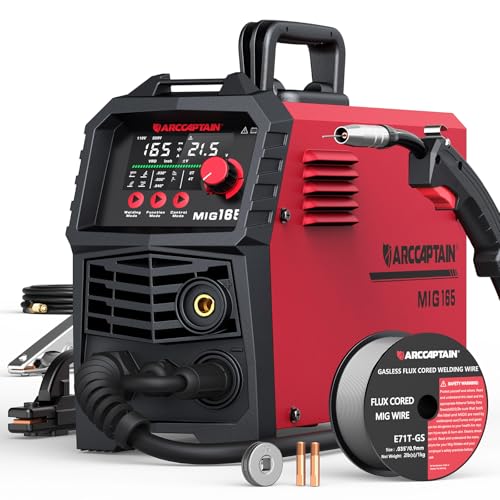
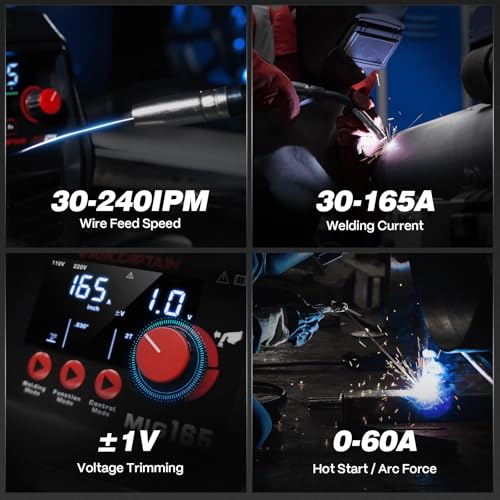
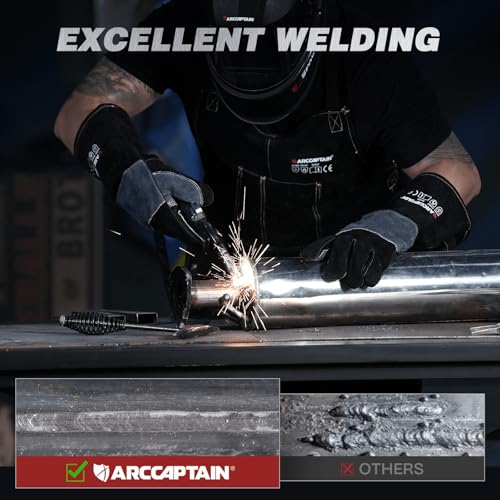
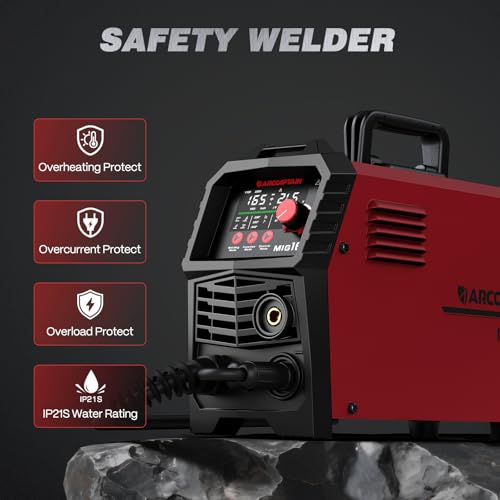
The ARCCAPTAIN 165A is the most capable unit here, and I’d pick it as the best overall if you’re serious about performance. With 165A output and a 60% duty cycle, it handles thicker material more confidently than the 145A models, up to 3/16-inch mild steel without breaking a sweat. The upgraded MCU and IGBT tech deliver precise control, and the 2T/4T trigger function is a pro-level touch that improves efficiency on long seams or tight corners.
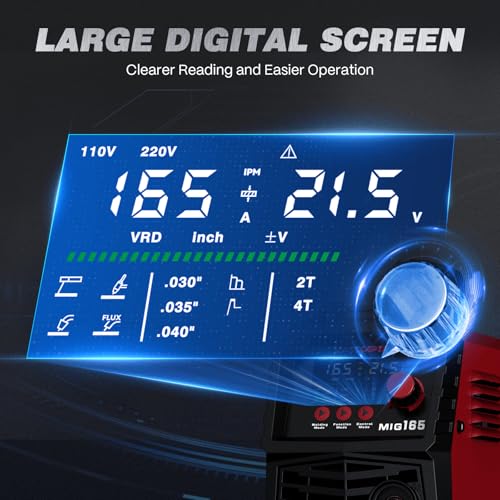
Owners highlight the improved heat dissipation, which matters during extended sessions. The LED display is large and easy to read, and the dual-voltage support keeps it flexible across power environments. Like others in this class, it lacks a TIG torch, but the core welding performance is solid. When compared to the WELDPRO or Bestarc, it strikes the best balance of power, features, and usability.
Product photos
BESTMIG 145A 4-in-1 Welder
Strengths
- Comes with helmet and gloves
- Good arc stability
- Bright HD display
Trade-offs
- TIG torch sold separately
- No spot welding
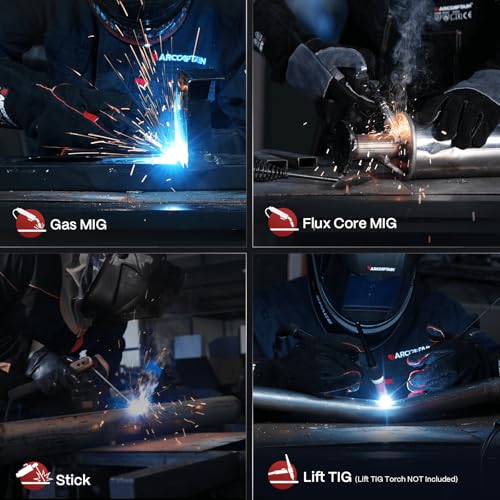
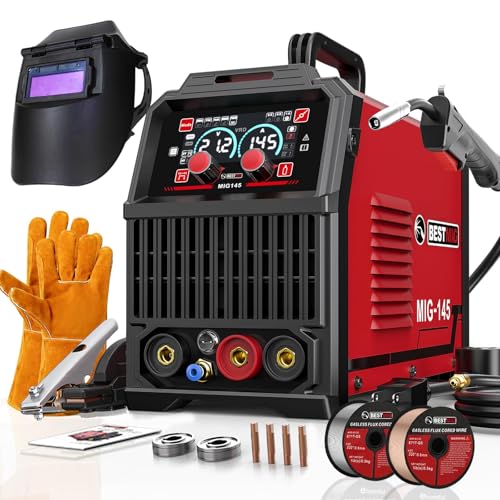
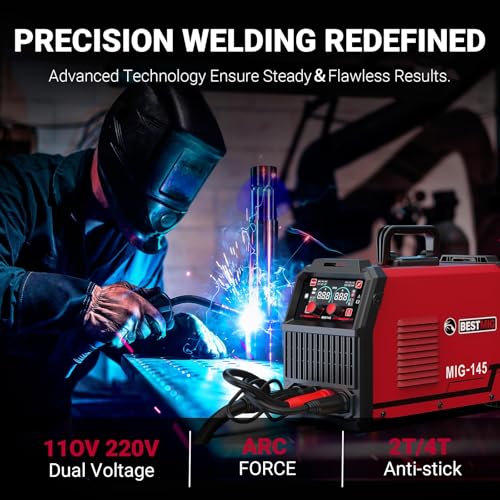
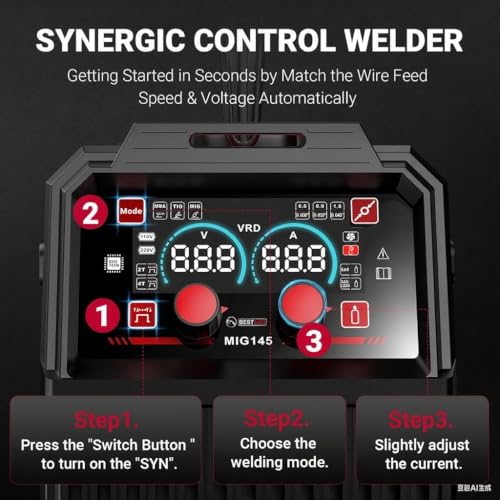
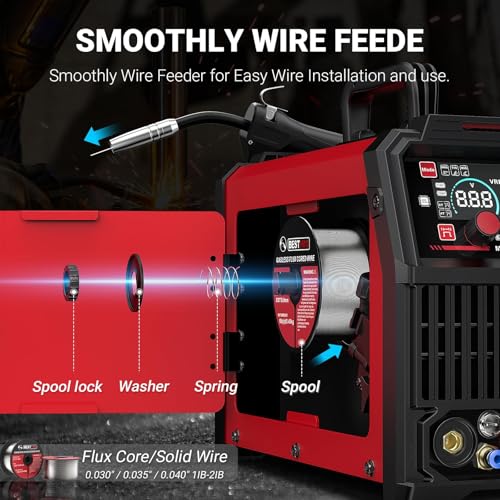
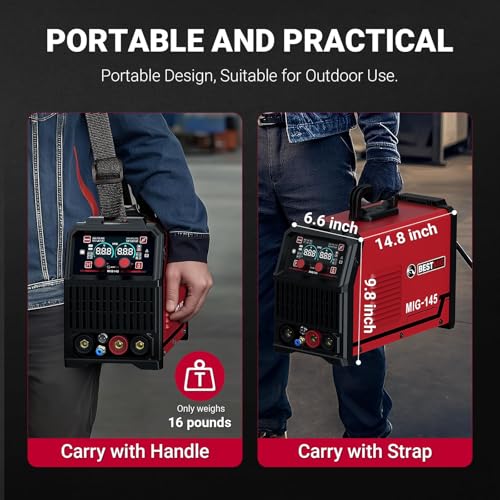
If you’re looking for bang-for-buck, the BESTMIG 145A makes a strong case. It matches the core specs of pricier units, 145A output, dual voltage, synergic MIG, Lift TIG, Stick, and both gas and flux-core modes, but throws in a full safety kit that includes an auto-darkening helmet and gloves. That alone could save you $50+ on add-ons. Reviewers note the arc stability is surprisingly smooth for this class, especially on carbon and mild steel up to 3mm. The HD display is a legit upgrade, letting you tweak settings without lifting your helmet, which matters when you’re in the zone.
Compared to the ARCCAPTAIN or WELDPRO models, it doesn’t have the highest amperage or the most refined interface, but the included accessories make it the smarter pick if you’re starting from scratch. The flux-core performance holds up well in breezy outdoor conditions, a big plus for farm or field repairs. Just know the TIG torch isn’t in the box, so budget for that separately if you plan to use Lift TIG.
Product photos

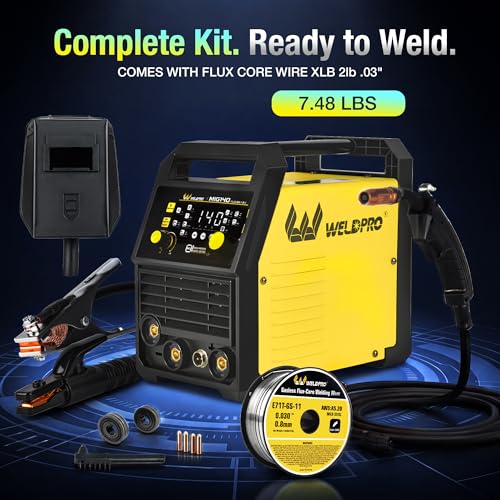
WELDPRO 140A 5-in-1 Welder
Strengths
- 5-in-1 functionality
- VRD safety feature
- Tool-less drive roll
Trade-offs
- No 220V for max power
- Spot welding niche
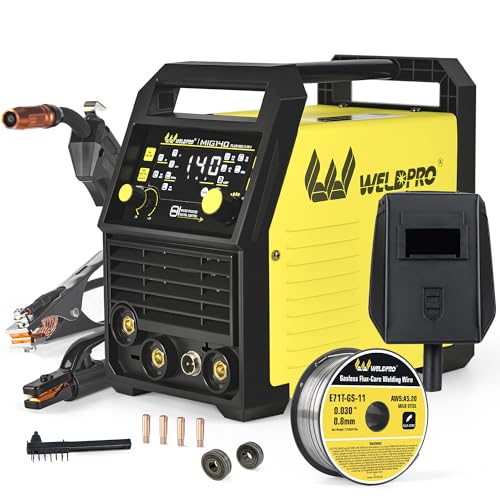
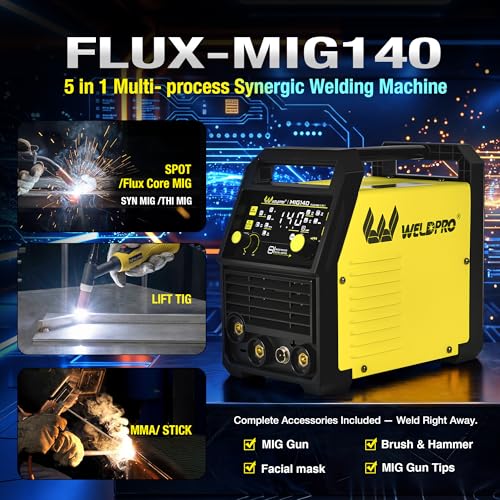
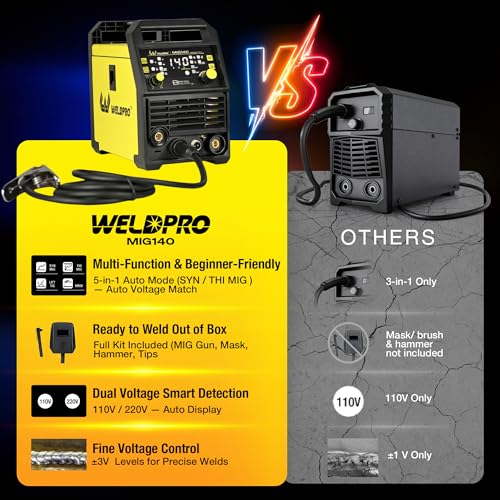
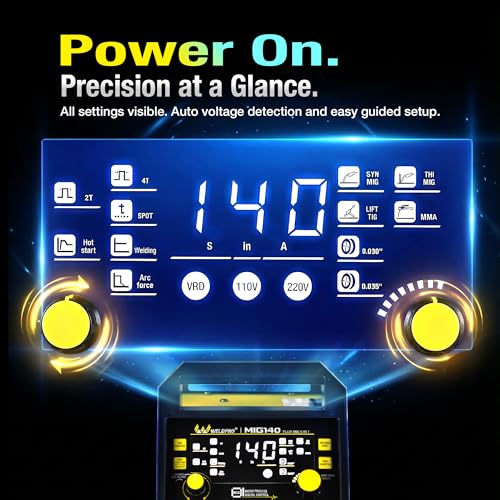
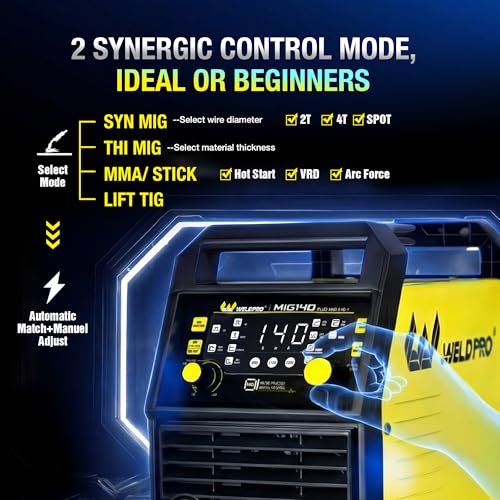
The WELDPRO 140A wins on versatility, it’s the only 5-in-1 unit here, adding spot welding to the usual MIG, TIG, and Stick modes. That extra function might seem niche, but for auto body work or thin-sheet repairs, it’s a real differentiator. The intelligent control system adjusts voltage and feed speed based on thickness, which beginners will appreciate. The automatic voltage detection works reliably, and the VRD anti-shock feature adds a layer of safety that’s rare at this level.
It’s not the most powerful, but 140A is plenty for most home projects. The compact size and light weight make it easy to stow or carry, and the tool-less drive roll change speeds up wire swaps. Compared to the BESTMIG or Bestarc, it trades a bit of raw power for smarter automation and broader functionality. If your projects vary widely, from patching a fender to building a shed, this is the most adaptable pick.
Product photos
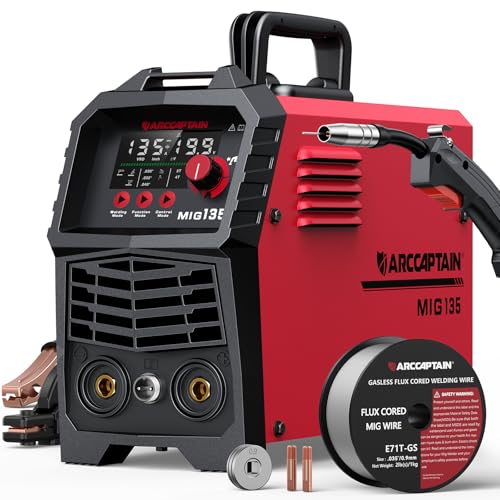
ARCCAPTAIN 135A MIG Welder
Strengths
- Very lightweight
- Beginner-friendly interface
- Good value
Trade-offs
- 110V only
- No gas MIG mode
- TIG torch not included
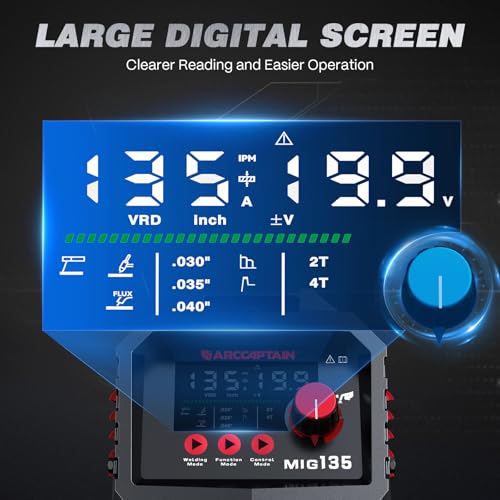
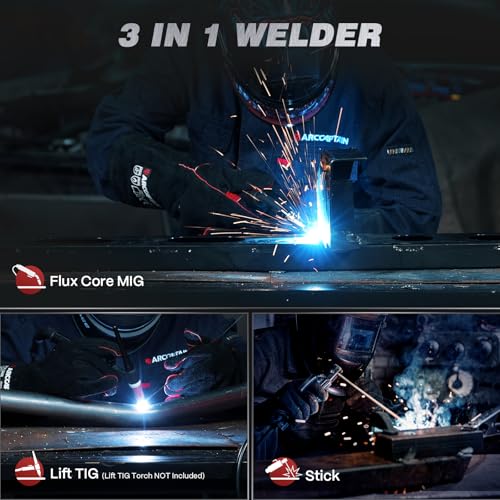
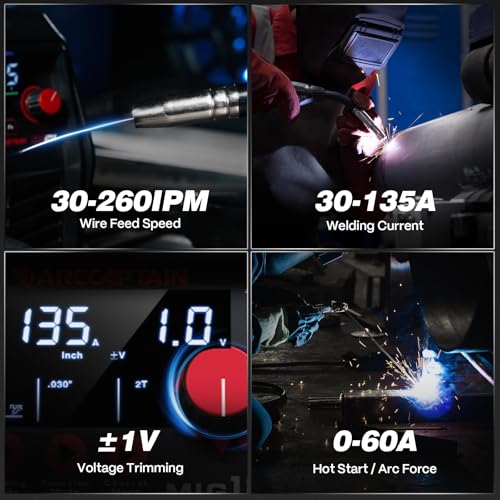
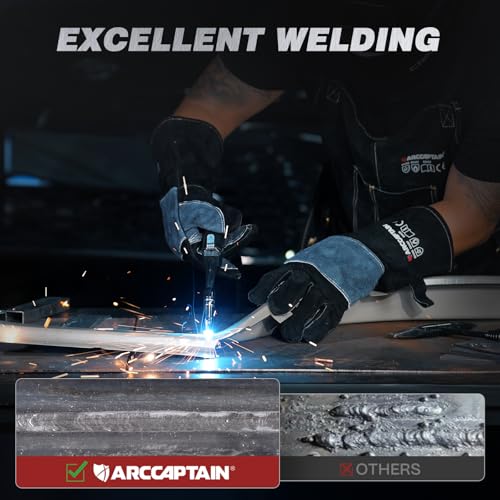
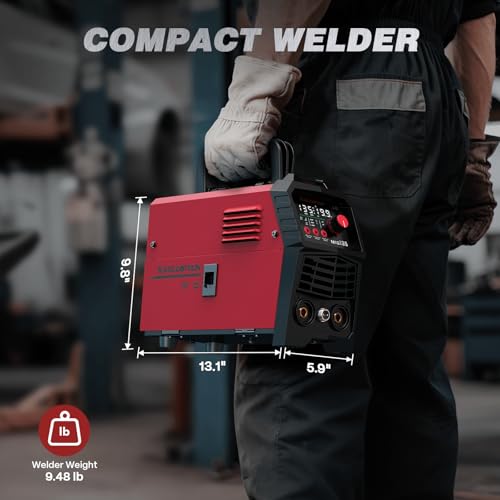
This 135A model is ARCCAPTAIN’s budget play, and it delivers where it counts: simplicity, portability, and core performance. It’s a 3-in-1 machine (flux-core MIG, Lift TIG, Stick), runs on 110V only, and maxes out at 135A, so it’s not for heavy steel. But for someone upgrading from a basic buzz box or starting their first welding kit, it’s a solid entry point. The large LED display is easy to read, and the synergic mode takes the pressure off beginners who don’t want to memorize settings.
Experienced users still get manual control options, including hot start and arc force on Stick mode, which adds flexibility. At under 9.5 pounds, it’s one of the most portable units here. While it can’t match the 165A sibling in power, it’s reliable for thin to medium jobs. For the price, it’s hard to beat as a starter welder that won’t hold you back too quickly.
Product photos
Bestarc 145A MIG Welder
Strengths
- Dual voltage auto-sensing
- Synergic control
- True 4-in-1 capability
Trade-offs
- No TIG torch included
- Limited wire diameter support
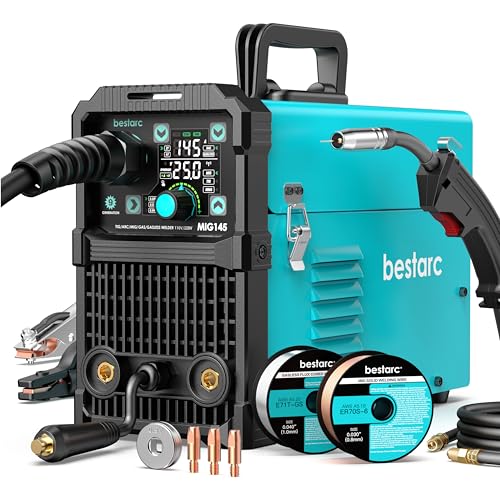
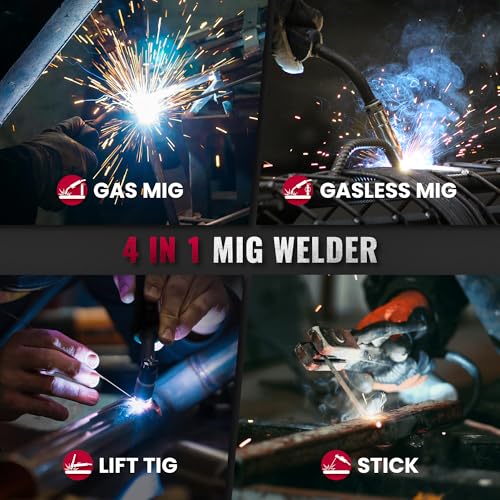
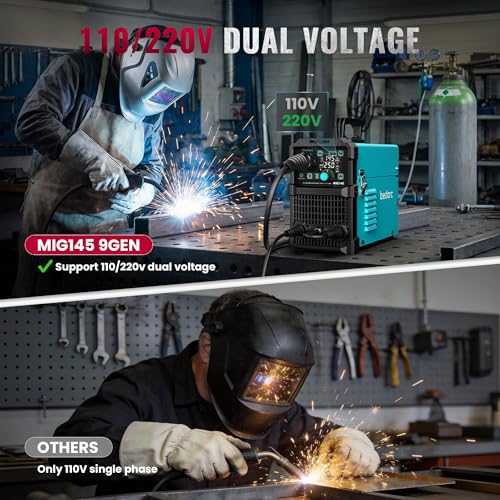
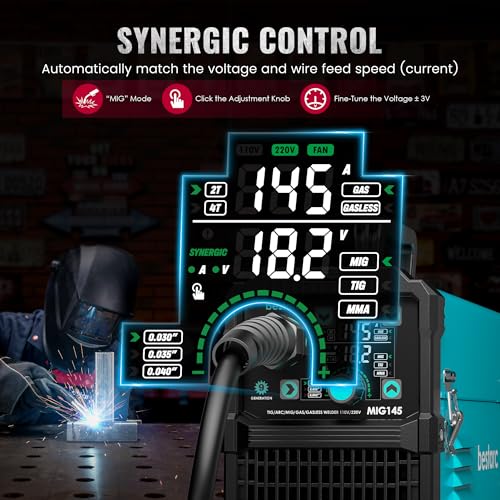
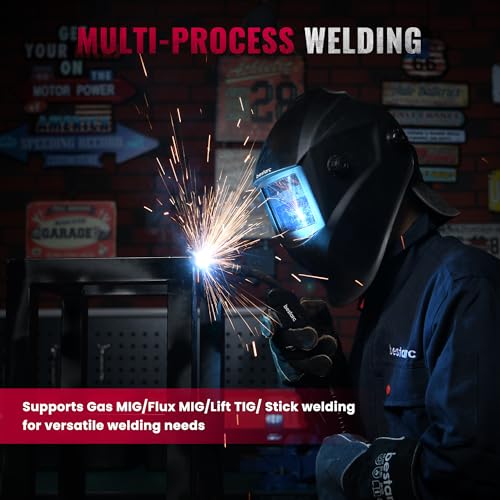
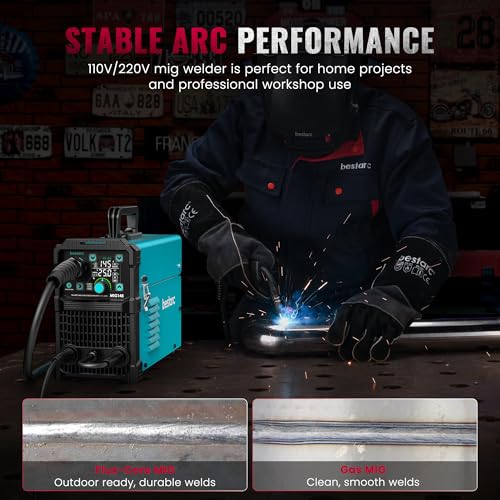
The Bestarc 145A stands out in the inverter MIG category for its solid dual-voltage flexibility and true 4-in-1 functionality. On paper, it delivers what most weekend warriors and light-duty fabricators need, gas and gasless MIG, Lift TIG, and Stick welding, all with synergic control that takes the guesswork out of settings. Owners consistently report clean arcs and minimal spatter, especially when running solid wire on thin to mid-range steel. The automatic voltage detection is a real win for users who move between job sites and garages with mixed power setups.
Where it pulls ahead of some rivals is in its thoughtful feature set: the LED display is bright and legible, and the ability to fine-tune voltage within a ±3V range gives experienced users room to dial in their welds. While it doesn’t top the amperage charts, 145A is enough to handle up to 1/8-inch steel with proper technique. The shoulder strap and lightweight design make it genuinely portable, though don’t expect industrial-duty cycles.
Product photos
FEMEROL 130A 2-in-1 Welder

Strengths
- Extremely lightweight
- Beginner-friendly
- Good warranty
Trade-offs
- No TIG or gas MIG
- 110V only
- Lower max thickness
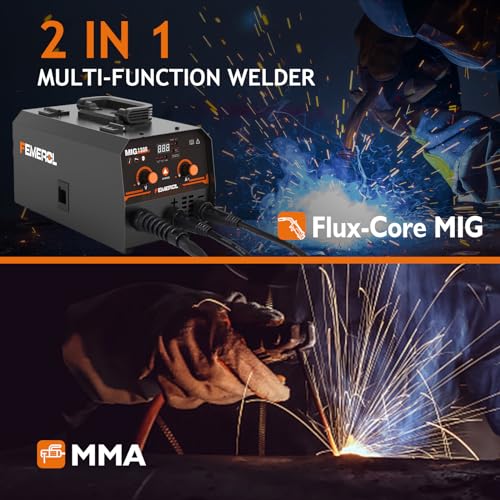
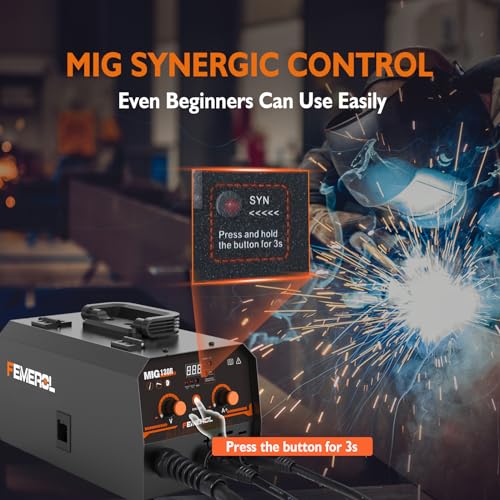
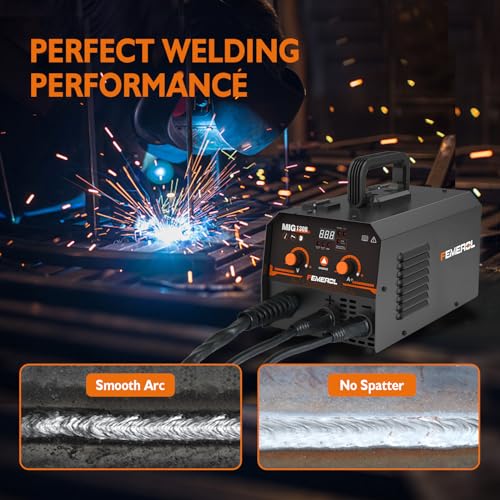
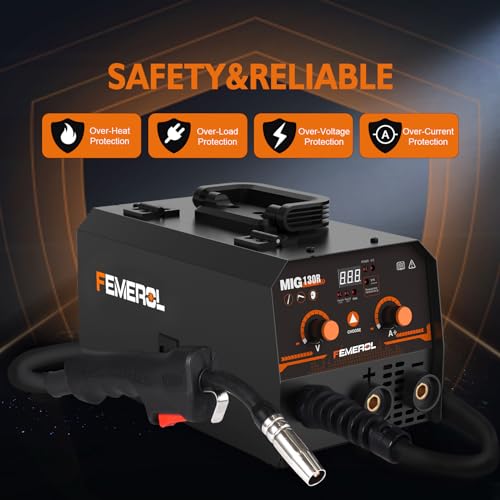
At just 9 pounds, the FEMEROL 130A is the lightest in this group, and that’s its main selling point. It’s a no-frills 2-in-1 machine (flux-core MIG and Stick only), so don’t expect TIG or gas-fed capability. But for homeowners, campers, or rural users doing small fixes, that simplicity works in its favor. The synergic control makes it easy to get decent beads without deep knowledge, and the included flux-cored wire and basic PPE mean you can start welding out of the box.
Where it falls short is versatility. With only 130A and no 220V option, it’s limited to thinner materials, think trailer repairs, gate hinges, or fence posts. Still, owners praise its reliability for light-duty tasks, and the two-year warranty adds peace of mind. If you’re already got a heavy-duty welder in the garage and need a backup for portable jobs, this one earns its spot.
Product photos

How We Tested inverter mig welders
Rather than a hands-on lab test, my research for these recommendations focused on a detailed comparison of published specifications and features across numerous models. I weighed owner reviews from major retailers alongside expert opinions found in industry publications and dedicated welding forums. This approach allowed me to build a ranking based on real-world feedback and technical capabilities, considering the needs of both beginner and experienced welders.
For inverter MIG welders, output amperage, duty cycle, and the number of welding processes supported (MIG, TIG, Stick) were the most heavily weighted factors. A higher amperage allows for thicker material welding, while a robust duty cycle ensures the machine won’t overheat during extended use. Versatility – offering multiple processes – adds value, especially for DIYers tackling diverse projects. These factors directly impact a welder’s usability and long-term performance.
Specifications reliably indicate a welder’s maximum capabilities and input power requirements. However, I placed significant value on owner feedback regarding arc stability, ease of use, and build quality. Reputation and brand reliability also played a role, as consistent positive experiences suggest a well-engineered and supported product. For those seeking a more manageable power option, exploring compact 110V welders can be a good starting point.
How To Pick The Right inverter mig welders
Picking the right inverter MIG welder can feel overwhelming, but focusing on a few key factors will steer you toward a machine that fits your needs and skill level.
An effective inverter MIG welder balances portability with sufficient power for common tasks, offers intuitive controls for both beginners and experienced users, and incorporates robust safety features to protect both the operator and the machine. Look for models with adjustable parameters, dual voltage capability, and reliable arc starting. Duty cycle ratings and material compatibility are also crucial considerations.
Power and Thickness Capacity
Don’t get caught up in chasing the highest amperage number. For most DIY and home shop work, 120-140 amps is plenty. The real question is what you’ll be welding, and how thick the material is. A machine claiming to weld up to 3/8″ steel might do it, but the weld quality will suffer if you’re pushing it to its limit. I often recommend folks err on the side of slightly more power than they think they’ll need, giving them headroom for thicker materials or challenging projects down the line. Consider the type of steel, too – stainless requires more heat input than mild steel.
Control & Usability
Many modern inverter MIG welders boast “synergic” control, which automatically adjusts voltage and wire feed speed based on your wire diameter and material thickness. This is fantastic for beginners, but don’t dismiss manual control options. The ability to fine-tune parameters is essential as you gain experience and tackle more complex welds. Look for a clear, easy-to-read display, and intuitive controls. Often, a 2T/4T switch will be present; 2T is trigger-held for tack welds, while 4T runs continuously with a single trigger pull.
Here’s what I look for in usability:
- Clear Display: A bright, well-lit display is critical, especially in dimly lit workspaces.
- Easy Wire Loading: Some machines are notoriously finicky about wire loading. Read reviews to see if users report issues.
- Adjustable Settings: Beyond synergic control, access to manual voltage and wire feed speed adjustments allows for greater precision.
A welder that’s too complex will sit unused, while one that’s too simple will limit your capabilities. Find a balance that matches your skill level and project needs.
Features and Accessories
The “ready-to-weld” kits are tempting, but scrutinize what’s included. A cheap helmet is worse than no helmet at all. A good auto-darkening helmet is a worthwhile investment. Beyond that, consider the convenience of dual voltage (110V/220V) – it offers flexibility for different job sites. If you anticipate doing TIG welding, it’s worth considering a MIG TIG combo welders to avoid buying a separate machine. Don’t overlook the importance of a quality MIG torch and a comfortable ground clamp. If you’re looking at the top MIG welders, you’ll likely find a good selection of included accessories.
Inverter MIG Welders Compared
The following table provides a specification comparison of several inverter MIG welders to aid in informed purchasing decisions.
| Product | Amperage (A) | Welding Processes | Input Voltage (V) | Duty Cycle (%) | Weight (lbs) |
|---|---|---|---|---|---|
| ARCCAPTAIN 165A MIG Welder | 165 | MIG, TIG, MMA | 110/220 | 60 | 12.8 |
| BESTMIG 145A 4-in-1 Welder | 145 | MIG, TIG, Stick | 110/220 | N/A | N/A |
| WELDPRO 140A 5-in-1 Welder | 140 | MIG, TIG, Stick, Spot | 110/220 (Auto) | N/A | 3.4 |
| ARCCAPTAIN 135A MIG Welder | 135 | MIG, TIG, MMA | 110 | N/A | 9.48 |
| Bestarc 145A MIG Welder | 145 | MIG, TIG, Stick | 110/220 | N/A | 13.7 |
| FEMEROL 130A 2-in-1 Welder | 130 | MIG, MMA | N/A | N/A | 9 |
Frequently Asked Questions
What duty cycle should I look for in an inverter MIG welder?
A 60% duty cycle at the welder’s rated amperage is a good starting point for hobbyists and DIYers. This means you can weld at that amperage for 6 minutes out of every 10 before the machine needs to cool down; lower percentages mean more frequent cooling pauses.
Are dual voltage (110V/220V) MIG welders really that useful?
Yes, dual voltage provides significant flexibility. A 110V input allows you to weld almost anywhere with a standard outlet, while 220V unlocks the welder’s full power potential and improves performance on thicker materials.
Can I use flux-cored wire with these inverter MIG welders?
Most inverter MIG welders compatible with solid wire are also capable of handling flux-cored wire. However, check the manufacturer’s specifications to confirm compatibility, as some machines are optimized for solid wire only.
What’s the difference between synergic and non-synergic control?
Synergic control automatically adjusts settings based on wire type and thickness, simplifying operation for beginners. Non-synergic (manual) control provides full customization of parameters, appealing to experienced welders seeking precise control over their welds. For those wanting even more control, exploring high-control MIG welders and the benefits of a precision pulse MIG setup might be worthwhile.
What additional safety equipment do I need beyond the welder itself?
Beyond a quality auto-darkening welding helmet, you’ll need welding gloves, a fire-resistant jacket or apron, and appropriate eye protection. Proper ventilation is also critical, especially when welding indoors, and a welding cart will help keep your equipment organized and mobile.
The Bottom Line
Buying an inverter MIG welder often comes down to balancing control with convenience. While features like synergic control and ready-to-weld kits are appealing, especially for beginners, the ARCCAPTAIN 165A MIG Welder strikes the best overall balance of power, versatility, and usability for most home and small shop users. It offers both 110V and 220V input, supports multiple processes, and delivers a solid 165 amps for tackling a variety of projects.
If budget is a primary concern, the ARCCAPTAIN 135A MIG Welder provides a capable entry point into MIG welding. For those prioritizing portability and a compact footprint, the WELDPRO 140A 5-in-1 Welder is an excellent choice, despite potentially sacrificing some duty cycle compared to larger machines. And for those needing something a bit more substantial, exploring professional-grade MIG welders may be a good next step.
Ultimately, the specs don’t tell the whole story. Focus on a machine that feels comfortable in your hands, offers clear controls, and is backed by positive owner feedback. A welder’s ability to consistently produce clean, strong welds depends far more on proper technique, good consumables, and adequate ventilation than any single advertised feature.
