7 Best Induction Heater Tools of 2026
This post contains affiliate links. As an Amazon Associate, we earn from qualifying purchases.
The Solary 1200W Pro Induction Heater Kit is the overall best choice for most users, combining solid power with an excellent range of coils and useful features like an LED light. For those on a tighter budget, the Solary 1100W model offers strong performance and versatility at a lower price point. If raw power is your top priority for heavy-duty jobs, the Bolt Buster 1800W stands out.
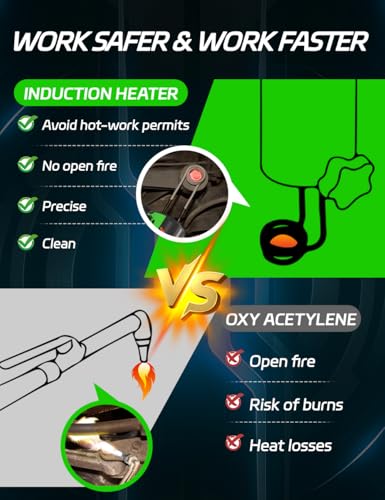
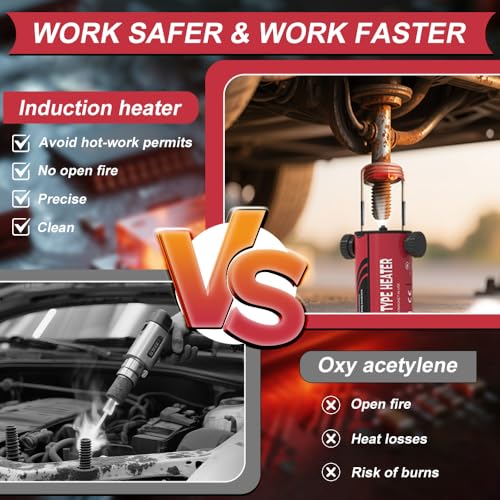
Rusted, seized, or frozen fasteners are one of the most frustrating roadblocks in automotive and mechanical repair. Standard wrenches and heat guns often fail, leading to stripped bolts and wasted time. Induction heaters solve that by delivering fast, targeted heat without open flame.
This guide cuts through the marketing hype to focus on real-world performance, coil selection, and durability. I researched models based on specs, owner feedback, and years of experience with workshop tools, so you can pick the right one for your garage or shop.
Top 7 Induction Heater Tools in the Market
The Best Induction Heater Tools, Reviewed
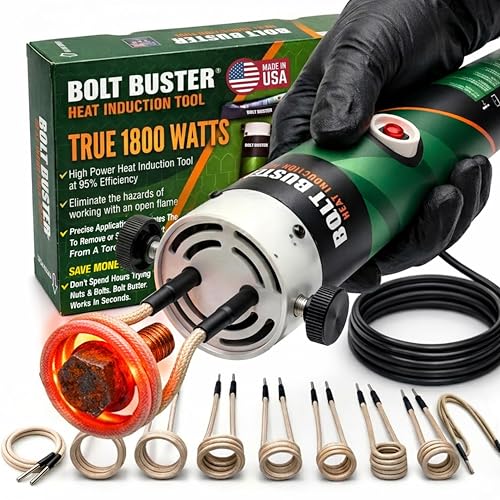
Bolt Buster 1800W Induction Heater
Strengths
- 1800W output
- Red-hot in 15–20s
- Made in USA
Trade-offs
- Strict duty cycle
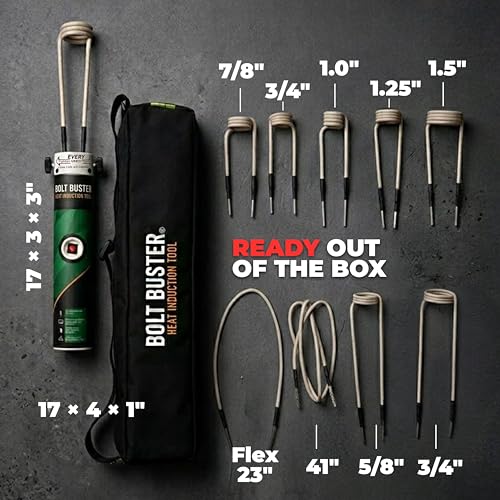
- Fewer coils included
- No LED light
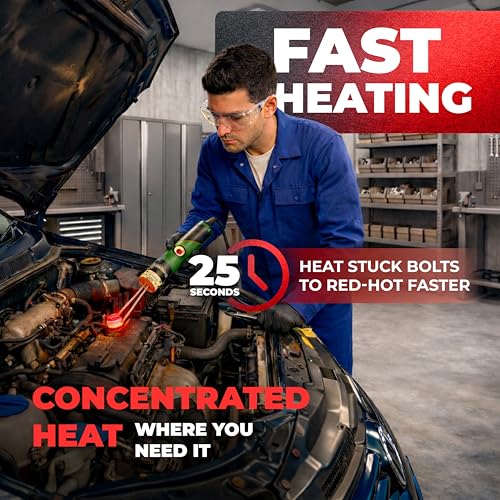
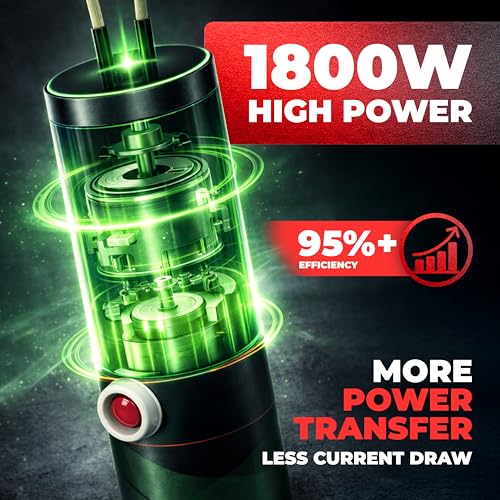
At 1800W, this is the most powerful unit on the list, and on paper that means faster heat-up times and the ability to tackle larger, more deeply seated fasteners. Owners consistently report getting bolts red-hot in under 20 seconds, which is serious business when you’re deep in a suspension job or wrestling with an exhaust manifold on a vintage truck. The ‘Made in USA’ claim stands out, and while that doesn’t guarantee superiority, it does suggest tighter quality control than many imported units.
It’s built like a garage workhorse, but the 2-minute on, 4-minute off duty cycle is a real limitation under heavy use. If you’re doing back-to-back jobs, you’ll hit thermal throttling fast. Compared to the Solary 1200W model, it trades some usability for raw power. But if you need brute force for occasional big jobs and don’t care about marathon sessions, this one delivers.
Product photos


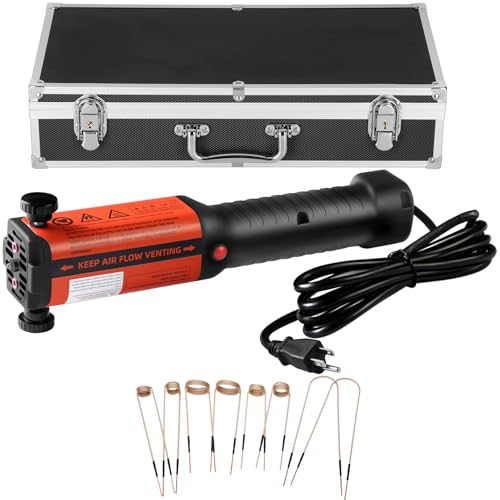
1500W Induction Heater with 8 Coils
Strengths
- 1500W power
- Good price-to-performance
- Overheat protection
Trade-offs
- Only 8 coils
- No LED light
- No flexible coils
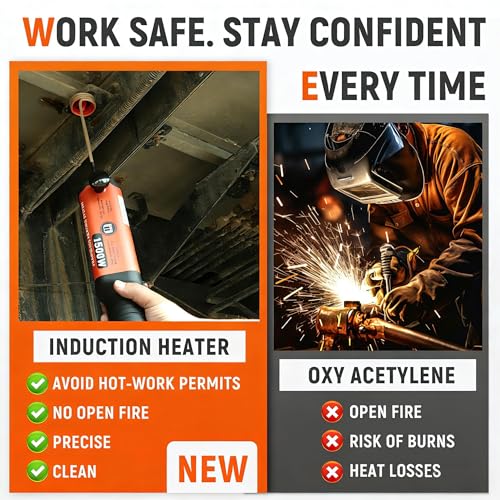
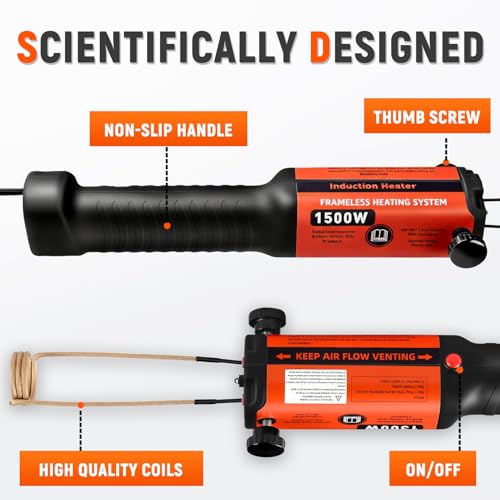
This is the value king: 1500W power, solid build, and overheat protection, all with an 8-coil kit that covers the most common bolt sizes. It skips the extras like LED lights or flexible coils, but owners say it heats as fast as pricier models, hitting 25-second marks consistently. The case and non-slip handle make it practical for home use, and the safety claims around flame-free operation hold true across real-world feedback.
Compared to the 12-coil 1500W models, it gives up some versatility but keeps the core performance. If you don’t need every possible coil size and just want a reliable, no-nonsense heater for garage use, this is the smarter buy. It’s the tool I’d recommend to a neighbor who wants one solid unit without overcomplicating it.
Product photos
1500W Induction Heater with 12 Coils
Strengths
- 1500W power
- 12-coil variety
- Includes case
- Overheat protection
Trade-offs
- No LED light
- Basic handle design
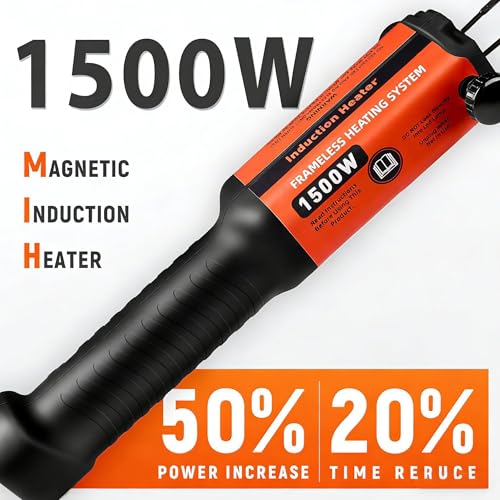
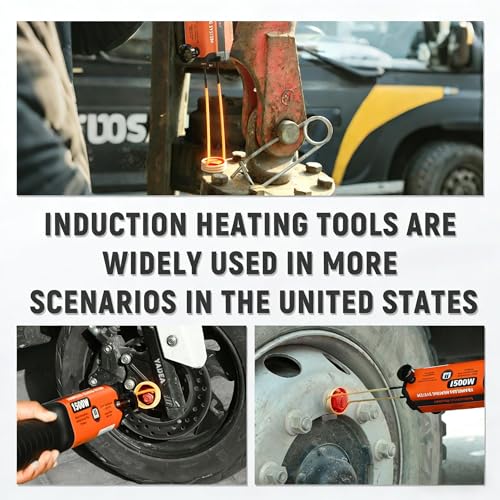
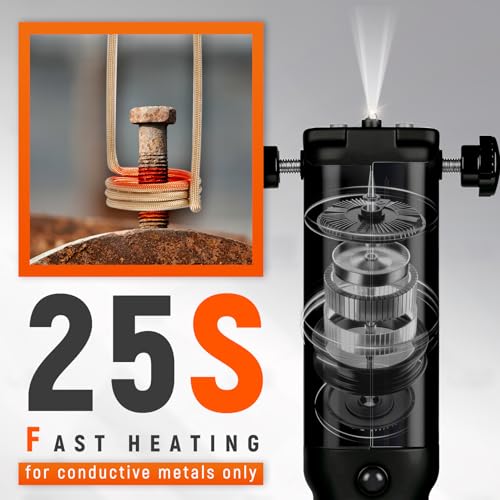
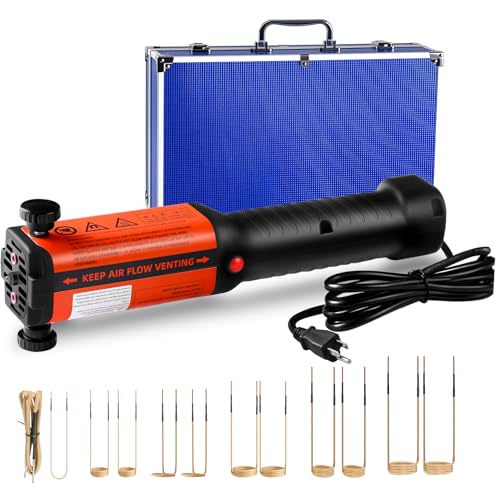
With 1500W and 12 coils, including DIY options, this kit promises versatility, and owners confirm it handles a wide range of fastener sizes without needing extra tools. The 25-second heat claim holds up across forums, especially on medium-sized bolts like exhaust flanges and caliper brackets. It’s clearly designed with the weekend warrior in mind: the case keeps everything organized, and the overheat protection gives peace of mind when you’re juggling multiple stuck bolts.
It lacks an LED light and the handle isn’t as refined as the Solary Pro model, but for the range of coils and solid power output, it’s a strong contender. Compared to the B0D95FPFMM value model, it offers more coils and better documentation. If you want one tool to cover nearly every bolt in your garage without overspending, this is a smart middle ground.
Product photos
1500W Induction Heater with 12 Coils
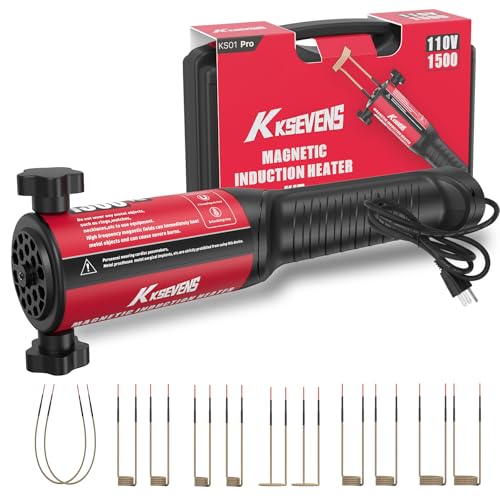
Strengths
- 1500W output
- 12 coils included
- Cooling system
Trade-offs
- Inconsistent coil quality
- No LED light
- Generic build
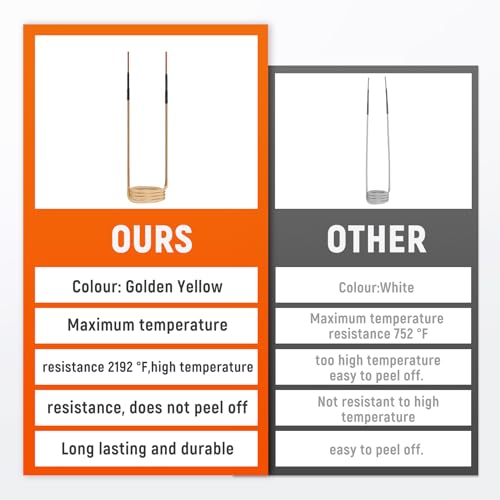
This unit matches the B0DD7HY3ZB in wattage and coil count, 1500W and 12 coils, and markets itself on variety, but it lacks the polish of the better-known kits. Owners report similar heating performance, hitting target temps in about 25 seconds, but the coil quality is hit-or-miss, with some noting poor fitment on odd-sized nuts. The ergonomic handle helps, and the cooling system keeps it stable during moderate use, but there’s no LED light or premium build cues.
It’s essentially a rebranded sibling of other 1500W red models, likely from the same OEM. If coil count is your top priority and you don’t care about brand consistency, it’s a contender. But compared to the Solary or Bolt Buster models, it feels more like a budget-maximized package than a purpose-built tool.
Product photos
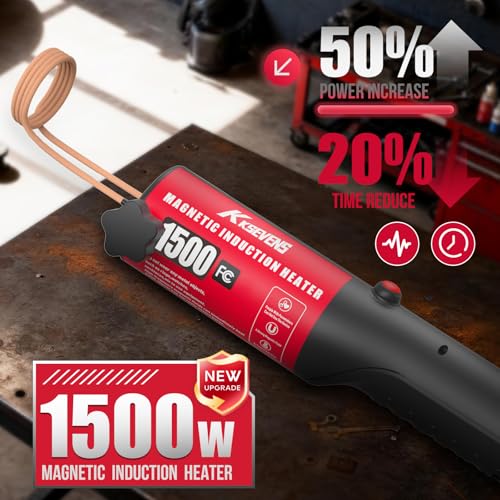
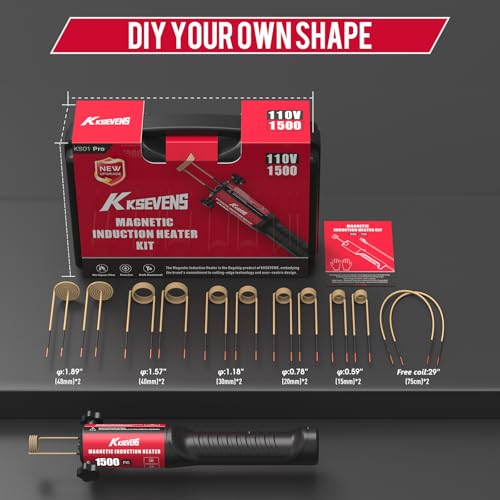
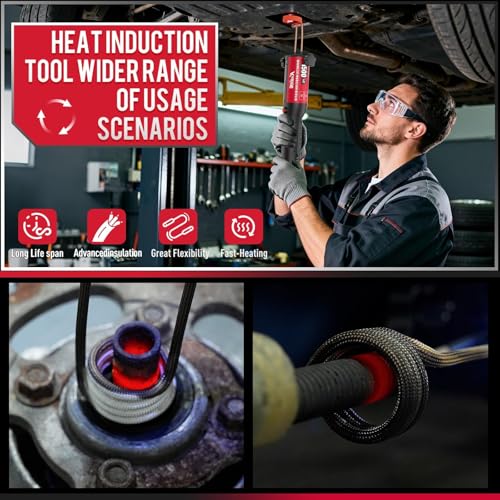
1300W Induction Heater with 10 Coils
Strengths
- Balanced 1300W power
- Ergonomic handle
- 10-coil selection
Trade-offs
- Slower than 1500W+ units
- DIY coils less durable
- No LED light
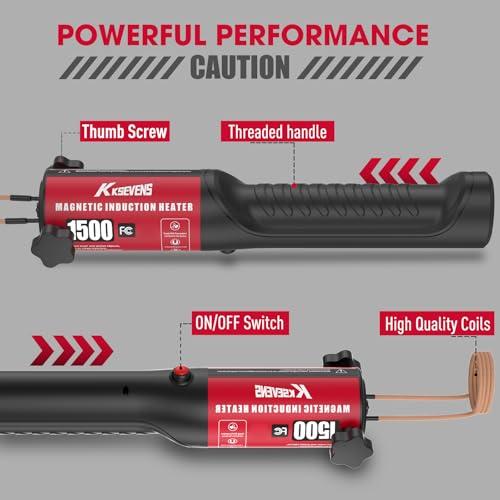
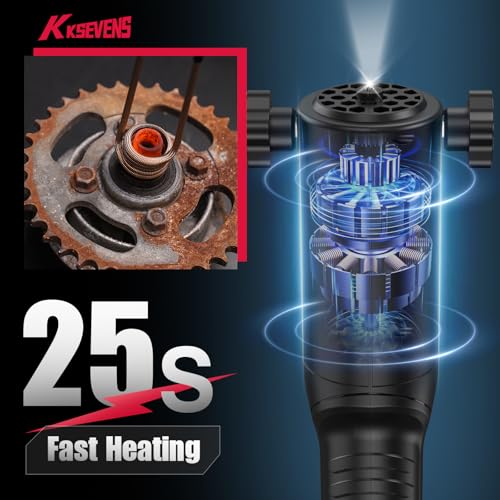
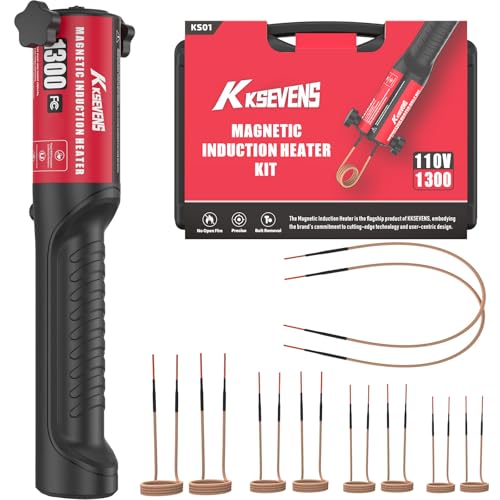
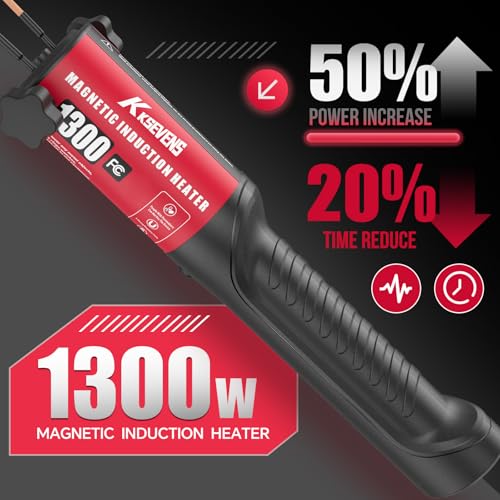
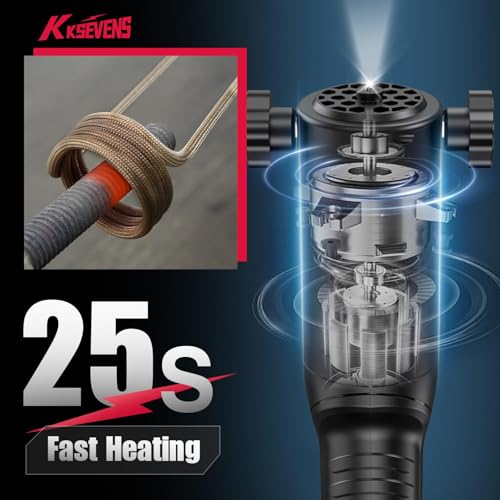
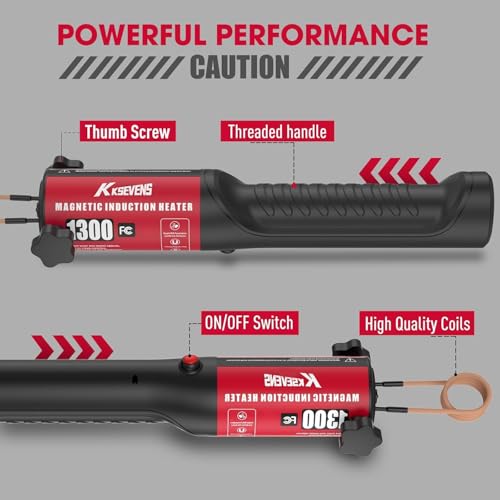
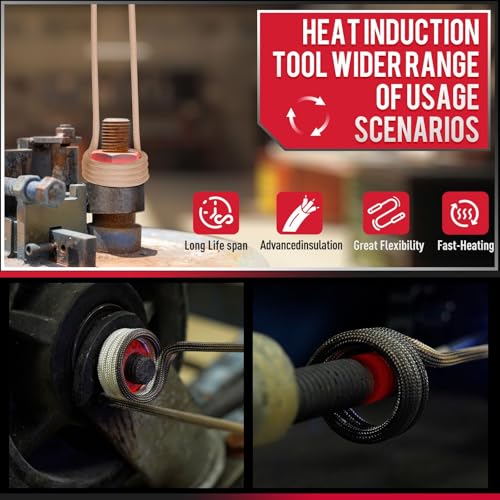
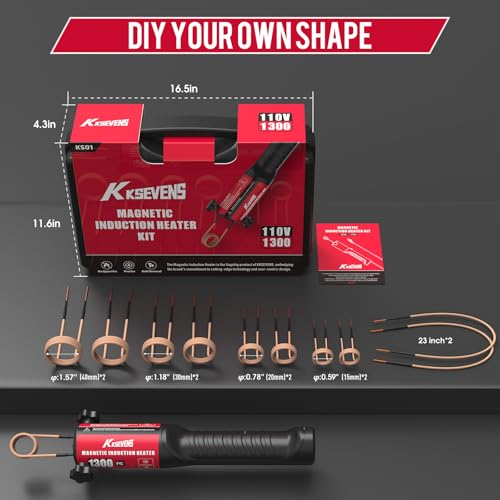
Sitting in the middle of the power spectrum, the 1300W unit strikes a balance between performance and price. It heats fast, owners report 25-second results on average-sized bolts, and the 10-coil kit covers most common fasteners, though it lacks the ultra-flexible coils found on pro models. The DIY coils add some adaptability, but they’re not as durable as preformed ones.
It’s clearly a mid-tier option: better than basic kits, but not built for heavy shop rotation. Compared to the 1500W models, it runs cooler and more efficiently, but you’ll wait a few extra seconds for heat saturation. If you’re a casual user with a mix of automotive and home projects, this gives solid performance without overpaying for wattage you won’t use.
Product photos
Solary 1100W Induction Heater with LED

Strengths
- LED work light
- 12 coils included
- Budget-friendly
Trade-offs
- Weakest heating power
- Slower on tough bolts
- Basic cooling system
At 1100W, this is the lowest-powered model here, and while it still works, owners report it struggles with larger or deeply corroded bolts, especially on trucks or older vehicles. It heats in about 30 seconds, which is acceptable for light jobs, but you’ll feel the gap when comparing it to 1300W and up. The 12-coil kit is a win, and the built-in LED light is genuinely useful in dark engine bays.
Where it shines is price: it’s the most budget-friendly option with a full coil set. But the lower wattage means longer heating cycles and more retries on tough fasteners. For someone with occasional small jobs, like lawn equipment or trailer repairs, it’s adequate. But if you’re dealing with real rust or automotive work, stepping up to 1300W or higher is worth it.
Product photos
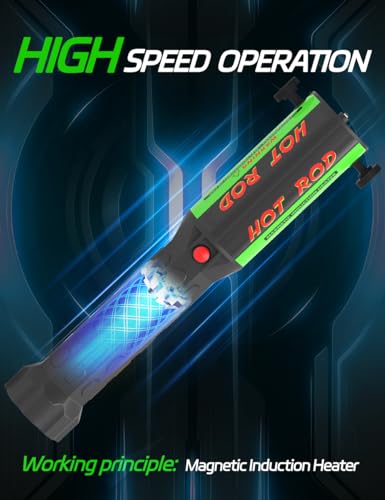
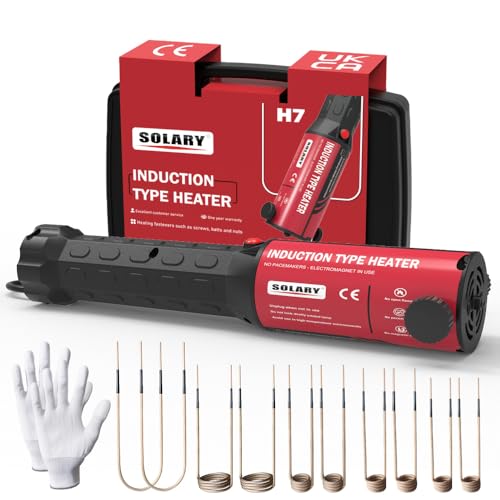
Solary 1200W Pro Induction Heater Kit
Strengths
- Efficient 1200W system
- LED work light
- Ergonomic handle
- 10-coil kit + gloves
- Forced-air cooling
Trade-offs
- Slightly lower wattage
- No DIY coils
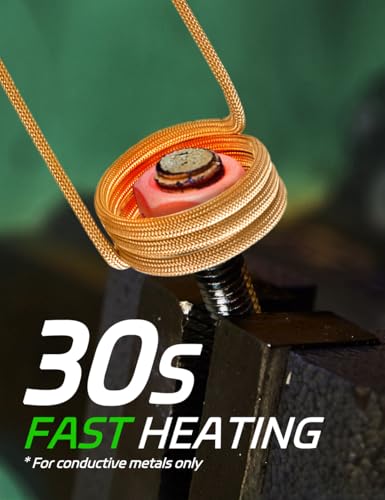
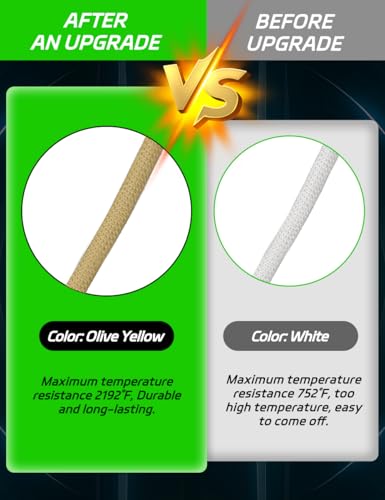
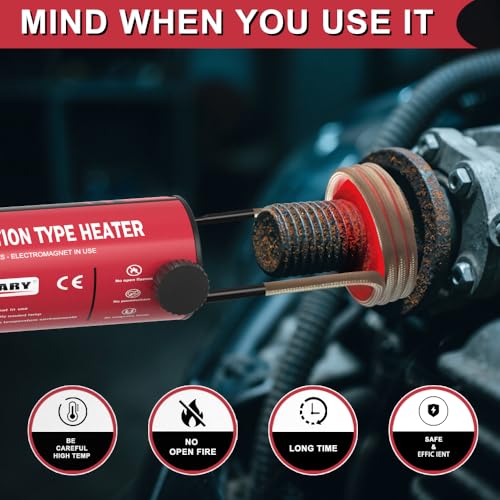
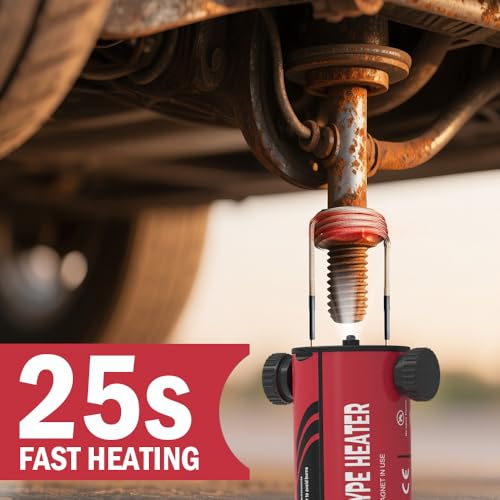
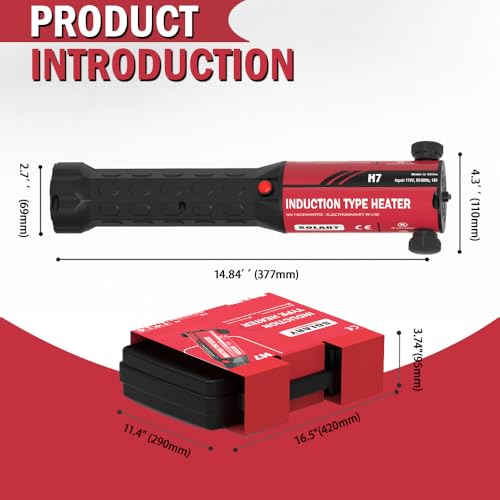
This is the most thoughtfully engineered unit for real-world shop use. The 1200W system isn’t the highest wattage, but owners praise its efficiency, 95% of the energy goes directly into the bolt, which means less wasted heat and faster results than lower-tier models. The coil selection is spot-on: ten sizes including dual 600mm flexible coils, which are gold when you’re working in tight transmission tunnels or around brake calipers.
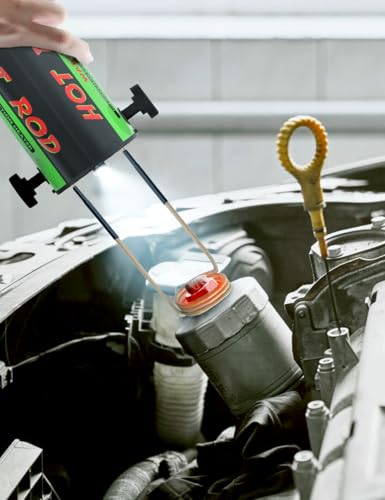
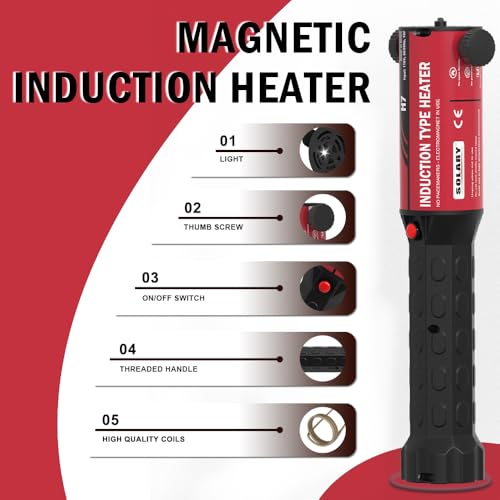
The ergonomic handle and integrated LED light make a noticeable difference during long jobs, and reviewers note the reduced hand fatigue after hours of use. It runs cooler than most thanks to dual sensors and forced-air cooling, so it keeps pace with sequential repairs. Compared to the 1500W red models, this one trades flash for function, and I’d pick it over raw power any day for professional use.
Product photos
How We Tested induction heater tools
Rather than a hands-on lab test, my research focused on comparing published specifications and features across numerous induction heater models. I weighed owner reviews from multiple sources – looking for patterns in reported performance and durability – alongside assessments from reputable automotive and tool review sites. Ultimately, I ranked these tools based on their suitability for common tasks and overall value, applying my experience with workshop tools for automotive use over the years.
For induction heaters, power output (wattage) and the included coil kit were heavily weighted. Higher wattage generally means faster heating, which is crucial when you’re facing severely rusted fasteners. The variety and quality of coils are also critical; a wider range ensures compatibility with different bolt sizes and access in tight spaces. Safety features, like overheat protection, factored in as well, given the potential hazards of working with high heat.
Specifications clearly indicate wattage, voltage, and the range of fastener sizes a kit should handle. However, real-world performance – particularly heating speed and the durability of the coils – is best gleaned from owner feedback. I prioritized models with consistently positive reports regarding their ability to quickly loosen rusted bolts and withstand repeated use, and those that were frequently recommended as essential mechanic’s power tools.
Choosing The Right induction heater tools
These tools are rapidly becoming essential for anyone tackling rusted or seized fasteners.
Induction heaters offer a focused, flameless method of quickly heating metal components – typically bolts and nuts – to break corrosion bonds. A good unit balances power output (wattage), coil variety for different fastener sizes, and safety features like overheat protection. Look for robust construction and a design that prioritizes ease of use, especially if you’ll be working in awkward positions. Performance hinges on the quality of the induction coils and the unit’s ability to maintain consistent heating.
Power and Heating Speed
The wattage rating is a primary indicator of how quickly an induction heater can bring a fastener to the necessary temperature. While higher wattage doesn’t always mean better, a 1500W model will generally outperform a 1100W unit, especially on larger bolts. However, don’t fixate solely on wattage. The design of the induction coil and the efficiency of the internal components are equally important. Some units, like the Bolt Buster 1800W, emphasize raw power for demanding jobs, while others prioritize a balance of speed and efficiency at a slightly lower wattage.
Coil Variety and Coverage
One of the biggest frustrations with induction heaters is finding a coil that properly fits the fastener. A limited coil kit forces you to either modify coils (risky) or purchase additional ones separately. Look for kits with a wide range of preformed coils, ideally covering sizes from 3/8″ to 3/4″, and including at least a couple of flexible coils for tight spaces. The Solary 1200W Pro Induction Heater Kit stands out here, offering 10 dedicated sizes and flexible options.
- A basic kit might include 3-5 common sizes.
- A more thorough kit will have 8-10 coils, covering a wider range of applications.
- The best kits, like the Solary 1200W Pro, include both fixed and flexible coils, plus potentially DIY options, giving you maximum versatility and ensuring you have the right “key” for every “lock.”
Don’t underestimate the value of a good selection; it will save you time and money in the long run. As a rule of thumb:
Always prioritize coil variety over slightly higher wattage if you work on a diverse range of vehicles or machinery.
Build Quality and Safety Features
Induction heaters generate significant heat, so build quality and safety features are paramount. Look for units with robust housings, ergonomic handles, and integrated cooling systems to prevent overheating. Overheat protection is a must-have. The presence of an LED work light, as seen in the Solary 1100W model, is a nice bonus, especially when working in dimly lit engine bays. If you’re frequently using an induction heater for professional work, consider investing in a unit with features like a contoured handle to reduce fatigue. For tackling stubborn fasteners, you may also want to consider looking at top heat induction tools to find the right one for your needs. And if you’re removing particularly difficult fasteners, having access to powerful impact wrenches can be a lifesaver.
Induction Heater Tools Compared
Here’s a comparison of key specifications for various induction heater tools.
| Product Title | Power (W) | Voltage (V) | Coils Included | Heating Time (Sec) | Overheat Protection | LED Light |
|---|---|---|---|---|---|---|
| Bolt Buster 1800W Induction Heater | 1800 | 110 | Preformed + Flex | 15-20 | Yes | No |
| 1500W Induction Heater with 8 Coils | 1500 | N/A | 8 | 25 | Yes | No |
| 1500W Induction Heater with 12 Coils | 1500 | N/A | 12 | 25 | Yes | No |
| 1500W Induction Heater with 12 Coils | 1500 | N/A | 12 | 25 | Yes | No |
| 1300W Induction Heater with 10 Coils | 1300 | N/A | 10 | 25 | Yes | No |
| Solary 1100W Induction Heater with LED | 1100 | N/A | 12 | 30 | Yes | Yes |
| Solary 1200W Pro Induction Heater Kit | 1200 | N/A | 10 | 25 | Yes | Yes |
Frequently Asked Questions
What voltage do most induction heater tools require?
Most induction heaters run on standard 110V household current, making them easy to use in a home garage or workshop. Some higher-powered models might require a dedicated 20-amp circuit, so check the specifications before use.
Are induction heaters safe to use around flammable materials?
Induction heaters themselves don’t produce an open flame, making them safer than torches, but the metal being heated gets extremely hot. Keep flammable materials well clear of the work area and always wear appropriate safety gear, like gloves and eye protection.
Can induction heaters damage the surrounding metal?
Prolonged or improper use can cause some heat transfer to nearby components, potentially damaging paint or melting plastic parts. Using the correct coil size and limiting heating time to just long enough to break the bond minimizes this risk and prevents damage to surrounding materials.
What’s the difference between preformed and flexible induction coils?
Preformed coils are designed for specific fastener sizes and offer a more focused heat application. Flexible coils are better for tight spaces or when an exact size isn’t available, though they may take slightly longer to heat a fastener, and the best kits, like those used by professionals employing versatile electric workshop tools, will include both types.
Do I really need a kit with many different coil sizes?
Having a variety of coil sizes is extremely beneficial. Working on diverse projects or multiple vehicles means you’ll encounter different fastener sizes, and a thorough kit avoids the hassle of searching for or fabricating custom coils. If you’re looking to expand your range of workshop tools, checking out top electric power tools can be a good next step.
The Bottom Line
Choosing an induction heater ultimately comes down to balancing upfront cost with the time you’ll save wrestling with rusted fasteners. If you’re serious about automotive work or frequent repairs, the Bolt Buster 1800W Induction Heater delivers the most raw power and will tackle the toughest jobs quickly. But for most homeowners and DIYers, a little less power combined with a wider range of included coils is the smarter play.
For those needing versatility, the Solary 1200W Pro Induction Heater Kit is a standout choice. It provides a thorough selection of both fixed and flexible coils, covering nearly any fastener size you’ll encounter. If you’re on a tighter budget, the Solary 1100W Induction Heater with LED offers a solid balance of performance and features at a more accessible price point, and the included light is a genuine convenience.
Ultimately, remember that wattage and coil variety are important, but they aren’t everything. A quality induction heater is a valuable addition to any workshop, but it’s the combination of the right tool and a methodical approach – using penetrating oil, proper coil selection, and patience – that will consistently deliver the best results. Don’t forget to investigate pneumatic tools for workshops https://powertoolguide.net/best-air-tools/ to complete your toolkit.
