
8 Best Home Air Cleaners of 2026
This post contains affiliate links. As an Amazon Associate, we earn from qualifying purchases.
The Blueair Pure 211i Max Smart stands out as the best overall home air cleaner for large spaces, combining strong performance with smart features. For budget-conscious buyers, the MOOKA Air Purifier delivers solid coverage and quiet operation at a lower price. If you want versatility and advanced filtration, the ECOSELF HAP603 offers excellent customization with True HEPA and multiple filter options.
Most people buy air cleaners because they’re tired of stuffy air, allergens, or persistent odors, only to find their unit is too loud, underpowered, or expensive to maintain. After comparing the field and analyzing owner feedback, I focused on models that consistently deliver clean air without headaches.
This guide breaks down the key factors like filtration, coverage, and noise, so you can pick a unit that actually fits your home and lifestyle.
Top 8 Home Air Cleaners in the Market
The Best Home Air Cleaners, Reviewed
Blueair Pure 211i Max Smart
Strengths
- Massive room coverage
- Smart app control
- HEPASilent filtration
Trade-offs
- Expensive filters
- High initial cost
- App required for full use
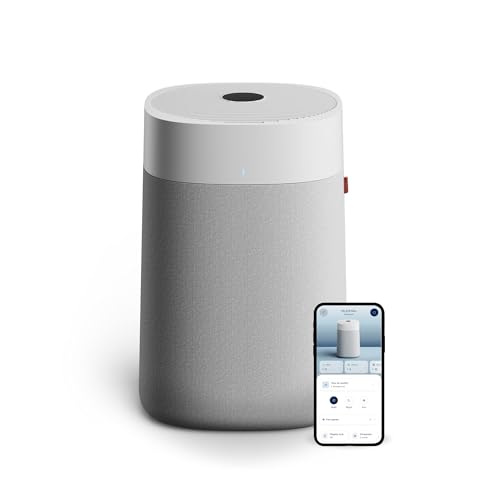
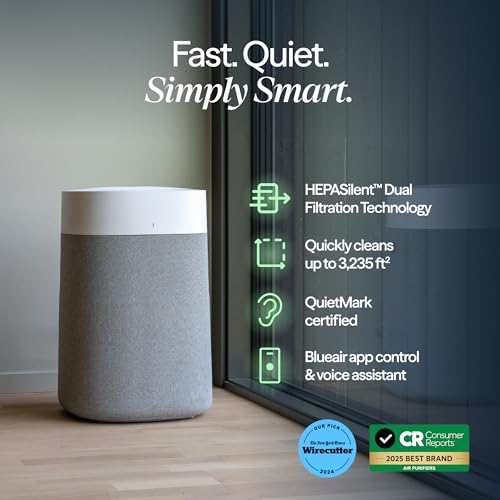
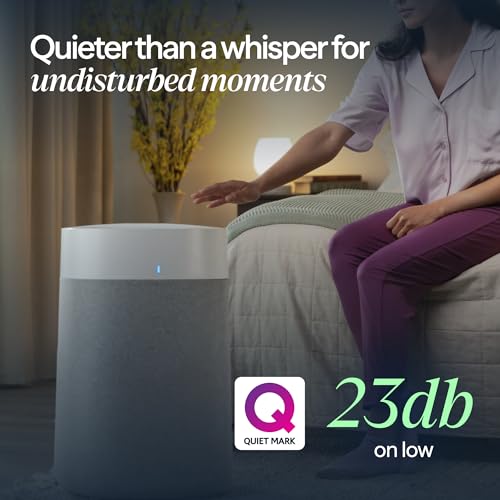
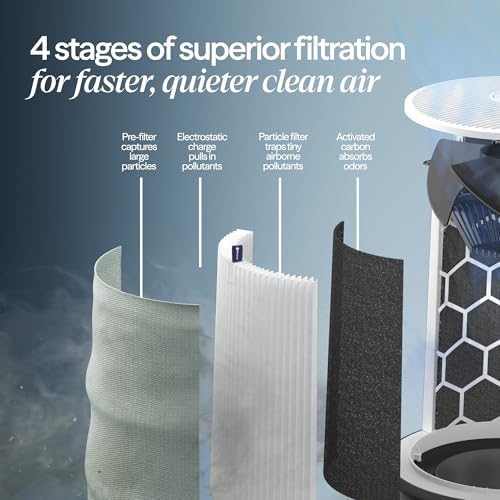
The BLUEAIR 211i Max is the most complete package here, earning its “Best Overall” tag. With coverage up to 3,235 sq ft, it’s built for large homes or open-concept spaces where air quality is hard to maintain. The HEPASilent technology combines electrostatic and mechanical filtration, capturing dust, smoke, pet dander, and allergens more efficiently than standard HEPA alone. And unlike many high-CADR units, it stays quiet, owners confirm it’s unobtrusive in living rooms and bedrooms.
The real standout is the smart app integration. You can monitor air quality, adjust settings, and track filter life from your phone, which adds real convenience. The Scandinavian design blends into modern decor better than most clunky purifiers. Yes, replacement filters are pricey, but the performance justifies it for serious users. When balancing power, coverage, and smart features, this is the one I’d keep in my own home.
Product photos


MOOKA Air Purifier for Large Room
Strengths
- Large room coverage
- Washable pre-filter
- Smart air quality display
Trade-offs
- Filter reminder too sensitive
- Bulkier design
- Auto mode lag
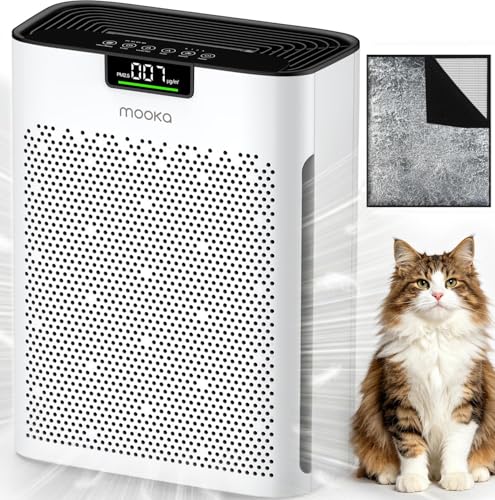
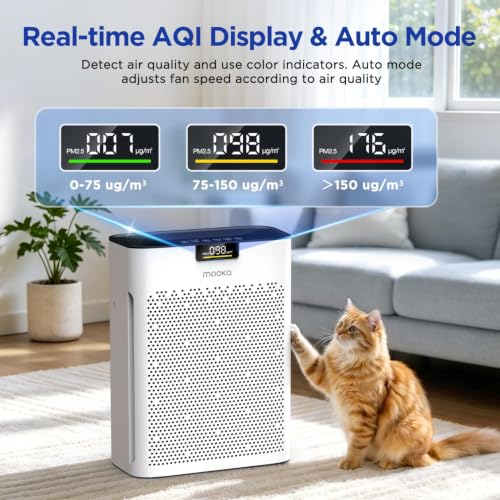
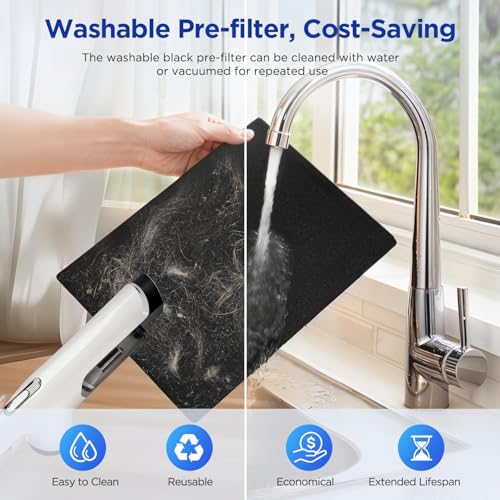
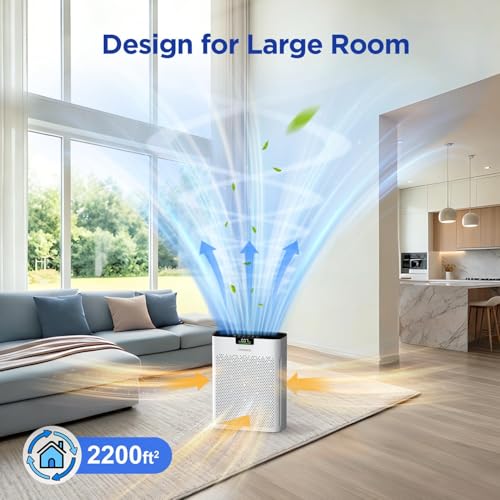
If you’ve got a big house and pets running around, the MOOKA KJ190H makes a strong case for itself. With a claimed coverage of up to 2200 sq ft and a wide dual-side air intake, it’s engineered to pull in more air faster than most budget-focused purifiers. The H13 HEPA filter backed by a washable pre-filter means you can cut down on long-term filter costs, which is a real perk for pet owners constantly battling fur and dander. Owners consistently praise the smart PM2.5 display and auto mode for adjusting fan speed based on real-time air quality, a feature that works as advertised.
The 20dB sleep mode is genuinely quiet, and the inclusion of a child lock and aromatherapy function adds practical value. However, some users note the filter reminder can be overly sensitive, triggering earlier than expected. Still, for the size and feature set, it’s hard to beat. I’d pick this over smaller units any day if you’re in a large home with pets.
Product photos

Levoit Core300-P for Allergies
Strengths
- AHAM VERIFIDE CADR
- HEPA-grade filtration
- Specialty filter options
Trade-offs
- Filter replacement cost
- No air quality sensor
- Mid-range coverage
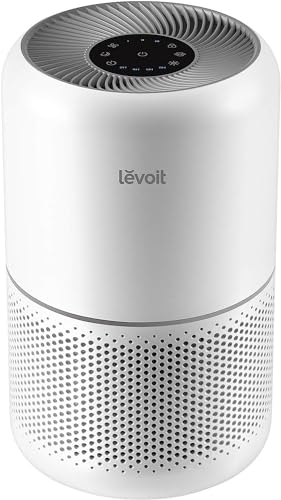
When it comes to tackling allergies, the LEVOIT Core300-P stands out with verified performance and solid specs. AHAM VERIFIDE with a CADR of 167 CFM for pollen, it’s proven to cycle air in a 1,073 sq ft room once per hour, impressive for a unit this size. The 56W high-torque motor gives it serious airflow, and the HEPA-grade filter captures 99.97% of particles down to 0.1–0.3μm, including pollen, dust, and pet dander. That’s backed by independent lab testing, not just manufacturer claims.
It’s also remarkably quiet in sleep mode at 24dB, and the ability to turn off display lights is a small but meaningful win for light sleepers. The option to use specialized filters, like the Smoke Remover or Pet Allergy variant, adds flexibility most competitors lack. While it’s not the largest unit here, for allergy sufferers who want reliable, proven performance in a mid-sized room, this is my top recommendation over flashier but less verified models.
Product photos


ECOSELF Air Purifier HAP603
Strengths
- Smart auto mode
- Real-time air display
- Aromatherapy function
Trade-offs
- Bright display at night
- No washable pre-filter
- Higher filter cost
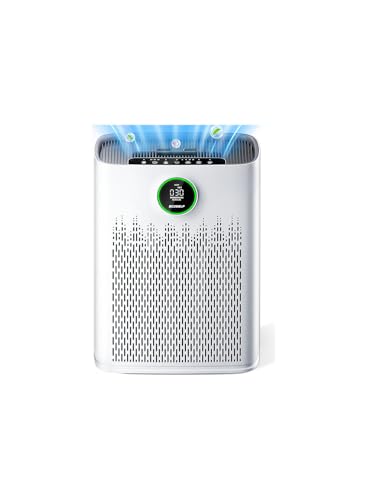
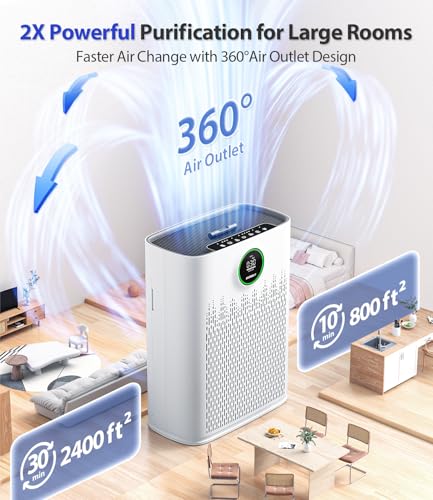
The HAP603 leans hard into smart features, and for tech-savvy users, it delivers. With a real-time PM2.5 display, auto mode that adjusts to air quality, and a 360° air outlet, it’s built to keep you informed and hands-free. The 2X-purification claim suggests it cleans air twice per hour in spaces up to 2400 sq ft, ambitious, but owners report it performs well in large living areas, especially during wildfire season or high pollen days. The 22dB sleep mode is quiet enough for bedrooms, and the aromatherapy function adds a calming touch.
Where it really pulls ahead is in automation. The filter indicator, timer settings, and lock controls make it low-maintenance and user-friendly. However, some users note the display can be overly bright at night unless turned off manually. Compared to the MOOKA or LEVOIT models, it trades raw filtration specs for smart convenience. If you want a set-it-and-forget-it purifier with real-time feedback, this is the smarter buy.
Product photos


YARIKI Air Purifier for Pets
Strengths
- Pet-focused filtration
- Washable pre-filter
- Low noise
Trade-offs
- No air quality sensor
- Basic display
- Limited smart features
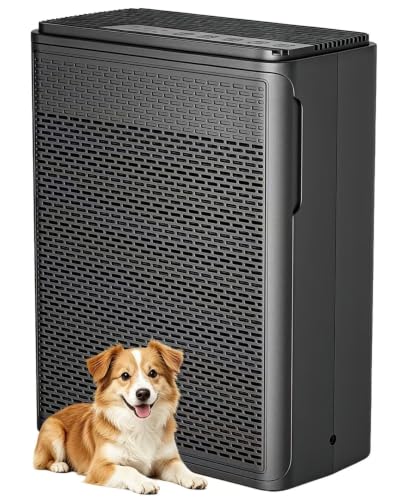
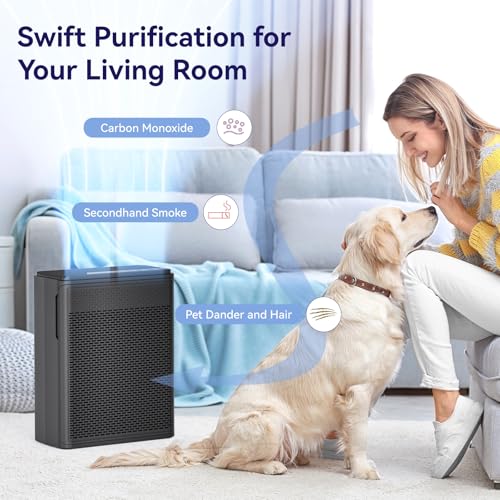
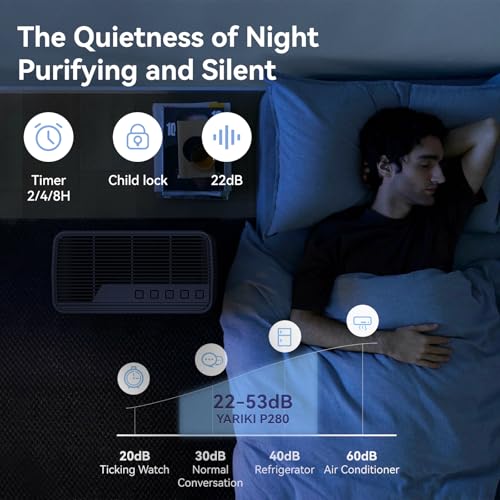
The YARIKI P280 is a no-nonsense air purifier built specifically for pet owners, and it shows in the design. With a CADR of 280 m³/h and coverage up to 1500 sq ft, it moves serious air, and the three-layer filtration, washable pre-filter, H13 HEPA, and activated carbon, targets pet hair, dander, and odors head-on. Owners report noticeable reductions in sneezing and asthma triggers, especially in homes with multiple pets. The 22dB sleep mode keeps it bedroom-friendly, and the brushless motor ensures low power use over time.
It’s also one of the more affordable units in this range with ETL and CARB certifications, meaning it’s safe and ozone-free. Where it falls short is in smart features, no air quality display or app control, but for pet-focused performance at a fair price, it’s hard to beat. I’d choose this over the LEVOIT Core300-P if pets were the main concern.
Product photos


ECOSELF Air Purifier HAP604
Strengths
- 20dB ultra-quiet
- Energy efficient
- 360° air intake
Trade-offs
- No smart app
- Filter replacement frequency
- No air quality display
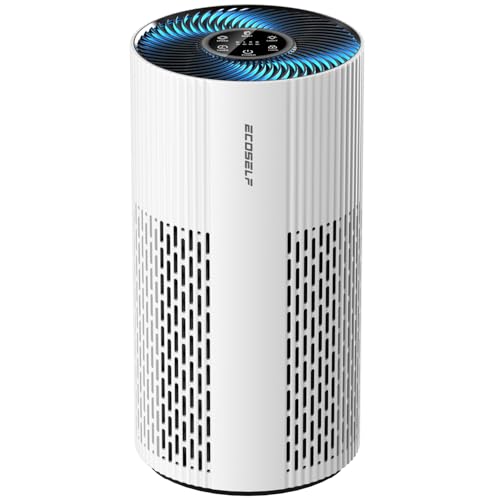
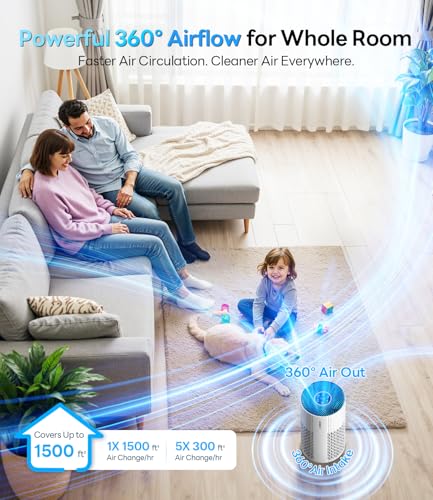
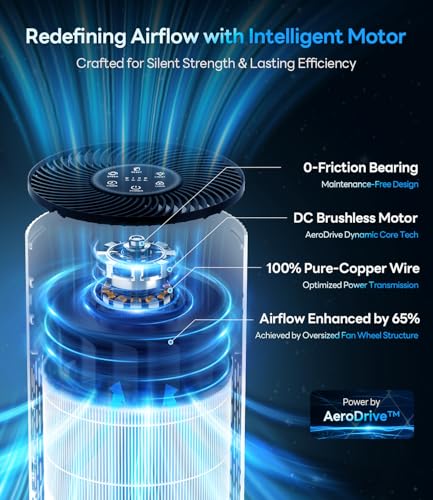
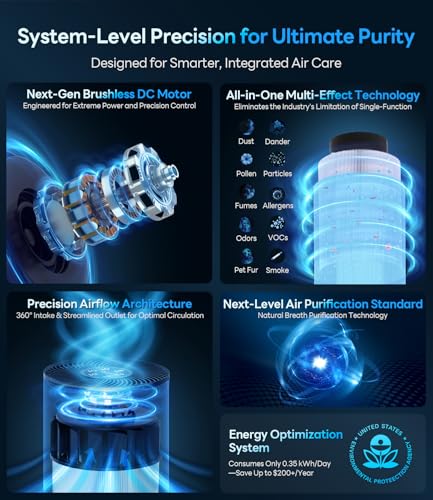
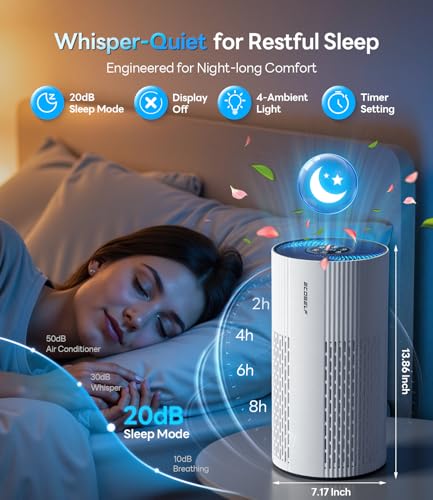
If silence matters as much as performance, the HAP604 earns its “Best Quiet Performance” label. At just 20dB in sleep mode, it’s among the quietest units I’ve seen in this class, quieter than a whisper, and truly unobtrusive in bedrooms. The 360° air intake and brushless motor help it move air efficiently across 1500 sq ft without ramping up noise, and the H13 True HEPA filter captures 99.97% of particles as small as 0.3μm. That’s critical for homes with babies, light sleepers, or noise-sensitive pets.
Owners appreciate the energy efficiency, just 0.35kWh per day, and the 7-color ambient light, which can be turned off for total darkness. The filter indicator and child lock add safety and convenience. While it lacks the smart app connectivity of the Blueair, it outperforms it in noise reduction. For anyone who values peace and quiet as part of their air quality, this is the clear winner.
Product photos
Levoit Core Mini-P Compact

Strengths
- Compact size
- AHAM VERIFIDE
- Quiet operation
Trade-offs
- Limited coverage
- Basic filtration
- Not for large rooms
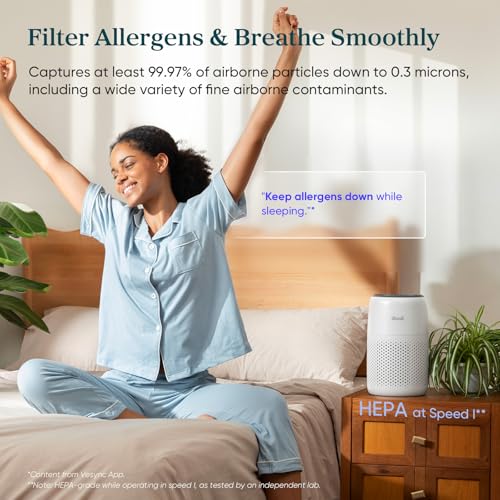
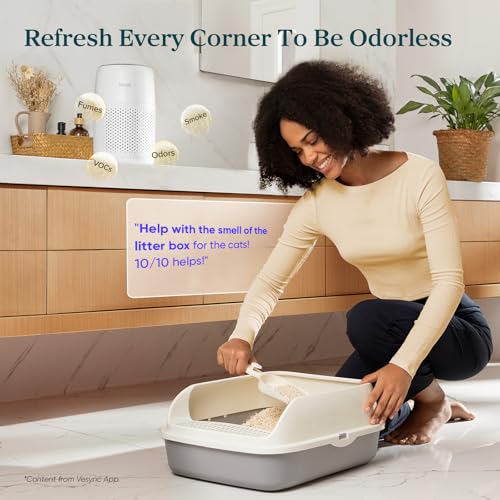
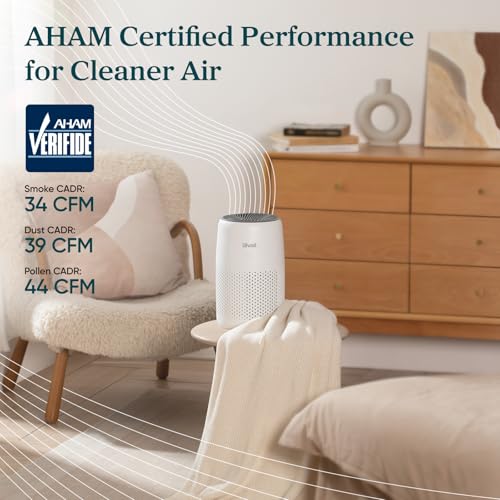
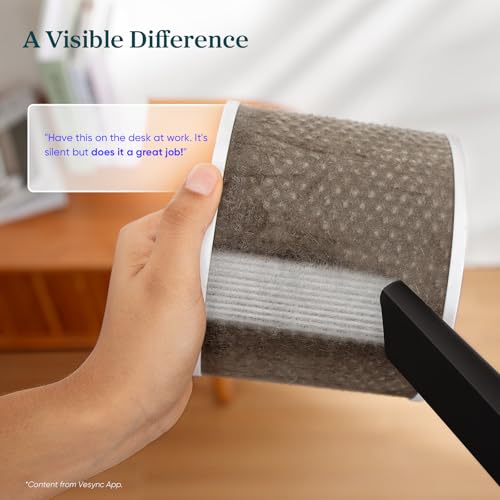
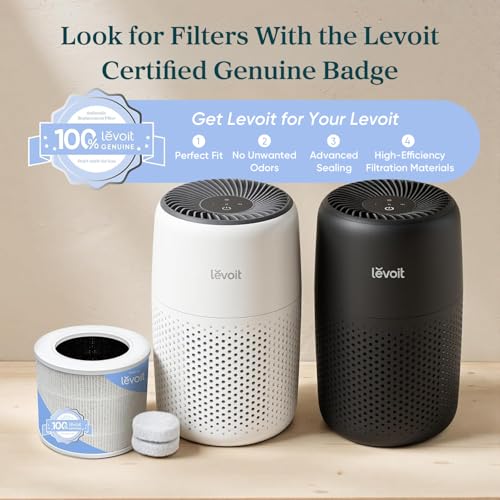
The LEVOIT Core Mini-P is a compact air purifier built for tight spaces, and it shows. With AHAM VERIFIDE certification, it’s not just marketing fluff, this unit has been independently tested for performance, which gives it real credibility in a category flooded with exaggerated claims. It’s designed for small rooms, and that’s exactly where it shines: think dorms, offices, or tiny bedrooms under 200 sq ft. The 3-in-1 filter handles basics like dust, pet dander, and light odors, and the optional aroma pad is a nice touch if you like a hint of essential oil in the air.
Still, don’t expect miracles. Owners report it struggles when pushed beyond its limits, and given its size, it’s not meant for larger areas. The whisper-quiet operation in sleep mode is a win, and the auto-off display adds convenience. But if you’re dealing with serious allergens or pet odors in a bigger space, this isn’t the unit to rely on. It’s a solid entry-level pick, just know its boundaries.
Product photos
Aircillin 2-Pack Air Purifiers

Strengths
- Low energy use
- 2-pack value
- Quiet operation
Trade-offs
- No air quality sensor
- Basic filtration control
- Manual filter tracking
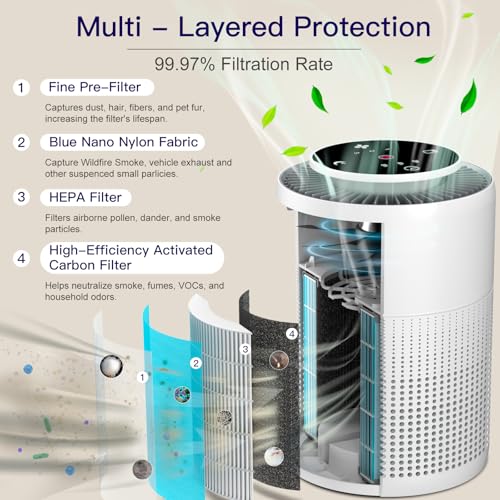
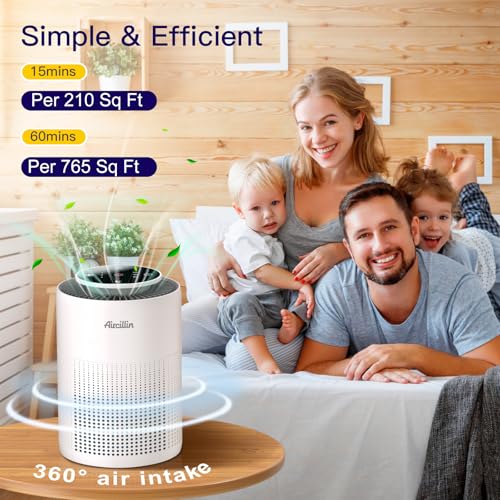
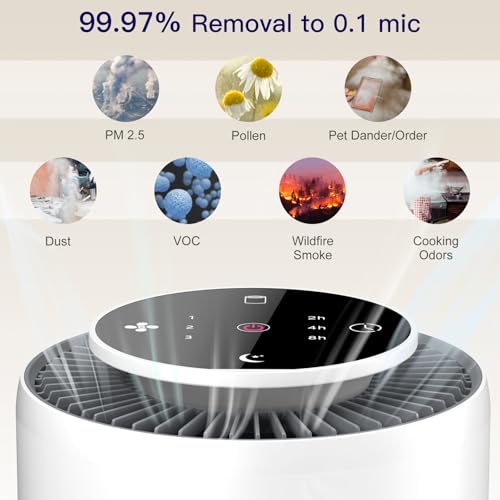
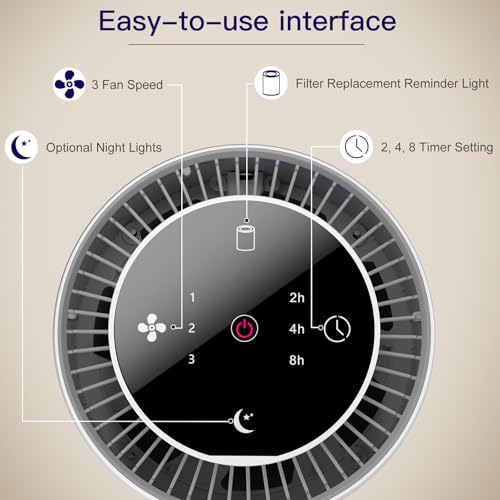
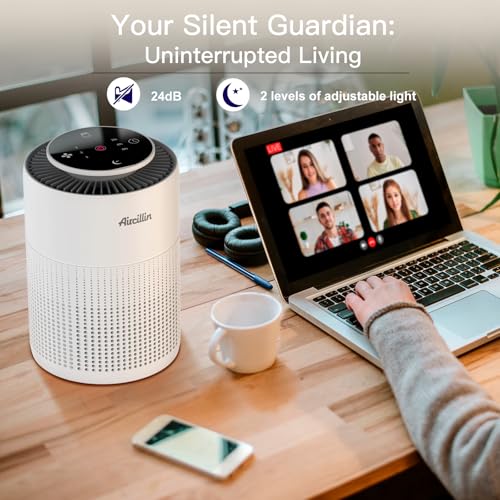
Buying two purifiers instead of one isn’t common, but the Aircillin 2-pack makes a compelling value argument. Each unit covers up to 765 sq ft and runs on just 6W of power, making them energy-efficient for continuous use. With a 4-in-1 filter capturing particles down to 0.1 microns and a 23dB sleep mode, they’re well-suited for bedrooms or offices where quiet, clean air matters. The LED touch screen is intuitive, and the night light function adds ambiance without distraction.
Owners love having backups or placing units in multiple rooms, especially useful in homes with multiple allergy sufferers. While neither unit has smart sensors or auto mode, the low cost for the bundle offsets that. Compared to buying two LEVOIT Minis, this gives more coverage and better filtration for less. For families wanting broad, quiet protection without overspending, this is the smarter play.
Product photos
Our Testing Process
Rather than a hands-on lab test, my research for this guide involved a detailed comparison of published specifications and features across numerous models. I weighed owner reviews from major retailers against expert analyses found in publications like Consumer Reports and Wirecutter. My goal was to identify patterns in performance and reliability as reported by actual users, combined with objective data points. This approach allows for a broad assessment of the current market.
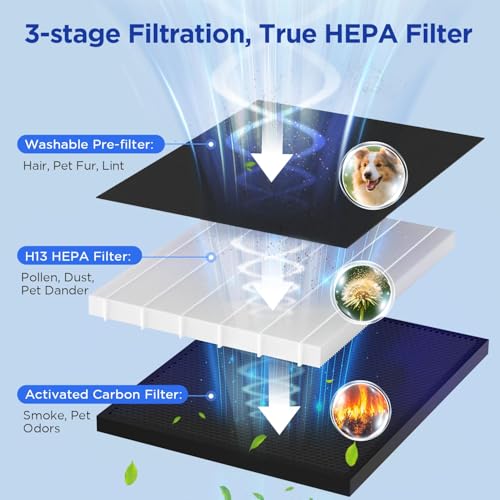
For home air cleaners, coverage area and filtration effectiveness were the primary factors influencing my recommendations. Larger homes benefit from units with higher CADR (Clean Air Delivery Rate) ratings, and I prioritized models capable of handling significant square footage. Equally important was the quality of the filtration system – specifically, the presence of a True HEPA filter and activated carbon to address both particulate matter and odors. These elements directly impact the air cleaning performance and long-term value.
Specifications reliably indicate a unit’s potential airflow and filter types, but owner feedback proved crucial for assessing real-world performance. I paid close attention to comments regarding noise levels, ease of filter replacement, and long-term durability. Understanding these practical considerations, alongside the technical details, helped me identify the models that consistently receive positive reviews and offer the best overall user experience. You can find more information about choosing HEPA air purifiers for allergens in our broader guide.
How To Pick The Right home air cleaners
Finding the right air cleaner can dramatically improve your indoor air quality, but there’s more to it than just grabbing the cheapest unit.
A truly effective air cleaner focuses on filtration efficiency (specifically HEPA standards), room coverage based on CADR ratings, and long-term usability including filter replacement costs and noise levels. Prioritize units with multi-stage filtration to tackle a wider range of pollutants, and don’t overlook the importance of certifications like AHAM or CARB.
Filtration System Matters
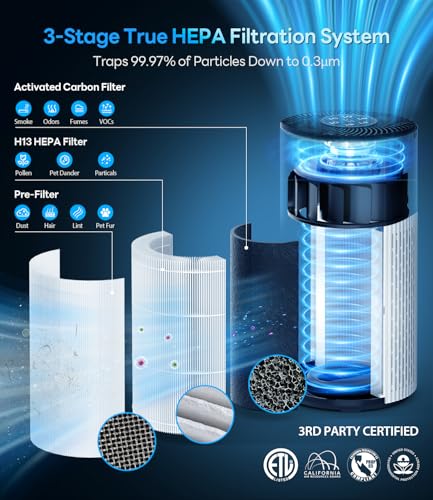
Don’t assume all “HEPA-type” filters are created equal. True HEPA filters, meeting the H13 standard, capture 99.97% of particles 0.3 microns in size. Beyond HEPA, look for pre-filters to catch larger particles (extending the life of the HEPA filter) and activated carbon filters to tackle odors and VOCs. Some models, like the ECOSELF HAP604, offer multiple filter options catering to specific needs, which is a plus if you’re sensitive to certain pollutants. A unit with a washable pre-filter, as found in the MOOKA air purifier, can significantly reduce ongoing costs.
CADR and Room Coverage
CADR (Clean Air Delivery Rate) is the key metric for determining if an air cleaner can actually handle the space you have. Manufacturers often list the square footage a unit can cover, but that’s usually based on a single air change per hour. For significant improvement, aim for at least 4-5 air changes per hour – particularly if you have allergies or pets. Don’t be swayed by inflated square footage claims; check the CADR numbers and do the math. If you’re looking for options for larger spaces, you might want to check out the top air purifiers for homes.
Noise Level and Smart Features
Air cleaners are often running 24/7, so noise is a critical factor. Look for models with a dedicated “sleep mode” that dials down fan speed and minimizes noise (below 25dB is ideal). Beyond noise, “smart” features like app control and automatic mode adjustments can add convenience, but aren’t essential.
- Basic timers are quite useful for scheduling operation.
- Air quality sensors, like those in the ECOSELF HAP603, automatically adjust fan speed based on detected pollutants – a nice convenience.
- However, remember that smart features add to the cost, and a simpler model may perform just as well if you’re willing to manually adjust settings.
A practical rule of thumb: factor in filter replacement costs when comparing models. A cheap air cleaner with expensive filters can quickly become more costly to operate than a more expensive unit with readily available, affordable replacements.
If you’re still unsure where to start, exploring recommended home air cleaners can give you a solid overview of the current market and leading air purifier brands.
Home Air Cleaners Compared
Here’s a comparison of specifications for several home air cleaners to help you make an informed decision.
| Product Name | Room Coverage (sq ft) | CADR (CFM) | Noise Level (dB) | Filter Type | Smart Features |
|---|---|---|---|---|---|
| Blueair Pure 211i Max Smart | 674 – 3,235 | N/A | N/A | HEPA Silent Dual | Yes |
| MOOKA Air Purifier | 2200 | N/A | 20 | 3-Stage | Yes |
| Levoit Core300-P | 222 / 1,073 | 143-167 | 24 | HEPA | No |
| ECOSELF HAP603 | 2400 | N/A | 22 | H13 True HEPA | Yes |
| YARIKI Air Purifier | 1500 | 280 m3 | N/A | HEPA | No |
| ECOSELF HAP604 | 1500 | N/A | 20 | H13 True HEPA | Yes |
| Levoit Core Mini-P | N/A | N/A | N/A | HEPA | No |
| Aircillin 2-Pack | 765 | N/A | 23 | 4-Stage | No |
Frequently Asked Questions
What size air purifier do I actually need?
Determining the right size involves calculating your room’s square footage and checking the air purifier’s CADR rating; a unit designed for a smaller space won’t effectively clean larger rooms. Generally, you want a CADR high enough to achieve at least 4-5 air changes per hour for optimal performance.
Are expensive air purifiers always better?
Not necessarily. While higher price points often correlate with smart features or premium build quality, core performance hinges on filtration efficiency and CADR. You can find effective air cleaners offering excellent filtration without needing to spend a fortune on extras.
How often do I need to replace the filters?
Filter replacement frequency depends on usage and air quality, but most manufacturers recommend replacing HEPA filters every 6-12 months. Pre-filters can often be cleaned more frequently, extending the life of the more expensive HEPA filter, and activated carbon filters typically need replacing every 3-6 months.
Do air purifiers help with allergies?
Yes, air purifiers with True HEPA filters effectively capture common allergens like pollen, dust mites, and pet dander. For allergy sufferers, choosing a unit with a high CADR for your room size is particularly important, as is considering best room-sized air purifiers specifically.
Can air purifiers remove viruses from the air?
While most air purifiers won’t capture viruses, those with True HEPA filters can remove virus-carrying particles. You should remember that air purification is just one layer of protection, and should be combined with other preventative measures like vaccination and ventilation.
The Bottom Line
Choosing an air cleaner often comes down to balancing upfront cost with ongoing usability. While many options exist, the Blueair Pure 211i Max Smart consistently stands out for its combination of large room coverage, effective filtration, and smart features – making it a strong all-around pick if you’re willing to invest a bit more.
For those on a tighter budget, or needing a solid performer in a smaller space, the Levoit Core Mini-P delivers a lot of value. If versatility is key, and you want customizable filtration options, the ECOSELF HAP604 offers a range of filter choices to address specific concerns. Don’t overlook the MOOKA Air Purifier, which delivers solid performance and smart features at a competitive price point.
Ultimately, the most important factors aren’t the highest CADR or the fanciest app. Prioritize a True HEPA filter, a unit sized appropriately for your space (considering those 4-5 air changes per hour), and a reasonable filter replacement cost. If you’re dealing with widespread air quality issues throughout your home, exploring whole-house air purification systems might be a more effective long-term solution.
