
6 Best Hand Saws for Cutting 2x4s 2026
This post contains affiliate links. As an Amazon Associate, we earn from qualifying purchases.
The BAHCO 24″ Professional Timber Saw is the best overall for cutting 2x4s, delivering aggressive, fast cuts with its low TPI and durable build. For a budget-friendly option, the 14 in. Pro Hand Saw offers solid performance and versatility. If you want precision and clean cuts, the GARTOL Japanese Pull Saw Set brings a different approach with its pull-stroke design and dual blades.
Cutting 2x4s by hand shouldn’t mean struggling through every stroke or fighting a saw that binds. Too many people grab whatever’s in the garage, only to waste energy and end up with rough, crooked cuts.
After years of comparing tools and reading through owner experiences, I focused on what actually matters: blade steel, tooth count, and a handle that won’t wear you out. This guide breaks down the top performers based on real specs and feedback, so you can pick a saw that cuts efficiently and lasts.
Top 6 Hand Saw For Cutting 2X4S in the Market
The Best Hand Saw For Cutting 2X4S, Reviewed
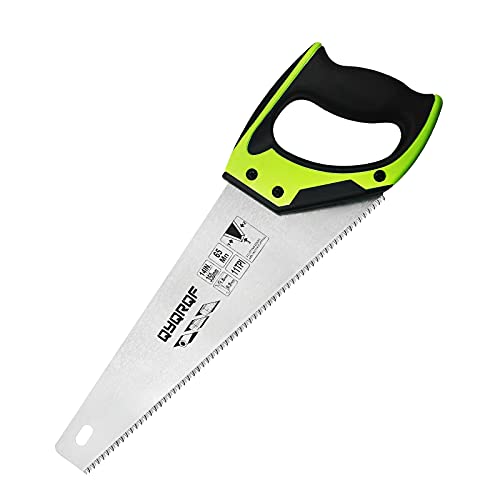
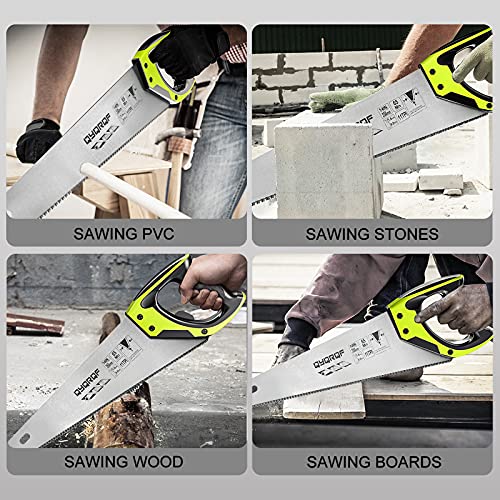
14 in. Pro Hand Saw
Strengths
- 11 TPI for clean cuts
- Low-friction blade
- Soft-grip handle
- Good for multiple materials
- Affordable build
Trade-offs
- Shorter reach
- Blade can flex slightly
- Not for heavy timber
This 14-inch hardpoint saw punches above its price class. With 11 TPI and deep gullets, it cuts cleanly through 2x4s on both push and pull strokes, and the low-friction coating helps reduce binding. The 0.9mm blade is stiff enough for straight cuts but not so heavy that it tires you out. Owners say it’s one of the few budget saws that doesn’t feel disposable, especially with the heat-treated 65Mn steel and soft-grip TPR handle. For DIYers who only cut 2x4s occasionally, this is more than enough saw.
It doesn’t have the reach of longer models, so you’ll need to reposition more often on thick stock. But for trim work, quick framing fixes, or cutting PVC and drywall, it’s impressively versatile. I’d pick this over the JORGENSEN for general home use because it’s lighter and just as sharp. It won’t replace a circular saw, but it’s the kind of tool you grab when you need one cut, fast.
Product photos


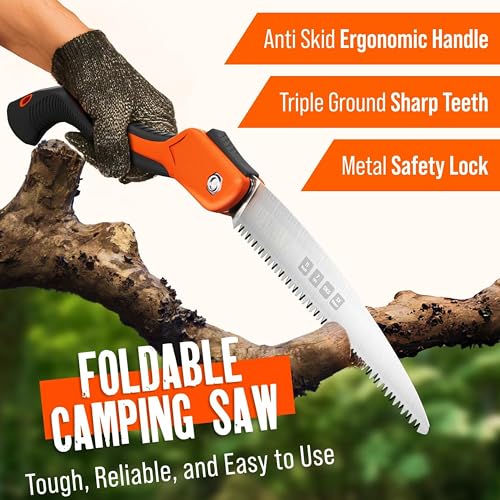
Folding Camping Saw 11″

Strengths
- Folds for easy carry
- Aggressive 7 TPI blade
- SK5 steel durability
- Good grip
- Lightweight
Trade-offs
- Too short for 2x4s
- Blade wobbles under load
- Not for long cuts
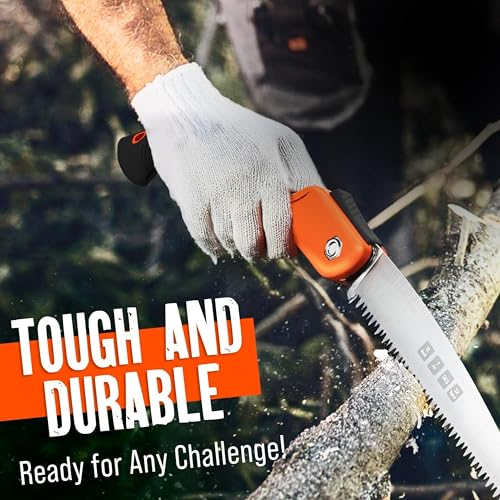
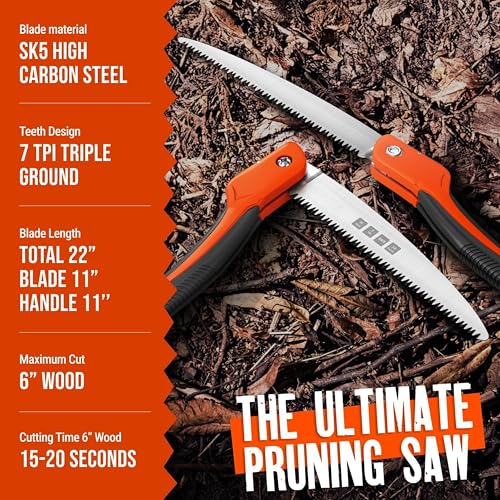
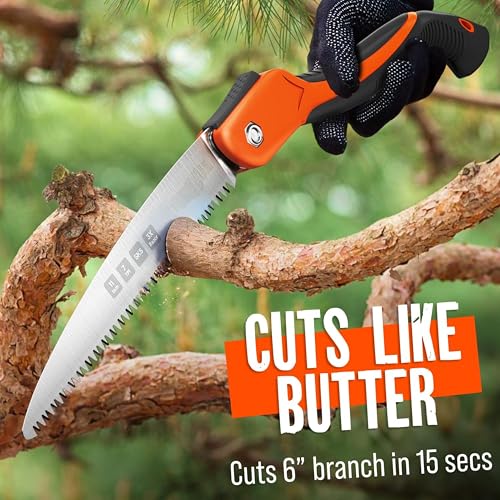
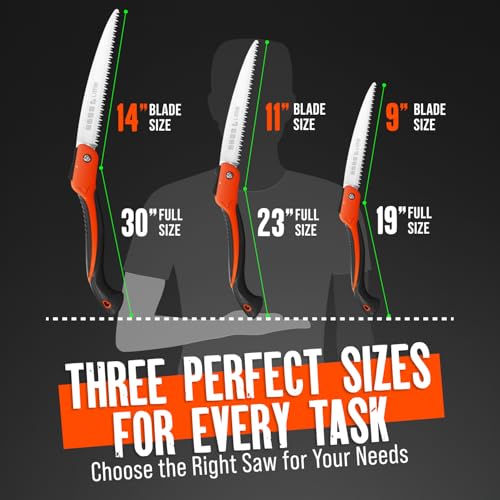
Don’t let the size fool you, this 11-inch folding saw is surprisingly aggressive. The 7 TPI triple-cut SK5 blade tears through green wood and small-diameter branches with ease, and the curved design helps start cuts quickly. It’s lightweight and packs into a backpack, making it a favorite among campers and bushcrafters. Some owners report using it to cut small 2×4 scraps in a pinch, and it works, but only if you’re patient.
It’s simply not designed for repeated 2×4 cutting. The short blade and narrow kerf struggle with thick, dry lumber, and the folding mechanism isn’t as rigid as a fixed handle. Compared to full-size saws, it’s a compromise: great for portability, weak on sustained performance. If you’re working off-grid or need a backup saw in your truck, it’s a solid choice. But for framing or regular construction, look elsewhere.
Product photos
GARTOL Japanese Pull Saw Set
Strengths
- Precision pull-cut design
- Flush-cut capability
- SK5 steel blades
- Ergonomic wooden handles
- Compact and portable
Trade-offs
- Short blade length
- Not for fast crosscuts
- Blades can bend if misused
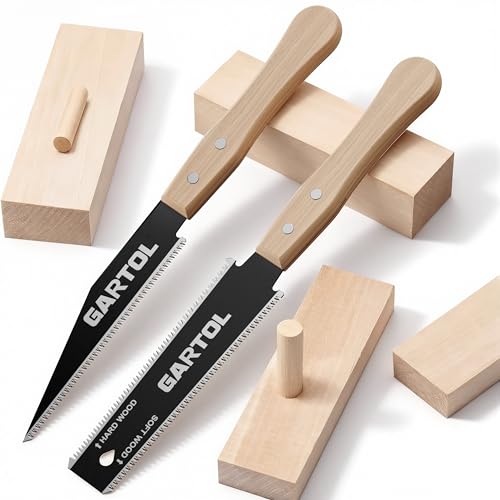
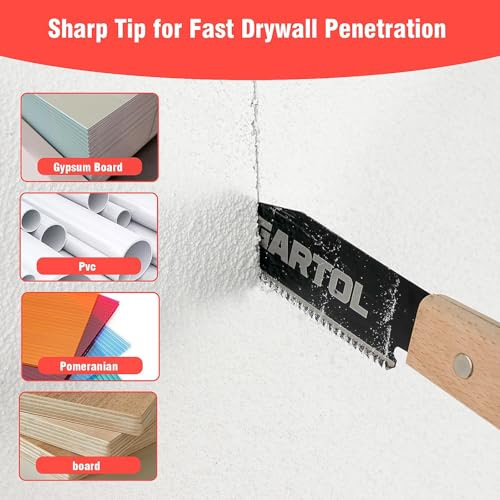
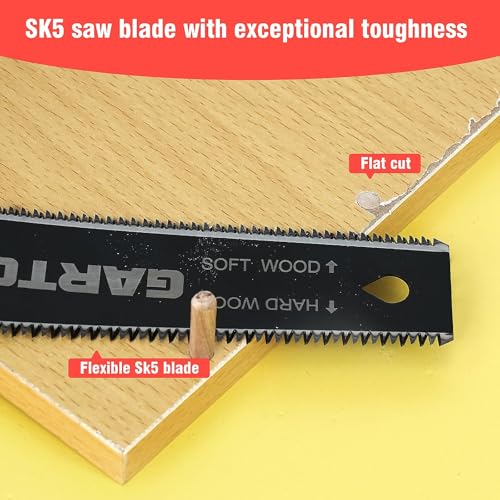
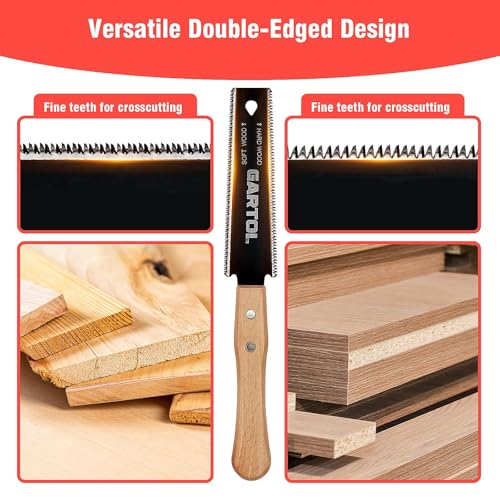
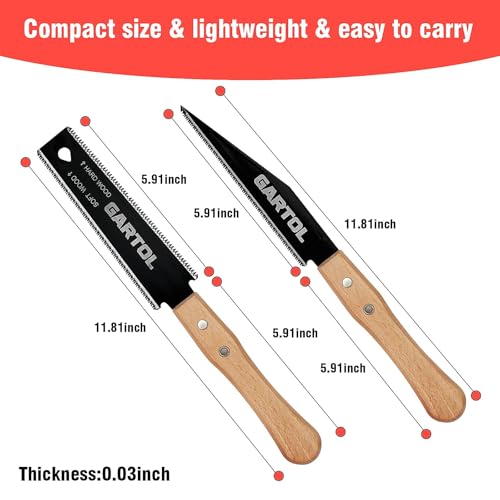
Japanese pull saws like this GARTOL set are in a different category altogether. The pull-cut design gives cleaner, more precise cuts with less effort, especially in hardwoods. The 6-inch flush-cut saw and double-edged Ryoba are ideal for fine joinery, trim work, or cutting 2x4s flush against a surface, where a traditional saw can’t fit. Owners consistently praise the SK5 steel blades for staying sharp and delivering splinter-free results.
But if your main goal is cutting standard 2x4s quickly, this isn’t the fastest option. The short blades mean constant repositioning, and the thin, flexible design isn’t meant for aggressive crosscutting. Compared to the BAHCO or JORGENSEN, it’s slower and less durable under heavy use. Still, for precision, like fitting a stud or trimming a beam end, I’d take this over any Western-style saw. It’s not a replacement for a framing saw, but a perfect companion.
Product photos

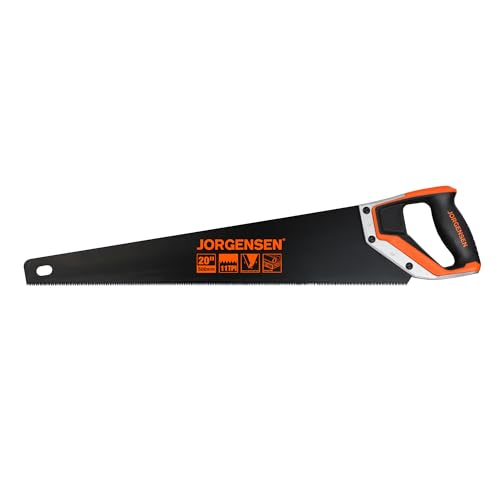
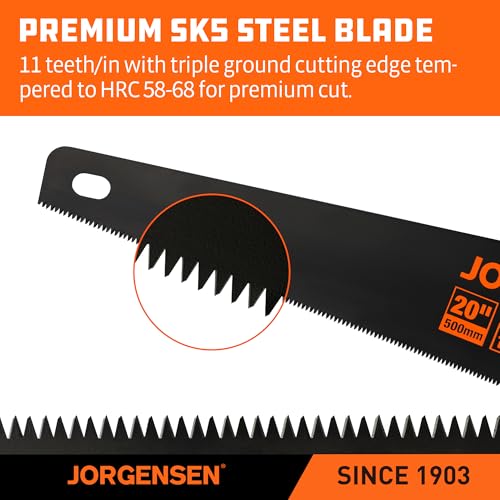
JORGENSEN 20″ Black Coated Saw
Strengths
- 20 inch optimal length
- 11 TPI fast cutting
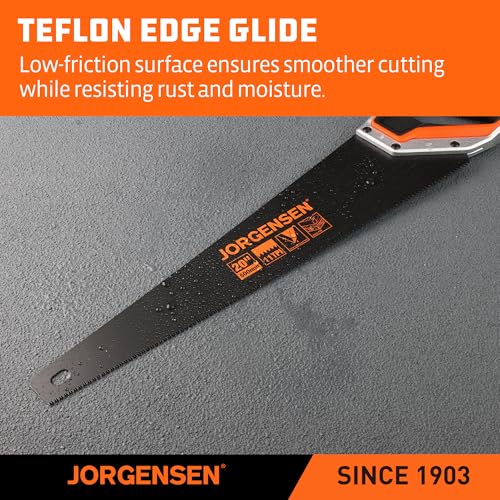
- Black-coated low-friction blade
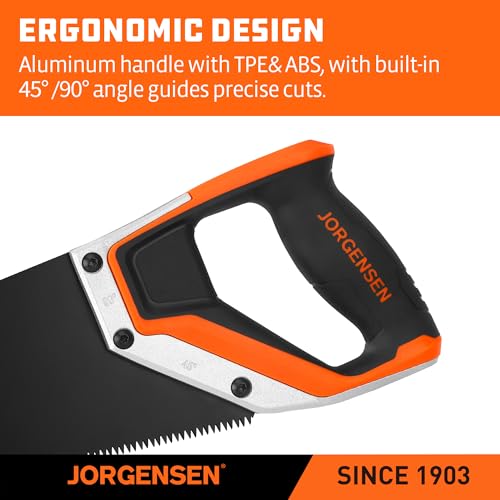
- Ergonomic non-slip handle
- Dual-angle guide marks
Trade-offs
- Slightly heavier than 14”
- Not for flush cuts
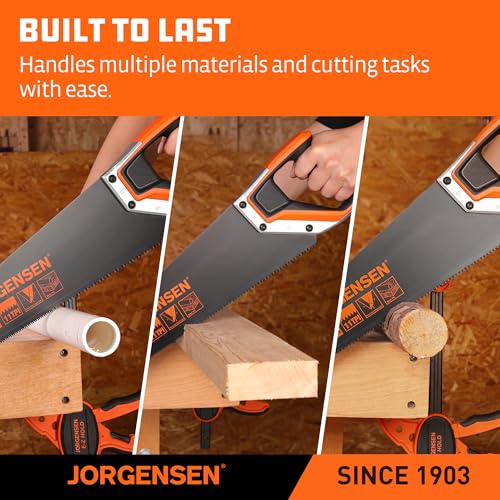
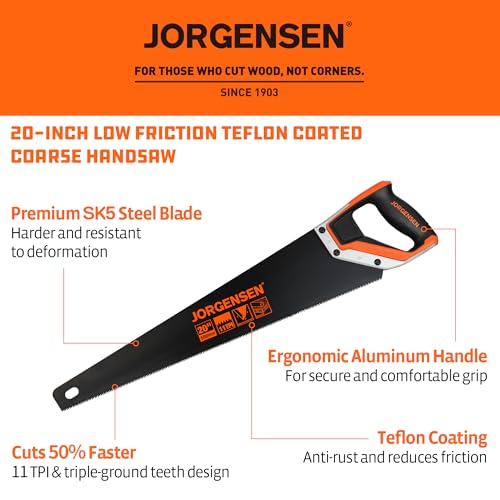
At 20 inches, this JORGENSEN hits the sweet spot between reach and control for cutting 2x4s. The 11 TPI triple-ground teeth deliver fast, smooth cuts in both directions, and the black-coated blade reduces friction, owners say it glides through plywood and dimensional lumber with less effort than uncoated blades. The aluminum-reinforced handle with dual-angle guides is a thoughtful touch, helping maintain straight cuts without a speed square.
It’s slightly longer than the 14-inch model, so you get fewer repositioning stops on thick stock. And while it’s not as aggressive as the BAHCO for heavy timber, it’s more precise and easier to handle. I’d pick this over the B093FFK927 for framing because of the extra length and stiffer blade. For most DIYers and pros doing straight, long cuts, this is the smarter buy.
Product photos
Kings County 3′ Crosscut Saw
Strengths
- 36 inch aggressive blade
- Self-clearing gullets
- Two-hand capability
- Great for wet wood
- Eco-friendly alternative
Trade-offs
- Too long for indoor use
- Bulky storage
- Not precise
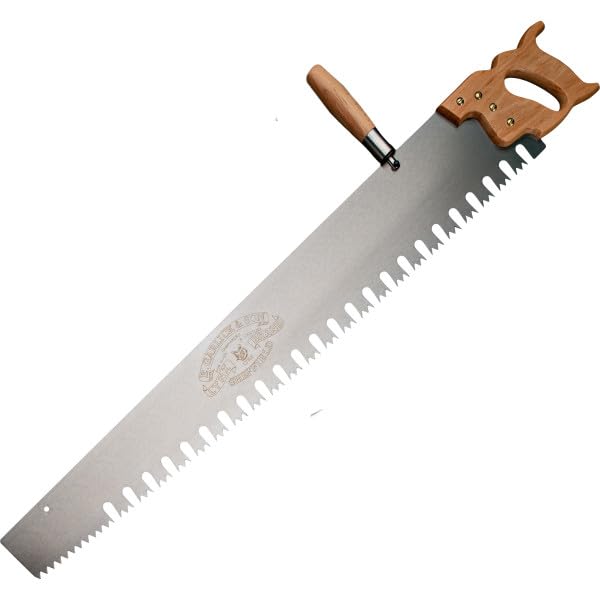
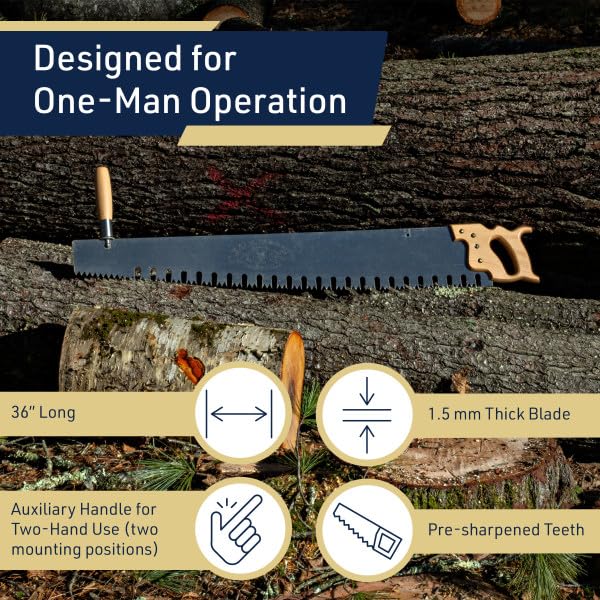
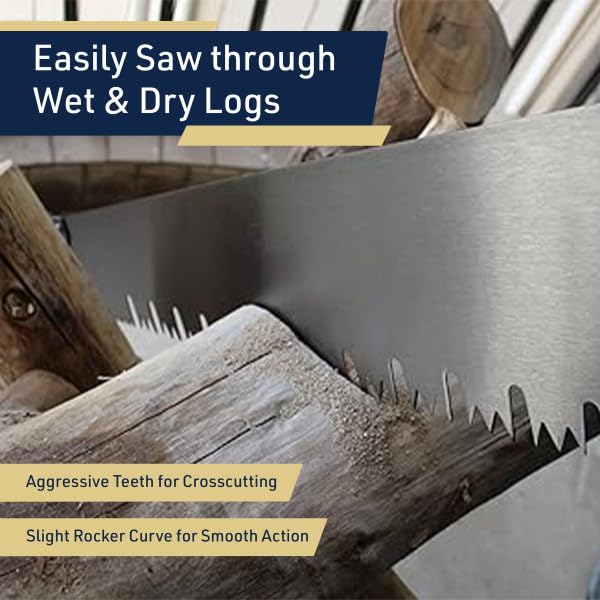
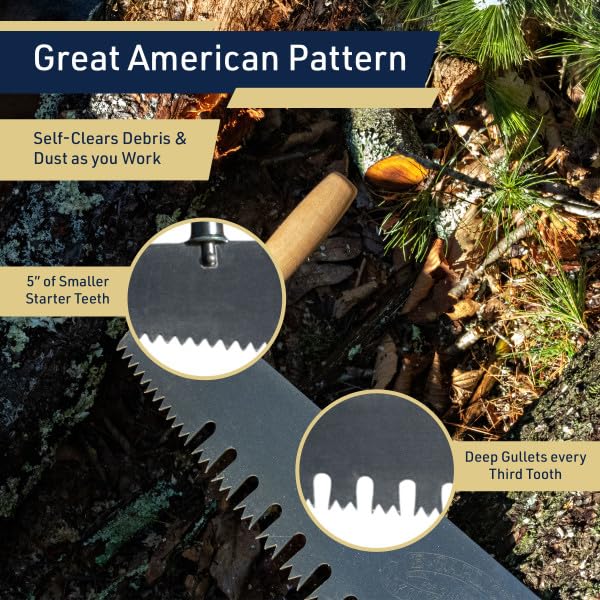
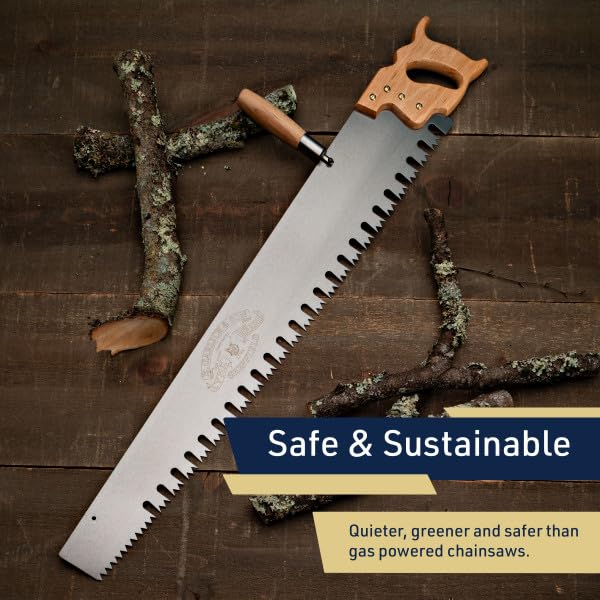
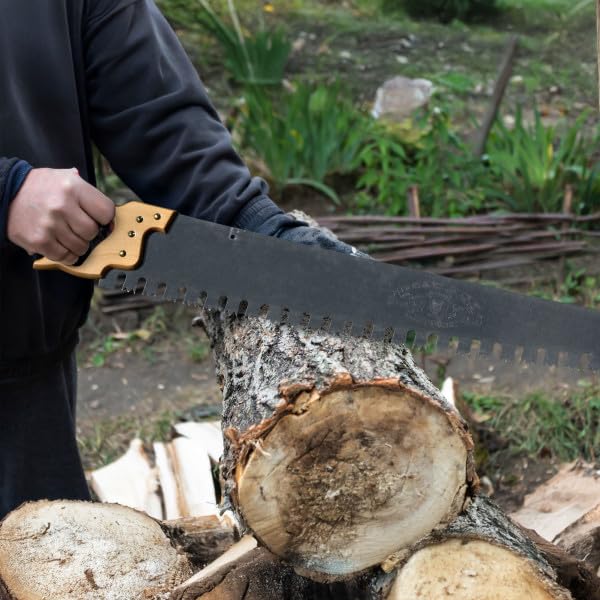
At 36 inches long, this one-man logging saw is overkill for basic 2×4 cutting, but that’s kind of the point. It’s designed for felling logs or bucking downed trees, not framing walls. The Great American tooth pattern with deep, self-clearing gullets means it powers through wet or dry wood without clogging, and the 1.5mm blade thickness resists bending under pressure. Reviewers note it outperforms cheaper crosscut saws when tackling dense or dirty timber, and the screw-on auxiliary handle adds real control when you need two-handed use.
Still, for cutting standard 2x4s, this is like bringing a chainsaw to a hand-saw fight. It’s unwieldy in confined spaces and overkill for indoor jobs. Compared to the BAHCO, it’s less refined but more aggressive, better for outdoor, heavy-duty use. If you’re clearing land or processing firewood, this makes sense. For workshop or construction use, it’s just too big.
Product photos
BAHCO 24″ Professional Timber Saw
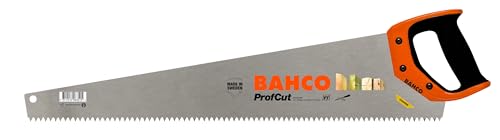
Strengths
- 24 inch blade
- 3.5 TPI for fast cuts
- Three-sided ground teeth
- Comfortable dual-material handle
- Excellent durability
Trade-offs
- Heavy for detail work
- Not ideal for flush cuts
If you’re regularly cutting through heavy timber like 2x4s and need a saw that can handle sustained, aggressive work, the BAHCO PC-24-TIM is built for that job. At 24 inches long with a 3.5 TPI tooth count, it’s optimized for fast, efficient crosscuts in dimensional lumber. The three-sided ground teeth stay sharp longer than standard stamped teeth, and owners consistently report clean cuts with minimal binding, even in pressure-treated or knotty wood. On paper, this is the kind of saw that framers used before power tools took over, rugged, no-nonsense, and effective.
The two-component handle is a standout, offering real comfort during extended use. Unlike cheaper molded grips, this one balances well and reduces hand fatigue. While it’s heavier than some modern options, that extra mass helps carry the cut forward with less effort on each stroke. Compared to Japanese pull saws, it’s slower on precision but far more durable for rough-site work.
Product photos
How We Chose These hand saw for cutting 2x4s
My approach to evaluating hand saws for cutting 2x4s centered on a research-led comparison of published specifications and owner feedback. I didn’t personally test each saw with dozens of cuts, but instead built a ranking based on a detailed examination of blade material, tooth count, handle ergonomics, and overall build quality. This was balanced against what current owners are saying about performance in real-world use, gathered from a wide range of sources including online retailers and woodworking forums.
For this category, blade material and tooth geometry were the most heavily weighted factors. A high-quality steel like SK5 is crucial for maintaining sharpness and resisting wear, while the TPI (teeth per inch) dictates cutting speed and finish. Beyond that, a comfortable and secure handle is vital – especially when tackling longer cuts. A saw that feels good in the hand will ultimately lead to cleaner, more efficient work, and reduce fatigue.
Specifications reliably reveal the materials used and the basic design of a saw, but owner feedback provides insight into real-world durability and cutting performance. I paid close attention to comments regarding how well a saw held an edge, how easily it started a cut, and if it exhibited any binding or drag. Understanding these practicalities, alongside the technical details, was essential for creating a useful ranking. If you’re looking for faster, more automated methods, learning about cutting wood with circular saw can be useful.
How To Pick The Right hand saw for cutting 2x4s
Choosing the right hand saw can make a huge difference in the quality of your cuts and how much effort a project takes. Don’t assume any old saw will do – there’s a lot to consider.
A quality hand saw balances blade steel, tooth geometry, and handle ergonomics. Look for saws with hardened steel blades (like SK5 or 65Mn) for durability, a suitable teeth-per-inch (TPI) count for the material being cut, and a handle that provides a secure and comfortable grip, even during extended use. Proper blade tension and a well-designed gullet are also critical for efficient cutting.
Blade and Tooth Configuration
The blade is where the work happens, so understanding its characteristics is paramount. Steel quality is a starting point; higher carbon steels hold an edge longer. Beyond that, consider the tooth pattern. A higher teeth per inch saw blades count creates a finer cut, ideal for delicate work, while fewer teeth per inch are better for aggressive cutting through thicker material. Japanese pull saws, for example, often have a very high TPI for precision, while timber saws use fewer teeth for speed. Don’t overlook the tooth geometry (raker, universal, etc.) which influences how the saw starts and clears debris.
Handle Ergonomics and Comfort
A comfortable handle isn’t just about feeling good; it directly impacts control and reduces fatigue. Look for handles made from materials that provide a secure grip, even when wet or covered in sawdust. Wood handles, common in Japanese saws, offer a classic feel, while modern options often use rubberized or overmolded grips. The shape of the handle is also important. A well-designed handle will fit comfortably in your hand and allow you to apply even pressure throughout the cut.
- A simple plastic handle is okay for light use, but won’t offer much comfort during extended projects.
- Ergonomic handles with textured grips are a significant upgrade; they minimize slippage and fatigue.
- Handles with auxiliary options (like the screw-on handle found on some crosscut saws) offer greater use and control for larger cuts, which is especially helpful when you need a saw for cutting 2x4s.
Application and Value
Consider what you’ll primarily be cutting. A fine-tooth saw like the GARTOL Japanese Pull Saw Set is fantastic for precision joinery, but will be slow going on 2x4s. Conversely, a large timber saw like the Kings County 3′ Crosscut Saw excels at bucking logs but is overkill for smaller projects. Don’t overspend on features you won’t use. For general purpose work around the house, a good quality, mid-range saw like the 14 in. Pro Hand Saw can be a great value. If you’re looking for a top hand saw for framing that won’t break the bank, focusing on blade quality and a comfortable handle will give you the most bang for your buck.
A sharp saw cuts faster, safer, and with less effort. Invest in a sharpening file or consider having your saw professionally sharpened regularly to maintain its performance.
Hand Saw for Cutting 2x4s Compared
This table provides a spec-by-spec comparison of hand saws suitable for cutting 2x4s.
| Product Title | Blade Length | TPI (Teeth Per Inch) | Steel Type | Handle Material | Features |
|---|---|---|---|---|---|
| 14 in. Pro Hand Saw | 14 in | N/A | 65Mn steel | TPR | 3 Cutting Surfaces |
| Folding Camping Saw 11″ | 11 in | 7 | SK5 | N/A | Folding Design |
| GARTOL Japanese Pull Saw Set | 6 in / Ryoba | Coarse/Fine | SK5 | Wood | 2-Piece Set |
| JORGENSEN 20″ Black Coated Saw | 20 in | 11 | N/A | ABS+TPE | Black Coated Blade |
| Kings County 3′ Crosscut Saw | 39.75 in | N/A | Steel | Beech Wood | Auxiliary Handle |
| BAHCO 24″ Professional Timber Saw | 24 in | 3.5 | N/A | Two-Component | Timber Saw |
Frequently Asked Questions
What TPI is best for cutting 2x4s?
Around 7-10 TPI is generally ideal for cutting 2x4s. This range offers a good balance between cutting speed and a reasonably clean finish, preventing the blade from becoming clogged with wood fibers too quickly.
Can a folding saw handle cutting multiple 2x4s in a row?
While convenient, folding saws aren’t usually the best choice for repetitive cuts on dimensional lumber. Their smaller blades and lighter construction can lead to faster fatigue and may not maintain accuracy over a large number of cuts.
Are Japanese pull saws good for rough framing lumber?
Generally, no. Japanese pull saws excel at precise cuts, but their fine teeth and delicate blades aren’t designed for the rapid, aggressive cutting needed for framing lumber like 2x4s. You’ll wear them out quickly.
What’s the advantage of a saw with a coated blade?
A coated blade, like the one on the JORGENSEN saw, reduces friction and helps prevent rust. This can lead to smoother cuts and easier cleaning, though it doesn’t necessarily impact the saw’s cutting power.
Where can I find a durable saw for both home projects and professional use?
For a truly professional-grade hand saw that can withstand regular use on a jobsite, look for models with hardened steel blades and ergonomic handles designed for all-day comfort. These saws represent a higher initial investment, but offer long-term value and reliability.
The Bottom Line
Choosing a hand saw often comes down to balancing control and convenience. While a larger saw like the Kings County 3′ Crosscut Saw offers power for big jobs, the 14 in. Pro Hand Saw strikes a fantastic balance of features, blade quality, and affordability, making it our top pick for most homeowners and DIYers. It’s a versatile tool that will handle the majority of 2×4 cutting tasks with ease.
For those on a tighter budget, the Folding Camping Saw 11″ is a surprisingly capable option. And if you prioritize precision work alongside rough cutting, the GARTOL Japanese Pull Saw Set offers a specialized solution for fine joinery and detail work. Ultimately, the best saw for you depends on the scope of your projects and how much you value specialized capabilities.
Don’t get too hung up on chasing the highest specs or the latest features. A sharp blade, a comfortable grip, and a saw made from quality materials will always be more important than any single number. Focusing on those fundamentals – and learning techniques for making straight cuts with circular saw for larger tasks – will deliver the best results and the most satisfaction in your work.
