
7 Best Small Gas Chainsaws of 2026
This post contains affiliate links. As an Amazon Associate, we earn from qualifying purchases.
The Husqvarna 120 Mark III stands out as the best small gas chainsaw for serious homeowners, offering reliable power and smooth operation in a well-built package. For those on a tighter budget, the V-MODEST 12 Inch delivers solid performance at a fraction of the cost, while the 12-inch models like the MILKIWAI offer a good balance of size and maneuverability for light to medium pruning tasks.
Most people buying a small gas chainsaw aren’t looking to fell giant trees, they need something capable of clearing storm debris, trimming limbs, or cutting firewood without the bulk of a full-size model. The real challenge is finding one that starts easily, isn’t exhausting to use, and won’t let you down after a season or two.
This guide cuts through the noise by focusing on what actually matters: power-to-weight ratio, real-world reliability, and essential safety features. I compared specs and dug into owner feedback to identify the models that deliver the best mix of performance and practicality for typical yard work.
Top 7 Small Gas Chainsaws in the Market
The Best Small Gas Chainsaws, Reviewed
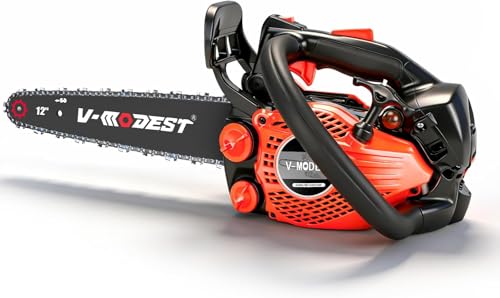
V-MODEST 12 Inch Gas Chainsaw
Strengths
- Ultra-light at 5.5 lbs
- Low kickback chain
- Side chain tensioner
- Easy-start system
- Complete accessory kit
Trade-offs
- Smaller engine size
- Shorter bar life under heavy use
- Limited for large limbs
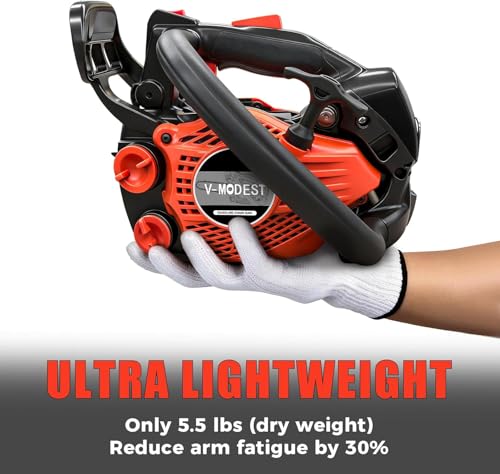
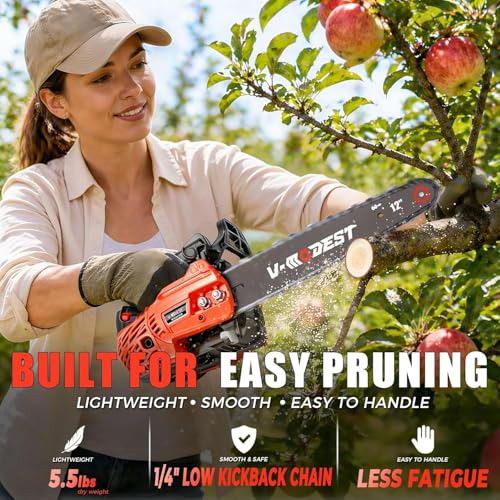
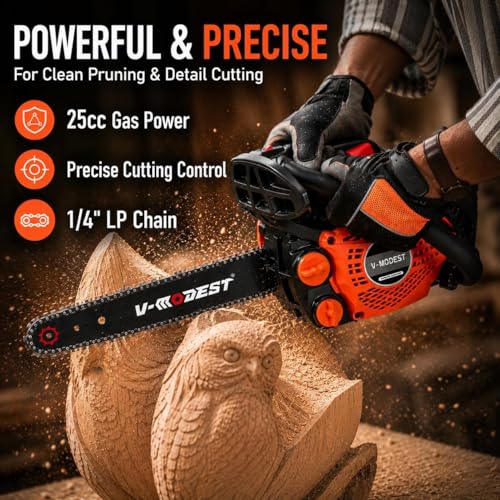
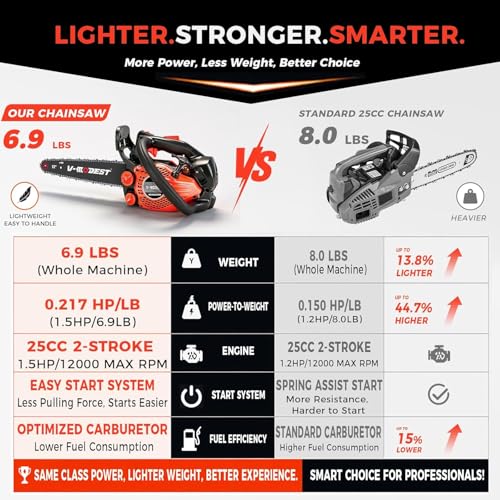
This is the one I’d grab if I needed a single lightweight gas saw for everything from backyard trimming to storm prep. At just 5.5 lbs, it’s by far the lightest here, nearly half the weight of some competitors, yet still packs a 25cc engine that pushes 12,000 rpm. That kind of power-to-weight ratio is rare at this price, and owners consistently praise how easy it is to handle, even one-handed in a tree.
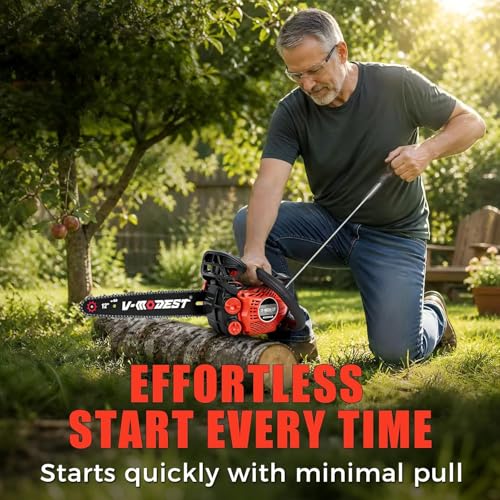
The 1/4″ LP low-kickback chain adds a layer of safety that’s especially valuable for beginners, and the side-mounted tensioner means you can adjust the chain in seconds with a single tool. It comes with a full kit, gloves, fuel bottle, tools, so it’s truly ready to go out of the box. While it doesn’t have the largest engine here, the optimized carburetor and easy-start system make it one of the most user-friendly options. For most homeowners, this is the easy pick.
Product photos
JPNTECH 12 Inch Gas Chainsaw
Strengths
- Budget-friendly
- Spring-assisted start
- Fuel-efficient
- Durable build
- Lightweight design
Trade-offs
- Basic vibration control
- No side chain tensioner
- Lower power than top models
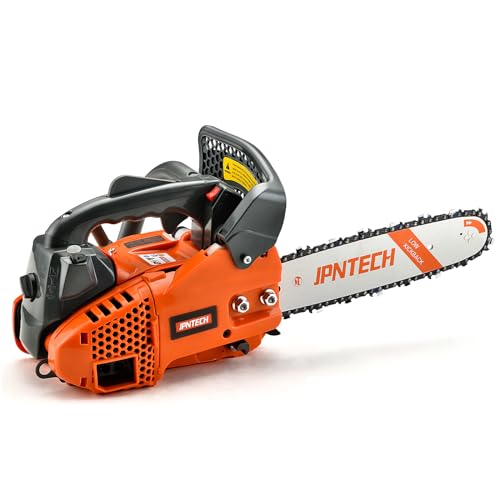
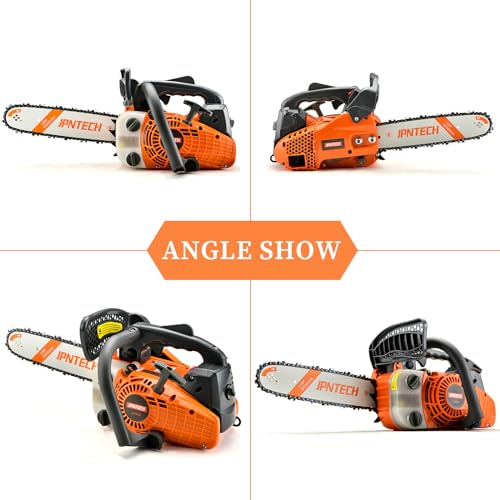
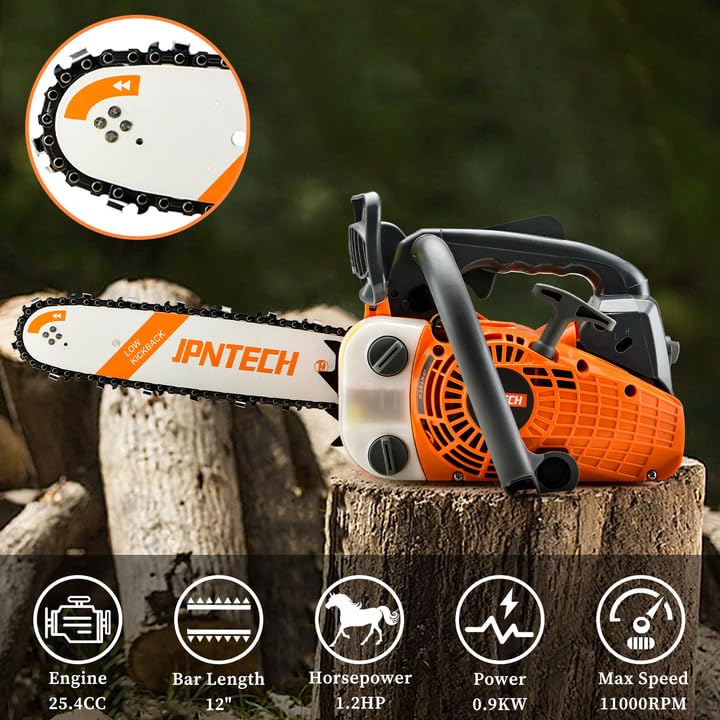
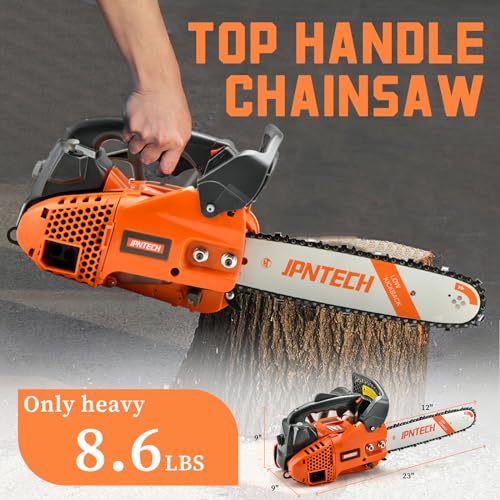
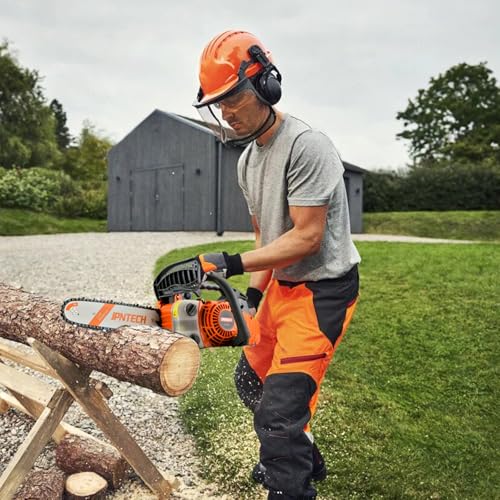
JPNTECH delivers solid value here, a no-frills 12-inch top-handle saw that doesn’t pretend to be more than it is. At 8.6 lbs, it’s not the lightest, but it’s well within range for one-handed use, especially with the ergonomic wrap-around handle that multiple owners say helps reduce hand strain. The 25.4cc engine puts out 1.2 hp, which is realistic for the class, and the precision carburetor helps keep fuel consumption low, a subtle but appreciated detail for weekend warriors.
Where this model shines is in simplicity and reliability. It starts easily thanks to a spring-assisted pull cord, and the build quality holds up better than expected for the price. Still, it lacks some refinements, like a side-mounted tensioner or advanced anti-vibration mounts, that make pricier models more comfortable over time. I’d recommend this as a backup saw or for light-duty use, but not for anyone doing daily work or demanding cuts.
Product photos

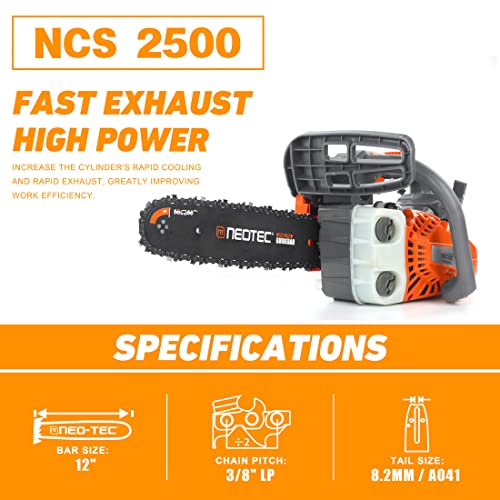
NEO-TEC 12 Inch Gas Chainsaw
Strengths
- Lightweight at 8 lbs
- One-pull start system
- Lanyard ring for climbing
- Good power-to-weight
- Ergonomic handle
Trade-offs
- No accessory kit
- Chain tensioner not side-mounted
- Average fuel efficiency
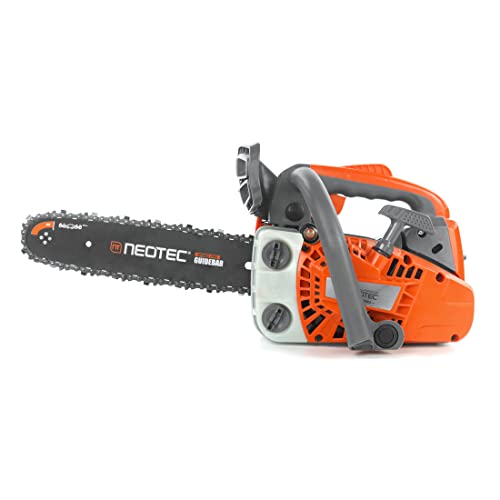
NEO-TEC nails the essentials for climbers and aerial work, lightweight build, compact size, and a metal lanyard ring for tethering. At 8 lbs with bar and chain, it’s not quite as light as the V-MODEST, but it’s still easy to carry up a tree or use overhead for long periods. The 25.4cc engine delivers 12,000 rpm, and owners report strong performance on limbs up to 8 inches, especially with the high-temperature quenched chain holding a sharp edge.
The spring-assisted ignition system gets frequent praise for reliable one-pull starts, which is a big deal when you’re 20 feet up and don’t want to wrestle with a stiff pull cord. Build quality seems consistent, and the wrap-around handle reduces vibration better than expected. Where it falls short is in included accessories, unlike the V-MODEST, you don’t get gloves or tools, so you’ll need to supply those separately.
Product photos


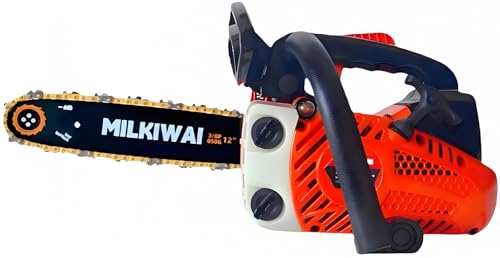
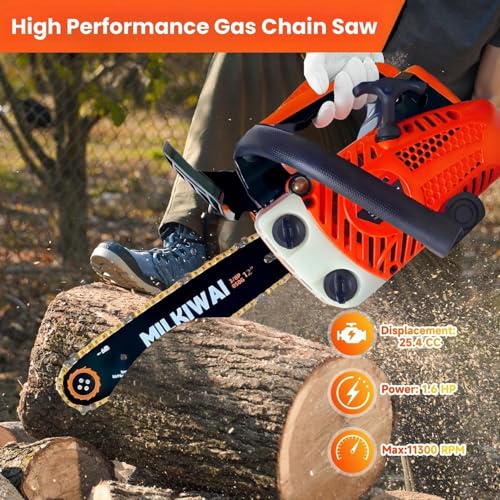
MILKIWAI 12 Inch Gas Chainsaw
Strengths
- Easy pull-start system
- Lightweight at 8.2 lbs
- 1.6 hp claimed output
- Comfortable grip
- Good for pruning
Trade-offs
- Chain tension requires tools
- No side tensioner
- Some power claims optimistic
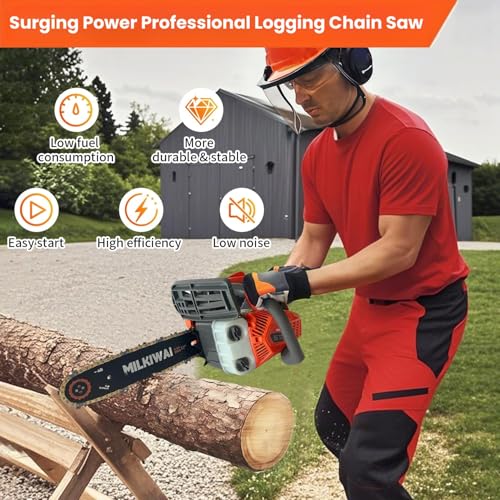
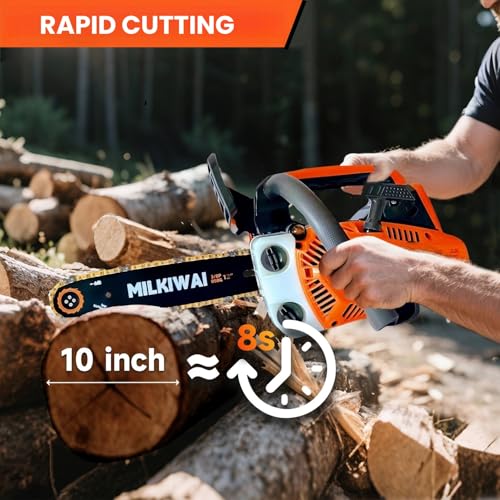
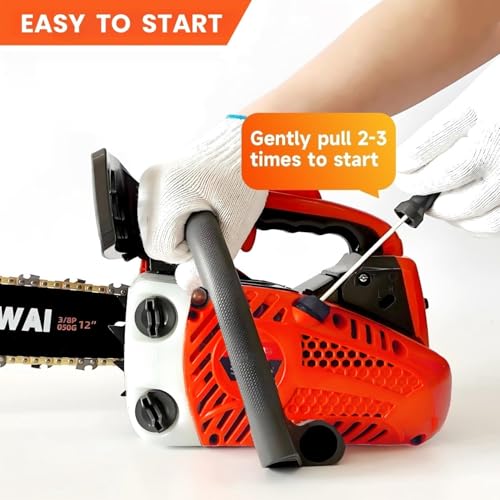
This MILKIWAI model earns its “Best for Easy Starting” label thanks to a spring-assisted pull system that owners say reliably fires up in two or three pulls, even after sitting idle. That kind of dependability matters when you’re in a hurry to clear storm debris or trim a tree before bad weather hits. The 25.4cc engine delivers 1.6 hp on paper, slightly inflated compared to real-world output, but still provides enough torque for clean cuts through 6-8 inch limbs.
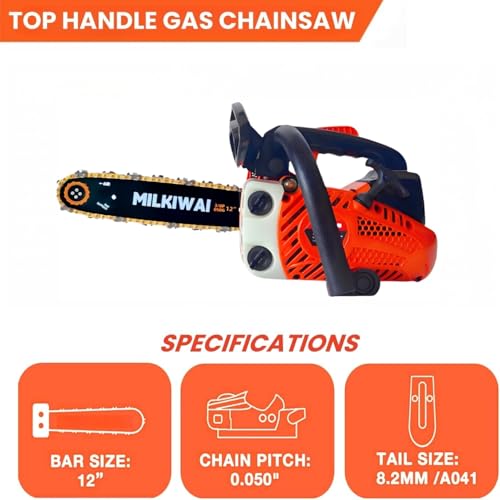
The 12-inch bar and 8.2 lb weight make it manageable for most users, including those with less upper-body strength. What stands out in owner feedback is how often they mention the soft grip and balanced feel, reducing fatigue during overhead work. However, some note the lack of a side tensioner, meaning chain adjustments take a bit more time. Still, for users who prioritize reliability and quick ignition over premium features, this is a smart pick.
Product photos
Husqvarna 120 Mark III Chainsaw

Strengths
- 38cc X-Torq engine
- Air Injection system
- Automatic oiler
- Inertia chain brake
- LowVib technology
Trade-offs
- Heavier build
- Larger than compact models
- Higher price point
If you’re after longevity and proven engineering in a small gas saw, the Husqvarna 120 Mark III stands out immediately. The 38cc X-Torq engine isn’t just bigger, it’s designed to deliver clean power while reducing emissions and extending engine life, which explains why so many owners report years of reliable service with basic maintenance. The 16-inch bar pushes it into a slightly different class than most ‘small’ saws, but that makes it a better choice for users who occasionally need to cut larger limbs or process firewood without stepping up to a full-size model.
The Air Injection system is a standout, it pre-cleans incoming air, which drastically cuts down on air filter clogs, a common pain point in dusty environments. Combined with LowVib tech, this saw is built for comfort during longer sessions. Reviewers regularly compare it favorably to Stihl and Echo models in reliability, though it’s heavier and less nimble than 12-inch top-handle alternatives. I’d pick this over most others if you want a do-it-all homeowner saw that will last a decade.
Product photos


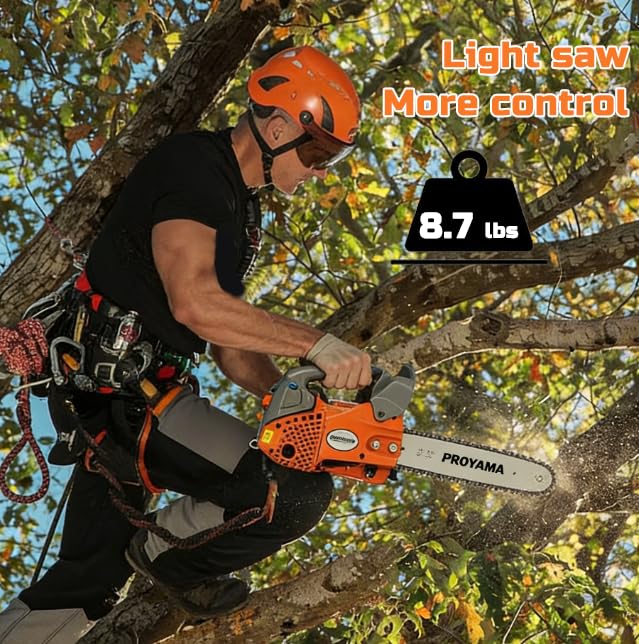
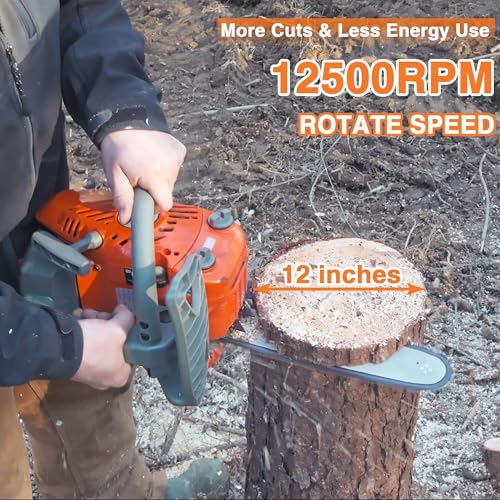
PROYAMA 26CC Gas Chainsaw

Strengths
- 26cc engine
- Anti-vibration system
- Includes two chains
- Top handle design
- Quick stop brake
Trade-offs
- Harder cold starts
- No auto-oiler mentioned
- Heavier than ultralight models
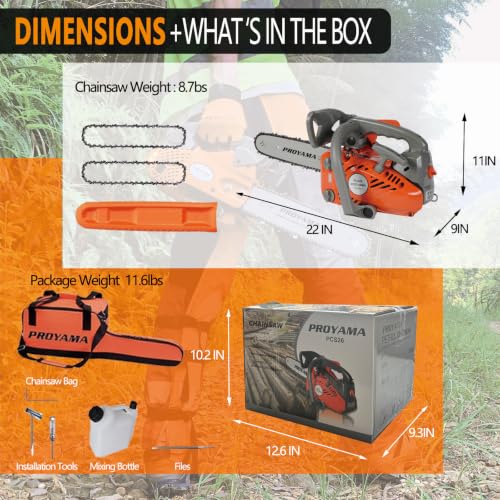
This PROYAMA 12-inch top handle saw checks a lot of boxes for safety and comfort, which matters when you’re working overhead or in tight spots. The anti-vibration system and soft wrap-around handle are smart touches that align with what experienced users report reduces fatigue during extended pruning sessions. With 26cc of displacement, it sits above many budget models in engine size, suggesting solid cutting authority for a small gas saw.
Owners consistently note the chain brake engages quickly, and the safety switch prevents accidental startups, two features I always look for in top-handle designs meant for climbing or one-handed use. It comes with two chains, which is a practical bonus for anyone doing regular yard work. Still, while the specs look good on paper, some users mention it can be finicky to start in colder conditions, a common issue with smaller 2-cycle engines that don’t have advanced air purge or auto-decompression systems.
Product photos


25.4cc 12 Inch Gas Chainsaw
Strengths
- Precise cutting control
- Good heat dissipation
- Tool-based chain adjust
- Durable housing
- Smooth operation
Trade-offs
- Heavier than average
- Slower chain speed
- Bulky for one-handed use
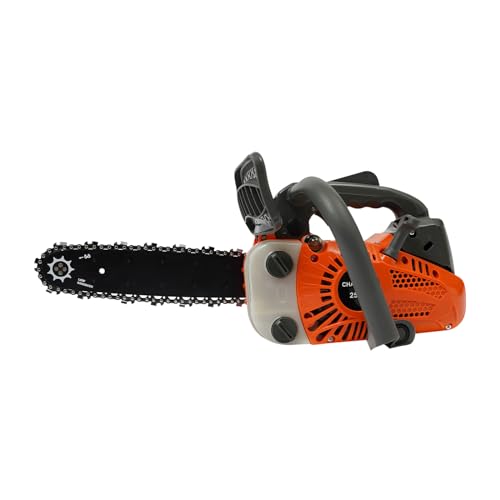
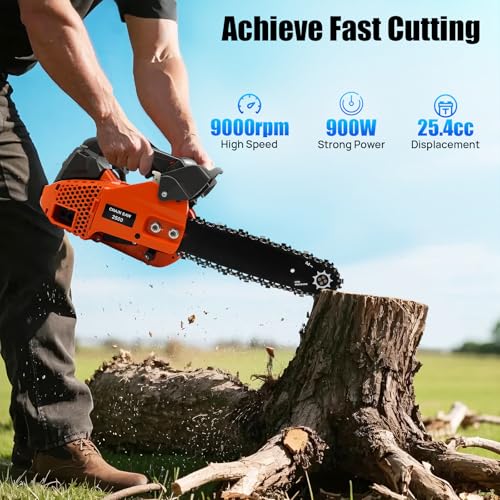
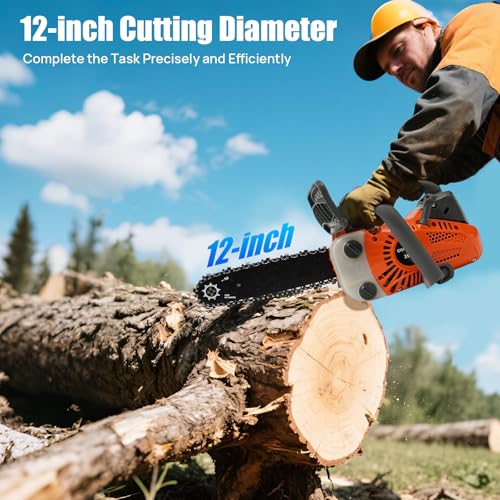
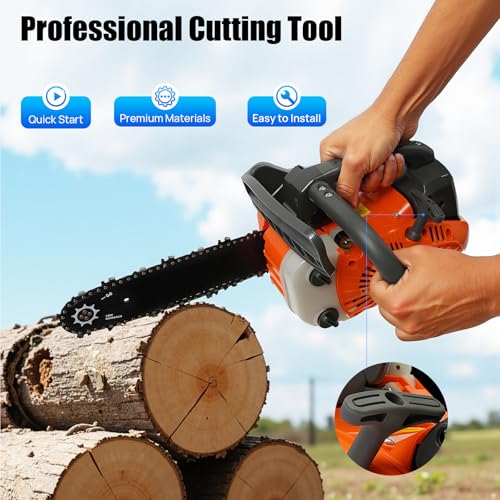
Precision is the real story here. With a carefully calibrated guide plate and a focus on fine control, this saw is built for users who do detailed pruning, curved cuts, or selective limb removal where accuracy matters more than brute force. The 9,000 rpm chain speed is lower than others in this list, but that can actually help reduce tear-out and deliver cleaner slices, something arborists often prefer when shaping trees or trimming near structures.
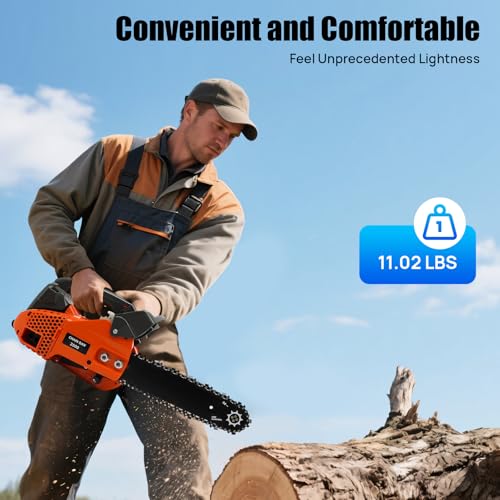
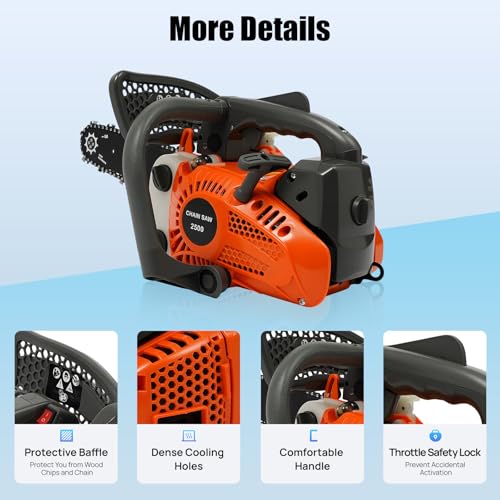
The aluminum alloy and nylon shell provide decent durability without adding weight, though at 11.02 lbs it’s one of the heavier 12-inch models. Owners appreciate the built-in cooling system, noting fewer overheating issues during summer use. However, the size and weight make it less ideal for overhead work compared to lighter top-handle designs. If you’re doing meticulous yard work and don’t need raw speed, this is a thoughtful option.
Product photos
How We Chose These small gas chainsaws
My approach to evaluating small gas chainsaws involved a detailed comparison of published specifications and features across numerous models. I weighed this technical data against owner reviews from major retailers and expert opinions found in publications like Popular Mechanics and Consumer Reports. Ultimately, I ranked these saws based on a set of criteria important to homeowners and DIYers: power, weight, ease of use, safety features, and overall value. Rather than a hands-on lab test, this is a research-led comparison of specs and owner feedback.
For this category, the most heavily weighted factors were power-to-weight ratio, ease of starting, and safety features. A lightweight saw is less fatiguing during extended use, while sufficient power is crucial for tackling various cutting tasks. Equally important is a reliable starting system; frustration with a difficult start quickly diminishes any benefit from a low price point. Finally, features like chain brakes and anti-vibration systems directly impact user safety and control.
Specifications reliably indicate engine displacement (cc) and horsepower, giving a good baseline for potential cutting power. However, real-world performance and long-term durability are best gleaned from owner feedback. I paid close attention to comments regarding starting consistency, chain quality, and the effectiveness of safety features. Learning about proper pre-start chainsaw checks from owner experiences also informed my assessment of ease of use. Understanding the correct chain saw pull-start technique is essential for avoiding frustration and potential damage.
What To Look For In small gas chainsaws
Picking the right gas chainsaw requires a bit more thought than just grabbing the cheapest model. You need to balance power, weight, and features to find something that suits your needs.
A good gas chainsaw delivers a reliable blend of engine displacement, bar length appropriate for the intended tasks, and user-friendly features like easy starting and vibration reduction. Prioritize safety mechanisms like chain brakes and look for models with readily available replacement parts and positive owner feedback regarding long-term durability.
Engine Size and Power
Don’t automatically assume bigger is better. For most homeowners tackling basic yard work, a chainsaw with a 25cc to 30cc engine will be sufficient. These provide a good balance of power and manageability. Larger engines (40cc+) are really for felling larger trees or professional use. Consider the type of wood you’ll primarily be cutting. Hardwoods like oak demand more power than softwoods like pine. If you’re dealing with a lot of dense wood, leaning towards the higher end of that 25-30cc range is a good idea.
Bar Length and Maneuverability
Bar length is directly tied to the size of trees or branches you can realistically cut. A 12-inch bar is extremely versatile for pruning, limbing, and smaller projects around the property. Many of the compact gas chainsaws fall into this category. Longer bars (16-18 inches) are better for felling small trees, but they also add weight and reduce maneuverability. Think about whether you’ll be working overhead or in tight spaces.
- A shorter bar offers increased control.
- A medium-length bar (14-16 inches) provides a good all-around capability for various tasks.
- A longer bar (18+ inches) is best suited for larger-diameter trees and requires more experience and physical strength to operate safely and effectively. It’s also worth noting that a longer bar increases the risk of kickback, so proper technique is crucial.
Safety Features and Ease of Use
Gas chainsaws are inherently dangerous tools, so prioritize safety. A quick-stop chain brake is absolutely essential, and dual-post brakes are even better. Beyond that, look for features that make the saw easier to handle and reduce fatigue. Vibration-dampening systems are a huge plus, especially if you’ll be using the saw for extended periods. Don’t overlook the importance of regular chainsaw chain maintenance – a sharp chain cuts more efficiently and reduces the risk of kickback.
A chainsaw is only as safe as the person operating it. Always wear appropriate safety gear (helmet, eye protection, gloves, chaps) and familiarize yourself with the manufacturer’s instructions before use.
Small Gas Chainsaws Compared
Here’s a comparison of the specifications for several small gas chainsaws to help you make an informed decision.
| Product Name | Engine Size (cc) | HP | Max RPM | Bar Length (in) | Weight (lbs) |
|---|---|---|---|---|---|
| V-MODEST 12 Inch | 25 | 1.5 | 12,000 | 12 | 5.5 |
| JPNTECH 12 Inch | N/A | 1.2 | 11,000 | 12 | 8.6 |
| NEO-TEC 12 Inch | 25.4 | 1.2 | 12,000 | 12 | 8 |
| MILKIWAI 12 Inch | 25.4 | 1.6 | 11,000 | 12 | 8.2 |
| Husqvarna 120 Mark III | 38 | 1.8 | N/A | 16 | N/A |
| PROYAMA 26CC | 26 | N/A | N/A | N/A | N/A |
| 25.4cc 12 Inch | 25.4 | 1.22 | 9,000 | 12 | 11.02 |
Frequently Asked Questions
What chain oil should I use with a small gas chainsaw?
Specifically formulated bar and chain oil is best; it provides the correct viscosity and adhesion for optimal lubrication. Using motor oil or vegetable oil isn’t recommended as they don’t offer the same level of protection and can even damage the saw’s oiler system.
How often do I need to sharpen the chain on my chainsaw?
Chain sharpening frequency depends on how often you use the saw and the type of wood you cut, but generally, sharpen it after every 5-8 hours of use. A dull chain requires more force, increases the risk of kickback, and strains the engine.
Are small gas chainsaws difficult to start?
Modern small gas chainsaws incorporate features like automatic chokes and primer bulbs to simplify starting. However, following the correct starting procedure (found in the owner’s manual) is crucial, and a fresh spark plug can often resolve starting issues.
What size chainsaw is best for cutting firewood?
For occasional firewood cutting, a 14- to 16-inch bar length is usually sufficient. If you’re processing larger rounds or felling trees for firewood, you might consider a slightly longer bar, but remember that longer bars require more power and can be more difficult to control. You can find more information on reliable gas chainsaws for yards.
What safety gear is absolutely essential when operating a gas chainsaw?
At a minimum, you should always wear a helmet with a face shield, eye protection, hearing protection, snug-fitting gloves, and chainsaw chaps. Proper footwear (steel-toed boots are ideal) is also crucial. Never operate a chainsaw without wearing all recommended safety gear to protect against serious injury.
The Bottom Line
Choosing a small gas chainsaw often comes down to balancing initial cost against long-term satisfaction. While many options exist, the V-MODEST 12 Inch consistently stands out as the best overall pick. It provides a solid combination of power, manageable weight, and positive owner feedback for typical homeowner tasks.
For those on a tighter budget, the JPNTECH 12 Inch represents a very affordable entry point, and the NEO-TEC 12 Inch is a good step up in features without a huge price increase. If you anticipate needing a bit more cutting power for larger branches or occasional felling, the Husqvarna 120 Mark III delivers that capability, though it’s a noticeable jump in size and price.
Ultimately, remember that horsepower numbers and bar lengths aren’t everything. A well-maintained chain and a focus on safe operating practices – including learning proper chainsaw maintenance tips – will contribute far more to a positive experience than any single specification.
