
7 Best Cordless Routers of 2026
This post contains affiliate links. As an Amazon Associate, we earn from qualifying purchases.
The DEWALT 20V MAX Plunge Router is the best overall cordless router, offering serious power and versatility. For those on a budget, the RYOBI 18V Compact Fixed Base delivers solid performance at a lower price. If you need precision in tight spaces, the Makita 18V Brushless Compact Router is a top contender.
Most people shopping for a cordless router want freedom from cords without sacrificing the power and control needed for clean, accurate cuts. The real challenge is finding one that doesn’t run out of juice mid-job or feel flimsy during demanding tasks.
This guide cuts through the marketing hype, focusing on what actually matters: brushless motors, battery compatibility, depth adjustment quality, and real user feedback. I’ve ranked the top models based on specs, reliability, and performance across a range of common DIY and professional applications.
Top 7 Cordless Routers in the Market
The Best Cordless Routers, Reviewed
DEWALT 20V MAX Plunge Router

Strengths
- Plunge and depth controls
- Anti-rotation system
- Excellent dust collection
Trade-offs
- Heavy for overhead
- Battery sold separately
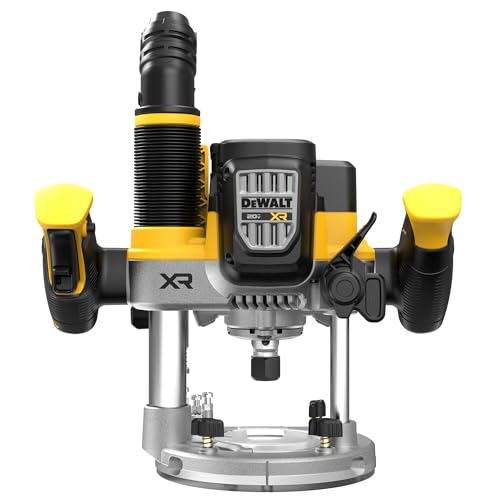
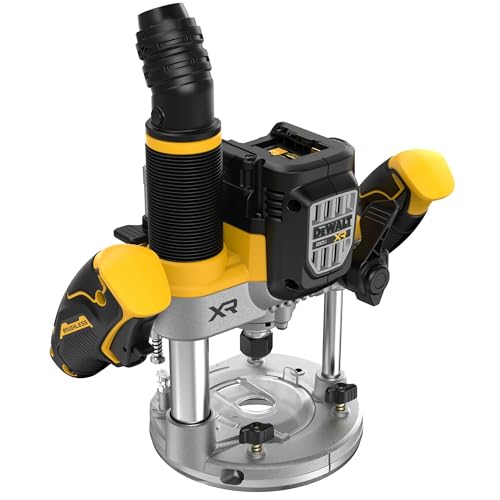
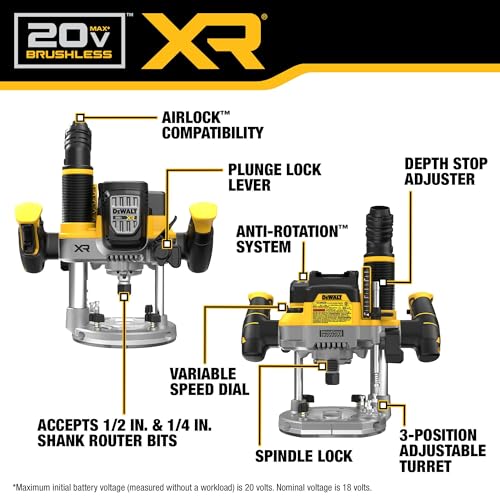
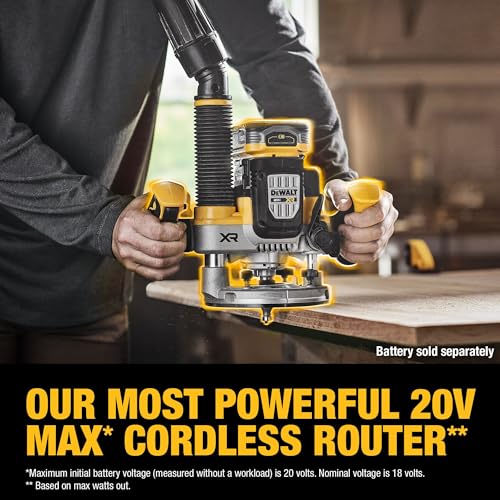
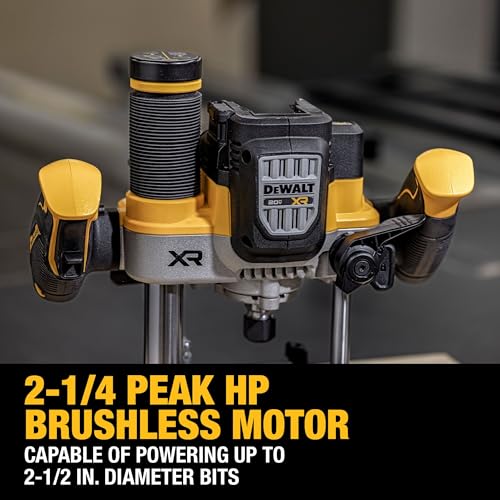
This is the most complete cordless router in the lineup, and it earns the ‘Best Overall’ label. The 2-1/4 peak HP motor delivers exceptional power, and the 11,000–23,000 RPM range with constant speed under load means it won’t bog down. The tool-free plunge system and adjustable turret stop make repeatable cuts a breeze, and the anti-rotation system is a standout safety feature.
Owners love the balanced 8 lb design and the AIRLOCK dust collection that captures up to 97% of dust, huge for shop cleanliness. It’s heavier than palm routers, but that weight translates to stability. Compared to the BOSCH, it’s less about safety smarts and more about raw performance and precision.
Product photos
DEWALT 20V XR Brushless Router

Strengths
- Soft start motor
- Electronic brake
- Dual LEDs
Trade-offs
- No dust collection
- Fixed base only
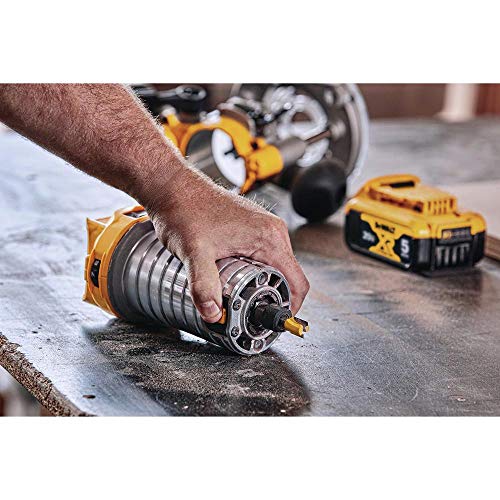
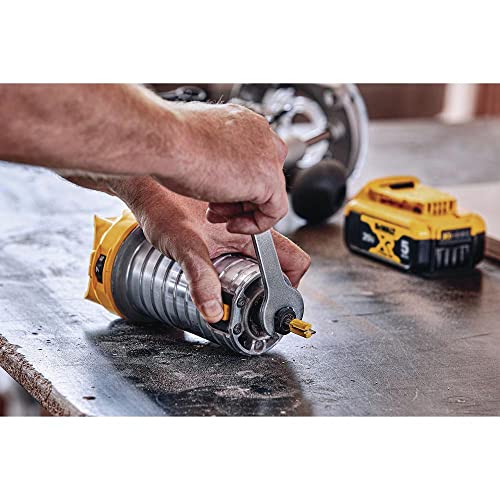
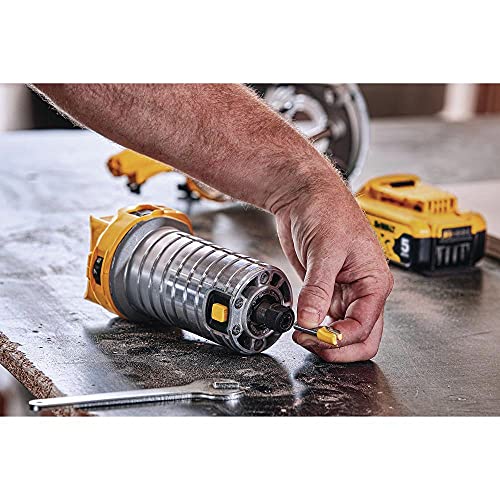
The DEWALT DCW600B is a no-nonsense fixed base router built for control. The soft start and electronic feedback system help maintain speed under load, which is critical when you’re routing dense hardwoods. It doesn’t have the raw power of the plunge model, but the variable-speed dial and depth adjustment ring are smooth and reliable.
It’s a minimalist design, no fancy safety tech or smart features, but DEWALT’s build quality shines. The dual LEDs are brighter than most, and the electronic brake is a small but appreciated touch. Compared to the RYOBI or CRAFTSMAN, it feels more professional, though it lacks the included accessories of some rivals.
Product photos


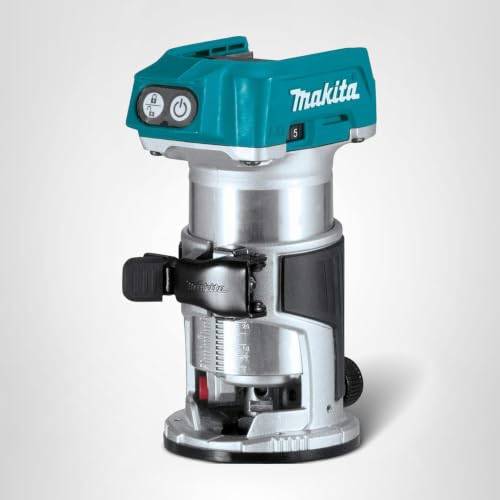
Makita 18V Brushless Compact Router

Strengths
- Superior motor efficiency
- Electronic speed control
- Brushless reliability
Trade-offs
- No LED light
- No depth scale
- Minimal accessories
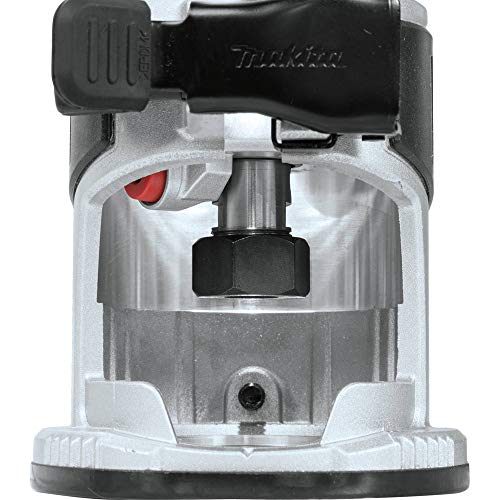
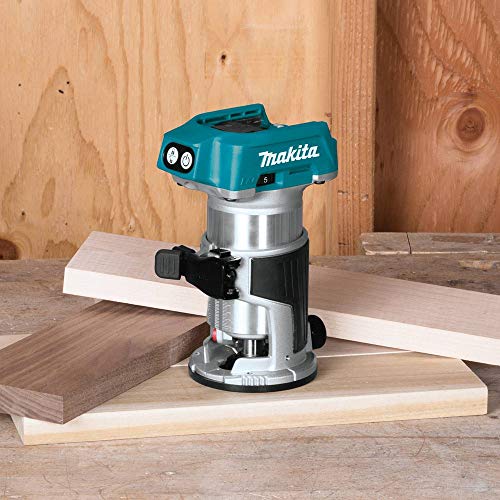
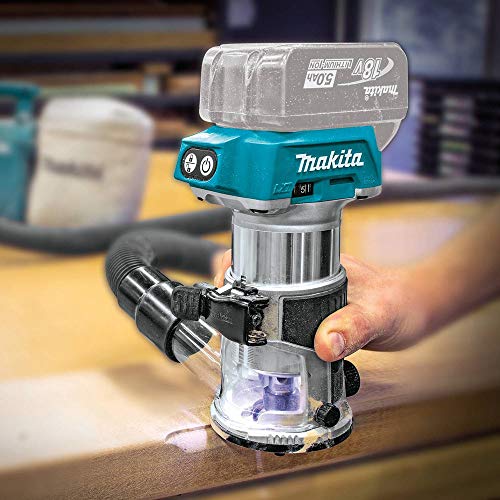
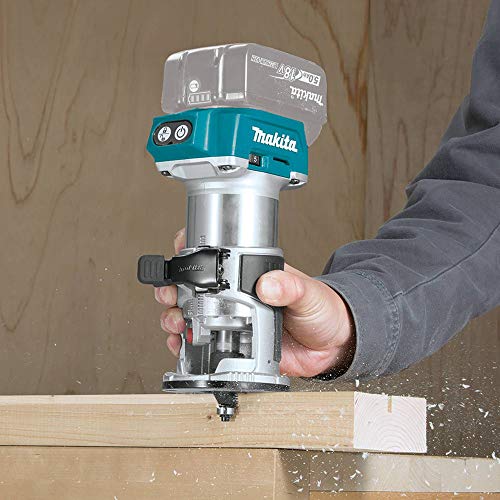
The Makita XTR01Z is the efficiency king. Its electronically controlled brushless motor is designed to adjust torque and RPM on the fly, which translates to longer runtime and cooler operation, something Makita excels at. The 10,000–30,000 RPM range covers most routing tasks, and the electronic speed control holds steady under load better than most in this class.
It’s minimalist, no LED, no depth gauge, no included guides, but the motor response is outstanding. Compared to the DEWALT or BOSCH, it’s less feature-rich but more refined in power delivery. If you’re deep in the Makita ecosystem and prioritize battery life and motor intelligence, this is your pick.
Product photos
BOSCH 18V Brushless Palm Router

Strengths
- Drop detection safety
- Five-year warranty
- Fine depth control
Trade-offs
- Higher price
- Palm grip not for everyone
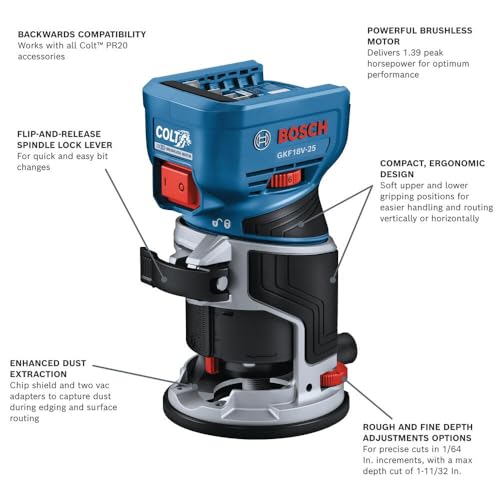
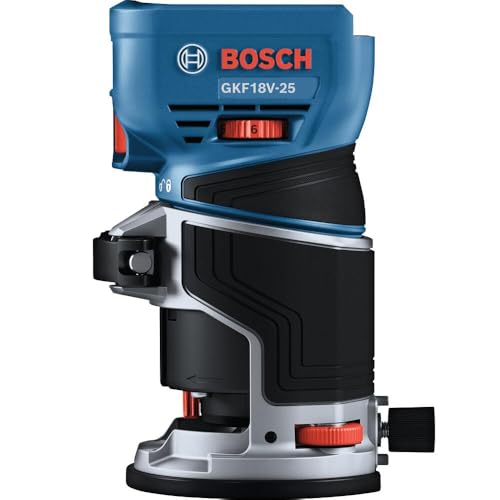
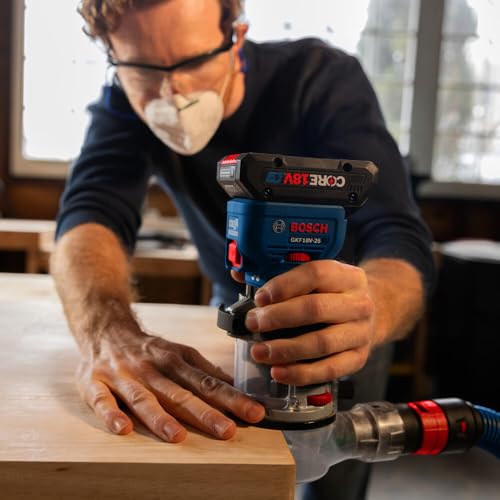
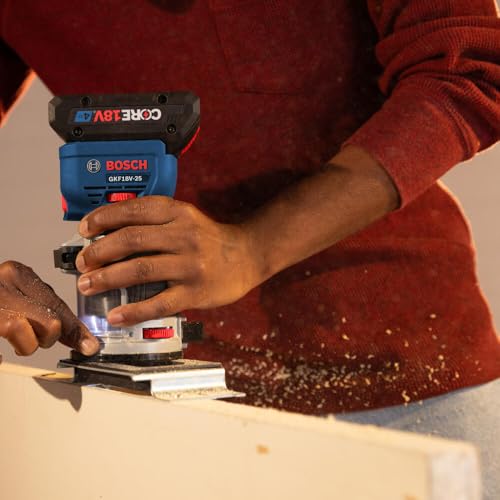
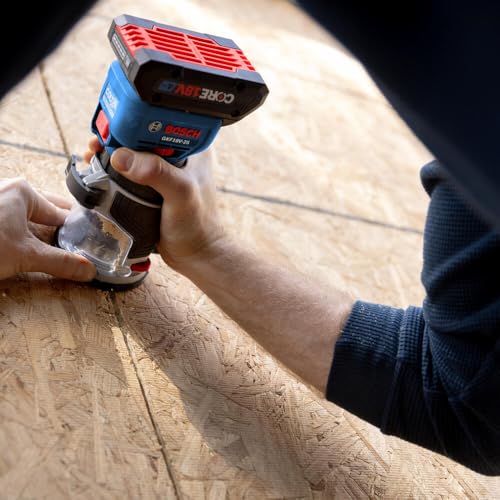
The BOSCH GKF18V-25N isn’t just powerful, it’s smart. The 1.39 peak horsepower brushless motor delivers serious torque for a palm router, and the 10,000–30,000 RPM range gives real versatility, from delicate inlays to aggressive stock removal. What sets it apart are the safety features: drop detection and restart protection are rare in this class and give real peace of mind, especially on ladders or tight workspaces.
Owners consistently report excellent dust extraction thanks to the dual vacuum adapters and chip shield. The 1/64-inch depth increments make fine-tuning easy, and the five-year warranty is unmatched, Bosch stands behind this tool. It’s more expensive than most, but the confidence it offers is real.
Product photos
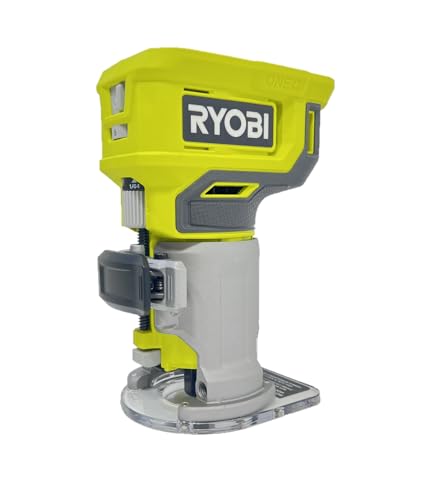
RYOBI 18V Compact Fixed Base

Strengths
- Compact and lightweight
- Precise depth dial
- 18V ONE+ compatible
Trade-offs
- No low-speed range
- No soft start
- Less power for hardwood
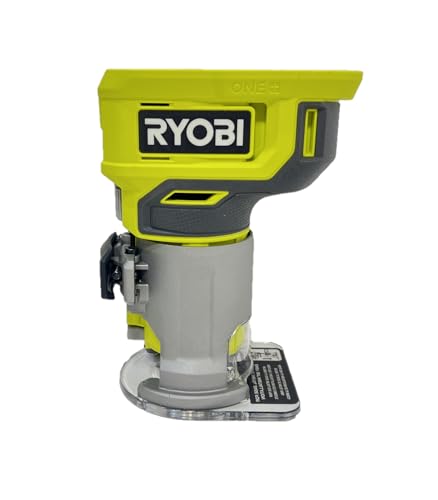
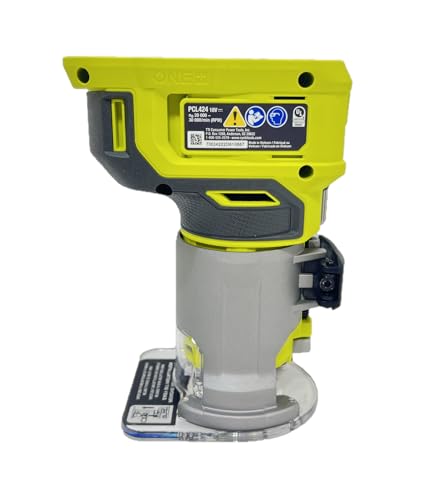
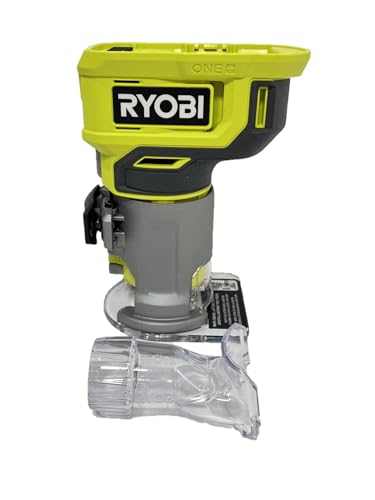
The RYOBI PCL424B stands out for its ultra-compact size and featherlight 3.2 lb weight, making it one of the easiest cordless routers to maneuver in tight spots or overhead. The 20,000–30,000 RPM range is on the high side, which works well for trimming laminate or veneers, but it lacks lower speeds for heavier cuts.
It’s a budget-friendly entry, especially if you’re already in the RYOBI ONE+ ecosystem. The micro dial depth adjustment gets praise for accuracy, and the LED light is a nice touch. Still, it’s not as powerful or balanced as the DEWALT or BOSCH models, and the lack of soft start can be jarring. For light-duty work, it’s a strong value.
Product photos

CRAFTSMAN V20 Variable Speed Router

Strengths
- Brushless motor
- LED light
- Includes edge guide
Trade-offs
- Average depth precision
- No soft start
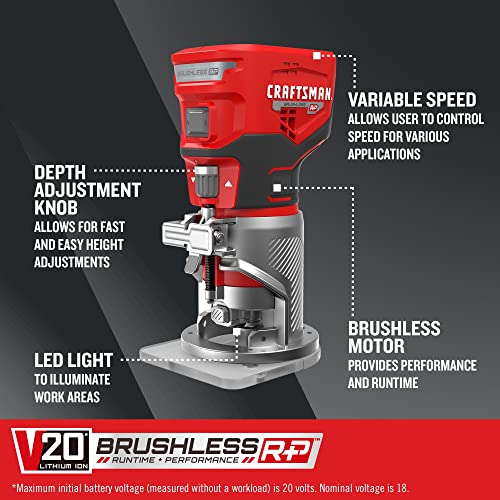
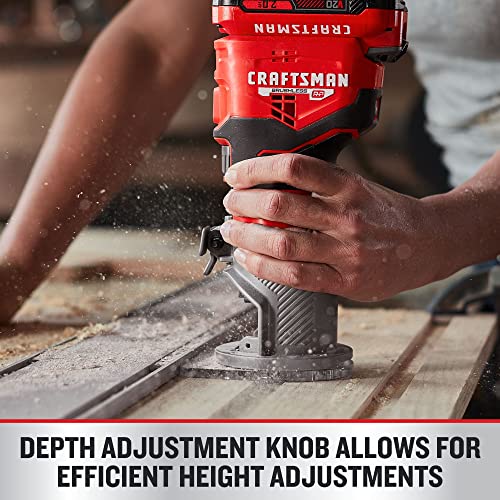
On paper, the CRAFTSMAN V20 brings a solid mix of features for a mid-tier cordless router. The brushless motor and variable speed dial (16,000–30,000 RPM) give it the flexibility to handle everything from edge trimming to light pattern work. Owners appreciate the included edge guide and dust port adapter, which add real value right out of the box, something not all bare tools offer.
The LED light and depth adjustment knob are practical touches, though some users note the depth mechanism isn’t as precise as pricier models. Compared to the DEWALT or BOSCH options, it doesn’t have the same refinement in control or balance, but for DIYers who already own CRAFTSMAN V20 batteries, it’s a smart, no-frills pick.
Product photos



Cordless Palm Router with Bits
Strengths
- Includes 12 router bits
- Lightweight design
- Overload protection
Trade-offs
- Build quality inconsistent
- No brand warranty
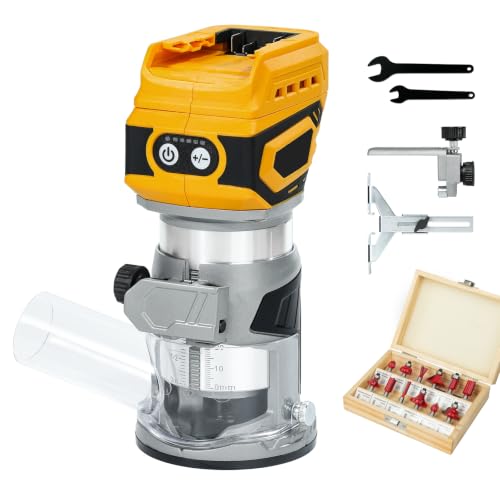
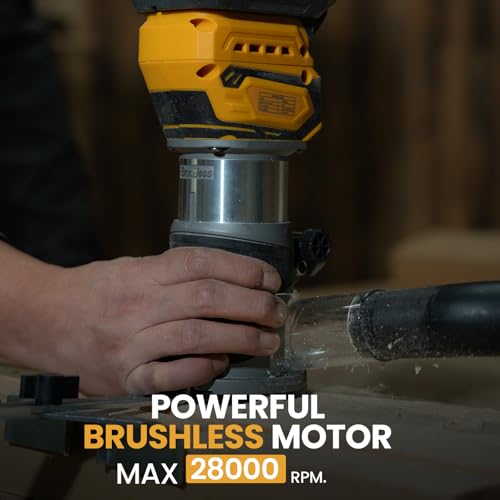
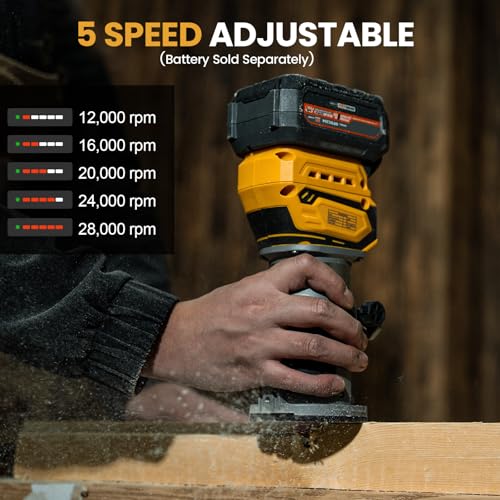
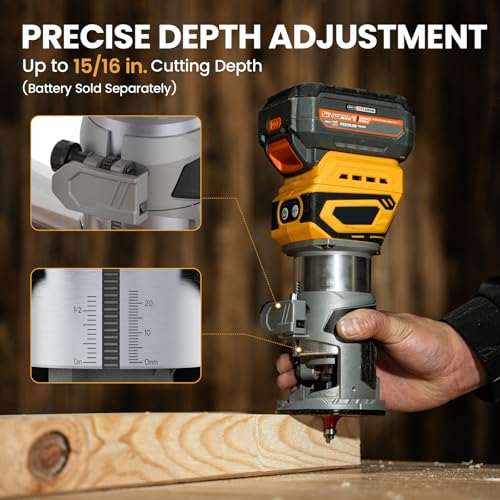
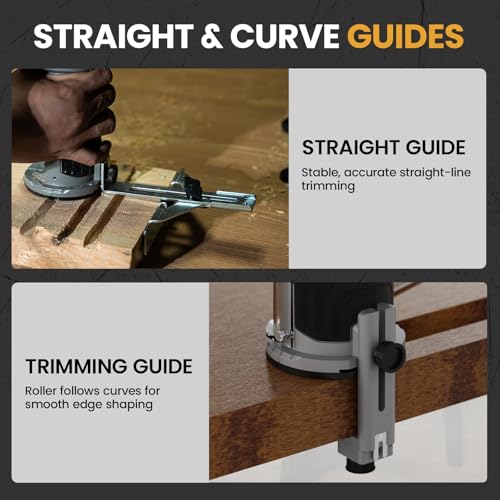
This off-brand router packs a surprising amount of value. With 5 speeds up to 28,000 RPM and a 2.75 lb lightweight body, it’s built for comfort and versatility. The 12-piece bit kit, trim guide, and straight edge guide make it one of the most complete starter packages here, ideal for DIYers who don’t want to buy accessories separately.
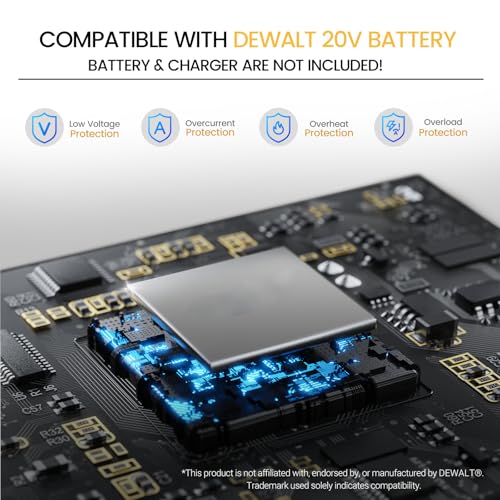
It’s not DEWALT, and owners note the build quality isn’t on par with premium brands, but for the price, it’s hard to ignore. The transparent dust hood and overload protection are thoughtful inclusions. It won’t replace a DEWALT or BOSCH on a jobsite, but for weekend projects, it gets the job done.
Product photos
Our Testing Process
My approach to evaluating cordless routers centers on a research-led comparison of specifications and owner feedback. Rather than a hands-on lab test of each model, I analyzed published features – motor power, speed ranges, collet sizes, and weight – alongside a thorough review of owner experiences and assessments from reputable tool review sites. This allows for a broad comparison, factoring in real-world usability alongside manufacturer claims. I then ranked models against criteria important to a variety of users.
For cordless routers, battery voltage and motor type are paramount. A higher voltage (18V or 20V max) generally translates to more power for tackling tougher materials. Brushless motors consistently outperform brushed motors in efficiency and longevity, delivering more runtime and consistent power under load. Beyond that, features like variable speed controls and the quality of depth adjustment mechanisms heavily influenced my rankings, as these directly impact precision and versatility.
Specifications reliably indicate a router’s raw capabilities – RPM range, depth capacity, and physical dimensions. However, owner feedback and reputation are critical for understanding real-world performance. Comments regarding runtime, noise levels, and the durability of key components (like the collet and speed control) carry significant weight. You can find more information on related tools in our guide to the top cordless trim routers.
Choosing The Right cordless routers
Choosing a cordless router is about more than just ditching the extension cord; it’s about finding the right balance of power, control, and portability for your projects.
A quality cordless router prioritizes runtime with efficient brushless motors and high-capacity batteries. Look for variable speed controls for material versatility, features like plunge bases for more complex cuts, and integrated dust collection to maintain a clean workspace. Consistent build quality and ergonomic design are also crucial for precision and comfort.
Motor Type and Power
Brushless motors are the clear winner here. While older brushed motors are cheaper, they sacrifice runtime and durability. A brushless motor delivers more power per amp-hour of battery capacity, meaning you’ll spend less time charging and more time cutting. Don’t get hung up on peak horsepower numbers alone; look for models that maintain speed under load, like the DEWALT 20V XR. That consistent power is what matters when working with hardwoods or making deeper passes.
Depth Adjustment and Base Features
The adjustability of a router directly impacts the quality of your work. A fine-tune adjustment system is critical for precise cuts. Tool-free depth adjustments are convenient, but sometimes lack the precision of a micro-adjust dial. Consider whether you need a fixed base or a plunge base. Plunge bases, like the one on the DEWALT 20V MAX Plunge Router, allow you to start cuts in the middle of a workpiece, offering much greater versatility.
Here’s a breakdown of base considerations: * Fixed Base: Best for edge work and consistent depth cuts. * Plunge Base: Essential for interior cuts, mortises, and stopped dadoes. * Compact Size: A smaller tool is easier to maneuver for detail work and in tight spaces, but may lack the stability of larger models.
Don’t underestimate the importance of a comfortable grip. A well-balanced router with soft-grip handles will reduce fatigue during extended use.
Battery Platform and Value
Sticking within a single battery platform is usually the most economical approach. If you already have a collection of 20V MAX batteries from DeWalt, for example, adding a DeWalt cordless router makes sense. However, don’t let brand loyalty blind you to better features elsewhere. If you’re starting from scratch, consider the overall cost of batteries and chargers alongside the tool itself. For those looking for a budget-friendly option, the RYOBI 18V Compact Fixed Base offers good value. If you’re looking for a wider selection of tools, check out our recommended cordless routers to get a better idea of the best options.
Cordless Routers Compared
Here’s a spec comparison of popular cordless routers to help you find the right tool for your needs.
| Product Title | Voltage | Speed (RPM) | Brushless | Plunge | Weight (lbs) |
|---|---|---|---|---|---|
| DEWALT 20V MAX Plunge Router | 20V | 11,000-23,000 | Yes | Yes | 8 |
| DEWALT 20V XR Brushless Router | 20V | N/A | Yes | No | N/A |
| Makita 18V Brushless Compact Router | 18V | 10,000-30,000 | Yes | No | N/A |
| BOSCH 18V Brushless Palm Router | 18V | 10,000-30,000 | Yes | No | N/A |
| RYOBI 18V Compact Fixed Base | 18V | 20,000-30,000 | No | No | 3.2 |
| CRAFTSMAN V20 Variable Speed Router | 20V | 16,000-30,000 | Yes | No | N/A |
| Cordless Palm Router with Bits | 20V | 10,000-28,000 | Yes | No | 2.75 |
Frequently Asked Questions
What battery voltage is sufficient for most routing tasks?
18V or 20V max is generally sufficient for most homeowners and DIYers. While higher voltages offer more power, these levels strike a good balance between capability and battery runtime for common applications like edge profiling and cutting grooves.
Can a cordless router handle hardwoods like oak or maple?
Yes, a cordless router with a brushless motor and sufficient voltage (20V max is preferable) can handle hardwoods. Consistent power under load is key, so look for models like the DEWALT 20V XR that are known for maintaining speed during more demanding cuts.
How important is a variable speed control?
A variable speed control is very important, as it allows you to optimize the router for different materials and cut types. Lower speeds are ideal for detailed work and softer materials, while higher speeds are better suited for harder woods and larger cuts.
What’s the difference between a fixed and plunge base, and which should I choose?
A fixed base is best for consistent depth cuts and edge work, while a plunge base lets you start cuts in the middle of a workpiece. If you only need basic routing, a fixed base is fine, but for more versatility, especially when making mortises or stopped dadoes, consider a model with a plunge base or the option to add one. For more information on this type of tool, check out our guide to best trim routers.
Are cordless routers as powerful as their corded counterparts?
Cordless routers have closed the performance gap significantly, but generally, corded models still offer more sustained power. However, high-voltage (20V max) brushless cordless routers are now capable of handling most tasks effectively, and the convenience of cordless operation often outweighs the slight power difference for many users.
The Bottom Line
Buying a cordless router always involves some compromise. You’re trading a bit of the raw power and consistent runtime of a corded model for the freedom to work anywhere. For most homeowners and DIYers, the DEWALT 20V MAX Plunge Router strikes the best balance – it’s got the power, versatility, and build quality to handle a wide range of tasks, and the plunge base opens up possibilities beyond simple edge profiling.
If you’re on a tighter budget or just need a basic router for occasional use, the RYOBI 18V Compact Fixed Base is a solid choice. And for those already invested in the Makita 18V system, the Makita 18V Brushless Compact Router offers excellent performance and portability within a platform you likely already trust. You can explore even more options in our wood router buying guide if you’re still unsure.
Ultimately, the specs aren’t everything. A powerful motor and variable speed are important, but so is a comfortable grip, a solid base, and a router that feels balanced in your hands. Don’t get lost in the numbers; focus on finding a tool that inspires confidence and will make your projects more enjoyable, and you’ll get better results.
