9 Best Cordless Rotary Tools for 2026
This post contains affiliate links. As an Amazon Associate, we earn from qualifying purchases.
The Dremel 8250-5 stands out as the best overall cordless rotary tool for its strong 12V motor, reliable performance, and brand reputation. For those on a budget, the DEPSTECH DC08 offers solid features and an extensive accessory kit at a lower price. If you value portability and modern charging, the Fanttik F2 Master brings USB-C convenience and precision handling.
Most people buying a cordless rotary tool want freedom from cords without sacrificing power or control, but too many end up with underpowered units or kits full of useless accessories. As someone who’s spent over 15 years in workshops and on job sites, I’ve seen how the wrong tool can slow down a project or fail mid-job.
This guide cuts through the noise by focusing on real-world usability, we looked at specs, battery life, motor type, and what owners actually say about durability and performance. These picks give you reliable options whether you’re doing detailed crafts or tougher DIY tasks.
Top 9 Cordless Rotary Tools in the Market
The Best Cordless Rotary Tools, Reviewed
Dremel 8250-5 12V Brushless Rotary Tool

Strengths
- Brushless motor
- Long runtime
- EZ Twist collet
Trade-offs
- Heavier than others
- Higher price
- Charger sold separately in some kits
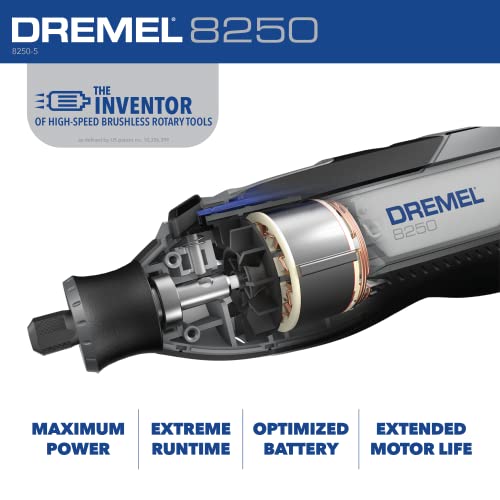
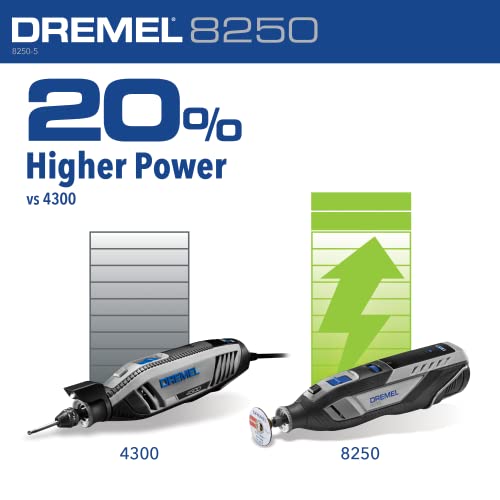
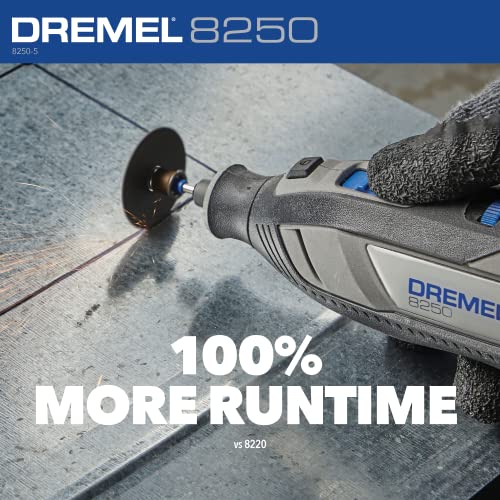
The Dremel 8250 is the benchmark here. With a 12V brushless motor and a 3.0Ah battery, it delivers real corded-like power in a cordless body. Reviewers consistently highlight its runtime and sustained performance, this tool doesn’t quit mid-job. The EZ Twist nose cap for quick accessory changes is a small feature that makes a big difference in daily use. It’s fully compatible with all Dremel accessories, which is a huge plus if you already own bits or attachments.
Yes, it’s one of the pricier options, but you’re paying for durability, power, and smart design. Compared to the WORKPRO 12V, it feels more refined and reliable. I’d pick this as the best overall choice for anyone serious about their projects, hobbyists, woodworkers, or even light pros.
Product photos


Fanttik F2 Master Mini Rotary Tool

Strengths
- Extremely lightweight
- Quiet brushless motor
- Revostor magnetic hub
Trade-offs
- Limited to 3/32″ accessories
- Short battery life
- No removable battery
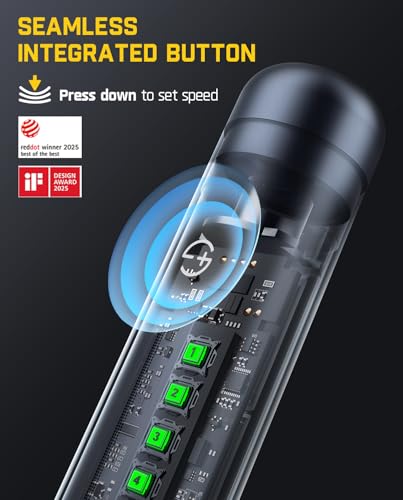
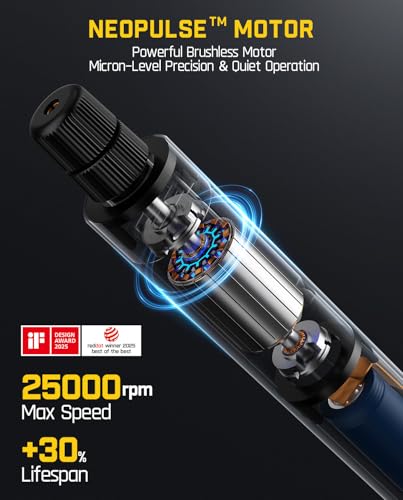
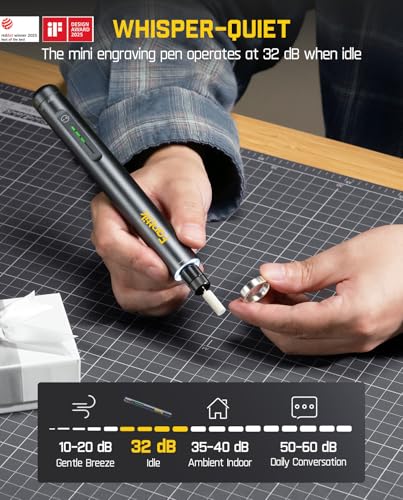
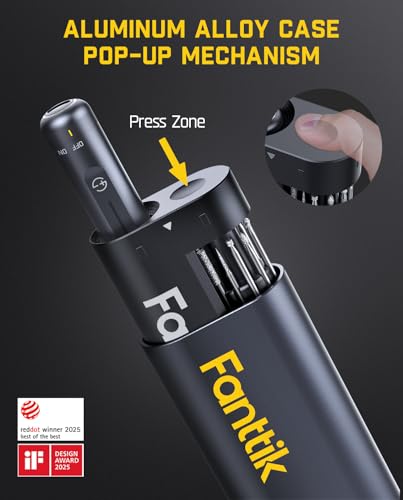
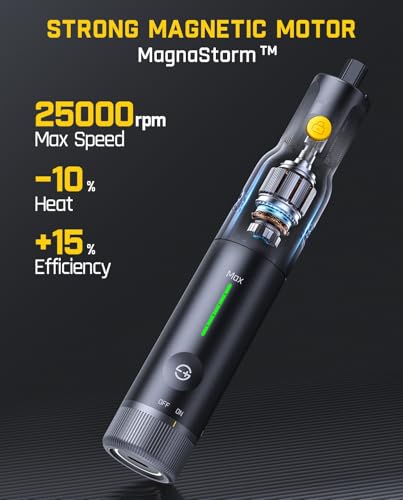
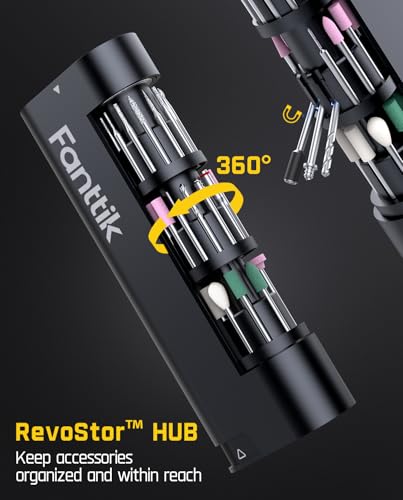
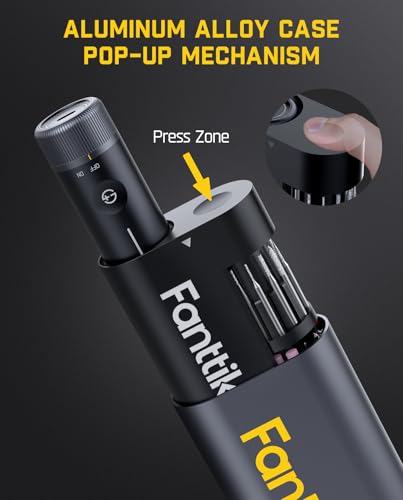
The Fanttik F2 Master stands out with its ultra-light 0.22 lb weight and sleek aluminum case. It’s built for precision, not power, 25,000 RPM is enough for engraving or finishing 3D prints, but don’t expect it to cut through steel. The brushless hollow cup motor is quieter and runs cooler, which owners appreciate during long sessions. The Revostor Hub is brilliant: a magnetic, rotating stand that keeps 35 accessories organized and within reach.
It’s not the most powerful, but for portability and clean design, it’s unmatched. Compared to the F2 PRO, it has fewer accessories but a more compact form. I’d recommend this to detail-oriented users, jewelers, model builders, or anyone working in tight spaces.
Product photos

DEPSTECH DC08 8V Cordless Rotary Tool

Strengths
- Lightweight and compact
- Type-C charging
- Anti-blocking feature
Trade-offs
- Lower voltage limits heavy tasks
- Plastic build feels less durable
- Speed memory only lasts 5 minutes
The DEPSTECH DC08 hits a sweet spot with its 8V power and lightweight build. At just 0.82 pounds, it’s easy to hold for long sessions, and the anti-blocking system actually shows up in owner feedback as a real advantage, fewer frustrating stalls when the bit catches. The 5-speed range is narrower than some, but 5000–30000 RPM covers most common tasks, and the memory function is handy for repeat work. I appreciate the Type-C charging, which is becoming standard but still missing on many budget tools.
It doesn’t have the raw power of 12V models, but for sanding, light carving, or polishing, it performs reliably. Compared to the Dremel 8150, it’s less refined but offers more accessories for the price. My recommendation? This is the smarter buy if you’re a casual DIYer who wants value and convenience without paying for overkill.
Product photos


Fanttik F2 PRO Cordless Rotary Tool
Strengths
- 55 organized accessories
- Magnetic motor
- Durable aluminum case
Trade-offs
- Max speed only 25,000 RPM
- Battery not replaceable
- Limited to light-to-medium tasks
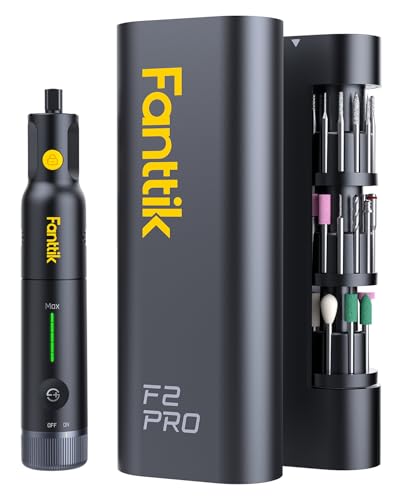
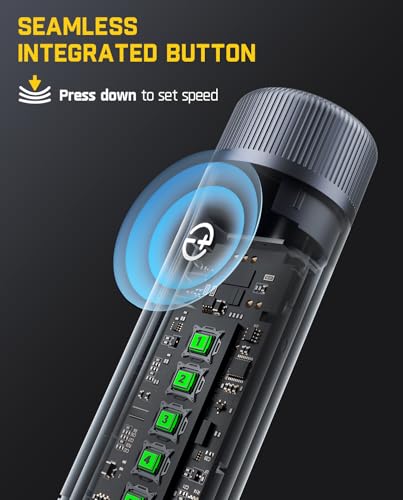
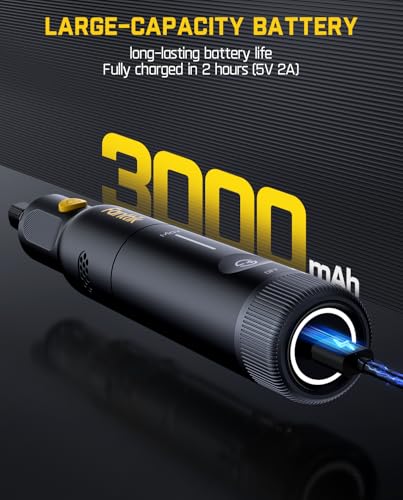
The F2 PRO builds on the F2 Master with more accessories, 55 in total, and a 3,000mAh battery for better runtime. The magnetic motor delivers consistent power across all 5 speeds, and the 360° Revostor Hub keeps everything organized. The front LED and side speed indicator add real usability, and the waterproof switch is a nice touch for messy environments.
It’s not the fastest, but it’s one of the most user-friendly for crafting. Owners love it for rust removal, blade sharpening, and polishing. Compared to the EZUVITA, it’s less about quantity and more about smart design. I’d recommend this to crafters who want a clean, efficient setup without clutter.
Product photos
HARDELL 3.7V Mini Cordless Rotary Tool
Strengths
- Ultra lightweight
- LED work light
- Beginner-friendly
Trade-offs
- Low power output
- Limited speed range
- Shorter runtime
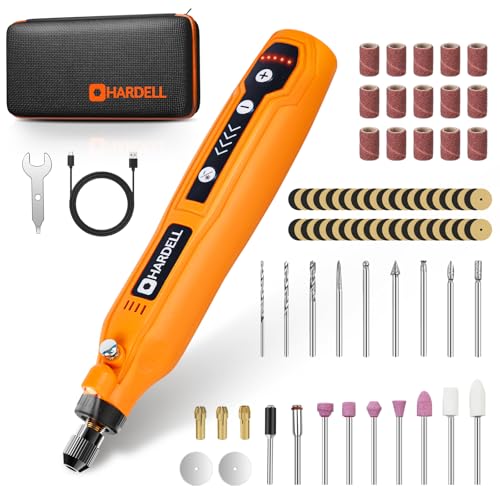
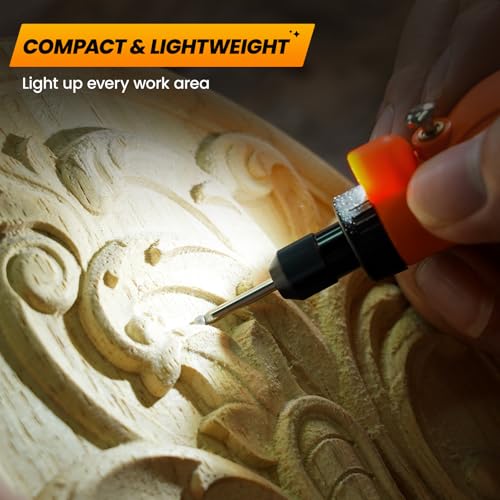
The HARDELL 3.7V rotary tool is clearly built for entry-level users. With a max speed of 18,000 RPM, it’s the slowest in this lineup, but the 5-speed control and pen-like grip make it surprisingly good for fine work like resin smoothing or light engraving. The LED light in the nose is a thoughtful touch, reviewers note it helps a lot in shadowed areas, which is common in small craft projects. At this price, you’re not getting power, but you are getting usability.
It’s not a tool for metal or hardwood, and runtime is shorter than others, but for under $30, it’s hard to beat for what it is. Compared to the EZUVITA, it has far fewer accessories but is more focused on core performance. I’d recommend this to parents helping kids with school projects or someone testing the waters of rotary tools.
Product photos



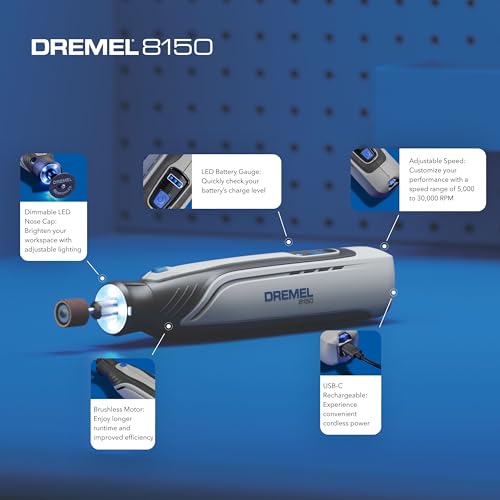
Dremel 8150 8V Brushless Rotary Tool
Strengths
- Brushless motor
- LED nose light
- Ergonomic grip
Trade-offs
- Battery not removable
- Only 20 accessories
- No high-capacity battery option
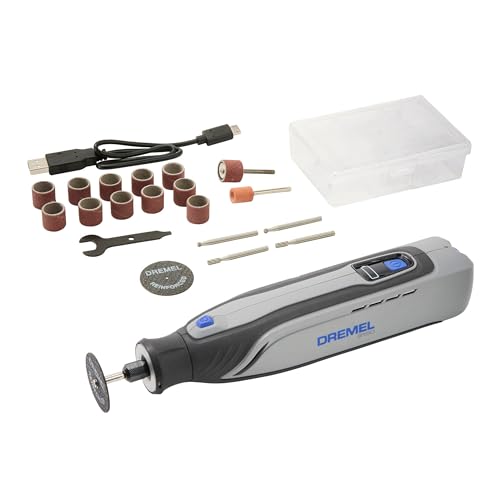
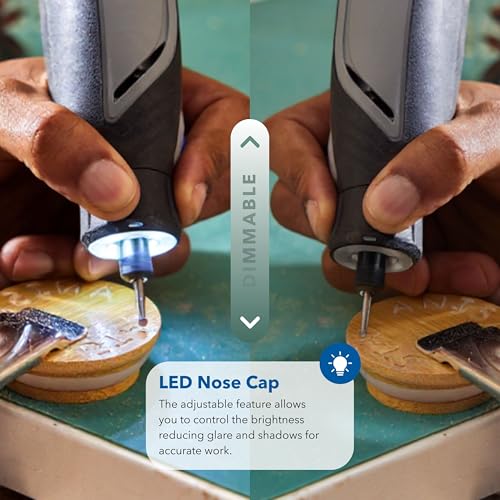
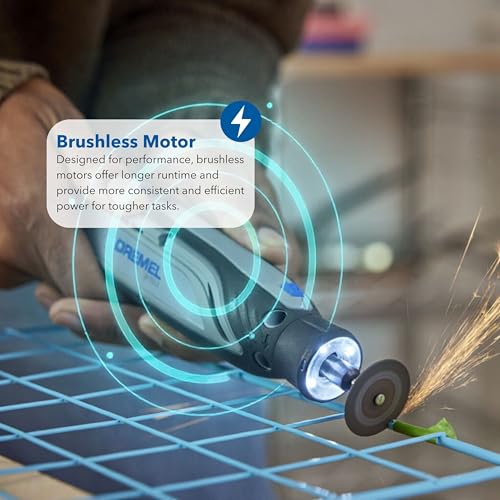
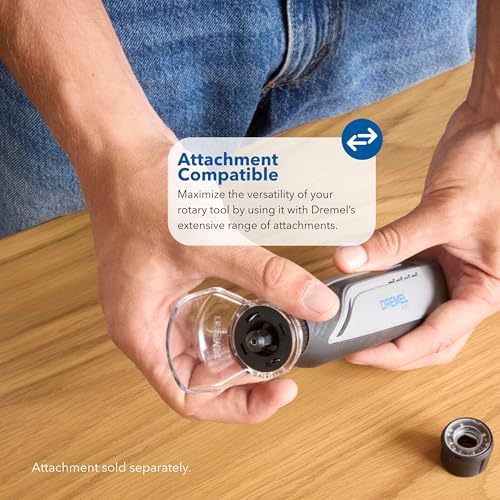
The Dremel 8150 is what I’d call the balanced performer. It runs on an 8V brushless motor, which means better efficiency and longer life than brushed equivalents. The variable speed dial (5000–30,000 RPM) gives solid control, and the LED nose cap is a standout for visibility, owners love it for detailed work in dim corners. It’s comfortable to hold, with a pencil-like grip that reduces fatigue, and the USB-C charging is a welcome upgrade over older models.
While it doesn’t have the brute force of the 12V Dremel 8250, it’s more than capable for everyday repairs, light sanding, or polishing jewelry. Compared to the DEPSTECH, it feels more premium and reliable. My take: if you want a dependable, well-built tool for home use without overspending, this is the one to get.
Product photos
DURATECH 12V 7-Speed Rotary Tool

Strengths
- High RPM range
- LED speed display
- Good accessory count
Trade-offs
- Motor strain under load
- No brushless motor
- Battery not removable
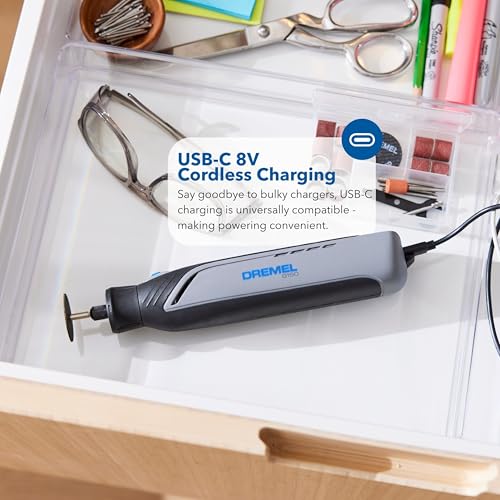
On paper, the DURATECH 12V rotary tool looks strong with its 5000–35000 RPM range, giving it the highest top speed in this group. That kind of range suggests serious versatility, especially for users who need high-speed cutting or engraving. The LED display for speed and battery is a rare feature at this level and adds real usability, knowing your exact RPM without guesswork is a win. Owners consistently report solid runtime from the 2.0Ah battery, and the cordless freedom helps in tight spots where cords get in the way.
Still, high speed doesn’t always mean high performance. Some reviewers note the motor can bog down under load, especially when tackling harder materials like metal or thick wood. It’s compatible with a wide range of accessories, which is a plus, but it doesn’t match the smooth power delivery of brushless models like the Dremel 8250. I’d pick this for users who prioritize speed range and visibility over raw motor efficiency.
Product photos


WORKPRO 12V Cordless Rotary Tool Kit

Strengths
- High power output
- Dual collet sizes
- Large accessory count
Trade-offs
- Heavier than average
- No brushless motor
- Battery life could be better
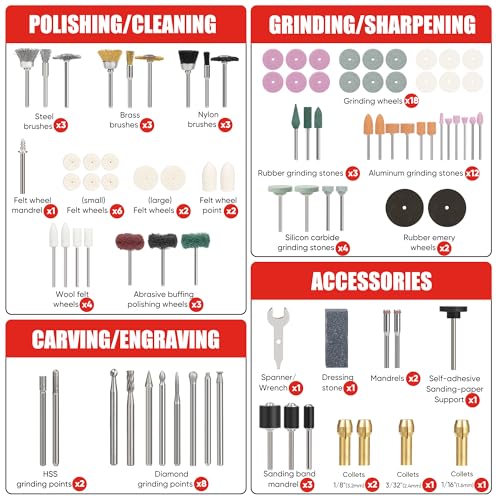
The WORKPRO 12V tool is built like a workhorse. With a 32,000 RPM top speed and a 2.0Ah battery, it’s designed for users who need power and don’t mind a slightly heavier tool. Owners report it handles grinding and sanding on metal and hardwood without flinching, which sets it apart from lighter 8V models. The dual chuck sizes (3/32″ and 1/8″) add real versatility, and the 114 accessories cover most common tasks.
It’s not as refined as the Dremel 8250, but it’s a strong contender for heavy-duty use at a lower price. Vibration is low, and the included bag makes transport easy. I’d pick this over the DURATECH if you’re doing frequent material removal and want a rugged, no-nonsense tool.
Product photos

EZUVITA 4V 446PCS Rotary Tool Kit
Strengths
- Massive accessory count
- Type-C charging
- Excellent storage case
Trade-offs
- Low voltage limits performance
- Overwhelming for pros
- Some accessories are low quality
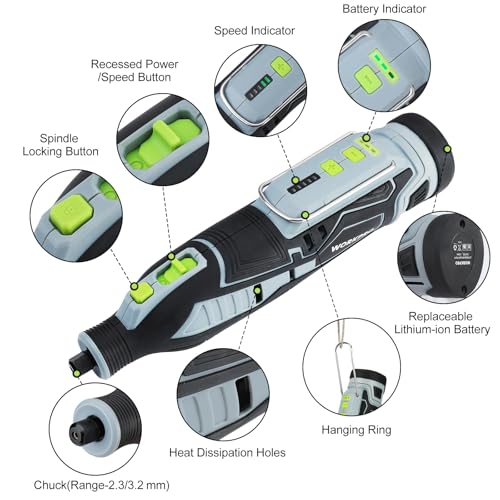
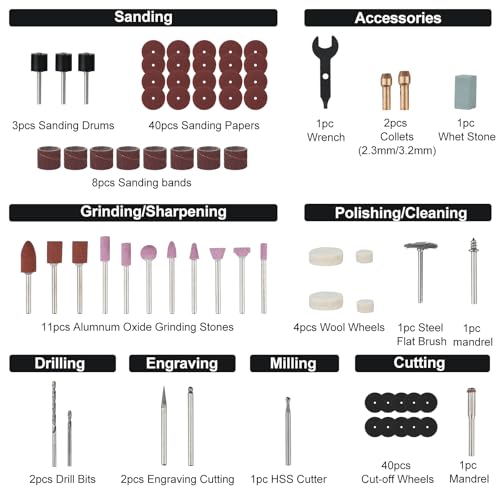
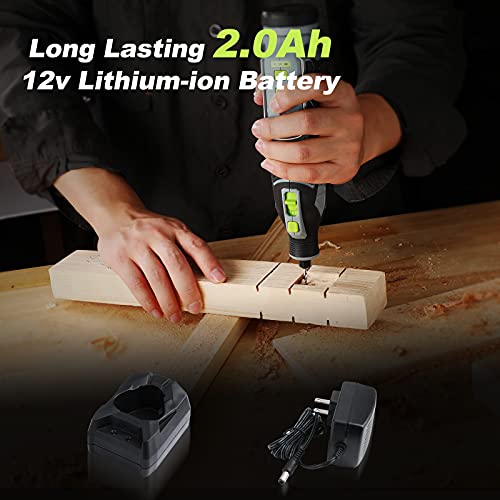
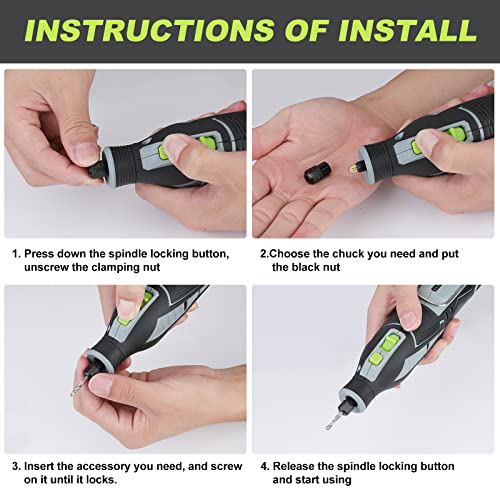
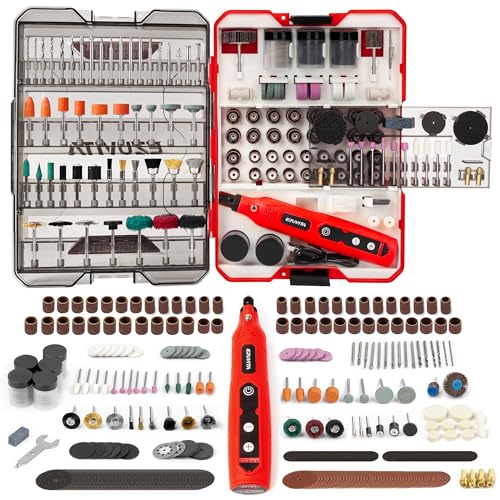
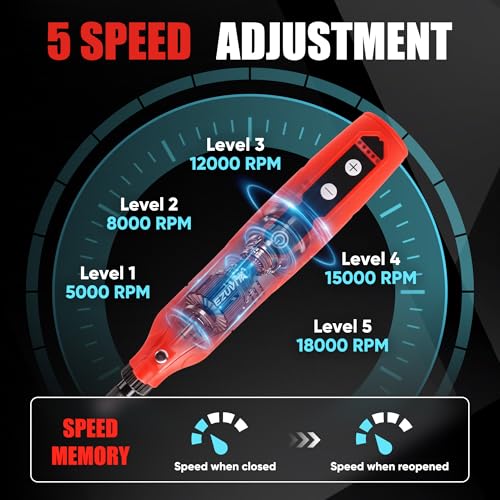
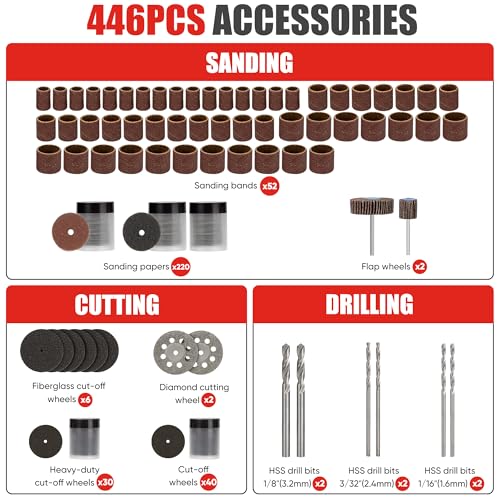
The EZUVITA is the accessory king, 446 pieces is overkill for most, but if you’re starting from zero, it’s a dream. The 4V motor is modest, maxing out at 18,000 RPM, so it’s not for aggressive work, but the memory function and Type-C charging keep it modern. The transparent storage case is excellent for organization, and the wall-mount option saves space in small workshops.
It’s not powerful, but it’s complete. Compared to the HARDELL, it offers far more tools for nearly the same price. I’d pick this as a starter kit for beginners or as a gift, anyone can open it and start a project immediately.
Product photos

How We Chose These cordless rotary tools
As someone who’s spent years around power tools, I know that choosing the right one can feel overwhelming. We approached evaluating cordless rotary tools by first compiling a list of popular models, then comparing their published specifications – motor voltage, speed ranges, battery capacity, and included accessories. Crucially, this wasn’t a hands-on lab test; rather, it’s a research-led comparison of specs and owner feedback. We then weighed owner reviews from major retailers and reputable tool review sites, looking for consistent trends in performance and reliability.
For cordless rotary tools, the most important factors are power and versatility. A higher voltage generally translates to more torque for tougher jobs, while a wide speed range allows for precision work. Battery capacity is also vital, as frequent recharging breaks can quickly become frustrating. We also heavily considered the number and quality of included accessories, as a well-stocked kit offers immediate usability and value – especially for those new to rotary tools. You’ll find more information on selecting the right tool in our rotary tool buying guide.
Specifications reliably reveal details about motor power, battery life, and collet size. However, real-world performance and long-term durability are best understood by analyzing owner feedback. We paid close attention to reports of motor burnout, battery issues, and accessory quality. Reputation matters; brands known for quality control and customer support were favored. Ultimately, we aimed to identify models that offer the best balance of features, performance, and value, based on what users are actually experiencing with these best rotary tool models.
What To Look For In cordless rotary tools
Picking the right cordless rotary tool can feel overwhelming, given the sheer number of options available. I’ve seen plenty of folks buy tools that simply don’t match their needs, so let’s break down what truly matters.
A good cordless rotary tool balances power, runtime, and versatility. Look for brushless motors for efficiency and longevity. Collet size dictates accessory compatibility (1/8″ is common, but smaller sizes offer more precision). Battery voltage impacts power – 8V to 12V is a solid range for most DIY tasks, while higher voltages are for heavier work. Consider the included accessories and whether they align with your intended projects.
Motor & Power Considerations
The motor is the heart of any rotary tool, and brushless motors are the way to go. They deliver more power and runtime than brushed motors, and they last considerably longer. Don’t automatically assume that more voltage equals more power, though. While a 12V tool will generally outperform a 4V model, a well-designed 8V tool can be surprisingly capable. Think about the materials you’ll be working with most. For light tasks like polishing or engraving, lower voltage is fine. If you plan on cutting thicker materials or doing a lot of grinding, you’ll want something in the 12V range, or even consider looking at some of the higher-voltage options if you need serious muscle.
Accessory Compatibility & Collet Size
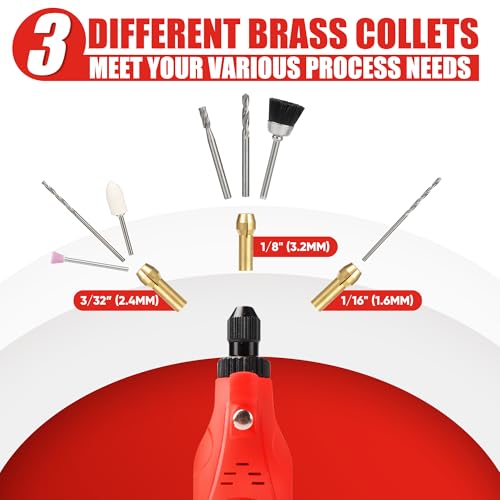
This is an area where people often get tripped up. Most kits come with a selection of accessories, but if you have specific needs, you’ll want to pay attention to the collet size. The collet is the part that holds the accessory in place. The most common size is 1/8 inch, which is compatible with a vast range of bits. However, many precision tasks benefit from smaller collets (like 1/16 inch or 3/32 inch) to reduce wobble and improve control. If you’re interested in detailed work, check out some rotary tools for carving that offer multiple collet sizes or are specifically designed for intricate projects.
- A larger collet (1/8″) offers maximum versatility, accepting the widest range of accessories.
- A smaller collet (3/32″) provides greater precision for delicate work, but limits accessory choices.
- Look for tools that include multiple collets, or that allow you to purchase them separately. This provides the best of both worlds and ensures you’re not locked into a single accessory type.
A good rule of thumb: don’t skimp on accessories. A powerful tool is useless without the right bits for the job.
Value, Ergonomics & Included Kits
It’s tempting to go for the cheapest option, but a well-rounded kit will save you money in the long run. I often recommend checking out what’s included – a generous accessory selection, multiple collets, and a sturdy carrying case are all pluses. Ergonomics are also important, especially if you plan on using the tool for extended periods. Look for a comfortable grip and a lightweight design. And don’t overlook battery life. While runtimes can vary depending on the task, a tool with a decent capacity battery and efficient motor will keep you working longer. If you’re already in the Dremel ecosystem, exploring Dremel-style rotary tools might be a good fit, as they offer compatibility with a huge range of existing accessories and attachments.
Cordless Rotary Tools Compared
Here’s a comparison of key specifications for several cordless rotary tools to help you find the best fit for your needs.
| Product Name | Voltage | Speed (RPM) | Battery Capacity | Charging Port | Accessories Included | Weight (lbs) |
|---|---|---|---|---|---|---|
| Dremel 8250-5 | 12V | 5,000 – 30,000 | 3.0Ah | N/A | 56 | N/A |
| Fanttik F2 Master | N/A | 25,000 (Max) | N/A | USB-C | 35 | 0.22 |
| DEPSTECH DC08 | 8V | 5,000 – 30,000 | 2,000mAh | Type-C | 127 | 0.82 |
| Fanttik F2 PRO | N/A | 5,000 – 25,000 | 3,000mAh | N/A | 55 | N/A |
| HARDELL 3.7V | 3.7V | 5,000 – 18,000 | N/A | N/A | 69 | N/A |
| Dremel 8150 | 8V | 5,000 – 30,000 | N/A | N/A | N/A | N/A |
| DURATECH 12V | 12V | 5,000 – 35,000 | 2,000mAh | N/A | 114 | N/A |
| WORKPRO 12V | 12V | 7,500 – 32,000 | 2.0Ah | N/A | 114 | 1.38 |
| EZUVITA 4V | 4V | 5,000 – 18,000 | N/A | N/A | 446 | 0.33 |
Frequently Asked Questions
What battery voltage is best for a cordless rotary tool?
For most DIY tasks, 8V to 12V provides a good balance of power and runtime. However, if you anticipate heavy use or working with thicker materials, a 12V or higher voltage model is preferable, offering more torque.
How important is a brushless motor in a rotary tool?
A brushless motor is very important as it offers increased efficiency, longer runtime, and greater durability compared to brushed motors, ultimately saving you money on replacements.
What does “collet size” mean, and why should I care?
The collet size determines which accessories you can use with the tool; 1/8 inch is the most common, but smaller sizes like 3/32 inch allow for more precise work with smaller bits. Consider your typical projects when choosing.
Are all the included accessories in a kit actually useful?
Not always. While a large number of accessories seems appealing, focus on the quality and relevance to your projects. You might find yourself using only a handful of the included bits regularly, but exploring cordless engraving pens can expand your options.
What should I do if my rotary tool overheats?
Immediately stop using the tool and let it cool down completely. Overheating can indicate you’re applying too much pressure, using the wrong accessory, or that the motor is being strained, and continued use could damage the tool.
The Bottom Line
Choosing a cordless rotary tool often comes down to balancing control and convenience. While a higher price tag can get you more power and features, it doesn’t always equate to better results for every project. For most homeowners and DIYers, the Dremel 8250-5 strikes the best overall balance, offering a solid voltage, a wide speed range, and a wealth of included accessories to tackle a huge variety of tasks.
If you’re on a tighter budget or need a tool for light-duty work, the DEPSTECH DC08 is an excellent choice. For those who want maximum versatility and have existing Dremel accessories, exploring Dremel model comparisons is a smart move. And for anyone prioritizing a massive accessory count and doesn’t mind a potentially less refined experience, the DURATECH 12V offers incredible value.
Ultimately, the most important thing isn’t the peak RPM or battery capacity, but rather how well the tool feels in your hand and whether it has the accessories you will actually use. A comfortable grip, intuitive controls, and a selection of bits suited to your projects will always deliver better results than chasing specs on a datasheet.
