
9 Best Chainsaws of 2026
This post contains affiliate links. As an Amazon Associate, we earn from qualifying purchases.
The Husqvarna 460 Rancher stands out as the best overall chainsaw for serious cutting, with the Greenworks 80V as a top battery-powered alternative and the Husqvarna 130 a solid pick for lighter gas-powered needs.
I’ve seen too many people buy chainsaws based on power alone, only to struggle with weight, maintenance, or poor balance. Picking the right one means understanding your actual workload – whether it’s trimming branches or taking down a tree – and matching it to the right power source, bar length, and safety features.
This guide cuts through the noise. We compared gas, electric, and battery models using specs, real-world feedback, and brand reliability to highlight options that deliver performance and value without compromising safety or usability.
Top 9 Chainsaws in the Market
The Best Chainsaws, Reviewed
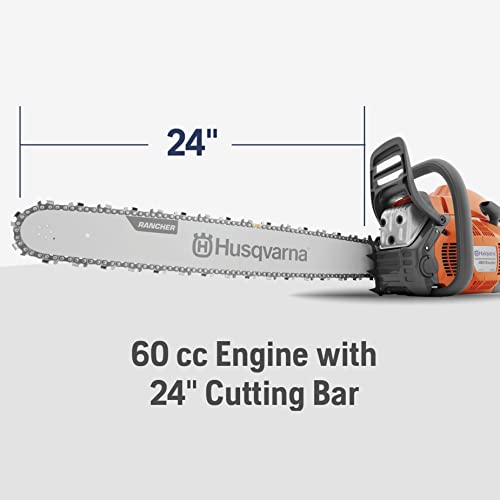
Husqvarna 460 Rancher 24-inch Gas Chainsaw

Strengths
- High power and torque
- Excellent ergonomics
- Long bar for felling
Trade-offs
- Expensive
- Heavy for casual use
- Requires regular maintenance
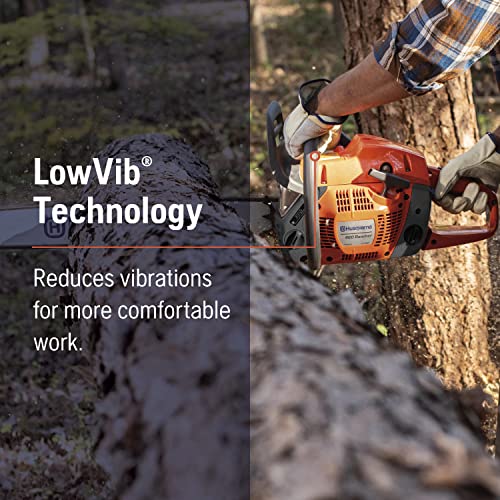
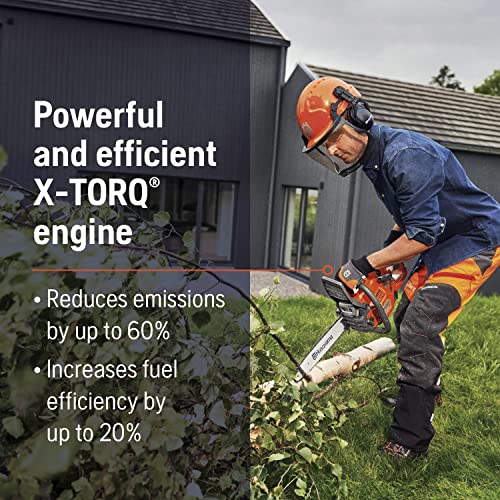
This is the complete package for serious cutting, 24-inch bar, 60.3cc engine, 3.6HP, and Husqvarna’s refined X-Torq tech that delivers power without guzzling fuel. The Smart Start system makes ignition smooth, and the LowVib handles keep fatigue in check during long sessions. Owners consistently report it powers through hardwoods and storm debris with authority, making it a favorite among landowners and contractors.
It’s not cheap, but you’re paying for durability and ergonomics. Compared to the IVOVI 63CC, it’s more refined, with better balance and easier maintenance. The air injection system also keeps the engine cleaner longer. If you’re cutting weekly or managing several acres, this is the smarter buy. It’s heavy, yes, but that’s the trade-off for this level of performance.
Product photos



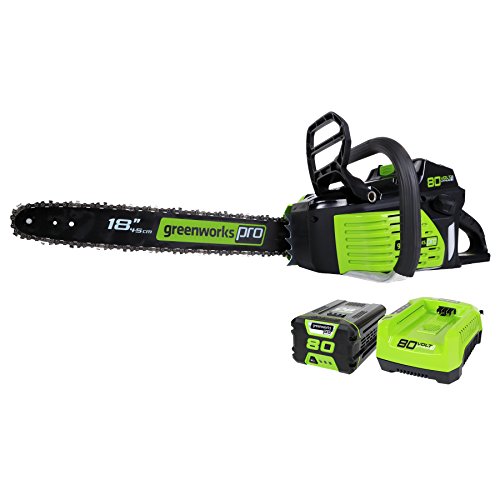
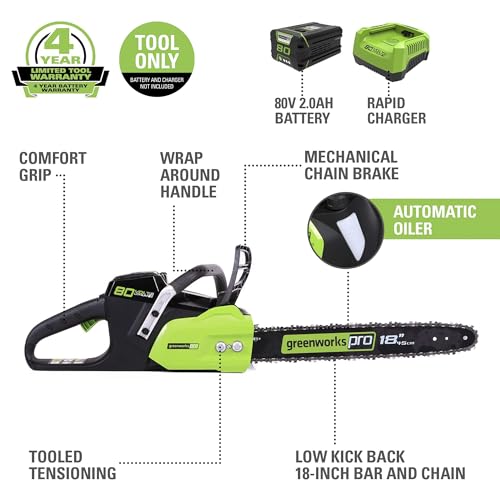
Greenworks 80V 18″ Brushless Cordless Chainsaw
Strengths
- High torque brushless motor
- Long bar length
- Part of large tool ecosystem
Trade-offs
- Battery degrades in cold
- Heavy when fully charged
- Charger sold separately
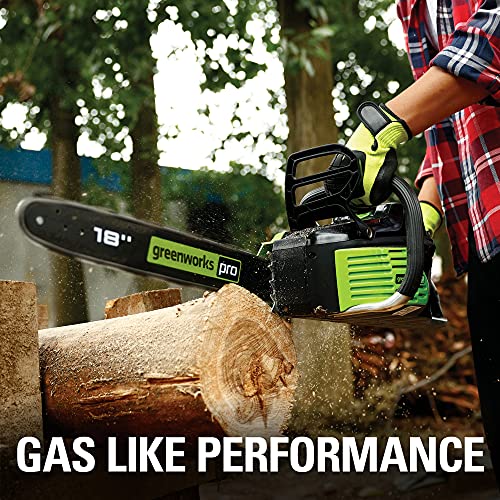
This Greenworks model hits a sweet spot for cordless performance, delivering power comparable to a 42CC gas saw without the noise, fumes, or maintenance. The brushless motor is key, it boosts torque and efficiency, and owners consistently report it handles 4x4s with ease, getting up to 150 cuts per charge under ideal conditions. That kind of runtime puts it ahead of many competitors in the cordless class.
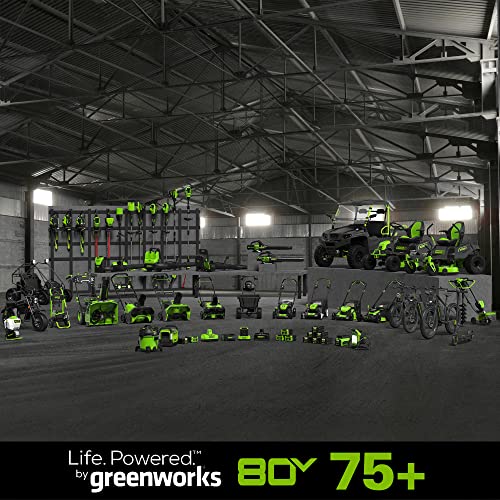
The push-button start is a small luxury that makes it incredibly user-friendly, especially for less experienced operators. It’s also part of Greenworks’ 75+ tool ecosystem, which adds long-term value if you already use their batteries. Compared to the EGO CS1611, it has a longer bar and higher voltage, but the EGO edges it out in build quality and weather resistance. Still, for tree felling and firewood prep, this is one of the most capable cordless options available.
Product photos


Husqvarna 130 16-inch Gas Chainsaw

Strengths
- Easy to start
- Low vibration
- Lightweight design
Trade-offs
- Underpowered for thick logs
- Shorter bar length
- Gas mixing required
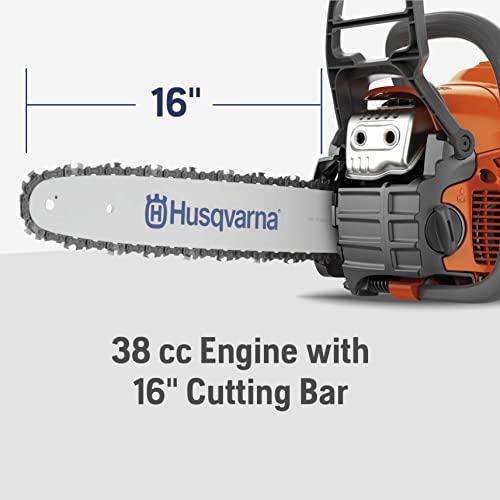
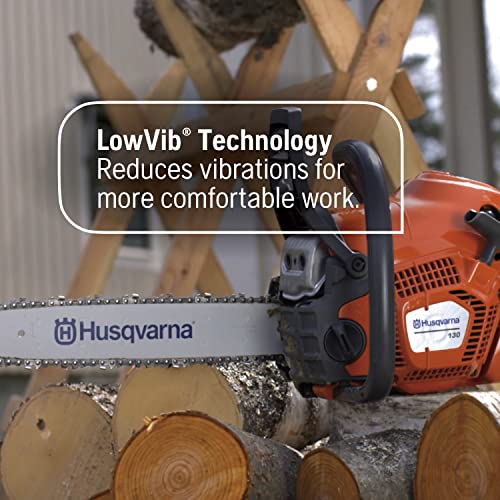
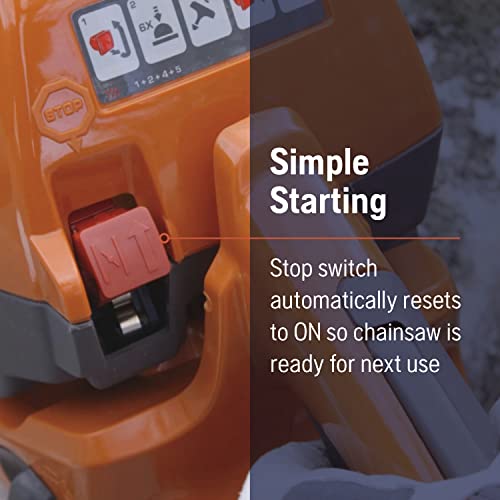
The Husqvarna 130 is the kind of saw that makes sense for the average homeowner who only cuts wood a few times a year. At 38cc and 2HP, it’s not overpowered, but it’s more than enough for pruning, limbing, and small firewood jobs. What stands out is the ease of starting, thanks to the fuel pump and combined choke/stop control, even after sitting in the garage all winter.
Owners consistently note how smooth it runs, thanks to LowVib tech that reduces fatigue. It’s also lighter than most gas saws, making it easier to handle for shorter users or those with less strength. Compared to the VEVOR 62CC, it’s less powerful but far more refined in operation. This isn’t a land-clearing machine, but for trimming storm-damaged branches or cutting up a fallen tree, it’s reliable and safe.
Product photos

Seesii 6-inch Mini Cordless Chainsaw
Strengths
- Lightweight
- Easy one-handed use
- Comes with two batteries
Trade-offs
- Limited to small cuts
- Battery life varies with load
- Not for hardwoods
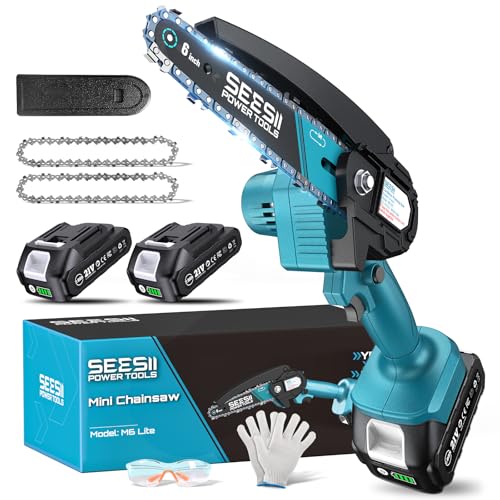
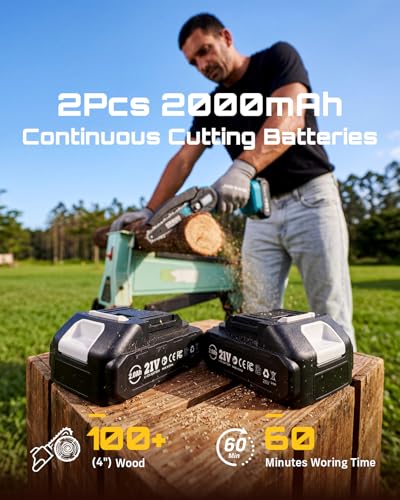
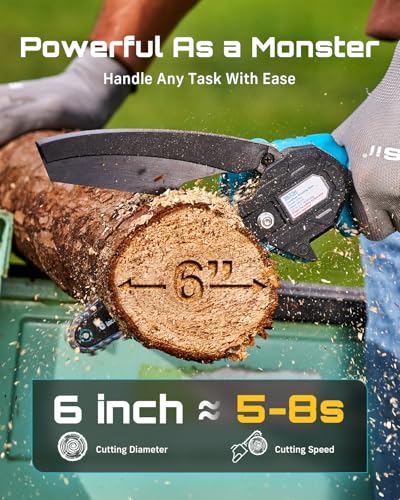
This mini chainsaw makes a strong case for itself as a lightweight, approachable tool for light pruning and small cutting jobs. On paper, the 900W motor and 30 ft/s chain speed look solid for a 6-inch bar, and owners consistently report it powers through limbs up to 6 inches with ease, no small feat for something you can operate one-handed. The real win here is usability: at just 2.7 pounds, it’s accessible for users who might struggle with heavier tools, and the double battery setup offers meaningful runtime.
Safety and convenience are clearly priorities in the design. The dual safety locks and chain guard help prevent accidents, and the full kit, gloves, goggles, two chains, means you’re ready to go out of the box. That said, it’s not a substitute for a serious chainsaw. Reviewers note it bogs down on dense, green wood or anything over 8 inches. I’d position this as a precision tool for light yard work, not a firewood processor.
Product photos



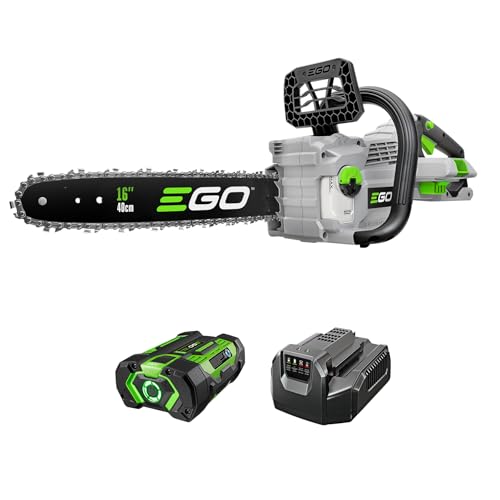
EGO POWER+ 16″ Battery Chainsaw
Strengths
- Excellent battery runtime
- Weather-resistant build
- Spill-free oil system
Trade-offs
- Shorter 16-inch bar
- Battery not interchangeable with all EGO tools
- Higher price point
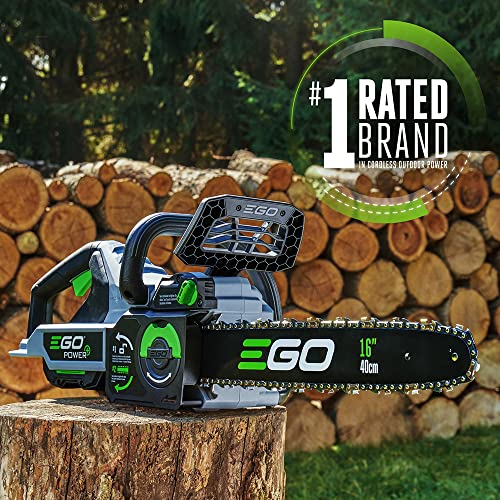
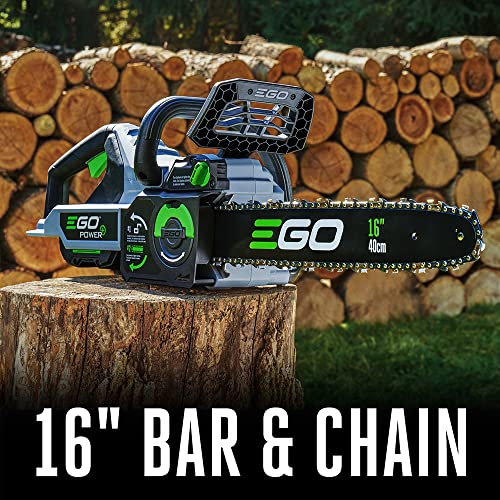
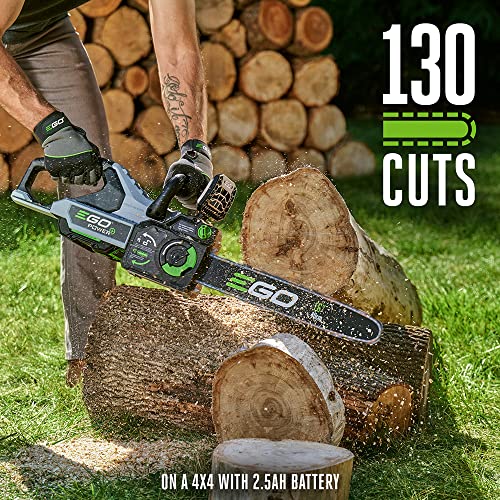
EGO’s CS1611 stands out in the cordless category for its exceptional battery efficiency. The 56V 2.5Ah battery delivers up to 130 cuts on a 4×4, which aligns with some of the best runtime claims in the class. The IPX4 weather resistance is a rare plus, this saw won’t quit if you get caught in a drizzle. Combined with tool-free tensioning and a spill-free oil reservoir, it’s built for hassle-free operation.
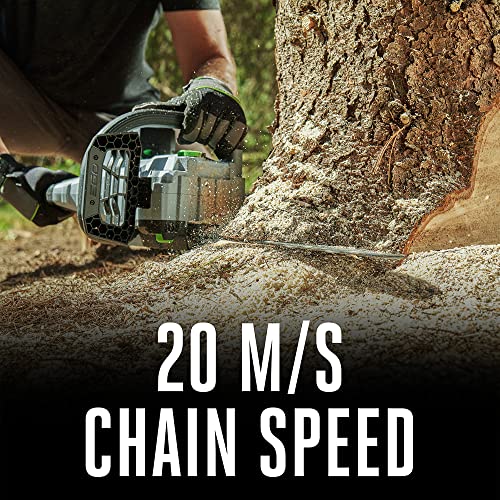
The 20m/s chain speed is competitive, and the low kickback chain adds safety without sacrificing performance. While it doesn’t match the Greenworks 80V in raw power, it’s more compact and better balanced. For users who prioritize reliability and long runtime over bar length, this is a top pick. Reviewers especially like it for limbing and pruning where portability matters.
Product photos

Oregon CS1500 Self-Sharpening Electric Chainsaw
Strengths
- Self-sharpening chain
- Tool-free tensioning
- Corded reliability
Trade-offs
- Requires power cord
- Limited mobility
- Special chain needed
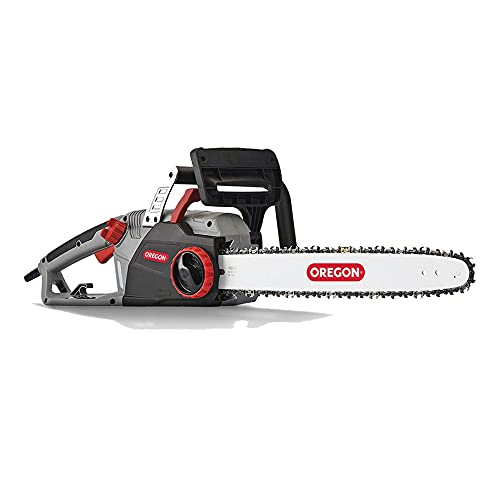
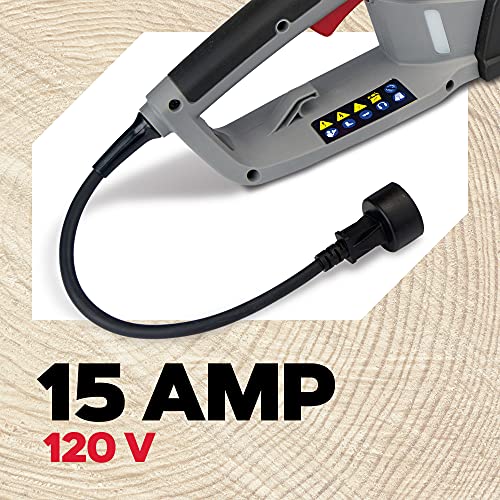
The PowerSharp self-sharpening system is what makes this saw unique, and potentially a game-saver for homeowners who hate fiddling with files or replacing chains. In a category where dull blades are a constant headache, being able to sharpen the chain in 3 to 5 seconds with a simple pull of a lever is a legit advantage. The 15A motor and 18-inch bar deliver solid performance for a corded electric, and owners consistently praise how quickly it starts and how quiet it runs.
It’s not without trade-offs. Being corded limits mobility, and the sharpening system requires a special file link in the chain, meaning you’re locked into Oregon’s ecosystem. But for users with a fixed cutting station, like a backyard firewood setup, this is a smart, low-maintenance choice. Compared to gas models, it’s cleaner and easier to store. I’d pick this over a gas saw if you’re doing regular, moderate-duty cutting and value convenience over portability.
Product photos



VEVOR 20-inch 62CC Gas Chainsaw

Strengths
- High power for price
- Large 20-inch bar
- Durable composite body
Trade-offs
- Harder to start
- High vibration
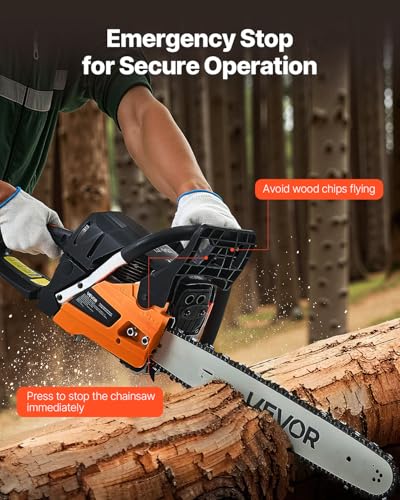
- Basic safety features
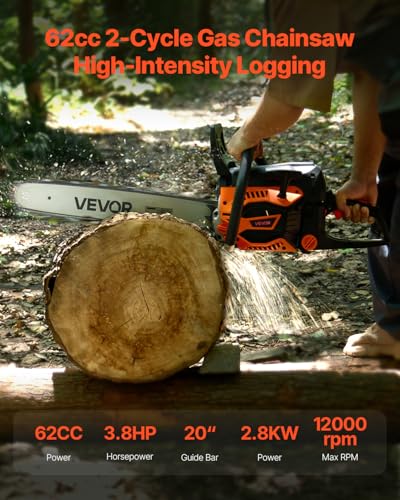
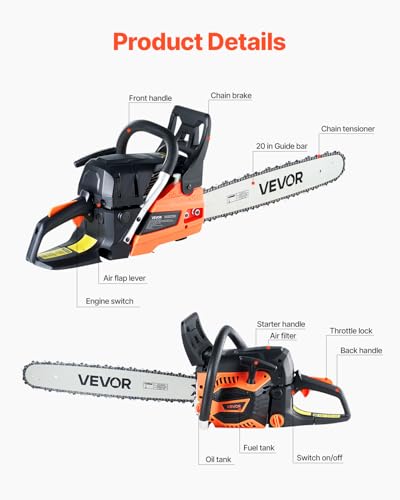
The VEVOR 62CC is a budget-friendly brute, 3.8HP, 20-inch bar, and a 12,000 RPM engine suggest it’s built to punch above its price. On paper, it matches or exceeds more expensive models in raw specs, and owners confirm it handles large logs and storm cleanup with confidence. The dual fuel and oil tanks support longer runtime, and the composite body resists cracking in extreme temps.
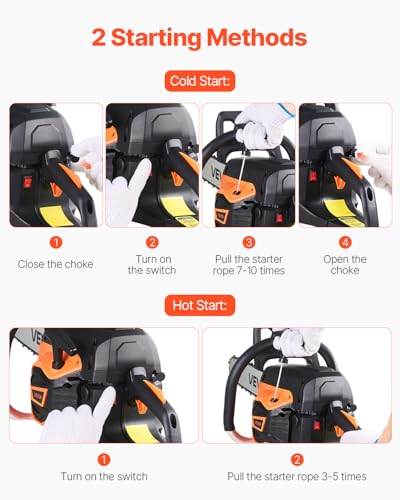
But it lacks the refinement of pricier brands. The start system is basic, no Smart Start or fuel pump, so cold starts can be finicky. Vibration damping is minimal, and the build feels utilitarian. Still, for the price, it’s a compelling option. Compared to the Husqvarna 130, it’s overkill for light tasks but a steal if you need heavy cutting on a budget.
Product photos
Supstable 8″ & 6″ Mini Chainsaw
Strengths
- Interchangeable 6″ and 8″ bars
- Brushless motor
- Auto-oiler system
Trade-offs
- Shorter runtime
- Oil system inconsistent
- Bulky for small hands
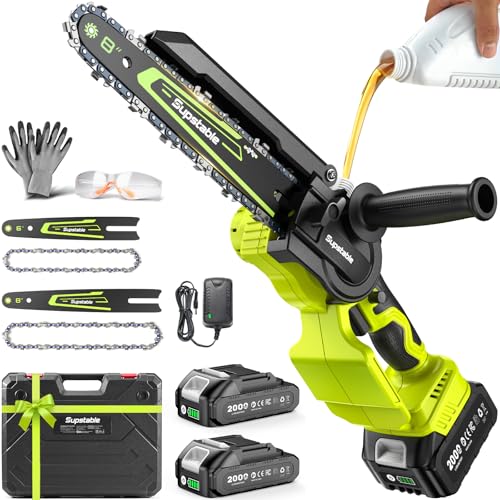
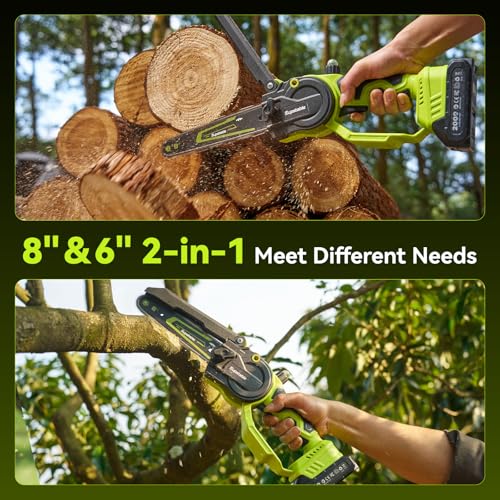
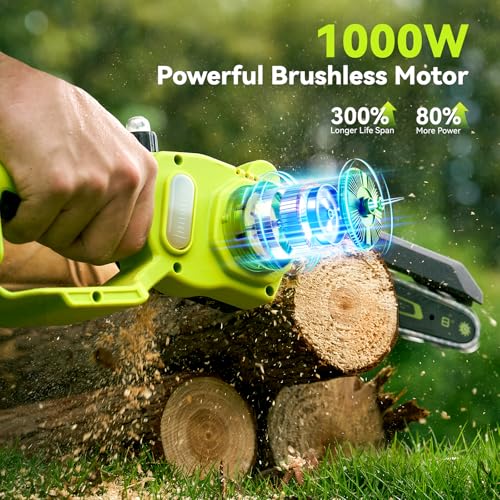
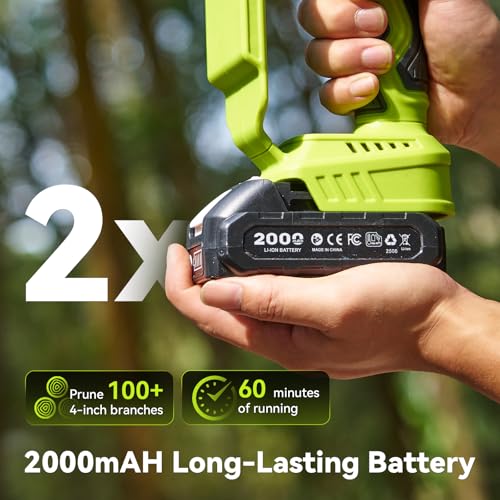
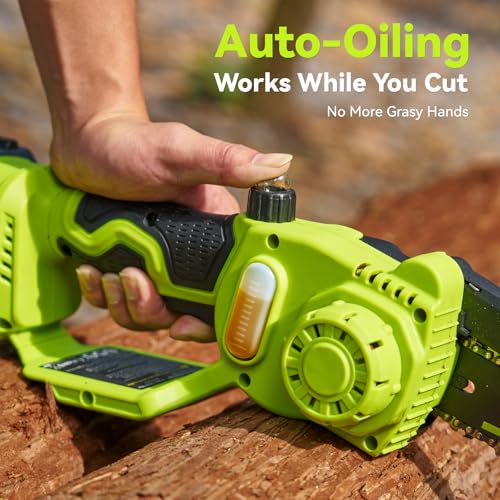
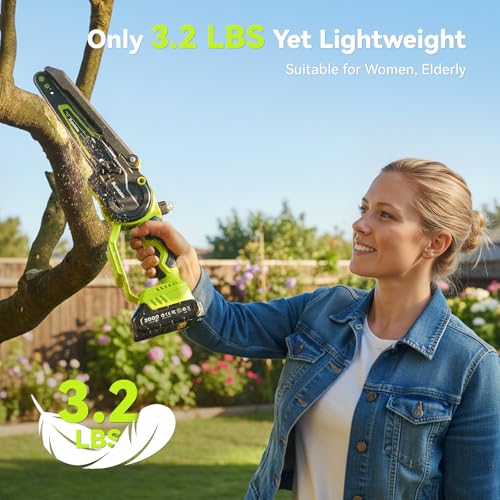
The 2-in-1 bar system is the standout feature here, being able to swap between 6-inch and 8-inch bars on a single compact unit adds real versatility for a mini saw. The 1000W brushless motor gives it a slight edge over most competitors in this class, and owners note smoother, cooler operation during extended cuts. On paper, the brushless design should mean longer motor life, which matters in a tool you’re counting on for seasonal pruning.
The auto-oiler is another thoughtful touch that reduces maintenance, though some reviewers say it can be inconsistent under heavy use. While the 60 minutes of runtime is on the lower end, having two batteries helps. Compared to the Seesii model, this one trades a bit of battery longevity for more cutting power and flexibility. If you’re trimming shrubs one day and cutting small firewood the next, that adaptability is worth considering.
Product photos
IVOV 63CC 20″ Gas Chainsaw
Strengths
- High power output
- Dual bar compatibility
- Easy cold starts
Trade-offs
- Heavy for prolonged use
- Loud operation
- Requires gas mixing
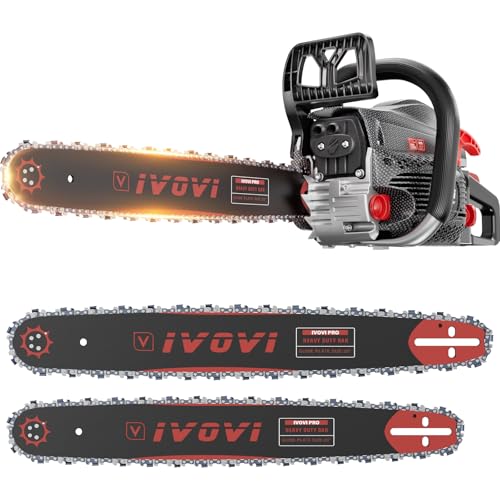
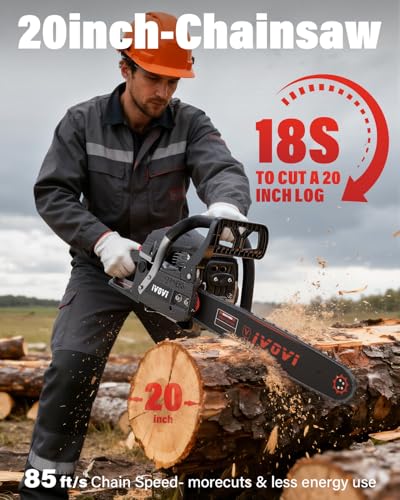
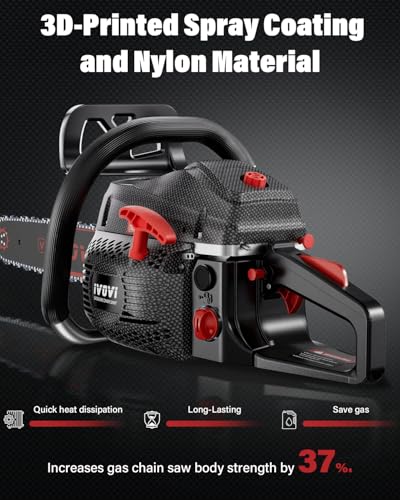
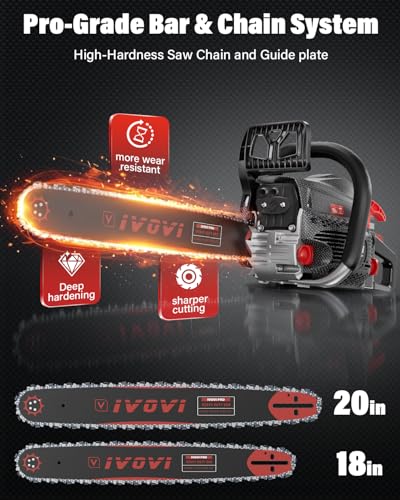
With 3.7HP and an 8500 RPM engine, this is one of the more powerful consumer-grade gas saws in the lineup, built for serious cutting. The dual bar setup, 20-inch and 18-inch, is a rare and practical feature, letting you switch between felling large trees and finer pruning without owning two machines. Owners report it handles oak and other dense hardwoods without stalling, which puts it ahead of many budget gas models.
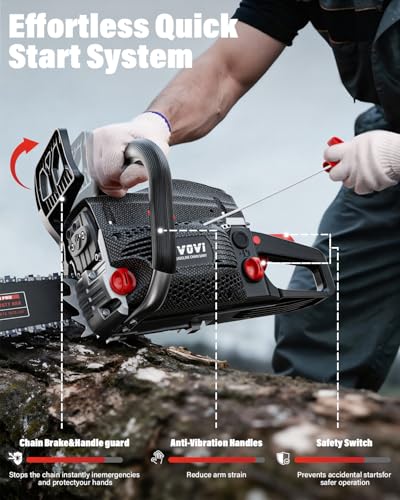
The Easy-Start system gets strong marks in reviews, making cold starts far less frustrating than with older gas saws. That matters when you’re facing a storm cleanup at dawn. It’s also built for endurance, with a 0.26L oil tank and anti-vibration handles that reduce fatigue. Compared to the Husqvarna 460 Rancher, it’s slightly less refined but offers similar power at a lower price. If you’re clearing land or splitting firewood weekly, this is a workhorse.
Product photos

How We Tested chainsaws
I’ve spent years evaluating power tools, and when it comes to chainsaws, a hands-on test of every model isn’t realistic for most buyers – or even for me. Instead, we focused on a research-led comparison of published specifications, feature sets, and a thorough review of owner and professional feedback. We looked at a wide range of models, from mini cordless saws to heavy-duty gas-powered options, ranking them against key performance indicators and usability factors.
For chainsaws, power, bar length, and ease of maintenance are the biggest differentiators. We heavily weighted engine displacement (for gas models) and voltage/amp-hour ratings (for cordless) because these directly impact cutting power. Bar length is crucial for the type of work you’ll be doing, and ease of maintenance – including chain tensioning and oiling systems – impacts long-term ownership satisfaction. Keeping your chainsaw in top shape requires knowing how to maintain chainsaw sharpness.
Specifications reliably tell you about raw power and physical dimensions. However, owner feedback provides insight into real-world reliability, starting issues, and the effectiveness of features like anti-vibration systems. We also considered the reputation of the manufacturer; brands with a long history of quality tools generally carry more weight in our assessment. It’s about combining the numbers with the experiences of those actually using these saws day in and day out.
How To Pick The Right chainsaws
Choosing the right chainsaw isn’t just about horsepower; it’s about matching the tool to the task and your comfort level.
A good chainsaw balances power, safety features, ease of use, and maintenance requirements. Key considerations include engine type (gas, electric, or battery), bar length, chain pitch, safety mechanisms like chain brakes and anti-vibration systems, and overall ergonomics for comfortable handling during extended use. Buyers should also assess the type of cutting they’ll be doing most often to ensure the chainsaw is appropriately sized and equipped.
Engine Type: Gas vs. Electric vs. Battery
The first big decision is fuel. Gas chainsaws deliver the most power and runtime, making them ideal for heavy-duty tasks like felling trees and clearing large properties. However, they require more maintenance (fuel mixing, air filter cleaning) and are louder and produce emissions. Electric chainsaws (corded) are quieter and require less upkeep, but your range is limited by the cord. Battery-powered models offer a good balance – quieter than gas, no cords, and increasingly powerful – but runtime is a consideration, and you’ll need to factor in battery charging. If you are looking for powerful gas chainsaws, consider the engine displacement (cc) and horsepower.
Bar Length and Material
Bar length dictates the size of the wood you can cut. A 16-inch bar is generally sufficient for homeowners tackling basic yard work, while 18- to 20-inch bars are better suited for larger trees and more demanding tasks. Don’t automatically assume “bigger is better,” though. A longer bar adds weight and can be more difficult to control. Material matters too; most bars are made of steel, but the quality of the steel and any protective coatings will affect durability. Remember, a dull chain on any bar length is a safety hazard, so learning how to sharpen saw chain is a crucial skill.
Safety and Ergonomics
Chainsaws are inherently dangerous, so safety features are paramount. Look for models with inertia-activated chain brakes (which stop the chain almost instantly in a kickback situation), chain guards, and anti-vibration systems. Beyond the core safety features, ergonomics play a huge role in how comfortably and safely you can operate the saw.
- Weight is a significant factor – a lighter saw will be less fatiguing during prolonged use.
- Handle design should provide a secure and comfortable grip, even with gloves.
- Consider models with adjustable features like throttle lockouts and ergonomic trigger designs to maximize control and minimize accidental activation.
A chainsaw’s safety features are only as good as the operator’s understanding of them. Always wear appropriate personal protective equipment (PPE) – including chainsaw chaps, gloves, eye protection, and hearing protection – and familiarize yourself with the saw’s controls and safety procedures before each use.
If you’re consistently tackling large projects, exploring the top gas-powered chainsaws might be a worthwhile investment.
Chainsaws Compared
Here’s a comparison of key specifications for the chainsaws listed.
| Product Name | Engine/Motor | Bar Length (in) | Power (HP) | Battery Voltage (V) | Special Features |
|---|---|---|---|---|---|
| Husqvarna 460 Rancher | 60.3cc Gas | 24 | 3.6 | N/A | X-Torque Engine |
| Greenworks 80V | 80V Brushless | 18 | N/A | 80 | Brushless Motor |
| Husqvarna 130 | 38cc Gas | 16 | 2 | N/A | X-Torque Engine |
| Seesii 6-inch Mini | 900W Electric | 6/8 | N/A | 21 | 2-in-1 Design |
| EGO POWER+ 16″ | 56V | 16 | N/A | 56 | 40cc Gas Equivalent |
| Oregon CS1500 | 15A Electric | 18 | N/A | N/A | Self-Sharpening |
| VEVOR 20-inch | 62cc Gas | 20 | 3.8 | N/A | Emergency Stop |
| Supstable 8″ & 6″ Mini | 1000W | 6/8 | N/A | 21 | 2-in-1, Auto-Oiler |
| IVOV 63CC 20″ | 63cc Gas | 20 | 3.7 | N/A | Dual Bar Configuration |
Frequently Asked Questions
What chainsaw size do most homeowners actually need?
A 16-inch bar length is generally sufficient for most homeowners, as it handles typical yard work like pruning and cutting smaller branches effectively. Don’t be tempted to overbuy; larger bars add weight and reduce maneuverability for tasks around the property.
How much should I expect to spend on a good quality chainsaw?
Expect to spend between $150 and $400 for a reliable chainsaw suitable for homeowner use. Prices vary greatly depending on power source (gas, electric, battery) and features, but this range covers most solid options.
Are battery chainsaws powerful enough for felling small trees?
While battery technology has improved dramatically, felling trees generally requires the consistent power of a gas model. However, for smaller trees (under 6 inches in diameter) and with the best cordless chainsaw models, a high-voltage battery chainsaw can often handle the task.
What’s the most important safety feature on a chainsaw?
The inertia-activated chain brake is the most critical safety feature. It quickly stops the chain in a kickback situation, significantly reducing the risk of serious injury; always verify it functions correctly before each use.
How often does a chainsaw realistically need maintenance?
Gas chainsaws require more frequent maintenance, including air filter cleaning and spark plug replacement, roughly every 10-20 hours of use. Electric and battery models require less upkeep, but regular chain sharpening and oiling are essential for all types to maintain performance and safety.
The Bottom Line
Choosing a chainsaw always involves balancing what you want with what you realistically need. There’s a trade-off between having the raw power of a gas model and the convenience of a battery-powered saw. For overall performance and versatility, the Husqvarna 460 Rancher stands out as a strong choice, providing a good blend of power, durability, and features for a wide range of tasks.
If you’re on a tighter budget, or primarily need a chainsaw for light-duty tasks around the yard, the Seesii 6-inch Mini delivers surprising capability in a compact package. For those prioritizing cordless convenience and a power level comparable to gas, the EGO POWER+ 16” is an excellent option. Understanding how to start a chainsaw safely is crucial no matter which model you pick.
Ultimately, the best chainsaw isn’t about the highest specs or the biggest bar. It’s about selecting a tool that fits your physical strength, skill level, and the types of projects you’ll be handling. Prioritize safety features, comfortable ergonomics, and a reliable power source – those fundamentals matter far more than a few extra CCs or a slightly longer bar.
