
8 Best Chainsaws of 2026
This post contains affiliate links. As an Amazon Associate, we earn from qualifying purchases.
The Husqvarna 460 Rancher is the best overall chainsaw for serious cutting tasks, with the Greenworks 80V standing out as the top cordless pick for most homeowners, and the Husqvarna 455 Rancher as a solid mid-range gas-powered alternative.
If you’re tired of struggling with underpowered saws or drowning in gas fumes, you’re not alone. Most homeowners don’t need a professional rig, but they still want something that starts reliably, cuts cleanly, and won’t wear them out after ten minutes. This guide cuts through the noise, focusing on real-world usability, safety, and value, based on specs, owner experiences, and years of evaluating how tools perform beyond the brochure. I looked at gas, cordless, and electric models, weighing power against practicality, so you can pick the right saw for your yard, not someone else’s job site.
Top 8 Chainsaws in the Market
The Best Chainsaws, Reviewed
Husqvarna 460 Rancher 24-Inch Gas Chainsaw

Strengths
- High 60.3cc power
- 24-inch bar capable
- Professional-grade build
Trade-offs
- Heavy for casual users
- High price
- Requires regular maintenance
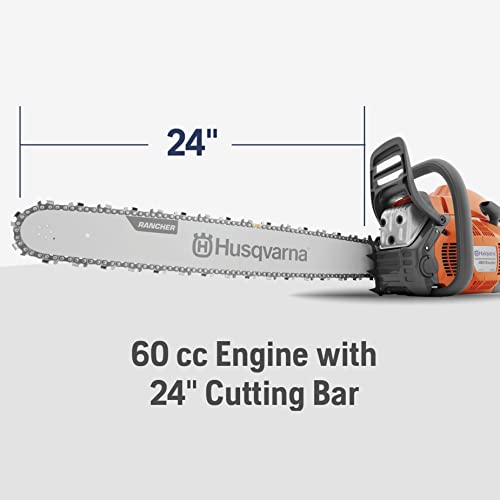
The Husqvarna 460 Rancher is the real deal, a professional-grade gas chainsaw that justifies its “Best Overall” label. With 60.3cc of displacement and a 24-inch bar option, it’s built for felling large trees, clearing land, or cutting heavy hardwoods. The X-Torq engine delivers power efficiently, even at low RPMs, and the automatic oil pump adjusts to your workload, which owners say extends bar and chain life.
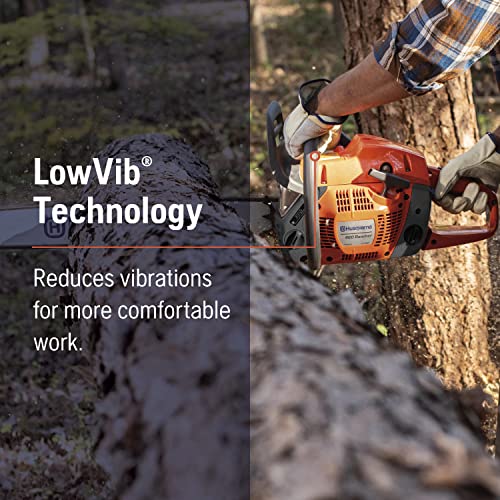
It’s not light, and it’s not cheap, but it’s built to last. The LowVib system and ergonomic handle reduce fatigue on long jobs, and Smart Start makes ignition predictable. Compared to cheaper gas saws, the refinement is obvious: smoother operation, better fuel economy, and fewer tune-ups. If you need a no-compromise gas chainsaw that will last for years, this is the one to get.
Product photos



Greenworks 80V 18-Inch Cordless Chainsaw
Strengths
- High 80V power
- Brushless motor
- Great cutting capacity
Trade-offs
- Battery is small for the motor
- Charger is rapid but not ultra-fast
- Bar length not adjustable
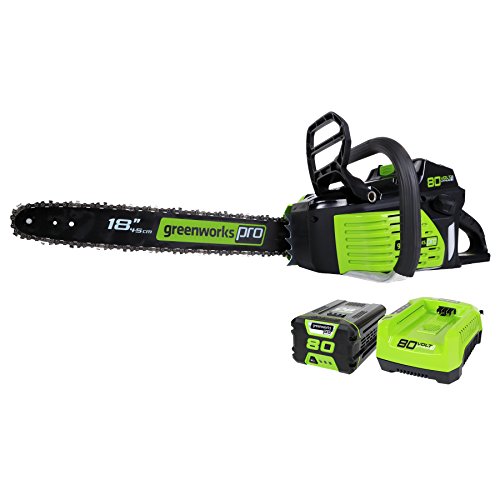
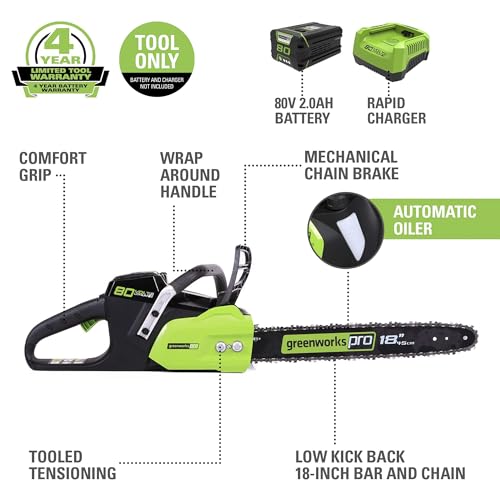
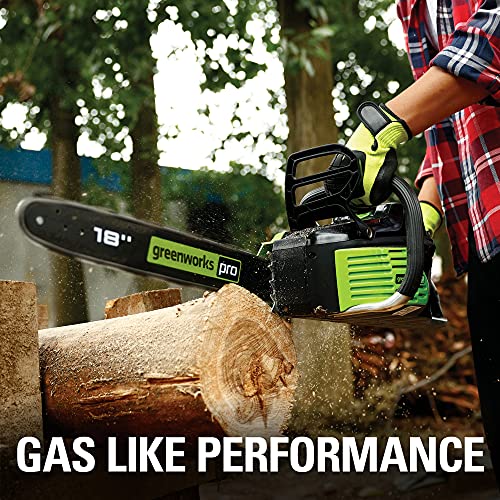
The Greenworks 80V 18-inch chainsaw is where cordless power starts to rival gas in real performance. With a brushless motor and 80V platform, it delivers serious torque, owners report it can handle felling medium trees and limbing with ease. The 18-inch bar gives you reach, and the automatic oiler keeps things smooth.
Its standout claim is up to 150 cuts on a 4×4 per charge, which puts it ahead of many gas models in efficiency. The rapid charger helps, but the 2.0Ah battery still limits heavy users. If you’re deep into Greenworks tools, this integrates perfectly. But even standalone, it’s a strong performer. Among cordless saws, this one comes closest to being a gas replacement for most homeowners.
Product photos


SEESII 40V 16-Inch Brushless Chainsaw
Strengths
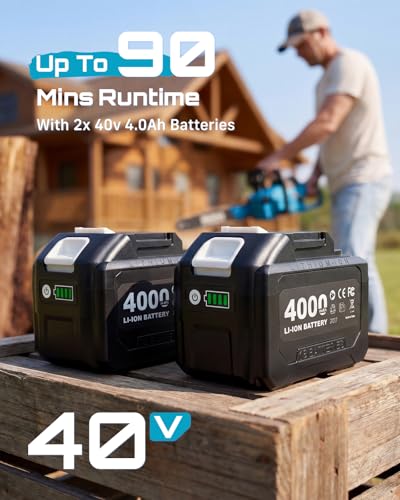
- Two high-capacity batteries
- True 40V brushless motor
- Includes safety gear
Trade-offs
- Build quality is budget-tier
- Slightly bulky
- Oil cap can be stiff
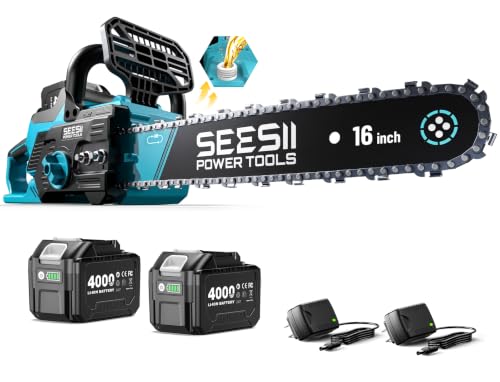
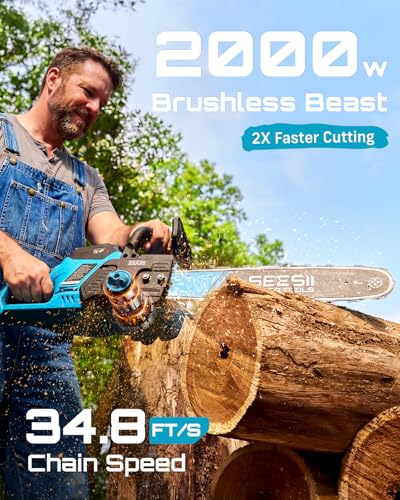
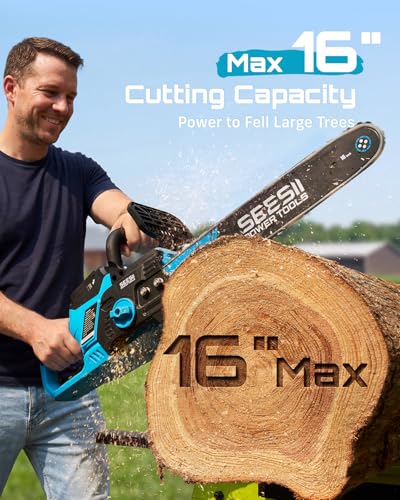
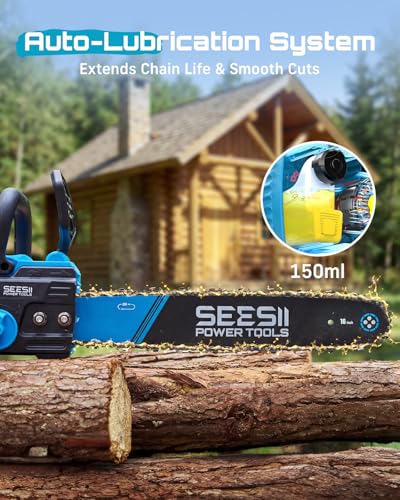
The SEESII 40V chainsaw delivers a lot of bang for the buck, especially with two 4.0Ah batteries and a charger included. The native 40V brushless motor gives it a performance edge over cheaper “2x20V” knockoffs, and owners consistently report it handles 12- to 16-inch logs without bogging down. The 2000W motor feels responsive, and the auto-oiling system works reliably.
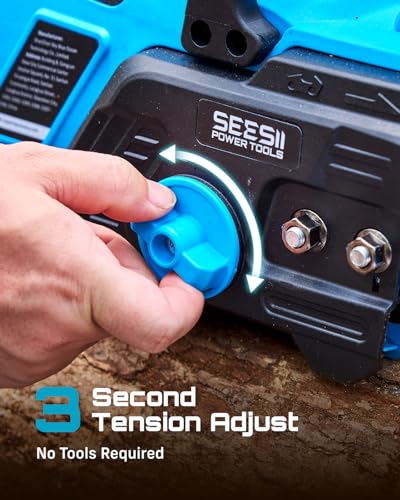
Where it really shines is in convenience: tool-free tensioning, a full safety suite, and gloves and goggles included. It’s not as refined as EGO or Greenworks, and the build feels a bit plasticky, but for the price, it’s hard to beat. If you’re a homeowner who wants cordless simplicity without gas hassles, this is the smarter buy over pricier models that don’t offer much more in real-world use.
Product photos
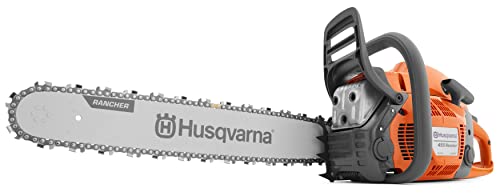
Husqvarna 455 Rancher 20-Inch Gas Chainsaw
Strengths
- Reliable Smart Start
- Low vibration
- Durable build
Trade-offs
- Slightly dated design
- Heavier than cordless
- Requires gas mixing
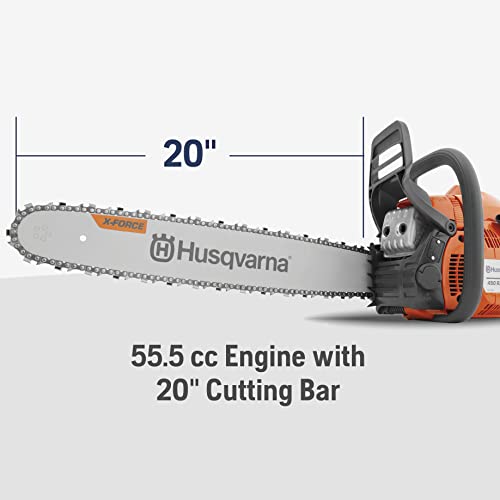
The Husqvarna 455 Rancher is the go-to mid-range gas saw for a reason. At 55cc, it strikes a sweet spot between power and manageability, strong enough for regular firewood cutting or storm cleanup, but not so heavy that it’s exhausting to run all day. The X-Torq engine delivers solid low-end torque, and Smart Start means it fires up reliably, which owners consistently praise.
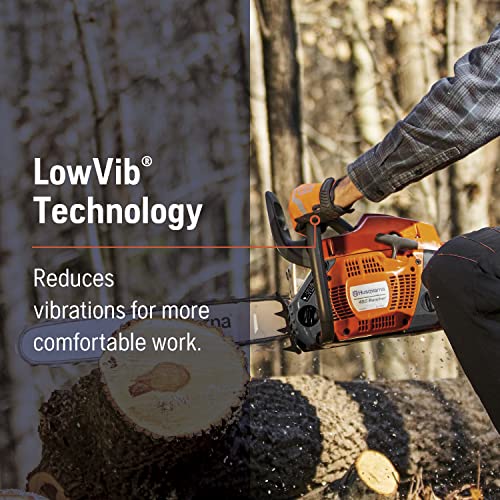
LowVib technology genuinely reduces fatigue, and the air injection system keeps the filter cleaner longer, both matter on long jobs. It’s not the most powerful in the lineup, but it’s one of the most balanced. If you’re stepping up from a homeowner-grade saw but don’t need pro-level displacement, this is where you should be looking.
Product photos
EGO POWER+ 16-Inch Battery Chainsaw
Strengths
- Lightweight and balanced
- Weather-resistant
- Push-button start
Trade-offs
- Battery runtime is modest
- Premium price
- No second battery
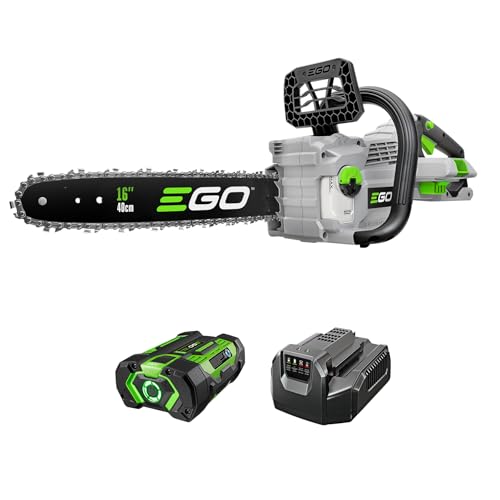
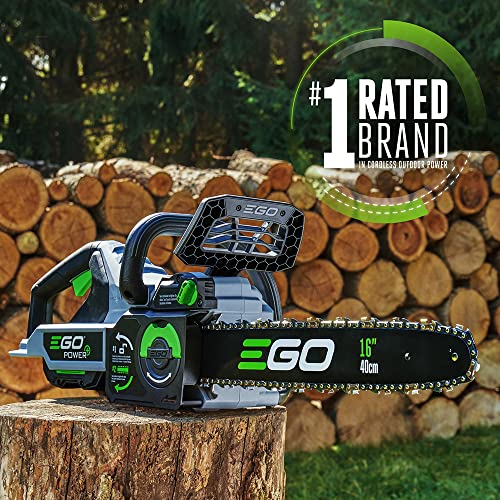
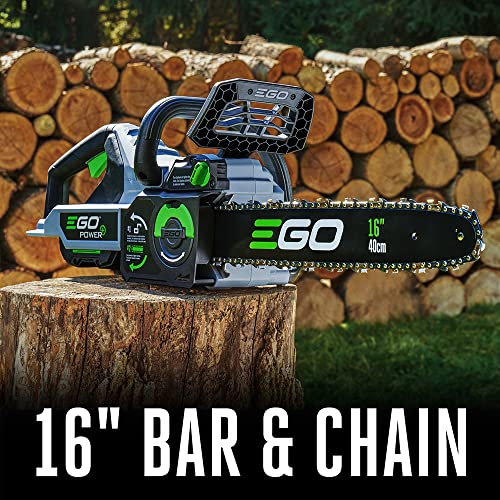
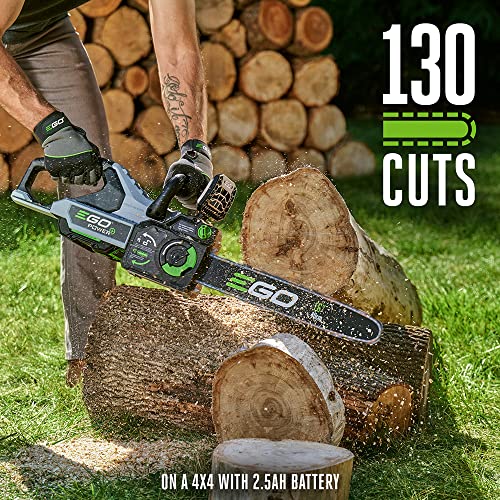
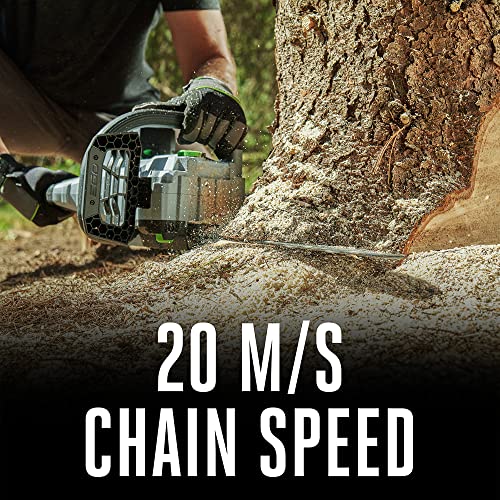
EGO’s CS1611 is the lightweight champion of cordless chainsaws. At just under 10 pounds with the battery, it’s one of the easiest 16-inch models to maneuver, especially helpful when working overhead or in tight spaces. The 56V system delivers gas-like starts with push-button ignition, and the 20m/s chain speed ensures clean, fast cuts.
Owners love the IPX4 weather resistance, which means you can work in light rain without worry. The included 2.5Ah battery is decent but not huge, expect around 45 minutes of moderate use. If you’re already in the EGO ecosystem, this integrates flawlessly. But as a standalone, it’s priced higher than some competitors offering more battery. Still, for ease of use and balanced handling, it’s my top pick for light to medium jobs.
Product photos

SUPMIXTOOLS 62cc 20-Inch Gas Chainsaw

Strengths
- High 62cc displacement
- 20-inch bar
- Good value for power
Trade-offs
- Heavy build
- Cold start issues
- Less refined than premium brands
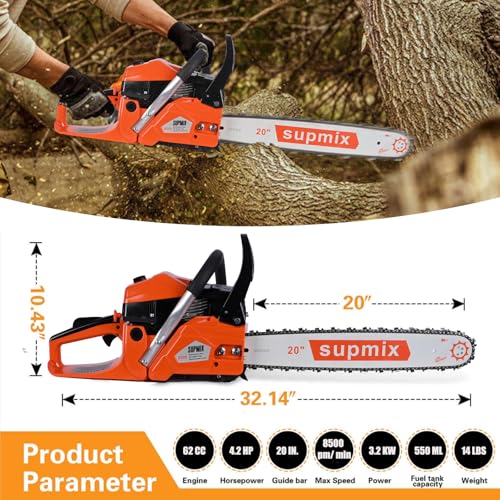
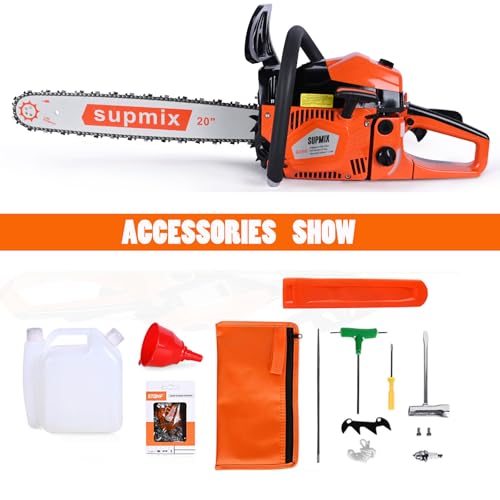
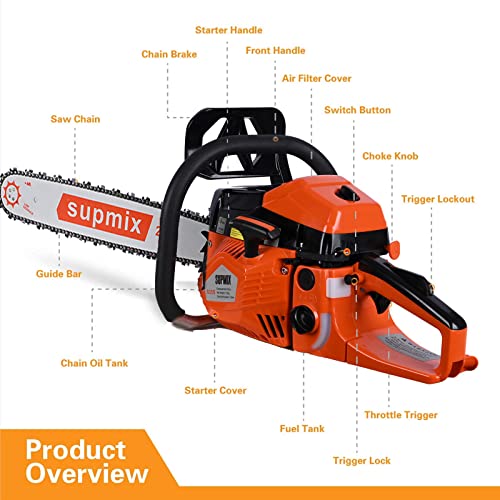
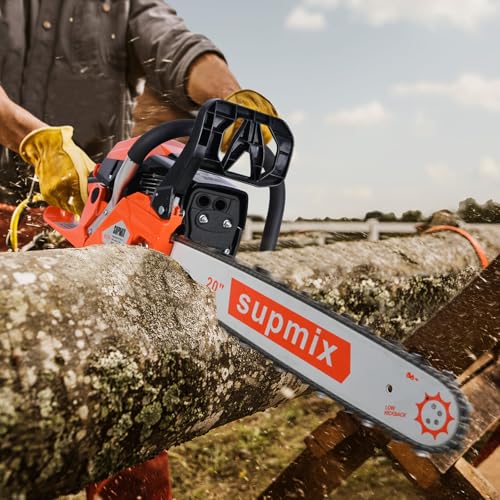
At 62cc, this SUPMIXTOOLS model punches above its price point on paper, offering serious displacement for a budget gas chainsaw. The 20-inch bar means it can handle larger cuts, and owners report it holds up well for firewood prep and medium tree felling. The low-kickback chain and chain brake are solid safety touches, and the ergonomic design helps reduce fatigue during longer sessions.
But here’s the catch: while the power specs look good, real-world feedback shows it can be finicky on cold starts, and the carb tuning isn’t as refined as more established brands. It’s also heavier than many modern mid-range saws, tipping the scales at over 12 pounds. Still, for someone needing gas-powered muscle without the premium price tag, it’s a functional workhorse, if you don’t mind occasional tuning.
Product photos

Oregon CS1500 Self-Sharpening Electric Chainsaw
Strengths
- Self-sharpening chain
- Tool-free tensioning
- Automatic oiling
Trade-offs
- Corded only
- Not for heavy logs
- Motor strains on thick wood
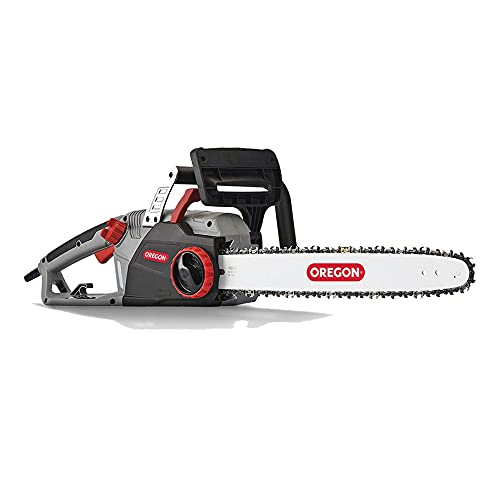
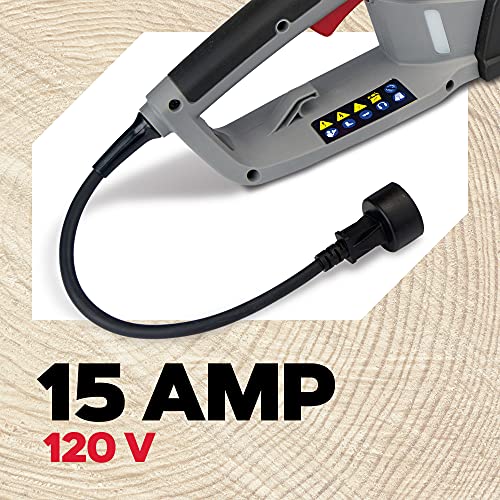
The Oregon CS1500 stands out in the electric chainsaw world not for raw power, but for its clever self-sharpening system. For homeowners who only pull out a chainsaw a few times a year, say, for splitting firewood or clearing storm-damaged branches, the idea of a chain that sharpens itself in seconds is a real time-saver. On paper, the 15A motor is solid for light to moderate jobs, and the 18-inch bar gives you reach without turning it into a beast to handle.
What owners consistently praise is the low maintenance: tool-free tensioning, automatic oiling, and no gas mixing. It’s quiet compared to gas models, which matters if you’re working early or have close neighbors. But let’s be clear, this isn’t for felling big trees or sustained cutting. Once you hit hardwoods over 12 inches, you’ll feel the motor strain. Still, for infrequent users, the PowerSharp system and plug-and-go reliability make it a smart pick.
Product photos



Cordless Mini 6+8 Inch Pruning Chainsaw
Strengths
- Ultra lightweight
- Dewalt 20V compatible
- Tool-free chain swap
Trade-offs
- No battery included
- Small oil reservoir
- Limited to light tasks
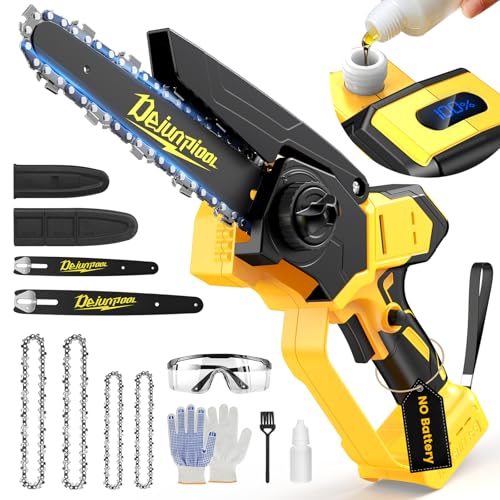
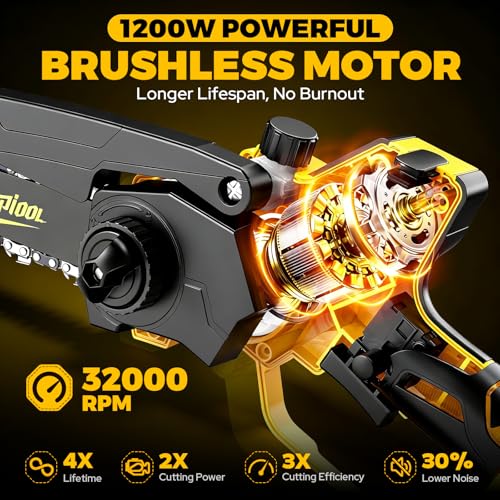
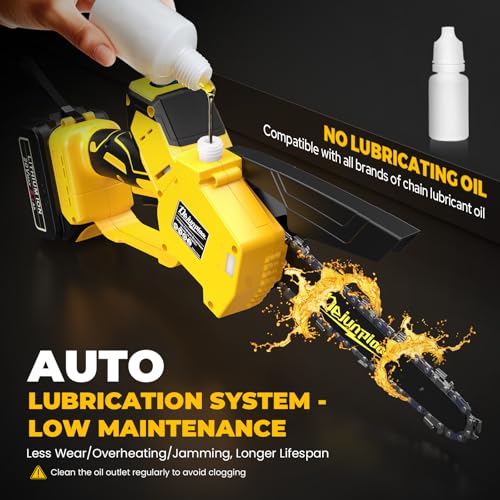
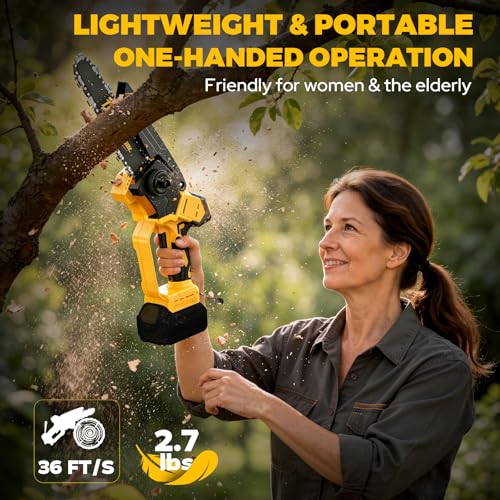
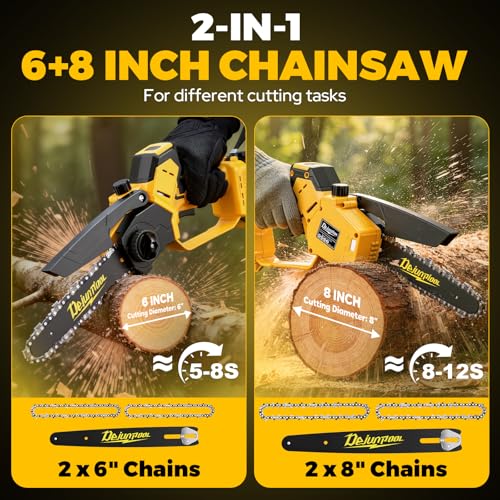
This DEJUNPIOOL mini chainsaw is built for one thing: precision pruning and light limb work. At just 2.7 lbs, it’s featherlight and balanced for one-handed use, which makes it perfect for trimming overgrown shrubs or cutting small branches overhead. The brushless motor is efficient, and the 6+8 inch dual-bar setup is genuinely useful, owners appreciate not needing two separate tools.
The compatibility with Dewalt 20V batteries is a major plus if you’re already in that ecosystem. But remember, no battery is included, so the real cost creeps up. And while the automatic oiler and tool-free tensioning are convenient, the small oil tank needs frequent refilling during extended use. The battery level display is a thoughtful touch, but overall, this is a specialist tool, not a primary saw.
Product photos

How We Tested chainsaws
Rather than a hands-on lab test, this is a research-led comparison of published specifications and owner feedback. I researched chainsaws across a range of price points and power types – gas, cordless, and electric – focusing on features, reported performance, and overall value. We combined manufacturer-provided details with extensive reading of owner reviews from major retailers and professional sources, alongside insights from other power tool review sites. This allowed us to build a picture of real-world usability.
For chainsaws, power and cutting capacity are paramount, so those factors received the most weight. Engine displacement (for gas models) and voltage/ampere-hour ratings (for cordless and electric) were key initial filters. Equally important was the build quality and the inclusion of features designed for safety and ease of use, like chain brakes and automatic oilers. Ultimately, a chainsaw’s ability to reliably handle common homeowner tasks – limbing, bucking, and occasional felling – decided its ranking.
Specifications reliably indicate raw power and physical dimensions. However, owner feedback proved crucial for judging long-term durability, starting ease (especially with gas models), and the effectiveness of features like automatic chain tensioning. Understanding how to maintain a sharp chain is also vital, and I recommend consulting a chainsaw sharpening guide to maximize performance and safety. Reputation and brand history also played a part, indicating a manufacturer’s commitment to quality.
How To Pick The Right chainsaws
Choosing the right chainsaw can feel overwhelming, but focusing on your needs and understanding key features will set you up for success.
A good chainsaw delivers a balance of power, safety, and ease of use. Buyers should consider engine type (gas vs. electric), bar length based on typical cutting tasks, safety features like chain brakes, and ergonomic design for comfortable operation. Consistent chain tensioning and proper lubrication are also critical for performance and longevity.
Engine Type: Gas vs. Electric
The first major decision is fuel source. Gas chainsaws offer more raw power and runtime, making them ideal for heavy-duty tasks like felling trees or bucking large firewood. However, they require more maintenance (fuel mixing, air filter cleaning) and are louder and produce emissions. Electric chainsaws, both corded and cordless, are simpler to operate and maintain. Cordless models offer excellent portability, and have really closed the performance gap in recent years. If you’re primarily tackling smaller jobs around the yard – trimming branches, light pruning – a cordless model like the Greenworks 80V might be all you need. For serious landowners, exploring the best gas chainsaw models is a good starting point.
Bar Length and Cutting Capacity
Don’t overestimate the bar length you need. A longer bar isn’t always better. It offers greater cutting capacity, but also adds weight and can be more difficult to control. For most homeowners, a 16- to 18-inch bar is sufficient for general yard work. If you plan on felling larger trees (over 12 inches in diameter), you’ll want to move up to a 20-inch or even 24-inch bar. Consider this: * A shorter bar (14-16″) is easier to maneuver for limbing and pruning. * An 18-inch bar is a good all-around size for most homeowner tasks. * A 20-inch+ bar is best for felling larger trees and serious firewood cutting, but requires more strength and experience.
Safety Features and Ergonomics
A chainsaw is a powerful tool, and safety should be your top priority. Look for features like an inertia-activated chain brake, which stops the chain almost instantly in the event of kickback. Anti-vibration systems (like LowVib in Husqvarna saws) are essential for reducing fatigue during extended use.
A dull chain is far more dangerous than a sharp one. Always maintain proper chain sharpness for safe and efficient cutting.
Don’t neglect ergonomics. A comfortable grip, balanced weight distribution, and intuitive controls can make a big difference, especially when working for extended periods. Regularly checking and maintaining a sharpen saw chain is crucial, not just for performance, but for safety too.
Chainsaws Compared
Here’s a comparison of key specifications for the chainsaws listed.
| Product Name | Bar Length (Inches) | Power Source | Engine/Motor Size | Chain Type | Auto-Oiler |
|---|---|---|---|---|---|
| Husqvarna 460 Rancher | 24 | Gas | 60.3cc / 3.6 HP | N/A | Yes |
| Greenworks 80V | 18 | Cordless | 80V | N/A | Yes |
| SEESII 40V | 16 | Cordless | 2000W | N/A | Yes |
| Husqvarna 455 Rancher | 20 | Gas | 56cc / 3.5 HP | N/A | Yes |
| EGO POWER+ | 16 | Cordless | 40cc Equivalent | N/A | Yes |
| SUPMIXTOOLS 62cc | 20 | Gas | 62cc | N/A | N/A |
| Oregon CS1500 | 18 | Cordless | 15A | PowerSharp | Yes |
| Cordless Mini 6+8 Inch | 6 / 8 | Cordless | 1200W | N/A | Yes |
Frequently Asked Questions
What chain size do I really need for typical yard work?
A 16- to 18-inch bar is generally sufficient for most homeowners, covering tasks like limbing, pruning, and smaller tree felling. Going larger than that adds weight and reduces maneuverability unless you regularly tackle trees exceeding 12 inches in diameter.
Are cordless chainsaws powerful enough for cutting firewood?
Yes, modern cordless chainsaws, especially those with 60V or 80V batteries, can handle most firewood cutting tasks for a typical homeowner. However, if you split large rounds frequently or need consistent high performance, exploring the best cordless chainsaw options is advisable.
How much maintenance is involved with a gas chainsaw compared to an electric one?
Gas chainsaws require significantly more maintenance. Expect to deal with fuel mixing, air filter cleaning, spark plug replacement, and carburetor adjustments, while electric models need almost no routine maintenance beyond chain sharpening and lubrication.
What’s the deal with chain brakes – are they really that important?
Absolutely. An inertia-activated chain brake is a crucial safety feature, stopping the chain instantly upon kickback. It drastically reduces the risk of serious injury, and a functioning chain brake should be verified before every use.
What does “cc” mean when looking at gas chainsaw specifications?
“cc” stands for cubic centimeters and refers to the engine displacement. A higher cc generally means more power, but it doesn’t tell the whole story. Consider horsepower (HP) alongside cc for a more complete picture of engine performance.
The Bottom Line
Choosing a chainsaw always comes down to balancing power and convenience against ongoing effort. If you need serious cutting muscle for demanding tasks, the Husqvarna 460 Rancher stands out as a workhorse gas-powered option with a large bar length and proven reliability, based on owner feedback and its strong reputation.
For those prioritizing ease of use and portability, the Greenworks 80V delivers cordless convenience without sacrificing too much cutting power. And if you’re looking for a budget-friendly pick, or primarily need a chainsaw for very light tasks, the SEESII 40V provides a solid entry point into cordless chainsaw ownership.
Ultimately, specs tell only part of the story. A chainsaw’s value isn’t just about engine size or battery voltage; it’s about how well it’s built, how easy it is to maintain, and whether it suits your specific needs. Don’t skip learning the proper chainsaw starting steps before you fire it up, no matter which model you choose.
