
4 Best Car Buffers of 2026
This post contains affiliate links. As an Amazon Associate, we earn from qualifying purchases.
The DEWALT 12Amp Variable Speed Buffer stands out as the best overall car buffer for its consistent power and precision control, making it ideal for serious detailing work. If you’re on a tighter budget, the AVID POWER 1200W Rotary Buffer delivers solid performance without the premium price tag, while the cotaros 8-Speed Cordless Buffer is our top versatility pick for cordless freedom and a well-rounded accessory kit.
Choosing the right buffer isn’t just about shine, it’s about having a tool that won’t quit mid-job or damage your paint. Too many people buy based on power alone, only to struggle with poor speed control or uncomfortable handling.
In this guide, I break down the key factors that actually matter: motor reliability, speed adjustability, and real-world usability, based on specs, owner feedback, and years of evaluating power tools at PowerToolGuide.net. These picks reflect what delivers the best balance of performance, value, and long-term durability for both beginners and seasoned detailers.
Top 4 Buffer For Cars in the Market
The Best Buffer For Cars, Reviewed
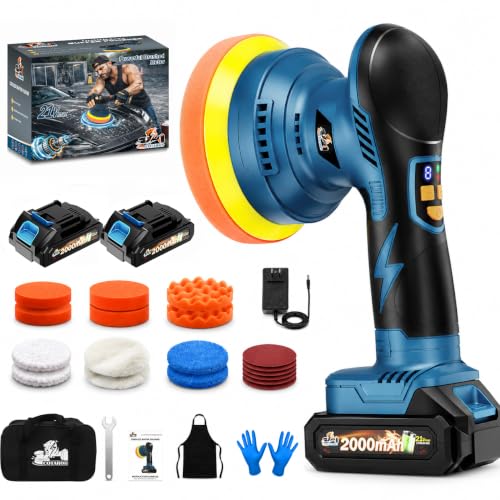
cotaros 8-Speed Cordless Buffer
Strengths
- True cordless freedom
- LED speed display
- Lightweight design
Trade-offs
- Less torque for heavy cuts
- May pause if overheated
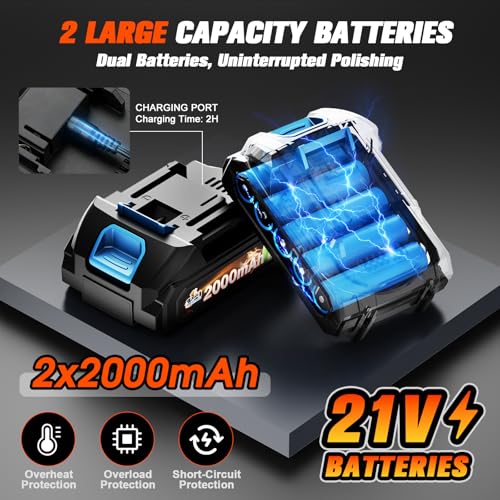
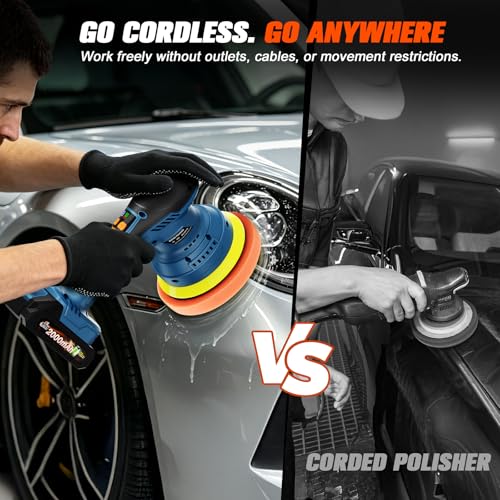
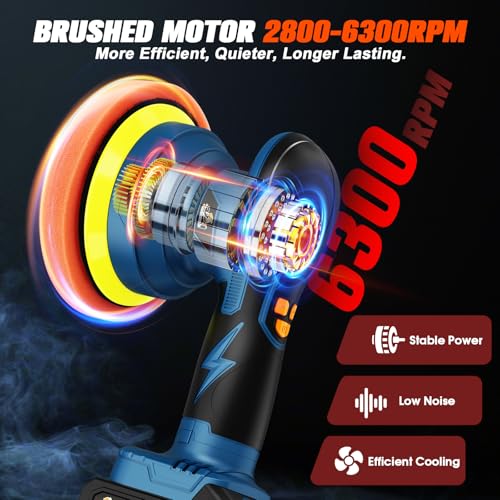
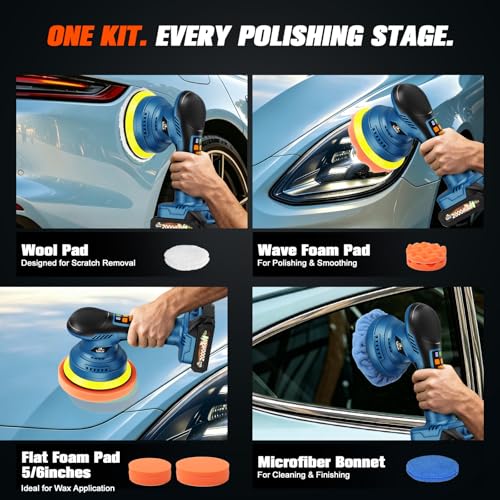
The cotaros 21V cordless buffer stands out for one big reason: it removes the cord without sacrificing control. With 8 speeds ranging from 2800 to 6300 RPM and an orbital action, it’s clearly designed to be beginner-safe while still offering enough range for more advanced users. The LED display is a smart touch, owners appreciate being able to see speed and battery life at a glance, which helps avoid surprises mid-job. At just 3 lbs, it’s one of the lightest full-featured polishers here, and the non-slip grip makes it easy to manage even during extended use.
It doesn’t match the raw power of the DEWALT, but that’s not its job. Where it wins is versatility and convenience. The dual batteries mean you can swap and keep going, a huge plus if you’re detailing an SUV or working outside your garage. Reviewers note it performs well on waxing and light correction, though it may struggle with heavy compounding. Compared to the Seesii, it has more speed options and better battery integration.
Product photos

DEWALT 12Amp Variable Speed Buffer

Strengths
- Heavy-duty build
- Smooth soft start
- Durable steel gears
Trade-offs
- Heavy for long sessions
- Cord limits mobility
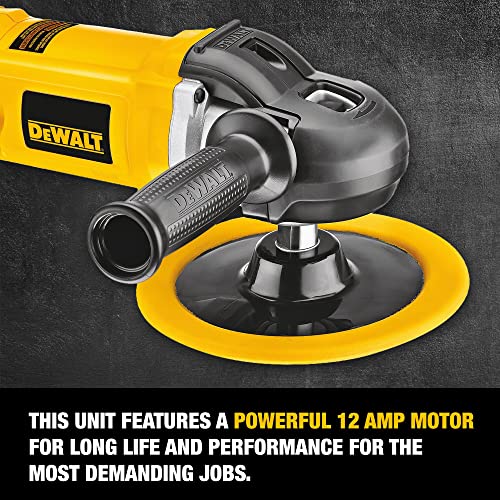
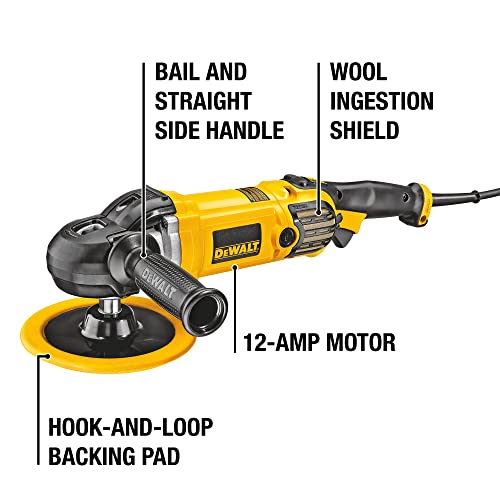
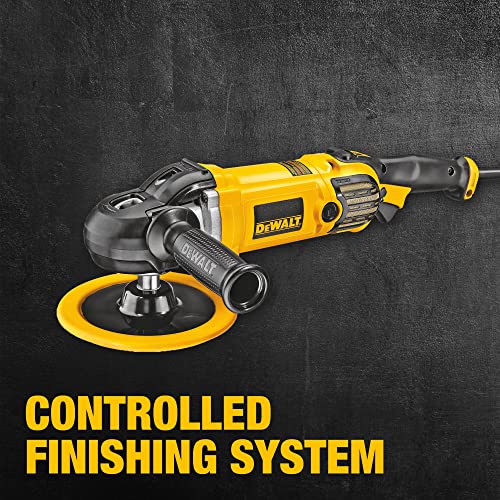
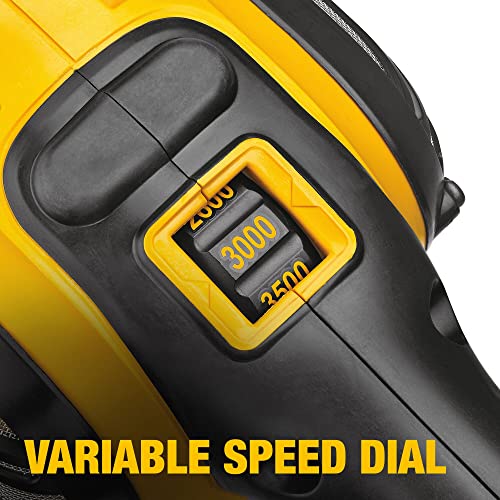
This DEWALT DWP849X is built like a tank, and that’s exactly what you’d expect from a brand rooted in professional-grade tools. On paper, the 12-amp motor and 0–3,500 RPM range deliver serious power, making it one of the most capable corded rotary polishers in this group. The all-ball-bearing construction and steel gears aren’t just marketing fluff, owners consistently report long-term durability, even under frequent, heavy use. If you’re tackling aggressive paint correction or working on large vehicles day after day, this tool has the stamina to keep up.
What sets it apart is the thoughtful engineering: the soft start, spindle lock, and no-volt release switch are real safety and usability upgrades you don’t always see at this level. While it’s heavier than cordless options, that weight comes with stability and reduced vibration. Compared to lighter DIY models, this one feels like a tool you’d find in a pro detailer’s garage. That said, it’s overkill for occasional waxing.
Product photos

AVID POWER 1200W Rotary Buffer

Strengths
- Good heat management
- Solid included kit
- Affordable mid-range
Trade-offs
- Lower power output
- Basic ergonomics
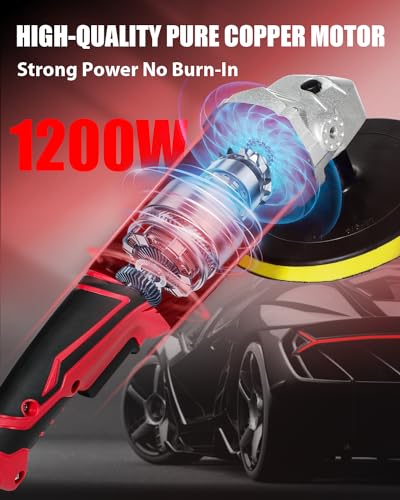
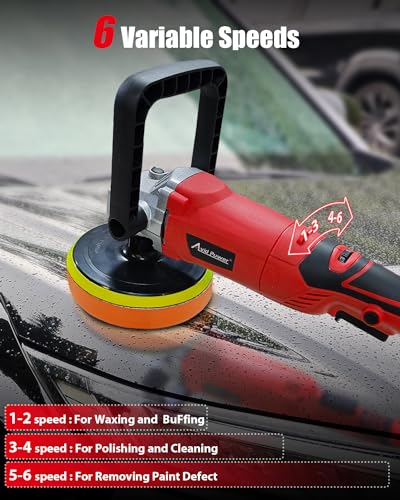
The AVID POWER buffer sits in the sweet spot between affordability and functionality for mid-tier users. At 1200W, it’s less powerful than the Seesii but still capable of handling waxing, light polishing, and minor scratch removal with ease. The 6-speed dial (1600–3500 RPM) gives decent control, and the switch lock is a small but meaningful comfort boost during large-panel work. Its porous heat dissipation design is a standout spec, owners report fewer overheating issues compared to similarly priced models, which is a real win for weekend warriors who don’t want their tool quitting mid-job.
It comes with a solid accessory bundle, including sanding papers and multiple pads, so it’s truly ready to go out of the box. While it doesn’t have the refinement of the DEWALT or the modern features of the cotaros, it delivers reliable performance for the price. I’d pick this over the Seesii if you’re on a tighter budget and don’t need maximum power.
Product photos

Seesii 1600W Rotary Car Buffer
Strengths
- High 1600W power
- Speed lock function
- Comes with sanding pads
Trade-offs
- Not cordless
- Requires cooldown breaks
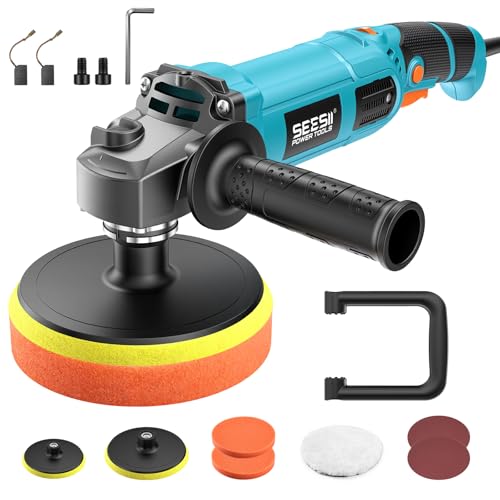
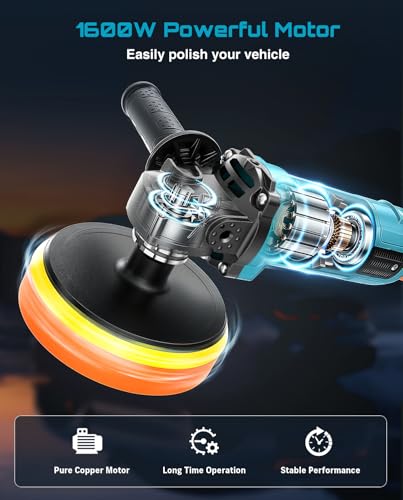
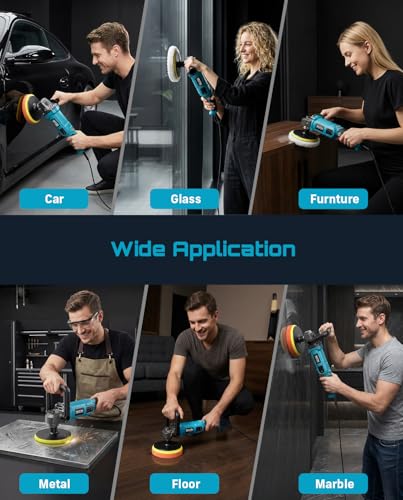
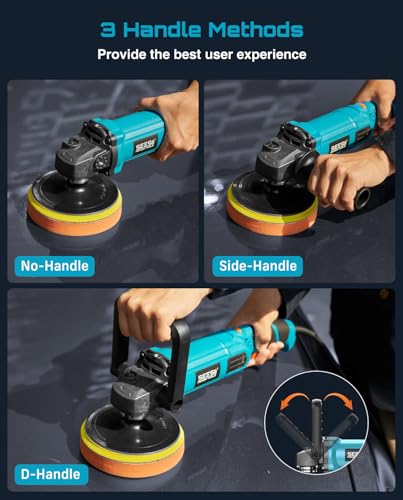
The Seesii 1600W buffer packs a serious punch for a corded unit, and it shows in its motor specs, pure copper windings, 7″ pad compatibility, and a broad 2056–3600 RPM range. On paper, this is one of the most powerful options here, and owner feedback backs that up: it handles deep scratches and oxidation better than most in this list. The dual-handle setup is a big win for control, especially for beginners who might otherwise wobble and risk burning paint. I’d recommend this over the AVID POWER for users who want more aggressive correction ability without stepping up to pro-level tools.
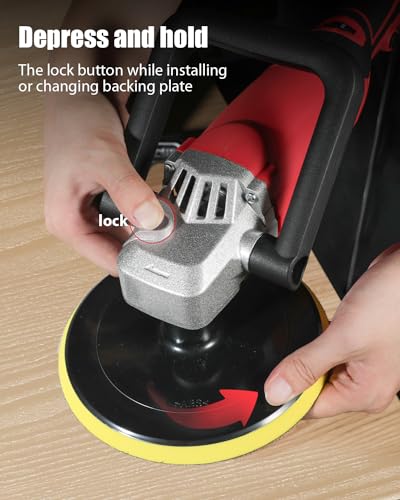
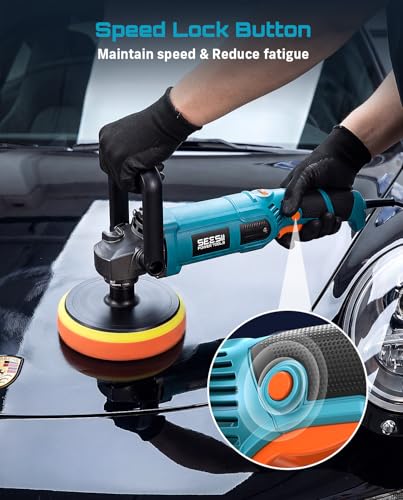
It’s not cordless, but it makes up for it with thoughtful features like the speed lock and quick-change velcro pad system. The included sanding discs and multiple pads mean you can go from cutting to finishing without extra purchases. One note: despite the high wattage, it still needs cooldown periods, as some owners report thermal protection kicking in during long sessions. Still, for the price, it offers pro-level features in a DIY-friendly package.
Product photos
How We Chose These buffer for cars
I approach evaluating power tools with a focus on practical performance and value, and choosing the right buffer for cars is no different. Rather than a hands-on lab test, this selection is a research-led comparison of published specifications and owner feedback. I compared features across numerous models, weighed owner reviews from multiple sources, and considered insights from reputable detailing publications. My goal was to rank these buffers based on what would genuinely benefit a range of users, from weekend enthusiasts to those seeking professional-grade results, informed by decades of experience reviewing tools at PowerToolGuide.net.
For car buffers, consistent speed control and motor durability are paramount. I prioritized these two factors because a buffer needs to maintain power through various paint types and polishing stages, and a burned-out motor is a frustrating waste of money. Runtime (for cordless models) and the quality of included accessories also played a significant role, as a complete kit offers immediate usability and value. You’ll find more information on these considerations in our detailed buffer polisher reviews.
Specifications reliably indicate motor power, speed ranges, and included accessories. However, I judged long-term reliability and real-world usability heavily from owner feedback. Comments regarding heat buildup, vibration levels, and the durability of included pads were critical. While specs tell you what a buffer can do, owner experiences reveal how well it does it – and whether it will last. For those looking for guidance on the very top-rated car buffer machines, this approach can help narrow your search.
Choosing The Right buffer for cars
Choosing the right car buffer can dramatically improve the look of your vehicle, but there’s more to it than just grabbing the shiniest one off the shelf.
A quality car buffer delivers consistent power, offers adjustable speed settings for different tasks (compounding, polishing, waxing), and provides ergonomic comfort for extended use. Look for models with robust motors, multiple speed options, and features like variable speed triggers or dials for precise control. Consider pad materials and included accessories to match your detailing needs.
Motor Power and Type
The motor is the heart of any buffer, and for cars, you’ll generally find either corded or cordless options. Corded buffers, like the DEWALT 12Amp model, tend to offer more consistent power for heavier jobs – paint correction, for example – but require an outlet and can limit your range. Cordless buffers, such as the cotaros 8-Speed option, provide freedom of movement, but battery life and consistent power delivery are key concerns. Don’t automatically assume more watts equal better performance. A well-designed 600W buffer can often outperform a poorly built 1200W one.
Speed Control and Adjustability
Precise speed control is crucial. Different tasks demand different speeds. Too fast, and you risk burning through the paint; too slow, and you’ll waste time and effort. Look for a buffer with multiple speed settings (at least six is a good starting point) and, ideally, a variable speed trigger or dial. This allows you to fine-tune the speed based on the pad type, polishing compound, and the condition of your vehicle’s paint. For beginners, a slower speed setting is generally recommended to avoid mistakes.
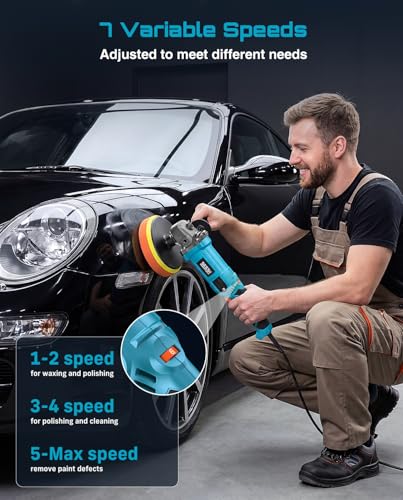
Here’s a quick guide for speed selection: * Low (1-2): Waxing and applying sealant. * Medium (3-4): Polishing to remove minor swirl marks. * High (5-6+): Aggressive cutting to remove deeper scratches and oxidation (requires experience!).
A good rule of thumb is to start with the lowest speed setting and gradually increase it until you achieve the desired result. Always test in an inconspicuous area first.
Ergonomics and Accessories
A buffer that’s uncomfortable to hold will quickly become a burden. Consider the weight, grip design, and whether it comes with features like an ergonomic handle or vibration reduction. The AVID POWER 1200W Rotary Buffer, for instance, highlights its compact design and detachable handles for reduced fatigue. Beyond the buffer itself, pay attention to the included accessories. A variety of pads (foam, wool, microfiber) are essential for different stages of detailing. A kit including sanding discs can also be useful for more extensive paint correction. If you’re looking for a more in-depth look at options, check out our guide to the top automotive buffer polishers. Ultimately, the best car buffer for you will depend on your experience level, the types of detailing tasks you plan to undertake, and your budget.
Buffers for Cars Compared
Here’s a comparison of key specifications for several car buffers to help you choose the right tool.
| Product Title | Power (Amps/Watts) | Speed Control | Corded/Cordless | Battery Voltage | Included Pads |
|---|---|---|---|---|---|
| cotaros 8-Speed Cordless Buffer | 21V (2000mAh x2) | 8 Speeds | Cordless | 21V | 3 Flat, 3 Wave, 2 Wool, 2 Microfiber, 2 Non-Woven, 6 Sanding |
| DEWALT 12Amp Variable Speed Buffer | 12A | Variable | Corded | N/A | N/A |
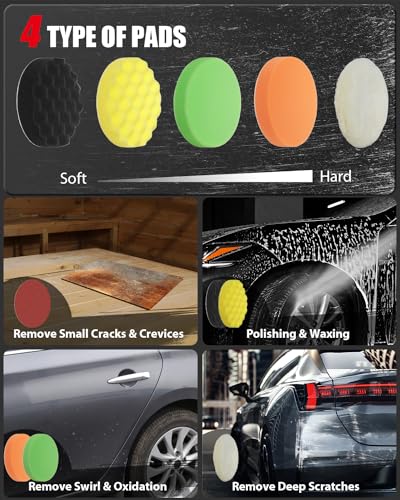
| AVID POWER 1200W Rotary Buffer | 1200W | 6 Speeds | Corded | N/A | 4 Polishing, 1 Wool, 10 Sanding |
| Seesii 1600W Rotary Car Buffer | 1600W | 7 Speeds | Corded | N/A | 2 Sponge, 1 Wool, 2 Sanding |
Frequently Asked Questions
What speed setting should I use for applying wax?
Low speeds (1-2) are best for waxing and applying sealant. Using a higher speed can generate too much heat and potentially damage the paint, while a lower speed ensures even distribution.
Are cordless buffers powerful enough for serious paint correction?
Cordless buffers can handle paint correction, but corded models generally provide more consistent power for demanding tasks. Look for a cordless buffer with a high voltage (20V+) and multiple battery packs to maintain runtime and performance.
How often should I replace the buffer pads?
The lifespan of buffer pads depends on usage and material, but generally, replace foam pads after 20-30 hours of use and wool pads after 30-40 hours. Using worn pads reduces effectiveness and risks scratching the paint; selecting optimal foam and wool pads is key.
What’s the difference between rotary and dual-action buffers?
Rotary buffers spin in a circular motion and are more aggressive, ideal for experienced users tackling heavy paint correction. Dual-action buffers oscillate and rotate simultaneously, making them safer for beginners and suitable for polishing and waxing.
Is it difficult to learn how to use a car buffer?
There’s a learning curve, but it’s manageable. Start with low speeds, practice on an inconspicuous area, and watch instructional videos. Choosing a dual-action buffer and investing in high-quality buffer pads can make the process easier.
The Bottom Line
Ultimately, choosing a car buffer comes down to balancing control and convenience. If you’re serious about paint correction and want consistent power for demanding jobs, the DEWALT 12Amp Variable Speed Buffer remains a solid choice. It requires being near an outlet, but the reliable motor and adjustable speed give you the control needed for professional-level results.
For those who value freedom of movement and don’t mind managing battery life, the cotaros 8-Speed Cordless Buffer is a fantastic all-rounder. It’s also a great option if you’re looking for the best cordless car buffers. The AVID POWER 1200W Rotary Buffer is a strong pick for those on a tighter budget, offering a good set of accessories and enough power for basic polishing and waxing tasks.
Don’t get too hung up on wattage or speed numbers. The most important factors are a buffer’s ability to maintain consistent power, the quality of the included pads, and – most of all – your technique. Taking the time to learn proper detailing methods and practicing on a small area will yield far better results than simply buying the most expensive machine.
