7 Best Block Planers of 2026
This post contains affiliate links. As an Amazon Associate, we earn from qualifying purchases.
The KAKURI Japanese 50mm Block Plane is the best overall, combining a razor-sharp Japanese high-carbon steel blade with a solid ECO oak body for unmatched cut quality. For a budget-friendly option, the JORGENSEN No.102 Wood Planer offers reliable O1 tool steel and ductile iron construction. If you need compact precision, the KAKURI Japanese 42mm Block Plane delivers excellent control in a smaller footprint.
Most people underestimate how much difference a good block plane makes until they try one. A poorly made model tears wood, resists adjustment, and leaves you fighting the tool instead of shaping it. After years of working with hand tools on everything from trim to furniture, I know what separates a frustrating experience from a smooth, satisfying cut.
This guide cuts through the noise, focusing on real-world performance based on specs, owner feedback, and what actually matters in practice: blade steel, body durability, and ease of tuning. These are the ones worth your time.
Top 7 Block Planers in the Market
The Best Block Planers, Reviewed
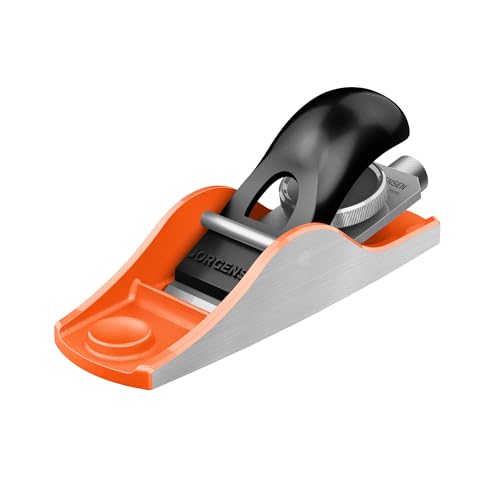
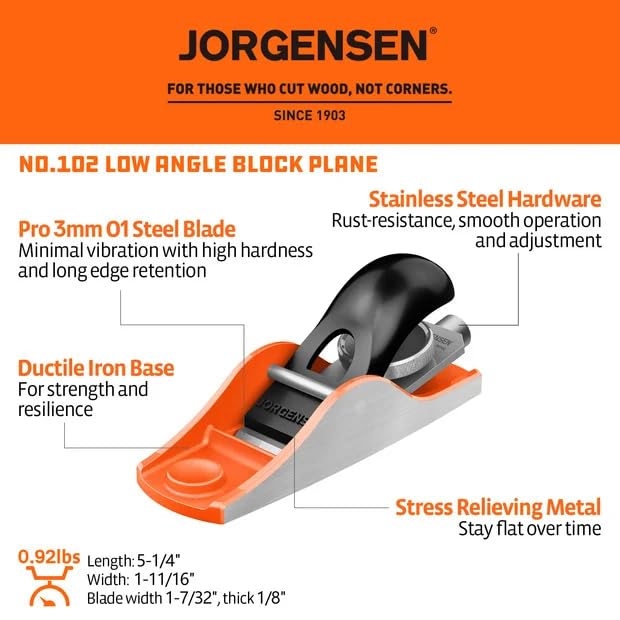
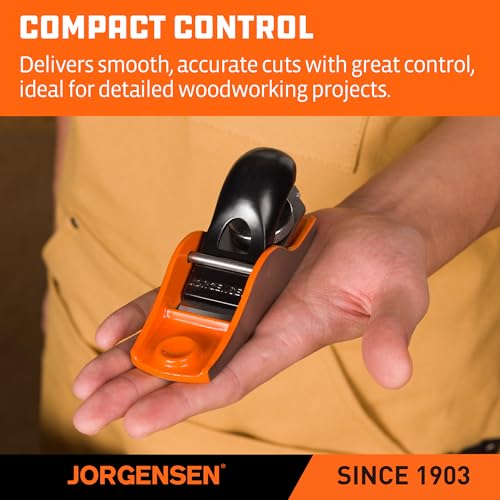
JORGENSEN No.102 Wood Planer
Strengths
- Durable ductile iron body
- O1 tool steel blade
- Easy depth adjustment
Trade-offs
- Heavier than compact planes
- No chipbreaker
- Blade alignment fussy
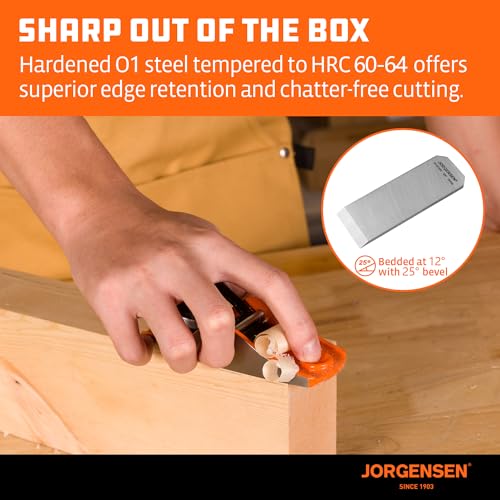
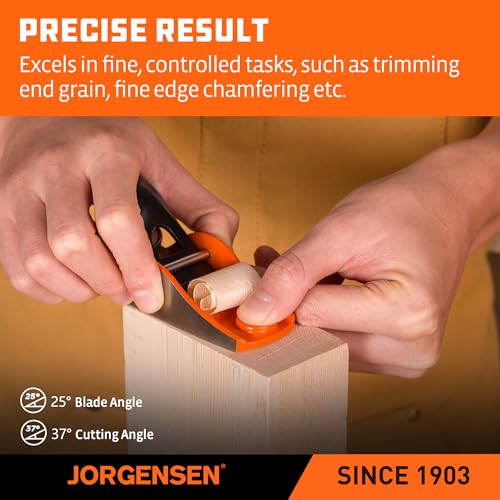
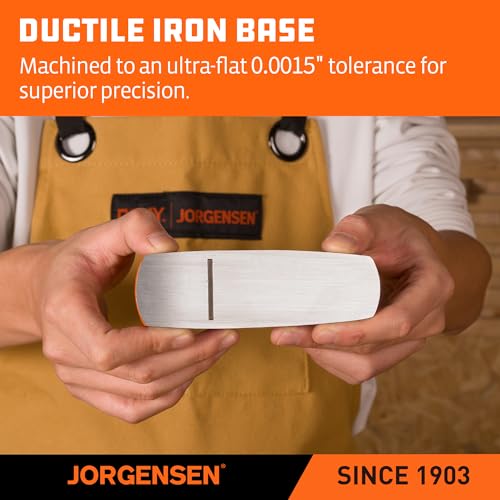
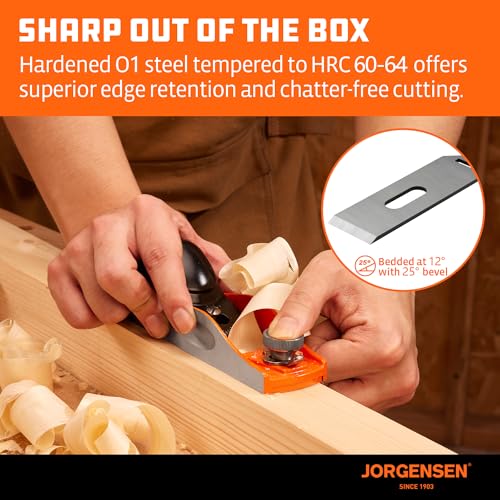
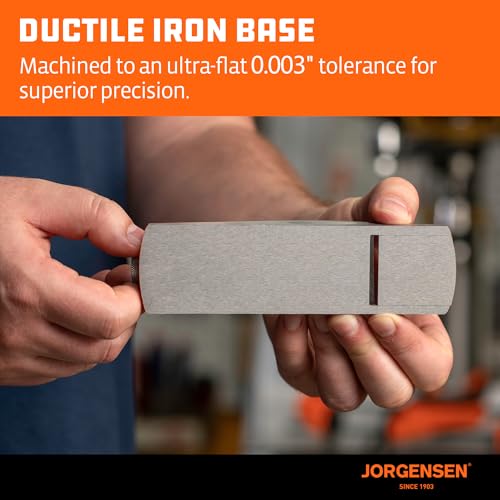
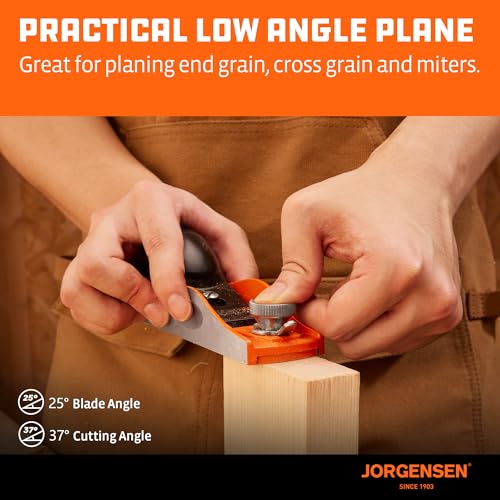
If you’re after a well-rounded Western-style block plane that bridges pro and DIY needs, this JORGENSEN stands out. The O1 tool steel blade is a big win, it holds an edge longer than most budget planes and responds well to sharpening. The ductile iron body feels solid, and the zinc alloy lever cap adds durability without adding bulk.
Owners praise its adjustability and smooth sole, which tracks well on edges. Compared to the WORKPRO model, it’s stiffer, more precise, and built to last. While not as refined as a Lie-Nielsen, it delivers 90% of the performance at a fraction of the cost. I’d pick this as the default recommendation for most woodworkers wanting reliability without overpaying.
Product photos
JORGENSEN No.60-1/2 Block Plane
Strengths
- Adjustable mouth opening
- O1 tool steel blade
- Durable ductile iron
Trade-offs
- Slightly higher price
- No chipbreaker
- Tighter weight balance
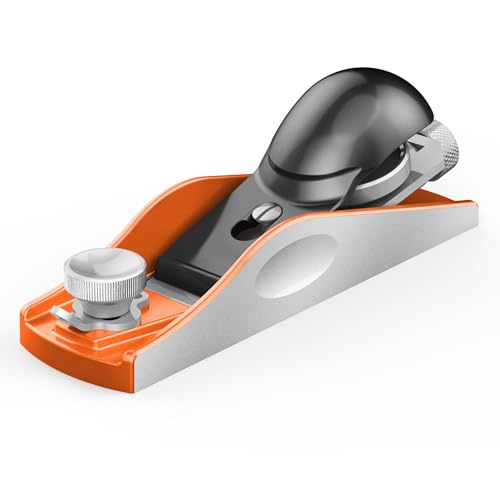
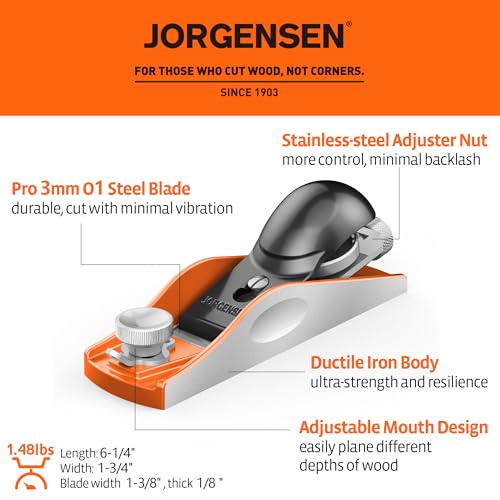
This JORGENSEN stands out for one key feature: the adjustable mouth. That’s a pro-level detail most block planes skip, and it makes a real difference when you’re fine-tuning cuts to avoid tear-out. Paired with the O1 tool steel blade and ductile iron body, this is a precision tool that behaves like a much more expensive plane.
Owners appreciate the control it offers on delicate trimming jobs, especially when fitting drawers or cleaning up dado joints. It’s nearly identical to the No.102 but with better mouth control, making it the smarter pick for detail work. If you’re comparing within the JORGENSEN line, this one edges ahead for accuracy-focused tasks.
Product photos

KAKURI Japanese 50mm Block Plane

Strengths
- Exceptional finish
- Laminated steel blade
- Balanced two-hand use
Trade-offs
- Requires blade tuning
- No depth adjustment knob
- Higher learning curve
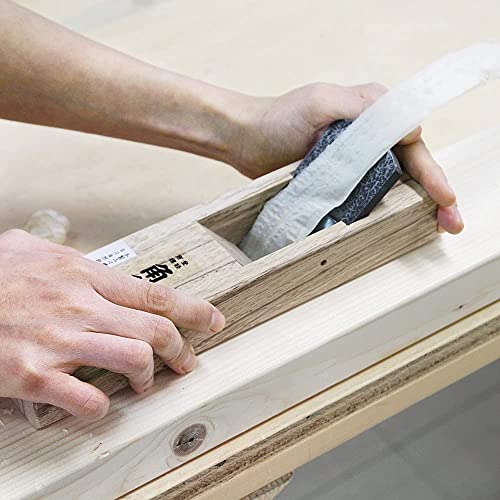
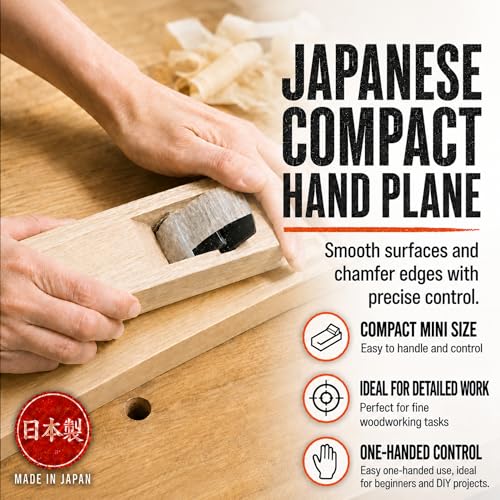
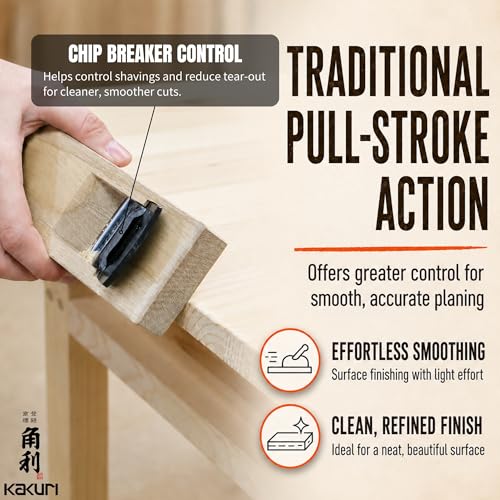
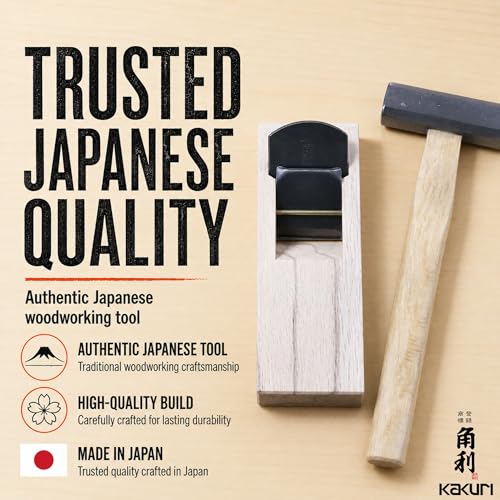
This KAKURI plane is a serious tool disguised as something simple. Made in Japan with a laminated high-carbon steel blade and a chipbreaker, it’s built to deliver glass-smooth finishes right out of the box, no打磨 (polishing) needed for most users. The pull-stroke design reduces tear-out and gives far more control than Western push planes, which is why so many hand-tool enthusiasts swear by it.
Owners consistently report that it planes beautifully with minimal effort, especially on hardwoods. The ECO oak body feels solid in hand and ages well. It’s not the fastest for bulk material removal, but that’s not its job. When compared to Western block planes, this one excels in finish quality, not versatility.
Product photos


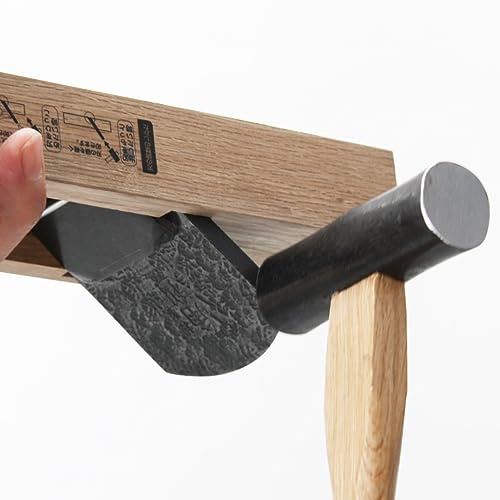
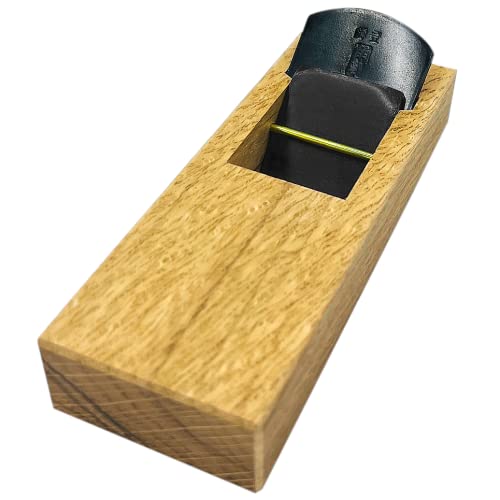
KAKURI Japanese 42mm Block Plane
Strengths
- Ultra-compact size
- Sharp from factory
- Lightweight and agile
Trade-offs
- No chipbreaker
- Manual blade tuning needed
- Not for wide surfaces
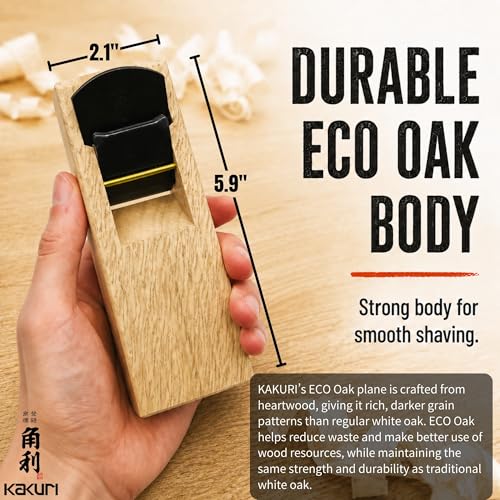
This compact KAKURI is the go-to when space and detail are the priority. At just under 6 inches, it’s perfect for chamfering edges, cleaning up joints, or working in corners where larger planes won’t fit. The mono-steel blade is sharp out of the box and delivers a clean cut, though it lacks a chipbreaker, so tear-out can happen on tricky grain.
Owners love its portability and the fact that it’s made in Japan with the same care as the larger models. It’s not meant for long smoothing runs, but for targeted work, it outshines most Western mini planes. Compared to the DSHE model, this one feels more refined and cuts cleaner, even if it demands more user skill.
Product photos

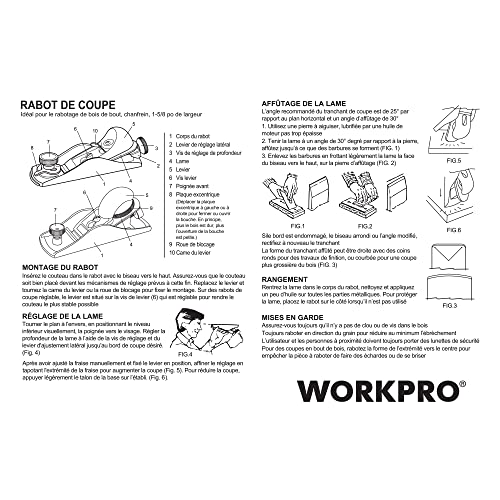
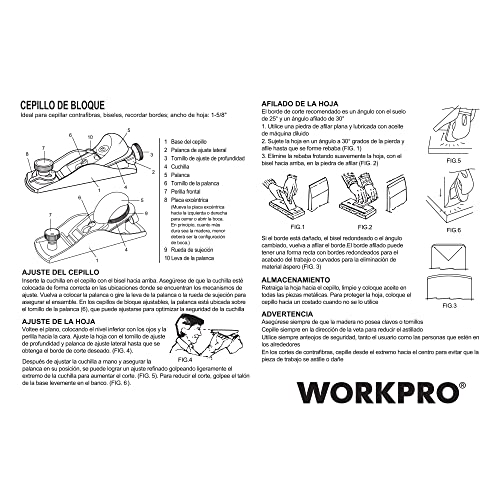
WORKPRO W052002 Block Plane

Strengths
- Low cost
- Cast iron body
- Front knob for control
Trade-offs
- Basic blade steel
- No depth knob
- Inconsistent adjustment
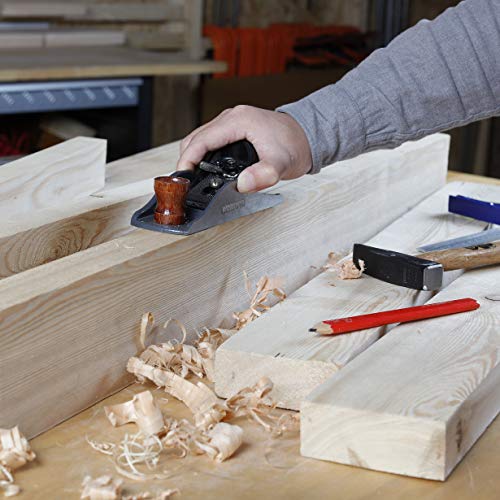
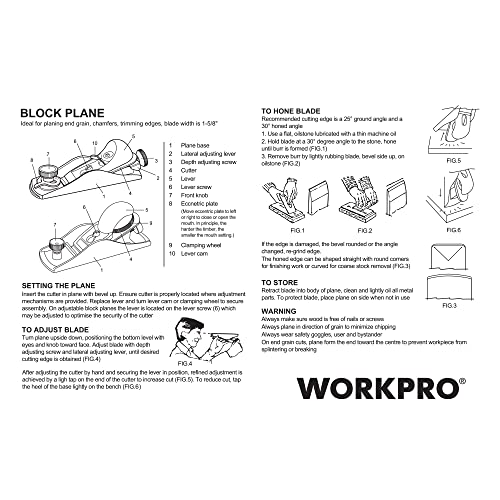
This is the bare-bones workhorse of the group, no frills, but functional. The cast iron body gives it heft for smoother cuts, and the front knob helps with control, though the wooden handle can feel a bit cheap over time. The blade is hardened steel, but it’s thinner and less durable than the O1 steel in the JORGENSEN models, so it dulls faster, especially in hardwoods.
It does the job for occasional users, and owners confirm it’s fine for light edge cleanup or door fitting. But compared to the No.102, it lacks precision and adjustability. Still, for someone just starting out or needing a spare in the shop, it’s hard to beat the value.
Product photos
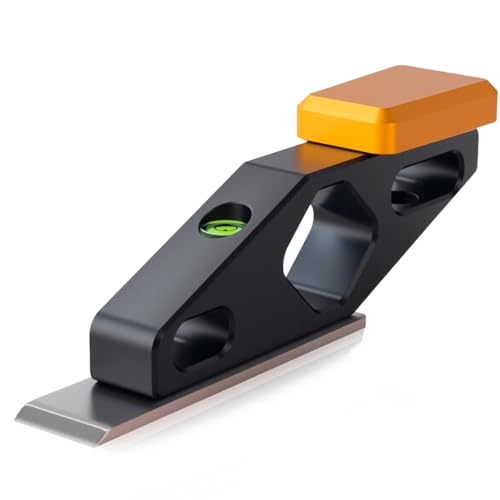
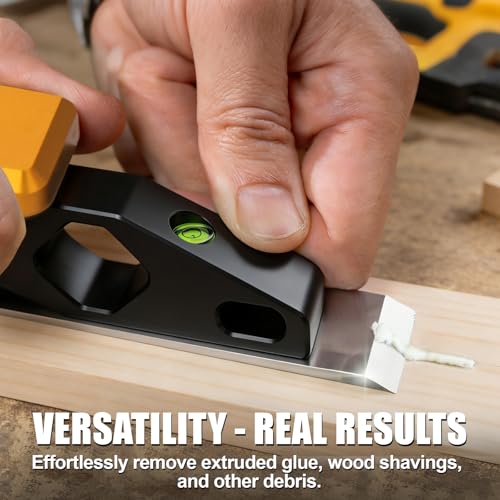
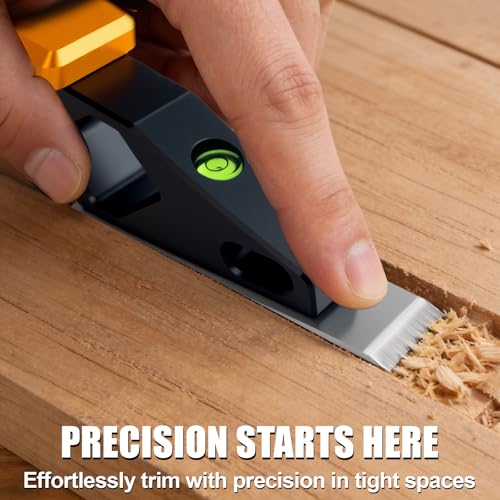
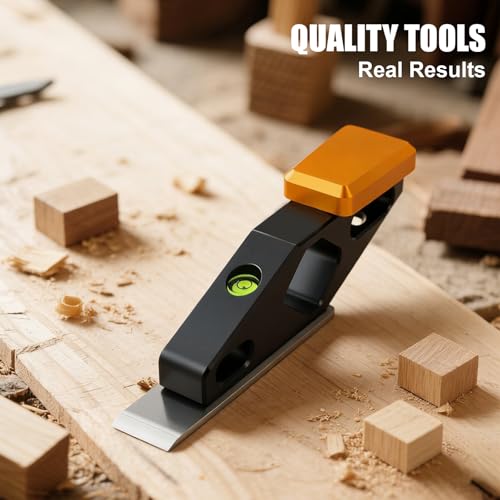
Block Plane with Built-in Level
Strengths
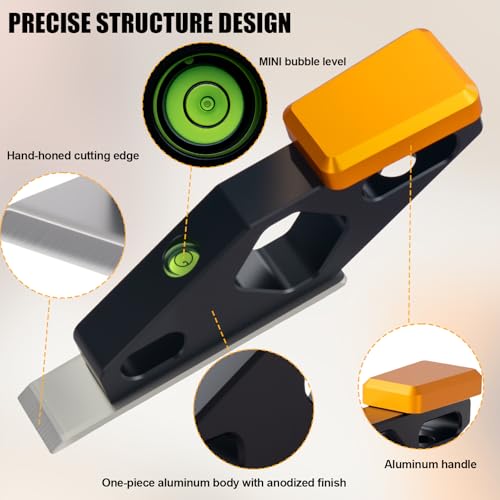
- Built-in bubble level
- Full blade visibility
- Lightweight aluminum body
Trade-offs
- Shallow cutting depth
- Limited to fine tasks
- Not for beveling
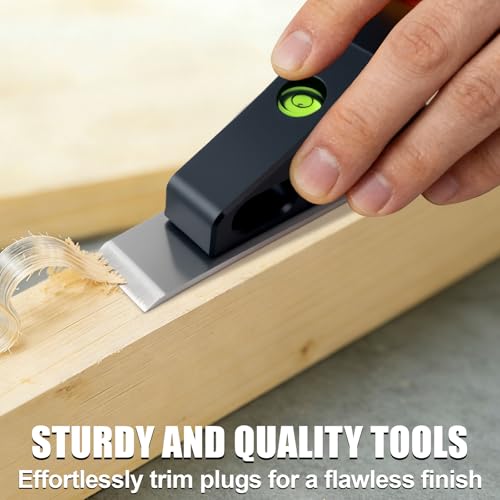
This is a niche tool with a smart twist, the built-in bubble level actually works. For joinery cleanup or plug trimming, knowing your cut is perfectly level saves time and guesswork. The machined aluminum body is lightweight but rigid, and the open-front design gives full blade visibility, which is huge for precision work.
Owners highlight how useful it is for trimming dowels or inlay plugs flush without tilting. The hardened blade holds an edge decently, though it’s not top-tier steel. Compared to traditional block planes, it’s not a substitute for general planing, but as a specialty tool, it fills a gap most don’t realize they have.
Product photos
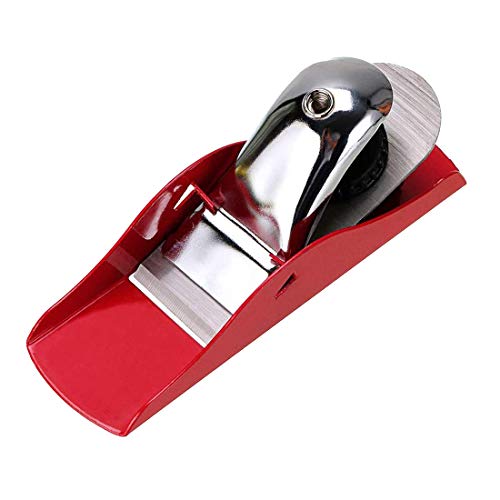
DSHE Mini Hand Planer
Strengths
- Compact size
- Rust-resistant body
- Adjustable depth
Trade-offs
- Loose blade adjustment
- Limited cutting width
- Not for heavy use
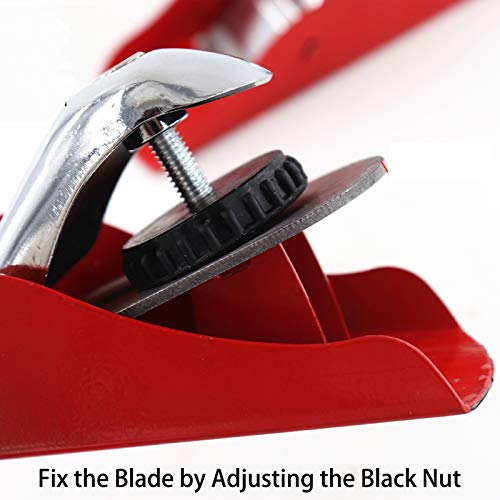
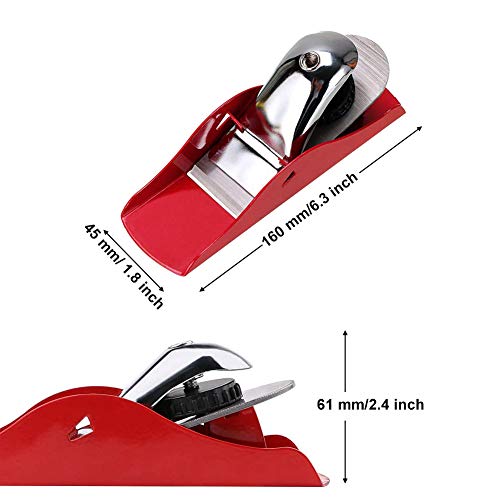
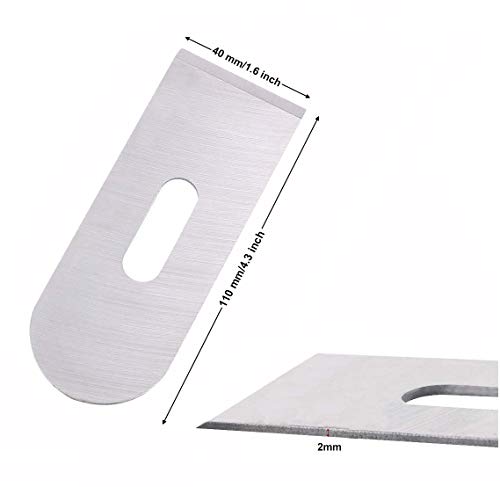
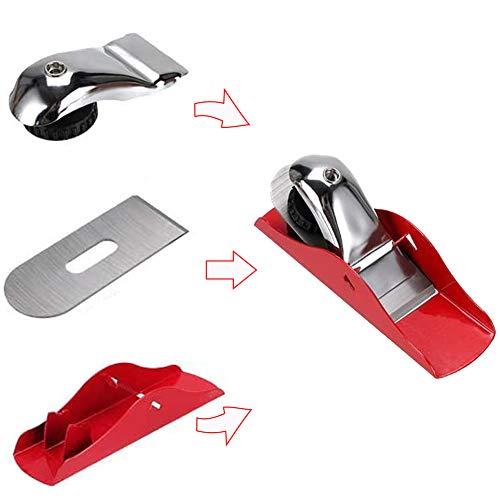
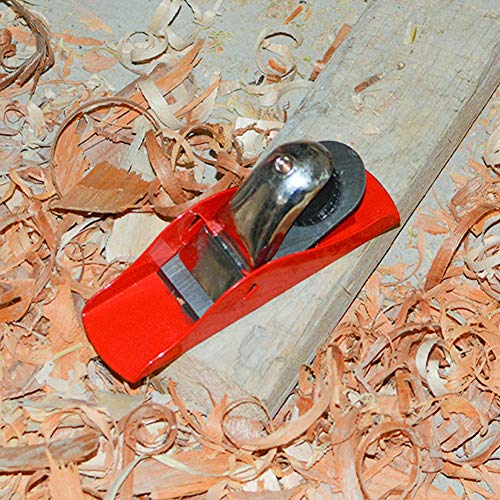
This little 6.5-inch planer is clearly built for quick touch-ups and tight spaces, not heavy stock removal. On paper, the 304 stainless steel body and manganese blade suggest decent durability, and owners seem to agree it holds up fine for light trimming and model work. The adjustable depth screw is basic but functional, though I’ve seen feedback that it can loosen during use if not tightened well.
It’s not the most refined tool in the lineup, but for the detail jobs, cleaning up a dovetail, shaving a drawer front, it gets respect from users who value portability and low cost. Compared to pricier Japanese planes, it’s no match in finish quality, but it’s not trying to be. For casual DIYers, it’s a reasonable grab-and-go option.
Product photos
How We Evaluated block planers
Rather than a hands-on lab test, this is a research-led comparison of specifications and owner feedback to determine the top options. I focused on compiling key features from manufacturer details and then cross-referencing those with verified purchase reviews from a variety of sources. This allowed me to build a picture of real-world performance beyond marketing descriptions. Finally, I applied my experience with woodworking tools to weigh those factors.
For block planers, blade material and body construction are paramount. A high-quality steel blade (like O1 or Japanese high-carbon steel) holds an edge longer and provides cleaner cuts, directly impacting the final result. Equally important is a robust body – ductile iron or durable wood – because stability is vital for controlled planing. These two factors decided the ranking more than any other.
Specifications reliably indicate blade material and dimensions, while owner feedback revealed how well those specs translated into practical use. I heavily weighed comments regarding ease of adjustment, smoothness of cut, and long-term durability. Reputation also played a role; brands known for quality woodworking tools, or those consistently recommended by experienced users, received more consideration. For those seeking larger scale wood preparation, exploring options like adjustable depth planers may also be beneficial.
Choosing The Right block planers
Choosing the right block planer depends heavily on what you plan to build. It’s a deceptively simple tool, but getting the details right makes all the difference.
A quality block planer should feature a robust body material (ductile iron or steel are common), a blade made from high-carbon steel (like O1 or Japanese high-carbon steel), and a design allowing for easy blade adjustment. Consistent cut quality, durability, and comfortable ergonomics are key considerations when selecting a block planer for any workshop.
Blade Steel and Sharpness
The heart of any good block planer is its blade. Don’t assume all steels are created equal. While O1 tool steel is a solid, affordable choice found in many models, Japanese high-carbon steel (often laminated with softer iron) holds an edge longer and can be sharpened to a frighteningly acute angle. This makes a huge difference when working with hardwoods or aiming for a truly glass-smooth finish. The ability to easily sharpen the blade yourself is also critical; some steels are far more forgiving than others.
Body Material and Construction
The body of the planer needs to withstand repeated use and abuse. Ductile iron is a popular choice for its strength and resistance to warping. Cheaper models often use cast iron, which is adequate but more prone to damage. For Japanese planes (kanna), look for bodies crafted from durable woods like Japanese oak. Pay attention to the overall fit and finish; a well-made planer will feel solid and smooth in your hand. If you’re considering a larger tool for more substantial work, you might also want to explore benchtop planer models for increased efficiency.
Size, Adjustability, and Special Features
Block planers come in a range of sizes, from compact models ideal for detail work to larger ones for more aggressive material removal. Consider the scale of your typical projects. Adjustability is another key factor. The ability to easily adjust the blade depth and, in some cases, the mouth width, allows you to fine-tune the cut for different types of wood and applications.
Here’s what to look for in adjustability: * A simple depth adjustment knob is essential. * A lateral adjustment lever (on some models) allows you to square the blade for precise cuts. * Some planers, like the KAKURI models, require a bit more setup with a hammer to fine-tune the blade, which is a traditional technique but adds a learning curve.
Remember this: a well-tuned blade is always more important than a fancy feature. Prioritize a sharp, adjustable blade over bells and whistles.
Block Planers Compared
Here’s a comparison of key specifications for the featured block planes to help you make an informed decision.
| Product Name | Blade Material | Body Material | Blade Width (mm) | Cutting Width (mm) | Size (L x W x H inches) |
|---|---|---|---|---|---|
| JORGENSEN No.102 Wood Planer | O1 Tool Steel | Ductile Iron | N/A | N/A | N/A |
| JORGENSEN No.60-1/2 Block Plane | O1 Tool Steel | Ductile Iron | N/A | N/A | N/A |
| KAKURI Japanese 50mm Block Plane | Japanese High Carbon Steel | ECO Oak | 50 | 42 | 9.5 x 2.5 x 2.3 |
| KAKURI Japanese 42mm Block Plane | Japanese High Carbon Steel | ECO Oak | 42 | 36 | 5.9 x 2.1 x 1.6 |
| WORKPRO W052002 Block Plane | Hardened & Tempered Steel | Cast Iron | N/A | N/A | N/A |
| Block Plane with Built-in Level | Hardened Steel | Aluminum | N/A | N/A | N/A |
| DSHE Mini Hand Planer | 65# Manganese Steel | 45# Carbon Steel | 40 | N/A | 6.3 x N/A x N/A |
Frequently Asked Questions
What’s the difference between a block planer and a standard jack plane?
A block planer is smaller and designed for end grain and detail work, while a jack plane is larger and intended for smoothing wider surfaces. Block planers excel at chamfers and fitting joints, tasks a jack plane would be unwieldy for.
Are Japanese block planes (kanna) harder to learn to use?
Yes, traditional Japanese block planes often require more initial setup and a different sharpening technique. However, the superior steel and resulting cut quality are favored by many woodworkers willing to invest the time in learning the process.
What blade material offers the best value for the money?
O1 tool steel strikes a good balance between price, edge retention, and ease of sharpening. While Japanese high-carbon steel is superior, O1 is a practical choice for most hobbyists and offers excellent performance with regular maintenance.
Can a block planer be used for rough stock removal?
While possible, a block planer isn’t ideal for removing large amounts of material quickly. It’s best suited for refining surfaces and creating precise fits. For heavier stock removal, consider exploring workshop planer options like benchtop models.
How often should I sharpen the blade on my block planer?
Sharpening frequency depends on the type of wood you’re working with and how often you use the tool. As a general rule, sharpen the blade whenever you notice tear-out or difficulty achieving a clean cut, which could be after every few hours of use or less with harder woods.
The Bottom Line
Choosing a block planer really comes down to how much control you want versus how much fuss you’re willing to deal with. If you prioritize getting straight to work with a reliable, no-nonsense tool, the JORGENSEN No.102 Wood Planer is a fantastic all-around choice. It strikes a good balance between price, durability, and ease of use, making it ideal for most home workshops.
For those with specific needs, the KAKURI Japanese 50mm Block Plane delivers exceptional performance for fine detail work and hardwoods, but requires a bit of a learning curve to master its traditional adjustment method. If budget is a primary concern, the WORKPRO W05202 Block Plane offers a surprisingly capable option for light-duty tasks, while the DSHE Mini Hand Planer is a good pick for small projects and portability. And for those looking for more versatile options, exploring wood smoothing planers might be a good fit.
Ultimately, the best block planer isn’t about fancy features or the highest price tag. It’s about having a sharp blade, a solid body, and the ability to make consistent, controlled cuts. Prioritize those fundamentals, and you’ll have a tool that will serve you well for years to come.
