6 Best Table Saw Blades for 2026
This post contains affiliate links. As an Amazon Associate, we earn from qualifying purchases.
The CMT Orange Tools 10-Inch blade stands out as the best overall for its precision and durability, especially in combination cuts. For budget-conscious buyers, the WEN 10-Inch 32T & 60T Blade Set delivers solid versatility at a low price.
Every DIYer or woodworker has faced it, a rough, splintered cut that ruins a project and wastes good material. It’s usually not the saw. It’s the blade. I’ve seen too many people blame their table saw when the real issue is using a dull or wrong-purpose blade.
This guide cuts through the noise. Based on specs, owner feedback, and years of seeing how blades perform in real workshops, I’ll show you which models deliver clean cuts, hold their edge, and match your saw’s power and your project needs.
Top 6 Blade For Table Saws in the Market
The Best Blade For Table Saws, Reviewed
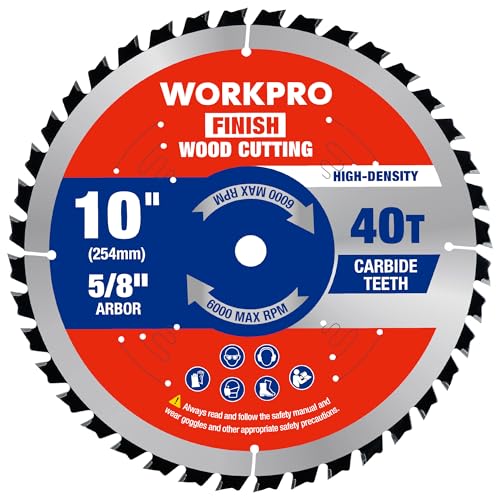
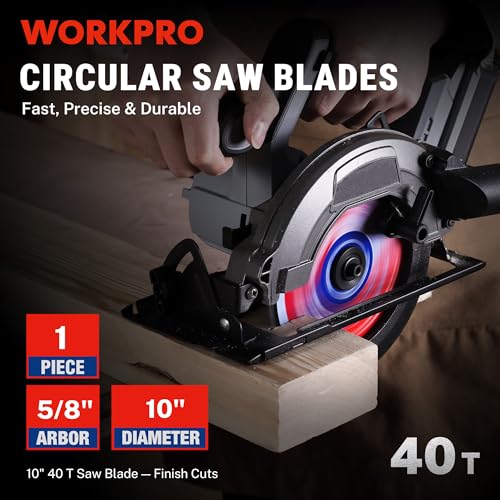
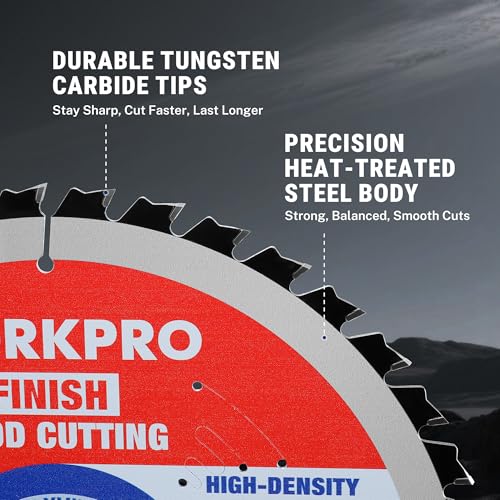
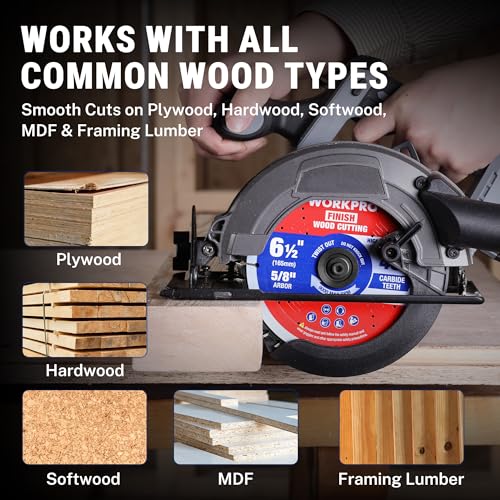
WORKPRO 10-Inch 40-Tooth General Purpose Blade
Strengths
- Balanced 40-tooth design
- Thin kerf
- Laser-cut dampening
Trade-offs
- Not ultra-fine finish
- Average heat resistance
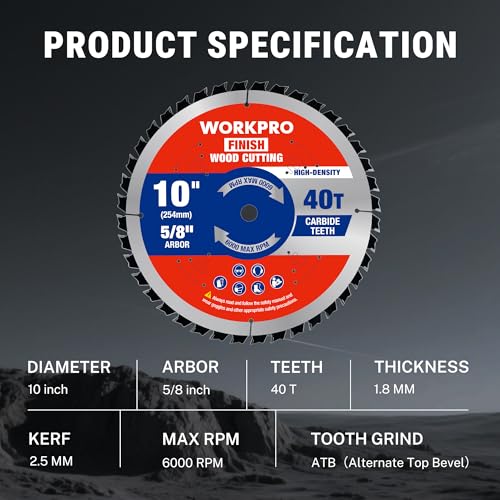
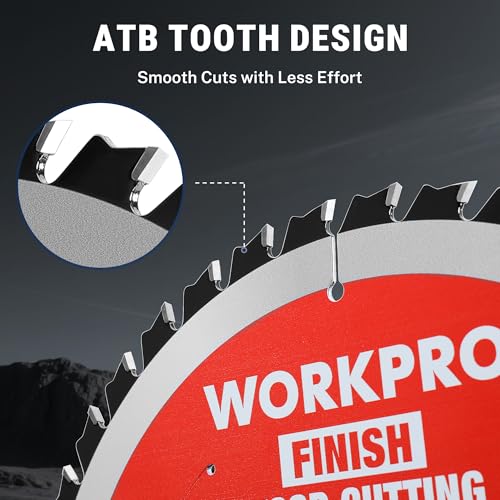
This 40T WORKPRO blade hits a sweet spot between rip and crosscut performance, which is why it earns the ‘Best Overall’ tag. The mid-tooth count with an ATB grind makes it versatile, it handles crosscuts in pine or plywood without tear-out and manages rip cuts without bogging down. Laser-cut expansion slots help reduce vibration, and owners report noticeably quieter operation compared to budget blades.
It’s a thin-kerf design, so it’s gentle on your saw’s motor, and the tungsten carbide tips seem to hold an edge longer than expected. While it won’t replace a dedicated 80-tooth finish blade for cabinet-grade work, it’s the kind of blade I’d leave on my saw for everyday use. For most weekend warriors, this is the easy pick.
Product photos
Diablo 10-Inch 60-Tooth Fine Finish Blade
Strengths
- 60-tooth Hi-ATB
- Smooth finish
- Shock-resistant tips
Trade-offs
- Not for ripping
- Requires slow feed
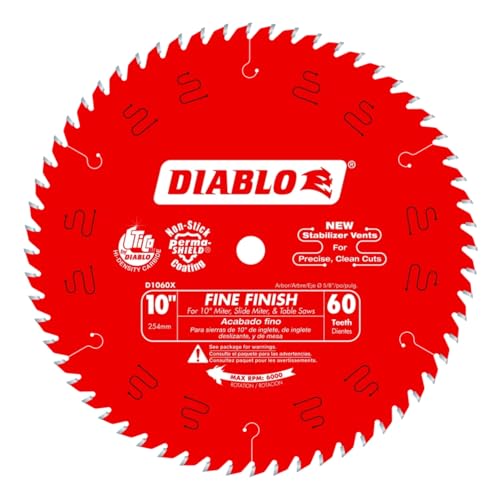
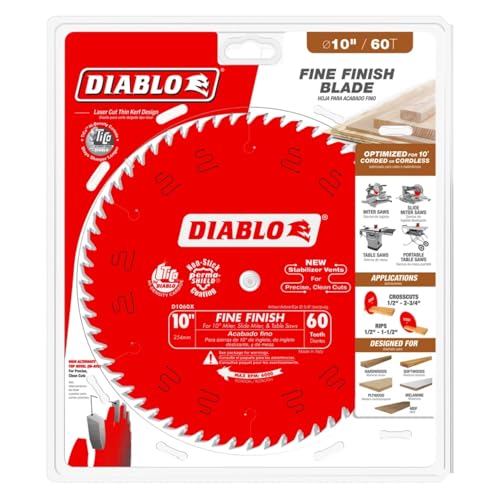
When the job demands a glass-smooth edge, think cabinet doors or visible trim, this Diablo 60-tooth blade delivers. The high-ATB grind is optimized for minimizing tear-out in hardwoods and veneered plywood, and the shock-resistant design helps the carbide tips survive kickbacks or sudden load changes. On paper, it’s built like a finish specialist, and owner feedback backs that up, clean cuts, consistent results, and good edge retention.
It’s not meant for ripping, and feeding too fast can leave burn marks, but that’s true of any fine-tooth blade. What stands out is its durability under stress. For a finish blade, it handles off-angle cuts and hard materials better than most. If you do a lot of crosscuts in premium materials, this one earns its reputation.
Product photos
FOXBC 10-Inch 80-Tooth Ultra Finish Blade

Strengths
- 80-tooth count
- Thin kerf
- ATB grind
Trade-offs
- Not for ripping
- Slower feed rate
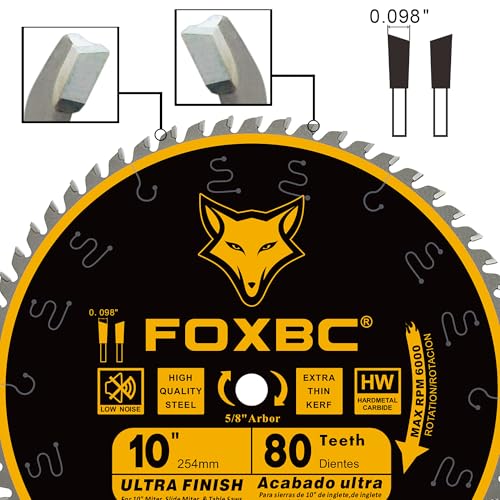
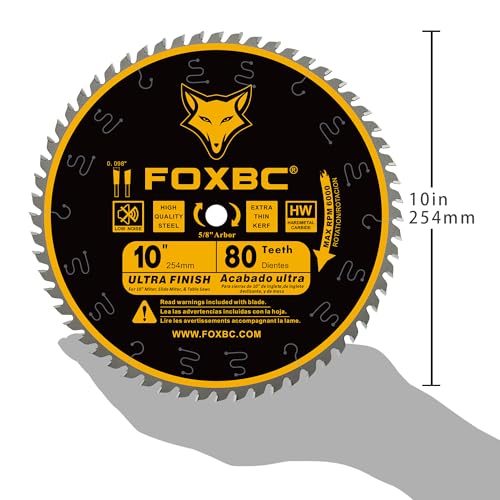
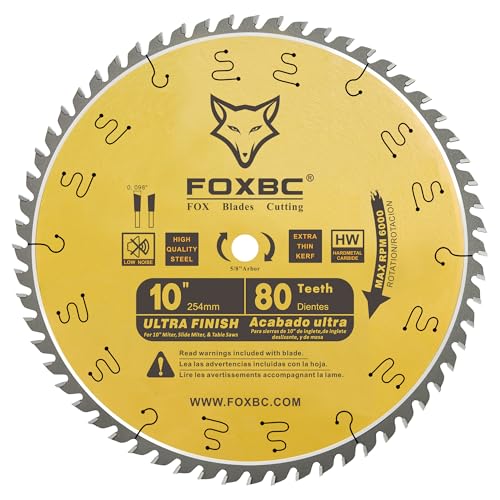
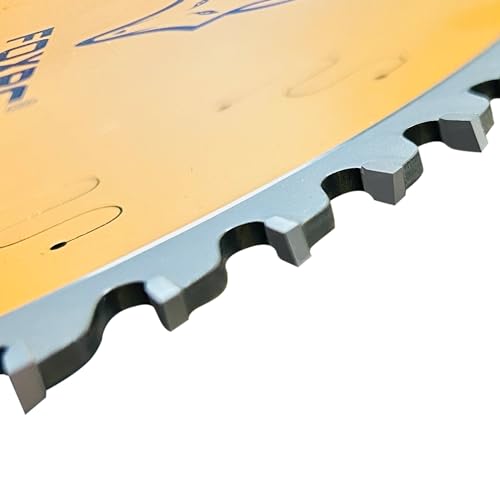
For those chasing a clean, polished cut in sheet goods and hardwoods, this 80-tooth FOXBC blade looks solid on paper. With a thin kerf and ATB (alternate top bevel) grind, it’s built for crosscuts that don’t need touch-up sanding, especially in plywood, melamine, or moldings. Owners consistently report smooth cuts with minimal tear-out, which is exactly what you want from a finish blade.
The high tooth count and tungsten carbide tips suggest durability and fine performance, and it’s compatible with most major 10-inch saws. That said, it’s not the most aggressive blade out there, if you’re doing any heavy ripping, you’ll notice it slows down. For crosscuts and finish work, though, it holds its ground well against pricier options.
Product photos

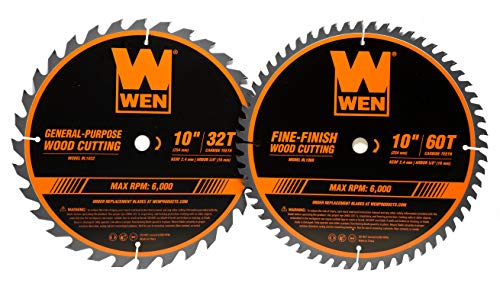
WEN 10-Inch 32T & 60T Blade Set
Strengths
- Affordable two-pack
- Thin kerf
- Good tooth variety
Trade-offs
- Not for fine cabinetry
- Lower durability
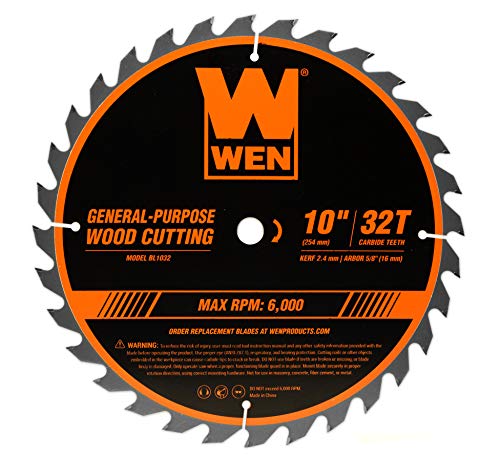
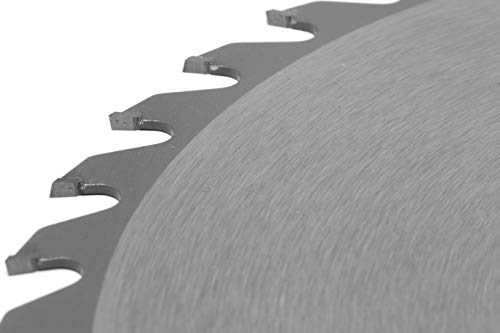
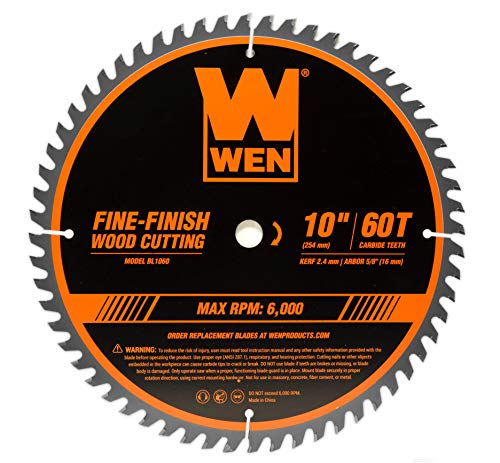
If you’re just setting up your shop and need two solid blades without breaking the bank, this WEN set is hard to ignore. The 32-tooth blade handles rip cuts and rough framing with ease, while the 60-tooth version steps in for cleaner crosscuts in plywood and dimensional lumber. Both have a thin kerf, so they’re easy on your saw’s motor, especially if you’re running a contractor-grade table saw with less torque.
Reviewers note these aren’t competition-level blades, but for general DIY use, they deliver consistent results. The 60-tooth blade in particular surprises some users with how smooth it cuts, especially for the price. I’d still recommend upgrading later if you’re building cabinets or doing fine woodworking, but as a starter set, this covers the basics well.
Product photos


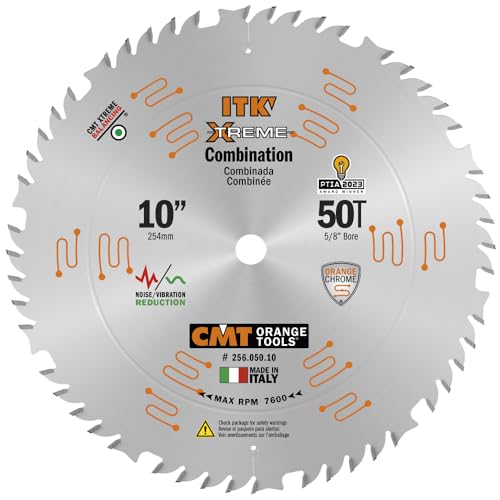
CMT Orange Tools 10-Inch Combination Blade
Strengths
- True combo design
- Durable carbide
- Vibration-reducing plate
Trade-offs
- Higher price
- Heavier than thin kerf
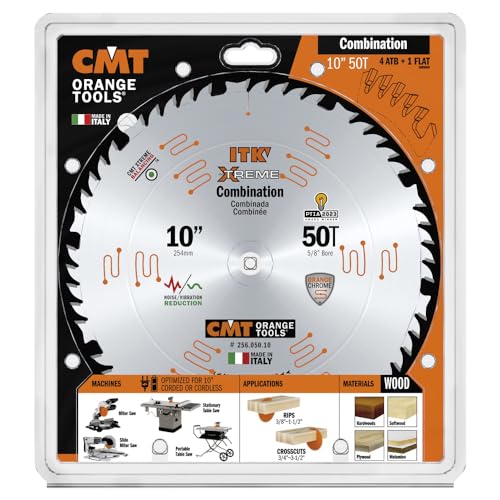
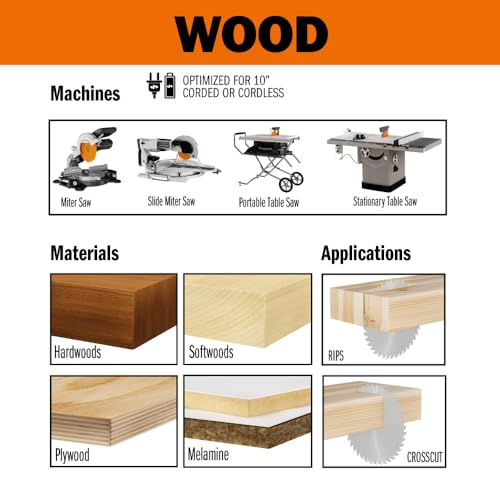
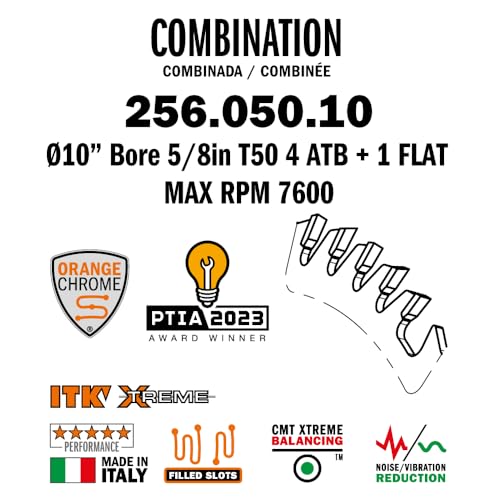
CMT’s Orange Tools line has a loyal following for good reason, this 10-inch combo blade is engineered to handle both ripping and crosscutting without swapping blades. With a 40-tooth count and a 4-degree alternate top bevel (ATB), it’s designed to balance speed and finish. The hardened steel plate and precision grind reduce vibration, and the carbide tips are known for lasting through long runs.
Owners praise its consistency across softwoods and hardwoods, and it handles plywood better than most combo blades. The build quality stands out, this isn’t a thin-kerf, budget-grade plate. If you’re tired of switching blades every time your project changes direction, this is the smarter buy. It’s not the cheapest, but in this class, you get what you pay for.
Product photos
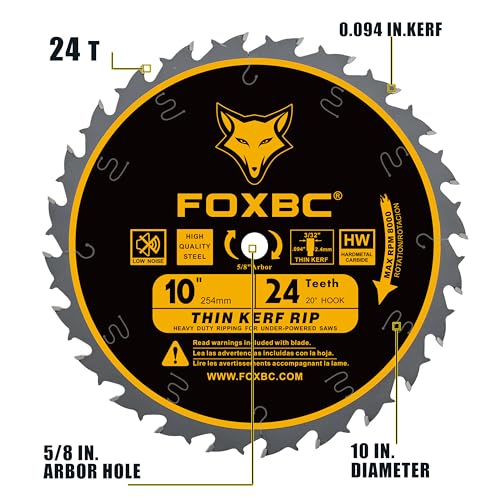
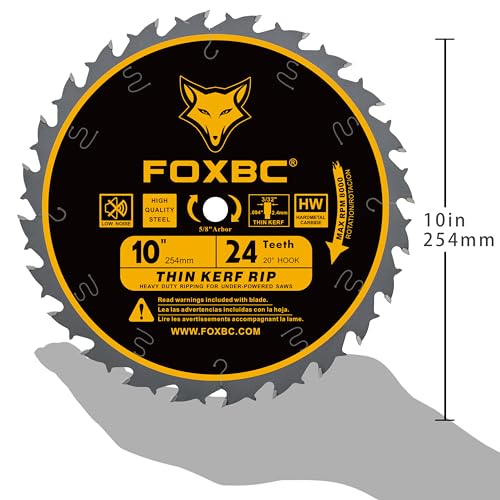
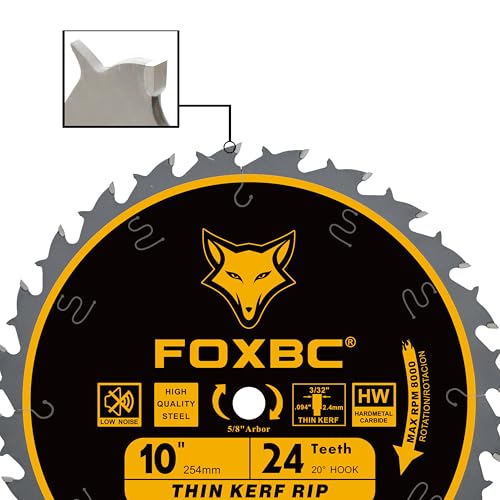
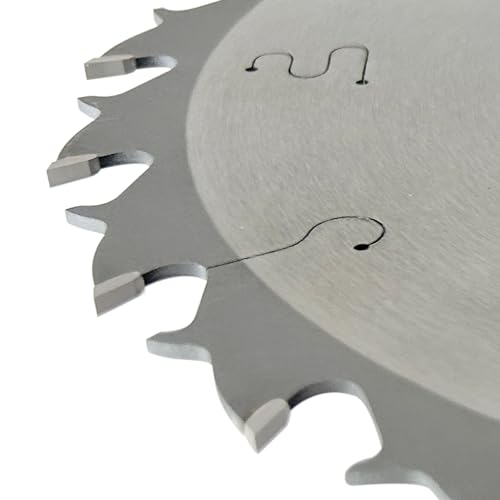
FOXBC 10-Inch 24-Tooth Ripping Blade

Strengths
- 24-tooth rip design
- Flat-top grind
- Thin kerf
Trade-offs
- Rough crosscuts
- Not for finish work
Ripping thick oak or pine? This 24-tooth FOXBC blade is built for that job. The flat-top grind and low tooth count let it chew through wood fast, with a 20-degree hook angle that pulls material through cleanly. It’s a thin-kerf design, so it’s easier on your motor than full-kerf rip blades, and owners report less burning when feeding at a steady pace.
It can handle crosscuts in a pinch, but don’t expect a polished edge, this is a rip-first blade. The tungsten carbide teeth hold up well, and the plate stays true under load. Compared to the 80-tooth version from the same brand, this one is the workhorse, not the showpiece. For anyone regularly breaking down sheet goods or resawing lumber, it’s a logical go-to.
Product photos
How We Chose These blade for table saws
Rather than a hands-on lab test, my research for these recommendations centered on comparing published specifications and features across numerous blades. I weighed owner reviews from multiple sources – including major retailers and woodworking forums – alongside assessments from respected tool reviewers. This information was then ranked against criteria important for table saw blades, focusing on cut quality, durability, and versatility.
For table saw blades, tooth count and kerf thickness are paramount. A higher tooth count (60-80) delivers the cleanest cuts in fine materials like plywood and trim, while a lower count (24-32) excels at rapid, efficient ripping of thicker stock. Kerf, or blade thickness, impacts power demands; thinner kerf blades reduce strain on the saw and minimize waste, but may sacrifice some stability.
Specifications clearly outline tooth count, kerf, and arbor size, providing a solid foundation for comparison. However, owner feedback proved crucial for gauging real-world durability and the blade’s ability to hold an edge. I also considered the reputation of the manufacturer, looking for brands consistently praised for carbide quality and consistent performance – and knowing when it might be time to consider sharpen table saw blades to extend a blade’s life.
Choosing The Right blade for table saws
Picking the right blade is just as important as the saw itself. A poor blade will leave you with splintered cuts, wasted material, and a whole lot of frustration.
A quality table saw blade delivers clean, accurate cuts with minimal material waste. Key characteristics include carbide tooth quality, tooth count matched to the material, blade plate quality (for stability), and proper kerf width. Look for blades made with high-density tungsten carbide and consider a thin-kerf design for efficient cutting. Compatibility with your saw’s arbor size is also crucial.
Tooth Count and Cut Quality
The number of teeth on a blade dramatically affects the type of cut you’ll get. Lower tooth counts (like 24 or 32) are designed for ripping – cutting with the grain – and prioritize speed. Higher tooth counts (60 or 80) excel at crosscutting – cutting across the grain – and produce a much cleaner, smoother finish. Don’t fall into the trap of thinking “more teeth is always better.” A blade designed for fine finish work will bog down quickly if you try to rip with it. For most homeowners, having a couple of blades optimized for different tasks is a smarter investment than trying to find a single “do everything” option.
Kerf and Power Requirements
Understanding what is kerf is essential. Kerf is the width of the cut the blade makes, and it directly impacts how much power your saw needs to make that cut. Thin-kerf blades (under 0.100 inches) remove less material and require less power, which is great for older or less powerful saws. However, they can sometimes be more prone to wandering. Standard-kerf blades (around 0.125 inches) offer more stability but demand more from your motor.
Here’s a quick guide: * Low Power Saw: Thin-kerf is almost a must. * Average Saw: Experiment with both thin and standard kerf. * High-Power Saw: Standard kerf offers stability and cut quality, but thin-kerf can still improve efficiency.
Material and Blade Construction
The quality of the blade’s construction plays a huge role in its performance and lifespan. Look for blades with a high-density tungsten carbide (TCT) because it holds an edge longer. Beyond the carbide, the blade plate itself matters. Thicker, hardened steel plates resist warping and provide more stability, especially with wider blades. If you’re looking for a solid, recommended table saw blade, consider options from CMT or Diablo – they’re known for consistently high-quality construction.
A blade isn’t just about teeth. A stable, well-built plate is just as crucial for accurate cuts and long-term durability. Don’t skimp on this.
Blade for Table Saws Compared
The following table provides a spec-by-spec comparison of available table saw blades.
| Product Name | Tooth Count | Kerf (in) | Arbor Size (in) | Best For | Material |
|---|---|---|---|---|---|
| WORKPRO 10-Inch 40-Tooth | 40 | 0.05-0.07 | 3/8, 10mm, 5/8 | General Purpose | Wood, Plywood |
| Diablo 10-Inch 60-Tooth | 60 | N/A | N/A | Ultra-Smooth Cuts | N/A |
| FOXBC 10-Inch 80-Tooth | 80 | 0.098 | 5/8 | General Use | Wood |
| WEN 10-Inch 32T & 60T Blade Set | 32/60 | 0.04 | 5/8 | Budget Set | Hard/Softwood |
| CMT Orange Tools 10-Inch | N/A | N/A | N/A | Combination Cut | Soft/Hardwood |
| FOXBC 10-Inch 24-Tooth | 24 | 0.094 | 5/8 | Ripping | Wood |
Frequently Asked Questions
What arbor size do I need to check for when buying a new blade?
Most table saws accept a 5/8-inch arbor, but it’s crucial to verify your saw’s specifications before purchasing. Some older or smaller saws use 3/8-inch or 10mm arbors, and using the wrong size can be dangerous.
How often should I replace my table saw blade?
Blade life depends on usage and material cut, but a good rule of thumb is to replace it when you notice significantly increased cutting resistance or a decline in cut quality. For a typical home workshop, expect to replace a frequently used blade every 2-3 years.
Can I use a thin-kerf blade on any table saw?
Generally, yes, but ensure your saw has the power to maintain consistent speed with a thinner blade. A thin-kerf blade can improve efficiency and reduce strain but may require some adjustments to your cutting technique.
What’s the difference between a ripping blade and a crosscutting blade?
A ripping blade has fewer teeth (24-32) for fast material removal with the grain, while a crosscutting blade has more teeth (60-80) for cleaner cuts across the grain. Using the wrong blade type will result in poor cut quality and increased risk of kickback.
Where can I find more information about choosing the best 10-inch table saw blade?
For a more detailed look at specific blades and their performance, you can find a helpful guide to the best 10-inch table saw blade with in-depth comparisons and buying advice.
The Bottom Line
Choosing a table saw blade always involves balancing what you want to cut with how much effort you’re willing to put in. For most woodworkers, a single blade won’t do it all – and trying to find that unicorn often means compromising on quality. If I were building a kit from scratch, I’d start with the CMT Orange Tools 10-Inch blade as a solid all-around performer that can handle a wide range of tasks without breaking the bank.
However, if you’re on a tight budget or just starting out, the WEN 10-Inch 32T & 60T Blade Set gives you two essential blades for a very reasonable price. For dedicated ripping, the FOXBC 10-Inch 24-Tooth blade is a great choice, while those prioritizing finish work should look to the Diablo 10-Inch 60-Tooth. Remember that regularly clean table saw blade is just as important as the blade itself.
Ultimately, the best blade isn’t about the highest tooth count or the thinnest kerf. It’s about understanding your typical projects, matching the blade to the material, and keeping it well-maintained. Don’t get lost in the specs; focus on a quality carbide tooth, a stable blade plate, and a blade that’s appropriate for the type of cutting you do most often.
