
8 Best Belt Sanders of 2026
This post contains affiliate links. As an Amazon Associate, we earn from qualifying purchases.
The Metabo HPT 3×21 stands out as the best overall belt sander for most users, combining solid power and reliable tracking. For those on a budget, the WEN 7.5-Amp delivers strong performance without breaking the bank. If you need added versatility, the Jellas 3×21 can double as a benchtop model, making it a smart pick for small shops.
Most people shopping for a belt sander aren’t just looking for raw power, they need a tool that won’t fight them every step of the way. A poorly tracking belt, terrible dust control, or awkward balance can turn a simple job into a headache.
This guide cuts through the noise by focusing on what actually matters: real-world usability, feedback from actual owners, and specs that align with performance. I looked at motor quality, belt size, dust collection, and features like variable speed and benchtop compatibility to find models that deliver consistent results across different types of projects.
Top 8 Belt Sanders in the Market
The Best Belt Sanders, Reviewed
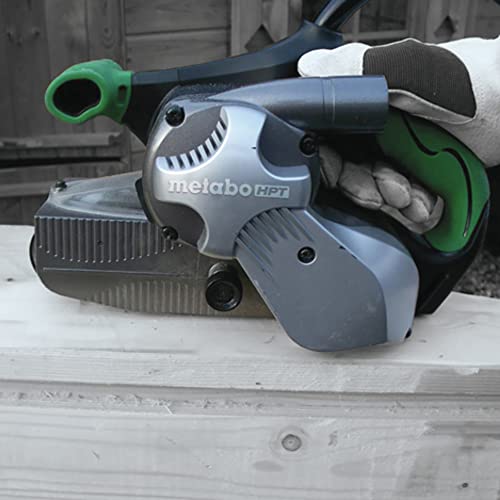
Metabo HPT 3×21 Belt Sander

Strengths
- 9.0 AMP motor
- 5-year warranty
- Left-side dust bag
- Clear front cover
- Soft grip handle
Trade-offs
- No C-clamps included
- Heavier than average
- Dust bag fills quickly
If I had to pick one sander for most users, it’d be this Metabo HPT. The 9.0 AMP motor delivers serious power, and the variable speed dial is well-placed and smooth in use. Owners consistently praise its durability, backed by a 5-year warranty, which is rare in this category. The left-side dust bag improves corner access, and the clear front cover actually helps visibility.
It’s not flashy, but it’s dependable. The flush-sanding design works well, and the soft grip reduces vibration fatigue. Compared to the Makita 9903, it has less fine speed range but more torque and better build confidence. And unlike the DEWALT cordless, it doesn’t depend on battery life. This is the balanced pick, power, longevity, and thoughtful design.
Product photos


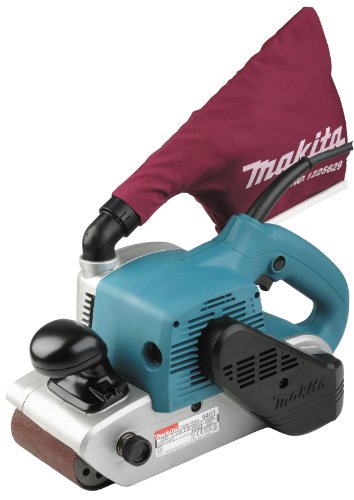
Makita 4×24 Belt Sander

Strengths
- 4″ x 24″ belt size
- High speed (1,640 ft/min)
- Labyrinth motor sealing
- Low noise (84dB)
- Flush-sanding nose
Trade-offs
- Heavy and bulky
- No variable speed
- Corded only
When you need to strip or level large surfaces fast, this Makita 9403 is built for the job. The 4″ x 24″ belt gives you 16.7% more sanding area than standard 3″ models, and the 1,640 ft./min. speed chews through material without bogging down. The 84dB rating is impressive for this class, it’s noticeably quieter than many competitors, which matters on long jobs.
The labyrinth seal design is a pro feature you don’t always see: it keeps dust out of the motor and bearings, which owners say translates to longer life. The large front grip helps with control, but this is still a heavy sander. It’s overkill for detail work, but that’s not what it’s for. Compared to the DEWALT cordless, it’s more aggressive, but obviously, it’s not portable.
Product photos




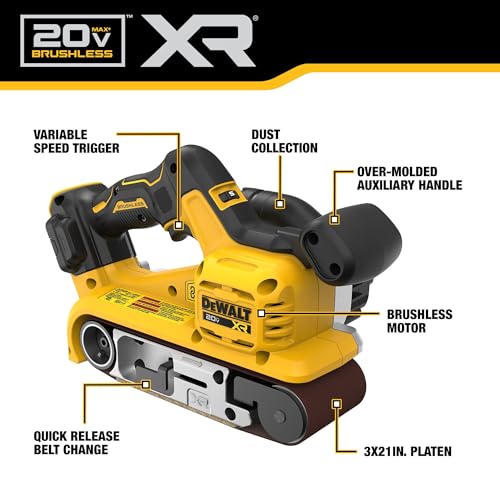
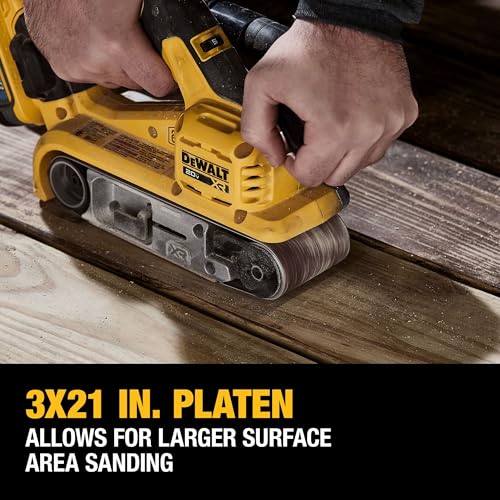
DEWALT 20V MAX Cordless Belt Sander

Strengths
- Cordless convenience
- Brushless motor
- 25-speed dial
- Tool-free belt change
- DEWALT airlock compatible
Trade-offs
- Battery sold separately
- Expensive upfront
- Shorter runtime under load
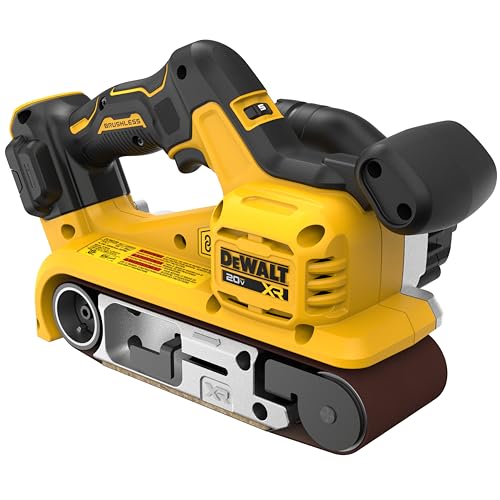
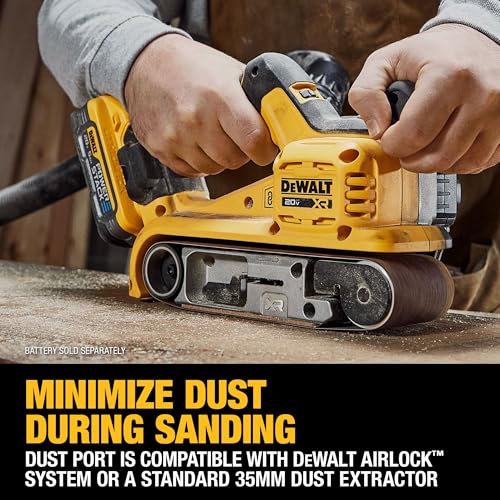
The DEWALT DCW220B is the only cordless option here, and it’s a standout for mobility. The brushless motor delivers power close to corded models, and the 25-speed dial gives fine control, rare in cordless tools. It’s designed to pair with DEWALT vacuums via airlock, which owners say nearly eliminates dust when properly set up.
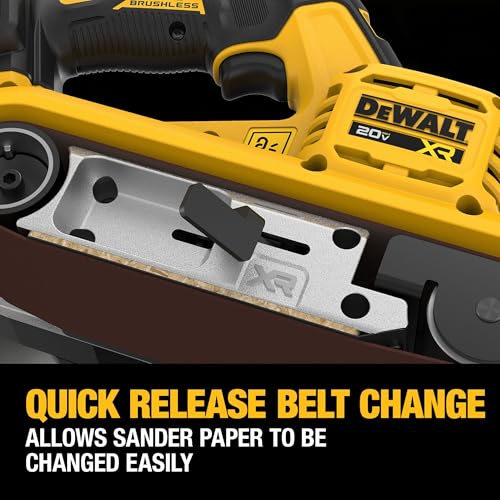
Battery life depends on load, but most report getting through a full door or table top on one 20V MAX pack. The overmolded handle improves grip, and the tool-free belt change is fast. It’s pricier than corded options, and you’ll need a battery and charger separately. But for job sites or tight spaces, the freedom from cords is worth it. Beats the Milwaukee M18 on surface area, too.
Product photos
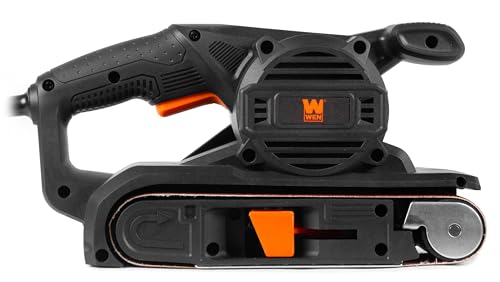
WEN 7.5-Amp Variable Speed Sander
Strengths
- Lightweight at 6.4 lbs
- Quick-release belt lever
- Affordable
- Two-year warranty
- Compact design
Trade-offs
- Dust collection inefficient
- Less power than rivals
- No C-clamps included
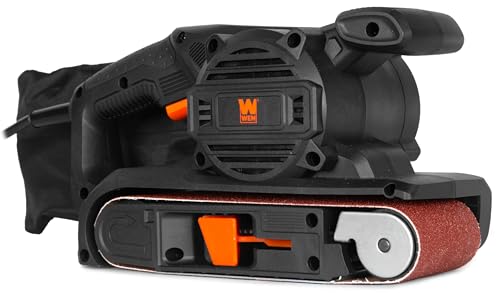
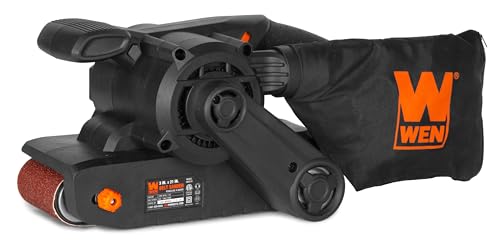
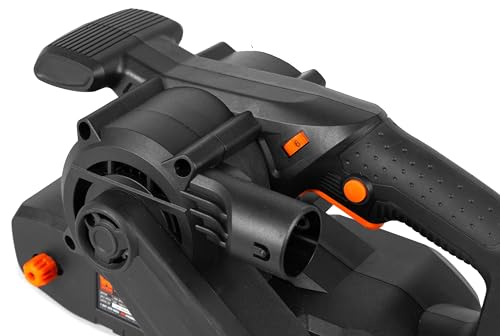
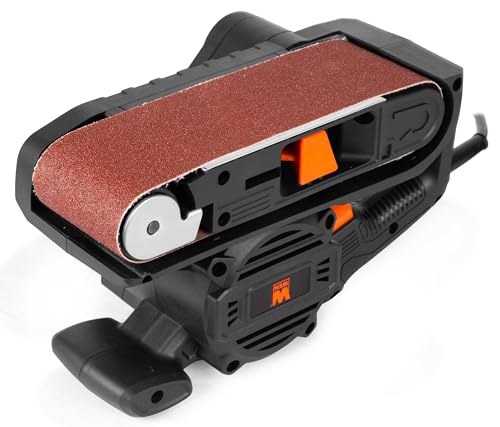
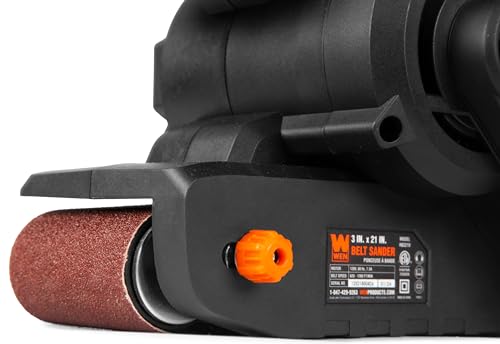
If you’re on a budget but don’t want to sacrifice too much performance, the WEN HB321V is hard to beat. The 7.5-amp motor isn’t the strongest, but the 620–1,200 ft./min. speed range is legit and useful for different materials. At just 6.4 pounds, it’s one of the lightest in the lineup, which helps reduce fatigue, a real plus for overhead or extended work.
The quick-release belt lever is a standout feature, making swaps faster than most competitors. It includes a dust bag and an 80-grit belt, plus an 80-grit belt, which is thoughtful. But the dust port is smaller than ideal, and the bag fills fast. Compared to the Metabo HPT SB8V2, it’s less powerful and durable, but also far more affordable.
Product photos
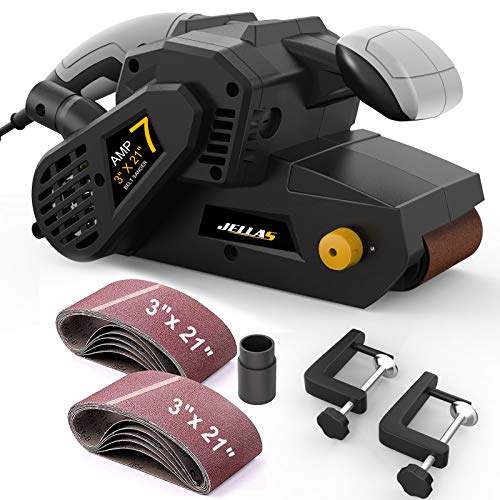
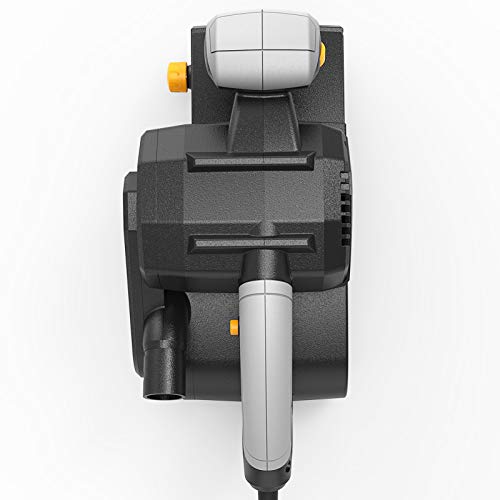
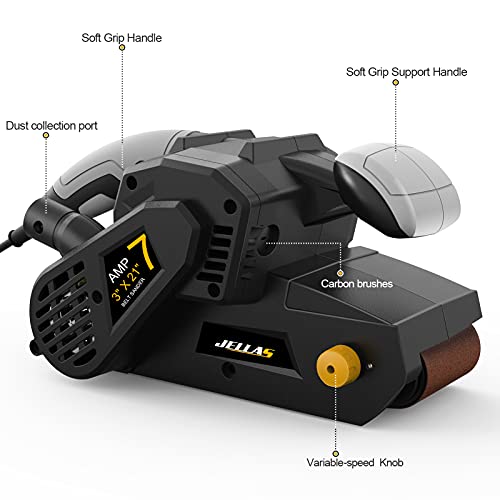
Jellas 3×21 Variable Speed Sander
Strengths
- 2-in-1 bench conversion
- 10 included sanding belts
- Dust bag with exhaust
- C-clamps included
- 2-year support
Trade-offs
- Speed specs possibly misleading
- Belt installation fussy
- Dust bag less effective
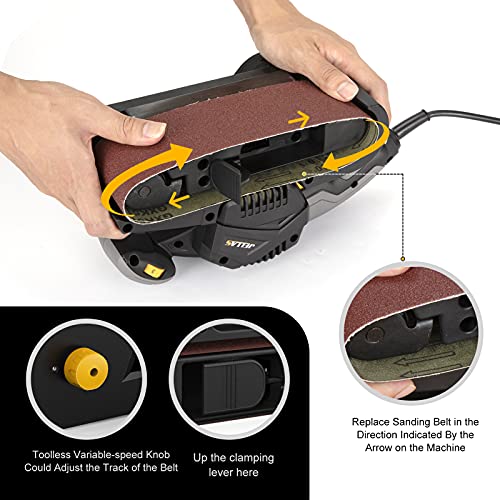
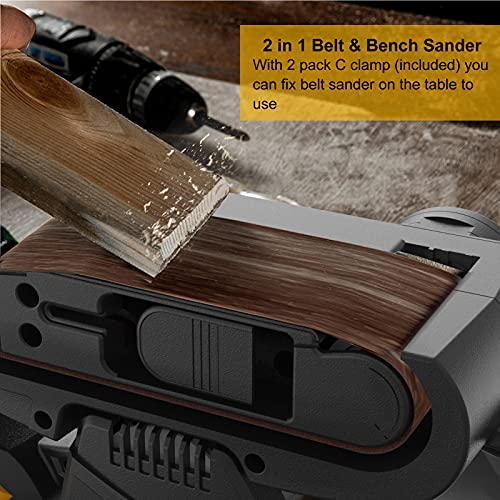
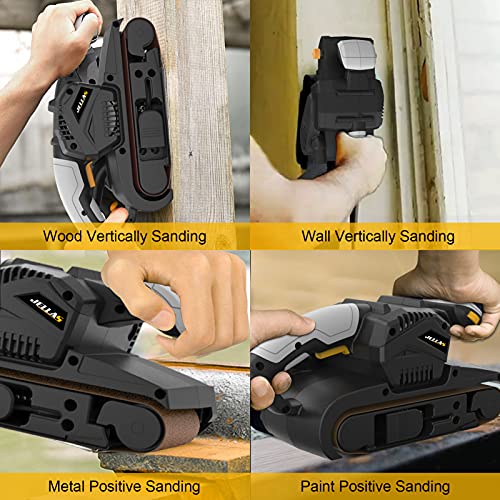
Jellas is trying to do something useful here, a dual-purpose tool that flips into a bench sander, and on paper, it makes sense. The 7Amp motor is modest, and the 120–400rpm speed range seems mislabeled since belt sanders are usually measured in feet per minute, not rpm. That throws up a red flag about accuracy.
Still, it comes with 10 belts and two C-clamps, which is generous. Reviewers note the bench conversion works but feels a bit flimsy under pressure. The dust bag is functional, but not as efficient as a vacuum port. It’s clearly built for light to medium use. Compared to the DEKOPRO, it’s nearly identical in specs and function, but the DEKOPRO offers better dust collection options.
Product photos
Makita 9903 3×21 Belt Sander

Strengths
- 8.8 AMP motor
- True variable speed
- Auto-tracking system
- Flush-sanding design
- 85dB noise level
Trade-offs
- No dust box option
- Heavier than budget models
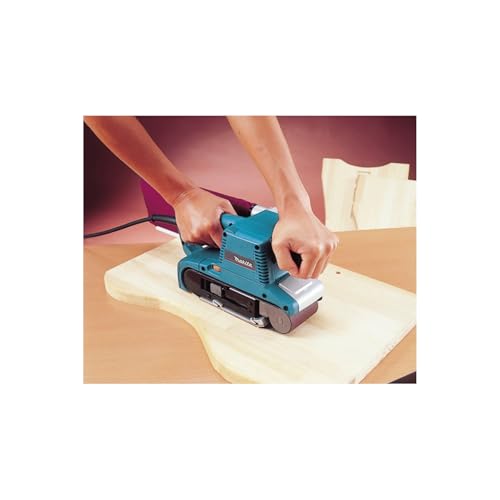
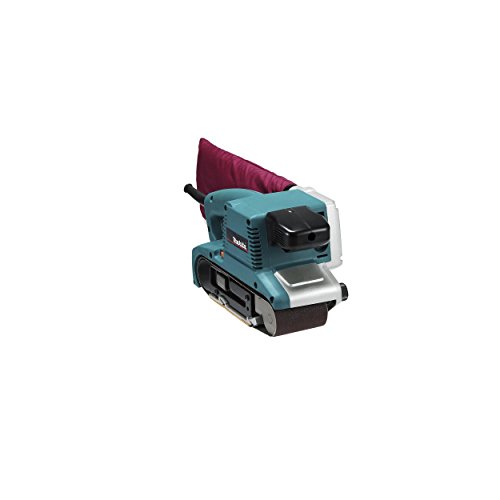
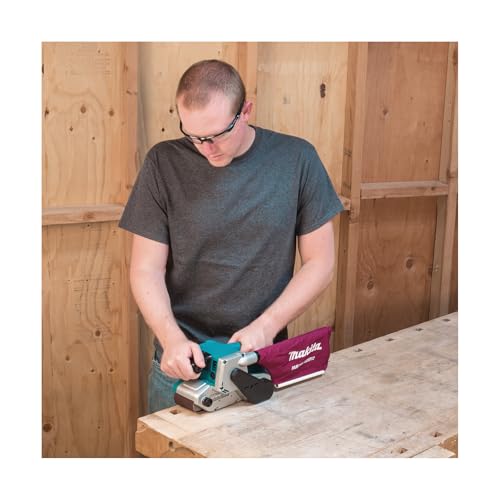
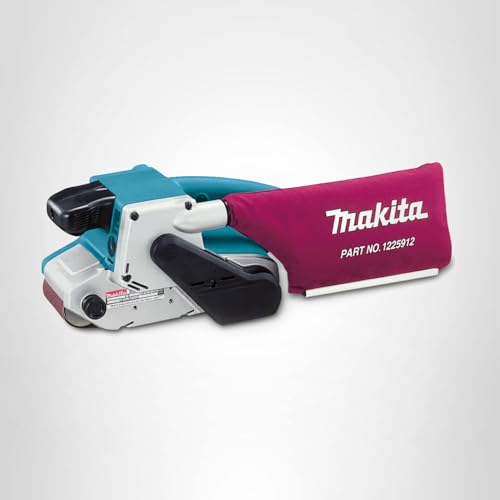
This Makita stands out in a crowded field because of its variable speed range and how well it’s tuned for real-world control. The 8.8 AMP motor is strong, but what I appreciate more is the 690–1,440 ft./min. speed dial, it gives you precision most sanders in this class skip. Owners consistently report it handles hardwoods and softwoods with equal ease, and the auto-tracking system actually works without constant fiddling.
The flush-sanding design is smart, letting you get right up to edges and corners without marring the surface. It’s not the lightest sander out there, but the front grip makes it manageable during longer sessions. Compared to the WEN HB321V, this one feels more refined, though you’re paying for that refinement.
Product photos

WEN 4×36 Benchtop Belt and Disc Sander

Strengths
- Belt and disc combo
- Cast iron base
- Tilting belt (0–90°)
- 4.3Amp motor
- Simple grit changes
Trade-offs
- No variable speed
- Smaller motor
- Disc dust port weak
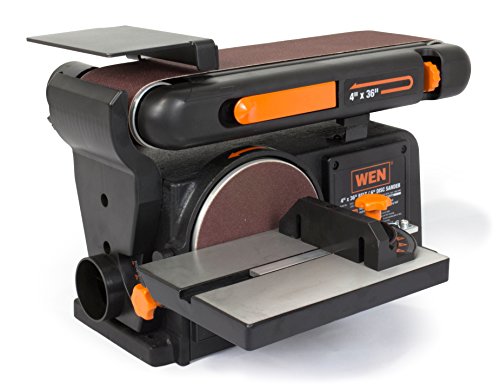
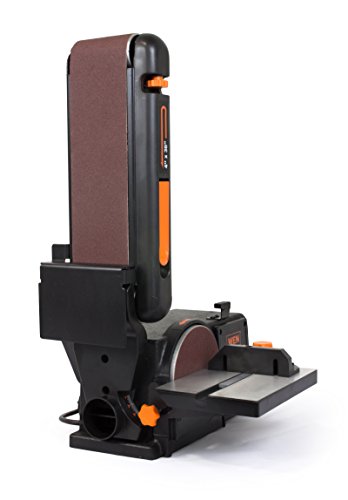
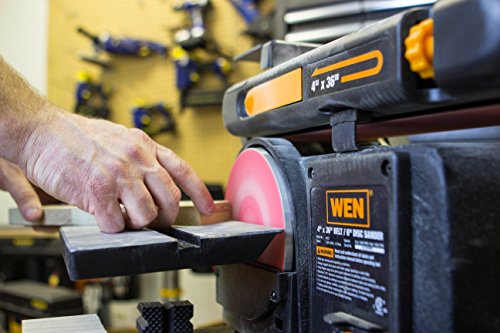
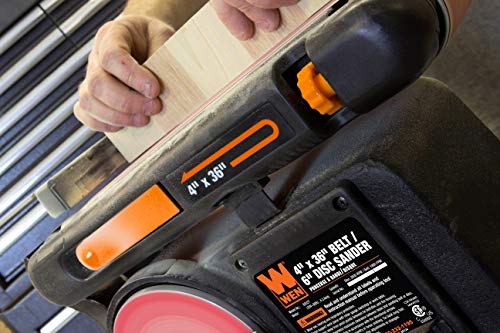
This WEN 6502T is the only combo unit here, and it delivers serious value for small shops. The 4″ x 36″ belt and 6″ disc on a cast iron base make it stable and versatile, you can shape edges on the disc and flatten stock on the belt. The 4.3Amp motor isn’t the strongest, but it holds up well under steady use.
The tilt feature (0–90 degrees) is handy for bevels, and the tension release lever makes belt swaps easy. It lacks variable speed, which limits fine control, but for the price, it’s well-built. Compared to the Jellas or DEKOPRO bench conversions, this is a real bench sander, not a handheld pretending to be one.
Product photos

DEKOPRO 8.4A Belt Sander
Strengths
- 8.4Amp motor
- Vacuum-compatible port
- 10 included belts
- 2-in-1 functionality
- Ergonomic design
Trade-offs
- Bench mode less stable
- Sanding belt alignment tricky
- Dust port cover flimsy
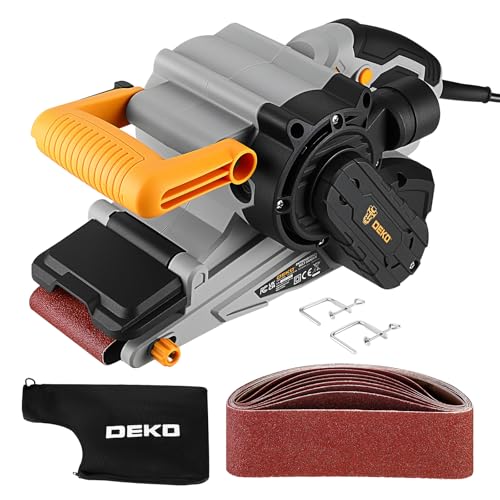
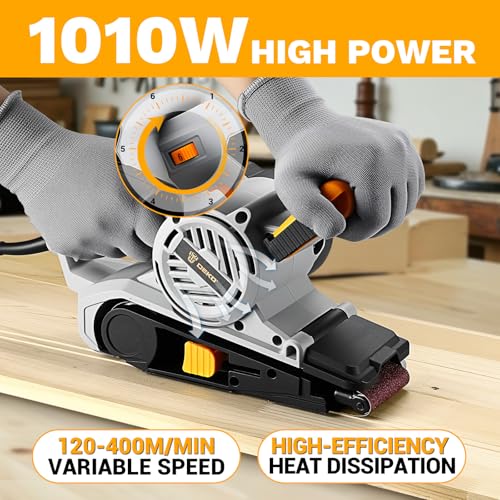
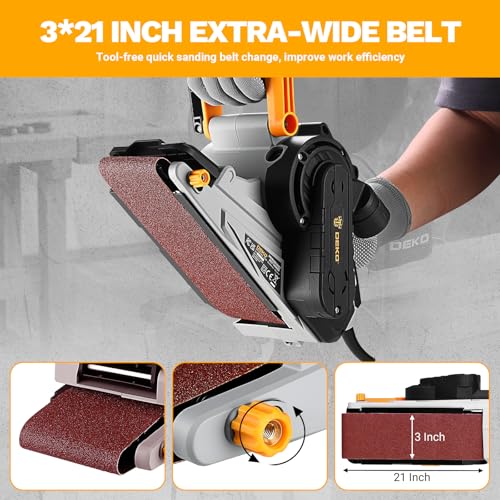
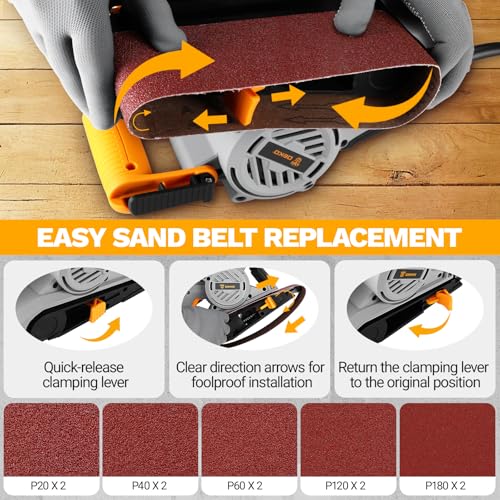
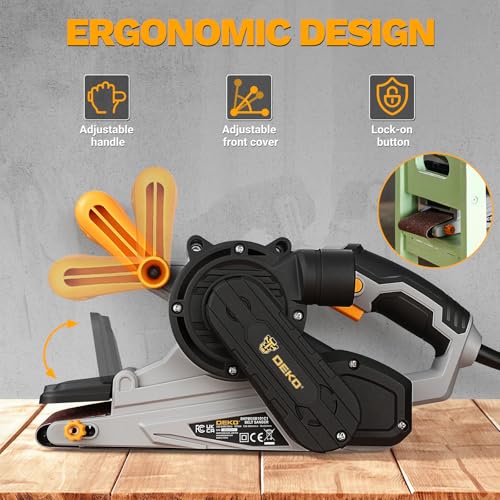
The DEKOPRO hits a sweet spot for DIYers who want more power than a budget model but don’t need pro-grade intensity. The 8.4Amp motor delivers solid performance on thick stock, and the six-speed knob gives real flexibility, especially when you’re switching between aggressive removal and finer passes.
I like that it includes two C-clamps and can convert to a bench sander, though the stability isn’t as rock-solid as the WEN 6502T. Where it really pulls ahead is the dual dust collection: you can use the bag or hook up a vacuum via the 1.4-inch port. That’s a big win for clean operation. Owners say it runs cool and handles long sessions without issue.
Product photos

How We Picked These belt sanders
Rather than a hands-on lab test, my research for these recommendations centered on a detailed comparison of published specifications and features across numerous models. I weighed owner reviews from major retailers against expert opinions found in woodworking and tool publications. As someone who’s spent years around workshops, I also applied my understanding of what features truly matter for real-world sanding tasks, ranking sanders based on how well they met those needs.
For belt sanders, consistent power and effective dust collection are paramount. I gave significant weight to motor amperage and included features like dust ports and bag designs, as these directly impact both performance and user comfort. Variable speed control was also a key factor, allowing for greater versatility across different materials and projects. Finding models with robust tracking systems was also important – a belt that constantly slips is frustrating and inefficient.
Specifications reliably indicate motor power, belt size, and speed ranges. However, I turned to owner feedback to gauge long-term durability, ease of use, and the effectiveness of dust collection in practice. Reputation within the woodworking community also played a role; some brands consistently receive higher marks for build quality and reliability, and I considered that when evaluating options, especially when looking at top cordless belt sanders.
What To Look For In belt sanders
Finding the right belt sander for your needs can be surprisingly complex. There’s a lot more to it than just motor power.
A quality belt sander balances power with control, offering a stable platform, effective dust collection, and a belt-tracking system that minimizes frustration. Look for variable speed controls, a robust motor (amps aren’t everything!), and a design suited to the typical tasks you’ll be performing, from aggressive material removal to fine finishing. Prioritize models with positive user reviews regarding belt tracking and durability.
Motor Power and Application
The amperage of a belt sander’s motor often gets all the attention, but it’s not the whole story. While a higher amp motor can remove material faster, it also tends to be heavier and harder to control. For most DIYers and homeowners, a 7.5 to 8.8 amp motor will be more than sufficient. If you’re tackling large surface areas consistently, or working with very hard woods, then you might consider stepping up to a 9 amp or higher model. Don’t fall for the trap of thinking “more power” always equals “better results.” Control and technique matter just as much. I often recommend people start with something manageable and upgrade later if truly needed.
Belt Size and Versatility
Belt size dramatically impacts what a sander can do. The most common sizes are 3×21 inches and 4×24 inches. A 3×21 inch belt sander is more maneuverable and better suited for detail work and smaller projects. It’s a good choice if you’re primarily focused on refining surfaces or doing a lot of handheld sanding. Larger 4×24 inch models excel at rapid material removal on larger surfaces like floors or wide boards. Some models, like the Jellas 3×21, even offer the flexibility of being used as a benchtop sander with included C-clamps, adding versatility to your workshop.
Here’s a quick breakdown of what to consider:
- Smaller Projects: A 3×21″ model is ideal.
- Large Surfaces: A 4×24″ belt will save you time and effort.
- Dual-Purpose Needs: Look for a convertible model that can function as both a handheld and benchtop sander, expanding its usefulness.
Dust Collection and Ergonomics
Dust is the enemy of any sanding operation. Not only is it unpleasant to breathe, but it can also damage the motor and bearings of your sander over time. Effective dust collection is crucial. Many belt sanders come with a dust bag, but the quality varies considerably. Some, like the DEWALT 20V MAX, are designed to be compatible with external dust extractors for even better results. Beyond dust collection, consider the ergonomics. A comfortable grip, variable speed control, and a well-balanced design will make a significant difference, especially during longer projects. Check out our guide to the top woodworking belt sanders for models specifically designed for woodworkers.
A well-maintained belt sander is a happy belt sander. Clean the dust bag after every use and inspect the belt for wear regularly to maximize its lifespan and performance.
Belt Sanders Compared
Here’s a comparison of specifications for several popular belt sanders to help you make an informed decision.
| Product Title | Motor (Amps) | Belt Size (in) | Speed (FPM) | Variable Speed | Benchtop | Dust Collection |
|---|---|---|---|---|---|---|
| Metabo HPT 3×21 Belt Sander | 9 | 3×21 | N/A | Yes | No | Bag |
| Makita 4×24 Belt Sander | N/A | 4×24 | 1,640 | No | No | Bag |
| DEWALT 20V MAX Cordless Belt Sander | N/A | 3×18 | N/A | Yes (25-speed) | No | System (sold sep) |
| WEN 7.5-Amp Variable Speed Sander | 7.5 | 3×21 | 620-1200 | Yes | No | Bag/Port |
| Jellas 3×21 Variable Speed Sander | 7 | 3×21 | 120-400 | Yes | Yes | Bag |
| Makita 9903 3×21 Belt Sander | 8.8 | 3×21 | 690-1,440 | Yes | No | Bag |
| WEN 4×36 Benchtop Belt & Disc Sander | 4.3 | 4×36 | 3,600 | No | Yes | N/A |
| DEKOPRO 8.4A Belt Sander | 8.4 | 3×21 | 120-400 | Yes | Yes | Bag/Vacuum Port |
Frequently Asked Questions
What grit sandpaper should I start with when using a belt sander?
Generally, begin with a coarser grit, around 60-80, for initial material removal or leveling. This will quickly address imperfections, but you’ll need to progress to finer grits (100-120, then 150-180, and potentially higher) for a smooth finish.
Can a belt sander be used on anything other than wood?
Yes, belt sanders can work on metal, plastic, and even some types of concrete, but you’ll need to use appropriate abrasive belts designed for those materials. Using the wrong grit or belt type can damage both the material and the sander.
How often should I replace the belt on my belt sander?
Belt replacement frequency depends on usage and material. Expect to replace it every few hours of heavy use, or sooner if you notice cracking, tearing, or a loss of abrasive quality. Regularly inspecting the belt is key.
What’s the difference between a 3×21 and a 4×24 belt sander, and which is best for me?
A 3×21 inch sander is more maneuverable for detail work, while a 4×24 inch model is better for quickly sanding large, flat surfaces. If you primarily tackle floors or large tabletops, a 4×24 is the way to go; for smaller projects and more control, choose a 3×21.
Are cordless belt sanders as powerful as corded models?
Cordless belt sanders have improved significantly, but generally offer slightly less raw power than corded options. However, the convenience of cordless operation often outweighs the slight power difference, especially for lighter-duty tasks, and models like the DEWALT 20V MAX offer impressive performance. For truly professional-grade sanders for demanding applications, corded remains the dominant choice.
The Bottom Line
Choosing a belt sander often comes down to balancing raw power with ease of control. For most homeowners and DIYers, the Metabo HPT 3×21 Belt Sander strikes that balance well, offering a powerful 9-amp motor and variable speed in a manageable package. It’s a versatile tool that can handle a variety of sanding tasks without being overly cumbersome.
If your needs are more specific, there are excellent alternatives. For those seeking maximum portability, the DEWALT 20V MAX Cordless Belt Sander is a standout, and for those who want a tool that can do it all – handheld and benchtop – the Jellas 3×21 Variable Speed Sander delivers impressive flexibility. And if you’re looking for the best handheld belt sanders for more focused projects, the Makita 9903 is a strong contender.
Ultimately, the specs on a sander are less critical than your technique and preparedness. A sharp belt, a clean work surface, and a steady hand will always deliver better results than a top-of-the-line machine used improperly. Focus on building good sanding habits, and the right tool will simply make the job easier and more enjoyable.
