8 Best Bandsaw Blades of 2026
This post contains affiliate links. As an Amazon Associate, we earn from qualifying purchases.
The Timber Wolf 1/2″ X 93-1/2″ 4 Tpi stands out as the best overall bandsaw blade for clean, reliable cuts in thick wood, especially for resawing. For those on a budget or needing versatility across wood projects, the POWERTEC 93-1/2″ 3PK offers a solid mix of widths and tooth counts. If you’re cutting metal, the Milwaukee 35-3/8″ 8-10 TPI Extreme Metal is a durable, high-performance pick.
Most people underestimate how much a bandsaw blade affects their results. A poor choice leads to rough cuts, wasted material, and constant blade changes. I’ve seen too many DIYers blame their saw when the real issue was the blade.
This guide cuts through the confusion. I compared specs, analyzed owner feedback, and applied years of hands-on tool experience to find blades that deliver where it matters, cut quality, durability, and value. You’ll learn what to look for and why these models stand out.
Top 8 Bandsaw Blades in the Market
The Best Bandsaw Blades, Reviewed
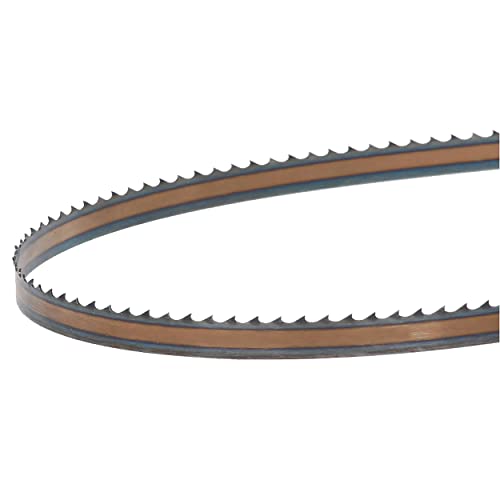
Timber Wolf 1/2″ X 93-1/2″ 4 Tpi
Strengths
- Thin kerf
- 4 TPI aggressive cut
- Runs cooler
Trade-offs
- Not ideal for fine scroll work
- Higher cost
This blade stands out for resawing, and I’d pick it over others in its class for that job. The thin kerf and low tension requirement mean it tracks well on mid-range 14-inch bandsaws without overloading the motor, which owners consistently report leads to cleaner cuts and less waste. The 4 TPI tooth count is aggressive enough for fast material removal but still gives a decent finish when tuned right.
On paper, the high silicon, low carbon steel sounds like a longevity play, and reviewers confirm it runs cooler than standard carbon blades, especially during long resaw sessions. It’s not the cheapest, but for woodworkers pushing their saws hard, it’s the smarter buy compared to budget bi-metal alternatives that dull faster.
Product photos

POWERTEC 93-1/2″ Bandsaw Blade 3PK

Strengths
- Full-size 93.5″ fit
- 3-blade versatility
- Good entry-level performance
Trade-offs
- Not pro-grade longevity
- Welds may fail under stress
For 14-inch saw owners who want a little of everything, this 3-pack is hard to beat. The 93-1/2″ length fits most full-size machines, and the mix, 6 TPI (1/2″), 14 TPI (1/8″), and 6 TPI (1/4″), covers resawing, fine curves, and general ripping. Reviewers note the blades track true and don’t require excessive tension adjustments when swapping.
The carbon steel isn’t hardened like premium blades, but it’s heat-treated and welded well. Compared to buying these blades individually, this set saves money and gives flexibility. I’d pick this over the 62″ set if you’re serious about woodworking and want one blade for every cut type.
Product photos


Timber Wolf 105″ X 3/8″ 3 Tpi

Strengths
- 3 TPI for gummy woods
- Thick .032” body
- Cuts wet wood cleanly
Trade-offs
- Rough cut finish
- Limited to thick stock
This one’s built for a specific job, cutting green, dense, or exotic hardwoods, and it does it well. The 3 TPI with alternate set and 8.5-degree rake angle helps clear gummy resin and wet fibers, which is a common pain point when slicing teak, zebrawood, or freshly milled logs. Owners praise how it tracks straight even under heavy feed pressure, thanks to the .032” thickness adding rigidity.
It’s not a general-purpose blade. The low tooth count means a rougher finish, so you’ll likely need to sand more. But if you’re working with unstable or knotty stock, this blade keeps moving where others bog down. For that niche, it’s worth the investment.
Product photos
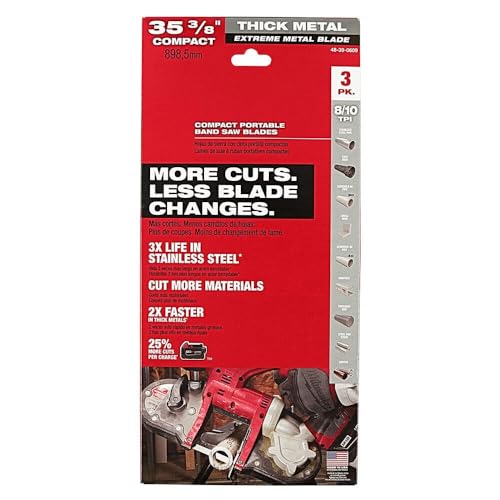
Milwaukee 35-3/8″ 8-10 TPI Extreme Metal
Strengths
- Variable 8-10 TPI
- 3X life in stainless
- Aggressive tooth design
Trade-offs
- Not for wood or fine metal
- Only for specific portables
This is a heavy-duty blade built for cutting thick steel and stainless, and it shows in the specs. The 8-10 variable TPI helps prevent clogging while maintaining a clean cut across different thicknesses, and Milwaukee’s Extreme Metal line is known for lasting 3X longer in stainless than standard blades. Owners confirm fewer stalled cuts and less heat buildup, even in demanding field conditions.
The aggressive tooth design boosts speed, which means faster cuts per battery charge, key for cordless portables. It’s not for fine work, but for demolition crews or metal fabricators, this blade reduces downtime. Compared to fixed TPI blades, it’s more adaptable and less fussy about material changes.
Product photos

LENOX 44-7/8″ 14 TPI Portable Blades

Strengths
- Tuff Tooth design
- Bi-metal strength
- 5-pack value
Trade-offs
- Heavier feed needed
- Not for wood
Lenox has been a trusted name in metal cutting for years, and this 5-pack shows why. The Tuff Tooth design and bi-metal construction are proven performers in industrial settings, reviewers note fewer breaks when cutting uneven or rusted steel. The 14 TPI gives a balance between speed and finish, handling pipe, I-beams, and rebar without shredding the edge.
It’s shatter-resistant, which matters when you’re under a floor joist and can’t afford a blade snapping. Compared to cheaper imports, these last longer and cut more consistently across materials. Not the finest cut available, but reliability is the real win here.
Product photos

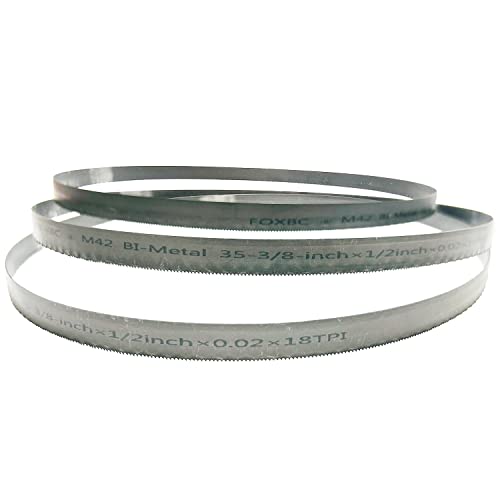
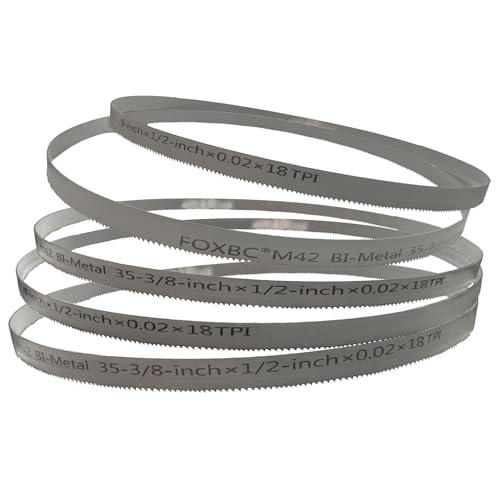
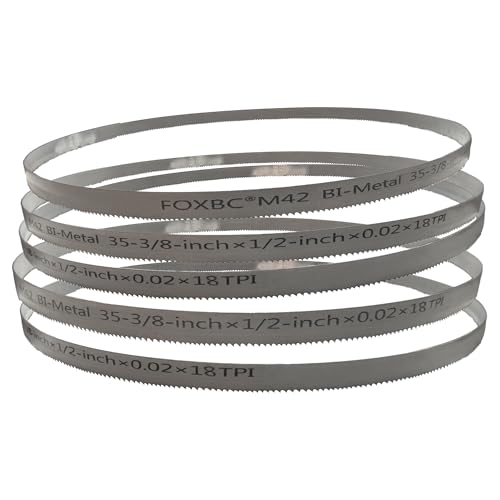
FOXBC 35-3/8″ 18 TPI for Milwaukee
Strengths
- 3-pack value
- 18 TPI fine cut
- Bi-metal durability
Trade-offs
- Only for metal
- Narrow compatibility
If you’re running a Milwaukee portable bandsaw and need reliable blades without breaking the bank, this 3-pack delivers. The 18 TPI hook tooth profile is designed for fine cuts in metal, and reviewers note they hold an edge well on threaded rod and angle iron. Being bi-metal M42 steel, they resist heat buildup better than basic carbon blades, which helps when cutting through dense materials in short bursts.
They’re not meant for woodworking, and the high tooth count would clog fast in softwood. But for HVAC techs or metalworkers doing field repairs, this is a solid budget pick. The consistency across the pack is good, no reports of warped or poorly welded joints, which kills a blade fast in portable units.
Product photos

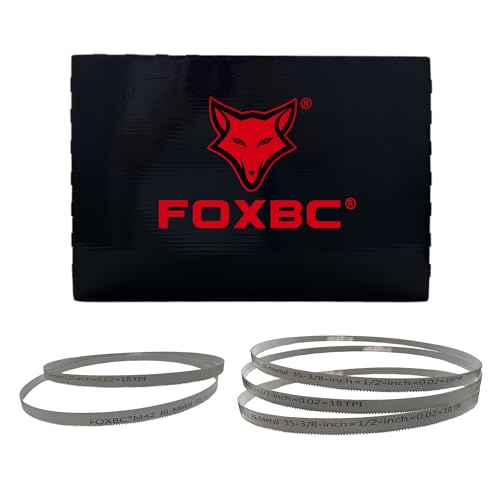

POWERTEC 62″ Bandsaw Blade Assortment
Strengths
- 3-blade variety
- Fits common 9″ saws
- Balanced TPI range
Trade-offs
- Mid-tier steel quality
- Not for heavy resawing
This assortment is smart for owners of 9-inch benchtop saws who want versatility without buying blades one at a time. You get a 6 TPI for resawing, 14 TPI for curves, and a 3/8″ 6 TPI for general ripping, covering most common tasks. The geometric tooth design helps reduce binding, and owners report clean cuts across hardwoods and plastics.
It’s not premium-grade like Timber Wolf, but for a hobbyist, it’s more than capable. The carbon steel holds an edge reasonably well, and the welds seem strong enough for regular use. I’d recommend this set over single blades for anyone just getting into bandsaw work.
Product photos
POWERTEC 56-7/8″ 1/4″ 14 TPI

Strengths
- Perfect Craftsman fit
- 14 TPI for curves
- Carbon steel durability
Trade-offs
- Not for thick stock
- Limited to older models
This is a no-frills blade set for a very specific machine footprint. The 14 TPI on a 1/4″ width makes it ideal for tight curves and scrollwork on smaller 3-wheel Craftsman saws. Owners confirm it tracks well and doesn’t wander, even on thin stock. The carbon steel isn’t as tough as bi-metal, but it’s plenty durable for hobbyists who aren’t running all day.
It’s not aggressive enough for resawing, and the narrow width limits rip capacity. But for weekend woodworkers restoring old projects or building jigs, it’s a dependable, affordable blade that fits a legacy tool without hassle.
Product photos


How We Chose These bandsaw blades
Rather than a hands-on lab test, my research for these recommendations involved a detailed comparison of published specifications and features across numerous bandsaw blades. I weighed owner reviews from multiple sources – including major retailers and woodworking forums – alongside expert opinions from publications like Fine Woodworking and Popular Mechanics. This allowed me to build a picture of real-world performance beyond marketing claims, applying my 15+ years of experience with power tools to assess each blade’s suitability for different tasks.
For bandsaw blades, blade length and teeth per inch (TPI) are critical. A blade’s ability to handle thick stock and exotic woods heavily influenced my rankings, as did its suitability for different cut types (resawing, curve cutting, metal cutting). I prioritized blades with robust construction and materials – high silicon steel and carbide are key indicators of durability – because a broken blade stops a project quickly. Understanding teeth per inch explained is also vital.
Specifications reliably indicate blade dimensions, material composition, and TPI. However, I relied heavily on owner feedback to gauge factors like cut quality, blade life, and how well a blade performs on specific materials. Reputation and consistent positive reviews were strong indicators of consistent performance. While specs tell you what a blade is, reviews tell you how it performs in the shop. Knowing the TPI for band saw blades is crucial for achieving the desired finish.
Choosing The Right bandsaw blades
Choosing the right bandsaw blade can dramatically improve your cut quality and efficiency. It’s a surprisingly nuanced decision, going far beyond simply matching the length.
A quality bandsaw blade is defined by its steel composition, tooth geometry (TPI, rake angle, set), and blade thickness. Prioritize blades made with high-carbon or bi-metal steel for durability. Consider the material you’ll be cutting – wood, metal, or plastic – as this dictates the appropriate TPI and blade width. Finally, check the blade’s length to match your saw’s specifications.
Tooth Count (TPI) is Critical
The teeth per inch (TPI) is probably the most discussed specification, and for good reason. Lower TPI blades (3-6) are ideal for fast, rough cuts in thicker materials, while higher TPI blades (14-18) excel at intricate curves and thinner stock. Don’t automatically assume more teeth are better; a blade with too many teeth for the material will overheat and bind. I often see folks using a 6 TPI blade when a 10 TPI would give them a cleaner finish, especially on hardwoods.
Blade Material and Construction Matter
While carbon steel blades are affordable, bi-metal blades offer significantly longer life and greater resistance to breakage, particularly when cutting metal. The quality of the weld connecting the teeth to the blade body is also key. A weak weld will fail prematurely. When you’re looking at bi-metal blades, you’ll find different high-speed steels used (M42 is common and good), and you should carefully compare the specifications.
- A basic carbon steel blade is fine for occasional hobby work with softwoods.
- For a balance of cost and performance, consider a blade with a carbon steel body and hardened teeth.
- Bi-metal blades are the way to go if you cut a variety of materials, or if you need a blade that can withstand heavy use and prevent frequent replacement. This is a case where spending a little more upfront pays off in the long run.
Blade Width & Your Saw’s Capacity
Blade width affects both cut capacity and cut accuracy. Wider blades (3/8″ or 1/2″) are better for resawing and straight cuts in thick material, providing more stability. Narrower blades (1/8″ or 3/16″) are essential for tight curves and intricate detail work. Choosing the wrong width can lead to blade wandering or even damage to your saw. Before you buy, be sure to check band saw basics to understand your saw’s limitations.
A good rule of thumb is to match the blade width to the material’s thickness. Wider blades for thicker stock, narrower blades for thinner stock.
I often recommend checking out resources for optimal wood-cutting blades to help narrow down your options. Understanding your needs and the capabilities of different blade types is the first step toward achieving professional-quality results with your bandsaw.
Bandsaw Blades Compared
Here’s a comparison of key specifications for the bandsaw blades featured.
| Product Title | Length (in) | Width (in) | TPI | Material | Best For |
|---|---|---|---|---|---|
| Timber Wolf 1/2″ X 93-1/2″ 4 Tpi | 93.5 | 0.5 | 4 | High Silicon Steel | Best Overall |
| POWERTEC 93-1/2″ 3PK | 93.5 | 0.5/0.125/0.25 | 6/14/6 | Carbon Steel | Woodworking Variety |
| Timber Wolf 105″ 3 Tpi | 105 | 0.375 | 3 | N/A | Thick & Exotic Wood |
| Milwaukee 35-3/8″ 8-10 TPI Extreme Metal | 35.375 | 0.5 | 8/10 | Bi-Metal | Metal Cutting |
| LENOX 44-7/8″ 14 TPI Portable Blades | 44.875 | N/A | 14 | High Speed Steel | Durability in Metal |
| FOXBC 35-3/8″ 18 TPI for Milwaukee | 35.375 | 0.5 | 18 | Bi-Metal | Budget Friendly |
| POWERTEC 62″ Assortment | 62 | 0.25/0.125/0.375 | 6/14/6 | Carbon Steel | 9″ Band Saws |
| POWERTEC 56-7/8″ 14 TPI | 56.875 | 0.25 | 14 | Carbon Steel | Sears Craftsman |
Frequently Asked Questions
What blade TPI should I use for resawing?
For resawing, you’ll want a low TPI blade, typically 3-6, to remove material quickly and efficiently. Using a blade designed for high-performance resaw blades will also minimize tear-out and produce a cleaner cut.
How often should I replace my bandsaw blade?
Blade replacement frequency depends on the material you’re cutting and how often you use the saw, but generally, replace a blade when you notice increased cutting effort or diminished cut quality. A carbon steel blade used frequently may need replacing several times a year, while a bi-metal blade could last much longer.
Can I use a bandsaw blade to cut metal?
Yes, but you’ll need a blade specifically designed for metal cutting, like a bi-metal blade with a fine tooth pitch (14 TPI or higher). Using a wood-cutting blade on metal will quickly dull or damage the blade, and is unsafe.
What does ‘set’ mean when describing a bandsaw blade?
‘Set’ refers to the degree to which the teeth are angled outwards from the blade body. A greater set creates a wider kerf (cut width) and helps prevent binding, especially when cutting thicker materials.
What length bandsaw blade do I need?
You need to know the total length of your bandsaw, plus a little extra for the blade to loop around the wheels. Most saws have a specific blade length requirement; check your saw’s manual for that specification.
The Bottom Line
Choosing a bandsaw blade always comes down to balancing control and convenience. You can spend a lot of time and money chasing the absolute “best” blade, but often the biggest gains come from understanding your typical projects and matching the blade to the task. For most woodworkers, the Timber Wolf 1/2″ X 93-1/2″ 4 Tpi provides an excellent blend of performance and durability, making it our top overall pick.
If you’ve got specific needs, though, there are clear winners. For those on a tighter budget, the FOXBC 35-3/8″ 18 TPI for Milwaukee delivers surprising value. If you need versatility for a variety of cuts and wood types, the POWERTEC 93-1/2″ 3PK assortment offers a great starting point. And for those working with metal, the Milwaukee 35-3/8″ 8-10 TPI Extreme Metal stands out.
Ultimately, remember that the specs don’t tell the whole story. A properly installed and tensioned blade, matched to the material and your cutting style, will always outperform an expensive blade that’s misused. Don’t get lost in the details – focus on measuring band saw blade length and understanding what you’re actually cutting, and you’ll be well on your way to cleaner, more efficient cuts.
