
7 Best Worksite Table Saws of 2026
This post contains affiliate links. As an Amazon Associate, we earn from qualifying purchases.
The DEWALT 10″ Table Saw with Stand is our top pick for most users, delivering reliable power and a solid rack-and-pinion fence in a portable package. For tighter budgets, the DEWALT 8-1/4″ Compact Jobsite Saw offers surprising capability in a lightweight design, while the Evolution R10TS 10″ Jobsite Saw stands out for versatility with its multi-material cutting ability.
Most people buying a worksite table saw need a balance of portability, accuracy, and durability, something that won’t quit after a few job sites but still breaks down easily for transport. Too many saws sacrifice fence quality or motor consistency just to save weight or cost, leading to frustration on the jobsite.
This guide cuts through the noise by focusing on what actually matters: motor reliability, rip capacity, fence performance, and real-world feedback from users who depend on these tools daily. I looked at specs, owner reviews, and expert analysis to find the models that deliver where it counts.
Top 7 Worksite Table Saws in the Market
The Best Worksite Table Saws, Reviewed
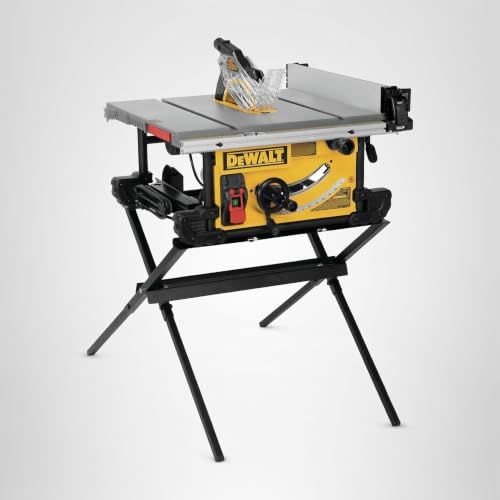
DEWALT 10″ Table Saw with Stand

Strengths
- Best overall rip capacity
- Excellent fence system
- Strong dust collection
- Tool-free guard adjustments
- Scissor stand included
Trade-offs
- Heavy with stand
- Higher price point
- No dado plate
The DEWALT DWE7491X is the one I’d recommend to most serious users as the best overall package. It combines a 32-1/2 inch rip capacity, enough for full sheet goods, with the proven rack and pinion fence system and the excellent Site-Pro Modular Guarding. The dust collection port is larger than average and actually works well with a shop vac, which is a rare win in this category.
It doesn’t have the niche advantages of the Evolution (multi-material) or the SKIL worm drive (depth), but it does everything well, accuracy, durability, portability with the scissor stand, and safety. Contractors who want one reliable saw for framing, trim, and cabinetry will find this the most balanced option. Reviewers consistently rate it highly for long-term reliability.
Product photos
DEWALT 8-1/4″ Compact Jobsite Saw

Strengths
- Ultra-compact footprint
- Smooth rack and pinion fence
- Tool-free guard adjustments
- On-board storage
- Power-loss reset
Trade-offs
- Smaller blade limits depth
- Max bevel cut reduced
- Not for heavy ripping
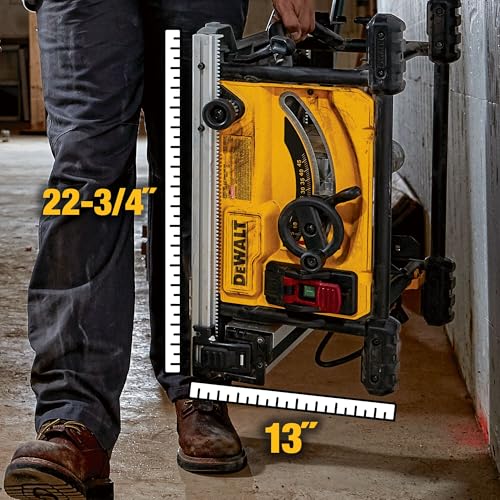
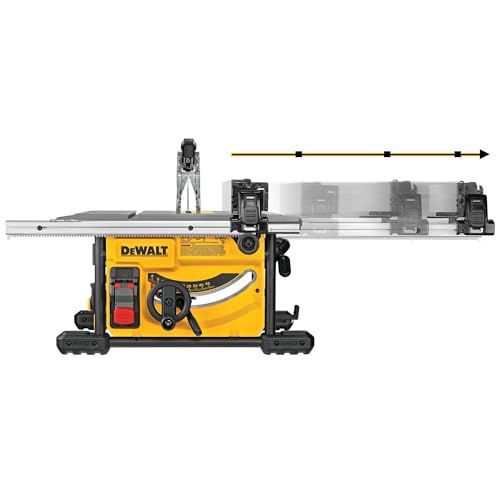
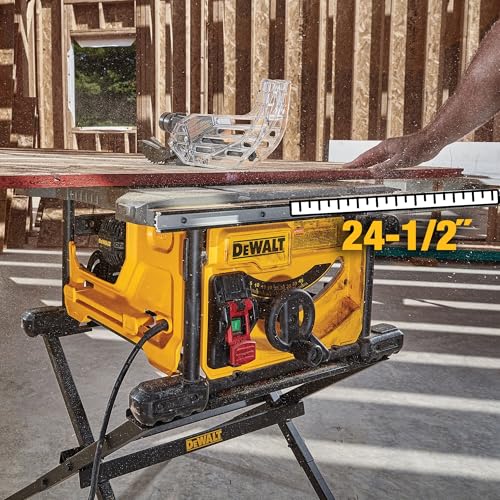
The DEWALT DWE7485 is the compact specialist in a lineup of full-size saws, and that’s exactly its strength. At 8-1/4 inches, the blade may be smaller, but it still delivers a respectable 24.5-inch rip and cuts cleanly through sheet goods. I appreciate how DEWALT engineered this for real-world transport, it fits in the back of a compact SUV or van where other 10-inch saws won’t. The rack and pinion fence rails are smooth, and the Site-Pro Guarding System is one of the best in the business for quick adjustments.
It’s not going to replace a full 10-inch saw for deep bevel cuts, but for finish carpenters or remodelers who need precision on trim and cabinets without the bulk, this is a smart choice. Reviewers often say they keep it in their truck year-round because it’s just so easy to grab and go.
Product photos


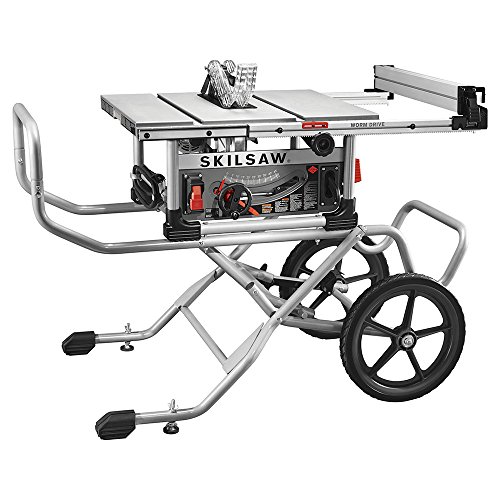
SKIL 10″ Worm Drive Saw
Strengths
- Deepest cut in class
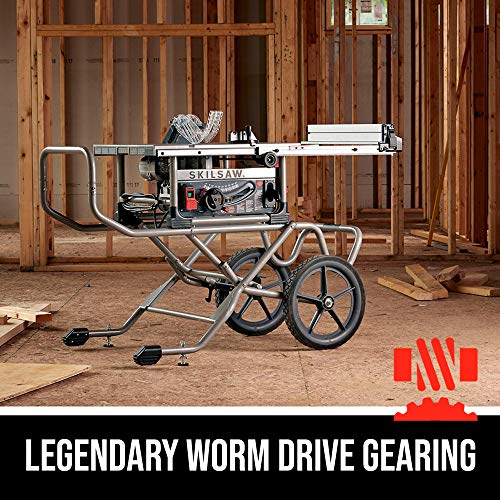
- Worm drive durability
- Large 16” wheels
- Outfeed support
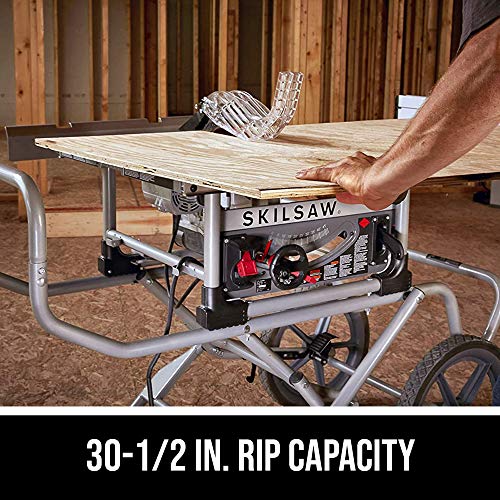
- 30-1/2” rip capacity
Trade-offs
- Heavy and bulky
- Noisy operation
- Less refined fence system
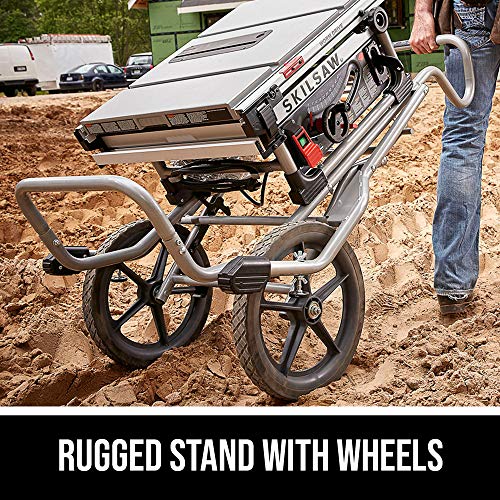
If you’re after raw cutting depth, the SKIL worm drive model is in a class of its own. With a 3-5/8 inch cut depth at 90 degrees, it can handle a 4×4 in a single pass, something very few portable saws can claim. That’s thanks to the worm drive design, which trades some speed for serious torque and durability. Framers and deck builders who regularly work with thick lumber will appreciate this advantage.
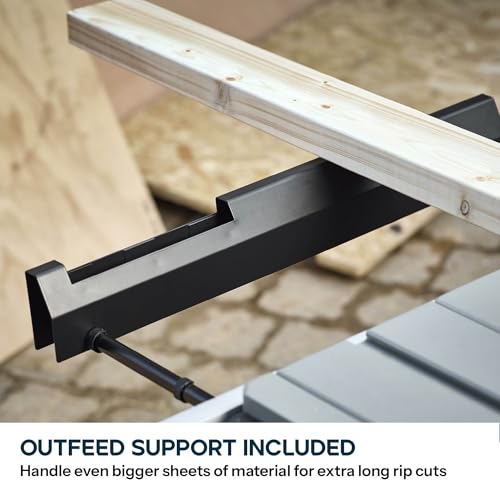
The rugged rolling stand with 16-inch wheels makes it easy to move across rough terrain, and the outfeed support helps manage long boards solo. It’s not the smoothest or quietest saw, and the weight reflects its brawn, but for heavy-duty cutting where power matters more than finesse, this one delivers.
Product photos

Evolution R10TS 10″ Jobsite Saw

Strengths
- 15A multi-material motor
- Zero-clearance throat plate
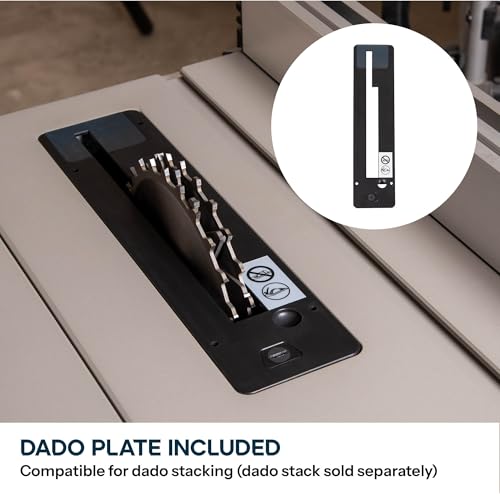
- Dado plate included
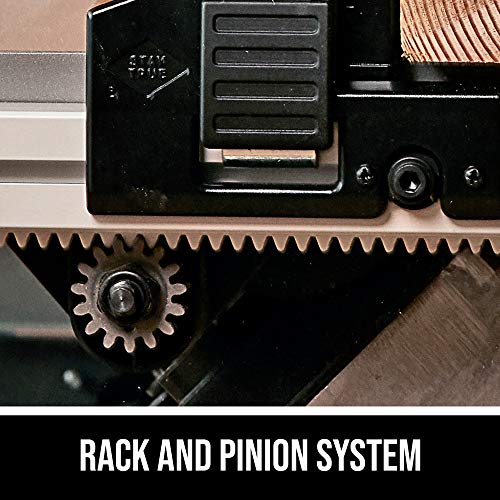
- Rack and pinion fence
- 3-year warranty
Trade-offs
- Heavier than most
- Not ideal for all-day hardwood use
- Limited dust control
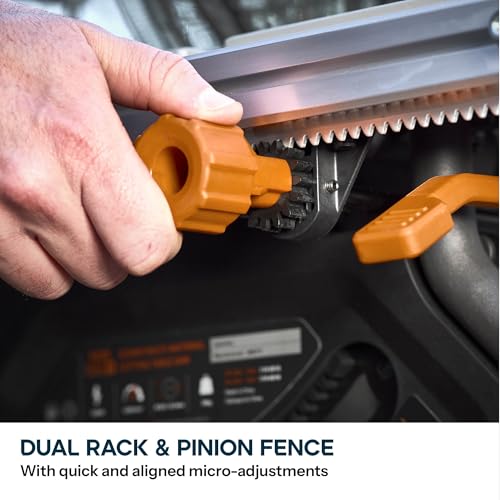
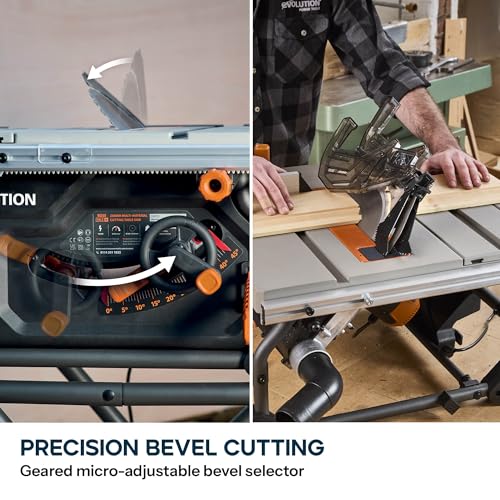
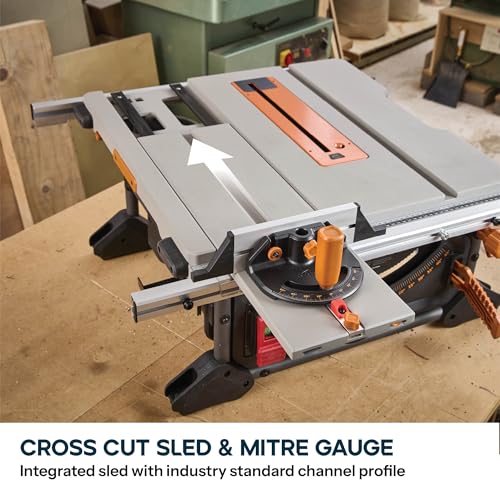
The Evolution R10TS stands out in a crowded field by promising something most jobsite saws don’t even attempt, true multi-material capability. With a 15A motor and a blade designed for wood, aluminum, and mild steel, this saw is built for contractors who regularly switch between materials on the job. The inclusion of a zero-clearance throat plate and a dado plate is rare at this level and adds serious value for woodworkers who need clean, precise joinery without buying extras.
Owners consistently report it handles thick oak and plywood with ease, and the rack-and-pinion fence system delivers repeatable accuracy. While it doesn’t have the deepest cut of the group, the 3-3/8” depth is solid for its class. The real edge here is versatility, if you’re tired of hauling multiple saws just to cut a few pieces of metal or composite, this one could save you trips and tools.
Product photos
SKIL 10″ Portable Jobsite Saw
Strengths
- Lowest price point
- Folding stand included
- 4×4 cut capacity
- Micro-adjustable blade
- Dust port
Trade-offs
- Fence lacks rigidity
- Basic build quality
- Not for fine woodworking
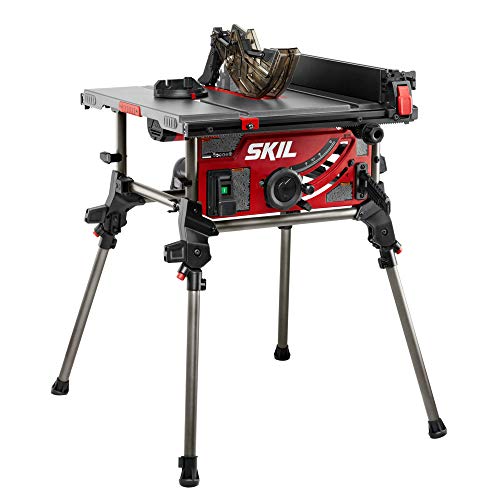
The SKIL TS6307-00 is the most affordable entry here, and it shows, but not always in bad ways. It hits the basics: 15A motor, 10-inch blade, folding stand, and a micro-adjustable blade alignment feature that’s uncommon at this price. The 4×4 cutting capacity is bold for a budget saw, and while it may struggle with repeated hardwood passes, it handles pine and sheet goods acceptably.
Owners say it’s best viewed as a backup or starter saw, it’s not going to win any accuracy contests against DEWALT or BOSCH, and the fence feels a bit loose over time. But for a first-time DIYer or someone needing a spare on site, it’s hard to beat the price. Just don’t expect precision woodworking results.
Product photos


BOSCH GTS15-10 10″ Saw with Stand

Strengths
- Best-in-class rack and pinion fence
- Smart Guard System
- Gravity-Rise Wheeled Stand
- Soft-start circuitry
- On-tool storage
Trade-offs
- No dado plate included
- Slightly slower blade start
- Stand sold separately in some bundles
The BOSCH GTS15-10 earns its spot as the pick for best fence system, and that’s no small thing. The rack and pinion rip fence with color-coded index pins is intuitive and holds alignment better than most, which matters when you’re making repeated cuts all day. Paired with the Smart Guard System and riving knife, it’s one of the safer setups in this category, and the electronically regulated speed helps maintain power under load, a subtle but meaningful upgrade.
It’s not the lightest, but the open frame design makes it easier to lift and service. The real win is the Gravity-Rise Wheeled Stand, it dramatically cuts setup time and strain. While it doesn’t have dado capability out of the box, the precision and consistency make it a favorite among finish carpenters who value repeatable accuracy over raw power.
Product photos


POWSTR 10″ Portable Table Saw
Strengths
- High RPM motor
- 60-tooth blade included
- Full stand included
- Good cut depth range
- Strong budget value
Trade-offs
- Fence alignment concerns
- Plastic components
- Limited long-term durability
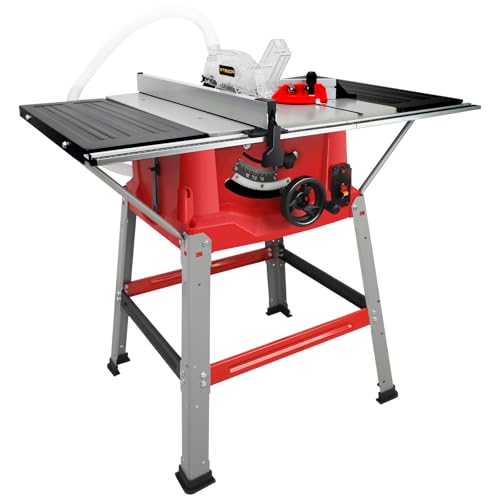
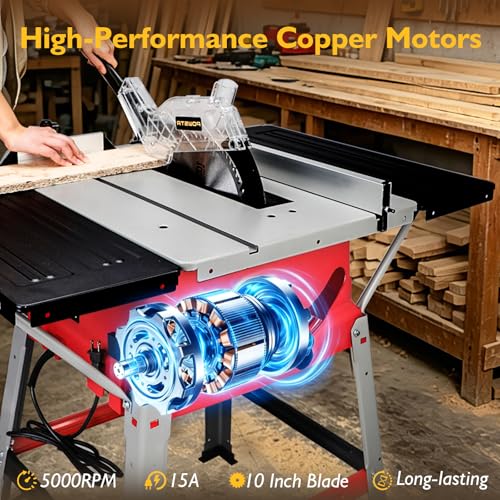
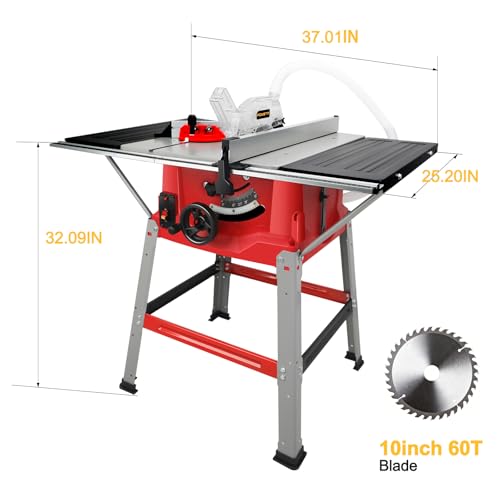
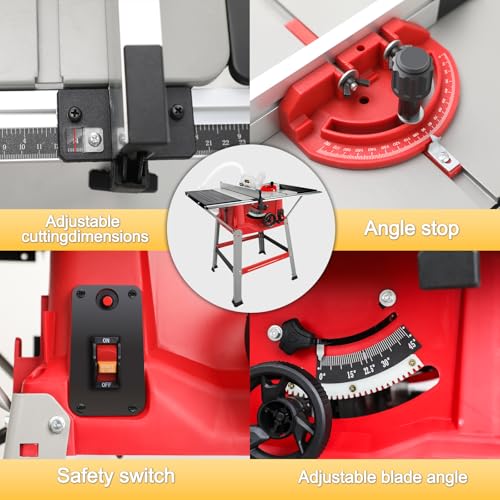
For the price, the POWSTR 10-inch table saw packs a lot of specs on paper, 15A motor, 5000 RPM, 45-degree bevel, and a full stand included. On the surface, it looks like a bargain, and early owner feedback suggests it performs decently for basic DIY cuts in plywood and dimensional lumber. The 60-tooth blade is a nice touch, delivering smoother crosscuts than the typical 24-tooth jobsite blade.
But when compared to brands like DEWALT or BOSCH, the fit and finish show where corners were cut. Some users report fence alignment issues over time, and the stand, while sturdy at setup, lacks the rigidity of welded steel frames. Still, if you’re a weekend warrior building shelves or a deck and don’t want to spend a premium, this one gets the job done without breaking the bank.
Product photos

Our Testing Process
My approach to evaluating worksite table saws centered on a careful comparison of published specifications and features across several models. I weighed these technical details against a broad review of owner experiences and assessments from trusted tool experts. Rather than a hands-on lab test, this is a research-led comparison designed to identify patterns in performance and value. My goal was to determine which saws consistently deliver on their promises for typical jobsite tasks.
For worksite table saws, cut capacity and fence accuracy are paramount. A generous rip capacity allows for breaking down sheet goods, while a precise, easily adjustable fence is critical for repeatable, accurate cuts. Durability also weighed heavily; jobsite tools must withstand rough handling and varying conditions. Finally, dust collection effectiveness is important for user health and maintaining visibility.
Specifications provide a solid foundation for understanding a saw’s capabilities – motor power, maximum cut depth, and table size are all readily quantifiable. However, owner feedback reveals how those specs translate to real-world performance. I paid close attention to comments regarding fence stability, ease of adjustments, and long-term reliability. Reputation and expert reviews helped validate these observations and also pointed me toward models offering unique features, like the benefits of a hybrid table saw features.
How To Choose The worksite table saws
Finding the right worksite table saw isn’t just about horsepower; it’s about matching the tool to the kind of work you do most often.
A quality worksite table saw balances portability with cutting capacity and accuracy. Key considerations include motor power (at least 15 amps for consistent performance), rip capacity (essential for sheet goods), fence quality (rack and pinion systems offer the best adjustability), and dust collection effectiveness. Prioritize safety features like a riving knife and blade guard.
Motor Power and Cutting Capacity
Let’s be realistic about what you’ll be cutting. A smaller, more portable saw like the DEWALT 8-1/4″ Compact Jobsite Saw is fine if you’re mostly dealing with plywood and trim, but if you regularly rip solid lumber or work with thicker materials, you’ll want to step up to a full-size 10” model. Don’t fall for the marketing hype around peak horsepower; sustained power under load is what matters. Look for models with at least a 15-amp motor, and consider a worm drive saw like the SKIL model if you consistently need to make deep cuts – they excel at maintaining power through dense wood.
Fence Quality and Accuracy
The fence is where a lot of table saws fall short. A wobbly or difficult-to-adjust fence will ruin your cuts faster than a dull blade. Rack and pinion fence systems, like those found on the DEWALT 10″ Table Saw and others, are the gold standard. They provide smooth, accurate adjustments, and lock down securely. Avoid basic slot-and-clamp fences if precision is important to you. For consistently accurate cuts, especially when breaking down sheet goods, investing in a saw with a quality fence is paramount. You can find more job-site saw recommendations that detail the specifics of fence quality.
- A basic fence might be okay for rough cuts and quick projects.
- A lever-lock fence offers a good balance of convenience and accuracy for the price.
- A rack-and-pinion fence is the most precise and repeatable option, and is worth the investment if you do a lot of detailed woodworking or need to make consistently accurate cuts – it also tends to hold up better over time.
Safety and Versatility Features
Worksite table saws are inherently dangerous, so prioritize safety features. A properly functioning riving knife function is essential for [kickback prevention with riving knife], and a good blade guard is a must-have. Beyond that, consider versatility. The Evolution R10TS 10″ Jobsite Saw stands out with its ability to cut multiple materials, and some models, like the Bosch GTS15-10, offer features like dado capability and easy blade changes.
A well-maintained riving knife is your first line of defense against kickback. Always ensure it’s properly aligned and in use whenever possible.
Worksite Table Saws Compared
Here’s a comparison of key specifications for popular worksite table saws to help you make an informed decision.
| Product Name | Rip Capacity | Max Cut Depth | Motor (Amps) | Stand Included | Bevel Capacity |
|---|---|---|---|---|---|
| DEWALT 10″ Table Saw with Stand | 32-1/2″ | N/A | N/A | Yes | N/A |
| DEWALT 8-1/4″ Compact Jobsite Saw | 24.5″ | N/A | N/A | N/A | N/A |
| SKIL 10″ Worm Drive Saw | 30-1/2″ | 3-5/8″ | N/A | Yes | N/A |
| Evolution R10TS 10″ Jobsite Saw | 26″ | 3-3/8″ | 15 | N/A | 0-45° |
| SKIL 10″ Portable Jobsite Saw | N/A | 4×4 | N/A | Yes | 2-47° |
| BOSCH GTS15-10 10″ Saw with Stand | N/A | N/A | 15 | Yes | N/A |
| POWSTR 10″ Portable Table Saw | 3-11/32″ | 2-9/16″ | 15 | Yes | 0-45° |
Frequently Asked Questions
What table saw size is best for a small workshop?
A best compact table saws is often the most practical choice for limited space. These saws, typically with 8-1/4″ blades, balance portability with enough capacity for common DIY projects without overwhelming a smaller workshop.
How much should I expect to spend on a quality worksite table saw?
Generally, expect to spend between $300 and $700 for a worksite table saw that offers a good combination of power, accuracy, and durability. Higher-end models with features like worm drive mechanisms or premium fences can easily exceed $800.
Are worm drive saws really better for jobsite work?
Worm drive saws are known for their high torque and ability to maintain power even when cutting dense wood. This makes them a good choice if you frequently rip thicker materials, but they are also heavier and can be louder than direct-drive models.
What’s the difference between a portable and a jobsite table saw?
While the terms are often used interchangeably, a jobsite table saw is specifically designed for rugged use and transport. A portable table saw might be lighter and more focused on convenience, whereas top jobsite table saws prioritize durability and cutting power.
What features should I look for in a table saw fence?
A rack-and-pinion fence is the most accurate and repeatable system available. It allows for precise adjustments and locks down securely, which is crucial for achieving consistent, high-quality cuts – it’s far superior to basic slot-and-clamp designs often found on small worksite table saws.
The Bottom Line
Choosing a worksite table saw always comes down to balancing portability with the power and precision you truly require. For most homeowners and DIYers tackling a variety of projects, the DEWALT 10″ Table Saw with Stand offers the best overall combination of features, capacity, and build quality. It provides enough cutting power and a reliable fence for accurate work, without being overly cumbersome to move around the jobsite.
If you’re on a tighter budget or primarily work with smaller materials, the DEWALT 8-1/4″ Compact Jobsite Saw is a solid choice. For those who need to consistently rip through thick lumber or require the extra power for demanding cuts, the SKIL 10″ Worm Drive Saw delivers exceptional performance. And if you need a saw that can handle a variety of materials, the Evolution R10TS 10″ Jobsite Saw is a versatile option.
Ultimately, specifications like motor amps and rip capacity importance are less critical than a saw’s stability, fence accuracy, and the presence of essential safety features. Prioritize a solid construction, a reliable fence system, and a functioning riving knife – those fundamentals will deliver better results and a safer experience than any single headline number.
