
8 Best Welding Helmets for TIG (2026 Guide)
This post contains affiliate links. As an Amazon Associate, we earn from qualifying purchases.
The ARCCAPTAIN True Color and ARCCAPTAIN Panoramic stand out as the top choices for TIG welding, with the ARCCAPTAIN True Color taking the lead for its sharp clarity and responsive performance. If you’re watching your budget but still want reliable function, the YESWELDER Large View offers solid value without sacrificing core features.
TIG welding demands precision, and a poor helmet can ruin your visibility, throw off your timing, and wear you down fast. A slow or murky lens makes it hard to track the weld puddle, and an unbalanced helmet becomes a burden over hours of work.
That’s why I focused on optical quality, switching speed, sensor reliability, and comfort when comparing models. This guide cuts through the specs and marketing to highlight what actually matters in the booth, based on real user feedback, technical ratings, and the kind of detail TIG work requires.
Top 8 Welding Helmet For Tigs in the Market
The Best Welding Helmet For Tigs, Reviewed
ARCCAPTAIN True Color Welding Helmet with Light

Strengths
- True color 1/1/1/1 lens
- Lightweight design
- USB LED light included
- Solar + battery power
- Good low-amp response
Trade-offs
- LED not pre-installed
- Plastic (PP) shell less durable
- Basic sensitivity controls
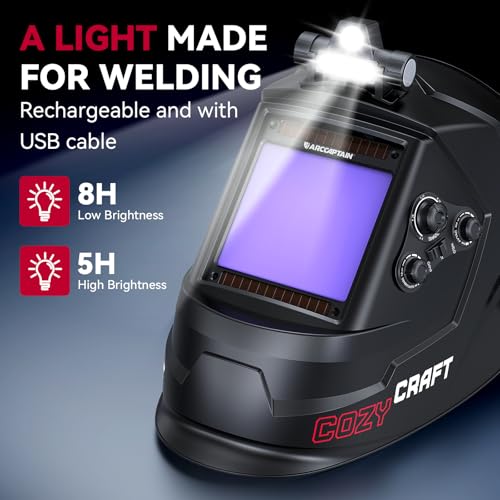
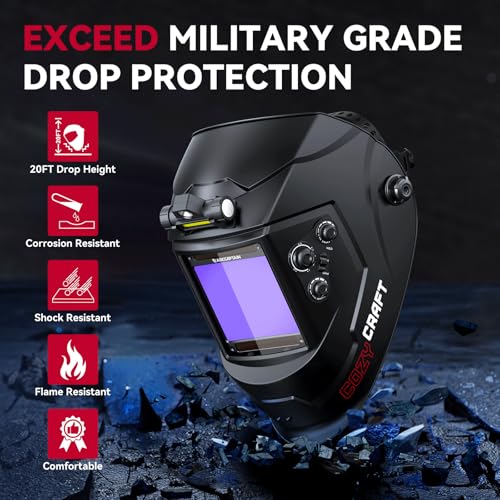
This ARCCAPTAIN model is one of those helmets that quietly outperforms its price tag. The 3.94″ x 3.66″ true color lens with 1/1/1/1 clarity gives a sharp, natural view, no heavy green cast, and the 1/25,000 sec switching speed is fast enough for clean TIG starts. It’s solar-powered with a backup lithium cell, so you’re not hunting for USB cables mid-job. The 12-in-1 smart filter also means solid UV/IR protection across conditions.
Comfort is a standout here. At just 1 lb and with ergonomic padding, it’s easy to forget you’re wearing it during long sessions. But the real win is the USB-powered LED light. It’s not built-in, but once installed, it transforms visibility in shadowed areas. Some users mention it feels a bit flimsy, but it’s a small trade for the added utility.
Product photos


ARCCAPTAIN Panoramic Auto-Darkening Welding Helmet
Strengths
- True color clarity
- 180° panoramic view
- Internal display controls
- Memory mode support
- Built-in LED light
Trade-offs
- Rechargeable battery durability concerns
- Slightly bulkier profile
- Higher price point
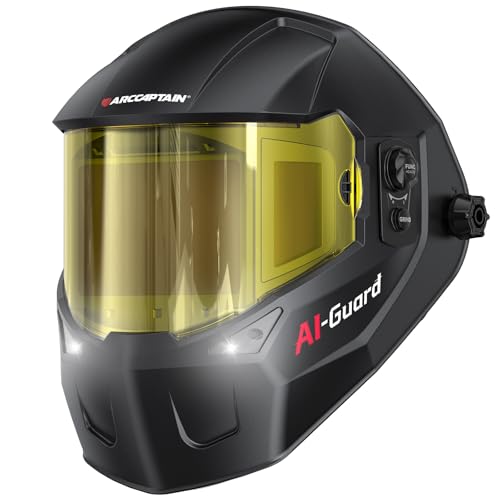
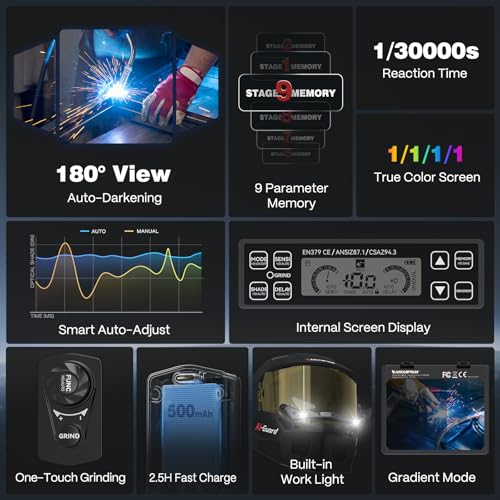
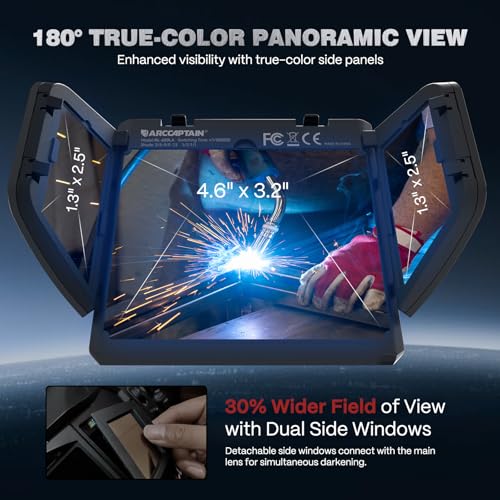
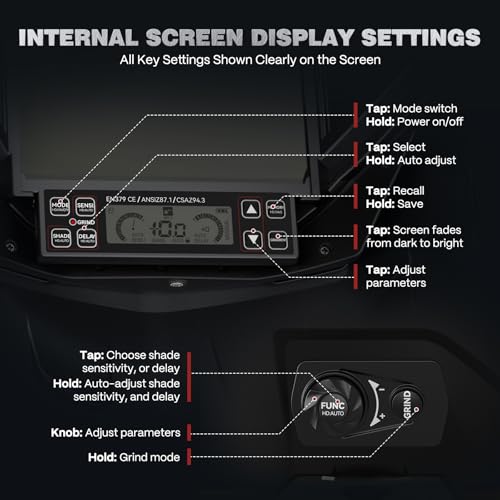
The ARCCAPTAIN with panoramic viewing and internal display control stands out for welders who prioritize visibility and fine-tuned adjustments without fumbling with external dials. On paper, the 7.2″ total viewing area, thanks to side lenses, is a real advantage for situational awareness, especially in tight or complex joints where peripheral vision matters. The 1/1/1/1 optical rating and true color tech should deliver a cleaner, less distorted view than cheaper green-tinted alternatives, and owners consistently report less eye strain during long TIG runs.
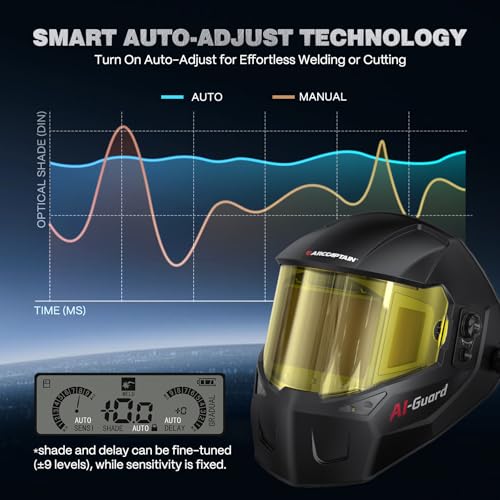
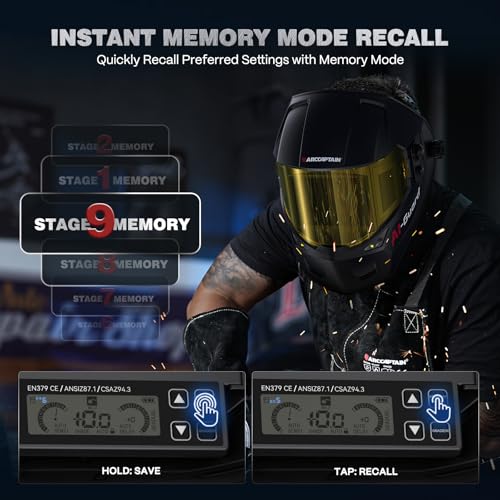
Where it really pulls ahead is the smart auto-shade adjustment. Being able to set sensitivity and delay across ±9 levels gives serious control, and the memory mode for 9 custom settings is a pro-level touch. Paired with the built-in LED work light, this helmet becomes a strong contender in poorly lit shops. But that rechargeable battery, while convenient, has mixed feedback, some users note shorter-than-expected lifespan after heavy field use.
Product photos
ESAB® Sentinel™ A60 Welding Helmet

Strengths
- Exceptional build quality
- True color lens tech
- Precise 0.5 DIN steps
- Durable nylon shell
- 9-setting memory
Trade-offs
- Slightly narrower view
- No solar assist
- Higher price
The ESAB Sentinel A60 feels like what you get when engineers stop cutting corners. The low-profile black design isn’t flashy, but the high-impact nylon shell and 4.65″ x 2.80″ viewing area strike a smart balance between protection and visibility. The real standout is the OpTCS True Color Lens Technology, ESAB’s proprietary system that delivers a natural, high-contrast view, which owners say makes it easier to distinguish subtle puddle dynamics in TIG work.
With a 0.08 millisecond switching time (1/12,500 sec), it’s not the fastest on paper, but paired with four arc sensors and 0.5 DIN increment adjustment, it’s extremely precise. The on-board memory for 9 settings is a pro feature, and the internal LED indicators for battery, grind mode, and shade lock add usability. This is a helmet built for welders who care about consistency and longevity.
Product photos


ATOMPLAN 180° Panoramic View Welding Helmet
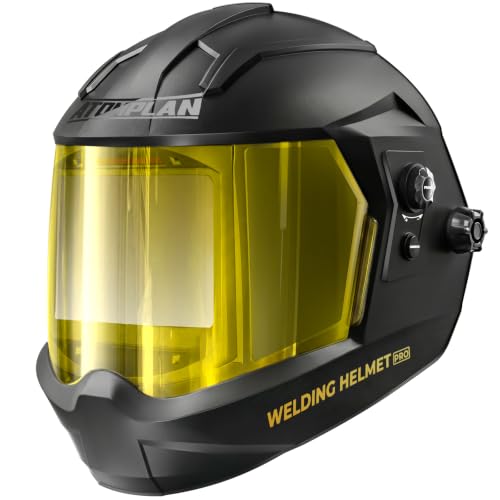
Strengths
- 180° panoramic view
- True color 1/1/1/1 lens
- Type-C rechargeable
- Nylon shell durability
- One-touch grind mode
Trade-offs
- Rechargeable only (no replaceable option)
- Slightly bulkier
- Digital display can glare
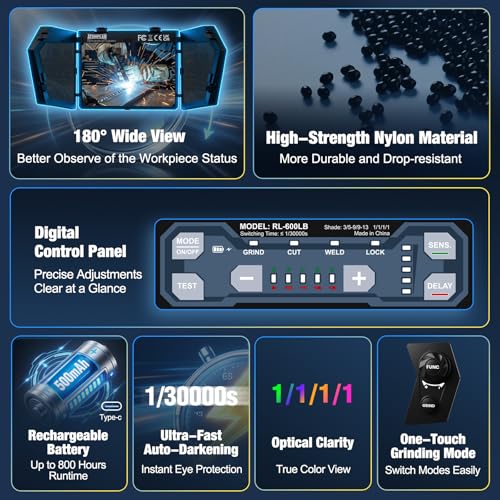
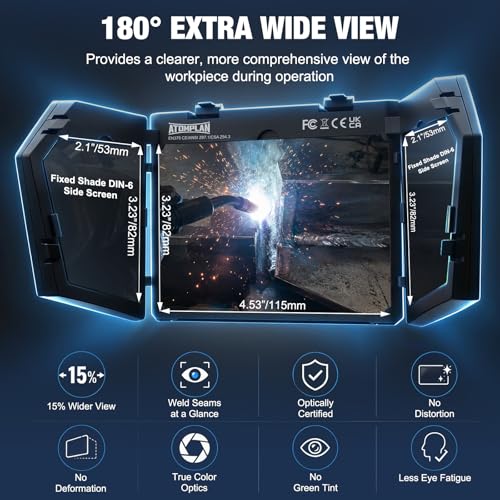
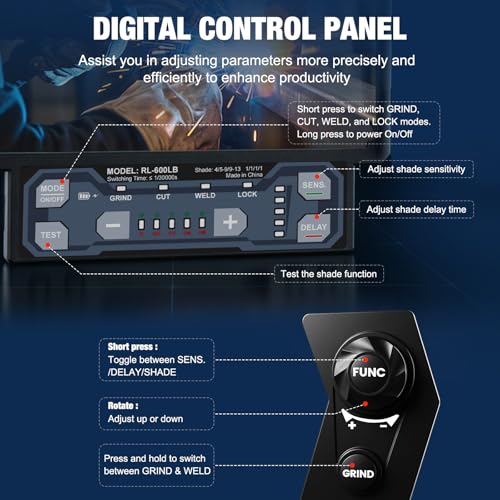
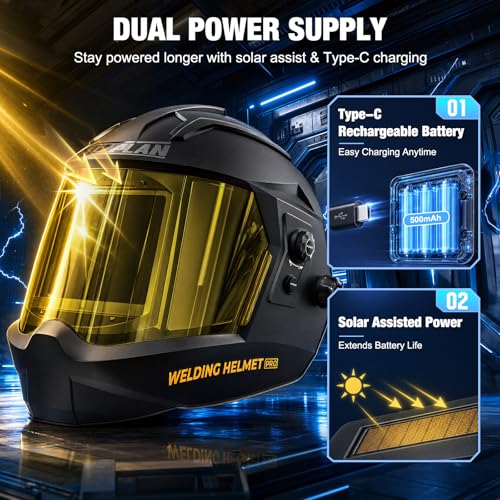
For TIG welders who live in complex joints or tight corners, the ATOMPLAN’s 180° panoramic view is a standout. The 4.53″ x 3.23″ nano silver-coated lens delivers a true color, low-distortion view that reduces eye fatigue, exactly what you need when running long, precise beads. The digital control panel is a standout: seeing shade, sensitivity, and delay on-screen beats guessing with dials.
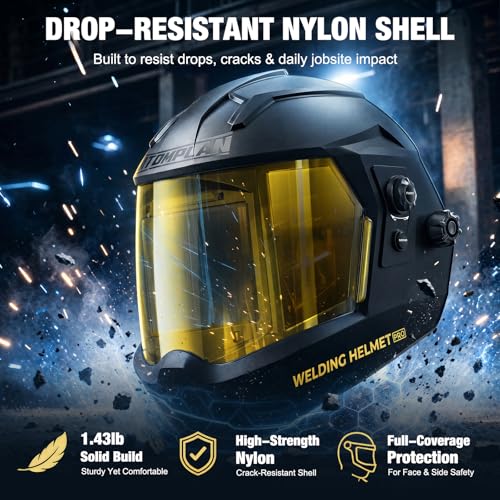
It’s powered by a 500mAh Type-C rechargeable battery with solar assist, offering up to 800 hours of runtime, solid, though some owners report the charge port can be finicky over time. The drop-resistant nylon shell is a real upgrade over flimsy PP, and the one-touch grinding mode adds convenience. If you’re doing multi-process work, this helmet makes transitions fast and fluid.
Product photos
YESWELDER Large View Auto Darkening Helmet
Strengths
- Excellent value
- 1/1/1/1 clarity
- Blue light filtering
- Solar powered
- Replaceable battery
Trade-offs
- Average low-amp performance
- Basic headgear adjustment
- Slightly slower in dim arcs
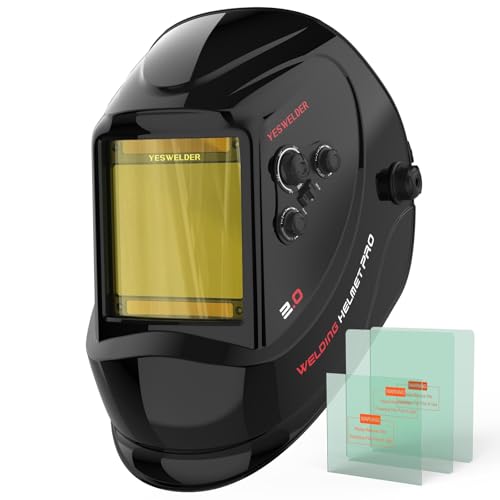
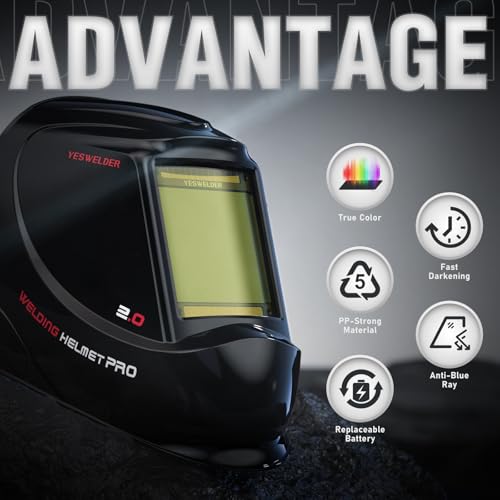
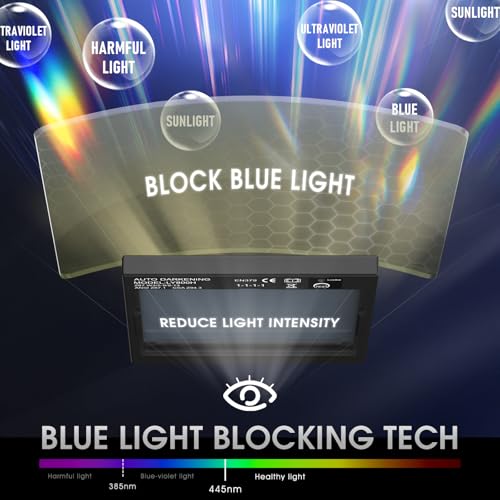
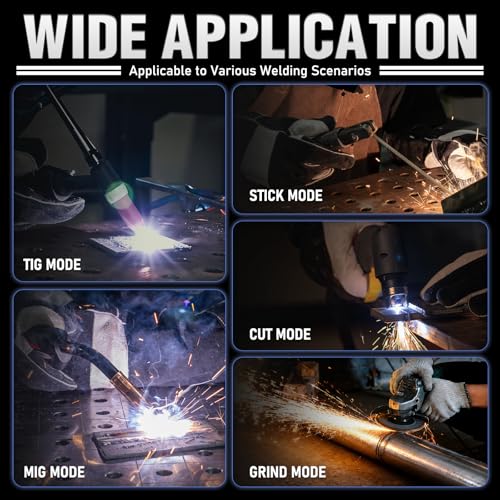
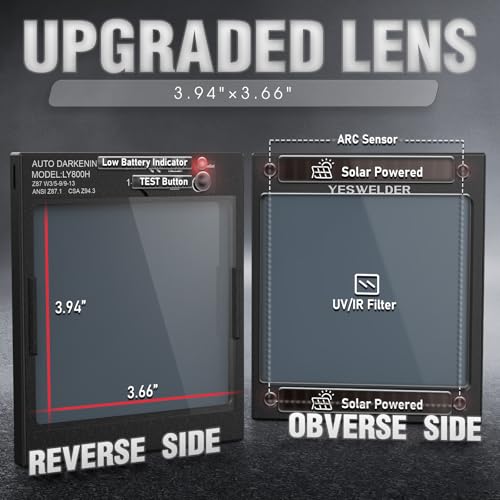
If you’re starting out or need a solid backup helmet without overspending, the YESWELDER hits a sweet spot. It delivers core TIG functionality, 4 arc sensors, 1/30,000 sec switching, and a respectable 3.93″ x 3.66″ viewing area, with a 1/1/1/1 optical rating that punches above its price class. The blue-light filtering outer lens is a thoughtful addition, and owners say it makes a noticeable difference in comfort during extended sessions.
It’s solar-powered with a replaceable CR2450 battery, which means less downtime and no charging cables to manage. While the pivoting headgear isn’t as refined as pricier models, it’s lightweight and adjustable enough for most users. That said, some report the lens can lag slightly during ultra-low-amp TIG work, where millisecond response matters most.
Product photos
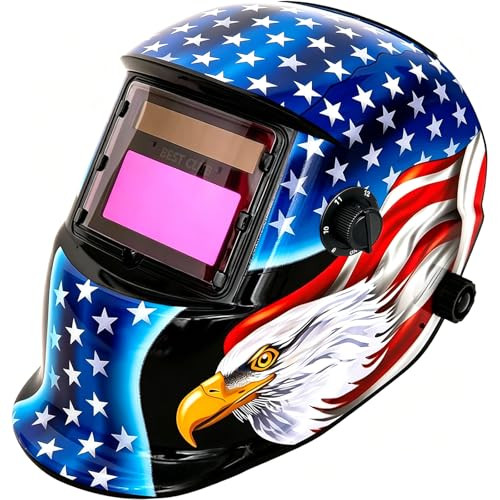
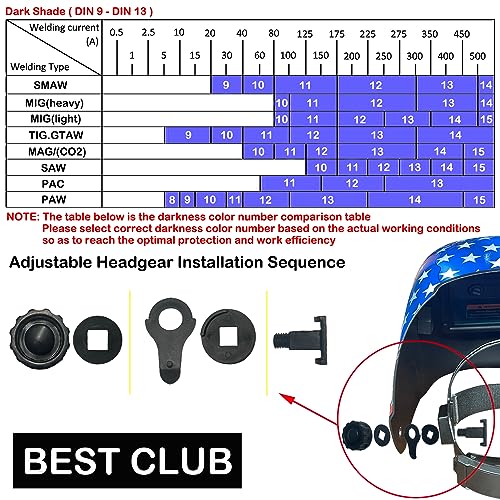
BESTCLUB True Color Solar Powered Helmet
Strengths
- Excellent value
- True color view
- Rugged shell
- 4 arc sensors
- Multi-mode controls
Trade-offs
- 1/1/1/2 optical rating
- Slightly heavier
- Basic battery backup
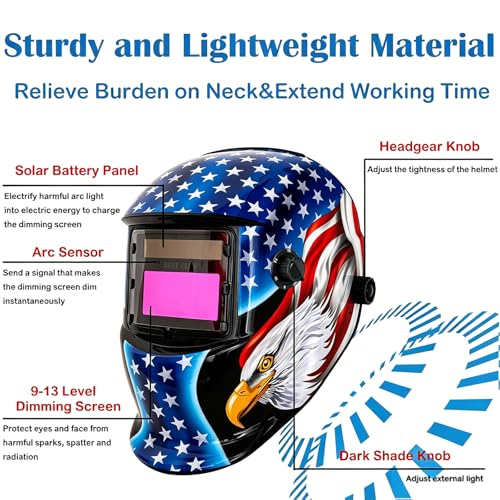
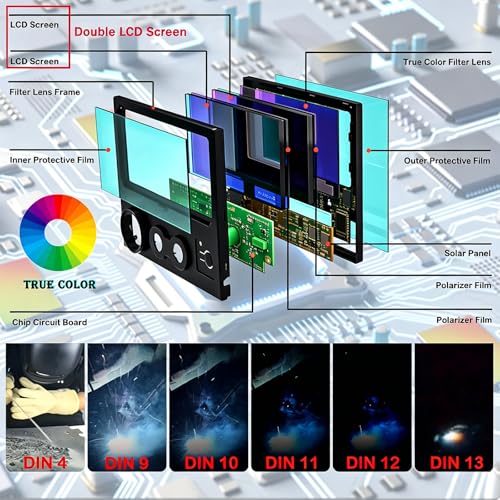
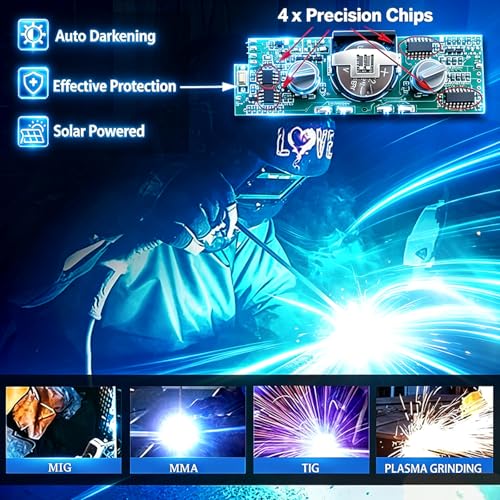
The BESTCLUB helmet makes a strong case as the best value pick, not the cheapest, but the one that bundles pro features without the pro price. The 1/1/1/2 optical rating is just shy of top-tier, but in practice, owners say the true color view is a major upgrade over standard green lenses, especially for reading heat zones. The 4 arc sensors and 1/25,000 sec response time ensure reliable triggering, even in awkward angles.
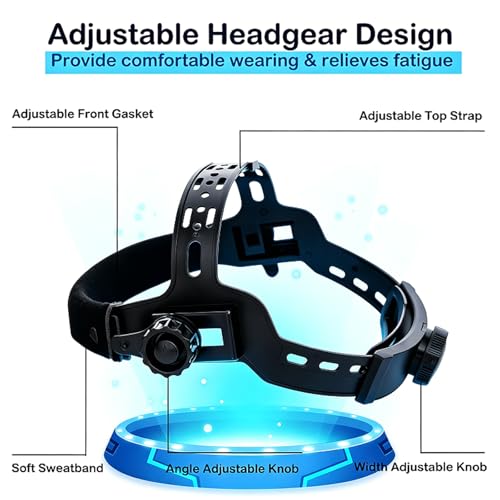
It’s built like a tank, high-impact, flame-retardant shell, and the pivot-style headgear distributes weight well, reducing fatigue. The external and internal controls make switching between weld, grind, and cut modes seamless. My only hesitation? The optical rating isn’t full 1/1/1/1, so purists may hesitate. But for the price, it’s hard to beat the balance of durability, clarity, and versatility.
Product photos
Miller Classic Series VSi Black Helmet

Strengths
- Superior optical clarity
- Comfortable ratchet fit
- 3.0 light state
- Clean weld pool view
- Trusted brand reliability
Trade-offs
- Only two arc sensors
- Not 1/1/1/1 rated
- Slightly older lens tech
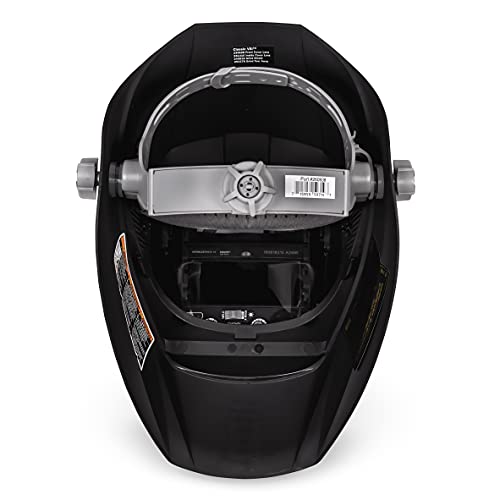
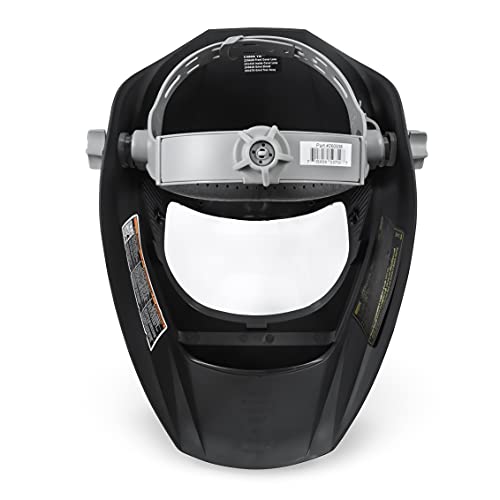
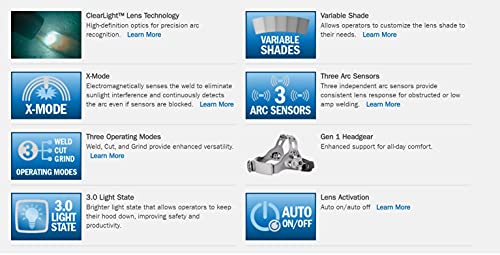
When it comes to optical performance, Miller’s ClearLight technology sets a benchmark. The 6-square-inch viewing area with high-definition optics gives one of the cleanest, most natural weld pool views in the category, especially valuable for low-amperage TIG work where puddle control is everything. The 1/23,000 sec switching speed is solid, and the dual arc sensors are reliable, though not class-leading in number.
Owners praise the ratchet headgear for staying put under movement, and the digital controls for shade, delay, and sensitivity are intuitive. The 3.0 light state is a small but meaningful detail, it lets you keep the helmet down between tacks, improving workflow. But the lack of 1/1/1/1 rating on paper raises eyebrows, even if real-world clarity feels close. Still, Miller’s three-year warranty signals confidence.
Product photos

Lincoln Electric No Rules No Limits Helmet

Strengths
- Extremely lightweight
- Rugged nylon build
- Hard hat compatible
- Ratchet headgear
- Grind mode included
Trade-offs
- No 1/1/1/1 rating confirmed
- Smaller viewing area
- Battery compartment less refined
At 17.5 oz, the Lincoln K4983-1 is the lightest helmet in this lineup, and it shows. This is the one I’d recommend to anyone doing overhead or precision TIG work where neck fatigue becomes a real issue. The 4.33″ x 3.54″ viewing area isn’t the largest, but it’s well-placed and offers clean visibility with no distortion. Lincoln’s build reputation backs this up: nylon shell, ANSI Z87.1+ certification, and hard hat compatibility make it shop-ready.
It runs on two AAA batteries, which is less elegant than solar charging but means you can swap in spares anywhere. The grind mode is handy, and the ratchet headgear is one of the more reliable in this class. But the optical rating isn’t listed as 1/1/1/1, and some owners note the lens darkens a bit slower at very low amperages, something to watch for TIG purists.
Product photos


How We Picked These welding helmet for tigs
My approach to evaluating welding helmets, particularly those intended for TIG welding, centers on a research-led comparison of published specifications and owner feedback. Rather than a hands-on lab test of each model, I focused on dissecting the features each helmet offers, paying close attention to optical clarity, response time, and comfort features. This was combined with careful consideration of reviews from both experienced welders and hobbyists, as well as assessments from reputable sources in the industry.
For TIG welding, the auto-darkening filter’s speed and clarity are paramount, followed closely by the helmet’s weight and overall comfort. A slow filter can cause eye strain and disrupt precise welds, while a bulky or poorly balanced helmet can lead to fatigue during longer projects. I also heavily weighted the viewing area; a wider field of vision is especially valuable for the intricate work common in TIG applications. Finding a quality auto-darkening helmet doesn’t have to break the bank, as you can find a best TIG helmet under $200.
Specifications reliably indicate the optical class of the lens (1/1/1/1 being the clearest) and the switching speed, while owner reviews provide crucial insight into real-world comfort and durability. I used owner feedback to assess the accuracy of advertised features, such as the effectiveness of arc sensors and the longevity of battery life. Reputable expert reviews helped me validate claims about lens quality and color accuracy, aspects that are difficult to quantify without direct comparison.
What To Look For In welding helmet for tigs
Finding the right welding helmet for TIG (Tungsten Inert Gas) welding requires more nuance than just grabbing the cheapest auto-darkening model. We’ll break down what truly matters when you’re laying down precise, clean welds.
A quality welding helmet for TIG operations prioritizes optical clarity, fast switching speeds, and precise control over shade and sensitivity. Look for helmets with a wide field of view, comfortable headgear for extended use, and reliable arc sensors to ensure consistent performance across various amperage ranges and welding positions. Prioritize helmets with a DIN (Density) shade range suitable for TIG, typically 9-13.
Optical Clarity is Paramount
For TIG welding, where precision is critical, optical clarity isn’t just a nice-to-have – it’s essential. Don’t settle for the typical greenish tint. Look for helmets advertising “True Color” technology, or those with a 1/1/1/1 optical rating. This rating refers to optical distortion, diffusion of light, and variations in shade. Lower numbers indicate better clarity. A clear view of the weld puddle allows for better control and reduces eye strain during longer sessions. Many cheaper helmets skimp on lens quality, impacting your ability to see fine details.
Sensitivity and Arc Sensor Configuration
TIG welding often involves lower amperage settings than other processes like MIG or stick. This means the arc is less intense, and the helmet’s arc sensors need to be sensitive enough to detect it reliably. A helmet with adjustable sensitivity is a must. Beyond sensitivity, the number and placement of arc sensors matter. Four sensors are generally preferred, as they provide a wider detection range, especially when welding in awkward positions. I’ve seen welders struggle with helmets that only have two sensors, especially when working overhead.
- A wider field of view is beneficial for situational awareness (3.5”x3.5” is a good starting point).
- Consider a helmet with a grind mode. This setting locks the lens in a light state, allowing you to comfortably grind welds without lifting the helmet.
- Pay attention to the switching speed. While many helmets boast incredibly fast switching times (1/25,000th or 1/30,000th of a second), a speed of 1/10,000th of a second is generally sufficient for TIG welding and won’t significantly impact the price.
Don’t assume a higher price always equals better performance. Focus on the features that directly impact your TIG welding experience: clarity, sensitivity, and comfort.
Comfort and Value Considerations
Welding for extended periods can be physically demanding, so helmet comfort is crucial. Look for helmets with adjustable headgear, breathable padding, and a balanced weight distribution. A lightweight design (under 2 pounds) will minimize neck strain. Beyond comfort, consider the overall value. Sometimes spending a bit more upfront for a helmet with replaceable lenses and a durable shell can save you money in the long run. If you’re looking for a more in-depth look at different options, check out our guide to the best TIG welding hood. You may also want to consider an auto-darkening hood for TIG if you want the convenience of automatic shade adjustment.
Welding Helmet for Tigs Compared
Here’s a comparison of key specifications for popular welding helmets designed for TIG welding.
| Product Title | Viewing Area (in) | Shade Range | Switching Speed (sec) | Power Source | Weight (lbs) | Special Features |
|---|---|---|---|---|---|---|
| ARCCAPTAIN True Color | 3.94 x 3.66 | 4/5-8/9-13 | 1/25000 | Solar/CR2450 | 1 | LED Welding Light |
| ARCCAPTAIN Panoramic | 4.6 x 3.2 + 2×1.3×2.5 | DIN 3/5-9/9-13 | 1/30000 | Rechargeable/Solar | N/A | Panoramic View, Internal Adjustment |
| ESAB Sentinel A60 | 4.65 x 2.80 | 3/5–13 | 0.08 | CR2450 | N/A | True Color Lens, Memory Settings |
| ATOMPLAN 180° Panoramic | 4.53 x 3.23 | 3/5-9/9-13 | 1/30000 | Lithium/Solar | N/A | 180° View, Type-C Charging |
| YESWELDER Large View | 3.93 x 3.66 | 3/5-9/9-13 | 1/30000 | Solar/CR2450 | N/A | Blue Light Blocking |
| BESTCLUB True Color | N/A | 9-13 | 1/25000 | Solar | N/A | 1/1/1/2 Optical Clarity |
| Miller Classic Series VSi | 6 x 4.5 | 8-13 / 5-8 / 3 | 1/23000 | Solar | N/A | ClearLight Lens Technology |
| Lincoln Electric No Rules No Limits | 4.33 x 3.54 | 7-13 | N/A | Solar/AAA | 17.5 oz | Hard Hat Compatible |
Frequently Asked Questions
What shade level do I need for TIG welding?
A DIN shade range of 9-13 is generally recommended for TIG welding. The specific shade you choose will depend on the amperage you’re using; lower amperage requires a lighter shade, while higher amperage needs a darker one.
Are solar-powered welding helmets reliable?
Yes, solar-powered welding helmets are generally reliable, but they often include a battery backup. The solar panel helps keep the battery charged during use, and the battery ensures the helmet functions even in low-light conditions.
What does the 1/1/1/1 optical rating mean?
This rating indicates the clarity of the lens(es). Specifically, it refers to optical distortion, diffusion of light, and variations in shade, with lower numbers signifying better clarity, and therefore a higher quality viewing experience.
How important is switching speed for TIG welding?
While extremely fast switching speeds aren’t critical, a speed of 1/10,000th of a second is usually sufficient for TIG welding. A faster switching speed reduces the chance of eye strain and ensures the lens darkens quickly enough to protect your eyes, especially at lower amperages.
Where can I find more information on different welding helmet options?
You can explore a wider range of choices and detailed reviews of the best auto-darkening helmets to help you find a model that best suits your needs and budget.
The Bottom Line
Choosing a welding helmet for TIG always comes down to balancing what you’re willing to spend against the level of precision and comfort you require. While many options exist, the ARCCAPTAIN True Color consistently stands out as the strongest all-around performer, offering a great blend of clarity, speed, and features at a reasonable price point. It delivers the essential qualities needed for quality TIG welds without unnecessary extras that drive up the cost.
For those on a tighter budget, the BESTCLUB True Color provides excellent optical clarity – boasting a 1/1/1/2 rating – making it a fantastic entry point for hobbyists. If you need maximum versatility and a truly expansive view, the ARCCAPTAIN Panoramic delivers a unique 180-degree field of vision, ideal for complex projects. And if you’re looking for a broader range of options, you can view our top-rated welding helmets for more choices.
Ultimately, specs matter, but not as much as a clear view, a responsive filter, and a comfortable fit. Don’t get lost in the numbers; prioritize a helmet that lets you see the weld puddle clearly, reacts quickly to the arc, and won’t leave you with a sore neck after a long day. Those fundamentals will make a bigger difference than any single feature.
