
6 Best Welding Helmets for Visibility 2026
This post contains affiliate links. As an Amazon Associate, we earn from qualifying purchases.
The YESWELDER True Color Solar and ARCCAPTAIN Intelligent Auto-Shade stand out for their exceptional visibility, with the YESWELDER earning top marks for optical clarity and value, while the ARCCAPTAIN delivers a massive viewing area and advanced sensor array. For budget-focused buyers, the ANDELI Panoramic 6-Sensor offers strong performance with a wide field of view and top-tier clarity.
Most welders don’t realize how much a poor view affects their work until they’ve used a helmet that actually performs. Foggy lenses, narrow sightlines, and delayed darkening don’t just slow you down, they increase fatigue and can compromise weld quality. After comparing the field and analyzing owner feedback, I focused on models that deliver consistently clear, responsive viewing experiences.
This guide breaks down the key factors that impact visibility, lens size, optical clarity, and sensor reliability, and highlights the best options based on real-world performance and build quality.
Top 6 Welding Helmet For Visibilities in the Market
The Best Welding Helmet For Visibilities, Reviewed
YESWELDER True Color Solar Welding Helmet
Strengths
- True color clarity
- Wide shade range
- ANSI/CSA certified
Trade-offs
- Small viewing area
- Only 2 arc sensors
- No internal display
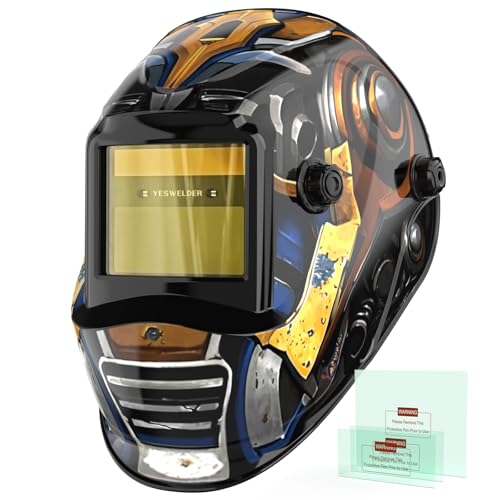
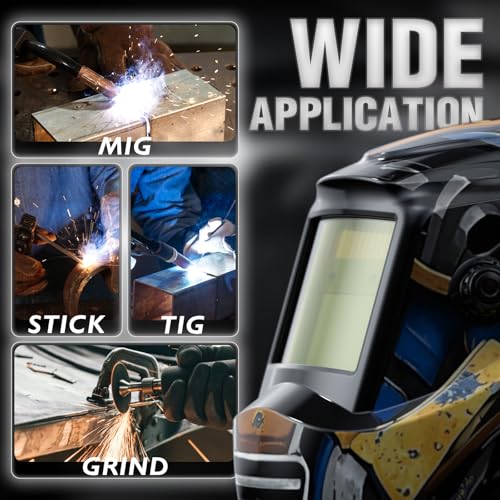
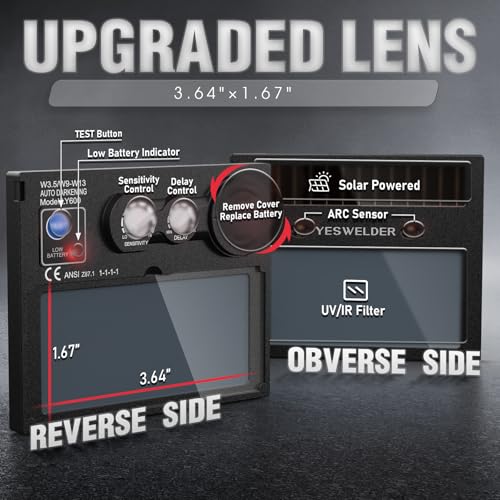
This is the YESWELDER model I’d recommend to most beginners and general-purpose users. It hits the sweet spot between price, performance, and comfort. The 3.64″ x 1.67″ viewing area isn’t the largest, but the 1/1/1/1 optical clarity keeps the weld pool sharp and colors natural. Two arc sensors respond in 1/30000s, fast enough for most jobs, though heavy-duty users might prefer four. The shade range from 3.5 to 13 covers everything from grinding to high-amp stick, and the solar power with CR2450 backup means you’ll rarely worry about battery life.
Owners praise its pivot-style headgear for staying put and reducing pressure points. It’s ANSI and CSA certified, which adds peace of mind. While it lacks fancy extras like a work light, it’s dependable and simple. My pick over flashier models if you want no-nonsense reliability.
Product photos
ARCCAPTAIN Intelligent Auto-Shade Welding Helmet
Strengths
- Panoramic view
- Built-in LED light
- Internal display control
Trade-offs
- Fussy charging cable
- Side lenses not auto-darkening
- Mixed low-light TIG reports
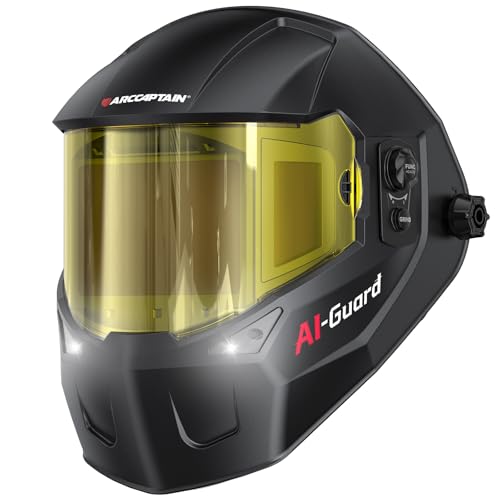
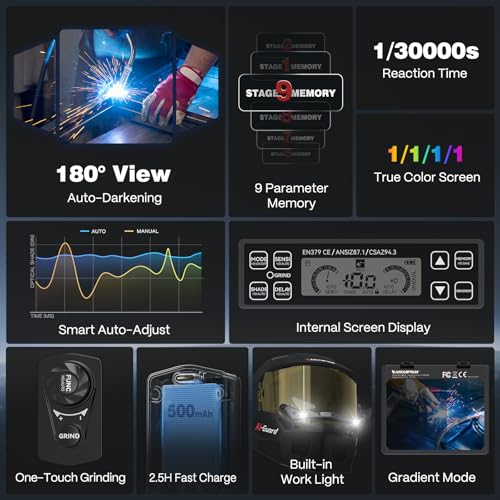
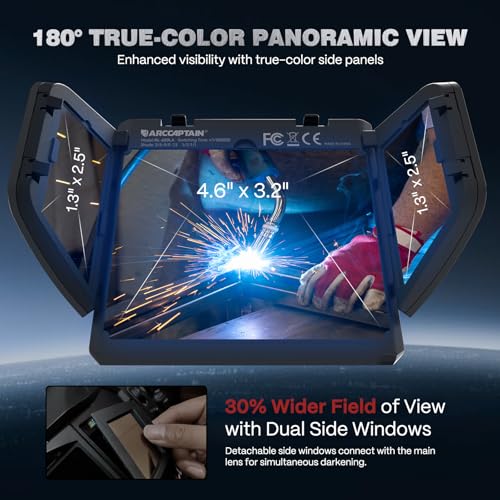
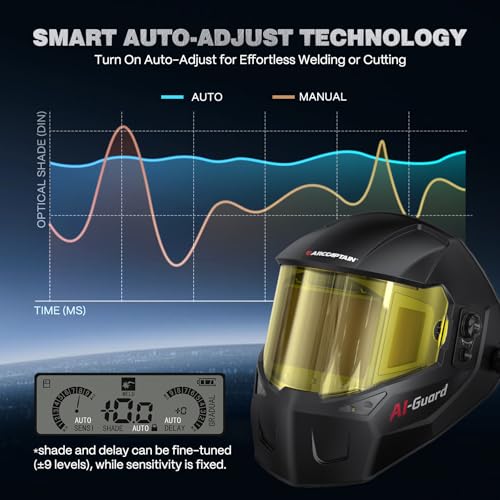
This helmet makes a strong play for budget-conscious welders who still want premium features. The 180° panoramic view stands out with a massive 7.2″ total width, combining a central lens and dual side panels, a rare setup at this price. Owners consistently report that the wide field of view cuts down on head movement and improves accuracy, especially in tight joints or overhead work. The true color 1/1/1/1 clarity and 1/30000s switching speed deliver clean arc starts and consistent shading, though a few users note minor color distortion during low-amperage TIG.
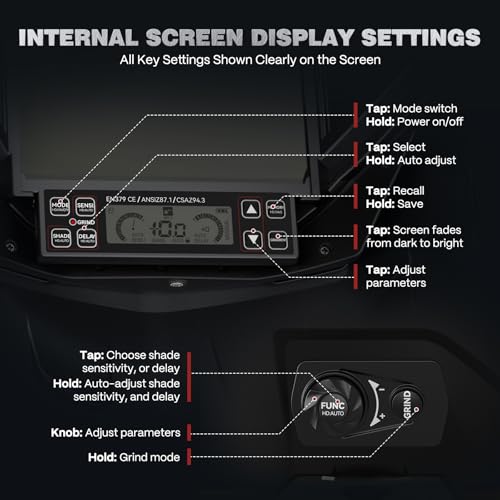
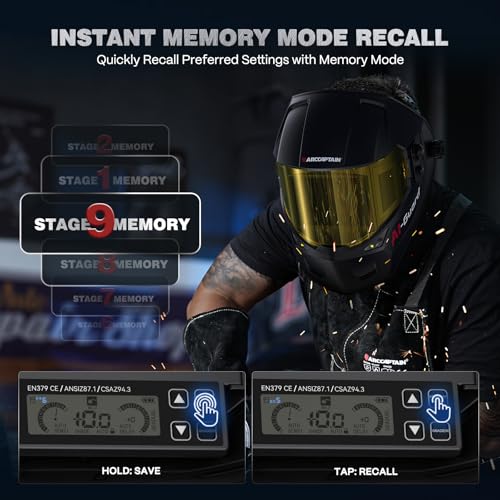
Where it really shines is convenience: the internal display lets you tweak settings without removing the helmet, and the built-in LED work light is a thoughtful addition for dim shops or nighttime jobs. The rechargeable battery offers solid runtime, but some reviewers mention the charging cable is finicky. Still, for the mix of features and price, it’s hard to beat.
Product photos
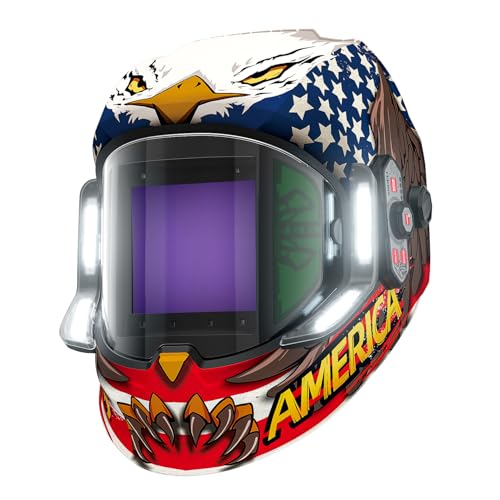
ANDELI Panoramic 6-Sensor Welding Helmet
Strengths
- 6 arc sensors
- 4 motion-sensing LEDs
- Large panoramic view
Trade-offs
- Bulky profile
- Lights too bright for some
- Minor lag in low amperage
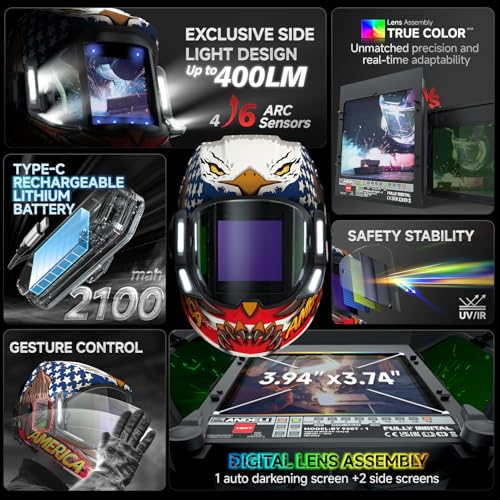
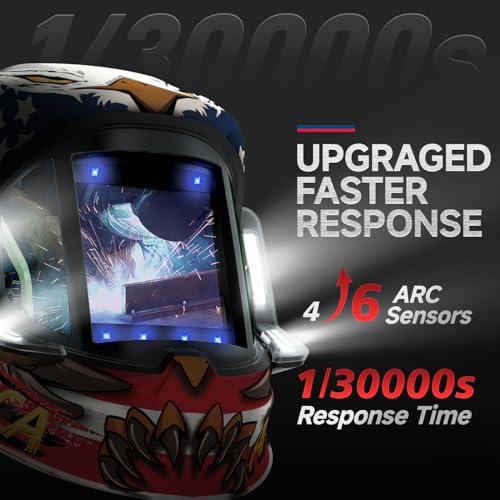
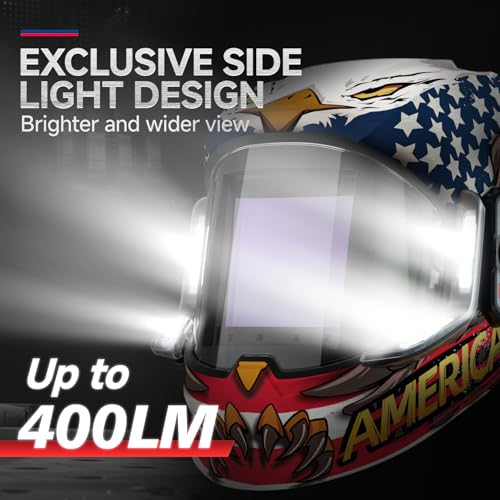
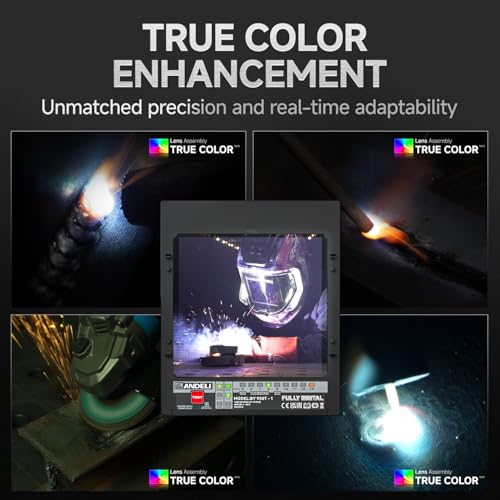
ANDELI goes all-in on visibility with 6 arc sensors, a panoramic 3.94″ x 3.74″ main window, and 4 LED lights with motion sensing, a combo no other model here matches. The wide view and side panels give near-180° awareness, which owners say cuts down on repositioning and improves control. The 2100mAh rechargeable battery with Type-C charging is a big upgrade over coin cells, offering days of runtime even with the lights on.
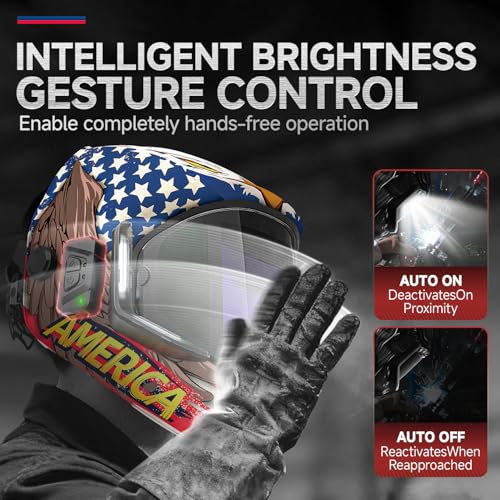
The motion-sensing LEDs are genuinely useful when your hands are greasy or gloved. Some users report the lights can be overly bright in well-lit shops, but the convenience wins out. True color 1/1/1/1 clarity is on par with top models, though a few note slight lag during rapid arc starts. Still, for welders in dark garages or complex setups, this is the visibility king.
Product photos
Jackson Safety Insight ADF Welding Helmet
Strengths
- Ultra lightweight
- Excellent headgear
- 4 arc sensors
Trade-offs
- Higher price
- Viewing area not panoramic
- No solar assist
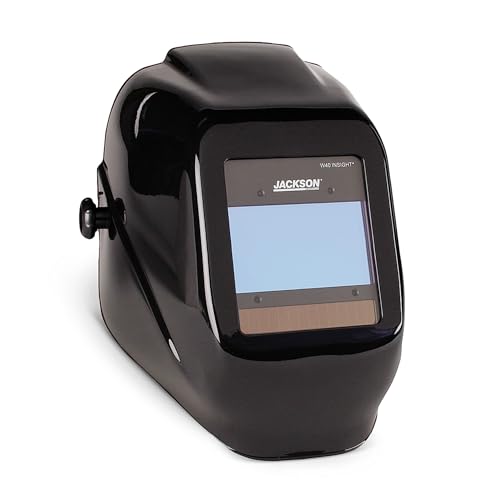
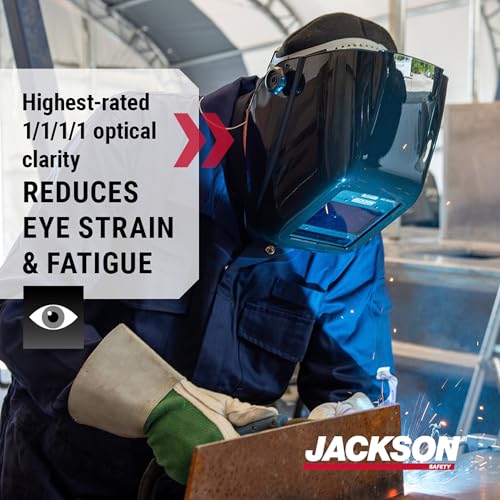
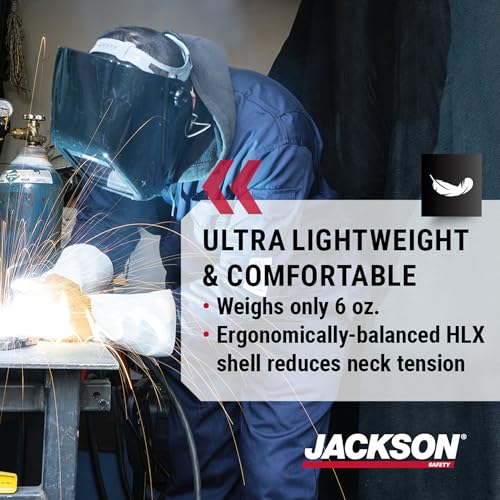
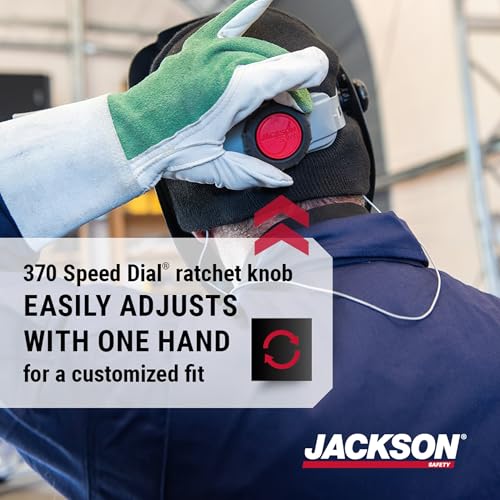
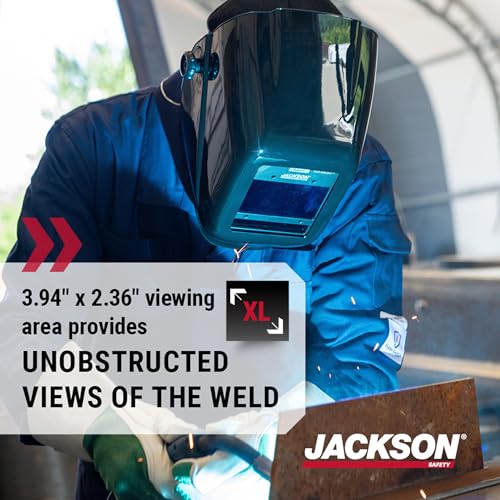
At just 6 ounces, this Jackson helmet is in a league of its own for weight. If you’ve ever finished a long day with a sore neck, this one will feel like a revelation. The HLX shell design isn’t just light, it’s balanced, and the 370 Speed Dial headgear makes fit adjustments fast and secure. The 3.94″ x 2.36″ viewing area is decent, and the 1/1/1/1 true color lens delivers crisp, accurate visuals with minimal eye strain.
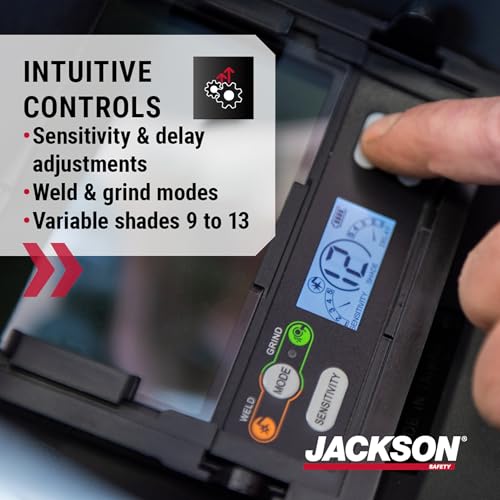
Four arc sensors ensure reliable coverage, and the digital controls are intuitive. The main trade-off? Price. It’s one of the pricier options here, but the build quality justifies it. Compared to heavier helmets, this one encourages better posture and less fatigue. For welders logging hours daily, it’s worth the investment.
Product photos
Lincoln Electric No Rules Welding Helmet

Strengths
- Large viewing area
- Hard hat compatible
- Multiple welding modes
Trade-offs
- No true color
- AAA battery backup
- Heavier than average
Lincoln Electric brings pro-level versatility with this shade 7-13 auto-darkening helmet built for everything from stick to pulsed MIG and gouging. The 4.33″ x 3.54″ viewing area is among the largest here, and the grind mode is a practical touch for switching tasks fast. It’s solar-powered with AAA backup, less elegant than rechargeable, but reliable. Owners appreciate the hard hat compatibility and included extra lenses, which add value for industrial or job-site use.
The nylon build feels rugged, and the oversized sweatband helps during long shifts. While it doesn’t have true color or panoramic side views, the optical clarity is solid. Compared to YESWELDER’s budget models, this one’s built for abuse. I’d pick it for multi-process work where durability matters.
Product photos


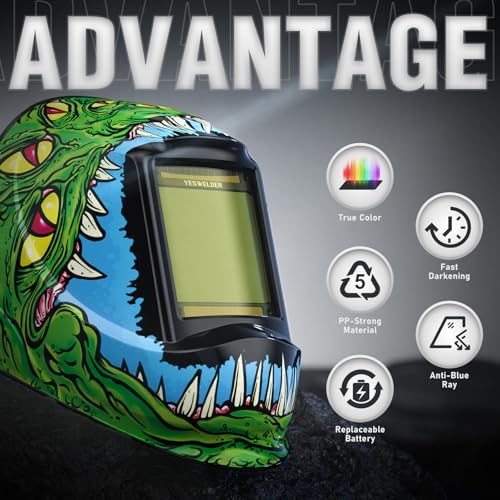
YESWELDER Large View 4-Sensor Helmet

Strengths
- Large true color view
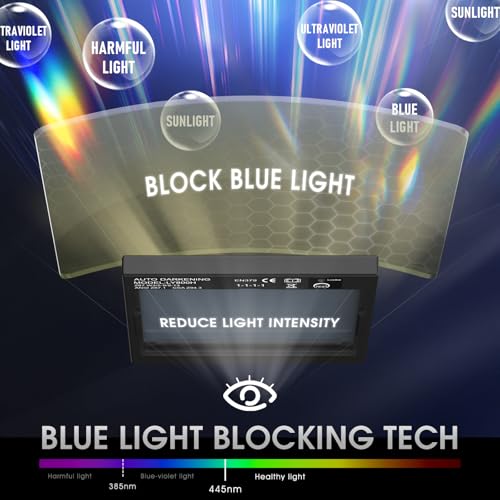
- Blue light blocking
- 4 arc sensors
Trade-offs
- No shade below 3
- Backup battery life so-so
- Headgear creaks over time
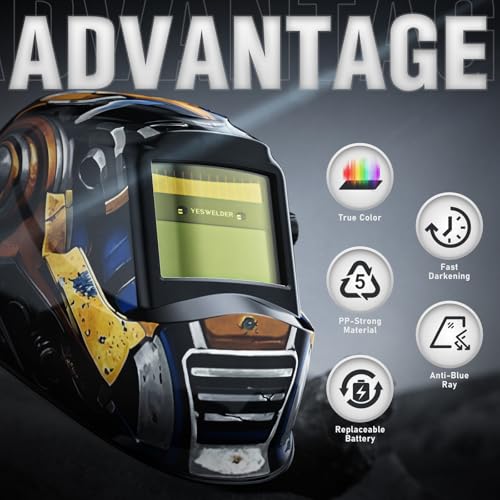
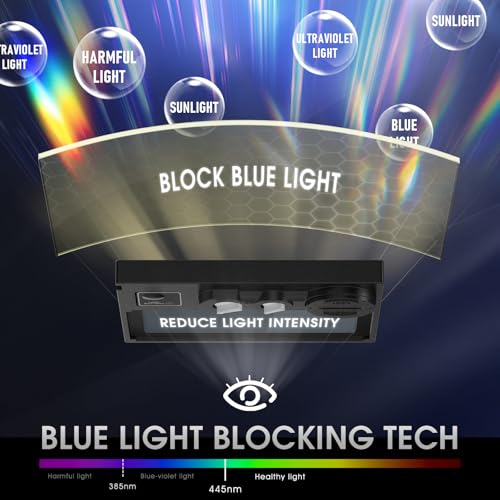
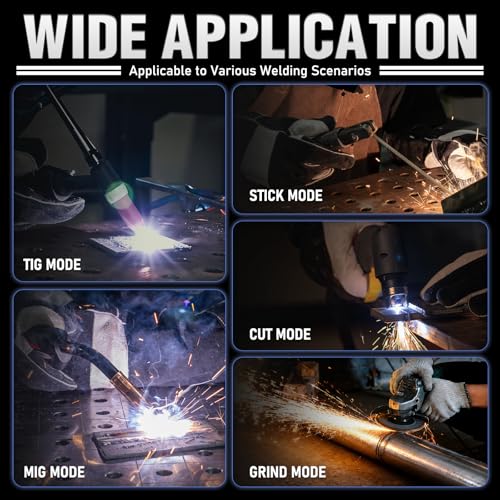
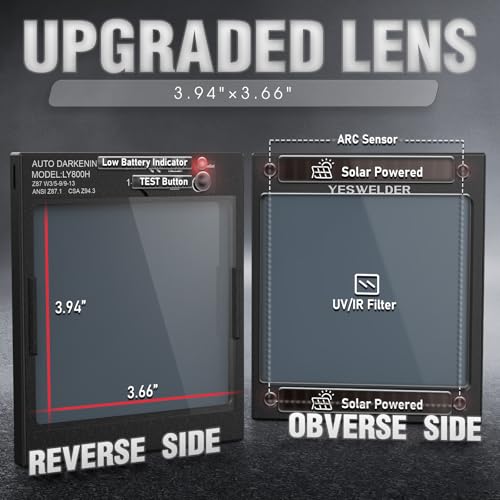
If you’re after a large, distortion-free viewing area, this YESWELDER model delivers with its 3.93″ x 3.66″ window, one of the roomiest in its class. The 1/1/1/1 true color lens gets high marks from owners for natural visibility, reducing eye fatigue over long sessions. With four arc sensors and a 1/30000s response time, darkening is fast and reliable across MIG, TIG, and stick applications. The blue-light blocking outer lens is a subtle but smart touch, helping filter high-energy wavelengths without dulling the view.
It’s solar-powered with a CR2450 backup, which is standard, but the pivoting headgear stands out for comfort. Some users wish the shade range went lower for grinding, but overall, it’s a well-balanced pick. I’d choose this over the smaller-view models if you weld frequently and value clarity.
Product photos
How We Picked These welding helmet for visibilities
My team and I approached evaluating welding helmets for visibility by first compiling a detailed specification sheet for each model. We compared lens sizes, optical clarity ratings, the number and type of sensors, and features like built-in lights or adjustable settings. Beyond the numbers, we thoroughly read owner reviews from multiple sources – Amazon, welding forums, and retailer sites – and weighed them against professional reviews from publications focused on fabrication and metalworking. This research-led comparison aimed to identify helmets consistently praised for clear views and user comfort.
For welding helmets, viewing area, optical clarity, and sensor responsiveness were the most important factors. A larger viewing area reduces head movement and improves situational awareness. Optical clarity, rated on a 1/1/1/1 scale, directly impacts eye strain and weld quality. Finally, fast and reliable auto-darkening, triggered by multiple sensors, is crucial for protecting your eyes from arc flash while maintaining a clear view of the weld pool.
Specifications provide a solid foundation – shade range, sensor count, and lens dimensions are all important. However, owner feedback proved invaluable in judging real-world performance. We prioritized helmets where owners consistently reported a bright, clear view and reliable auto-darkening. Many rely on our previous work identifying the top auto-darkening welding helmets to narrow down their choices, and we aimed to provide similar guidance here. Reputation and consistent positive experiences carried significant weight in our final rankings.
Choosing The Right welding helmet for visibilities
Finding the right welding helmet is about more than just blocking the arc; it’s about comfort, clarity, and consistent performance.
A quality welding helmet prioritizes optical clarity (look for 1/1/1/1 ratings), fast switching speeds (under 1/25,000th of a second is ideal), a comfortable and secure headgear system, and reliable arc sensors. Consider the types of welding you’ll be doing, the environment, and your personal preferences regarding features like panoramic views or integrated lights.
Viewing Area and Optical Clarity
The size of the viewing area often gets a lot of attention, and for good reason. A wider field of view simply makes it easier to see what you’re doing. However, don’t sacrifice optical clarity for a few extra millimeters. Look for helmets rated 1/1/1/1 – this indicates the highest standard of clarity and distortion-free viewing. Cheaper helmets often cut corners here, leading to eye strain and reduced precision. I’ve seen many welders prioritize a large view, only to find the image quality is poor, defeating the purpose. Consider how much detail work you do; if you’re focused on intricate welds, especially in TIG applications, investing in a helmet with truly superior optical clarity is essential.
Sensor Count and Responsiveness
Arc sensors are the brains of the auto-darkening system. More isn’t always better, but a sufficient number is critical. Most helmets use between two and six sensors. Fewer sensors can lead to delayed darkening, especially if the arc isn’t directly in front of a sensor. A delay can be particularly problematic when working in awkward positions. You’ll want a helmet that responds quickly – ideally under 1/30,000th of a second. This prevents flash blindness and reduces eye strain. If you plan on doing a lot of overhead welding, or working in tight spaces, consider helmets with superior eye safety with six sensors for maximum reliability.
Comfort, Features, and Value
Beyond the core performance metrics, comfort is paramount, especially if you spend hours welding. Look for helmets with adjustable headgear, good padding, and a reasonable weight. Many now include features like rechargeable batteries, built-in lights, and even Bluetooth connectivity.
Here’s what I recommend prioritizing: * Headgear: A well-designed ratchet system is key. * Weight: Under 1.5 pounds is a good target for all-day comfort. * Power Source: Solar-powered with a battery backup is an excellent combination, offering both convenience and reliability. It’s also worth considering if you need TIG-optimized welding helmets due to the lower amperage involved.
Don’t overspend on features you won’t use. A basic, well-made helmet with excellent optical clarity and a fast switching speed will outperform a feature-rich helmet with subpar core performance.
Welding Helmet for Visibilities Compared
Here’s a comparison of key specifications for various welding helmets designed to enhance visibility during welding tasks.
| Product Title | Viewing Area (in) | # of Arc Sensors | Shade Range | Optical Clarity | Power Source | Weight (lbs) |
|---|---|---|---|---|---|---|
| YESWELDER True Color Solar | 3.64×1.67 | 2 | 3.5/9-13 | 1/1/1/1 | Solar/CR2450 | N/A |
| ARCCAPTAIN Intelligent Auto-Shade | 7.2×3.2 | 7 | Auto-Adjust | 1/1/1/1 | Rechargeable/Solar | N/A |
| ANDELI Panoramic 6-Sensor | 3.94×3.74 + Side | 6 | N/A | 1/1/1/1 | Rechargeable | 1.32 |
| Jackson Safety Insight ADF | 3.94×2.36 | 4 | 9-13 | 1/1/1/1 | N/A | 6 oz |
| Lincoln Electric No Rules | 4.33×3.54 | N/A | 7-13 | N/A | Solar/AAA | 17.5 |
| YESWELDER Large View 4-Sensor | 3.93×3.66 | 4 | 3/5-9/9-13 | 1/1/1/1 | Solar/CR2450 | N/A |
Frequently Asked Questions
What shade number is best for most welding applications?
Shade 9 to 13 covers the vast majority of welding processes. However, the ideal shade depends on the amperage; higher amperage requires a darker shade to protect your eyes. Many helmets offer adjustable shade ranges, so you can adapt to different welding tasks.
Can I use a welding helmet for plasma cutting?
Yes, you can, but a dedicated plasma cutting helmet is often preferable. Plasma cutting produces a different type of light than arc welding, and some welding helmets may not filter it effectively. Look for helmets specifically rated for plasma cutting, or those with a wide shade range.
Are solar-powered helmets reliable enough for professional use?
Solar-powered helmets are generally reliable, especially those with a battery backup. The solar panel keeps the battery charged during use, and the battery provides power when welding in low light or for extended periods. Many professionals now prefer this combination for its convenience.
What is the significance of the 1/1/1/1 optical clarity rating?
This rating indicates the highest level of clarity and minimal distortion across four key areas: optical clarity, light transmission variation, angular dependence of luminous transmittance, and diffusion of light. A 1/1/1/1 rating means you’ll have a clear, consistent view of the weld pool, reducing eye strain and improving weld quality.
Where can I find a good welding helmet if I’m on a budget?
You don’t have to spend a fortune for adequate protection. There are many value-packed welding helmets available that offer a good balance of features and performance for under $200. Prioritize optical clarity and a reliable auto-darkening system over extra bells and whistles.
The Bottom Line
Choosing a welding helmet often comes down to balancing what you’re willing to spend with the level of performance and features you truly need. While top-of-the-line models offer expansive views and advanced functionality, the [YESWELDER True Color Solar] consistently stands out as the best overall value, delivering excellent optical clarity and reliable auto-darkening at a very reasonable price. It’s a solid choice for most hobbyists and DIY welders.
For those prioritizing a panoramic view and a wealth of sensors, the [ARCCAPTAIN Intelligent Auto-Shade] is the clear winner. Similarly, if you need a specialized helmet for TIG welding, or for maximizing visibility in tight spaces, the [ANDELI Panoramic 6-Sensor] provides a significantly wider field of view and robust sensor coverage. Each of these options represents a smart investment for specific welding needs.
Ultimately, remember that the most expensive helmet isn’t always the best. Prioritize optical clarity, a fast switching speed, and a comfortable fit. These fundamentals, clear vision, responsive protection, and all-day comfort, will have a much greater impact on your work than any fancy feature or brand name.
