
8 Best Vertical Air Compressors of 2026
This post contains affiliate links. As an Amazon Associate, we earn from qualifying purchases.
The DEWALT 60 Gallon stands out as the best overall vertical air compressor for its powerful output and reliable oil-lubricated pump, while the DEWALT 25 Gallon is a smart budget pick that doesn’t sacrifice core durability. For those prioritizing quiet operation, the California Air Tools 10020C 10 Gallon offers surprising performance for light to mid-duty tasks.
Most people struggle to find a vertical air compressor that balances real-world performance with space-saving design, often ending up with an underpowered unit or an overpriced model loaded with unnecessary features. I’ve researched the field extensively, focusing on specs that actually matter, like CFM at 90 PSI, pump longevity, and tank efficiency, while weighing owner feedback on noise and reliability.
This guide cuts through the marketing hype, highlighting models that deliver consistent airflow, durable construction, and smart design based on how most of us use compressors in home shops and garages.
Top 8 Vertical Air Compressors in the Market

The Best Vertical Air Compressors, Reviewed
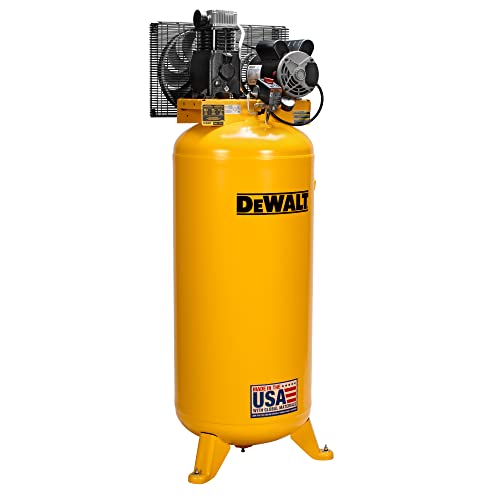
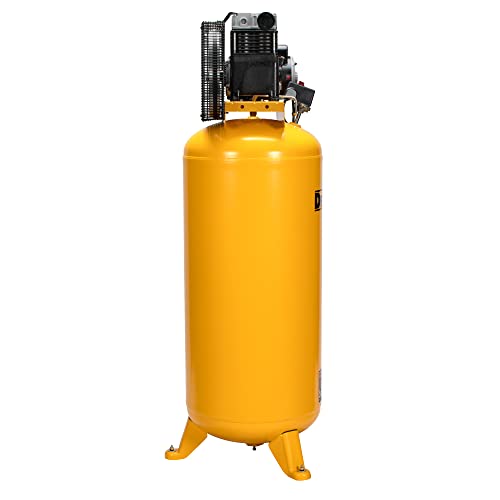
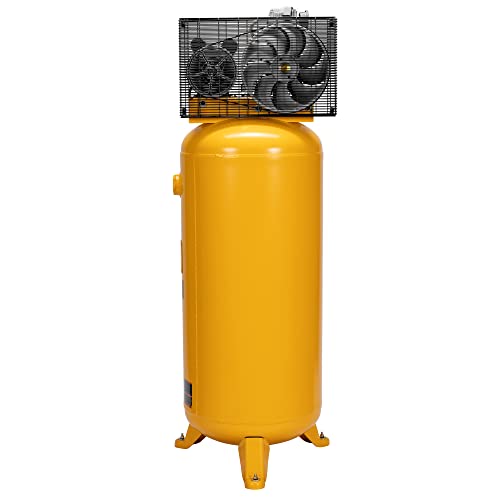
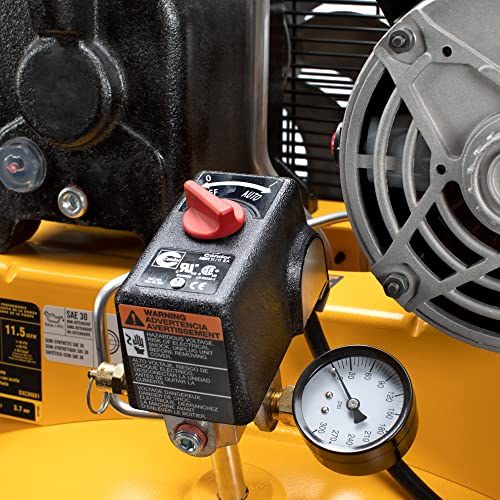
DEWALT 60 Gallon Vertical Air Compressor

Strengths
- 3.7 HP motor
- Oil-lubricated pump
- 11.5 SCFM at 90 PSI
- 60-gallon vertical tank
- 155 PSI max pressure
Trade-offs
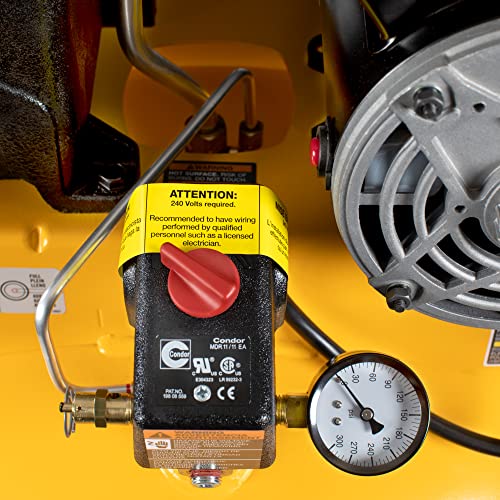
- 240V required
- Heavy and stationary
- Higher noise output
This DEWALT 60-gallon compressor is built like a shop anchor, and on paper, it’s exactly what you’d want for high-demand applications. The 3.7 HP motor, oil-lubricated pump, and 155 PSI max pressure deliver serious staying power, and owners consistently report it keeps up with impact wrenches, sanders, and spray guns without breaking a sweat. The 11.5 SCFM at 90 PSI is where it really separates from smaller units, that kind of airflow supports longer, uninterrupted work sessions.
It’s not subtle in size or power requirements, this is a 240V unit meant to live in a garage or shop. But if you’re running multiple tools or doing production work, the vertical design still helps it fit in tighter spaces than a horizontal tank. Compared to the Klutch 60-gallon model, this one trades a bit of max PSI but gains better-known build quality and DEWALT’s reputation for durability. For heavy users, that reliability matters.
Product photos
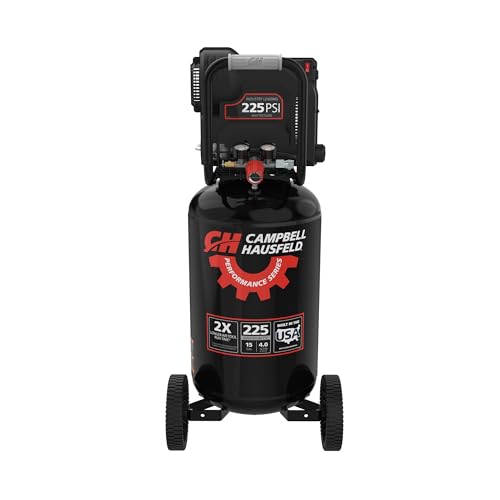
Campbell Hausfeld 15 Gallon Vertical Compressor
Strengths
- Budget-friendly
- Oil-free pump
- 225 PSI max pressure
- 15-gallon vertical tank
- 120V compatible
Trade-offs
- 15-gallon tank
- 4.0 CFM at 90 PSI
- Not for continuous use
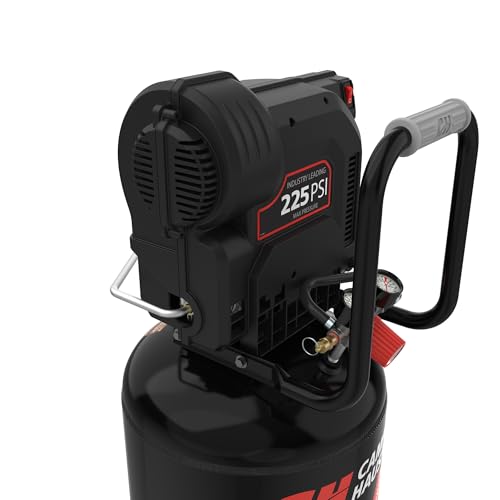
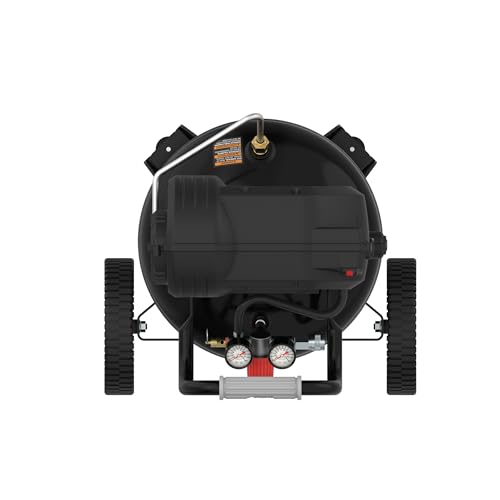
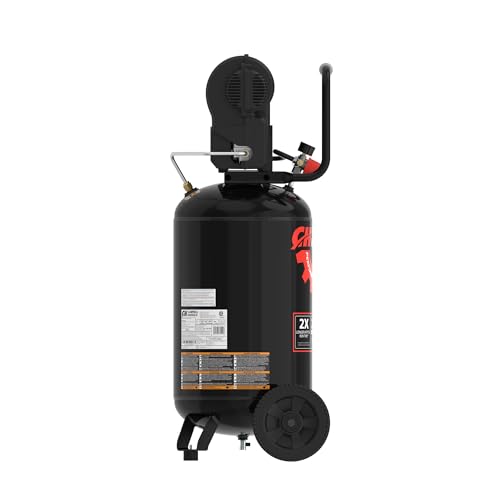
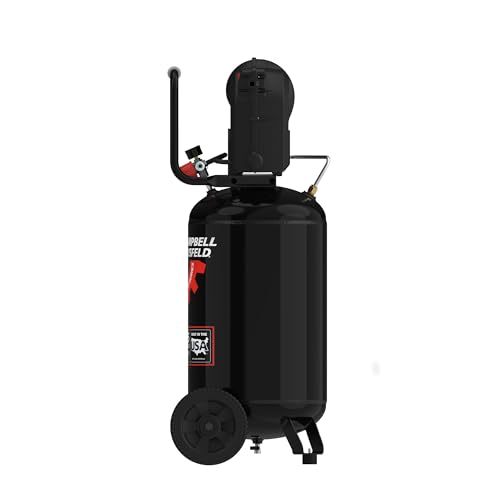
This Campbell Hausfeld is the most budget-friendly option here, and it still packs a punch with 4.0 CFM at 90 PSI and a surprising 225 PSI max pressure. The oil-free pump makes it truly maintenance-free, and owners appreciate the cold-weather starting, a real win for unheated garages. The vertical design with wheels and handle makes it easy to store and move, and the 120V plug-in means no special circuit needed.
It won’t power a spray gun for long, but for inflating tires, running brad nailers, or occasional framing, it’s more than capable. Compared to the Goodyear 26-gallon, it’s smaller but more affordable and still impressively quiet. For first-time buyers or those on a tight budget, this is the smart entry point.
Product photos

Klutch 60-Gallon Single-Stage Vertical Compressor

Strengths
- 3.7 HP motor
- Cast iron pump
- 60-gallon tank
- Belt-driven system
- Manual tank drain
Trade-offs
- 9.3 CFM at 90 PSI
- 135 PSI max pressure
- Less refined than premium brands
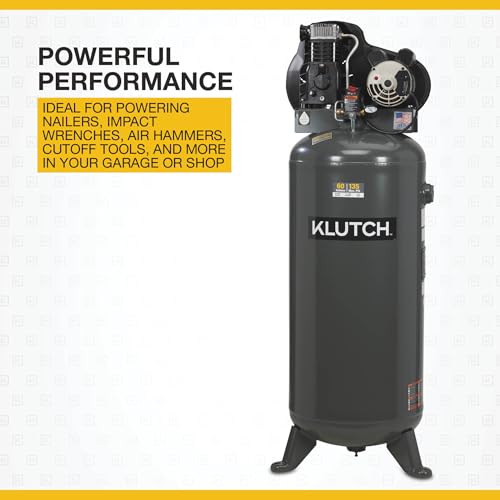
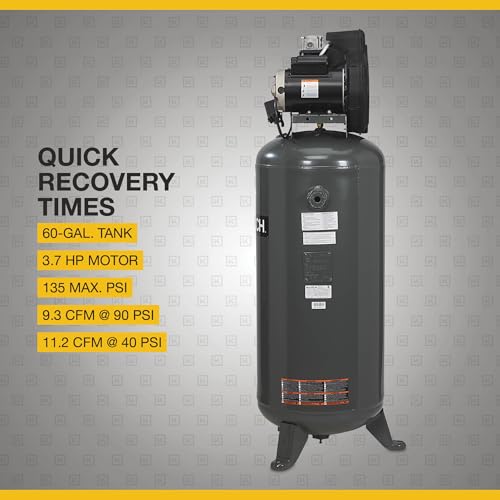
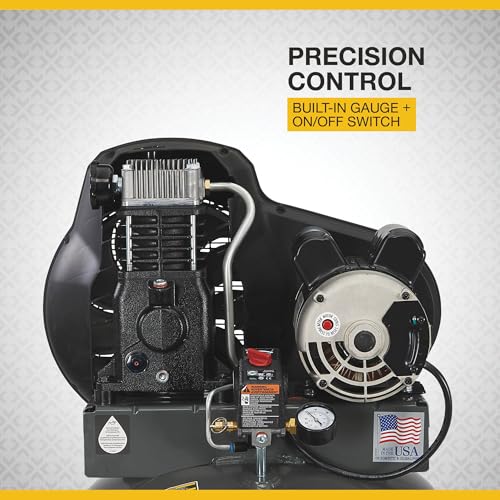
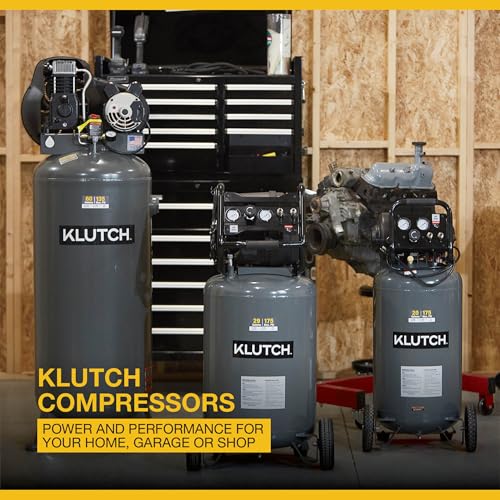
The Klutch 60-gallon is built for punishment. With a 3.7 HP motor, cast iron pump, and 60-gallon vertical tank, it’s clearly aimed at users who need industrial-grade output without the industrial price tag. The 9.3 CFM at 90 PSI isn’t as high as the DEWALT 60-gallon, but it’s enough for most shop tools, and the belt-driven system ensures quick recovery. Owners report solid durability, especially given the price.
It’s not flashy, no digital gauges or noise-dampening tech, but it delivers raw, dependable power. Compared to the DEWALT, it trades brand recognition and slightly lower SCFM for a more aggressive value proposition. If you’re setting up a shop and need maximum air for the dollar, this one deserves serious consideration.
Product photos

DEWALT 25 Gallon Belt Drive Compressor

Strengths
- Belt drive system
- Oil-lubed pump
- 200 PSI max pressure
- Pneumatic wheels
- 2 HP motor
Trade-offs
- 25-gallon tank
- 240V not required but heavier
- Higher maintenance than oil-free
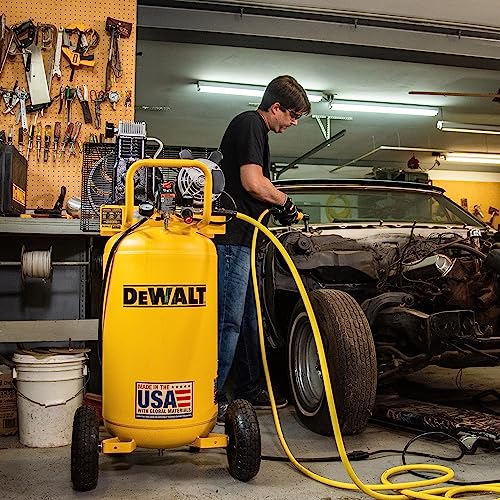
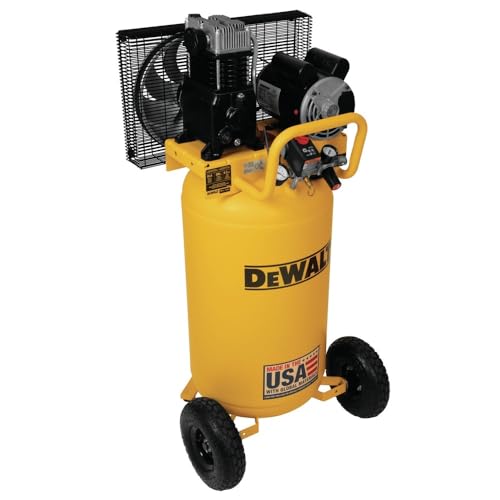
Belt drive systems are rare in this price range, and DEWALT including one here is a big win. The belt-driven 2 HP motor runs cooler and smoother than direct-drive units, reducing vibration and extending pump life, a detail experienced users will appreciate. The oil-lubricated pump adds to that longevity, and owners report fewer heat-related shutdowns during back-to-back use. At 200 PSI max, it’s built for tools that need high pressure, like staplers or precision blowers.
It’s also surprisingly mobile thanks to 10-inch pneumatic wheels, more rugged than most in this class. Compared to the Campbell Hausfeld budget model, this one trades cost for durability and smoother operation. If you’re using your compressor weekly and want it to last a decade, the belt drive and oil lube make this a smarter long-term investment.
Product photos
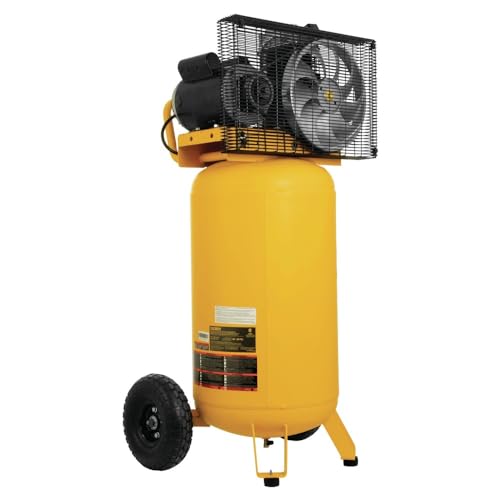
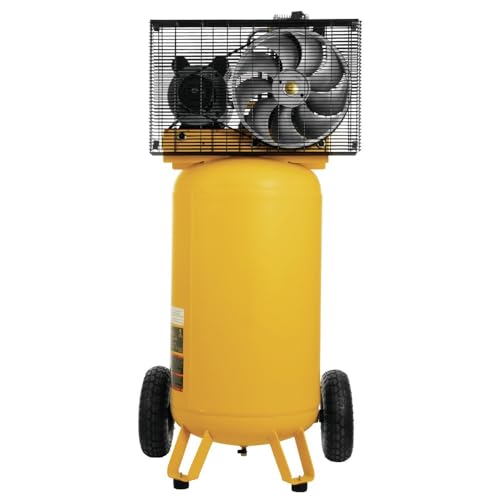
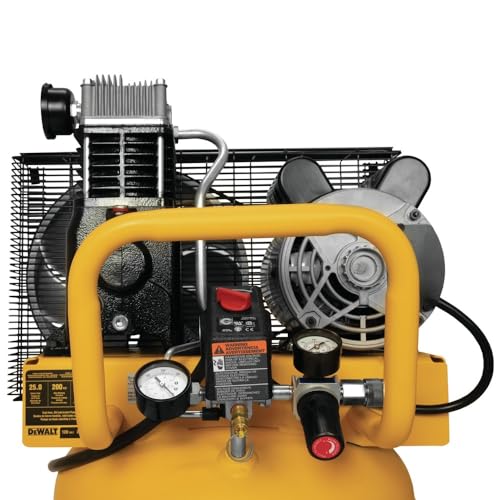
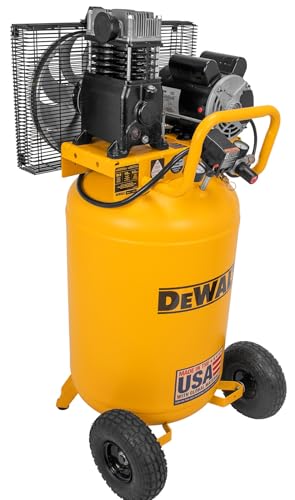
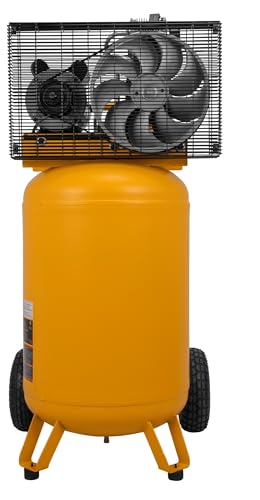
DEWALT 30 Gallon Portable Air Compressor
Strengths
- 6.2 SCFM at 90 PSI
- Oil-lubed pump
- High-flow regulator
- Pneumatic wheels
- 30-gallon tank
Trade-offs
- 175 PSI max pressure
- Not dual-coupler equipped
- Heavier than some portables
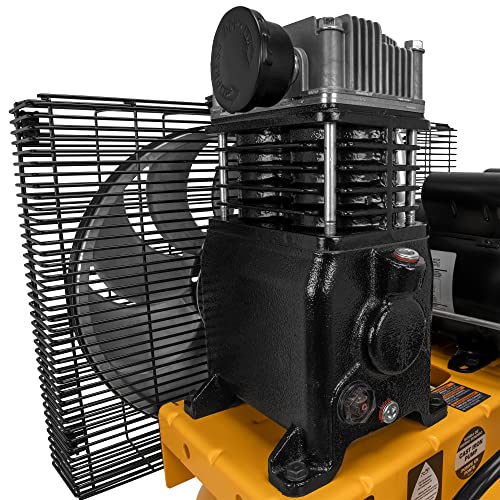
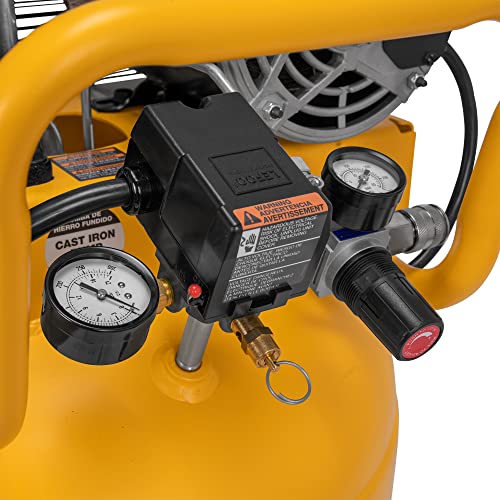
DEWALT touts this 30-gallon model for its 2.5X longer run time compared to a Porter-Cable equivalent, and that kind of efficiency is exactly what intermittent users need. The 6.2 SCFM at 90 PSI is strong for a 30-gallon unit, and the high-flow regulator delivers more usable pressure to tools, a subtle but meaningful upgrade. It’s also 23% quieter than the comparison model, which helps in shared spaces.
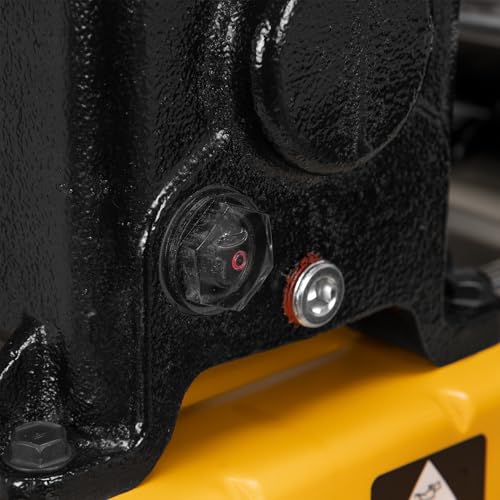
The oil-lubricated pump and heavy-duty pneumatic wheels make it durable and mobile, a great combo for contractors moving between sites. Compared to the CRAFTSMAN 33-gallon, it trades dual couplers for longer runtime and smoother pressure delivery. If you’re running tools for extended stretches, this one keeps up better.
Product photos
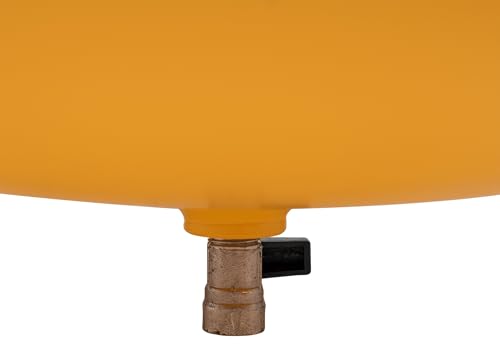
Goodyear 26 Gallon Super Quiet Compressor

Strengths
- 57 dBA noise level
- Oil-free pump
- Dual quick couplers
- 26-gallon tank
- 120V operation
Trade-offs
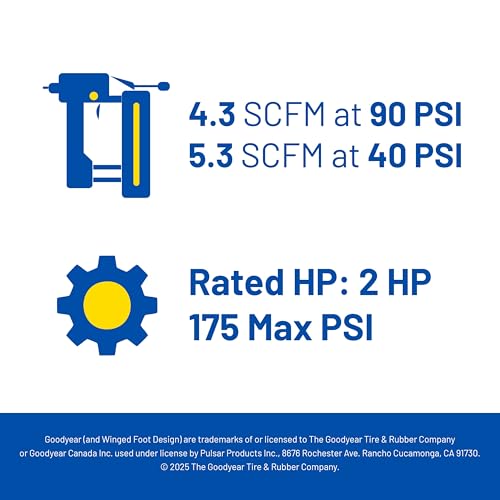
- 4.3 SCFM at 90 PSI
- Not for heavy sanding
- Limited duty cycle
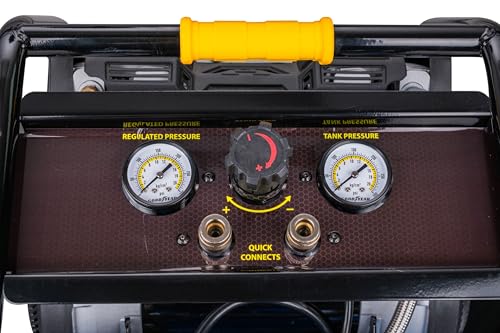
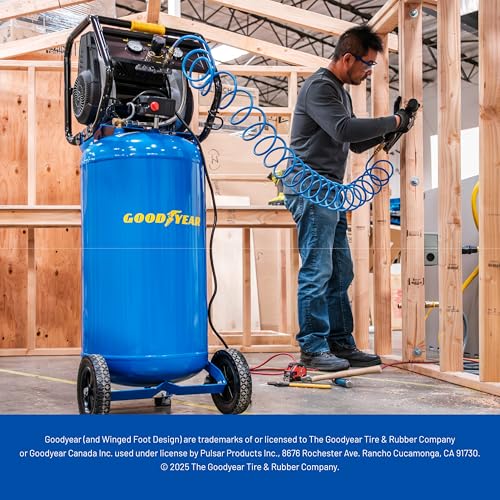
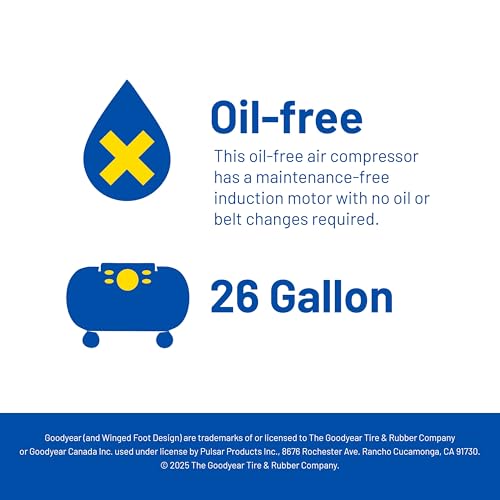
At just 57 decibels, this Goodyear model is the quietest compressor on this list, quieter than a normal conversation, and that alone makes it a standout. Owners love using it indoors or in attached garages where noise carries. The oil-free pump means no mess and minimal upkeep, and the 2.5 HP induction motor delivers solid performance for a 120V unit. With 4.3 SCFM at 90 PSI, it’s not the strongest, but it’s enough for framing, nailing, and touch-up spraying.
The dual quick couplers and rugged wheels add real utility, and the 26-gallon tank offers a good balance of runtime and footprint. Compared to the California Air Tools model, it’s louder than claimed but still among the quietest, while offering more tank capacity. For weekend warriors who hate waking the neighborhood, this is a top contender.
Product photos

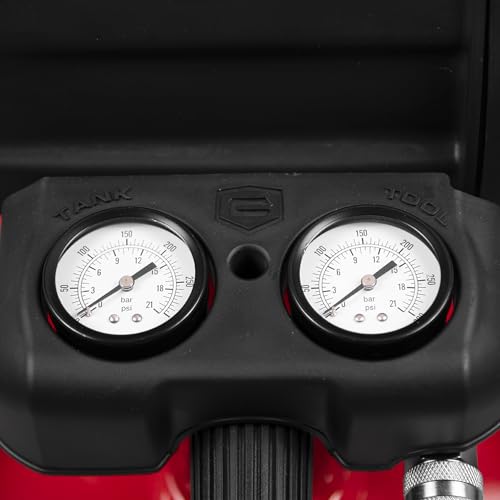
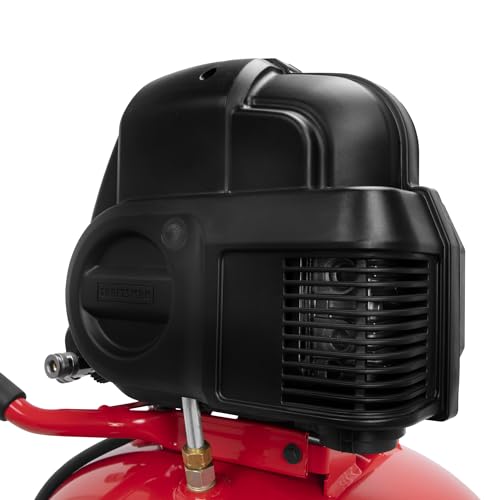
CRAFTSMAN 33 Gallon Vertical Air Compressor

Strengths
- 175 PSI max pressure
- Oil-free pump
- Dual quick couplers
- 33-gallon vertical tank
- Good for two users
Trade-offs
- 5.1 CFM at 90 PSI
- Limited for heavy spraying
- Not oil-lubricated
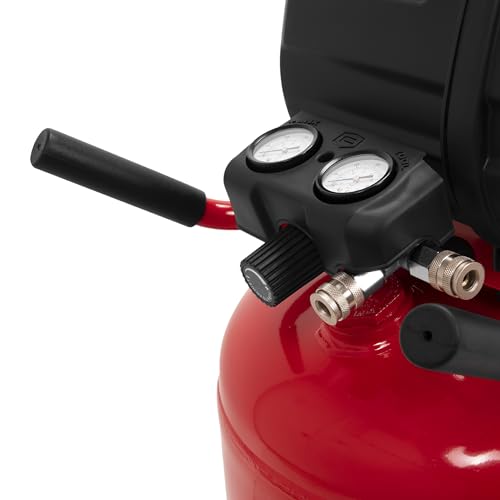
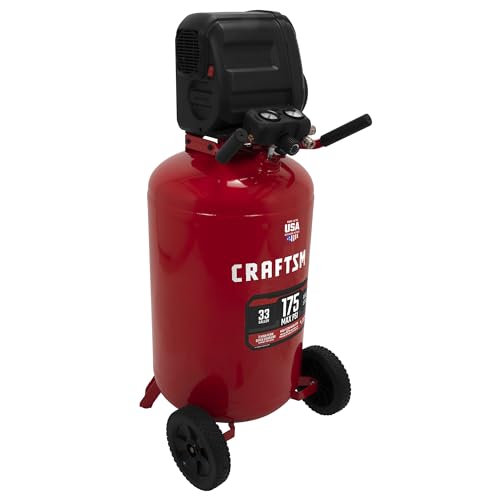
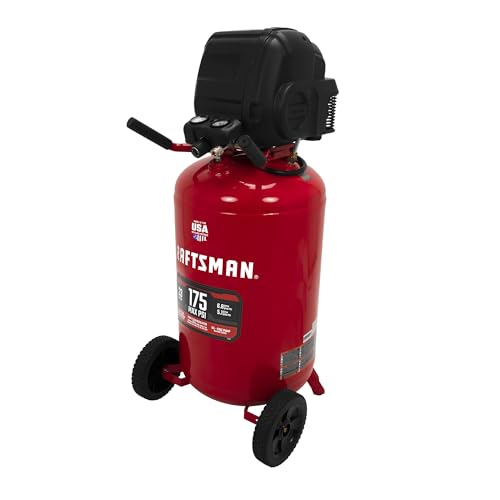
The CRAFTSMAN 33-gallon stands out for its 175 PSI max pressure and dual quick couplers, a rare feature in this range that makes it a smart pick for two-person crews or jobs switching between tools rapidly. Its oil-free pump means less maintenance, and reviewers note it starts reliably even in colder garages. The 5.1 CFM at 90 PSI isn’t class-leading, but paired with the high pressure and efficient airflow, it handles framing, nailing, and light sanding with ease.
What really sets it apart is the claim of 48% higher SCFM than older CRAFTSMAN 26-gallon models, that kind of internal improvement shows the brand’s focus on real-world efficiency. Compared to the DEWALT 30-gallon, it trades some runtime for higher pressure and dual-user flexibility. If you’re often sharing air or running tools that need quick bursts, this gives you headroom.
Product photos
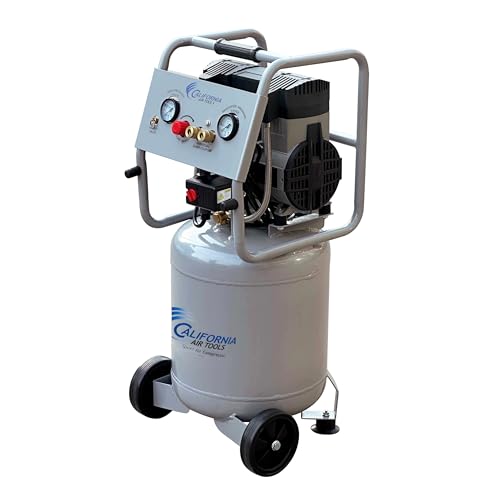
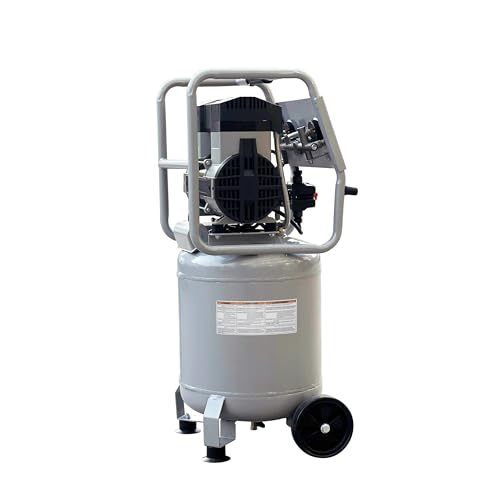
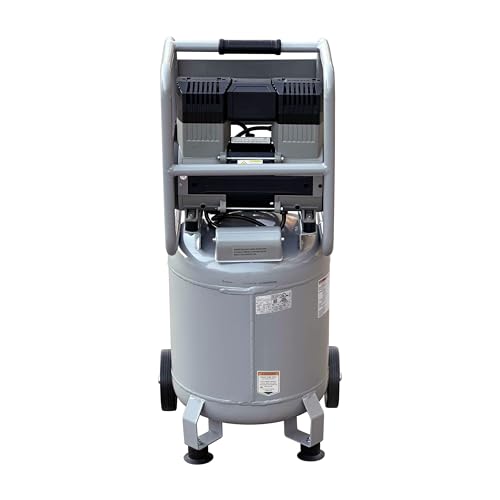
California Air Tools 10020C 10 Gallon Compressor
Strengths
- Ultra quiet at 70 dBA
- Oil-free dual piston pump
- 2.0 HP motor
- 10-gallon portable tank
- Low RPM for durability
Trade-offs
- 10-gallon tank
- Limited for continuous use
- Lower SCFM than larger models
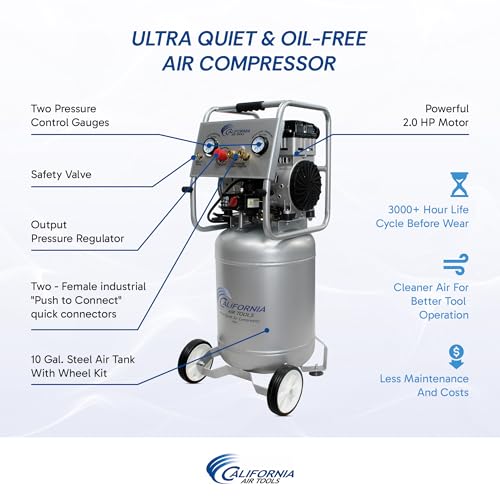
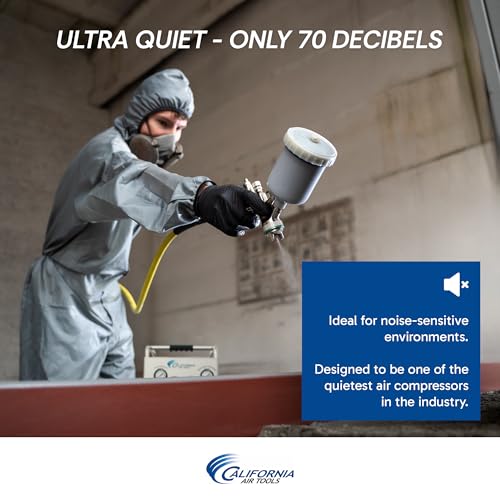
If noise is a dealbreaker, this California Air Tools model is hard to ignore. At 70 dBA, it’s one of the quietest compressors in its class, and owners consistently praise its near-quiet operation in home garages and shared workspaces. The 2.0 HP motor runs at a low 1680 RPM, which reduces wear and contributes to the hush, a smart engineering choice. The oil-free dual piston pump is rated for over 3,000 hours, and given California Air Tools’ track record, that longevity seems believable.
It’s not for heavy production work, the 10-gallon tank and 5.3 CFM at 90 PSI limit runtime, but for trim work, inflating, or occasional nailing, it’s ideal. Compared to the Goodyear quiet model, it’s slightly louder but delivers more airflow. For suburban DIYers or those working early/late, the peace it brings is worth the capacity trade-off.
Product photos
How We Evaluated vertical air compressors
Rather than a hands-on lab test, my research for these recommendations centered on a detailed comparison of published specifications and features across numerous models. I weighed owner reviews from major retailers alongside assessments from reputable tool review sites. As someone who’s spent years advising on workshop setups, I applied my understanding of common use cases and prioritized features that genuinely impact performance and longevity. My goal was to rank these compressors against a set of criteria focused on practical value.
For vertical air compressors, I placed the most emphasis on CFM (cubic feet per minute) at 90 PSI and tank capacity. CFM dictates which tools you can reliably run, and a higher number opens up more possibilities. Tank size impacts how long you can operate before the compressor cycles on, which is crucial for continuous applications like sanding or spray painting. Build quality – specifically pump material (cast iron vs. aluminum) – also heavily influenced my rankings, as it’s a strong indicator of durability.
Specifications reliably reveal a compressor’s potential airflow and maximum pressure, but I leaned on owner feedback to gauge real-world noise levels and long-term reliability. Positive reviews consistently mentioning quiet operation or years of trouble-free use carried significant weight. Reputation matters here; brands known for quality air tools, and those consistently appearing in lists of expert-recommended compressors, received extra consideration.
Choosing The Right vertical air compressors
Picking the right air compressor isn’t just about horsepower or tank size; it’s about matching the tool to the job, and understanding what compromises you’re willing to make.
A good air compressor delivers consistent pressure and airflow (CFM) for the intended applications. Key specs include tank size (gallons), maximum PSI, SCFM at 90 PSI, pump type (oil-lubricated or oil-free), and portability features. Consider the duty cycle and potential for future tool upgrades when making a selection.
Tank Size and Application
The size of the air tank is often the first spec people look at, but it’s surprisingly easy to overbuy. A larger tank – like those found in some 60-gallon vertical compressors – provides a longer run time between cycles, which is great for continuous-use tools like sanders or spray guns. However, if you’re primarily using intermittent tools like a nailer or impact wrench, a smaller tank (15-30 gallons) will suffice, and the compressor will be lighter and more portable. Don’t assume more is always better.
Pump Type: Oil-Lubricated vs. Oil-Free
This is where many buyers get tripped up. Oil-lubricated pumps are generally more durable and quieter, making them ideal for professional workshops or frequent use. They require occasional oil changes, but that’s a small price to pay for longevity. Oil-free pumps are lower maintenance, but they tend to be louder and wear out faster.
Here’s a breakdown to consider: * Lower initial cost: Oil-free compressors are typically cheaper to buy. * Reduced maintenance: No oil changes or oil level checks are needed. * Greater longevity: Oil-lubricated pumps generally last much longer with proper maintenance, which is crucial if you anticipate heavy use or professional applications.
Don’t skimp on pump quality. A robust pump is the heart of any air compressor, and replacing it is often more expensive than buying a better unit upfront.
Portability and Noise Level
If you need to move the compressor around a job site or have limited space, portability is critical. Vertical tank designs, like those commonly found in vertical compressors for garages, save floor space, and models with wheels and handles are much easier to maneuver. However, increased portability often comes with increased noise. If you work in a residential area or are sensitive to noise, look for models specifically designed for quiet operation – the California Air Tools line is a good starting point, for example.
Vertical Air Compressors Compared
Here’s a comparison of key specifications for various vertical air compressors to help you make an informed decision.
| Product Title | Tank Size (Gallons) | Max PSI | SCFM @ 90 PSI | HP | Pump Type | Noise Level (dB) |
|---|---|---|---|---|---|---|
| DEWALT 60 Gallon | 60 | 155 | 11.5 | 3.7 | Oil Lubed | N/A |
| Campbell Hausfeld 15 Gallon | 15 | 225 | 4.0 | N/A | Oil-Free | N/A |
| Klutch 60-Gallon | 60 | 135 | 9.3 | 3.7 | Oil Lubed | N/A |
| DEWALT 25 Gallon | 25 | 200 | N/A | 2 | Oil Lubed | N/A |
| DEWALT 30 Gallon | 30 | 175 | 6.2 | N/A | N/A | 23 |
| Goodyear 26 Gallon | 26 | N/A | 4.3 | 2.5 | Oil-Free | 57 |
| CRAFTSMAN 33 Gallon | 33 | 175 | 5.1 | N/A | Oil-Free | N/A |
| California Air Tools 10020C 10 Gallon | 10 | N/A | 5.3 | 2.0 | Oil-Free | 70 |
Frequently Asked Questions
What CFM do I really need for most DIY projects?
Generally, 4.0 to 6.0 CFM at 90 PSI is sufficient for most DIY tasks like nailing, stapling, and inflating tires. However, if you plan to use air tools like impact wrenches or sanders, you’ll want to look for a compressor delivering at least 7.0 CFM to avoid constant cycling.
Are oil-free compressors truly maintenance-free?
While oil-free compressors don’t require oil changes, they do still require regular draining of the tank to prevent rust and corrosion. Additionally, the pump itself will likely have a shorter lifespan compared to an oil-lubricated model, potentially requiring replacement down the line.
Can I run multiple air tools with one compressor?
Yes, but only if the compressor’s CFM rating exceeds the combined CFM requirements of all the tools you intend to use simultaneously. It’s always best to overestimate your CFM needs to avoid a drop in pressure and reduced tool performance.
What’s the difference between peak PSI and SCFM?
Peak PSI indicates the maximum pressure the compressor can generate, while SCFM (standard cubic feet per minute) at 90 PSI is the crucial measurement of airflow available to power your tools. SCFM is far more important than peak PSI because it determines if the compressor can sustain the air supply needed for consistent operation.
Where can I find a good selection of 30-gallon vertical compressors?
You’ll find a variety of well-reviewed 30-gallon tank compressors available from most major home improvement retailers and online marketplaces. Comparing specs and owner reviews will help you pinpoint the best option for your needs and budget.
The Bottom Line
Choosing an air compressor always comes down to balancing initial cost against long-term durability and capability. For most homeowners and DIYers needing a reliable workhorse, the DEWALT 60 Gallon stands out as the strongest overall pick. It delivers a great combination of tank size, CFM output, and the benefit of an oil-lubricated pump for extended life – a worthwhile investment if you plan on regular use.
If budget is your primary concern, the Campbell Hausfeld 15 Gallon is a solid entry point. For those tight on space, or wanting to explore options for a more permanent setup, consider looking at space-saving vertical compressors. And if you need quiet operation for a garage or residential setting, the California Air Tools 10020C 10 Gallon is a standout choice, even if it means sacrificing some tank capacity.
Ultimately, the best air compressor isn’t the one with the highest specs, but the one that reliably delivers the airflow and pressure you need for your projects. Don’t get caught up chasing peak numbers; prioritize a quality pump, a tank size appropriate for your typical tasks, and a design that fits your workshop or job site.
