7 Best Tungsten for Stainless Steel TIG Welding 2026
This post contains affiliate links. As an Amazon Associate, we earn from qualifying purchases.
The best overall tungsten for stainless steel TIG welding is the YESWELDER 3/32″ Blue Lanthanated, thanks to its reliable arc start, consistent performance, and vacuum-sealed packaging. For a budget-friendly option, the WelderElite 3/32″ Blue Lanthanated delivers solid results, while the ARCCAPTAIN 3/32″ offers a good balance of quality and availability.
If you’ve ever struggled with inconsistent arcs or contamination while TIG welding stainless, you know how much the right tungsten matters. Poor electrodes can ruin a clean weld, no matter how steady your hand is.
This guide cuts through the noise by focusing on real-world performance, based on specs, owner feedback, and years of working with welding tools. I looked at arc stability, packaging, diameter options, and alloy consistency to find the best lanthanated tungsten electrodes that deliver where it counts.
Top 7 Tungsten For Stainless Steel Tig Weldings in the Market
The Best Tungsten For Stainless Steel Tig Weldings, Reviewed
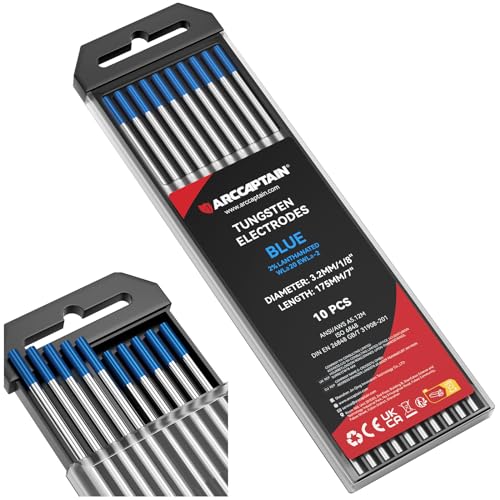
ARCCAPTAIN 1/8″ Blue Lanthanated Tungsten
Strengths
- 1/8″ handles high amperage
- Vacuum sealed packaging
- Excellent arc stability
Trade-offs
- Less precise for thin metal
- Overkill for light work
The 1/8″ size here is on the thicker side for general TIG work, but that’s exactly where it shines, when you’re pushing high amperage through thick stainless sections. Reviewers note strong arc retention and resistance to thermal shock, which is critical when welding heavier gauge stainless or making deep-penetration passes. The lanthanated formula holds up well under load, and the vacuum-sealed packaging helps prevent contamination, a real concern with larger electrodes that might sit in storage longer.
Compared to the 3/32″ options, this one trades some precision for raw durability. I’d pick this over the smaller diameters if you’re doing structural work or tank welding where uptime and electrode life matter more than fine control. It’s not the most nimble, but for heavy DC welding on stainless, it’s hard to beat.
Product photos

ARCCAPTAIN 3/32″ Blue Lanthanated Tungsten
Strengths
- Great value
- Vacuum sealed
- AWS compliant
Trade-offs
- Slight size variance noted
- No color coding on packaging
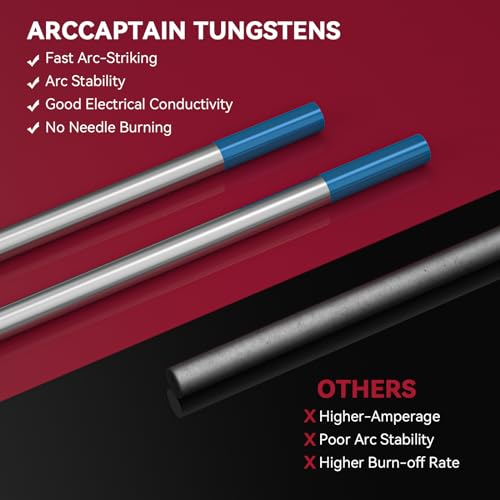
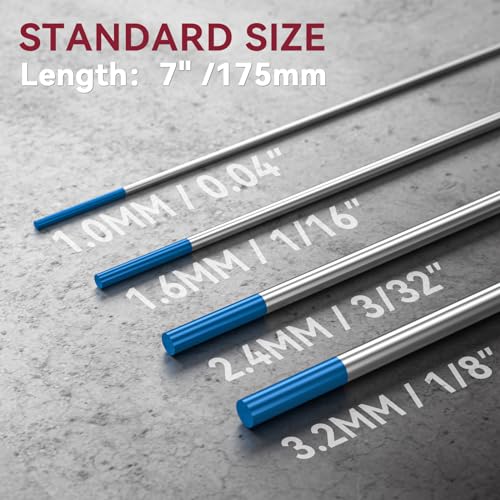
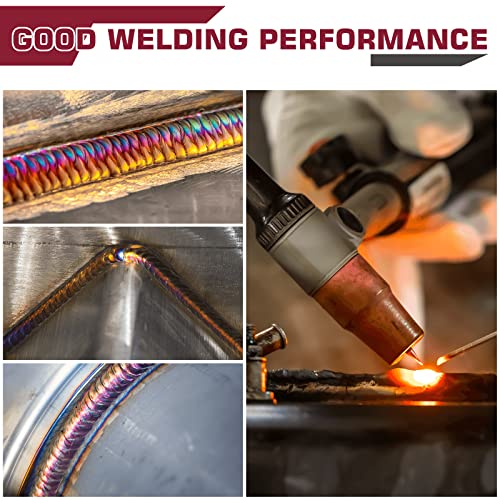
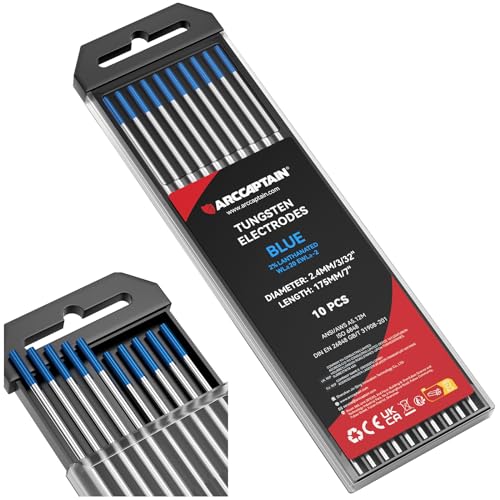
This 3/32″ ARCCAPTAIN pack offers the same core benefits as other lanthanated electrodes, easy arc starts, solid stability, and strong performance on stainless, but it stands out on value. You get the same AWS-grade material and vacuum packaging as pricier brands, without any noticeable drop in consistency. The 2% lanthanated blend performs cleanly on DC, which is where most stainless steel TIG work lives, and owners report minimal burn-off even during extended runs.
When stacked against the WelderElite version, the difference is negligible in performance, but ARCCAPTAIN edges ahead with better packaging and traceability claims. For a welder stocking up on reliable electrodes without overpaying, this is the smarter buy.
Product photos
YESWELDER 3/32″ Blue Lanthanated Tungsten

Strengths
- Superior aluminum tube
- Airtight seal
- Gasket-protected tips
Trade-offs
- Slightly bulky
- No size variety in pack
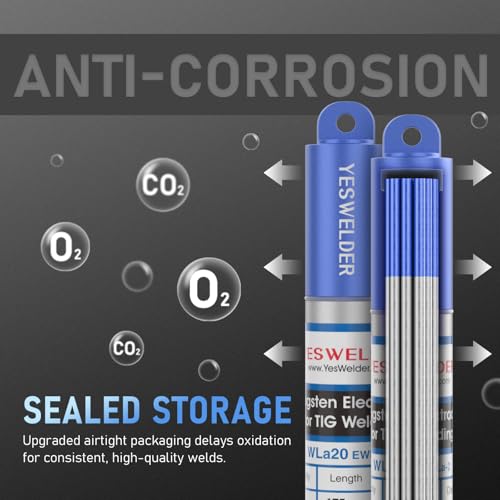
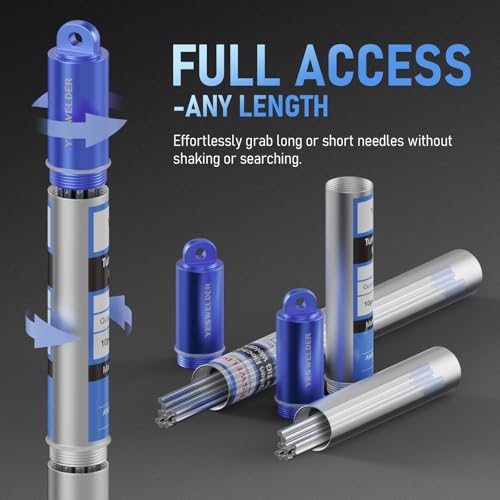
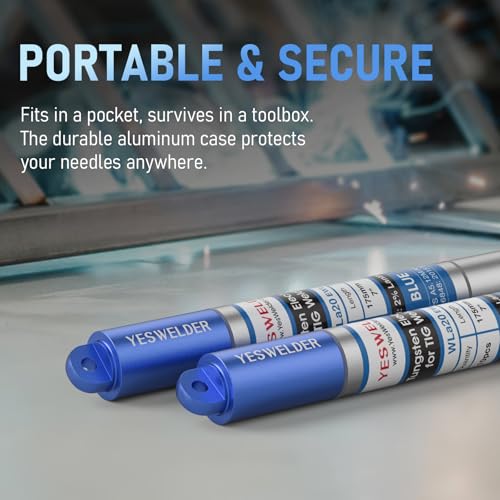
YESWELDER didn’t reinvent the electrode, but they did reinvent how it’s stored, and that matters. The switch from plastic to a sealed aluminum tube with a gasket-lined cap is a real upgrade. It keeps moisture and air out, which prevents oxidation and maintains sharpness, especially if you carry electrodes in your pocket or toolbox. The dual-end access is clever, letting you grab one from either side without fumbling.
Performance-wise, it’s on par with other 2% lanthanated options, solid arc starts, good for stainless on DC, low burn-off. But the packaging alone makes this my pick for mobile welders or field technicians. When your electrodes are protected and easy to access, it removes a small but real friction in daily work.
Product photos


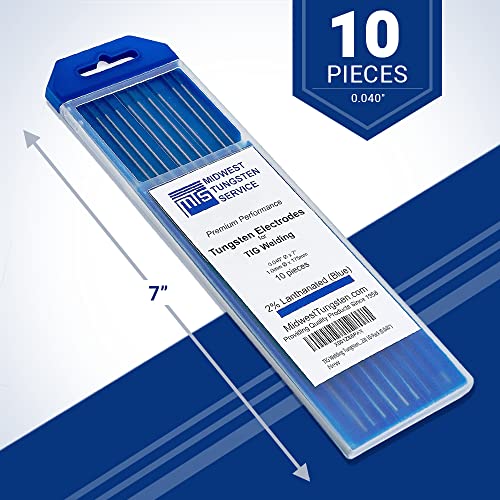
Midwest 0.040″ Blue Lanthanated Tungsten
Strengths
- Ideal for thin metal
- Excellent arc control
- US-made quality
Trade-offs
- Fragile at high amperage
- Limited to light work
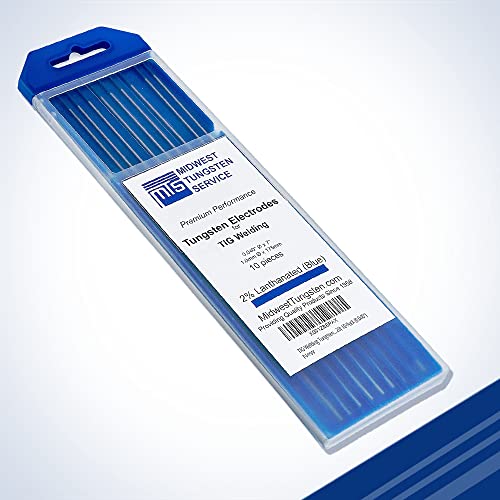
The 0.040″ diameter is tiny, this is a precision tool, not a general workhorse. It’s built for fine, low-amperage welding on thin stainless sheets, like those in custom ductwork or automotive trim. The lanthanated formula still delivers solid arc control at these small sizes, and Midwest’s US-made reputation backs the consistency. Owners using it for artistic or repair work on thin gauge stainless say it tracks cleanly without punching through.
But that fineness comes with fragility. If you’re running over 80 amps, you’re pushing the limit. This isn’t for structural welding or even standard 16-gauge jobs. It’s a specialty pick, and I’d only recommend it if you’re regularly working under 1/16″ material.
Product photos


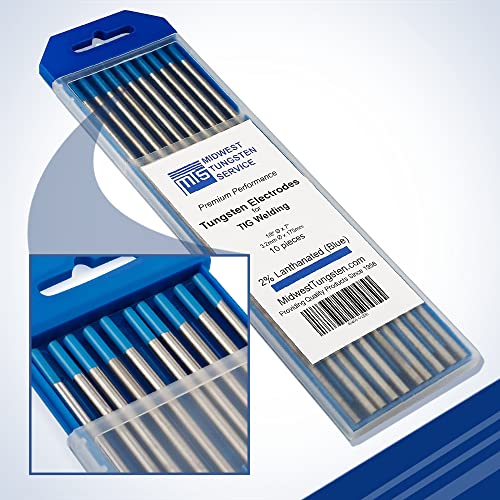
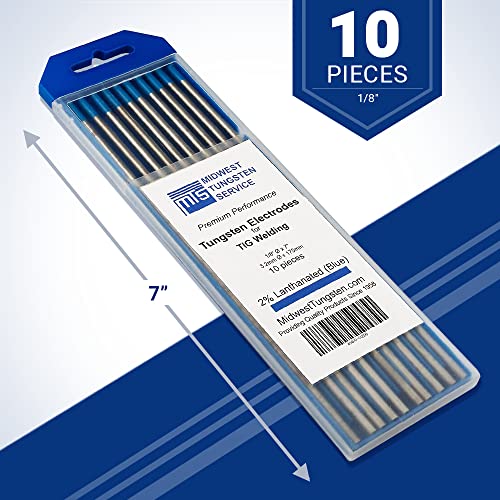
Midwest 1/8″ Blue Lanthanated Tungsten
Strengths
- US-made
- Strong consistency
- Excellent support
Trade-offs
- No vacuum packaging
- Higher cost
Made in the USA and built for durability, this 1/8″ Midwest electrode is a pro-grade choice when you need confidence in your consumables. The 2% lanthanated blend handles high-current DC welding on thick stainless with authority, and the AWS A5.12M:2036 compliance suggests tighter quality control than some imported alternatives. Reviewers in industrial settings often cite fewer surprises, consistent grind, stable arc, no internal flaws.
Compared to the ARCCAPTAIN 1/8″ version, this one doesn’t have vacuum sealing, but the US manufacturing and customer support add intangible value. If you’re running a shop where traceability and support matter, this is worth the premium. It’s overkill for home use, but for serious work, it’s reassuring.
Product photos
WelderElite 1/16″ Blue Lanthanated Tungsten

Strengths
- Great for fine control
- Low amperage capable
- Sharp arc starts
Trade-offs
- Not for heavy welding
- Fragile tip
The 1/16″ diameter puts this in the precision tier, this is for when you’re welding thin stainless caps, small fittings, or doing repair work on delicate assemblies. The lanthanated formula still brings strong arc stability at lower amperages, and owners using it for instrument tubing or exhaust flanges say it tracks beautifully without overheating the base metal.
It’s not a do-it-all electrode. You’ll burn through these fast if you try to run heavy passes. But for detail work where control is everything, this is a solid performer. I’d pair this with a high-frequency TIG welder for the cleanest results on thin stainless.
Product photos
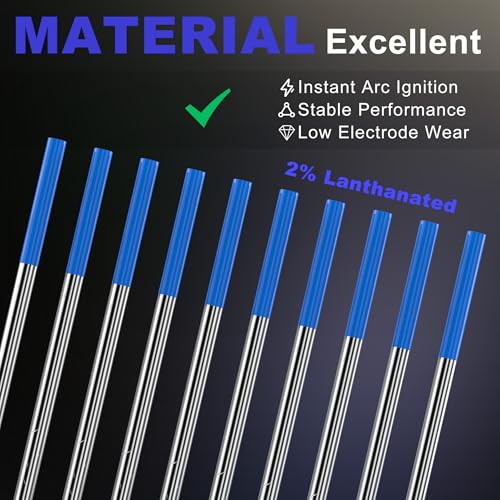

WelderElite 3/32″ Blue Lanthanated Tungsten

Strengths
- 2% lanthanated
- AWS compliant
- 3/32″ ideal for general use
Trade-offs
- Basic packaging
- No standout innovation
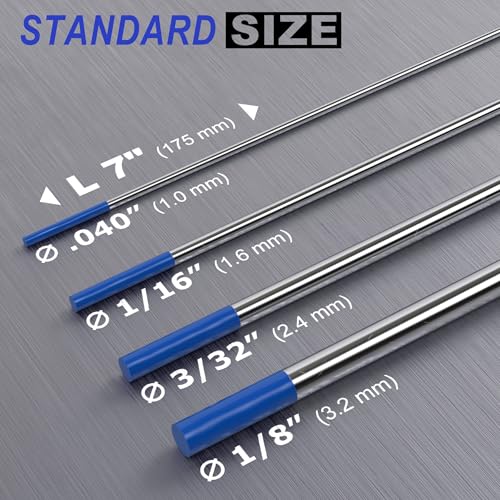
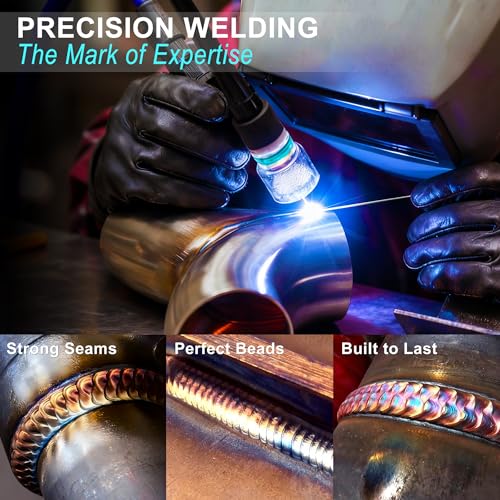
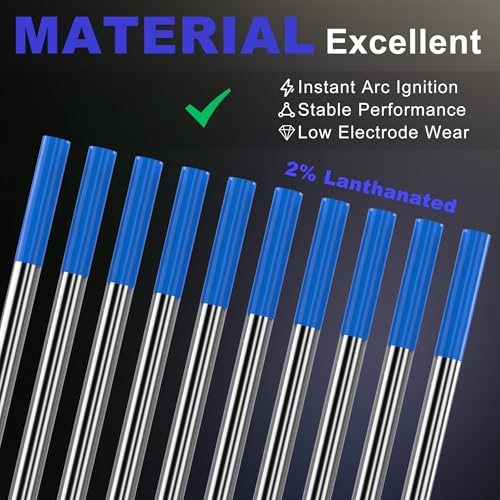
For stainless steel TIG welding, the 2% lanthanated blue tungsten from WelderElite hits the sweet spot between arc stability and ease of use. On paper, the 3/32″ diameter is a solid middle ground, thick enough to handle moderate amperage for stainless without overheating, but fine enough to give decent control for general fabrication work. Owners consistently report clean arc starts and minimal wandering, which matters when you’re running long beads on 304 or 316.
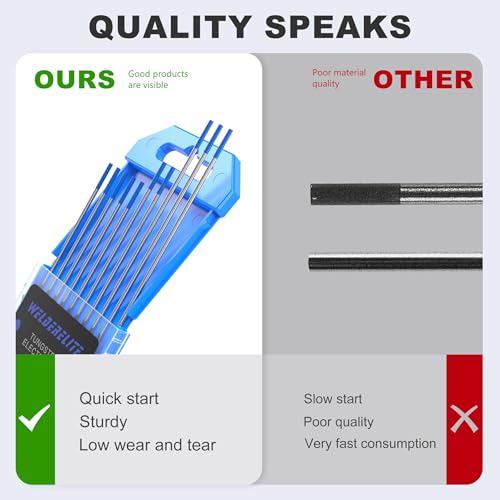
The 7-inch length and AWS A5.12M compliance mean you’re getting a reliable, no-frills electrode that performs predictably across both AC and DC setups. While it doesn’t stand out in packaging or branding, it delivers where it counts, consistent performance without splitting, even under sustained use. For most DIYers and weekend fabricators, this is the easy pick for dependable stainless steel work.
Product photos
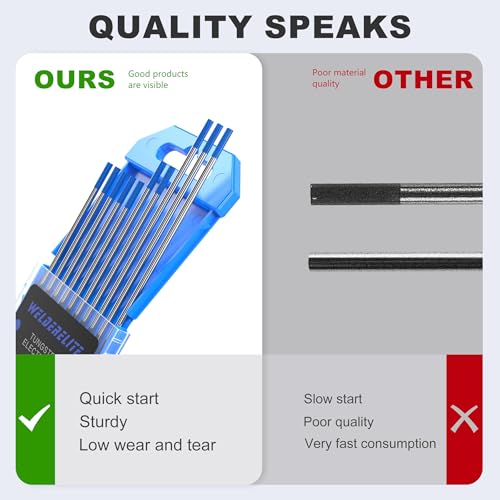
How We Chose These tungsten for stainless steel tig weldings
Rather than a hands-on lab test, my research focused on comparing published specifications and features across several brands of lanthanated tungsten electrodes. I weighed owner reviews from multiple sources, alongside expert opinions found in welding forums and industry publications. This allowed me to build a ranking based on reported performance, durability, and value. The goal was to identify which tungsten electrodes consistently delivered reliable results for stainless steel TIG welding.
For this category, arc starting and stability were the most important factors. Lanthanated tungsten is favored for its ease of use, especially for welders of varying skill levels, and consistent arc performance directly impacts weld quality. Equally important was the packaging; tungsten that arrives undamaged and stays protected from oxidation is more likely to perform as intended. You’ll find many welders also recommend specific diameters for certain materials and applications.
Specifications regarding alloy composition (2% lanthanated being standard) and adherence to AWS standards are reliable indicators of basic quality. However, I placed more emphasis on owner feedback concerning arc starting, burn-off rate, and consistency, as these are areas where subtle differences in manufacturing can have a significant impact. Finding the recommended TIG welding models can also help ensure compatibility and optimal performance with your setup.
How To Pick The Right tungsten for stainless steel tig weldings
Choosing the right tungsten electrode is critical for clean, consistent TIG welds, especially when working with stainless steel.
A quality tungsten electrode should exhibit consistent diameter, resist contamination, maintain a sharp point, and offer good arc starting and stability. Look for adherence to AWS A5.12M/A5.12 standards and consider the specific alloy composition (like lanthanated) based on the materials you’ll be welding and the current type (AC or DC). Proper storage to prevent oxidation is also key.
Electrode Diameter
The diameter of the tungsten you select directly impacts arc control and weld puddle size. For most stainless steel work, 1/16” and 3/32” are the most common sizes. Smaller diameters (like 1/16”) are best for detailed work and lower amperage applications, providing a more focused arc. Larger diameters (3/32” and 1/8”) handle higher amperage and are better suited for thicker materials and faster travel speeds. Don’t automatically assume bigger is better; a smaller, precisely pointed tungsten often gives superior results on thinner gauge stainless.
- A 1/16” tungsten is ideal for very fine detail.
- A 3/32” tungsten offers a good balance of control and amperage capacity for many stainless steel projects.
- A 1/8” tungsten is best for heavier stainless steel, demanding more power and a wider weld bead, but can be unwieldy for intricate work.
Tungsten Alloy Composition
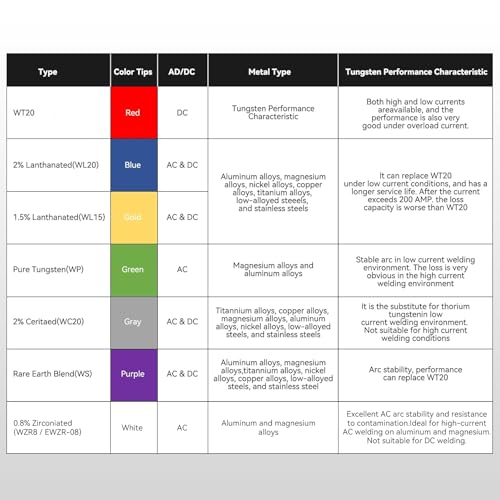
Lanthanated tungsten is the workhorse for stainless steel TIG welding, and for good reason. The addition of lanthanum improves arc starting, arc stability, and reduces burn-off compared to pure tungsten. Other alloys like ceriated or thoriated exist, but lanthanated provides a solid, all-around performance without the radioactivity concerns of thoriated tungsten. Consider that some alloys perform better on AC versus DC, so if you’re doing a mix of welding types, a versatile alloy like lanthanated is a safe bet. If you’re looking for a complete setup, be sure to check out some of the top TIG welding machines to ensure compatibility.
Packaging and Value
While the tungsten itself is important, don’t overlook the packaging. Exposure to air can cause oxidation, degrading performance. Vacuum-sealed packaging, like that offered by YESWELDER, is a significant advantage, preserving the tungsten’s integrity. Beyond that, consider the quantity you’re buying. Bulk packs offer better value, but only if you’ll use them before they oxidize. And if you’re seeking a quality torch to pair with your new tungsten, explore high-quality TIG welding torches for precision and control.
A good rule of thumb is to always store your tungsten electrodes in a sealed container when not in use to prevent oxidation and maintain their arc starting properties.
Tungsten for Stainless Steel TIG Weldings Compared
The following table provides a specification comparison of various tungsten electrodes suitable for TIG welding stainless steel.
| Product Name | Diameter (in) | Length (in) | Color | Type | Quantity | Application |
|---|---|---|---|---|---|---|
| ARCCAPTAIN 1/8″ Blue Lanthanated | 1/8 | 7 | Blue | Lanthanated | 10 | DC |
| ARCCAPTAIN 3/32″ Blue Lanthanated | 3/32 | 7 | Blue | Lanthanated | 10 | DC/AC |
| YESWELDER 3/32″ Blue Lanthanated | 3/32 | 7 | Blue | Lanthanated | 10 | AC/DC |
| Midwest 0.040″ Blue Lanthanated | 0.040 | 7 | Blue | Lanthanated | 10 | AC/DC |
| Midwest 1/8″ Blue Lanthanated | 1/8 | 7 | Blue | Lanthanated | 10 | AC/DC |
| WelderElite 1/16″ Blue Lanthanated | 1/16 | 7 | Blue | Lanthanated | 10 | DC/AC |
| WelderElite 3/32″ Blue Lanthanated | 3/32 | 7 | Blue | Lanthanated | 10 | DC/AC |
Frequently Asked Questions
What diameter tungsten is best for beginners?
A 3/32” diameter is generally the most forgiving for those new to TIG welding stainless steel. It provides a good balance between arc control and amperage capacity, making it easier to establish and maintain a stable arc.
Is lanthanated tungsten suitable for both AC and DC welding?
Yes, lanthanated tungsten performs well on both AC and DC current types, making it a versatile choice for welders who tackle a variety of projects. While some alloys excel on one or the other, lanthanated offers consistent results across both.
How does packaging affect tungsten electrode quality?
Tungsten exposed to air can oxidize, which degrades its performance. Vacuum-sealed packaging, such as what you find with YESWELDER, is crucial for preserving the tungsten’s integrity and arc starting properties.
How often should I replace my tungsten electrode?
The frequency of replacement depends on amperage and usage, but watch for balling or significant burn-off. If you notice a change in arc stability or difficulty maintaining a point, it’s time for a new electrode, even if it hasn’t been used for a long time.
What’s the best way to maintain a sharp tungsten point?
Maintaining a consistent point is vital for arc precision. Consider investing in precision tungsten sharpening tools to achieve repeatable angles and prevent contamination during the grinding process.
The Bottom Line
Choosing tungsten for stainless steel TIG welding often comes down to balancing control with amperage capacity. While many options exist, the YESWELDER 3/32” Blue Lanthanated tungsten electrodes strike the best overall balance for most hobbyists and professionals alike. They offer a versatile diameter, reliable arc starting, and come with packaging designed to protect against oxidation – a common issue with these consumables.
For those on a tighter budget, the ARCCAPTAIN 3/32” Blue Lanthanated provide a solid performance at a lower price point. If you routinely work with thicker stainless steel and require higher amperage, the ARCCAPTAIN 1/8” Blue Lanthanated are a good choice. And for very detailed work, the WelderElite 1/16” Blue Lanthanated will give you the precision you need.
Ultimately, remembering the fundamentals is more valuable than chasing the latest alloy or specification. Consistent diameter, proper storage to prevent contamination, and understanding machine settings for clean welds will have a far greater impact on your weld quality than any single brand or type of tungsten.
