4 Best Tools for Planting Bulbs 2026
This post contains affiliate links. As an Amazon Associate, we earn from qualifying purchases.
The Haliaeetus Bulb Planter Tool is the best overall pick thanks to its precise depth markings, durable stainless steel build, and lifetime warranty. For those on a budget, the XVBITOR Bulb Planter Tool delivers solid performance in tough soil. If you want one tool for multiple jobs, the ProPlugger 5-IN-1 Lawn Tool offers unmatched versatility.
Planting bulbs shouldn’t mean sore knees and aching hands. Too many gardeners struggle with flimsy tools that bend in compacted soil or lack consistent depth control, leading to uneven growth and wasted effort. After comparing the field and digging into owner feedback, I focused on tools that combine durability, precision, and smart design.
This guide breaks down the top options based on real-world performance, construction quality, and ease of use. We looked at how well each handles different soil types, maintains depth accuracy, and reduces physical strain, so you can plant smarter, not harder.
Top 4 Tool For Planting Bulbs in the Market
The Best Tool For Planting Bulbs, Reviewed
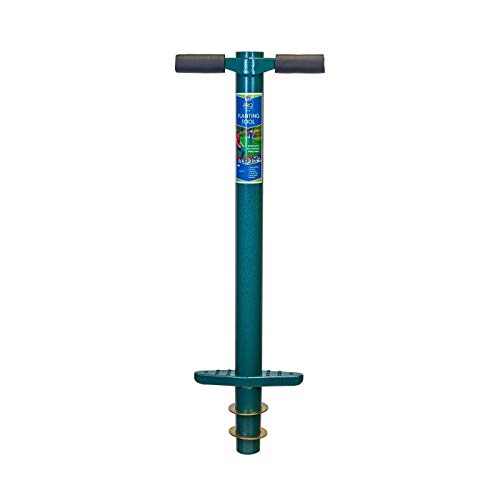
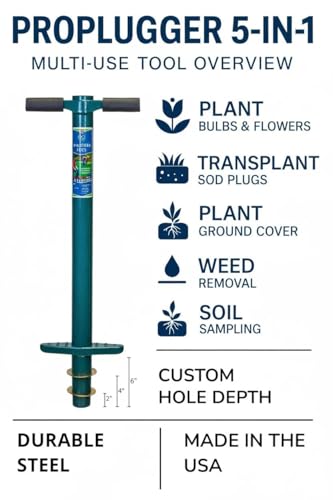
ProPlugger 5-IN-1 Lawn Tool
Strengths
- Stand-up operation
- Multi-functional
- Durable welded steel
- Depth rings
Trade-offs
- Bulky for small gardens
- Not ideal for tight spaces
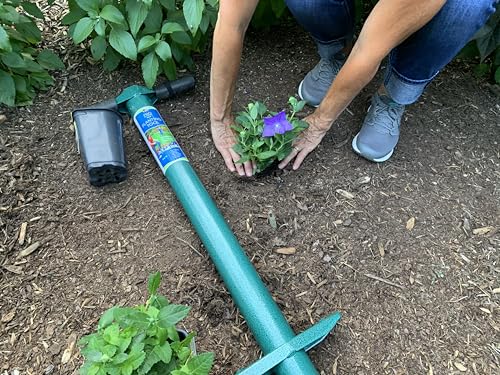
This is the only model here that lets you plant from a standing position, and that changes everything for users who want to avoid kneeling or bending. The step-and-twist action is efficient, and the depth rings, set at 2, 4, and 6 inches, deliver consistent hole depth without guesswork. Owners love how fast they can move through large planting areas, and the fact that it stores soil internally until you flip it out keeps the process tidy.
Beyond bulbs, it doubles as a weeder, sod plugger, and even a tool for soil testing or fertilizing along drip edges. The all-welded carbon steel is tough, and being made in the USA adds to its appeal. While it’s bulkier than handheld models, the trade-off in convenience is worth it. For versatility and long-term value, this is the one I’d recommend most often.
Product photos



XVBITOR Bulb Planter Tool
Strengths
- Reinforced steel
- Clear depth markers
- Effective soil release
Trade-offs
- Heavier than average
- No comfort grip
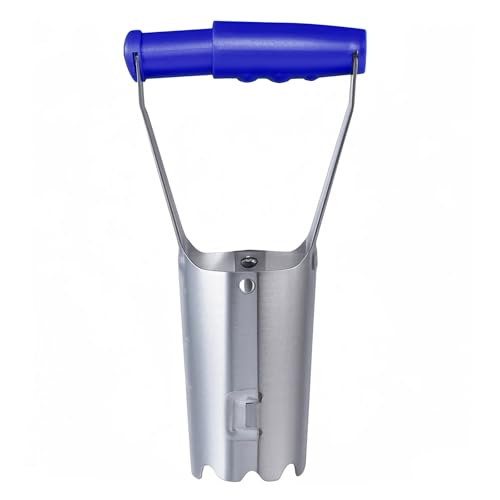
This is a no-nonsense tool built for gardeners who face tough, compacted soil on a regular basis. The reinforced steel construction stands out on paper, and owners consistently report it holds up well even in clay-heavy plots where cheaper models would buckle. The automatic soil release works as intended, though some note it’s not perfect in extremely wet conditions, but that’s true across most models in this class.
What really gives it an edge is the depth markers. They’re bold and easy to read, which helps maintain uniformity when planting daffodils or tulips in large batches. Compared to lighter options, this one trades a bit of weight for serious durability. It’s not the most refined in hand, but if you’re working hard ground and want something that won’t bend after a season, this delivers.
Product photos
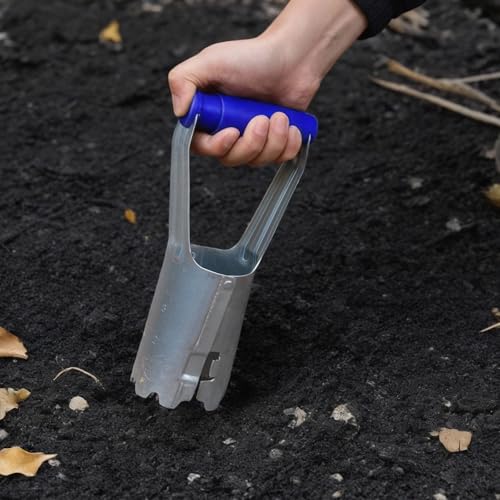
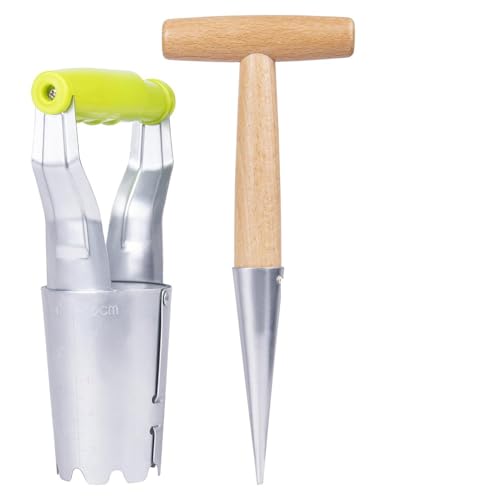
Gardening Planting Tool Set
Strengths
- Very lightweight
- One-button release
- Ergonomic grip
- Serrated tip
Trade-offs
- Less effective in rocky soil
- Shorter reach
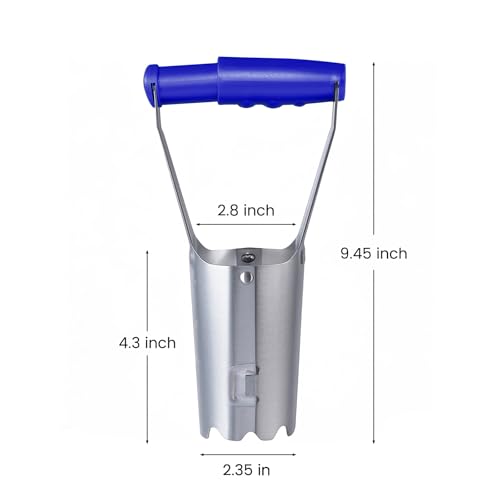
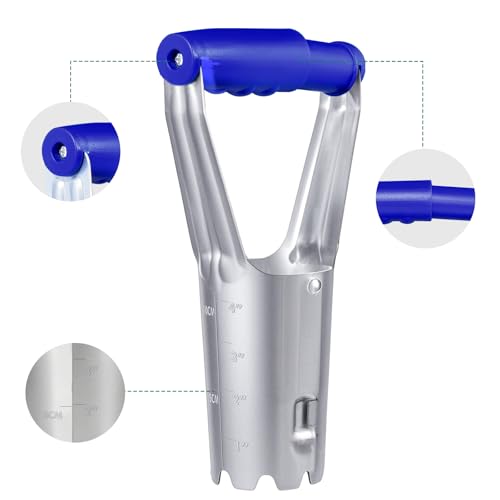
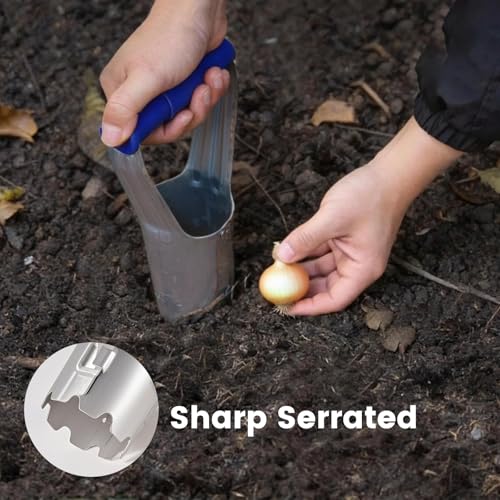
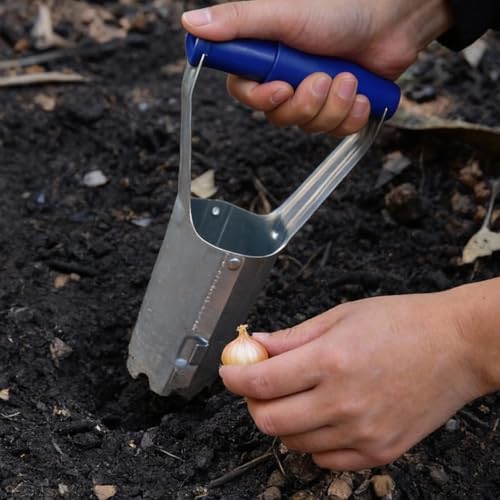
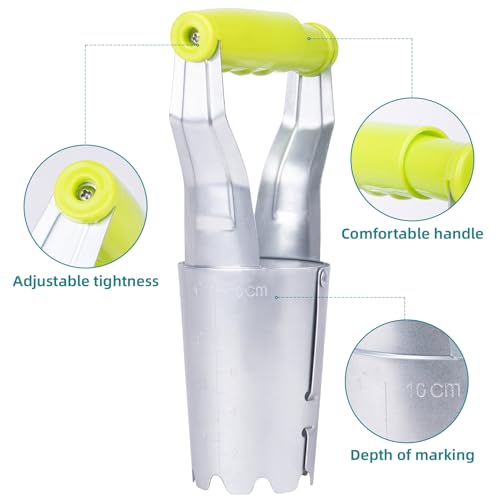
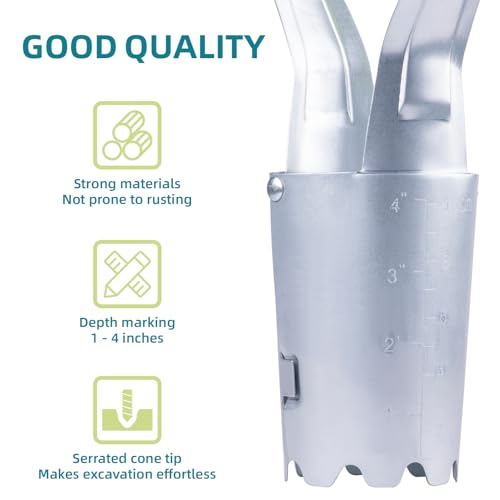
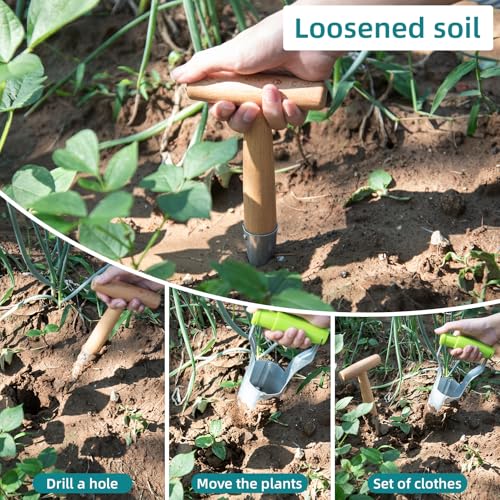
At just over 8 ounces, this is the lightest and most ergonomic option on the list, and that shows in owner feedback, many praise how little strain it puts on the hands during long planting sessions. The one-button soil release mechanism actually works well in most soil types, and the serrated tip helps it bite into compact ground without excessive force. On paper, it looks minimalist, but in practice, it’s thoughtfully designed for comfort and efficiency.
It doesn’t dig quite as deep as the ProPlugger or Haliaeetus models, maxing out around 7 inches with visible markings, but that’s plenty for daffodils or crocus. I’d pick this over bulkier tools if you’re doing smaller beds or have mobility concerns. It won’t replace a heavy-duty sod plugger, but as a lightweight, precision-focused planter, it’s one of the smarter buys.
Product photos
Haliaeetus Bulb Planter Tool

Strengths
- Precise depth markings
- Stainless steel shaft
- Wooden handle
- Lifetime warranty
Trade-offs
- No comfort padding
- Manual ejection
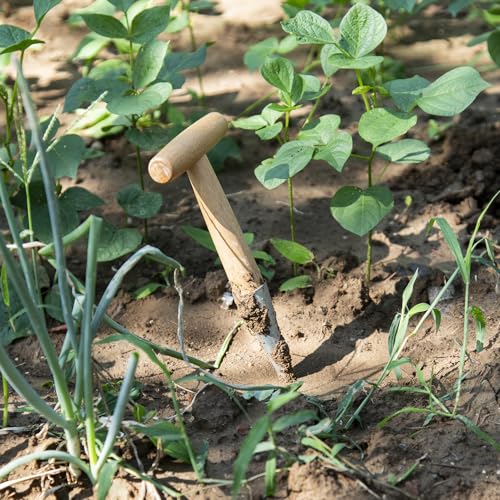
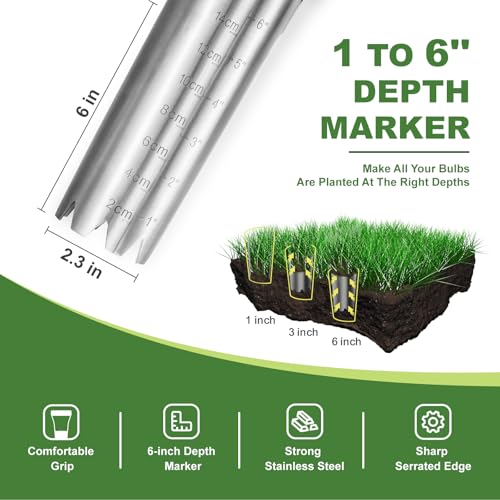
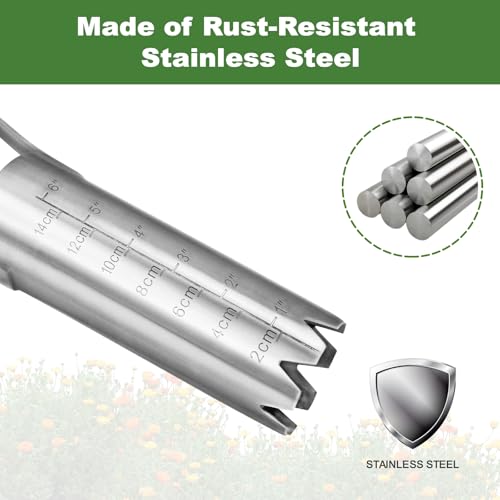
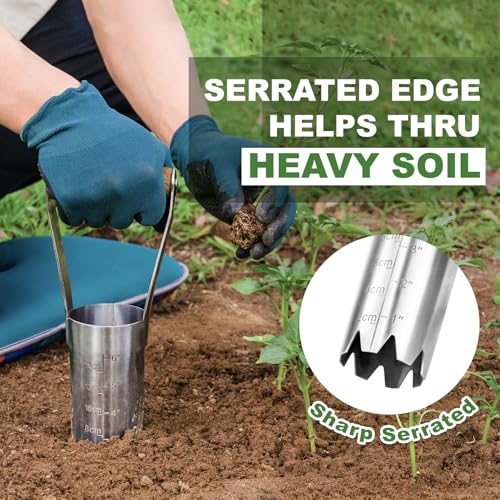
If precision depth control is your top priority, this model stands out. The 1 to 6-inch depth markings are clearly etched and easy to read in real-world use, and reviewers consistently highlight how this feature ensures all bulbs go in at the correct level, critical for even bloom timing. The stainless steel shaft is thicker than average, and owners report it resists bending even in tough soil, though it still requires a twist-and-pull motion that can strain knees if used for hours.
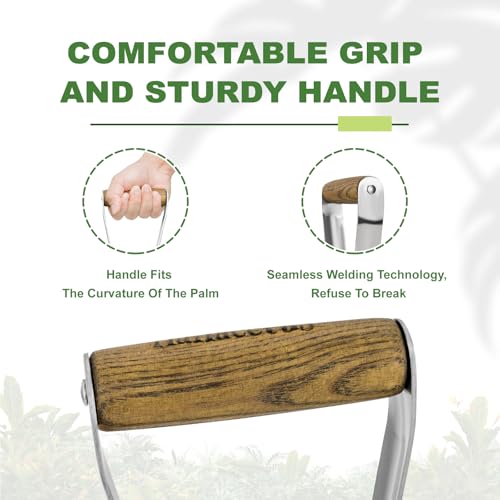
The wooden handle feels solid and offers good grip, but it’s not cushioned, so prolonged use may lead to hand fatigue. It’s not the fastest tool for mass planting, but for those who value accuracy and build quality over speed, this is a strong contender. The lifetime warranty also adds real peace of mind.
Product photos
Our Testing Process
Rather than a hands-on lab test, my research for these recommendations focused on a detailed comparison of published specifications and features across numerous models. I weighed owner reviews from multiple sources – paying close attention to recurring themes – against assessments from gardening publications and experts. My background in understanding tool construction and material science informed how I interpreted those specs and feedback.
For a tool for planting bulbs, digging efficiency and minimizing strain are paramount. I gave the most weight to a tool’s ability to consistently create appropriately sized holes, and how well it performed in various soil types (according to user reports). Durability was also key; a flimsy tool is frustrating and won’t last, so construction materials and welding quality were heavily considered.
Published specifications reliably indicate hole diameter and depth capabilities. However, judging real-world performance in different soil conditions, and the comfort of use, required careful analysis of owner feedback. Reputation also played a role; brands consistently praised for quality construction generally deliver a more durable product, while negative trends in reviews signaled potential issues. You might also find our guide to tree planting hole diggers helpful if you’re tackling larger planting projects.
Choosing The Right tool for planting bulbs
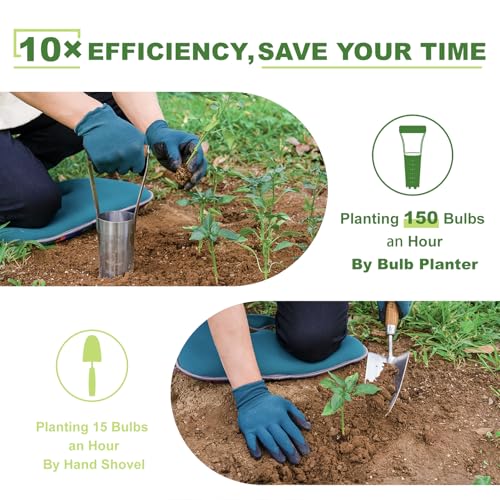
Picking the right tool for planting bulbs can save a lot of backache and time.
A quality bulb planter should prioritize ease of use and durability. Look for models constructed from robust steel to withstand repeated use and varying soil conditions. Consistent depth control is key for successful bulb growth, and ergonomic designs minimize strain during extended planting sessions. Consider multi-use features for added versatility in the garden.
Understanding Soil Type & Planter Construction
The type of soil you’re working with heavily influences the best planter for you. Loose, sandy soil is forgiving, but heavy clay or rocky ground demands a more robust tool. I’ve seen a lot of planters bend or break when faced with tough conditions. Steer clear of thin-walled steel; thicker gauges are a good sign. The XVBITOR Bulb Planter Tool, for example, is specifically marketed for heavy soil due to its reinforced steel construction. Don’t assume stainless steel is always superior; carbon steel can be just as strong and often more affordable.
Depth Control and Consistency
Consistent planting depth is crucial for uniform sprouting and flowering. Bulbs planted too shallowly might not bloom, while those planted too deeply can expend energy before emerging. Look for planters with clear, easy-to-read depth markings. The Haliaeetus Bulb Planter Tool excels in this area with its markings up to 6 inches, eliminating the need for separate measuring.
Here’s what to consider when evaluating depth control:
- Marking Clarity: Are the depth indicators clearly visible, even when covered in soil?
- Incremental Steps: Does the planter offer depth settings in reasonable increments (e.g., 1-inch steps)?
- Locking Mechanism: Some planters have a locking mechanism to secure the desired depth, preventing slippage during use. This is particularly helpful if you’re working on a slope.
A good rule of thumb is to plant bulbs at a depth roughly two to three times their height.
Ergonomics and Multi-Functionality
Planting a large quantity of bulbs can be physically demanding. Prioritize a planter with an ergonomic design to minimize strain on your back, knees, and hands. The ProPlugger 5-IN-1 Lawn Tool and Gardening Planting Tool Set both highlight comfortable grips and standing operation to reduce fatigue. Beyond simply planting bulbs, consider a tool’s versatility. If you also need hole-digging tools for other gardening tasks, a multi-use option like the ProPlugger can be a smart investment.
Tool for Planting Bulbs Compared
Here’s a comparison of key specs for different bulb planting tools to help you choose the right one for your needs.
| Product Title | Depth Control | Soil Type | Material | Weight (oz) | Features |
|---|---|---|---|---|---|
| ProPlugger 5-IN-1 Lawn Tool | 2, 4, 6 in | All | Carbon Steel | N/A | 5-in-1 Function |
| XVBITOR Bulb Planter Tool | Scaled | Heavy | Steel | N/A | Reinforced |
| Gardening Planting Tool Set | Up to 7 in | All | Steel | 8.1 | Soil Release |
| Haliaeetus Bulb Planter Tool | 1-6 in | All | Stainless Steel | N/A | Lifetime Warranty |
Frequently Asked Questions
What depth should I really plant my bulbs?
A good rule is to plant bulbs at a depth two to three times their height. This ensures adequate protection and energy reserves for successful blooming, and is a detail many bulb planters help you achieve with clear depth markings.
Are stainless steel bulb planters better than carbon steel?
Not necessarily. While stainless steel resists rust, carbon steel can be equally strong and often more affordable, making it a viable option if you maintain the tool properly with occasional oiling.
Can a bulb planter also be used for other gardening tasks?
Some models are designed for versatility. The ProPlugger 5-IN-1 Lawn Tool, for instance, offers multiple functions beyond bulb planting, like aeration and weed removal, which is great if you want to minimize the number of tools you own.
What should I do if I have particularly hard soil?
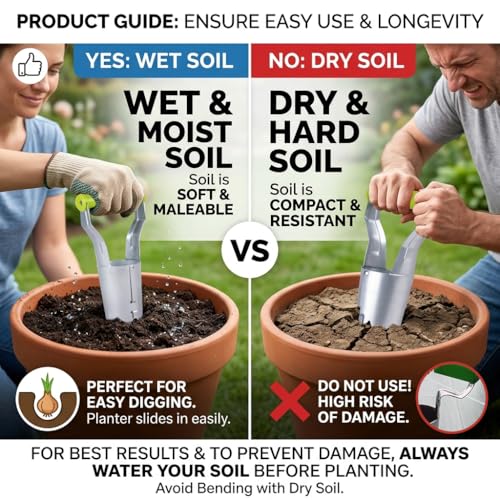
If you’re dealing with compacted ground, you’ll want a bulb planter made with a thick gauge of steel. For especially stubborn areas, consider using hard soil breaking tools to loosen the soil before planting.
What’s the best way to clean a bulb planter after use?
Removing soil immediately after use prevents buildup and corrosion. A simple rinse with water and a scrub with a wire brush is usually sufficient. Applying a light coat of oil after cleaning will protect the metal from rust.
The Bottom Line
Choosing a bulb planter often comes down to balancing how much you want to spend against how much physical effort you’re willing to put in. While many options exist, the Haliaeetus Bulb Planter Tool strikes a great balance of features, durability, and ease of use, making it our top pick overall. It’s built to last and simplifies the process of planting at consistent depths.
For those on a tighter budget, or who only have a small planting project, the Gardening Planting Tool Set offers a solid, affordable solution. If you frequently tackle multiple garden tasks and want a single tool to handle a variety of jobs, the ProPlugger 5-IN-1 Lawn Tool and Gardening Planting Tool Set is a versatile choice; it even includes features for grass removal tools to help prepare your planting areas.
Ultimately, the specs matter less than consistent depth and a comfortable experience. A heavier-duty steel construction is preferable, especially if you deal with challenging soil, but paying attention to ergonomics will save your back more than a fancy feature set. Don’t overthink it – focus on a solid build and a design that feels right in your hands.
