9 Best Scribing Tools of 2026
This post contains affiliate links. As an Amazon Associate, we earn from qualifying purchases.
The Profiler+ Multifunction Scribing Tool is the best overall pick for accuracy and durability, with the Trend EasyScribe as a top choice for fine adjustments and the Simple Scribe offering solid value for light-duty work.
Most DIYers and pros alike underestimate how much a dependable scribing tool can simplify tricky layout work. I’ve watched good projects go sideways because of inconsistent markings and flimsy tools that drift out of adjustment. After comparing the field and digging into specs and owner feedback, these picks stand out for real-world performance. This guide breaks down what actually matters, adjustability, build quality, and ease of use, so you can choose one tool that’ll handle your workload without guesswork or frustration.
Top 9 Scribing Tools in the Market
The Best Scribing Tools, Reviewed
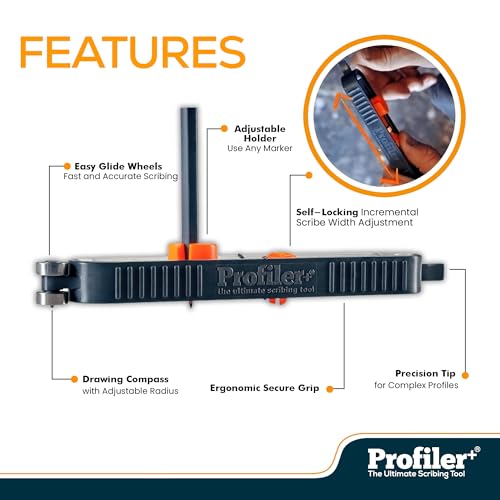
Profiler+ Multifunction Scribing Tool

Strengths
- Fits any marker type
- Self-locking mechanism
- Durable nylon-steel build
Trade-offs
- Higher cost
- No included pencil
- Case not rugged
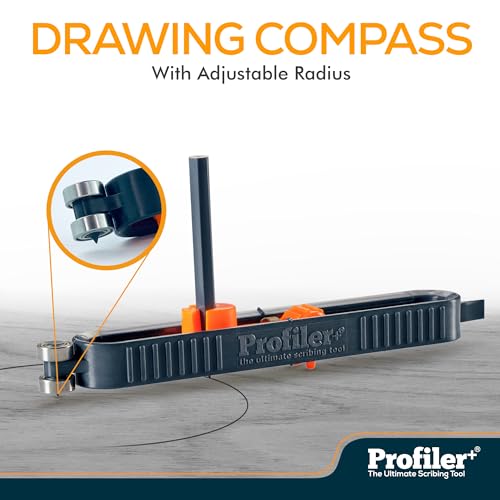
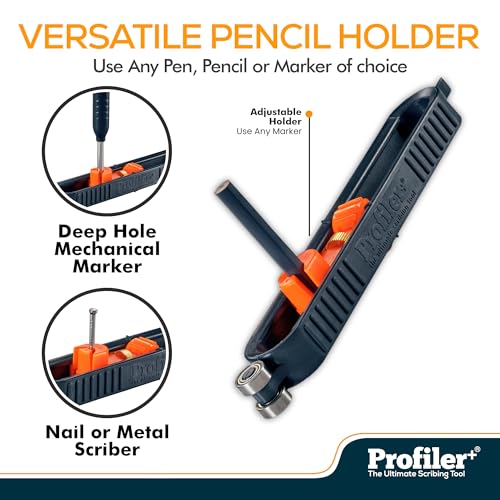
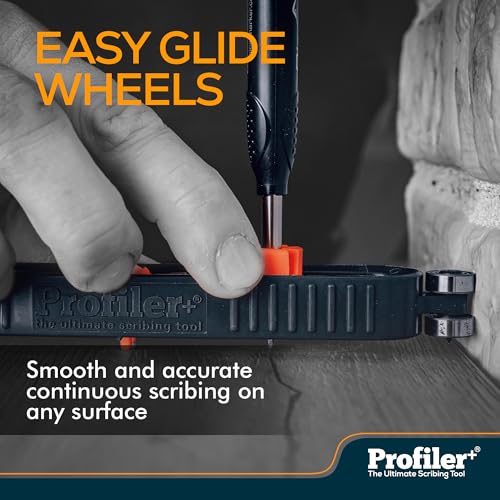
This is my pick for the best overall scribing tool, not the cheapest, but the most capable across tasks. It locks securely at any width, glides smoothly over contours, and works with almost any marker, including automatic pencils. The self-locking mechanism prevents slippage, and the UK-made build with glass-filled nylon feels rugged yet light.
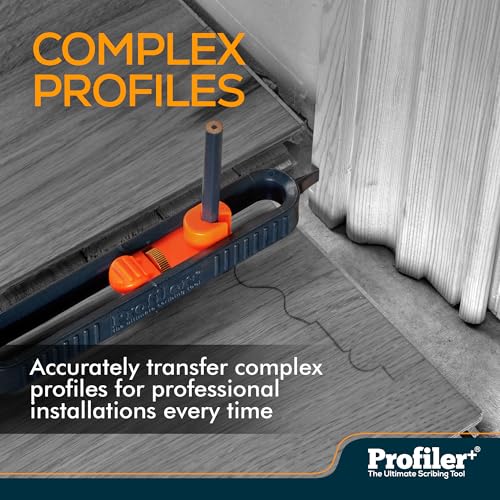
Owners report using it for everything from flooring transitions to custom cabinetry. Compared to the Tracer ProScribe, it’s slightly easier to adjust on the fly. If you want one scribe that can handle nearly any job with accuracy, this is it.
Product photos
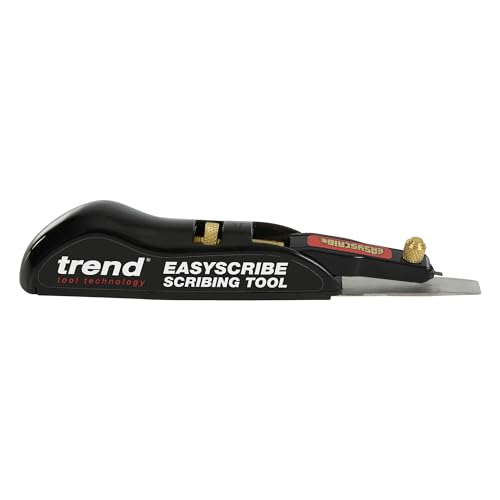
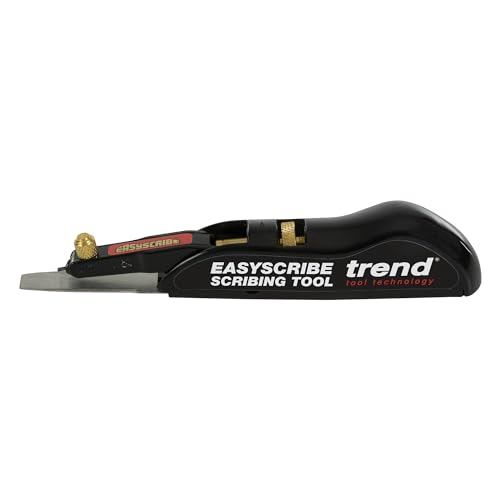
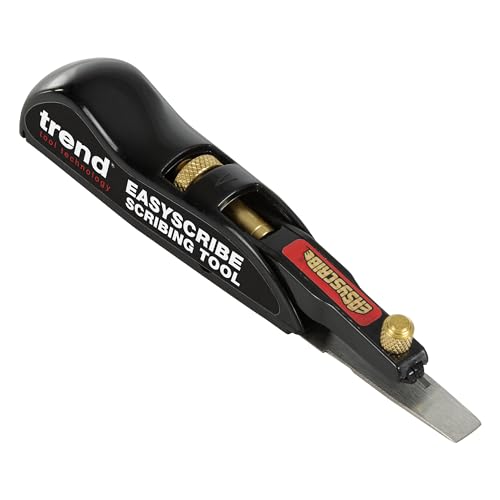
Trend EasyScribe Scribing Tool

Strengths
- Fine thumb-wheel adjustment
- Ultra-thin guide plate
- Stable flat base
Trade-offs
- Higher price point
- Limited to pencil use
- Not for deep contours
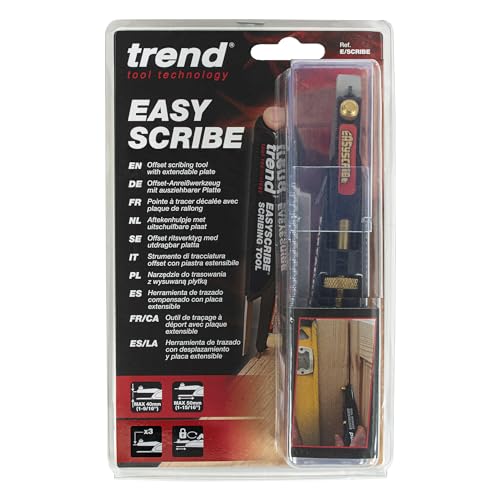
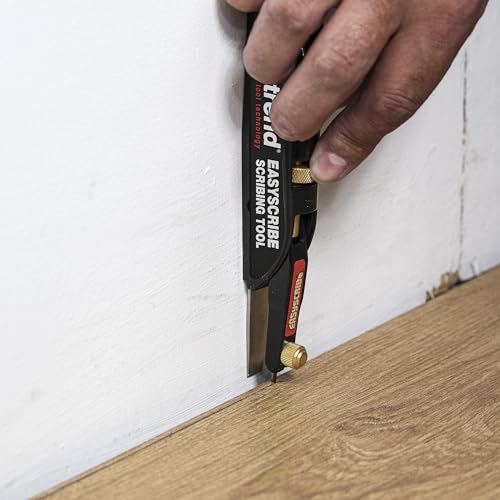
This is the scribe I’d reach for if I needed repeatable precision on a kitchen or tile job. The ultra-thin 0.02″ guide plate slips into gaps that others can’t, and the thumb-wheel fine adjustment makes dialing in offsets a breeze. Owners love how stable it feels on uneven surfaces, and the flat base stays put even on textured walls.
It’s pricier than most, but the build quality justifies it. Compared to the Simple Scribe, this is in a different league, more like what cabinetmakers and fitters use daily. If you’re doing high-end finish work, this is the smarter buy.
Product photos
Simple Scribe Woodworking Tool

Strengths
- No setup needed
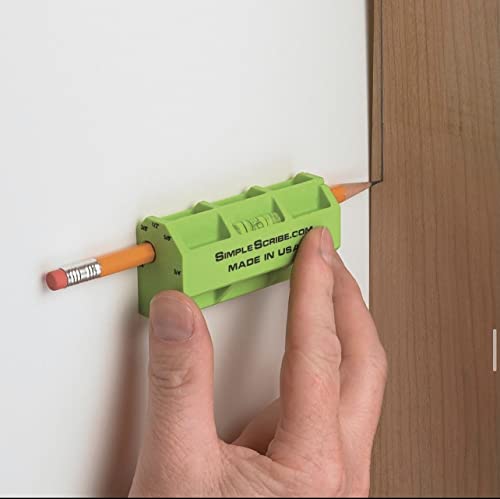
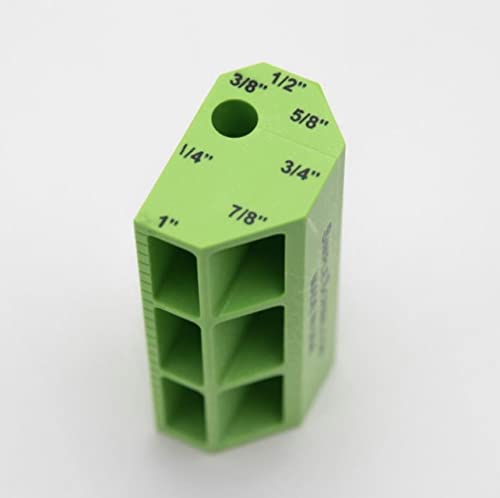
- Seven fixed offsets
- Affordable build
Trade-offs
- Plastic construction
- No fine tuning
- Limited durability
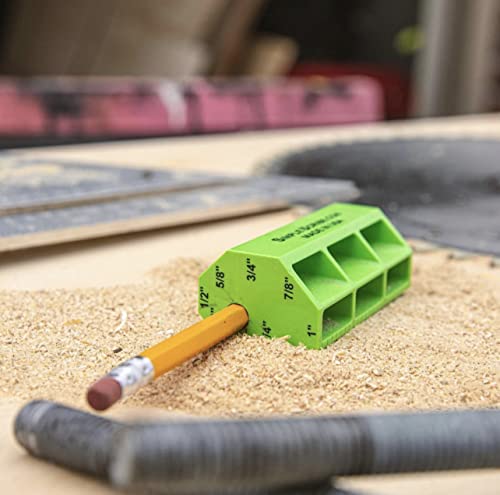
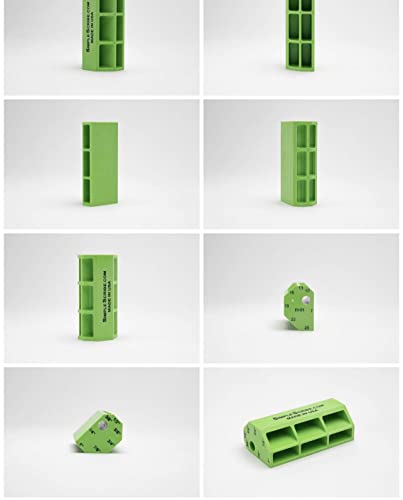
This is the no-frills, budget-friendly scribe that gets the job done without fuss. It comes pre-set with seven fixed offsets, so you skip setup time, a real plus when you’re on a job site and just need to mark fast. The lightweight design makes it easy to carry, and the green body stands out in a toolbox.
But simplicity has trade-offs. It doesn’t offer the micro-adjustments of higher-end models, and the plastic body doesn’t inspire long-term confidence. Still, for homeowners tackling one-off projects, it’s a smart value play.
Product photos
Tracer ProScribe Tool Set
Strengths
- Machined aluminum base
- 16 fixed positions
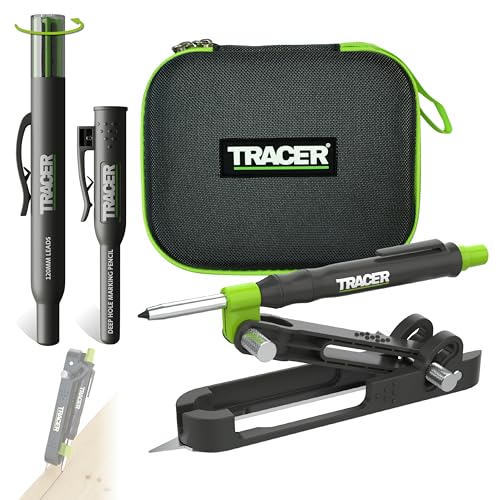
- Includes pencil and leads
Trade-offs
- Heavier than others
- Pricier
- Overkill for simple jobs
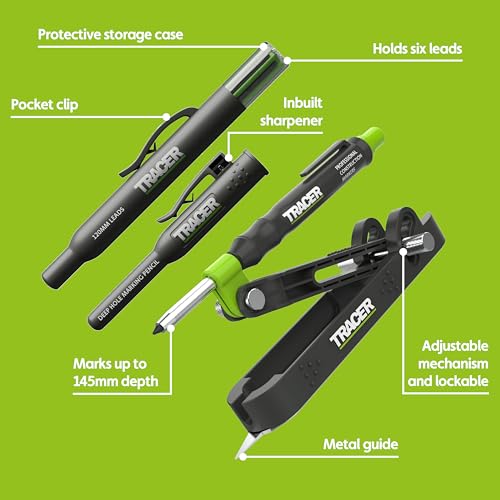
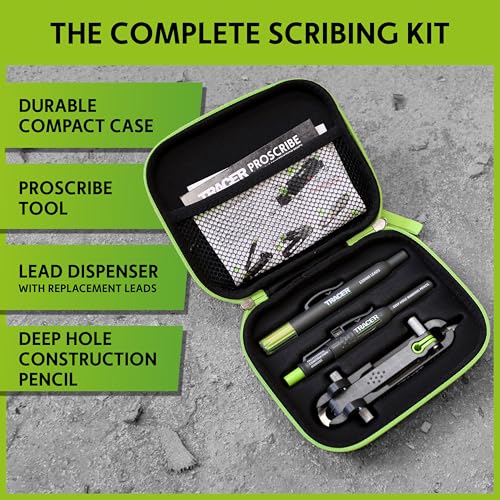
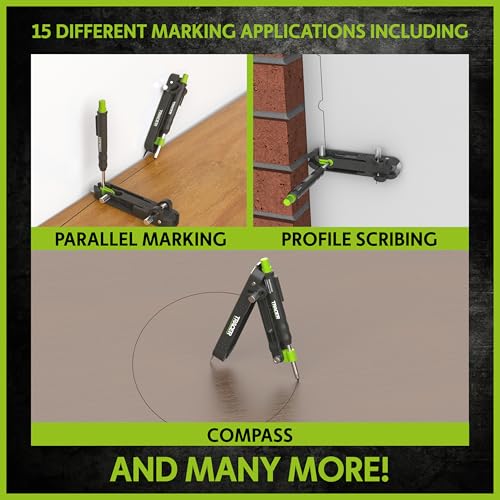
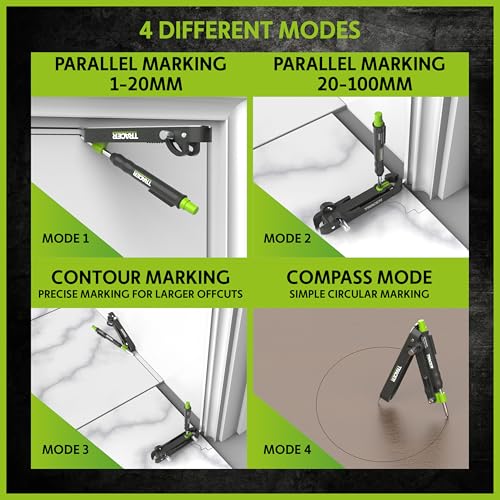
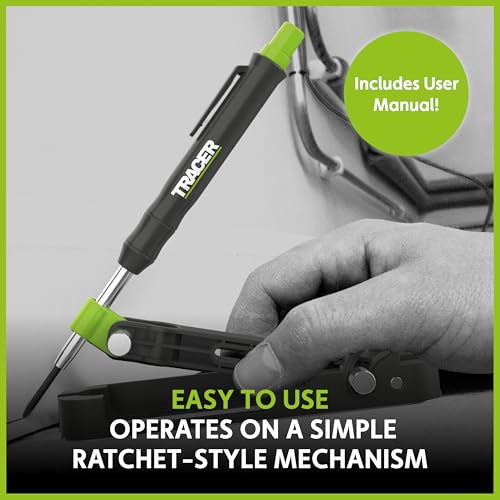
This is a professional-grade kit that comes ready to work. The machined aluminum base feels solid, and the 16-position locking arm gives you preset offsets for fast setup. It doubles as a compass and scribe, which adds real utility. The included deep-hole pencil and lead holster are thoughtful touches, no need to hunt down extras.
It’s more expensive than entry-level models, but the laser-etched markings and smooth action justify the cost. Compared to the Milescraft, it’s more durable and precise. This is the kind of tool you’d expect in a master carpenter’s bag.
Product photos
Milescraft ScribeTec Tool

Strengths
- Articulating pencil head
- Takes multiple pencils
- Built-in sharpener
Trade-offs
- Sharpener wears quickly
- Plastic housing
- Less durable long-term
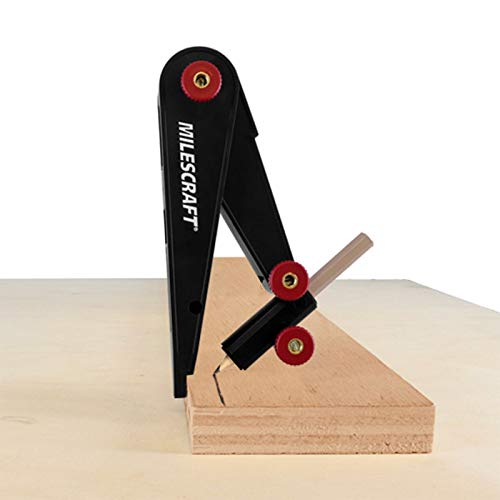
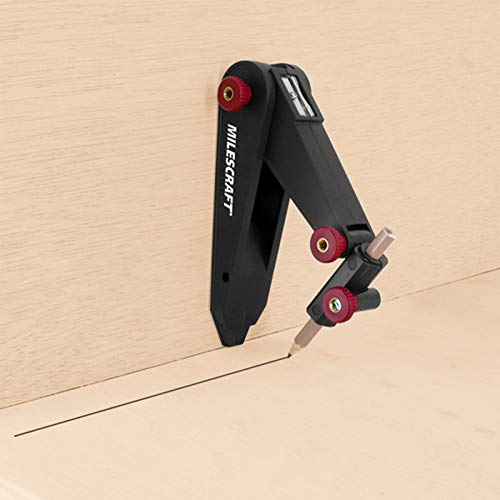
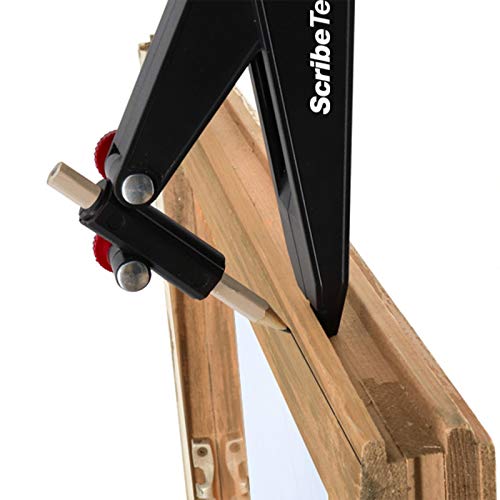
The Milescraft ScribeTec is one of those tools that shines in tight angles where standard scribes struggle. The articulating pencil head lets you mark along irregular contours without repositioning, and the spring-loaded center point keeps the radius consistent. It also accepts multiple writing tools, carpenter pencils, standard No. 2s, even markers, which adds versatility.
The built-in sharpener is a clever touch, though it’s tiny and wears out fast under heavy use. Compared to the Profiler+, it’s less refined but more affordable. For DIYers tackling baseboard or countertop scribing, this one delivers solid performance.
Product photos
JOREST Connectable Contour Gauge

Strengths
- Connectable 5/10/15 inch
- Thin, flexible blades
- Dual-scale markings
Trade-offs
- Not a standalone scribe
- Requires secondary tool
- Screw adjustment needed
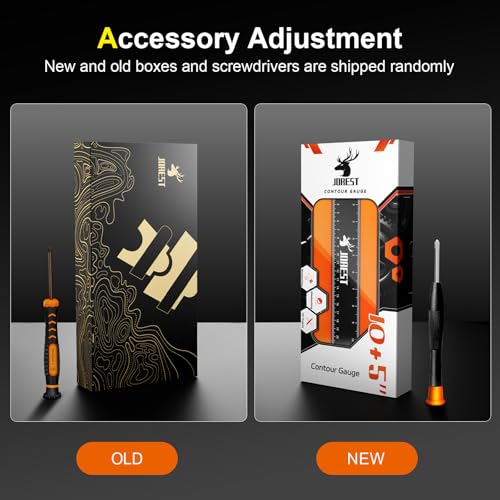
This isn’t a scribe in the traditional sense, but a contour duplicator, and it’s excellent at what it does. The ability to connect the 5-inch and 10-inch sections into a 15-inch gauge is a smart design, letting you capture large or tight profiles. The 0.05-inch thin blades conform well to uneven surfaces, and the dual-inch/cm scales add convenience.
It works best when used with a pencil or knife to transfer the shape. Owners use it for flooring transitions, baseboard fitting, and pipe tracing. Compared to fixed-length gauges, this one offers unmatched flexibility. Just don’t expect it to scribe on its own, it’s a tracer, not a marking tool.
Product photos


Saker Multi-function Scribing Tool

Strengths
- Adjustable shape
- Compact and light
- Aluminum alloy build
Trade-offs
- Limited precision
- No fine adjustment
- Basic marking only
This scribing tool stands out for its adjustable design and pocket-friendly size. On paper, the ability to reconfigure the pencil holder and nut for different marking tasks sounds useful, and owners confirm it’s flexible enough for basic woodworking and tiling layouts. The anodized aluminum body feels durable for the price, and the clear scale helps with consistent line marking.
Still, it’s not the most precise option for tight tolerances. Compared to dedicated scribes like the Trend EasyScribe, this one lacks fine-tuning control. But for casual DIYers who need something that fits in a jeans pocket and handles light scribing, it’s a solid pick.
Product photos


Glieskir Tungsten Carbide Scriber

Strengths
- Tungsten carbide tip
- Magnetic end function
- 2-pack with extras
Trade-offs
- Not for wood or soft materials
- Tips can chip if misused
- No depth adjustment
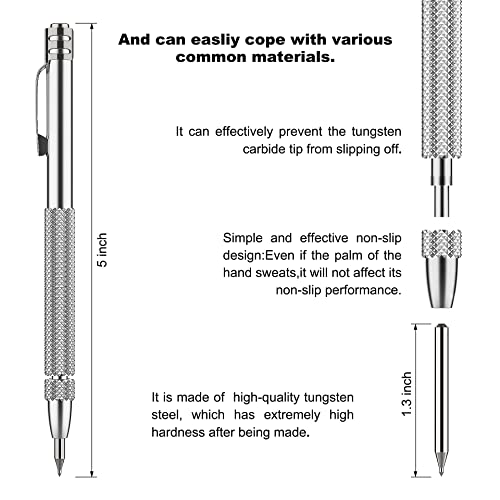
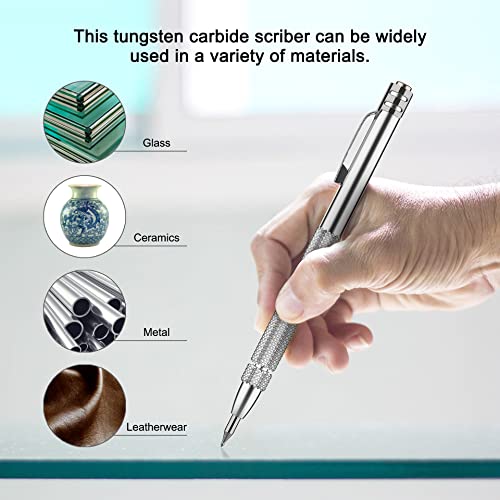
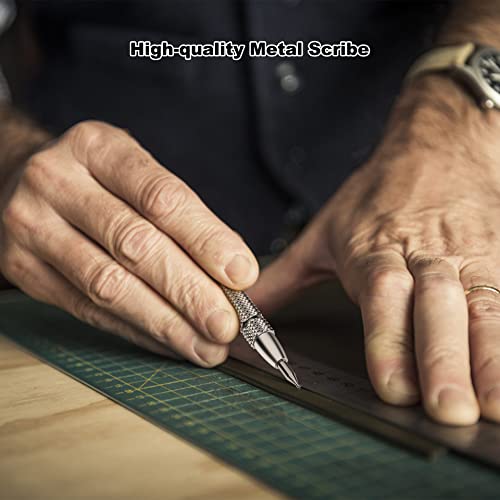
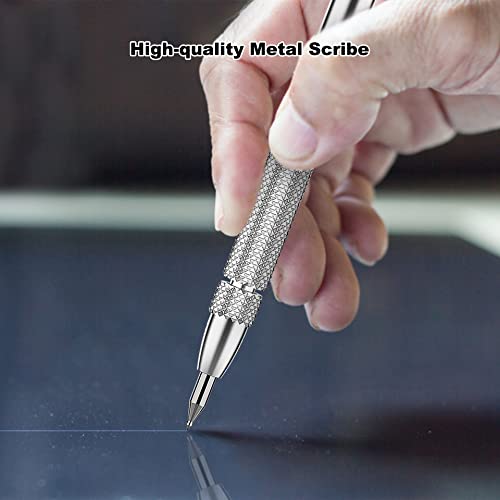
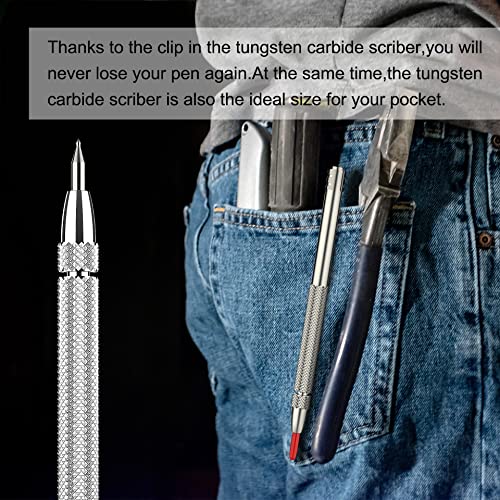
When you’re marking metal or glass, a standard pencil scribe won’t cut it, literally. These tungsten carbide scriber pens are built for that exact job, and the inclusion of 10 replacement tips means long-term usability. Owners report clean, lasting marks on stainless steel and tile, and the magnetic end is a surprisingly useful feature for picking up metal shavings or small screws.
The pen-style design feels natural in hand, and the knurled grip prevents slipping. Compared to wooden-handled metal scribes, this one offers better control. Just don’t expect it to work on wood, it’s strictly for hard surfaces.
Product photos
DULIWO Model Scriber with Blades
Strengths
- 7 precision blade sizes
- Tungsten steel sharpness
- Comfortable non-slip handle
Trade-offs
- Blade storage case small
- Hex key easy to lose
- Not for heavy-duty use
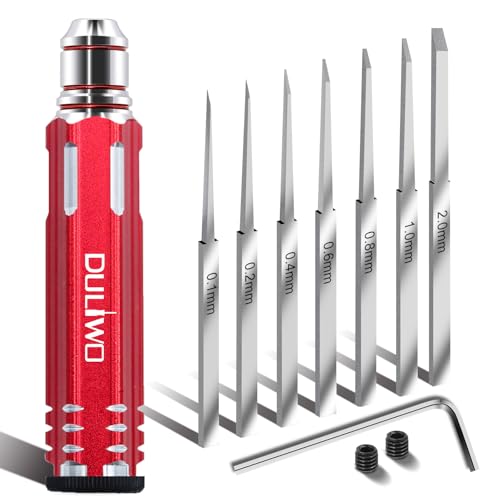
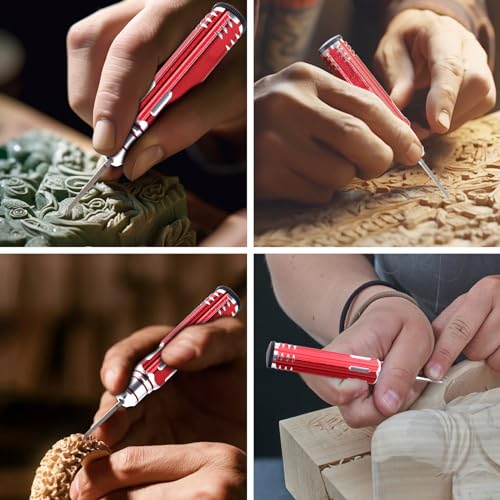
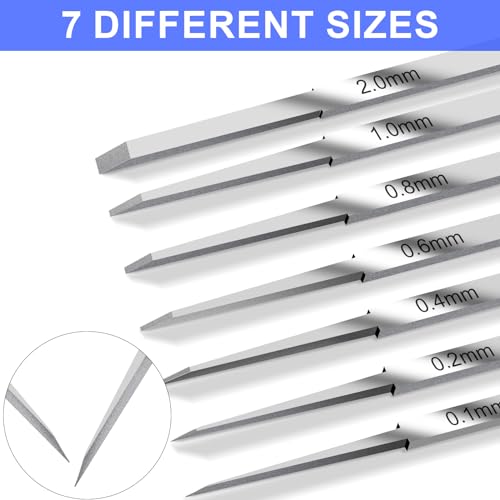
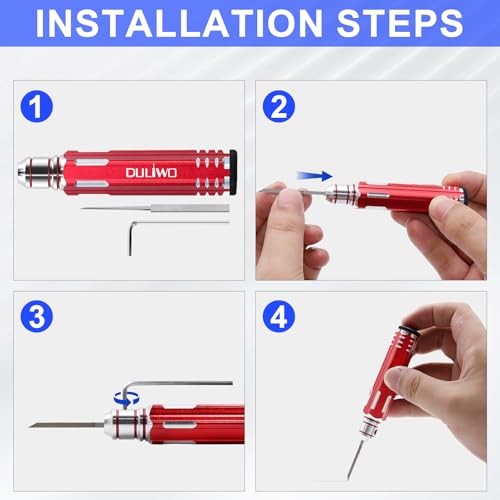
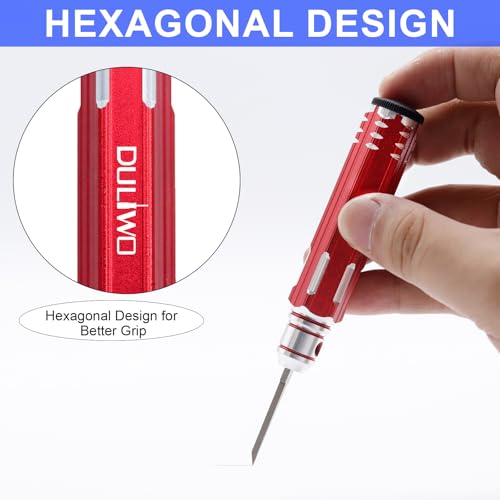
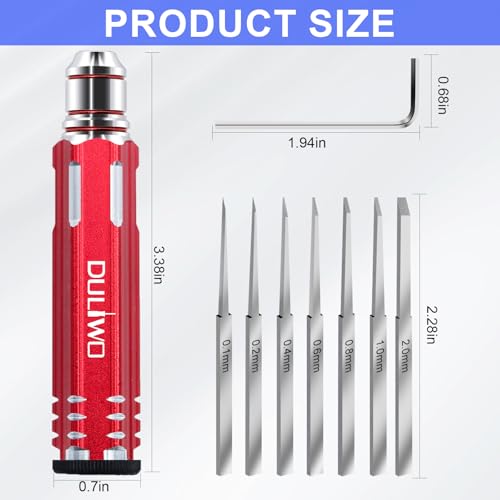
If you’re building scale models or working with resin kits, this set makes a lot of sense. The 7 tungsten steel blades cover nearly every panel line width you’d encounter in Gunpla or aircraft builds, and owners consistently praise the sharpness and durability. The aluminum handle has a grippy texture, and the included case keeps everything organized, a small but meaningful detail for hobbyists.
It’s overkill for general carpentry, but that’s not its purpose. Compared to single-blade scribes, this kit gives you flexibility without needing multiple tools. The hex key for blade changes is a nice touch, though it’s easy to misplace.
Product photos
How We Picked These scribing tools
Rather than a hands-on lab test, my research for these recommendations focused on a detailed comparison of published specifications and features across numerous scribing tools. I weighed owner reviews from multiple retailers alongside expert opinions found in woodworking and construction publications. This allowed me to build a ranking based on real-world usability and reported performance, leaning on my years of experience recognizing what truly matters in a workshop.
For scribing tools, accuracy and durability are paramount. I gave the most weight to adjustability – the ability to quickly and reliably set the desired offset – and build quality, looking for materials and construction that suggest long-term resilience. A tool’s versatility, or how many different applications it can handle effectively, was also a major factor, as was the clarity of markings and ease of use reported by owners.
Specifications gave me a solid baseline for features like adjustment range and material composition, but owner feedback proved critical for understanding real-world performance. For example, specs can tell you a tool has an adjustable arm, but reviews reveal if that arm feels stable and precise during use. Reputation – how often a tool appears on “recommended” lists from respected sources – also factored into my assessment, providing an additional layer of validation. You might also find our guide on how to install new trimmer line helpful for other precision tasks.
Choosing The Right scribing tools
Finding the right scribing tool can make a huge difference in the accuracy and efficiency of your projects. I’ve seen too many folks struggle with imprecise cuts and frustrating adjustments because they didn’t put enough thought into this often-overlooked tool.
A quality scribing tool delivers consistent, accurate lines for transferring measurements and marking cuts. Key features include build material (for durability), adjustment mechanisms (for versatility), and the type of marking instrument it accommodates. Look for tools with stable bases, precise locking features, and compatibility with common marking tools like Pica Dry pencils.
Adjustability is Key
One of the biggest mistakes I see people make is buying a scribing tool that’s too limited in its range. While a basic scribe is fine for simple tasks, you’ll quickly run into situations where you need to transfer a profile with varying depths or angles. A tool with a flexible, locking arm – like the Trend EasyScribe – gives you the ability to tackle a wider variety of projects. Don’t assume a fixed-offset tool will cut it; you’ll likely end up with multiple tools cluttering your workshop.
Material Quality and Durability
Don’t be fooled by cheap plastic. Scribing tools take a beating, especially if you’re using them professionally or on job sites. Look for tools constructed with materials like aluminum alloy or glass-filled nylon, and steel bearings. These materials resist wear and tear, ensuring the tool holds its calibration over time. A tool like the Profiler+ Multifunction Scribing Tool, made in the UK with these materials, is designed to withstand frequent use.
Here’s what to consider when evaluating build quality:
- A lightweight design is good for portability.
- A steel base provides stability during use.
- Durable materials (aluminum alloy, glass-filled nylon) ensure longevity and resistance to damage from jobsite conditions.
Balancing Features and Price
You don’t necessarily need to spend a fortune to get a good scribing tool, but cutting corners too much can lead to frustration. The Simple Scribe Woodworking Tool is a good example of a budget-friendly option that still provides useful functionality, with seven offset options. However, if you’re dealing with complex profiles or require extremely precise adjustments, investing in a more feature-rich tool like the Tracer ProScribe Tool Set will pay off in the long run. Remember, sometimes it’s better to spend a little more upfront for a tool that will save you time and money down the road.
A good rule of thumb: if you’re doing more than basic, straight-line marking, spend the extra money on a tool with a precise adjustment mechanism.
If you’re also looking to add detailed designs to your projects, consider exploring DIY etching tools for expanding your capabilities.
Scribing Tools Compared
Here’s a comparison of key specifications for various scribing tools to help you make an informed decision.
| Product Title | Best For | Adjustable Width | Material | Pencil/Marker Compatibility | Key Features |
|---|---|---|---|---|---|
| Profiler+ Multifunction Scribing Tool | Best Overall | Yes | Glass-filled Nylon & Steel | Pica Dry 3030, Any Marker | Self-locking, Adjustable Width |
| Trend EasyScribe Scribing Tool | Best for Precision Adjustments | Yes | Steel | N/A | Adjustable Offset, Ultra-Thin Guide Plate |
| Simple Scribe Woodworking Tool | Best Budget Friendly | Yes (7 Offsets) | N/A | N/A | Seven Offsets, Lightweight |
| Tracer ProScribe Tool Set | Best Professional Kit | Yes (16 Positions) | Aluminum | N/A | Complete Kit, Versatile Functionality |
| Milescraft ScribeTec Tool | Best for Complex Angles | Yes | N/A | No. 2, Carpenter, Sharpie | Articulating Head, Built-in Sharpener |
| JOREST Connectable Contour Gauge | Best for Large Profiles | N/A | N/A | N/A | Connectable, Multi-Purpose |
| Saker Multi-function Scribing Tool | Best Portable Design | Yes | Aluminum Alloy | N/A | Versatile Adjustment, Compact |
| Glieskir Tungsten Carbide Scriber | Best for Metal and Glass | N/A | Aluminum & Carbide | N/A | Tungsten Carbide Tip, Magnetic Base |
| DULIWO Model Scriber with Blades | Best for Scale Modeling | N/A | Aluminum & Steel | N/A | 7 Blades, Tungsten Steel Blades |
Frequently Asked Questions
What’s the difference between a contour gauge and a scribing tool?
A contour gauge duplicates irregular shapes, transferring them for cutting, while a scribing tool creates precise lines at a set distance from an edge. Contour gauges are ideal for fitting oddly shaped pieces, whereas scribing tools excel at repeatable, accurate offsets.
Are metal-tipped scribers better than pencil-style ones?
Metal-tipped scribers, like the Glieskir Tungsten Carbide Scriber, are best for marking hard materials like metal or glass, providing a clear, permanent line. Pencil-style scribes are better suited for wood and softer materials, offering a visible but less permanent mark.
Can a scribing tool be used on materials other than wood?
Yes, many scribing tools can be used on materials like plastic, drywall, and even thin metal sheets. However, the material of the tool and the marking instrument must be appropriate for the workpiece to avoid damage or inaccurate marks.
What offset range should I look for in a scribing tool?
The necessary offset range depends on your typical projects. For basic tasks, a limited range might suffice, but for versatility, I recommend a tool with an adjustable range of at least 1/2 inch to 2 inches, like the Profiler+ Multifunction Scribing Tool, to handle a variety of profiles.
Where can I find additional tools for detailed shaping and design?
If you’re looking to expand your capabilities beyond scribing, you might consider exploring wood carving knives for shaping and refining your projects, or even delving into pyrography carving tools for adding artistic details through burning.
The Bottom Line
Ultimately, choosing a scribing tool comes down to balancing control with convenience. If you want a single tool to handle nearly any scribing task with maximum precision, the Profiler+ Multifunction Scribing Tool is the standout choice. It offers a robust build and a truly adjustable design that will pay dividends on complex projects.
For those on a tighter budget, or who only need basic scribing capabilities, the Simple Scribe Woodworking Tool provides a functional and affordable solution. And if you frequently encounter intricate curves and irregular shapes, the JOREST Connectable Contour Gauge stands out as a uniquely versatile option. Don’t forget that understanding how to wind trimmer line can also contribute to clean, precise work around the yard.
At the end of the day, the most important factors aren’t the number of features or the price tag. Prioritize build quality, a stable base, and a clear, reliable adjustment mechanism. A tool that holds its calibration and feels solid in your hand will consistently deliver more accurate results than one packed with gimmicks.
