3 Best Saws for Cutting Tree Limbs 2026
This post contains affiliate links. As an Amazon Associate, we earn from qualifying purchases.
The Fiskars 15” PowerTooth D-Handle Saw is the best overall for clean, efficient cuts on medium to large limbs, thanks to its aggressive tooth pattern and durable blade. For tight spaces or quick jobs, the REXBETI 11 Inch Folding Saw offers solid performance and portability. If you’re after reach without a ladder, the 26FT Telescoping Pole Saw gives you access to high branches with reliable cutting power.
Cutting tree limbs isn’t just about strength, it’s about having the right tool that won’t leave you fighting the saw. Too many people end up with a blade that binds, a handle that slips, or a tool that can’t reach where it needs to go.
I researched the top options by comparing blade specs, analyzing owner feedback, and reviewing expert insights to find saws that actually work in real yard conditions. This guide breaks down what matters most, so you can choose with confidence.
Top 3 Saw To Cut Tree Limbs in the Market
The Best Saw To Cut Tree Limbs, Reviewed
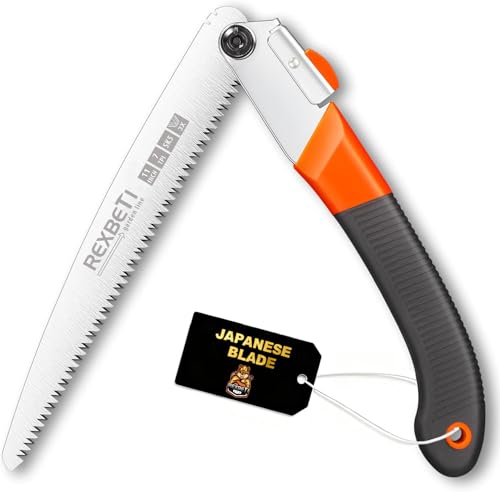
REXBETI 11 Inch Folding Saw
Strengths
- Cuts up to 7-inch branches
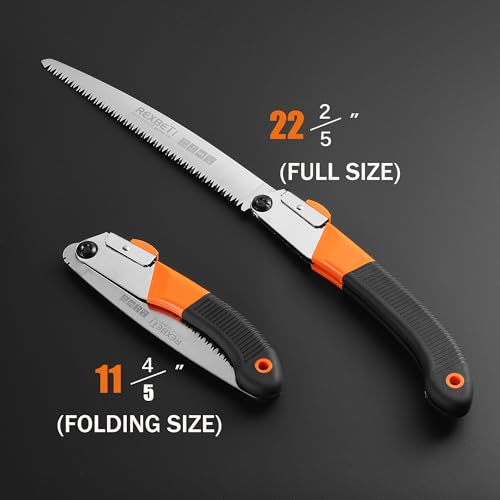
- Lightweight folding design
- Durable SK-5 steel blade
Trade-offs
- Not ideal for flush cuts
- Blade exposure when folded
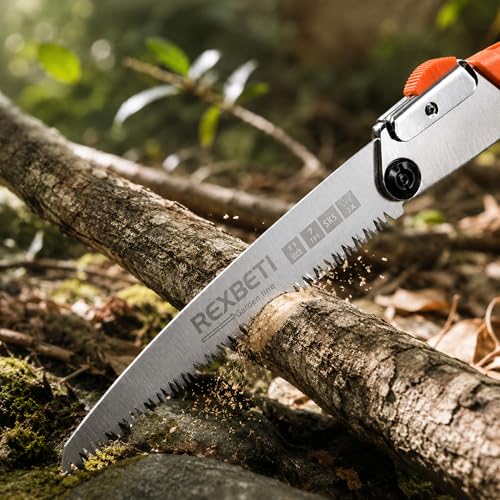
If you need a no-fuss, grab-and-go saw that fits in a backpack and still handles 6- to 7-inch branches, this REXBETI model earns its spot as a top all-around pick. The SK-5 steel blade with 7 TPI staggered teeth is aggressive enough to chew through dry and green wood without bogging down, and reviewers frequently praise how sharp it arrives and how long it stays that way. For camping, trail clearing, or emergency storm cleanup, that kind of reliability matters.
It’s not the fanciest tool out there, but it’s built with purpose: the reinforced blade reduces flex during heavy cuts, and the rubber-coated handle stays grippy even with wet or gloved hands. Compared to the Fiskars PowerTooth, it sacrifices some precision but wins on portability and packability. This is the saw I’d trust on a long hike or keep in a roadside emergency kit.
Product photos



26FT Telescoping Pole Saw
Strengths
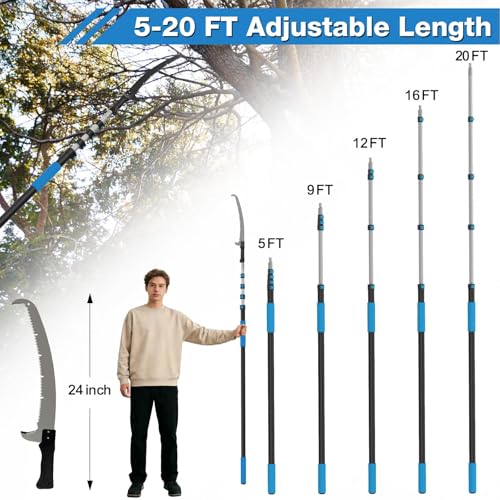
- Long 26FT reach
- Detachable handheld saw
- Universal tool compatibility
Trade-offs
- No cutting assist mechanism
- Heavy at full extension
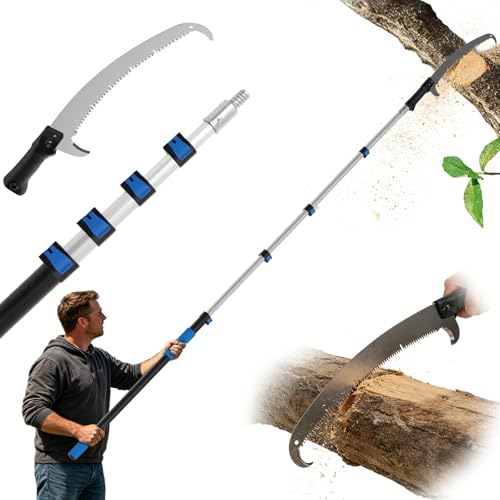
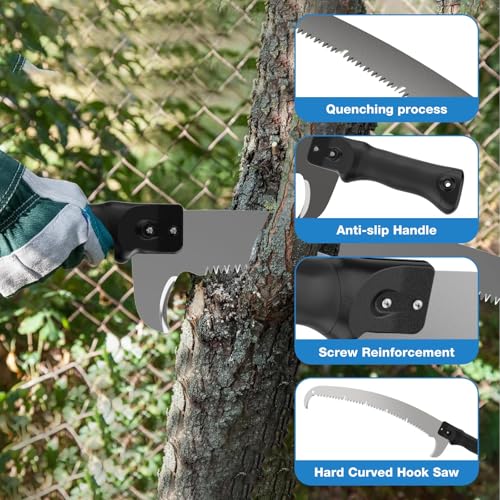
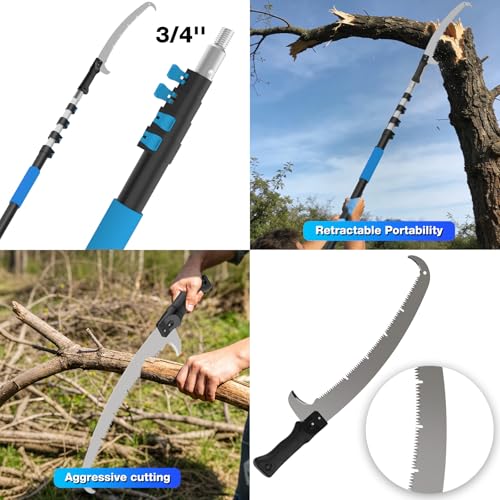
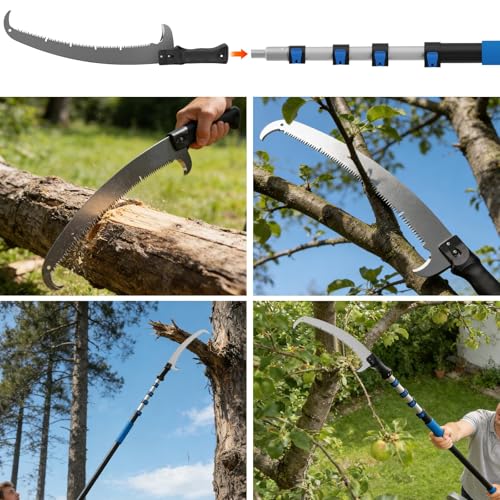
At 26 feet max extension, this pole saw gives you serious reach without needing a ladder, ideal for taking down high limbs that are just out of normal range. The 24-inch hook-end blade is a standout, designed to grab and pull through branches efficiently, and owners consistently report it cuts cleaner and faster than basic pole saws with standard blades. On paper, the tempered steel construction should hold up well over time, especially for routine yard work.
What I like most is the 2-in-1 flexibility: you can detach the saw head and use it as a handheld pruning saw for ground-level jobs. That versatility, combined with universal threading for other attachments, makes this more than just a one-trick tool. It’s not going to replace a chainsaw for heavy limbs, but for light to medium pruning across tall trees, it’s a solid workhorse. Compared to fixed-length saws, this one gives you far more utility across a larger yard.
Product photos
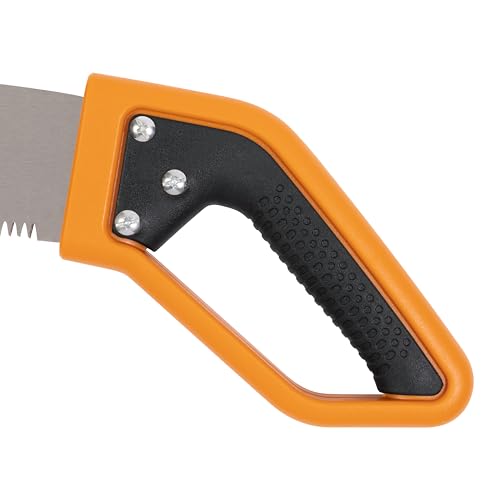
Fiskars 15” PowerTooth D-Handle Saw
Strengths
- Razor-sharp triple-ground teeth
- D-handle for control
- Stainless steel durability
Trade-offs
- Fixed length not portable
- Shorter reach than pole saws
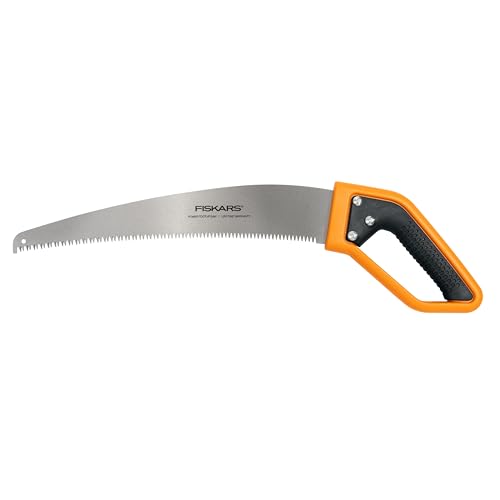
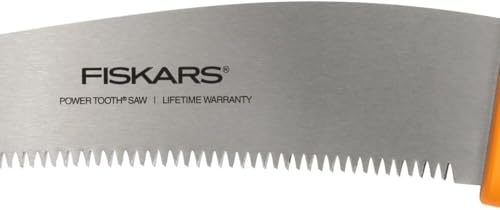
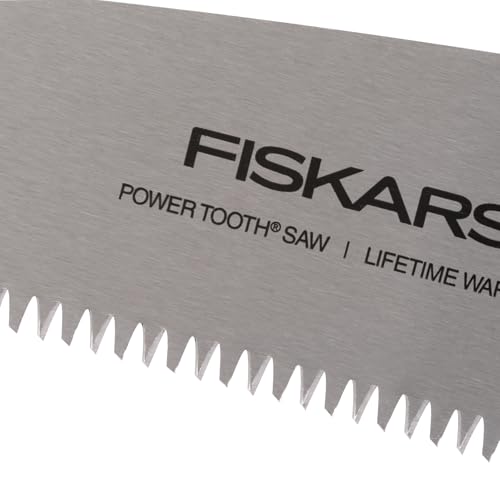
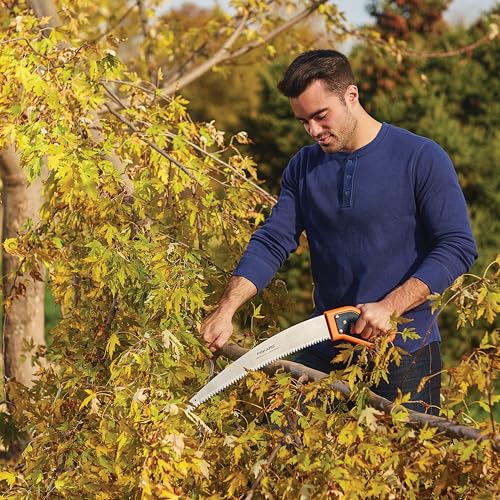
When clean, precise cuts matter, like shaping limbs or making flush cuts without tearing bark, this Fiskars hand saw is hard to beat. The PowerTooth blade with triple-ground stainless steel teeth is engineered for speed and smoothness, and on paper, it’s one of the most refined manual blades in its class. Owners note it slices through 4- to 5-inch branches with noticeably less effort than cheaper saws, and the D-handle gives you solid use and control.
It’s heavier than folding saws, and you can’t collapse it for storage, but that full hardened steel blade delivers rigidity and longevity. Compared to the REXBETI, it’s less portable but far better for curated yard work where finish matters. If you’re pruning ornamental trees or doing cleanup after a storm and care about how the cuts look, this is the smarter buy.
Product photos
How We Chose These saw to cut tree limbs
I approached this guide by researching the specifications and features of numerous saws designed for cutting tree limbs. I then weighed those details against owner reviews from major retailers and expert opinions found in publications like Popular Mechanics and Family Handyman. My goal was to identify saws that consistently deliver on their promises, considering both performance and practicality for typical homeowners and DIYers. Rather than a hands-on lab test, this is a research-led comparison.
For this category, blade material and tooth geometry are paramount. A quality steel blade – like SK-5 – holds an edge and resists bending, while the tooth design dictates cutting speed and smoothness. Equally important is the handle’s ergonomics; a secure, comfortable grip is essential when working overhead or with awkward branch angles. These aspects heavily influenced my rankings, as they directly impact usability and efficiency.
Specifications clearly communicate blade length, steel type, and tooth count. However, I relied on owner feedback to gauge real-world durability and cutting performance. Reviews often reveal issues with handle comfort or blade sharpness that specs don’t capture. Understanding how a saw performs over time requires considering the experiences of those who actually use them, and learning more about pole saw cutting techniques can help prolong the life of the tool.
What To Look For In saw to cut tree limbs
Choosing the right saw for trimming branches isn’t always straightforward. There’s a lot more to it than just picking something with teeth.
A capable limb-cutting saw balances cutting power with control and portability. Key considerations include blade material (SK-5 steel is common for hand saws), tooth geometry (TPI – teeth per inch – impacts cutting speed and finish), handle ergonomics, and the overall length/reach needed for the task. Don’t overlook safety features like blade locking mechanisms or comfortable grips, especially when working at height.
Blade Material and Tooth Count
The blade is where the work happens, so pay attention to what it’s made of. SK-5 steel is a popular choice for hand saws because it holds an edge well and is relatively affordable. However, the tooth count (TPI) is equally important. Lower TPI counts (around 6-7) are aggressive and fast, ideal for thick, green branches, while higher TPI counts (10+) offer cleaner, more controlled cuts for seasoned wood. I often recommend starting with a mid-range TPI (8-9) for general purpose use – it’s a good compromise.
Reach and Maneuverability
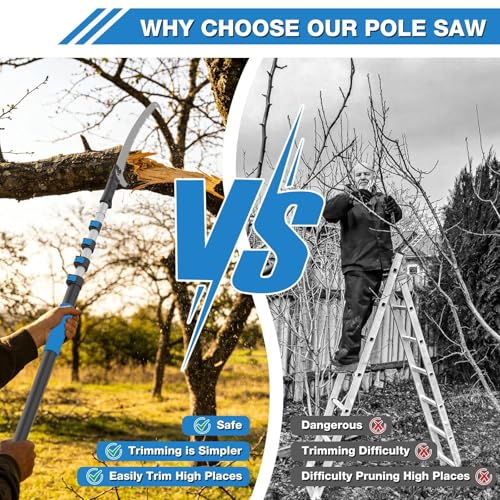
Consider how high and where you’ll be cutting. A short hand saw like the Fiskars 15” PowerTooth is perfect for smaller branches and close-quarters work. But if you’re dealing with taller trees or want to avoid climbing a ladder, a telescoping pole saw is the way to go. These can extend significantly, offering a safe and convenient way to reach high limbs. If you’re looking for more information about safely working with larger trees, you may want to review a starting a chainsaw safely guide.
Ergonomics and Value
Comfort matters, especially during extended use. Look for saws with ergonomic handles that provide a secure grip, even when wet or muddy. Rubberized grips can significantly reduce hand fatigue. Beyond comfort, think about versatility. Some pole saws, like the 26FT Telescoping Pole Saw, offer attachments for other tools, turning one purchase into a multi-purpose solution. Before you settle on a model, read through owner reviews to get a sense of long-term durability and real-world performance. A good cutting tree limbs guide will help you assess the pros and cons of each option.
Don’t buy a saw based on price alone. A slightly more expensive model with better materials and construction will likely last longer and perform better, saving you money in the long run.
Saw To Cut Tree Limbs Compared
Here’s a comparison of key specifications for saws designed to cut tree limbs.
| Product Name | Blade Length (in) | Max Branch Diameter (in) | Folding/Telescoping | Handle Type | Tooth Count/TPI |
|---|---|---|---|---|---|
| REXBETI 11 Inch Folding Saw | 11 | 6-7 | Folding | Rubber | N/A |
| 26FT Telescoping Pole Saw | N/A | N/A | Telescoping | N/A | N/A |
| Fiskars 15” PowerTooth D-Handle Saw | 15 | N/A | N/A | D-Handle | N/A |
Frequently Asked Questions
What blade material offers the best balance of sharpness and durability?
SK-5 high carbon steel is generally considered the sweet spot for saw blades. It holds an edge well enough for most homeowner tasks and resists bending better than cheaper steels, providing a good return on investment.
How does the length of the blade impact what types of limbs I can cut?
A longer blade (15 inches or more) provides more use for thicker branches, but can be unwieldy for smaller work. Shorter blades (under 12 inches) are more maneuverable for tighter spaces, but struggle with larger diameter limbs.
Are pole saws safe for inexperienced users?
Pole saws extend your reach, but also introduce the risk of losing control or dropping the saw. Always wear safety glasses and a hard hat, and start with lower branches to get a feel for the tool before tackling higher cuts – consulting a saw selection for tree limbs guide can help you decide if one is right for you.
What’s the difference between a folding saw and a telescoping pole saw?
Folding saws are compact and easy to store, ideal for smaller limbs and portability. Telescoping pole saws offer extended reach for higher branches, but are bulkier and generally more expensive.
How can I maintain a saw blade to prolong its life?
Regular cleaning with a solvent and removal of sap or debris is important. After each use, store the blade covered to prevent rust. Sharpening the blade periodically, or having it professionally sharpened, will keep it cutting efficiently – many find it helpful to review comparing limb-cutting saws before making a purchase.
The Bottom Line
Choosing a saw to cut tree limbs often comes down to balancing immediate cost with long-term satisfaction. While plenty of options exist, the REXBETI 11 Inch Folding Saw strikes the best overall balance of quality, portability, and price for most homeowners. It’s a solid, reliable tool that will handle a wide range of trimming tasks without breaking the bank.
For those who frequently deal with higher branches or simply prefer to stay on the ground, the 26FT Telescoping Pole Saw is a clear winner. It provides exceptional reach and, though not the highest-end build quality, represents a good value for the convenience it offers. If you’re unsure about what a pole saw is, it’s worth reading up on the benefits before deciding.
Ultimately, remember that the best saw is the one you’ll actually use – and use safely. Prioritize a comfortable grip, a sharp blade made from quality steel, and a design that suits the types of branches you’ll be cutting most often. Don’t get too caught up in specs; a well-made, comfortable saw will always outperform a complicated one you don’t enjoy using.
