
5 Best Saws for Cutting Rocks 2026
This post contains affiliate links. As an Amazon Associate, we earn from qualifying purchases.
The Hi-Tech Diamond 10” Lapidary Saw is the best overall choice for cutting rocks, offering strong performance and solid build quality for serious hobbyists. For tighter budgets, the Hi-Tech Diamond 4″/5″ Trim Saw delivers reliable results on smaller projects and softer stones.
Cutting rock isn’t like slicing wood, it demands the right tool built for dust, vibration, and constant water cooling. Most people end up frustrated with saws that overheat, chatter, or come with junk blades that dull in minutes.
This guide cuts through the noise. I looked at motor specs, blade compatibility, frame rigidity, and real-world feedback from owners who cut rock regularly. These picks reflect what actually works, based on how the tools are engineered and how they perform over time, not just what the box claims.
Top 5 Saw For Cutting Rocks in the Market
The Best Saw For Cutting Rocks, Reviewed
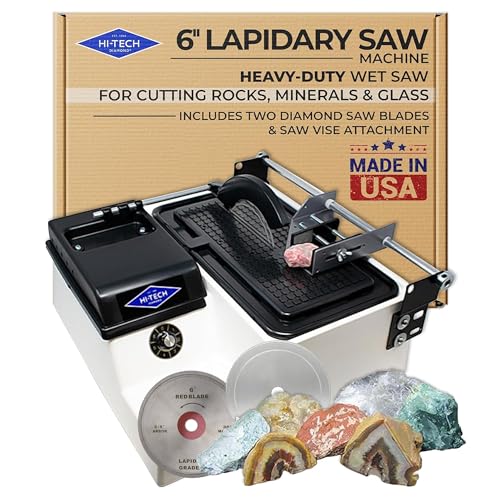
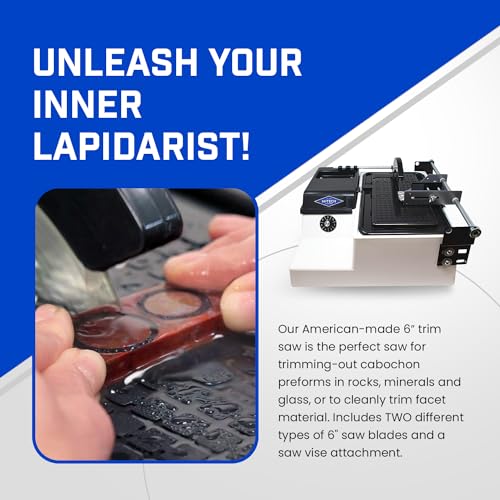
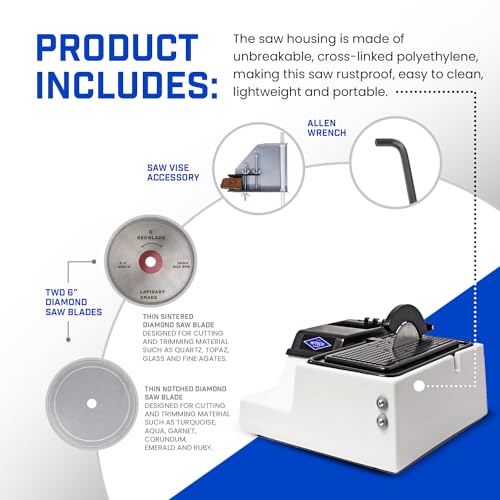
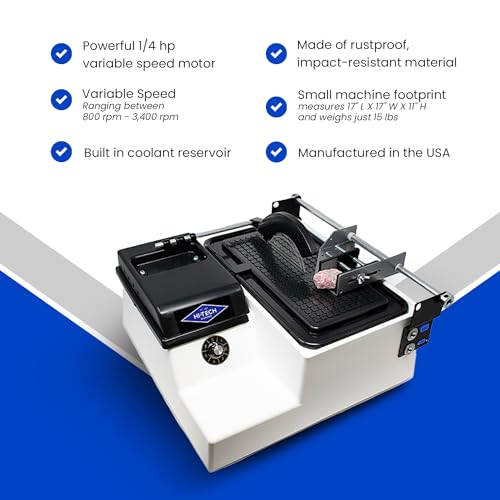
Hi-Tech Diamond 6″ Lapidary Saw
Strengths
- Variable speed control
- Well-balanced cutting depth
- Includes vise and two blades
- Lightweight yet sturdy
Trade-offs
- Smaller blade than 10-inch
- 115V only
- Limited for very thick rocks
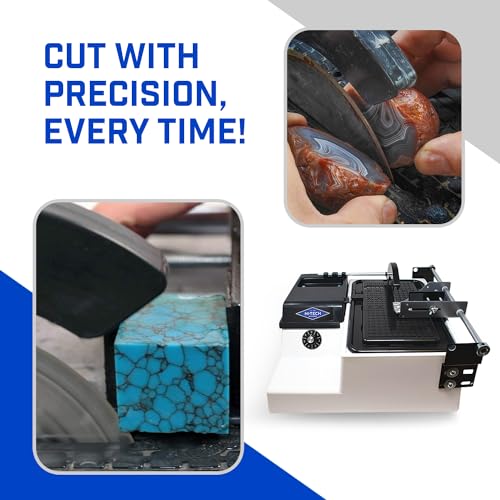
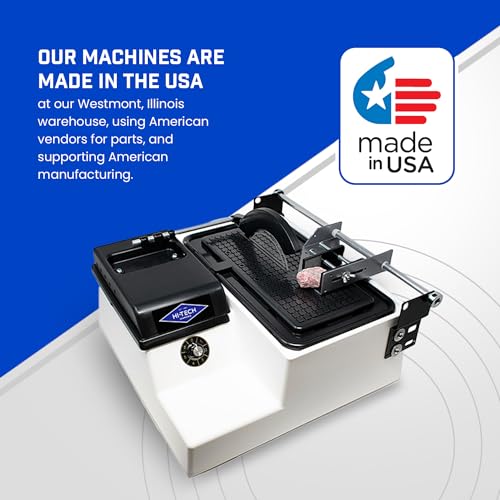
This 6-inch saw hits the sweet spot for most hobbyists. The 1/4 HP variable speed motor (800–3,400 RPM) gives excellent control across different rock types, from soft limestone to hard jasper. It’s lighter than the 10-inch model at 15 lbs, yet the table is spacious enough for accurate cuts. The included notched and sintered blades cover both aggressive cutting and finishing, and the vise attachment improves precision, something the smaller 4″/5″ model lacks.
Owners consistently rank this as the most balanced option in the Hi-Tech lineup. It’s not as powerful as the 10-inch, but for trimming cabs, slicing small slabs, or prepping tumbler rough, it’s more than capable. The rustproof housing and splash shield make cleanup easy, and being made in the USA adds to its reliability rep. If you want one saw that does it all without taking over your garage, this is it.
Product photos
Hi-Tech Diamond 10″ Lapidary Saw
Strengths
- Large 10-inch blade
- Strong motor for thick cuts
- Includes two diamond blades
- Durable polyethylene housing
Trade-offs
- Heavy at 35 lbs
- No variable speed
- 115V only
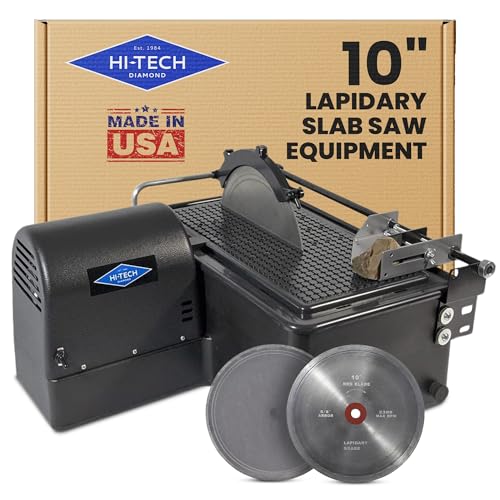
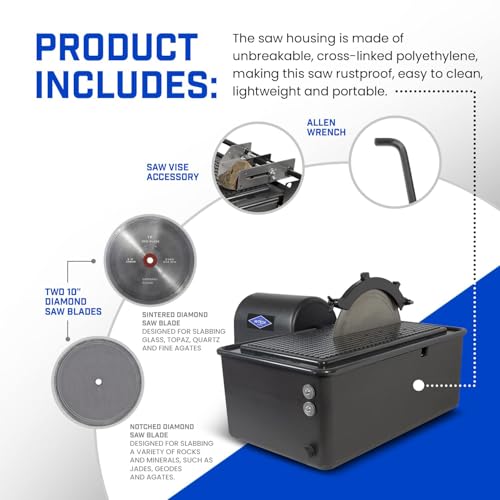
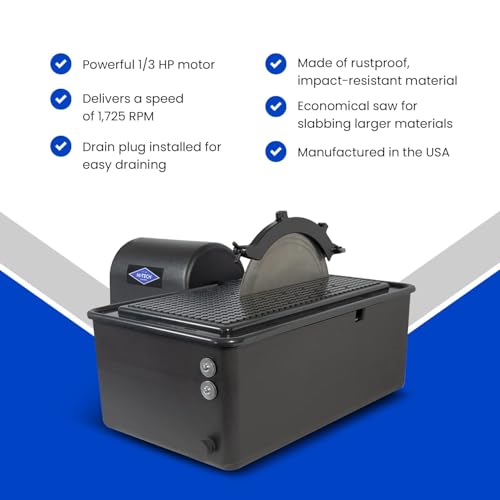
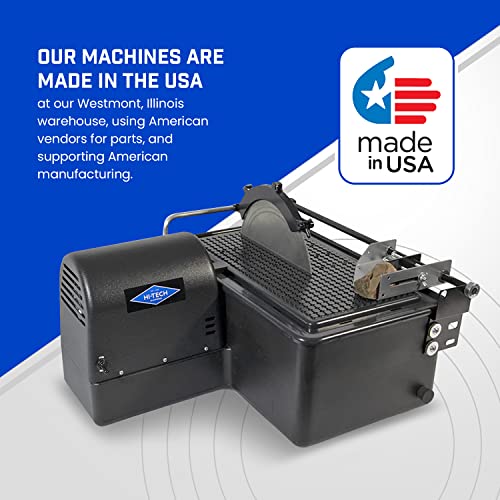
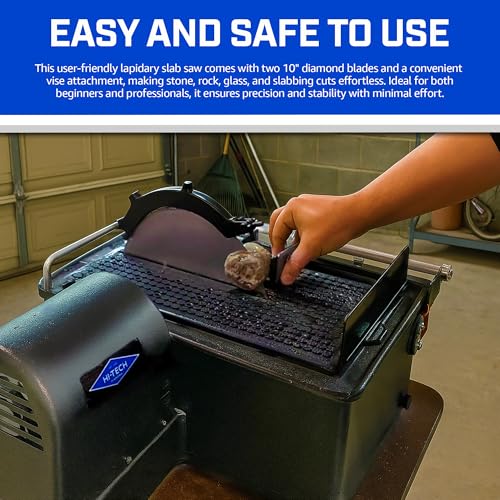
If you’re cutting big rocks, this 10-inch saw is where you should start. The 1/3 HP motor may not sound massive, but paired with the 10-inch blade and sintered diamond rim, it powers through thick slabs with less bogging than smaller units. The 2.5-quart water reservoir and splash guard keep things cool and tidy, which matters during long slabbing sessions. Owners praise its stability and rustproof housing, and having both a notched and sintered blade out of the box means you can start aggressive cutting and finish with smoother passes.
Compared to the 6-inch Hi-Tech model, this one trades portability for real cutting muscle. At 35 lbs, it’s not light, but the larger table gives you room to maneuver big chunks of geode or river rock. It’s not variable speed, which limits fine control, but for straightforward slabbing, that’s a fair trade. Just remember, it’s 115V only, so it’s a no-go for international users without conversion.
Product photos
Hi-Tech Diamond 4″/5″ Trim Saw
Strengths
- Budget-friendly
- Lightweight and portable
- Variable speed
- Includes both 4″ and 5″ blades
Trade-offs
- Small water reservoir
- Limited cutting depth
- Not for large rocks
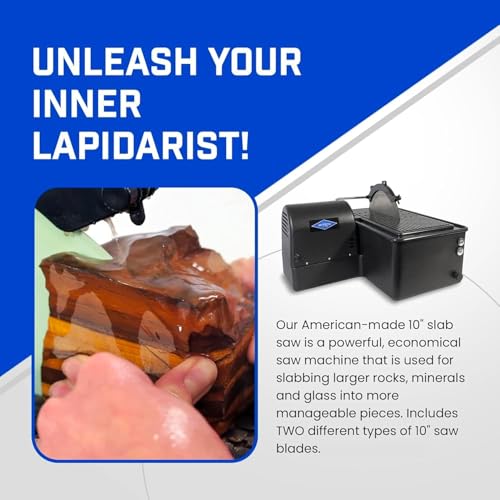
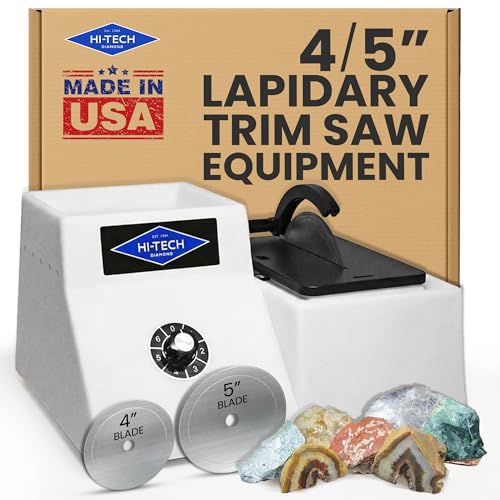
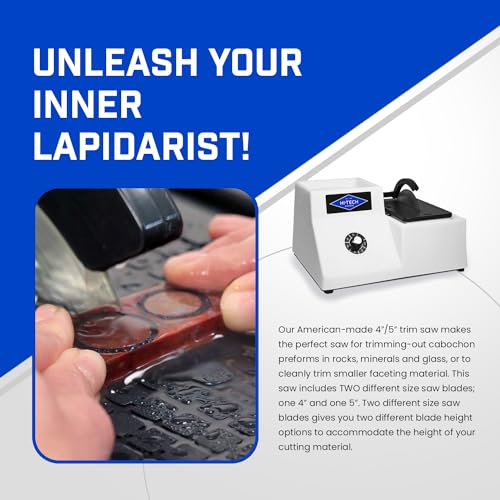
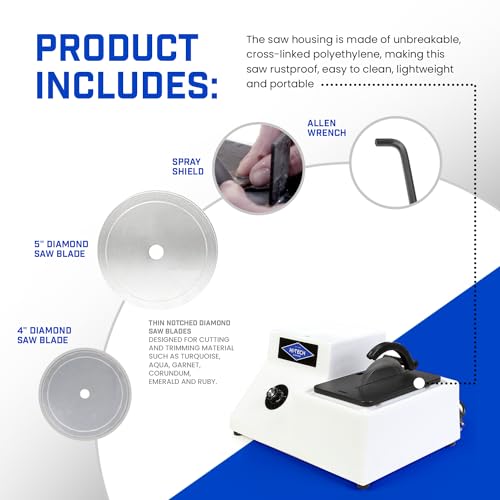
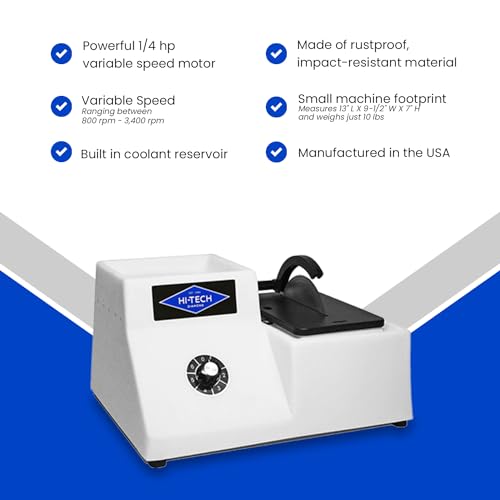
This is the most affordable entry point into proper lapidary work without sacrificing build quality. The 1/4 HP motor and variable speed (800–3,400 RPM) give solid control for trimming small stones, and the dual 4″ and 5″ blade compatibility adds flexibility. It’s lightweight at just 10 lbs, making it easy to store or take to a club workshop. The small 8-ounce water tank needs frequent refilling, but it does the job for short sessions.
Owners consistently call it the ‘perfect starter saw’, especially since it includes both blades, a vise, and splash guard. Compared to the 6-inch model, it’s more limited in capacity but still handles tumbled rough and smaller slabs fine. It won’t replace a bigger saw long-term, but for under $200, it’s hard to beat for beginners who want to learn slabbing basics without overspending.
Product photos

Lapidary Rock Saw with Polishing Kit
Strengths
- Compact design
- All-in-one functionality
- High RPM motor
- Excellent for detailing
Trade-offs
- Shallow cutting depth
- Small work surface
- Limited for large rocks
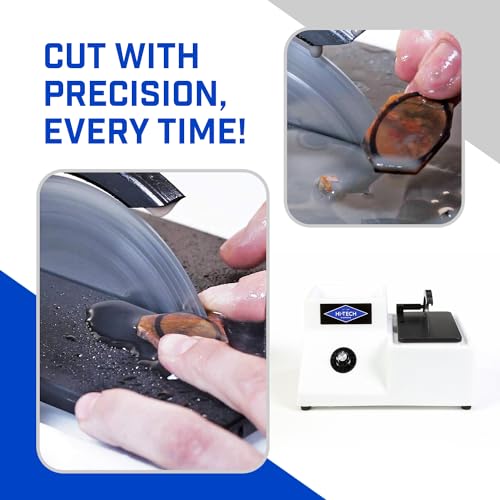
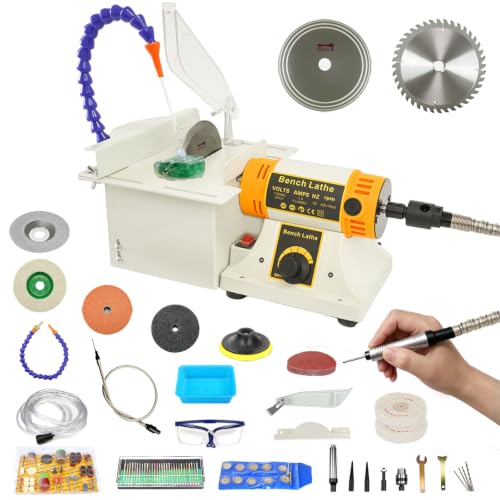
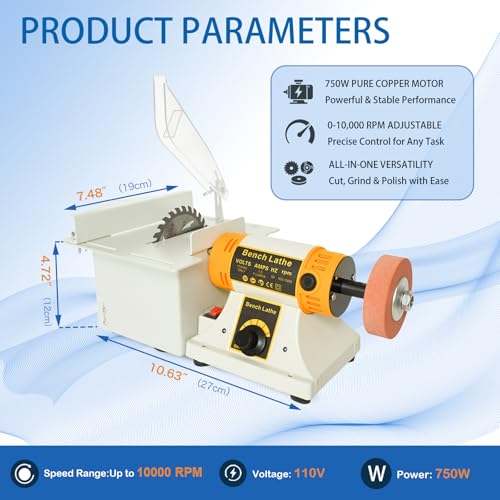
This compact lapidary machine is built for precision work, not heavy slabbing. With a 750W motor and speeds up to 10,000 RPM, it’s overpowered for its size but best suited to small-scale jewelry and gemstone projects. The left-side wet cutting table improves access for detailed work, and owners consistently report clean cuts on agate, jade, and other hard stones when using the included 4-inch blade. It’s not going to slice through thick slabs, but for shaping cabochons or prepping material for tumbling, it delivers where it counts.
What sets this unit apart is the all-in-one functionality, grinding, polishing, drilling, and cutting on a single platform. The flexible shaft and included burrs make intricate detailing possible, which few entry-level setups offer. Still, the 30mm cutting depth limits what you can tackle, and the small table can feel cramped for anything beyond thumbnail-sized pieces.
Product photos
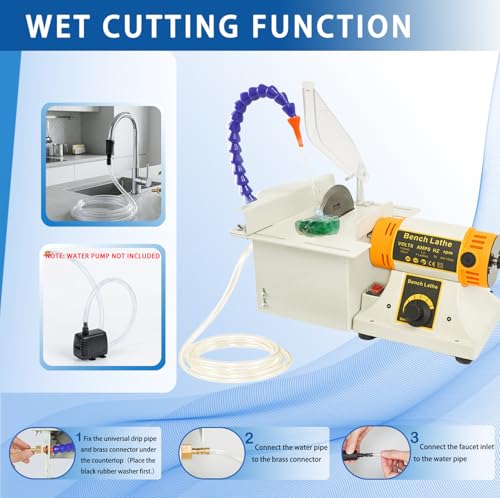
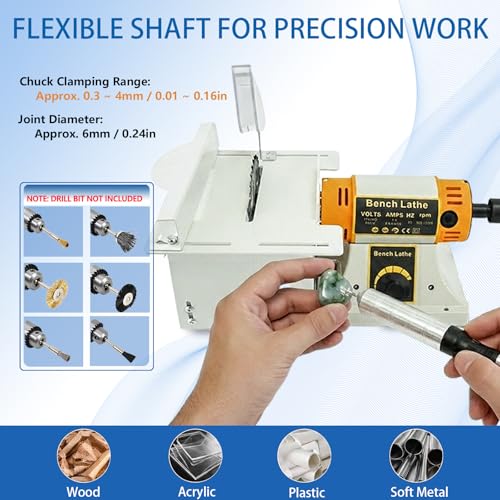
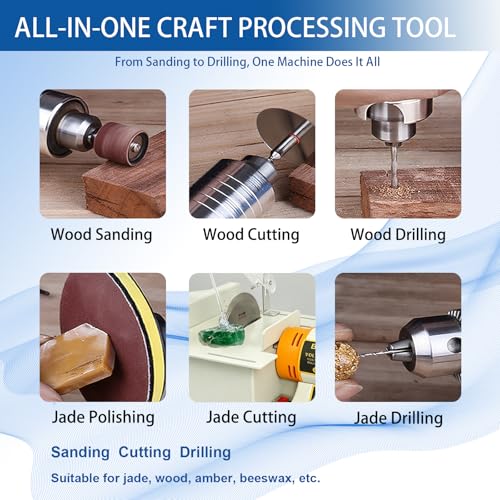
Flyrivergo 1380W Lapidary Saw
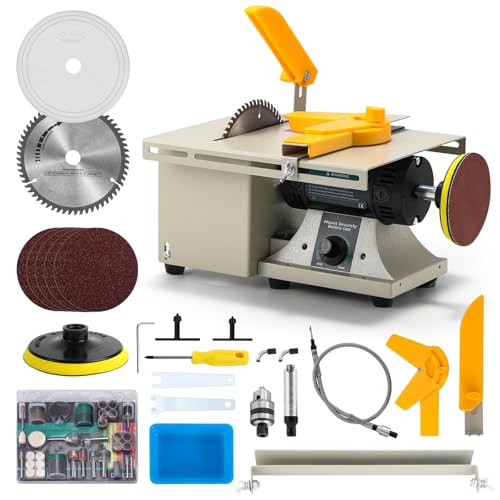
Strengths
- Very high RPM
- Soft-start safety
- Flexible shaft included
- Good accessory kit
Trade-offs
- Overheats on hard materials
- Poor water management
- Not ideal for thick rocks
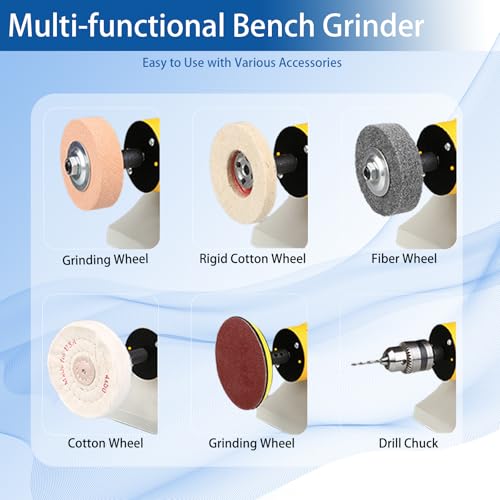
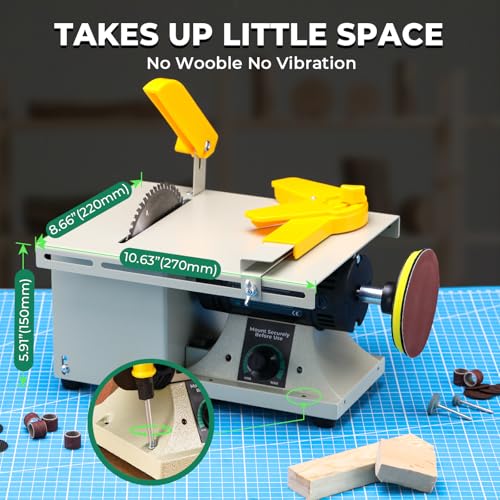
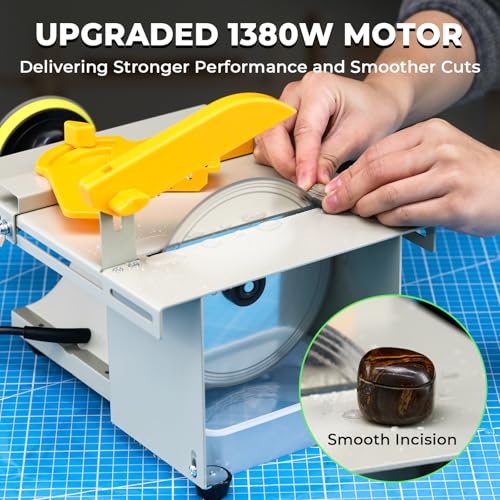
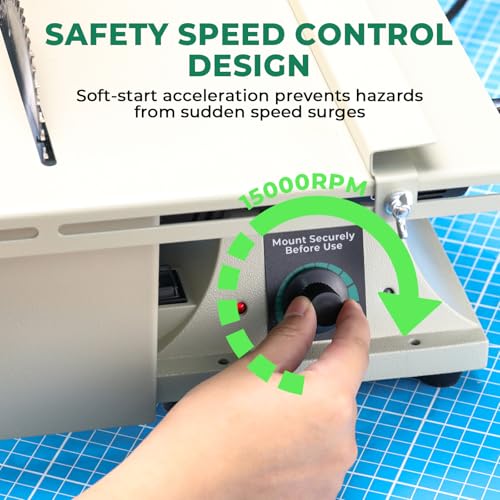
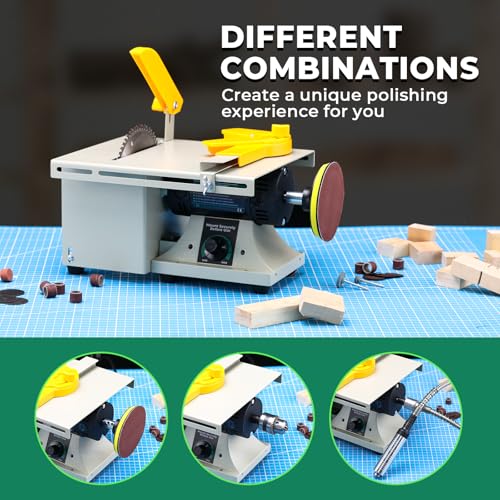
On paper, the 1380W motor and 15,000 RPM speed are eye-catching, this unit promises high-speed performance above all. And for fine grinding, polishing, or detailing soft materials like beeswax or wood, it delivers. The soft-start and blade guard add safety, and the flexible shaft opens up options for intricate work. But that peak speed is misleading when cutting hard rock; most owners report needing to dial it way down to avoid chipping or blade wear.
It’s marketed as a lapidary saw, but lacks the water capacity and blade size for serious rock cutting. The accessories are generous, but the build feels more like a multi-tool than a dedicated rock cutter. Compared to Hi-Tech Diamond’s models, it’s less stable and not optimized for wet slabbing. If you’re into jewelry finishing or mixed-media crafting, it has value. For rock cutting? It’s overpromising.
Product photos

Our Testing Process
Rather than a hands-on lab test, my research for these recommendations focused on a detailed comparison of published specifications and features across several models. I weighed owner reviews from multiple sources – looking for patterns in reported ease of use, durability, and cut quality – alongside assessments from reputable tool review sites. As someone who’s spent years working with tools and understanding their practical capabilities, I applied my knowledge to rank these saws against what matters most for rock cutting.
For saws designed to cut rocks, motor power and blade speed are critical. I prioritized those specs because they directly impact cutting efficiency and the range of materials a saw can handle. Equally important is build quality – a stable, rigid frame minimizes vibration and ensures cleaner, more accurate cuts. Portability was also a factor, particularly for hobbyists who may not have dedicated workshop space.
Specifications reliably reveal a saw’s potential power and cutting capacity, but owner feedback provided crucial insight into real-world performance. I paid close attention to comments about blade life, the effectiveness of the cooling systems, and the quality of included accessories. It’s also helpful to consider whether you’ll be [cutting hard materials with a circular saw] as the blade type will be crucial for a clean cut. Ultimately, a combination of technical data and user experience informed these selections.
How To Choose The saw for cutting rocks
Finding the right saw for cutting rocks isn’t just about horsepower; it’s about matching the tool to the type of work you plan to do and the materials you’ll be cutting.
A good rock saw balances power with precision. Key considerations include motor strength (for material hardness), blade quality (diamond grit and bond), cooling system effectiveness (to prevent overheating and blade damage), and the overall rigidity of the frame (to minimize vibration and ensure accurate cuts). Buyers should also check blade arbor size and available accessories.
Motor Power and Material Hardness
The power of the motor is a primary factor, but it’s often misunderstood. A more powerful motor isn’t always better. Softer stones like alabaster or soapstone require less power than harder materials like agate or granite. For hobbyists working with a variety of rock types, a variable speed motor is incredibly useful. This allows you to dial down the RPM for delicate cuts on softer stones and ramp it up for tougher materials. Remember, too much speed on a soft rock can generate excessive heat and cause chipping. Consider that the Hi-Tech Diamond 4″/5″ Trim Saw offers a good balance of power and control for smaller projects.
Blade Quality and Type
Don’t skimp on the blade. The quality of the diamond blade directly impacts the cut quality, speed, and lifespan. Blades come in different bonds – metallic, resin, and ceramic – each suited for specific materials. Resin bonds are versatile and work well across many rock types, while metallic bonds excel with softer stones. For serious work, you’ll want to invest in multiple blades optimized for different materials. Understanding diamond blade applications is crucial for making the right choice.
- A cheap blade will likely chip easily and require frequent replacement.
- A blade designed for tile won’t hold up well when cutting hard rocks; it lacks the appropriate diamond concentration and bond.
- Higher-quality blades, while more expensive upfront, will save you money in the long run by lasting longer and delivering cleaner, more accurate cuts. This is especially true if you plan to explore more demanding projects or need precision for jewelry making.
Portability and Workspace Considerations
Think carefully about where you’ll be using the saw. Some models, like the Hi-Tech Diamond 10” Lapidary Saw, are relatively portable, weighing around 35 pounds. Others are more substantial and require a dedicated workspace. If you’re limited on space, a smaller trim saw might be the best option. Also, consider the cooling system; most rock saws require a constant water supply. Having easy access to a water source and a drain will make the process much simpler. If you’re already considering tools for cutting other hard materials, explore options for professional rock-cutting tools.
A stable, rigid frame is paramount. Vibration leads to inaccurate cuts and can damage both the blade and the material. Look for saws with heavy-duty construction and a solid base.
Saw for Cutting Rocks Compared
Here’s a comparison of specifications for various saws designed for cutting rocks and other materials.
| Product Title | Motor HP | Max RPM | Blade Size (in) | Coolant Reservoir (qt) | Weight (lbs) |
|---|---|---|---|---|---|
| Hi-Tech Diamond 6″ Lapidary Saw | 1/4 | 3,400 | 6 | N/A | 15 |
| Hi-Tech Diamond 10″ Lapidary Saw | 1/3 | 1,725 | 10 | 2.5 | 35 |
| Hi-Tech Diamond 4″/5″ Trim Saw | 1/4 | 3,400 | 4/5 | 8 oz | 10 |
| Lapidary Rock Saw with Polishing Kit | 750W | 10,000 | 4 | N/A | N/A |
| Flyrivergo 1380W Lapidary Saw | 1380W | 15,000 | N/A | N/A | N/A |
Frequently Asked Questions
What blade bond is best for cutting very hard stones like granite?
Metallic bond blades are the best choice for harder stones like granite; they wear faster but cut more efficiently through dense materials compared to resin or ceramic bonds. Expect to replace these blades more often, but they’ll deliver quicker, cleaner cuts in challenging materials.
Are there safety features I should specifically look for in a rock saw?
Yes, a good rock saw will have a blade guard and ideally a water shut-off feature to prevent dry cutting(which can damage the blade and create dangerous dust). Many also include a grounded electrical system to minimize shock risk, and a stable base to reduce vibration.
What’s the difference between a trim saw and a lapidary saw?
Trim saws are generally smaller and more portable, designed for making quick cuts and shaping rocks, while lapidary saws are larger, more precise, and better suited for detailed work like faceting or cabochon creation. You might consider precision wet saws if you need more control.
How often should I replace the blade on my rock saw?
Blade lifespan depends heavily on the material being cut and the blade quality, but expect to replace blades anywhere from 20 to 100+ hours of use. Signs it’s time for a new blade include slow cutting speed, excessive chipping, or a noticeably dull edge.
What’s the best way to dispose of used diamond blades?
Used diamond blades should be disposed of as hazardous waste due to the diamond abrasives and bonding materials. Contact your local waste management facility for proper disposal guidelines; do not simply throw them in the trash. Alternatively, some blade manufacturers offer recycling programs or may accept used blades.
The Bottom Line
Choosing a rock saw always comes down to balancing control and convenience. If you’re serious about lapidary work or cutting larger, harder stones, the Hi-Tech Diamond 10” Lapidary Saw offers the power and capacity to handle demanding projects. It’s an investment, but one that will pay off in precision and durability.
For hobbyists or those with smaller projects, the Hi-Tech Diamond 4″/5″ Trim Saw is a fantastic option. It’s more affordable and portable, making it ideal for occasional use and limited workspace. Those looking for an all-in-one solution, particularly for getting started, will appreciate the Lapidary Rock Saw with Polishing Kit, though be aware the included accessories may not match the quality of dedicated blades.
Ultimately, the best saw isn’t about the highest specs or the biggest price tag. It’s about understanding what you’ll be cutting, prioritizing blade quality, and maintaining a stable, well-cooled cutting environment. Mastering safety tips for concrete saws is also crucial, as many of the same principles apply when working with rock.
