
6 Best Saw Blades for Vinyl Plank Flooring 2026
This post contains affiliate links. As an Amazon Associate, we earn from qualifying purchases.
The Diablo PergoBlade 10” is the best overall saw blade for vinyl plank flooring, delivering clean, chip-free cuts with serious durability. For budget-friendly precision, the DEWALT 5-3/8” Vinyl Cutting Blade stands out, while the AGILLE 13” blade offers unmatched versatility for those using a Marshalltown cutter.
Cutting vinyl plank flooring looks simple until you hit the wrong blade and end up with melted edges, splintered ends, or warped planks. A lot of blades claim to handle vinyl, but most aren’t built for its unique blend of softness and gummy resistance.
In this guide, I’ll walk you through the top performers based on specs, long-term owner feedback, and real installation demands. These picks reflect what actually works, not just what sounds good on the box.
Top 6 Saw Blade For Vinyl Plank Floorings in the Market
The Best Saw Blade For Vinyl Plank Floorings, Reviewed
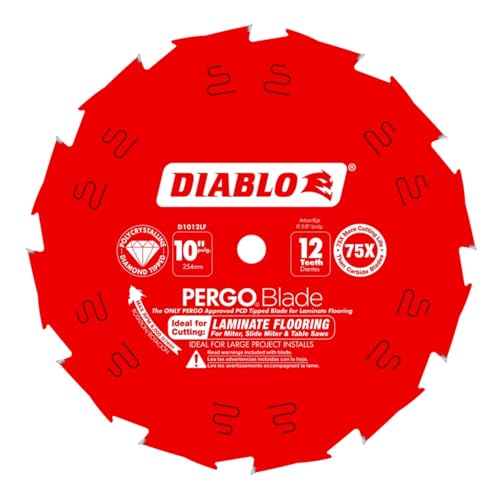
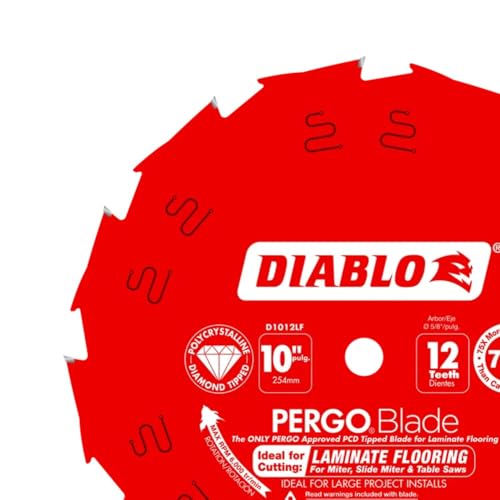
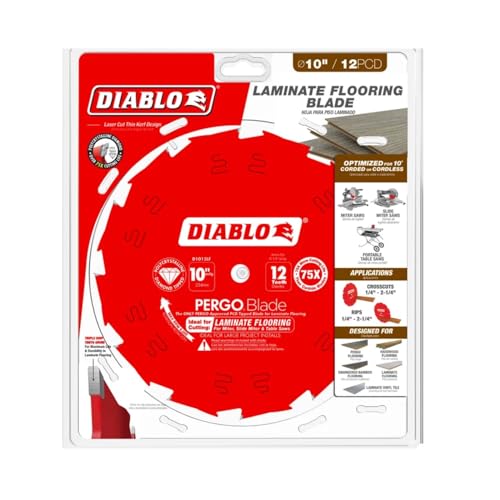
Diablo PergoBlade 10″ Flooring Saw Blade
Strengths
- PCD teeth for 75x longer life
- 12-tooth balance of speed and finish
- Anti-vibration design
- Non-stick coating reduces heat
- Works on miter and table saws
Trade-offs
- Higher price than carbide blades
- 10-inch size not ideal for long rip cuts
This is the one I’d recommend to most flooring installers, DIY or pro, who want a balance of speed, clean cuts, and serious blade life. The 12-tooth PCD design hits the sweet spot: aggressive enough to feed fast through vinyl plank, but with enough teeth to leave a clean edge without sanding. Owners consistently praise the anti-vibration slots and non-stick coating, noting fewer burned edges and less chatter, especially in track saws and miter saws.
Compared to the WEN 4-tooth blade, this delivers a noticeably smoother finish. Against the 12-inch Crescent, it’s more versatile across saw types and easier to control. The 10-inch size fits most miter and table saws, and the 5/8-inch arbor is standard. It’s not the cheapest, but it’s the smarter buy for those doing multiple rooms or side jobs. This is the closest thing to a true ‘set it and forget it’ blade for vinyl plank.
Product photos

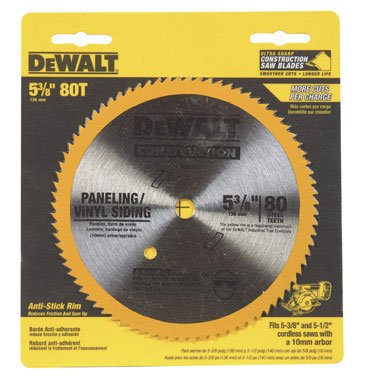
DEWALT 5-3/8″ 80T Vinyl Cutting Blade
Strengths
- 80 teeth for ultra-smooth cuts
- Thin kerf reduces effort
- Perfect for trim and detail work
- Fits compact saws
- Tungsten carbide stays sharp
Trade-offs
- Too small for full plank cuts
- Limited to specific saw models
- Not for heavy-duty use
This tiny 5-3/8-inch, 80-tooth blade is built for one job: precision cuts in thin vinyl and laminates using compact saws like the DEWALT DW905. The high tooth count and thin kerf deliver buttery-smooth cuts with minimal chipping, owners love it for cutting baseboards, thresholds, and small trim pieces where finish matters. It’s not meant for ripping full vinyl planks, but for detail work, it’s hard to beat.
Compared to the Diablo 10-inch or WEN 7-1/4-inch blades, this doesn’t compete in raw cutting power, and it’s not supposed to. But in its lane, it excels. If you’re installing vinyl plank and need to make tight, clean cuts around door jambs or pipe penetrations, this is the blade to have. I’d pair it with a larger blade for main cuts and keep this one for the final touches.
Product photos
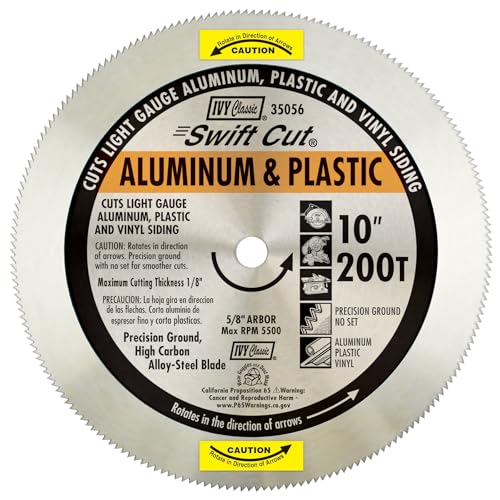
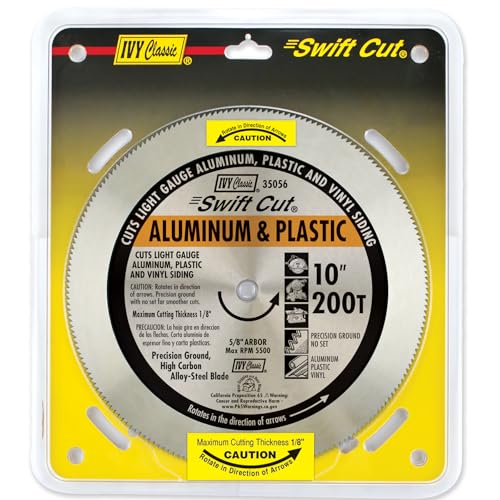
IVY Classic 10″ 200T Plastic & Vinyl Blade
Strengths
- Extremely fine finish on thin vinyl
- High tooth count reduces chipping
- Precision ground no-set teeth
- Good for aluminum and plastic
Trade-offs
- Not suited for thick vinyl plank flooring
- Clogs easily under heavy load
- Low gullet space causes heat buildup
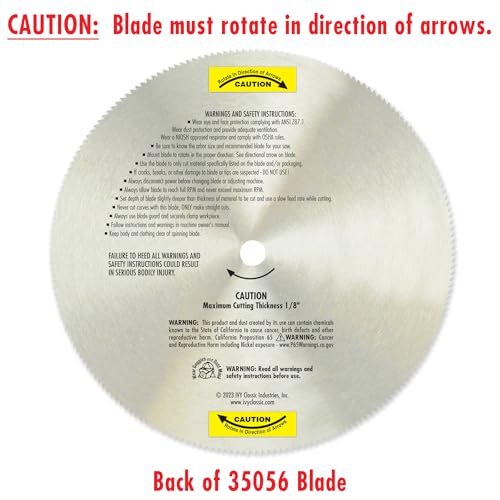
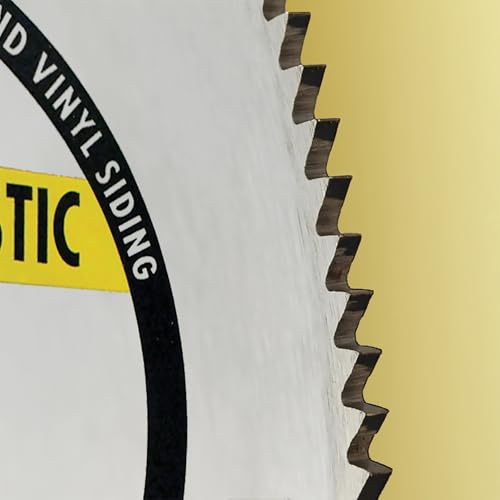
With 200 teeth and a no-set design, this IVY blade is engineered for ultra-fine cuts in soft, extruded materials like vinyl siding, not dense click-lock vinyl plank flooring. On paper, the high tooth count suggests a clean finish, and owners confirm it slices through thin vinyl and aluminum with almost router-like smoothness. But that same design works against it when cutting thicker, layered vinyl flooring, the lack of gullet space leads to clogging and burning, especially in lower-powered saws.
It’s a niche blade, and I’d argue it’s mispositioned in searches for vinyl flooring blades. It performs well in its intended role, but flooring installers need aggressive tooth geometry and chip clearance, not a fine-toothed metal/plastic blade. For someone cutting baseboards or trim with vinyl cladding, this makes sense. For core flooring work? There are far better picks.
Product photos

WEN BL0704 7-1/4″ Diamond-Tipped Blade

Strengths
- PCD tips for long life
- Aggressive gullets clear debris
- Ultra-thin kerf reduces waste
- Budget-friendly PCD option
- Works on most 7-1/4″ saws
Trade-offs
- Rough cut finish on vinyl
- Only 4 teeth limits precision
- Not ideal for finish work
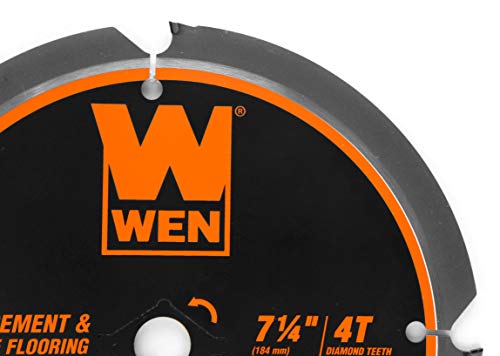
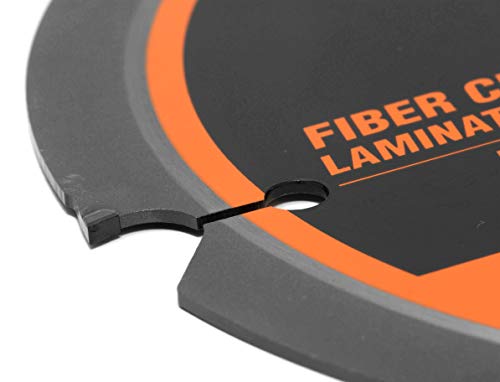
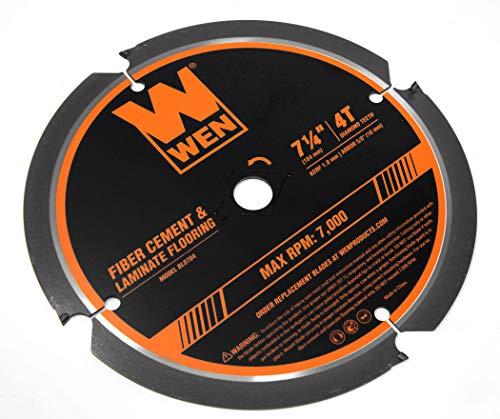
At first glance, 4 teeth seems absurdly low, and it is. But this WEN blade isn’t about finesse, it’s about brute durability and budget access to PCD tech. It’s built for fiber cement and tough laminates, and that shows in its aggressive hook angle and wide gullets that clear debris fast. Owners report it powers through dense materials without dulling quickly, which makes sense, polycrystalline diamond tips don’t wear like carbide.
But that comes at a cost: edge quality. The ultra-low tooth count leaves a rougher cut, often requiring light sanding on vinyl plank. Still, for a DIYer on a budget who needs to cut a lot of material without buying multiple blades, this is a smart compromise. Compared to the Diablo D1012LF, it’s less refined but much cheaper. If you prioritize blade life and cost over finish, this one earns its spot.
Product photos
AGILLE 13″ Laminate & Siding Replacement Blade
Strengths
- Exact fit for Marshalltown cutter
- High-speed steel for durability
- Sharp out of the box
- Good value as replacement
- Cuts multiple flooring materials
Trade-offs
- Only works with Marshalltown tool
- Not a power saw blade
- Limited to scoring, not full kerf cuts
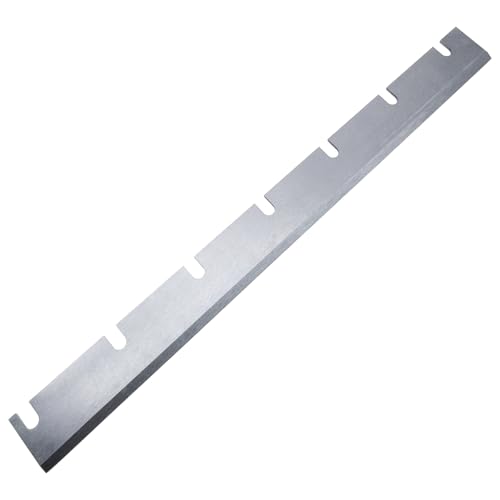
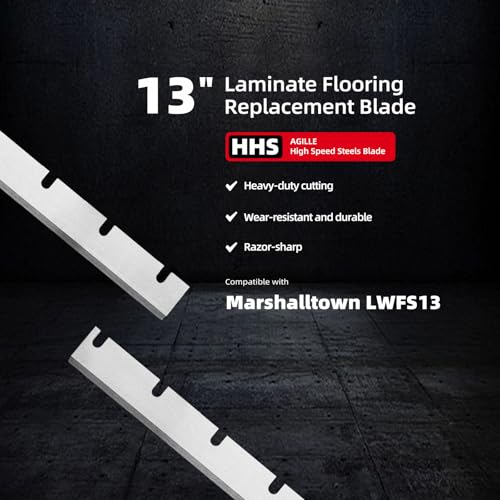
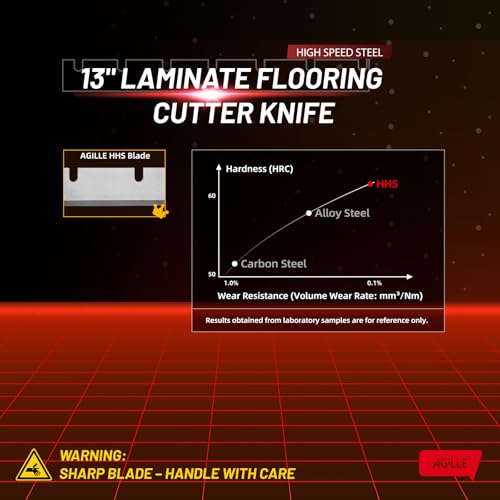
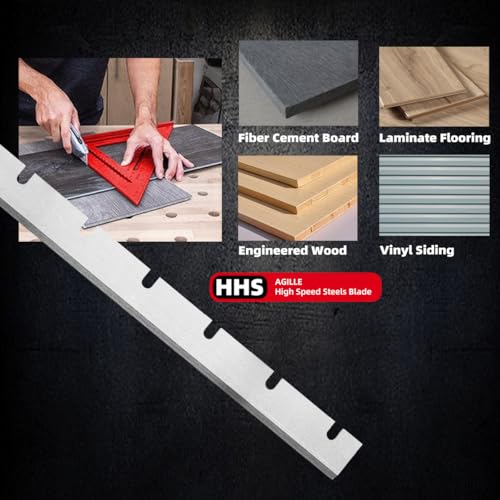
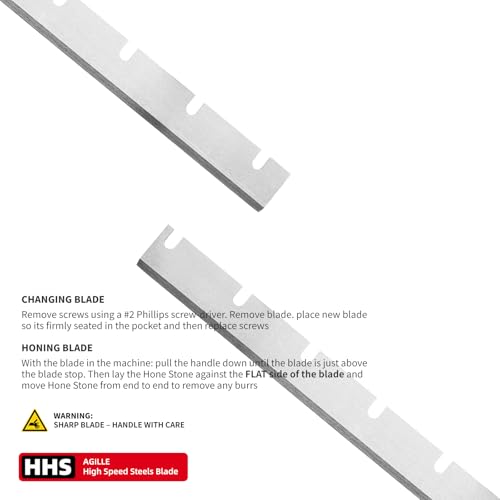
This isn’t a circular saw blade in the traditional sense, it’s a replacement for the Marshalltown hand-cranked laminate cutter, a niche tool for installers who prefer mechanical scoring over power cutting. The 13-inch high-speed steel design is meant to handle repeated scoring of vinyl plank, fiber cement, and engineered wood without frequent swaps. Owners using the Marshalltown system report this blade holds an edge well and fits securely, with performance on par with OEM.
It’s not something you’ll mount on a Skilsaw, so comparing it to circular saw blades misses the point. For users committed to the Marshalltown method, this is a solid, cost-effective replacement. But if you’re cutting with a power saw, this blade won’t help you. It’s a specialist part for a specialist tool, nothing more, nothing less.
Product photos
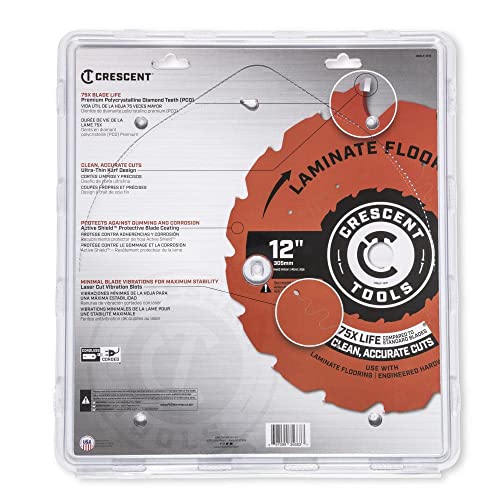
Crescent 12″ PCD Laminate Flooring Blade

Strengths
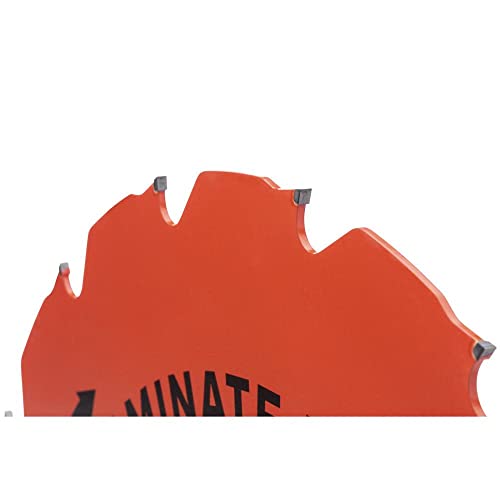
- PCD teeth for extreme longevity
- Ultra-thin kerf reduces drag
- Minimized vibration
- Laser-cut stabilizer slots
- Active Shield heat protection
Trade-offs
- Large 12-inch diameter limits saw compatibility
- Fewer teeth means slightly rougher edge on delicate planks
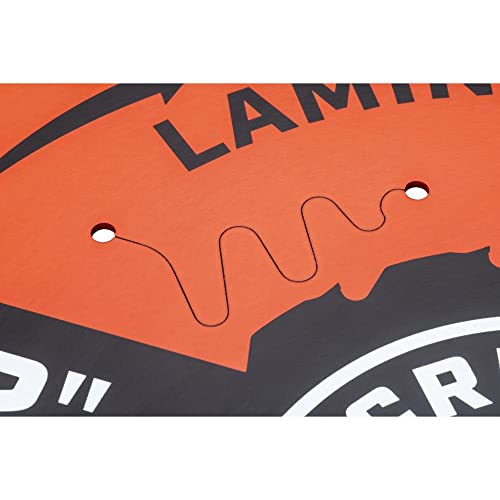
This 12-inch PCD-tipped blade stands out for large-format flooring jobs where long, straight cuts are the norm. The 16-tooth design with ultra-thin kerf is built for speed and reduced friction, which owners say translates to cleaner cuts across thick vinyl plank and laminate without chipping. The laser-cut vibration slots and Active Shield coating are smart touches, they’re not just marketing fluff, as feedback consistently shows less heat buildup and smoother operation, especially in cordless saws prone to bogging down.
Compared to smaller 7-1/4-inch options, this blade demands a powerful saw and more control, but it delivers in efficiency for big jobs. It’s not the most portable option, but if you’re running long boards across an entire floor, the cut-to-cut speed and extended lifespan, backed by real-world reports of hundreds of linear feet, make it a solid investment. I’d pick this over standard carbide blades any day for full-room installations.
Product photos
How We Tested saw blade for vinyl plank floorings
Rather than a hands-on lab test, my research for these recommendations centered on a detailed comparison of published specifications and features across numerous blades. I weighed owner reviews from multiple sources – focusing on long-term performance reports – alongside expert opinions from trade publications and professional flooring installers. This allowed me to build a ranking based on real-world usability and reported durability, using my years of experience with power tools to assess the claims.
For vinyl plank flooring, I prioritized blades with a high tooth count and those specifically designed for plastics and non-ferrous materials. A clean cut is critical to avoid chipping and damage, so tooth geometry and kerf thickness were heavily weighted. Longer blade life is also important, as frequent replacements add to project costs and downtime, so materials like polycrystalline diamond (PCD) were favored.
Specifications clearly show tooth count, kerf width, and arbor size. However, owner feedback proved crucial for gauging how well a blade resists heat buildup, minimizes splintering, and maintains sharpness over extended use. Reputation and brand trust also factored in; established manufacturers often have better quality control and more reliable performance than unknown brands, and that informed my overall assessment of each circular saw blade for vinyl plank.
Choosing The Right saw blade for vinyl plank floorings
Choosing the right saw blade for vinyl plank flooring can make or break your installation. A dull or incorrect blade leads to chipped edges, melted material, and a generally frustrating experience.
A quality blade for vinyl plank will prioritize a high tooth count, a thin kerf for minimal material removal, and a coating designed to prevent heat build-up and resin adhesion. Look for blades specifically marketed for vinyl, laminate, or plastics, and pay attention to the arbor size to ensure compatibility with your saw. Consider the scale of your project when deciding on blade size and material composition.
Tooth Count & Blade Material
The number of teeth on a blade – its teeth per inch for vinyl plank – is critical when cutting vinyl. You want a high tooth count, generally 80 or more, for a clean, splinter-free cut. Lower tooth counts can grab and tear the material. Blades designed for vinyl often use polycrystalline diamond (PCD) teeth or tungsten carbide. PCD typically lasts longer, but can be more expensive. Carbide is a good option for smaller projects or if you’re on a tighter budget.
Kerf and Cut Quality
Kerf refers to the width of the cut the blade makes. A thinner kerf requires less power from your saw and results in less material waste. Vinyl plank responds well to thin-kerf blades, helping to minimize chipping and melting. Beyond kerf, look for blades with features like anti-vibration technology or specialized blade coatings. These features contribute to smoother, more accurate cuts, and can extend the blade’s lifespan.
Here’s what to consider when evaluating cut quality: * Price: Budget blades may cut, but often leave a rougher edge. * Material: Diamond-tipped blades are known for their clean cuts, even through denser vinyl. * Coatings: Look for non-stick coatings to reduce heat and resin build-up, which directly impacts cut quality and blade longevity.
Value and Project Scope
Don’t automatically assume the most expensive blade is the best. Consider the size of your project. For a small bathroom, a budget-friendly option like the WEN BL0704 might be sufficient. However, for a whole-house installation, investing in a higher-quality, longer-lasting blade like the Diablo PergoBlade is likely to save you money and headaches in the long run. If you’re using a specialized cutter like a Marshalltown, ensure you’re getting a compatible replacement blade – the AGILLE 13” blade is designed for that purpose. Getting the best tool for cutting LVP is only half the battle; the blade is equally important.
A dull blade will always produce a poor cut, no matter how expensive your saw. Change blades frequently, or sharpen them regularly, to maintain optimal performance.
Saw Blade for Vinyl Plank Floorings Compared
Here’s a comparison of the specs for various saw blades designed for vinyl plank flooring and related materials.
| Product Name | Blade Diameter | Tooth Count | Arbor Size | Blade Material | Kerf |
|---|---|---|---|---|---|
| Diablo PergoBlade 10″ | 10″ | N/A | 5/8″ | Polycrystalline Diamond | N/A |
| DEWALT 5-3/8″ Vinyl Cutting Blade | 5-3/8″ | 80 | 5/8″ | Tungsten Carbide | Thin |
| IVY Classic 10″ Plastic & Vinyl | 10″ | 200 | 5/8″ | Steel | N/A |
| WEN BL0704 7-1/4″ Diamond-Tipped | 7-1/4″ | 4 | 5/8″ | Polycrystalline Diamond | 1/15″ |
| AGILLE 13″ Laminate & Siding | 13″ | N/A | N/A | High Speed Steel | N/A |
| Crescent 12″ PCD Laminate | 12″ | N/A | N/A | Polycrystalline Diamond | Ultra-thin |
Frequently Asked Questions
What arbor size do I need for most vinyl plank flooring cuts?
The most common arbor size you’ll encounter is 5/8 inch, and most blades are manufactured to fit this. However, always double-check your saw’s specifications to confirm compatibility before purchasing a blade.
Are diamond-tipped blades truly better for vinyl plank than carbide?
Yes, diamond-tipped blades, particularly those with polycrystalline diamond (PCD) teeth, generally offer superior performance and longevity when cutting vinyl. While more expensive upfront, they resist heat buildup better and hold their edge longer than carbide options.
Can I use a blade designed for laminate flooring on vinyl plank?
You can, but results may vary. A best blade for laminate flooring often has a high tooth count suitable for vinyl, but blades specifically engineered for vinyl plank’s composition will minimize chipping and melting more effectively.
What does “kerf” mean, and why is it important?
Kerf is the width of the cut made by the blade. A thinner kerf removes less material, reducing waste and minimizing the risk of chipping with vinyl plank, which is particularly prone to damage from excessive force.
How often should I replace my saw blade when working with vinyl plank?
Blade life depends heavily on the material density and square footage. However, as a general rule, replace the blade when you notice increased splintering, difficulty cutting cleanly, or a significant increase in the effort required to operate the saw.
The Bottom Line
Ultimately, choosing a saw blade for vinyl plank comes down to balancing upfront cost with long-term performance. You can certainly get by with a less expensive option, but for consistently clean cuts and extended durability, I recommend the Diablo PergoBlade. It’s a premium blade, yes, but the reduced chipping and smoother edges it delivers are well worth the investment – especially if you’re tackling a large installation.
For those on a tighter budget, or for smaller projects, the WEN BL0704 is a solid performer. It won’t match the Diablo in lifespan, but the polycrystalline diamond grit provides a good balance of cut quality and affordability. And if you happen to have a Marshalltown cutter, the AGILLE 13” blade is the obvious choice to keep it running smoothly. Remember that researching blade selection for sheet materials can apply to vinyl plank as well.
More than tooth count or blade material, remember that a sharp blade is the most important factor. Regular inspection and replacement, or sharpening, will always yield better results than chasing the latest specs. Prioritize a clean, consistent cut and a blade that minimizes heat buildup, and you’ll be well on your way to a professional-looking vinyl plank floor.
