8 Best Router Table Fences of 2026
This post contains affiliate links. As an Amazon Associate, we earn from qualifying purchases.
The Woodpeckers SF-PRO 36-Inch Fence is the best overall router table fence, offering unmatched precision and build quality, while the POWERTEC 32-Inch Deluxe Fence stands out as a solid budget-friendly choice that still delivers key features like micro-adjustment and dust collection.
Most router table fences promise accuracy, but too many fail under real workshop demands, sloppy adjustments, flex during cuts, or flimsy locks that creep out of position. As someone who’s worked with dozens of setups, I know a shaky fence can ruin a project and create safety risks.
This guide cuts through the noise, focusing on what actually matters: rigidity, repeatable adjustments, and long-term reliability. I researched each pick based on specs, owner feedback, and my experience with how these fences perform in real joinery and shaping tasks.
Top 8 Router Table Fences in the Market
The Best Router Table Fences, Reviewed
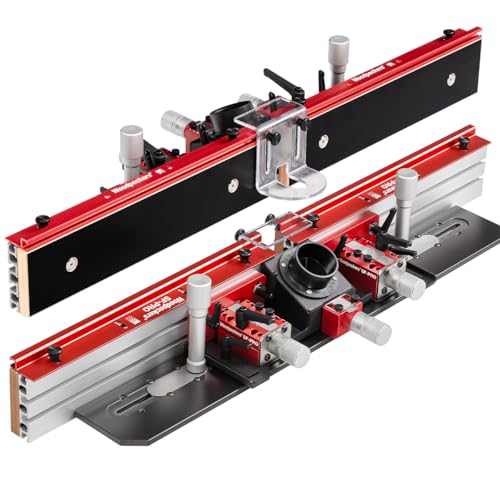
Woodpeckers SF-PRO 36-Inch Fence
Strengths
- 3-way micro-adjustment
- Universal fit with adapter nuts
- Made in USA, high-end build
Trade-offs
- Very high price point
- Heavy and bulky for small tables
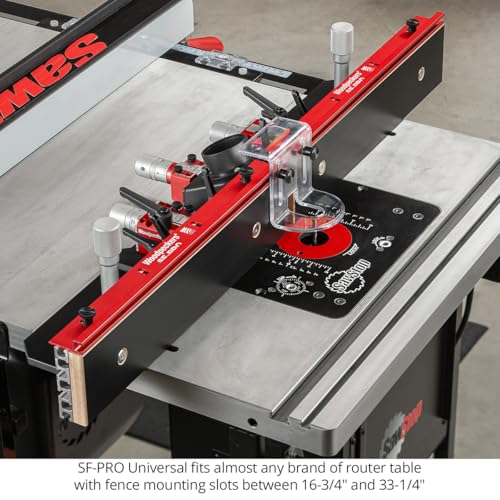
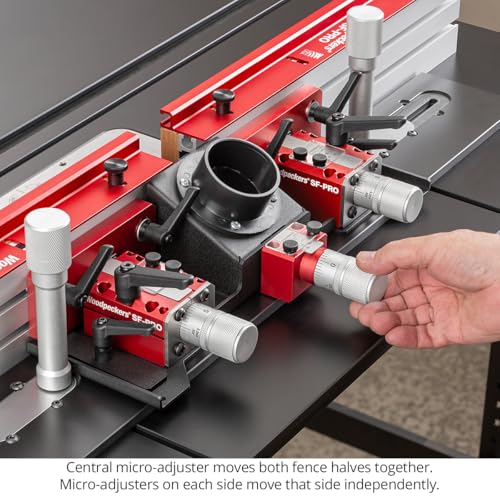
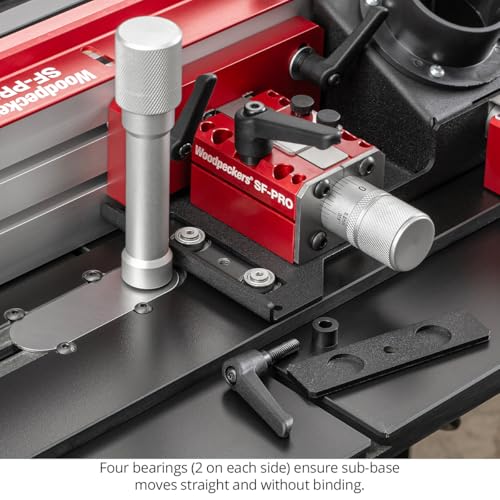
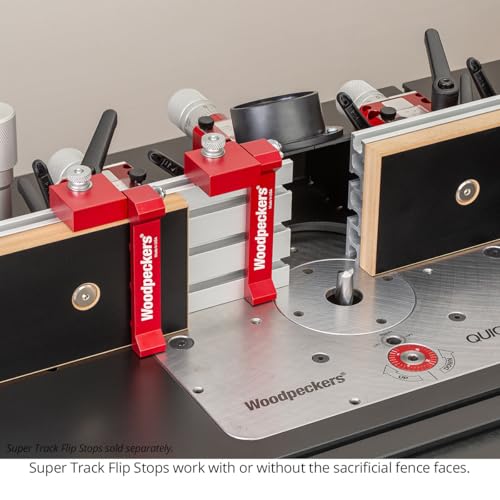
The Woodpeckers SF-PRO is the gold standard. At 36 inches, it’s the longest here, and the 3-way micro-adjustment, on infeed, outfeed, and full fence, is unmatched. With .001-inch resolution, it’s the only fence in this group that truly caters to production shops and fine furniture builders. The universal track nuts fit nearly every table, and the USA-made craftsmanship shows in every detail.
It comes with sacrificial fences, a featherboard track, and a dust port, so it’s ready to go. Owners consistently report it’s worth the premium. Compared to the JessEm, it offers more adjustability; versus the Taytools, far greater precision. This is the one I’d buy if I were setting up a shop today.
Product photos

JessEm Mast-R-Fence III

Strengths
- Phenolic base for flatness
- Stainless steel hardware
- Laser-engraved maple fences
Trade-offs
- No dust port included
- Higher price with fewer accessories
The JessEm Mast-R-Fence III stands out with its red phenolic base and stainless steel hardware, this is a fence built to last. The Torrefied Maple sub-fences are not just attractive; they’re laser-engraved for accuracy and easy to replace. Owners praise its smooth sliding action and dead-on squareness right out of the box.
It doesn’t include a dust port or featherboard, which might surprise some, but that’s because JessEm assumes you’re pairing it with their own ecosystem. The shimming bars are laser-marked, making offset adjustments intuitive. Compared to the Kreg or O’SKOOL, it’s in a different league. I’d pick this over the POWERTEC any day if precision is the goal.
Product photos

POWERTEC 32-Inch Deluxe Fence
Strengths
- Heavy-duty aluminum build
- Full accessory kit included
- Integrated dust port
Trade-offs
- Micro-adjustment lacks finesse
- MDF faces may need replacement over time
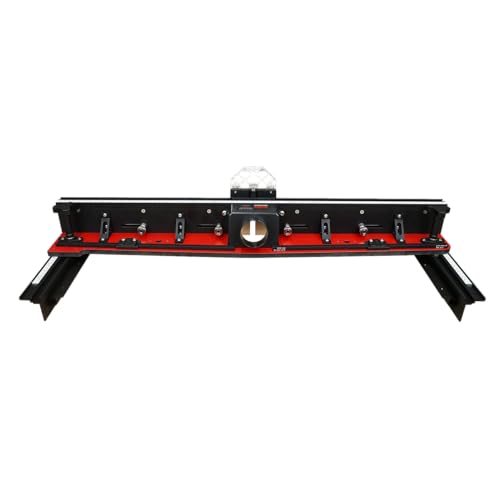
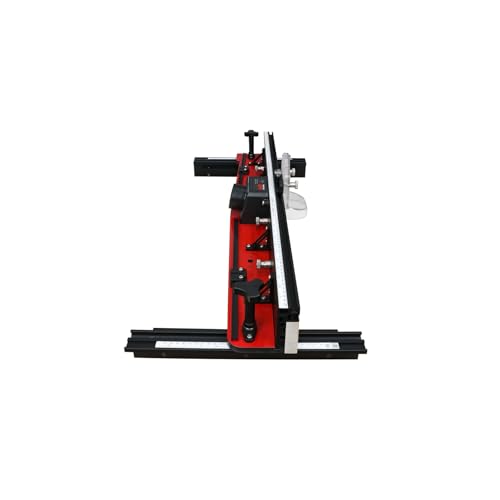
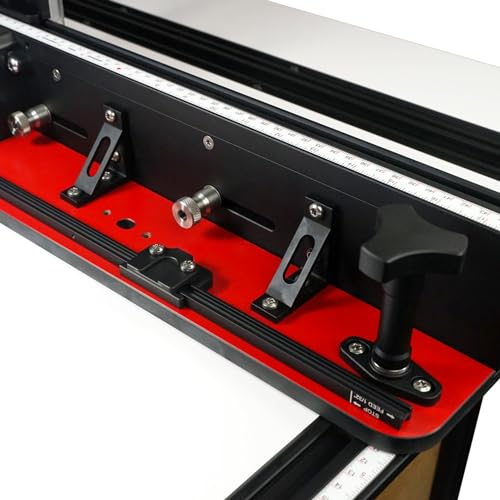
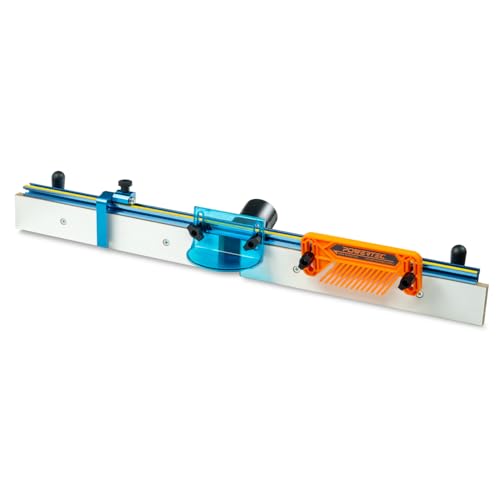
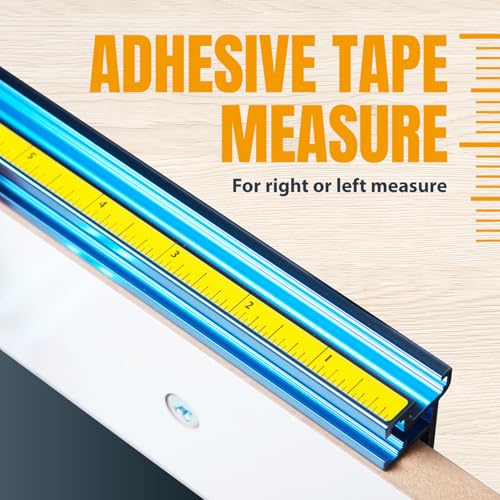
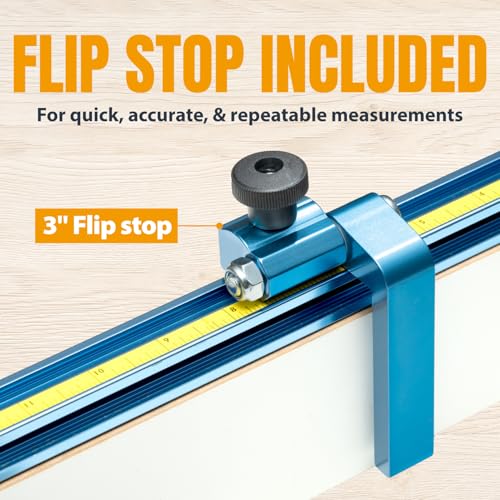
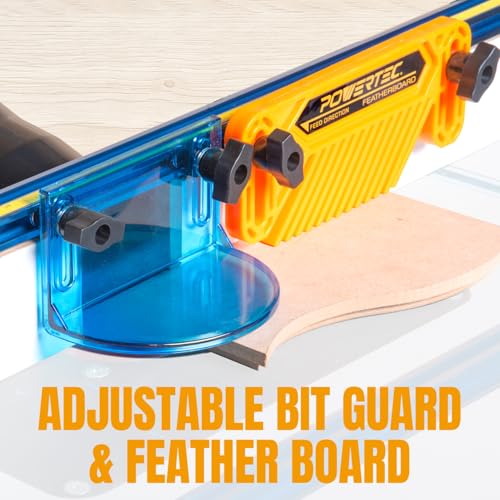
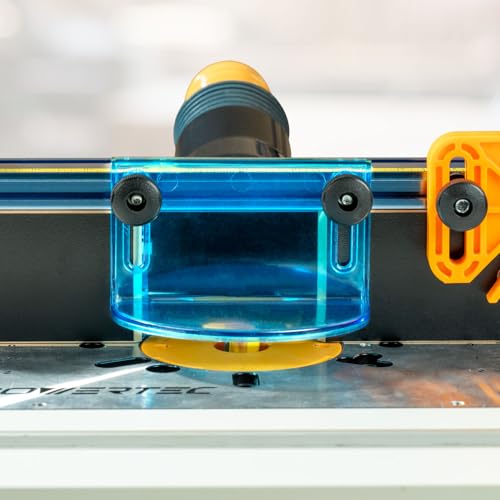
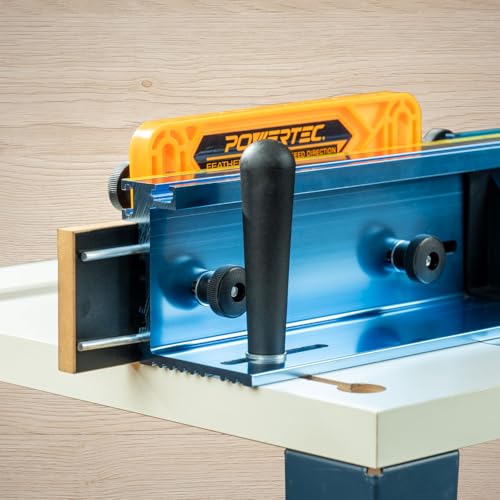
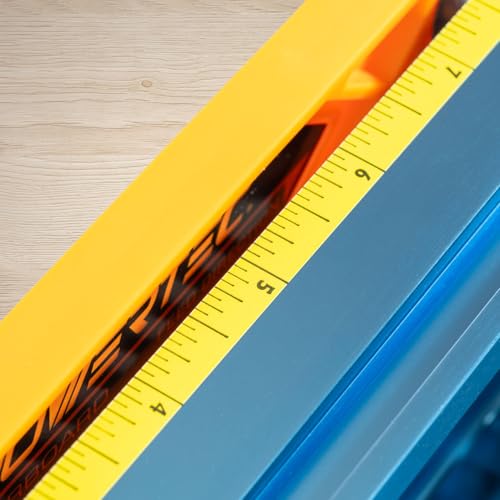
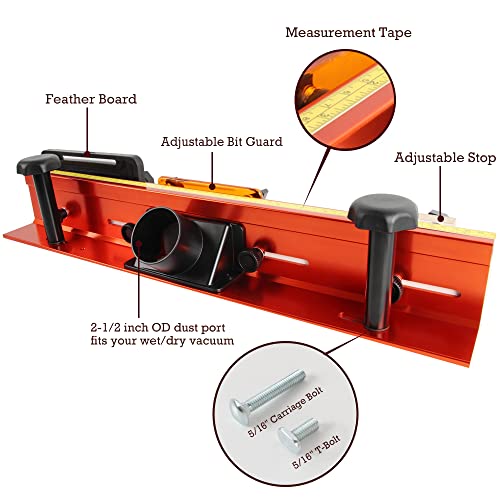
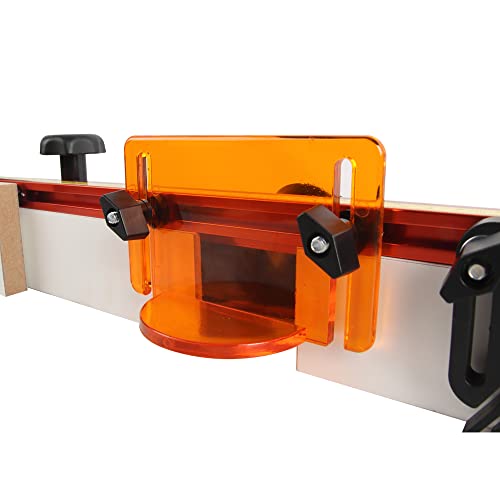
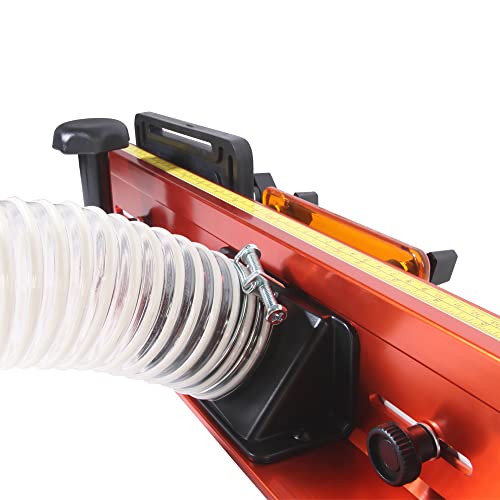
This POWERTEC fence delivers a lot of value for the price, with a rigid 32-inch anodized aluminum body and thoughtful extras like a flip stop, featherboard, and a 2.5-inch dust port already mounted. The MDF fence faces are melamine-coated, which helps reduce friction and resist wear, owners consistently report smooth operation even after extended use. On paper, the micro-adjustment system looks solid, though some users note it’s not quite as fine-tuned as pricier models like the Woodpeckers or JessEm.
Its universal T-slots and wide mounting range mean it fits most router tables without hassle, and the included accessories eliminate the need for piecemeal purchases. I’d pick this over the budget O’SKOOL model if you want something more refined out of the gate, though it doesn’t quite match the precision engineering of top-tier fences.
Product photos
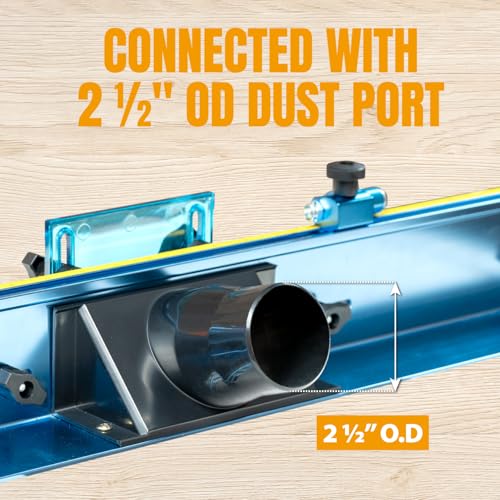
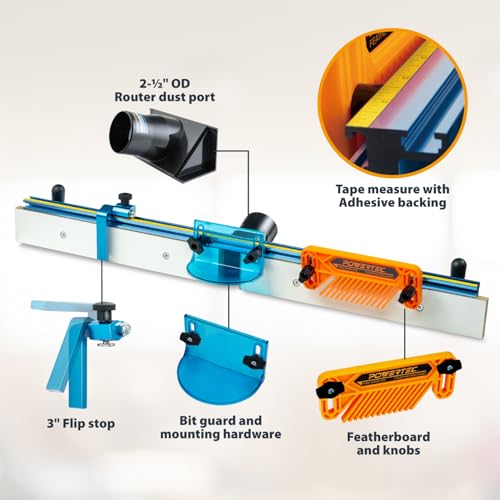
Taytools 32-Inch Deluxe Fence

Strengths
- Long 32-inch reach
- Innovative shim system
- Stiff aluminum construction
Trade-offs
- No micro-adjustment wheel
- Measurement scale not finely graduated
At 32 inches long and built from thick anodized aluminum, the Taytools fence offers serious reach and rigidity. The standout is its clever shim system, using offset tracks and aluminum bars, you can fine-tune the outfeed face by 1/32″ or 1/16″, which owners say makes a real difference in chip-free trailing edges. The four rear-mounted knobs provide solid control, though they’re not micro-adjustable like on the Woodpeckers or Kreg.
It includes a featherboard, bit guard, and dust port, but lacks the refined measurement scales of higher-end models. Compared to the POWERTEC 32-inch version, the Taytools feels more purpose-built for precision tasks. I’d choose this over the POWERTEC if I were doing long-panel routing and needed consistent alignment.
Product photos
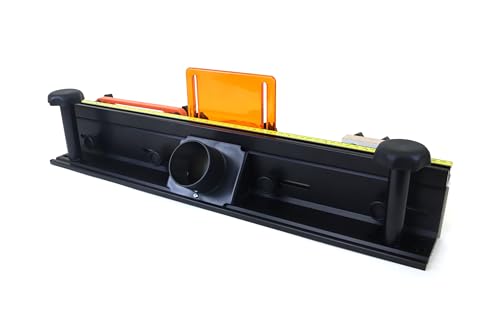
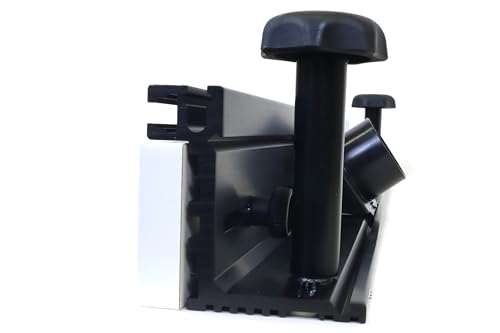
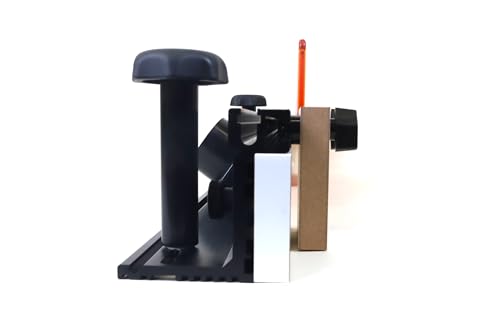
POWERTEC 24-Inch Deluxe Fence
Strengths
- Compact yet sturdy build
- Full accessory set included
- Good dust collection
Trade-offs
- Limited to smaller tables
- No micro-adjustment wheel
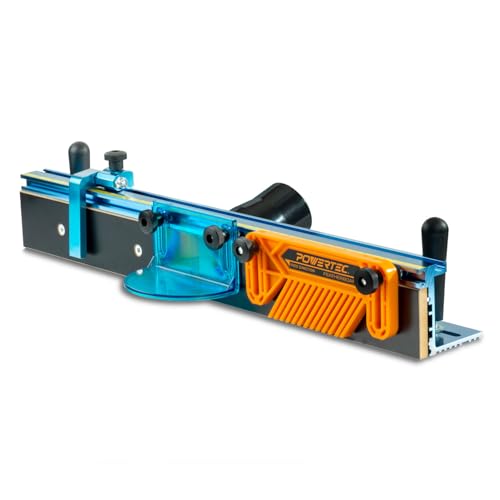
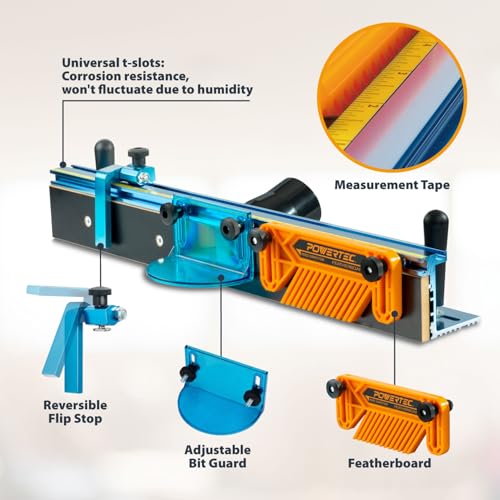
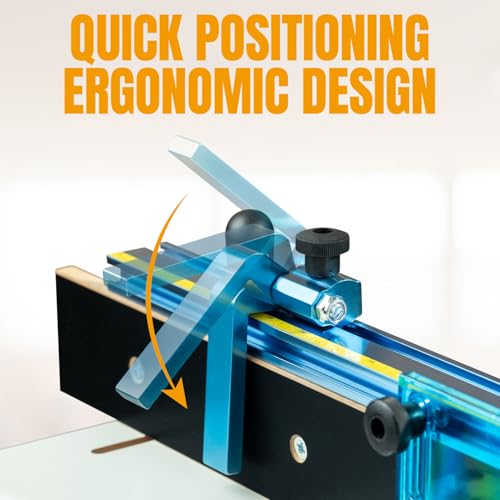
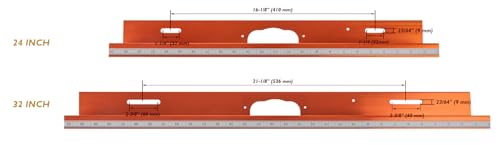
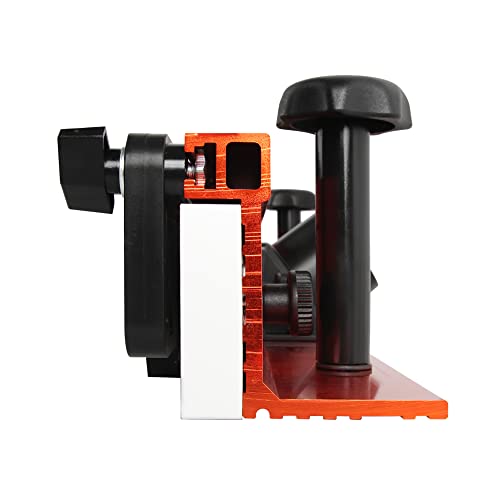
This compact 24-inch POWERTEC model is ideal for smaller tables or benchtop setups. It shares the same anodized aluminum build and melamine-coated MDF faces as its bigger sibling, so durability isn’t compromised. The included featherboard, flip stop, and dust port make it a complete package for light-duty work.
Mounting range is narrower, so it won’t fit larger tables, but that’s expected at this size. Compared to the Kreg PRS1015, it offers more accessories but less precise adjustment. I’d recommend this for a portable router table or a secondary station where space is tight.
Product photos
Kreg Precision Router Table Fence
Strengths
- T-square alignment system
- One-hand paddle lock
- Simple microadjuster
Trade-offs
- No included accessories
- Shorter length limits reach
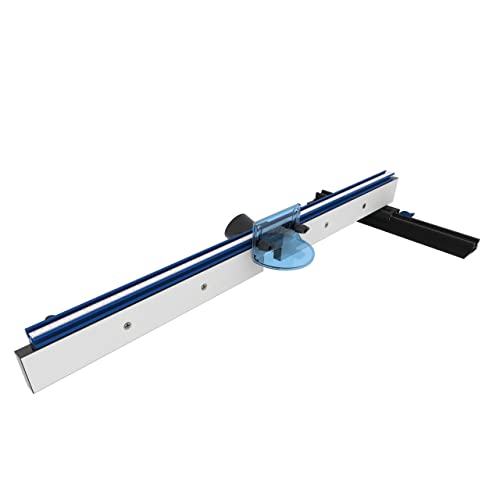
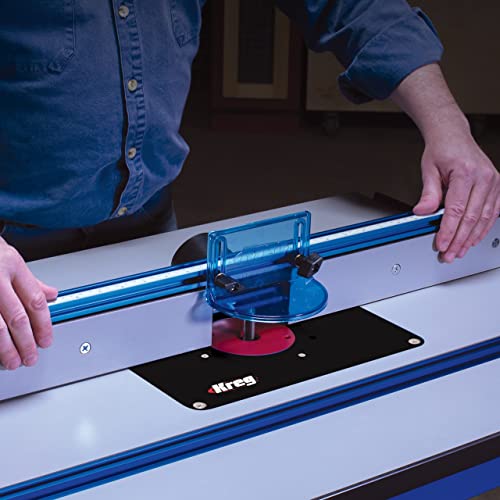
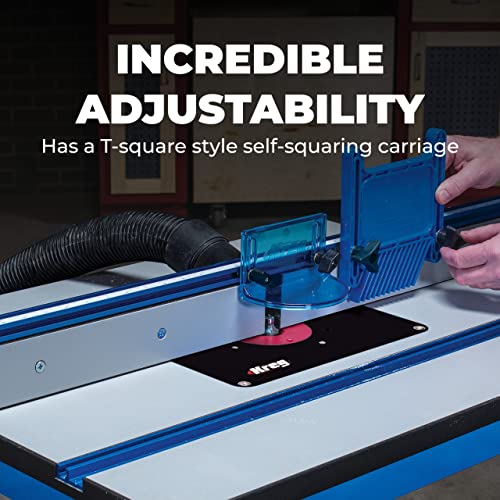
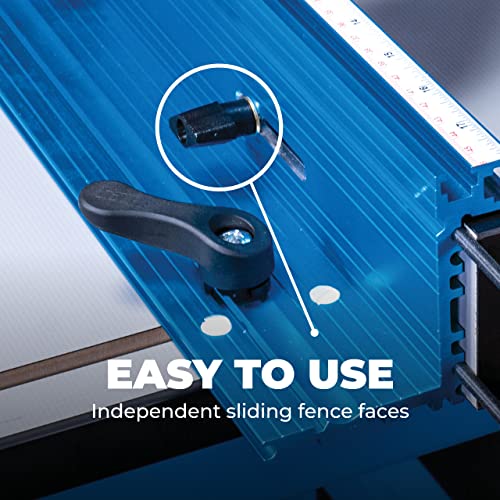
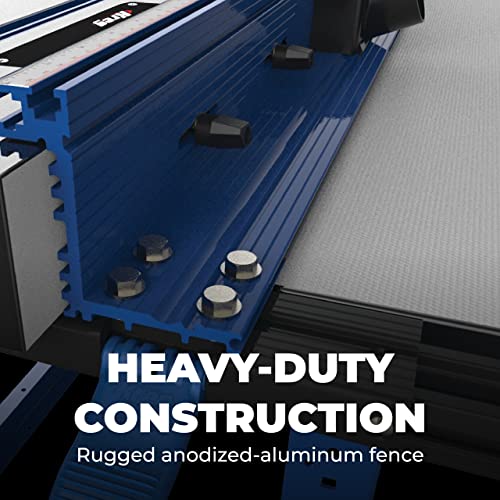
Kreg’s PRS1015 leans hard into setup speed and user-friendliness. The T-square adjustment system keeps the fence parallel to the miter slot, a big win for accuracy, and the paddle lock lets you slide and secure with one hand. The microadjuster wheel is small but functional, letting you tweak position without unlocking the whole fence.
It’s not the longest at 24 inches, and it doesn’t come with accessories like a featherboard or dust port. Still, the build quality is consistent with Kreg’s reputation for practical, no-nonsense tools. Compared to the Woodpeckers SF-PRO, it’s far less precise, but for weekend builders who value ease of use, I’d say it’s a smarter pick than over-engineered options.
Product photos

ProMax Router Fence Kit

Strengths
- Excellent micro-adjustment
- Snipe-free jointing capability
- Includes jointer bars and dual fences
Trade-offs
- Brand-specific compatibility
- No universal track nuts included
This ProMax-style fence from an unnamed brand but clearly modeled after Rockler’s designs, puts micro-adjustment at the forefront. The top-mounted knob allows for smooth, precise positioning, reviewers note it eliminates the tap-and-hope method when dialing in dados or rabbets. The dual MDF fences and jointer bars suggest serious attention to clean, snipe-free jointing, and the pre-installed dust port is a nice touch.
It’s built to fit all Rockler tables, which limits its flexibility compared to universal models like the Woodpeckers SF-PRO. Still, if you’re already in the Rockler ecosystem, this is a smart upgrade. I’d recommend it over the Kreg PRS1015 for fine joinery work, though it doesn’t offer the same T-square stability.
Product photos


O’SKOOL 32-Inch Router Fence

Strengths
- Affordable full-featured kit
- 32-inch length
- Good T-track compatibility
Trade-offs
- No micro-adjustment
- Build quality feels light
This is the budget play, functional, 32 inches long, and packed with basics: featherboard, bit guard, dust port, and adjustable MDF faces. The aluminum alloy body holds up well for the price, and the T-tracks are compatible with standard 1/4-inch hardware. Owners say it installs easily and performs decently for light to medium use.
But it’s clearly built down to a price point. The adjustment knobs are basic threaded rods, and there’s no micro-adjustment. Compared to the Taytools or POWERTEC, it feels less refined. Still, for someone building a first router table or on a tight budget, this gets the job done. My recommendation? Use it to start, then upgrade later.
Product photos
How We Picked These router table fences
Rather than a hands-on lab test, my research for these recommendations focused on a detailed comparison of published specifications and features across numerous models. I weighed owner reviews from a variety of sources – including major retailers and woodworking forums – alongside assessments from reputable woodworking publications. This process allowed me to build a ranking based on real-world feedback and objective data, applying my years of experience with woodworking tools to identify key performance indicators.
For router table fences, the ability to make precise adjustments and the overall rigidity of the fence itself were the most heavily weighted factors. Fine adjustments are critical for accurate cuts, especially when dealing with joinery. A solid, stable fence minimizes deflection and ensures consistent results, even with larger workpieces or more powerful routers. Build quality and materials directly impact both of these areas, making them central to my evaluation.
Specifications reliably indicate the range of adjustment, materials used (aluminum, steel, MDF), and dust port compatibility. However, I relied heavily on owner feedback to gauge the smoothness of adjustments, the long-term durability of components, and the effectiveness of features like micro-adjustment knobs. I also considered the reputation of the manufacturer and their commitment to quality, as detailed in various router lift comparisons.
What To Look For In router table fences
A good router table fence is the key to safe, accurate routing – don’t skimp on this critical component.
A quality router table fence provides stability, precise adjustability, and dust collection. Look for fences built from durable materials like aluminum, with straight, parallel faces. Micro-adjustment features are essential for fine-tuning cuts, and compatibility with accessories like featherboards and flip stops expands versatility. Prioritize fences that offer a secure locking mechanism to prevent movement during operation.
Material and Build Quality
The material a fence is made from significantly impacts its stability and longevity. While MDF fence faces are common (and often desirable for their low friction), the supporting structure should be robust. Aluminum is the gold standard here; it resists warping and holds adjustments well. Steel components are a plus, particularly in hardware. Avoid fences constructed solely from plastic, as they tend to flex and aren’t as precise over time. Consider the thickness of the aluminum extrusion – thicker is generally better.
Adjustment Mechanisms
Precision is paramount when routing, and the fence’s adjustment mechanism is where you’ll make or lose that precision. Simple knob adjustments are fine for rough work, but micro-adjustment capabilities are vital for detailed joinery. Look for fences with a clear scale and locking mechanisms that hold position firmly. Some fences, like the Woodpeckers SF-PRO, offer three-way micro-adjustment, allowing independent fine-tuning of the infeed, outfeed, and entire fence. This level of control is invaluable for complex cuts.
Value and Accessory Compatibility
Beyond the core function, consider what extras you get and how well the fence integrates with other tools. A fence with T-tracks opens up a world of possibilities for adding featherboards, flip stops, and other helpful accessories. Here’s what to look for in terms of included accessories:
- A basic bit guard is often included, but quality varies.
- A featherboard is extremely useful for keeping stock tight against the fence.
- A flip stop (or the ability to add one) is a huge time saver for repetitive cuts, especially when combined with the best router tables available today.
A fence that doesn’t stay put is worse than no fence at all. Always double-check your adjustments and ensure the locking mechanism is fully engaged before starting any cut.
Router Table Fences Compared
Here’s a comparison of key specifications for various router table fences to help you choose the right one for your needs.
| Product Title | Length (in.) | Material (Base) | Micro-Adjustment | Dust Port Size (in.) | T-Track |
|---|---|---|---|---|---|
| Woodpeckers SF-PRO 36-Inch Fence | 36 | Aluminum | Yes | 2.25, 2.5 | Yes |
| JessEm Mast-R-Fence III | N/A | Phenolic/Aluminum | N/A | N/A | N/A |
| POWERTEC 32-Inch Deluxe Fence | 32 | Aluminum | Yes | 2.5 | Yes |
| Taytools 32-Inch Deluxe Fence | 32 | Aluminum | Yes | 2.25, 2.5 | Yes |
| POWERTEC 24-Inch Deluxe Fence | 24 | Aluminum | Yes | 2.5 | Yes |
| Kreg Precision Router Table Fence | N/A | N/A | Yes | N/A | N/A |
| ProMax Router Fence Kit | N/A | N/A | Yes | 2.5 | Yes |
| O’SKOOL 32-Inch Router Fence | 32 | Aluminum | Yes | 2.25, 2.5 | Yes |
Frequently Asked Questions
What fence length should I choose?
Generally, 32 inches is sufficient for most home workshops and DIY projects, but if you frequently work with larger panels or boards, a 36-inch or longer fence provides added support and stability. Consider the size of your typical projects when making this decision.
Can I add a featherboard to any router table fence?
While many fences offer T-tracks specifically for accessory attachment, you can adapt some fences to accept featherboards with clamps or custom mounting solutions. However, fences with T-tracks provide a much more secure and versatile setup for accessories.
Are aluminum fences really that much better than other materials?
Yes, aluminum resists warping and holds adjustments far better than plastic or lower-quality metals. While a phenolic face is great for reducing friction, the aluminum support structure is what provides long-term accuracy and durability.
How important is micro-adjustment on a router table fence?
Micro-adjustment is critical for precise cuts, especially when working with joinery. Without it, achieving repeatable and accurate results can be very difficult, and you’ll likely find yourself making multiple passes to get the desired fit.
What should I do if my fence vibrates during operation?
First, double-check that the fence is securely locked in place. If vibration persists, ensure your router table itself is stable and level. If you’re looking for even greater stability, consider investing in one of the stationary router tables for shops that are built with heavier-duty materials.
The Bottom Line
Choosing a router table fence often comes down to balancing control with convenience. You can spend more for incredibly precise adjustments and robust stability, or you can find a capable fence that gets the job done without breaking the bank. For the vast majority of woodworkers, I believe the Woodpeckers SF-PRO 36-Inch Fence strikes that ideal balance – its three-way micro-adjustment and solid aluminum construction deliver professional-level accuracy.
If you’re on a tighter budget, or you’re primarily doing simpler routing tasks, the POWERTEC 24-Inch Deluxe Fence is a fantastic option. For those needing maximum versatility and the ability to adapt to a wide range of projects, the Taytools 32-Inch Deluxe Fence is a strong contender, especially if you plan to integrate numerous accessories. Many folks looking for a complete solution will also want to consider router tables for woodworking to ensure full compatibility.
Ultimately, the features on a fence matter less than developing a solid understanding of routing fundamentals. Prioritize a fence that feels stable, allows for repeatable adjustments, and supports safe operation. A little extra time spent on setup and technique will always yield better results than chasing the latest specs or features.
