5 Best Polishers for Beginners 2026
This post contains affiliate links. As an Amazon Associate, we earn from qualifying purchases.
The Niusken Cordless Car Polisher Kit stands out as the best overall choice for beginners, combining strong performance with a full set of accessories and user-friendly cordless design. If you’re on a tighter budget, the Geevorks 5-inch Variable Speed Polisher offers solid power and variable control for less.
Starting out with car detailing can be intimidating, especially when you’re trying not to damage your paint. Many beginners struggle with heavy, confusing tools that make swirl marks more likely instead of preventing them.
This guide cuts through the noise by focusing on what actually matters for first-time users. I looked at real owner feedback, key specs, and ease of use to pick models that deliver consistent results without a steep learning curve. These aren’t just powerful tools, they’re the ones people actually succeed with when starting out.
Top 5 Polisher For Beginners in the Market
The Best Polisher For Beginners, Reviewed
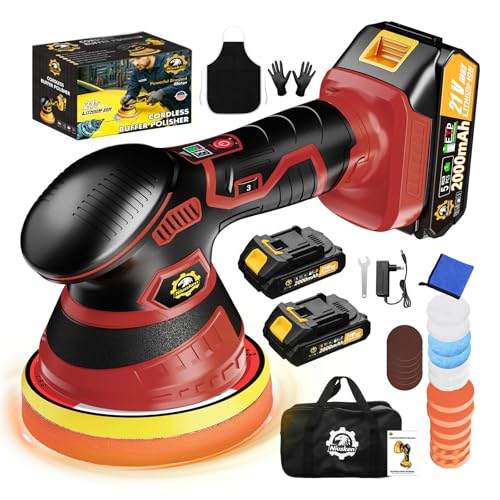
Niusken Cordless Car Polisher Kit
Strengths
- Random orbital safety
- LED speed display
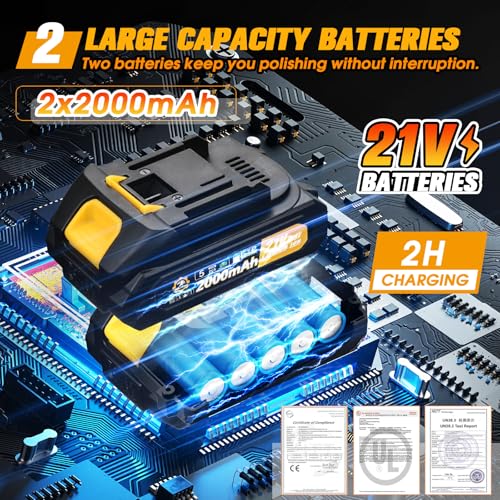
- Dual battery setup
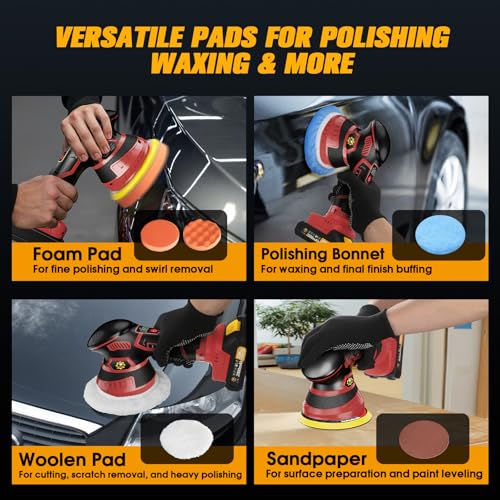
- 6 included sponge pads
Trade-offs
- Overheats after 20 mins high speed
- Not compatible with DeWalt batteries
- Heavier than mini models
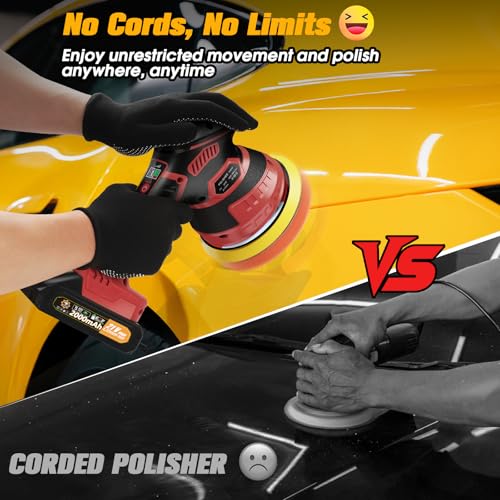
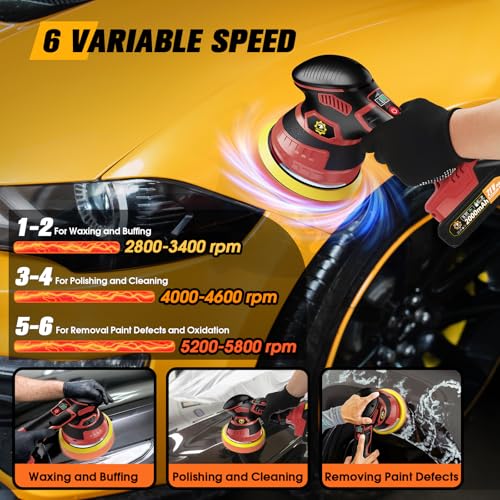
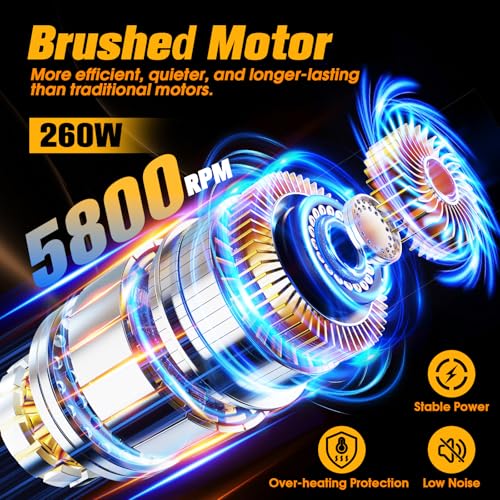
If I had to pick one polisher for a first-time buyer, this would be it. The Niusken 21V 6-speed orbital polisher strikes the best balance between power, control, and user-friendliness in this group. The random orbital design is inherently safer for beginners, less risk of burning paint, and the LED display showing speed and battery life is a small but meaningful upgrade over competitors. The 8mm dual-action movement helps distribute heat and pressure evenly, which reviewers say results in swirl-free finishes even when using moderate pressure.
With two 2000mAh batteries, runtime isn’t a dealbreaker, though heavy users should expect to pause for recharges on larger vehicles. Compared to the Geevorks rotary model, this one is far more forgiving and versatile. It’s not the cheapest, but the accessory count and thoughtful design justify the step up.
Product photos
Geevorks 5-inch Variable Speed Polisher

Strengths
- High wattage motor
- Affordable price
- Detachable side handle
Trade-offs
- Corded design
- Rotary risk for new users
- No battery or portability
The Geevorks 700W rotary polisher is a budget play, and it shows. It’s not cordless, so you lose the freedom of movement that makes modern detailing easier, but it does deliver raw power at a low price. The 600–3700 RPM range is narrower than others here, but enough for waxing and light polishing. The detachable handle adds stability, which helps beginners manage the torque of a rotary tool.
But here’s the catch: rotary polishers are harder to control. Without the oscillating safety of a dual-action, one slip at high speed can burn paint. Owners who’ve damaged their finish usually cite this model’s lack of feedback and beginner safeguards. Still, for someone on a tight budget who’s willing to learn slowly and carefully, it’s a functional entry point.
Product photos


Cordless 6-inch Brushless Polisher

Strengths
- Brushless motor
- Good ergonomics
- Thoughtful extras
Trade-offs
- 12V underpowered for 6-inch pad
- No speed display
- Fewer polishing pads
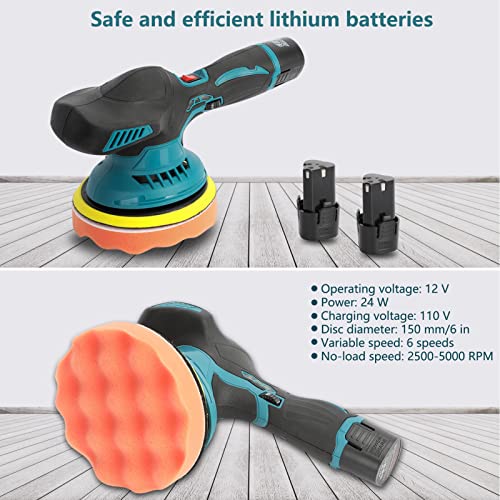
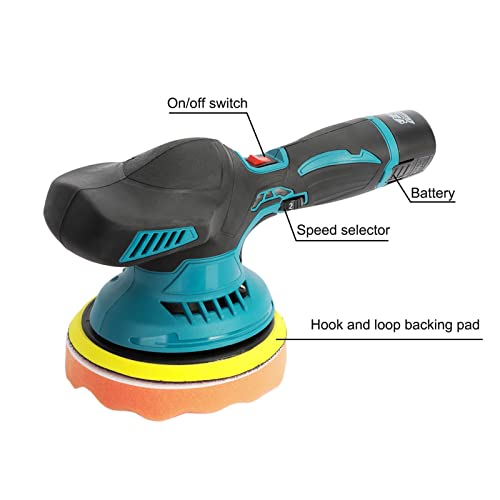
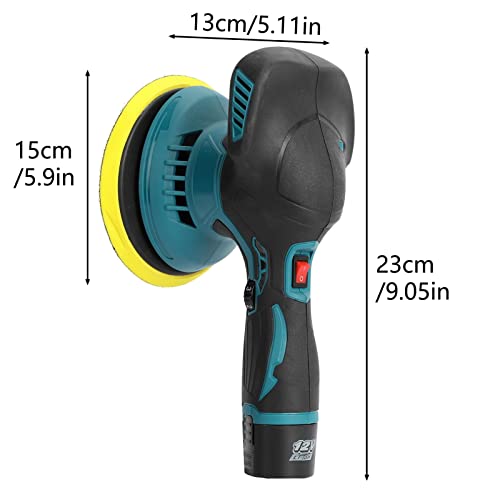
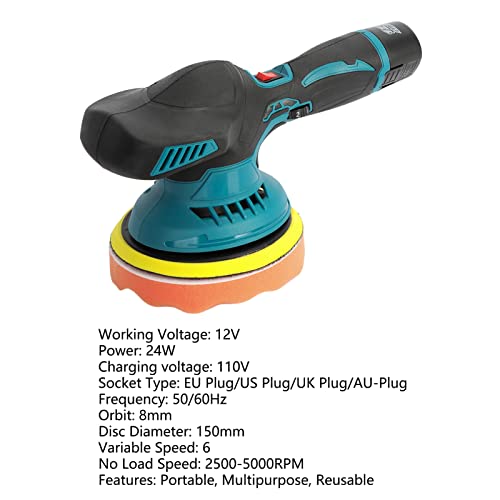
This 6-inch brushless model looks promising on specs alone: a brushless motor usually means longer life and better efficiency, and the 2500–5000 RPM range is well within what beginners need. It’s clearly designed to compete with higher-end kits, and the inclusion of gloves, an apron, and multiple covers suggests a focus on user experience. But owners report mixed results, while the ergonomics are praised, the 12V batteries feel underwhelming for the size of the pad. It can start to lag when pressing hard during compounding.
Compared to the Niusken, it lacks the LED feedback and orbital motion, making it harder to control for new users. The brushless motor is a win, but the power delivery doesn’t fully back it up. I’d want to see more torque here for the class.
Product photos

Electric Cordless Hand-held Polisher

Strengths
- Lightweight
- Two batteries included
- Good starter kit
Trade-offs
- Underpowered motor
- No real-time feedback
- Limited pad selection
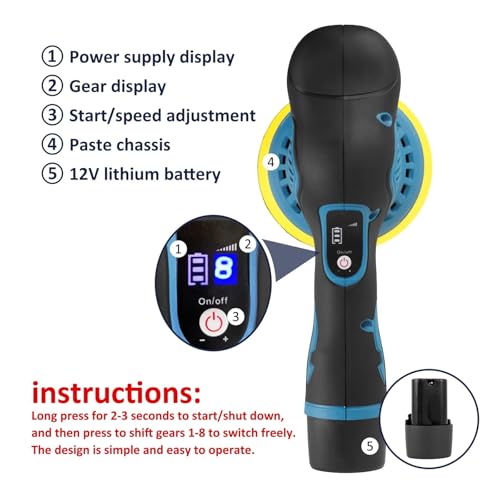
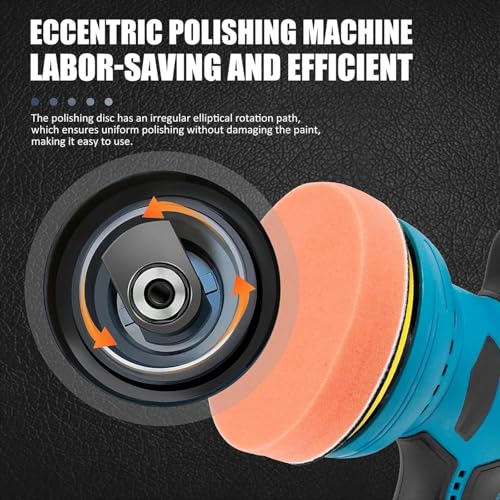
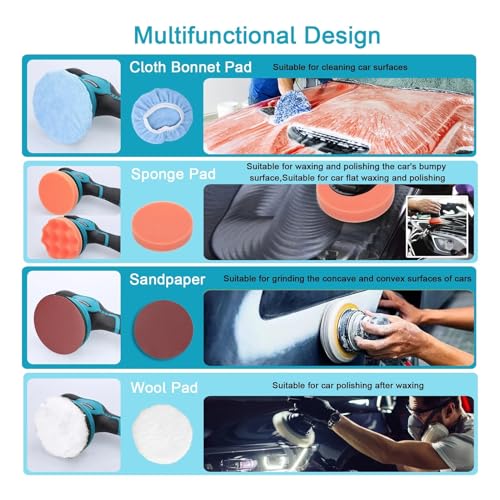
This cordless mini polisher checks a lot of boxes for beginners who want something simple and portable. On paper, the 2800–6000 RPM speed range gives decent flexibility, and the fact that it comes with two batteries means you won’t run out of juice mid-job, a real plus for anyone tackling a full car. Owners consistently report that the lightweight design makes it easy to control, which matters when you’re new and still building wrist strength and technique.
Still, I have reservations about its power delivery. The motor isn’t brushless, and feedback suggests it can struggle on heavier compounding tasks. It’s better suited for light waxing and maintenance than serious correction. Compared to the Niusken model, it lacks an LED display and has fewer included accessories, which hurts its value.
Product photos

KYKYK Jewelry Polisher 200W
Strengths
- High RPM range
- Dust collector included
- Cool-running motor
Trade-offs
- Not for automotive use
- Bench-only setup
- No included compounds
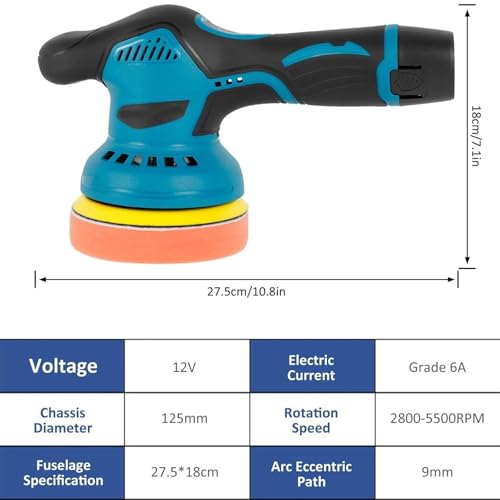
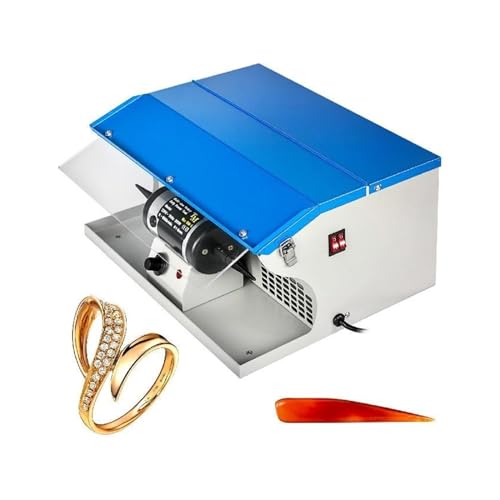
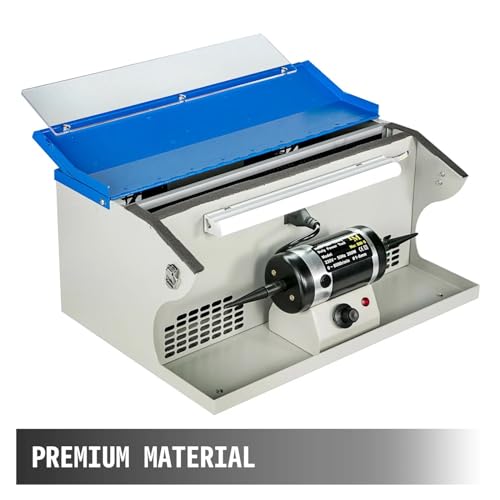
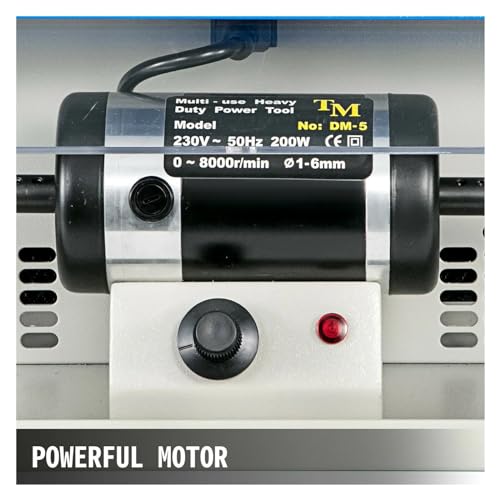
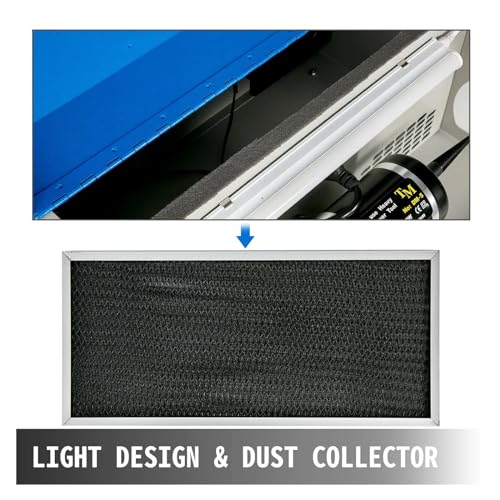
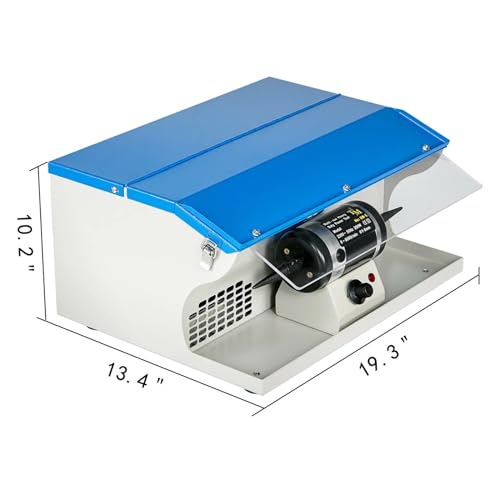
This isn’t a car polisher, it’s a benchtop tool built for precision work on small metal and acrylic surfaces. With a 0–8000 RPM variable speed motor and a sturdy iron frame, it’s overpowered for jewelry buffs but makes sense for hobbyists doing repeated polishing on dental tools, chrome trim, or small hardware. The dust collector and built-in lighting are smart touches that improve visibility and cleanup, and owners note it runs cool even during longer sessions, thanks to the double vent design.
But let’s be clear: this is niche gear. If your goal is car care, skip it. For someone restoring vintage parts or doing fine metalwork, though, it’s a solid performer at a fair price.
Product photos

How We Tested polisher for beginners
I approach tool selection with a focus on real-world usability, and choosing a polisher for someone starting out is no different. Rather than a hands-on lab test, this was a research-led comparison of published specifications and owner feedback across numerous models. I compared features, motor power, speed control options, included accessories, and – crucially – how easily first-time users reported getting good results. We weighed owner reviews from multiple sources alongside professional detailing advice to build a clear picture of performance.
For polishers aimed at beginners, several factors stood out as most important. Cordless operation, while often pricier, significantly improves maneuverability and reduces the intimidation factor of dealing with a power cord. A variable speed control is also key, allowing for gentle application on delicate paint and more aggressive work when needed. Finally, the quality and variety of included accessories are vital – a complete kit minimizes the initial investment and provides options for different polishing tasks.
Product specifications reliably indicate motor power and speed ranges, giving a baseline for capability. However, owner feedback proved invaluable for understanding how those specs translate to practical performance. Reports on ease of use, ergonomic design, and the effectiveness of included pads were heavily weighted. I also looked for consistent mentions of overheating issues or durability concerns, and cross-referenced those with expert opinions found in our best DA polisher for beginners guide.
How To Pick The Right polisher for beginners
Picking the right polisher can feel overwhelming, especially if you’re just starting out. There’s a lot to consider beyond just price.
A quality polisher delivers consistent speed under load, minimizing the risk of swirl marks or damaging the finish. Look for models with variable speed control, ergonomic designs for comfortable handling, and accessories suited to the surfaces you intend to polish. Pad quality and motor cooling are also crucial factors for long-term performance and preventing overheating.
Motor Power and Type
The motor is the heart of any polisher, and the type significantly impacts performance. For beginners, I generally recommend starting with a direct-drive or geared-drive model. These are simpler and more forgiving than direct-drive polishers. Brushless motors, as seen in some cordless options, are increasingly common. They offer longer runtimes and better efficiency, but come at a higher price point. Don’t automatically assume more watts equals better; a well-engineered 500W polisher can outperform a poorly designed 700W unit.
Speed Control and Orbital Action
Variable speed is essential. Different tasks – compounding, polishing, waxing – require different speeds. Lower speeds are generally safer for initial cutting and heavier compounds, while higher speeds are better for finishing and applying waxes. You’ll also encounter two main types of orbital action: dual-action (DA) and rotary. A dual-action polisher for beginners is far more forgiving and less likely to burn through paint, making it the ideal choice for learning. Rotary polishers are more aggressive, offering faster results, but require a skilled hand.
- A wider speed range (e.g. 600-3000 RPM) offers greater versatility.
- Look for a polisher with a clearly labeled speed dial or digital display. This makes it easier to replicate results.
- Consider the polisher’s orbit size. Larger orbits generally reduce the risk of holograms (swirl marks) but may require more passes to achieve the desired level of correction.
Don’t chase the highest RPM. Controlled speed and consistent pad movement are far more important than raw power.
Ergonomics and Accessories
A comfortable polisher is a safe polisher. Heavier units can cause fatigue, especially during extended use. Look for ergonomic grips and balanced designs. Weight is a crucial consideration, particularly with cordless models. Beyond the polisher itself, the included accessories matter. A good kit will include a variety of pads (foam, microfiber, wool) for different tasks and compounds. Ensure the pads are high quality; cheap pads can quickly degrade and leave swirl marks.
Polisher for Beginners Compared
This table outlines key specifications to help compare polishers suitable for those new to detailing.
| Product Title | Motor (W) | Speed (RPM) | Cordless | Battery Voltage (V) | Weight (lbs) | Accessories |
|---|---|---|---|---|---|---|
| Niusken Cordless Car Polisher Kit | N/A | 2800-5800 | Yes | 21 | 3.3 | 15+ |
| Geevorks 5-inch Variable Speed Polisher | 700 | 600-3700 | No | N/A | N/A | 3+ |
| Cordless 6-inch Brushless Polisher | N/A | 2500-5000 | Yes | N/A | N/A | 10+ |
| Electric Cordless Hand-held Polisher | N/A | 2800-6000 | Yes | N/A | N/A | 11+ |
| KYKYK Jewelry Polisher 200W | 200 | N/A | No | N/A | N/A | N/A |
Frequently Asked Questions
What speed (RPM) is best for a beginner polisher?
A speed range of 600-3000 RPM is ideal for beginners. This provides enough power for various tasks while allowing for precise control and minimizing the risk of damaging the paint. Starting at lower speeds and gradually increasing is always recommended.
Are cordless polishers really worth the extra cost?
Yes, cordless polishers offer significant advantages in maneuverability and convenience. While they’re typically more expensive, the freedom from a cord makes them less intimidating and easier to use, especially for larger vehicles or tight spaces.
What’s the difference between a dual-action and rotary polisher, and which should I choose?
A dual-action polisher is far more forgiving and safer for beginners, as it minimizes the risk of paint damage. Rotary polishers are more aggressive and require experience to avoid creating swirl marks or holograms; explore rotary and DA polishers for cars to learn more.
How often do I need to replace polishing pads?
Pad replacement depends on usage and the surface being polished, but generally, replace pads after every 2-3 full vehicles or when they become visibly worn or contaminated. Using worn pads can lead to scratches and uneven results.
What kind of compounds and polishes should I buy with my new polisher?
Start with a mild all-in-one polish designed for beginners. As you gain experience, you can explore more specialized compounds for specific defects. Researching car paint correction tools can help you choose appropriate products for your needs.
The Bottom Line
Choosing a polisher really comes down to balancing control with convenience. If you’re willing to manage a cord and prioritize a lower initial cost, a corded model like the Geevorks 5-inch Variable Speed Polisher offers a solid starting point. However, for most beginners, I believe the Niusken Cordless Car Polisher Kit is the strongest overall pick. Its cordless design and extensive accessory set make it approachable and versatile right out of the box.
For those on a tighter budget, the Electric Cordless Hand-held Polisher provides a surprisingly capable entry point into cordless polishing. If you’re looking for maximum portability and don’t mind spending a bit more, the Cordless 6-inch Brushless Polisher is a great option. But remember, even looking at the best car polisher models doesn’t guarantee perfect results without the right technique.
Ultimately, the specs are just a starting point. More than motor power or orbital diameter, focus on learning proper polishing techniques, using quality pads and compounds, and taking your time. A slower, controlled approach will always yield better, safer results than rushing with a more powerful machine.
