8 Best PDR Tools for 2026
This post contains affiliate links. As an Amazon Associate, we earn from qualifying purchases.
The Super PDR 148PCS Dent Repair Kit stands out as the best overall choice, offering a wide range of durable tools that cover most repair scenarios. For those on a tighter budget, the VEVOR 89PCS Dent Puller Kit delivers solid performance with the added benefit of an LED board. If you’re working in colder climates, the FLY5D PDR Kit with Heat Gun is a smarter pick thanks to its integrated heating system for reliable glue removal.
Most people diving into paintless dent repair quickly realize it’s not just about having tools, it’s about having tools that actually hold up and work together. A weak puller, poor glue bond, or missing access rod can turn a simple fix into a frustrating mess.
This guide cuts through the clutter by focusing on what really matters: alloy strength, glue system quality, and thoughtful kit design. I looked at specs, owner feedback, and pro recommendations to find kits that deliver real value and performance, not just high part counts.
Top 8 Pdr Tools in the Market
The Best Pdr Tools, Reviewed
Super PDR 148PCS Dent Repair Kit

Strengths
- Extensive tool selection
- Lifetime customer support
- Paint-safe rubber contacts
Trade-offs
- Overkill for small jobs
- Heavy kit bag
- Setup can overwhelm beginners
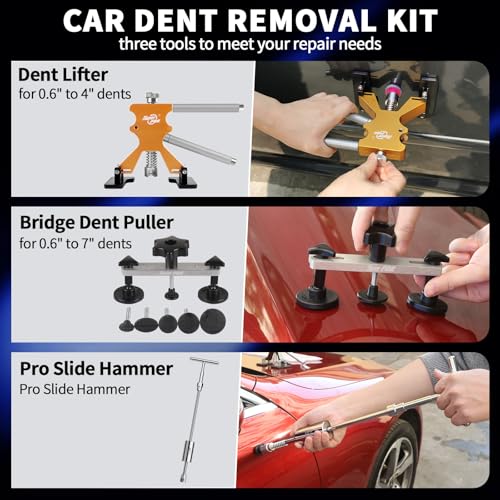
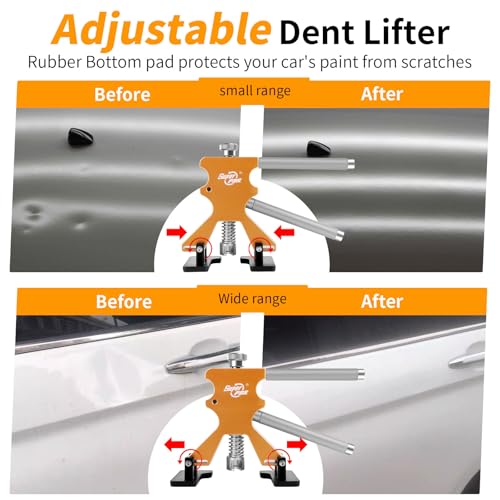
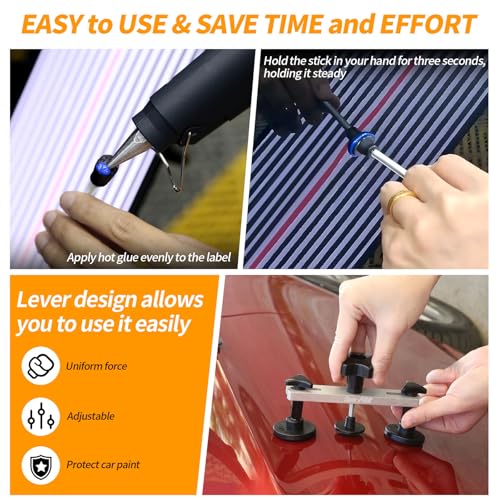
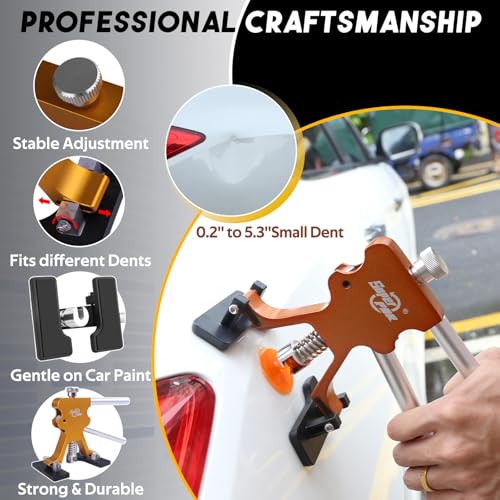
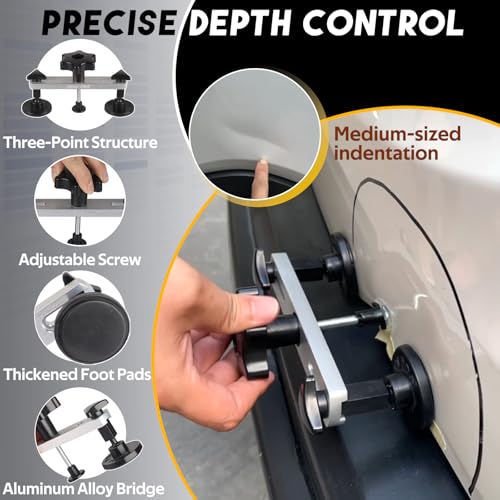
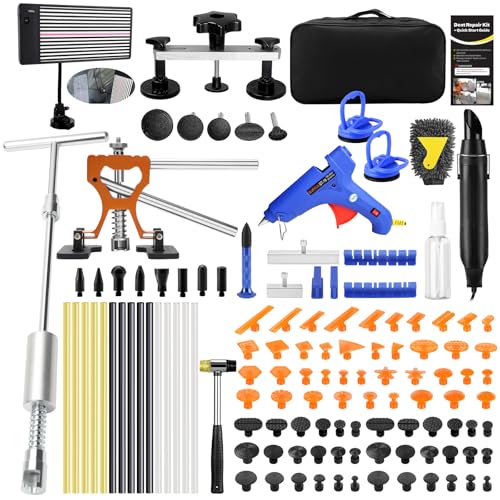
This is the most complete kit on paper, and in practice, owners treat it as the best overall option. With 148 pieces, it includes everything from a lifetime warranty to a full range of pullers, tabs, and a high-output glue gun. The claim that it removes 99% of dents in 30 minutes may be optimistic, but the tools themselves are well-designed: rubber-bottomed pullers to protect paint, adjustable bridge widths, and a T-bar that converts for different dent sizes.
What seals the deal is the lifetime technical support, a rare offering that gives real peace of mind. Compared to others, this kit feels like it’s built for long-term use, not one-off fixes. If you’re serious about PDR and want one kit to handle nearly every scenario, this is the one I’d recommend.
Product photos

Super PDR Pro Kit with LED Board

Strengths
- Excellent LED line board
- 100W glue gun
- Strong customer support
Trade-offs
- Glue weak in cold
- No heat gun included
- Fewer tabs than competitors
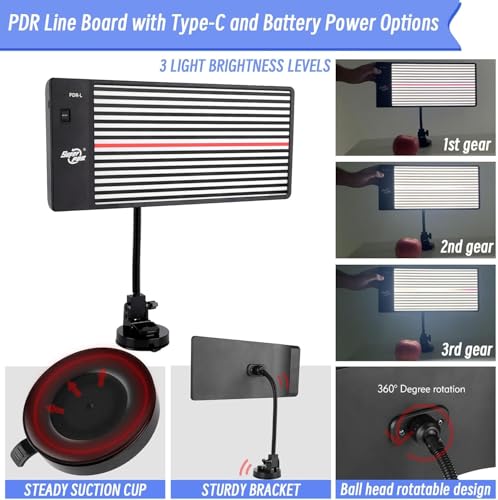
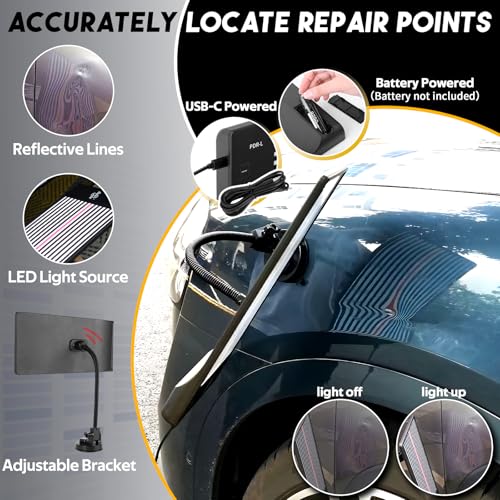
This kit stands out for one key reason: the LED line board. It’s not just a gimmick, reviewers consistently praise its 360° rotating mount and strong suction cup, which make spotting subtle creases far easier than with a static board. Paired with a 100W glue gun and solid alloy tools, this is a well-balanced setup for detail-oriented repairs. The build quality feels more refined than budget kits, and the inclusion of a slide hammer adds versatility for stubborn dents.
Where it stumbles is in cold weather performance, like most kits, it relies on hot glue, which loses grip in low temps. But if you’re working in a garage or moderate climate, this is a strong contender. I’d pick this over the VEVOR if you value accuracy over sheer quantity.
Product photos

FLY5D PDR Kit with Heat Gun
Strengths
- Includes dual-purpose heat gun
- PC glue tabs for stronger hold
- LED board with battery option
Trade-offs
- Slightly bulkier setup
- No slide hammer
- Higher learning curve for beginners
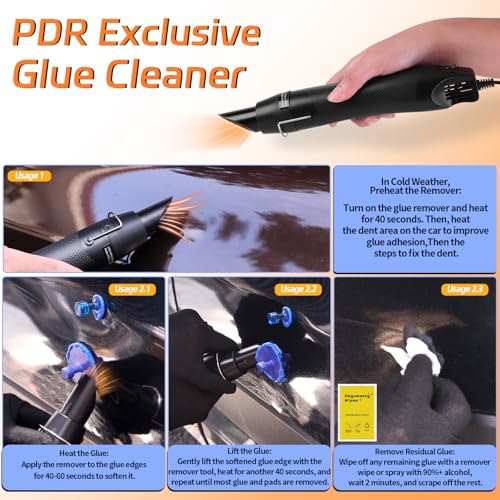
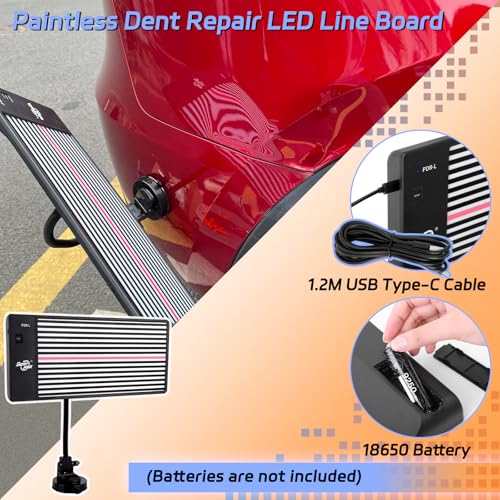
The real differentiator here is the 2-in-1 heat gun, a rare inclusion that solves a major pain point: cold-weather glue failure. Owners in northern states specifically highlight how preheating the panel before applying glue dramatically improves pull success. That alone makes this kit a smarter choice for year-round use, especially compared to kits that assume ideal conditions. The LED line board is also well-reviewed, with USB and battery compatibility adding real-world flexibility.
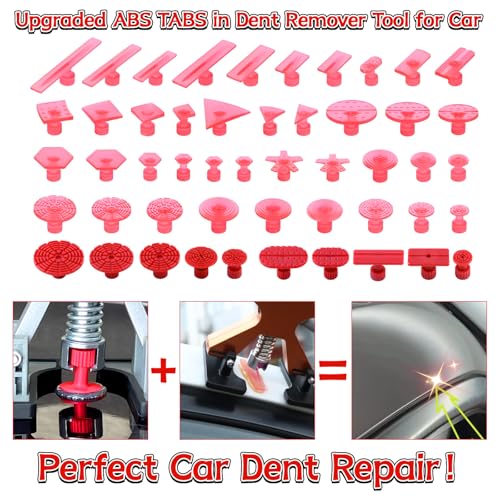
The PC glue tabs are another upgrade, more durable and elastic than standard ABS, they hold better under tension. Combined with the heat gun, this kit feels like it’s built for reliability, not just specs. If you’ve struggled with failed pulls in winter, this is the fix.
Product photos
VEVOR 89PCS Dent Puller Kit
Strengths
- Large tool count
- Good tab quantity
- Solid entry-level value
Trade-offs
- Basic glue gun
- Rods lack rigidity
- Inconsistent feedback on durability
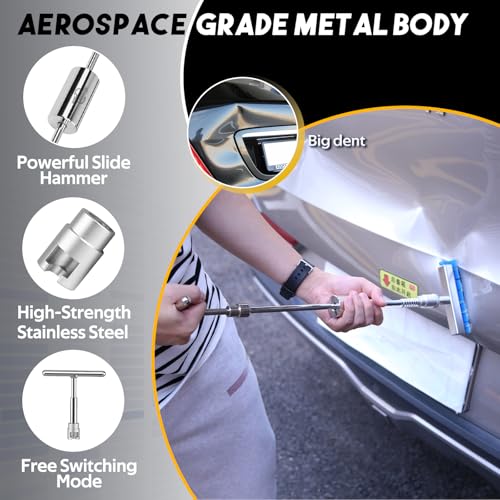
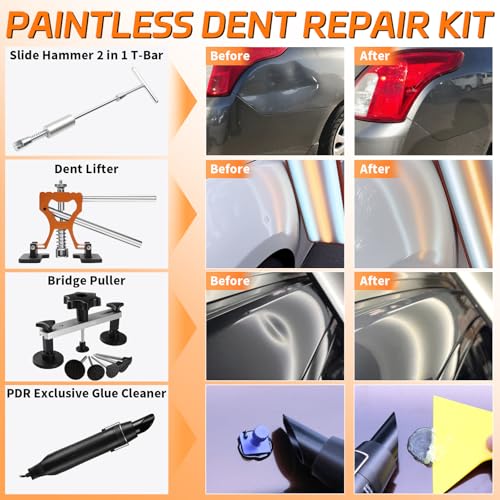
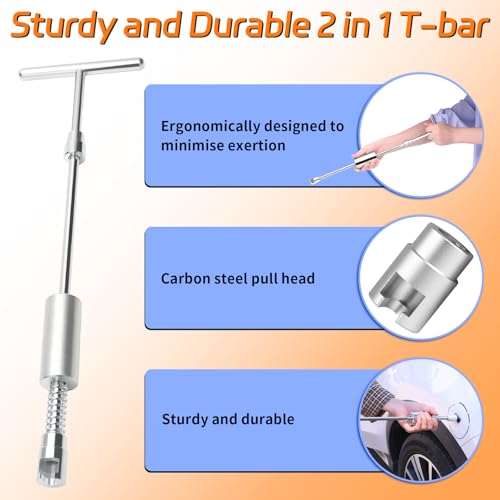
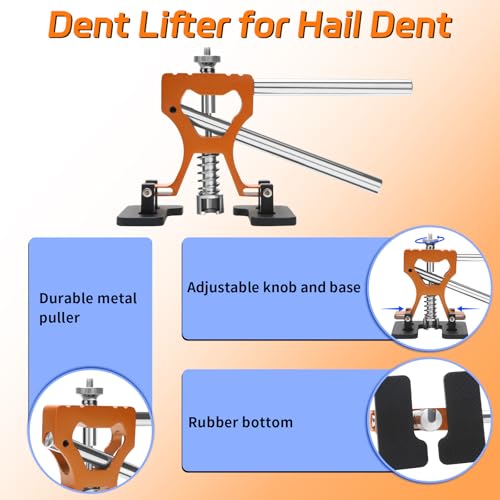
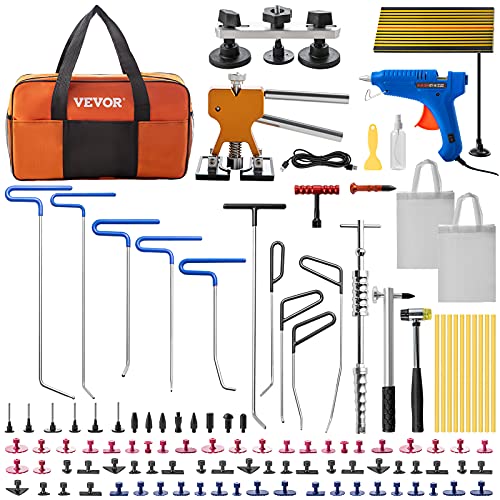
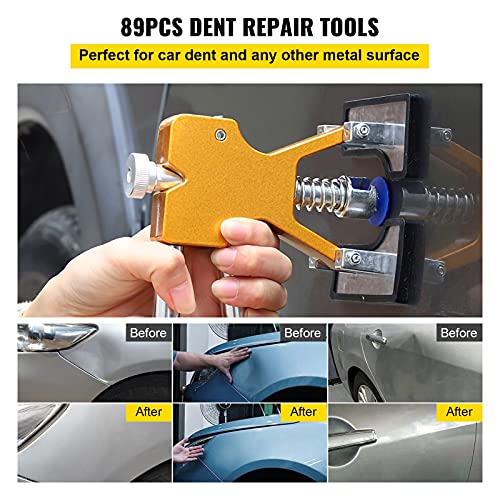
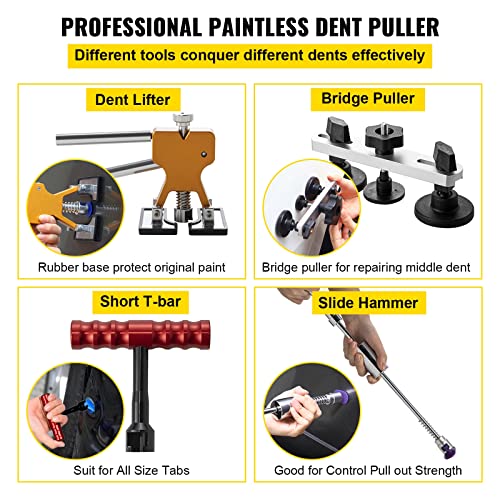
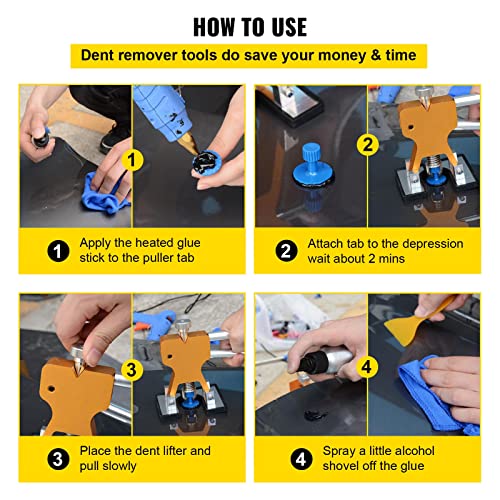
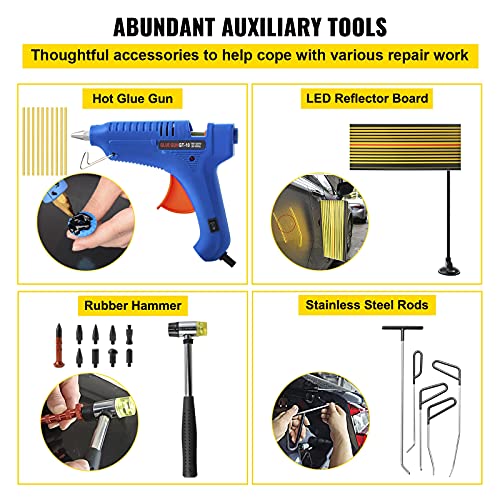
This 89-piece kit hits the sweet spot for budget-conscious buyers who still want a broad selection of tools. On paper, it covers the essentials, golden lifter, bridge puller, T-bar, slide hammer, glue gun, and a very generous 66 glue tabs. Owners consistently report it’s sufficient for small to medium dents, especially door dings and light hail damage. Where it falls short is in refined details: the glue gun is basic, and some users note the rods feel flimsier than expected under heavy use.
Still, for a first-time DIYer or someone who only needs occasional touch-ups, this is a solid starting point. It won’t match pro-tier precision, but it delivers what it promises, functional, affordable PDR capability. I’d recommend it for casual users, but not for those tackling deep or complex dents regularly.
Product photos
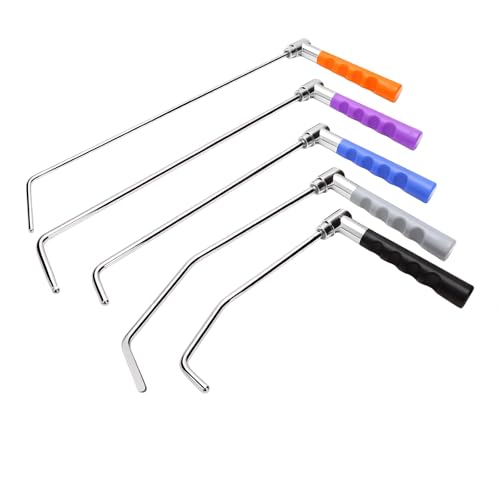
Super PDR 5PCS Rotating Rod Set
Strengths
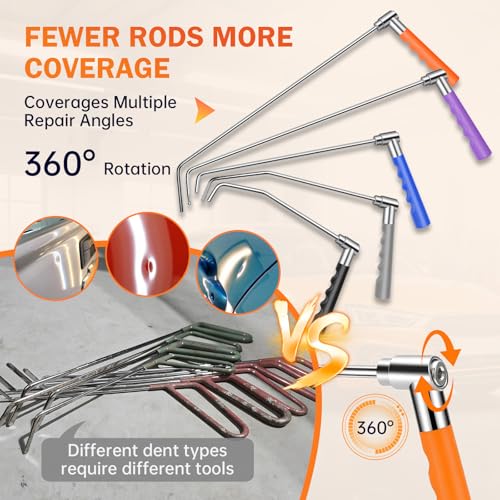
- 360° swivel for tight spots
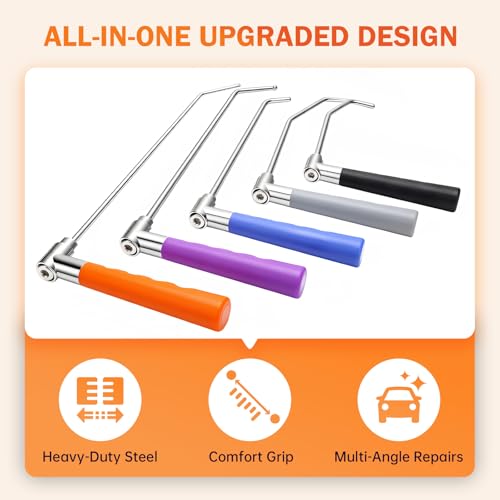
- Heavy-duty metal build
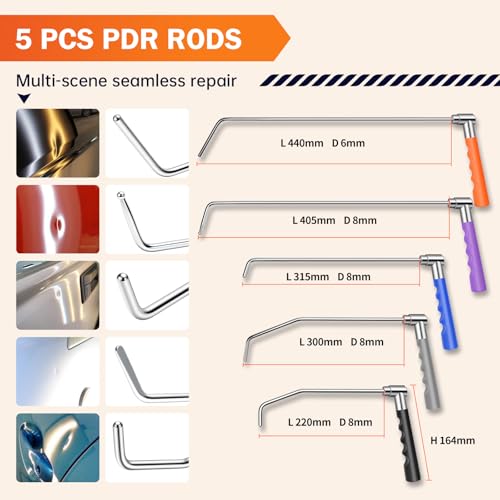
- Replaces larger rod kits
Trade-offs
- Not a standalone solution
- No pullers or glue tools
- Niche use case
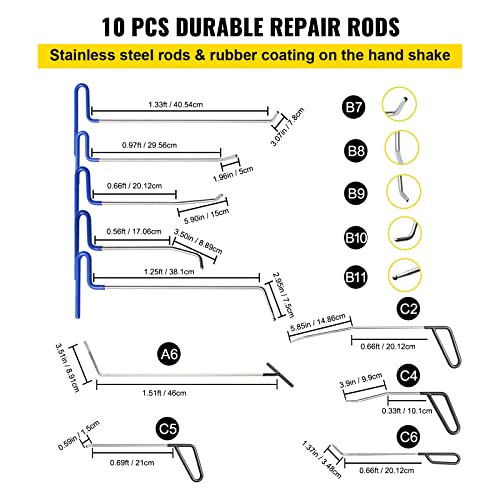
This isn’t a full kit, but for accessing tight spaces, it’s unmatched. The 360° swivel handle lets you apply use from awkward angles, behind door panels, near frame rails, or around reinforcements, where straight rods just can’t reach. Owners who’ve worked on modern cars with dense internal structures consistently rate this set highly for precision and durability.
The five rods are engineered to replace entire traditional sets, which sounds bold, but feedback suggests they really do cover most common scenarios. It’s not for surface work, but for internal access, it’s a pro-level upgrade. If your main struggle is reaching dents without disassembly, this is the smart buy.
Product photos
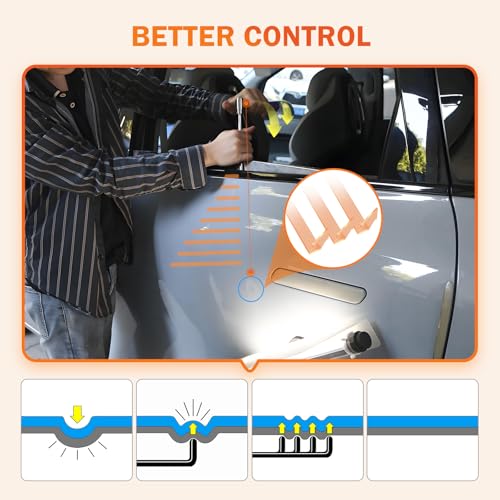
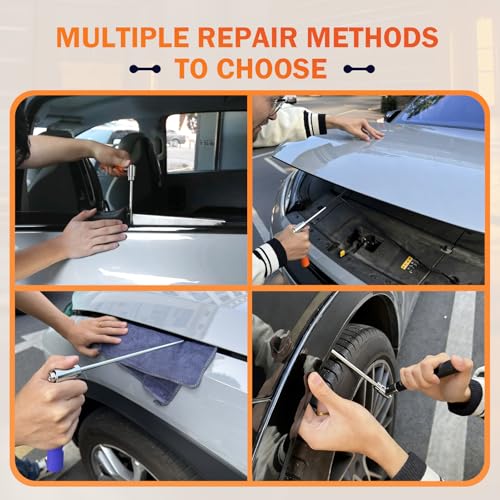
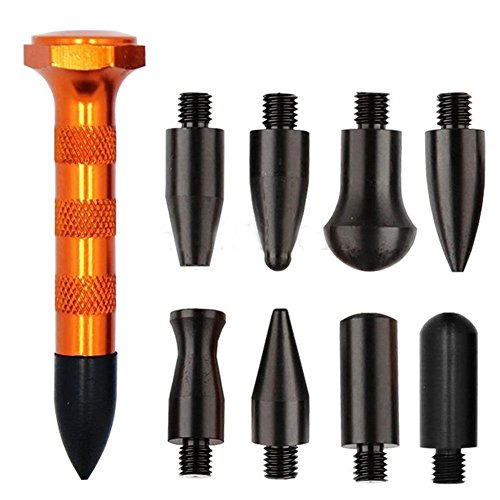
GS Tap Down Pen with 9 Heads
Strengths
- Great for high points
- Multiple tip shapes
- Compact and precise
Trade-offs
- Limited to minor dents
- No pulling capability
- Basic build quality
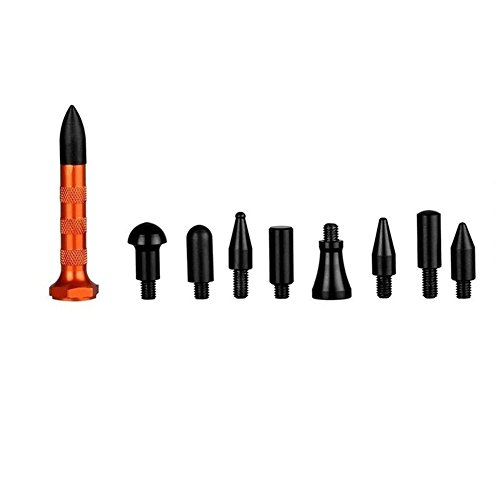
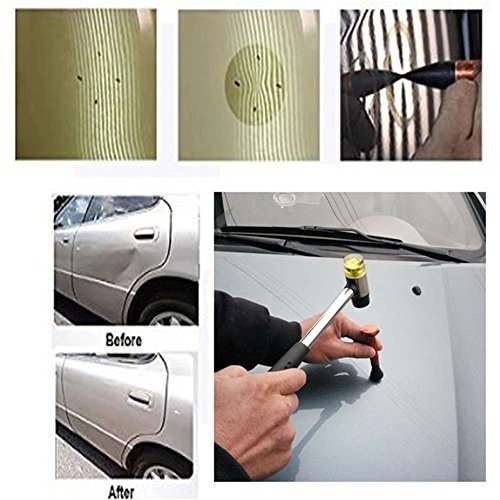
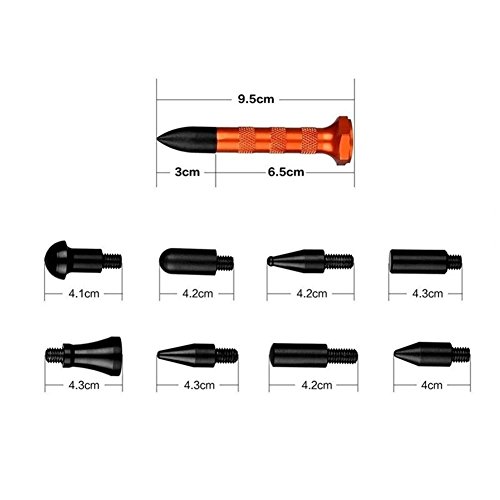
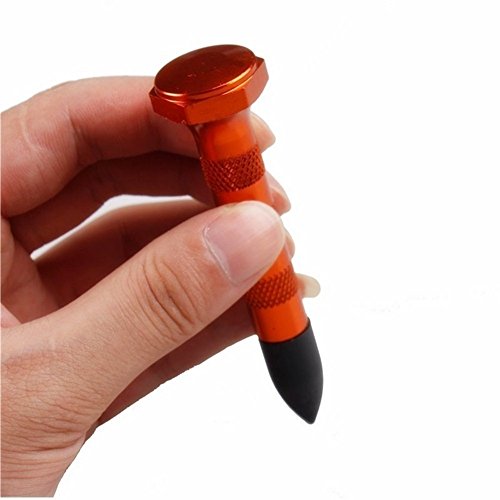
This is a specialty tool, not a full repair system. The tap-down pen with nine interchangeable tips is ideal for high points and minor surface irregularities, exactly what it’s marketed for. The plastic tips help prevent marring, and the compact design makes it easy to control pressure.
Owners use it as a finishing tool, often alongside a pull kit, to smooth out slight crowns after a pull. It won’t remove deep dents, but for final shaping, it works well. At this price and size, it’s a smart add-on, not a primary solution. I’d pair it with a glue-pull kit, not rely on it alone.
Product photos
ROADGIVE 97PCS Dent Repair Kit

Strengths
- High tool count
- Ergonomic bridge puller
- Includes suction cups
Trade-offs
- Some redundant tools
- Average glue gun
- Inconsistent rod quality
With 97 pieces, this kit leans into volume, more tools, more tabs, more accessories than most mid-tier options. The build quality is decent: hardened alloy components and an ergonomic bridge puller design that reviewers say reduces hand fatigue. It includes useful extras like suction cups and dual plastic shovels, which help with glue cleanup and panel access.
But more parts don’t always mean better performance. Some owners note redundancy in the rod selection, and the glue gun, while functional, isn’t as fast or consistent as the 100W models. Still, for the price, it’s a well-rounded mid-range pick. If you want a step up from budget kits without paying pro-level prices, this is a logical choice.
Product photos

AUTOPDR Lightweight Dent Puller Kit
Strengths
- Beginner-friendly design
- Lifetime support
- Clear instructions
Trade-offs
- Fewer advanced tools
- Limited rod selection
- Bag quality could be better
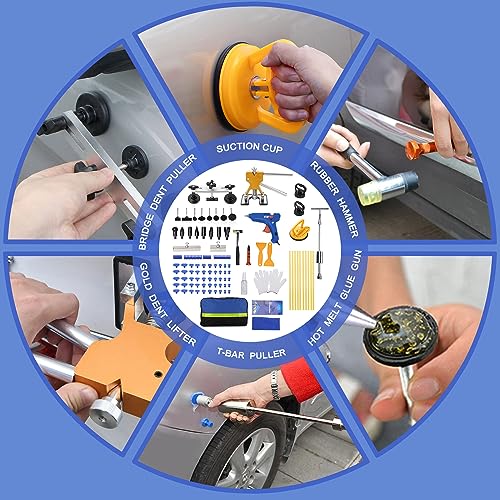
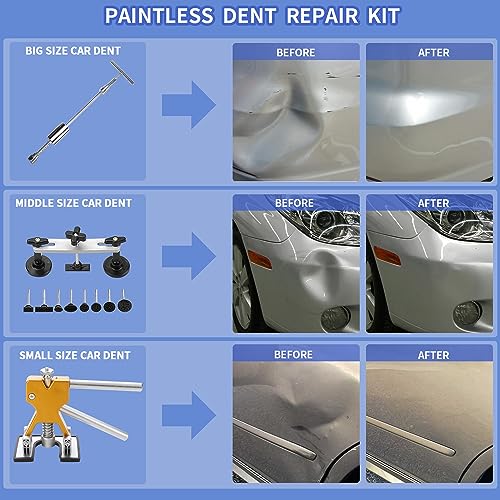
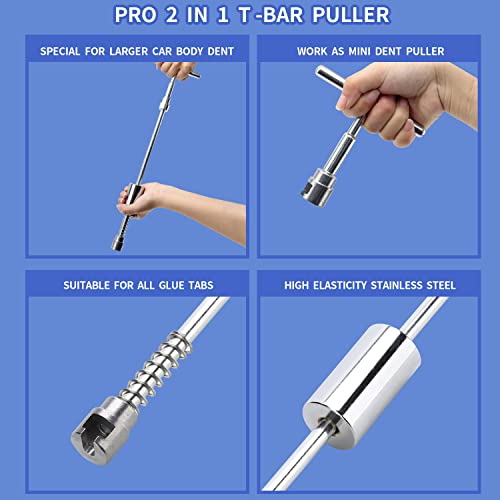
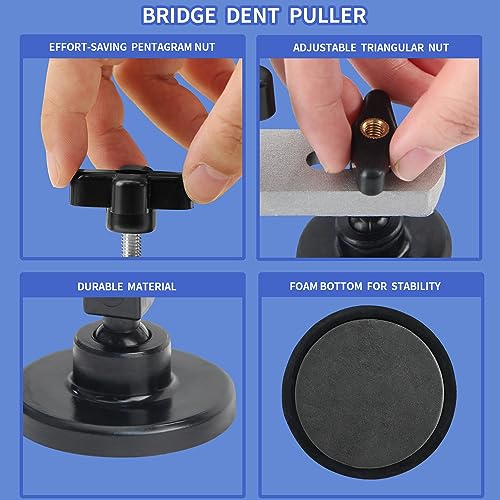
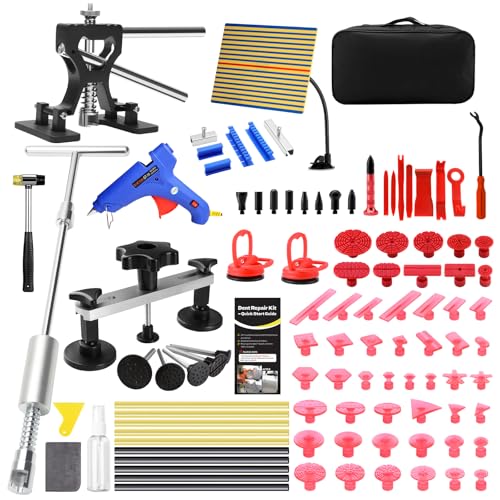
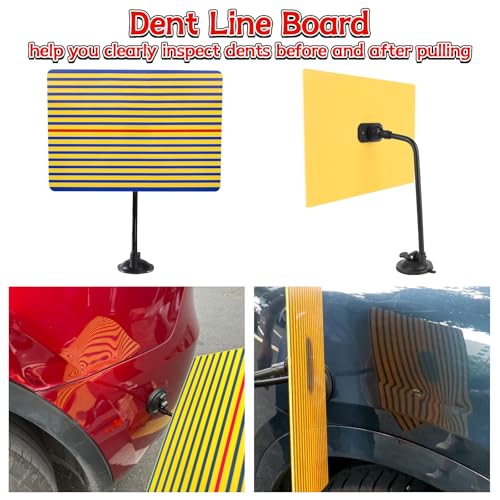
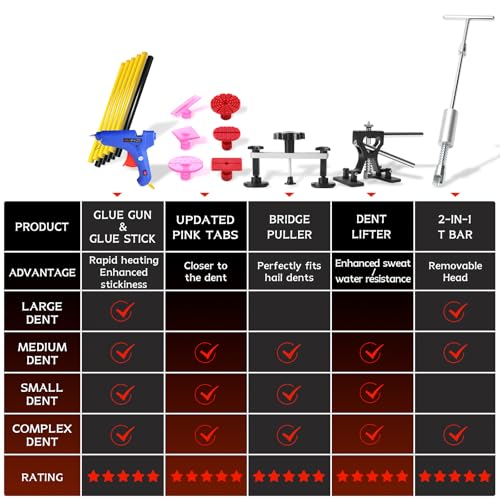
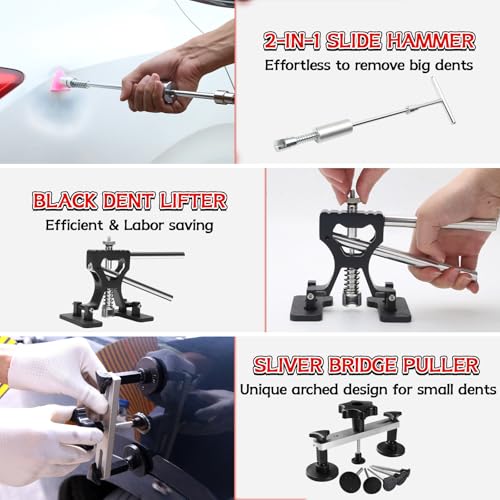
This kit is clearly designed with beginners in mind, from the simplified 4-step process to the lifetime warranty and 24/7 support. The inclusion of color-coded tabs and suction cups helps users match tools to dent types without guesswork. The 100W glue gun and LED line board bring pro-level features into an easy-to-use package, and owners report getting decent results on first tries.
The real standout is the lifetime service and repair plan, you can send photos and get custom guidance, which is incredibly valuable for new users. It doesn’t have the raw tool count of the 148PC Super PDR kit, but it’s far more approachable. For someone nervous about messing up their car’s paint, this is the safer bet.
Product photos
How We Picked These pdr tools
I’ve spent over 15 years working with tools, and in that time I’ve seen a huge variation in quality – especially within specialized categories like paintless dent repair. Rather than a hands-on lab test of each kit, this research focused on comparing published specifications and features across numerous PDR tool sets. I weighed owner reviews and expert analyses from automotive detailing forums and professional body shop resources to build a clear picture of real-world performance and durability. This allowed us to rank these kits based on their potential effectiveness and value.
For PDR tools, three factors stood out as most important. First, the quality of the metal alloys used in the pulling tools themselves directly impacts their strength and ability to apply force without bending or breaking. Second, the variety and adhesion of the glue tabs are critical; a wider selection and stronger bond mean more dents can be addressed successfully. Finally, inclusion of a reliable heat gun (and its wattage) is a major deciding factor, especially as many owners report difficulty removing glue in colder weather.
Specifications reliably tell you about the potential of a kit – the number of pieces, the wattage of the glue gun, and materials listed. However, I placed significant weight on owner feedback regarding the actual strength of those tools, the quality of the glue adhesion, and ease of use. Reputation matters, too. Kits from brands consistently praised by professional detailers and auto body technicians were given preference, as their designs typically reflect practical, real-world needs. If you’re looking for help with other outdoor power equipment, you might also want to learn how to replace trimmer line to keep your yard looking its best.
How To Pick The Right pdr tools
Choosing the right paintless dent repair (PDR) tools can feel overwhelming, but focusing on a few key areas will set you up for success. A quality kit isn’t just about having a lot of pieces; it’s about having the right pieces that work together effectively for lasting repairs.
A successful PDR kit balances precision with power. Look for kits constructed from durable alloys and high-quality plastics. Essential features include a variety of pulling tabs, a reliable glue gun with strong adhesive, and tools for both accessing and finishing the repair – all while minimizing the risk of damaging the vehicle’s paint. Consider the types of dents you’ll most often encounter and choose a kit tailored to those needs.
Understanding Pulling Methods
The core of PDR lies in how you apply force to reshape the metal. Many kits include a variety of pulling tabs and tools, but the effectiveness depends on their design and how well they integrate. Don’t assume more is always better; a thoughtfully curated selection is preferable to a massive kit full of redundant pieces. The type of puller (bridge, slide hammer, or lifter) should match the size and location of the dent. I often see people get bogged down in having every tool when focusing on mastering a few key methods is more valuable.
Glue Quality and Application
The glue used in PDR is critical. Not all hot melt glue is created equal. You want a formula designed specifically for auto body work, something that bonds strongly to metal without damaging the paint. A quality glue gun, with consistent temperature control and a drip-proof nozzle, is equally important. Cheap guns can deliver uneven heat, leading to weak bonds and messy applications.
Here’s what to look for in a glue system:
- A good supply of glue sticks (at least 10-20 to start).
- A temperature control setting to adjust for different materials and ambient temperatures.
- A nozzle designed to prevent dripping and ensure precise application.
- A gun that heats up quickly and maintains a consistent temperature.
Assessing Kit Versatility & Value
A well-rounded kit will offer solutions for various dent types and access challenges. This is where things like specialized rods, tap-down tools, and LED line boards come into play. If you’re just starting out, a thorough kit is a good investment, but don’t fall for inflated price tags. Often, you can get excellent results with a mid-range kit if it includes the essential components and a solid build quality. Many kits include a basic understanding of threading a weed trimmer as a bonus, but the real value is in dent-specific tools.
Don’t underestimate the importance of a quality LED line board. It’s a small investment that can save you hours of frustration by allowing you to accurately assess the dent’s shape and depth.
PDR Tools Compared
This table summarizes the specifications of various PDR (Paintless Dent Repair) tool kits to aid in comparing features.
| Product Name | Kit Size (Pieces) | Heat Gun Included? | LED Board Included? | Glue Gun Wattage | Best For |
|---|---|---|---|---|---|
| Super PDR 148PCS Dent Repair Kit | 148 | No | No | N/A | Best Overall |
| Super PDR Pro Kit with LED Board | N/A | No | Yes | 100 | Precision Detection |
| FLY5D PDR Kit with Heat Gun | N/A | Yes | Yes | N/A | Cold Weather Use |
| VEVOR 89PCS Dent Puller Kit | 89 | No | Yes | N/A | Budget Friendly |
| Super PDR 5PCS Rotating Rod Set | 5 | No | No | N/A | Tight Spaces |
| GS Tap Down Pen with 9 Heads | 9 | No | No | N/A | Small Dents |
| ROADGIVE 97PCS Dent Repair Kit | 97 | Yes | No | N/A | Mid-Range Option |
| AUTOPDR Lightweight Dent Puller Kit | N/A | Yes | No | 100 | Beginners |
Frequently Asked Questions
What’s the typical lifespan of the glue sticks used in PDR?
Glue sticks have a shelf life of about two years if stored in a cool, dry place. Beyond that, they can become brittle and lose their adhesive properties, leading to failed pulls.
What wattage heat gun is sufficient for effective glue removal?
A heat gun with at least 650 watts is generally recommended for reliably softening the glue without damaging the vehicle’s paint. Lower wattage guns may struggle, especially in colder temperatures, requiring multiple passes and increasing the risk of paint damage.
Can PDR tools be used on aluminum body panels?
Yes, but it requires more skill and specialized tools. Aluminum is softer than steel, so applying too much force can easily stretch or distort the panel. Kits specifically designed for aluminum repair are available, and often include softer-tipped pullers.
Are LED line boards really necessary for PDR?
While not strictly essential, an LED line board significantly improves accuracy in assessing dent shape and depth. It helps identify subtle imperfections missed by the naked eye, resulting in more precise and effective repairs.
Where can I find additional resources for learning PDR techniques?
Beyond the instructions included with your kit, numerous online forums and video tutorials are available. Searching for “paintless dent repair tutorial” will reveal many helpful resources, and exploring cordless multi-tool rankings can also offer insights into related metalworking techniques.
The Bottom Line
Paintless dent repair is a trade-off between control and convenience. You can spend a lot getting a massive kit with every conceivable tool, or you can focus on a streamlined setup that delivers excellent results. For most owners, the Super PDR 148PCS Dent Repair Kit strikes the best balance, offering a wide range of tabs and pulling options without unnecessary extras.
If you’re on a tighter budget, or you are dealing with smaller, simpler dents, the VEVOR 89PCS Dent Puller Kit provides surprising value. For those who prioritize accurate assessment and work in less-than-ideal lighting, the Super PDR Pro Kit with LED Board is the clear choice, as pinpointing the exact location and depth of a dent is half the battle. And if you’ve ever struggled with winding string trimmer line, know that the precision required for PDR is a similar skill – demanding patience and the right tools.
Ultimately, the best PDR tool isn’t about the highest piece count or the fanciest features. It’s about understanding the fundamentals: a strong, reliable pulling system, quality adhesive, and the patience to apply force gradually and strategically. Don’t get caught up in chasing specs; focus on building a solid technique, and the dents will come out.
