
8 Best Oscillating Multi Tool Blades of 2026
This post contains affiliate links. As an Amazon Associate, we earn from qualifying purchases.
The CONNOO 158 Pack is our top pick for most users, it offers the broadest variety and solid build quality across a huge range of blades. If you’re watching your budget but still want reliable performance, the TrivdPro 100Pcs kit delivers strong value without sacrificing too much on durability. For specialized jobs, the AMZWEI 28PCS kit strikes the best balance between material diversity and precision.
Most people buying oscillating multi-tool blades don’t realize how quickly a poor-quality or mismatched blade can ruin a project. You end up with ragged cuts, overheating, or blades that snap after two minutes. After years of seeing these tools used in real workshops and job sites, I know the right blade kit makes all the difference.
This guide cuts through the marketing noise. I compared specs, analyzed owner feedback, and evaluated each kit based on actual performance trends, not lab claims. You’ll find picks that match real tasks, from plunge cuts in wood to slicing through metal pipes, with clear reasons why each one stands out.
Top 8 Oscillating Multi Tool Blades in the Market
The Best Oscillating Multi Tool Blades, Reviewed
CONNOO 158 Pack Oscillating Tool Blades

Strengths
- Huge variety including sanding
- Dual-scale length markers
- Quick-release compatible
Trade-offs
- Overkill for casual users
- No Starlock support
At 158 pieces, this CONNOO kit is the closest thing to a complete oscillating tool ecosystem, and that’s why it earns “Best Overall.” It doesn’t just throw blades at you; it includes sanding pads, grout scrapers, and precision cutters, making it a one-stop solution for full renovations. The high carbon steel construction holds up well, and the black coating helps prevent rust during long shelf storage.
Owners love the quick-release system and the fact that most blades have dual-scale length markers. Yes, it’s overkill for simple jobs, but if you’re running a side business or do constant home updates, the variety saves trips to the store. It’s not the cheapest, but the breadth justifies it.
Product photos


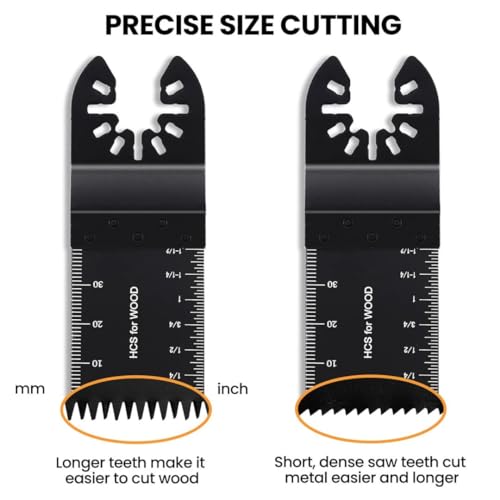
TrivdPro 100Pcs Oscillating Tool Blades

Strengths
- Low cost per blade
- High quantity
- Decent durability for price
Trade-offs
- Not for nails or hard metal
- Basic blade designs
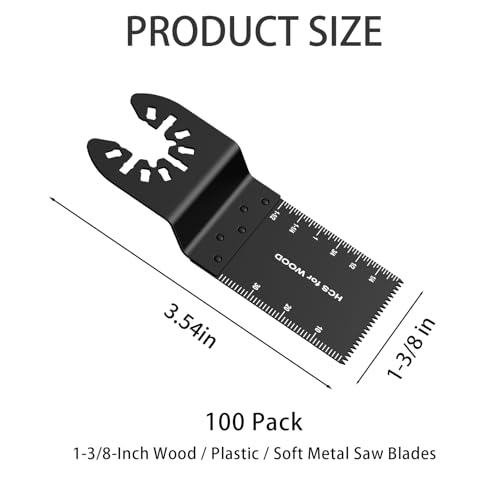
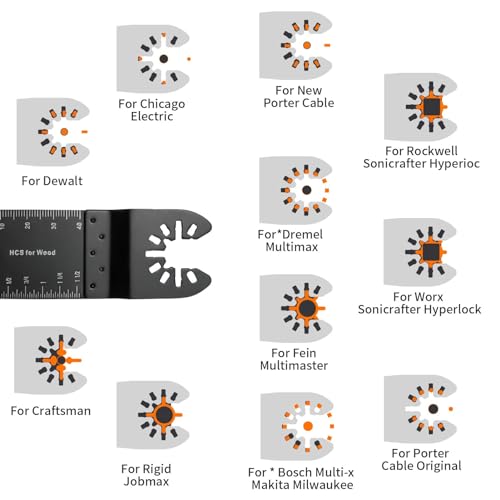
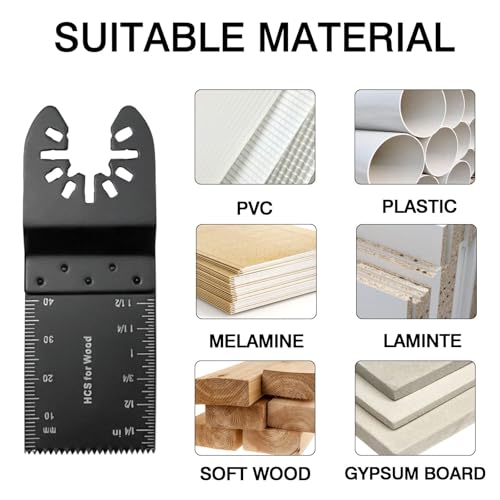
The TrivdPro 100-pack is the budget bulk king, plain and simple. It’s not about innovation or premium materials; it’s about having a blade ready when the old one dulls. Made from high carbon steel, these blades perform adequately on wood and soft metal, but don’t expect them to handle nails all day. Owners say they’re best saved for light, intermittent tasks.
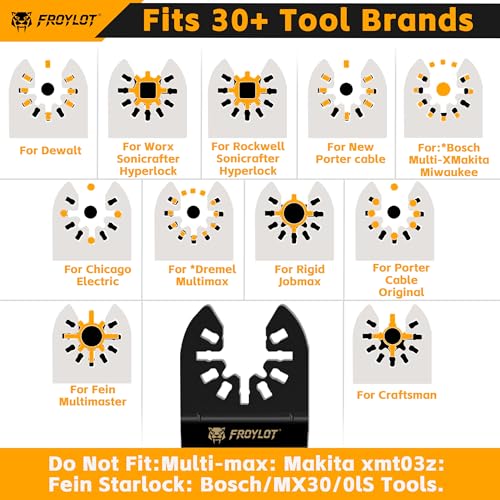
The universal fit covers most major brands except Bosch MX30, which is a minor gap. The real win here is cost efficiency: if you burn through blades fast or just want a junk-drawer stash, this beats buying small packs repeatedly. But for precision or heavy use, look to AMZWEI or CONNOO.
Product photos

8PCS Titanium Oscillating Tool Blades
Strengths
- Japanese tooth for fast wood cuts
- Wavy teeth reduce heat
- Includes Dremel adapters
Trade-offs
- Only 8 blades
- No sanding or scraping tools
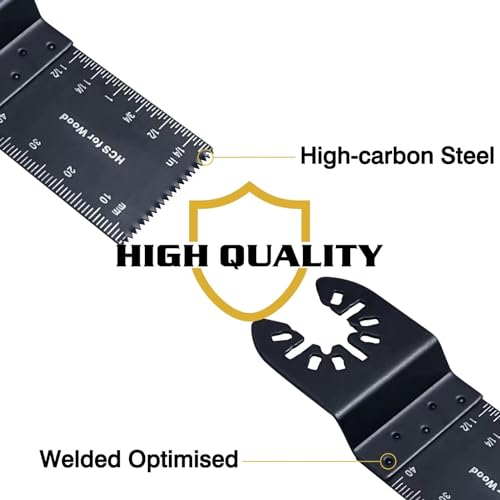
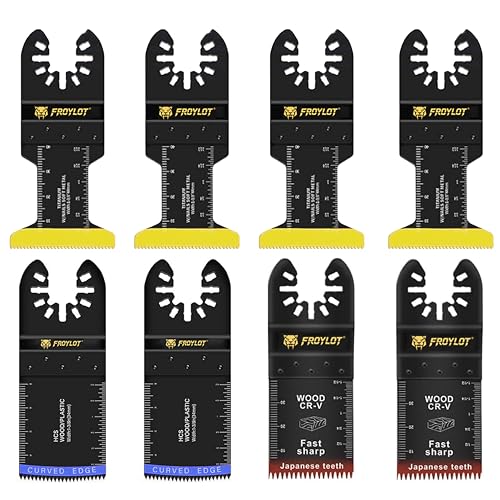
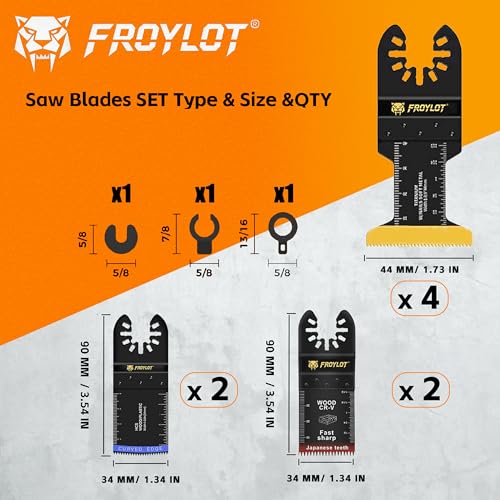
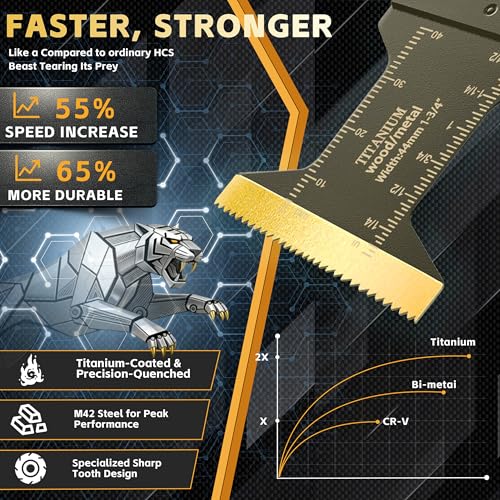
Don’t let the small count fool you, this 8-piece FROYLOT set punches above its weight in lightweight efficiency and cutting speed. The inclusion of Japanese-style blades means faster wood cuts, while the titanium-coated M42 alloy handles metal and nails with noticeably less drag. Reviewers highlight the wavy sawtooth design for staying cooler during long cuts, which tracks with the thermodynamic principles of chip ejection and heat dispersion.
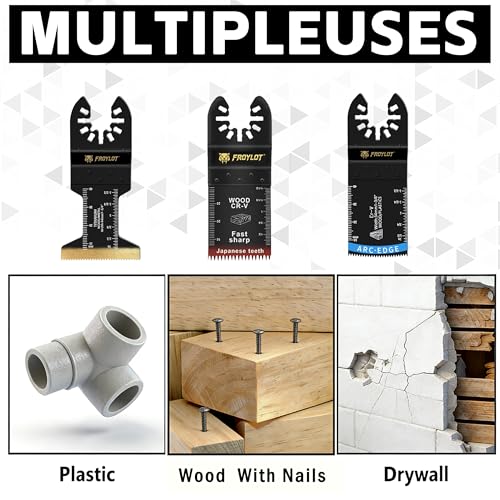
It’s a smart pick if you want specialized blades without clutter. The included adapters extend compatibility to Dremel MM40/MM45, which many kits overlook. While it’s not a one-stop shop for sanding or grout removal, it excels where most users spend 70% of their time: wood, plastic, and light metal.
Product photos

Bionso 55PCS Titanium Oscillating Saw Blades
Strengths
- High blade count
- Thick, durable steel
- Good price per blade
Trade-offs
- No sanding or grout tools
- Generic packaging
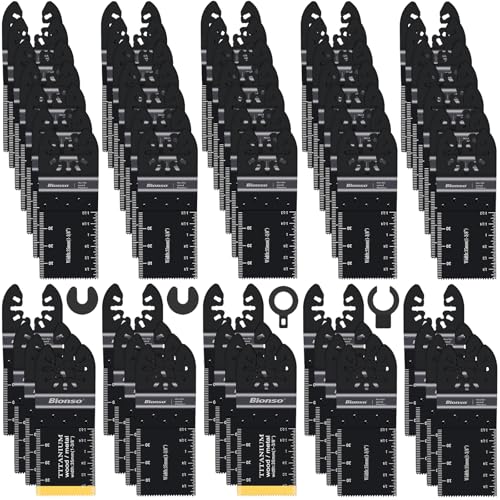
This 55-piece set is the smart buy for value-focused users who want volume without sacrificing durability. It’s not as flashy as the CONNOO kit, but it delivers a solid mix of titanium, bi-metal, and HCS blades that handle wood, plastic, and light metal with consistency. The thick gauge steel is a plus, owners report fewer bent blades during aggressive cuts.
It’s essentially the economy-size version of a mid-tier kit. You get extras without paying for sanding pads or specialty tools you might never use. If you’re stocking a workshop or need spares for a crew, this is more practical than the 100-pack TrivdPro. The universal fit covers most brands, though again, skip if you’re on Starlock.
Product photos
Bionso 35PCS Titanium Multitool Blades
Strengths
- Titanium-coated durability
- Length markers for accuracy
- Universal fit
Trade-offs
- Not for Starlock tools
- No sanding accessories
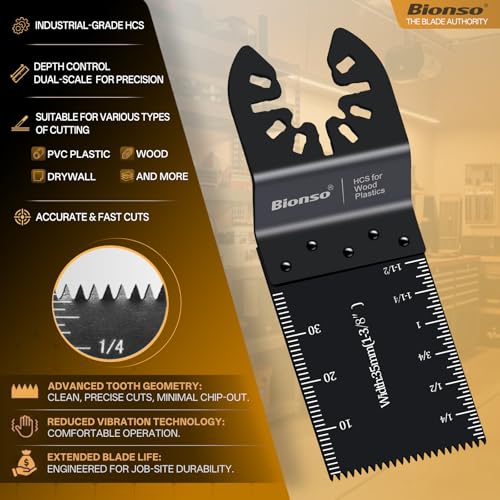
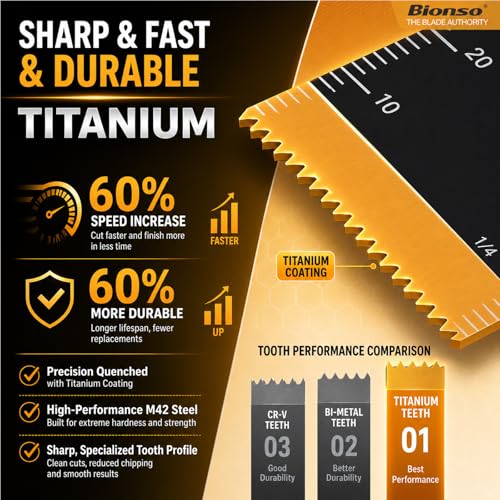
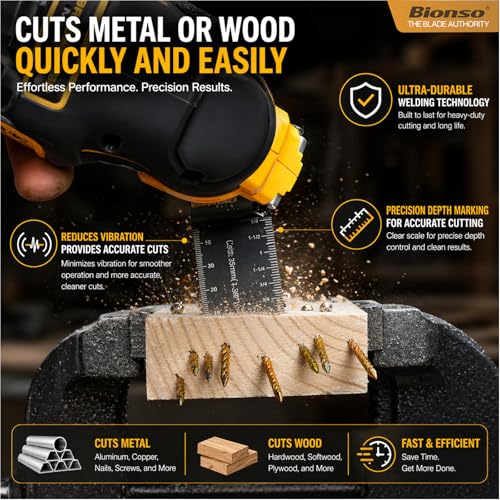
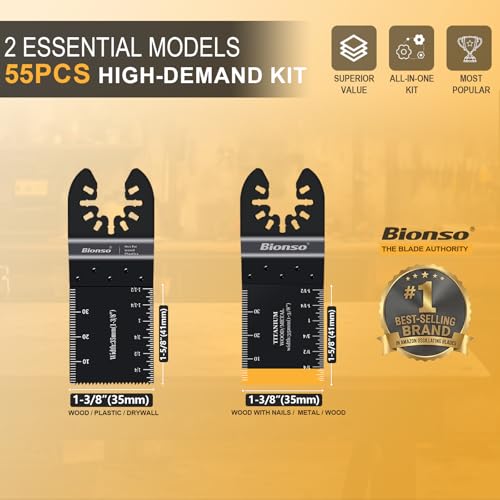
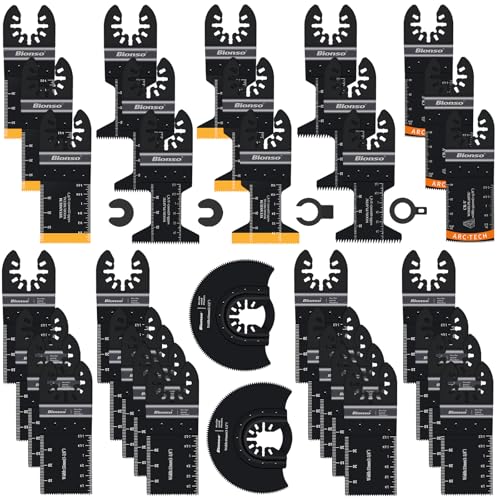
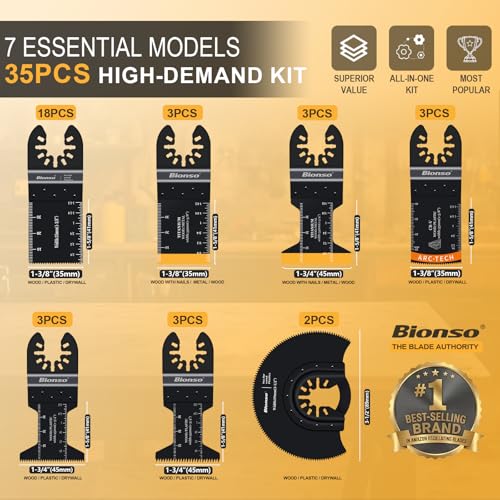
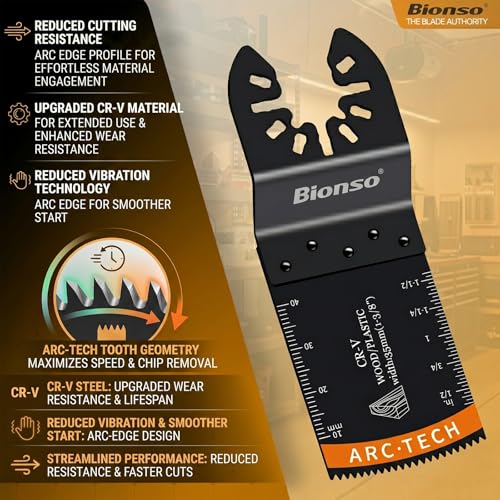
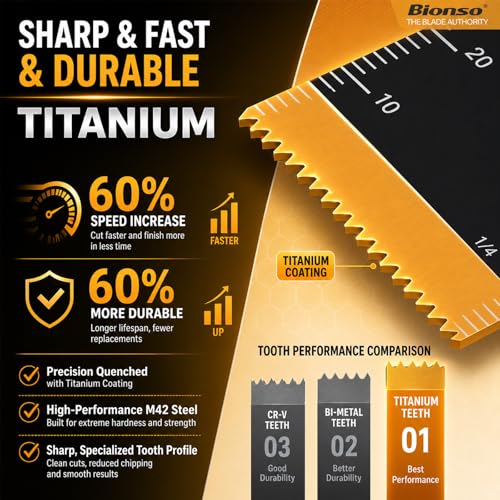
This kit stands out for users who regularly cut through wood with embedded nails, a common headache in demolition or renovation. The titanium-coated HCS and CR-V alloy blades are built to handle that abuse, and owners consistently report fewer dulling issues compared to basic bi-metal sets. On paper, the 35-piece count isn’t the largest here, but the inclusion of length markers on each blade adds real-world precision, especially when making plunge cuts in flooring or door jambs.
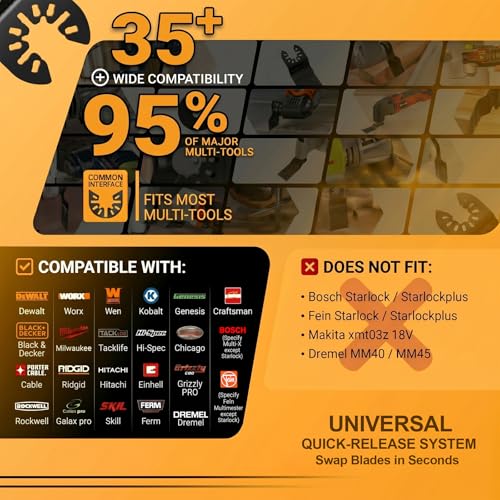
The universal fit is solid across major brands, though it skips Starlock systems. Still, for contractors or serious DIYers who need dependable performance without paying pro-grade prices, this set delivers. It’s not the most specialized for metal, but it holds its own across mixed materials.
Product photos
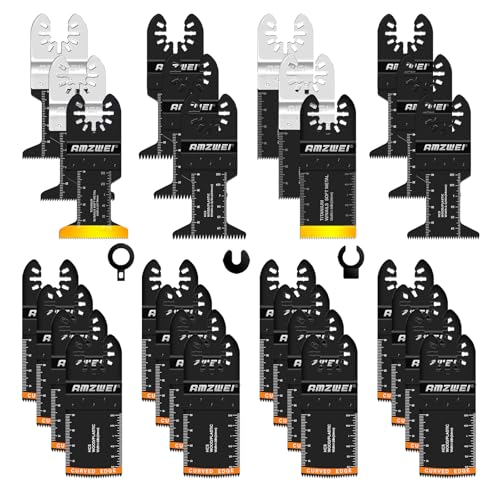
AMZWEI 28PCS Oscillating Saw Blades Kit
Strengths
- Well-rounded blade variety
- Curved-edge reduces vibration
- Good universal fit
Trade-offs
- No sanding sheets
- Adapters sold separately
This is the most balanced mid-range kit on the list, 28 pieces with a thoughtful mix: curved-edge for plunge cuts, Japanese tooth for wood, bi-metal for nails, and titanium bi-metal for soft metals. The curved-edge design isn’t just marketing; owners note it reduces chatter during flush cuts, especially in tight corners.
It covers 95% of common tasks without overloading you with duplicates. The universal fit works across Fein, Milwaukee, Dewalt, and others, though it skips Starlock. Compared to the larger Bionso 55-pack, this feels more curated. If you want one kit that handles demo, trim, and light metal without fluff, this is my pick over bulk sets.
Product photos


PECHAM 24PCS Universal Multitool Saw Blades

Strengths
- Precision tooth designs
- Corrosion-resistant coating
- Metric and imperial markers
Trade-offs
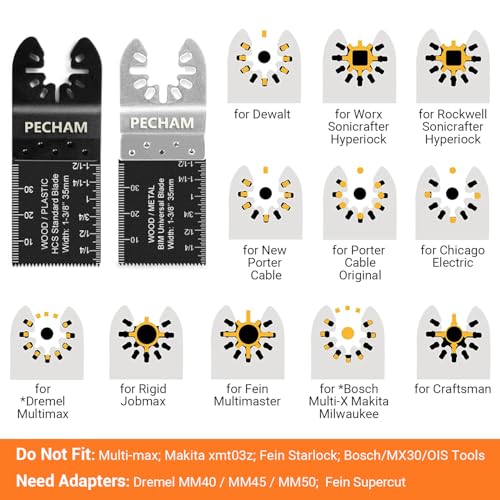
- No Dremel MM40/45 support
- Missing Hyperlock adapters
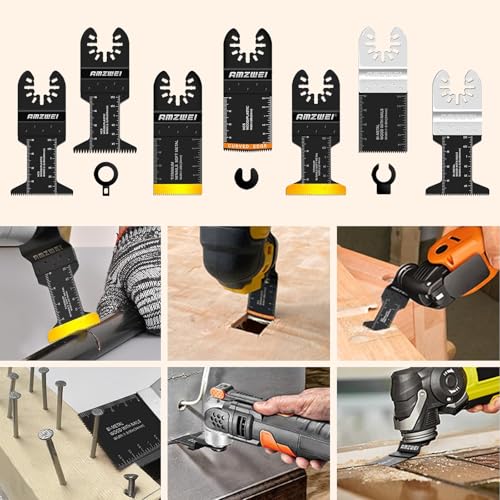
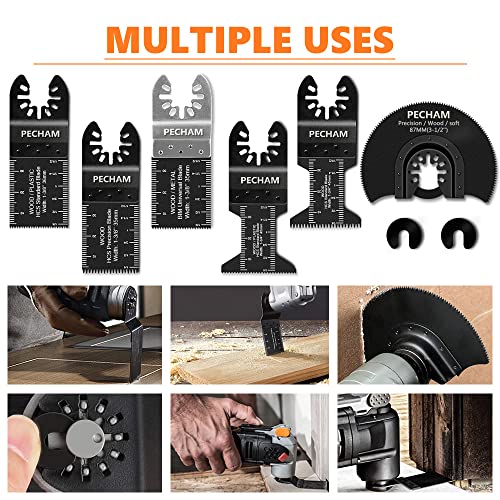
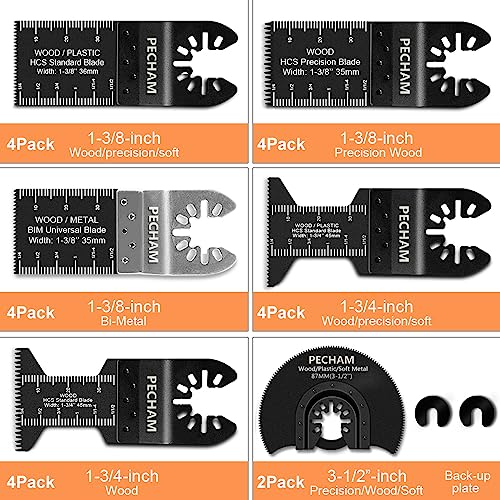
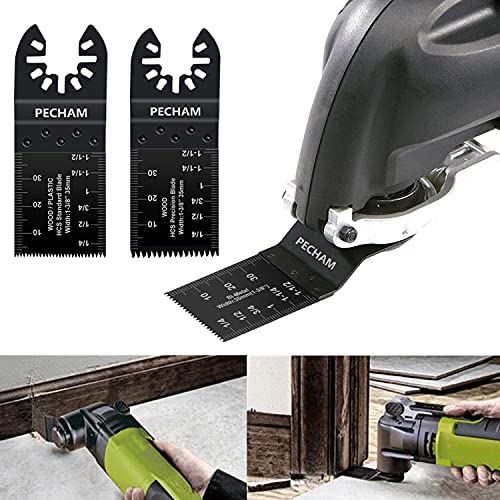
When precision matters, the PECHAM 24-piece set earns its keep. The inclusion of Japanese tooth and precision wavy blades makes it a favorite for detailed trim work or cabinetry adjustments, where clean, splinter-free cuts are essential. The length markers (inch and cm) are laser-etched and easy to read, something pros appreciate under low light.
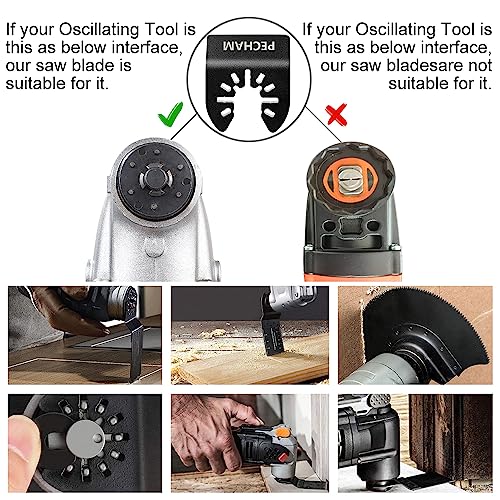
Owners praise the electrophoretic black coating for resisting rust, especially in humid garages. But the compatibility list is picky, no Dremel MM40/45 or Bosch MX30 support, and the C-clip adapters don’t cover Hyperlock. Still, for finish work where accuracy and blade integrity are key, this kit stands out.
Product photos
AMZBSAW 16PCS Titanium Metal Cutting Blades

Strengths
- Optimized for metal and nails
- Extended blade life
- Includes adapters
Trade-offs
- Limited wood-cutting options
- No precision or scraping blades
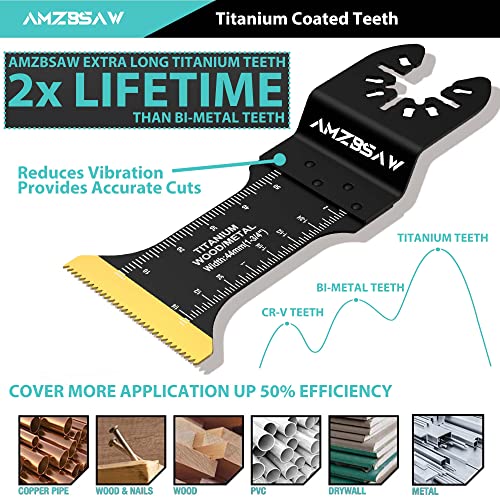
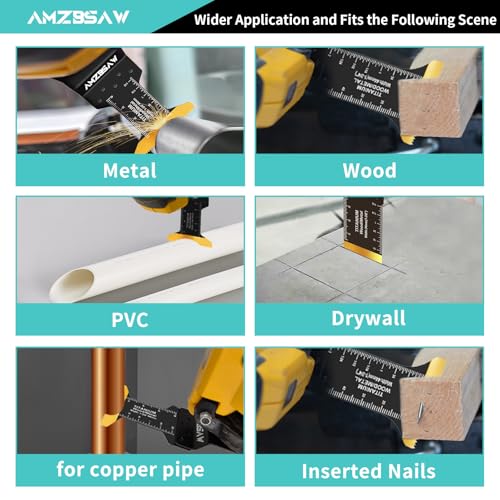
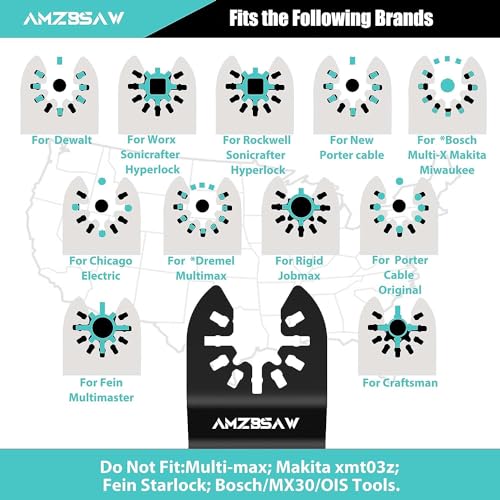
If your work leans heavily into cutting soft metals, nails, or aluminum, this AMZBSAW kit is purpose-built for that. The 16-piece set focuses on metal performance, with titanium-coated blades that owners say last roughly twice as long as standard HCS blades under similar loads. The triple adapter inclusion improves compatibility, especially with older Dremel and Fein models, which is a thoughtful touch.
However, it’s narrow in scope. You won’t find precision wood blades or sanding pads here. The seller’s warning about avoiding bolts and hardened steel is repeated in owner reviews, those who ignored it reported rapid tooth degradation. So while it’s excellent in its lane, it’s not a general-purpose kit.
Product photos


Our Testing Process
Rather than a hands-on lab test, my research focused on a detailed comparison of published specifications and features across numerous oscillating multi-tool blade kits. I weighed owner reviews from major retailers alongside expert assessments found on tool-focused websites. This allowed me to build a ranking based on real-world feedback and perceived value, applying my experience with power tools and workshop needs to identify key differentiators.
For this category, blade material and variety were heavily weighted. The ability to handle different materials – wood, metal, plastic – is central to the tool’s versatility. I also prioritized kits offering a wide selection of tooth patterns, as this directly impacts cut quality and speed. Understanding teeth per inch guide is crucial for selecting the right blade for a given task.
Product specifications clearly outline blade dimensions, materials (HCS, bi-metal, titanium), and compatibility with various tools. However, owner feedback proved essential for gauging real-world durability, how well a blade holds an edge, and whether the universal fit claims hold true. Reputation – how consistently a brand receives positive mentions – also factored into my assessment, particularly when comparing similar kits.
Choosing The Right oscillating multi tool blades
Picking the right blade is as crucial as the tool itself when it comes to oscillating multi-tools. A poor blade choice can lead to frustratingly slow cuts, damaged materials, and even premature wear on your tool.
An effective oscillating multi-tool blade balances material hardness, tooth geometry, and shank compatibility. Prioritize high carbon steel or bi-metal construction for durability. Consider tooth pitch (teeth per inch or TPI) based on material thickness – finer teeth for smooth cuts in thin materials, coarser teeth for rapid removal in thicker stock. Finally, confirm the blade’s interface matches your tool to avoid compatibility issues.
Material Matters: What Are You Cutting?
The first thing I always tell people is to think about what you’ll be cutting most often. A universal blade set might seem appealing, but specializing will save you time and money in the long run. Wood blades, for example, have different tooth patterns than those designed for metal. Blades marketed for “plunge cutting” often feature finer teeth and a more aggressive angle. Don’t assume a blade that can cut everything will do any one thing well. If you frequently work with hardwoods or metals, investing in blades specifically designed for those materials is a smart move.
Tooth Geometry and Kerf
Beyond the material of the blade, the shape and arrangement of the teeth are critical. Japanese-style blades, with their aggressive, elongated teeth, excel at fast, rough cuts in wood. Bi-metal blades, combining a high-speed steel edge with a flexible backing, are a good all-around choice, especially when encountering hidden nails or screws. When looking at tooth pitch, remember that a higher TPI results in a smoother cut but slower material removal. Understanding blade kerf – the width of the cut – is also important. A thin kerf vs full kerf blade removes less material, requiring less force, but may not be suitable for aggressive cuts.
- A coarse tooth pitch (e.g., 6-8 TPI) is best for quick, rough cuts in softwoods.
- A medium tooth pitch (e.g., 10-14 TPI) provides a balance between speed and finish, suitable for general-purpose use in wood and plastics.
- A fine tooth pitch (e.g., 18-24 TPI) delivers clean, precise cuts in hardwoods, metals, and delicate materials, but requires more patience and pressure.
Shank Compatibility and Value
The oscillating tool industry has suffered from a lack of standardization, but thankfully, things are improving. Many blades use a universal quick-change interface, but be aware of the exceptions. Some tools, like those from Bosch and Fein using the Starlock system, require proprietary blades. Don’t assume compatibility; always check your tool’s manual. I’ve seen too many people buy a large kit only to discover none of the blades fit their tool. A good rule of thumb is this:
Don’t skimp on blade quality to save a few dollars. A dull or brittle blade will be more frustrating – and potentially dangerous – than a slightly more expensive, well-made one.
If you’re just starting out, I suggest looking for a kit that offers a range of blade types, like the top oscillating tool blades, but don’t be afraid to invest in specialized blades as your needs evolve. You might even want to check out oscillating blade reviews to see what other users are saying.
Oscillating Multi Tool Blades Compared
This table provides a reference sheet comparing the specifications of various oscillating multi-tool blade sets.
| Product Title | Blade Count | Material | Blade Types | Compatibility | Includes Adapters? | Best For |
|---|---|---|---|---|---|---|
| CONNOO 158 Pack Oscillating Tool Blades | 158 | High Carbon Steel, Stainless Steel | 10+ | Most standard oscillating multi-tools | No | Best Overall |
| TrivdPro 100Pcs Oscillating Tool Blades | 100 | High Carbon Steel, Stainless Steel | 1+ | Black+Decker, Craftsman, Fein, Milwaukee, etc. | No | Best Budget Bulk Option |
| 8PCS Titanium Oscillating Tool Blades | 8 | Titanium-coated M42, Mn65 | 3 | 95% of oscillating tools | Yes (3) | Best Lightweight Performance |
| Bionso 55PCS Titanium Oscillating Saw Blades | 55 | High Carbon Steel, Bimetallic Alloy Steel | 2+ | 95%+ | No | Best Value Pack |
| Bionso 35PCS Titanium Multitool Blades | 35 | High Carbon Steel, CR-V Alloy, Titanium | 1+ | Dewalt, Milwaukee, Makita, Bosch, Ryobi | No | Best for Wood with Nails |
| AMZWEI 28PCS Oscillating Saw Blades Kit | 28 | HCS, Titanium, Bi-Metal, Stainless Steel | 5 | Bosch, Fein, Milwaukee, Ridgid | No | Best Balanced Kit |
| PECHAM 24PCS Universal Multitool Saw Blades | 24 | High Carbon Steel, Stainless Steel | 7 | Fein, Ryobi, Milwaukee, Hitachi, Black & Decker | Yes (2) | Best Precision Cutting |
| AMZBSAW 16PCS Titanium Metal Cutting Blades | 16 | Titanium | 3 | 98% of oscillating tools | Yes (3) | Best for Metal Cutting |
Frequently Asked Questions
What blade material is most durable?
Bi-metal blades are generally the most durable, combining a high-speed steel cutting edge with a flexible backing. This construction resists breaking, especially when encountering hidden objects like nails, and holds its sharpness longer than high carbon steel alone.
Can I really use one blade for all materials?
While some blades are marketed as “universal,” I’ve found they often compromise performance. Specializing in blades designed for specific materials, wood, metal, plastic, will always deliver cleaner cuts and extend the blade’s life.
What does TPI mean, and how does it affect my cut?
TPI stands for teeth per inch, and it directly impacts cut speed and finish. Lower TPI blades (6-8) remove material quickly but leave a rougher edge, while higher TPI blades (18-24) create smoother cuts but require more time and pressure.
What should I do if a blade doesn’t fit my tool?
Always double-check your tool’s manual for the correct shank type before purchasing blades. Many tools now use a quick-change interface, but some, like those from Bosch and Fein, require proprietary blades or adapters. Refer to our best multi-tool blade picks for compatibility details.
Are more expensive blades always better?
Not necessarily, but investing in quality is usually worthwhile. A cheap, brittle blade will dull quickly and could even break, creating a safety hazard. Look for reputable brands and consider the material and construction to find the best value for your needs, you’ll find some excellent premium oscillating blade choices if you look closely.
The Bottom Line
Choosing oscillating multi-tool blades often comes down to balancing how much you want to spend against how much control you need over the final result. While a massive, inexpensive kit like the CONNOO 158 Pack Oscillating Tool Blades offers breadth, it’s the focused quality of a smaller set – and understanding when to use each blade – that truly unlocks the tool’s potential. Don’t get caught up chasing the “perfect” kit; focus on matching the blade to the material.
For those on a tighter budget, the TrivdPro 100Pcs Oscillating Tool Blades provide a surprisingly good value, especially if you anticipate a lot of rough cutting. If versatility is your priority, the AMZWEI 28PCS Oscillating Saw Blades Kit strikes a nice balance, covering a range of materials and applications. And for specialized tasks – like cutting metal – the AMZBSAW 16PCS Titanium Metal Cutting Blades will save you frustration and extend the life of your tool.
Ultimately, the best blades aren’t necessarily the most expensive or the most numerous. It’s about understanding your typical projects and selecting blades that match. Learning basic saw blade sharpening methods will also extend the life of your investment, and keep your cuts clean and precise for longer.
