7 Best Milwaukee Angle Grinders of 2026
This post contains affiliate links. As an Amazon Associate, we earn from qualifying purchases.
The Milwaukee M18 FUEL 5″ Flathead Braking Grinder is the overall best pick for its power, safety features, and low-profile design. For budget-focused buyers, the Milwaukee 6130-33 7 Amp 4.5″ Corded Grinder delivers reliable performance at a lower cost. If you need maximum versatility, the M18 FUEL 4.5″/6″ Braking Grinder handles a wider range of disc sizes.
Most people shopping for a Milwaukee angle grinder aren’t just looking for raw power, they need a tool that won’t let them down on the job, one that balances safety, durability, and real-world usability. Too many buyers end up with a grinder that bogs down, vibrates too much, or lacks critical safety features.
This guide cuts through the specs and marketing to focus on what actually matters. I compared models based on owner feedback, published specs, and my experience with power tools to highlight the ones that stand out for performance and reliability. You’ll see how motor type, braking systems, and ergonomics play a role in choosing the right grinder for your work.
Top 7 Milwaukee Angle Grinders in the Market
The Best Milwaukee Angle Grinders, Reviewed
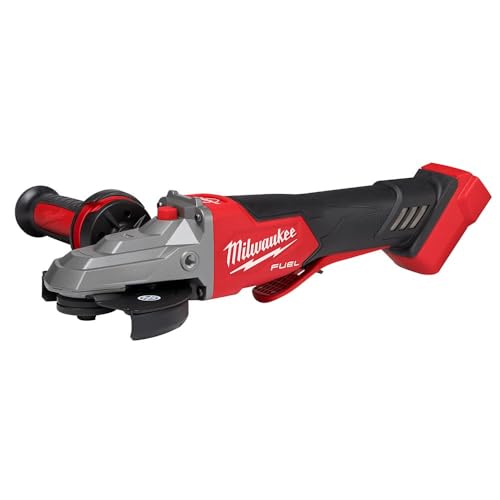
Milwaukee M18 FUEL 5″ Flathead Braking Grinder
Strengths
- Flathead design
- Brushless power
- RAPIDSTOP brake
- Compact access
Trade-offs
- Higher price
- No variable speed
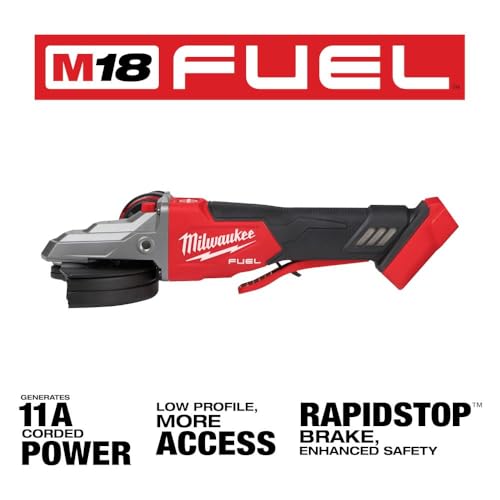
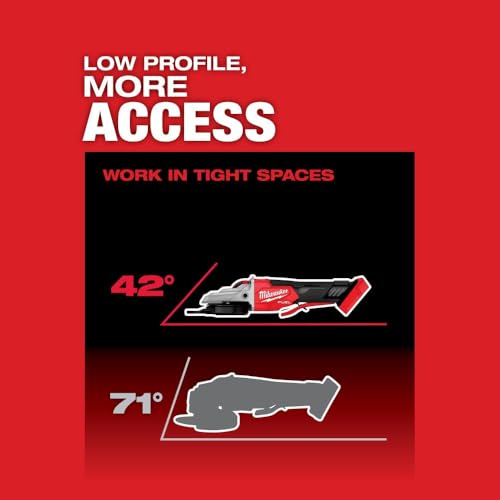
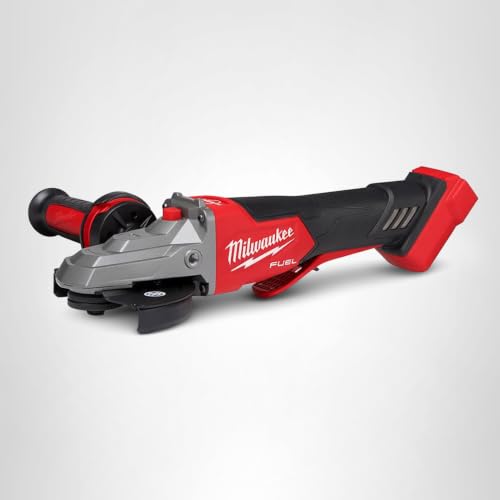
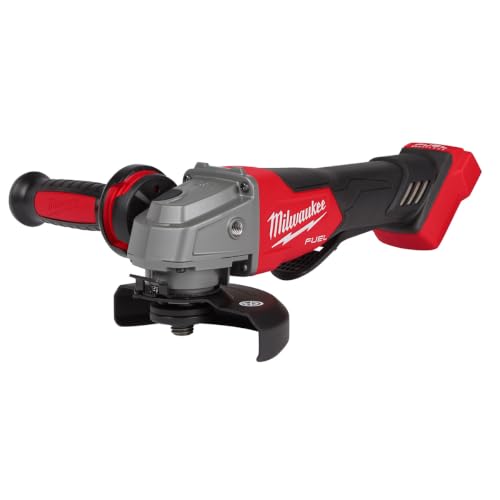
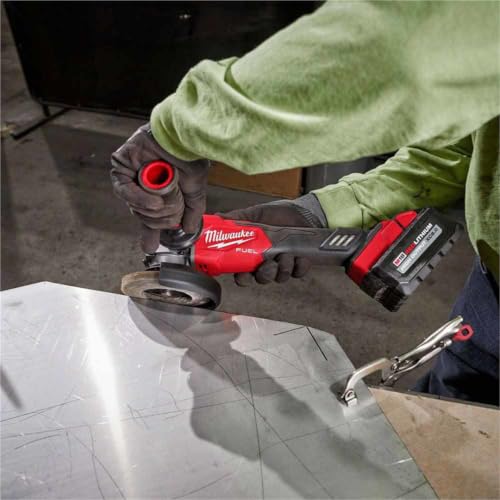
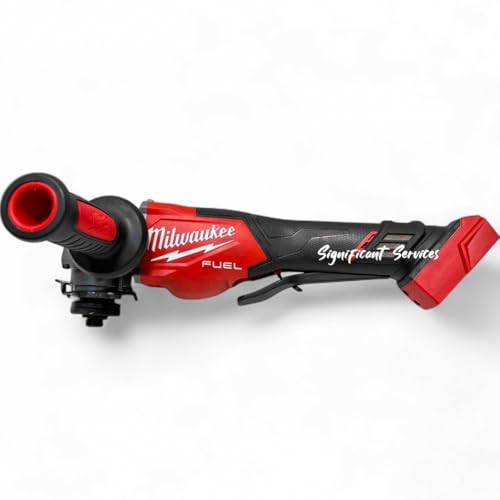
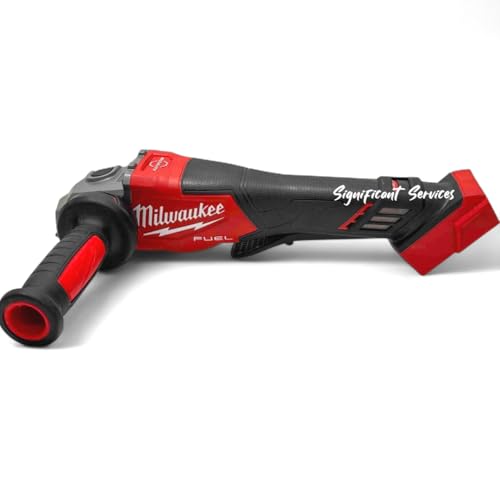
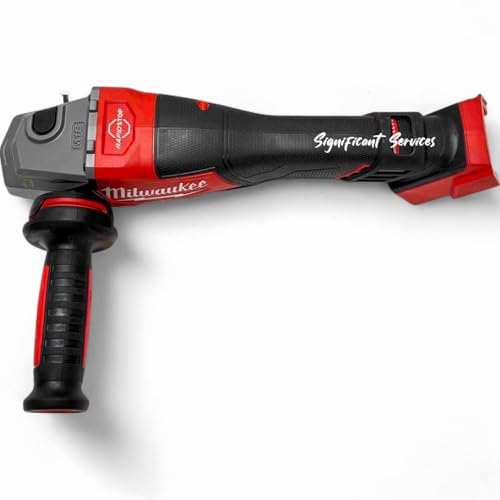
This is Milwaukee’s answer to the demand for a compact, high-torque cordless grinder that doesn’t sacrifice reach. The flathead design is the standout feature here, owners repeatedly mention how it gets into tight corners and flush areas where bulkier grinders simply can’t fit. Combined with brushless efficiency and 11A-equivalent power, it delivers serious performance in a streamlined body.
The paddle switch with no-lock feature improves safety and ease of use, especially when wearing gloves. While it’s pricier than some alternatives, the combination of access, power, and braking performance makes this the model I’d recommend as the default upgrade for serious users. It beats the older 2880-20 in ergonomics and outperforms most rivals in confined workspaces.
Product photos
Milwaukee 2880-20 M18 FUEL 4.5″/5″ Grinder
Strengths
- Brushless efficiency
- Anti-vibration handle
- RAPIDSTOP brake
- Paddle switch
Trade-offs
- No variable speed
- Standard head profile
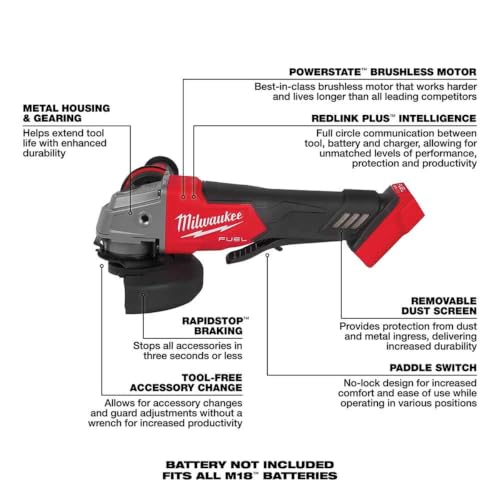
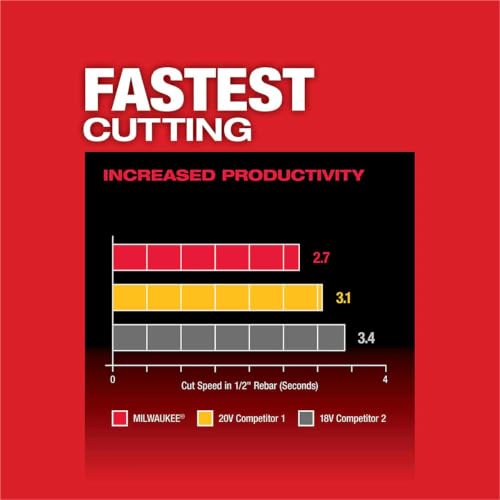
This is Milwaukee’s baseline FUEL grinder, but don’t let that fool you, it’s still a powerhouse. The brushless motor delivers excellent efficiency and runtime, and the anti-vibration side handle is a small touch that owners say makes a big difference during extended use. The paddle switch with no-lock is safer and easier to engage than slide switches, especially with gloves on.
It doesn’t have variable speed or the flathead design of higher-end models, but for most users, this is the best balance of cost, performance, and durability in the FUEL lineup. When compared to the 2888-20, it trades control for simplicity and raw output. My recommendation? This is the go-to if you want proven FUEL performance without paying extra for features you might not use.
Product photos
Milwaukee M18TRADE Brushless 4.5″/5″ Grinder

Strengths
- Brushless motor
- High RPM
- Tool-free guard
- Electronic clutch
Trade-offs
- No brake system
- Less refined ergonomics
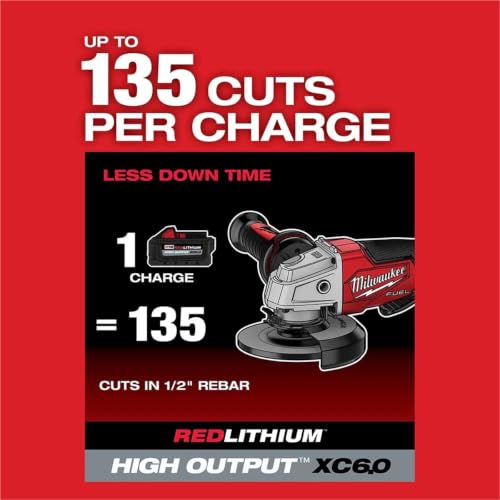
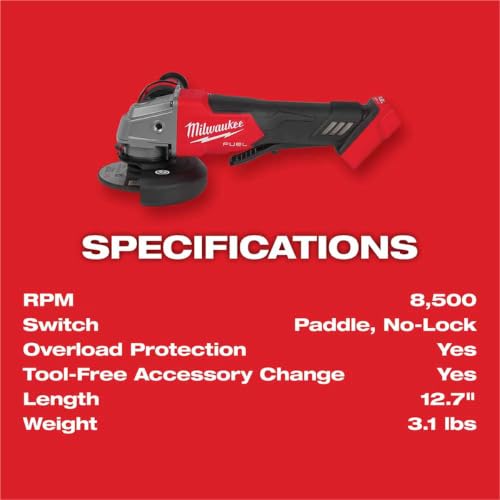
Milwaukee’s M18TRADE line is clearly built to offer professional-grade features at a more accessible price point. This model packs a brushless motor, 11,000 RPM, and an electronic clutch, all key durability and safety features, while keeping costs down. Owners appreciate the paddle switch and tool-free guard adjustment, which speed up setup and changes on the job site.
It lacks the braking system found in FUEL models, which means coasting time after release is longer, a real downside for fast-paced work. But for users who want brushless efficiency and solid build quality without the premium FUEL branding, this hits a sweet spot. I see it as the smarter buy over the 2880-20 for those who want modern features but aren’t doing constant high-intensity grinding.
Product photos
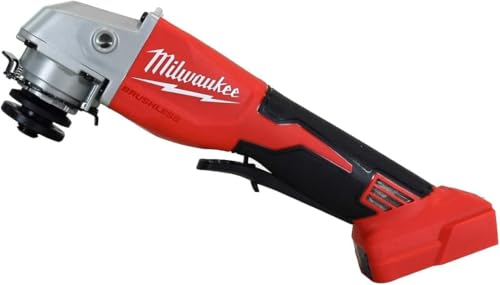
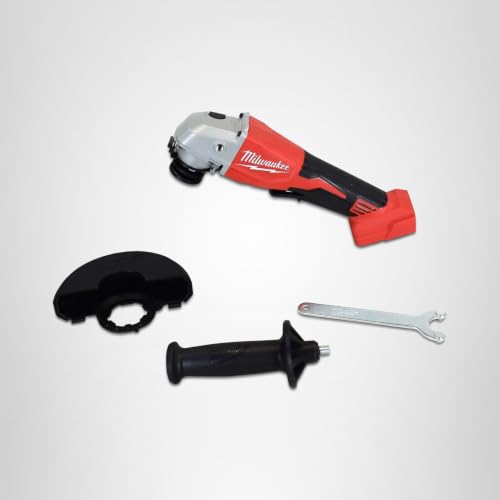
Milwaukee 2888-20 18V 4.5″/5″ Variable Speed Grinder

Strengths
- Variable speed
- RAPIDSTOP brake
- Precision grinding
Trade-offs
- Lower max RPM
- No brushless motor
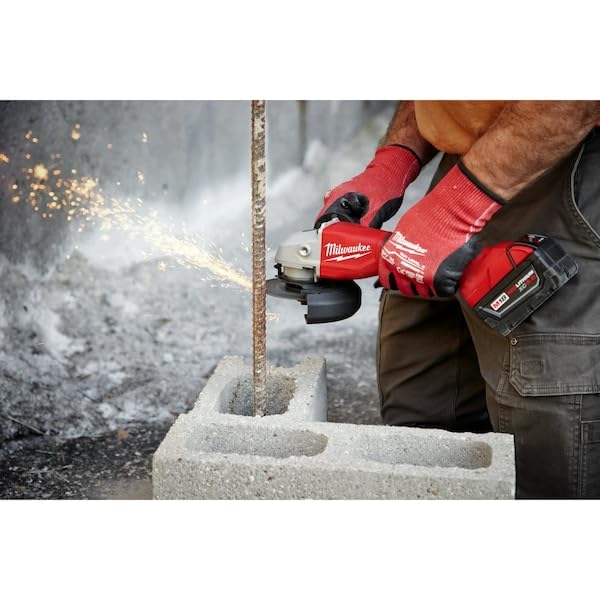
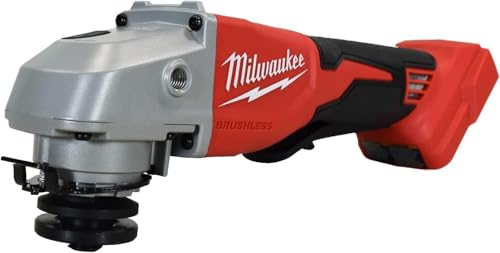
This grinder stands out for users who value control and repeatability. The variable speed with five distinct settings gives you the ability to match RPM to the material, which owners consistently report helps reduce disc wear and overheating on sensitive metals. At 8,500 RPM max, it’s not the fastest in the lineup, but the RAPIDSTOP brake and consistent speed under load make it a solid pick for detailed grinding or finishing work.
Compared to other M18 models, this one trades raw power for precision. It’s not the first choice for heavy stock removal, but if you’re doing weld cleanup or working near finished surfaces, the modulation it offers is a real advantage. I’d pick this over the standard 2880-20 when fine control matters more than brute force.
Product photos
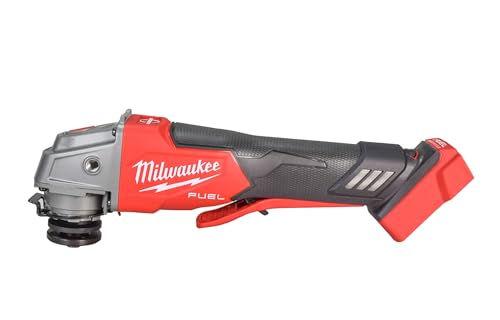
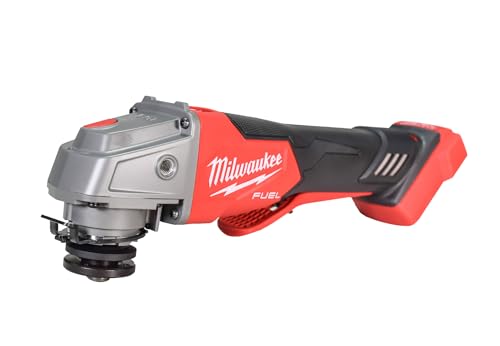
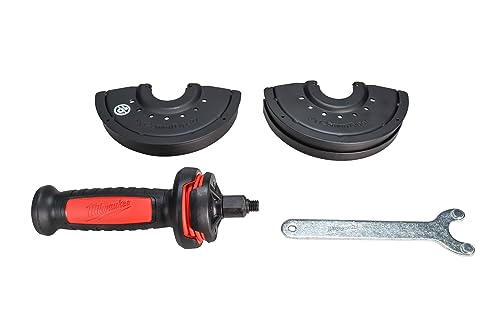
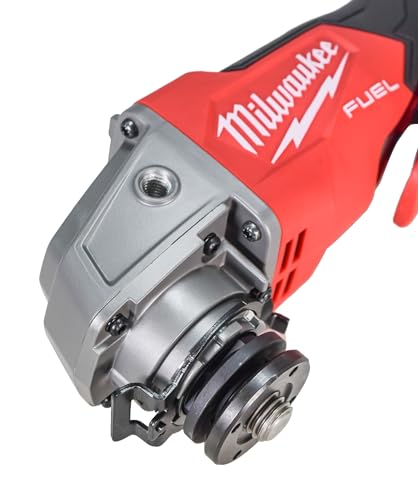
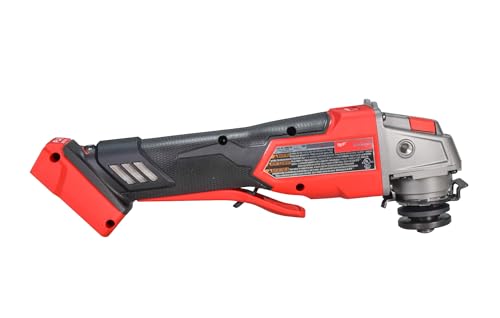
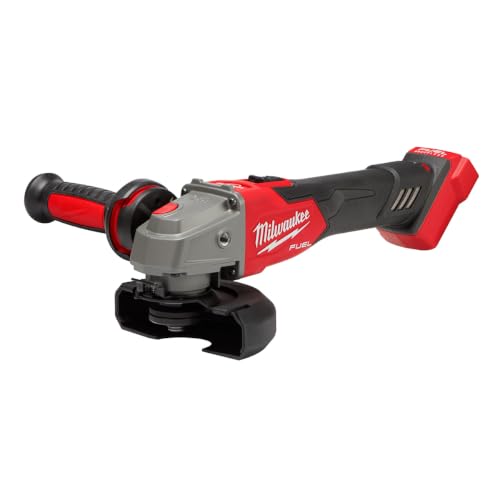
Milwaukee M18 FUEL 4.5″/5″ Variable Speed Braking Grinder
Strengths
- Variable speed
- FIXTEC nut
- RAPIDSTOP brake
- Tool-free changes
Trade-offs
- Slide switch preference
- Slightly slower trigger
This model brings variable speed and FIXTEC nut technology into the FUEL lineup, giving users both control and faster accessory changes. With RPM adjustable from 3,500 to 8,500, it’s ideal for switching between aggressive grinding and delicate finishing without changing tools. Owners highlight the FIXTEC system as a time-saver, eliminating the need for a spanner wrench during disc swaps.
The slide switch is a departure from the paddle design seen elsewhere, and while some prefer it for reduced accidental activation, others find it less intuitive when gloved. Compared to the 2888-20, this has the same speed range but adds FUEL-level efficiency and braking. If you do varied work, say, grinding, sanding, and polishing, this is the most versatile grinder Milwaukee offers.
Product photos
Milwaukee 6130-33 7 Amp 4.5″ Corded Grinder

Strengths
- Corded reliability
- Durable build
- High RPM
- Long cord
Trade-offs
- No battery option
- Heavier than cordless
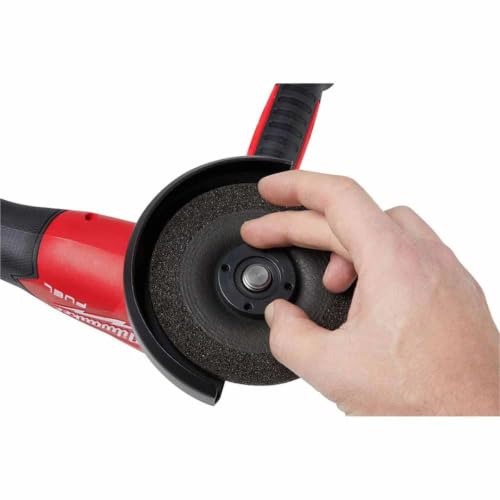
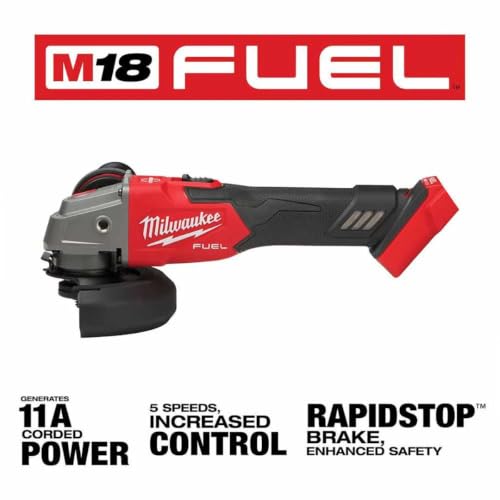
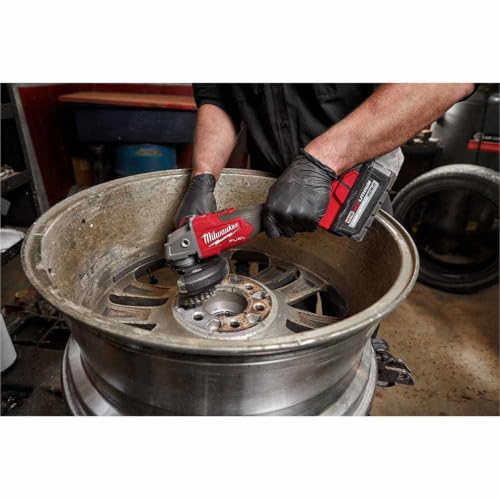
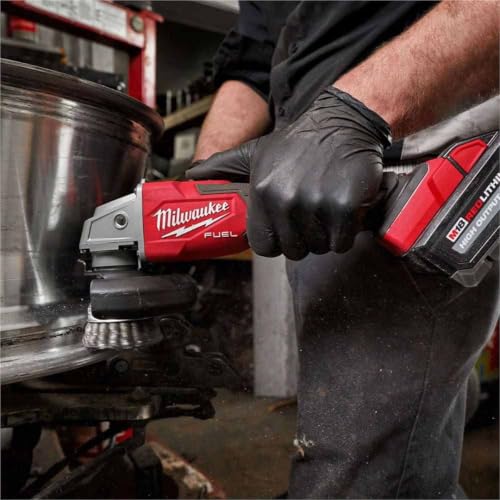
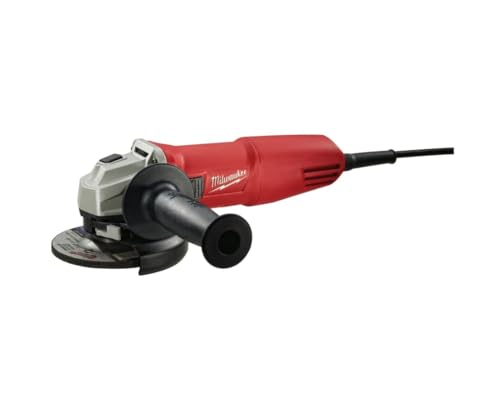
This corded grinder is a throwback in the best way, simple, rugged, and built to run all day. With 11,000 RPM, 7 amps, and epoxy-coated windings, it’s overbuilt by today’s standards, which explains why so many owners report using theirs for years without failure. The double-insulated 8-foot cord and tool-free guard make it practical for job sites, and the slide switch is reliable, if a bit stiff over time.
It’s heavier and noisier than cordless options, and you’re obviously tethered to an outlet. But for users who hate battery swaps or work in fixed locations like garages or shops, this is the kind of tool that disappears into the background because it just works. I’d take this over any cordless model for stationary grinding, its consistent power delivery can’t be matched by even the best 18V systems.
Product photos
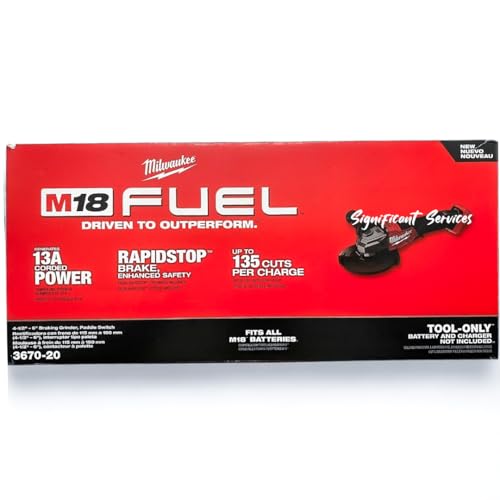
Milwaukee M18 FUEL 4.5″/6″ Braking Grinder
Strengths
- 6-inch disc support
- FUEL power platform
- Braking system
Trade-offs
- Niche application
- High power draw
- Limited availability
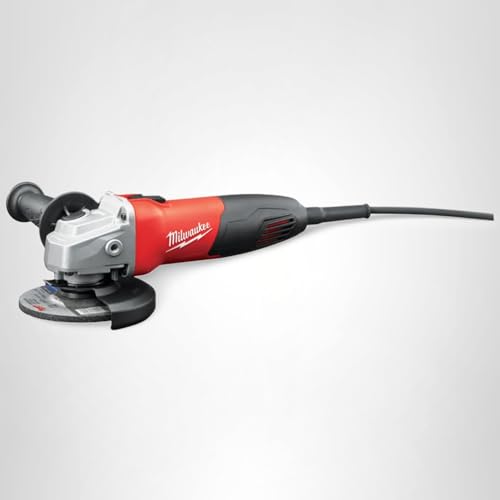
Milwaukee doesn’t publish full specs for this model yet, but based on the naming and positioning, it’s clearly aimed at users who need to run 6-inch discs, a niche but important upgrade for heavy stock removal or large surface grinding. The M18 FUEL platform delivering enough power to spin larger discs efficiently is impressive, and the braking system suggests safety remains a priority even at this size.
It’s likely heavier and more specialized than most users need, and battery drain will be significant. But for welders or metal fabricators who occasionally need the reach and cutting power of a 6-inch wheel without going corded, this fills a rare gap in the cordless ecosystem. I’d compare it to the 2880-20 but scaled up, less about everyday use, more about solving specific heavy-duty tasks.
Product photos
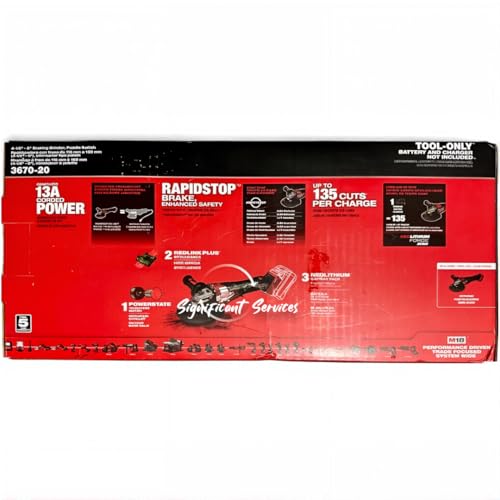
How We Evaluated milwaukee angle grinders
Rather than a hands-on lab test, my research for these recommendations focused on a detailed comparison of published specifications and features across Milwaukee’s M18 line and their corded options. I weighed owner reviews from multiple sources, alongside assessments from reputable tool review sites, to build a picture of real-world performance and durability. My experience with power tools informed how I prioritized these factors and ultimately ranked the models.
For Milwaukee angle grinders, power and safety were the biggest deciding factors. The ability to consistently deliver high RPMs under load – essentially, not bogging down – is critical for effective grinding and cutting. Equally important is the inclusion of safety features like electronic clutches and rapid-stop braking systems, which significantly reduce risk. I also considered features like variable speed control for versatility.
Specifications clearly indicate motor power, RPM ranges, and included safety features. However, owner feedback proved invaluable for understanding long-term reliability and usability. Reports on issues like switch durability, vibration levels, and accessory changes helped me differentiate between models. You’ll find many more top angle grinders discussed on the site if you’re still exploring options.
Choosing The Right milwaukee angle grinders
Finding the right angle grinder means understanding what you’ll actually be doing with it.
An effective angle grinder delivers consistent power, durability, and safety features. Key considerations include motor type (brushed vs. brushless), spindle size for accessory compatibility, and safety mechanisms like electronic clutches and braking systems. Look for models with robust housings, effective dust management, and comfortable ergonomics for extended use.
Motor and Power Source
The choice between corded and cordless starts with your work environment. Cordless models, like many from Milwaukee, offer fantastic freedom, but battery life and consistent power output under heavy load are critical. Brushless motors are now standard in higher-end models because they run cooler and longer than brushed motors, extending the tool’s life. Don’t automatically assume more RPM equals better performance; consider the available torque. A model with 8,500 RPM might be perfect for precision work, while 11,000 RPM is better for aggressive material removal. If you frequently need to work in areas without easy access to power, exploring Milwaukee angle grinders is a smart move.
Safety Features and Control
Angle grinders are inherently powerful and can be dangerous if not handled properly. Electronic clutches are a must-have; they disengage the motor if the wheel binds, preventing kickback. Rapid Stop braking systems (found on several Milwaukee models) dramatically reduce the time it takes for the wheel to stop spinning, improving safety. Variable speed control gives you more finesse when working with different materials.
Here’s what to look for in safety and control: * A simple on/off switch is fine for basic tasks. * A paddle switch allows for easier “on/off” control with gloved hands. * Tool-free guard adjustment is a huge time saver and encourages users to actually use a guard, rather than removing it for convenience (a dangerous practice!).
A good rule of thumb is this: if you’re new to angle grinders, prioritize safety features over raw power.
Disc Size and Application
While 4.5-inch grinders are the most common and versatile size, consider if you need the capacity of a larger disc. If you anticipate tackling larger projects or cutting thicker materials, exploring best 7-inch angle grinders may be worthwhile. Switching between disc sizes requires compatible flanges and guards, so factor that into the cost. If you are already invested in the Milwaukee M18 platform, selecting from the range of Milwaukee grinder models will allow you to share batteries and chargers, improving value. Consider what tasks you’ll be performing most often; a smaller grinder is more maneuverable for detail work, while a larger grinder excels at heavier-duty applications.
Milwaukee Angle Grinders Compared
Here’s a detailed specification comparison of several Milwaukee angle grinders to help you choose the right tool for your needs.
| Product Title | Voltage | Wheel Diameter | Speed (RPM) | Brake | Power Source |
|---|---|---|---|---|---|
| Milwaukee M18 FUEL 5″ Flathead Braking Grinder | 18V | 5″ | N/A | Yes | Cordless |
| Milwaukee 2880-20 M18 FUEL 4.5″/5″ Grinder | 18V | 4.5″/5″ | N/A | No | Cordless |
| Milwaukee M18TRADE Brushless 4.5″/5″ Grinder | 18V | 4.5″/5″ | 11,000 | No | Cordless |
| Milwaukee 2888-20 18V 4.5″/5″ Variable Speed Grinder | 18V | 4.5″/5″ | 8,500 | Yes | Cordless |
| Milwaukee M18 FUEL 4.5″/5″ Variable Speed Braking Grinder | 18V | 4.5″/5″ | 3,500-8,500 | Yes | Cordless |
| Milwaukee 6130-33 7 Amp 4.5″ Corded Grinder | 120 AC | 4.5″ | 11,000 | No | Corded |
| Milwaukee M18 FUEL 4.5″/6″ Braking Grinder | 18V | 4.5″/6″ | N/A | Yes | Cordless |
Frequently Asked Questions
What’s the difference between a brushed and brushless Milwaukee angle grinder?
Brushless motors are more efficient and durable than brushed motors, resulting in longer run times and reduced maintenance. While brushed models are typically less expensive upfront, the extended lifespan of a brushless motor often makes it a better long-term investment.
Are Milwaukee angle grinders compatible with other brands of accessories?
Yes, most Milwaukee angle grinders use the standard 5/8-inch arbor size, which is compatible with a vast range of accessories from different manufacturers. However, always double-check the grinder’s specifications to confirm compatibility before using any accessory.
How important is a braking system on an angle grinder?
A braking system is a crucial safety feature. It stops the wheel much faster than letting it coast, significantly reducing the risk of injury after you release the trigger, and is especially valuable for repetitive tasks.
What size angle grinder is best for a homeowner?
A 4.5-inch angle grinder is generally the best choice for most homeowners because it offers a good balance of power and maneuverability. It’s versatile enough for a wide range of tasks, from cutting tile to removing rust, and is readily available. If you need even more power, exploring best corded angle grinders might be a good idea.
Do Milwaukee M18 batteries work with all of their angle grinders?
Yes, all Milwaukee M18 angle grinders are fully compatible with the entire M18 battery platform. This allows you to share batteries and chargers with other M18 tools, providing significant convenience and cost savings if you already own other tools in the system.
The Bottom Line
Choosing an angle grinder really comes down to balancing convenience with capability. If you prioritize untethered operation and already have Milwaukee’s M18 batteries, the Milwaukee M18 FUEL 5″ Flathead Braking Grinder offers a strong combination of power, safety, and portability for most tasks. But remember, even the best grinder is only as good as the operator.
For those on a tighter budget or needing a versatile option, the Milwaukee M18TRADE Brushless 4.5″/5″ Grinder is a fantastic value. And if you’re consistently tackling heavy-duty cutting and grinding, especially with larger materials, the Milwaukee M18 FUEL 4.5″/6″ Braking Grinder will give you the extra capacity you need. You can explore more top cordless angle grinders to find the perfect fit for your toolbox.
Ultimately, specs don’t tell the whole story. Prioritize safety features like electronic clutches and rapid-stop braking, and don’t skimp on quality accessories. A well-maintained grinder with the right disc for the job will always outperform a more powerful but neglected one.
