7 Best Metal Chop Saws of 2026
This post contains affiliate links. As an Amazon Associate, we earn from qualifying purchases.
The Evolution R355CPS is the best overall metal chop saw for its powerful 15-amp motor, carbide-tipped blade performance, and reliable cut capacity. If you’re on a tighter budget, the DEWALT DW872 delivers solid power and durability without breaking the bank. For those who need precision miter cuts, the Evolution S14MCS stands out with its wide miter range and EVOMAX blade technology.
Most people don’t realize how quickly a poorly chosen chop saw can turn a simple metal-cutting job into a frustrating mess of rough edges, misaligned cuts, and stalled blades. It’s not just about power – it’s about matching the tool to your materials, workflow, and accuracy needs.
This guide cuts through the marketing hype, focusing on real-world specs and owner feedback to highlight models that deliver where it matters. I looked at motor performance, blade quality, build durability, and key features like miter capability and safety systems to find the ones worth your time and money.
Top 7 Metal Chop Saws in the Market
The Best Metal Chop Saws, Reviewed
Evolution S14CPS 14″ Metal Chop Saw

Strengths
- EVOMAX intelligent motor
- Shadow line guide
- Soft start and e-brake
- Long blade life
Trade-offs
- Single-material focus
- No miter detents
- Heavier than average
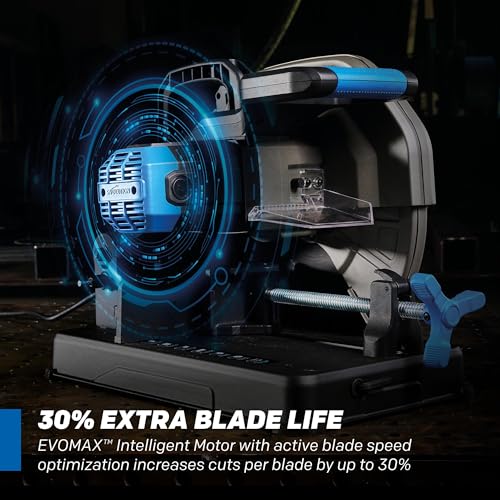
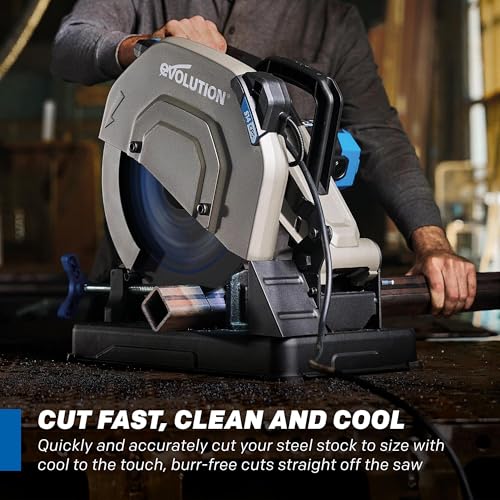
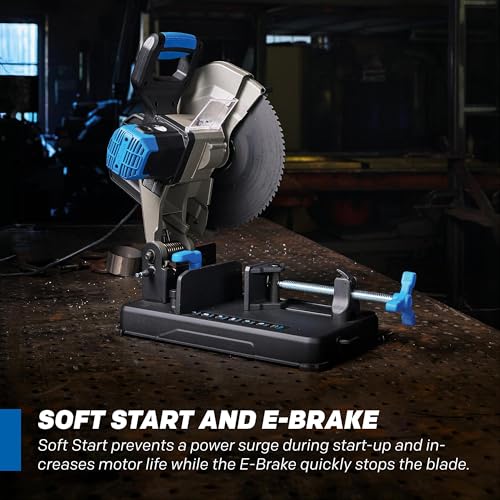
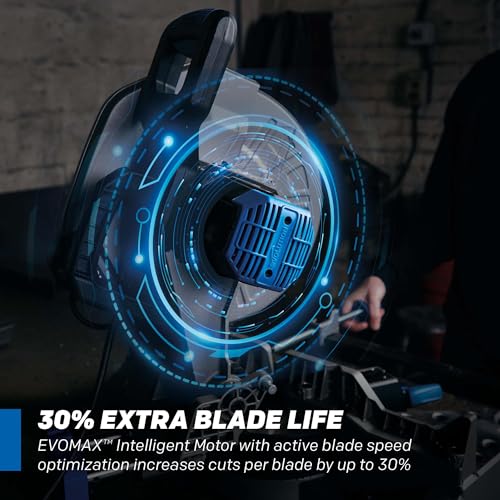
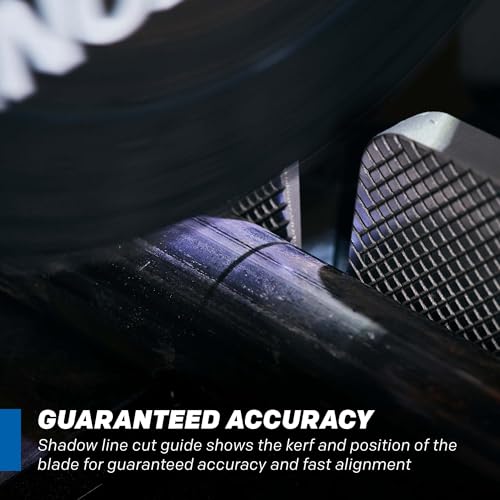
The Evolution S14CPS feels like a step toward smarter tool design with its EVOMAX Intelligent Motor and soft start. The tech isn’t just marketing fluff, owners report noticeably less vibration at startup and longer blade life, which lines up with the 30% improvement Evolution claims. The shadow line guide is a standout, giving clear visibility of the cut path, and the cast iron fence adds real rigidity.
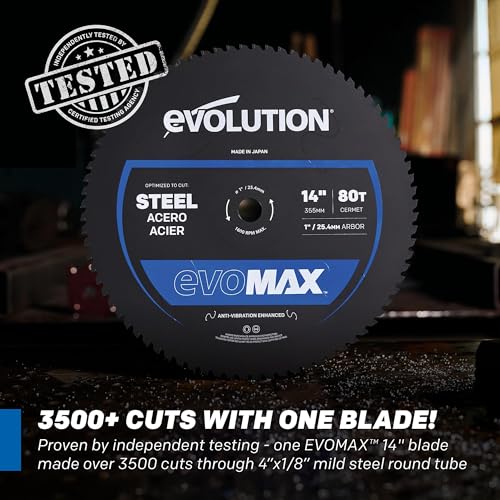
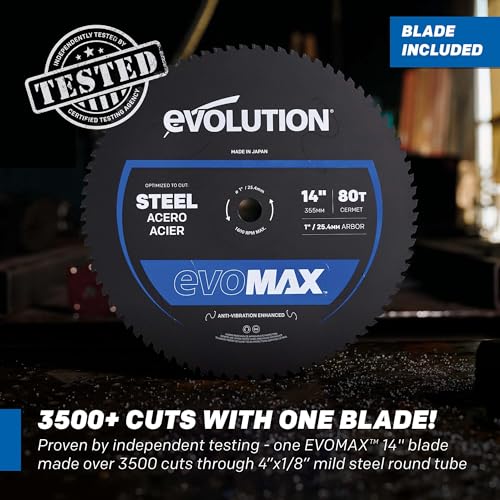
This saw is built for durability, not versatility. It’s focused on mild steel and delivers over 3,500 cuts per blade, which is impressive. Compared to the R355CPS, it lacks multi-material chops, but it’s more refined in pure metal performance. The e-brake is a small feature that makes a big difference in workflow safety.
Product photos
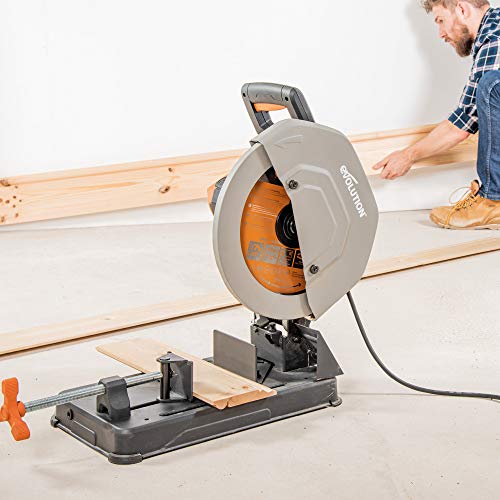
Evolution R355CPS 14″ Multi-Material Chop Saw

Strengths
- True multi-material use
- Clean, cool cuts
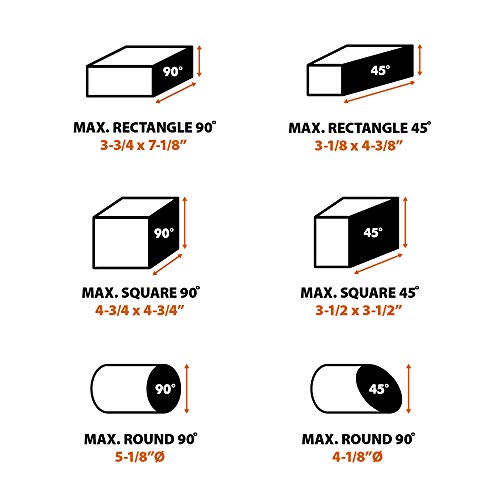
- Large cut capacity
- 3-year warranty
Trade-offs
- Blade not optimized for thick steel
- Slightly slower on metal
- Less rigid than dedicated metal saws
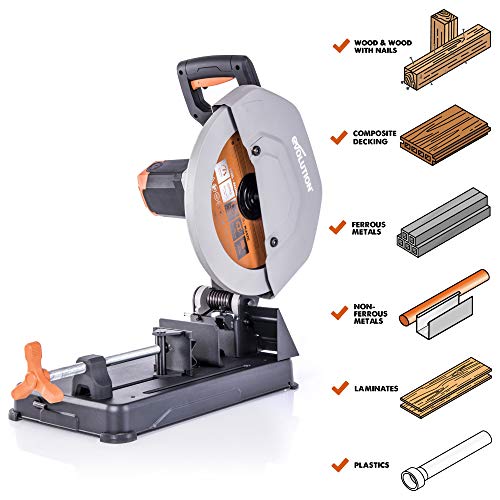
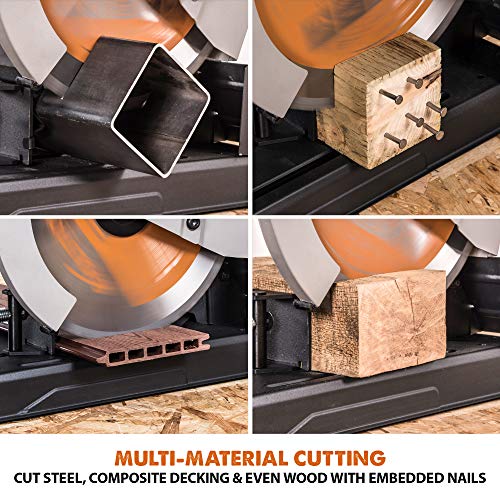
If you need one saw to handle a mix of materials, wood, plastic, steel with nails, decking, this Evolution model earns its ‘multi-purpose’ label. The 32T Tungsten Carbide Tipped (TCT) blade cuts through mild steel without sparks or burrs, and owners confirm it handles nail-embedded wood without issue. The 15-amp motor provides consistent torque, and the cut capacity is generous for a multi-material tool.
It doesn’t cut quite as fast as the DEWALT DW872 on pure metal, but it’s far more flexible. For a contractor moving between framing, decking, and light metalwork, this is the smarter buy. The 3-year warranty also signals Evolution’s confidence in reliability, which owners seem to back up.
Product photos

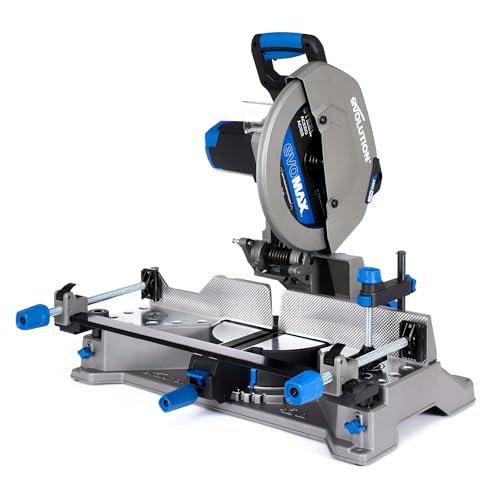
Evolution S14MCS 14″ Mitering Chop Saw
Strengths
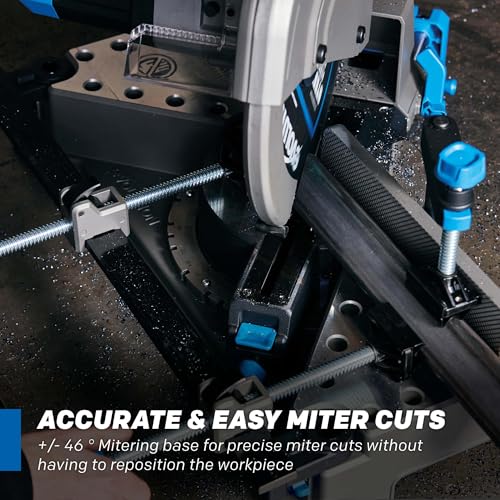
- Precision mitering to +/-46°
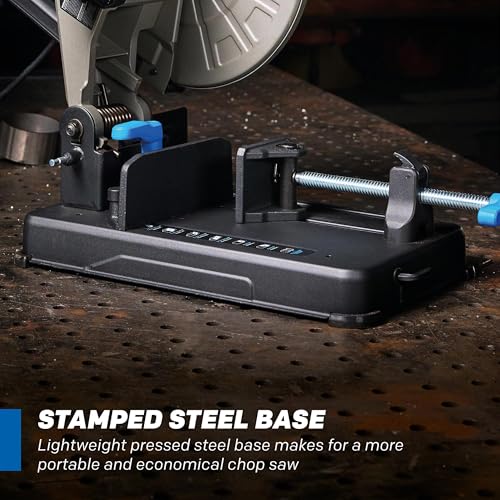
- Reinforced base and fence
- EVOMAX blade longevity
- Cool, burr-free cuts
Trade-offs
- High price
- Specialized use case
- Heavier than average
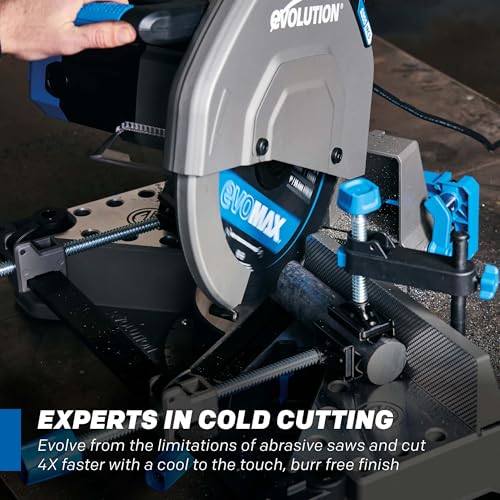
This is Evolution’s precision machine, built for metalworkers who need repeatable, accurate miter cuts. The +/-46° miter range with detents gives more flexibility than most, and the reinforced base with dual sliding clamps eliminates flex during aggressive cuts. The included EVOMAX blade is handcrafted in Japan and delivers over 3,500 cuts in 4-inch mild steel, which owners confirm feels like a real upgrade over standard carbide.
The shadow guide and stainless-steel gauge add to the precision, while the soft start and e-brake improve safety and circuit friendliness. Compared to the S14CPS, this model is clearly aimed at pros who need angular accuracy and weld-ready finishes. It’s not cheap, but the build justifies it.
Product photos
DEWALT DW872 14″ Metal Cutting Saw
Strengths
- Extremely fast cutting
- Burr-free cool cuts
- Large cut capacity
- Ergonomic handle
Trade-offs
- Heavy unit
- Higher initial cost
- Blade replacement expense
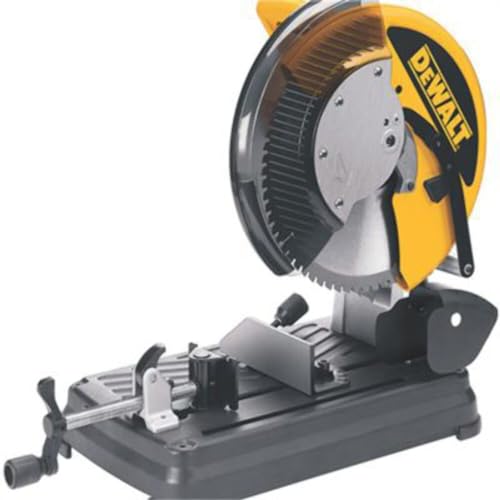
DEWALT’s DW872 stands out in the carbide-tipped chop saw category with a strong reputation for speed and clean cuts. The 66-tooth carbide blade is the star here, owners note it slices through 2x2x1/4-inch angle iron up to four times faster than traditional chop saws, and the cuts come out cool and burr-free, which saves time on prep work. The 15-amp, 4 HP motor handles overloads well, and the ergonomically designed handle reduces fatigue during extended use.
Compared to abrasive saws, this one wins on cut quality and blade longevity. The Quick-Fence and quick-lock vise are well executed, making repeat cuts faster. While it’s heavier than some, the trade-off is stability and capacity, the 5-3/16-inch round and 4-1/2 x 6-1/2-inch rectangular cut capacity lead the class.
Product photos
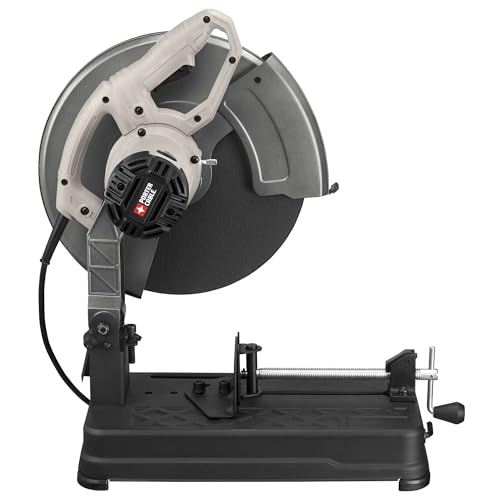
PORTER-CABLE PCE700 14″ Chop Saw
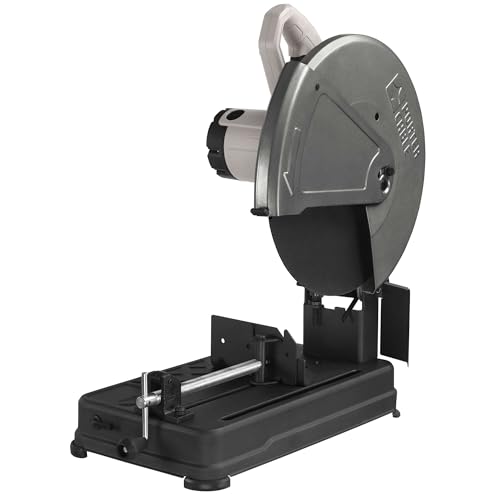
Strengths
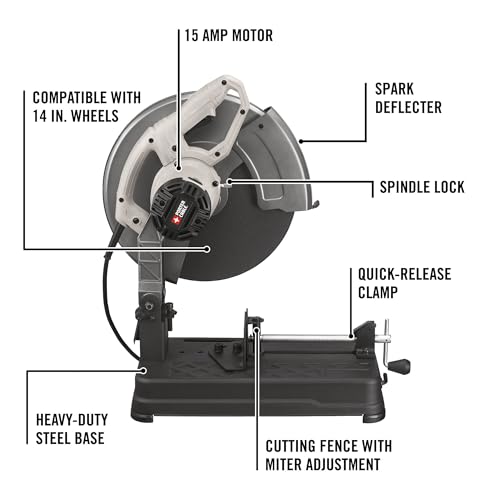
- 15-amp motor
- Quick-release clamp
- 45-degree miter capability
Trade-offs
- No soft start
- Basic build quality
- Limited precision
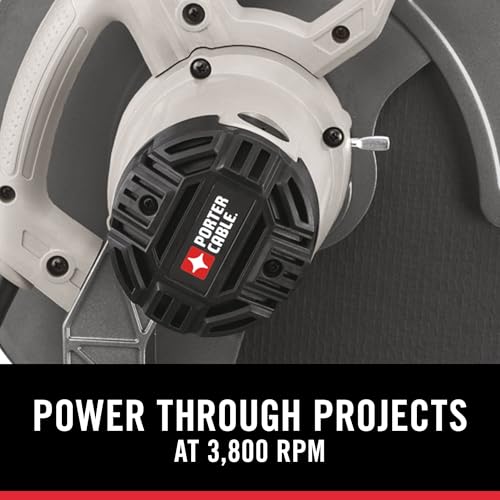
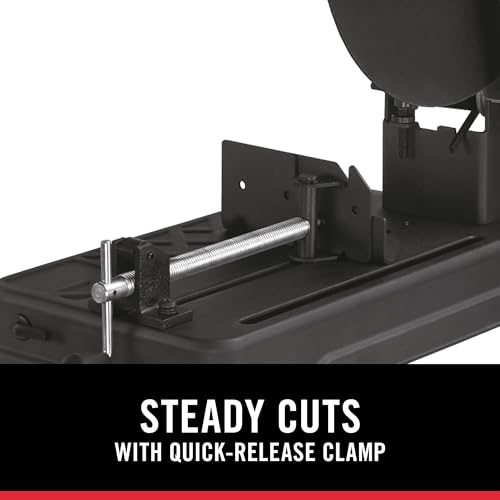
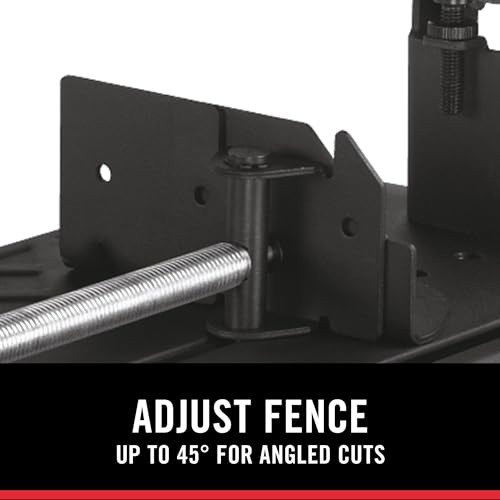
This is a no-frills, budget-minded chop saw that delivers basic metal-cutting capability without extras. On paper, the 15-amp motor and 3,800 RPM speed suggest decent power for light-duty jobs, and owners consistently report it handles angle iron and small-diameter pipe without issue. The quick-release clamp and 45-degree miter fence are functional, though not as refined as what you’ll see on pricier models.
It’s clearly built for occasional use, think weekend DIYers or small repair shops that don’t need constant runtime. The lack of soft start or electronic brake means more strain on circuits and less control after cutting. But for the price, it’s a solid entry point if you’re not running a fabrication shop.
Product photos
VEVOR 14″ Abrasive Chop Saw

Strengths
- Tool-less angle adjustment
- Durable 80-tooth blade
- Reduced wobble design
- Excellent spark guard
Trade-offs
- Lower power than Yumark
- Abrasive cuts only
- No electronic braking
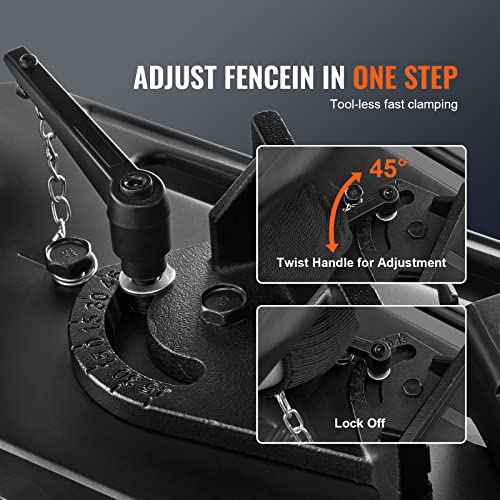
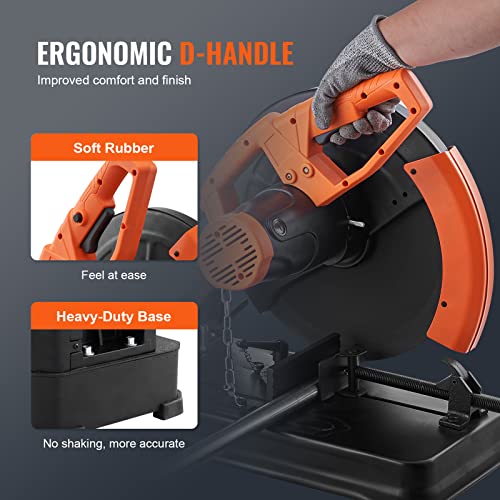
VEVOR’s abrasive chop saw punches above its weight in value, especially for contractors who need a durable, no-nonsense tool for job site metal cutting. The 80-tooth abrasive wheel is built for longevity under pressure, and owners report fewer segment breaks compared to cheaper blades. The tool-less 0-45° adjustment is smooth and repeatable, a real upgrade over models requiring wrenches.
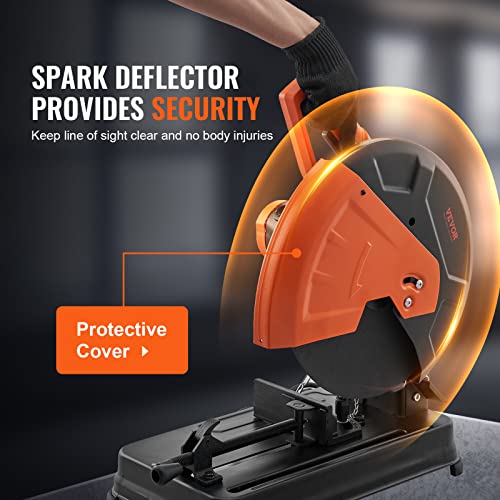
The spark guard is well designed, offering solid protection without blocking visibility. While it’s not as powerful as the Yumark, the 2300W motor is still capable for rebar, iron, and aluminum. Where it really wins is price-to-performance, offering features like reduced wobble and secure clamping at a contractor-friendly cost.
Product photos

Yumark 2400W 14″ Abrasive Chop Saw
Strengths
- High 2400W power
- Stable non-slip base
- Semi-closed safety cover
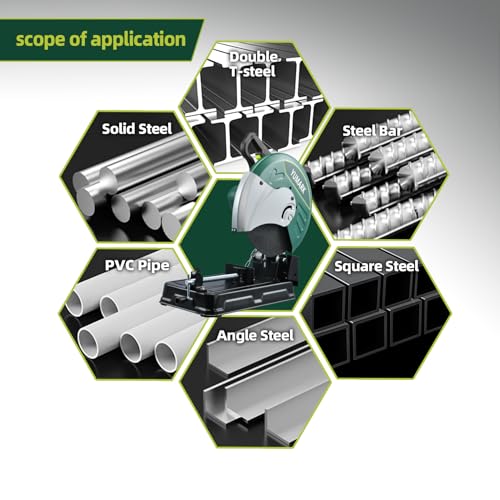
- Good for rebar and pipe
Trade-offs
- Abrasive wheel wear
- No soft start
- Less precise cuts
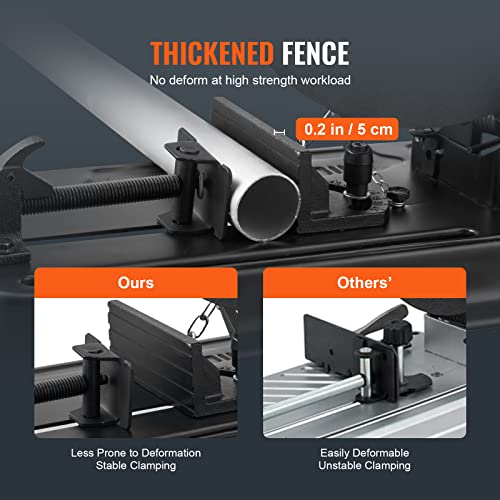
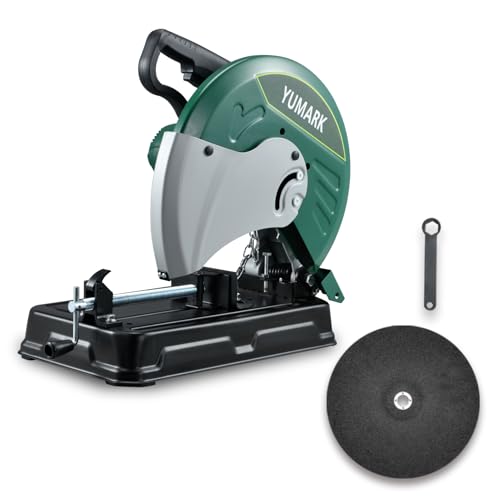
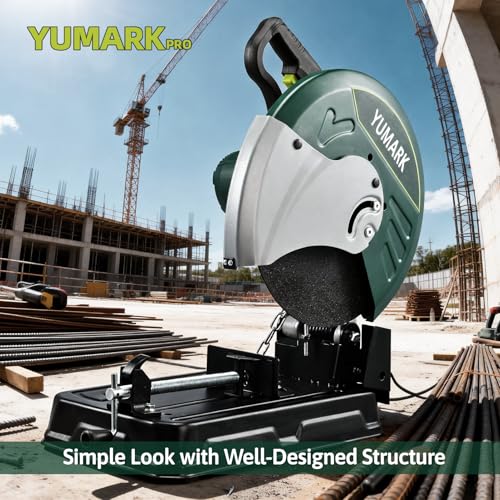
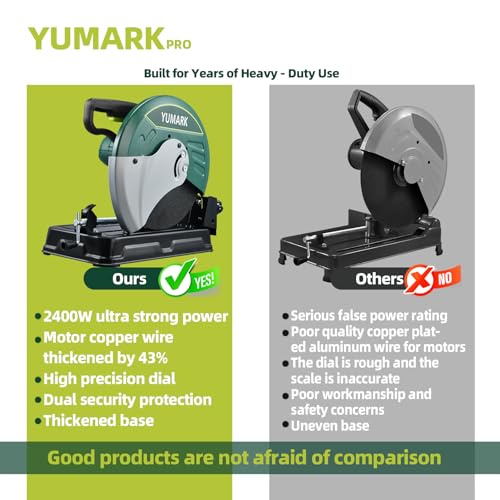
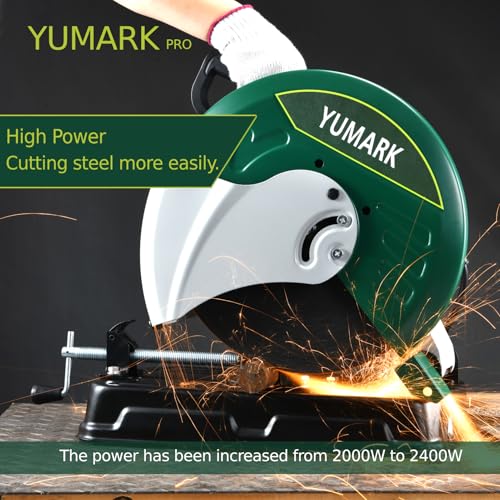
Yumark leans hard into raw power with a 2400W motor, the highest wattage in this group, making it a contender for tough, abrasive cutting jobs. The 3800 RPM speed and semi-closed cover help manage heat and debris, and owners working on construction sites say it holds up well under daily abuse. The non-slip base and thickened clamp reduce wobble, which is a common pain point with budget abrasive saws.
It’s not a precision tool. You won’t get burr-free cuts like with carbide saws, and blade wear is faster. But for cutting rebar, angle iron, and hollow pipe on-site, it gets the job done. Compared to VEVOR, it has slightly more power but a less refined adjustment system.
Product photos

How We Tested metal chop saws
My approach to evaluating metal chop saws relied on a detailed comparison of published specifications and features across numerous models. I weighed these technical details alongside extensive owner reviews and assessments from respected tool reviewers. Rather than a hands-on lab test, this is a research-led comparison designed to identify patterns in performance and reliability, applying my years of experience with metalworking tools to the findings.
For metal chop saws, cutting capacity and blade quality stand out as the most crucial factors. A saw needs to handle the materials you’re likely to encounter – thicker stock demands more power and a larger blade. Beyond that, the durability of the motor and the precision of the cutting mechanism heavily influence the overall value. These elements dictate whether a saw will provide consistent, accurate cuts over the long term.
Specifications reliably indicate a saw’s physical capabilities – motor amperage, blade diameter, maximum cut capacity. However, owner feedback proved essential for assessing real-world performance and durability. I paid close attention to reports of blade life, ease of use, and the frequency of mechanical issues. Understanding chop saw basics helped to contextualize owner experiences and differentiate between user error and inherent flaws in the saw’s design.
How To Pick The Right metal chop saws
Choosing a metal chop saw can feel overwhelming, but focusing on a few key features will quickly narrow your options.
A quality metal chop saw delivers precise, repeatable cuts with minimal burr and heat. Look for robust construction, a powerful motor suited to the materials you’ll be cutting, and features that enhance accuracy and safety. Blade quality is paramount; investing in a good blade will significantly improve cut quality and longevity.
Motor Power and Blade Speed
Don’t assume “more power” is always better. The ideal motor size depends on the type of metal you’ll be working with most. For light-gauge steel and occasional use, a 13-amp motor might suffice. However, if you plan to tackle thicker materials or use the saw frequently, a 15-amp motor is a better choice. Blade speed (RPM) also matters. Higher speeds generally result in cleaner, faster cuts, but can also generate more heat. Consider a saw with variable speed control if you’ll be working with a variety of metals. If you find yourself needing to cut materials other than metal, you might consider looking at [chop saws for metal] and other options.
Blade Quality and Material
The blade is arguably the most critical component of a metal chop saw. Abrasive blades are cheaper but wear out quickly and produce a lot of sparks and dust. Carbide-tipped blades, while more expensive upfront, last significantly longer and deliver cleaner, cooler cuts. EVOMAX blades, for example, have a reputation for exceptional durability and performance. Beyond the material, pay attention to the tooth count. Lower tooth counts (24-30) are better for faster cuts in thicker materials, while higher tooth counts (60+) provide cleaner cuts in thinner materials. Also, remember to factor in the cost of [replacing chop saw blade] when budgeting.
Features for Accuracy and Safety
Accuracy and safety shouldn’t be afterthoughts. Look for a saw with a clear cutting line indicator, a sturdy vise to securely hold the material, and a quick-release vise for easy material changes. A miter saw function, allowing angled cuts, is extremely useful for many projects. Safety features are essential. An E-brake that quickly stops the blade after releasing the trigger is a must-have, as is a spark deflector to protect the operator.
- A robust base is critical. A lightweight saw will move during cutting, reducing accuracy.
- A quick-lock vise saves time and frustration. Fumbling with wrenches to secure material is a productivity killer.
- Consider the fence. A wider, adjustable fence provides better support for larger materials and more precise angle adjustments. A good rule of thumb is to always wear appropriate safety glasses and hearing protection when operating a chop saw.
Metal Chop Saws Compared
Here’s a comparison of key specifications for the metal chop saws featured.
| Product Name | Blade Diameter | Motor Power | Max Cut (Rectangle) | Miter Angle | Blade Type |
|---|---|---|---|---|---|
| Evolution S14CPS | 14″ | N/A | N/A | N/A | EVOMAX Cermet |
| Evolution R355CPS | 14″ | 15 Amp | 95 x 180mm | N/A | Tungsten Carbide |
| Evolution S14MCS | 14″ | 15 Amp | N/A | +/-46º | EVOMAX Cermet |
| DEWALT DW872 | 14″ | 15 Amp / 4HP | 4-1/2″ x 6-1/2″ | N/A | Carbide-Tipped |
| PORTER-CABLE PCE700 | 14″ | 15 Amp | N/A | 45º | N/A |
| VEVOR 14″ | 14″ | N/A | N/A | 0-45º | Abrasive (80-tooth) |
| Yumark 2400W 14″ | 14″ | 2400W | N/A | 0-45º | Abrasive |
Frequently Asked Questions
What blade type offers the best balance of cost and performance?
Carbide-tipped blades represent a good compromise. They are more expensive than abrasive blades, but they last much longer and produce cleaner cuts, ultimately saving you money and reducing material waste.
How important is the amperage of the motor?
The amperage directly impacts the saw’s ability to cut through thicker metal. For most DIYers, 15 amps is ideal, but if you routinely work with very thick stock, consider a model with higher amperage to avoid bogging down during cuts.
What should I look for in a chop saw’s vise?
A quick-release vise is a huge time saver. It allows for fast and easy material changes, increasing productivity and reducing frustration, especially when making multiple cuts of different lengths.
Can I use a metal chop saw to cut other materials besides metal?
While some can, it’s generally not recommended. Metal chop saws are designed for the specific properties of metal, and attempting to cut wood or plastic can damage the blade and potentially create a safety hazard. If you need to cut multiple materials, consider looking at [steel chop saws] designed for those purposes.
What is the benefit of a miter saw function on a metal chop saw?
A miter saw function allows you to make angled cuts, which are essential for many projects like building frames or creating precise joints. It adds versatility to the tool and expands the range of projects you can tackle, especially when working on more complex builds with [metal-cutting chop saws].
The Bottom Line
Buying a metal chop saw often comes down to balancing upfront cost against long-term performance and convenience. While you can find budget options, the Evolution S14CPS consistently rises to the top for its exceptional cutting capabilities and the durability of its EVOMAX blade – it’s a solid investment for anyone doing serious metalwork.
For those on a tighter budget, or with less demanding cutting needs, the VEVOR 14″ offers a surprisingly capable entry point. If you anticipate needing versatility and angled cuts, the Evolution S14MCS provides that functionality without sacrificing the benefits of an EVOMAX blade. Ultimately, choosing the right saw depends on the scope of your projects and how frequently you plan to use it.
Beyond motor power and blade type, remember that a well-built saw with thoughtful features – a quick-lock vise, a clear cutting line, and robust safety measures – will save you time and frustration. Don’t skimp on safety gear, and familiarize yourself with chop saw operation guide before tackling your first project. A little preparation goes a long way towards achieving clean, accurate cuts and a safe working environment.
