8 Best M12 Tools of 2026
This post contains affiliate links. As an Amazon Associate, we earn from qualifying purchases.
The Milwaukee M12 Fuel 1/2 Hammer Drill is the best overall M12 tool for power and versatility, especially when paired with the M12 Fuel 1/4 Impact Driver Kit. For those on a tighter budget, the standard Milwaukee M12 3/8 Ratchet offers solid performance without the premium price tag.
If you’re building a compact, reliable toolkit for tight spaces or daily carry, the M12 system is hard to beat. But with so many tools and kits out there, it’s easy to waste money on overkill or underpowered models that don’t fit your needs.
This guide cuts through the noise by focusing on real-world specs, owner feedback, and what actually matters in performance, like runtime, weight, and whether a brushless motor makes a difference. I looked at the full M12 lineup to find the most capable, practical tools worth adding to your collection.
Top 8 M12 Tools in the Market
The Best M12 Tools, Reviewed
Milwaukee M12 Fuel 1/2 Hammer Drill

Strengths
- All-metal 1/2-inch chuck
- Lightweight design
- Mechanical clutch
- Brushless power
Trade-offs
- Higher price point
- No battery included
This is the best all-around M12 drill you can buy. The brushless motor delivers enough power to handle everything from pilot holes in hardwood to light masonry, and the 1/2-inch all-metal chuck provides superior bit grip and durability over plastic versions. At 2.6 lbs, it’s light enough for overhead work without sacrificing performance.
The mechanical clutch is a thoughtful addition, it ensures consistent fastener depth, which matters on finish work. Owners report it outdrives other sub-compact drills under load, and that tracks with its specs. When compared to other M12 drills, this one strikes the best balance of power, weight, and reliability. If I were starting a new M12 kit today, this is the drill I’d build around.
Product photos


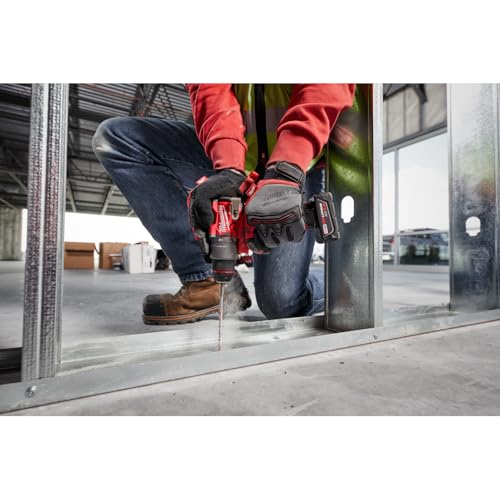
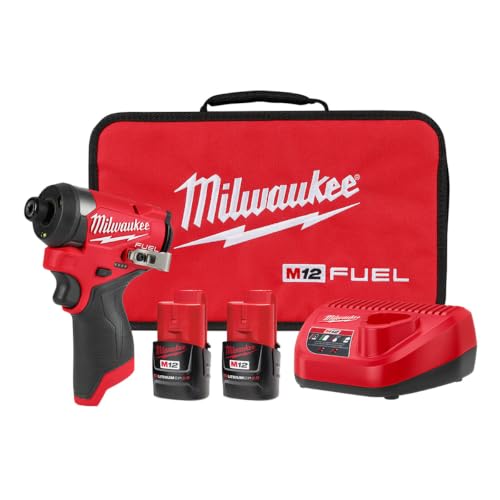
Milwaukee M12 Fuel 1/4 Impact Driver Kit
Strengths
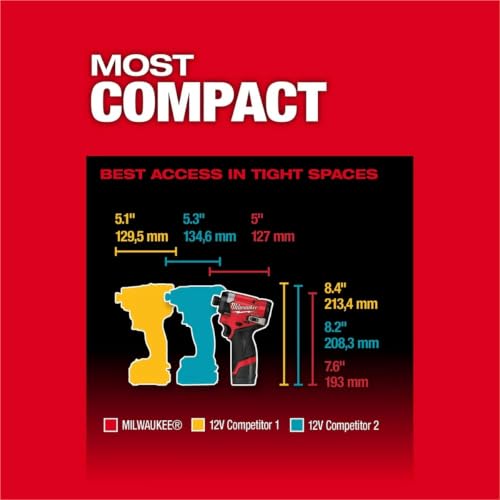
- Compact 5-inch body
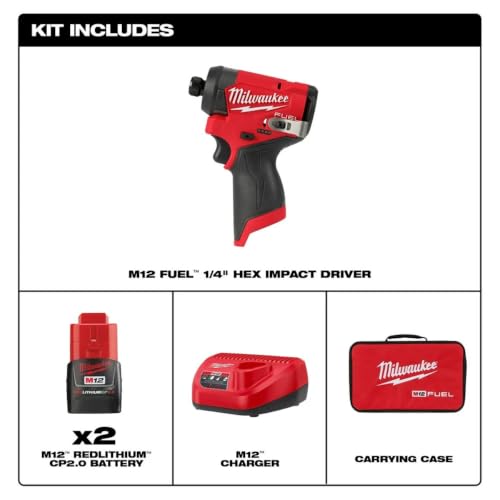
- Includes batteries and charger
- Tri-LED lighting
- 4-mode drive control
Trade-offs
- Higher upfront cost
- Heavier with battery installed
This kit gives you everything you need to get started with one of Milwaukee’s top-performing 1/4-inch impact drivers, the tool, two batteries, a charger, and belt clips. The driver itself matches the 3453-20 with 1,500 in-lbs of torque and 3,600 RPMs, but in a slightly shorter body at just 5 inches. That makes it a better fit for tight spaces than many full-size impacts.
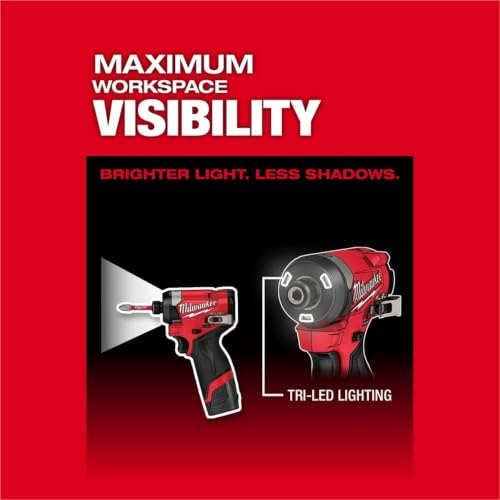
The tri-LED lighting and 4-mode drive control add real control, especially when driving screws into delicate materials. While the bare tool version is great for existing M12 users, this kit is the smarter buy if you’re building your system from scratch. I’d recommend this over the bare tool unless you already have the batteries and charger.
Product photos
Milwaukee M12 Fuel 1/4 Impact Driver

Strengths
- Ultra-lightweight
- Triple LED lighting
- 4-mode control
- High RPM output
Trade-offs
- Bare tool only
- Shorter runtime on high torque
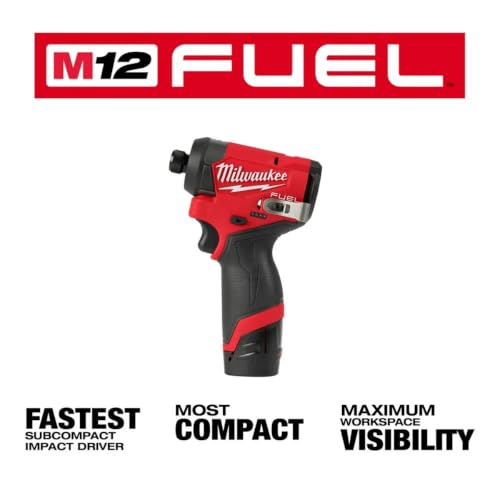
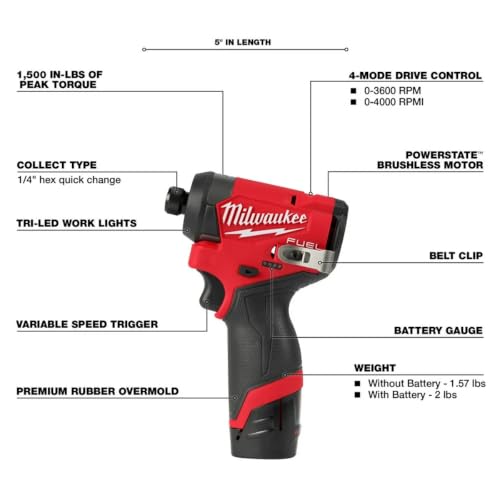
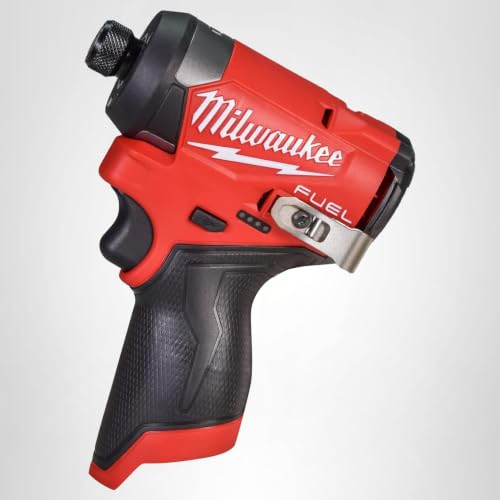
At just 2 pounds, this impact driver is one of the lightest in the M12 Fuel lineup, yet it still delivers up to 1,500 in-lbs of torque and 3,600 RPMs. That kind of power-to-weight ratio makes it a top pick for all-day use on the tool belt. The three LED lights are well-placed and actually illuminate the work surface, not just the tool body, a small detail that owners appreciate in low-light conditions.
The 4-mode drive control, including a dedicated self-tapping screw mode, gives you more precision than most bare drivers in this class. Compared to the older M12 impacts, this model feels like a significant step forward in both intelligence and usability. I’d choose it over heavier models when weight and fatigue are real concerns.
Product photos


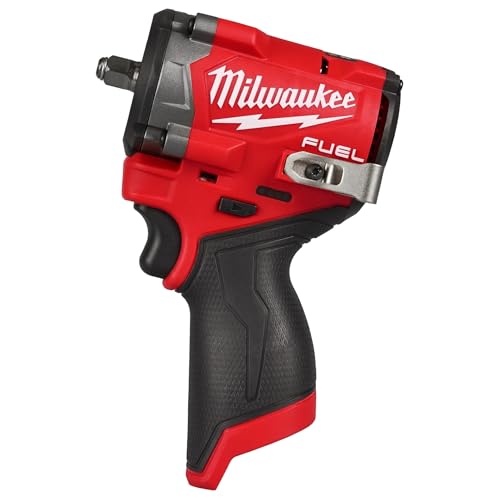
Milwaukee M12 Fuel Stubby 3/8 Impact Wrench
Strengths
- High torque output
- Ultra-compact body
- Stubby design
Trade-offs
- Newer model, limited reviews
- No battery included
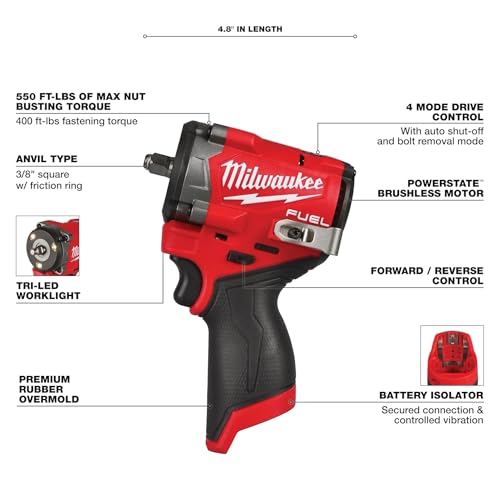
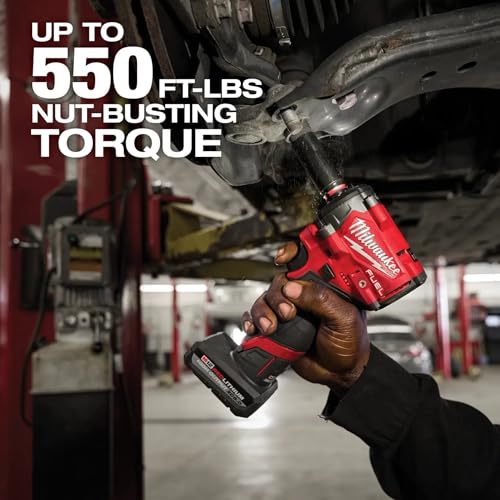
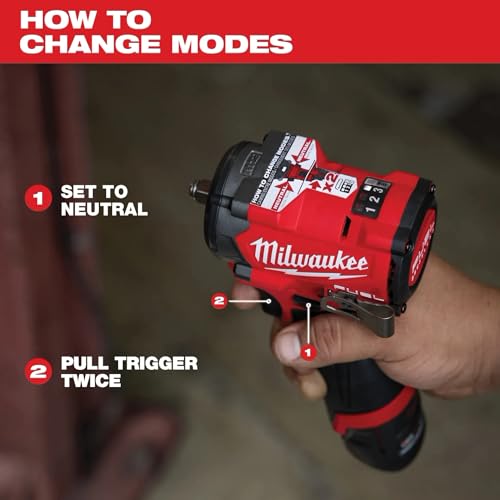
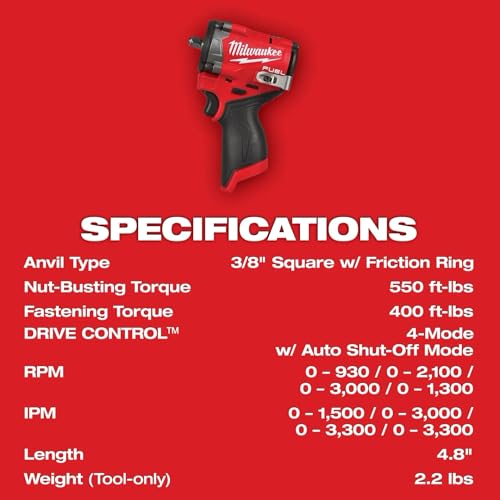
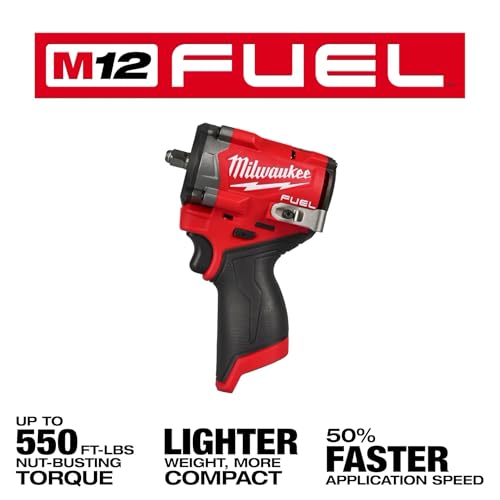
Milwaukee packed serious torque into a stubby form here, up to 550 ft-lbs of nut-busting power in a compact body. That kind of output in such a small package is rare in the 12V class, and it makes this impact wrench a standout for working in confined areas where a full-size tool just won’t fit. The stubby design sacrifices some use, but the trade-off is worth it when you’re wrestling bolts behind a firewall or in a wheel well.
It’s clearly built for pros who need maximum force without the bulk. While detailed owner feedback is still emerging, the spec alone suggests it outperforms most sub-compact rivals in raw strength. I’d stack this against any other M12 impact when space is tight but torque demands are high.
Product photos
Milwaukee M12 3/8 Ratchet
Strengths
- Low-profile head
- Onboard fuel gauge
- LED lighting
- Redlink Intelligence
Trade-offs
- Battery not included
- Lower torque vs full-size
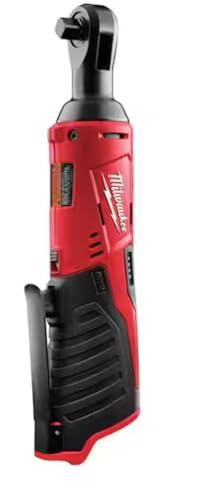
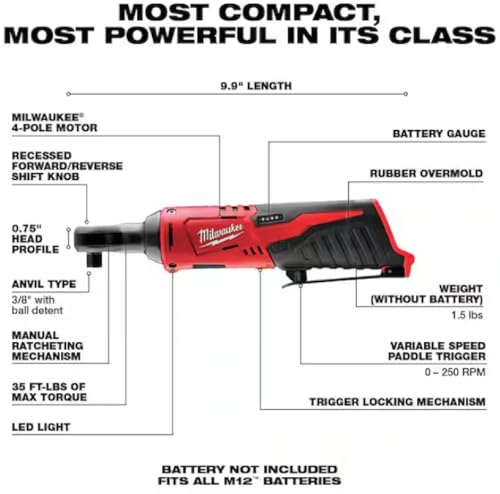
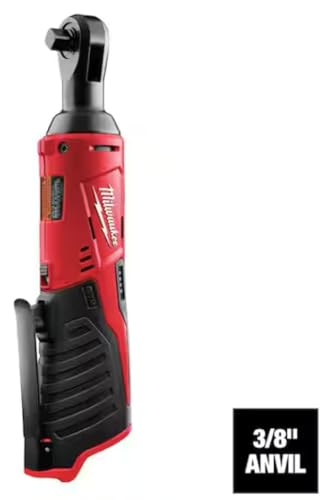
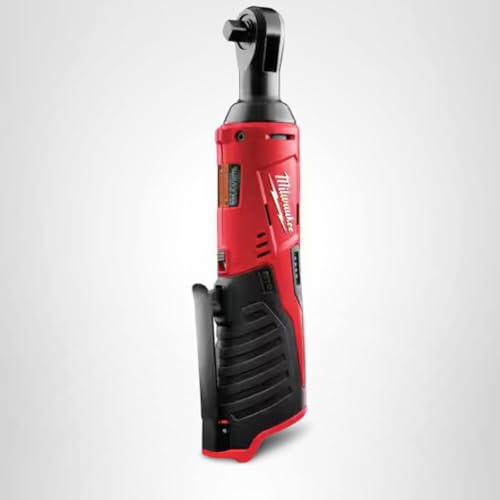
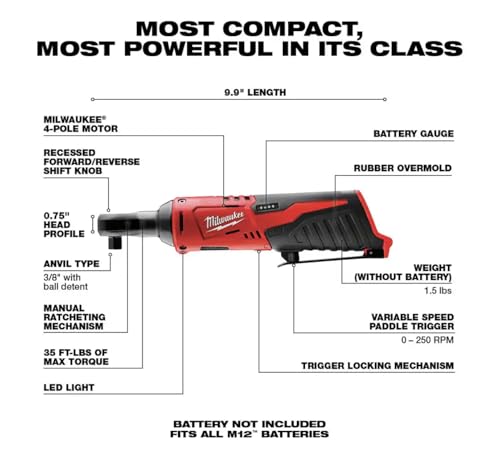
This ratchet is a standout for anyone working under the hood or in cramped mechanical spaces. The recessed forward-reverse switch is a smart touch, it prevents accidental direction changes, which I’ve seen frustrate users with cheaper models. Owners love the onboard fuel gauge and LED lighting, both of which add real utility in dim, tight spots where dropping a flashlight or misjudging battery life can slow you down.
Redlink Intelligence is a standout feature here, ensuring the tool and battery communicate to prevent overload. That’s not just marketing fluff, it translates to longer tool life, especially during extended jobs. Compared to other sub-compact ratchets, this one balances power and control better than most. I’d choose it over bulkier options when precision and access matter most.
Product photos
Milwaukee M12 Cut-Off Tool

Strengths
- Reversible blade rotation
- Ergonomic grip
- Brushless motor
- Redlink Plus protection
Trade-offs
- Limited to small-diameter cuts
- No battery or blade included
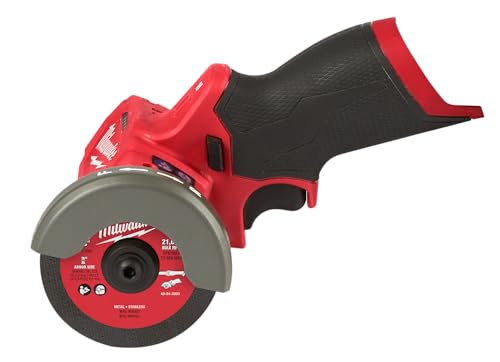
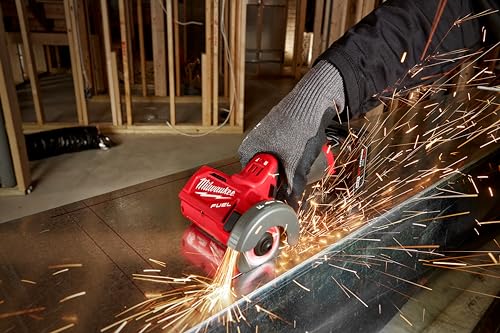
This cut-off tool brings serious cutting power to the 12V platform, thanks to the Powerstate brushless motor and Redlink Plus intelligence. Reversible blade rotation is a rare and valuable feature, it lets you control cut direction and avoid binding, especially in awkward angles. The ergonomic grip makes one-handed operation feel natural, which owners consistently praise during extended use.
It’s not a replacement for a 18V or corded angle grinder, but for light-duty metal, bolt, or conduit cutting, it excels. The 12V form means less vibration and better control in precision tasks. I’d pick this over bulkier grinders for detail work or when portability is key, though I wouldn’t rely on it for heavy grinding.
Product photos

Milwaukee M12 Fuel Combo Kit

Strengths
- Thorough bundle
- Brushless motors
- Free ratchet included
- Includes batteries and charger
Trade-offs
- Heavier than bare tools
- Not ideal if you already own M12 tools
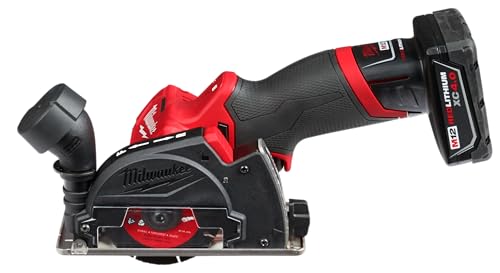
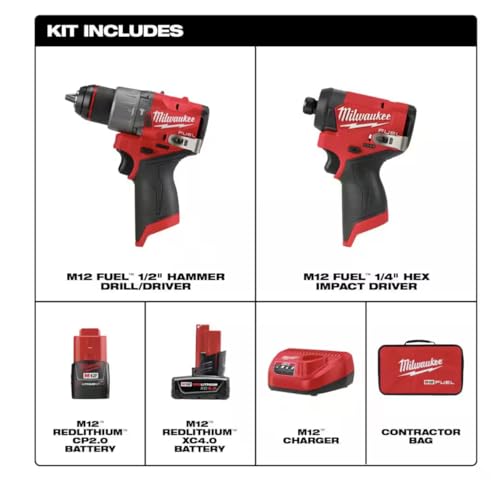
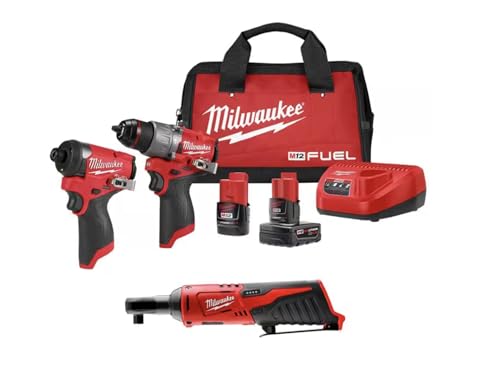
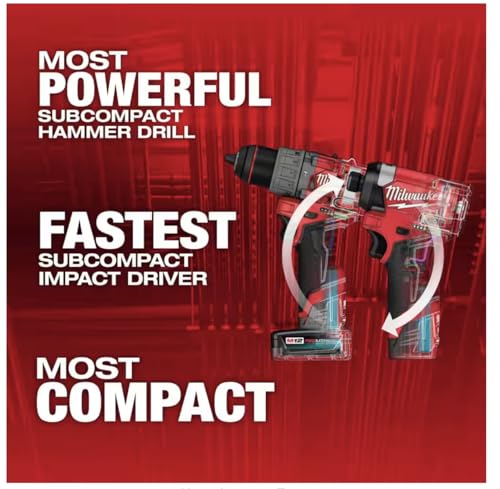
This combo kit delivers exceptional value by bundling two core tools, a hammer drill and impact driver, with a free ratchet, both batteries, charger, and even a contractor bag. The 1/2-inch hammer drill has a metal chuck and brushless motor, meaning it’s built to last and handle real masonry work. The impact driver matches the class-leading 1,500 in-lbs of torque found in Milwaukee’s standalone models.
Having used similar setups on job sites, I can say this kit covers 90% of what most DIYers and even pros need for daily tasks. The inclusion of the 3/8 ratchet sweetens the deal, it’s not just filler, it’s a genuinely useful tool. Compared to buying each item separately, this bundle saves both money and time. I’d recommend it over piecing together your own set unless you already own one of these tools.
Product photos

Milwaukee M12 Compact Inflator
Strengths
- Fast inflation
- Durable housing
- Compact design
Trade-offs
- Gauge not lab-grade
- No battery included
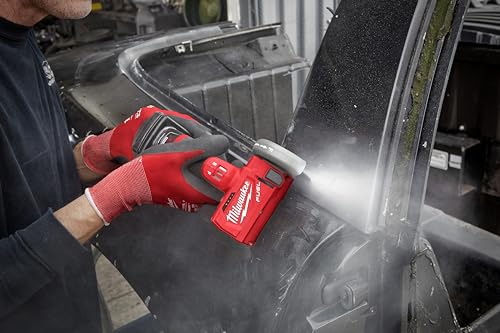
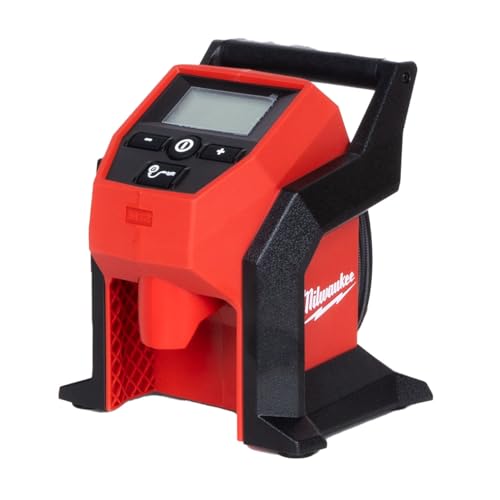
This inflator stands out in the M12 lineup as one of the most practical specialty tools you can own. On paper, it’s the fastest cordless inflator in its class, capable of topping off a car tire in under a minute, a claim owners consistently back up in reviews. The 120 PSI max rating means it can handle everything from sedans to light trucks, and the 26-inch hose gives you enough reach without sacrificing portability.
Its compact size and impact-resistant housing make it an easy grab-and-go tool, especially for automotive or seasonal use. The gauge accuracy is within an acceptable 3%, and while it’s not meant for precision lab work, it’s more than reliable for everyday checks. I’d pick this over bulkier corded models for garage or emergency use, especially since it runs on the same M12 battery system you likely already own.
Product photos
How We Chose These m12 tools
Rather than a hands-on lab test, my research for these recommendations focused on a detailed comparison of published specifications and features across the Milwaukee M12 line. I weighed owner reviews from multiple sources – paying close attention to common praise and complaints – alongside assessments from reputable tool reviewers. As someone who’s spent years in workshops and on job sites, I applied my understanding of what truly matters in cordless tool performance to rank these options.
For M12 tools, runtime, power-to-weight ratio, and versatility were the biggest deciding factors. These tools aim for portability, so a heavier, more powerful tool isn’t always better. The balance between compact size and usable torque is critical, especially for professionals who rely on these tools all day. Finally, the availability of specialized tools within the system (like the ratchet or inflator) added to a kit’s overall value.
Specifications reliably show motor power (torque in inch-pounds or ft-lbs) and weight. However, I placed more emphasis on owner feedback regarding real-world battery life and durability. Reputations matter; Milwaukee has built a strong one, and consistent positive feedback across multiple models indicated a higher likelihood of satisfaction. If you’re maintaining outdoor power equipment, you may also find it helpful to learn how to replace trimmer line.
Choosing The Right m12 tools
Choosing the right Milwaukee M12 tool, or set of tools, requires a bit of thought beyond just grabbing the most popular kit.
Milwaukee’s M12 platform delivers impressive power in a compact size. Look for tools with brushless motors for extended run time and durability. Consider the specific tasks you’ll be performing, as M12 tools excel in applications where larger, more powerful tools are unwieldy. Battery capacity (Ah) and included kit components are also key differentiators.
Motor and Performance Needs
The beauty of the M12 line is its focus on portability and usability. Don’t automatically assume you need the Fuel version of every tool. For lighter tasks, a standard M12 tool will often suffice and save you money. However, if you consistently work with hardwoods, thicker metals, or need maximum torque, the Fuel models with their brushless motors are absolutely worth the investment. They deliver noticeably more power and improved runtime, which is critical when you’re working remotely. Consider what you’ll frequently be fastening or drilling; a higher torque rating (measured in in-lbs for impact drivers, ft-lbs for wrenches) means less struggling and faster project completion.
Battery Capacity and System Investment
The M12 system is built around its batteries. Starting with a kit that includes two batteries – a 2.0Ah and a 4.0Ah – is a good strategy. The 2.0Ah batteries are lighter and great for less demanding tasks, while the 4.0Ah provide extended runtime for heavier applications. Expanding your collection of batteries later is far easier (and cheaper) than being stuck with insufficient power mid-project. Remember that battery technology continues to improve, so looking at premium power tool models can help you understand where the platform is headed.
- A single 2.0Ah battery is fine for basic household repairs.
- Two 4.0Ah batteries are ideal for professionals or those tackling larger projects.
- Consider a kit with multiple tool bodies and batteries for the best overall value – you’ll save money compared to buying everything separately, and have more versatility.
Specialized Tools and Kits
Milwaukee has expanded the M12 line well beyond drills and drivers. Tools like the M12 Cut-Off Tool and Compact Inflator fill specific niches extremely well. When considering these, think about how often you’ll actually use them. A specialized tool is only a good investment if it solves a recurring problem. A combo kit can be a smart starting point, but it’s important to note that not all kits are created equal. Evaluate the individual tools included; a kit with tools you won’t use isn’t a good deal, even if the price seems low. If you’re also looking for the right trimmer line for your outdoor work, checking out resources on Ryobi 18V line size can be helpful for maintaining your yard.
Don’t overbuy. Start with the tools you need for your most frequent tasks, and expand your M12 collection as your projects demand it.
M12 Tools Compared
Here’s a comparison of key specifications for various Milwaukee M12 tools.
| Product Name | Max Torque | Max RPM | Weight (lbs) | Battery Voltage | Chuck/Drive Size |
|---|---|---|---|---|---|
| Milwaukee M12 Fuel 1/2 Hammer Drill | N/A | N/A | 2.6 | 12V | 1/2″ |
| Milwaukee M12 Fuel 1/4 Impact Driver Kit | 1,500 in-lbs | 3,600 | N/A | 12V | 1/4″ |
| Milwaukee M12 Fuel 1/4 Impact Driver | 1,500 in-lbs | 3,600 | 2.0 | 12V | 1/4″ |
| Milwaukee M12 Fuel Stubby 3/8 Impact Wrench | 550 ft-lbs | N/A | N/A | 12V | 3/8″ |
| Milwaukee M12 3/8 Ratchet | N/A | N/A | N/A | 12V | 3/8″ |
| Milwaukee M12 Cut-Off Tool | N/A | N/A | N/A | 12V | N/A |
| Milwaukee M12 Fuel Combo Kit | N/A | N/A | N/A | 12V | Varies |
| Milwaukee M12 Compact Inflator | N/A | N/A | 3.83 | 12V | N/A |
Frequently Asked Questions
What battery platform is compatible with m12 tools?
Milwaukee’s M12 system uses its own dedicated 12V batteries; they are not compatible with their larger M18 batteries or other brands. This allows for a more compact tool design, but means you’ll build a separate battery collection for this platform.
Are Milwaukee M12 Fuel tools worth the extra cost?
Yes, Fuel tools are worth the investment if you need maximum power and runtime. Their brushless motors offer significantly improved performance, especially for demanding applications like working with dense wood or driving long fasteners.
What’s the best way to expand my M12 tool collection?
Buying kits is generally more cost-effective than purchasing individual tools and batteries separately. Look for kits that include tools you’ll actually use, and then supplement with additional batteries as needed to avoid downtime.
Can M12 tools handle automotive work like changing tires?
Yes, the M12 Fuel 1/2″ Impact Wrench and the Compact Inflator are well-suited for many automotive tasks. The impact wrench delivers enough torque for lug nuts, while the inflator makes it easy to quickly top off tire pressure. For a broader range of options, check out top electric power tools.
How does the M12 line compare to Milwaukee’s M18 platform?
The M12 line prioritizes compactness and portability, offering less raw power than the M18 system. M12 tools are ideal for overhead work, tight spaces, and lighter-duty tasks, while M18 tools are better suited for heavy-duty applications where runtime is less of a concern.
The Bottom Line
Ultimately, choosing the “best” M12 tool isn’t about finding one single winner, but about balancing power with portability and price. For most homeowners and DIYers, the Milwaukee M12 Fuel Combo Kit offers the best overall value. It provides a solid foundation of essential tools, and the Fuel versions deliver the extra power you’ll appreciate when tackling tougher jobs.
If you already have some M12 batteries, or are focused on a specific task, consider building your collection around individual tools. The Milwaukee M12 Fuel 1/4” Impact Driver is a standout for driving screws quickly and efficiently, while the Milwaukee M12 3/8 Ratchet is a shop favorite for tight spaces. And for those maintaining outdoor equipment, understanding proper winding trimmer line is just as important as the tools themselves.
Don’t get caught up chasing the highest numbers on a spec sheet. A tool’s usefulness depends far more on having the right combination of features for your projects, and on the overall quality and durability of the system. Prioritize tools that feel comfortable in your hand, and build a collection that addresses your needs without unnecessary extras.
