7 Best Lineman Hammers of 2026
This post contains affiliate links. As an Amazon Associate, we earn from qualifying purchases.
The Estwing E3-40LM 40 oz Hammer stands out as the best overall lineman hammer, thanks to its durable one-piece forged steel build, milled face for grip, and shock-reducing handle. For a lighter, more affordable option, the Klein 26-Oz Fiberglass Handle Hammer offers solid performance with less fatigue. If you need maximum striking power and a J-hook remover, the Klein 48-Oz Double-Face Hammer is the go-to for heavy-duty work.
Lineman hammers take a beating, driving staples, lag bolts, and hardware into tough materials means you need a tool that won’t fail when you need it most. Too many hammers look good on paper but fall apart under real job-site stress or leave your arm aching after a few swings.
This guide cuts through the noise. I researched the top models based on specs, owner feedback, and decades of field experience to highlight the ones that deliver real durability, balance, and value. You’ll learn what to prioritize, weight, face type, handle material, and why some features matter more than others when you’re working long shifts.
Top 7 Lineman Hammers in the Market
The Best Lineman Hammers, Reviewed
Estwing 40 oz Lineman’s Hammer

Strengths
- One-piece forged steel
- Shock reduction grip
- Smooth face precision
Trade-offs
- No milled surface
- No claw
- Slips on metal fasteners
This Estwing model is nearly identical to the E3-40LM but with a fully smooth face instead of milled. That makes it better for clean, full-contact strikes on large lag bolts or when you need to avoid surface tearing. The one-piece forged build and shock reduction grip are still here, delivering the same rugged reliability and arm-saving comfort.
It’s a more specialized tool, without the milled side, it doesn’t grip staples as well. But for crews focused on bolt driving in utility or fencing work, the smooth face is actually preferable. I’d pick this over the milled version if your work involves fewer staples and more heavy, clean strikes.
Product photos


Estwing E3-40LM 40 oz Hammer

Strengths
- One-piece forged steel
- Shock reduction grip
- Milled and smooth face
Trade-offs
- No claw
- Expensive build
- Heavy over time
Estwing’s one-piece forged construction is legendary in the trades, and this 40-ounce model delivers where it counts: durability and vibration control. The patented shock reduction grip is a standout, reviewers consistently say it reduces arm fatigue, especially during repetitive driving.
The combo of a milled and smooth face gives you flexibility, and the 40-ounce weight strikes a smart balance between power and manageability. Made in the USA from American steel, it’s a premium tool that feels like it will outlive its owner. For those who want the best milled-face performance with serious build quality, this is hard to beat.
Product photos


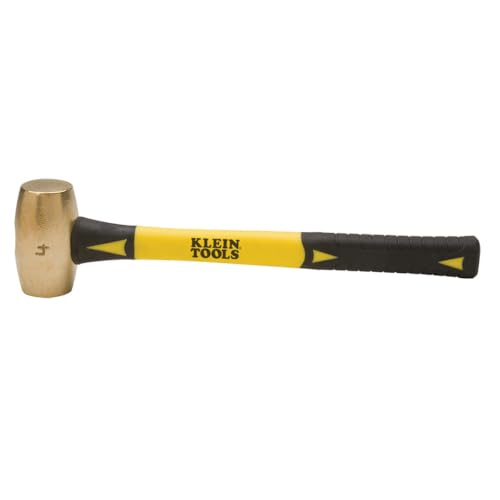
Klein 48-Oz Double-Face Hammer
Strengths
- Heavy-duty striking
- J-hook remover
- Overstrike protection
Trade-offs
- Very heavy
- No claw function
- Limited versatility
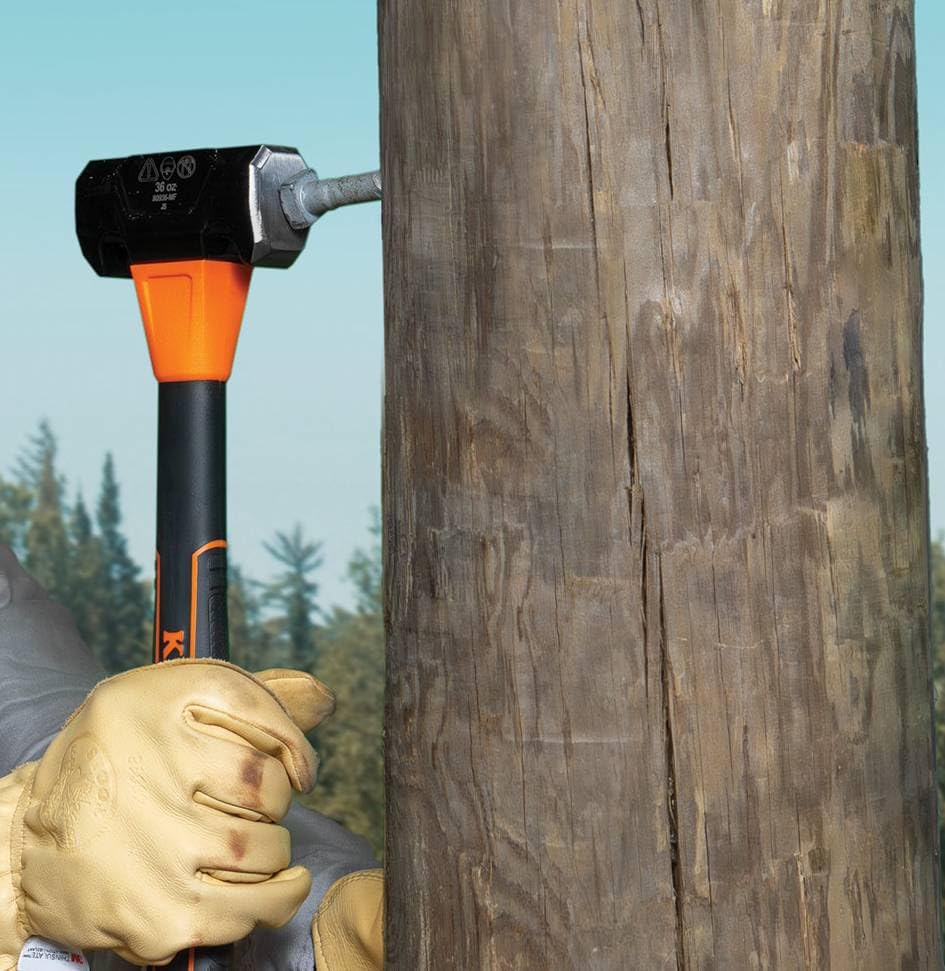
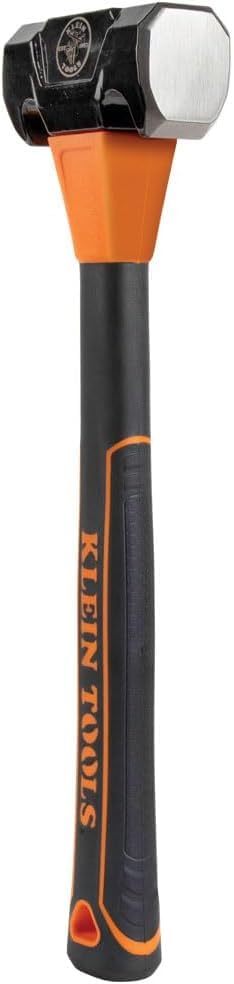
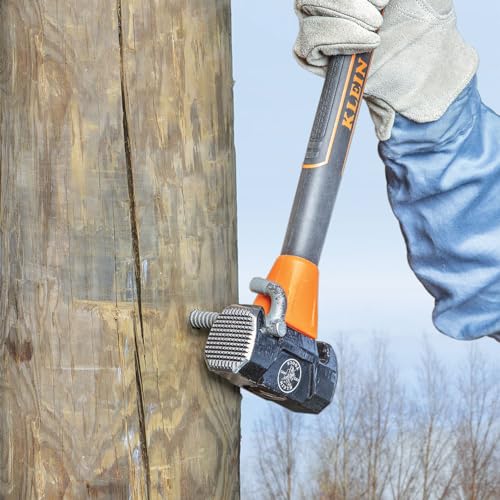
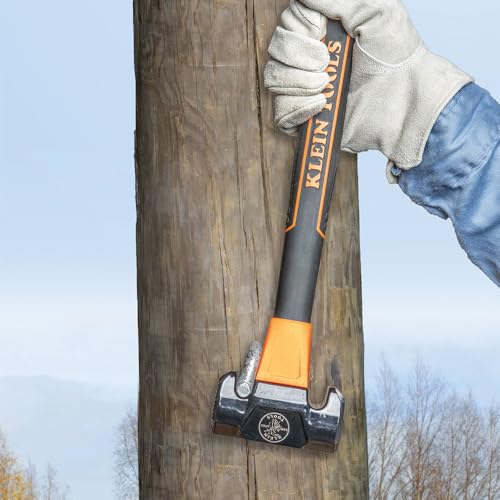
This 48-ounce beast is built for one thing: driving lag bolts into utility poles with authority. On paper, the forged steel head and 1-3/4 inch driving surface give it serious heft and contact area, which owners consistently report makes short work of stubborn hardware. The double-face design means no flipping to a claw or worrying about marring, just raw striking power.
The built-in J-hook remover is a smart touch for linemen who need a quick tool assist, and the overstrike protection helps guard against shaft damage when hits go slightly off-center. It’s not the most refined hammer in hand, but in this class, brute effectiveness matters more than finesse.
Product photos

Klein 26-Oz Fiberglass Handle Hammer

Strengths
- Lightweight design
- Claw functionality
- Non-slip grip
Trade-offs
- Less striking power
- Smaller head size
- Not for heavy lag work
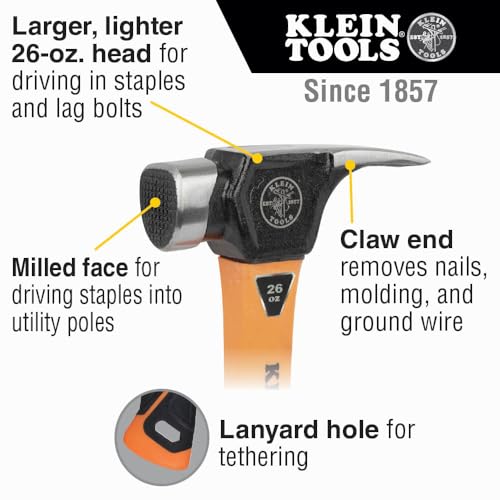
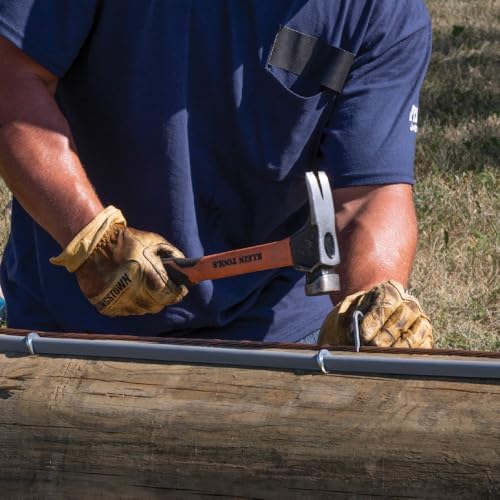
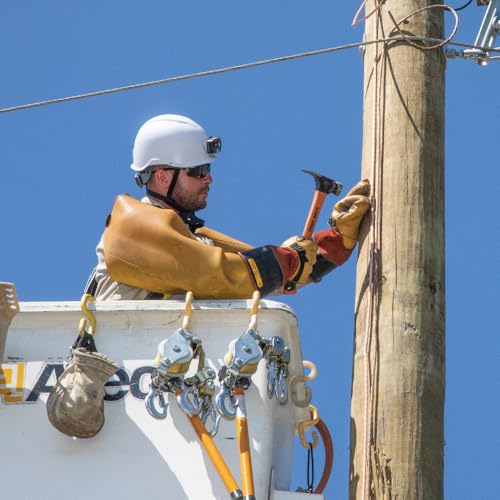
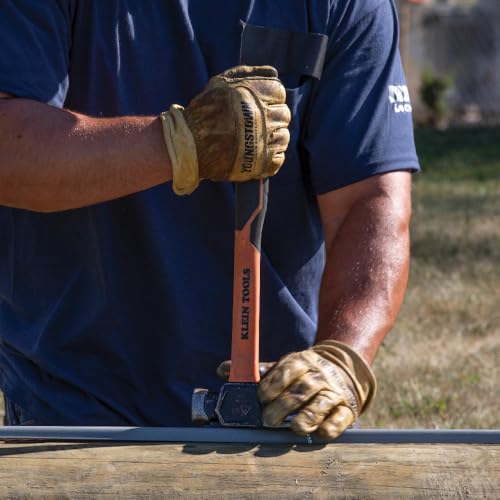
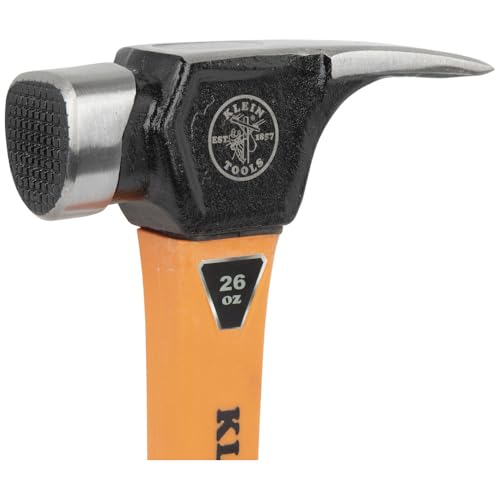
At 26 ounces, this is the lightest hammer in the lineup, and that’s its biggest selling point. The fiberglass handle keeps weight down while still offering shock resistance and a high-visibility orange finish that’s great for job site spotting. Reviewers note it’s surprisingly balanced for off-center hits, which matters when you’re working at height.
The milled face grabs staples and bolts well, and the claw end adds real utility for pulling nails or ground wire, something the double-face models can’t do. It won’t drive lags as aggressively as heavier hammers, but for mixed tasks and all-day use, this one stands out.
Product photos
Klein 80936MF Milled-Face Hammer
Strengths
- Dual-face versatility
- J-hook remover
- Ergonomic handle
Trade-offs
- Heavy for extended use
- No claw
- Overbuilt for light tasks
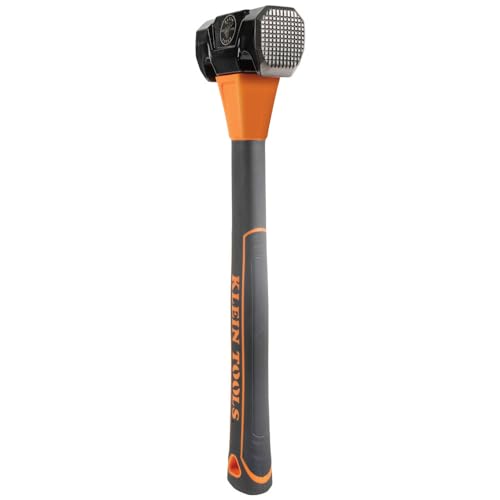
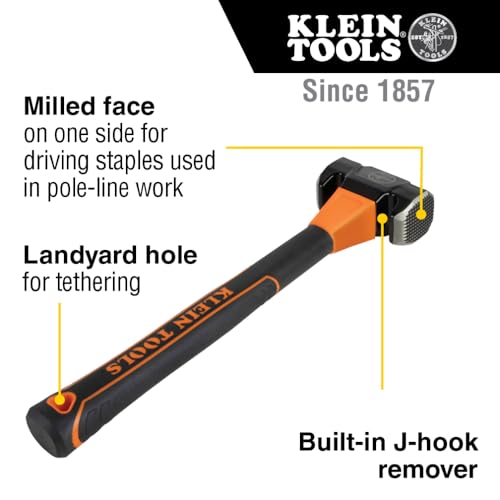
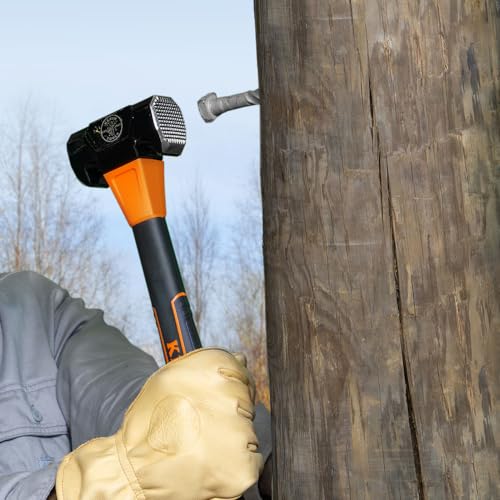
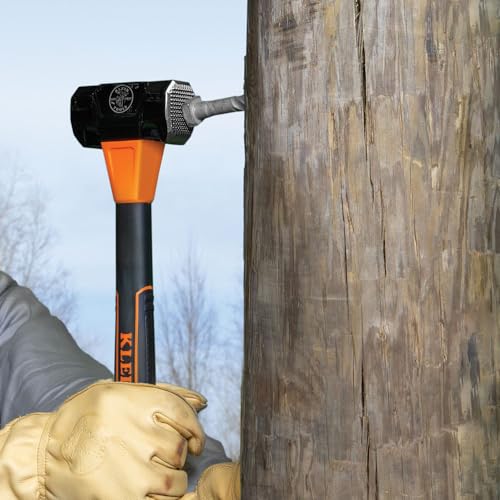
This one splits the difference between pure power and practical versatility. With one milled face and one smooth face, it handles both staples and heavier lag bolts without needing two tools. The milled side bites into metal without slipping, while the smooth side delivers clean, full-contact strikes.
Owners appreciate the J-hook remover and ergonomic handle, which together make it a field favorite for linemen doing repetitive work. It’s nearly as heavy as the 48-ounce double-face model, so fatigue can creep in, but the multi-function design justifies the weight for many.
Product photos
MADI 32 Oz All-Steel Hammer
Strengths
- All-steel durability
- Dual milled faces
- Weather resistant
Trade-offs
- Harsh vibration
- No shock absorption
- Heavy handle feel
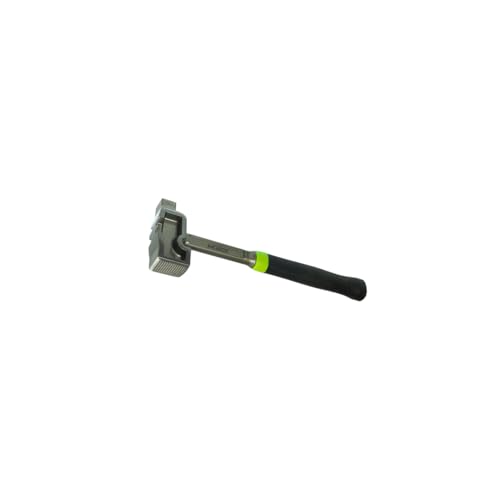
Fully forged from a single piece of steel, this MADI hammer is built for survival. The 32-ounce head with dual milled faces offers consistent bite on metal hardware, and the all-steel construction means no handle separation, a real concern with composite builds under heavy load.
Owners praise its weather resistance and longevity in harsh conditions, though the steel grip can be unforgiving without gloves. It’s not the most comfortable for all-day swings, but if you’re in remote areas or extreme environments, knowing your hammer won’t fail is worth the trade-off.
Product photos
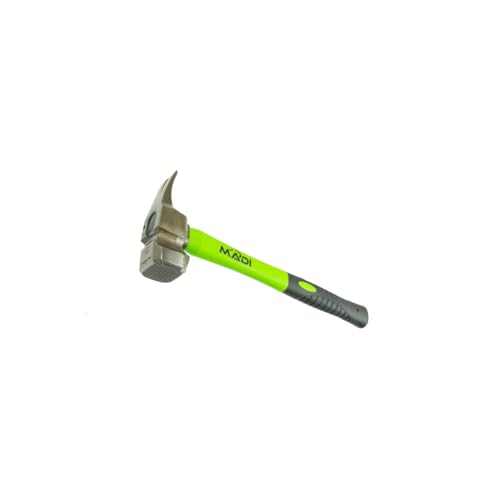
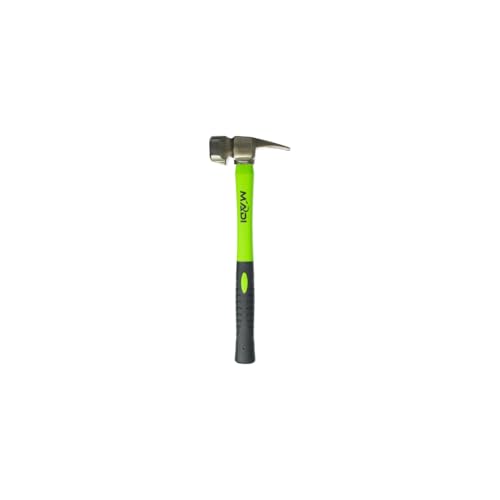
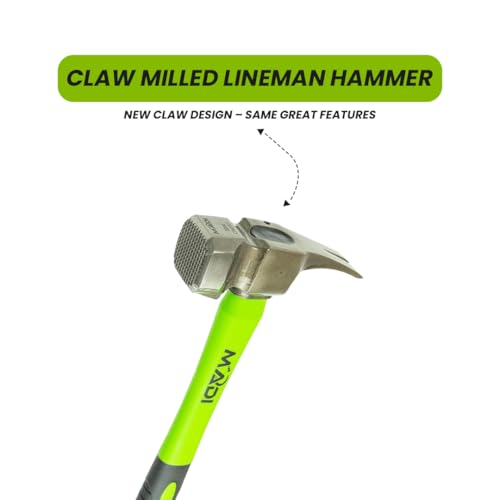
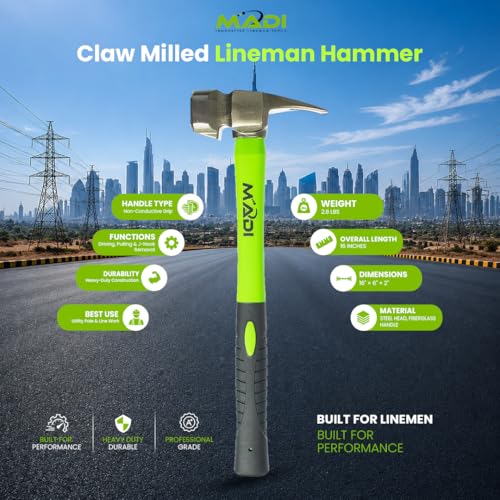
MADI Claw Milled Lineman Hammer
Strengths
- Functional curved claw
- Milled striking face
- Balanced swing
Trade-offs
- Less driving force
- Newer brand presence
- Limited owner feedback
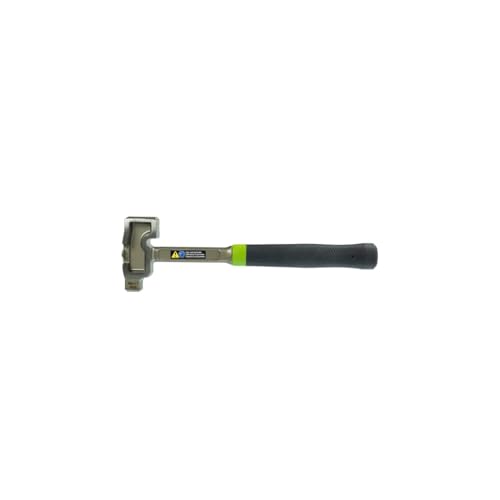
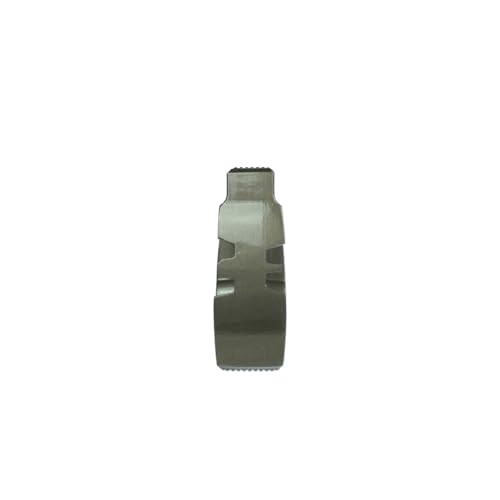
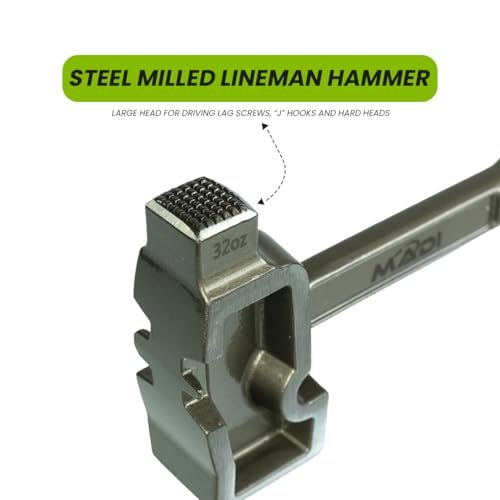
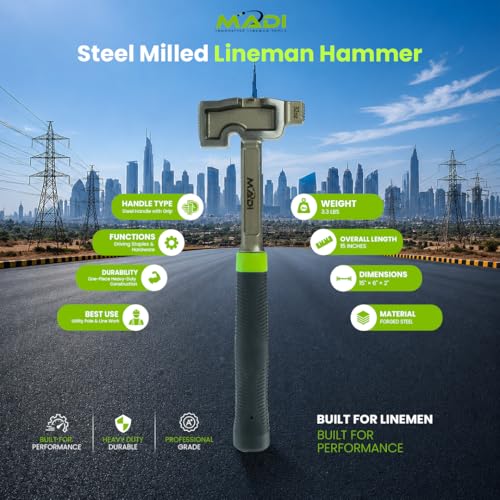
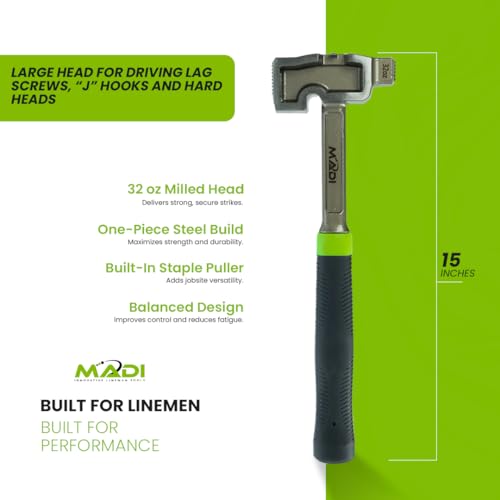
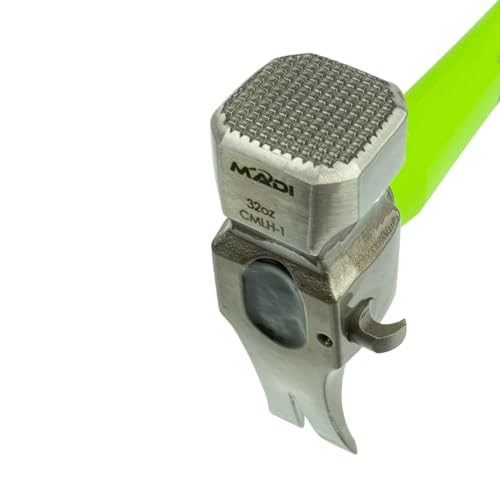
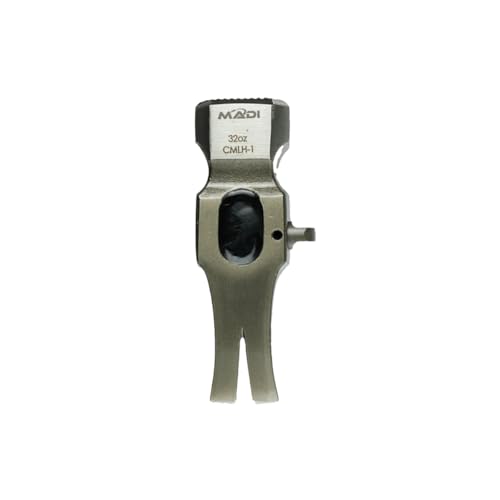
This MADI model stands out with a curved claw and milled face, rare in lineman hammers. The claw isn’t just tacked on; it’s functional, giving real use for pulling stakes or fasteners in tight spots. The milled face keeps grip on metal, and the balanced weight helps reduce wrist strain during repeated swings.
It’s not the heaviest hammer here, but it’s among the most versatile. Reviewers highlight its usefulness for mixed-duty tasks, especially when climbing or working on hardware removal. If you’re tired of carrying multiple tools, this one consolidates well.
Product photos
How We Evaluated lineman hammers
Rather than a hands-on lab test, this was a research-led comparison of published specifications and owner feedback. I looked closely at features like head material, handle construction, weight, and face type (milled versus smooth) across numerous models. I then weighed owner reviews from sites like Amazon and professional forums, alongside assessments from established tool review sources, to get a sense of real-world performance and durability.
For lineman hammers, weight and head construction are paramount. A heavier head (32-48oz) delivers more force for driving staples and bolts, while a one-piece forged steel head is crucial for long-term reliability in demanding work. Beyond that, features like shock reduction and comfortable grip designs significantly impact user fatigue over a long workday. You’ll find some overlap with what I cover in my guide to best claw hammers, but lineman hammers emphasize strength above all else.
Specifications reliably tell you about materials and weight, but owner feedback provides critical insight into things like balance, grip comfort, and how well a hammer holds up to consistent, heavy use. Reputation matters too; brands like Estwing and Klein have a long history of producing quality tools, and that history carries weight when assessing overall value. I also considered the availability of specific features, like J-hook removers, when evaluating overall versatility.
How To Pick The Right lineman hammers
Choosing the right lineman hammer is about more than just weight; it’s about finding a tool that will withstand demanding work and feel comfortable during long hours on the job.
A quality lineman’s hammer is forged from a single piece of high-carbon steel for maximum durability. Look for features like a shock-reducing grip, a properly balanced head weight for your tasks, and a face type suited to the common hardware you’ll be driving or removing. Consider handle material (steel, fiberglass, or wood) based on preference and job site conditions.
Weight and Balance
Weight is a primary consideration with lineman hammers, and it’s closely tied to the work you’re doing. Heavier hammers (40-48oz) excel at driving large lag bolts and staples in pole-line work, but can quickly cause fatigue. Lighter options (26-32oz) are easier to swing for extended periods, making them better for general utility work or smaller tasks. However, don’t just focus on the overall weight. A well-balanced hammer distributes that weight effectively, reducing swing effort and improving accuracy. I often recommend starting with a 32oz hammer if you’re unsure and adjusting from there.
Face Type
The hammer face dictates what you can efficiently accomplish. Milled faces provide a better grip when striking hardened hardware, preventing slipping and offering more control. Smooth faces are better for striking softer metals or wood without marring the surface. Some hammers, like the Klein 80936MF, offer both, providing versatility for a wider range of tasks. Consider what you’ll be doing most of the time – if it’s primarily working with utility poles, a milled face is crucial.
- A smooth face is best for driving nails into wood or softer materials.
- A milled face excels at gripping and driving staples or hardened hardware.
- A combination face (like on some Klein models) provides the most versatility, but may not perform quite as well as a dedicated face for specific tasks.
Handle Material and Ergonomics
The handle is your interface with the hammer, so comfort and durability matter. Traditional wood handles offer a classic feel and good shock absorption, and you can find some best wood-handle hammers that are built to last. Fiberglass handles are incredibly durable and resistant to weather, while steel handles offer maximum strength.
A hammer should feel like an extension of your arm – not a burden.
I’ve seen plenty of linemen prefer the feel of a steel handle, but the shock transfer can be significant. Shock-reducing grips, like those found on Estwing hammers, can mitigate this. Ultimately, the best handle is the one that feels most comfortable and secure in your hand. If you’re looking for a more general overview, check out our top-rated hammers.
Lineman Hammers Compared
Here’s a comparison of key specifications for popular lineman hammers to help you choose the right tool.
| Product Title | Weight (oz) | Face Type | Handle Material | Shock Reduction | J-Hook Remover |
|---|---|---|---|---|---|
| Estwing 40 oz Lineman’s Hammer | 40 | Smooth | Steel | Yes | N/A |
| Estwing E3-40LM 40 oz Hammer | 40 | Milled | Steel | Yes | N/A |
| Klein 48-Oz Double-Face Hammer | 48 | Double | Steel | N/A | Yes |
| Klein 26-Oz Fiberglass Handle Hammer | 26 | Smooth | Fiberglass | N/A | Yes |
| Klein 80936MF Milled-Face Hammer | N/A | Milled/Smooth | Steel | Yes | Yes |
| MADI 32 Oz All-Steel Hammer | 32 | Milled | Steel | N/A | N/A |
| MADI Claw Milled Lineman Hammer | N/A | Milled | N/A | N/A | Yes |
Frequently Asked Questions
What weight lineman hammer is best for general utility work?
A 32-ounce hammer is generally best for general utility work because it balances power and reduces fatigue compared to heavier options. While 40-48oz hammers offer more force, they can become tiring during extended use.
Are one-piece forged steel hammers really more durable?
Yes, one-piece forged steel hammers are significantly more durable than those with separate heads and handles. This construction eliminates a common failure point and provides a stronger, more reliable tool for demanding work.
What’s the difference between a milled and smooth hammer face?
A milled face provides a better grip on hardened hardware, preventing slippage, while a smooth face is best for striking softer materials without causing damage. For versatility, some hammers, like certain Klein models, offer both.
Can a fiberglass handle offer the same strength as steel?
Yes, fiberglass handles are incredibly strong and offer excellent resistance to weather and breakage. While steel is undeniably tougher, fiberglass provides a durable and lighter-weight alternative that many professionals prefer.
Where can I find lineman hammers made with titanium?
You can explore top titanium hammers for a lighter-weight option that still delivers significant striking power. Titanium hammers are often favored for specialized applications where weight reduction is critical.
The Bottom Line
Choosing a lineman hammer really comes down to balancing raw power with all-day comfort. If you consistently tackle tough jobs demanding maximum striking force, the Estwing 40 oz Lineman’s Hammer stands out as a reliable workhorse. It delivers the solid feel and shock reduction that professionals need to push through long hours on the job.
For those prioritizing versatility or working with a wider range of materials, the Klein 80936MF Milled-Face Hammer is an excellent choice. Similarly, if you need a lighter option for less demanding tasks, the Klein 26-Oz Fiberglass Handle Hammer offers good control and durability. And for those tackling serious demolition, exploring options in our guide to durable sledge hammers can provide even more impactful tools.
Ultimately, the best lineman hammer isn’t about chasing the highest specs; it’s about finding a tool that fits your hands, suits your typical tasks, and feels solid and dependable. Prioritize a forged steel head, a comfortable grip, and the right weight for your work – those fundamentals matter far more than any extra feature.
