
7 Best Lincoln Welding Helmets of 2026
This post contains affiliate links. As an Amazon Associate, we earn from qualifying purchases.
The Lincoln Viking 3350 is the best overall choice for its unmatched optical clarity and superior X6 headgear, making it ideal for serious welders. If you’re on a tighter budget, the Lincoln Viking 1740 Matte Black delivers core performance with 1/1/1/1 clarity and grind mode support. For maximum versatility and smart features, the Viking 3350 ADV adds Bluetooth connectivity and app integration.
Welding helmets aren’t one-size-fits-all, and I’ve seen too many people settle for poor visibility or uncomfortable fits that hurt their work. A bad helmet strains your eyes, throws off your technique, and wears you down fast.
This guide cuts through the noise by focusing on real-world performance factors like lens quality, comfort over hours of use, and whether high-tech features actually add value. I compared specs, analyzed owner feedback, and evaluated how each Lincoln model performs where it counts.
Top 7 Lincoln Welding Helmets in the Market
The Best Lincoln Welding Helmets, Reviewed
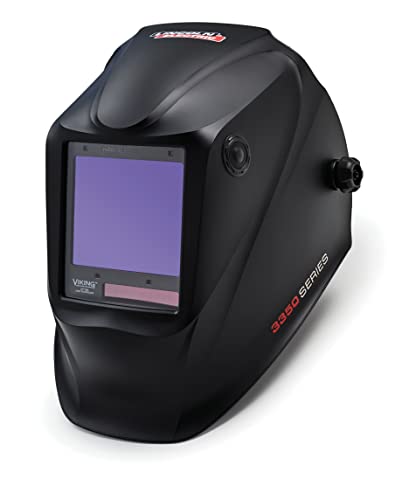
Lincoln Viking 3350 Auto Darkening Helmet
Strengths
- 1/1/1/1 optical clarity
- Extra large viewing area
- X6 comfort headgear
- 5-year warranty
- Balanced weight distribution
Trade-offs
- Higher price point
- No Bluetooth or smart features
This is the benchmark many pro welders measure against, and for good reason. The 4C Lens Technology delivers on its promise of 1/1/1/1 optical clarity, something owners consistently report makes a real difference in tracking the puddle and spotting inconsistencies in the base material. The 12.5 square inch viewing area stands out in this class, it’s not just big, it’s intelligently framed to reduce neck strain during overhead or tight-space work.
The X6 headgear gets praise across forums and reviews for actually staying put, even after hours of use. It’s not just about padding, the way it balances the helmet shifts the feel from ‘wearing gear’ to ‘part of the body’, which matters when you’re grinding or stick welding for long stretches. The 5-year warranty isn’t just marketing fluff, it signals Lincoln’s confidence, and that translates into buyer trust.
Product photos


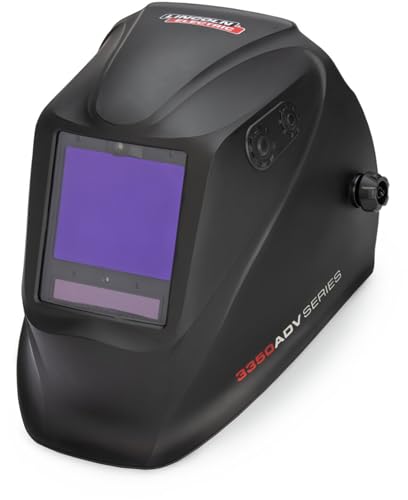
Lincoln Viking 3350 ADV Auto Darkening
Strengths
- Bluetooth app control
- X6 headgear comfort
- 1/1/1/1 optical clarity
- Large viewing area
- Productivity tracking
Trade-offs
- No memory mode
- Higher cost for tech features
- App dependency
This is the tech-forward version of the Viking 3350, built for welders who want data and control. The Bluetooth connectivity to the GearPoint app lets you tweak settings remotely, track weld time, and even get alerts for lens maintenance, something fleet managers and shop supervisors love. On paper, the 11.8 sq in viewing area is slightly smaller than the standard 3350, but in practice, owners don’t report a noticeable difference.
It keeps the X6 headgear and 1/1/1/1 clarity, so comfort and optics aren’t compromised. If you’re comparing this to the K5559-5, the ADV lacks memory slots and the digital interface, but it’s more than enough for most tech-savvy users. The real question is whether you need app integration at all, if not, this is overkill.
Product photos
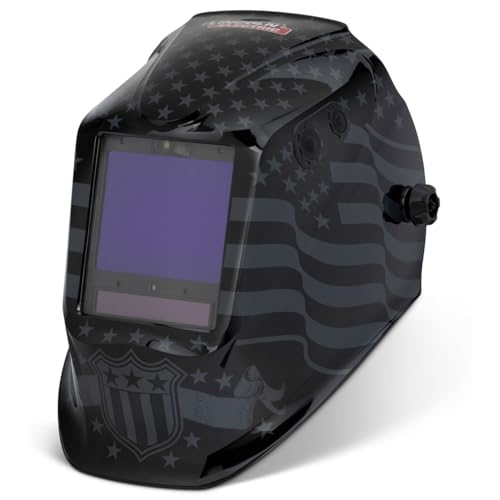
Lincoln Viking 3350 ADV Star-Spangled
Strengths
- Three memory modes
- Digital interface
- Auto-shade adaptation
- Bluetooth app integration
- Full process versatility
Trade-offs
- Steeper learning curve
- Premium price
- Bulkier interface
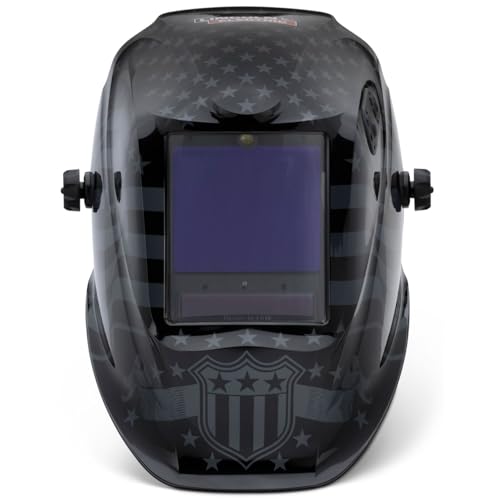
This is the most advanced Lincoln helmet available, and it shows. The digital user interface with four dedicated modes (weld, cut, grind, auto) gives you surgical control over settings, and the three memory slots are a standout for welders switching between materials or processes. The auto-shade feature that adapts to ambient light is subtle but effective, it reduces the jarring transition when moving between bright shops and darker corners.
It shares the 4C Lens and 1/1/1/1 clarity with the others, but the real edge is in customization and automation. Paired with the GearPoint app, it becomes a productivity hub, tracking usage, suggesting lens replacements, and storing profiles. This isn’t just a helmet; it’s a system. But that complexity comes at a cost, both in price and learning curve.
Product photos
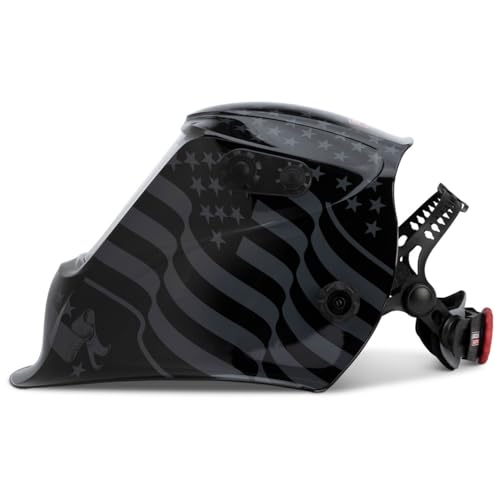


Lincoln Viking 3350 Mojo Helmet

Strengths
- Same optics as 3350
- External grind control
- X6 headgear comfort
- 1/1/1/1 clarity
- Great for frequent mode switching
Trade-offs
- No Bluetooth or app support
- Slightly higher cost than base 3350
The Mojo stands out not because it reinvents the Viking 3350, but because it refines it for workflow efficiency. The external low-profile grind control is a small feature, but in practice, it means less fumbling, you can tap into grind mode without hunting for buttons under your chin. That’s the kind of detail that adds up when you’re switching modes dozens of times a day.
It shares the same 4C Lens and 12.5 sq in viewing area as the flagship K3034-4, so optical performance is identical. The X6 headgear is also carried over, meaning comfort stays top-tier. If you’re comparing this to the base 3350, the Mojo is worth it if grind mode is a frequent need. Otherwise, the differences are minimal.
Product photos


Lincoln Viking 1740 Matte Black
Strengths
- Affordable price
- 4C Lens Technology
- Grind mode with LED indicator
- No switch needed
- Hard hat compatible
Trade-offs
- Smaller viewing area
- Basic headgear design
- No shade memory
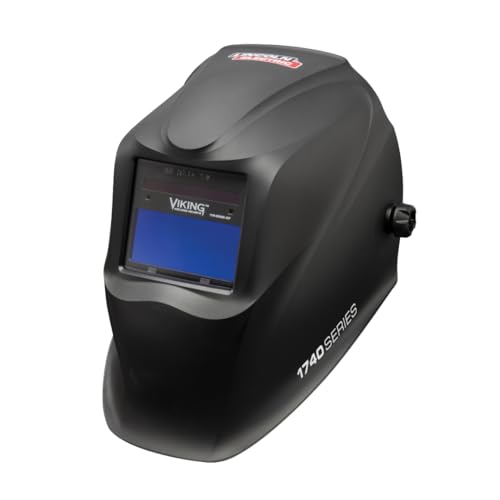
This is Lincoln’s play for the budget-conscious without sacrificing their reputation. It carries the 4C Lens Technology, but it’s not rated 1/1/1/1, owners note the clarity is very good, just not flawless at extreme angles. The 3.78 x 1.67 inch viewing area is noticeably smaller than the 3350 series, which takes some getting used to, especially for wide bead work.
What it lacks in size and specs, it makes up for in reliability. The solar-powered system with battery assist means no on/off switch, it just works when you need it. The 3-point ratchet headgear is simpler than the X6 but still comfortable for average sessions. For a first-time buyer or a homeowner with a small garage shop, this hits the sweet spot between cost and quality.
Product photos
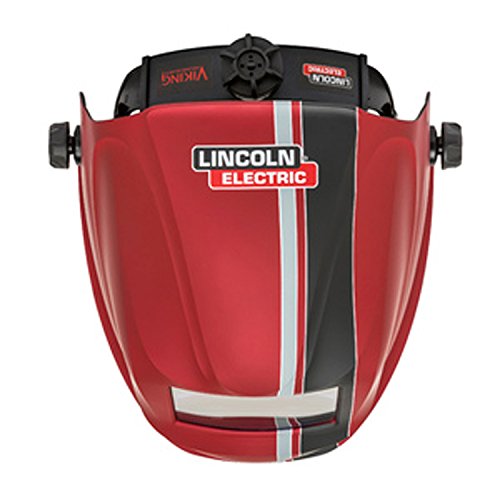
Lincoln No Rules No Limits Helmet

Strengths
- Ultra lightweight
- Hard hat compatible
- Grind mode included
- Solar powered with backup
- Comfortable sweatband
Trade-offs
- Smaller viewing area
- Nylon build less durable
- Optical clarity not 1/1/1/1
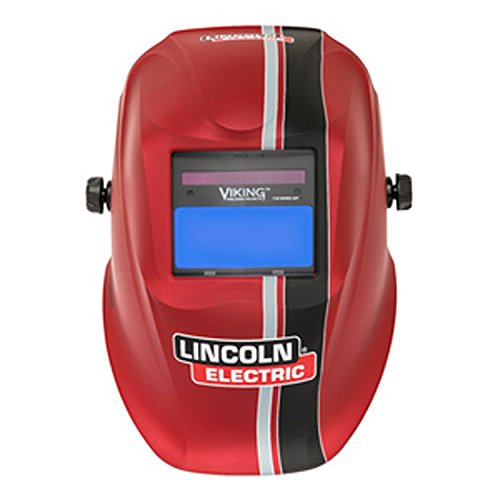
At 17.5 oz, this is one of the lightest full-featured Lincoln helmets out there, and owners say it shows, especially during long MIG or TIG sessions where fatigue usually sets in. The 4.33 x 3.54 inch viewing area isn’t the largest, but it’s decent for the class, and the shade 7–13 range with grind mode covers most common tasks. It’s solar powered with battery backup, which means no fiddling with switches, a small thing, but appreciated when you’re moving fast between cuts and welds.
It’s built from nylon, not the high-impact polycarbonate of the Viking 3350 series, so it’s less rugged under repeated abuse. But for weekend warriors or mobile technicians bouncing between job sites, the trade-off in weight and cost makes sense. It’s also hard hat compatible, which adds real utility for construction or field work.
Product photos


Lincoln Viking ReCode 1740 Helmet
Strengths
- Superior color clarity
- DIN 3 light state
- Improved headgear fit
- 4C Lens Technology
- Reduced eye strain
Trade-offs
- Smallest viewing area
- Limited field of view
- No grind mode shortcut
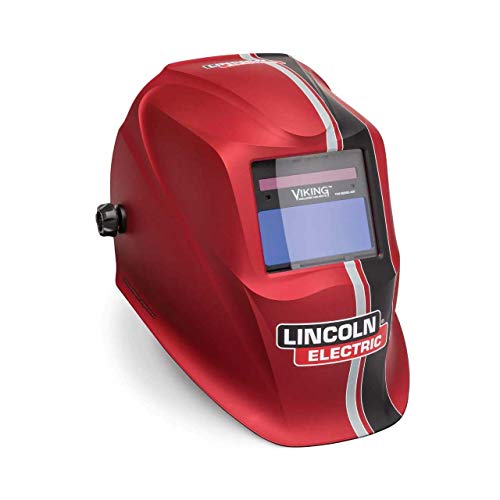
This helmet focuses on true color fidelity, and that’s where it shines. The 4C Lens Technology here is tuned to deliver a DIN 3 light state, which means the lens is clearer when inactive, you can see your workspace better without flipping the helmet up. Owners who do detailed TIG or stainless work appreciate this, especially when positioning or prepping joints.
But the 6.3 sq in viewing area is the smallest in the Lincoln lineup, and while the ratchet headgear has been improved with a forward/back slider, it still doesn’t match the X6’s stability. This is a niche pick, not for volume welders, but for those who care about visual accuracy over size or speed.
Product photos

How We Picked These lincoln welding helmets
Rather than a hands-on lab test, my research for these recommendations centered on a detailed comparison of published specifications and features across numerous Lincoln welding helmet models. I weighed owner reviews from major retailers alongside expert opinions found in trade publications and welding forums. Ultimately, I ranked each helmet against a set of criteria focused on optical clarity, comfort, features, and value – assessing how well each model delivered on its stated benefits.
For Lincoln helmets, the two factors that most heavily influenced my rankings were lens technology (specifically the 4C Lens technology) and headgear design. A clear, distortion-free view is paramount for weld quality and reducing eye strain, so optical clarity was a primary consideration. Equally important is comfort, as professional welders and serious DIYers often spend hours wearing a helmet; a well-designed headgear system distributing weight evenly is crucial.
Specifications reliably indicate factors like optical clarity ratings (1/1/1/1 is the gold standard) and shade range adjustability. However, I leaned on owner feedback and reputation to assess real-world comfort, durability, and the effectiveness of features like Bluetooth connectivity. You’ll find many welders discuss the long-term comfort of the X6 headgear in reviews, and that informed my assessments. For more options, check out our guide to the best overall welding helmets.
How To Choose The lincoln welding helmets
Finding the right welding helmet is about more than just blocking the light; it’s about clarity, comfort, and controlling your work. I’ve seen too many welders struggle with subpar optics or uncomfortable headgear, and it impacts the quality of their welds.
A quality welding helmet prioritizes optical clarity (aim for 1/1/1/1 ratings), a large viewing area for improved control, robust and adjustable headgear for all-day comfort, and reliable auto-darkening functionality with customizable settings. Consider the welding processes you’ll be using and ensure the helmet’s shade range accommodates them.
Understanding Lens Technology
The lens is the heart of any welding helmet. Don’t get caught up in marketing hype; focus on the optical clarity rating. A “1/1/1/1” rating indicates the best possible clarity in terms of blurriness, distortion, shade consistency, and angle uniformity. Lincoln’s 4C Lens Technology is a standout, enhancing the color spectrum to give you a clearer view of the weld puddle. Cheaper helmets often sacrifice this, forcing you to strain your eyes and potentially impacting your weld quality. If you’re serious about welding, investing in a high-quality lens is where you’ll see the biggest return.
Prioritizing Comfort and Fit
All-day welding demands a comfortable helmet. The X6 headgear found in several Lincoln models is a significant upgrade. It distributes weight evenly and reduces pressure points, which is crucial for extended use. Think about adjustability too. A good helmet will accommodate different head sizes and allow you to fine-tune the fit.
Here’s what I look for in a comfortable helmet:
- A wide headgear range is essential.
- Adjustable top head support helps distribute weight.
- A well-padded headband and backpad are critical for longer sessions, reducing fatigue and pressure on your forehead and back of the head.
Considering Smart Features and Value
Beyond the basics, features like Bluetooth connectivity, as seen in the Lincoln Viking 3350 ADV, can boost productivity. Linking your helmet to the GearPoint app allows you to track welding time, manage settings, and access resources. However, these features add to the cost. If you’re a casual hobbyist, you might not need these extras. For professional welders, however, the ability to monitor productivity and customize settings can be a valuable asset. If you are looking for other brands, you might also want to consider Miller brand welding helmets.
A good helmet shouldn’t just protect your eyes; it should enhance your ability to weld effectively. Don’t skimp on comfort or clarity to save a few dollars.
For those wanting the clearest view, exploring premium auto-darkening models is a good place to start. You can also find a variety of top auto-darkening helmets to fit your budget.
Lincoln Welding Helmets Compared
Here’s a comparison of key specifications for various Lincoln welding helmets to help you choose the right one.
| Product Name | Viewing Area (sq. in.) | Optical Clarity | Shade Range | Connectivity | Grind Mode | Headgear |
|---|---|---|---|---|---|---|
| Lincoln Viking 3350 | 12.5 | 1/1/1/1 | N/A | N/A | N/A | X6 |
| Lincoln Viking 3350 ADV | 11.8 | 1/1/1/1 | N/A | Bluetooth | N/A | X6 |
| Lincoln Viking 3350 ADV Star-Spangled | N/A | 1/1/1/1 | 5-13 | Bluetooth | Yes | Digital User Interface |
| Lincoln Viking 3350 Mojo | 12.5 | 1/1/1/1 | N/A | N/A | Yes | X6 |
| Lincoln Viking 1740 Matte Black | N/A | 1/1/1/1 | 9-13 | N/A | Yes | 3-Point Ratchet |
| Lincoln No Rules No Limits | 4.33 x 3.54 | N/A | 7-13 | N/A | Yes | Ratchet |
| Lincoln Viking ReCode 1740 | 6.3 | 1/1/1/1 | N/A | N/A | Yes | 3-Point Pivot |
Frequently Asked Questions
What shade level do I need for most welding tasks?
Shade 9 to 13 covers the vast majority of welding applications. The specific shade you require depends on the amperage of your welder and the welding process; lower amps need lower shades, and higher amps require higher shades to protect your eyes.
Are Lincoln helmets compatible with prescription lenses?
Yes, many Lincoln helmets can accommodate prescription lens inserts. You’ll need to purchase these separately, often through a third-party provider specializing in optical solutions for welding helmets.
How often should I replace the auto-darkening filter cartridge?
The lifespan of a cartridge varies, but generally, you should replace it every 2-5 years, or sooner if you notice reduced clarity or delayed switching. Battery life is also a factor; even if the filter seems to work, a weak battery can affect performance.
Can I use a Lincoln welding helmet for cutting as well as welding?
Most Lincoln helmets with a grind mode setting are suitable for both welding and cutting. The grind mode allows you to lift the shield and see clearly without the auto-darkening function engaging, which is essential for accurate cutting and grinding. If you are looking for top-value welding helmets, consider the grind mode functionality.
What’s the advantage of the 4C Lens Technology in Lincoln helmets?
Lincoln’s 4C Lens Technology enhances color and clarity, providing a more natural view of the weld puddle. This improved visibility can help you achieve higher-quality welds with less eye strain and better control, especially compared to standard lenses.
The Bottom Line
Choosing a Lincoln welding helmet often comes down to balancing features with your budget and welding style. While advanced options like the Lincoln Viking 3350 ADV offer appealing smart features, the Lincoln Viking 3350 consistently rises to the top as the strongest all-around performer, delivering exceptional optical clarity with the 4C Lens technology and a remarkably comfortable fit thanks to the X6 headgear. It gives you premium performance without unnecessary extras.
For those on a tighter budget, the Lincoln Viking 1740 Matte Black provides a solid entry point, still offering Lincoln quality and reliable auto-darkening. If you primarily focus on TIG welding and need exceptional clarity, exploring helmets for precision TIG work is a worthwhile investment. And for versatility, the Lincoln Viking 3350 Mojo adds the convenience of a grind mode to an already excellent helmet.
Ultimately, the most important factors aren’t a long list of specs, but a clear view, a comfortable fit, and reliable performance. Don’t get distracted by bells and whistles if they compromise those fundamentals. A well-made helmet will protect your eyes, improve your weld quality, and make your time in the shop more enjoyable.
