
8 Best Hammer Staplers of 2026
This post contains affiliate links. As an Amazon Associate, we earn from qualifying purchases.
The Arrow HTX50 Professional Hammer Tacker is the best overall choice for its rugged steel build and reliable performance on tough jobs like roofing and insulation. If you’re watching your budget, the Arrow HT50 delivers solid durability at a lower price. For those who value reduced hand fatigue, the Bostitch Anti-Vibe Hammer Tacker stands out with its vibration-dampening handle.
Most people don’t realize how much a poorly built hammer stapler can slow them down, weak strikes, frequent jams, and hand fatigue turn a simple job into a chore. After comparing the field and analyzing owner feedback, I focused on models that combine driving power, long-term durability, and real-world usability.
This guide highlights the top performers based on staple compatibility, build quality, and ergonomic design, so you can pick one that actually lasts and makes your work easier.
Top 8 Hammer Staplers in the Market
The Best Hammer Staplers, Reviewed
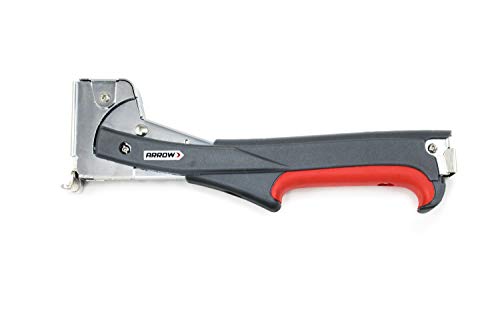
Arrow HTX50 Professional Hammer Tacker
Strengths
- Dual-strip rear magazine
- High driving force
- Durable chromed-steel build
Trade-offs
- Heavier than lightweight models
- Grip can wear over time
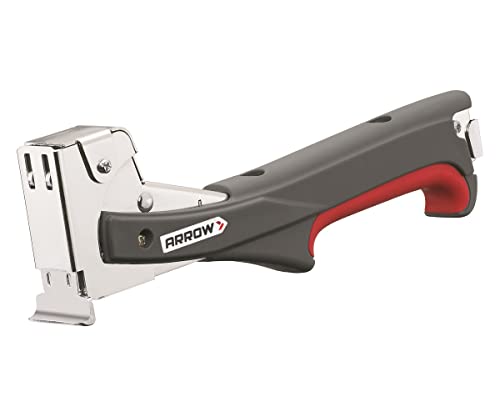
This is the hammer tacker I’d pick if I were stocking a pro’s truck, and not just because it’s one of the most-reviewed models out there. The Arrow HTX50 has a rear-load magazine that holds two full strips, which means fewer stops during long runs of house wrap or roofing felt. Its anvil-and-lever mechanism delivers noticeable extra driving force, something multiple owner reviews confirm when punching through plywood or dense insulation.
The chromed-steel body and furnace-hardened internals give it serious staying power, and the rubberized ergonomic grip actually works, it’s one of the few manual tackers that doesn’t leave your palm raw after an hour. While it’s heavier than the Spec Ops model, it makes up for it in reliability. Compared to the budget HT50, this version feels more refined, with better balance and a smoother action.
Product photos

Arrow HT50 Heavy Duty Hammer Tacker
Strengths
- Affordable price
- Durable chromed-steel body
- Rear-load dual magazine
Trade-offs
- Basic grip comfort
- No vibration reduction
- Heavier than modern composites
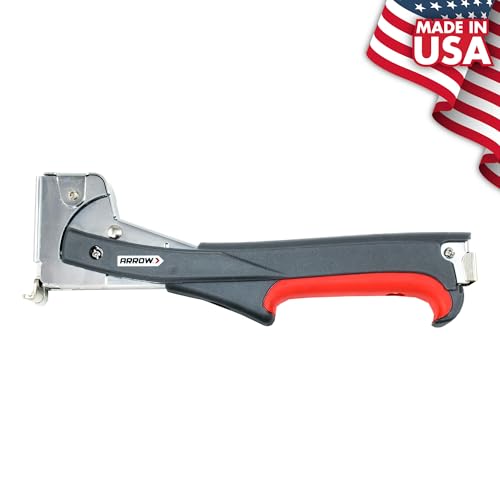
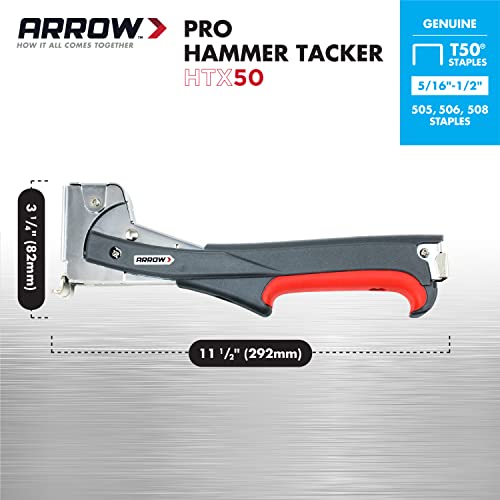
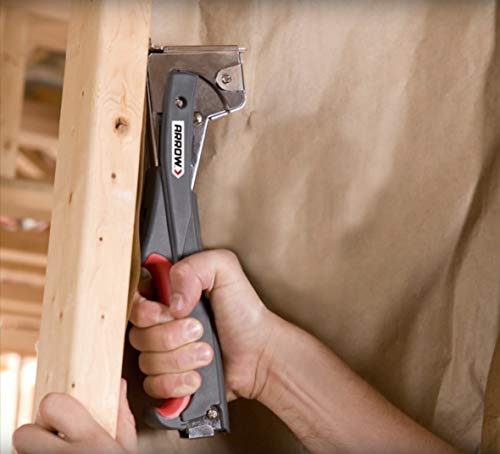
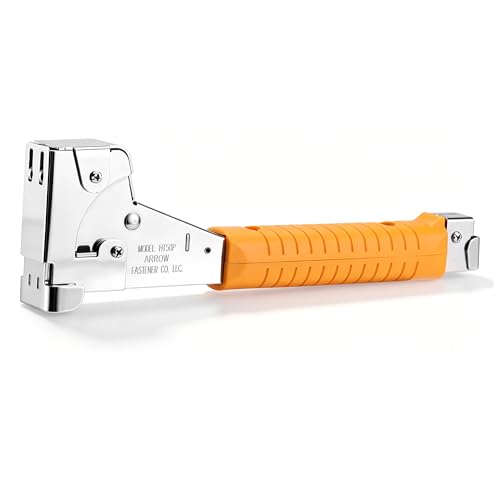
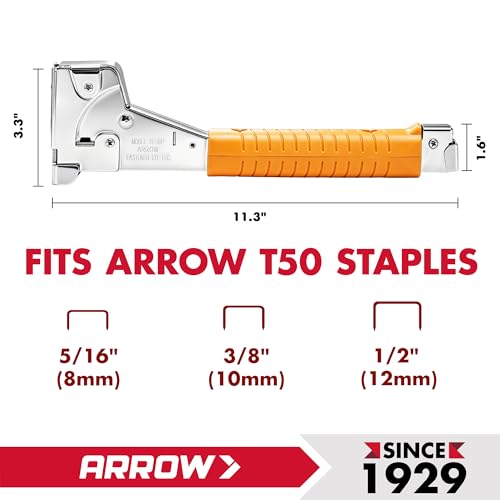
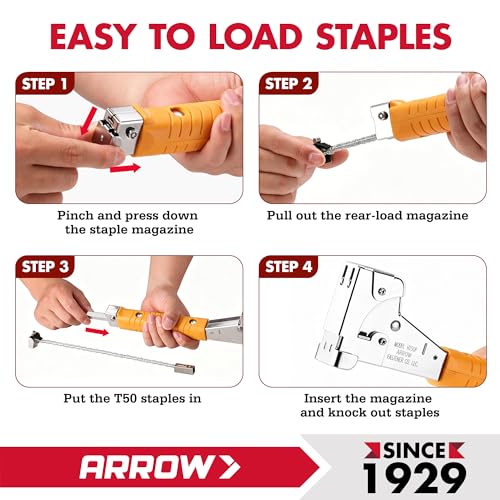
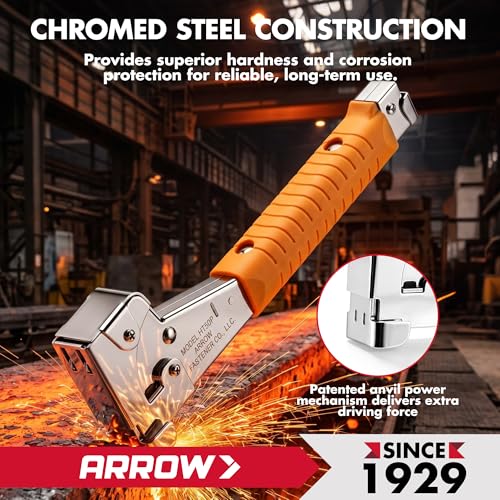
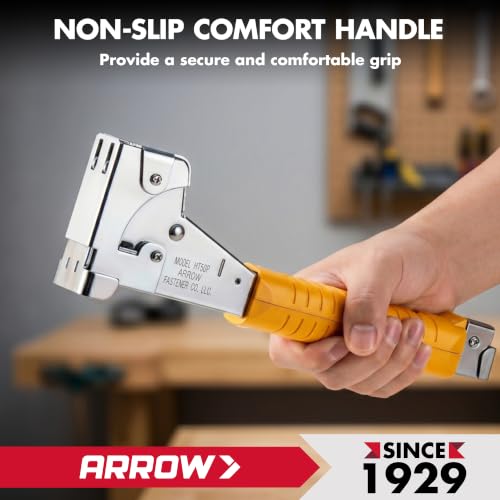
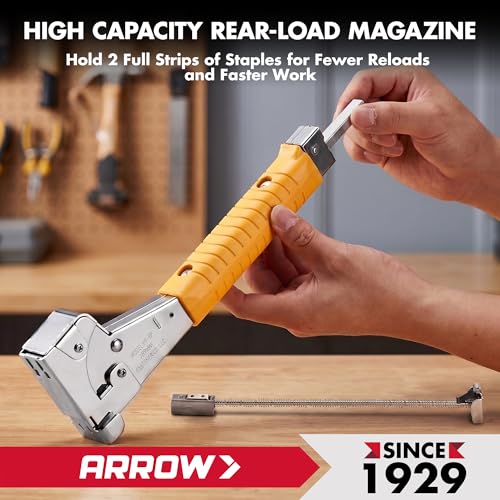
The Arrow HT50 is the budget benchmark, it’s everywhere for a reason. It’s built with chromed-steel and hardened internals, so it won’t fall apart after a few jobs, and the rear-load magazine holds two full strips, which keeps you working longer between reloads. The patented anvil mechanism gives it a bit more punch per swing, and the sure-grip handle actually works, it’s not just marketing fluff.
Compared to the HTX50, it’s less refined and lacks some of the ergonomic upgrades, but it gets the job done at a lower price. Owners consistently report it’s reliable for roofing felt, insulation, and underlayment, just don’t expect the same level of comfort as the Bostitch Anti-Vibe. For first-time buyers or occasional users, this is the smarter entry point.
Product photos
Bostitch Anti-Vibe Hammer Tacker
Strengths
- Excellent vibration reduction
- Anti-jam mechanism
- No-slip rubber bumpers
Trade-offs
- Slightly slower reload
- Higher price than budget models
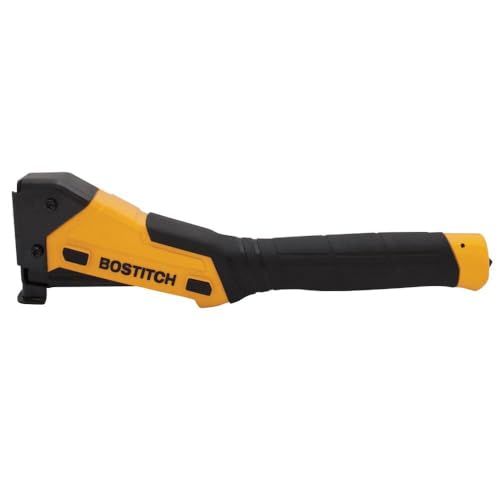
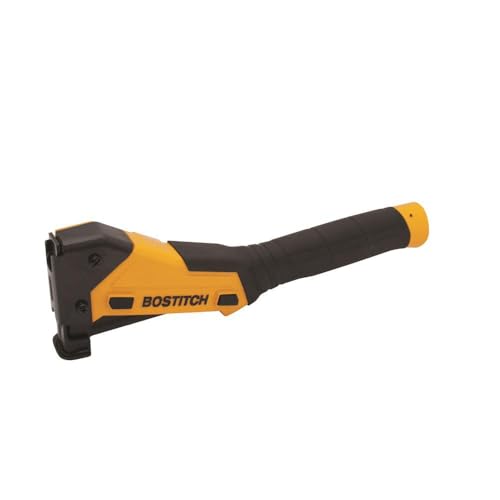
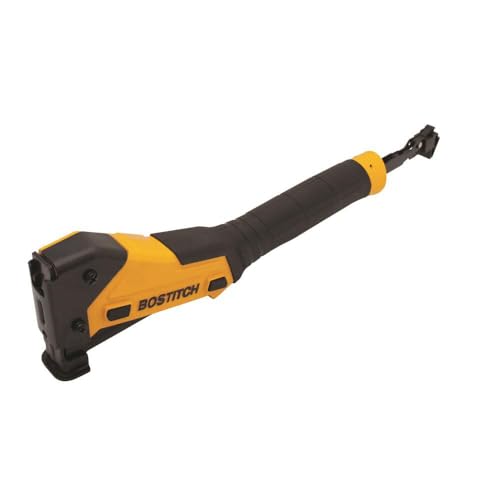
Bostitch built this hammer tacker with one thing in mind: saving your hands. The multi-layer grip and anti-vibe design are legit, owner feedback consistently highlights less fatigue and numbness after extended use, especially compared to basic steel models. That makes it a standout for anyone doing repetitive work on roofing or wrap, where every strike adds up.
It handles 3/8″, 5/16″, and 1/2″ staples, so it’s versatile enough for most construction tasks, and the no-slip rubber bumpers help when working on angled surfaces like rafters. The anti-jam mechanism isn’t perfect, but it’s better than average. Compared to the Arrow HTX50, it’s not quite as rugged, but it’s more comfortable, a trade-off worth making if you value long-term hand health over raw toughness.
Product photos
Spec Ops Heavy Duty Hammer Tacker
Strengths
- Lightweight composite frame
- Jam-free feeding
- Tactical non-slip grip
Trade-offs
- Less impact resistance than all-steel
- No knuckle guard on all models
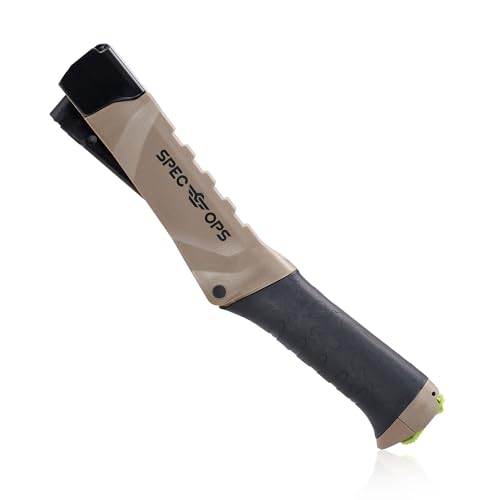
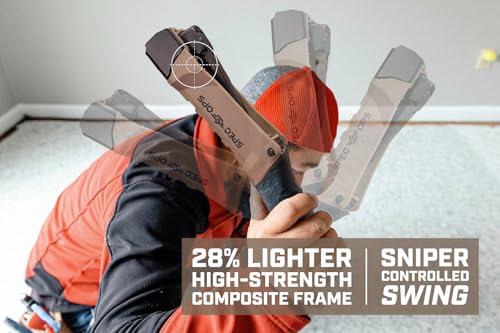
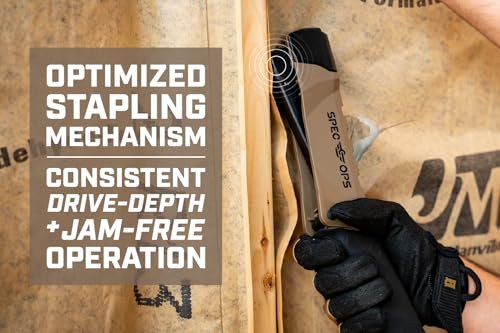
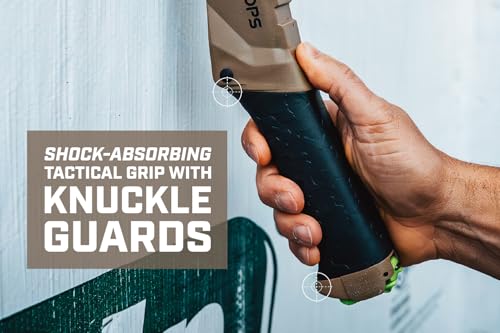
The Spec Ops hammer tacker stands out in a crowded field by prioritizing weight without sacrificing durability. Its composite frame is 28% lighter than traditional steel models, which owners consistently report makes a real difference during long roofing or insulation jobs. For someone working overhead or on a ladder, that reduction in fatigue adds up fast.
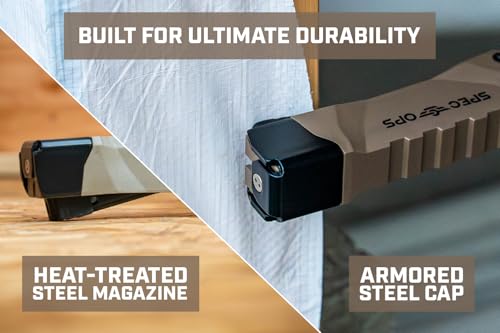
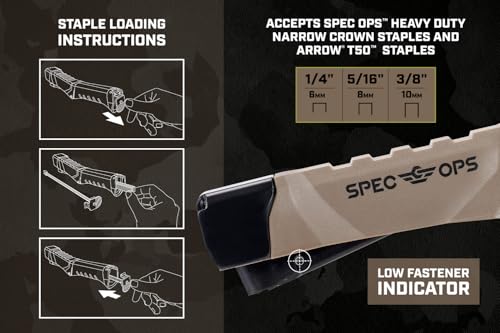
On paper, it’s built for speed and reliability, heat-treated steel magazine, non-slip tactical grip, and compatibility with common T-50 staples. Reviewers note it feeds consistently and resists jams better than many all-steel units, though it’s not quite as bombproof as the Bostitch or Arrow heavyweights when dropped on concrete all day. But for the balance of speed, comfort, and toughness, this one’s tuned for the DIYer who doesn’t want to feel it tomorrow.
Product photos
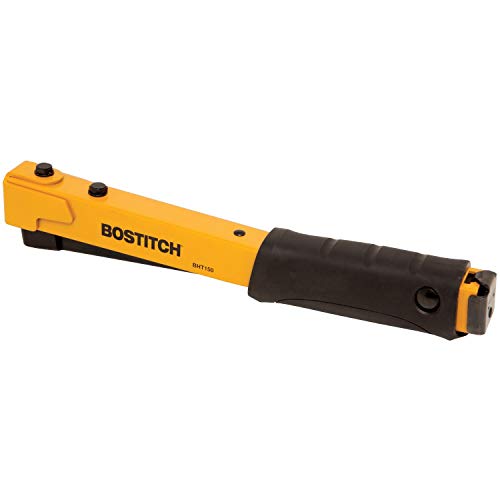
BOSTITCH BHT150C Manual Hammer Tacker
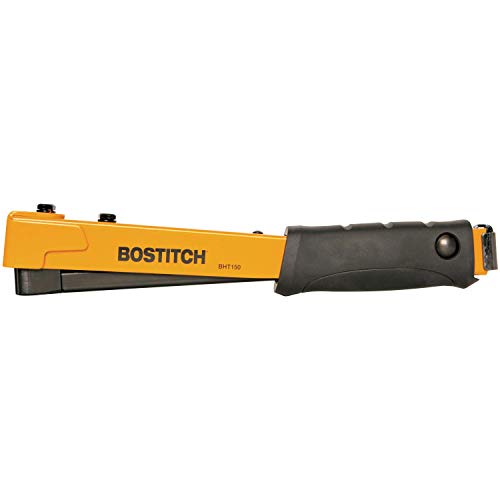
Strengths
- Optimized for carpeting
- Dual-stick capacity
- Durable steel build
Trade-offs
- Limited to shorter staples
- Niche use case
- Heavier than needed for light tasks
The BOSTITCH BHT150C is a niche player, it’s optimized for carpeting, and it shows. It’s designed to load two full sticks of 1/4″ to 3/8″ staples, which is perfect for fastening carpet padding or tack strips without overdriving. The rubber grip helps with control, and the steel construction ensures it won’t bend under pressure.
It’s not as versatile as the Arrow HTX50 or the Spec Ops model, you’re limited in staple size, and it’s not ideal for roofing or house wrap. But for flooring work, it’s purpose-built and reliable. Owners report it drives staples evenly and resists jams better than general-purpose models when used for its intended job. If carpet is your focus, this is the smarter buy.
Product photos
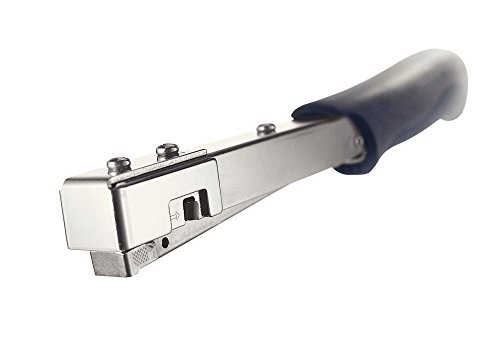
Rapid R19 Fine Wire Hammer Tacker
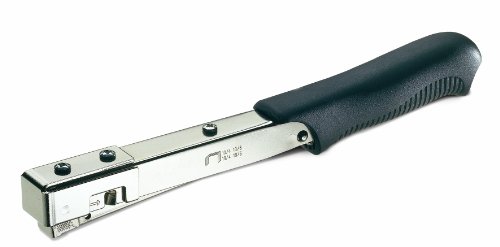
Strengths
- All-steel durability
- Simple no-loose-parts design
- Fine wire staple precision
Trade-offs
- No vibration damping
- Limited to fine wire staples
- Heavier than composite models
If you’re working with insulation or delicate materials, the Rapid R19 is worth serious consideration, not because it’s flashy, but because it’s simple and focused. Its all-steel construction gives it heft and longevity, and the lack of loose parts in the loading mechanism means fewer things to lose in the attic.
It only takes No. 19 fine wire staples, which limits versatility but makes it ideal for insulation batts or vapor barriers where you don’t want to split thin wood or tear fragile material. The ergonomic handle and non-slip grip help, though some owners report hand fatigue over time due to the rigid steel body and minimal shock absorption. Compared to the Bostitch Anti-Vibe, it’s less comfortable, but more durable and better for frequent use in tight budgets.
Product photos

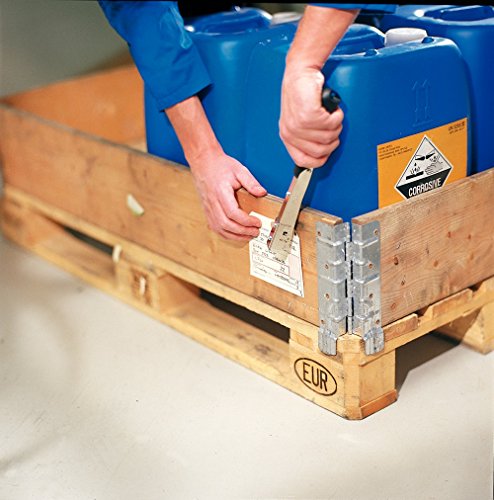
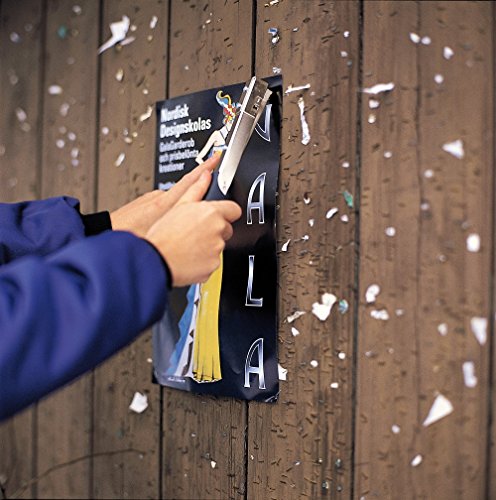
Heavy Duty T50 Hammer Tacker 1/4″ to 9/16″

Strengths
- Wide staple compatibility
- Includes 200 staples
- Bottom-loading jam clearance
Trade-offs
- Build quality inconsistent
- Striking edge wears faster
- Grip less refined
This no-name tacker surprises more than it should, especially with the included 200 staples. It accepts a wide range of staple sizes from 1/4″ to 9/16″, which gives it more flexibility than most in this class, and the bottom-loading design makes clearing jams quick. The chromed alloy steel body feels solid for the price, and the rubber grip is decent, though not on par with Bostitch or Arrow.
It’s not built to last a decade on a pro’s belt, but for occasional use, say, a garage renovation or a few insulation panels, it delivers solid value. Reviewers say it performs well out of the box, though a few report early wear on the striking edge. Compared to the Arrow HT50, it’s rougher but much cheaper and includes staples.
Product photos
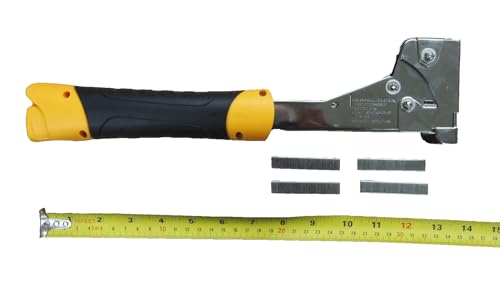
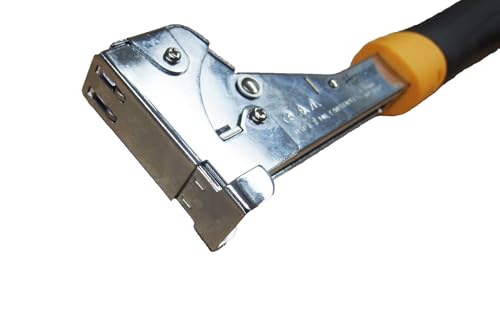
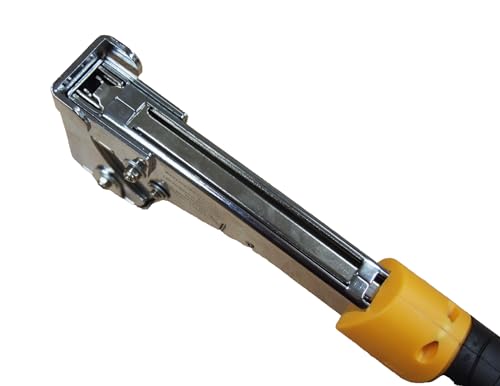
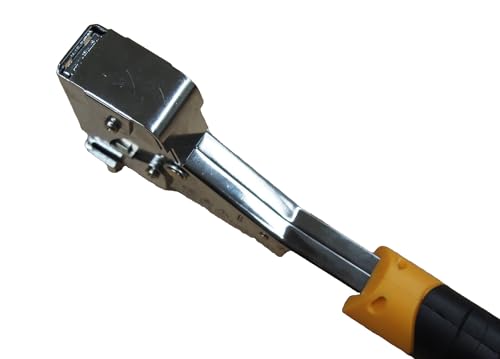
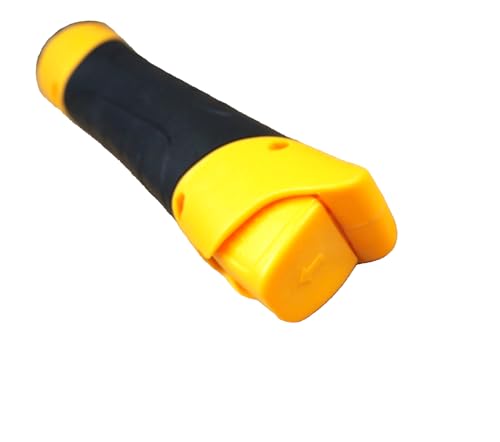
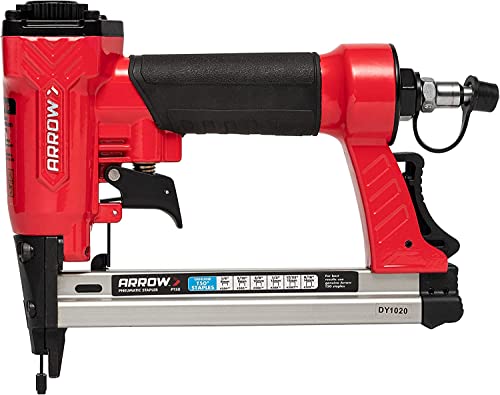
Arrow PT50 Pneumatic Staple Gun
Strengths
- Bump-fire rapid stapling
- Oil-free operation
- Dual-trigger safety
Trade-offs
- Requires air compressor
- Not portable
- Hose management needed
When speed and power matter, the Arrow PT50 pneumatic stapler becomes hard to ignore, especially for large-scale jobs like stapling down house wrap across a new foundation or fastening wire fencing over hundreds of feet. The bump-fire action lets you lay down staples rapidly with minimal trigger pulling, and the oil-free design means less maintenance than older pneumatic models.
It runs on standard home compressors up to 100 psi, which makes it accessible, and the dual-trigger safety system actually prevents accidental discharges, a real concern with contact-fired tools. Owners praise its reliability and depth control, though it’s obviously not a choice if you’re working off-grid or hate hauling hoses. Compared to manual options, it’s faster and less tiring, but you lose portability.
Product photos


How We Picked These hammer staplers
Rather than a hands-on lab test, my research for these recommendations involved a detailed comparison of published specifications and features across numerous models. I weighed owner reviews from multiple sources – focusing on reported durability and consistent performance – alongside expert opinions from sites covering construction and DIY. Ultimately, I ranked these hammer staplers based on how well they met the demands of typical projects and offered good value.
For hammer staplers, driving power and build quality were the most significant factors. A tool needs to reliably sink staples with a single swing, and it needs to withstand repeated use without falling apart. Staple capacity and loading ease also mattered, as frequent reloading slows down work. I looked for hardened steel components and designs that minimized user fatigue, knowing these tools are often used for extended periods. You can find more insights into related tools in our recent heavy-duty stapler reviews.
Specifications clearly indicate staple compatibility and build materials, offering a good baseline for comparison. However, I placed a greater emphasis on owner feedback to assess real-world durability and jam frequency. Reputation within the pro community also played a role; brands consistently praised by carpenters and roofers earned higher marks. While specs tell you what a stapler can do, owner experiences tell you how well it actually performs over time.
Choosing The Right hammer staplers
I’ve spent a lot of time around construction sites and workshops, and one thing remains true: a good hammer stapler is a surprisingly versatile tool. But with so many options, picking the right one isn’t always straightforward.
A quality hammer stapler delivers consistent staple depth with minimal effort. Key considerations include build materials (steel is crucial), staple compatibility (T50 is common but not universal), the impact absorption in the handle, and the overall balance of the tool for comfortable, extended use. Look for hardened steel components and a mechanism that minimizes hand fatigue.
Staple Gauge and Material Compatibility
The first thing I look at is what materials you’ll be fastening. Hammer staplers aren’t created equal when it comes to penetration. Some are designed for lighter tasks like insulation or house wrap, while others can handle tougher jobs like roofing underlayment or even light flooring. If you anticipate working with thicker materials, ensure the stapler accepts staples long enough to fully penetrate – and that the tool itself has the driving force to do so.
- A stapler suited for thin materials might struggle with hardwood.
- Consider a model that accepts multiple staple lengths (5/16”, 3/8”, 1/2”) for versatility.
- For heavy-duty applications like roofing, a stapler specifically designed for T50 staples, and with a hardened anvil, is essential to avoid bending or breaking staples during installation. This is where you’ll really appreciate a durable build.
Handle Design and Ergonomics
Don’t underestimate the importance of a comfortable handle. You’ll be swinging this tool repeatedly, and hand fatigue can set in quickly. Look for features like a rubberized, non-slip grip and a handle that’s appropriately sized for your hand. Some models, like the Bostitch Anti-Vibe, incorporate vibration-reducing materials, which can make a noticeable difference on larger projects. If you’re thinking about upgrading to a powered option, take a look at our best electric staplers for a comparison.
Build Quality and Durability
This is where spending a little more can really pay off. Cheaper hammer staplers often use lower-quality steel and plastic components that can break or wear out quickly. I’ve seen plenty of tools that simply fall apart after a few uses. Look for models with a fully steel body and hardened steel internal parts. Many manufacturers, like Arrow, state that their steel components undergo a hardening process at very high temperatures (1,500 degrees Fahrenheit) to maximize durability. A well-built stapler will not only last longer but will also provide more consistent performance. If you’re looking for a more in-depth look at options, read our hammer tacker buying guide for a detailed rundown of the top hammer tacker models.
A hammer stapler is only as good as its staples. Always use the correct staple type and size recommended by the manufacturer to avoid jams and ensure proper fastening.
Hammer Staplers Compared
Here’s a comparison of the specifications for various hammer staplers to help you make an informed decision.
| Product Name | Staple Type | Staple Size Range | Weight (lbs) | Vibration Reduction | Material |
|---|---|---|---|---|---|
| Arrow HTX50 Professional Hammer Tacker | Arrow T50 | 5/16″, 3/8″, 1/2″ | N/A | No | Steel/Chromed Steel |
| Arrow HT50 Heavy Duty Hammer Tacker | Arrow T50 | 5/16″, 3/8″, 1/2″ | N/A | No | Steel/Chromed Steel |
| Bostitch Anti-Vibe Hammer Tacker | Bostitch/Arrow T-50 | 3/8″, 5/16″, 1/2″ | N/A | Yes | N/A |
| Spec Ops Heavy Duty Hammer Tacker | Spec Ops/Arrow T-50 | 1/4″, 5/16″, 3/8″ | N/A | Yes | Composite/Steel |
| BOSTITCH BHT150C Manual Hammer Tacker | Bostitch BTA700/T-50 | 1/4″ – 3/8″ | N/A | Yes | Steel |
| Rapid R19 Fine Wire Hammer Tacker | No. 19 Fine Wire | N/A | N/A | No | Steel |
| Heavy Duty T50 Hammer Tacker | A-T50, R-140 | 1/4″ – 9/16″ | 2.5 | No | Alloy Steel |
| Arrow PT50 Pneumatic Staple Gun | Arrow T50 | 1/4″, 5/16″, 3/8″, 1/2″, 9/16″ | N/A | No | N/A |
Frequently Asked Questions
What staple types are most common for hammer staplers?
Arrow T50 staples are the most frequently used, though some models accept Bostitch staples or other compatible types. Always check your stapler’s specifications to confirm the correct staple for optimal performance and to avoid jams.
How can I reduce hand fatigue when using a hammer stapler?
Look for models with rubberized grips and vibration-reducing features, like those found in the Bostitch Anti-Vibe. Taking frequent breaks during larger projects and ensuring a comfortable swing technique also helps minimize strain.
Are more expensive hammer staplers always better?
Not necessarily, but generally, a higher price correlates with better build quality and more durable materials. Spending a bit more on a fully steel-bodied model with hardened components is often worthwhile for longevity, especially if you’ll be using it frequently.
What’s the difference between a hammer stapler and a pneumatic stapler?
Hammer staplers are manually powered, requiring a physical swing to drive staples, while pneumatic staplers rely on compressed air. For high-volume work or consistent power, consider exploring the top pneumatic staplers for increased efficiency.
How do I prevent staple jams in my hammer stapler?
Using the correct staple type and size is crucial. Also, avoid overdriving staples and periodically clean the stapler’s mechanism to remove any dust or debris that could cause obstructions.
The Bottom Line
Choosing a hammer stapler often comes down to balancing upfront cost with long-term durability. While cheaper options exist, I consistently find that the Arrow HTX50 Professional Hammer Tacker offers the best overall combination of build quality, staple capacity, and reliable performance for most homeowners and DIYers. It’s a workhorse that will handle a wide range of projects without breaking the bank, and the readily available Arrow T50 staples are a plus.
If you have very specific needs, other models shine. For those prioritizing comfort during extended use, the Bostitch Anti-Vibe Hammer Tacker is a strong contender thanks to its vibration-reducing design. And for lighter-duty tasks like securing insulation or house wrap, the Rapid R19 Fine Wire Hammer Tacker provides a more specialized, economical solution. Don’t overlook options like the Arrow PT50 Pneumatic Staple Gun if you’re already set up with an air compressor and want speed and power, or explore pneumatic upholstery staplers for fabric work.
Ultimately, the best hammer stapler isn’t about fancy features or a high price tag. It’s about a solid, well-made tool that consistently drives staples where you need them to go. Focus on build materials – steel is key – and a comfortable grip, and you’ll have a tool that delivers years of reliable service.
