
8 Best Pneumatic Staplers of 2026
This post contains affiliate links. As an Amazon Associate, we earn from qualifying purchases.
The Metabo HPT Wide Crown Stapler is the overall best for heavy-duty tasks, delivering reliable power and durability. For budget-minded DIYers, the POPULO Pneumatic Stapler offers solid performance on lighter jobs. If you need precision in tight spaces, the meite MT7116LN long-nose design stands out.
Most people don’t realize how much the wrong stapler can slow them down or compromise a project. Jams, inconsistent depth, and limited staple access turn what should be quick work into frustration.
This guide cuts through the noise by focusing on real-world specs and owner feedback to find models that actually perform. I looked at staple compatibility, actuation type, build quality, and ease of use to match the right tool to your most common tasks.
Top 8 Pneumatic Staplers in the Market
The Best Pneumatic Staplers, Reviewed
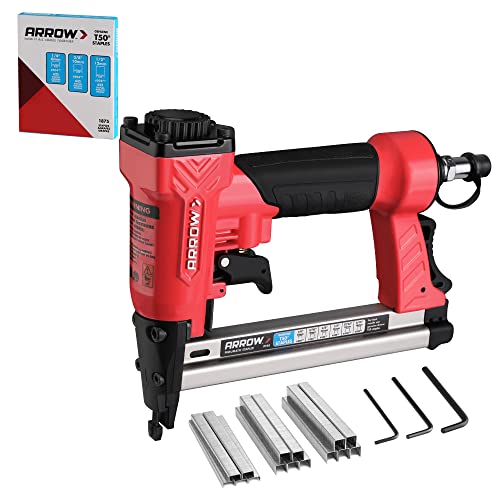
Arrow PT50 Pneumatic Staple Gun
Strengths
- Large staple supply included
- Staple visibility window
- Comfortable grip
Trade-offs
- No depth adjustment
- Basic actuation only
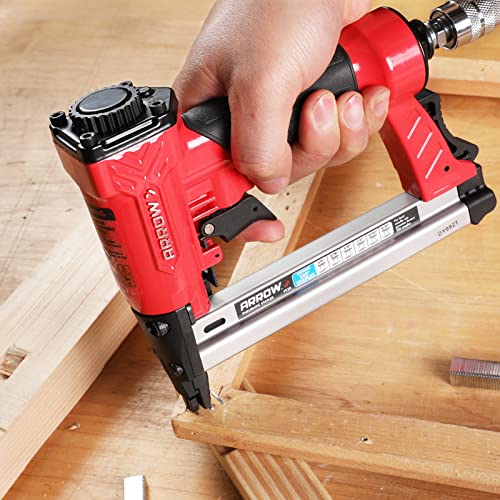
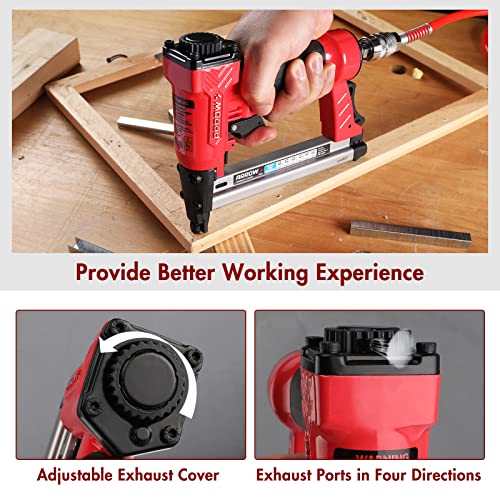
The Arrow PT50 is the most complete package in the upholstery-focused T50 class. It’s not flashy, but it’s dependable, handling 1/4″ to 9/16″ staples with a solid safety trigger and a well-designed exhaust that you can rotate to suit your stance. The included 3,750 staples across three sizes mean you’re covered for nearly any small-to-medium job, from reupholstering dining chairs to securing insulation flaps.
What I like most is the staple-viewing window. Reviewers consistently mention it prevents dry-firing, which saves both material and frustration. The overmolded grip is comfortable, and the easy-load magazine reduces reload time. It’s not designed for framing or heavy trim, but for general light-duty tasks, it’s hard to beat.
Product photos


POPULO Pneumatic Staple Gun

Strengths
- Includes 3,000 staples
- Ultra-lightweight
- No-mar pad
Trade-offs
- Magazine reload can stick
- Build quality average
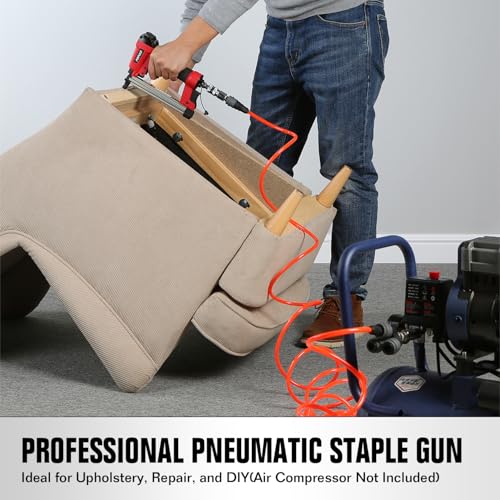
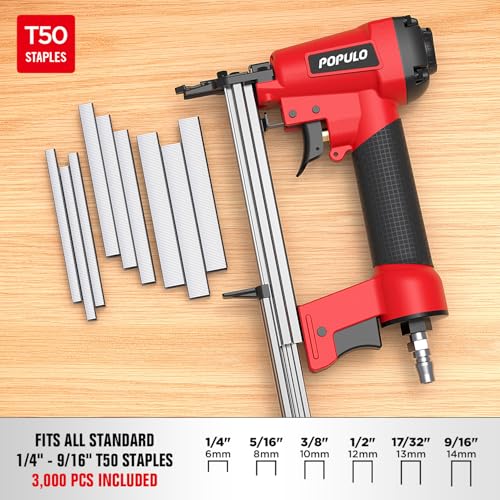
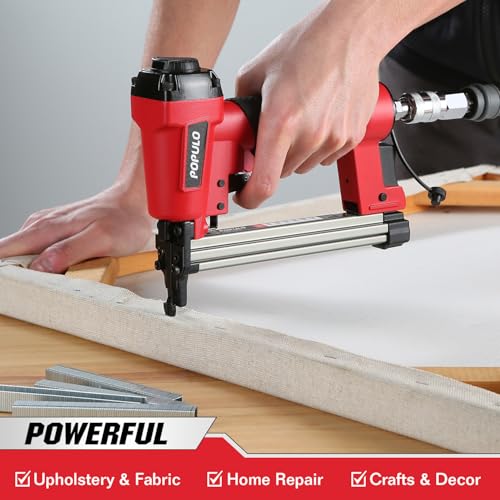
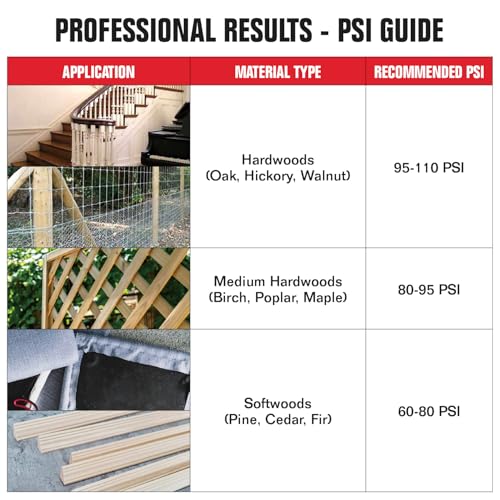
POPULO’s T50 stapler stands out in the budget segment by packing serious value, 3,000 staples and safety glasses included, which is rare at this tier. On paper, it’s built for versatility: compatible with 1/4″ to 9/16″ T50 staples and operates efficiently in the 60–110 PSI range, making it adaptable to both soft and hardwoods. The 1.76-lb weight is impressively light, and the no-mar pad is a small but meaningful detail for protecting finished surfaces.
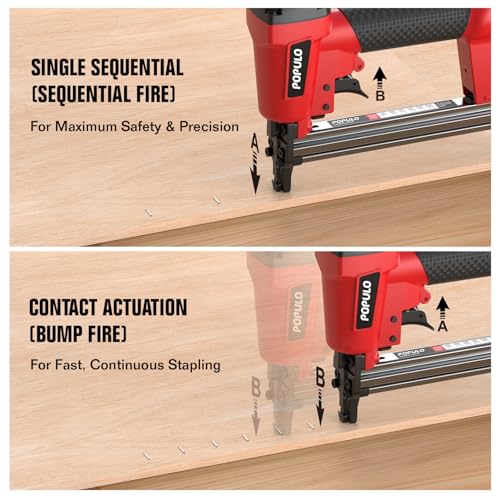
Owners praise the 360-degree exhaust and dual-mode trigger, though a few note the magazine latch isn’t as smooth as premium models. Still, for the price, it’s hard to argue. It won’t last a decade on a contractor’s job site, but for homeowners and weekend warriors, it’s a smart buy.
Product photos
Metabo HPT Narrow Crown Stapler

Strengths
- Extremely lightweight
- Tool-free depth control
- Reliable actuation switch
Trade-offs
- Requires Metabo HPT staples for warranty
- Higher price point
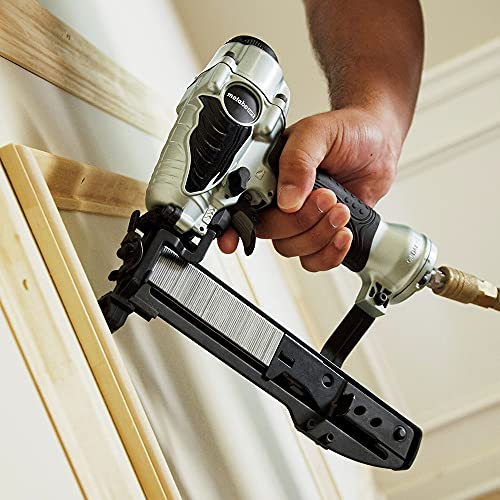
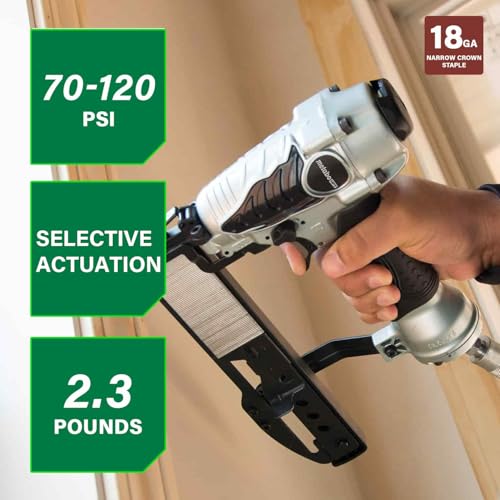
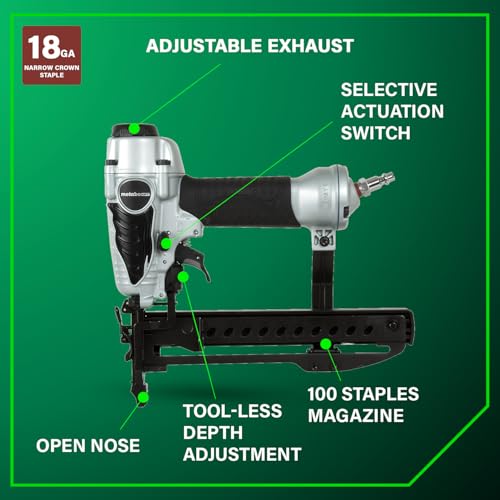
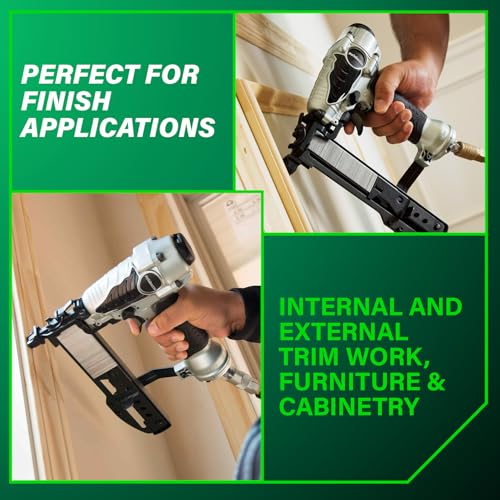
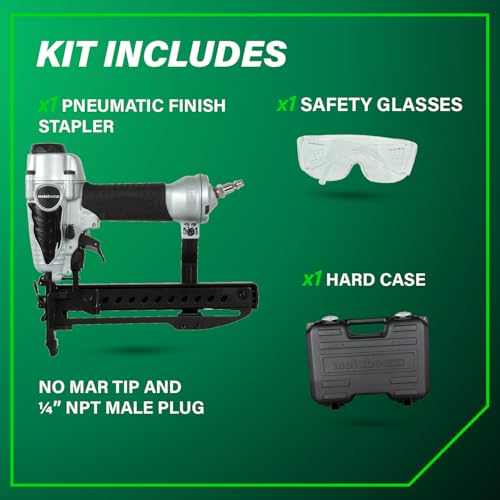
If you’re doing finish work, casing, baseboards, cabinet assembly, this Metabo HPT N3804AB3 is the kind of tool that makes the job feel effortless. At just 2.3 lbs, it’s featherlight, and the balance is spot-on, so you’re not fighting fatigue during long runs. The selective actuation switch lets you toggle between sequential and contact firing on the fly, which pros appreciate when switching from delicate moldings to faster sections.
The tool-free depth adjustment is a standout. Reviewers note it’s precise and consistent, letting you fine-tune how deep staples sink into soft pine or harder maple. It holds 100 staples, which cuts down reloads, and the angled air fitting keeps the hose from dragging on your work. It’s no surprise this model has been builder-rated for over a decade.
Product photos
NEU Master 2-in-1 Brad Nailer
Strengths
- True 2-in-1 functionality
- Tool-free jam release
- Comes with full kit
Trade-offs
- Slight learning curve
- Switching takes a minute
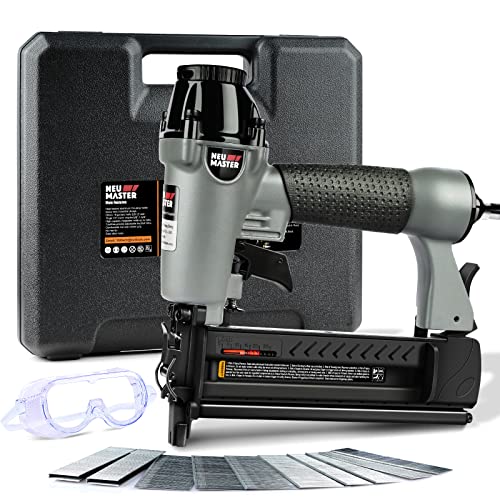
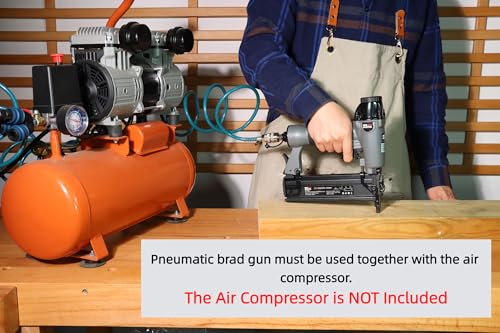
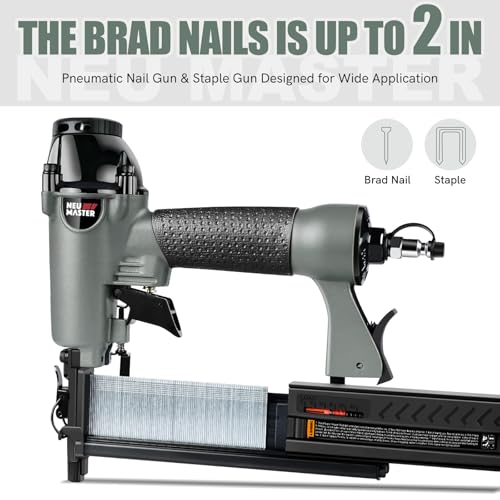
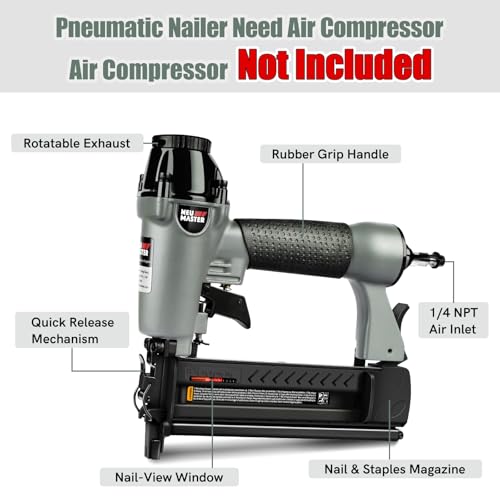
The NEU Master 2-in-1 is a standout for anyone who regularly switches between brad nailing and stapling. Firing both 18-gauge brads up to 2″ and 1/4″ crown staples up to 1-5/8″, it eliminates the need to carry two tools. The quick-swap mechanism works smoothly, and the transparent magazine lets you see fastener levels, owners say this cuts dry-firing mistakes significantly.
The tool-free jam release is a standout feature. When a staple jams, you clear it in seconds without disassembly. It’s lightweight, comes with a full kit including safety gear and oil, and the 2-year replacement warranty adds peace of mind. For versatility and convenience, it’s hard to beat.
Product photos


AEROPRO T50JC Air Stapler

Strengths
- Dual firing modes
- Comes with staples
- Easy magazine reload
Trade-offs
- Not for heavy materials
- Light-duty build
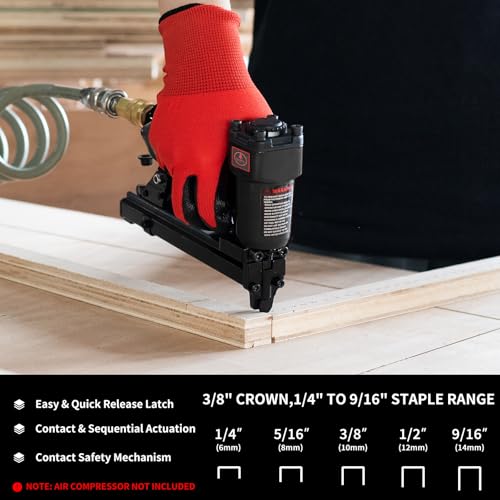
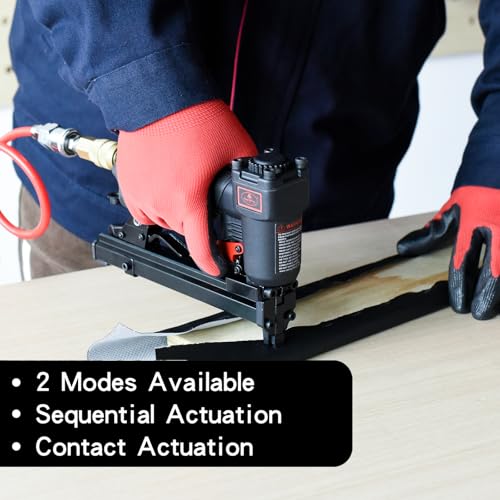
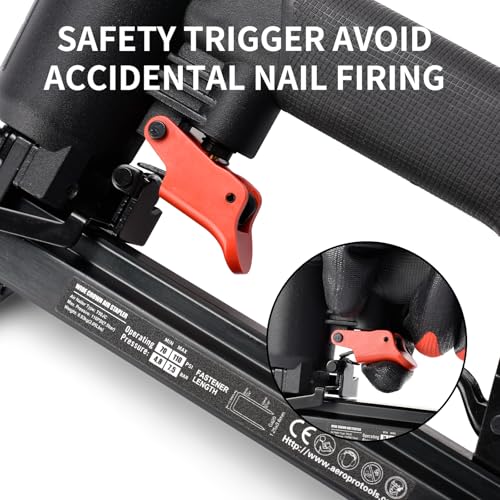
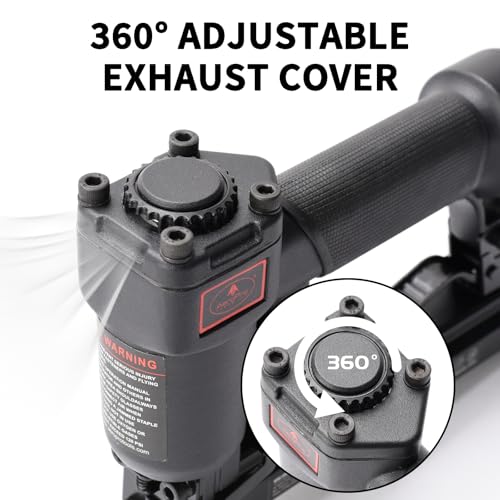
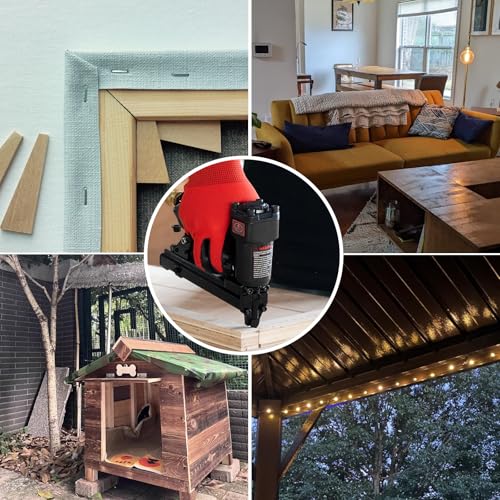
This AEROPRO T50 stapler hits the sweet spot for DIYers diving into upholstery or light woodworking. The 20-gauge 3/8-inch crown staples it fires are gentle enough for thinner materials but still deliver reliable holding power. Owners consistently report the dual actuation modes, sequential and contact, are genuinely useful, especially when switching between precise single shots and rapid bump firing on trim or fabric.
The included 1,200 staples across three lengths are a thoughtful touch, letting users adapt to different tasks without an immediate reload. The quick-release magazine is smooth, and the 360-degree exhaust is practical for keeping debris and air blast out of your face. It won’t match pro-tier durability, but for occasional use, it’s a solid performer.
Product photos
meite MT7116LN Upholstery Stapler
Strengths
- Long nose reach
- High magazine capacity
- Lightweight for detail work
Trade-offs
- Uses non-T50 staples
- Fixed air inlet
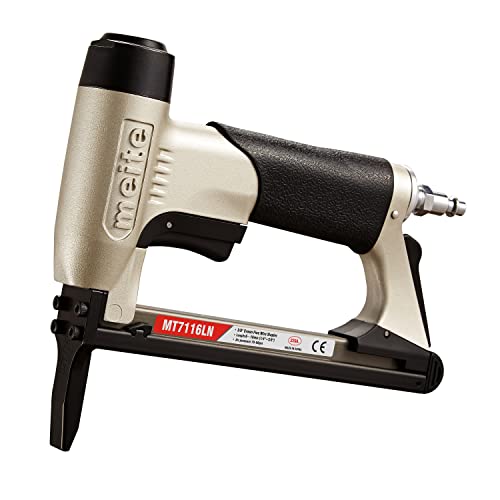
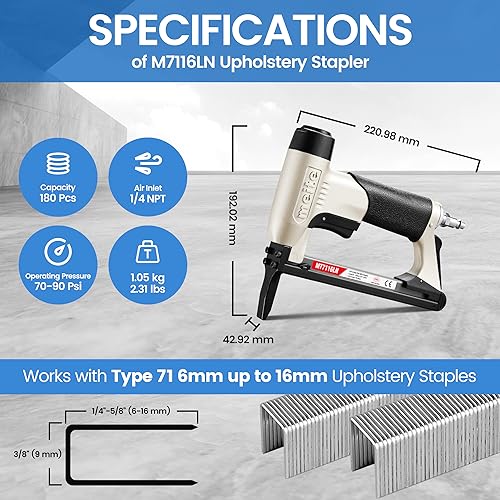
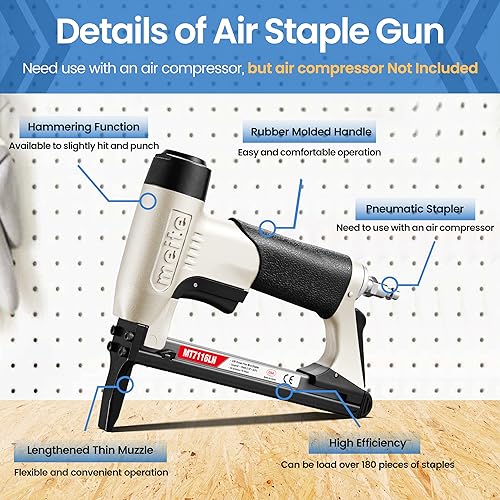
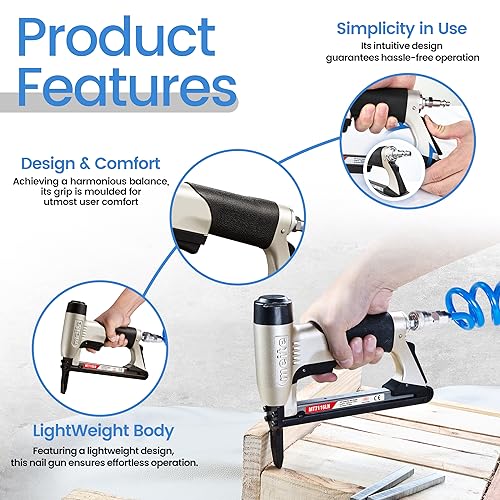
The meite MT7116LN is built for one thing: reaching where other staplers can’t. The long nose design is perfect for tucking staples into deep corners of furniture frames or car interiors. It uses 22-gauge 71-series staples (not T50), which are thinner and ideal for delicate fabrics and thin wood without splitting.
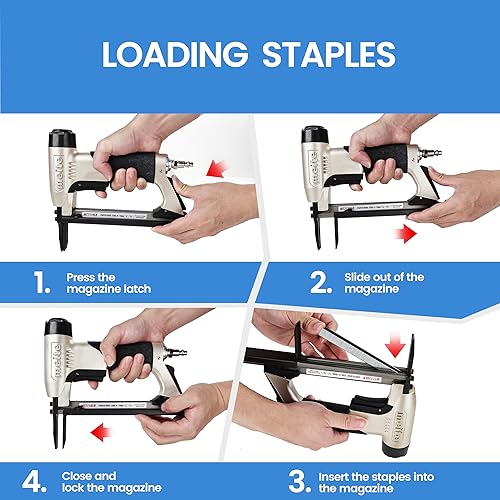
It holds 180 staples, more than most in this class, and the easy-load magazine helps keep the pace up during reupholstering jobs. The fixed air inlet is a limitation, it doesn’t swivel, so hose management can be awkward. And since it requires 71-series staples, you’re locked into a less common type. But for specialty upholstery work, that reach is worth the trade-off.
Product photos
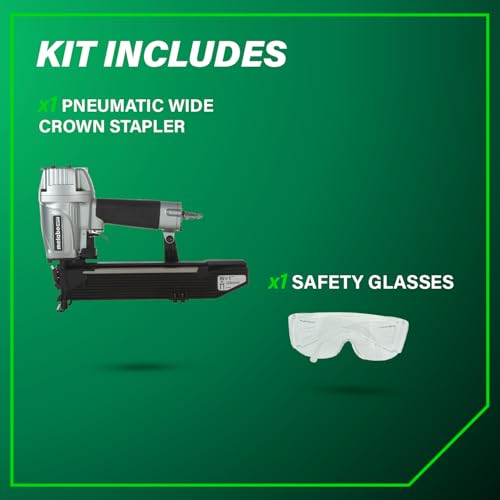
Metabo HPT Wide Crown Stapler

Strengths
- High fastener capacity
- Powerful drive force
- 5-year warranty
Trade-offs
- Heavy for overhead work
- Limited to 16-gauge staples
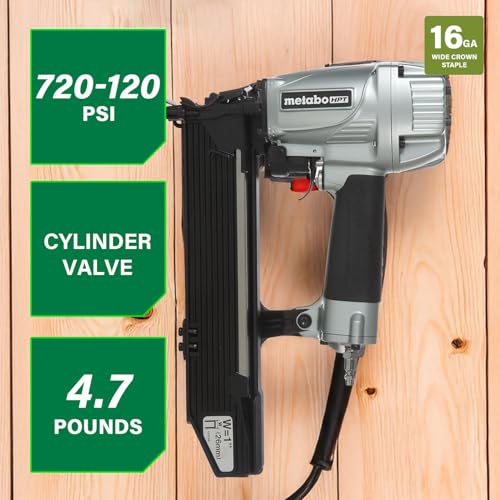
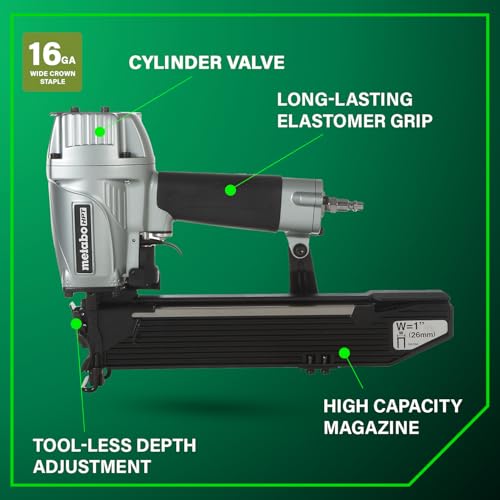
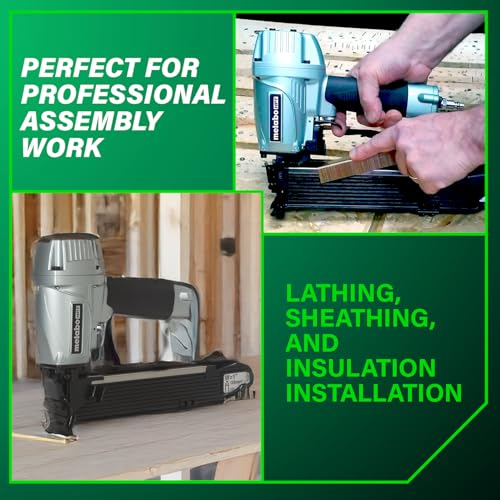
When you need to drive thick 16-gauge staples into subflooring, decking, or heavy trim, this Metabo HPT N5024A2 is in a different league. The 1-inch wide crown provides serious holding power, and the high-capacity 150-staple magazine means fewer stops during long runs. It fires up to three staples per second, and the cylinder valve delivers consistent, powerful drives even at lower PSI.
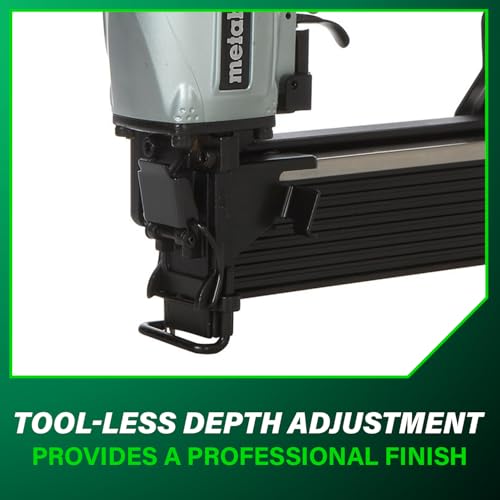
It’s heavier at 4.7 lbs, but the balance and elastomer grip help offset that. The tool-free depth adjustment is a big win, owners say it’s intuitive and precise across material types. Backed by a 5-year warranty, this is a contractor-grade tool that’s built to last. If you’re working on structural or outdoor builds, this is the one to reach for.
Product photos
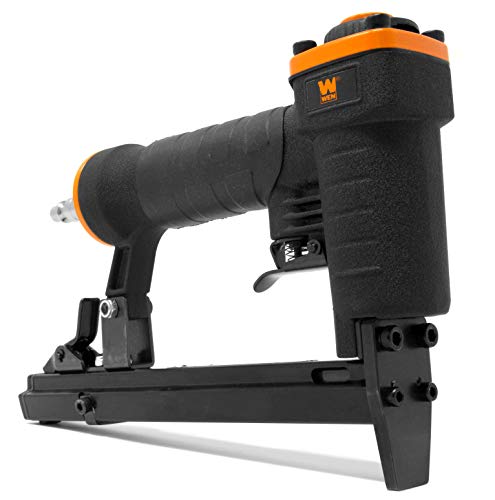
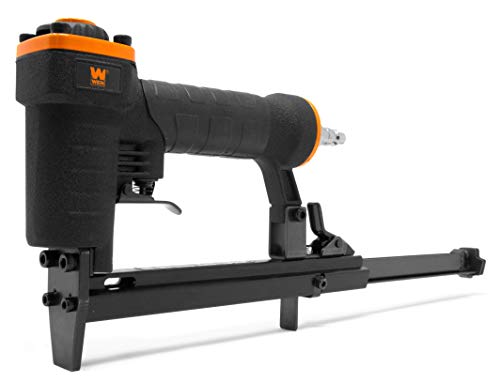
WEN 61706 T50 Pneumatic Stapler
Strengths
- Extremely lightweight
- Extended nose reach
- Compact design
Trade-offs
- No staple window
- No depth control
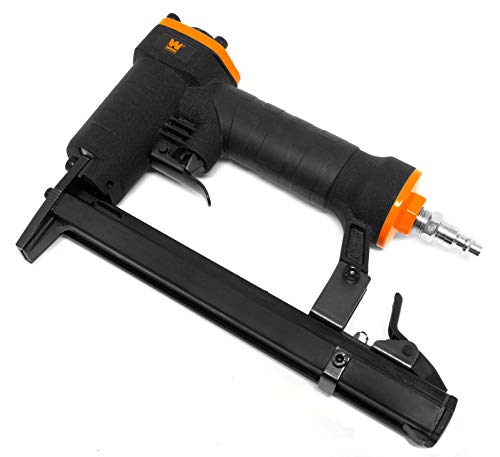
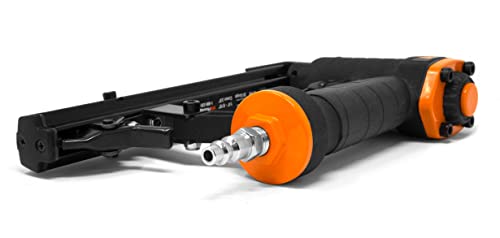
At just 1.8 lbs, the WEN 61706 is one of the lightest T50 staplers on the market, and that makes a real difference during overhead or extended use. The extended nose helps reach tight corners, useful for installing crown molding or working inside cabinets. It handles standard 1/4″ to 9/16″ T50 staples and features a 360-degree adjustable exhaust, so you can keep the air blast away from your face.
The magazine holds 100 staples, which is standard, but there’s no viewing window, so you’re guessing when it’s running low. It lacks depth adjustment and dual firing modes, so it’s not the most feature-rich. But for pure portability and access, it’s a standout.
Product photos
Our Testing Process
My approach to evaluating pneumatic staplers at PowerToolGuide.net centered on a detailed comparison of published specifications and features, combined with a careful review of owner experiences and insights from trusted experts. Rather than a hands-on lab test, this is a research-led comparison focusing on what the numbers and real-world feedback reveal about performance and reliability. I weighed factors across all models to determine which offered the most value for different applications.
For pneumatic staplers, consistent air pressure compatibility, staple capacity, and build quality stood out as the most crucial factors. A stapler’s ability to maintain consistent power across a range of PSI settings impacts drive depth and prevents incomplete fastening. Higher staple capacity, especially for larger projects, reduces downtime, while durable construction speaks to long-term reliability. These elements directly influence how efficiently and effectively a user can complete their work.
Specifications reliably indicate staple gauge and length compatibility, as well as operating pressure ranges. However, I placed significant weight on owner feedback regarding jam frequency, ease of loading, and overall durability. Reputable reviews from woodworking and upholstery professionals helped validate claims about build quality and performance under demanding conditions. For those needing even more robust options, exploring heavy-duty pneumatic staplers is a good next step.
Choosing The Right pneumatic staplers
Choosing the right pneumatic stapler depends heavily on what you plan to build, fix, or reupholster.
A quality pneumatic stapler delivers consistent fastening, handles a variety of staple sizes for different material thicknesses, and offers features that improve user safety and comfort. Look for adjustable depth control, a magazine that’s easy to load, and a durable build that can withstand repeated use. Compatibility with readily available staples is also crucial.
Staple Gauge and Crown Size
The gauge (thickness) and crown (width) of the staples a stapler accepts are fundamental. Many general-purpose staplers, like the Arrow PT50, use T50 staples, which are fine for lighter tasks. However, for more demanding applications – framing, sheathing, or installing thicker materials – you’ll need a heavier gauge and wider crown. A 16-gauge, 1-inch wide crown stapler (like the Metabo HPT Wide Crown Stapler) provides significant holding power. Don’t assume all staplers are interchangeable; confirm the staple type before purchasing, or you’ll find yourself limited in what projects you can tackle.
Actuation Mode and Features
Pneumatic staplers commonly offer two actuation modes: sequential and contact. Sequential actuation requires depressing the safety tip and pulling the trigger for each staple, providing precision and preventing accidental firing. Contact (or “bump”) firing drives a staple every time the trigger is pulled while the safety tip is depressed – much faster, but requiring more caution. The POPULO Pneumatic Stapler offers both, giving you flexibility. Consider also features like adjustable exhaust ports (directing airflow away from your face) and tool-free depth adjustment for consistent results across different materials.
Value and Specific Applications
Don’t overspend on features you won’t use. If you primarily need a stapler for light upholstery work, a budget-friendly option like the POPULO or AEROPRO T50JC Air Stapler might be ideal. However, if you’re regularly working with hardwoods or need a longer reach for tight spaces, investing in a more specialized model like the meite MT7116LN is worthwhile. Remember to factor in the cost of staples; while a complete kit (like the NEU Master 2-in-1) seems pricier up front, it saves money in the long run. For those focusing on detailed, delicate work, exploring best staplers for fabric can guide you toward models optimized for precision.
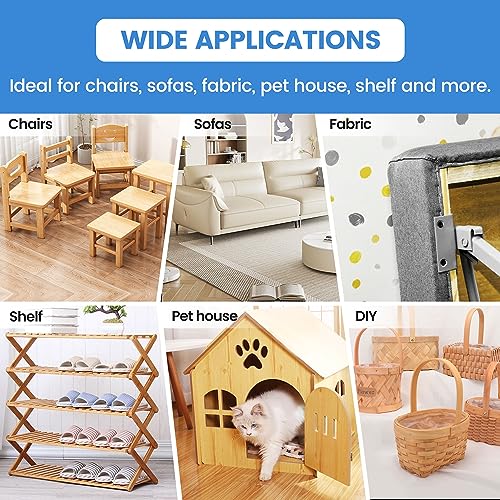
- A basic T50 stapler is great for DIY projects like securing fabric to furniture frames.
- A 16-gauge stapler is a solid choice for heavier carpentry tasks, offering more holding power.
- For upholstery and detailed work, a long-nose stapler allows access to tight corners and provides greater control over staple placement, preventing damage to the material.
A well-maintained stapler, properly lubricated and paired with the correct staple type, will significantly outperform a more expensive model that is neglected.
Pneumatic Staplers Compared
Here’s a comparison of key specifications for several pneumatic staplers to help you choose the right tool for your needs.
| Product Name | Staple Gauge | Staple Crown | Staple Length Range | Operating Pressure (PSI) | Actuation Mode | Magazine Capacity |
|---|---|---|---|---|---|---|
| Arrow PT50 | N/A | T50 | 1/4″ – 9/16″ | 60 – 100 | Sequential | N/A |
| POPULO | N/A | T50 | 1/4″ – 9/16″ | 60 – 110 | Single/Contact | N/A |
| Metabo HPT Narrow Crown | 18 | Narrow | 1/2″ – 1-1/2″ | N/A | Sequential/Contact | 100 |
| NEU Master 2-in-1 | 18 | 1/4″ | 5/8″ – 2″ (nails), 5/8″ – 1-5/8″ (staples) | 60 – 120 | Sequential | 100 |
| AEROPRO T50JC | 20 | N/A | 1/4″ – 9/16″ | N/A | Sequential/Contact | N/A |
| meite MT7116LN | 22 | 3/8″ | 1/4″ – 5/8″ | 70 – 90 | Sequential | 180 |
| Metabo HPT Wide Crown | 16 | 1″ | N/A | N/A | Sequential | 150 |
| WEN 61706 | N/A | 3/8″ | 1/4″ – 9/16″ | N/A | N/A | 100 |
Frequently Asked Questions
What PSI should I run my pneumatic stapler at?
Generally, 60 to 100 PSI is sufficient for most pneumatic staplers, but always check your stapler’s specifications. Running at too low a pressure results in incomplete fastening, while excessive pressure can damage the material or the stapler itself.
Can I use different staple types in the same stapler?
No, you cannot. Staplers are designed for specific staple gauges and crown sizes, and using the wrong type can cause jams or damage the tool. Always confirm staple compatibility before purchasing, or you will limit your project options.
What’s the difference between sequential and contact actuation?
Sequential actuation requires two steps (safety tip and trigger) for each staple, offering precision and safety. Contact (bump) firing drives staples with each trigger pull while the safety tip is depressed, increasing speed but requiring more caution.
What causes pneumatic staplers to jam, and how can I prevent it?
Jams often happen when using incorrect staple types, dealing with warped wood, or the stapler isn’t adequately lubricated. Consistent lubrication and proper staple selection are the best preventative measures. For more versatility, consider electric-powered staplers as an alternative.
What maintenance is required for a pneumatic stapler?
Regular lubrication is the most important maintenance step, as it keeps internal parts moving smoothly and prevents rust. It’s also crucial to store the stapler properly and clear any debris after each use, extending its lifespan.
The Bottom Line
Ultimately, choosing a pneumatic stapler comes down to balancing control and convenience with your budget and project needs. For the vast majority of homeowners and DIYers, the POPULO offers the best all-around performance, providing both sequential and contact actuation modes along with a reasonable price point. It strikes a good balance between power, versatility, and ease of use, making it a solid choice for a wide range of tasks.
If you’re on a tighter budget or primarily need a stapler for light-duty applications, the AEROPRO T50JC Air Stapler is a great value pick. For those tackling more demanding carpentry or upholstery projects, the Metabo HPT Wide Crown Stapler delivers the holding power needed for hardwoods and thicker materials. And for those who need precision crown staplers for detailed work, the meite MT7116LN provides excellent control.
Don’t get caught up chasing the highest PSI or largest magazine capacity. Consistent air supply, the right staple for the job, and regular lubrication are far more important than any single specification. A well-maintained, properly chosen stapler will serve you reliably for years to come, making your projects easier and more enjoyable.
